21 Best Slug-Proof Plants for UK Gardens: A Complete Guide
Lee Burkhill: Award Winning Designer & BBC 1's Garden Rescue Presenters Official Blog
Beginner level
Preventing slugs and snails in the garden can be a real pain. It may be tempted to reach for slug pellets or sprays, but it can do more harm than good to other wildlife. Rather than fighting with keeping slugs off your plants, this guide will show you slug proof plants that slugs and snails avoid. Meaning less work for you and an easier-to-maintain garden.
Quick Answer
The best slug-proof plants share two characteristics: rough, hairy or serrated leaves that slugs cannot slide over, and strong aromatic scents that deter them. Top choices include Alchemilla mollis, hardy Geraniums, Geums, Euphorbia, Agastache, Nepeta, Lavender, Sedum, Eryngium, and Foxgloves. Planting these throughout your borders dramatically reduces slug damage without any chemical controls.
If you spend most of your time trying to stop slugs and snails from decimating your garden’s plants, then its time you think about using slug-proof plants themselves as the deterrent! These slug-proof plants will have those slimy creatures crawling elsewhere! Slug-proof plants don’t just mean boring evergreen blobs, shrubs or trees; there is a whole mix of amazing slug-proof flowering plants that won’t get nibbled by snails or slugs every night.
You can help reduce drama in your garden and maintenance by choosing plants that slugs and snails avoid. These plants have hidden weapons against slugs, whether it’s hairy leaves they hate to crawl over or bitter-tasting leaves that put off slugs. These plants mean no more costly slug deterrent applications such as coffee grinds, copper tape or nasty chemicals. These bulletproof plants will do the work for you and stop slugs in their tracks!
This page contains affiliate links for products I use and love. If you take action (i.e. subscribe, make a purchase) after clicking a link, I may earn some gardening commission which helps me keep the Garden Ninja Blog free for all.
What plants do slugs and snails eat?
Slugs are by nature lazy and would rather mulch on rotting wood and easy-to-digest flowering plants than take on fully grown specimens. Which is why small, young, or emerging plants get wiped out, and your more established specimens don’t.
The biggest target for slugs and snails with garden plants are:
Slugs tend not to bother with shrubs, woody plants, trees or alpine plants. So this guide will show you bulletproof plants that fall within the herbaceous perennial group of plants, where slugs spend most of their time feeding!
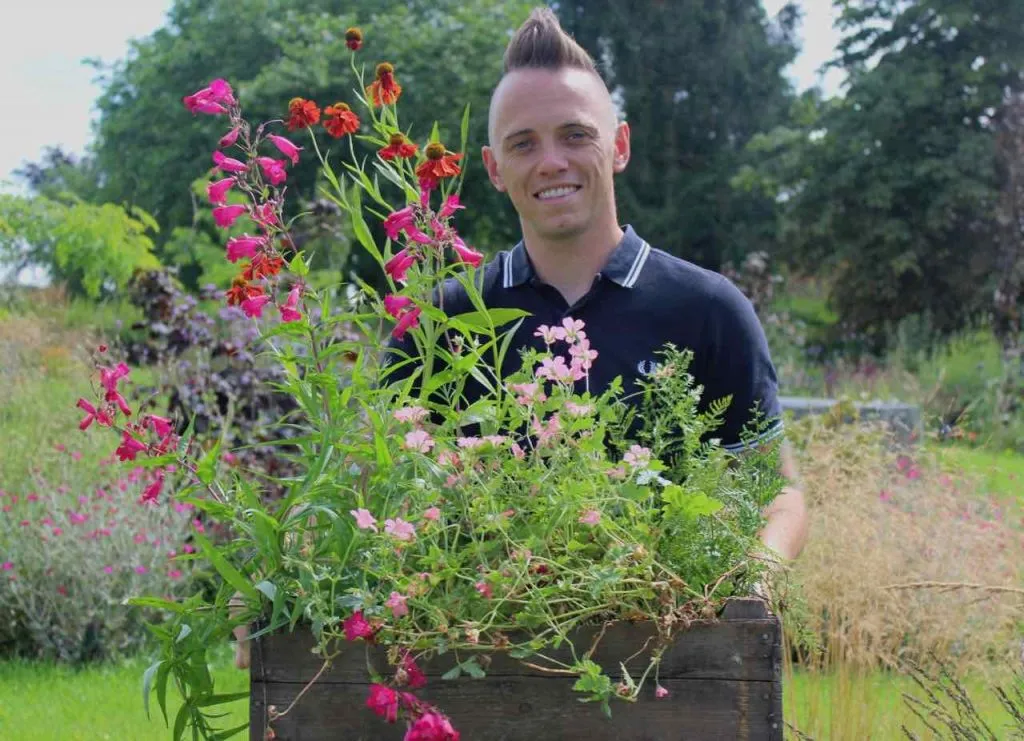
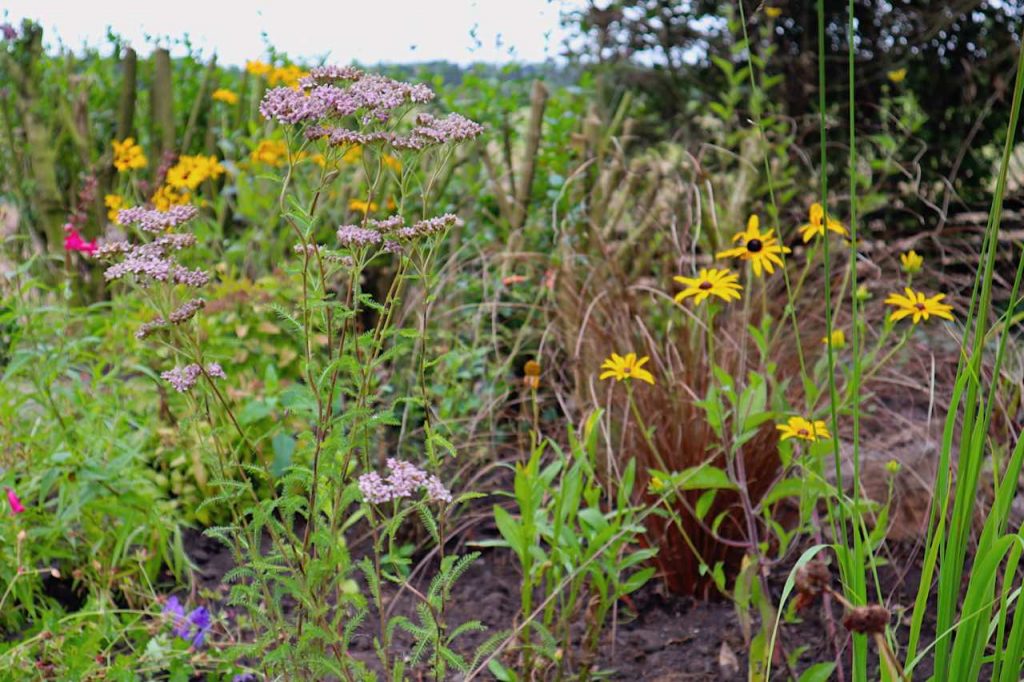
Would you believe it, but the crate above is full of snail-proof plants? Look how gorgeous and dainty they are. But they all hold a secret weapon against slugs, which I’m going to explain in this slug proof guide!
Plants that Slugs Love
Slugs are notorious for munching their way through a wide range of garden plants, especially young, tender foliage. Before we jump into discussing some slug-proof plants let me show you the most commonly mulched and ruined plants by slugs and snails. Here are 25 garden plants that slugs absolutely love to eat:
Hostas – Especially those with tender leaves; practically a slug buffet.
Delphiniums – New shoots are prime targets.
Lupins – Young growth gets shredded early in the season.
Dahlias – Slugs love the young leaves and can decimate new shoots.
Petunias – Soft, juicy leaves are like candy to slugs.
Marigolds (Tagetes) – Especially French marigolds; slugs are drawn to their scent.
Zinnias – Young seedlings are often wiped out overnight.
Lettuce – One of their top veggie favourites.
Spinach – Particularly young seedlings and tender regrowth.
Calendula (Pot Marigold) – Another slug-magnet with softer foliage.
Sweet Peas (Lathyrus odoratus) – Shoots are particularly vulnerable.
Hollyhocks – Slugs love the young leaves, often eating them down to the stems.
Primroses (Primula vulgaris) – Especially vulnerable in moist, shady spots.
Campanula – Soft-leaved species are very attractive to slugs.
Pansies & Violas – Slugs can skeletonise the leaves and flowers.
Sunflowers (Helianthus annuus) – Juicy stems and new leaves get quickly munched.
Young Beans (Runner or French) – Particularly attractive when just sprouting.
Cabbage & Brassicas – They’ll eat around the edges and bore holes through leaves.
Courgettes (Zucchini) – Tender stems and leaves are easy targets.
Peas (Pisum sativum) – Like beans, young shoots are especially at risk.
Basil – Tender and aromatic — sadly, delicious to slugs too.
Types of plants that slugs hate
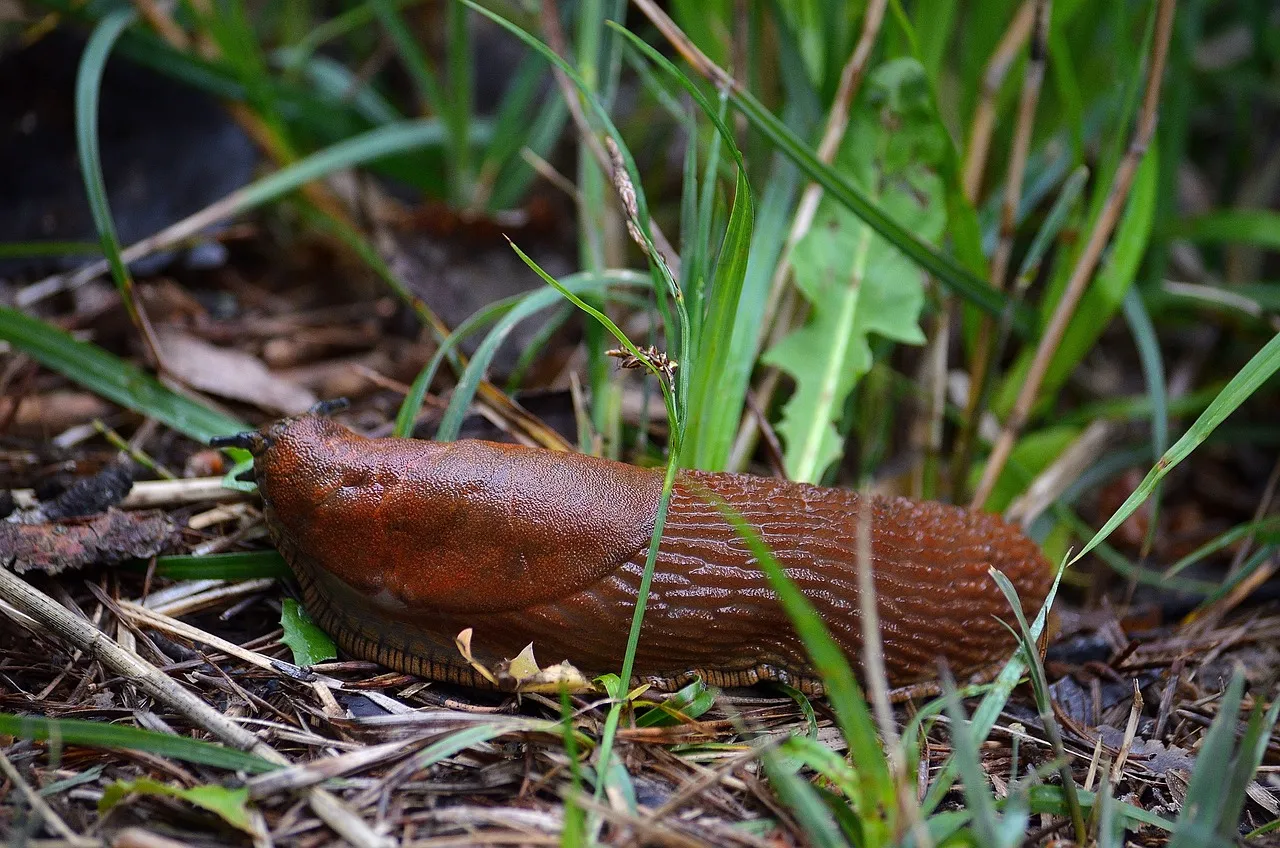
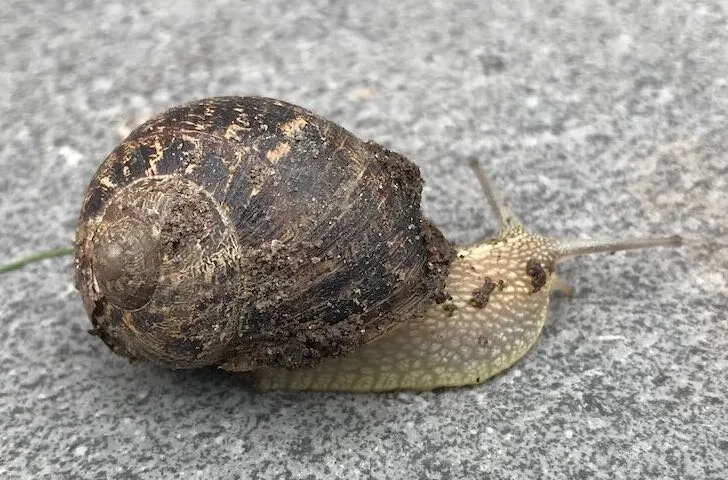
Slugs use their ‘foot’ and ‘skirt’ to slide over surfaces using their ‘slug slime’. Slug and snail slime is a mixture of mucus, water and salts which enables the slug both to take on water and also to move! The notorious slug and snail slime trails can even show you where they have been.
Knowing this means we can start to see what types of leaves and plants slugs and snails hate. There are two types of plants that slugs and snails avoid.
Rough, hairy or serrated leaves
Aromatic, highly scented plants
Usually, any rough, textured, hairy or serrated leaf puts slugs and snails off. They will move to a smoother, easier surface to glide on the leaf. These smoother leaves are used to feast on where they rasp (rip and tear) holes out of the leaf, permanently damaging them.
Before we dive into the plants themselves, it’s worth spending a moment understanding why slugs cause so much damage in UK gardens specifically. This isn’t just interesting background, it directly shapes when and where slug damage is worst, and therefore when slug-proof plants earn their keep most.
The UK climate is almost perfectly designed for slugs
Slugs need moisture to move, feed and survive. The UK’s mild, damp climate gives them almost everything they need for most of the year. After a period of rain, particularly a wet night followed by a cool morning, slug activity reaches its peak. The soil stays saturated, which keeps them moist and mobile for hours, and the reduced temperature means they don’t dry out or retreat as quickly as they would in a hot Mediterranean climate. This is why you’ll find the most devastating overnight damage in April, May and September, when wet mild weather coincides with peak plant vulnerability and active slug breeding.
Clay soils make this worse. Clay holds moisture like a sponge, so even during relatively dry spells the soil under mulch or dense planting stays damp enough for slugs to operate. Gardens on clay in the north and west of England, Scotland and Wales tend to suffer the most. If that describes your garden, the slug-proof plants in this guide become even more important as a structural part of your planting scheme rather than a nice-to-have addition.
The slug lifecycle and when it matters for gardeners
UK gardens host several slug species but the three most damaging are the grey field slug (Deroceras reticulatum), the garden slug (Arion hortensis) and the large black slug (Arion ater). Understanding their lifecycle helps you predict when they’ll be at their most destructive.
Season
What slugs are doing
Gardening risk
Late winter / early spring
Eggs hatch; juvenile slugs emerge hungry and highly mobile
Very high: emerging perennial shoots are at maximum vulnerability
Spring
Adults and juveniles feeding and mating; first egg batches laid in soil
Very high: peak feeding pressure across all garden plants
Summer
Activity drops in hot dry spells; slugs retreat underground
Medium: lower in dry periods but active after any rain
Autumn
Second peak: adults laying eggs before winter; juveniles feeding hard
High: newly planted perennials and autumn bulbs at risk
Winter
Most retreat underground or under debris; eggs overwinter in soil
Low: minimal surface activity except in mild wet spells
The practical takeaway from this is that the two most critical protection windows are early spring, when new growth first emerges, and autumn, when you’re planting bulbs and dividing perennials. Even slug-proof plants benefit from a watchful eye in their first spring after planting, before they’ve had a chance to establish the robust foliage that gives them their slug resistance.
Slugs are part of the ecosystem, not just a pest
It’s worth remembering, even when you’re finding your hostas in tatters, that slugs serve a genuine ecological function. They break down decaying plant matter, returning nutrients to the soil. They are also a critical food source for thrush, blackbirds, hedgehogs, frogs, toads, slow worms and ground beetles. A garden with zero slugs would be a poorer garden ecologically. The goal isn’t elimination; it’s balance. Choosing plants slugs don’t want to eat is the most sustainable way to achieve that balance, because it removes the conflict without removing the slug from the food chain.
💡 Top Tip
A torch patrol on a damp evening in April or May will show you exactly how many slugs you’re dealing with and where they are concentrated. This is far more useful than any slug trap, and it will tell you which plants genuinely need protection versus which are already coping fine on their own.
Let’s look at fifteen plants that will have slugs and snails moving onto your neighbours’ gardens instead!
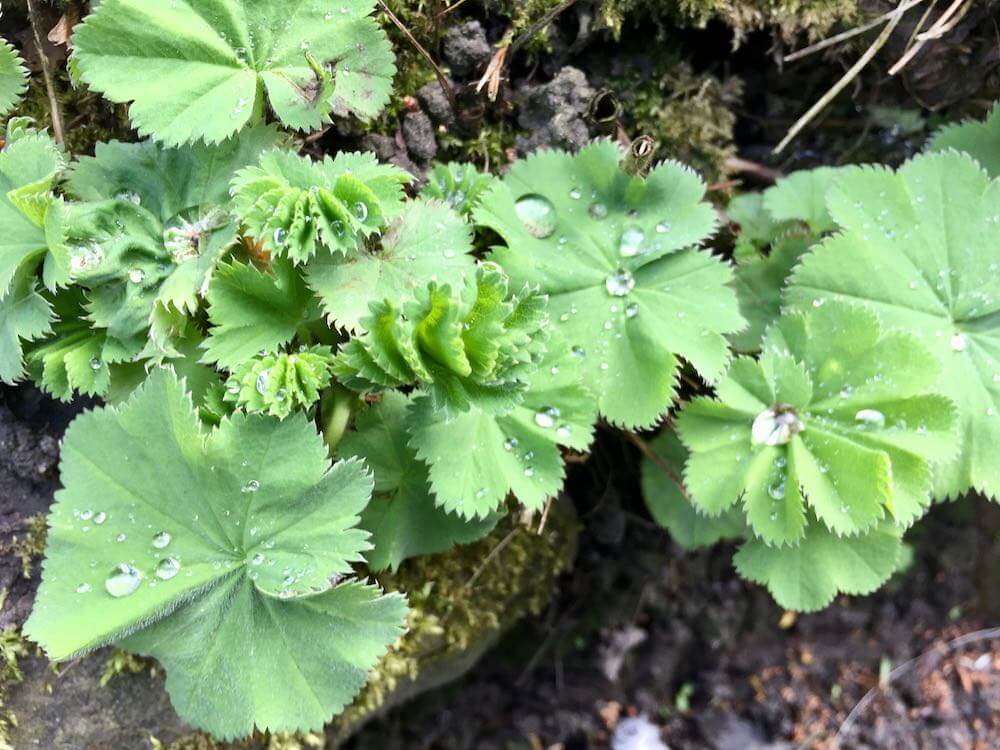
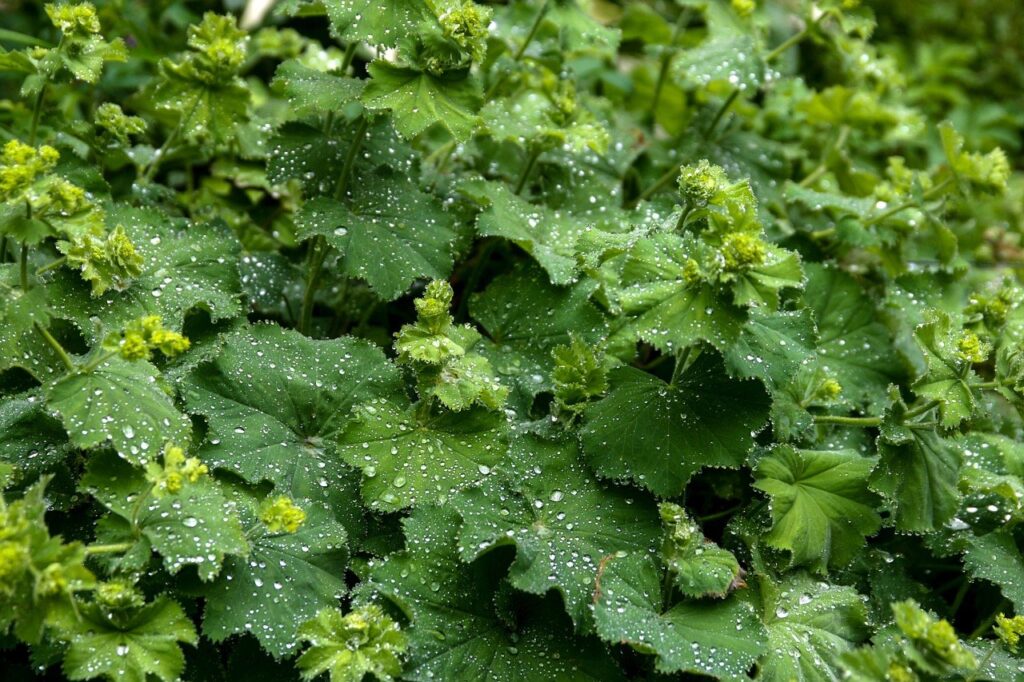
Alchemilla mollis is one of my favourite fuss-free garden plants that slugs avoid like the plague. It’s both super easy to grow and tolerates shade and full sun. It also self-seeds everywhere, so once you have a few, they will propagate all over the garden wherever there is space.
The beauty of Alchemilla or Lady’s mantle is the patterns that rain, water or dew make on its leaves. The water pools like oil, given the slightly hairy leaf texture. It’s this texture that also puts off slugs and snails. The word Alchemy comes from old French alquemie, pronounced alkimie and used in Medieval Latin as alchymia. Alchemy is an age-old practice part of which uses the transmutation of base metals. Hence, the water on the leaves looks like liquid mercury or liquefied lead.
The flowers are a riot of lime green during summer but can flop into paths. So I always cut them back once they are spent. It’s super easy to collect seeds by cutting these off and drying them. Not that you’ll need seeds as these plants propagate everywhere.
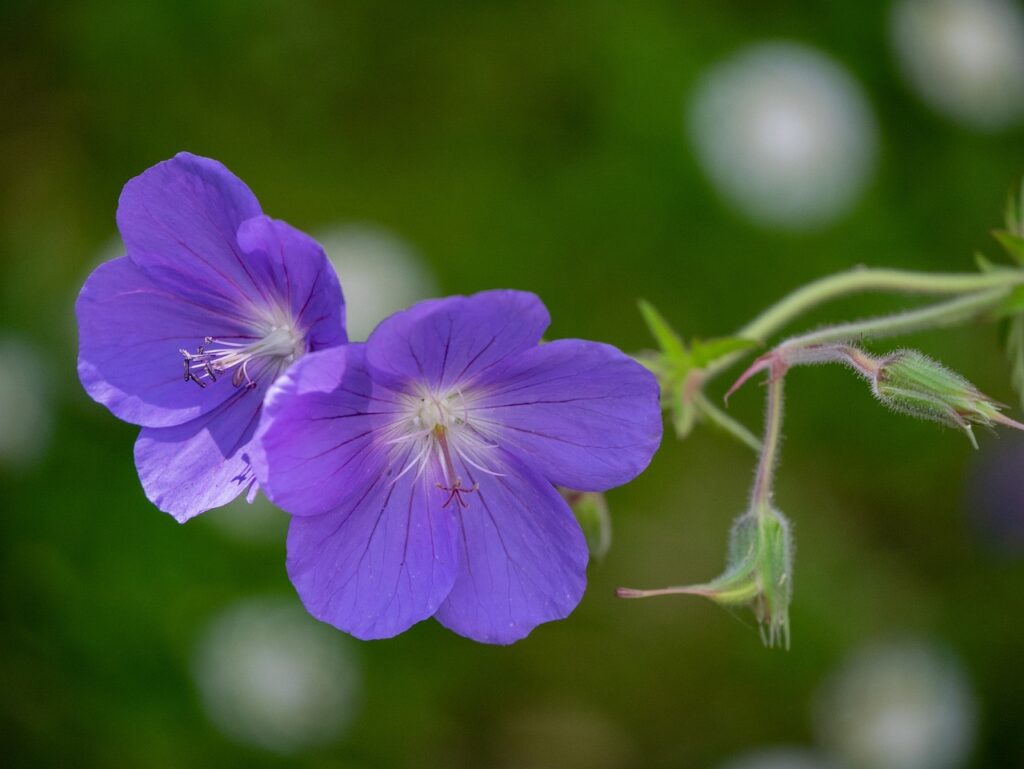
2. Geranium x johnsonii ‘Johnsons Blue’ – Hardy Geraniums
This hardy Geranium is also pretty much immune to slugs and snails. Making it an excellent plant for both ground cover and flowering throughout the summer. I’m not sure whether it’s the scent in the leaves when crushed that puts them off, but nearly all hardy Geraniums are avoided by slugs and snails. Opening up a world of colour and Geranium types that won’t get munched or nibbled in the garden.
These ‘Hardy’ Geraniums differ from tender Geraniums known as Pelargoniums. Pelargoniums are the tender fleshier plant species often found in Greece or the Mediterranean. A staple of the 1970s garden and often overwintered in porches or greenhouses, this is a completely separate plant and should be treated as a bedding plant in the UK.
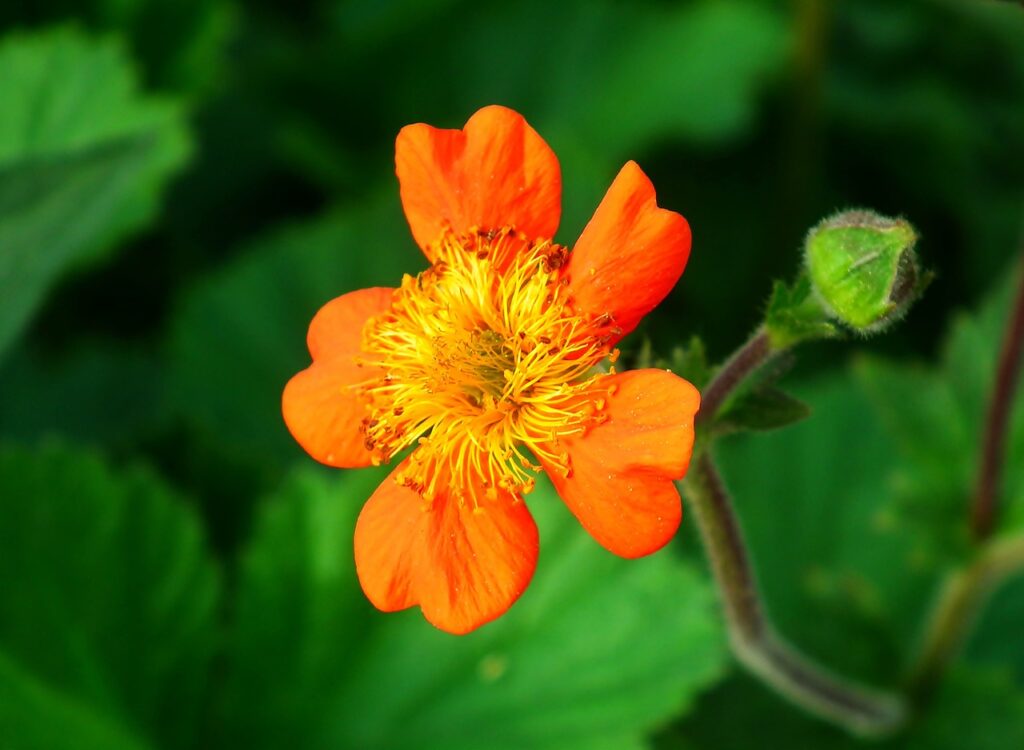
Geums or avens are some of the best value slug-proof perennial plants in the garden. Not only do the slimy garden pests avoid them, but most Geums flower profusely during the season. Providing a blast of colour but also pollen for foraging honey bees. Given their low cost, high flowering potential and lack of pests, they are bulletproof garden plants. I would argue that every garden can benefit from a Geum or two!
Geums will grow in pretty much all soil, providing they don’t dry out too much. They do prefer a bit of shade or the colours can become easily washed out in a full sun south-facing garden aspect. Most Geums only reach between 30 and 50cm high.
Geum ‘Totally tangerine’ is probably the most famous and well-performing. Its notoriety comes from its popularity at Chelsea Flower Show where for a period of five years it was the plant du jour for garden designers. This plant flowers and flowers and then flowers some more from May to October! It also can grow up to 90cm high, so is a great garden filler plant.
🌿 Geum At A Glance
Plant Type
Hardy herbaceous perennial
UK Hardiness
Fully hardy (H7) down to -20°C
Height / Spread
30–90cm / 30–40cm (Totally Tangerine up to 90cm)
Flowering Period
May to October
Growing Conditions
Sun or partial shade, most soil types including clay
Why Slugs Avoid It
Hairy stems and leaves with rough leaf texture
Other slug-proof Geum species and cultivars to consider:
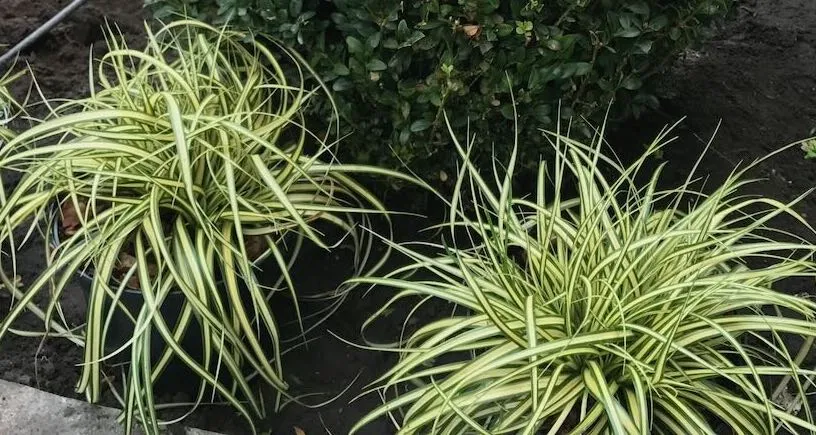
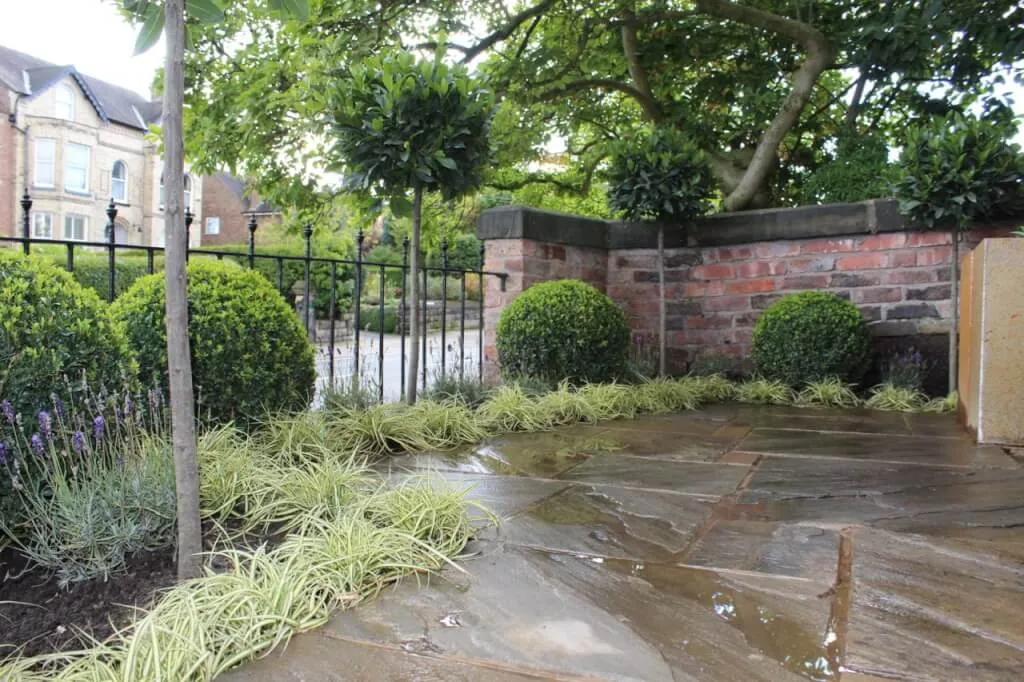
Carex are an evergreen low-growing sedge found on river banks and the edges of woodland in their native habitat. Often confused with grasses, given their strap-like leaves. These beautiful perennial evergreen plants add texture to any garden border or container garden. Whilst they may not send up blousy flowers they add structure to a garden, and the slugs and snails won’t touch them.
In particular, Carex are a great way to add movement to the garden and winter interest. As most other herbaceous perennials have died back to the ground, Carex keeps their colour all year round. They are tolerant of most soil types and need very little in terms of plant feed or pruning. Simply cut out any damaged leaves, and that’s about it when maintaining Carex!
These slow-growing evergreen perennials look great when edging a formal garden border or are used informally as filler plants amongst other herbaceous perennials in flower beds. They are a super valuable addition to any garden planting scheme and are avoided by slugs!
🌿 Carex At A Glance
Plant Type
Evergreen perennial sedge
UK Hardiness
Fully hardy (H6–H7) depending on variety
Height / Spread
30–90cm / 30–60cm depending on variety
Flowering Period
Year-round foliage interest
Growing Conditions
Shade or partial shade, moist to boggy soil
Why Slugs Avoid It
Fine strappy leaves with microscopic serrated edges
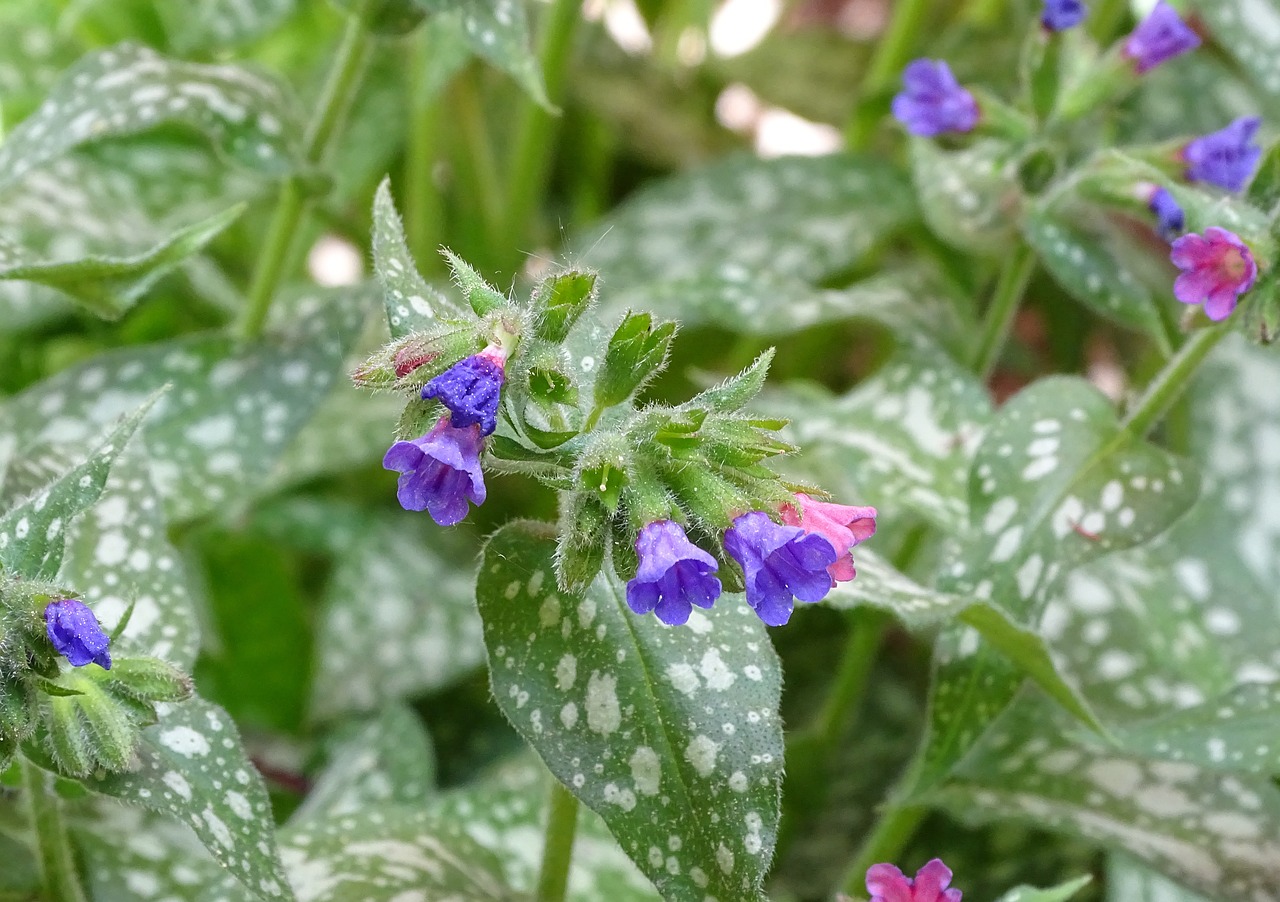
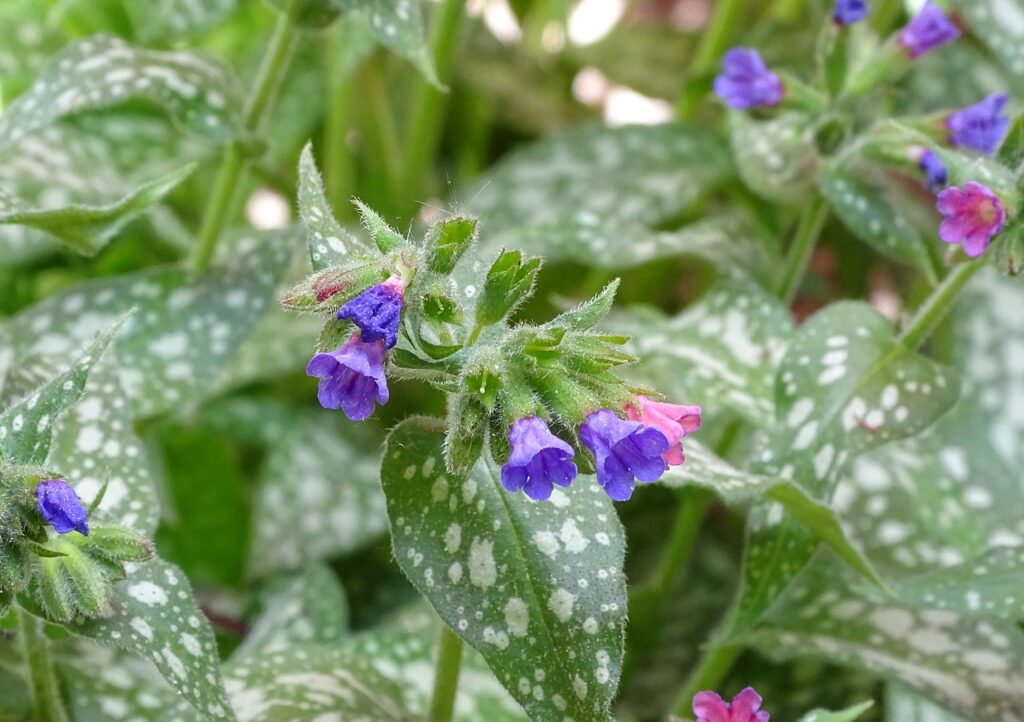
Pulmonaria or lungwort are an essential and fabulous ground cover perennial for any garden, no matter how small. These unsung beauties have fallen out of fashion for some reason, which is something I want to change. These plants have fabulous hairy (hirsuta in Latin when checking plant names) and sometimes polka-dotted leaves. As they are so prickly, slugs and snails give them a swerve allowing their beautiful tiny trumpet flowers to shine.
Often their flowers are split colours on each plant. A mix of blue, purple and pink can all be found on the same plant in cross-bred cultivars.
What I love about Pulmonaria is twofold. One, they flower profusely early in the season, around April time. The second is they self-seed like crazy. They are also known as Promiscuous Pulmonaria for a good reason. So if you’re a lazy gardener, they are a great plant to introduce and let them crossbreed. You’ll end up with all sorts of mixed colour permutations over five or so years in the garden.
Pulmonaria will grow anywhere but do prefer damp soil and shade. Great for those awkward north-facing gardens. They prefer being in the ground and are a bit lacklustre as a container or pot plant. Bees love them, and they add much-needed pollen and nectar early in the growing season. Pulmonaria ‘Blue Ensign’ is one of the rare true blue flowers as well.
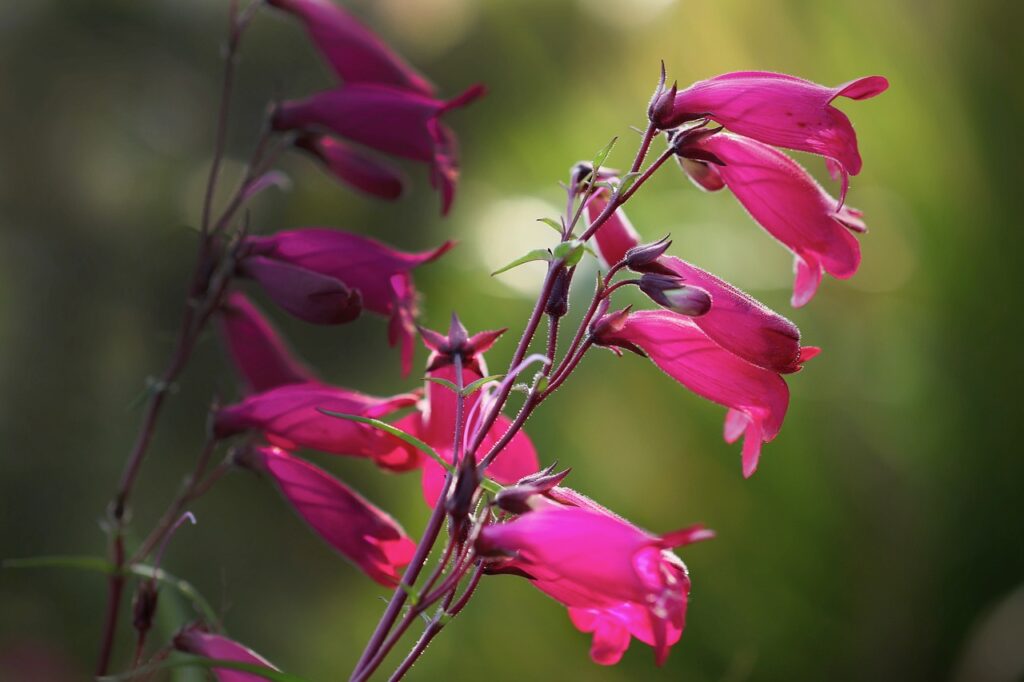
Penstemons are one of my favourite hidden secret garden perennial plants. Whilst people love Dahlias and other big summer flowers like Heleniums, Penstemons seem overlooked. Even though their tubular flowers offer just as much impact, I’m not sure why most gardeners seem to miss them out of their garden border designs, but we should certainly add them to the list.
The great thing with Penstemons is that slugs and snails won’t touch them, unlike Heleniums and Dahlias! They may look delicate, but they’re a real tough cookie from the herbaceous perennial plant group.
Penstemons, commonly called Beard tongues, are an unusual herbaceous plant as they are semi-evergreen. Meaning in mild-weather areas, they keep their foliage all year round. Whilst they are semi-evergreen, their crowns are susceptible to frost. So many people leave their foliage intact during winter to take the brunt of any cold snaps. I tend to leave mine throughout the winter and then give them a tidy-up with secateurs in late spring. If it has been a mild winter, I leave them alone.
Penstemons love the full sun and need to be protected from cold winds. They make a great hot border plant, and the bees will love them. You can use them as cut flowers in floral arrangements, all without worrying that slugs may polish them off first.
🌿 Penstemon At A Glance
Plant Type
Semi-evergreen herbaceous perennial
UK Hardiness
Hardy (H4–H5) down to -10°C to -15°C
Height / Spread
60–90cm / 30–45cm
Flowering Period
June to October
Growing Conditions
Full sun, free-draining soil, sheltered from hard frost
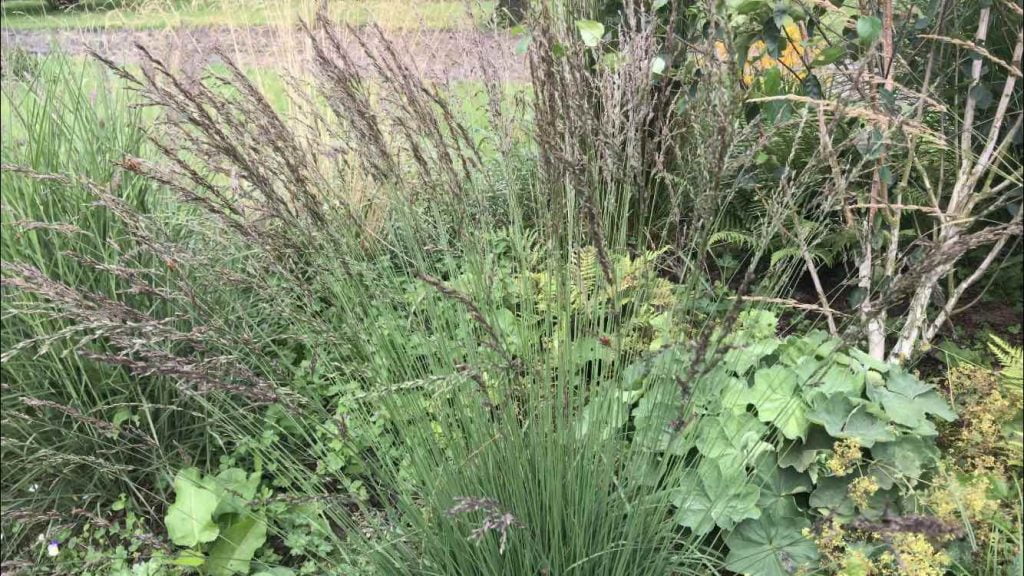
The other benefit of Molinia is that once established, they will thrive in dry conditions, exposed sites and in both full sun or shade. They’re totally bomb-proof in the garden.
Grasses are a great addition to any flower bed as they add movement and texture, which is often lacking in a lot of beginner gardener flower beds. These grasses sway and move in the breeze allowing insects to perch on their leaves to scout their next destination. There’s also minimal pruning or aftercare involved with Molinia. I leave mine all the way through the winter before pruning these grasses back hard to around 3 inches from the ground. There’s really not much else needed with them.
They will self-seed quite happily, meaning if you’re a laid-back gardener, these plants will help bulk out your borders for free themselves. If you want a more ordered, formal look in your garden flower beds, you can easily spot the seedling, weed them out, or pot them on for friends!
🌿 Molinia At A Glance
Plant Type
Deciduous ornamental grass
UK Hardiness
Fully hardy (H7) down to -20°C
Height / Spread
60cm–2m / 30–60cm depending on variety
Flowering Period
Summer and autumn; seed heads persist into winter
Growing Conditions
Sun or shade, most soils; tolerates exposure and dry conditions
Why Slugs Avoid It
Fine leaves with microscopic serrated edges make sliding impossible
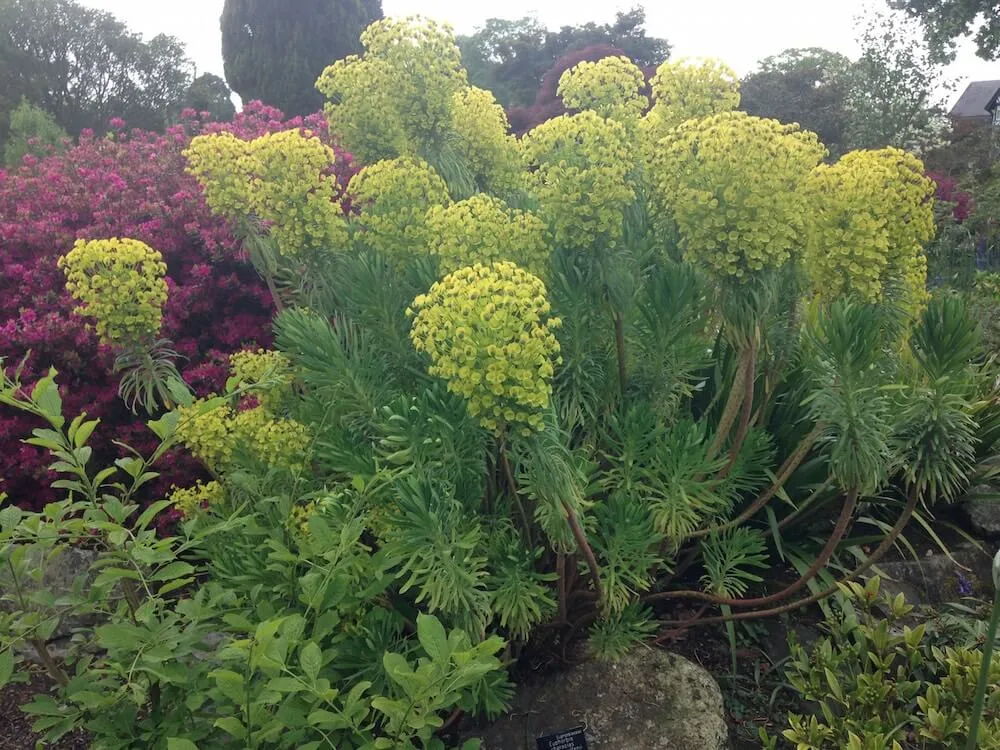
Euphorbia or spurges are next up in the slug-proof garden plant category. These plants contain a milky sap that’s an irritant and the bitter taste is simply too off-putting for slugs and snails. This plant group covers perennials, annuals, succulents and shrubs. So there’s plenty of choice for everyone.
It must be noted that you need to use gloves when pruning Euphorbia as the sap can burn skin and damage eyes if it gets in contact. Also, keep these away from children who may crush the stems and inadvertently get the sap on delicate skin. Other than that, they are a fab slug-proof plant.
🌿 Euphorbia At A Glance
Plant Type
Evergreen or deciduous perennial or shrub
UK Hardiness
H4–H5 depending on species
Height / Spread
30cm–1.2m / 30cm–1m depending on species
Flowering Period
March to September (species dependent)
Growing Conditions
Full sun to partial shade, well-drained soil
Why Slugs Avoid It
Milky, bitter, caustic sap slugs find toxic and unpalatable
⚠️ Safety Note
Always wear gloves when handling or pruning Euphorbia. The milky white sap is a skin and eye irritant. Keep children away from freshly cut stems.
Euphorbia x martini – fantastic purple and green foliage; flowers in August with bright bracts
Euphorbia myrsinites – prostrate growing specimen, great for ground cover and rockeries
Euphorbia ceratocarpa – one of the longest-flowering perennials in the Euphorbia group
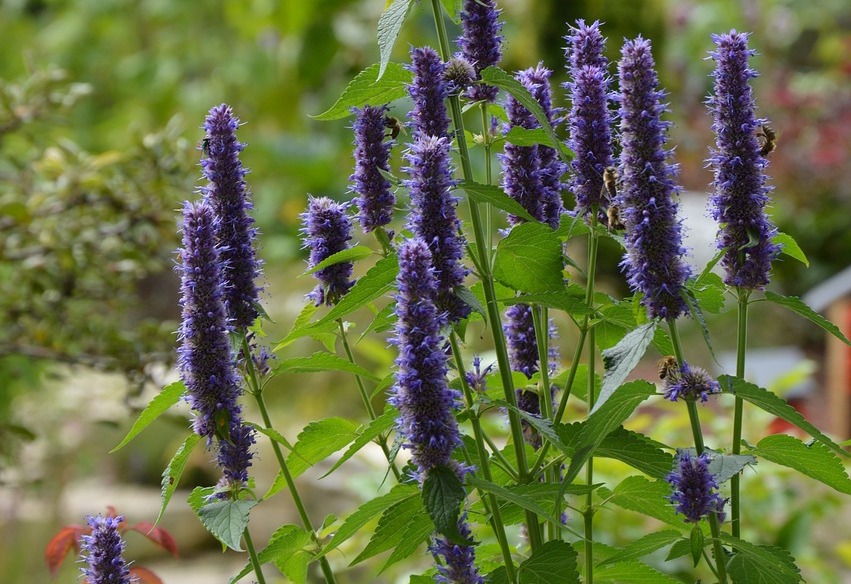
Agastache are an aromatic group of plants that live in the mint family, Lamiaceae. These large upright herbaceous perennials produce spikes full of blue and purple flowers. They have a heady minty aroma about them in the garden and are loved by bees as seen below. You can spot they are a member of the mint family by their square-looking stems.
These wonderful plants are drought-tolerant but won’t live long in clay soil. They will happily bake in full sun and produce huge amounts of scented flowers.
As a late summer flowering perennial, they help extend the season in the garden and are a great tall plant for a small garden, given they don’t spread width ways. I’ve used them in many a show garden to provide a tall pop of purple flowers without taking up too much space. They don’t grow as well in containers though, so I’d always recommend planting them in the soil.
🌿 Agastache At A Glance
Plant Type
Hardy herbaceous perennial
UK Hardiness
Hardy (H4) down to -10°C; needs free-draining soil to survive
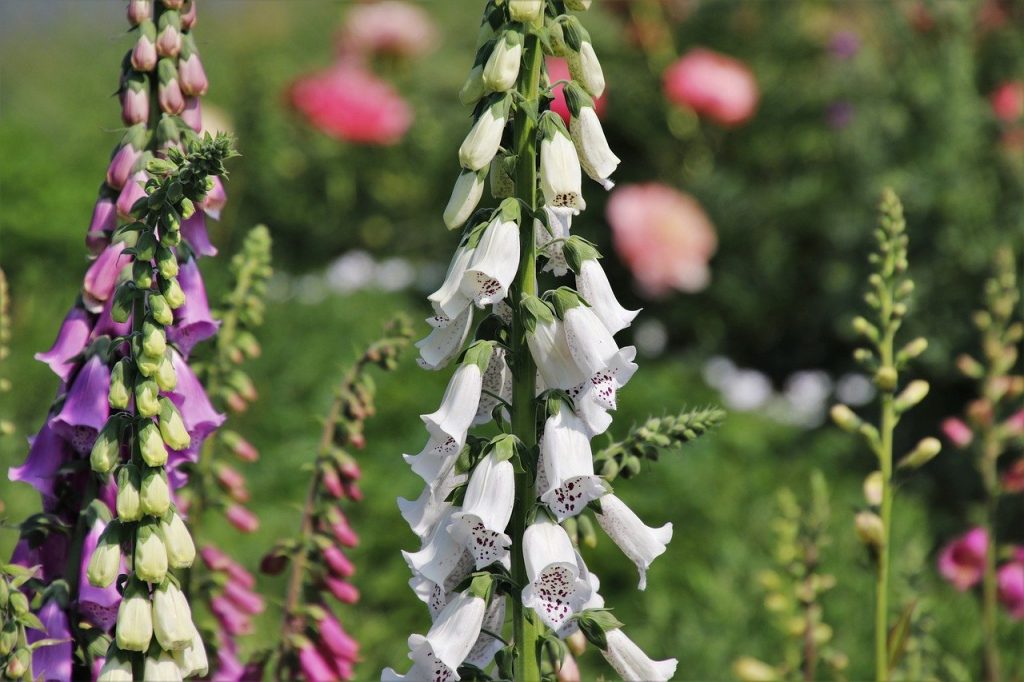
Foxgloves are some of the toughest slug-proof plants available, and the good news is they are some of the cheapest plants to grow from seed. Foxgloves have hairy stems and leaves making them unappealing to slugs. They grow from small rosettes and take two years to flower. They are known as biennials meaning in year one they germinate and produce foliage, then in year two, flower and set seed before dying.
These traditional cottage garden flowers tower above perennials in borders, making them a real statement plant. Foxgloves will also grow in partial shade too, making them great for north-facing urban gardens.
Once you’ve grown some foxgloves from seed or bought a garden centre-grown variety, chances are they will keep popping up if you let them go to seed. So they are great value in the garden. Just make sure in late summer and autumn that you leave the seed heads to dry. Then when they rattle, you can snap them off and spread the seed yourself. Easy peasy!
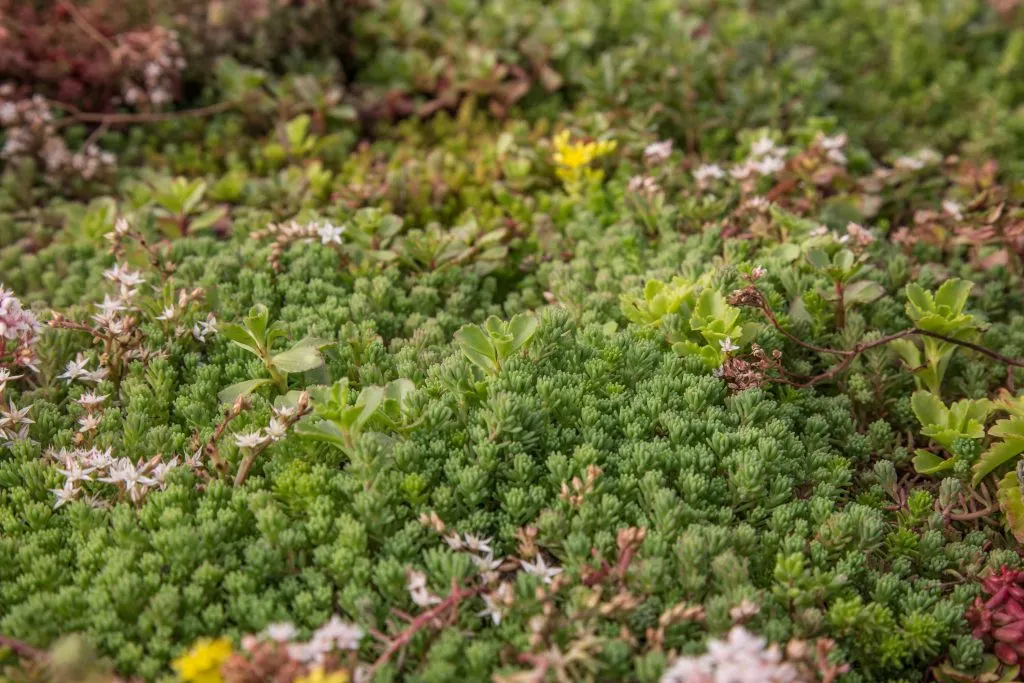
Sedums are among the toughest and least demanding plants you can introduce into your gardens. These small evergreen plants can survive extremes of temperature. From sub zero temperatures to blazing hot sun, they are super tough plants. Their foliage is usually a glossy thick waxy green, meaning that slugs and snails find it hard to eat through them. Sedums are also quite tricky for them to glide over.
Sedums come in a huge variety of shapes and sizes. Whether Sedum matts used in green roofs or larger specimens with thick and chunky leaves. There really is a specimen of Sedum for every garden.
They will cope with all soils except heavy wet clay or bog gardens, where they will drown. But they love full sun and free-draining poor soil. They offer thousands of tiny flowers for insects during the summer, vastly increasing your pollen offering for insects.
🌿 Sedum At A Glance
Plant Type
Hardy succulent perennial
UK Hardiness
Fully hardy (H7) down to -20°C
Height / Spread
5–60cm depending on variety
Flowering Period
July to September
Growing Conditions
Full sun, poor to average free-draining soil. Drought tolerant
Why Slugs Avoid It
Glossy waxy leaves are too hard to pierce and difficult to slide across
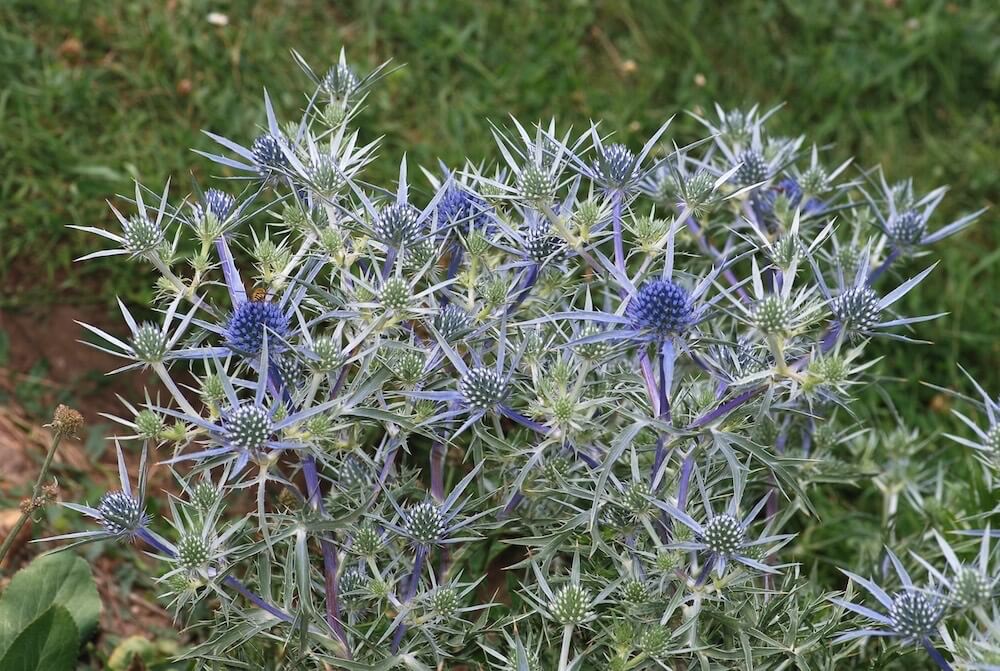
A striking plant that has a very prickly character, the Sea holly or Eryngium is a show stopper of a plant. This coastal plant comes in blue, white and silvery colours, perfect for the dry and exposed garden. Offering sharp holly-like leaves and incredible flower spikes. It’s hard to miss Eryngium in the garden.
Its tough leaves and prickly flowers make it impossible for slugs and snails to crawl over or eat them. They are also a super long-lasting flower that keeps from May all the way through to October. They make excellent cut flowers too, lasting for weeks indoors.
Eryngiums need free-draining soil and full sun. They can cope with wind, exposure and salty coastal gardens with ease. They do well in containers for a few years before needing to be planted out to survive.
🌿 Eryngium (Sea Holly) At A Glance
Plant Type
Hardy herbaceous perennial
UK Hardiness
Fully hardy (H5–H6) depending on species
Height / Spread
30–90cm / 30–45cm
Flowering Period
June to October
Growing Conditions
Full sun, free-draining soil; excellent in coastal gardens
Why Slugs Avoid It
Sharp, spiny, holly-like leaves and stems slugs physically cannot cross
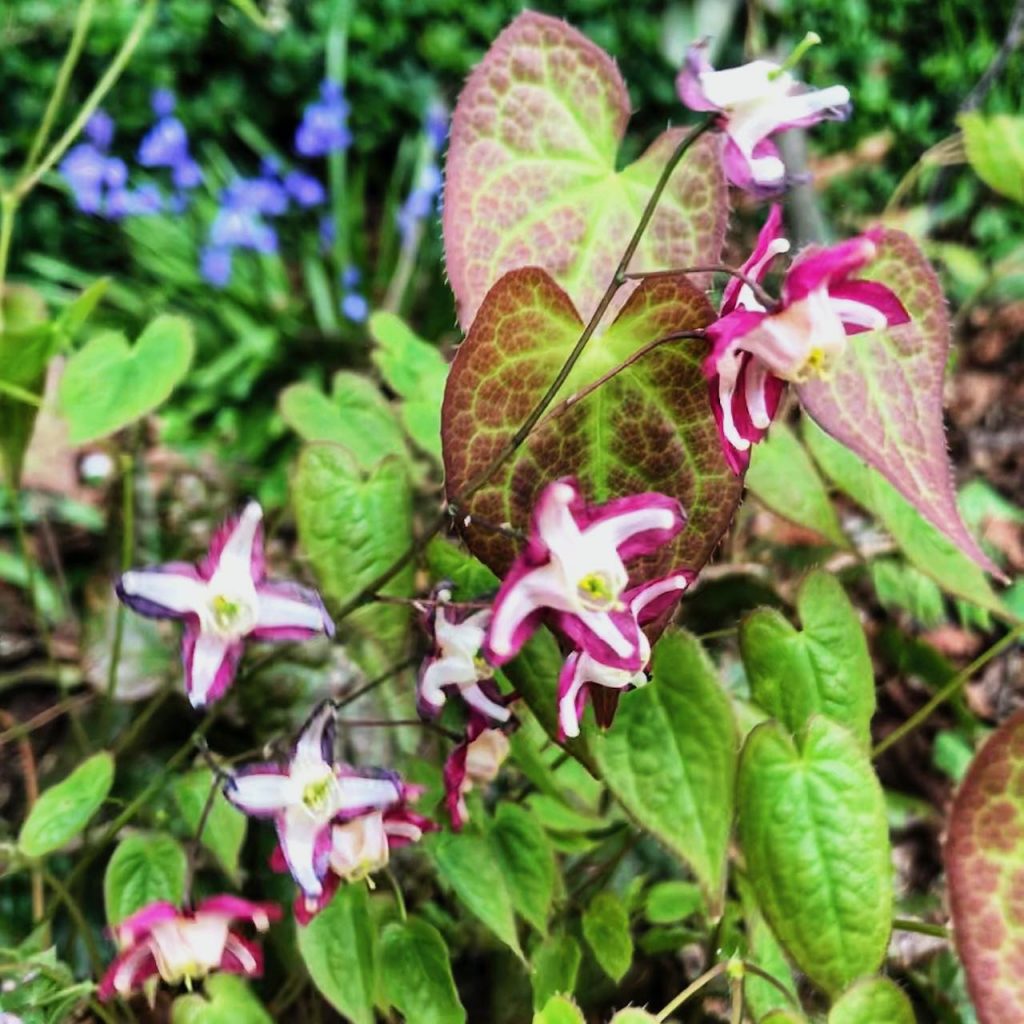
Epimediums are a truly fascinating plant that loves dry shade. Yes, you heard that correctly, a slug-proof plant for dry shade. The most challenging of all garden conditions! This semi-evergreen ground cover perennial has another trick up its sleeve; its early spring flowers look like bats or butterflies taking flight. Very few designers tend to choose this plant, maybe because they haven’t experienced its beauty first-hand.
Once established, this plant needs no feed or special care. It will creep each year, producing the most delicate of flowers above its heart-shaped leaves. Suitable for dry, shady spots, it’s a real winner and great for early foraging spring insects, making it a genuinely wildlife-friendly plant.
🌿 Epimedium At A Glance
Plant Type
Semi-evergreen ground-cover perennial
UK Hardiness
Fully hardy (H6–H7) down to -20°C
Height / Spread
20–40cm / 30–60cm; spreads slowly by rhizomes
Flowering Period
March to May
Growing Conditions
Dry to moist shade; excellent under trees and in dry spots
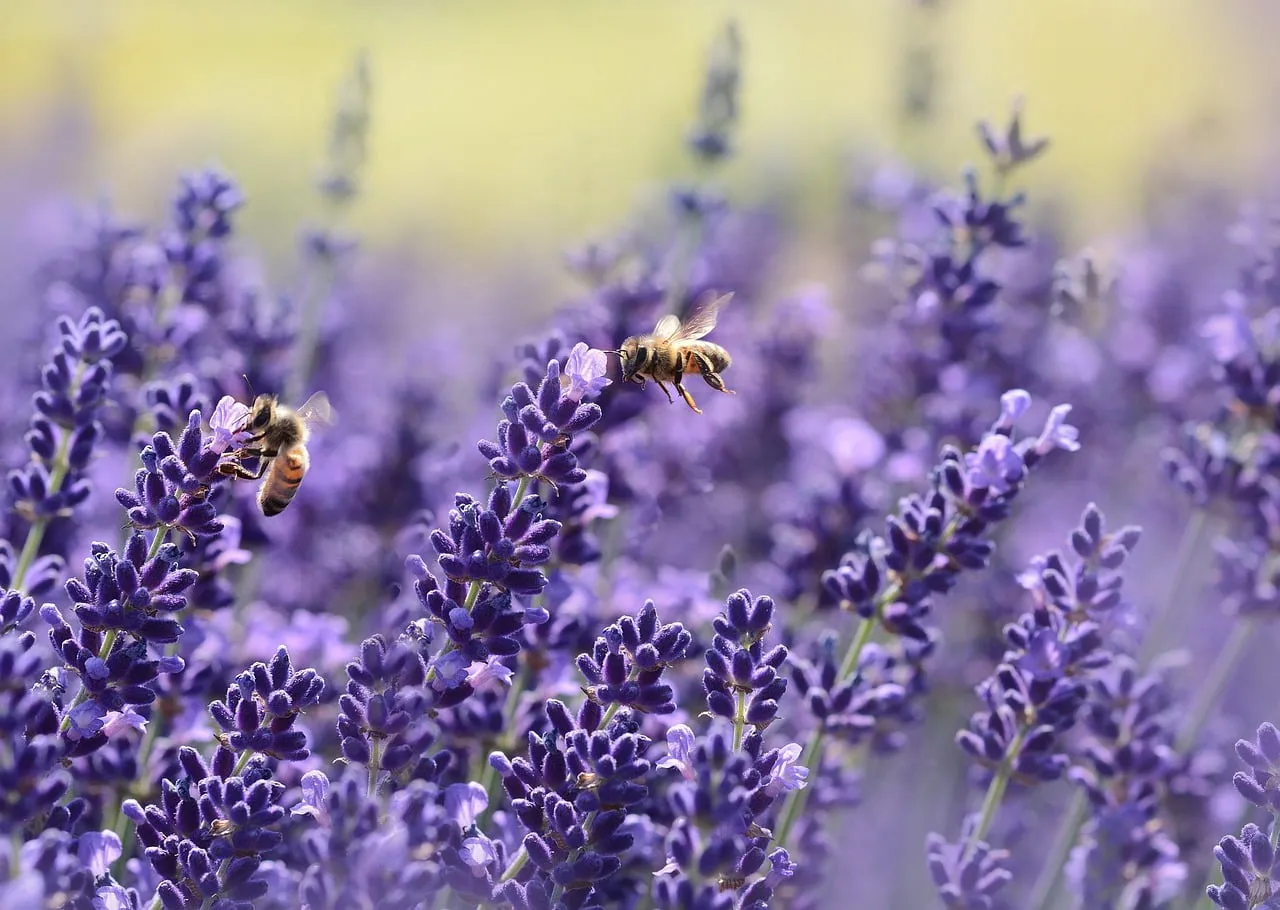
Lavender has managed to sneak into this list; even though it’s often argued to be a shrub, it also falls into the herbaceous perennial category. I won’t split the difference, but lavenders are excellent slug-proof perennials in the garden; their heavy scents deter both slugs and snails, and they are one of the easiest plants to grow, providing you have the right conditions.
Lavender needs free draining full sun. You can’t cheat your way around this. Wet soils, clay and shade will kill lavender. So don’t bother if those are the conditions you’re working with. It will just end up in heartache. Choose other shady-loving specimens above for those conditions.
Lavenders are Mediterranean plants needing full sun, hot positions and very free-draining soil. Prune lavenders once a year, and you’ll be rewarded with easy-to-look-after plants that flower profusely.
🌿 Lavender At A Glance
Plant Type
Evergreen sub-shrub
UK Hardiness
Hardy (H5–H6) with good drainage
Height / Spread
60–90cm / 60–90cm
Flowering Period
June to August
Growing Conditions
Full sun, free-draining alkaline or sandy soil. Avoid clay
Why Slugs Avoid It
Intensely aromatic oils in foliage are a powerful slug deterrent
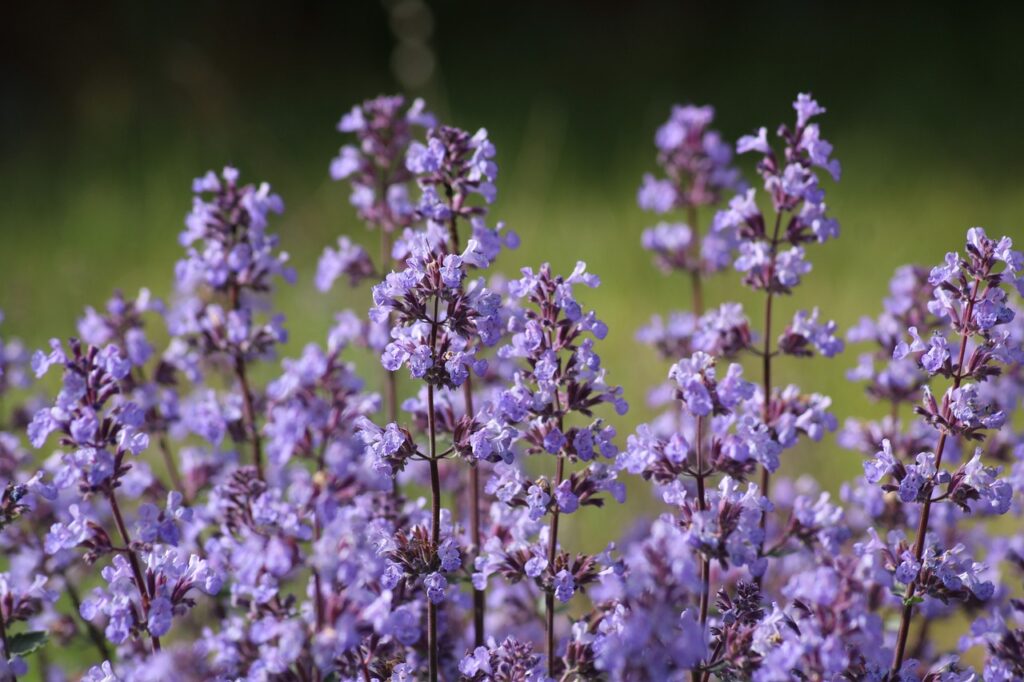
Last but not least, we have Nepeta, otherwise known as Catnip, in the garden. These aromatic perennials come from the mint family and are a bomb-proof plant that slugs and snails will avoid. Sending up bright blue and purple flowers, this silvery foliage plant fits in amongst all herbaceous borders and works well with all the plants listed above.
Nepeta forms a nice loose shrub shape during the summer and is a magnet for bees due to its rich pollen flowers and minty fragrance. It will happily bulk up to 1m wide after a few years and needs very little looking after other than full sun and free-draining soil. Nepeta is a true slug-proof plant.
Nepeta makes great dried flowers and can be pruned back each February to just above the ground, making it very easy to care for as a beginner gardener.
The fifteen plants above form the backbone of any slug-proof border. But from years of designing gardens and specifying plants for clients up and down the country, there are a handful more that deserve a place on your radar. These are the plants I reach for when a client needs colour, structure or ground cover and we know the local slug population is fierce.
16. Astrantia (Masterwort)
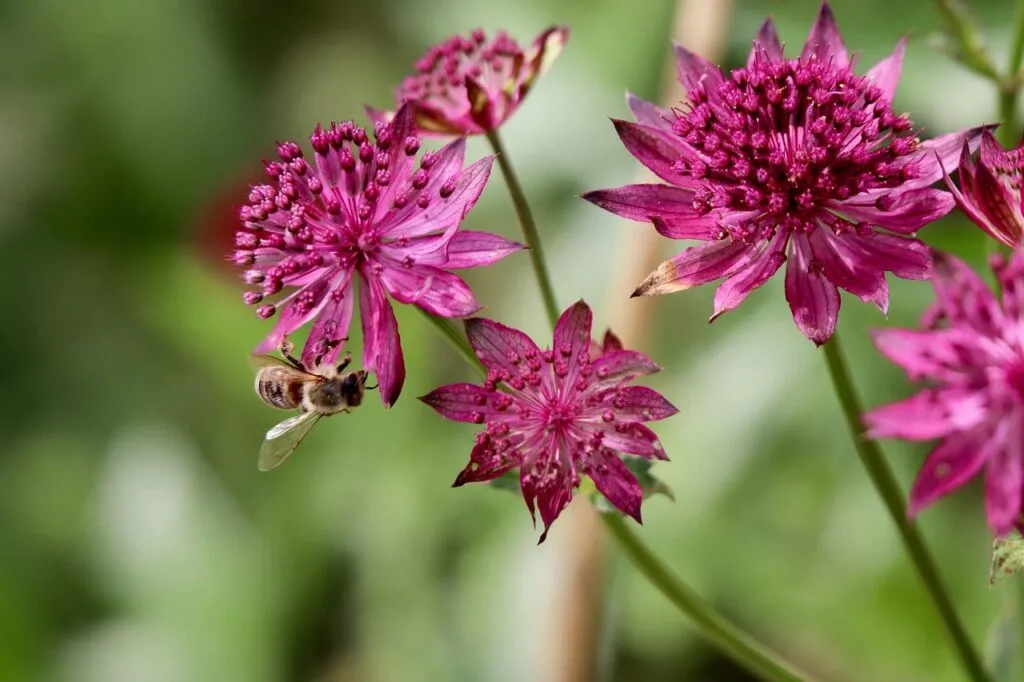
Astrantia is one of those plants that garden designers quietly rely on. The deeply lobed leaves are left entirely alone by slugs and snails, and the intricate pincushion flowers in white, pink and deep burgundy are practically unmatched for early to mid-summer interest. I’ve used Astrantia in dozens of client gardens in partial shade where little else would give that combination of slug-resistance and long flowering. It does prefer moisture-retentive soil, so it’s not the one for hot, dry spots, but for damp shade it is genuinely outstanding.
🌿 Astrantia At A Glance
Plant Type
Hardy herbaceous perennial
UK Hardiness
Fully hardy (H7) down to -20°C
Height / Spread
60–90cm / 45–60cm
Flowering Period
June to August
Growing Conditions
Partial shade to full shade, moist to well-drained soil
Why Slugs Avoid It
Large lobed leaves are unpalatable to slugs and snails
Astrantia ‘Roma’ – soft pink flowers on long stems, excellent for cutting
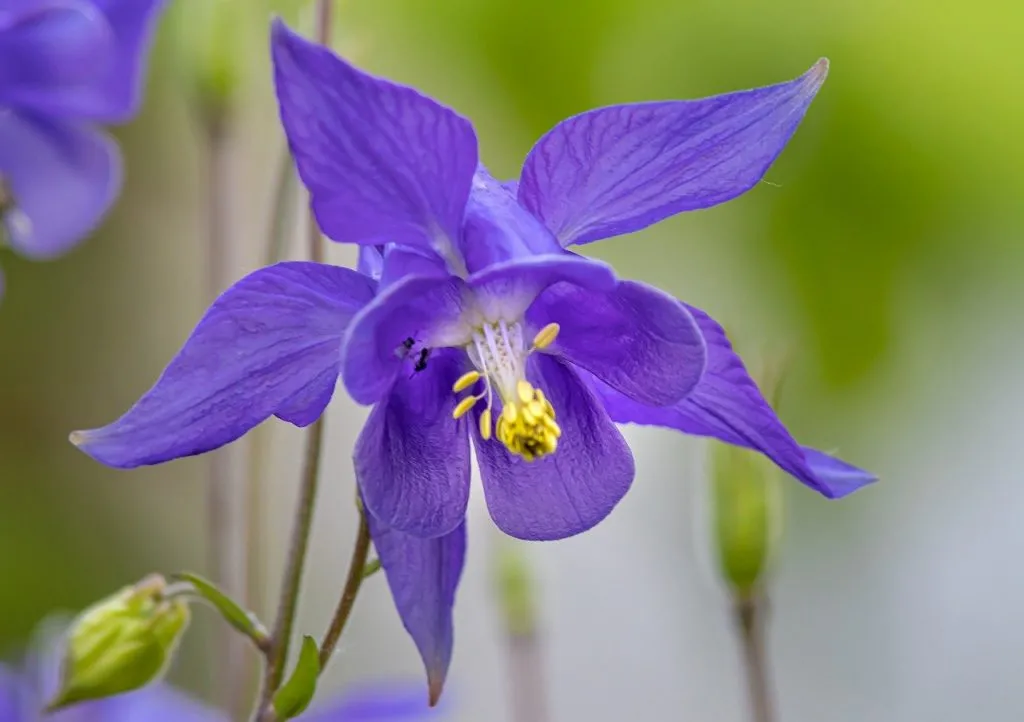
Aquilegia is one of those plants that’s so reliable in gardens I sometimes forget to mention it. Slugs genuinely seem to dislike the flavour of the foliage, because despite Aquilegia’s leaves not being particularly hairy or tough, they are almost never touched.
The spurred flowers in May and June are spectacularly architectural, ranging from pure white through lemon yellow, pale blue and deep burgundy. They self-seed prolifically and cross-pollinate freely, so within a few years you’ll have a colony of unique, unexpected hybrids appearing across your borders. Given they cost very little from seed and require almost zero maintenance, they are tremendous value.
🌿 Aquilegia At A Glance
Plant Type
Hardy herbaceous perennial
UK Hardiness
Fully hardy (H7) down to -20°C
Height / Spread
60–90cm / 30–45cm
Flowering Period
May to June
Growing Conditions
Sun or partial shade, most well-drained soils
Why Slugs Avoid It
Foliage is unpalatable to slugs despite not being hairy or tough
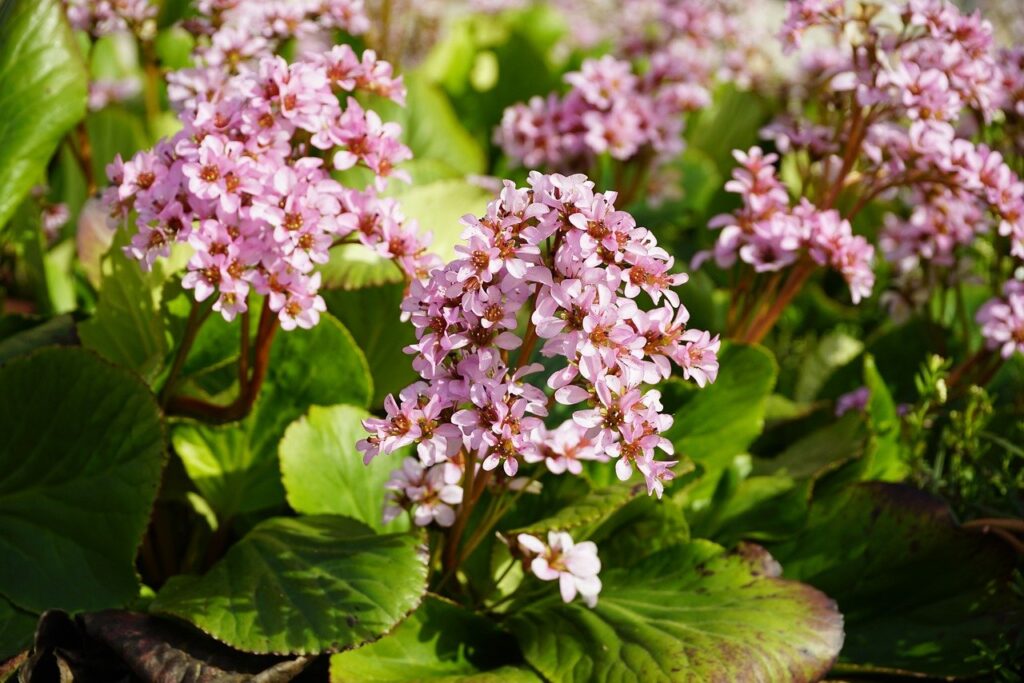
Bergenia is one of the most overlooked plants in the UK garden, and I’ll be honest: I’ve had to change minds about it on more than one client project. Once people see it doing its job through winter, though, they come around. The enormous leathery leaves are completely impenetrable to slugs, and the early spring flowers in pink, white and magenta arrive before almost anything else in the garden. This makes it invaluable as both a foliage plant and a spring flowering plant. It tolerates deep shade, poor soil, and neglect with equal good humour. The leaves of many cultivars take on dramatic red or bronze tints through winter, giving you genuine year-round interest from a single plant.
🌿 Bergenia At A Glance
Plant Type
Evergreen hardy perennial
UK Hardiness
Fully hardy (H7) down to -20°C
Height / Spread
30–60cm / 45–60cm; spreads slowly by rhizomes
Flowering Period
February to April
Growing Conditions
Sun or shade, most soils including clay and dry shade
Why Slugs Avoid It
Large thick leathery leaves are too tough and bitter for slugs to penetrate
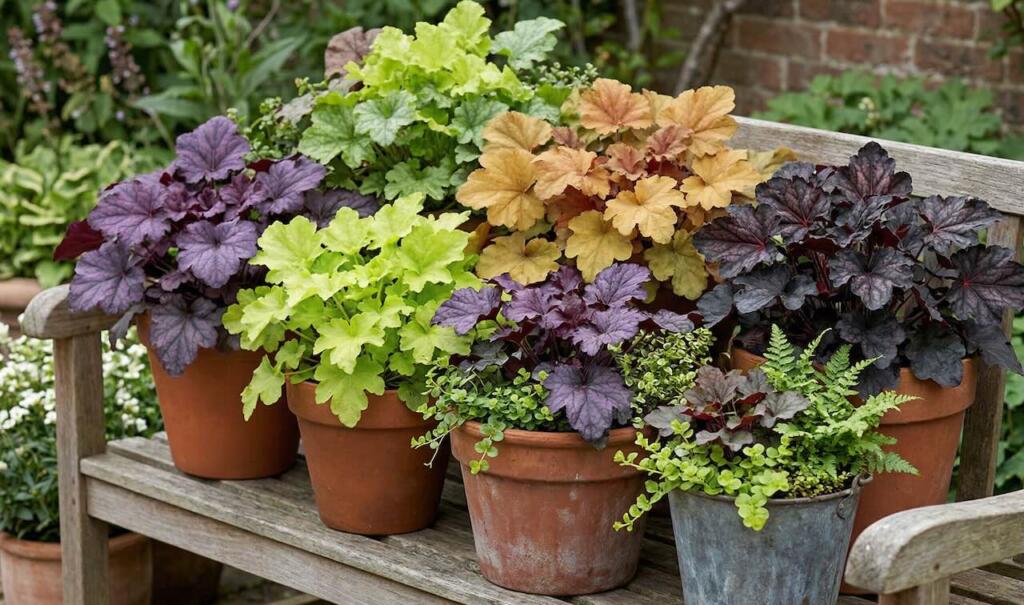
Heucheras have become a staple of modern garden design, and with good reason beyond their slug-proof credentials. Their foliage is the main event: the leaves come in an extraordinary range of colours from near-black and deep burgundy through burnt caramel, lime green, and silvery pink. The texture of the leaves is slightly rough and the plants contain bitter compounds that slugs find unpalatable.
They are at their best in partial shade with reasonable moisture retention, and reward you with airy wands of tiny flowers above the foliage through summer. In my experience, Heucheras are occasionally targeted by vine weevil, but slugs leave them well alone.
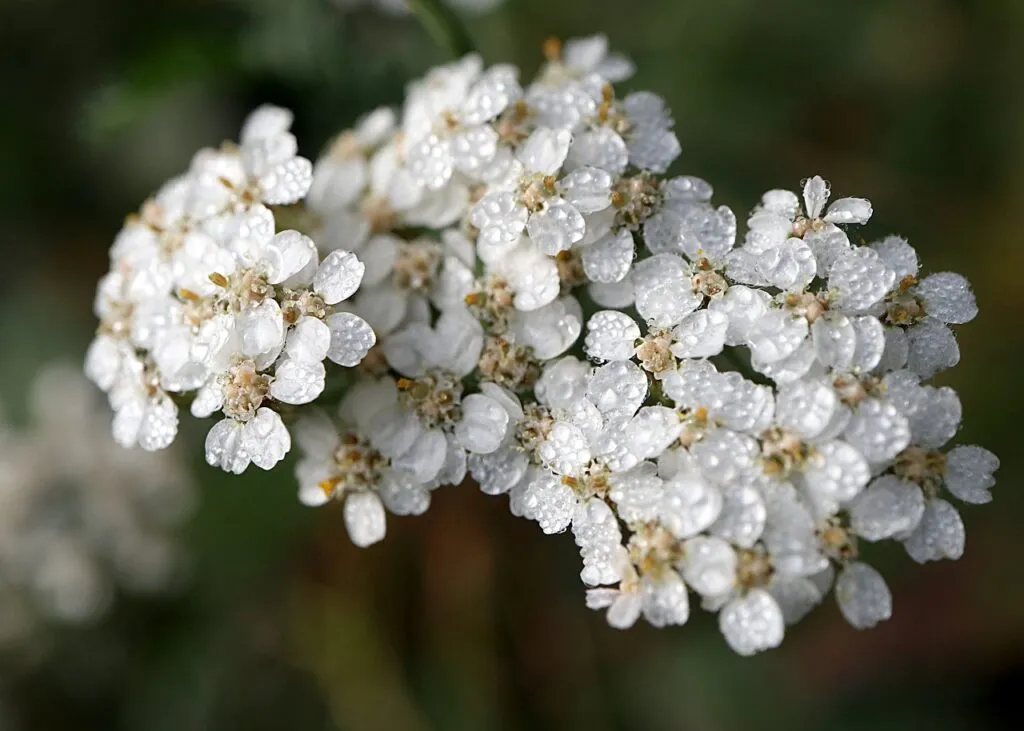
Achillea is one of those plants that punches well above its maintenance weight. The flat-headed flowers in yellow, white, burnt orange and deep red create a horizontal counterpoint to upright spires in a border, and the aromatic, feathery foliage means slugs give the whole plant a wide berth. It thrives in full sun on poor, free-draining soil, which makes it a natural companion for Sedum, Eryngium and Agastache. The flowers dry beautifully and last for weeks as cut flowers. I regularly use Achillea in prairie-style planting schemes on new build gardens where the soil is poor, and slug pressure is high after construction, and it never lets me down.
🌿 Achillea At A Glance
Plant Type
Hardy herbaceous perennial
UK Hardiness
Fully hardy (H7) down to -20°C
Height / Spread
60–120cm / 45–60cm
Flowering Period
June to September
Growing Conditions
Full sun, free-draining to poor soil; drought tolerant once established
Why Slugs Avoid It
Aromatic feathery foliage with a bitter scent slugs find repellent
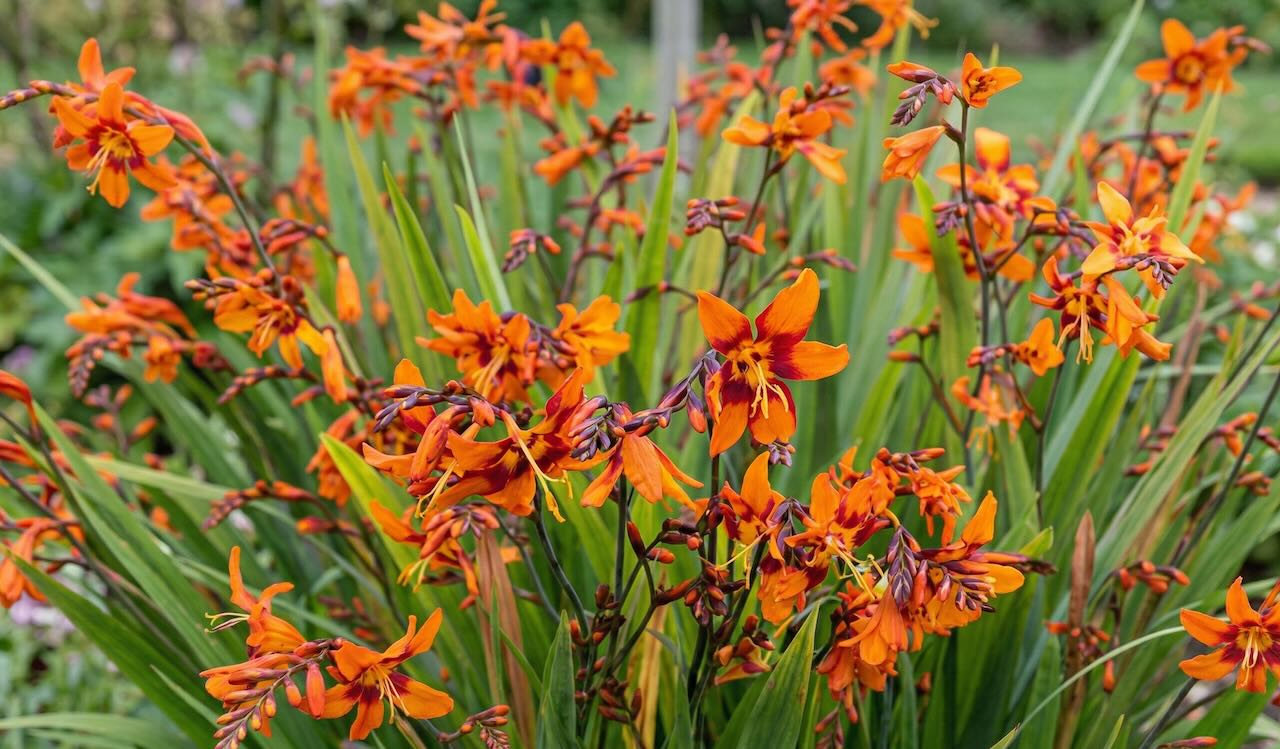
Crocosmia is one of the most dramatic late-summer perennials you can grow, and slugs simply don’t bother with it. The arching sword-like leaves emerge in spring and build throughout the summer before producing arching sprays of fiery orange, red or yellow flowers from July onwards. The strappy leaf texture is unappealing to slugs, and the corm-based growth habit means even if a leaf or two were nibbled, the plant would shrug it off entirely.
Crocosmia naturalises freely in most UK gardens, spreading via underground corms to form generous clumps over time. I tend to use it at the back or in the middle of sunny borders, where it creates a brilliant contrast with the blue of Agastache or Nepeta.
🌿 Crocosmia At A Glance
Plant Type
Hardy cormous perennial
UK Hardiness
Hardy (H4–H5) down to -10°C to -15°C
Height / Spread
60–90cm / 30–45cm; spreads by corms
Flowering Period
July to September
Growing Conditions
Full sun to partial shade, most well-drained soils
Why Slugs Avoid It
Strappy, firm leaf texture is unappealing to slugs
If your garden is overrun with slugs, you can use a few other tips and tricks to help reduce slugs without resorting to chemical killers. By understanding the life cycle of slugs and the wildlife food chain in the garden, you can help reduce their numbers so they become a benefit rather than a problem.
Encourage birds
Encouraging birds to the garden with bird feeders, trees, and deciduous shrubs is a great way to keep your slug numbers down. Birds will happily pick their way through your garden flower beds and feast on any slugs they find. By choosing diverse and varied planting schemes with plenty of autumn berries and winter interest, birds will soon flock to your garden as a safe haven.
Add a water feature or pond to the garden
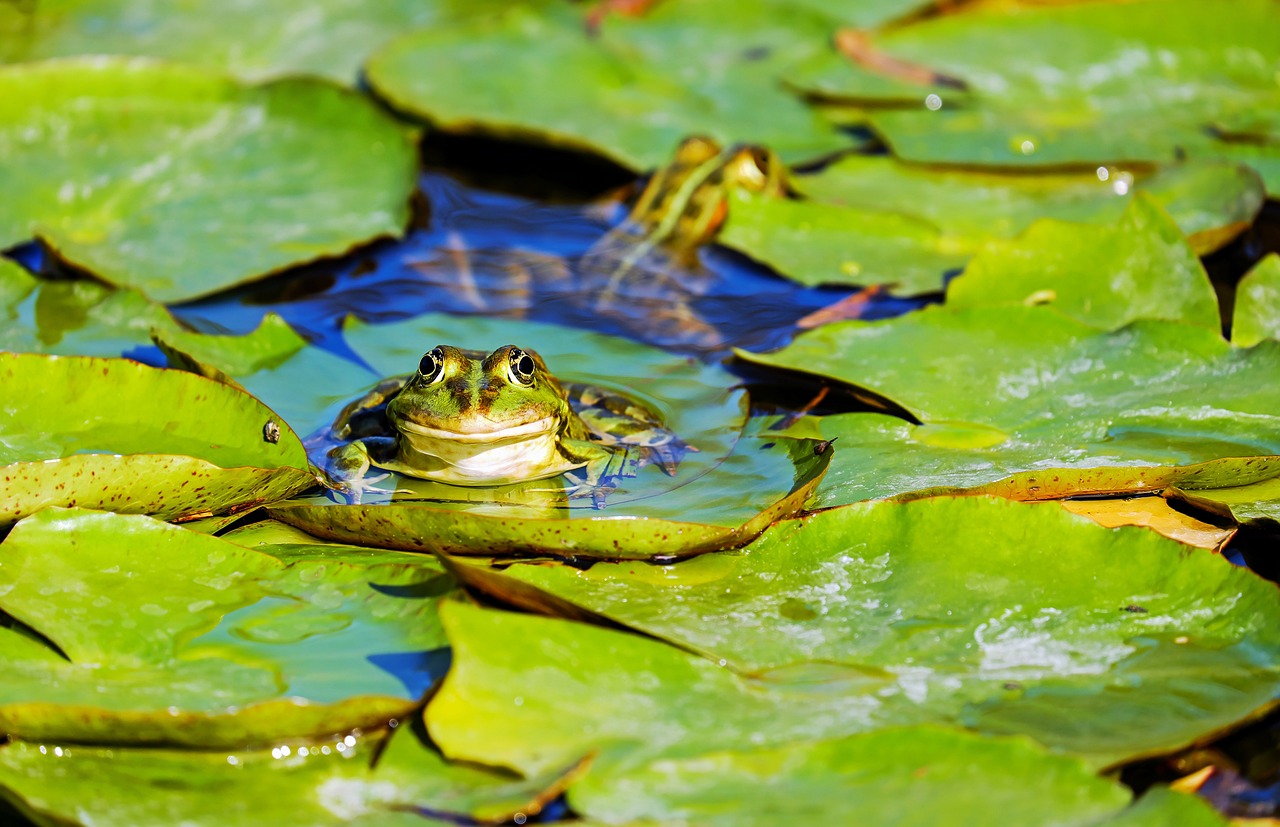
By adding water to the garden, whether with a pond or small pool, you can encourage frogs, newts and other beneficial amphibians to your garden. Frogs and toads feast on slugs and will quite happily help you keep your numbers down! Ponds can provide much-needed drinking water for birds and mammals too, so it’s one of the best functions you can add to your garden design.
Use raised beds
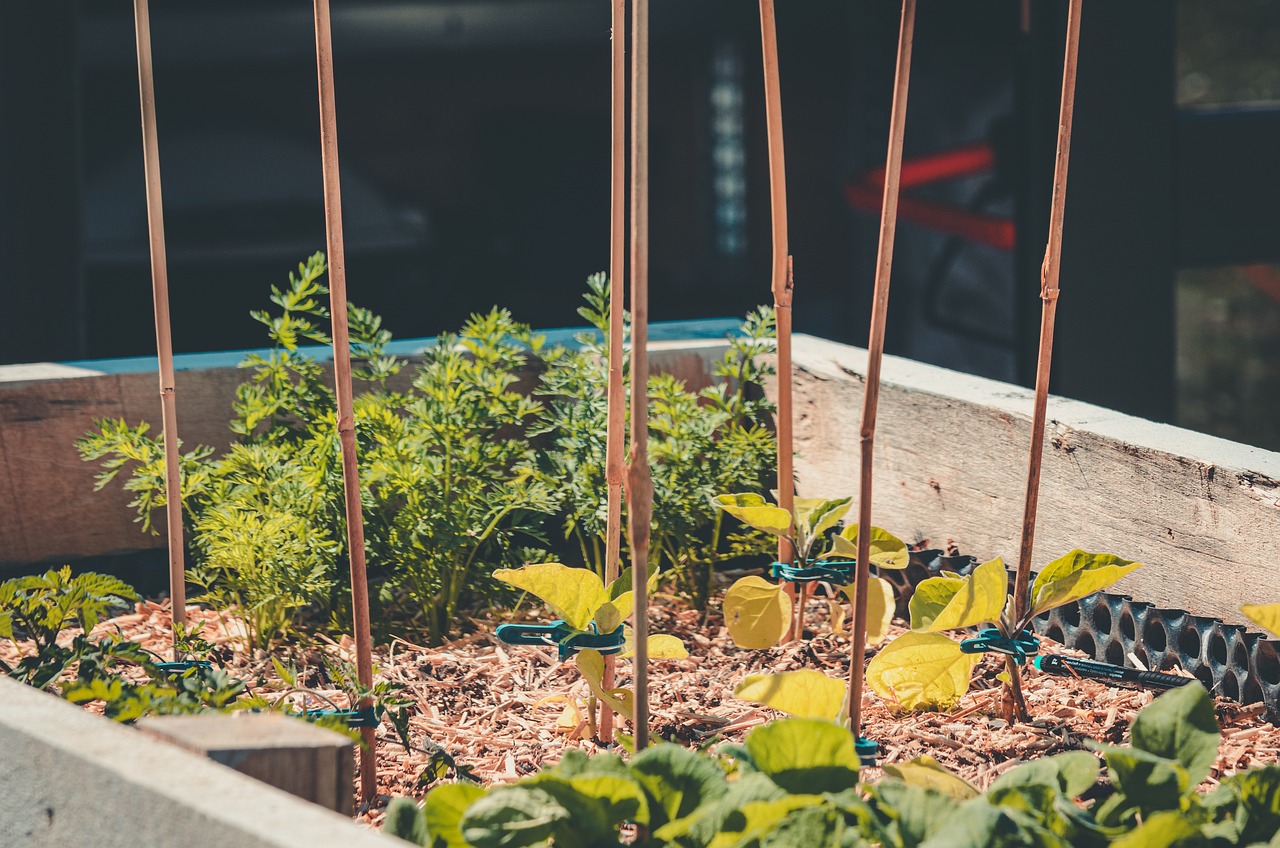
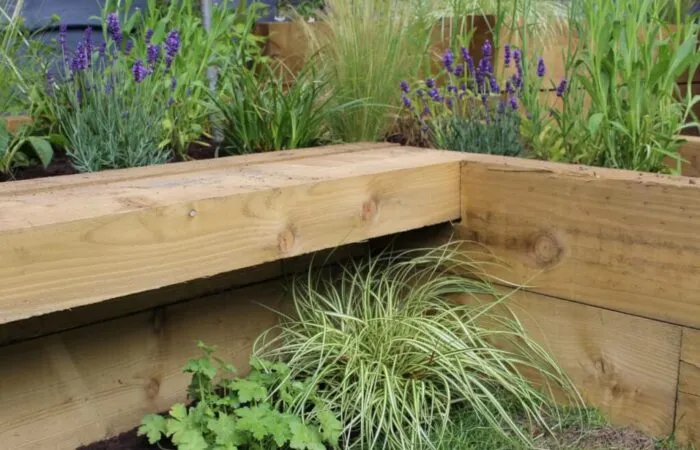
Raised beds are an excellent way to keep slugs at bay in the garden, in particular timber raised beds. Slugs don’t like coarse or rough textures, so scaling these beds is too much effort for them. Raised beds also allow you easier access to weeding and spotting slugs that may be lurking; you can then put them on your bird table for the birds to eat.
Coffee grinds or crushed sea shells
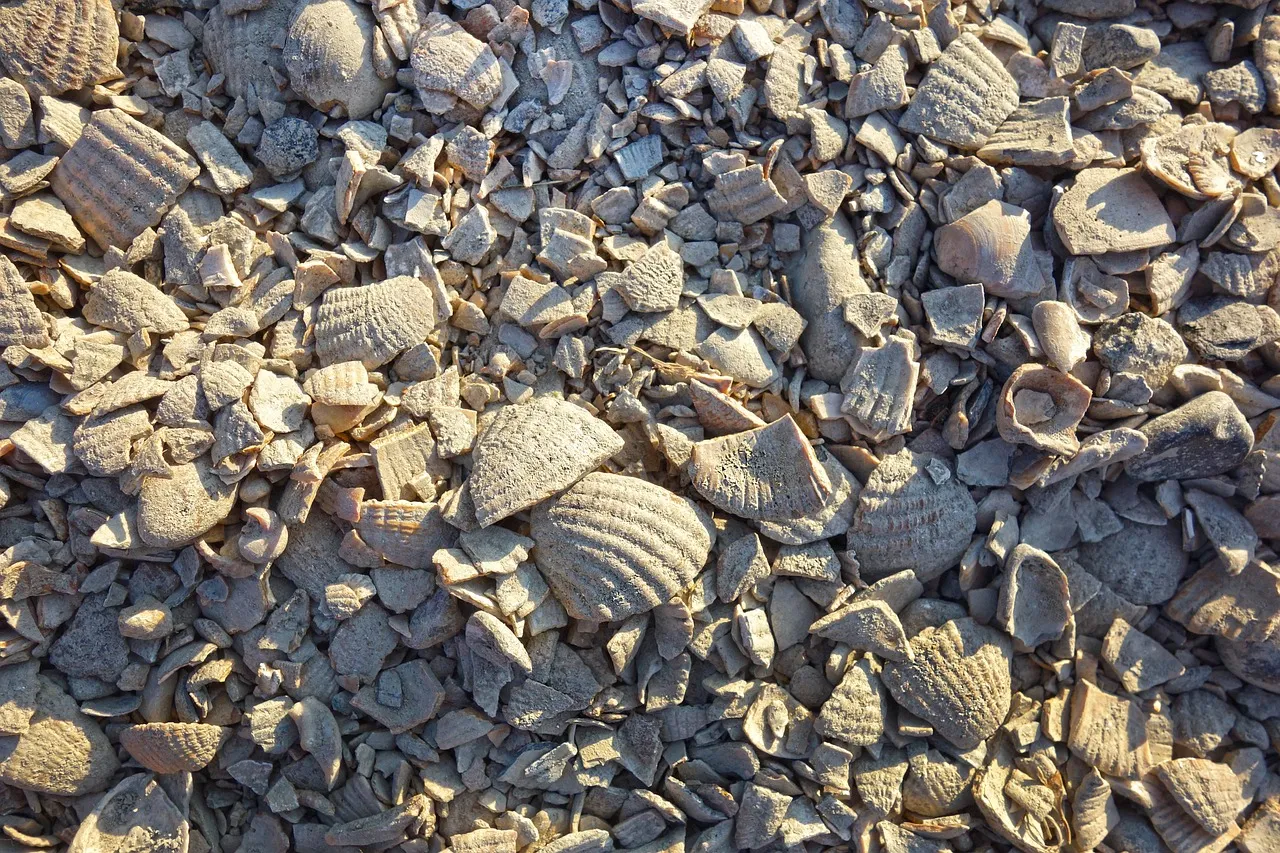
Coffee grinds and crushed shells can work well in container or balcony gardens that develop a slug problem. The slugs hate crawling over these materials, so placing a ring of them around the bases of plants can help you avoid slug damage.
Copper tape
Copper tape repels slugs for two reasons: toxicity and electric shock. Copper is a known poison to many organisms, and some copper compounds are used to disinfect and kill them. When slugs come into contact with copper tape, they experience an electric shock due to a chemical reaction that occurs as they crawl over the metal, causing unpleasant sensations on their skin. Therefore, slugs and snails avoid moving over copper tape. This tape can be bought in rolls, which you then adhere to the tops or sides of plant pots to form a protective seal.
How to use slug-proof plants as a garden design strategy
This is where my background as a garden designer comes in, because choosing slug-proof plants is only half the equation. How you arrange them in relation to the plants you love, but slugs also love, is where the real gains are made. Over years of designing gardens for clients with serious slug problems, I’ve developed a few reliable approaches that I use repeatedly. These aren’t tricks; they’re just thoughtful planting design applied to a practical problem.
The protective border technique
The single most effective thing you can do is use slug-proof plants as a physical and olfactory barrier around the plants slugs do want to eat. Slugs navigate primarily by smell and moisture trail. If the outermost layer of your border is filled with strongly scented plants like Nepeta, Lavender, Agastache and Achillea, slugs approaching from the lawn or path edge will be deterred before they even reach your more vulnerable plants in the centre of the border.
I think of it as rings of defence. The outer ring uses aromatic, strongly scented slug-deterrents. The middle ring uses rough-leaved structural plants such as Geraniums, Geums, and Astrantia. The inner ring, closest to the centre of the border and furthest from slug entry points, is where you place your more vulnerable plants. This isn’t a perfect system because slugs are persistent, but it dramatically reduces the amount of damage that reaches your prize specimens.
Textural slug-resistant structure: Geraniums, Geums, Astrantia, Foxgloves, Euphorbia
Inner ring (centre)
Your treasured plants: Dahlias, Delphiniums, Hostas (with copper tape), Lupins
Ground cover as slug interception
Bare soil is a slug motorway. A slug travelling across open ground between your lawn and a vulnerable plant has nothing to slow it down. Dense, low-growing ground cover plants (particularly those slugs find unappealing) create friction in their journey and dramatically reduce the number of slugs that reach your target plants. Alchemilla mollis is probably the best plant for this job on the planet. It self-seeds to fill every gap, it forms a dense carpet that slugs dislike crawling across, and it looks genuinely beautiful doing it. Epimedium does the same job in dry shade. Pulmonaria works brilliantly under trees and shrubs where the soil is consistently damp.
The principle is simple: cover your soil. A border with no gaps is a border that slugs find harder to navigate, and one where your individual plants are less exposed as isolated targets.
Mixing slug-proof plants with slug-attractive plants in containers
Container planting gives you more control than open borders, but it also concentrates slugs if you get it wrong. If you’re growing vulnerable plants in pots, try placing containers of Agastache, Nepeta or Lavender immediately adjacent. The scent acts as a deterrent to slugs heading towards your containers from the surrounding ground.
For the containers themselves, copper tape around the rim is still the most reliably effective physical barrier. Combined with placing the container on a slightly elevated surface, such as pot feet, and surrounding the base with a ring of Nepeta or Lavender in the ground below, you create a layered defence that is very effective indeed. I’ve used this approach to keep hostas in containers genuinely slug-free across multiple seasons without a single pellet.
Seasonal companion planting timing
Timing matters as much as placement. Slug-proof companion plants need to be established and actively growing before your vulnerable plants emerge. This means getting your Nepeta, Geraniums and Achillea in the ground in autumn or early spring, well before your Dahlias and Delphiniums start pushing through. An established Nepeta in April, when the first delphinium shoots appear, is doing genuine defensive work. A freshly planted Nepeta, at the same time, is not yet established enough to be effective.
💡 Top Tip
When designing a new border, I always plan the slug-resistant plants first, then fit the more vulnerable specimens around them. Treating the slug-proof plants as the structural backbone of the design, rather than an afterthought, produces a much better looking and much better protected border.
Slug-resistant vegetables for the kitchen garden
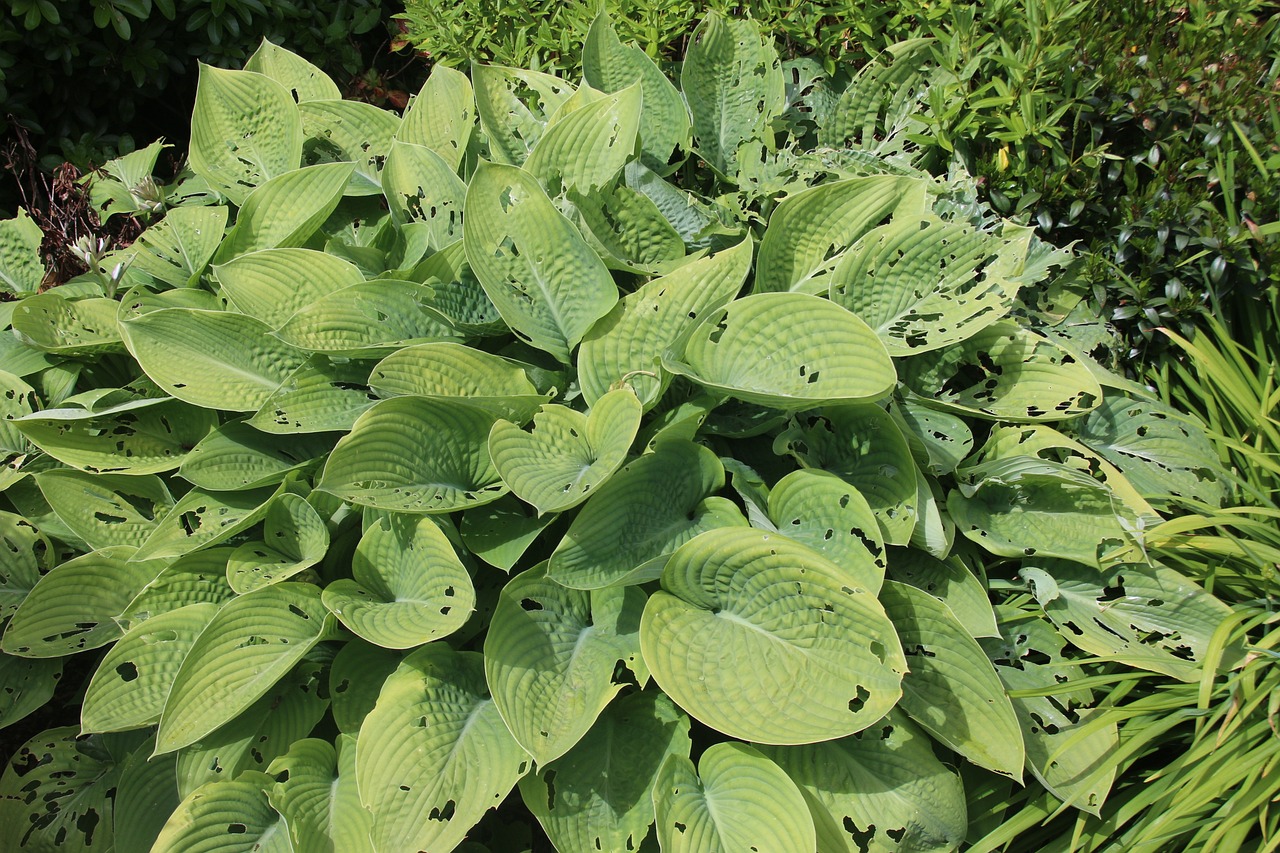
Everything covered so far relates to ornamental plants in borders, but slugs cause just as much, if not more, heartbreak in the vegetable garden. There are few things more dispiriting than finding your newly planted lettuce seedlings reduced to stalks overnight. The good news is that the same principles apply to vegetables as to ornamentals: some crops are simply not worth a slug’s time and effort, and understanding which ones gives you the foundation of a more resilient kitchen garden. One look at the decimated Hosta below shows how your lettuce or other crops can be munched overnight if you’re not careful!
I should be upfront that no vegetable is fully slug-proof in the way that an established Eryngium or Nepeta is. Slugs in a hungry spring will try almost anything. But the vegetables below are significantly less attractive to slugs than soft-leaved crops like lettuce, spinach and courgettes, and they are far more likely to survive and establish without protection.
Vegetables slugs rarely bother with
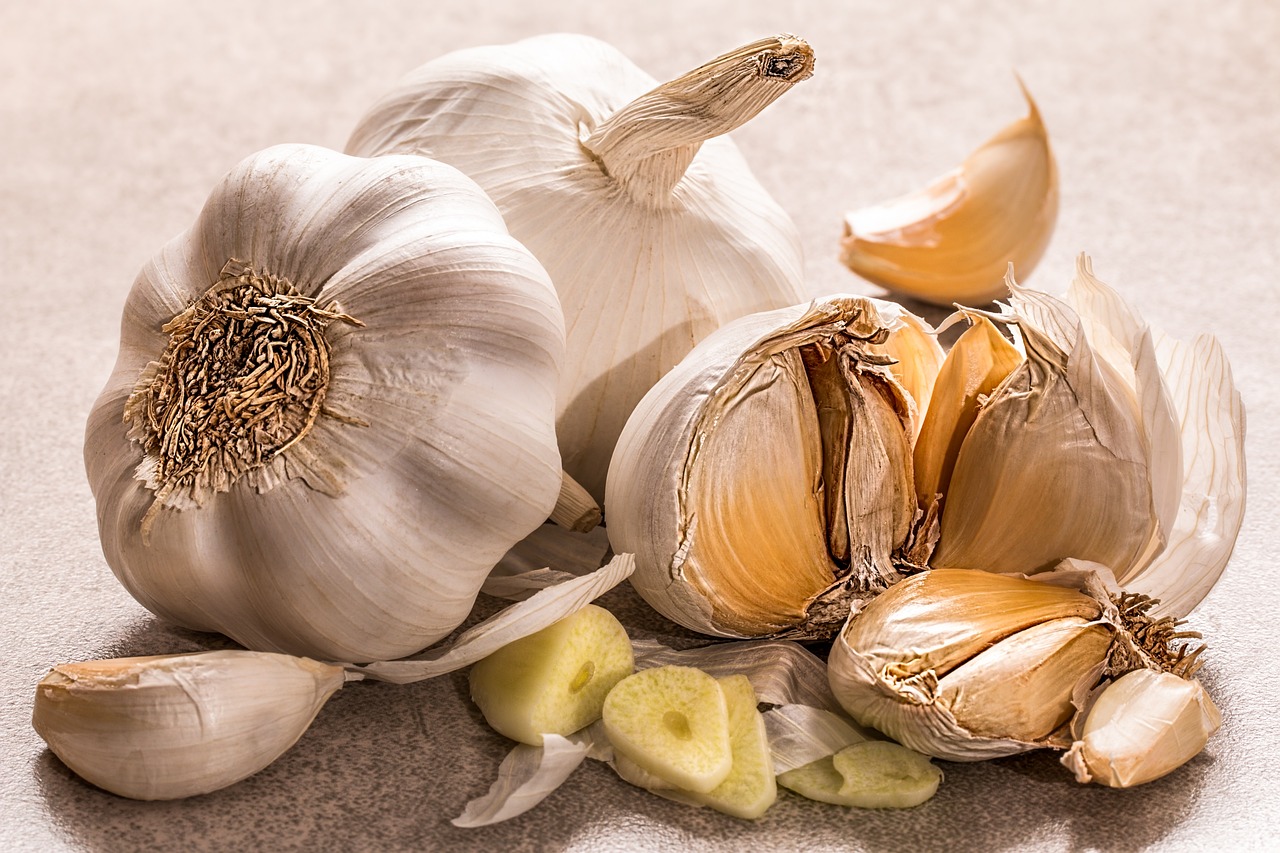
Garlic is probably the most reliable slug-deterrent crop you can grow. The pungent sulphur compounds that give garlic its flavour and smell are deeply unpleasant to slugs, and a well-planted garlic bed is almost never troubled. This is also why garlic planted around vulnerable crops can act as a mild deterrent: the smell in the soil and air reduces slug activity in the immediate area. Autumn-planted garlic such as ‘Germidour’ or ‘Solent Wight’ overwinters without slug damage and provides an early summer harvest.
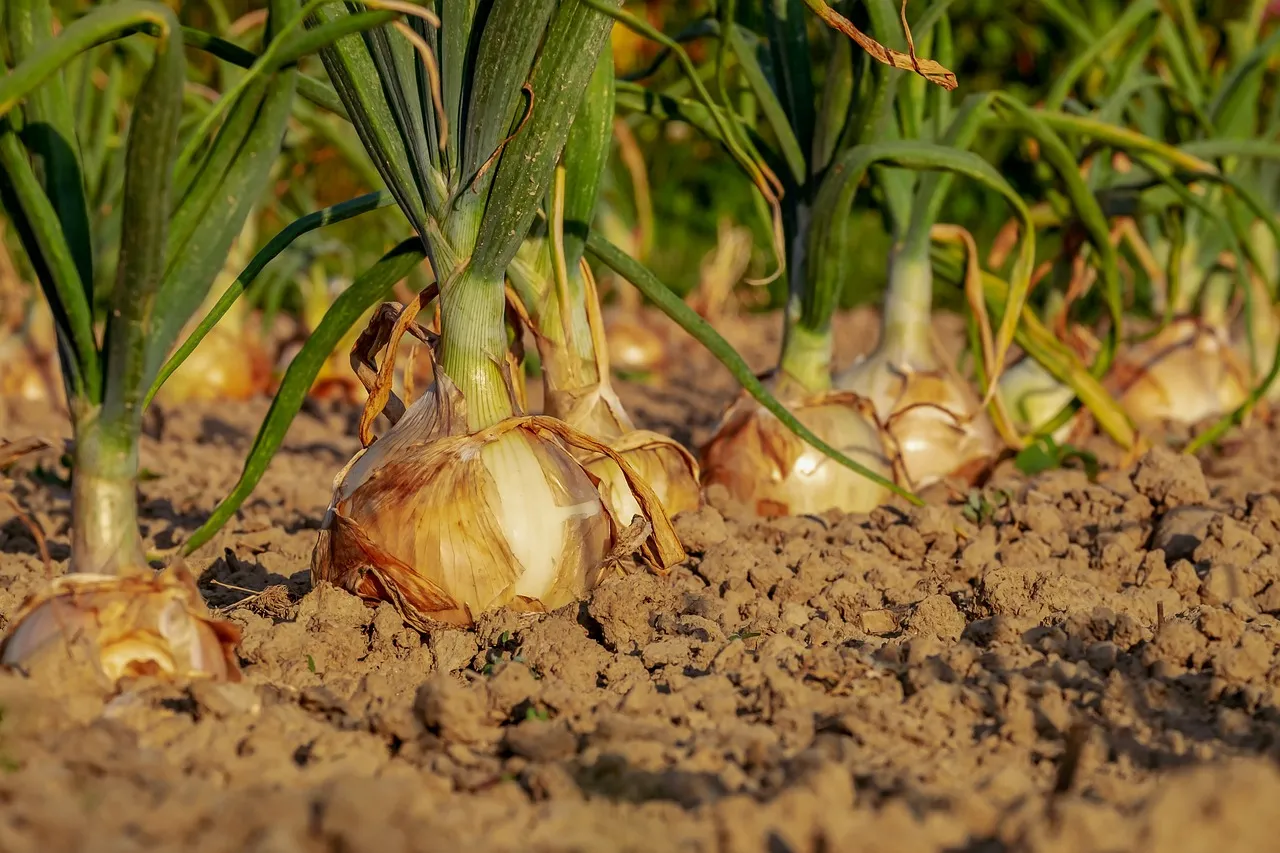
Onions and leeks share garlic’s allium chemistry and are similarly avoided by slugs. The upright strappy leaves are also physically difficult for slugs to navigate, which gives them double protection. If you’re starting from scratch with a new raised bed or vegetable plot, alliums are among the lowest-risk crops you can choose for the first season while your soil structure and drainage improve.
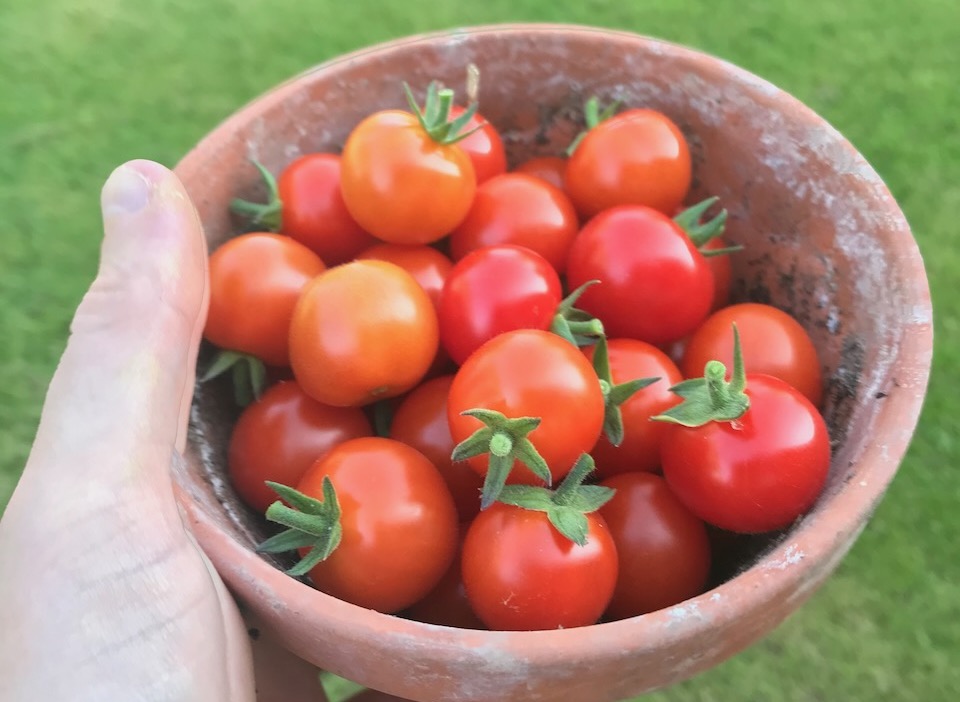
Tomatoes are more complex. The leaves and stems are covered in fine hairs that make them unappealing, and the strong smell of the foliage is a deterrent. However, any tomato fruit that sits directly on the soil or close to it will be eaten. The solution is to grow tomatoes in containers or in raised beds with good drainage, keeping fruit well off the ground. Grown this way, tomatoes are very rarely slug-damaged.
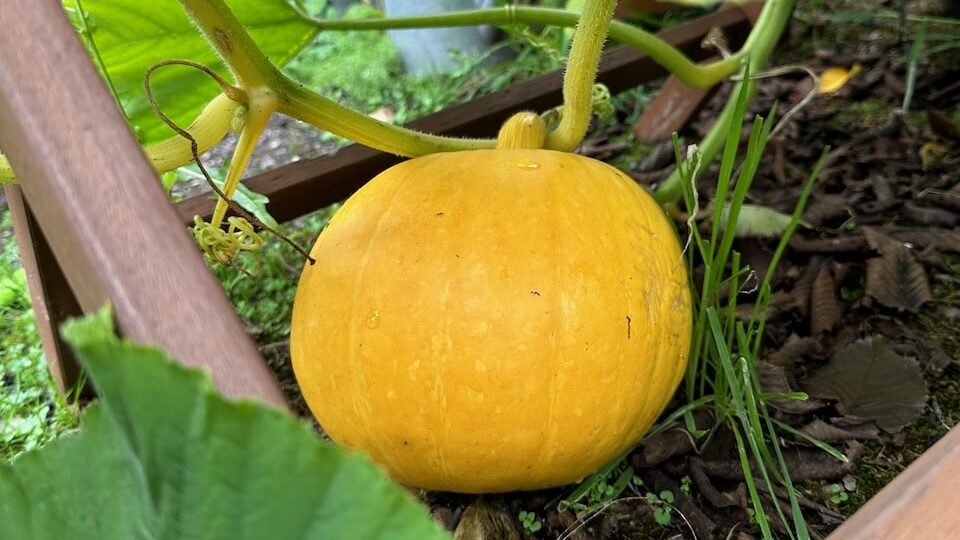
Squash and pumpkins are interesting. Young seedlings are vulnerable, but once a squash plant reaches around 30cm and starts producing those rough, bristly leaves, slugs tend to move on to easier targets. The trick is protecting them through that first vulnerable fortnight after transplanting. A circle of sharp grit around the base of each plant at planting time, combined with checking on damp evenings for the first two weeks, is usually enough to get them through to the slug-resistant stage.
Potatoes are often blamed on slugs when keel slugs (the underground species) bore into the developing tubers. This is a real problem, particularly on heavy clay soils, but it’s the keel slug rather than the common garden slug responsible for it. Early varieties harvested before August are far less affected than maincrop potatoes left in the ground into autumn when keel slug activity peaks.
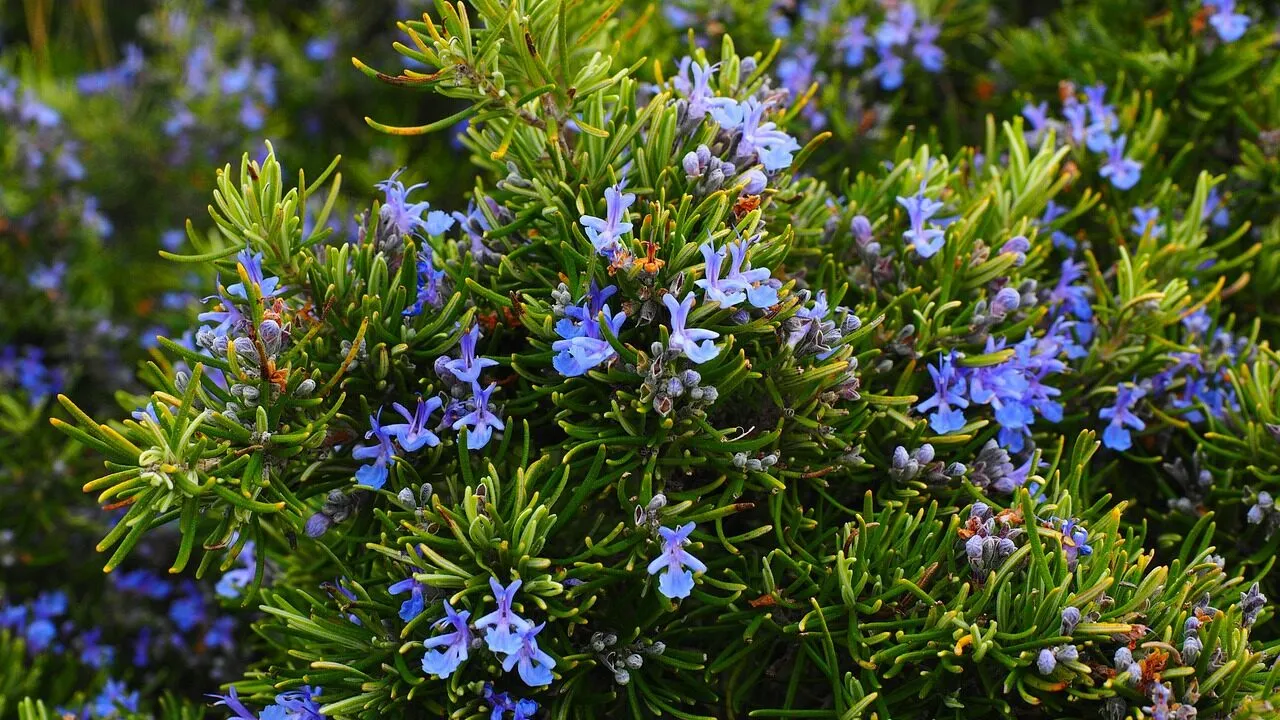
Herbs across the board are highly slug-resistant once established. Rosemary, Thyme, Sage and Oregano all produce strongly aromatic oils that deter slugs, and their woody stems become essentially impenetrable once the plant has a season or two of growth behind it. Starting herbs in pots and transplanting once they’re established (rather than planting tiny plug plants directly into the ground) sidesteps the vulnerable phase almost entirely.
Vegetable / herb
Slug risk
Tip
Garlic
Very low
Plant between October and December for earliest harvest
Onions and leeks
Very low
Sets are safer than seedlings in slug-prone gardens
Tomatoes (in containers)
Low
Keep fruit off soil; containers with copper tape give best protection
Squash / pumpkins (mature)
Low to medium
Protect seedlings only; once bristly leaves develop slugs move on
Herbs (Rosemary, Thyme, Sage)
Very low
Transplant as established plants rather than small plugs
Runner and French beans
High as seedlings
Start under cover; plant out once over 15cm tall
Lettuce and salad leaves
Very high
Grow in containers on pot feet with copper tape; avoid direct ground sowing
The raised bed advantage
The single best structural investment for a slug-prone vegetable garden is a set of raised beds. The rough timber sides present an obstacle slugs dislike scaling, the improved drainage means the soil is less consistently damp, and the defined edges make it easy to apply copper tape as a perimeter barrier. I’ve designed dozens of kitchen gardens over the years, and in every single case where raised beds were introduced, slug damage to vegetables was reduced substantially in the first season. Combine raised beds with the less slug-attractive crops listed above, and you have a kitchen garden that requires far less reactive slug management. Take a look at my complete raised beds guide for more on building and planting them.
Slug pellets are harmful to garden ecosystems because they contain a pesticide called Metaldehyde, which poses an “an unacceptable” risk to birds and mammals, such as hedgehogs. Birds, hedgehogs, and even domesticated pets are attracted to slug pellets; even the slightest amount of exposure to the poisonous pellets can prove fatal. Metaldehyde works by increasing mucus production in slugs, causing them to dry out and altering their intestines so they stop eating and retreat to their hiding places to die.
We should avoid slug pellets and other chemical treatments because they harm other wildlife directly and indirectly, particularly birds and amphibians like frogs who feast on slugs. Whilst the birds may not eat the blue slug pellets themselves, they do eat slugs that slug pellets have already killed, especially if they catch them before they crawl off to die underground. Thus, these slug pellets enter the food chain and then harm many other animals along the way.
Why You Should Not Use Beer Traps for Slugs
Beer traps are often cited as the perfect ‘low cost’ alternative to slug pellets. While beer traps for slugs are often recommended, they’re not the silver bullet they’re made out to be. Here’s a detailed breakdown of why you shouldn’t use beer traps for slug control.
1. They attract more slugs into your garden rather than reducing the population.
Beer traps are often praised for luring and drowning slugs, but what many gardeners do not realise is that the smell of yeast in beer acts like a beacon. This scent can attract slugs from surrounding areas, not just those already living in your garden. As a result, beer traps may end up increasing the slug problem rather than solving it.
2. They frequently kill beneficial insects and other non-target species.
While intended for slugs, beer traps are indiscriminate in their application. Beneficial insects such as ground beetles and rove beetles, which are natural predators of slugs, are also drawn to the traps and may drown. This undermines the natural ecological balance of your garden and removes valuable allies in pest control.
3. They have a limited impact on the overall slug population.
Beer traps typically catch only a small fraction of the slug population, mainly the ones actively moving on the surface. Many slugs remain hidden in the soil, under mulch, or within dense foliage. This means that although you may find a few drowned slugs, the bulk of the population may go unaffected.
4. They are unpleasant to manage and require frequent maintenance.
Beer traps must be emptied and refilled regularly to remain effective. In warm or humid weather, they can become foul-smelling and plain yukky. This maintenance can be off-putting and inconvenient, especially for those looking for a clean and low-effort solution.
5. They are not a humane method of pest control.
Despite being considered a natural remedy, drowning slugs in beer is not quick or humane. It causes prolonged distress. Gardeners seeking ethical ways to manage pests may want to consider more humane alternatives.
Learn how to design your own garden
Wondering how to improve your gardening skills? Discover the transformative power of gardening with me, Lee Burkhill, The Garden Ninja!
Join our online garden design courses and learn how to craft your perfect outdoor oasis from the comfort of your home. Through engaging video lessons, interactive quizzes, and expert tuition, you’ll unlock the secrets to creating stunning gardens tailored to your style and space.
Whether you’re a novice looking to green your thumb or a seasoned gardener seeking fresh inspiration, our courses cater to all levels. Gain practical skills in layout, plant selection, and maintenance, guided by Lee Burkhill’s wealth of expertise and passion for sustainable gardening practices.
29
Garden Design Examples for Small Gardens: 30 Design Templates & Planting Plans
Garden Design Examples for Small Gardens: 30 Design Templates & Planting Plans: In this online gardening course, I’ll walk you through 30 fantastic garden designs, explaining the logic behind the layout, the plant choices, and take-home tips for applying them in your own garden.
Weekend Garden Makeover: A Crash Course in Design for Beginners
Learn how to transform and design your own garden with Lee Burkhills crash course in garden design. Over 5 hours Lee will teach you how to design your own dream garden. Featuring practical design examples, planting ideas and video guides. Learn how to design your garden in one weekend!
Garden Design for Beginners: Create Your Dream Garden in Just 4 Weeks
Garden Design for Beginners Online Course: If you want to make the career jump to becoming a garden designer or to learn how to design your own garden, this is the beginner course for you. Join me, Lee Burkhill, an award-winning garden designer, as I train you in the art of beautiful garden design.
Yes, genuinely. Having designed hundreds of gardens over my career, I’ve seen the difference firsthand between borders that rely on soft-leaved plants and those built around slug-resistant species. The key is that no plant is entirely slug-proof for all time, as very young transplants and emerging spring shoots can still be vulnerable for the first few weeks after planting. Once established though, all of the plants in this guide are reliably avoided by slugs in my own garden and in client gardens across the UK.
What is the most slug-resistant plant for shade?
Epimedium is the standout choice for dry shade, followed by Pulmonaria for moister shady conditions. Both are genuinely slug-proof once established, and Epimedium in particular thrives in the dry soil under trees where almost nothing else will grow. Carex is another excellent option for year-round foliage interest in shaded or partially shaded borders.
Are hostas completely off the table if slugs are a problem?
Not necessarily. Hostas in deep shade are significantly less attractive to slugs than those grown in sunnier or more exposed positions. Planting them in large containers with copper tape around the rim offers very good protection. That said, if your garden has a serious slug population, hostas will always require extra vigilance and protection in spring when the new leaves first unfurl. The slug-proof alternatives in this guide are far lower maintenance if you want a genuinely carefree border.
Do slugs eat Nepeta?
No. Nepeta is one of the most reliably slug-proof perennials you can grow. The intensely minty aromatic oils in both the leaves and stems are a powerful deterrent. In over twenty years of using Nepeta in garden designs, I have never seen slug damage on an established plant.
Will slugs eat Geranium Rozanne?
Hardy Geraniums including Rozanne are generally avoided by slugs, though very young plants can occasionally be nibbled in the first spring after planting. Once the plant has bulked up and its root system is established, it becomes effectively slug-proof in my experience. This is one of the reasons Rozanne remains one of my most frequently recommended plants for low-maintenance borders.
Slugs can be a pain in the garden, but are also a vital food source for birds and amphibians. They also help scoop up and remove a lot of the dead plant waste that falls to the ground, so they do serve a much-needed purpose.
Anything in the garden is about keeping an equilibrium so nothing takes over. Choosing plants that slugs and snails hate helps to reduce the impact of slug damage in your garden. By encouraging other beneficial wildlife, slugs and snails can actually become a benefit in the garden!
Please Tweet, Facebook or Instagram me with your garden questions, pictures or comments. If you’re looking for more garden design tips, tricks and hacks, why not subscribe to my YouTube channel. I’m happy to help!
Your subscription could not be saved. Please try again.
Your subscription has been successful.
Lee Burkhill
Lee Burkhill, known as the Garden Ninja, is an award-winning garden designer and horticulturist with over 30 years of gardening experience and 15 years as a professional garden designer. A qualified RHS (Royal Horticultural Society) professional, Lee specialises in sustainable garden design and practical horticultural advice. He designs and presents on BBC1’s Garden Rescue and in leading gardening publications. Lee combines three decades of hands-on gardening knowledge with professional design qualifications to help gardeners create beautiful, functional outdoor spaces.