For the garden you’ve already got, not the one you’re starting from scratch. Seven checklists and video lessons from BBC Garden Rescue’s Lee Burkhill, designed to help you decide what’s worth keeping before you spend a penny.
69


Quick Answer
Hostas need moist, fertile soil and partial to full shade, with spring or early autumn the best time to plant them. Water consistently through the growing season, mulch each spring with peat free compost, and protect young shoots from slugs in April and May, since that’s when the vast majority of hosta damage happens. Established hostas die back completely over winter and reappear reliably from the crown each spring.
Hostas are a gardener’s favourite for their lush foliage, huge ribbed leaves and ability to thrive in shady areas of UK gardens. They add texture and interest to any shady flower bed with their varied leaf shapes, sizes and colours, and they’re a forgiving choice for beginner gardeners once you understand the handful of conditions they actually care about.
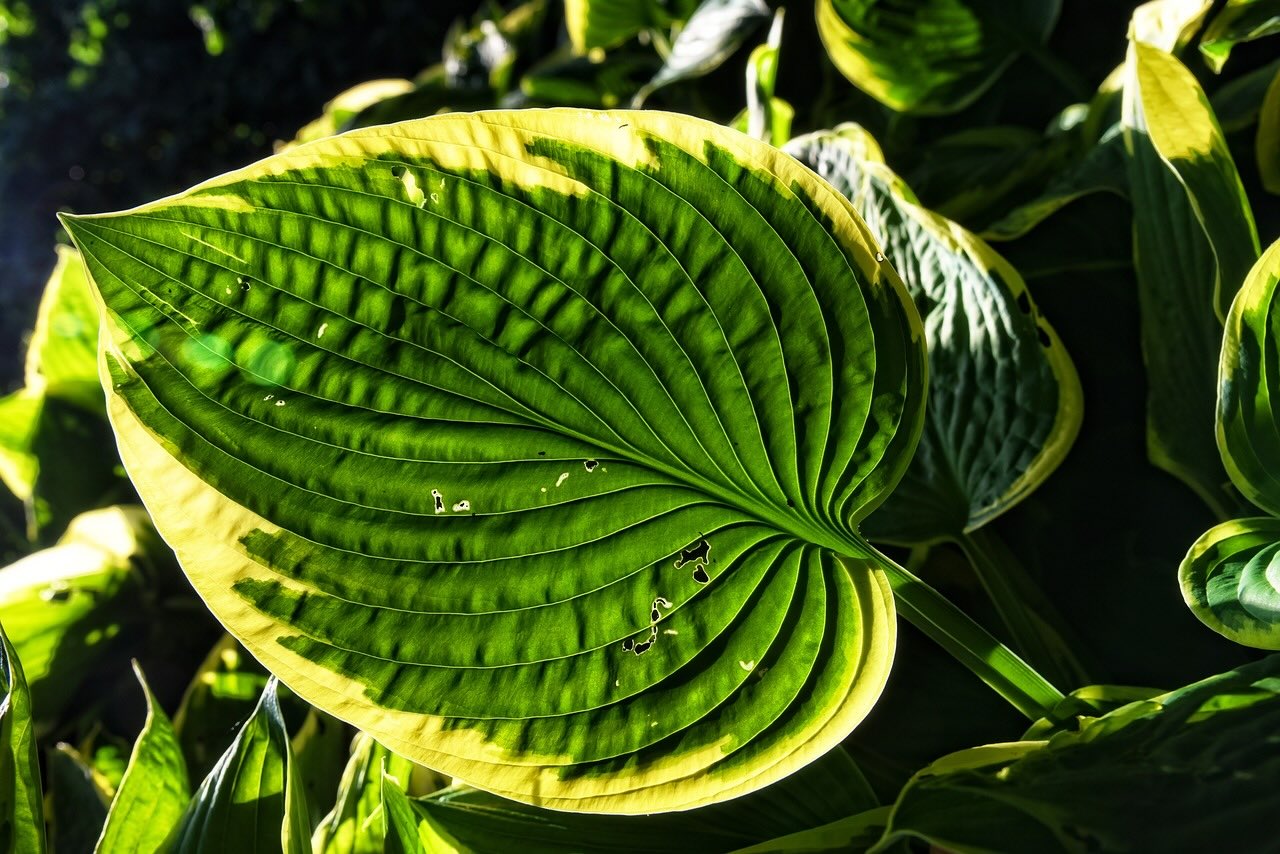
Known for their love of shade and damp conditions, hostas are fabulous plants for those awkward, wet, shaded spots in the garden that are full of clay soil. Hostas were one of the very first herbaceous plants I grew as a child, and I still find them one of the most reliable performers in a shaded UK border decades on.
Whether you’re a seasoned or a beginner gardener, growing hostas can be a rewarding experience for those shady spots. In this comprehensive growers’ guide I’ll cover everything you need to know about growing hostas in the UK climate, from soil and containers through to safety around pets, propagation and my pick of the best varieties for a UK garden.
This page contains affiliate links for products I use and love. If you take action (i.e., subscribe or make a purchase) after clicking a link, I may earn some gardening commission, which will help me keep the Garden Ninja Blog free for all.
Before I recommend how to plant, care for and look after hostas, you need to establish whether or not your garden’s soil type and aspect will suit these plants. Hostas are particular about their growing requirements and, unlike some of the claims you’ll see in other guides, will not grow anywhere the way other bulletproof herbaceous perennials will.
Hostas thrive in partial to full shade, making them ideal for planting under trees, in awkward shady spots or areas with dappled sunlight. As long as they don’t dry out, get baked in south facing sun, or eaten by slugs when young, hostas are relatively bulletproof in the garden. They’re particularly good for north facing, shady urban plots where little else will settle in.
Whilst hostas aren’t the most demanding of plants, they do require rich, fertile soil full of organic matter to do their best. This is because hostas put a lot of effort into growing their exotic looking foliage each year, and that effort has to come from somewhere in the soil.
That’s not to say gardeners with poor soil can’t grow hostas. You need to make sure the planting pocket is well lined with compost, and mulch around hostas each year to ensure they have the nutrients they need to grow successfully.
Free draining, sandy soil is the worst kind of soil to grow hostas in and requires a lot of well rotted manure or peat free compost to help retain both moisture and nutrients each year.
🛒 Buy peat free compost from Amazon UK
Choose a site with well draining soil enriched with organic matter, such as compost or well rotted manure. Before planting, prepare the soil by loosening it to improve aeration and drainage, and remove any stones or debris. There is no need to add grit for hostas when planting, since this only reduces access to moisture retentive soil, so avoid doing this.
Hostas generally prefer a slightly acidic to neutral soil pH ranging from about 6.0 to 7.5. However, they’re adaptable herbaceous perennials and can tolerate a range of soil conditions. While they may thrive better in slightly acidic soils, they’ll also grow well in neutral pH soils.
Hostas tend not to grow well alongside rhododendrons, conifers or azaleas, as the soil around these is usually too acidic, pH 5.0 and below, for hostas to thrive. If you have these in your garden, you may need to relocate the hostas elsewhere or heavily mulch around them each season to buffer the pH.
In the UK, spring and early autumn are the best times to plant hostas. This is when the weather is cooler and the demands on the plant are lower than in the middle of summer. These cooler, calmer conditions allow hostas to establish quickly rather than putting them under summer planting stress, which requires far more watering and attention.
The best way to plant hostas is by using bare roots, which can be bought online or by mail. These arrive in either autumn or spring as literal bare roots. Plant these with a marker such as a cane, and you’ll get the best results. Pot-grown hostas are fine too, but they cost more and require much more watering than bare roots when planted in summer.
Dig a hole slightly larger than the hosta root ball and place the plant at the same level as it was in the pot, or if planting bare root, cover the root ball with 2cm of soil. Backfill the hole with soil, gently firming it around the roots, then water the hosta thoroughly to settle the soil and hydrate the rootstock.
For newly planted pot- or container-bought hostas, water them once a week for the first month to help them establish. If your newly planted hostas start to droop or look unhappy, don’t panic or lift them out. Leave them where they are and keep watering weekly, since newly planted wilting hostas usually recover on their own.
Hostas do well in pots, and it’s one of the questions I get asked most often on the forum, whether they’re better in pots or in the ground. My honest answer is that a container actually solves one of the biggest hosta headaches for you, since raising the pot off the ground makes it considerably harder for slugs and snails to reach the foliage in the first place, especially if you keep the pot on feet or a stand.
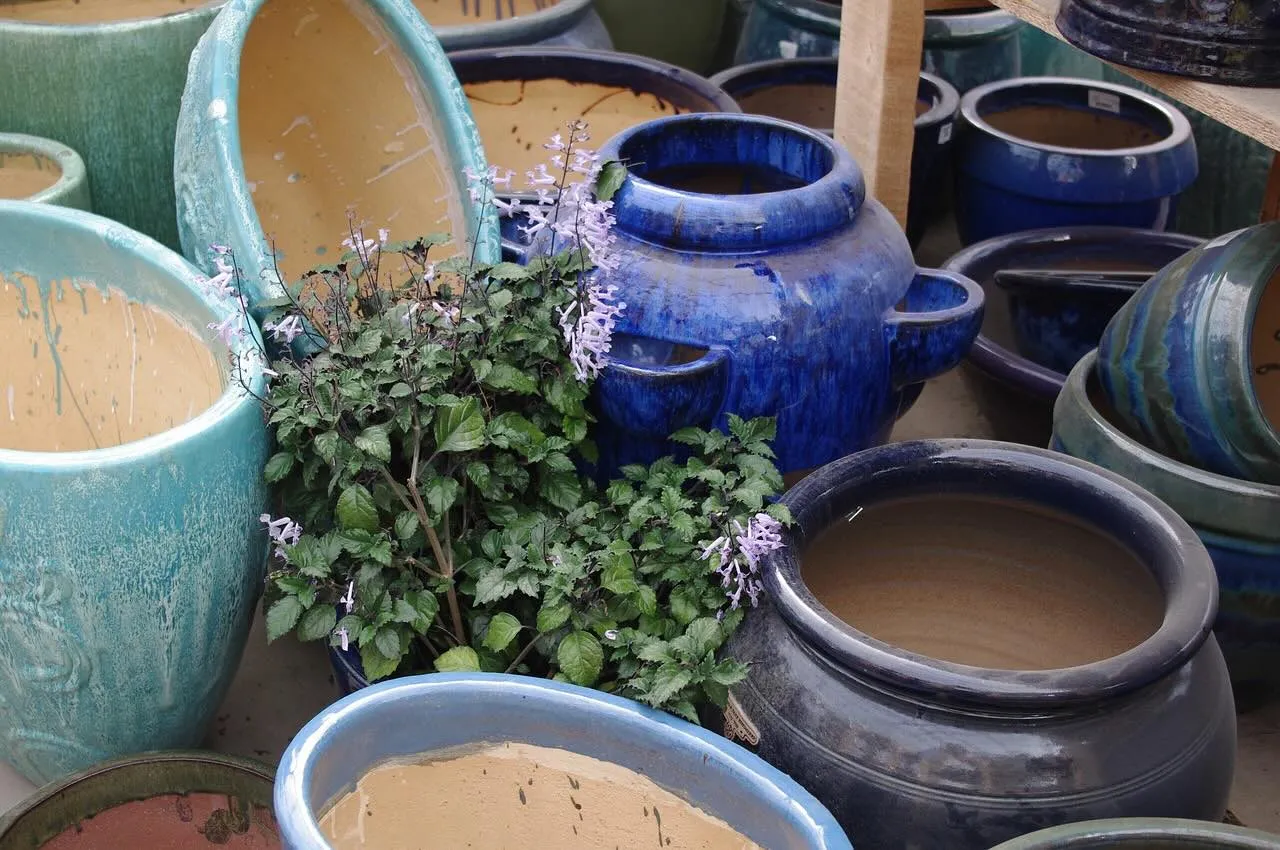
Choose a frost proof pot at least 30 to 40cm in diameter for a mature hosta, since these plants build a substantial root system over a few seasons and will quickly become root bound in anything smaller. Use a peat free, loam based compost rather than a lightweight multipurpose mix, since loam based compost holds moisture far better through the summer and won’t dry out as quickly on a hot patio. Always check the pot has drainage holes, as hostas hate sitting in waterlogged compost over winter every bit as much as they hate drying out in summer.
Container grown hostas need watering more often than those in the ground, since there’s a limited reservoir of soil to draw moisture from, so check the compost most days during a dry spell. Feed with a balanced liquid feed every two to three weeks through the growing season, since nutrients wash through a container far faster than they do in a border. Repot or divide every three to four years as the clump fills the pot, refreshing the compost each time you do.
🛒 Buy frost proof plant pots from Amazon UK
Yes, hostas are herbaceous perennials, not evergreens, so the entire top growth dies back to the ground every autumn and reappears from the crown the following spring. This confuses a lot of new gardeners who worry they’ve lost the plant when the leaves collapse and blacken after the first proper frost, but this is completely normal and part of the plant’s natural cycle rather than a sign of a problem.
Once the foliage has died back and gone black or mushy, cut it away at the base and clear it from around the crown. Leaving old foliage in place over winter can actually encourage slugs and fungal problems to overwinter close to the crown, ready to attack the fresh shoots the moment they appear in spring, so a tidy autumn cut back helps next year’s growth. Compost the old leaves rather than binning them, as long as they’re free of virus symptoms.
Hostas planted in the ground rarely need any winter protection in most of the UK, since the crown sits below soil level and is well insulated by the surrounding earth. Container-grown hostas are more exposed to hard frost from all sides, so it’s worth moving pots against a sheltered wall or wrapping them in horticultural fleece during a prolonged cold snap, particularly in a harsh winter or an exposed garden.
Hostas prefer consistently moist soil, especially during the growing season. Water deeply and regularly, at least once weekly, especially during dry spells. Try to keep the soil around hostas evenly moist but not waterlogged, which can be tricky to judge. This is why mulching hostas takes so much of the drama out of growing them.
Mulching around the base of hostas helps retain soil moisture, feed the plant slowly through the season, and suppress weeds. Always use a peat-free compost, or even better a homemade compost or leaf mould, to feed hostas. Organic slow-release plant feed like chicken pellets can give a slow-release boost for hostas growing in poorer soil types, especially in new build gardens where the topsoil has often been stripped away entirely.
🛒 Buy organic slow release plant feed from Amazon UK
Hostas typically flower in the UK during the summer months from May to July, depending on the variety and local climate conditions. The exact timing can vary based on the specific cultivar, local weather patterns and growing conditions in your own garden.
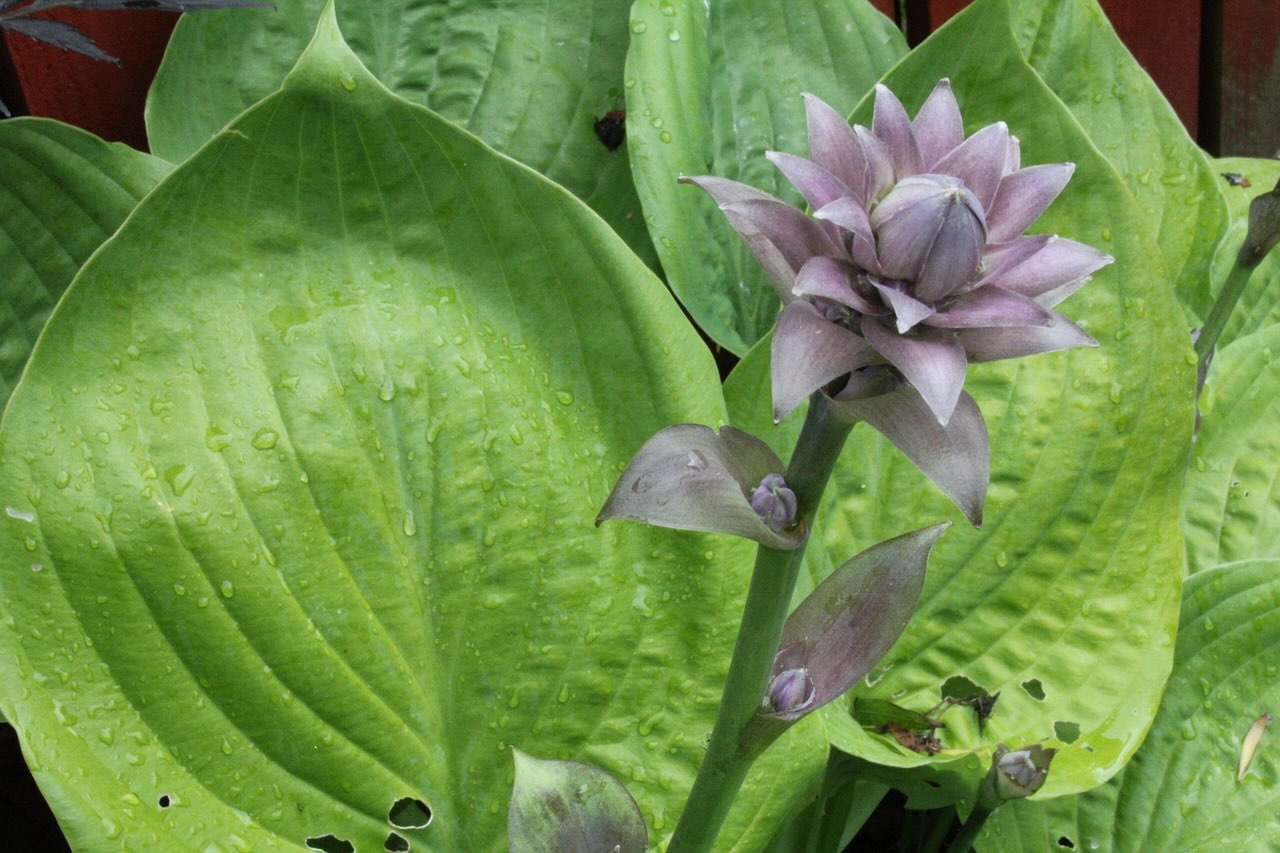
Most hostas produce tall spikes adorned with delicate, trumpet-shaped flowers in shades of white, lavender or pale purple. These blooms add visual interest and often attract pollinators to the garden, such as honey bees, solitary wasps and bumblebees.
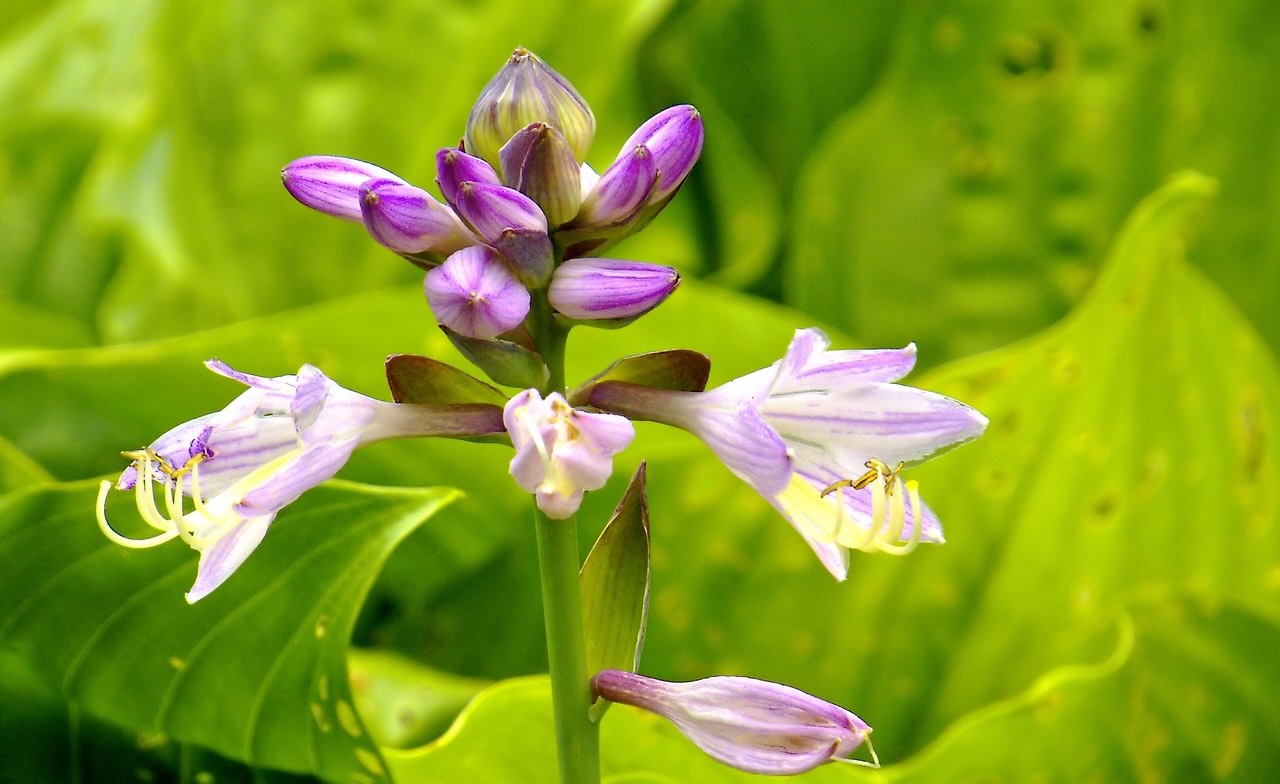
Unlike other herbaceous perennials and roses, removing spent flower stalks on hostas won’t usually encourage more flowers, since they tend to flower once and that’s it for the season. However, hostas are really grown for their foliage first and their flowers second, so this is rarely a disappointment in practice.
Yes, hostas are toxic to both dogs and cats if eaten, along with several other common garden plants, so this is worth knowing before you plant them in a garden your pets have access to. The leaves and shoots contain saponins, which cause gastrointestinal upset rather than anything more serious in the vast majority of cases.
Symptoms of hosta poisoning in dogs and cats typically include vomiting, diarrhoea and lethargy, usually appearing within a few hours of the animal eating a significant amount of foliage. The ASPCA and Pet Poison Helpline both class hosta poisoning as mild to moderate rather than life threatening in the vast majority of cases, and most pets recover on their own without treatment. That said, if your pet has eaten a large quantity, is showing severe symptoms, or you’re at all concerned, contact your vet for advice rather than waiting to see how things develop.
In my experience most dogs and cats leave hostas well alone once they’ve had one unpleasant nibble, since the taste and texture aren’t especially appealing to them, but young, curious puppies and kittens are the ones most likely to take an experimental bite. If you have a persistent chewer, planting hostas in a raised bed or container out of easy reach, rather than at ground level in an open border, is the simplest practical fix.
Hostas are generally hardy plants, but they can be susceptible to pesky pests such as slugs, snails and aphids. Slugs and snails are the biggest pests when it comes to hostas, especially when the plants are growing and emerging in spring. The new foliage pokes up out of the ground a bit like fingers that then unfurl into full leaves.
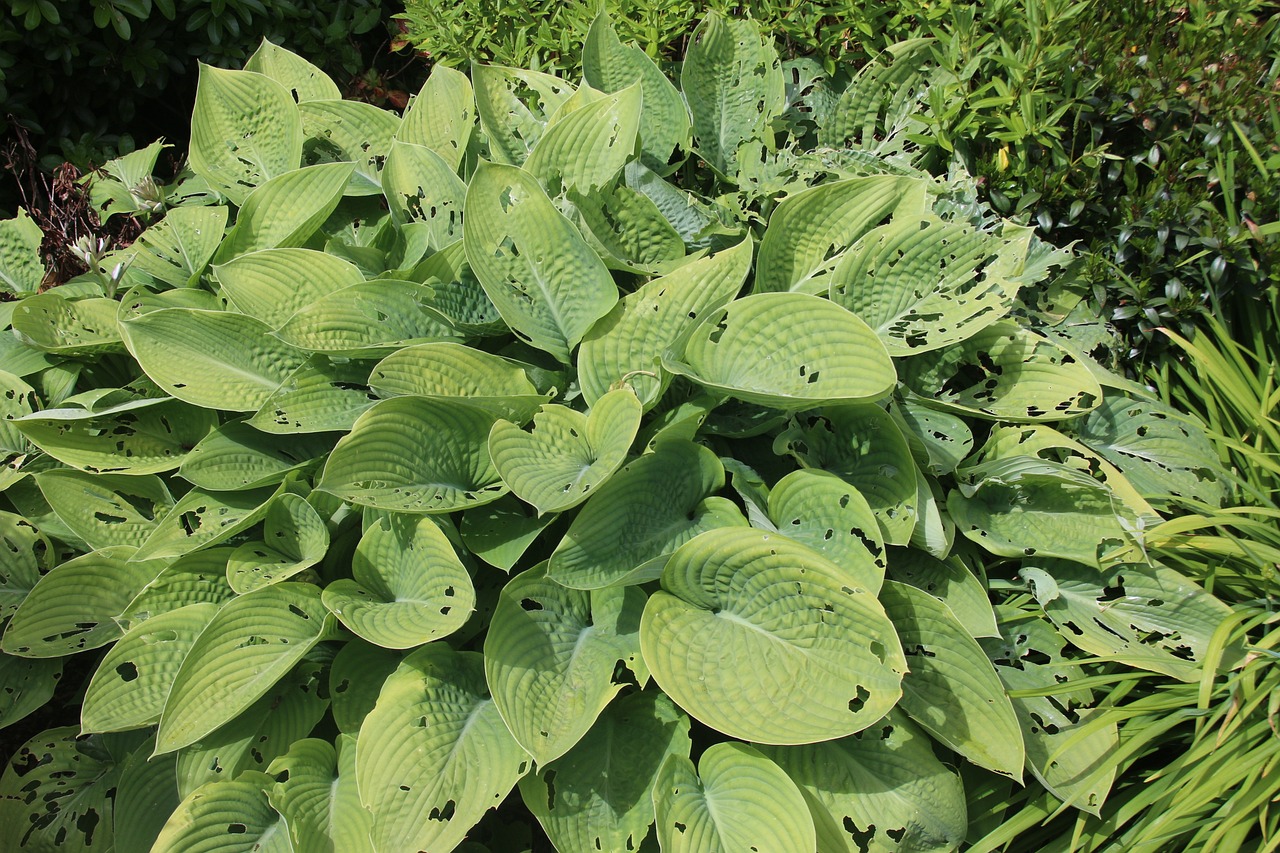
During spring, as hostas emerge, this is when they’re most likely to be ravaged by slugs and snails. At this point in the year you need to be most vigilant in ridding your newly sprouting hostas of these pests. Let’s take a look at a few methods to stop slugs and snails from eating your hostas.
Place strips of copper tape or wire around pots or raised beds. Slugs receive a small electric shock when they come into contact with copper, deterring them from crossing the barrier.

🛒 Buy copper tape from Amazon UK
Sprinkle food-grade diatomaceous earth around the base of plants. This powdery substance consists of fossilised algae and has sharp edges that can lacerate the soft bodies of slugs, causing them to dehydrate and die.

🛒 Buy food grade diatomaceous earth from Amazon UK
Bury shallow containers, such as yoghurt pots, in the soil near affected plants. Fill them with beer, which attracts slugs. They crawl into the containers and drown. Refresh the beer regularly. I know some gardeners consider this cruel, and there has been a backlash, but all slug removal methods ultimately end up killing the slugs, so I’d rather go out this way than by methods like organic pellets that cause them to explode.
Regularly inspect plants after dark when slugs are most active. Remove slugs by hand and dispose of them away from the garden, either in your green bin or somewhere else. Please don’t throw them over your neighbour’s fence, as a gardener I knew once admitted to doing.
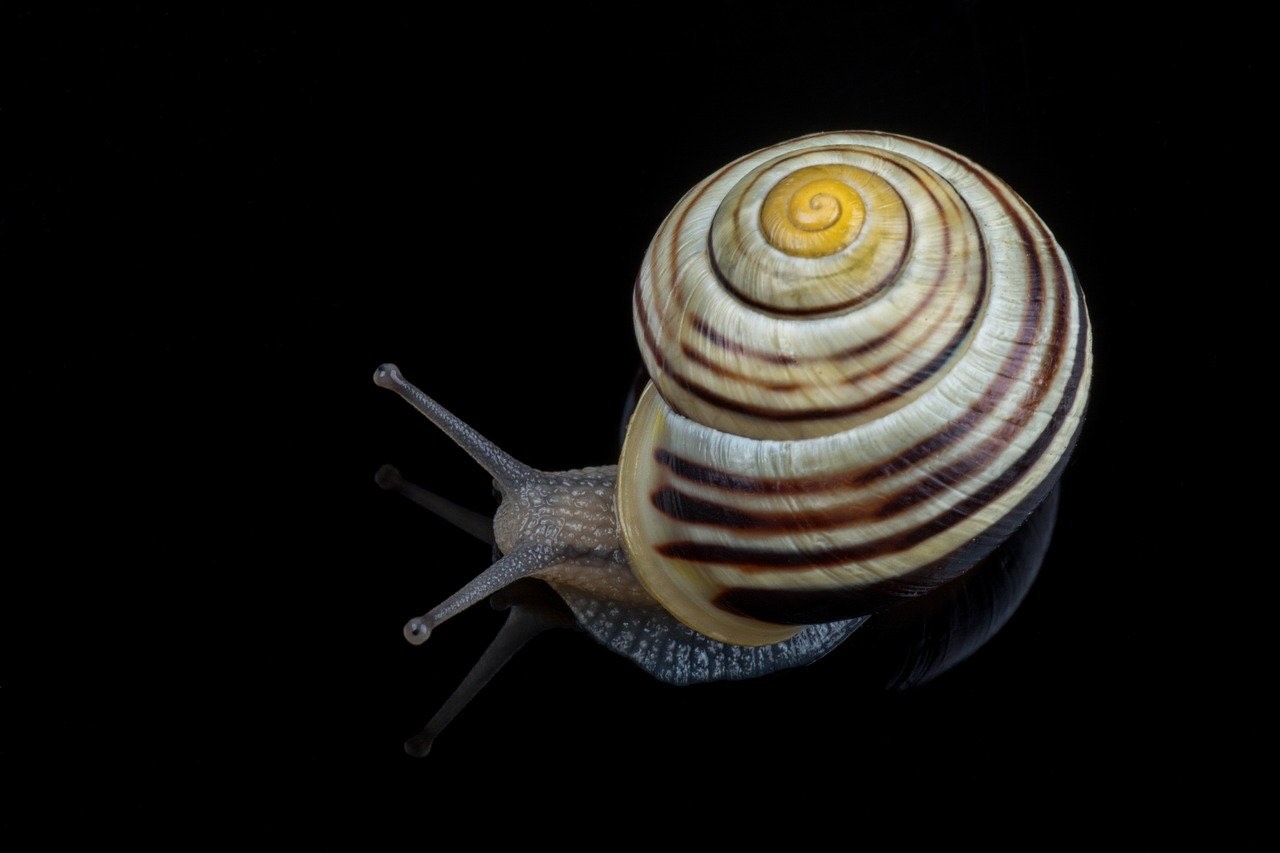
Probably the most ethical and organic method is simply to encourage more biodiversity in your garden. Creating a wildlife pond is one of the best ways to reduce the number of slugs and snails, as frogs feed on them. Encourage natural predators such as ground beetles, frogs, toads and birds by providing suitable habitats like bug hotels built the right way, log piles, rockeries and bird boxes.
Create physical barriers around vulnerable plants using materials like crushed eggshells, coarse sand or pine needles. These abrasive substances deter slugs from crossing because they’re painful for them, and their slimy mucus gets stuck, causing discomfort.

Sprinkle used coffee grounds around plants. The texture and caffeine content can repel slugs while also enriching the soil with organic matter. Coffee grounds don’t feed hostas directly in any meaningful way, so don’t rely on them for nutrition, but they’re a useful way to reuse the grounds from a coffee machine, cafetiere or espresso machine while getting a small slug deterrent benefit alongside it.
Regularly inspect your hostas for signs of pest damage and take appropriate measures, such as handpicking pests or using organic pest control methods. Proper spacing and good air circulation can also help prevent fungal diseases such as powdery mildew.
This is one of the most common viral diseases affecting hostas. Symptoms include mottled or distorted foliage, yellowing and stunted growth. There’s no cure for HVX, so infected plants should be removed and destroyed to prevent spreading.
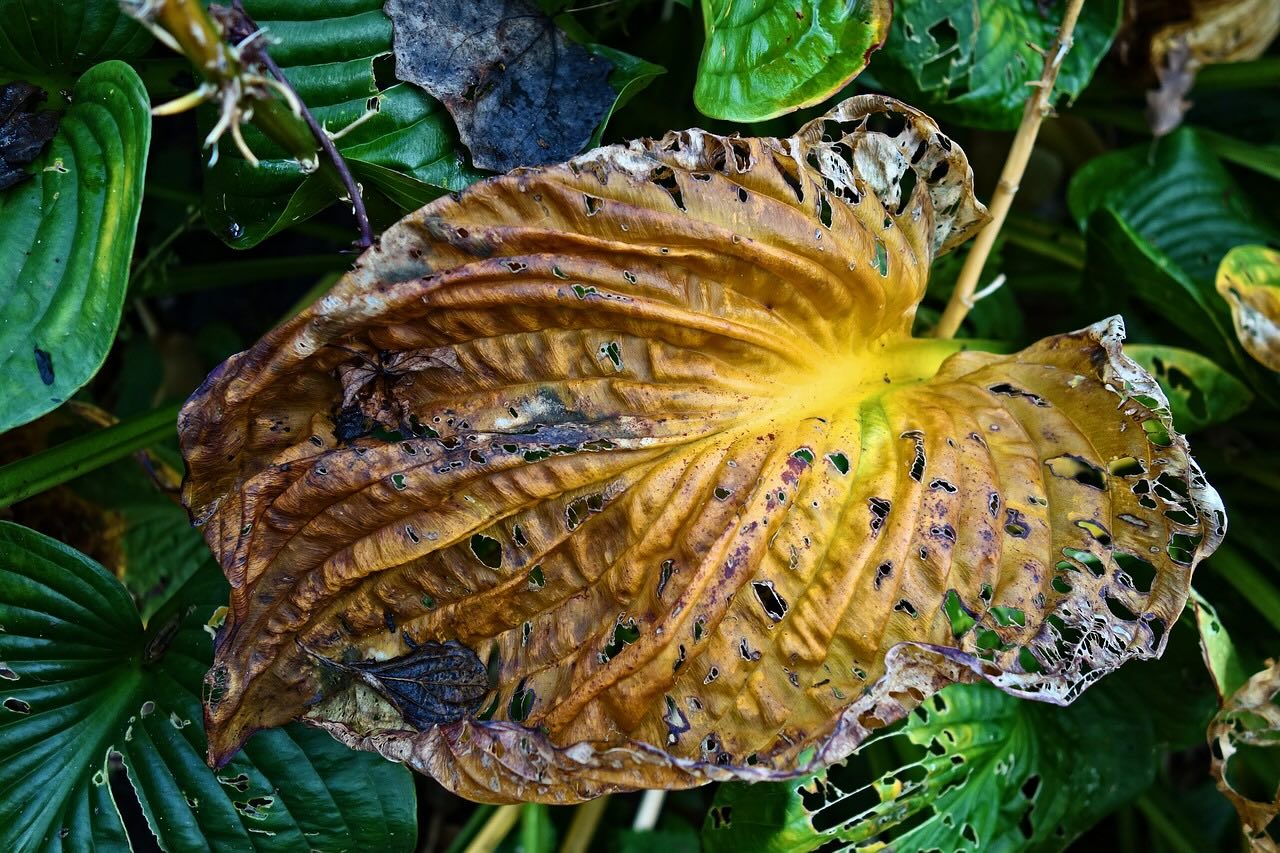
HVX can spread easily through the movement of infected plant material, such as divisions, cuttings or tools used for pruning or dividing plants. Additionally, the virus can be transmitted by sap-feeding insects like aphids. Given its ability to spread rapidly and the challenges in detecting infected plants, HVX remains a real concern for hosta growers, so it’s essential to inspect new hostas carefully and practice good sanitation and hygiene in the garden.
Several fungal pathogens, such as anthracnose and botrytis, can cause leaf spot diseases in hostas. Symptoms include dark spots or lesions on the leaves, which may spread and cause defoliation. Usually poor ventilation and very wet springs cause fungal leaf spots on hostas, so ensuring surrounding shrubs and perennials are suitably pruned in late winter to allow airflow is key. Good garden hygiene alongside a fungicidal treatment where needed can help manage the problem.
Crown rot is caused by various soil borne fungi and bacteria. It can occur when the crown of the plant is exposed to excessive moisture, leading to rotting and eventual death of the plant. Proper drainage and avoiding overwatering can help prevent crown rot. You can spot crown rot when the hosta fails to emerge in late spring, and any new growth simply melts at the base.
Powdery mildew appears as a powdery white coating on the leaves of hostas. It thrives in humid conditions and can weaken the plant over time. Good air circulation and fungicidal treatments can help control it. Powdery mildew can also occur during drought and sudden heatwaves or water shortages, which is a useful reminder that hosta problems often trace back to inconsistent watering rather than any single cause.
Bacterial soft rot occurs when hostas are exposed to overly wet conditions, causing plant tissue to become soft and mushy. This is sometimes known among gardeners as melting hostas, as the whole plant appears to decompose and melt back into the ground, leaving a slimy mess behind. Proper watering practices and avoiding overhead watering help prevent it.
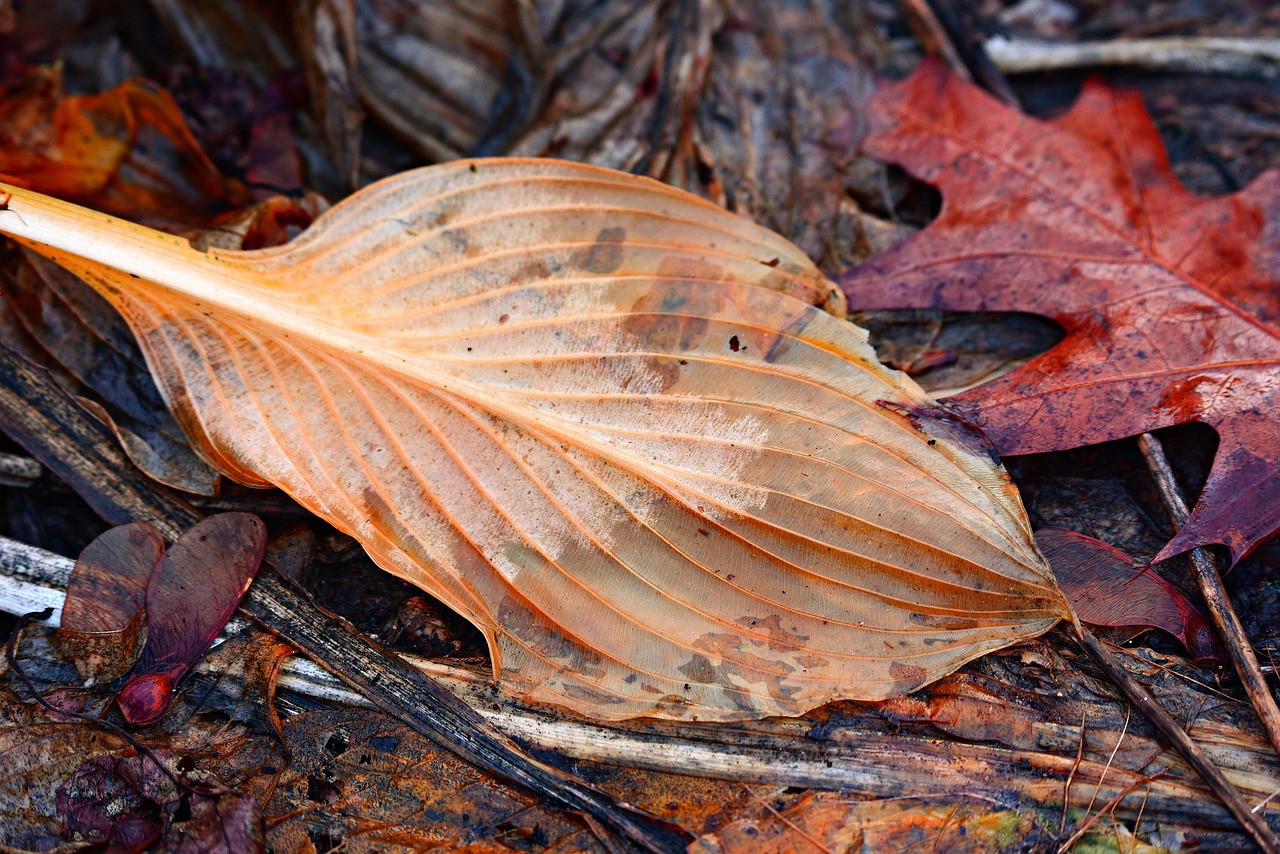
Over time, hostas may become overcrowded, leading to reduced vigour and smaller leaves. Dividing hostas every three years helps rejuvenate the plants and maintain their health and hardiness. By dividing hostas you can also propagate them, multiplying your garden plant stock for free.
To divide hostas, carefully dig up the clump in early spring or autumn and use a sharp knife or garden fork to separate the individual plants, ensuring each division has healthy roots and shoots. Pot them on or replant them immediately so they don’t lose too much water or dry out.
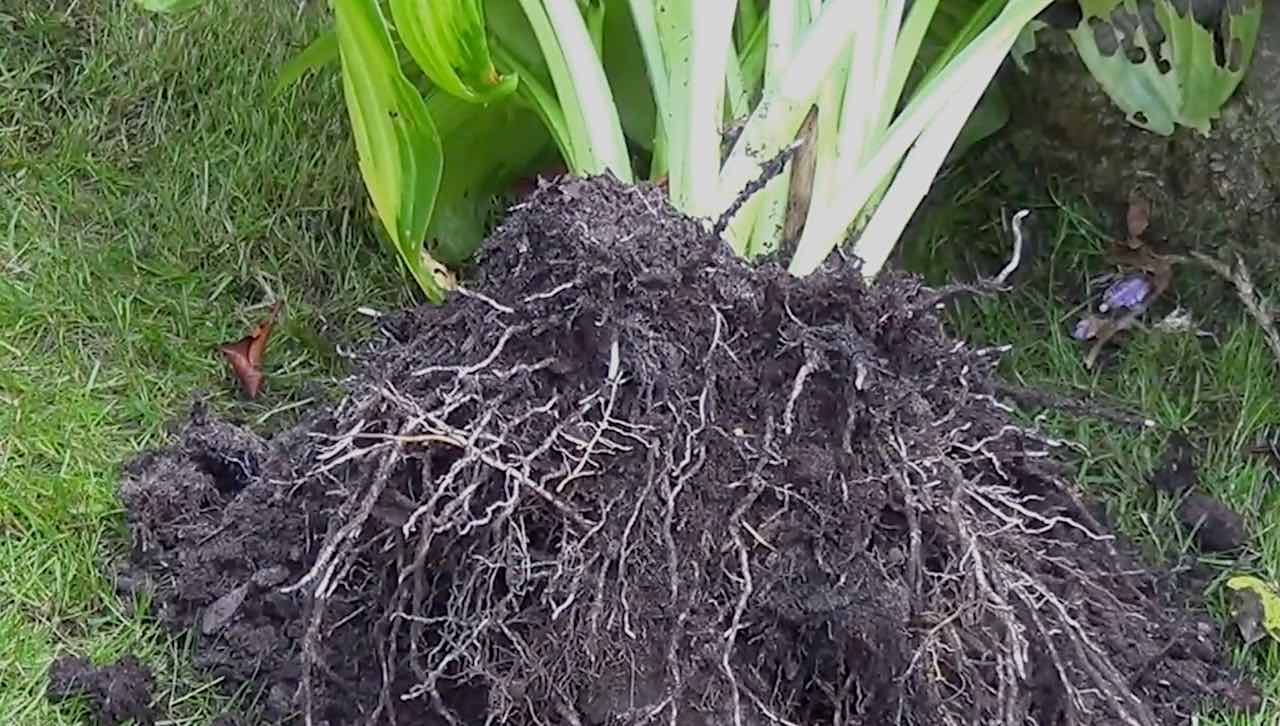
The perfect time to divide, split and propagate hostas is late September, once they’ve finished flowering and you can see what you’re doing, before hostas become dormant and disappear into the ground for winter. Some people split them in April instead, but I find they’re only just emerging then, and it’s all too easy to accidentally damage young hostas at that stage, doing more harm than good.
Cutting back is a separate job to dividing, and it’s worth doing every autumn regardless of whether you’re dividing that year. Once the foliage has properly died back and gone black after the first hard frost, cut the old leaves away at the base with secateurs or a sharp knife. Doing this promptly, rather than leaving collapsed foliage sitting over the crown all winter, removes a place for slugs and fungal spores to overwinter close to next year’s growth point.
🛒 Buy secateurs from Amazon UK
Hostas come in various varieties, offering options for different leaf colours, sizes and textures. When selecting hostas for your garden, consider factors such as leaf colour, from green to blue to variegated, size from miniature to giant, and leaf texture, whether smooth, ribbed or wavy.
There really is a hosta for every style and size of garden, so it’s worth doing your research into which species or cultivar best blends with your desired design style. A top tip is to always plant hostas in multiples throughout the garden, as one on its own always looks lonely and stands out for the wrong reasons. If slugs are a persistent problem in your garden, the thicker-leaved, blue-grey varieties in this list, particularly Halcyon and Sum and Substance, hold up noticeably better than thin-leaved green varieties, since slugs and snails find the tougher leaf tissue much harder going.
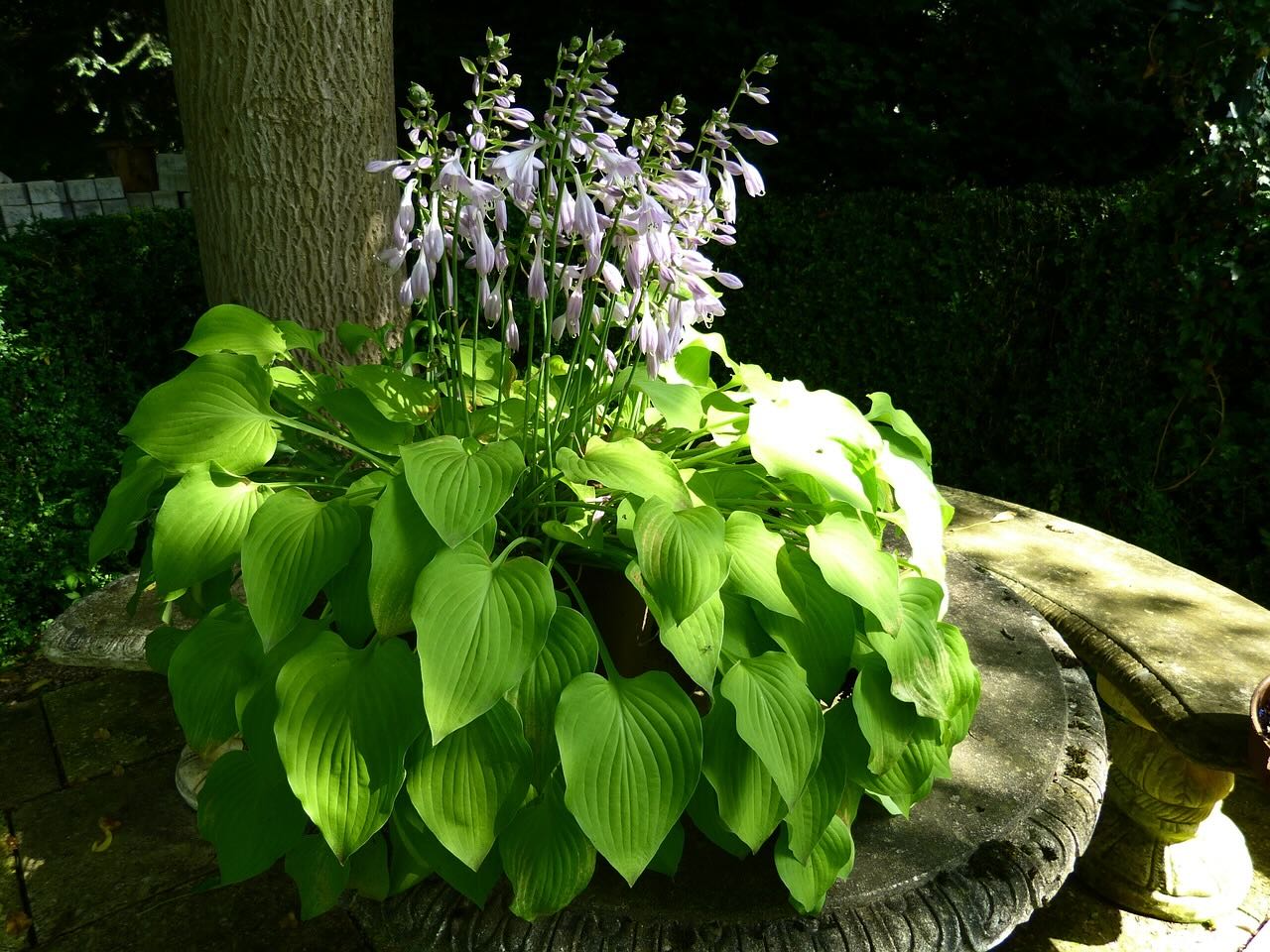
Known for its large, heart shaped leaves and sturdy, upright growth habit. This species often features blue green foliage and produces lavender or white flowers in summer. Also known as the Japanese hosta, as it’s native to Asia, this is one of the larger hostas you can grow.
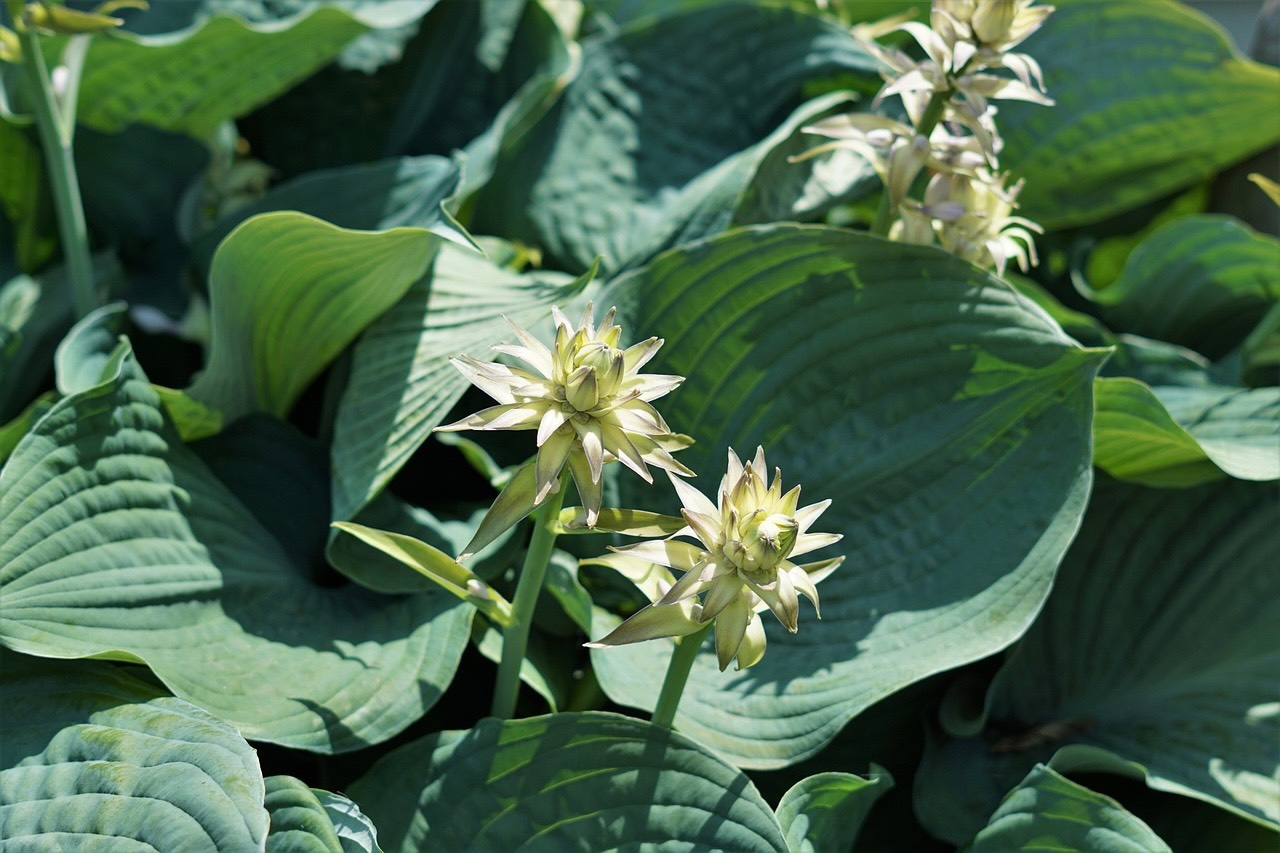
Its sheer scale makes it an excellent focal point plant at the back of a shaded border or beside a pond, where the huge quilted leaves catch the light beautifully after rain.
| At a glance | |
|---|---|
| Botanical name | Hosta sieboldiana |
| Plant type | Herbaceous perennial |
| RHS hardiness | H6, fully hardy |
| Height and spread | 60cm x 90cm |
| Flowering period | Mid to late summer |
| Best conditions | Full to partial shade, moist fertile soil |
| Key feature | Enormous blue green quilted leaves |
🛒 Buy Hosta sieboldiana from Amazon UK
Characterised by its glossy, ovate leaves and cascading growth habit. It comes in various shades of green and gold and produces delicate lavender or white flowers on tall spikes.
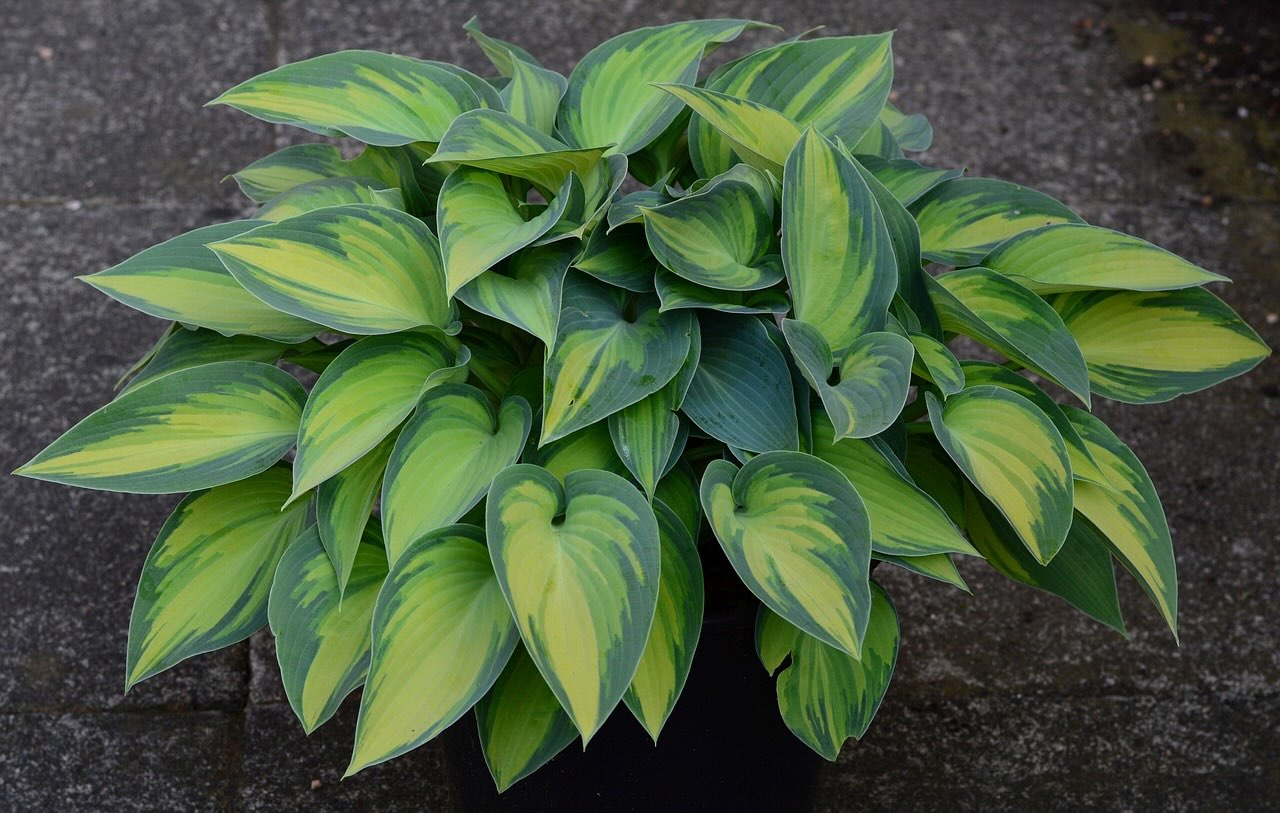
A dependable middle of the border variety that bulks up quickly, making it a good choice if you want mature ground cover in a shaded bed within a couple of seasons rather than five or six.
| At a glance | |
|---|---|
| Botanical name | Hosta fortunei |
| Plant type | Herbaceous perennial |
| RHS hardiness | H6, fully hardy |
| Height and spread | 50cm x 75cm |
| Flowering period | Mid summer |
| Best conditions | Partial shade, moist soil |
| Key feature | Glossy green and gold cascading foliage |
🛒 Buy Hosta fortunei from Amazon UK
Also known as the narrow leaved hosta, this species has lance shaped leaves with pointed tips. It’s prized for its graceful appearance and tolerance to slightly drier conditions than most hostas will put up with.

Its narrower foliage gives a softer, more grass like texture than the broad leaved varieties, which works well planted as edging along a shaded path.
| At a glance | |
|---|---|
| Botanical name | Hosta lancifolia |
| Plant type | Herbaceous perennial |
| RHS hardiness | H6, fully hardy |
| Height and spread | 40cm x 60cm |
| Flowering period | Late summer |
| Best conditions | Partial shade, tolerates some dryness |
| Key feature | Narrow, lance shaped leaves |
🛒 Buy Hosta lancifolia from Amazon UK
Notable for its deeply ribbed, heart shaped leaves and upright growth habit. It typically features dark green foliage and produces tall spikes of lavender flowers.
One of the better hostas for a slightly brighter spot, since it copes with a touch more morning sun than most varieties without scorching.
| At a glance | |
|---|---|
| Botanical name | Hosta ventricosa |
| Plant type | Herbaceous perennial |
| RHS hardiness | H6, fully hardy |
| Height and spread | 60cm x 90cm |
| Flowering period | Mid to late summer |
| Best conditions | Partial to full shade |
| Key feature | Deeply ribbed dark green leaves, good sun tolerance |
🛒 Buy Hosta ventricosa from Amazon UK
Recognised for its large, fragrant and glossy leaves. This species is often grown for its ornamental value and sweetly scented white flowers, which bloom in late summer.
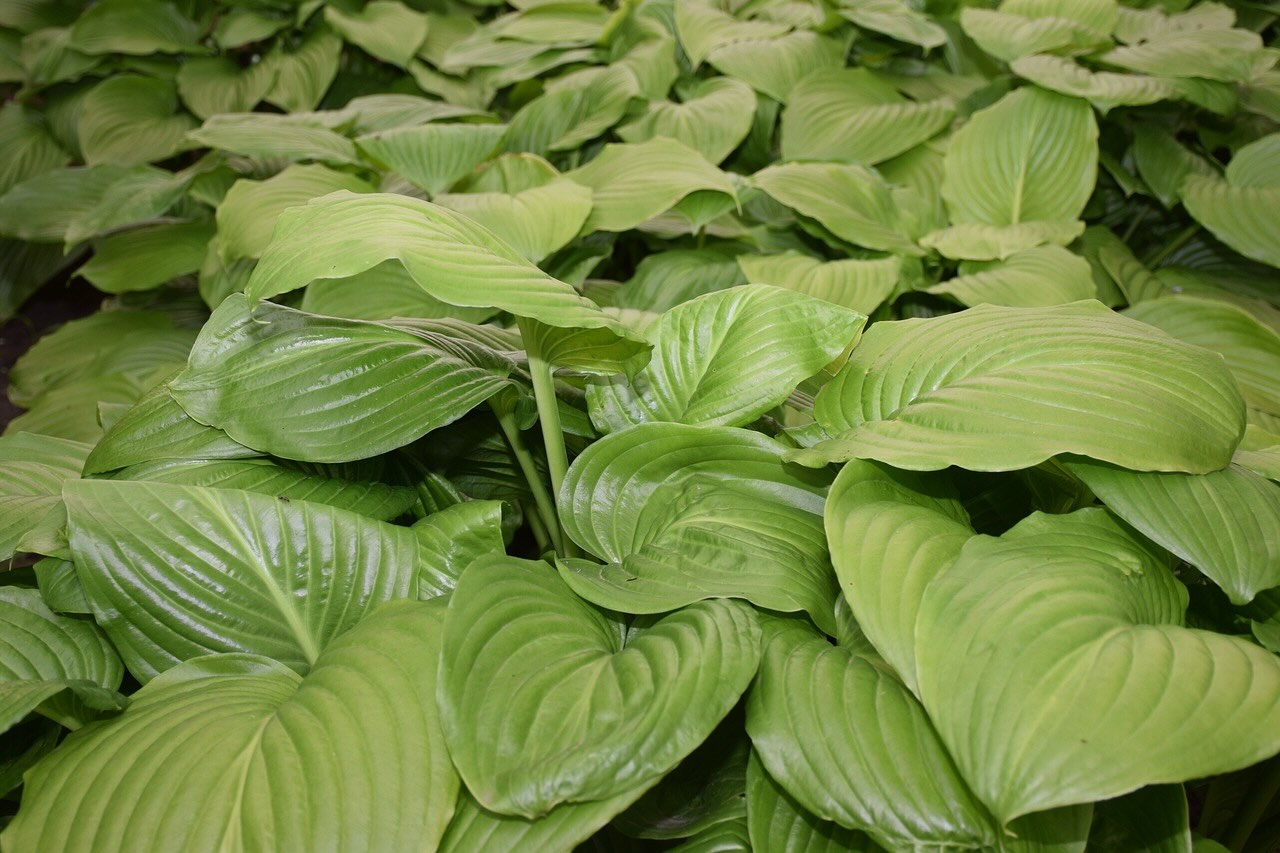
Plant this one somewhere you’ll actually catch the scent on a summer evening, near a seating area or a well used path, since the fragrance is one of the best reasons to grow it.
| At a glance | |
|---|---|
| Botanical name | Hosta plantaginea |
| Plant type | Herbaceous perennial |
| RHS hardiness | H5, hardy in most UK regions |
| Height and spread | 45cm x 90cm |
| Flowering period | Late summer |
| Best conditions | Partial shade, tolerates more sun than most hostas |
| Key feature | Fragrant white flowers, glossy pale leaves |
🛒 Buy Hosta plantaginea from Amazon UK
A popular cultivar known for its striking blue grey foliage and compact growth habit. It’s prized for its tolerance to heat and humidity, and for holding up better against slugs than most thin leaved green varieties.
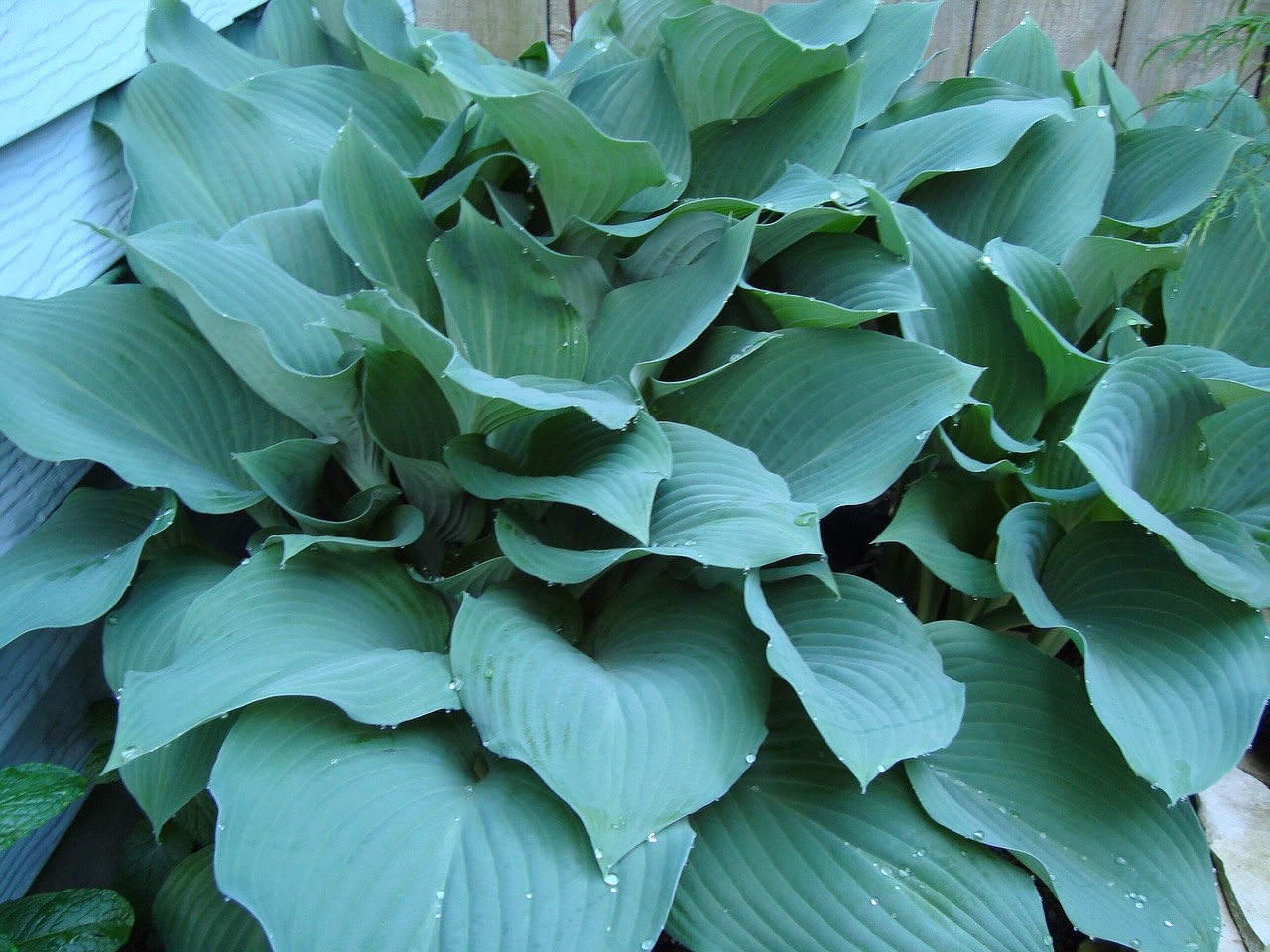
A compact enough size to work well in a large container as well as in the ground, and one of the varieties I’d point a slug plagued garden towards first.
| At a glance | |
|---|---|
| Botanical name | Hosta ‘Halcyon’ |
| Plant type | Herbaceous perennial cultivar |
| RHS hardiness | H6, fully hardy |
| Height and spread | 35cm x 55cm |
| Flowering period | Mid summer |
| Best conditions | Partial to full shade |
| Key feature | Blue grey foliage, good slug resistance |
🛒 Buy Hosta ‘Halcyon’ from Amazon UK
Renowned for its enormous, chartreuse yellow leaves that can reach up to 60cm in length. It’s a standout in shaded gardens and adds a bold, tropical touch, with thick foliage that also gives it decent slug resistance for such a large leaved variety.
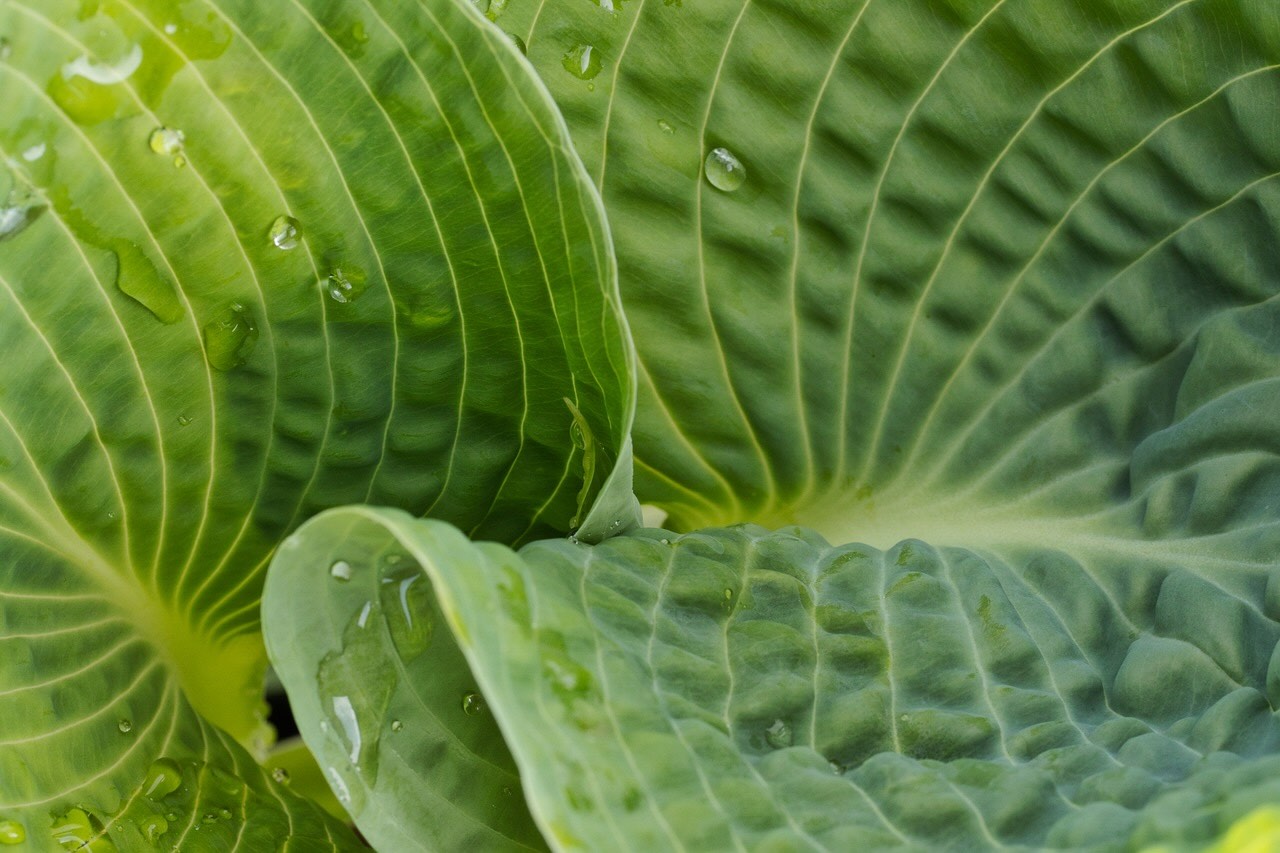
Give this one plenty of room to spread, since it’s one of the biggest hostas you can grow and looks cramped anywhere tight.
| At a glance | |
|---|---|
| Botanical name | Hosta ‘Sum and Substance’ |
| Plant type | Herbaceous perennial cultivar |
| RHS hardiness | H6, fully hardy |
| Height and spread | 75cm x 120cm |
| Flowering period | Mid summer |
| Best conditions | Partial shade, tolerates more sun than most hostas |
| Key feature | Enormous chartreuse leaves, thick and slug resistant |
🛒 Buy Hosta ‘Sum and Substance’ from Amazon UK
Loved for its striking variegated foliage, featuring deep green leaves with bright white margins. This cultivar adds contrast and visual interest to shaded areas, and is great for pots to bring a pop of colour to the garden.
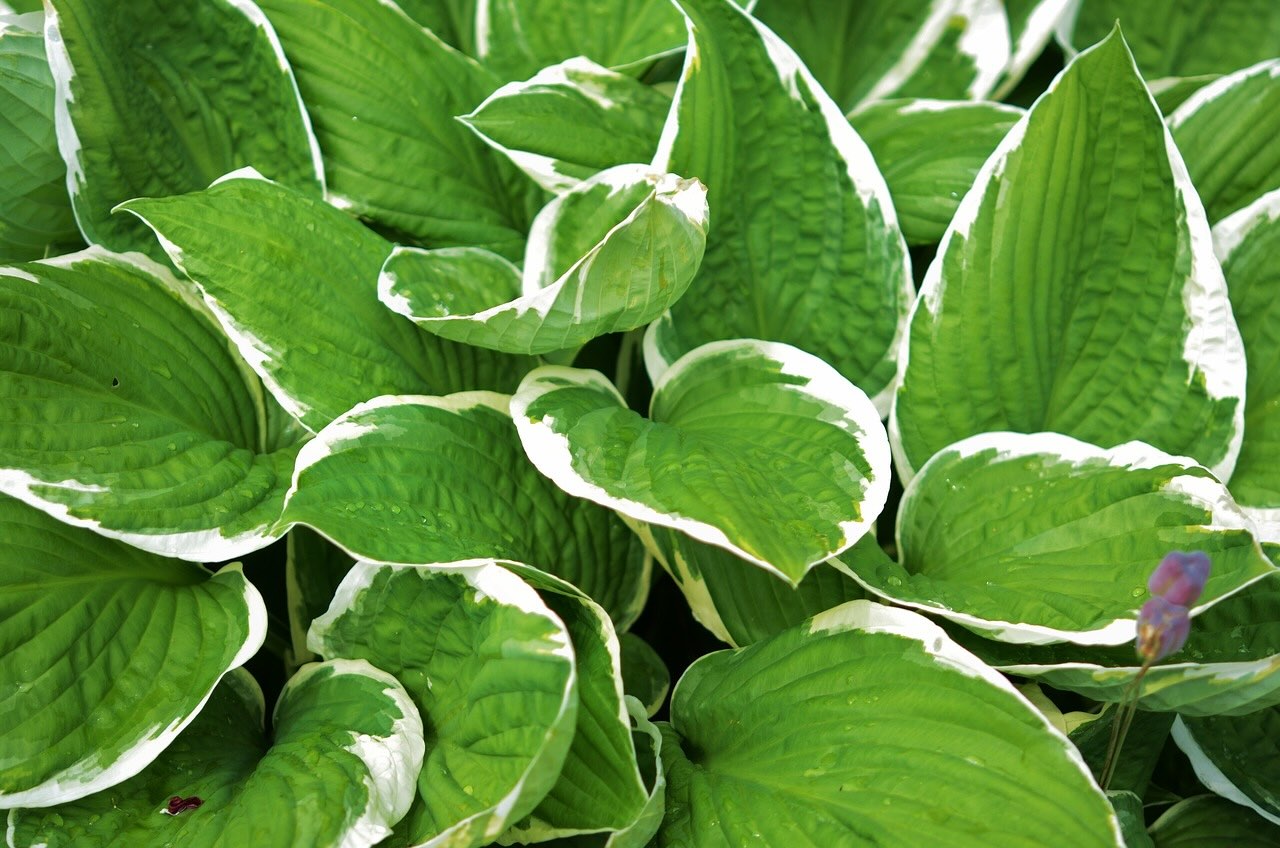
The white margins brighten a dark corner more than almost any other hosta on this list, making it a good choice for the shadiest spot in the garden.
| At a glance | |
|---|---|
| Botanical name | Hosta ‘Patriot’ |
| Plant type | Herbaceous perennial cultivar |
| RHS hardiness | H6, fully hardy |
| Height and spread | 45cm x 75cm |
| Flowering period | Mid summer |
| Best conditions | Partial shade |
| Key feature | Bold white margined variegation, good for pots |
🛒 Buy Hosta ‘Patriot’ from Amazon UK
Yes, you can force hostas to grow in the sun if you provide enough moisture so they don’t dry out, and there are a few full sun tolerant hosta varieties you can choose from. However, I’d always advise against forcing plants to grow in conditions they don’t favour. It stresses both you and the plant out. Always pick the right plant for the right conditions.
While most hosta varieties prefer partial to full shade, a few species and cultivars are more tolerant of sun exposure, particularly if given sufficient moisture and soil amendments. Hosta plantaginea, hosta ventricosa, and cultivars such as ‘Sum and Substance’ and Sun Power all cope with more sun than the average hosta, featured earlier in this guide.
Hostas are susceptible to leaf burn when exposed to intense sunlight for extended periods. The sun’s UV rays can scorch and damage the delicate foliage, causing brown or yellow patches on the leaves. This is the biggest problem with trying to force hostas into full sun, along with general yellowing of the leaves.
Hostas grown in full sun may experience rapid moisture loss from their leaves and soil, leading to dehydration. Without adequate water retention the plants may wilt and become stressed, affecting overall health and vigour. Sun stressed hostas also tend to show slower growth and smaller foliage than the same variety grown in shade, since the stress from excessive sunlight hinders photosynthesis.
Sun stressed hostas may become more susceptible to pest infestations and diseases, since weakened plants are more prone to attacks from slugs, snails and aphids, as well as fungal infections such as powdery mildew and crown rot. Hostas exposed to prolonged full sun may also enter dormancy earlier than those grown in shade, which can disrupt the plant’s natural growth cycle and its ability to store energy for the following season.
While some hosta varieties tolerate partial sun or filtered sunlight, growing them in full sun poses real challenges and usually isn’t ideal for their continued vigour. It’s essential to give hostas the right growing conditions, including adequate shade and moisture, to ensure they thrive in the garden rather than merely surviving.
March to May in spring, or September into early October in autumn, are the best windows for planting hostas in the UK. Both give the plant cooler, calmer conditions to establish roots before the demands of a full growing season or the onset of winter.
Both work well, and the right choice depends on your garden. In the ground, hostas access more consistent moisture and reach a larger ultimate size with less watering effort from you. In pots, they’re considerably easier to protect from slugs, particularly if raised off the ground, though they need more frequent watering and feeding through summer.
Coffee grounds offer a mild slug deterrent effect and add a small amount of organic matter to the soil as they break down, but they aren’t a meaningful source of nutrition for hostas on their own. Use them as a supplementary slug deterrent alongside proper feeding and mulching, not as a replacement for either.
The main downsides are their vulnerability to slugs and snails, particularly on emerging spring growth, their complete dieback over winter which leaves a gap in the border for several months, and their toxicity to dogs and cats if eaten. None of these rule hostas out, but they’re worth knowing before you commit a prominent spot in the garden to them.
Now you know how to turn a lawn into a productive no dig bed, why not take your skills further with some online design training? My Garden Design for Beginners Course takes you from a garden design novice to a confident designer equipped to tackle any green space, with step by step guidance from me, Lee Burkhill, award winning garden designer and presenter on BBC1’s Garden Rescue.
The course covers design principles, planting techniques and layout options across 20 hours of flexible online learning, with video lessons, quizzes, real world case studies and certification on completion. Enrol now for just £199 and start your journey toward garden design mastery.
For the garden you’ve already got, not the one you’re starting from scratch. Seven checklists and video lessons from BBC Garden Rescue’s Lee Burkhill, designed to help you decide what’s worth keeping before you spend a penny.
Garden Design Examples for Small Gardens: 30 Design Templates & Planting Plans: In this online gardening course, I’ll walk you through 30 fantastic garden designs, explaining the logic behind the layout and plant choices, plus take-home tips for applying them in your own garden.
Learn how to transform and design your garden with Lee Burkhill’s crash course in garden design. In over 5 hours, Lee will teach you how to design your dream garden. Featuring practical design examples, planting ideas and video guides. Learn how to design your garden in one weekend!
Garden Design for Beginners Online Course: Want to become a garden designer or design your own garden? This beginner course is for you. Join me, Lee Burkhill, an award-winning garden designer, as I train you in the art of beautiful garden design. Enjoy 20 hours of online study and video lessons, along with quizzes and a completion certificate.
Hostas really are a fabulous shade-loving herbaceous perennial that comes back year after year in the garden. With a little bit of care and soil maintenance, compost mulches, sensible slug control in spring, and a proper cut back once the foliage collapses in autumn, hostas will thrive in the shadiest of spots and bring genuine beauty to your garden. They can even be grown in containers for smaller urban gardens or shaded balconies, and dividing a mature clump every few years will give you enough plants to fill several more.
Happy Gardening!



Lee Burkhill, known as the Garden Ninja, is an award-winning garden designer and horticulturist with over 30 years of gardening experience and 15 years as a professional garden designer. A qualified RHS (Royal Horticultural Society) professional, Lee specialises in sustainable garden design and practical horticultural advice. He designs and presents on BBC1’s Garden Rescue and in leading gardening publications. Lee combines three decades of hands-on gardening knowledge with professional design qualifications to help gardeners create beautiful, functional outdoor spaces.
View all posts by Lee Burkhill






JOIN THE NINJAS

Be the first in line for new Guides, Discount codes and Offers