For the garden you’ve already got, not the one you’re starting from scratch. Seven checklists and video lessons from BBC Garden Rescue’s Lee Burkhill, designed to help you decide what’s worth keeping before you spend a penny.
69


Quick Answer
Lavender and roses feed bees brilliantly for a few weeks in midsummer, but pollinators are active in the UK from January through to November. Add early plants such as winter aconite, snowdrops, primrose, hellebores and mahonia for late winter, and late plants such as echinacea, sedum, asters, Japanese anemone and ivy for autumn, and you close the gaps either side of summer, creating a richer garden for wildlife and for yourself.
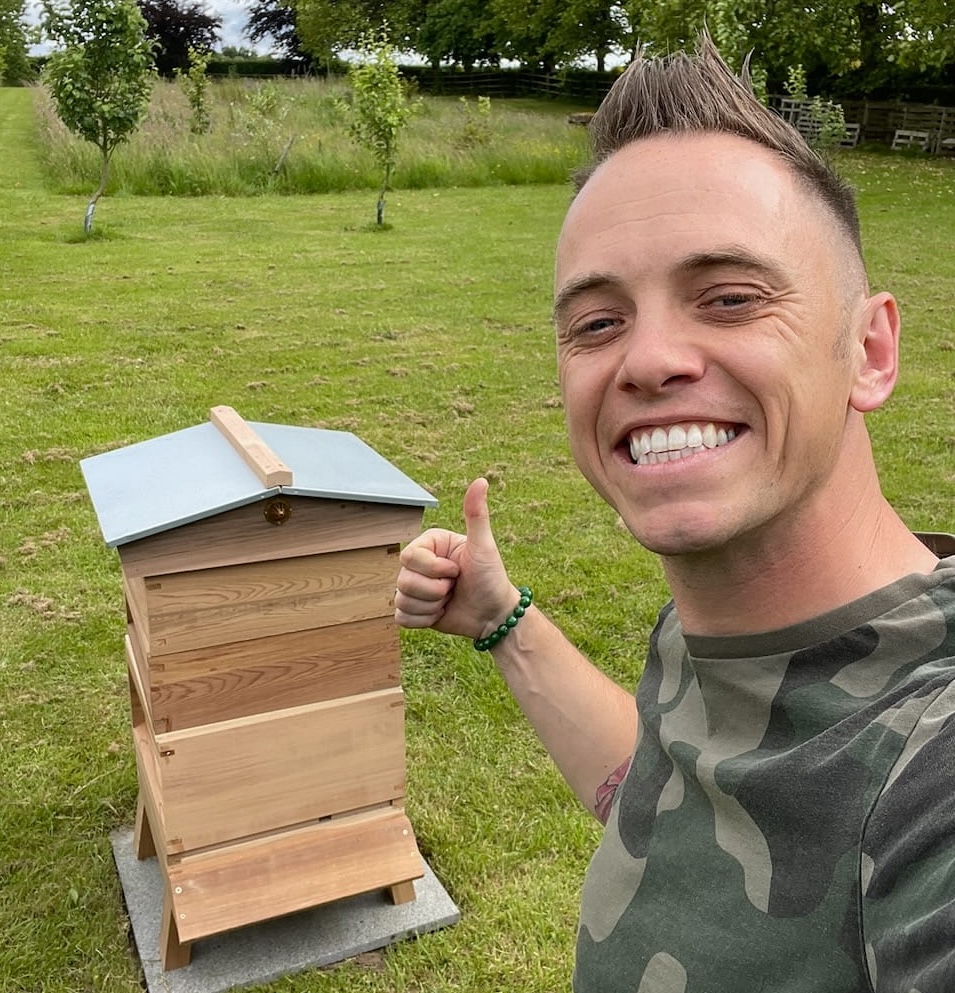
As a beekeeper as well as a garden designer, I see this problem from both sides of the fence. I have watched my own colonies come through a beautiful June flush of forage and then hit what beekeepers call the hungry gap in late summer, when the garden looks lush and green, but there is precious little actual pollen or nectar on offer.
It is not that gardeners are doing anything wrong exactly; it is that most planting advice stops at “plant lavender for bees” without ever explaining what happens for the other ten months of the year. If you are curious about keeping your own hive rather than just feeding other people’s bees, I have written up everything I wish I had known before I started in my beginner’s guide to keeping bees.
This guide is built around closing those gaps. I have split it into the plants that matter most at the start of the pollinator calendar, in January through to April, and the plants that matter most at the end of it, in August through to November, with a chunk in the middle on how to actually plan a garden that succession plants for wildlife rather than relying on one glorious midsummer flush. If you want the full picture of what to plant across the whole year, including the midsummer stars like lavender and roses themselves, my best plants for bees UK guide is the place to start. Think of this article as the deep dive into the two gaps that the guide only touches on: the early spring wake-up call and the late autumn final feed.
Jump To
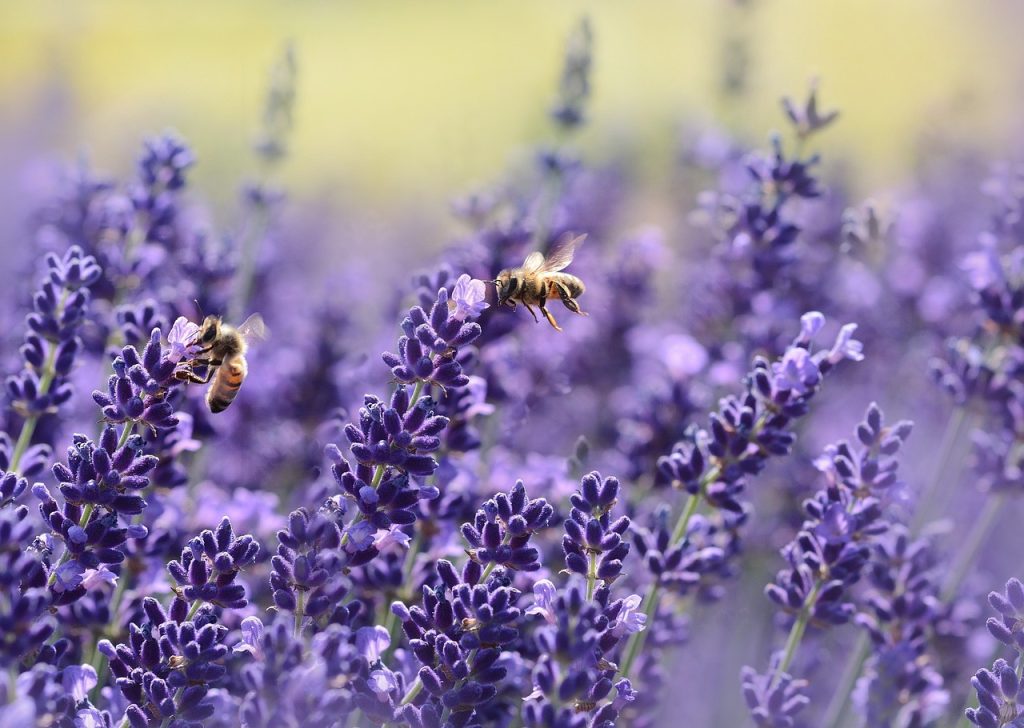
I want to be clear from the outset that I am not having a go at lavender or roses. Lavender in particular is one of the single best midsummer plants for bees anywhere in the UK, and I would never tell a client or a reader to rip it out. The issue is timing rather than the plant itself. Lavender flowers for roughly six to eight weeks between June and August. Most repeat-flowering roses give you a longer window than that, but the bulk of their nectar and pollen still lands firmly in the same midsummer stretch. If that is the only forage on offer in your garden, you have built what is effectively an all-you-can-eat buffet that closes for ten months of the year.
Bees do not go anywhere for winter in the way that swallows fly to Africa. Honey bee colonies cluster in the hive and survive on stored honey, but that honey has to be made from something, and a poor autumn forage season leaves a colony going into winter under strength. Solitary bees and bumblebee queens hibernate, but the queens that emerge on the first mild days of February are running on empty and need pollen within days, not weeks, of waking up. If your garden’s first flowers do not open until May, those early queens are relying entirely on whatever your neighbours happen to have planted, which in most UK gardens is not very much at all.
I have designed hundreds of client gardens over the years, and the single most common planting mistake I see, even in gardens where wildlife is clearly a priority, is a border that peaks in June and July and then has nothing of note either side of it. It is an easy trap to fall into because midsummer plants are the ones sold in force at the garden centre in spring, when most people are doing their planting. Extending the season on either side takes a bit more planning, but it is not difficult once you know which plants to reach for.
The UK is home to around 270 species of bee, including roughly 25 species of bumblebee and something in the region of 240 solitary bee species, alongside honey bees, hoverflies, moths and butterflies, all of which are pollinators in their own right and all of which need feeding on a different schedule. In a mild winter, buff tailed bumblebee queens and even a few workers can be seen on the wing in January. By late February and into March, queens of most bumblebee species are emerging from hibernation and searching desperately for early pollen to fuel the founding of a new nest. This is one of the most vulnerable points in a bumblebee’s entire life cycle, and it is also the point at which most UK gardens have the least to offer.
The RHS Plants for Pollinators scheme, which you will see as a small bee logo on plant labels at good garden centres and nurseries, is built around exactly this principle of covering the whole season rather than just the showy middle of it. I would encourage you to look out for that logo when buying new plants, but do not rely on it alone, since plenty of excellent pollinator plants, including several in this guide, simply have not been through the labelling process yet.
At the other end of the calendar, the period from September through to the first hard frosts is when bumblebee queens of the following year need to build up fat reserves for hibernation, and when honey bee colonies are making their final push to top up winter stores. A garden that runs out of flowers in August is asking these insects to do that critical final feeding on whatever scraps they can find, which in practice is often not much beyond a few late dandelions and whatever remains of a tired looking buddleja.
💡 Top Tip
Choose single flowered varieties wherever you have a choice. Double flowers have been bred with extra petals in place of the pollen bearing anthers, which means bees get very little reward for the effort of visiting them, however attractive they look to us.
These are the plants I recommend most often to clients who want to properly help wildlife rather than just look like they are helping wildlife. Every one of them flowers before the traditional gardening year has really got going, which is exactly the point.
Winter aconite is the plant that regularly beats snowdrops to the earliest flower of the year in my own garden, opening its cheerful golden cups on the first mild days of January, sometimes even in late December. It is a plant I do not see specified nearly often enough, given how much value it offers for how little space it takes up.
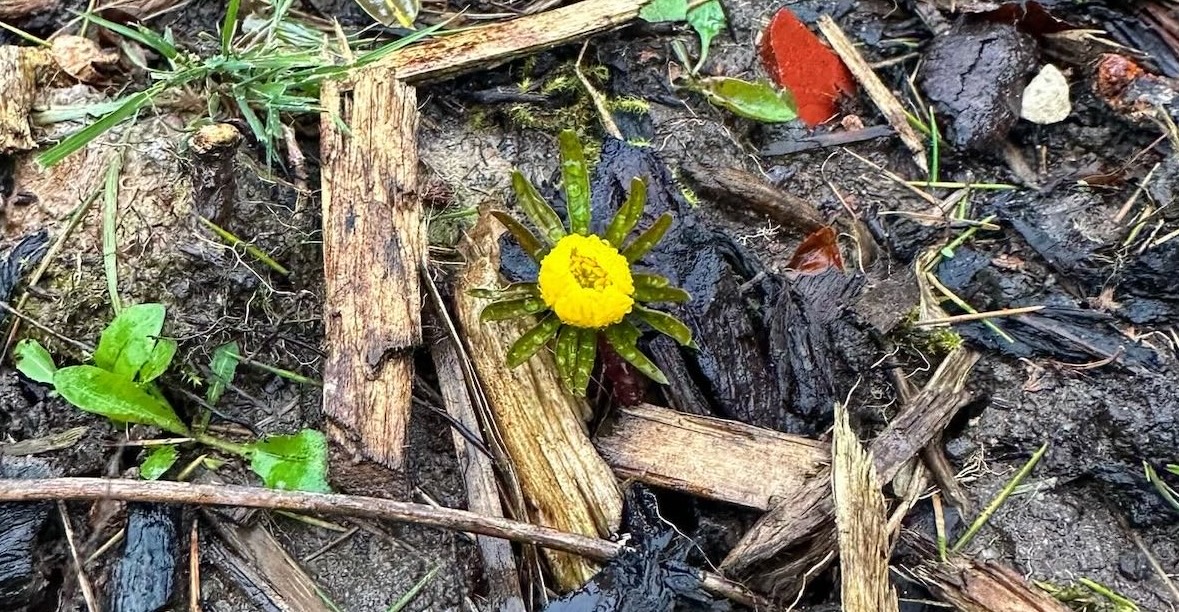
Plant winter aconite tubers in early autumn, having soaked them overnight first to rehydrate them, since dry tubers are notoriously slow and unreliable to establish. Once settled into a spot it enjoys, typically dappled shade under deciduous trees, it will self seed and naturalise into a dense golden carpet within a few years, appearing reliably before almost anything else in the garden.
🛒 Buy winter aconite tubers on Amazon UK
Snowdrops are usually thought of as a purely ornamental plant, and most gardeners plant them without ever considering their wildlife value. In a mild spell in January or February, though, a mature drift of snowdrops is one of the very few pollen sources available to any bee brave enough to be flying that early.
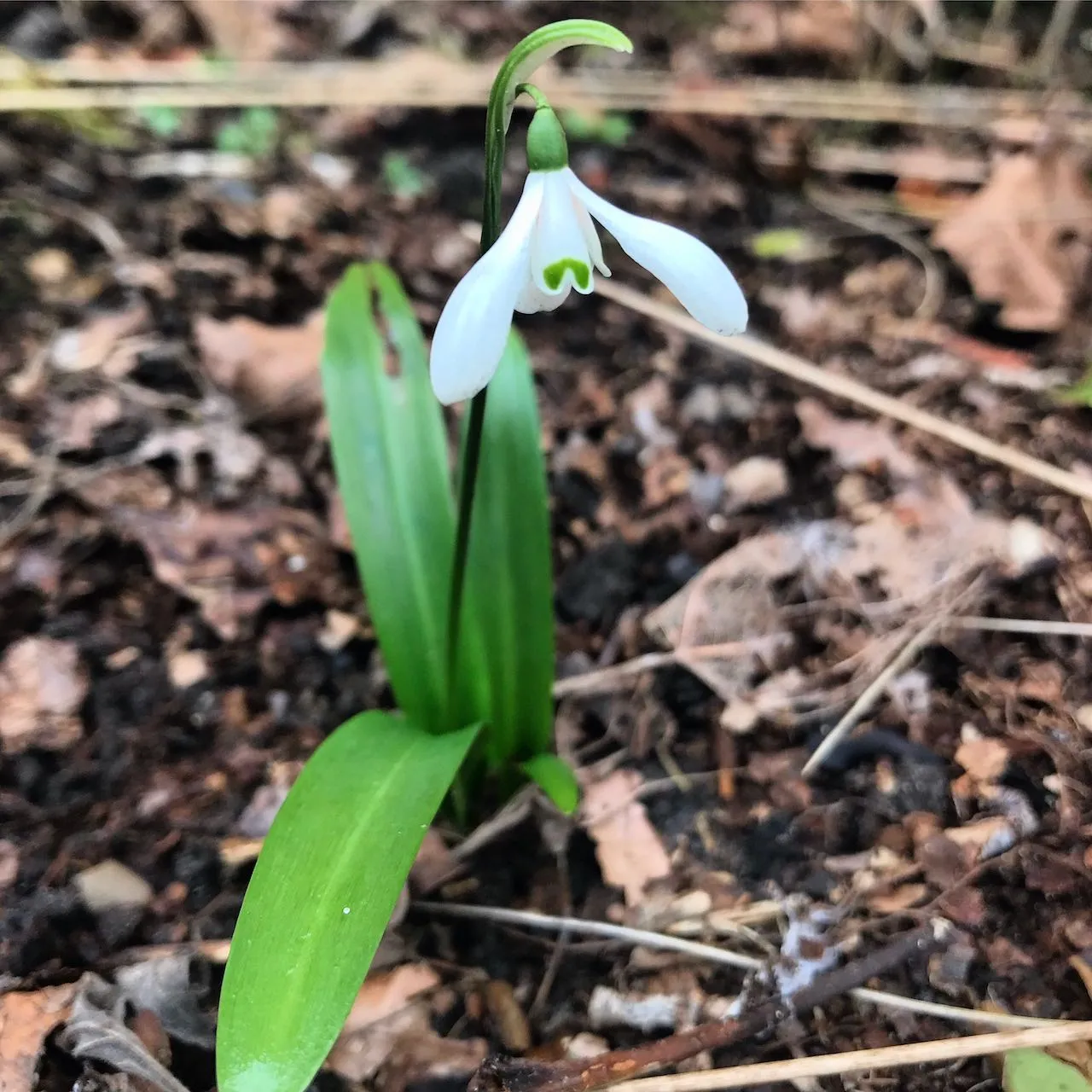
Plant snowdrop bulbs in the green, meaning while they are still in leaf just after flowering, rather than as dry bulbs in autumn, since dry snowdrop bulbs establish poorly and often fail to flower in their first year. A naturalistic drift under deciduous trees or shrubs will multiply steadily over a decade with almost no input from you at all.
🛒 Buy snowdrop bulbs in the green on Amazon UK
Crocus are one of the plants I recommend to every single client who mentions wildlife, because nothing else delivers this much pollen this reliably this early for so little effort. A naturalised drift through a lawn or border needs no maintenance beyond leaving the foliage to die back naturally after flowering.
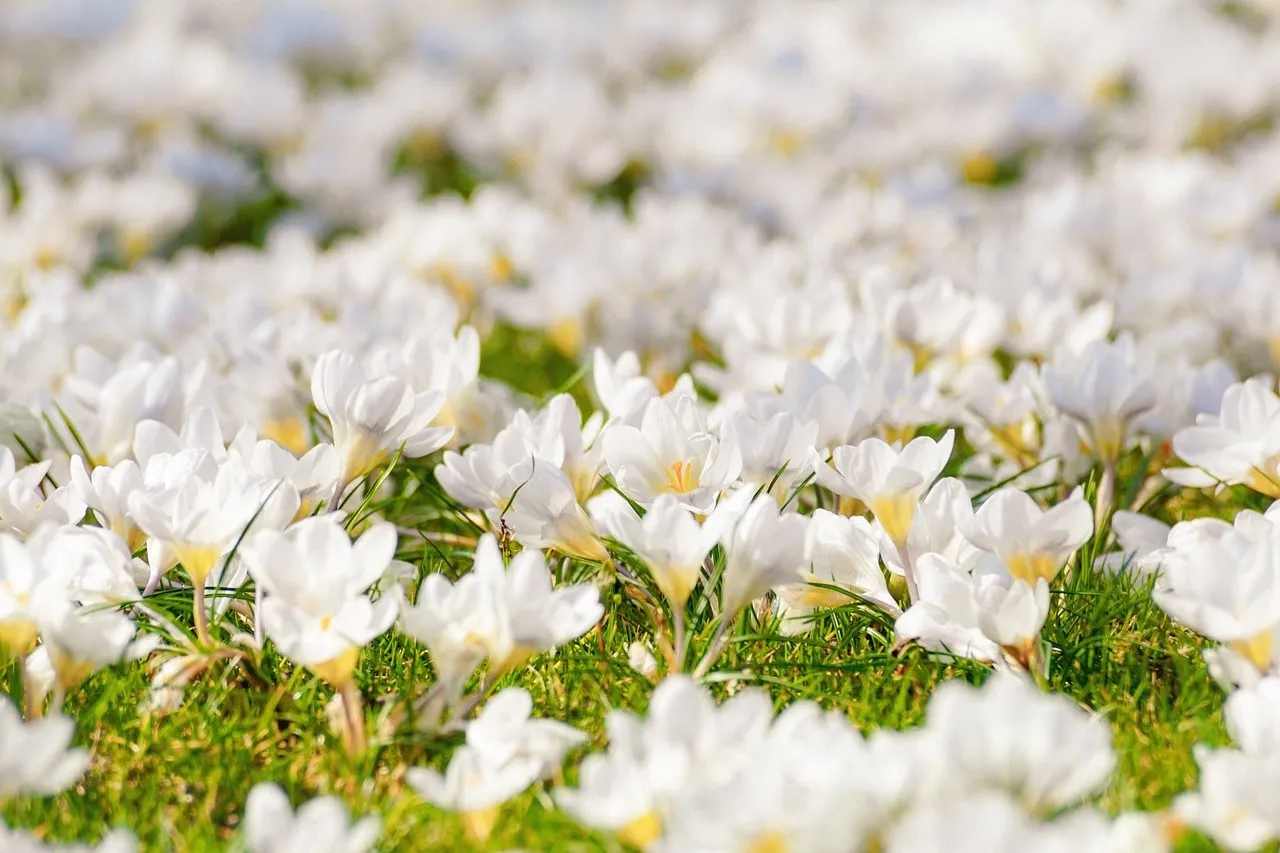
Plant crocus corms in September or October at around 8cm deep for the best February and March display. Crocus tommasinianus is the variety I use most in naturalistic planting since it seeds and multiplies freely, while the larger flowered Crocus chrysanthus varieties give a more refined display for pots and formal borders.
🛒 Buy crocus corms for naturalising on Amazon UK
Hellebores are one of the genuine unsung heroes of the winter and early spring garden, flowering through frost and even light snow when almost nothing else in the border is doing anything at all. The nodding flower shape looks like it might be hiding its pollen from insects, but bumblebee queens have no trouble at all getting underneath the petals to reach it.
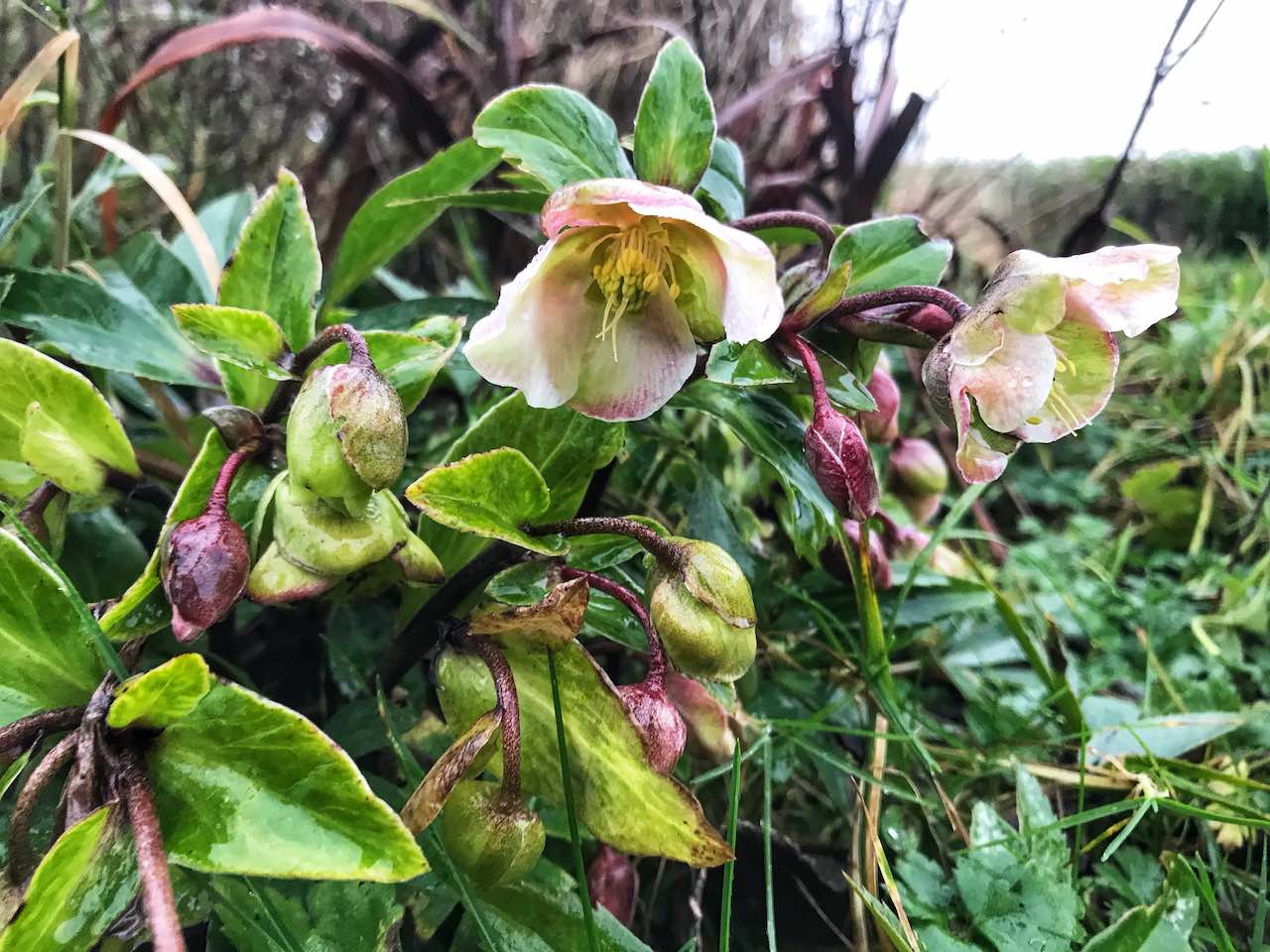
Plant hellebores in dappled shade under deciduous trees or shrubs, where they will happily naturalise and self seed over time. Cut back the old leathery foliage in late autumn before the new flower stems emerge, both for the look of the plant and to reduce the risk of hellebore leaf spot disease.
🛒 Buy hellebore plants on Amazon UK
The native primrose is one of those plants that everyone recognises from hedgerows and woodland edges but far fewer people think to plant deliberately in their own garden. That is a shame, because a naturalised drift of primroses is both a proper UK native and a reliable early source of both pollen and nectar at a point in the year when specialist long tongued insects like the hairy footed flower bee are on the wing and have very few options.
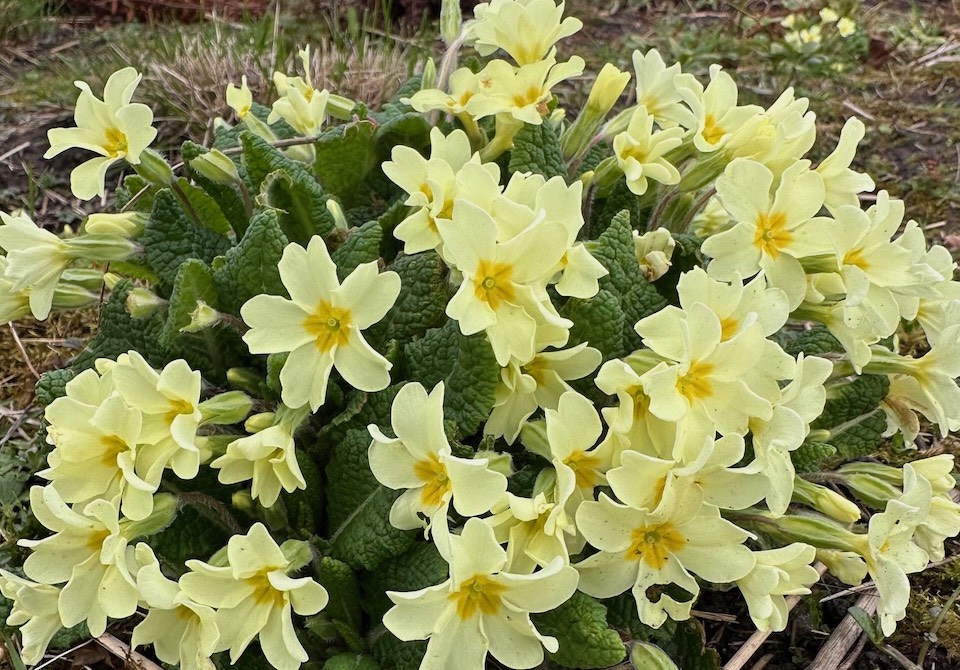
Plant primroses in partial shade in moist, humus rich soil, which mimics the woodland edge and hedgebank conditions they come from naturally. They are very easy to establish from young plants and will self seed steadily once happy, forming an increasingly generous drift year on year with no further input required.
🛒 Buy native primrose plants on Amazon UK
Mahonia is the plant I have specified into more winter show gardens than almost anything else, purely because of how much it does for so little in return. The architectural, holly like evergreen foliage gives the border structure all year, and then in the depths of winter it produces upright spikes of bright yellow, intensely scented flowers that are one of the best cold weather forage sources you can grow.
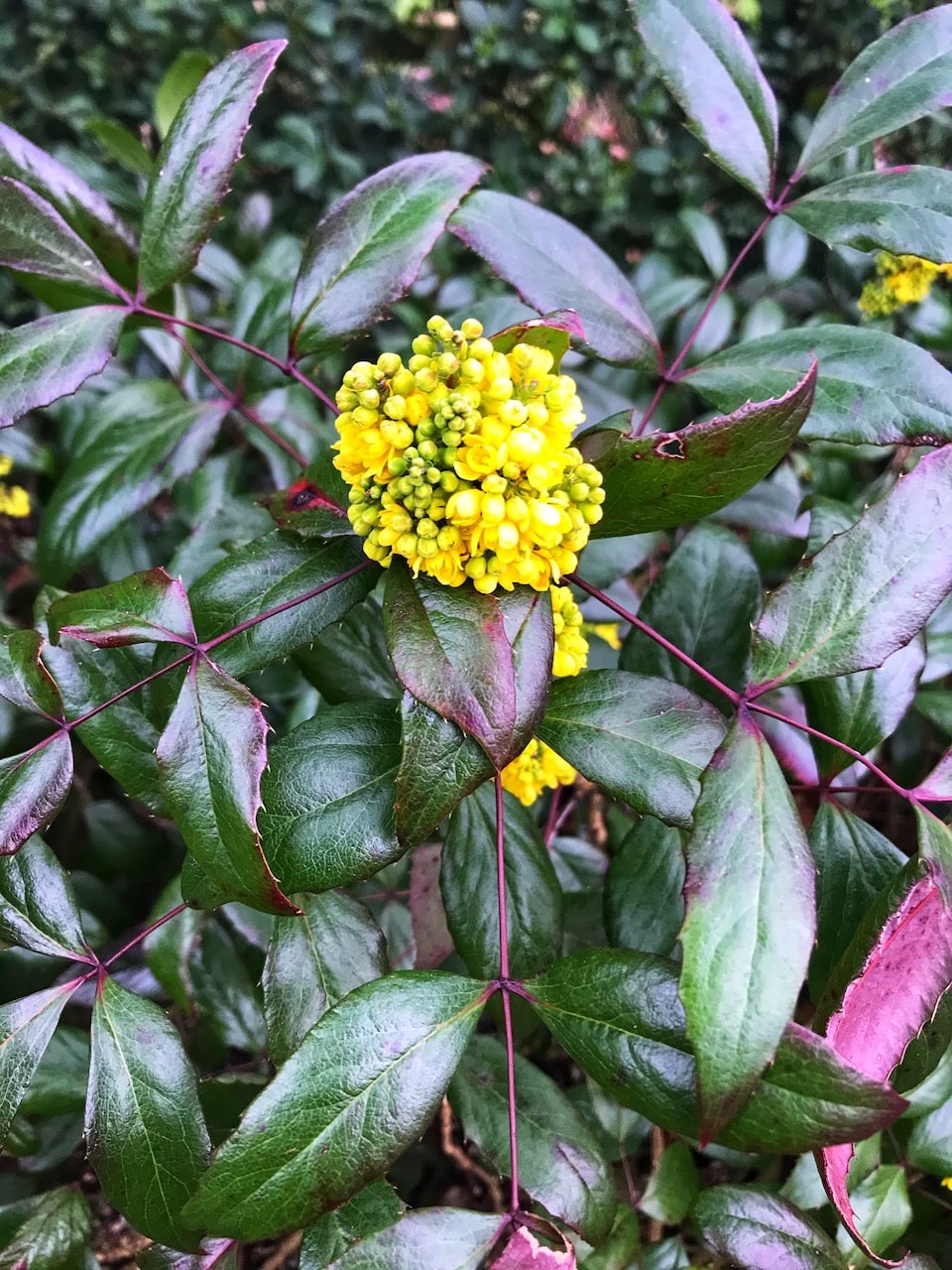
Plant mahonia in a sheltered spot in sun or partial shade, ideally somewhere you will walk past on a cold day, since the scent carries a surprising distance and is worth enjoying yourself as well as leaving for the bees. It tolerates most soil types and needs very little pruning beyond removing any awkward growth after flowering.
🛒 Buy Mahonia shrubs on Amazon UK
Pulmonaria is a plant I use constantly in shaded client gardens because it does two jobs at once, covering awkward dry shade under trees while flowering right at the point in early spring when bumblebee queens are desperate for forage. The spotted, slightly hairy leaves are attractive in their own right long after the flowers have finished.
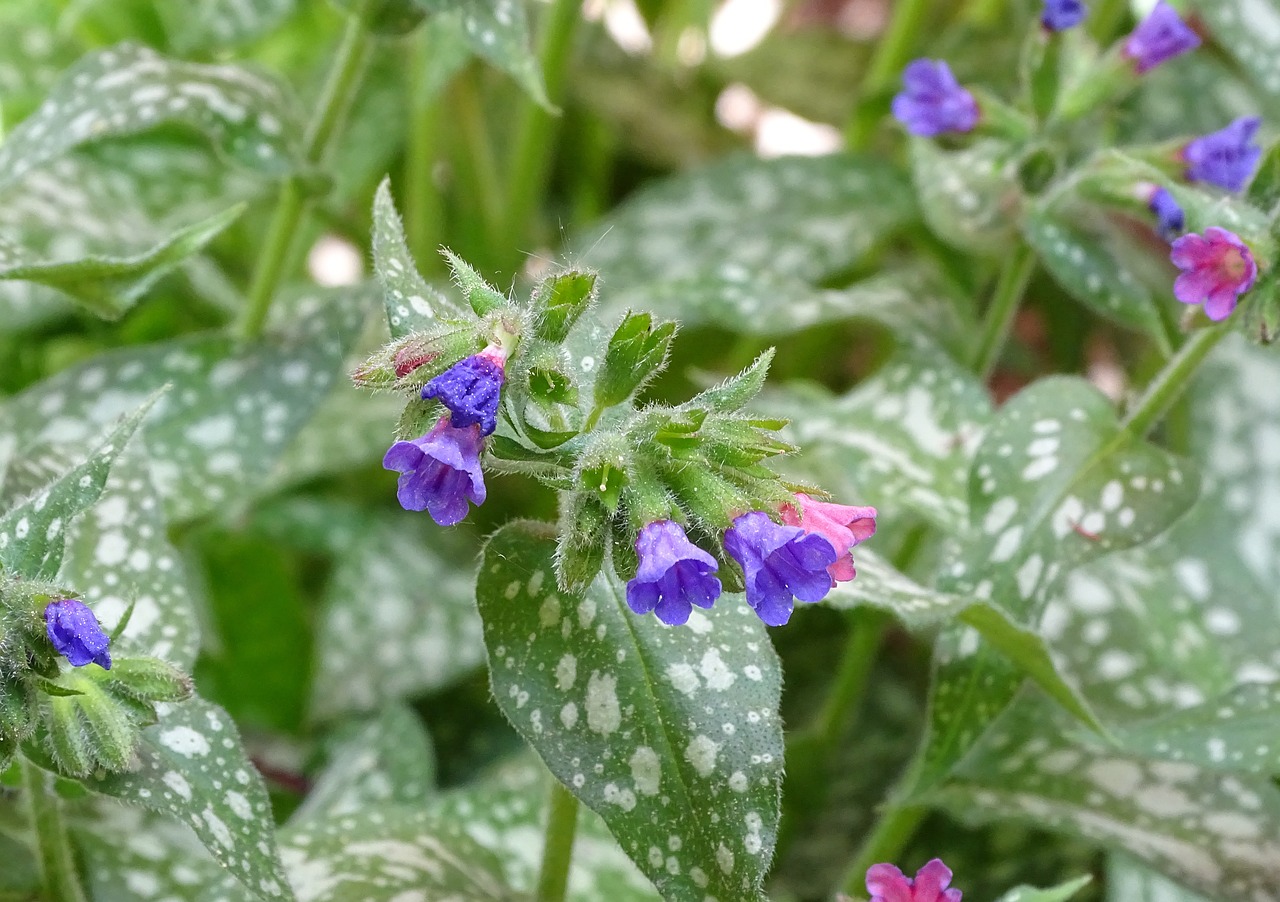
Plant pulmonaria in shade or partial shade in reasonably moist soil and largely leave it alone. It spreads gently by rhizome to form a useful weed suppressing patch, and unlike many spring plants it is remarkably happy in the deep dry shade under mature trees where little else will perform.
🛒 Buy Pulmonaria plants on Amazon UK
Flowering currant is one of the plants I most reliably see covered in early bumblebees on a warm March afternoon, and it earns its place here as much for its sheer flower density as for its timing. A mature specimen in full flower carries hundreds of small tubular pink or red blooms, and the sound of a well established bush working with bumblebees on a sunny spring day is one of the great early garden pleasures.
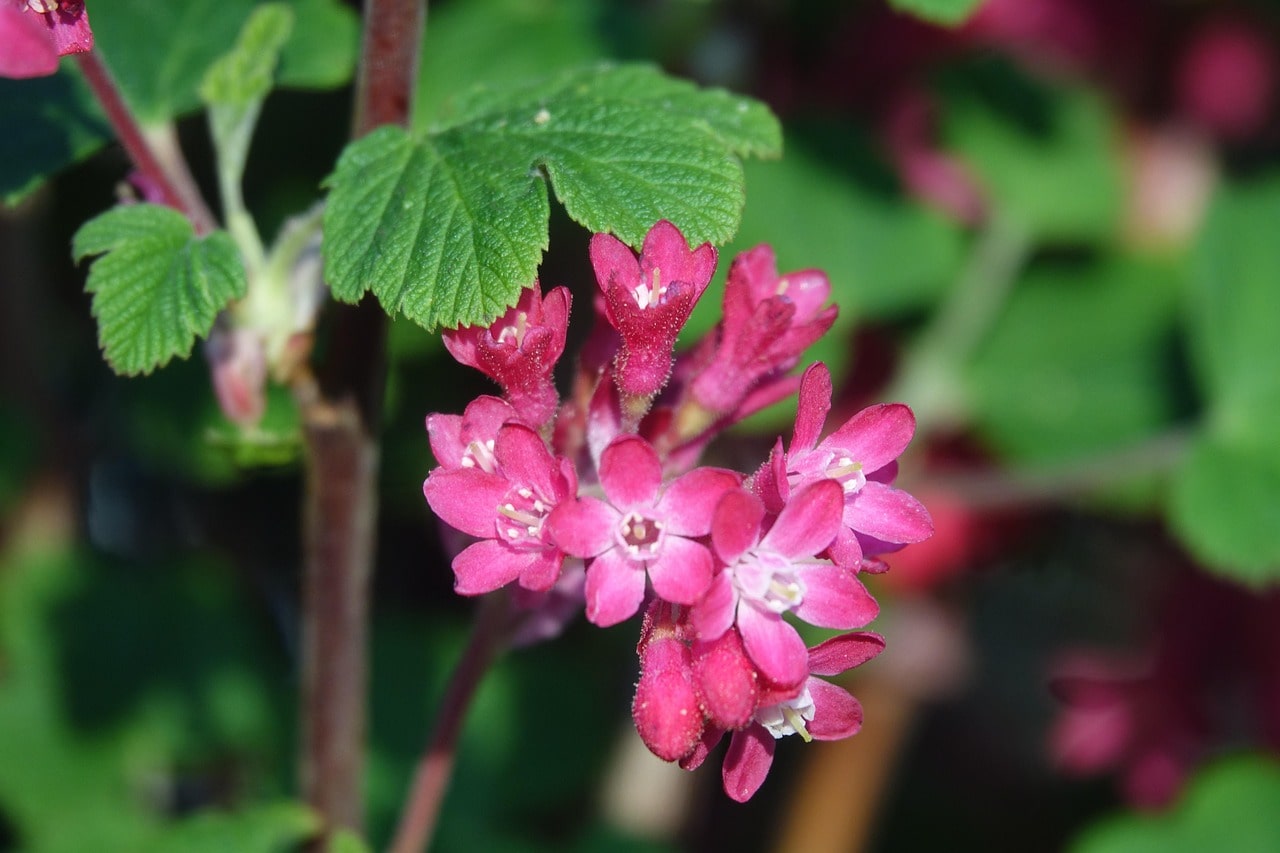
Plant ribes in full sun to partial shade in any reasonable, well drained soil. Prune immediately after flowering rather than in winter, removing around a third of the oldest stems at the base each year to keep the shrub vigorous and well furnished with flowering wood for the following spring.
🛒 Buy Ribes flowering currant on Amazon UK
Sarcococca is the plant I would grow purely for the scent even if it did nothing for wildlife at all, but the tiny, almost invisible white flowers it produces in the depths of winter are also a valuable pollen source at a time when very little else is flowering. This is a plant that works entirely on scent and timing rather than visual drama.
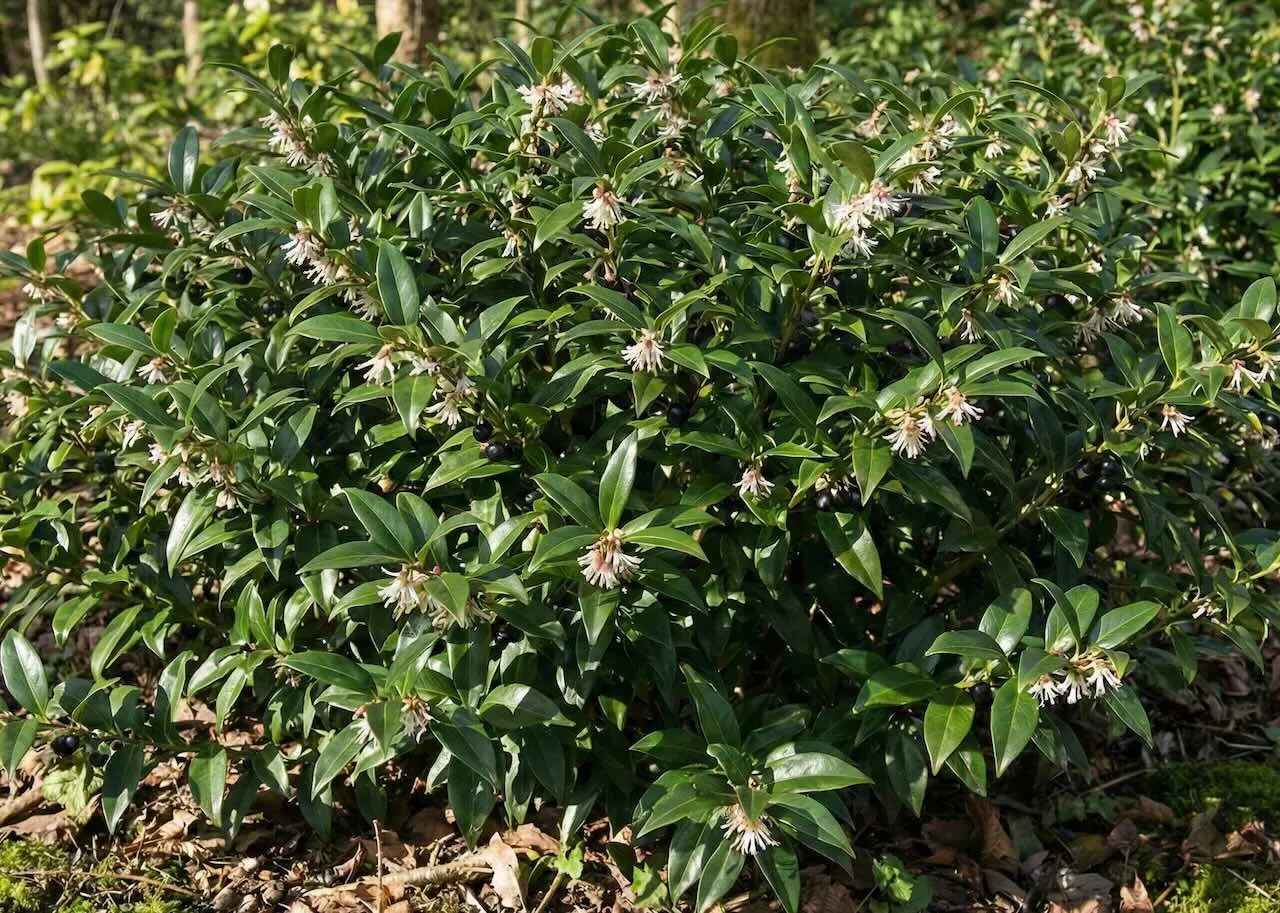
Plant sarcococca in shade or partial shade, ideally near a path or doorway where you will catch the scent on still winter days. It tolerates dry shade under trees very well once established and needs almost no pruning beyond an occasional light trim to keep its shape.
🛒 Buy Sarcococca sweet box on Amazon UK
The late season matters just as much as the early one, and in my experience it is the gap gardeners overlook most often, since by August many people have mentally moved on from the garden even though the growing season still has a good two or three months left in it. These are the plants I lean on to keep the forage going right through to the first proper frosts.
Echinacea bridges the gap between the last of the midsummer plants and the true late season stalwarts, and I use it constantly in prairie style designs for exactly that reason. The prominent, cone shaped central boss is packed with individual florets, giving bees, hoverflies and butterflies an easy landing and feeding platform right through August and into September.
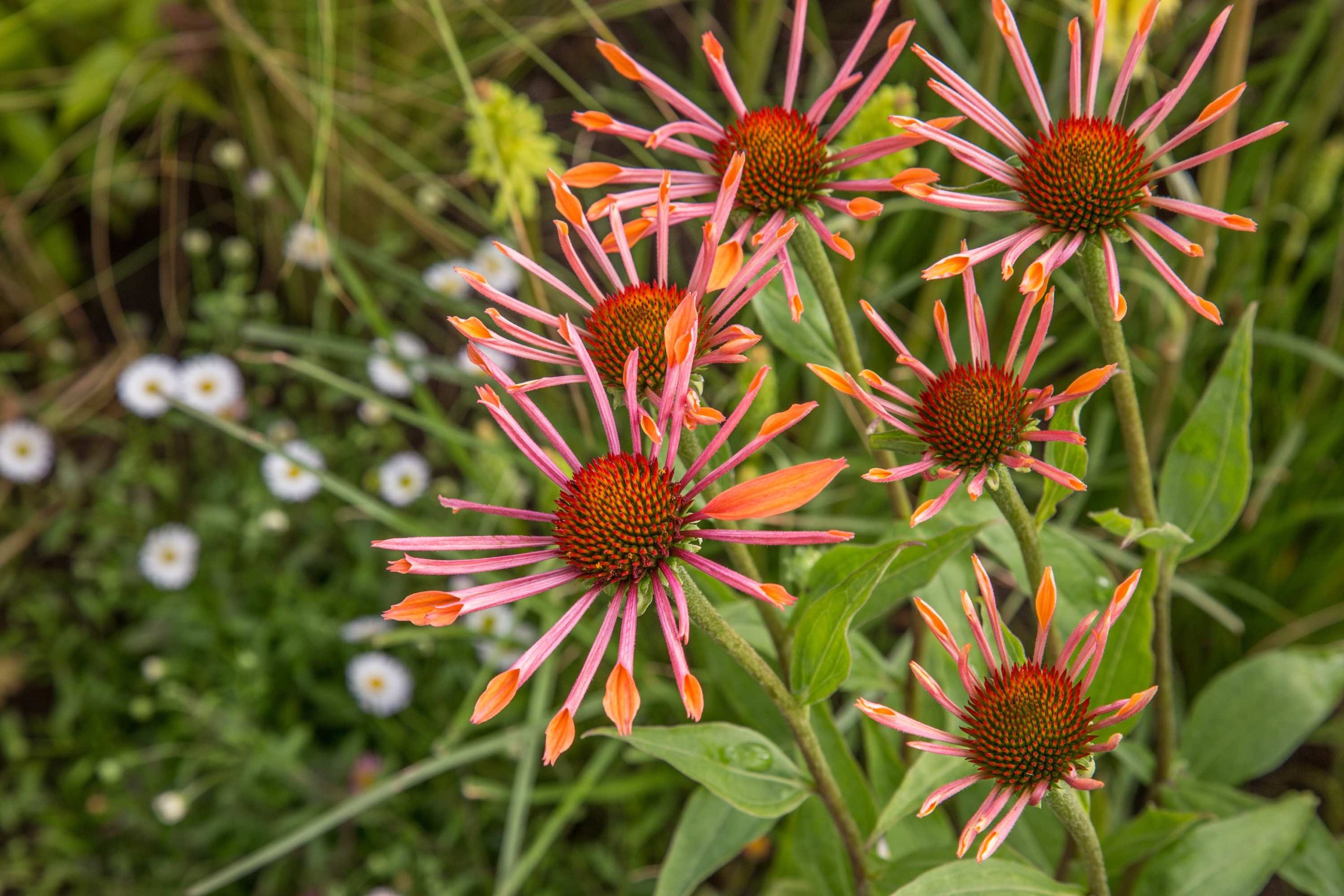
Plant echinacea in full sun in well drained soil, and resist cutting the seed heads down once flowering finishes, since goldfinches in particular will strip them for seed right through into winter. Choose single flowered forms rather than the increasingly popular double flowered cultivars, since the doubles offer far less accessible pollen for visiting insects.
🛒 Buy Echinacea coneflower on Amazon UK
Sedum is possibly the single most reliable late season pollinator plant I specify, and I have never once seen a mature clump in flower in September without at least a handful of bees, hoverflies or butterflies working over it. The flat topped flower clusters are essentially a landing platform designed for exactly this kind of insect traffic.
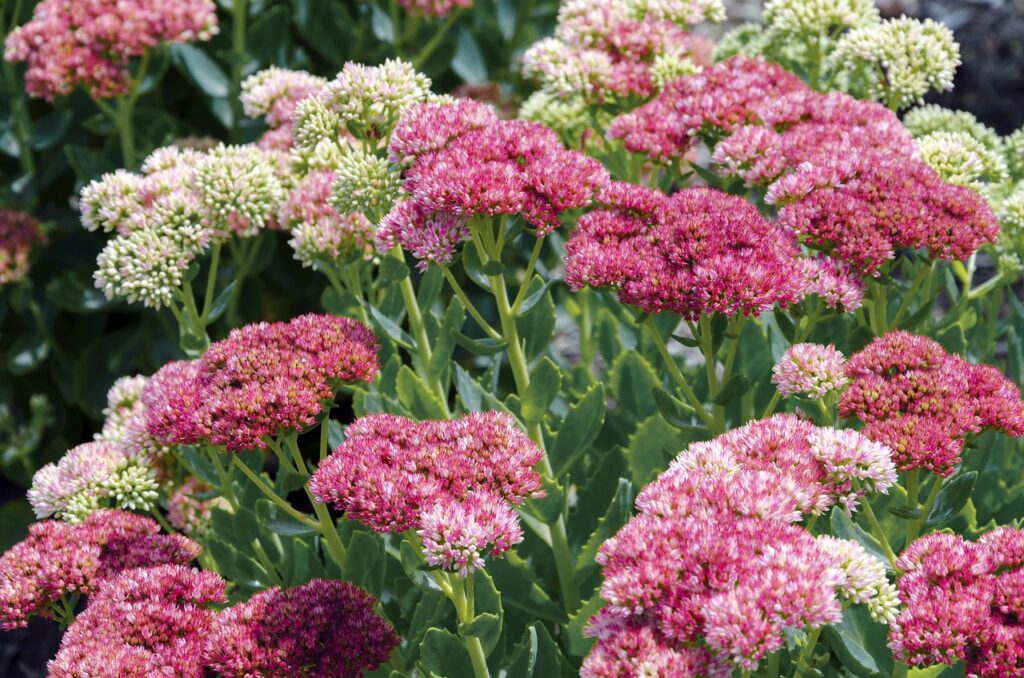
Plant sedum in full sun in poor to moderately fertile, well drained soil. Resist the urge to feed or improve the soil too much, since rich conditions produce floppy growth that falls open in the middle. Leave the flower heads standing right through winter rather than cutting back in autumn, since the seed heads provide additional food for birds and shelter for overwintering insects.
🛒 Buy Sedum Autumn Joy on Amazon UK
Asters are the plant that reliably keeps the garden buzzing well after most people have written the year off as finished. I have used them in show gardens specifically because they hold their colour and their pollinator traffic right through into a properly cold October, which is a rare quality in any flowering perennial.
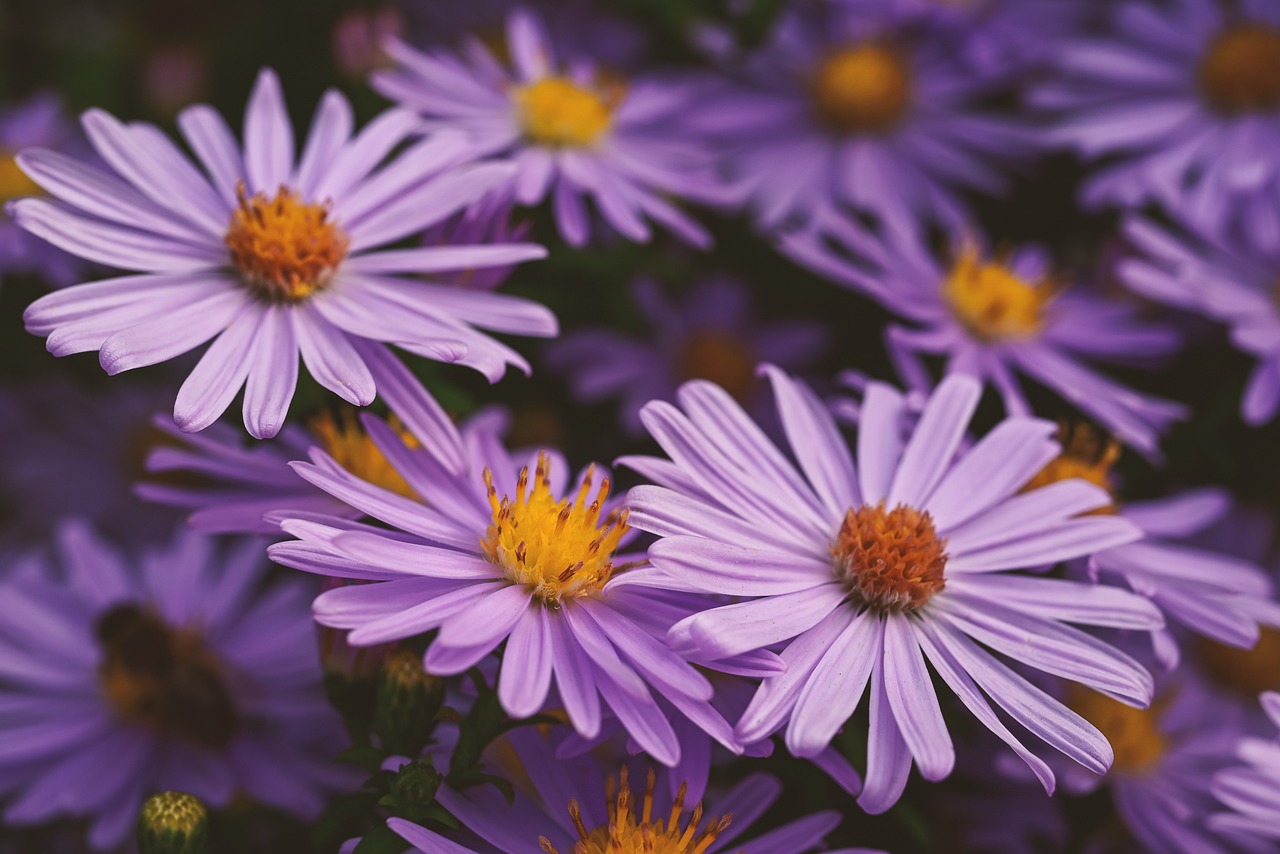
Plant asters in full sun to light shade in moisture retentive soil. Divide congested clumps every two to three years in spring to maintain vigour and flowering performance, and choose mildew resistant varieties such as Aster novae angliae types over the older, more disease prone Aster novi belgii cultivars where you can.
🛒 Buy Aster novae angliae on Amazon UK
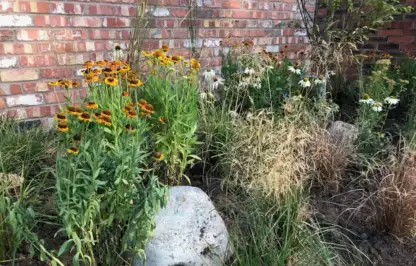
Heleniums bring genuine late summer fire to a border in oranges, reds and golds, and the daisy like flower structure with its prominent central cone is extremely accessible for bees and hoverflies alike. I used these in one of my very first show gardens and they have earned a permanent place in my planting palette ever since.
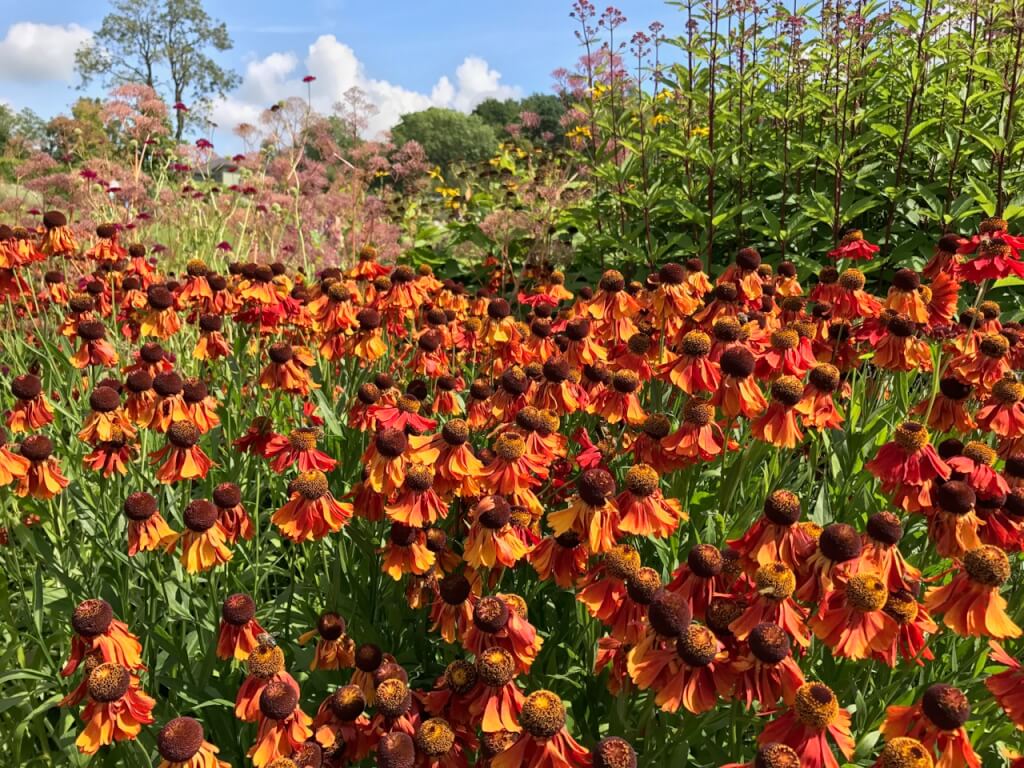
Plant heleniums in full sun in reasonably fertile, moisture retentive soil. Divide every two to three years to keep plants vigorous, and consider the Chelsea chop technique in late May to produce a bushier plant with a longer flowering window running from August into October.
🛒 Buy Helenium plants on Amazon UK
Japanese anemones bring a delicate, almost ethereal quality to the September border that nothing else quite matches, with tall wiry stems carrying simple, open faced pink or white flowers that sway in the slightest breeze. That open, single flower structure also happens to make the pollen extremely easy for bees and hoverflies to access, which is exactly what you want this late in the year.
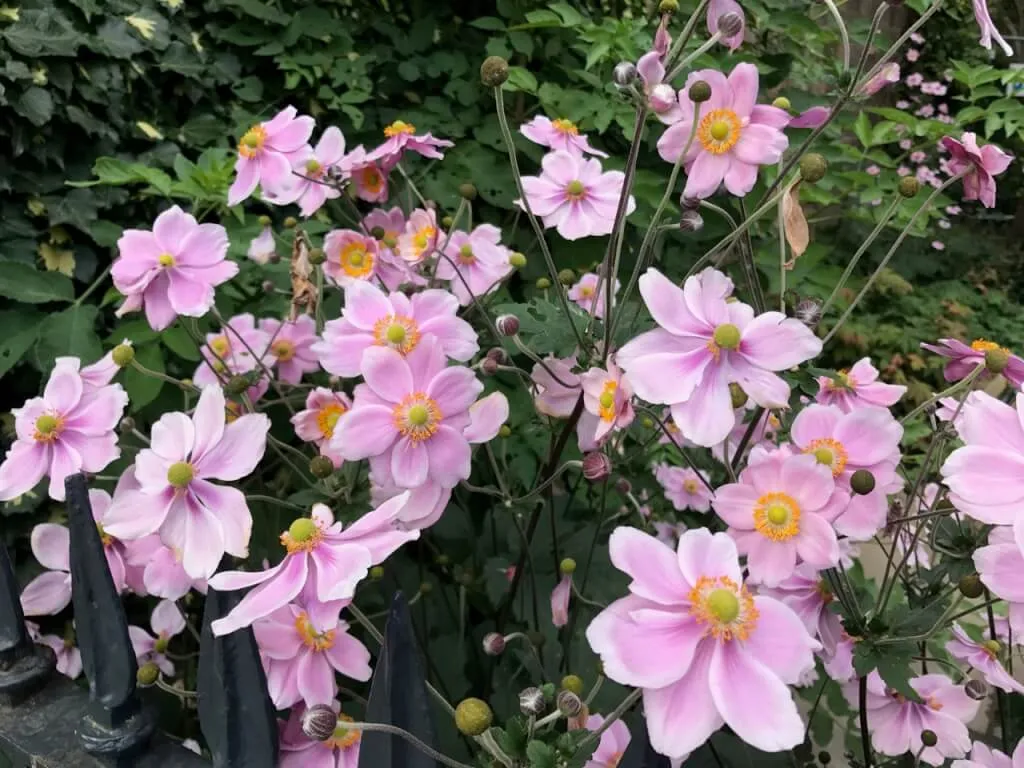
Plant Japanese anemones in partial shade in moisture retentive soil, where they will spread steadily by rhizome once established to form a generous, self sustaining colony. Given a happy spot, they need no maintenance beyond cutting the old flower stems down in late autumn once they have finally finished.
🛒 Buy Japanese anemone plants on Amazon UK
Goldenrod has an unfair reputation as a weedy plant, largely because of how easily some older varieties self seed, but the garden worthy modern cultivars are an outstanding late nectar source that I have started using far more often in naturalistic and prairie style designs over the last few years.
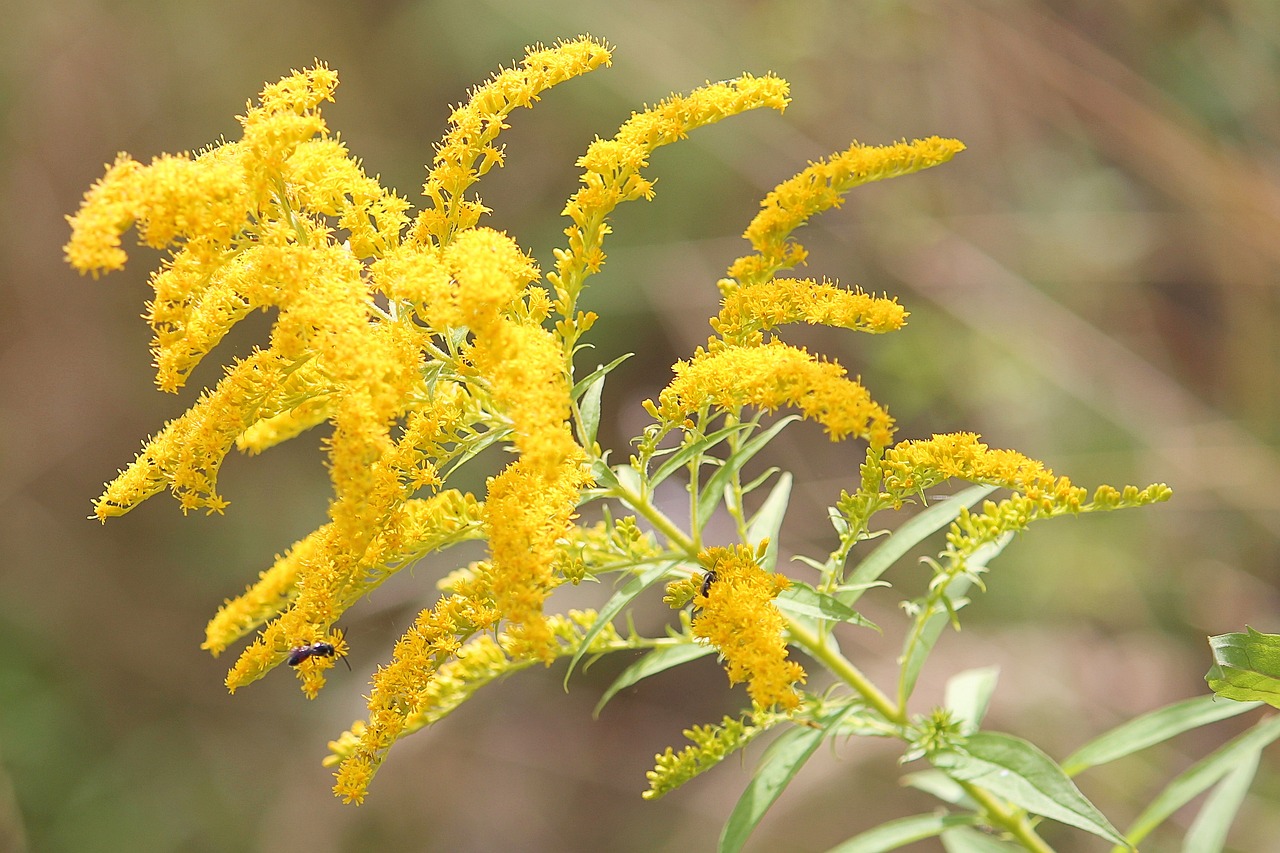
Plant solidago in full sun in any reasonable soil, including poor or dry conditions where many other late perennials struggle. Choose a clump forming variety such as ‘Fireworks’ rather than a spreading species type if you are working in a smaller border, since the arching flower sprays are architecturally striking without becoming a thug.
🛒 Buy Solidago goldenrod plants on Amazon UK
Eupatorium is a bold, tall plant that I love using at the back of a border where it can do what it does best, which is throw up huge dusky pink flower clusters absolutely covered in butterflies and bees from late summer into early autumn. It is one of the plants that most consistently gets client garden visitors asking what it is.
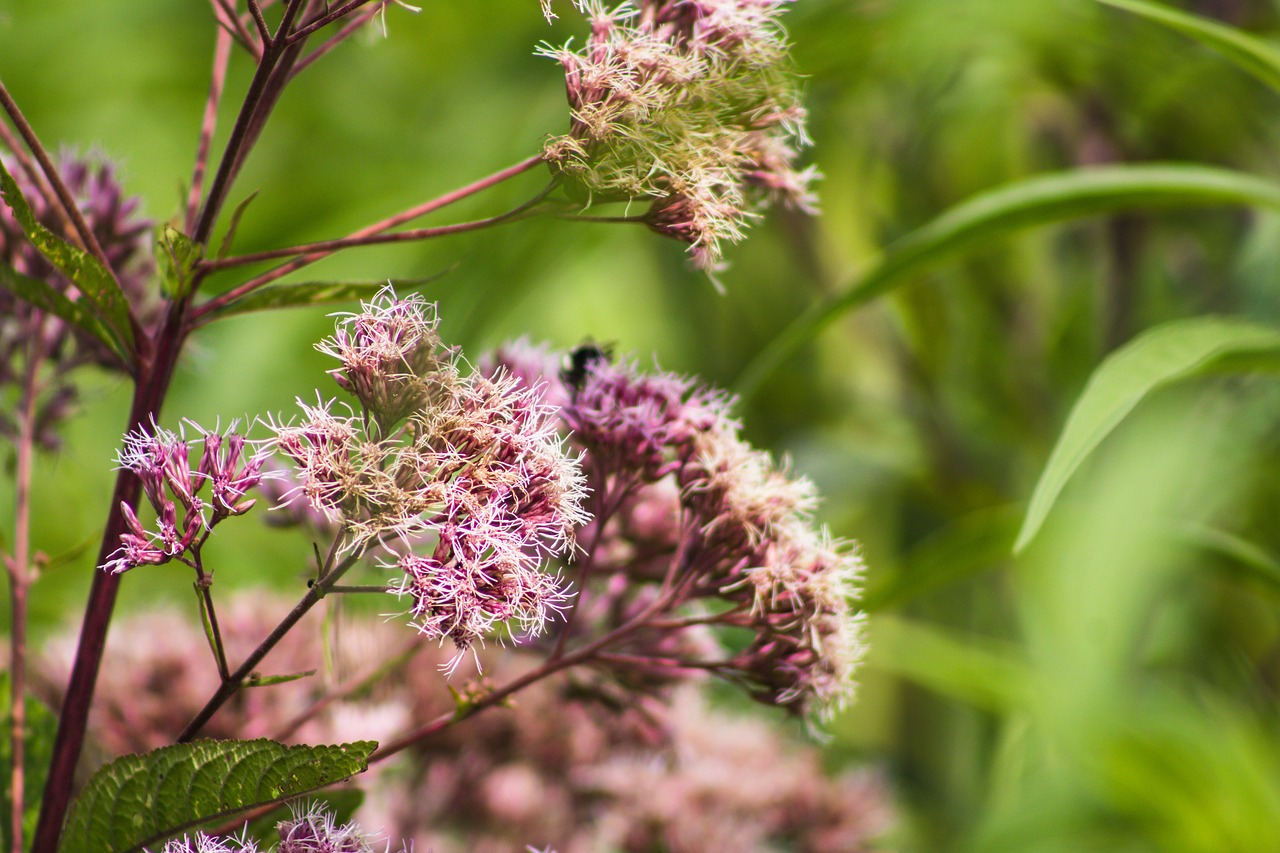
Plant eupatorium in full sun to light shade in moisture retentive soil, ideally toward the back of a border where its height, often reaching two metres, can be appreciated without overwhelming smaller neighbouring plants. It thrives in slightly heavier soils that many other late perennials find too wet.
🛒 Buy Eupatorium Joe Pye Weed on Amazon UK
Caryopteris is a compact shrub I have specified into countless smaller client gardens specifically for its late season value, producing clouds of intensely blue flowers on silvery grey foliage right through September when most other shrubs have finished for the year. It is small enough to fit into borders where a large late perennial simply will not.
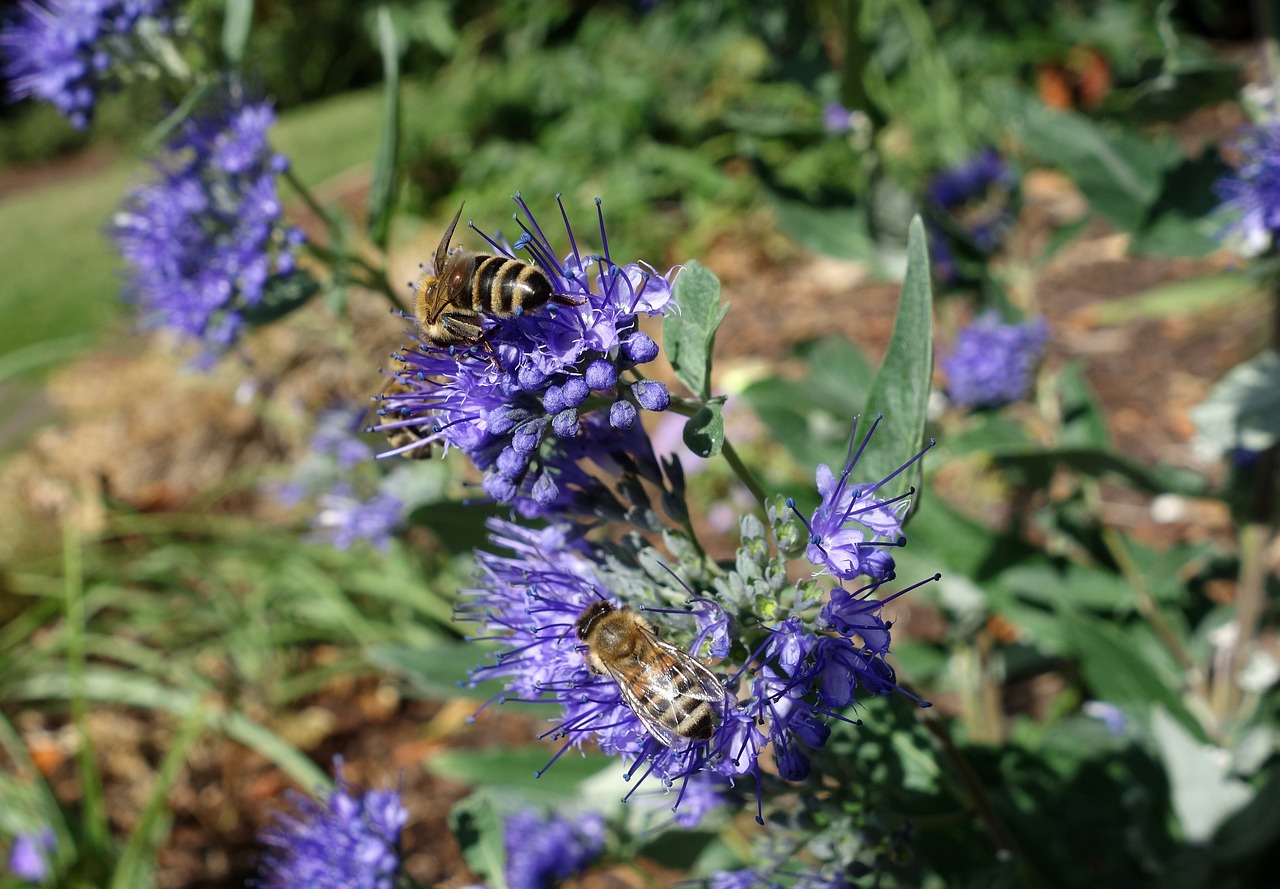
Plant caryopteris in full sun in well drained soil, and prune hard in spring, cutting back to a low framework of woody stems, since it flowers on the current year’s growth. This hard annual prune keeps the plant compact and encourages the strongest possible flowering display each autumn.
🛒 Buy Caryopteris shrub on Amazon UK
Ivy is, without question, the single most important late season plant on this entire list, and it is also the one I have to persuade the most clients not to rip out. Mature, flowering ivy produces its greenish yellow flower clusters in September, October and even into November, right at the point when almost every other nectar source in the garden and the wider landscape has finished for the year. Ivy bees, a solitary species that emerges specifically to coincide with ivy flowering, depend on it almost entirely, and it is also one of the last reliable feeding stops for honey bees building winter stores.
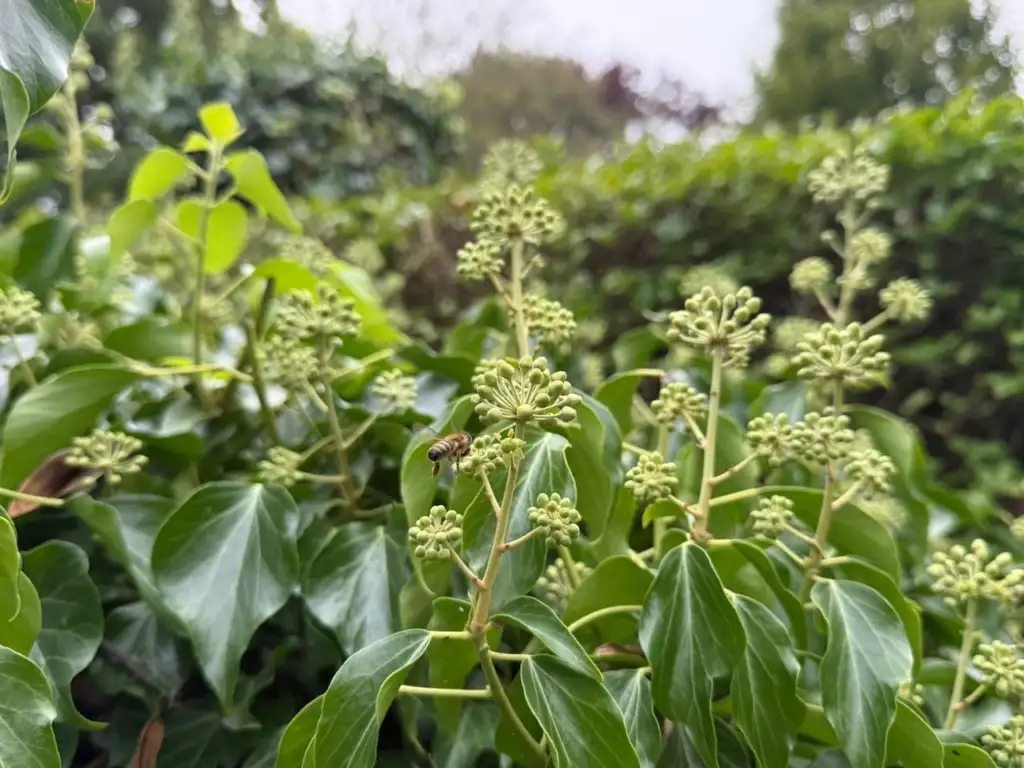
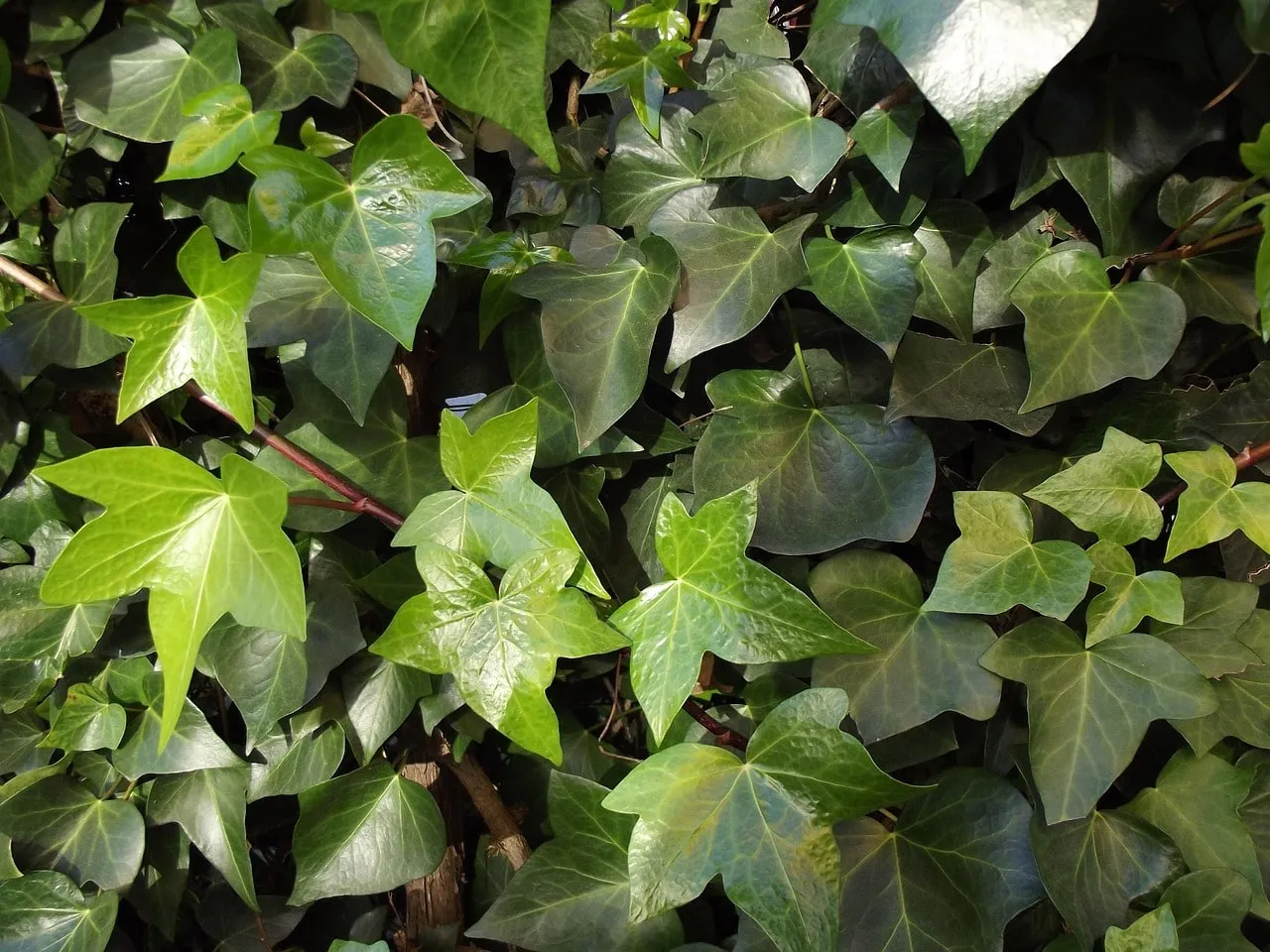
The important detail here is that only mature ivy flowers, once it has climbed and reached the adult, bushy growth stage, typically after several years. Juvenile trailing ivy on the ground or low on a wall will never flower. If you already have an established ivy covered wall, fence or tree, my strong advice is to leave a section of it entirely unclipped through late summer so it can flower, rather than giving it its usual annual trim before September.
🛒 Buy Hedera ivy plants on Amazon UK
Knowing the individual plants is only half the job. The real skill, and the thing I actually teach on my garden design courses, is thinking about a border as a sequence rather than a single moment of colour. Here is the approach I use on every client garden where wildlife is a genuine priority rather than an afterthought.
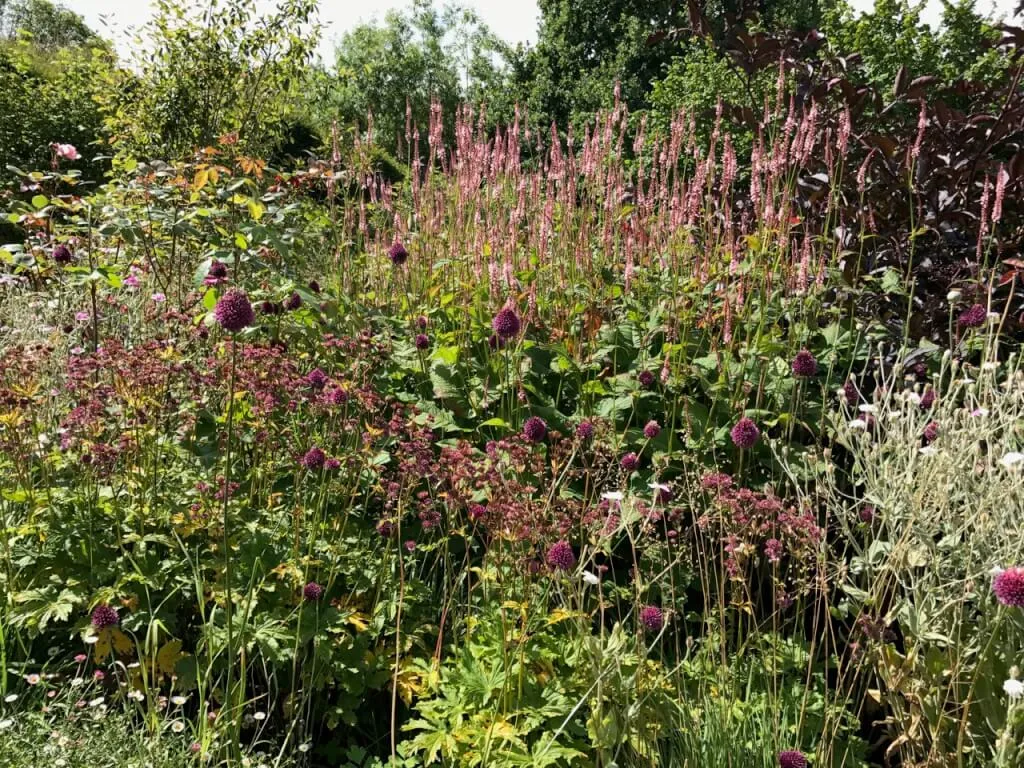
Map your gaps before you buy anything. Walk your garden once a month for a full year, or if you do not have time for that, be honest with yourself about which months currently have nothing in flower. Most gardens I am called in to redesign have a strong April to July display and then very little either side of it. That is exactly the pattern this guide is designed to fix.
Plant in drifts, not singles. A single snowdrop or a lone sedum plant barely registers to a foraging bee. Pollinators work most efficiently, and are drawn in most reliably, by a mass of the same flower together. Aim for a minimum of three to five plants of any one species grouped together rather than dotting single specimens throughout the border.
Layer your planting by height and season together. Bulbs like snowdrops and crocus can go beneath deciduous shrubs like mahonia and sarcococca, which are themselves doing their winter flowering job above ground. As spring perennials like pulmonaria take over at ground level, your summer lavender and roses can be coming into leaf around them, ready to take the baton in June.
Resist tidying too early or too enthusiastically. This is one of the hardest habits for a keen gardener to break, myself included. Leaving sedum and aster seed heads standing through winter, not clipping ivy before it flowers, and delaying the big fallen leaf clear up until spring all directly benefit wildlife, even though every instinct tells you to get the garden looking neat.
Do not forget bare soil and water. Around seventy percent of the UK’s solitary bee species nest in the ground rather than in stems or cavities, and they need a patch of bare, undisturbed, ideally south facing soil to excavate their nest tunnels. A small dish of water with some pebbles or twigs for insects to land on safely is a useful, low effort addition alongside your planting.
A wildlife friendly garden does not need much in the way of specialist kit, but a handful of tools make the succession planting approach considerably easier to maintain.
Because so much of wildlife friendly gardening is about cutting back selectively, rather than the traditional autumn tidy of everything at once, sharp, precise secateurs matter more here than in almost any other type of gardening. You need to be able to remove tired growth from your midsummer plants once they have finished, without damaging the late season plants coming up around them. I go into far more detail on which pair to buy in my full secateurs guide, but the Felco 2 and the Okatsune 103 remain my two most recommended pairs for this kind of precise, regular border work.
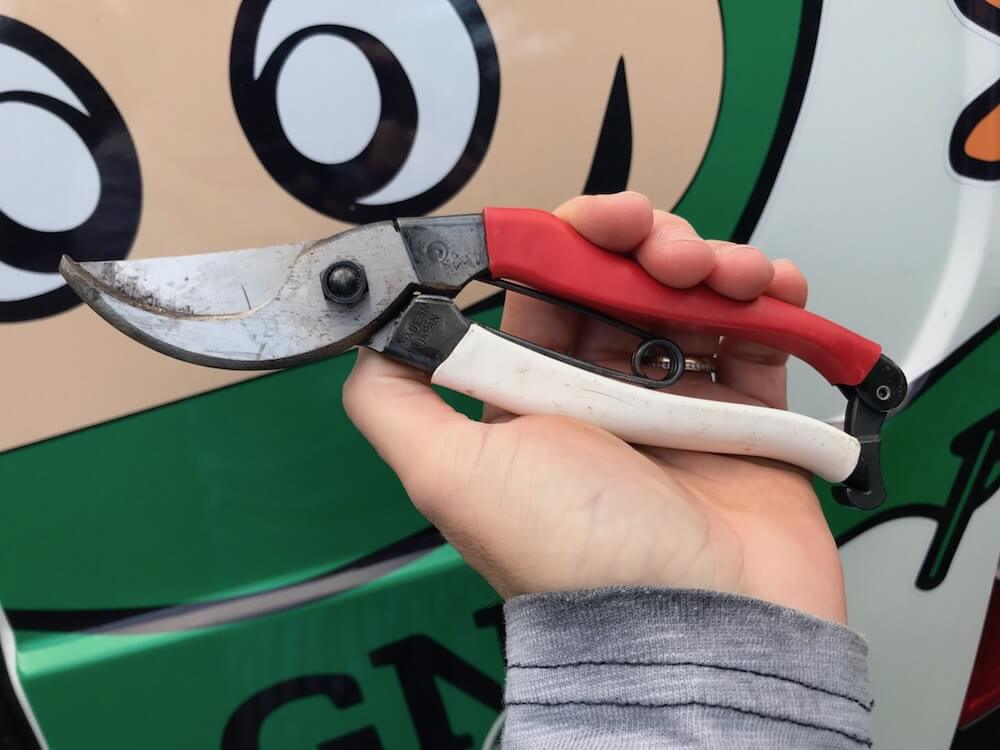
🛒 Buy Felco 2 secateurs on Amazon UK
🛒 Buy Okatsune 103 secateurs on Amazon UK
For the full breakdown of which pair suits which type of gardener, read my honest secateurs guide.
Flowers provide the food, but many solitary bees also need somewhere safe to nest and lay eggs, particularly the cavity nesting species that would naturally use hollow plant stems or old beetle holes in dead wood. Rather than buying a bee hotel, my preferred method is to drill a series of holes directly into an untreated hardwood post or offcut, since this gives you full control over the depth, spacing and finish, and lasts considerably longer than the thin bundled canes sold in most pre made hotels.
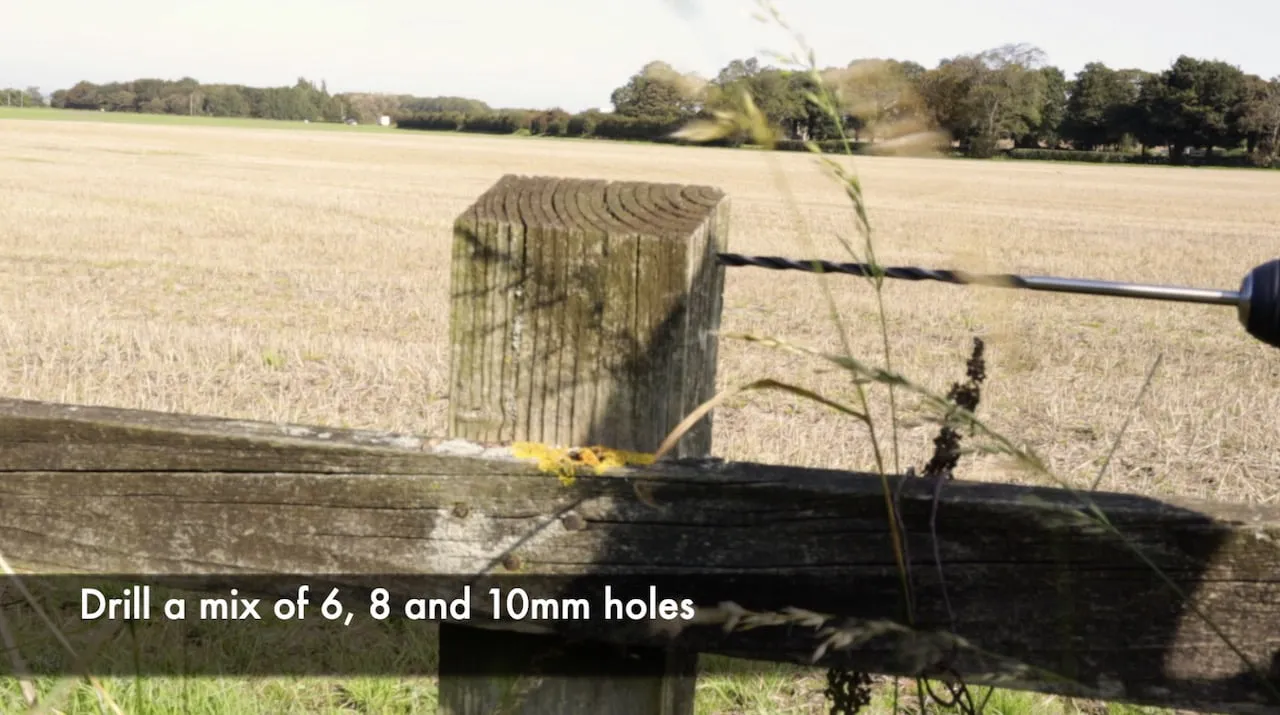
Use a well seasoned hardwood post such as oak, ash or beech rather than softwood, since softwood tends to splinter and swell with damp far more readily, both of which damage delicate wings. Drill straight into the grain rather than across it, angling the holes very slightly upwards so rain cannot collect and sit inside them. Every hole must be closed at one end, either by drilling to a set depth rather than straight through, or by backing the post with a solid board, since bees will only nest in a tunnel with a sealed back.
Drill a genuine mix of diameters across the post rather than sticking to one size, since different solitary bee species are looking for a specific fit and will simply ignore holes that are the wrong width for them.
💡 Top Tip
Drill each hole to a depth of at least 100mm, and ideally 150mm where the post allows it. Depth matters more than most people realise, since a shallow hole produces mostly male offspring, while a properly deep hole allows the female to lay a healthier mix of both sexes along the tunnel. Lightly sand the entrance of each hole afterwards to remove any splinters that could tear a bee’s wings on the way in or out.
Position the finished post somewhere sunny and sheltered, ideally facing south or south east so it warms quickly on spring mornings, and fix it firmly so it does not move or vibrate in the wind. Once bees begin nesting you will see the holes capped with mud or neatly cut leaf discs depending on the species, at which point the post should be left completely undisturbed until the following spring.
🛒 Buy a wood drill bit set on Amazon UK
Winter aconite, snowdrops, hellebores and mahonia are my top choices for January forage in a UK garden, with winter aconite often the very first flower to open. On a mild day, all four will be visited by bumblebee queens and any honey bees taking advantage of the milder weather to leave the hive.
Bees need both, and they serve different purposes. Nectar is a carbohydrate, providing the energy bees need to fly and to power the hive. Pollen is the protein source, essential for feeding larvae and for a queen building up her body reserves before laying eggs. A properly good pollinator garden provides a reliable supply of both throughout the season, not just one or the other.
Yes, if you can. Mature, flowering ivy in September and October is one of the most valuable nectar sources in the entire UK gardening calendar. If you have an established ivy covered wall or fence, leave at least a section of it unclipped through late summer so it can flower, rather than giving it its usual annual trim in July or August.
In my experience it is planting entirely for midsummer and assuming the job is done. A garden full of lavender and roses looks wonderful and does help pollinators for a few weeks, but without early and late season plants either side of that display, wildlife is left with nothing for the majority of the year.
Absolutely. Crocus, pulmonaria and sedum all perform very well in containers, and even a single large pot of crocus by a front door can provide meaningful early pollen for queens searching a whole street for forage. Scale down the drift size rather than the ambition, aiming for as much of the season covered as your space allows.
It is very rarely too late. Container grown perennials such as sedum, aster and helenium can go in the ground at almost any point in the growing season, and bulbs like crocus and snowdrops in the green simply wait for their planting window each autumn or late winter. The best time to start closing the gaps in your garden’s forage is always now, whatever month it happens to be.

Join over 100,000 gardeners on YouTube
Free gardening videos from the Garden Ninja, with 8 million views and counting.
Subscribe on YouTube, it’s freeReady to transform your gardening skills beyond just plopping plants in pots? Garden Ninja’s expertly crafted online courses will fast track your development from keen amateur to skilled garden designer in months rather than years. Starting at just £29, you’ll gain access to professional garden design expertise from BBC Garden Rescue’s Lee Burkhill, delivered at a fraction of traditional horticultural education costs.
For the garden you’ve already got, not the one you’re starting from scratch. Seven checklists and video lessons from BBC Garden Rescue’s Lee Burkhill, designed to help you decide what’s worth keeping before you spend a penny.
Garden Design Examples for Small Gardens: 30 Design Templates & Planting Plans: In this online gardening course, I’ll walk you through 30 fantastic garden designs, explaining the logic behind the layout and plant choices, plus take-home tips for applying them in your own garden.
Learn how to transform and design your garden with Lee Burkhill’s crash course in garden design. In over 5 hours, Lee will teach you how to design your dream garden. Featuring practical design examples, planting ideas and video guides. Learn how to design your garden in one weekend!
Garden Design for Beginners Online Course: Want to become a garden designer or design your own garden? This beginner course is for you. Join me, Lee Burkhill, an award-winning garden designer, as I train you in the art of beautiful garden design. Enjoy 20 hours of online study and video lessons, along with quizzes and a completion certificate.
Lavender and roses are wonderful midsummer plants, but a properly wildlife-friendly garden needs forage from January through to November. Add winter aconite, snowdrops, crocus, hellebores, primrose, mahonia, pulmonaria, Ribes and sarcococca for the early season, and echinacea, sedum, asters, helenium, Japanese anemone, solidago, eupatorium, caryopteris and flowering ivy for the late season, planted in generous drifts and layered by height. Do this, and you will have built a garden that feeds pollinators for the whole of their working year, not just for a few glorious weeks in midsummer.
I hope this guide gives you a proper starting point for closing the gaps in your own garden’s pollinator calendar. As both a garden designer and a beekeeper, this is a subject close to my heart, and it does not take much extra planning to turn a good-looking midsummer border into a garden that works hard for wildlife all year round.
Happy Gardening!


Lee Burkhill, known as the Garden Ninja, is an award-winning garden designer and horticulturist with over 30 years of gardening experience and 15 years as a professional garden designer. A qualified RHS (Royal Horticultural Society) professional, Lee specialises in sustainable garden design and practical horticultural advice. He designs and presents on BBC1’s Garden Rescue and in leading gardening publications. Lee combines three decades of hands-on gardening knowledge with professional design qualifications to help gardeners create beautiful, functional outdoor spaces.
View all posts by Lee Burkhill






JOIN THE NINJAS
Be the first in line for new Guides, Discount codes and Offers