For the garden you’ve already got, not the one you’re starting from scratch. Seven checklists and video lessons from BBC Garden Rescue’s Lee Burkhill, built to help you work out what’s worth keeping before you spend a penny.
69


Quick Answer
The best way to design an overlooked back garden is to break the line of sight rather than block it out completely. Use standard trees, pleached screens, pergolas, and layered planting to create the feeling of privacy without resorting to tall fences that cast shade and cause neighbour disputes. A combination of structural plants, clever sightline management, and design focal points can transform even the most overlooked urban garden into a private retreat.
There are few things more deflating in gardening than spending time and money on an outdoor space, only to feel as though you are sitting in a goldfish bowl every time you step outside. Prying eyes from neighbouring upstairs windows, overlooking apartment blocks, or simply the awkward angle of a shared boundary can make even the most beautifully planted garden feel exposed and uncomfortable. I have worked on dozens of overlooked back gardens throughout my career as a garden designer, and this problem comes up time and again, particularly in urban areas and on modern housing estates where plots are packed closely together.
The good news is that with the right approach, you can create genuine privacy in even the most exposed plot. The secret is not to reach for taller and taller fence panels, which is almost always the wrong answer, but to use clever design, strategic planting, and structures that work with your garden rather than against it. In this guide I am going to walk you through everything I know about designing overlooked back gardens, drawing on over 20 years of professional practice, my BBC Garden Rescue experience, and a particularly satisfying transformation I carried out in Bolton, Greater Manchester, which I use as a case study throughout.
Jump To
When people feel overlooked, the instinct is to build upwards. A taller fence, a trellis extension, a solid screen panel. I completely understand that impulse, but in practice it almost never solves the problem and frequently creates new ones. The fundamental issue is geometry. If your neighbour’s upstairs bedroom window is looking down into your garden from six or seven metres up, a two-metre fence panel does almost nothing to obscure that view. You would need a structure of impractical height to block a sightline coming from above.
Beyond the practical failure, tall solid fencing creates its own problems. It blocks light, turning what could be a pleasant planting border into a gloomy strip where very little thrives. It tends to look defensive and uninviting, creating a fortress aesthetic that does nothing for the enjoyment of the space. And in many cases, fence panels over two metres in height require planning permission, or at least a diplomatic conversation with your neighbours, neither of which is a good start to a garden project. I have seen neighbourly disputes that have lasted years begin with someone putting up a fence without discussion.
⚠ Important Note
In England, fence panels alongside a highway (including footpaths) must not exceed 1 metre without planning permission. Elsewhere, the limit is generally 2 metres. Always check with your local planning authority before erecting anything above these heights, and speak to your neighbours before you start.
The professional approach, and the one I always take with clients, is to think about privacy very differently. Rather than trying to block everything out, the goal is to break the line of sight. You interrupt the view from that upstairs window just enough to create the feeling of enclosure, without physically walling yourself in. It is a much more elegant and effective solution, and it opens up a world of planting and design possibilities that solid fencing simply cannot offer.
Let me take you through a project that illustrates everything I am talking about, because nothing makes design principles clearer than seeing them applied to a real garden with real constraints.
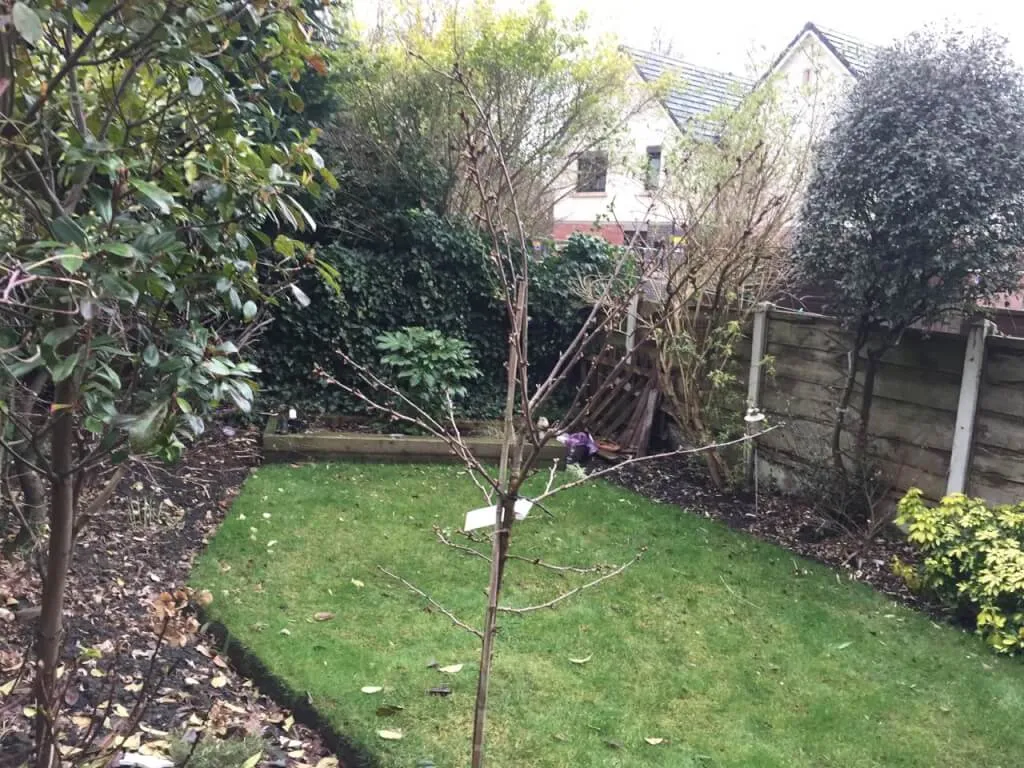
This small west-facing garden in Bolton had frustrated its owner for years. The plot was awkwardly shaped, with what she herself called a coffin-shaped lawn that dominated the space and left the borders feeling thin and irrelevant. The planting that was there looked as though it was trying to escape rather than settle in. And the privacy situation was miserable: low boundary fences on multiple sides, neighbouring windows at various angles, and a real sense that any time you sat outside you were on show.
She had also been struggling with the soil, which was heavy clay. Every plant she chose either drowned in winter waterlogging or failed to establish, which had left her feeling defeated and reluctant to invest any more time or money into the space. When she came to me through the consultation process, she was not really looking for a garden showstopper. She wanted somewhere she could actually enjoy sitting in, something that felt private and tidy, and planting that would actually survive.
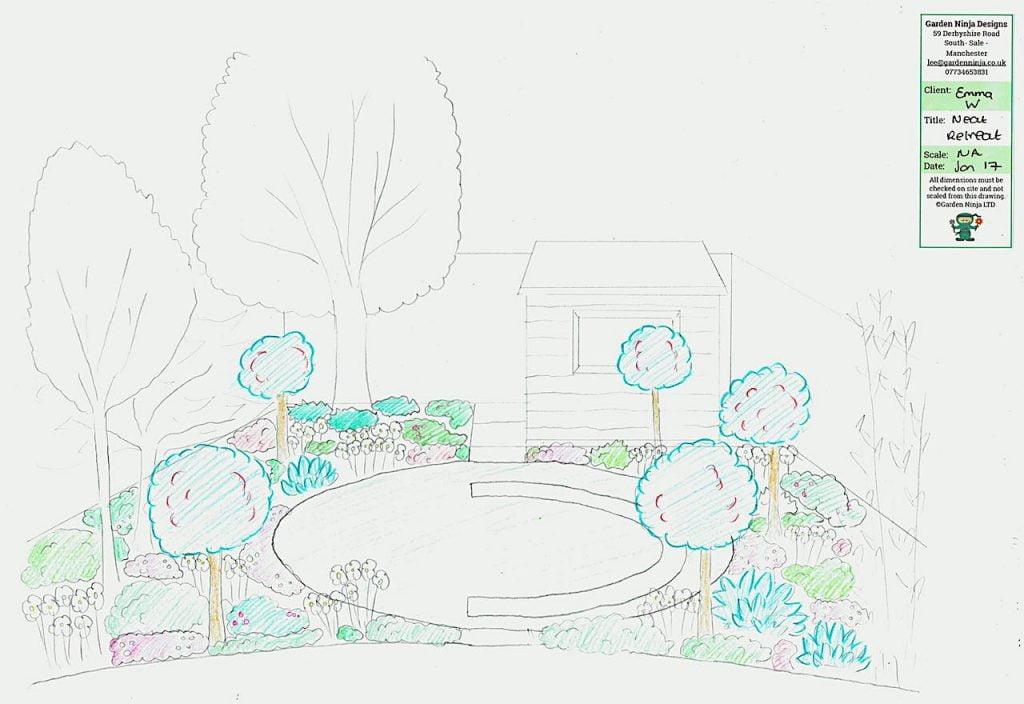
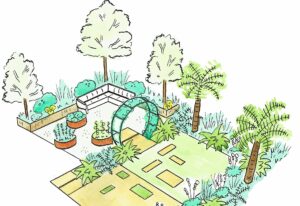
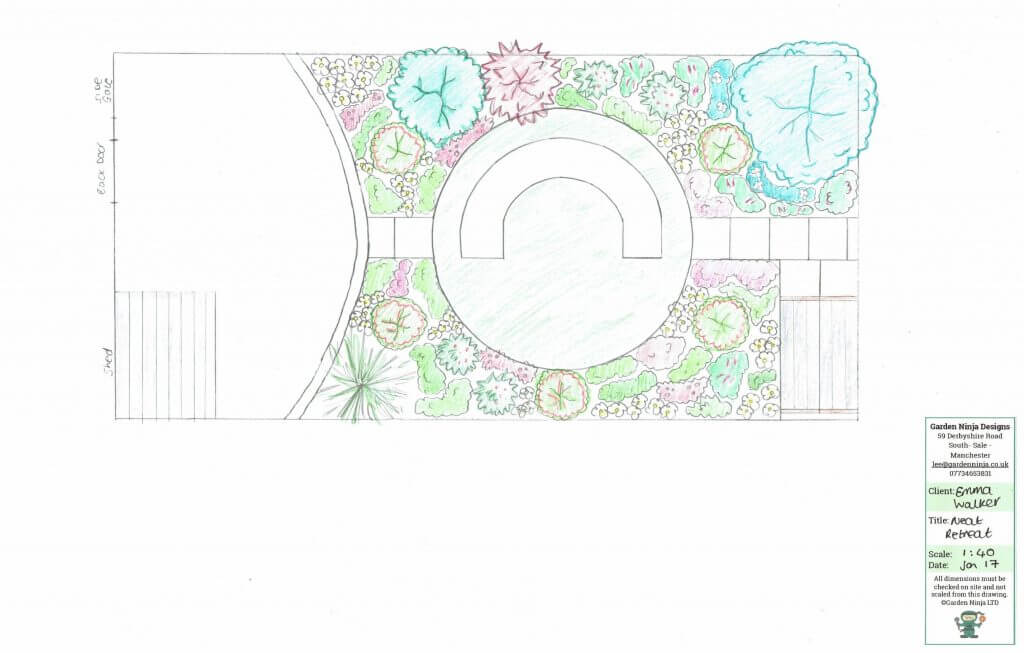
The solution centred on replacing the coffin-shaped lawn with a circular lawn, which immediately transformed the proportions of the garden. A circle draws your eye towards the centre of the space and around its perimeter, rather than pulling it outwards over the fence line. Standard trees were positioned around the circular lawn, chosen specifically for their ability to interrupt sightlines at height without blocking light at ground level. The planting palette was built around clay-tolerant species that would thrive rather than struggle.
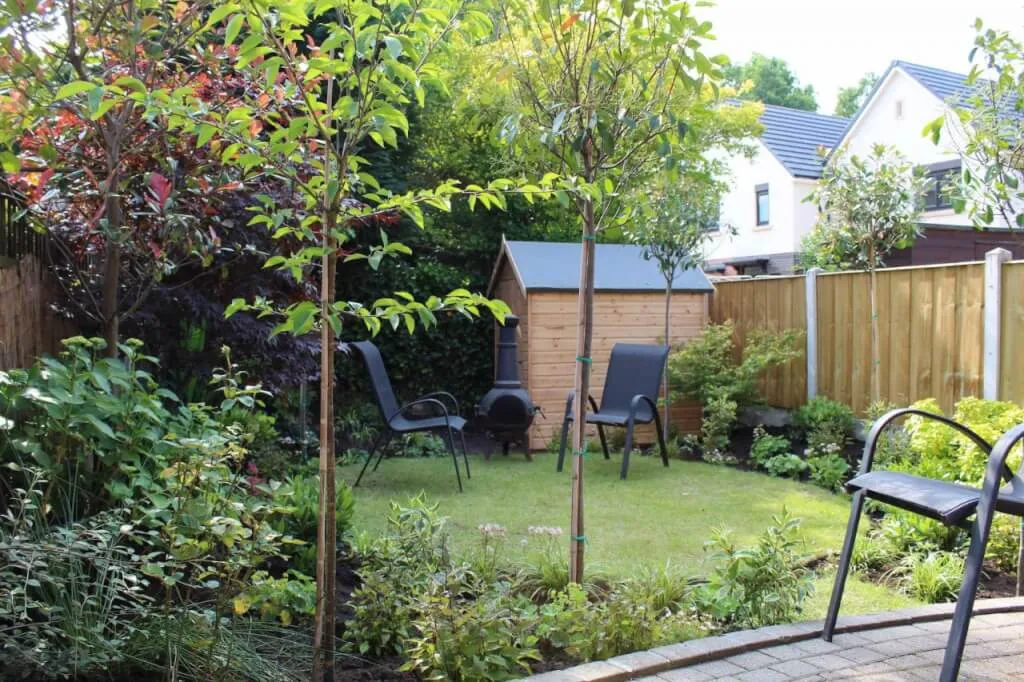
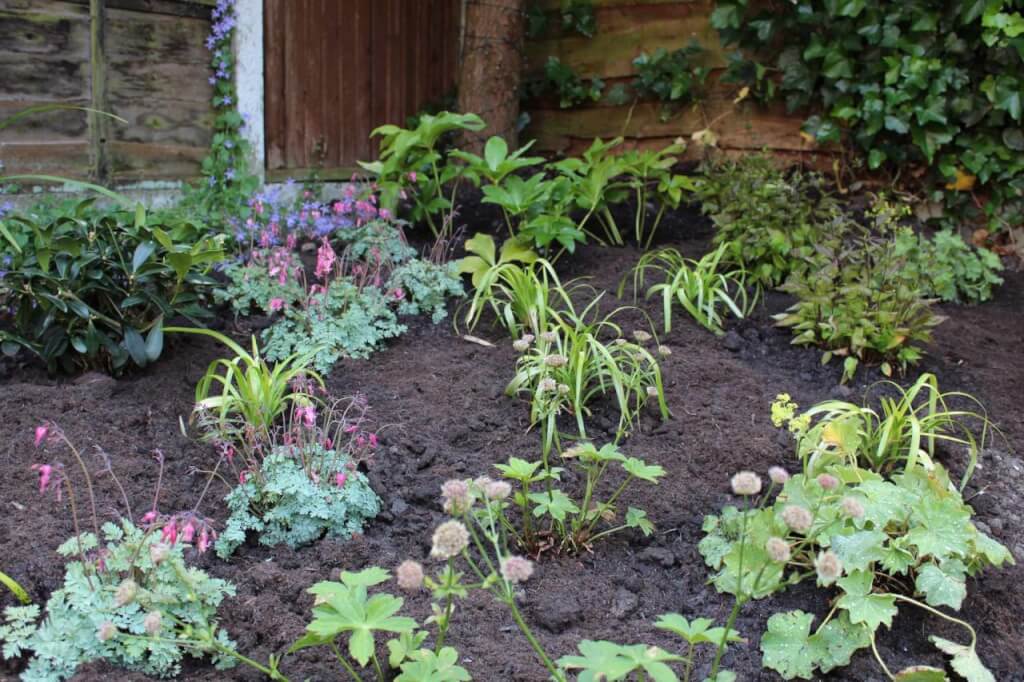
The result was a garden that felt immediately private without a single additional metre of solid fencing. The standard trees broke the sightlines from neighbouring windows. The circular design drew attention inwards. The soft pink and green planting palette, using Alchemilla mollis, Astrantia, Astilbe, Photinia standards, Skimmia and Weigela, created a richness at ground level that gave the space depth and character. The client went from barely using her garden to spending evenings out there regularly, which is the measure of any successful garden design project.
Before you make any design decisions about privacy, you need to do a proper sightline analysis. This sounds technical but it is actually very simple, and it makes the difference between a solution that works and one that wastes money on the wrong part of the garden.
Stand in the areas of your garden where you most want to feel private. Your usual seating area, the terrace, a spot you use for dining. From those positions, look at the surrounding properties and note exactly where the overlooking is coming from. Is it an upstairs bedroom window directly behind you? A first-floor bathroom window at an angle? An apartment block further away that gives a bird’s-eye view? Write it down, or take a photograph and draw on it. Each overlooking source requires a different solution, and you might not need to address all of them with the same approach.
💡 Top Tip
Do your sightline analysis at different times of year if you can. A neighbour’s window that feels very exposed in winter, when your deciduous trees are bare, may be almost entirely screened in summer when they are in leaf. You might need far less structural screening than you think once the growing season gets going.
Also consider where you do not need privacy. Some sightlines might be views you actually want to keep, whether that is a pleasant aspect, a borrowed view from a park or green space, or simply a direction where you do not feel overlooked. Screening everything in a defensive ring around the garden is a common mistake that makes spaces feel smaller and darker than they need to be. Be selective and strategic about where you invest your screening effort.
If I had to choose one single technique for an overlooked back garden, it would be standard trees. A standard tree is a tree grown on a clear stem, typically between 1.2 and 2 metres of bare trunk before the canopy begins. That clear stem means you get light and airflow underneath, which keeps borders bright and does not create the dark oppressive effect of a dense hedge. But the canopy, positioned at the height where it matters most, intercepts sightlines from neighbouring windows beautifully.
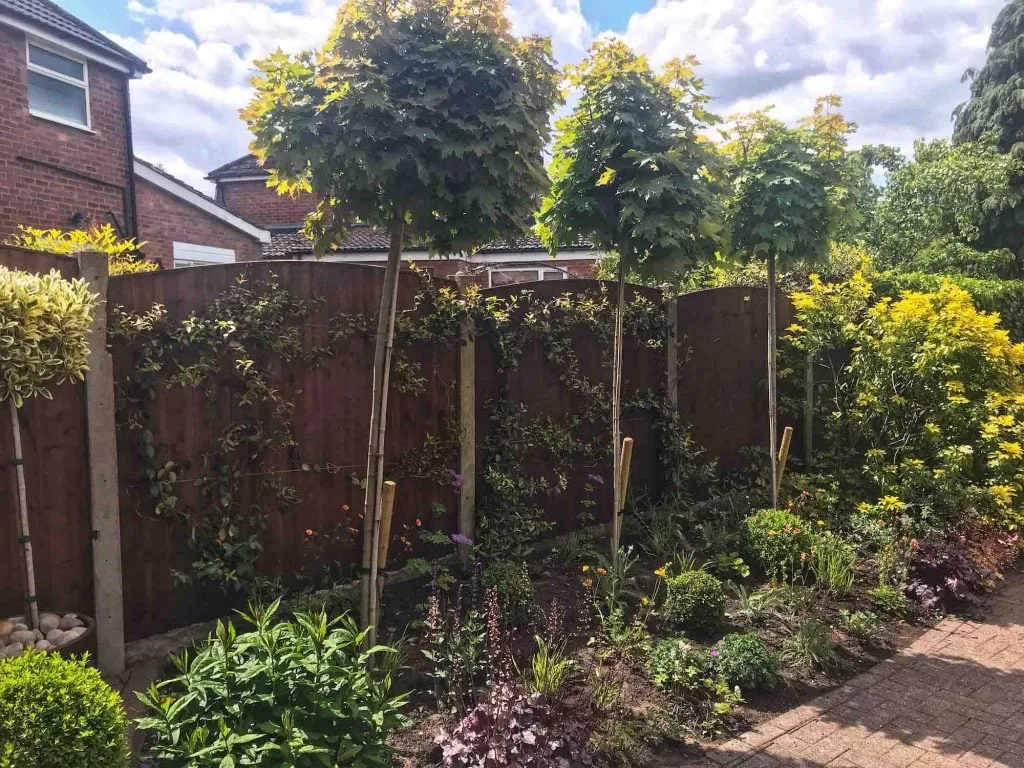
The key with standard trees is positioning. You are not trying to create a wall of trees along the boundary. You are placing them precisely to interrupt the specific sightlines you identified in your analysis. Two or three well-placed standards can be more effective than ten trees planted randomly around the perimeter, and they will create a far more attractive garden in the process.
For a west-facing garden like the Bolton project, or indeed for most urban plots, I would typically recommend multi-stem or standard forms of the following:
When it comes to buying standard trees for privacy, look for ones with a clear stem of at least 1.5 metres and a well-developed crown. For the best selection of standard trees for UK gardens you can search Amazon UK using the links below, though I always recommend also checking your local nursery as established specimens are worth the investment.
🛒 Browse standard trees for garden privacy on Amazon UK
Pleached trees are one of the most effective and visually striking solutions for overlooked gardens, and they are particularly useful where you need privacy at a very specific height without blocking light below. A pleached tree is grown on a clear straight stem with its branches trained horizontally outwards to form a flat, hedge-like canopy at the top. The result is what is sometimes called a tree on stilts: open airspace below the canopy, and a dense screen of foliage exactly where you need it.
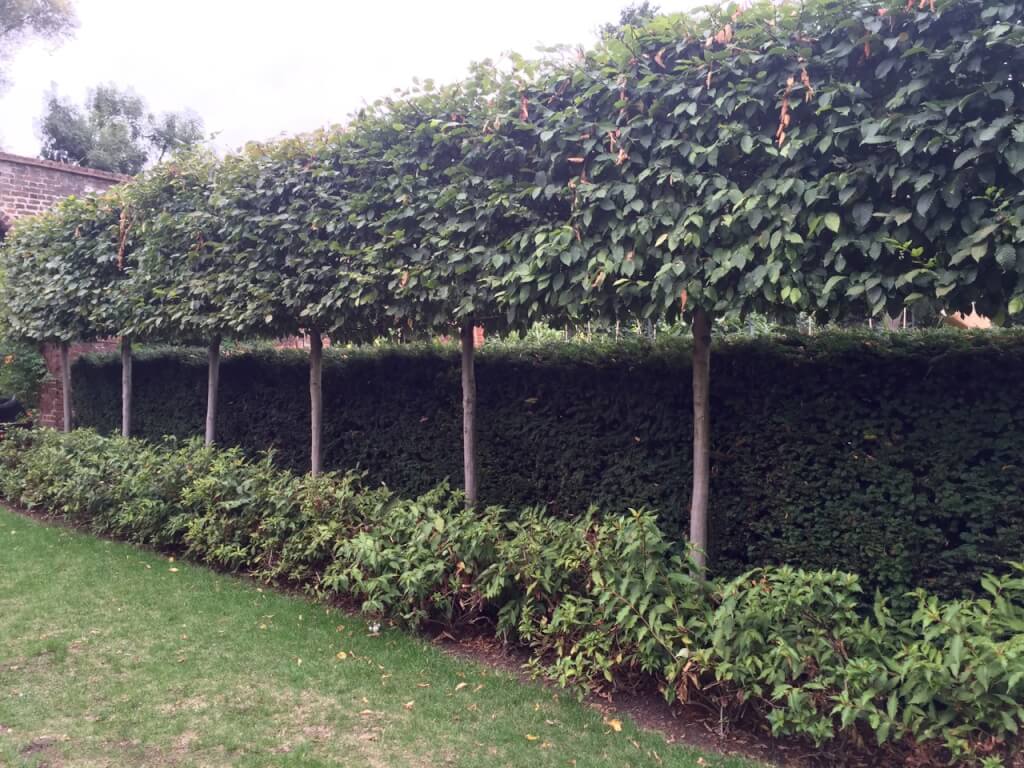
I have used pleached trees on numerous BBC Garden Rescue projects and in my own design practice to solve the problem of overlooking from a specific angle. They are particularly effective in gardens where the overlooking comes from neighbouring first-floor windows, because you can position the canopy to intercept that sightline precisely. Below the canopy, the border remains bright and accessible. The approach is surgical rather than blunt.
💡 Top Tip
Pleached trees need a support frame to maintain their shape, particularly for the first three to four years while the horizontal framework establishes. Galvanised wire stretched between timber or metal posts works well. Once the framework has matured, the trees need only an annual prune to keep their shape tidy.
The most popular species for pleaching in UK gardens are Hornbeam (Carpinus betulus), which holds its russet dead leaves through winter and is magnificent as a hedge-on-stilts, and Lime (Tilia cordata), which is the classic choice for formal gardens. Photinia ‘Red Robin’ works beautifully as a pleached evergreen. For a full guide to how to plant and support pleached trees, I have written a dedicated guide here.
Beyond trees, a well-chosen range of screening plants can provide layers of privacy at different heights without the need for expensive structural work. The secret is thinking in layers: tall structural plants at the back, dense mid-level shrubs in the middle, and softer perennials and grasses at the front to blur the base of any structure. This layered approach looks far more natural and attractive than a uniform hedge, and it provides biodiversity value that a fence never can.
Evergreen shrubs are the backbone of any privacy planting scheme because they work through winter, which is precisely when many gardens feel most exposed. Once trees lose their leaves, deciduous screens disappear entirely, and if you have overlooking from a neighbour who can see into your garden from October to April, you need plants that keep their foliage.
My favourites for year-round privacy screening in UK gardens include Photinia x fraseri ‘Red Robin’, which grows vigorously and can be clipped to maintain a dense screen, with those brilliant red new shoots giving it seasonal interest. Viburnum tinus is wonderfully reliable in shade or sun, producing clusters of white flowers through winter and into spring, and it tolerates heavy clay soil without complaint. Skimmia japonica works beautifully in shaded north or east-facing gardens, staying compact and tidy at around a metre high, making it perfect for filling the mid-layer. And Aucuba japonica, the spotted laurel, is probably the most bullet-proof evergreen for difficult urban conditions: deep shade, heavy soil, pollution, it thrives where little else will.

🛒 Buy Photinia Red Robin screening plants on Amazon UK
Bamboo comes up in almost every conversation about garden privacy because it grows quickly, stays green all year, creates a pleasantly rustling visual screen, and looks attractive. All of this is true. But I need to be very direct about something that is not always mentioned by those selling it: running bamboo species will cause serious problems if planted in the open ground of a UK garden. Phyllostachys species in particular send out rhizomes that can travel several metres in a season, push up through neighbouring lawns, and penetrate hard landscaping. I have seen it undermine paving and invade neighbouring gardens, at which point it becomes both an expensive problem and a source of genuine neighbourly tension.

⚠ Bamboo Warning
Never plant running bamboo species directly into open ground in a residential garden. If you want bamboo in the ground, install a root barrier membrane at least 60cm deep around the planting area, or contain it in a large pot sunk into the ground. Clump-forming species like Fargesia murielae or Fargesia nitida are far safer choices as they do not spread aggressively.
If you do want bamboo for privacy, Fargesia murielae (the Umbrella Bamboo) is my preferred choice. It forms a neat, dense clump that reaches around two to three metres, keeps its foliage all year, and will not creep into places it is not welcome. In large containers it works beautifully for screening a terrace or patio, though you will need to water it regularly in dry weather as bamboo in pots can dry out very quickly and will drop its leaves in protest.
🛒 Buy clump-forming Fargesia bamboo on Amazon UK
A trellis panel fixed to an existing fence allows you to extend your effective boundary height without requiring planning permission in most cases (always check locally), while also providing a structure for climbing plants that will soften and green it beautifully. This combination of structure and planting is one of the most cost-effective privacy solutions available to urban gardeners.
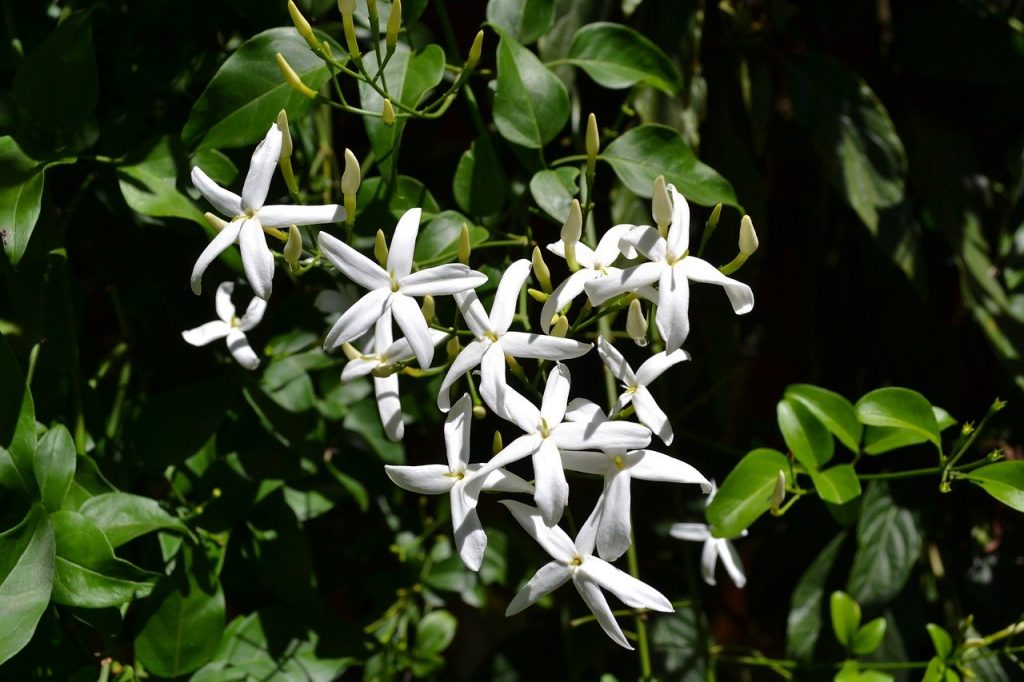
For reliable evergreen coverage, Trachelospermum jasminoides (star jasmine) is outstanding. It grows vigorously once established, produces sweetly scented white flowers in summer, and keeps its glossy leaves through all but the most severe winters. I have planted this on dozens of projects and it consistently delivers. Clematis armandii is another excellent evergreen climber, producing vanilla-scented white flowers in late winter and early spring, which is an unusual and welcome season. For faster initial coverage while you wait for these to establish, Lonicera japonica (Japanese honeysuckle) is semi-evergreen, grows at a pace that will satisfy even the most impatient gardener, and produces scented flowers from summer to autumn.
🛒 Browse garden trellis panels on Amazon UK
🛒 Buy Trachelospermum jasminoides star jasmine on Amazon UK
Ornamental grasses are chronically underused as privacy plants in the UK, and I think that is a real missed opportunity. Tall grasses like Miscanthus sinensis varieties can reach two to three metres by midsummer, creating a softly swaying screen that moves with the breeze and catches the light beautifully. They are also brilliant around a seating area because they muffle sound as well as blurring visual sightlines. The disadvantage is that they are deciduous, disappearing in winter, but their skeletal winter form has real architectural interest, particularly when frosted.
Calamagrostis x acutiflora ‘Karl Foerster’ is my favourite for this purpose: it grows quickly to around 1.5 metres, is more upright than most grasses (which means it takes up less horizontal space), and its feathery flower heads, which appear in early summer and persist through winter, give it enormous seasonal appeal. It thrives in clay soil and in most aspects, making it one of the most adaptable plants in the designer’s toolkit.
There is a particular type of overlooking problem that trees and shrubs cannot easily solve: the view from directly above. If your garden is overlooked from a tall apartment block, or from a house set on significantly higher ground than yours, you may need to think vertically rather than just horizontally. Overhead structures are the answer.
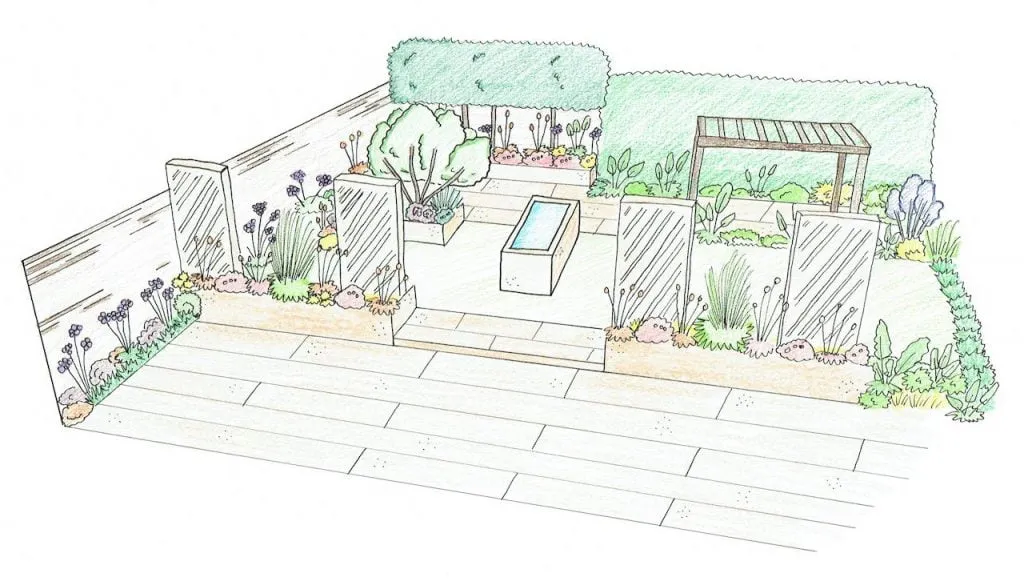
A pergola or arbour creates what I always think of as an outdoor room: a defined space with a sense of enclosure above your head that immediately makes you feel more private and sheltered. You do not need to fully cover a pergola to gain this effect. Even an open timber framework overhead changes how exposed the space feels, and once you train climbing plants across it, you create genuine overhead screening as well as the fragrance of climbers like wisteria, rose, or jasmine overhead.
💡 Top Tip
Position a pergola over your main seating area, not in a corner of the garden. It works best as the centrepiece of an entertaining or relaxation zone, where the overhead structure frames the space and draws the garden design together. A well-proportioned pergola should be a minimum of 2.4 metres clear height internally so it never feels cramped.
For smaller budgets or spaces where a full pergola is not practical, a freestanding garden gazebo can be assembled quickly and provides immediate overhead privacy. Modern aluminium-framed gazebos with side curtains offer genuine enclosure and can be taken down at the end of the season if needed.
🛒 Browse wooden garden pergolas on Amazon UK
One of the less obvious but highly effective techniques in privacy garden design is the use of focal points to redirect attention away from awkward sightlines. The principle is simple: when the eye has something compelling to look at, it tends not to wander to the thing you do not want it to see. This works both for you as the person sitting in the garden (drawing your gaze away from the offending window or fence), and to some extent for the person looking in (a striking water feature or sculpture gives the eye somewhere to land, making it harder to see past it).
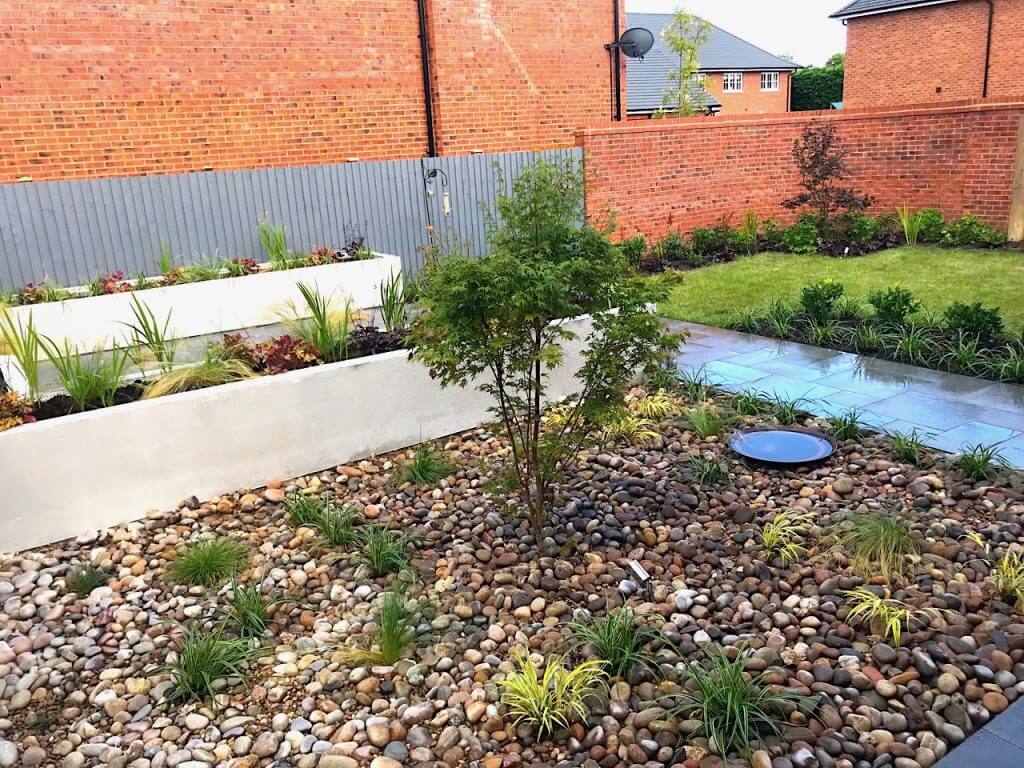
In practical terms, this means placing a specimen plant, a water feature, a piece of garden sculpture, or an architectural structure at a point where it interrupts the line between you and the overlooking source. A tall, architecturally interesting plant like a multi-stem Amelanchier or a large specimen grass placed in the right position can transform what you see when you look in that direction. You no longer see the neighbour’s window. You see the plant.
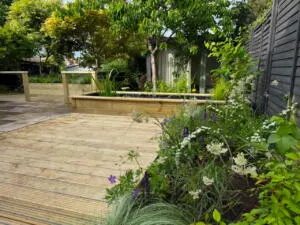
I used a raised gravel garden and a series of raised beds in one project to create a set of mid-ground focal points that pulled the eye inwards and away from neighbouring properties. The garden looked contemporary and intentional, and the privacy was a natural consequence of good design rather than a defensive reaction to it. That is always the goal.
The most effective planting schemes for overlooked gardens work in layers, and this is something I think about carefully on every project. Rather than a single-height screen planted along the boundary, a truly successful privacy planting creates depth and interest through a back layer, a middle layer, and a ground layer. Each performs a different function and together they create something that looks like a considered, beautiful garden rather than a defensive barrier.
The back layer is your primary privacy workhorse, reaching up to intercept sightlines from neighbouring first-floor windows. The middle layer fills in the space that the tree canopies leave, preventing any gaps that make the whole scheme feel incomplete. And the ground layer is where the real horticultural pleasure lies: this is where you get colour, texture, and seasonal change, and where plants like Alchemilla mollis can spill softly over a path edge and remind you why you chose gardening over paving everything over.
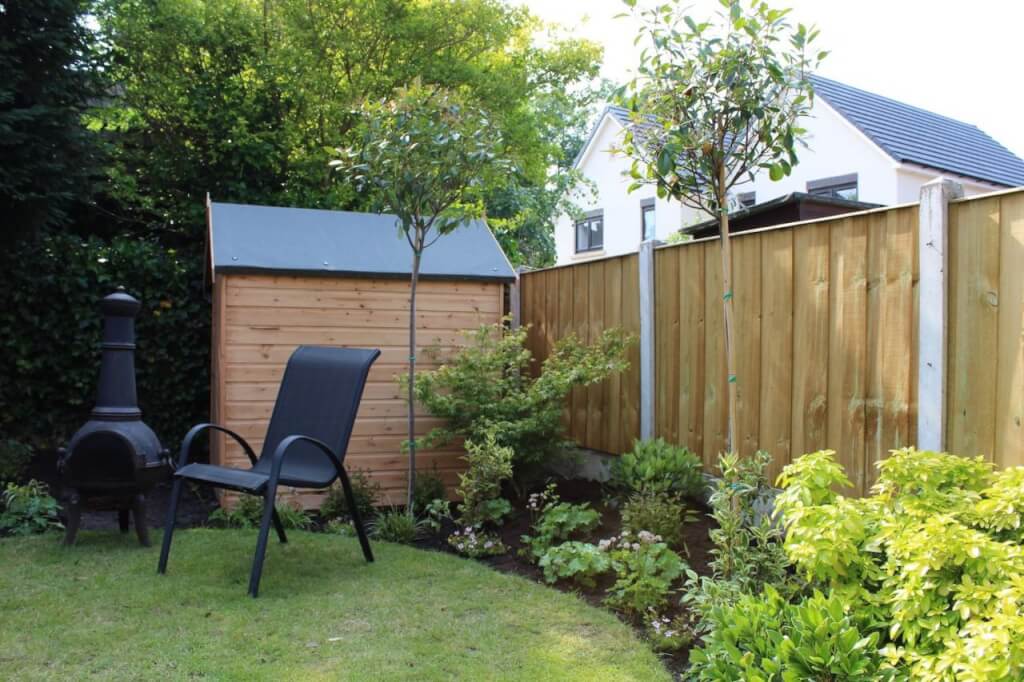
I want to spend a moment on clay soil specifically, because it is the combination of overlooked garden plus heavy clay that defeats so many gardeners, and it was exactly the challenge in the Bolton project. The good news is that clay soil, properly managed, is not the enemy it is painted as. It is nutrient-rich and moisture-retentive, which actually makes it an excellent growing medium for the right plants. The key word is right.
When choosing privacy plants for a clay soil garden, you want species that tolerate wet feet in winter without developing root rot, and that do not suffer badly in summer if the clay dries and cracks. The plants I used in Bolton, and that I return to time and again for clay-tolerant privacy planting, include Photinia x fraseri ‘Red Robin’, Viburnum tinus, Skimmia japonica, Weigela, and Astilbe for the borders. Alchemilla mollis is almost unkillable in clay and self-seeds gently around the garden, filling gaps with a foam of lime-green flowers each June. Astrantia is another excellent clay performer, producing its intricate pincushion flowers for months if you deadhead it.
Always improve clay soil before planting by adding generous quantities of horticultural grit and well-rotted organic matter, working it in thoroughly. Understanding your soil type is the foundation of everything, and if you have not already tested yours, it is worth doing before spending any money on plants. For a full guide to planting in clay soil, I have written a dedicated clay soil planting guide here.
Beyond the planting and structures, the layout of the garden itself plays a significant role in how private it feels. This is something that most people do not think about when they are trying to solve an overlooking problem, because they focus on what is on the boundaries rather than what is in the centre of the space. But the shape of the lawn, the positioning of the terrace, and the circulation route through the garden all influence whether the space feels open and exposed, or enclosed and intimate.
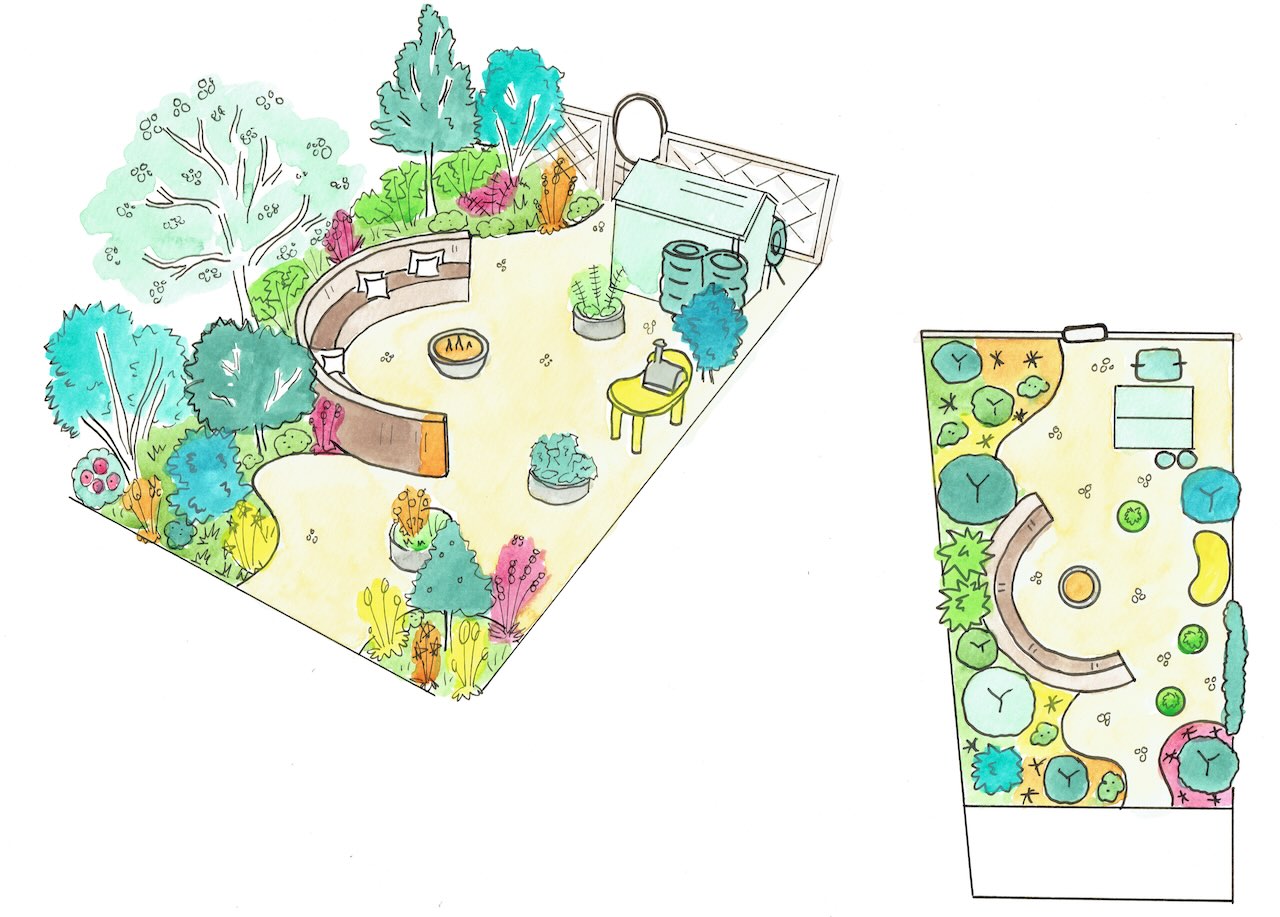
Circular lawns, as used in the Bolton project, are particularly powerful in this respect. Where a rectangular lawn directs your eye towards the boundaries and makes them feel very present, a circular lawn directs attention inward and around. Your eye follows the curve back to the planting, rather than travelling straight across to the fence. The garden feels bigger, more dynamic, and more enclosed all at the same time, which sounds paradoxical but is one of the most well-established principles in spatial design.
Placing the main seating area in the middle of the garden, rather than hard against the boundary, also helps enormously. A terrace set in from the fence, with planting on all sides of it rather than just at the edges, feels enclosed and private in a way that a terrace butted up against a fence line simply cannot achieve, however high you make the fence. The feeling of enclosure comes from being surrounded by garden, not from being walled in.
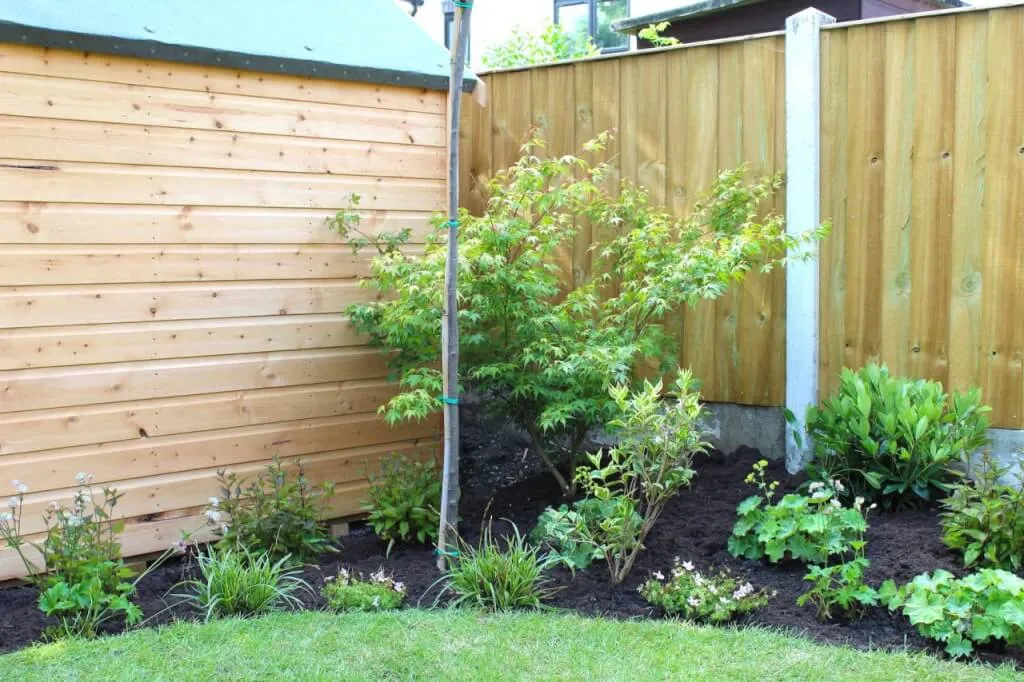
One of the first questions I get asked when a client comes to me with an overlooked garden is what things are going to cost. It is a completely reasonable question and one that is rarely answered honestly in gardening guides, which tend to either skip over budget entirely or give such vague ranges as to be useless. I am going to give you real figures here, based on what I have seen clients spend on actual projects, so you can make informed decisions about where to invest and where to save.
The good news is that effective privacy planting does not need to be expensive. Some of the most successful solutions I have ever designed have been achieved with a handful of well-chosen plants and a modest structure. The expensive mistakes I see most often are people buying the wrong things for their specific sightline problem, not necessarily spending too little. That is why the sightline analysis described earlier in this guide matters so much before you spend a penny.
My honest advice after 20 years of garden design is to spend money on trees and save money on shrubs. A good specimen tree is an asset that gains value year on year and will outlast everything else in the garden. Buying a smaller tree and letting it establish is perfectly sensible, but if you can stretch to a larger standard, the impact it has on privacy from day one is worth the investment. You can fill the mid-layer and ground layer with perfectly affordable smaller plants from a garden centre, and they will grow in quickly around the tree.
Trellis and climbers represent outstanding value for money when the overlooking problem is at boundary level rather than from above. A good quality pressure-treated trellis panel and a couple of well-chosen climbers can transform a bare fence into meaningful privacy for under £100, and the climbers will put on a metre of growth or more in their first season once established. This is the first thing I would do in any overlooked garden while saving for the longer-term planting.
Pleached trees are a genuine luxury, and I would not suggest they are essential in every overlooked garden. They are at their most useful when you need precise screening above an existing fence without losing border space, particularly in formal or contemporary designs where their architectural quality earns its place aesthetically as well as functionally. For most suburban gardens, a well-positioned standard tree or two achieves something very similar at a fraction of the cost.
💡 Top Tip
Autumn is consistently the best time to buy and plant trees and shrubs for privacy. Plants are cheaper at this time of year, establishment rates are better because the soil is still warm, and you are giving them the whole winter to put down roots before the growing season begins. Buying in spring when you are desperate for privacy is both more expensive and riskier for establishment.
One cost people frequently underestimate is soil preparation. In a heavy clay garden like the Bolton project, spending £50 to £100 on horticultural grit and good compost to incorporate into the planting beds before anything goes in is money very well spent. Plants that establish well in their first year do not need replacing. Plants that struggle in waterlogged, compacted soil tend to fail, and replacing them costs more than the soil improvement would have done in the first place.
🛒 Buy horticultural grit for clay soil improvement on Amazon UK
🛒 Buy garden compost for planting on Amazon UK
If you are reading this because you are sitting in your garden right now feeling exposed, here are the steps I would take immediately, in order of impact and speed.
Start by doing the sightline analysis I described earlier. Stand where you sit and identify exactly which windows are causing the problem. This takes ten minutes and costs nothing, but it focuses everything that comes after. Then consider a well-positioned large specimen plant. A standard tree in a large pot, placed in the right spot, can intercept a sightline the same day you buy it. It will not be a permanent or perfectly integrated solution, but it creates breathing space while you think about a longer-term design approach.
A trellis panel extension fixed to an existing fence, combined with a fast-growing climber, is often the quickest route to meaningful additional privacy at an affordable cost. Lonicera japonica will cover a two-metre trellis within a single growing season if you plant it in spring. Combine that with a large container of Fargesia bamboo and you have changed the feel of a terrace significantly within a few months.
Beyond the immediate fixes, commission a proper design if the problem is significant. A one-off design consultation, whether with me through Garden Ninja design services or another professional, can save you a great deal of money in the long run by getting the right solution first time rather than investing in a series of things that partially address the problem.
Before you invest any money in privacy solutions, it is worth understanding where you actually stand legally when it comes to being overlooked. This is a topic that generates enormous confusion, and I want to give you the honest answer even if it is not entirely what you might want to hear.
In the UK, there is no absolute legal right to privacy in your garden. This surprises most people, but it is the reality. Under the Human Rights Act 1998, everyone does have a basic right to enjoy their private life away from public scrutiny, but this does not translate into a specific enforceable right that prevents your neighbour from being able to see your garden from their upstairs window. If they have always been able to see your garden, you generally cannot require them to stop. The law is more concerned with what people actively do, such as installing cameras, than with what they can passively see.
The Legal Position: Quick Summary
You cannot compel your neighbour to block their own view of your garden.
You can erect structures on your own land up to 2 metres without planning permission in most cases.
Your neighbour can challenge your hedge under the High Hedges Act if it exceeds 2 metres and is causing a nuisance.
You can object to a new extension or development on the grounds of overlooking during the planning process, but not retrospectively.
The “right to light” is a common source of confusion. People often assume it means they have a right to sunlight in their garden, and therefore that their neighbour cannot plant something tall that blocks it. This is not what it means. The right to light in UK law applies specifically to windows in buildings, not to gardens or outdoor spaces. If a window in your home has received unobstructed natural daylight for 20 years or more, you may have an acquired right to light that prevents your neighbour from blocking it with a new building. But this does not extend to your patio, lawn, or garden borders. Your garden has no right to light in law.
What this means practically is that if your neighbour plants a fast-growing hedge or builds an extension that shadows your garden, you have very limited legal recourse. The planning system does consider the impact of new development on neighbours’ amenity, including sunlight and overlooking, so you can object to new extensions or buildings on these grounds during the planning application process. But once something is built with permission, or has been there for long enough to be considered established, the law offers little help.
The High Hedges legislation, contained within the Anti-Social Behaviour Act 2003, is worth understanding for two reasons: it can occasionally help you if a neighbour has a hedge that is seriously affecting your enjoyment of your garden, and it can work against you if your own privacy planting becomes an issue for your neighbour.
Under this legislation, local councils can intervene in disputes about hedges that are over 2 metres tall, made up of two or more trees or shrubs, and are significantly affecting the neighbour’s reasonable enjoyment of their property or home. The key word is “significantly.” The legislation is aimed at the extreme end of cases where someone has planted a towering Leylandii hedge that cuts out most of the light from a neighbouring property, not at a modest screening hedge or a row of shrubs.
There is a cost involved for the complainant when making a High Hedges complaint to the council, which varies by authority but is typically £300 to £600. The council will investigate and can issue a Remedial Notice requiring the hedge to be reduced in height. The legislation does not apply to individual trees, only to hedges of multiple stems, which is one reason why standard trees are a safer choice for privacy planting in situations where neighbourly relations are already tense.
Before you install any structure or fence at the boundary of your garden, you need to be certain that you own, or have the right to build on, that boundary. Your property deeds will normally indicate boundary ownership, often with a T-mark on the boundary plan showing which side is responsible for maintaining it. The side with the T against it is typically the owner of that fence or wall.
If you are unsure, do not assume. Building a fence or installing posts on a boundary you do not own is technically trespass, and even if the practical consequences are unlikely to be dramatic, it is the kind of thing that creates genuine legal complications if you subsequently sell your home. It can also be the start of a neighbourly dispute that sours what might have been a perfectly amicable relationship. When in doubt, engage a boundary surveyor or speak to a conveyancing solicitor before you start.
If the overlooking in your garden is the result of a recent development or planning application, such as a new extension, a loft conversion with new windows, or a neighbouring house being built that was not there when you moved in, you may have more options than if it is a longstanding situation. Planning authorities are required to consider the impact of proposed developments on neighbouring amenity, and overlooking is a material planning consideration.
If a planning application is currently in process for a development that will overlook your garden, you should submit a formal objection to your local planning authority citing loss of privacy as a harm. Planning officers take these objections seriously, and conditions are regularly imposed on developments requiring obscure glazing on windows facing neighbouring gardens, or restricting window positions, specifically to address overlooking concerns.
If the development has already received permission and been built, the opportunity to influence it through planning has passed. At that point, the practical design solutions in this guide are your most effective route forward.
I have left this until last in this section, but in practice it should be your first step. Before you install anything, particularly anything at the boundary, have a friendly conversation with your neighbour. Not a confrontational one about rights and law, but a practical one about what you are hoping to achieve and how you plan to do it. Most people, when approached considerately, are perfectly reasonable about this kind of thing. They are not trying to spy on you. They have just built an extension, or moved into an upstairs bedroom, or their existing window happens to look your way.
I have seen good outcomes from these conversations. Neighbours who agreed to put frosted film on a bathroom window that overlooked a garden. Neighbours who planted something on their side of the boundary that helped solve a mutual problem. The garden design solutions in this guide are the right answer when negotiation is not possible or has not been productive. But most of the time, a relaxed conversation over a cup of tea achieves more than any amount of legal research.
This is the question I always ask clients before we finalise a planting scheme for an overlooked garden, and it is the one that most people have not thought through. In June, when the Amelanchier is fully leafed up and the border is thick with growth, the garden feels wonderfully private. Then November arrives, the deciduous trees shed their leaves within a fortnight of each other, and suddenly the sightlines you thought you had solved are wide open again. If the neighbours whose window concerns you most have a clear view in January, your scheme is not truly working year-round.

This does not mean you should plant nothing but evergreens. Deciduous trees and shrubs bring a richness to a garden that evergreens cannot match: the spring blossom of an Amelanchier, the fiery autumn colour of an Acer, the sculptural winter silhouette of a multi-stem Betula. The right answer is a considered combination of both, planned so that your evergreen structure provides the essential year-round privacy backbone while deciduous plants layer in seasonal interest around it. The trick is knowing which species pull their weight in each season, and making sure you have enough of the right evergreens holding the scheme together when everything else is bare.

Winter is the make-or-break season for any privacy planting scheme. It is also the time when people spend the least time in their gardens, which means the winter vulnerability of a scheme often goes unnoticed until the following summer when the question of overlooking comes up again. I always encourage clients to make a specific assessment of their winter privacy situation, ideally in January or February when things are at their most exposed. Go and stand in your garden on a grey, leafless day. Look at the neighbouring windows that concern you. Photograph what you see. That photograph is the truth about your current privacy provision.
💡 Top Tip
Do your privacy audit in January or February, specifically on a day when all deciduous trees and shrubs are fully bare. Take photographs from your main seating position towards the overlooking windows. That is your actual winter privacy situation, and it should be the starting point for any new planting, not the lush summer version you are used to seeing.
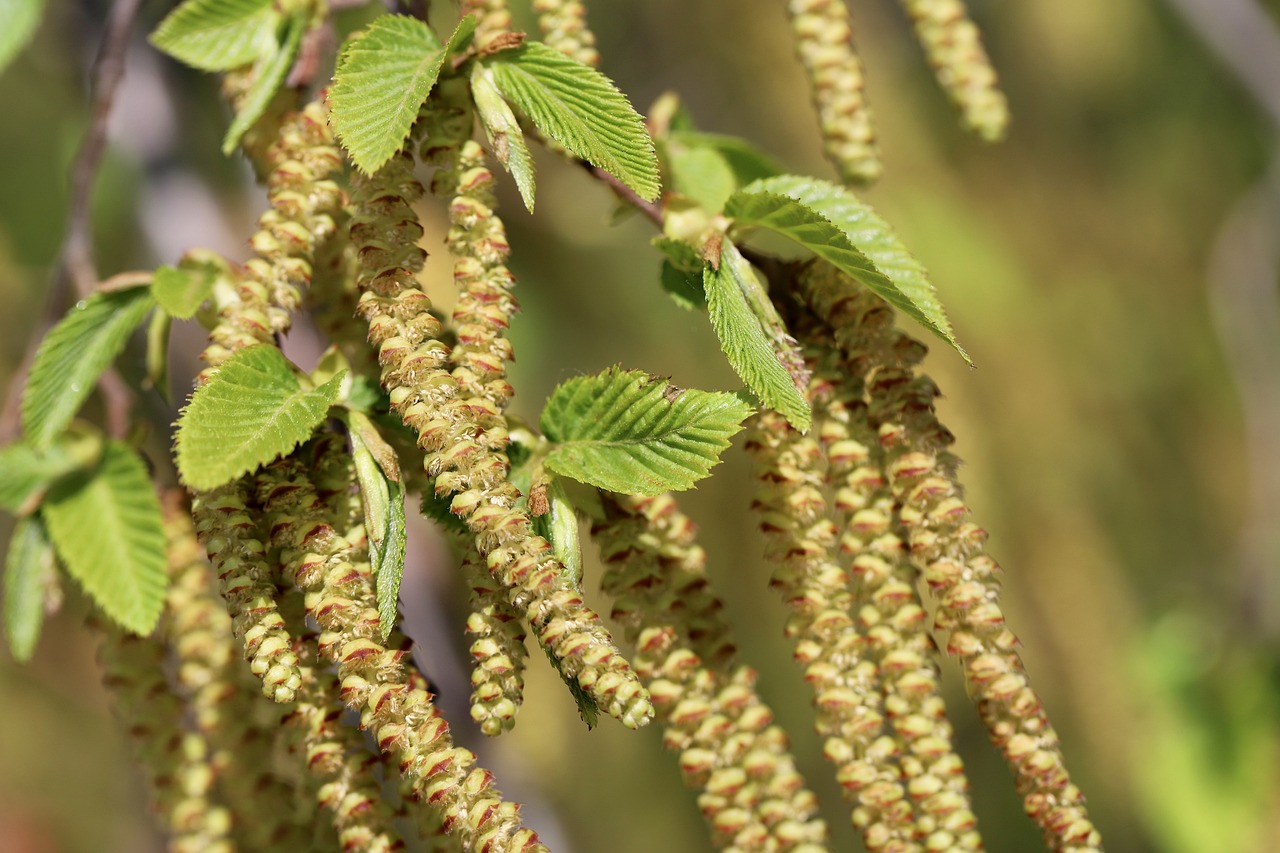
Hornbeam (Carpinus betulus) is one of my go-to plants for winter privacy, for a reason that surprises many gardeners: it is technically deciduous, but it holds its dead copper-brown leaves through winter rather than dropping them cleanly. This phenomenon is called marcescence, and it means a Hornbeam hedge or pleached screen provides genuine visual screening through the coldest months even though the leaves are not technically alive. It is not as opaque as a fully evergreen plant, but in a planting scheme where it forms one layer alongside evergreen shrubs, it is extremely effective. The russet winter colouring is also beautiful in its own right, particularly when backlit by low winter sun.
For pleached screens in particular, Hornbeam is my first recommendation. The Fastigiata form shown above has a naturally upright, columnar habit that suits formal training beautifully, and it clips into a tidy rectangular screen with less effort than many alternatives. It is fully hardy across all of the UK, tolerant of most soils including clay, and grows at a dependable rate of around 30 to 40 centimetres per year once established.
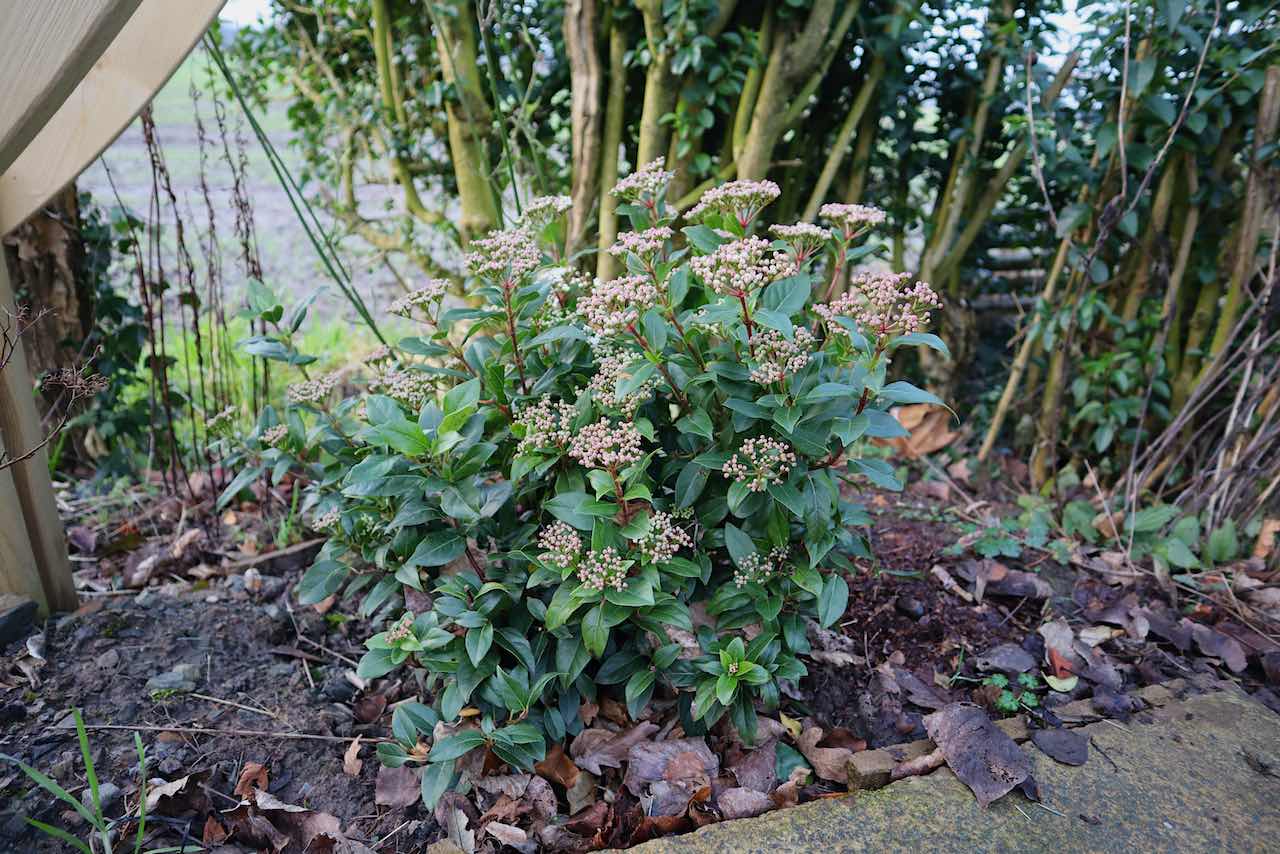
Viburnum tinus earns its place in almost every year-round privacy scheme I design, and it is a plant I adore! It is evergreen, maintaining a dense coverage of dark glossy leaves through all seasons. It is reliably hardy across the whole of the UK, surviving without any winter protection even in exposed urban gardens. And critically for overlooked gardens, it tolerates shade and heavy clay soil without complaint, which makes it usable on the north side of screening structures where little else performs well.
What I find most valuable about Viburnum tinus is its flowering period. It produces clusters of small white flowers from November right through to April, performing ornamentally at exactly the time of year when the garden is at its most exposed and in greatest need of interest. In a planting scheme, it sits beautifully in the mid-layer at around 1.5 to 2 metres, filling the gaps between standard trees and softening the base of any trellis or fence structure.
🛒 Buy Viburnum tinus on Amazon UK
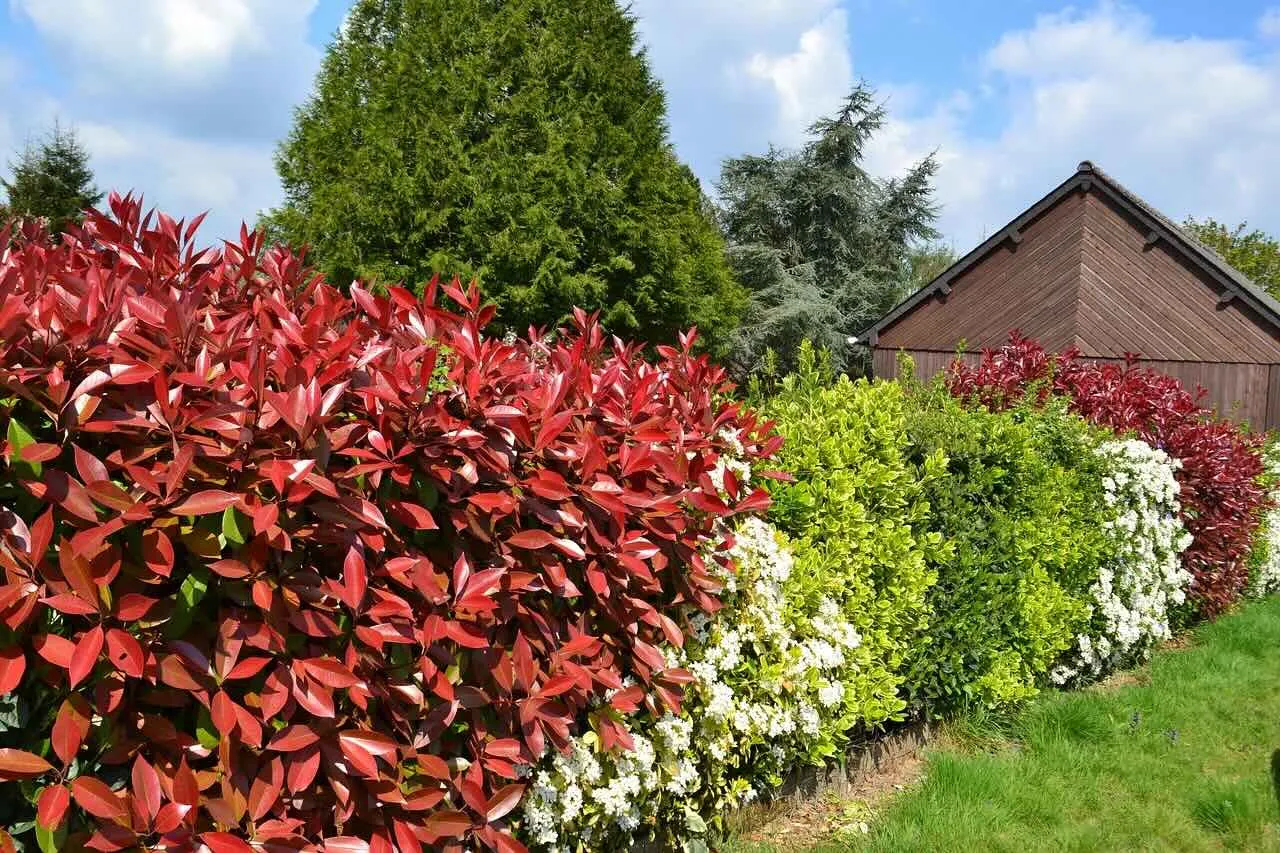
Photinia x fraseri ‘Red Robin’ provides the evergreen backbone of many of my overlooked garden schemes, because it solves multiple problems simultaneously. As a standard tree it provides year-round canopy privacy at height. As a clipped shrub in the mid-layer it fills in the space between trees with dense, glossy coverage through all seasons. And in spring, when those vivid red new shoots appear, it delivers genuine ornamental excitement at a time when deciduous plants are only just beginning to stir.
In my experience it is the single most versatile evergreen screening plant for the size and style of garden most UK homeowners are working with. It clips well, responds positively to hard pruning if you need to reduce it, and the new growth that follows a hard cut is always even more vigorously red than the previous year’s flush. It grows in most soils including clay, tolerates partial shade though it colours better in sun, and is fully hardy to H5 across all but the most exposed Scottish highland sites.
🛒 Buy Photinia x fraseri Red Robin on Amazon UK
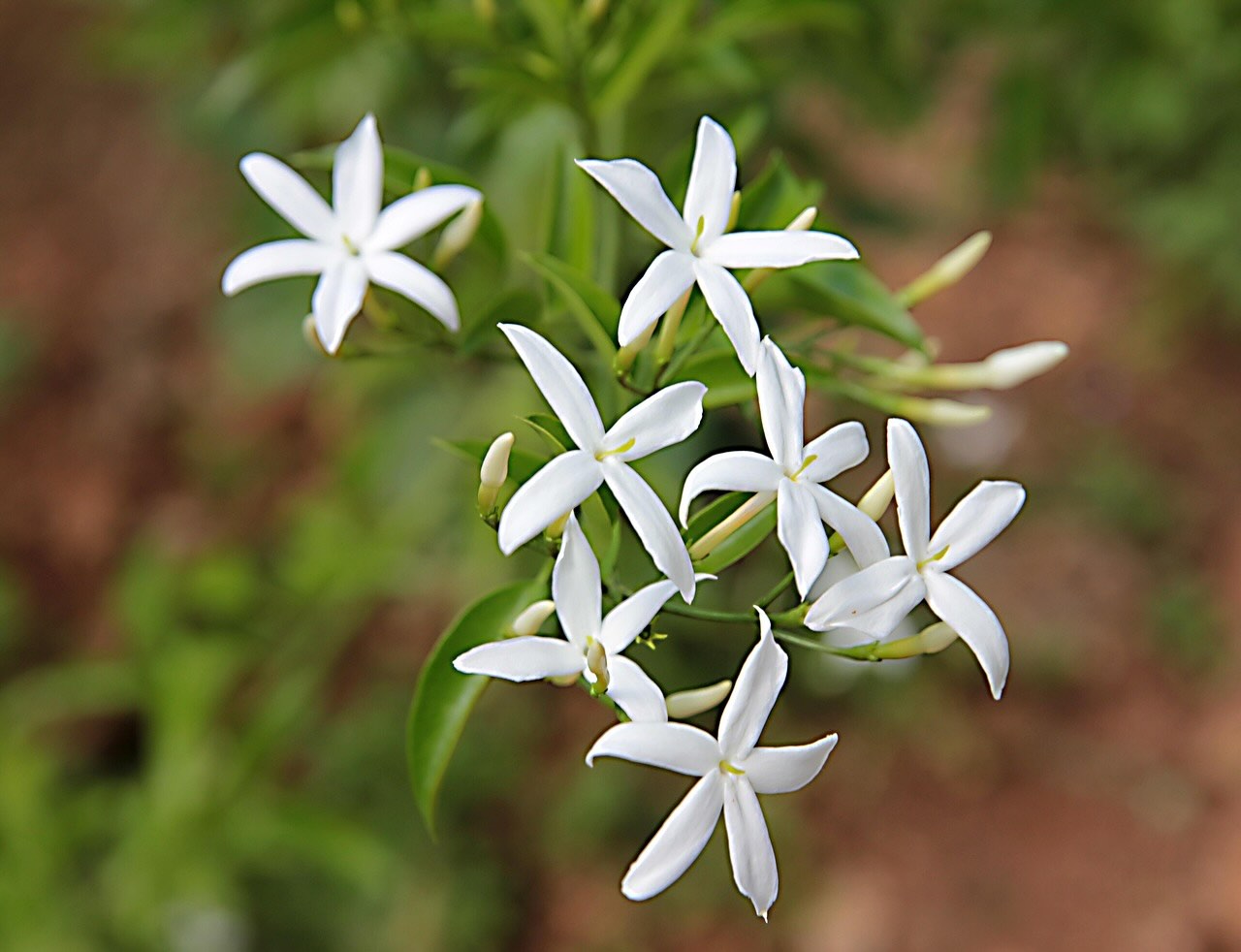
If I had to choose one climbing plant for an overlooked garden trellis, Trachelospermum jasminoides would be it almost every time. It is evergreen, maintaining glossy dark green leaf coverage through even the coldest UK winters. In exposed situations or severe frost it may drop some leaves, but it always recovers and the coverage it provides even in winter is considerably better than any deciduous climber. By midsummer it produces masses of small white flowers with an extraordinarily powerful sweet fragrance, the kind that stops you in your tracks when you walk past a fully established plant.
It does need some patience in its first year or two. The established plant I am thinking of now, covering a six-metre run of trellis on the back wall of a garden in Manchester, looked disappointingly slow for its first two seasons. Then it seemed to decide it had put down enough root, and it covered that trellis in two further seasons. The horticultural saying goes “first year sleeps, second year creeps, third year leaps” and for Trachelospermum that is almost literally true.
🛒 Buy Trachelospermum jasminoides star jasmine on Amazon UK
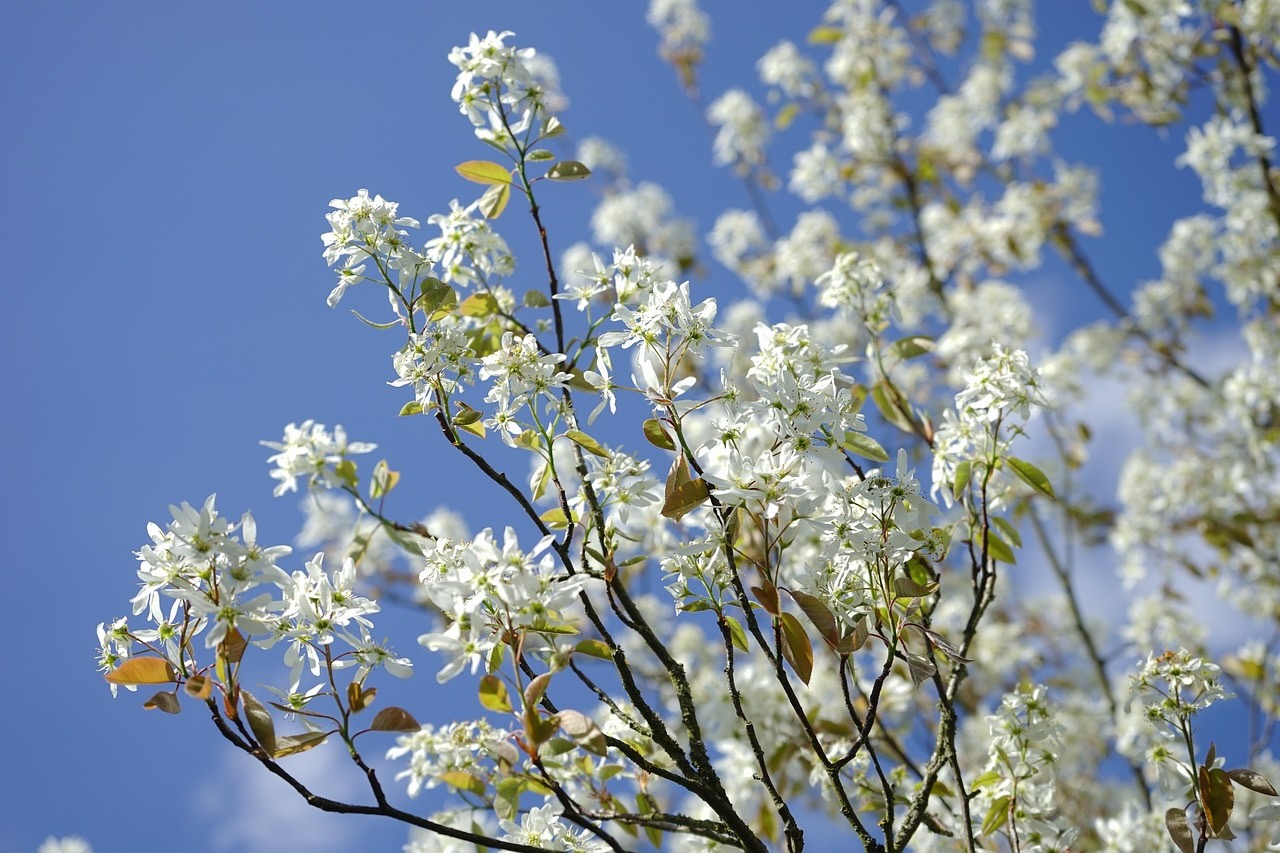
With the evergreen backbone established, the whole rest of the garden’s seasonal interest is yours to play with. Deciduous trees that provide summer canopy privacy while also delivering genuine ornamental moments are abundant. Amelanchier lamarckii, the Snowy Mespilus, is one of my very favourites: it erupts into a cloud of white blossom in April before the leaves have fully opened, then gives you a dense leafy canopy through summer, and rounds the year off with some of the best autumn colour of any small tree. In winter, its graceful branching structure is attractive even when bare and offers a light form of privacy.

Acer platanoides varieties give you a dense summer canopy with exceptional autumn colour, and the purple-leaved forms like ‘Crimson King’ add a dramatic darkness to the planting palette that works particularly well as a backdrop to softer pink and white border planting. Sorbus aucuparia, the Rowan, is reliably hardy everywhere in the UK and brings spring blossom, summer leaf, and then brilliant red berries through autumn that the birds adore. All of these trees are doing privacy work through the summer months while the evergreen shrubs hold the scheme together through winter.
In the mid-layer, the combination I return to most often for year-round privacy is Fargesia bamboo and Skimmia japonica. They solve different problems and look beautiful together. The Fargesia provides height in the mid-layer from the moment you plant it, with dense cascading foliage that moves in the breeze and catches the light in a way that evergreen shrubs never quite manage. In a large container beside a seating area, it provides immediate privacy without any of the root-spread concerns associated with running bamboo species. And it stays evergreen and dense through the coldest winters.
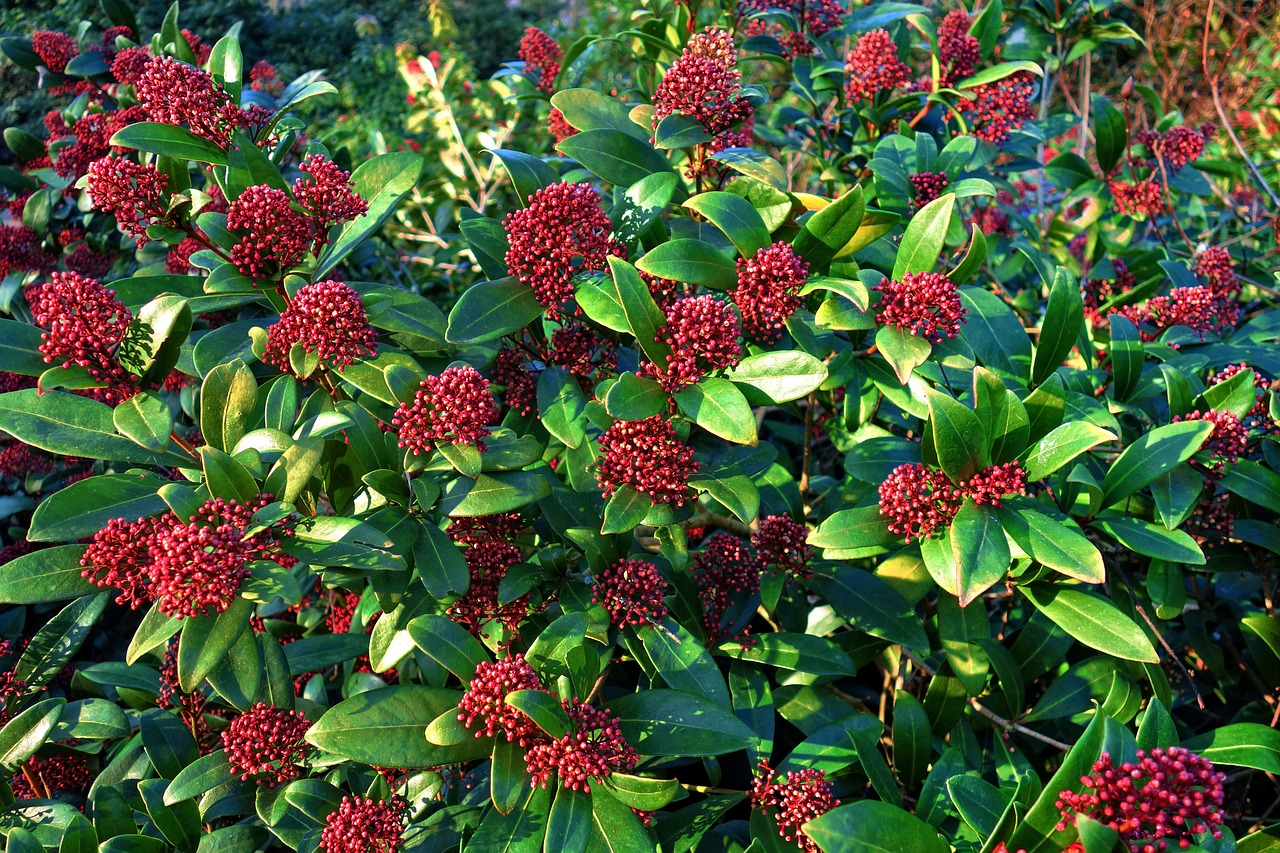
Skimmia japonica fills the lower levels of the mid-layer, staying compact at around one metre, tolerating deep shade, and producing red or white berries through autumn and winter that persist for months. It is one of the most reliable plants I know for the awkward shaded spots that often exist at the base of a screening scheme, where the larger trees and shrubs above cast too much shade for most other plants. Plant male and female forms together for berries, or look for hermaphrodite varieties like Skimmia japonica ‘Rubella’ which carries beautiful dark red flower buds through winter and sets its own berries.
🛒 Buy Fargesia bamboo on Amazon UK
🛒 Buy Skimmia japonica on Amazon UK
The approach I use when designing for year-round privacy is to establish what I think of as the evergreen skeleton first. I aim for this to provide at least 60 to 70 per cent of the screening required on its own, even in January. The deciduous plants that layer in around it then enhance and enrich the scheme through the growing season, while the evergreen skeleton holds everything together when they are bare. Get that ratio right and you have a garden that works in every month of the year, not just the months when you are most likely to be photographing it.
The most effective approach is to break the line of sight rather than trying to block everything out completely. Use standard trees to intercept sightlines at height, combined with layered shrub planting in the mid-level and climbing plants on trellis at the boundary. Pergolas and arbours address overhead overlooking from above. The key is identifying exactly where your specific sightlines come from, and placing screening precisely at those points rather than trying to block the entire perimeter.
For year-round privacy, Photinia x fraseri ‘Red Robin’ is one of the best screening plants for UK gardens. It is evergreen, grows vigorously, produces beautiful red new growth in spring, and can be maintained as a dense screen. For quicker results, Lonicera japonica on a trellis establishes fast. Fargesia bamboo is excellent for pots around a terrace. For taller structural screening, pleached Hornbeam or well-positioned standard trees are the most effective long-term solution.
In England, fences over 2 metres generally require planning permission, and those adjacent to a highway must not exceed 1 metre without permission. More importantly, higher fences rarely solve the overlooking problem. If your neighbour’s first-floor window is seven metres up, a two-metre fence does nothing to block that view. Planting and structures placed at the right height are almost always a more effective and neighbourly solution.
Standard trees with a clear stem and spreading canopy are the most effective solution. Position a tree between your seating area and the overlooking window so the canopy intercepts that specific sightline. Pleached trees provide a flat horizontal screen at exactly the right height without blocking light below. A pergola with climbing plants provides overhead privacy for areas viewed from directly above.
Clump-forming bamboo species, particularly Fargesia murielae and Fargesia nitida, are excellent for garden privacy in the UK. They are non-invasive, evergreen, grow to two to three metres, and look very attractive. Running bamboo species such as Phyllostachys must never be planted directly into open ground without a deep root barrier, as they spread aggressively and can damage neighbouring properties and hard landscaping.
Climbing plants like Lonicera japonica on a trellis can provide meaningful coverage within one to two growing seasons. Fargesia bamboo in a large pot provides near-immediate screening. Standard trees purchased at a good size begin to intercept sightlines immediately, with full canopy effect developing over two to three years. Pleached trees arrive pre-trained and provide immediate structural screening.
In most cases, a garden pergola in England does not require planning permission as it typically falls within Permitted Development rights. However, it must not cover more than 50% of the garden area, must not be forward of the principal elevation, and must not exceed 2.5 metres in height if within 2 metres of a boundary. Always check with your local planning authority if you are in a conservation area or have a listed building.
Enjoyed learning about how to design overlooked back gardens? My Garden Design for Beginners course will help you design the whole space around them. Step-by-step video lessons, real-world case studies, and a design certificate at the end — all taught by me, Lee Burkhill, award-winning designer and BBC1’s Garden Rescue presenter.
For the garden you’ve already got, not the one you’re starting from scratch. Seven checklists and video lessons from BBC Garden Rescue’s Lee Burkhill, built to help you work out what’s worth keeping before you spend a penny.
Garden Design Examples for Small Gardens: 30 Design Templates & Planting Plans: In this online gardening course, I’ll walk you through 30 fantastic garden designs, explaining the logic behind the layout, the plant choices, and take-home tips for applying them in your own garden.
Learn how to transform and design your own garden with Lee Burkhills crash course in garden design. Over 5 hours Lee will teach you how to design your own dream garden. Featuring practical design examples, planting ideas and video guides. Learn how to design your garden in one weekend!
Garden Design for Beginners Online Course: If you want to make the career jump to becoming a garden designer or to learn how to design your own garden, this is the beginner course for you. Join me, Lee Burkhill, an award-winning garden designer, as I train you in the art of beautiful garden design.
🌿 Key Takeaways
Break the line of sight, not the budget. Standard trees, pleached screens, and layered planting are almost always more effective than taller fencing, which rarely solves overlooking from above.
Do your sightline analysis first. Stand where you want to sit and identify exactly which windows are causing the problem. Targeted solutions beat blanket coverage every time.
Think in layers. Back-layer trees plus mid-level evergreen shrubs plus ground-level perennials creates a planting scheme that looks beautiful and works as privacy screening simultaneously.
Design the whole garden, not just the boundary. A circular lawn, a well-positioned terrace, and strong focal points all contribute to the feeling of privacy, often more powerfully than anything you do at the fence line.
Designing an overlooked back garden is one of the most satisfying problems in residential garden design, because the solutions, when they are well-executed, transform not just the look of a space but how people actually use and feel in it. The client in Bolton started using her garden regularly after years of avoiding it. That is what good design should do: give people back their outdoor space and the pleasure that comes with it.
If you have any questions about your own overlooked garden, drop them in the comments below or add them to my YouTube channel where I answer questions regularly. You can also find me on Instagram, Facebook and the Garden Ninja forum. Happy gardening!



Lee Burkhill, known as the Garden Ninja, is an award-winning garden designer and horticulturist with over 20 years of professional experience and Chelsea Flower Show gold medal wins to his name. A qualified RHS horticulturist, Lee specialises in sustainable garden design and practical planting advice. He designs and presents on BBC1’s Garden Rescue and writes for leading gardening publications.
View all posts by Lee Burkhill









JOIN THE NINJAS

Be the first in line for new Guides, Discount codes and Offers