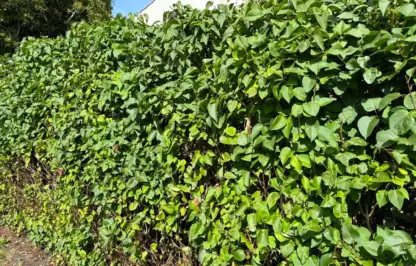
For the garden you’ve already got, not the one you’re starting from scratch. Seven checklists and video lessons from BBC Garden Rescue’s Lee Burkhill, built to help you work out what’s worth keeping before you spend a penny.
69


Quick Answer
The best trees to plant near fences and garden boundaries are smaller, well-behaved species that provide screening, wildlife value, and seasonal interest without causing damage through invasive roots or excessive spread. Top choices include Amelanchier, Prunus serrula, Betula pendula, Sorbus, Malus, and Acer campestre. The golden rule: always check the mature root spread and canopy width before you plant, and leave at least 1 to 2 metres from the boundary line.
When you choose the right tree for your garden’s aspect, soil and needs, you have a beautiful, productive, privacy-giving boundary feature that adds genuine value to your garden. Choose the wrong tree, and you have a dispute, structural damage, or a tree that the council tells you to remove.

From designing hundreds of client gardens over twenty-plus years, I’ve seen both outcomes. The good news is that with the right species choice and a bit of planning, planting near a fence or boundary is entirely straightforward. This guide gives you everything you need: the legal picture, what to look for in a boundary-friendly tree, my recommended plant list drawn from both my design experience and the forum threads I get most often on this topic, and a clear list of species to avoid at all costs.
Jump To
There is no single definitive rule in UK law about how close to a boundary you can plant a tree, but there are very clear practical and legal principles that should guide your decision. As a general rule, I recommend planting a tree no closer than half its mature canopy spread from the boundary line. If a tree reaches a 4 metre spread at maturity, plant it 2 metres back from the fence. This gives the roots and canopy room to develop without encroaching onto your neighbour’s property.
For small ornamental trees with a mature spread of 3 to 5 metres, a planting distance of 1.5 to 2 metres from the fence is usually workable. For larger trees with spreads exceeding 6 metres, you should plant further back still, or consider whether the boundary position is the right location at all. The single most important thing you can do before buying is check the mature height and spread on the label or plant finder, and measure that distance from your fence before you dig.
Soil type also matters significantly here. On clay soil, tree roots are much more likely to cause subsidence to structures because clay shrinks and swells as it dries and rewets under the influence of root systems. If you are on clay and close to any structure (including fence posts set in concrete, walls, or outbuildings) you should plant conservatively and avoid vigorous species. On sandy or free-draining soils the risk is lower, but roots will still travel to find moisture so the principle holds.
You have the legal right to plant what you want within your own property boundary, but you also carry legal responsibility for any damage your trees cause to neighbouring property. This means that if your tree roots damage your neighbour’s fence, foundations, or paving, you could be liable for the cost of repair. The key case here is Delaware Mansions Ltd v Westminster City Council, which established that tree owners can be held responsible for reasonably foreseeable damage caused by their trees’ roots.
⚠️ Important Legal Note
Your neighbour has the legal right to cut back any branches or roots that cross the boundary line, back to the boundary point. They do not need your permission to do this, but any cut material remains your property. Be aware that if you live in a conservation area or your tree has a Tree Preservation Order (TPO), separate rules apply and you may need council permission before any work. Check with your local planning authority if you are unsure.
On the practical side, it is always worth a friendly conversation with your neighbour before you plant anything significant near a shared boundary. Most disputes about boundary trees stem not from the trees themselves but from the breakdown in communication that occurred before they were planted. Let your neighbour know what you’re planning, explain that you’ve chosen a well-behaved species, and ask if they have any concerns. In twenty years of garden design I’ve found that most neighbourly disputes about planting could have been avoided entirely with a five-minute chat over the fence.
Also check whether your property has any deed restrictions, covenants, or lease conditions that limit what you can plant near boundaries. These are more common than people think, particularly on newer estates and leasehold properties. Your solicitor’s documents from when you purchased the property are the place to look.
Not all trees behave the same near a fence or boundary, and the difference between a well-chosen species and a poorly chosen one can be the difference between a garden asset and an ongoing problem. From my experience of designing boundary planting schemes, here are the qualities that matter most.
Non-invasive root system. This is the single most important factor. Species with deep tap roots or fibrous root systems are generally safer near structures than species with spreading surface roots. Willows, poplars, and large maples are notorious for invasive root systems that seek out moisture in drains and under foundations. Smaller ornamental trees with compact root systems are what you want near a fence.
Modest mature size. A tree that stays below 8 metres in height with a spread under 5 metres is manageable in most gardens near a boundary. Be wary of trees sold as “small”. Always check the RHS plant finder or the nursery label for verified mature dimensions, as marketing descriptions can be optimistic.
Upright or fastigiate growth habit. Columnar or upright-growing trees have a naturally narrow canopy that minimises spread into neighbouring space. Betula pendula ‘Fastigiata’ and Prunus ‘Amanogawa’ are good examples. They give height and interest without the horizontal spread that causes boundary problems.
Multi-season interest. The best boundary trees earn their place through more than one season. Spring blossom, summer foliage, autumn colour, winter bark or berries. A tree that only performs for two weeks in May is not the most efficient use of a boundary position.
Wildlife value. This matters more and more in gardens today, and rightly so. A boundary tree that supports insects, provides berries for birds, or offers nesting habitat is contributing to your local ecosystem in a way that a fence panel simply cannot. Native species or species native to similar temperate habitats consistently outperform exotic ornamentals on this measure.
The trees below are drawn from my own planting experience in client gardens and informed by the forum threads that have generated the most discussion on this topic over the years. I’ve included a mix of evergreen and deciduous options, fruiting trees, and structural choices, so you can select whatever suits your particular boundary situation. Every tree here has been chosen specifically because it combines appropriate root behaviour, manageable mature size, and genuine garden value.
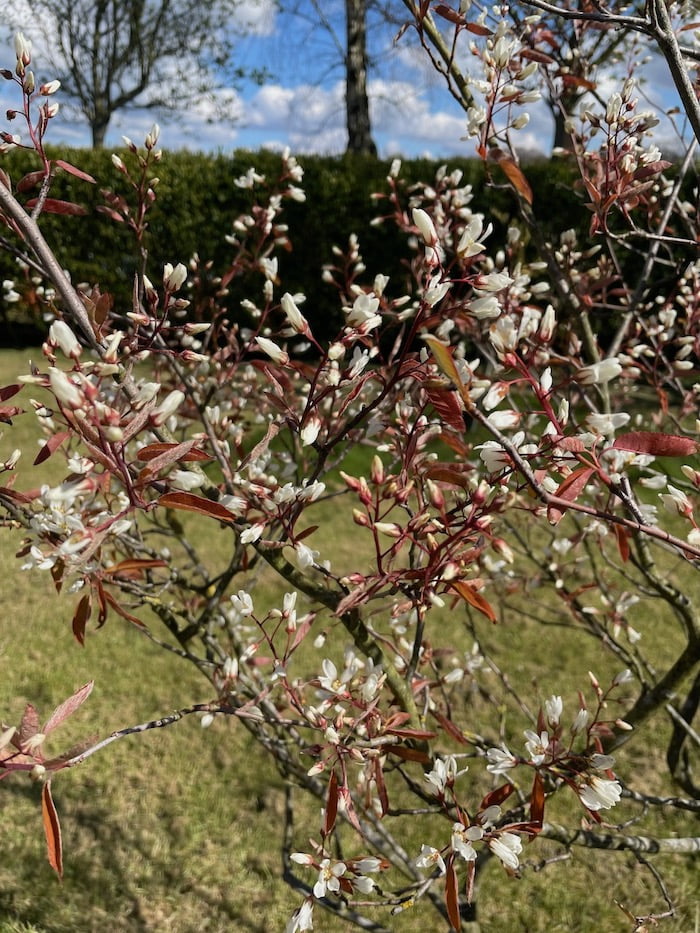
If there is one tree I would plant in almost any boundary position, it is Amelanchier lamarckii. It is one of the most comprehensively rewarding small trees in British horticulture and it behaves impeccably near fences. The root system is compact and non-invasive, the mature spread stays within 4 to 5 metres, and the multi-season display is genuinely spectacular.
White blossom emerges in April alongside copper-bronze young leaves, giving a two-tone display that is one of the great moments of the spring garden. Small purple-black berries follow in early summer, much loved by blackbirds and thrushes, and by October the foliage has turned through amber, orange, and flame red. It is one of the most reliable small trees available to UK gardeners, and it is completely safe near fence panels and boundaries.
🛒 Buy Amelanchier trees from Amazon UK
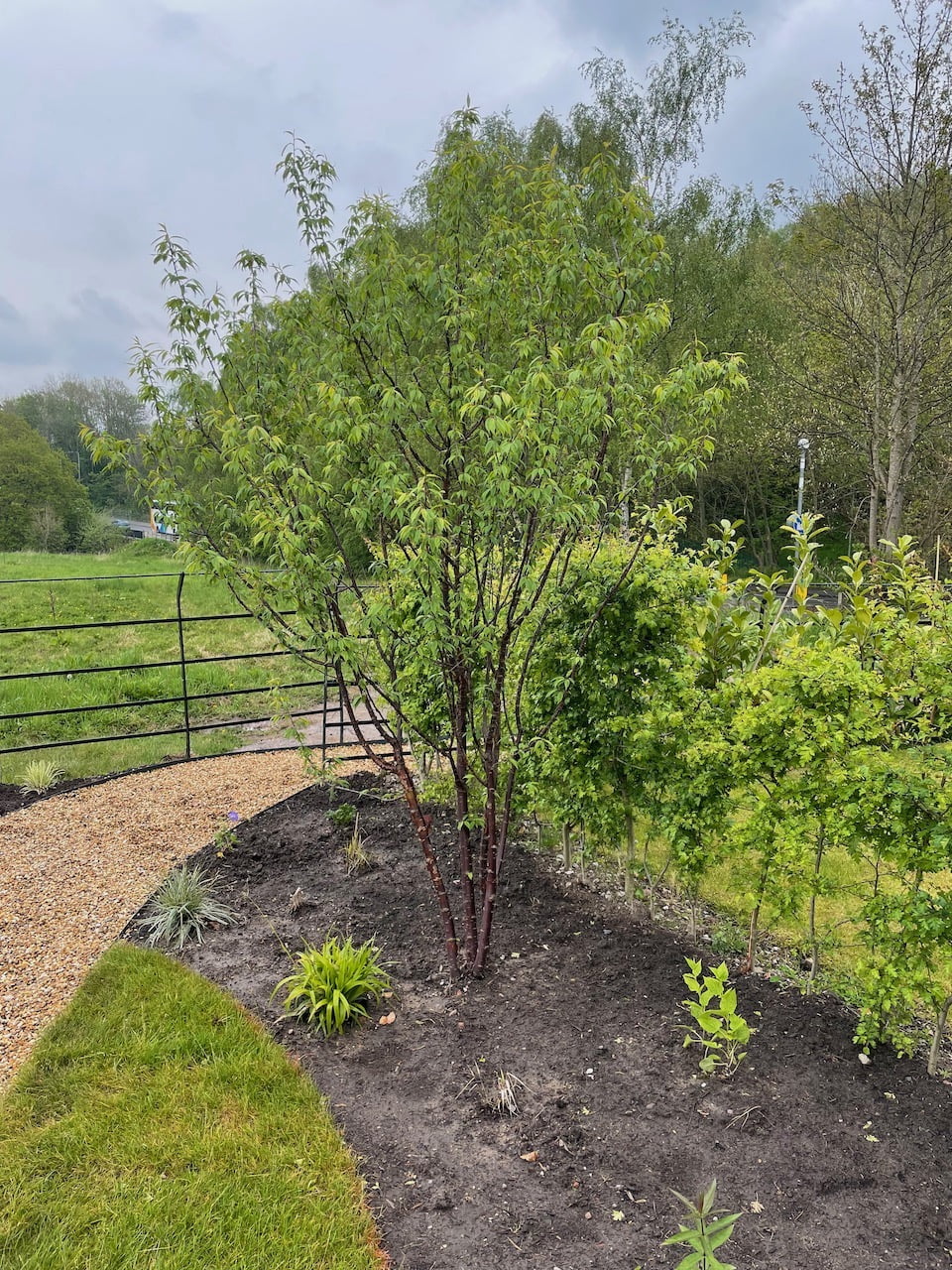
Prunus serrula is what I describe to clients as the tree that earns its keep in winter. Its bark is extraordinary: a deep mahogany red with a polished, lacquered appearance that peels in ribbons to reveal fresh coppery red beneath. On a grey February afternoon, a Prunus serrula catching the low winter sun near a fence is genuinely breathtaking, and I’ve had clients tell me it is the single most remarked-upon feature in their garden.
The white blossom in April is delicate and pretty, the foliage provides decent autumn colour, and the root system is well-behaved and compact. It is a superb boundary tree for any garden where winter interest is a priority.
🛒 Buy Prunus serrula from Amazon UK
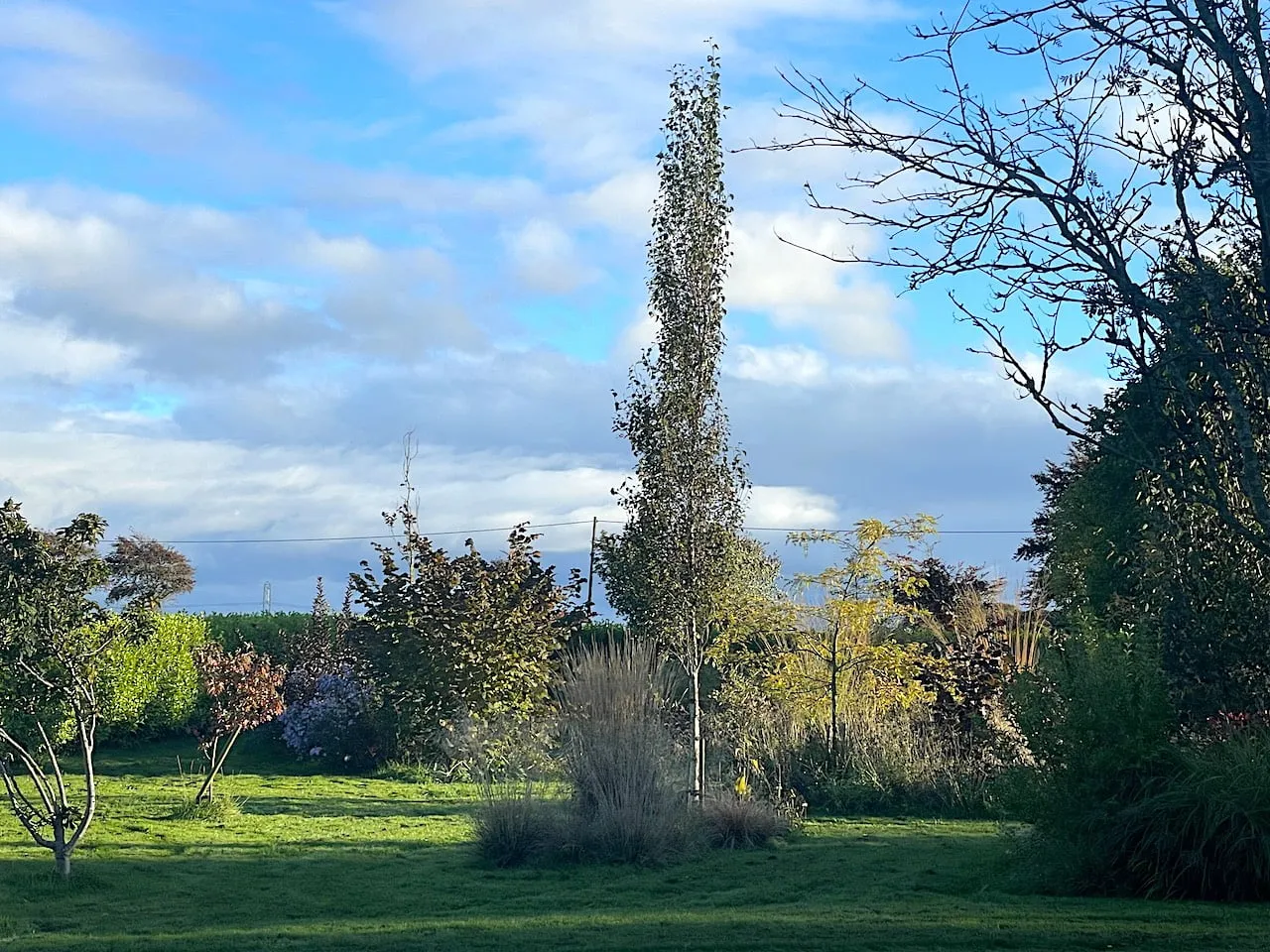
The fastigiate or upright silver birch is one of the best solutions I know for a narrow boundary position where you want height and screening without horizontal spread. The natural growth habit is strongly columnar, remaining narrow even at full maturity, which means it takes up very little space in the ground and overhead. The white bark is striking year-round, and the light, airy canopy means it casts much less shade than a tree of the same height with a broader spread would.
Betula pendula ‘Fastigiata’ is particularly valuable for east or west-facing boundaries where shade management matters, and it supports more insect species than almost any other garden tree, which makes it outstanding for wildlife.
🛒 Buy Betula pendula ‘Fastigiata’ from Amazon UK
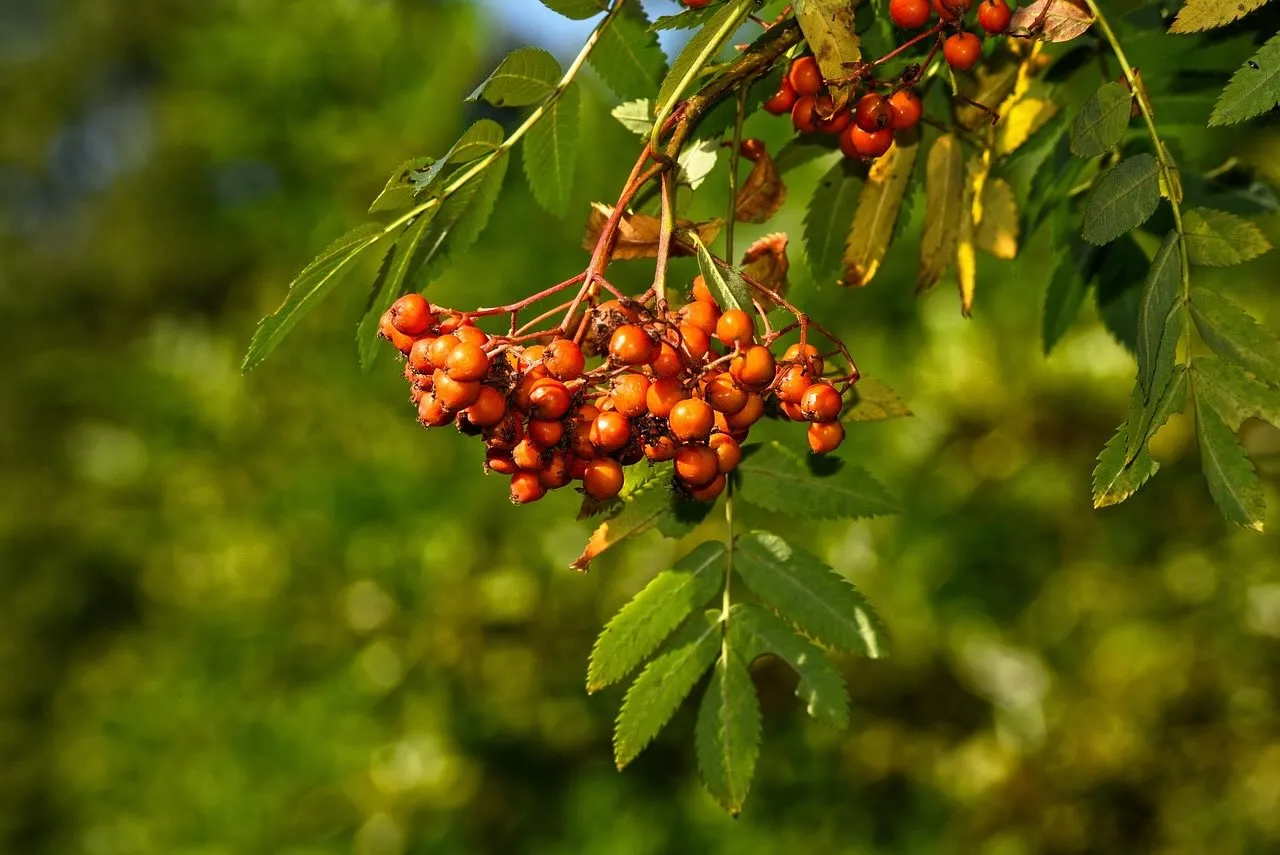
Rowan is one of Britain’s finest native small trees and an excellent choice near a boundary fence. The feathery, pinnate leaves emerge in spring, white flowers follow in May, and by August the brilliant red or orange berry clusters appear, one of the most intensely colourful autumn displays of any small tree.
Fieldfares, redwings, and mistle thrushes descend on the berries with extraordinary enthusiasm from September onwards, and watching that wildlife activity from the garden in autumn is one of those genuinely rewarding moments that only living with a good tree can provide. The root system is compact and the mature size is very manageable at 6 to 8 metres. Sorbus ‘Joseph Rock’ offers creamy yellow berries that are less quickly taken by birds, extending the display deeper into winter.
🛒 Buy Sorbus rowan trees from Amazon UK
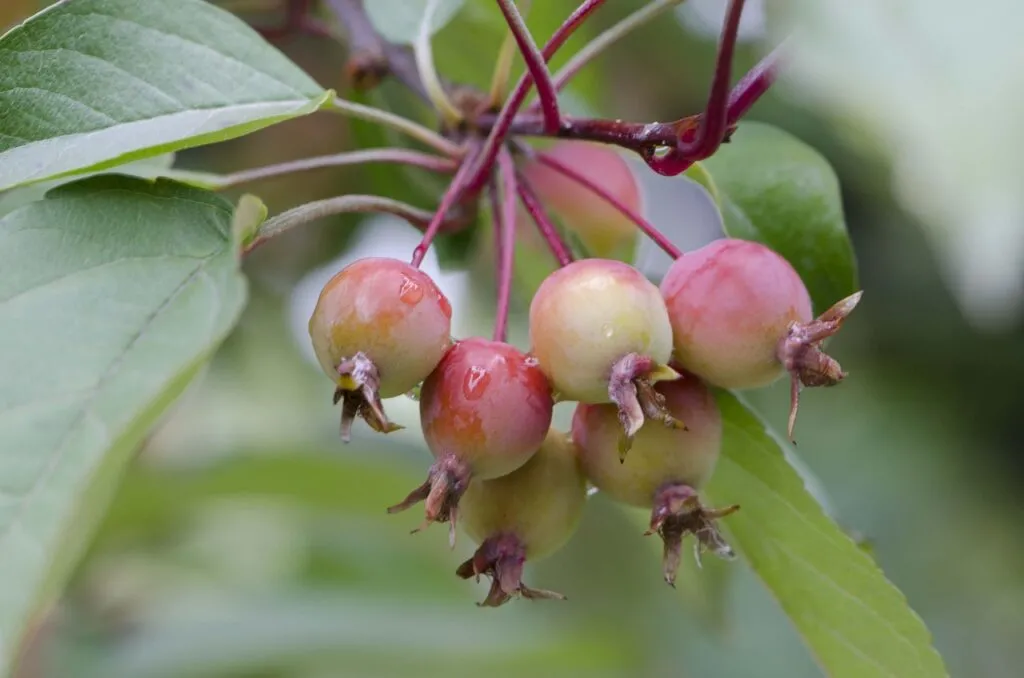
Crab apples are one of the most comprehensively wildlife-friendly trees you can plant in a UK garden, and the variety ‘Evereste’ is my standard recommendation for boundary planting because of its compact size and outstanding multi-season display. White blossom in April and May is followed by small orange and yellow fruits that persist on the tree well into winter, providing food for blackbirds, fieldfares, and waxwings when other food sources are exhausted.
The tree has a naturally balanced, spreading habit but remains well within the range of a manageable garden tree. It tolerates most UK soil types and aspects, and its non-invasive root system makes it safe near fence panels and garden structures.
🛒 Buy Malus Evereste crab apple from Amazon UK
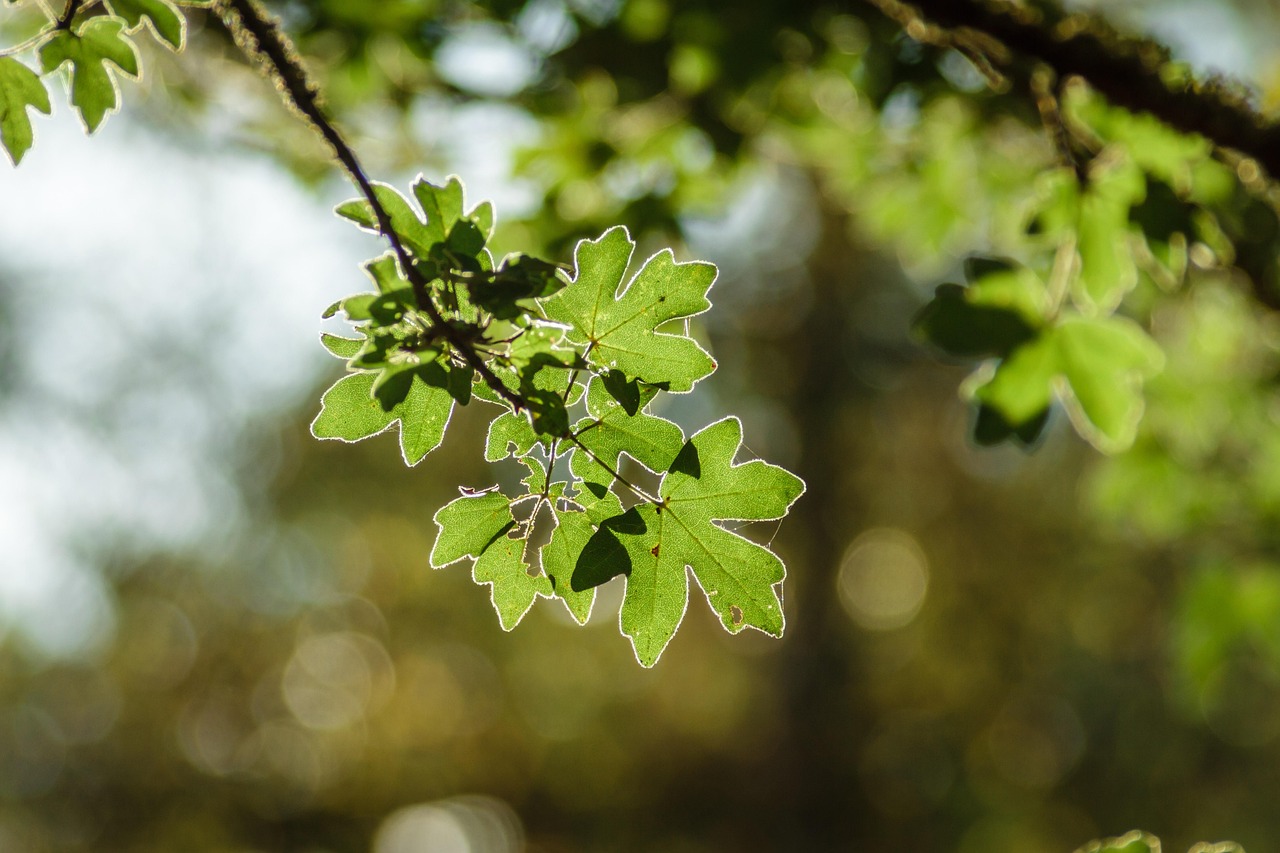
Field maple is Britain’s only native maple and one of the most underused small trees in UK garden planting. It has an elegant, naturally rounded habit with attractive lobed leaves that emerge fresh green in spring, develop good summer colour, and turn vivid gold and yellow in October before falling. It is completely tolerant of most UK soil types including clay and chalk, handles exposed and windy boundary positions well, and is excellent for wildlife, particularly as a food source for caterpillars and other insects. As a boundary tree it can also be managed as a larger hedgerow-style plant if you prefer something more informal.
🛒 Buy Field Maple trees from Amazon UK
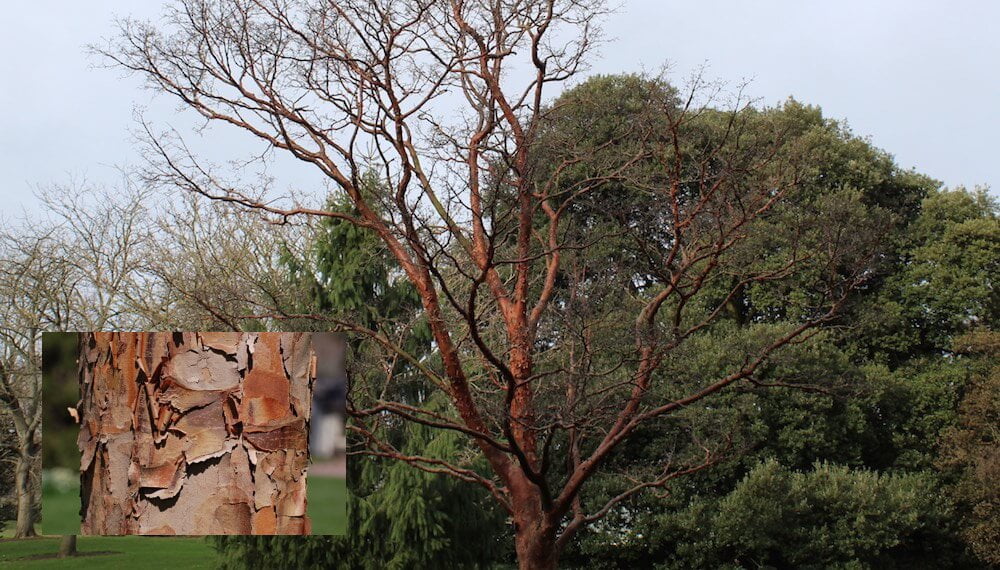
Acer griseum is a tree I return to again and again in high-end garden design, and it is perfectly suited to a boundary position where you want something extraordinary. The peeling cinnamon-brown bark has the same show-stopping quality as Prunus serrula but with a different, warmer tone. It glows in winter sunshine and the layered peeling texture is unlike anything else in the garden. The three-lobed leaves turn brilliant crimson and orange in autumn, making this a tree that performs magnificently across at least two seasons. Growth is slow, which is actually an advantage near a boundary because the mature size remains small and the root system stays compact.
🛒 Buy Acer griseum from Amazon UK
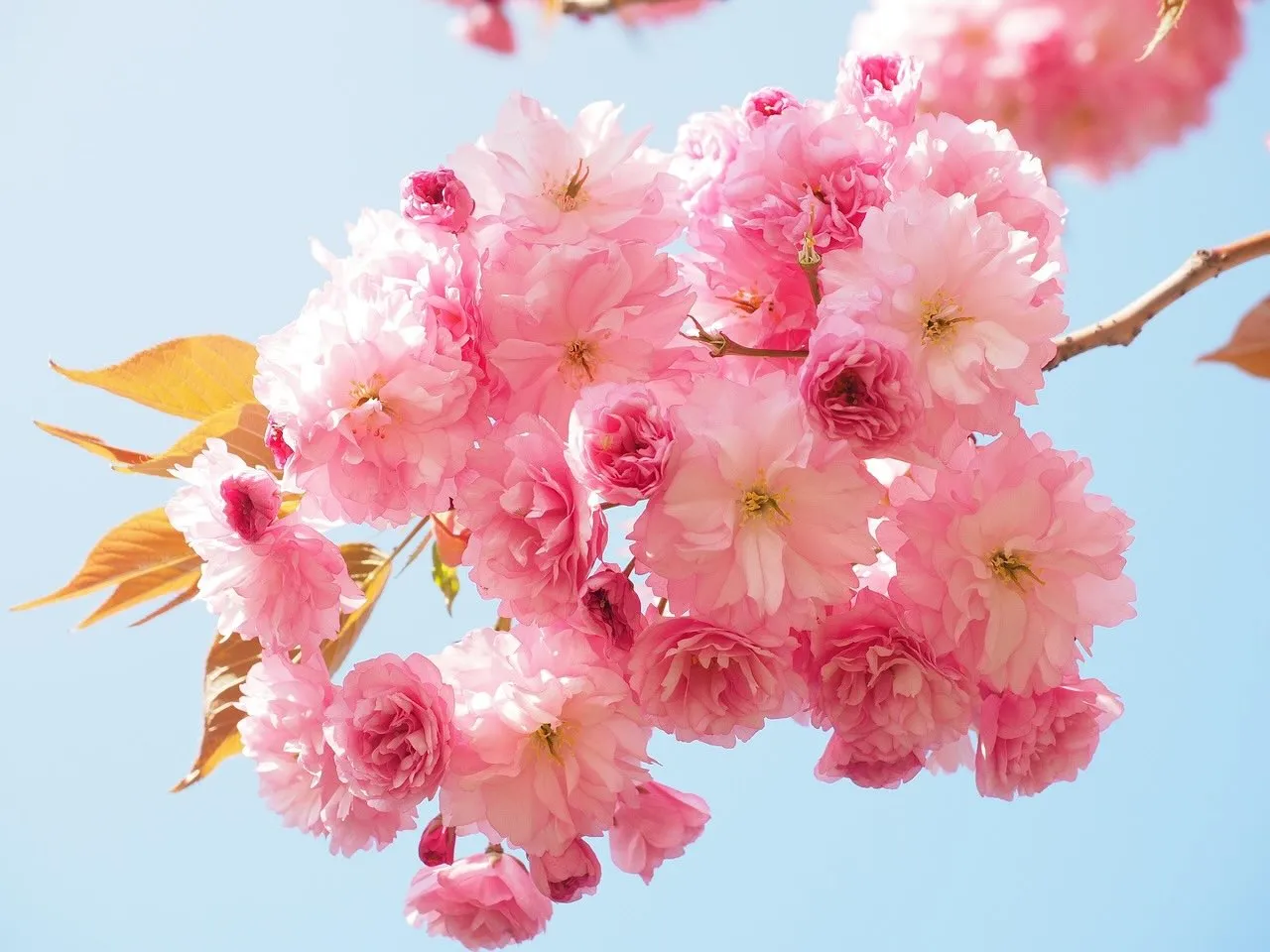
No list of trees for garden boundaries would be complete without an ornamental cherry, and ‘Kanzan’ is the most familiar of them all for good reason. The double deep-pink blossom in April is one of the most celebrated sights in the British spring garden, and the vase-shaped habit of this variety makes it a naturally good fit for a boundary position because it spreads upwards and outwards in a balanced, open form.
The bronzed young leaves that emerge with the blossom add to the display, and autumn colour can be decent in a good year. Prunus ‘Amanogawa’ is the fastigiate alternative if you have a very narrow space, growing in a slim, column-like habit to around 8 metres tall and just 2 metres wide.
🛒 Buy Prunus Kanzan cherry trees from Amazon UK
💡 Top Tip
Standard trees on a clear stem of 1.5 to 1.8 metres are ideal for boundary positions because the canopy sits entirely above fence height, giving you height and screening overhead without the lower branches encroaching on the fence panel itself. Ask your nursery specifically for standard-form trees when buying for a boundary position.
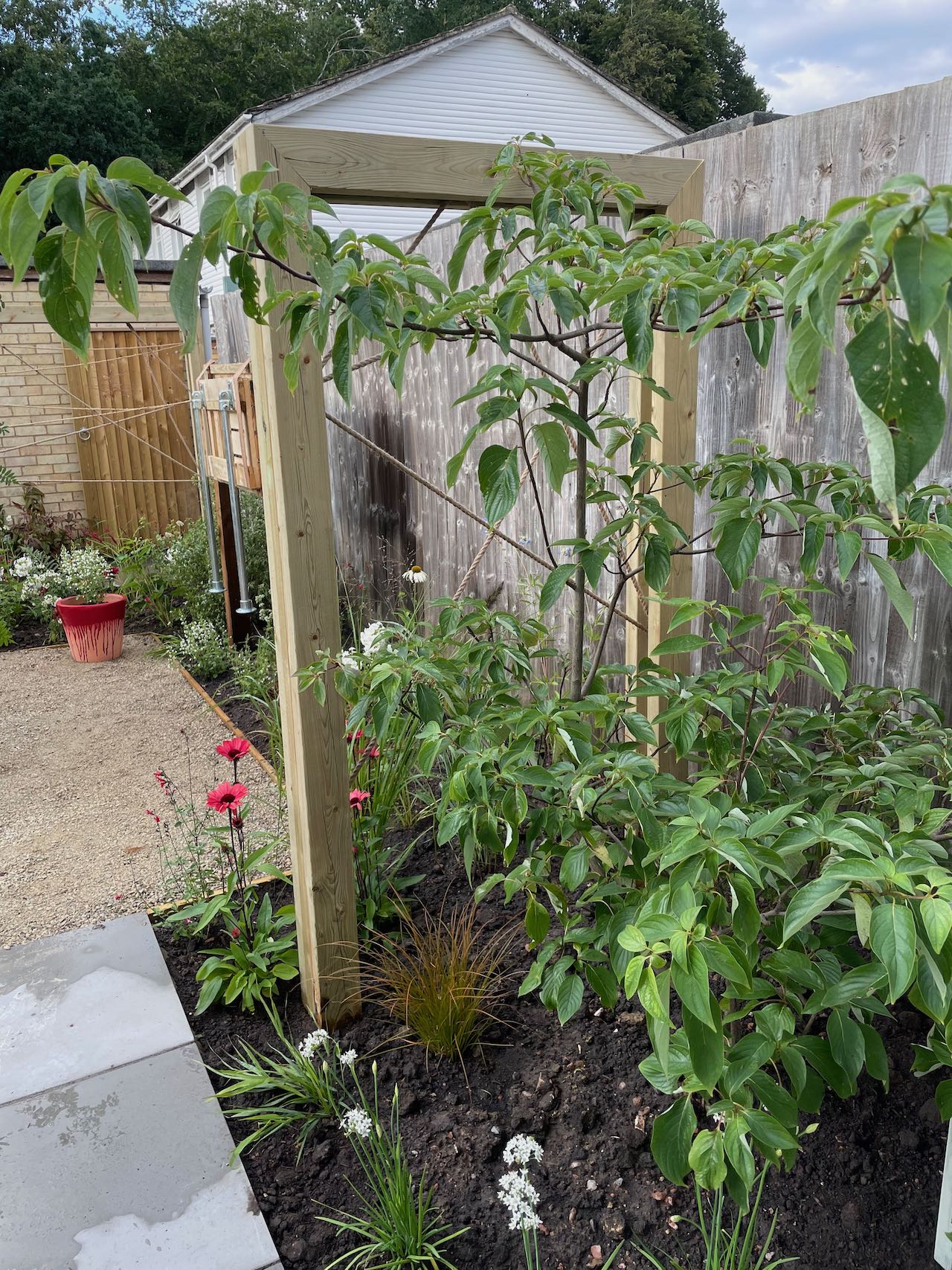
If you want a boundary tree that creates a genuinely architectural statement, the wedding cake tree is one of the most distinctive choices available. The horizontal, tiered branching structure creates a strongly layered canopy that looks sculptural in summer when covered in variegated white and green foliage, and equally dramatic in winter when the bare framework is revealed. I’ve used this tree in several Chelsea-influenced garden designs where a structural focal point at a boundary was needed, and the effect is always impressive. It is slow-growing, which keeps its root system manageable, and the branching habit means it has tremendous winter presence even when leafless.
🛒 Buy Cornus controversa from Amazon UK
Evergreen trees are understandably popular for boundary planting because they provide year-round screening and privacy rather than only delivering coverage during the growing season. The important thing with evergreens is to avoid the trap of choosing fast-growing species that will quickly outgrow their position and become a much bigger problem than the original privacy issue. Here are my recommended evergreen options that combine year-round coverage with manageable, non-invasive growth.
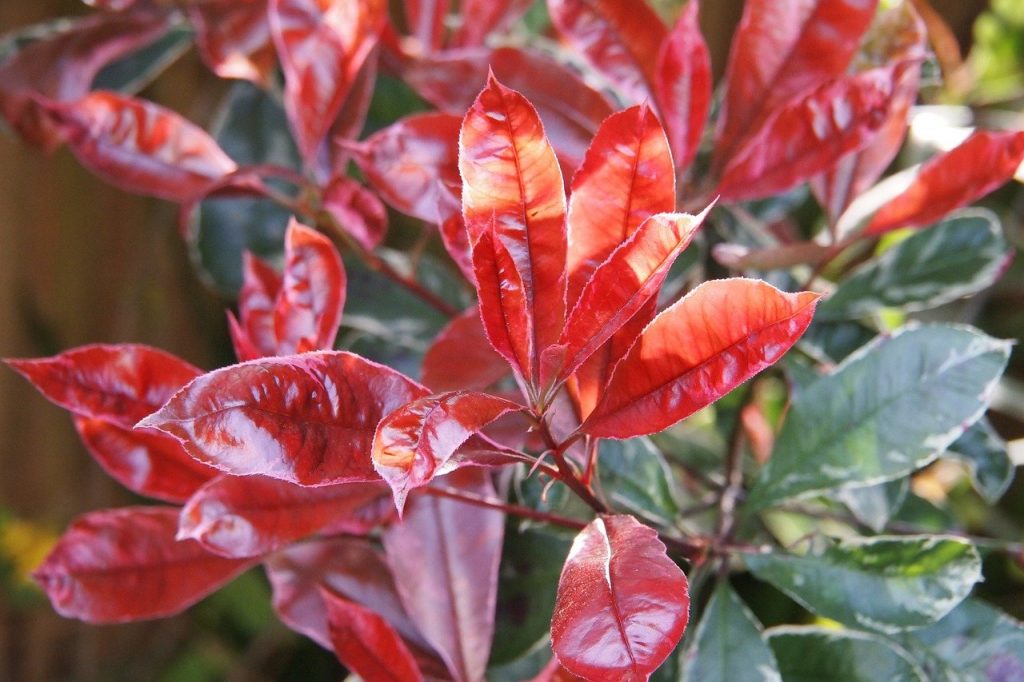
Photinia ‘Red Robin’ grown as a standard tree with a clear stem of 1.5 to 1.8 metres before the canopy begins, is one of the most practical evergreen trees for a fence boundary position in a UK garden. The bright red new growth appears multiple times a year, each flush providing a vivid display against the glossy dark green mature leaves. As a standard tree the canopy sits entirely above fence height, giving you privacy screening overhead without the lower growth encroaching on the fence itself. I’ve installed several rows of standard Photinias in client gardens as an alternative to the more expensive pleached tree option, and they deliver excellent results.
🛒 Buy Photinia Red Robin standard trees from Amazon UK
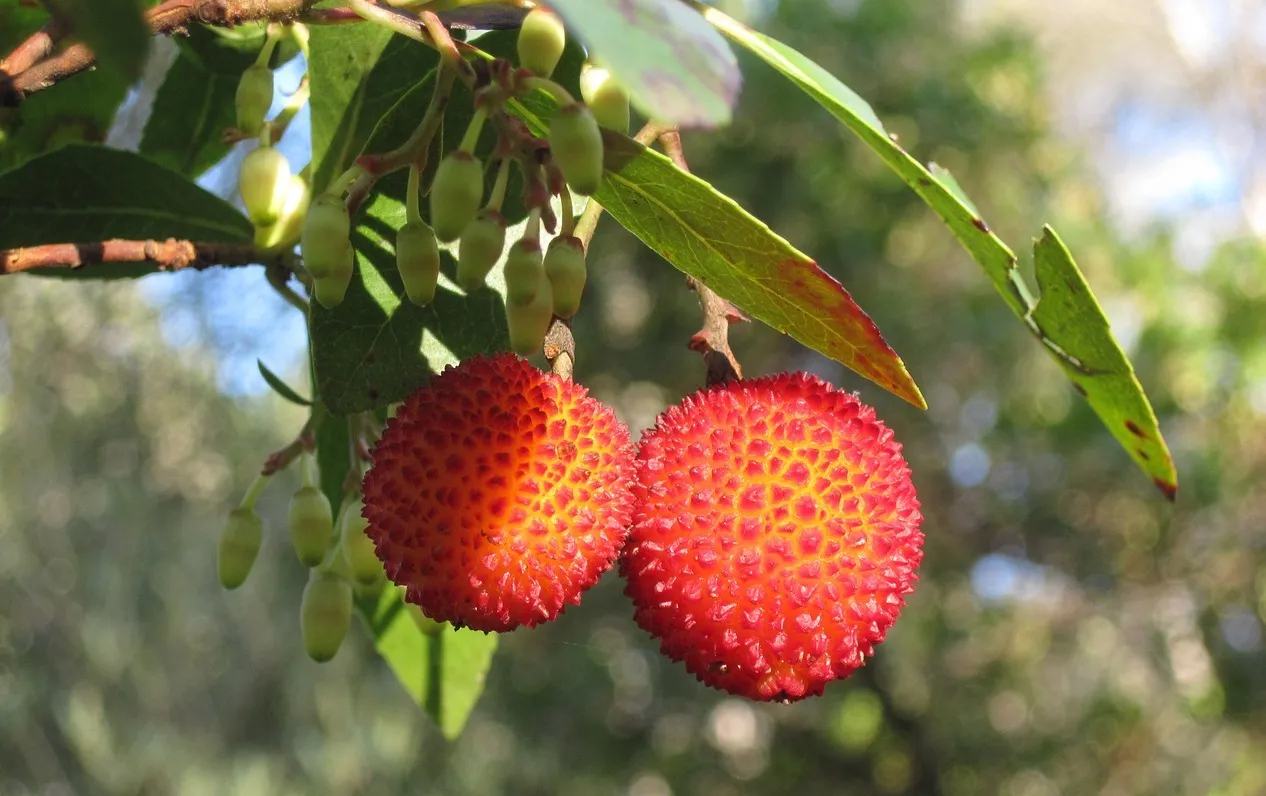
The strawberry tree is one of those plants that always stops people in their tracks when they encounter it for the first time, because it does something almost no other tree does: it flowers and carries fruit simultaneously, with white bell-shaped flowers appearing in autumn at the same time as the strawberry-like red fruits from the previous year’s flowers.
The dark green glossy foliage is attractive year-round, and the cinnamon-red bark adds an extra dimension. It grows slowly, stays compact, and handles coastal exposure and alkaline soils remarkably well. For a south or west-facing boundary, it is an outstanding choice.
🛒 Buy Arbutus unedo from Amazon UK
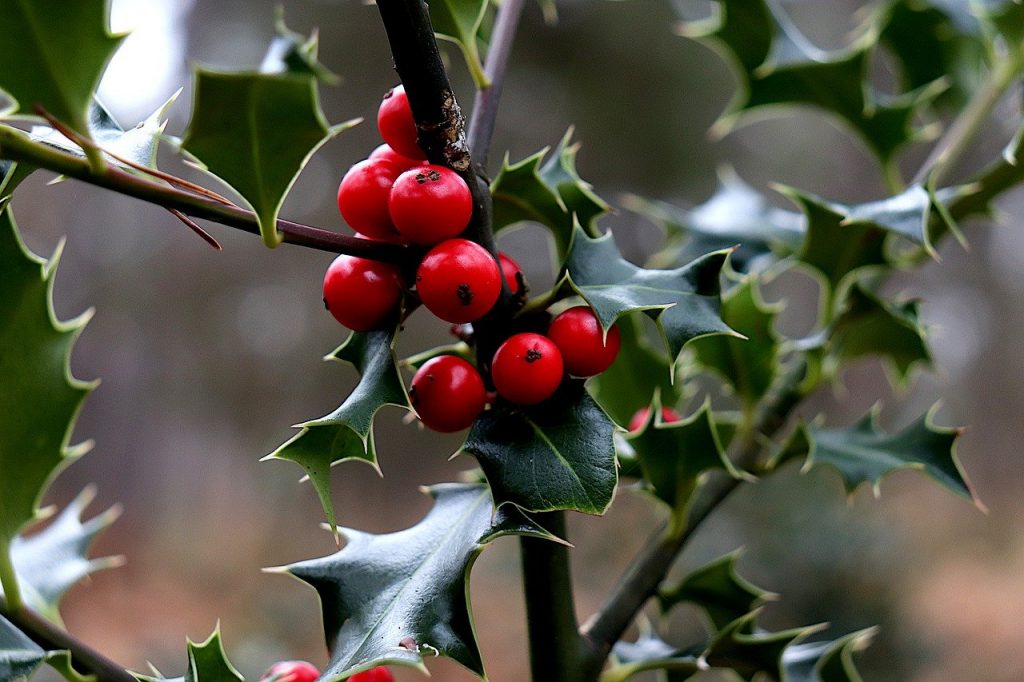
Holly grown as a standard tree or managed multi-stem is one of the finest year-round boundary plants in the British garden. It grows slowly, tolerates shade (making it excellent for north-facing boundaries), produces abundant red berries that feed thrushes and blackbirds through winter, and its spiny foliage provides a physical barrier that no fence panel can match.
As a boundary tree, holly is one of the most wildlife-rich choices you can make, supporting over 30 species of insect and providing nesting habitat for robins and wrens. Female plants produce the berries, so plant one male holly for every three to five females if you want reliable fruiting. ‘J.C. van Tol’ is self-fertile and spine-free, making it the most practical choice for accessible positions.
🛒 Buy Holly standard trees from Amazon UK
One of the best things you can do with a sunny fence or boundary is to grow food against it, and trained fruit trees on a fence or wall are one of the most productive uses of vertical space in the garden. Espalier and fan-trained apple, pear, and cherry trees take up minimal horizontal space, fruit exceptionally well because the warmth reflected from a fence or wall encourages ripening, and they are genuinely beautiful garden features in their own right. I’ve trained several espaliered fruit trees onto boundary fences in client gardens and the productivity from them is remarkable relative to the space they take.
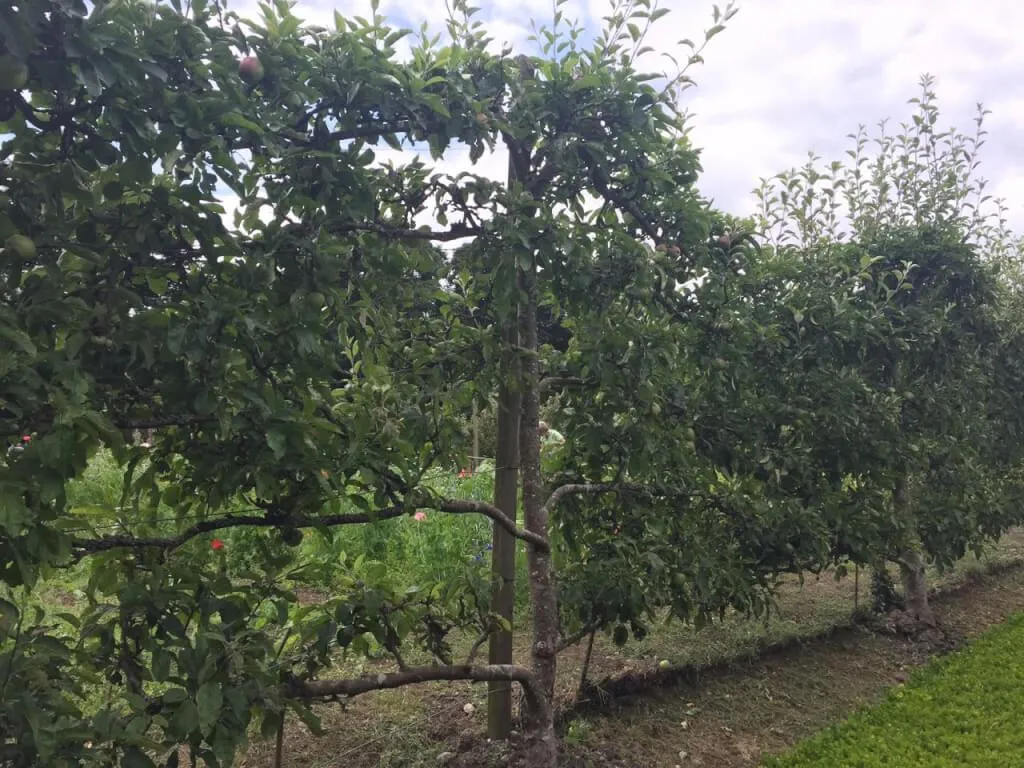
For espalier or fan training against a fence, the most important thing is to buy trees on dwarfing or semi-dwarfing rootstock, which controls the ultimate size of the tree and prevents it becoming unmanageable. For apples, M9 or M26 rootstock is appropriate for fence training. For pears, Quince A or Quince C. For cherries, the Gisela 5 rootstock produces trees that stay compact enough for fan training against a boundary fence. All of these can be planted very close to the fence, within 30 to 40 centimetres, because the root system of a dwarfing rootstock is restricted by design.
💡 Top Tip
A south or west-facing fence is ideal for fan-trained peaches, nectarines, and figs that would struggle in the open garden. The warmth and shelter of the fence creates a microclimate several degrees warmer than the open garden, and these warmth-loving fruits can be genuinely productive on a sunny boundary even in the north of England. This is one of the most creative and productive uses of a south-facing fence available to UK gardeners.
For a free-standing apple tree near a fence rather than trained against it, a cordon apple on M9 rootstock is excellent. Planted at 45 degrees against supporting wires, a row of cordon apples takes up only 30 to 45 centimetres of horizontal space, produces good fruit yields, and creates an attractive, productive boundary feature. You can grow several different varieties in the space a single free-standing tree would occupy.
🛒 Buy espalier apple trees from Amazon UK
Pleached trees are one of the most effective solutions for overlooked gardens where the problem is not privacy at ground level. A fence panel solves that. The issue is privacy at first floor window height. A row of pleached trees creates a raised, flat panel of foliage on clear stems above fence height, screening a neighbour’s upper windows or a raised terrace without blocking ground-level light. I’ve installed pleached trees in several award-winning garden designs and they remain one of the most sophisticated and effective privacy solutions available.
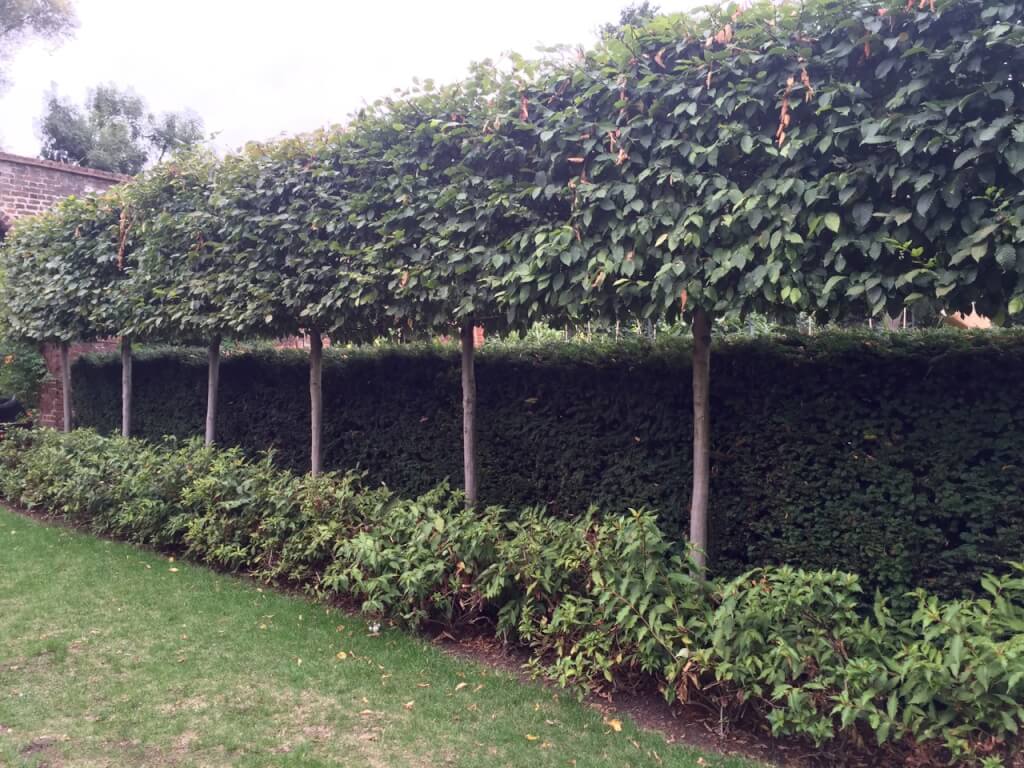
The most commonly pleached species for UK gardens are Carpinus betulus (hornbeam), Tilia cordata (small-leaved lime), and Pyrus salicifolia ‘Pendula’ (weeping silver pear). Hornbeam is by far the most practical for most UK gardens because it holds its dead leaves through winter like a beech hedge, giving year-round privacy even when deciduous, and it is one of the most tolerant of different soil types. Pleached hornbeam is available ready-trained from specialist nurseries and can be planted 1.5 to 2 metres from a boundary fence on clear stems, giving a formal, architectural appearance that suits both modern and traditional gardens.
🛒 Buy pleached hornbeam trees from Amazon UK
This section is just as important as the recommended list, because the wrong tree near a boundary can cause significant damage and significant expense. I’ve seen many of these species planted with good intentions near fences, and I’ve also seen the consequences when they mature. Avoid all of the following in boundary positions.
⚠️ Trees to Avoid Near Fences
The following species have invasive root systems, excessive mature size, or other characteristics that make them unsuitable for planting near a garden fence or boundary. Plant these at a significant distance from any structure, or avoid them entirely in small to medium gardens.
Leyland cypress deserves special attention because it is the single most common cause of neighbour disputes about trees in the UK. Despite its popularity as a privacy screen, it grows at 90 centimetres or more per year and can reach 20 to 30 metres at maturity if not controlled. The High Hedges legislation introduced in 2005 gives neighbours the right to request that local authorities intervene when hedges block light, but the process is stressful and adversarial. There is no good reason to plant Leylandii near a garden fence when so many better alternatives exist.
A few practical points that I’ve learned from planting hundreds of boundary trees in client gardens over the years.
Plant inside your boundary, not on it. The centre of the trunk should be inside your land. A tree planted on the boundary line is jointly owned by both neighbours, which creates complications. Plant clearly inside your boundary so you retain full ownership and management control.
Stake trees properly for the first two years. Near a boundary fence, where wind can channel and create turbulence, young trees need solid staking to prevent wind rock while the root system establishes. Use a low stake at one third of the tree’s height rather than a full-height stake, which allows the stem to flex and develop strength. Check the tie regularly so it doesn’t bite into the bark as the tree grows.
Mulch generously on planting and every spring thereafter. A 7 to 10 centimetre mulch of composted bark or wood chip around the base of a newly planted boundary tree conserves moisture, suppresses weeds, and encourages rapid establishment. Keep it away from the trunk and maintain it each spring. A tree that establishes quickly will also require less watering in its second and third seasons.
Water consistently in the first two summers. This is where most boundary trees fail. People plant them, stake them, mulch them, and then assume the rain will do the rest. In a dry spring or summer, that is not enough. A newly planted tree near a fence needs at least 10 litres of water per week in dry weather during its first two growing seasons. A slow-release watering system or a drilled pipe pushed vertically into the root zone will deliver water to where it is needed most.
Crown-lift lower branches as the tree matures. Removing the lower branches on a boundary tree as it grows creates a clear stem that allows light and air movement beneath the canopy, which is beneficial for both the tree and any planting underneath it. It also prevents the canopy from pressing against the fence as it fills out. Do this gradually over several years rather than all at once.
🛒 Buy tree stakes and ties from Amazon UK
🌿 Summary: The Best Trees Near Fences and Boundaries
The best boundary trees combine compact root systems, manageable mature size, and genuine multi-season value. Amelanchier, Prunus serrula, Betula pendula ‘Fastigiata’, Sorbus, Malus ‘Evereste’, and Acer griseum are all outstanding choices that will not cause structural damage or boundary disputes when planted at the appropriate distance from the fence line.
The key principles are simple: measure the mature spread before you buy, plant inside your own boundary, talk to your neighbour before you plant anything significant, avoid willows, poplars, and Leylandii in all circumstances, and invest time in proper establishment through staking, mulching, and regular watering in the first two seasons. Do all of that and a boundary tree will reward you with decades of beauty, wildlife value, and screening.
There is no single legal minimum, but the practical rule is to plant no closer than half the tree’s mature canopy spread from the boundary line. For a small tree with a 4 metre spread, plant at least 2 metres back from the fence. For very small ornamental trees on dwarfing rootstock, 1 to 1.5 metres is workable. Always check the mature dimensions on the plant label before buying, and measure the planting distance before you dig.
Generally no. Your neighbour cannot compel you to remove a tree on your own land unless it is causing proven, significant damage to their property or there is a court order. They do have the legal right to cut back any branches or roots that cross the boundary line, back to the boundary point. However, if your tree causes foreseeable damage to their property through roots or falling branches, you can be held liable for the cost of repairs. Keeping your tree well-maintained and choosing appropriate species in the first place is the best way to avoid any disputes.
Amelanchier lamarckii is arguably the best all-round small tree for a fence boundary in a UK garden. It has a compact, non-invasive root system, stays within a manageable 5 to 6 metre spread, and provides exceptional four-season interest including spring blossom, summer berries for birds, and autumn colour. Prunus serrula is the best option if winter interest and ornamental bark are your priority.
For year-round privacy, standard Photinia ‘Red Robin’, Holly (Ilex aquifolium), or pleached hornbeam are excellent choices. For overhead privacy above fence height, pleached trees are the most effective solution. If you only need summer privacy, deciduous trees like Amelanchier, Sorbus, or Malus provide good seasonal coverage while remaining lighter and airier in winter.
You are not legally required to, but I strongly recommend it. A brief friendly conversation before you plant prevents misunderstandings and builds goodwill. Explain what species you’re choosing and why, mention that you’ve chosen it specifically because it’s well-behaved near boundaries, and ask if they have any concerns. Most people are perfectly reasonable when approached in good faith, and that conversation costs five minutes versus the potential cost of a dispute.
Leyland cypress (Leylandii), willows, poplars, Norway maple, ash, horse chestnut, and Robinia pseudoacacia should all be avoided near fences and boundaries. Leyland cypress is the single most problematic species and causes more neighbour disputes than any other tree in the UK. Willows and poplars have invasive root systems that can damage drains and foundations. None of these belong near a garden fence in any but the largest of gardens.
Yes, and a trained fruit tree against a south or west-facing fence is one of the most productive uses of vertical garden space available to UK gardeners. Espalier and fan-trained apples, pears, and cherries on dwarfing rootstock can be planted as close as 30 to 40 centimetres from the fence and will crop well in the warmth and shelter the fence provides. Always use dwarfing rootstock (M9 for apples, Quince C for pears, Gisela 5 for cherries) to keep the tree at a manageable size.
If you’ve caught the gardening bug and want to learn more about plants, design principles, and creating beautiful spaces (both indoor and outdoor), check out my online garden design courses. Whether you want to level up your plant knowledge, learn about design principles, or even start a career in garden design, I’ve got courses ranging from £29 to £199 that cover everything you need.
These courses aren’t just for people with gardens either! The principles of understanding plant needs, creating harmonious colour schemes, and designing beautiful functional spaces apply just as much to indoor plant arrangements as they do to full garden designs. You’ll learn how to read plants, troubleshoot problems, and create spaces that genuinely work for your lifestyle.
For the garden you’ve already got, not the one you’re starting from scratch. Seven checklists and video lessons from BBC Garden Rescue’s Lee Burkhill, built to help you work out what’s worth keeping before you spend a penny.
Garden Design Examples for Small Gardens: 30 Design Templates & Planting Plans: In this online gardening course, I’ll walk you through 30 fantastic garden designs, explaining the logic behind the layout, the plant choices, and take-home tips for applying them in your own garden.
Learn how to transform and design your own garden with Lee Burkhills crash course in garden design. Over 5 hours Lee will teach you how to design your own dream garden. Featuring practical design examples, planting ideas and video guides. Learn how to design your garden in one weekend!
Garden Design for Beginners Online Course: If you want to make the career jump to becoming a garden designer or to learn how to design your own garden, this is the beginner course for you. Join me, Lee Burkhill, an award-winning garden designer, as I train you in the art of beautiful garden design.
I hope this guide gives you the confidence to choose the right tree for your boundary and get it planted properly. The right tree near a fence will give you decades of beauty, privacy, wildlife value, and seasonal interest. It is one of the most satisfying things you can add to a garden.
Happy Gardening Ninjas!



Lee Burkhill, known as the Garden Ninja, is an award-winning garden designer and horticulturist with over 30 years of gardening experience and 15 years as a professional garden designer. A qualified RHS (Royal Horticultural Society) professional, Lee specialises in sustainable garden design and practical horticultural advice. He designs and presents on BBC1’s Garden Rescue and in leading gardening publications. Lee combines three decades of hands-on gardening knowledge with professional design qualifications to help gardeners create beautiful, functional outdoor spaces.
View all posts by Lee Burkhill





JOIN THE NINJAS

Be the first in line for new Guides, Discount codes and Offers