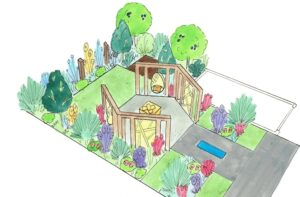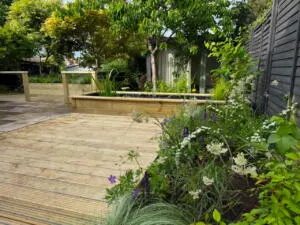
For the garden you’ve already got, not the one you’re starting from scratch. Seven checklists and video lessons from BBC Garden Rescue’s Lee Burkhill, built to help you work out what’s worth keeping before you spend a penny.
69


Quick Answer
Japanese anemones flower from late summer into November when almost everything else in the border has finished, thriving in full sun, part shade and even dry shade under trees. They are also some of the toughest perennials you can plant, spreading steadily by rhizome once established, so choose their spot with intent rather than hoping to move them later. Honorine Jobert remains the classic white variety, and there is a shade for every border in the top ten below.
Every September, without fail, my phone starts pinging with the same question. Client after client asks me what that tall, elegant flower is that has suddenly appeared at the back of their border, still going strong while everything else has given up for the year. The answer is almost always a Japanese anemone, one of the plants I most recommend for extending a garden’s season and one I’m asked to remove most often too. (Which is sad, but usually where someone’s planted them in the wrong place!)
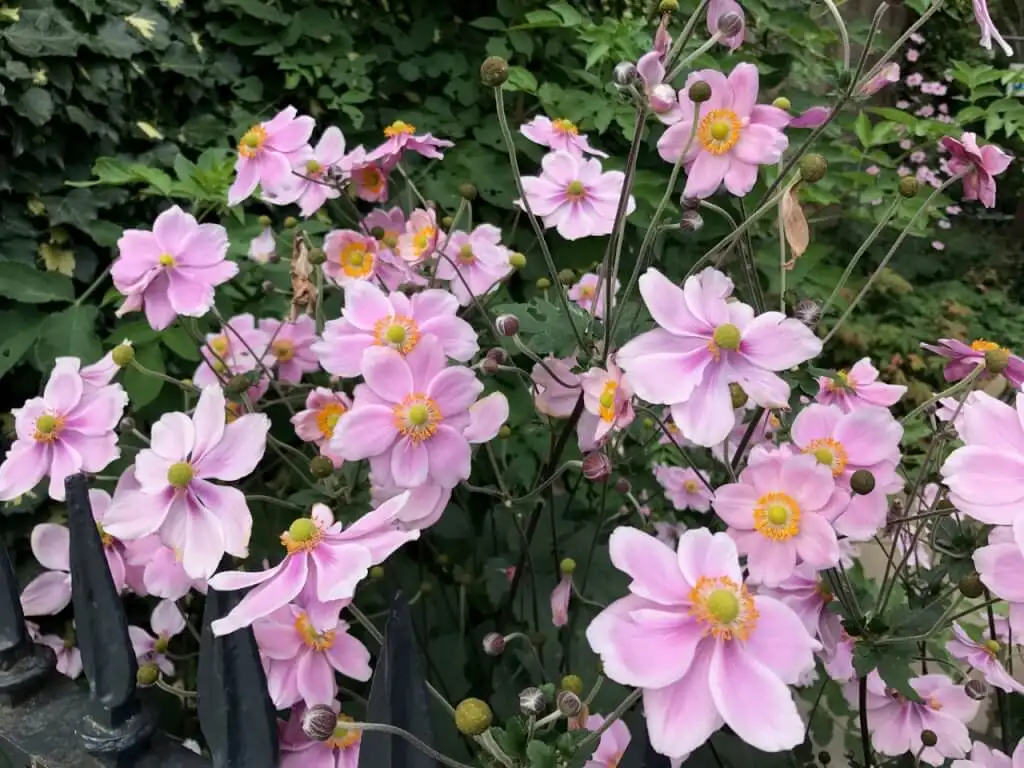
That contradiction sits right at the heart of this guide. Japanese anemones are one of the best value autumn perennials available in the UK, tolerating everything from full sun to the driest shade under a mature tree, but they earn that toughness through a rhizome system that spreads with real conviction once it has settled in.
Plant them with your eyes open, and you get years of reliable, near-effortless autumn colour. Plant them without a plan, and you may be the one ringing a garden designer in a few years asking how to get half a border of them back out again.
Jump To
This page contains affiliate links for products I use and love. If you take action (i.e. subscribe, make a purchase) after clicking a link, I may earn some gardening commission, which helps me keep the Garden Ninja Blog free for all.
Japanese anemone is the common name given to a group of herbaceous perennials in the buttercup family, Ranunculaceae, most commonly listed under Anemone x hybrida or Anemone hupehensis, though botanists have recently reclassified many of them into the genus Eriocapitella. Despite the name, they originate in central China rather than Japan, arriving in Europe in the nineteenth century via Japanese gardens, where the common name stuck.
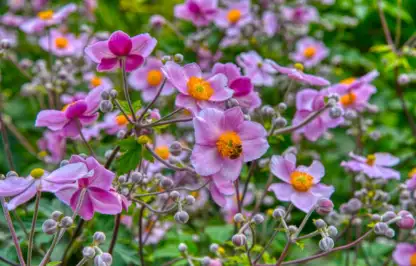
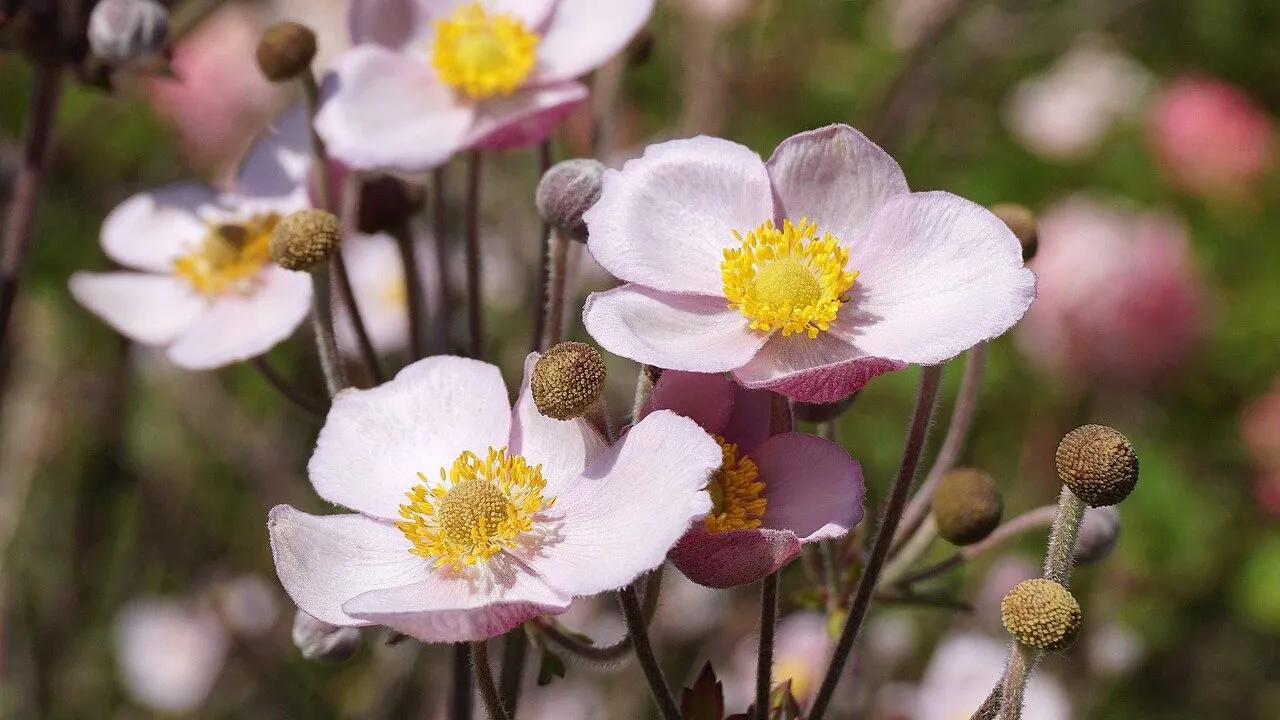
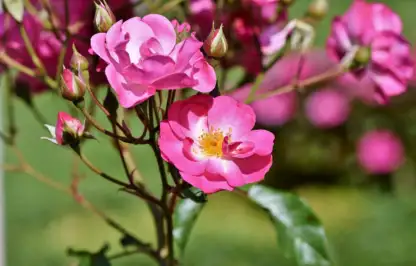
The plant itself is instantly recognisable once you know it. Wiry, branching stems rise from sixty centimetres to a metre and a half above a low mound of dark green, vine-like foliage, bearing open, saucer-shaped flowers in white, pink or deep magenta, with a prominent boss of golden stamens at the centre. Single, semi-double and fully double forms all exist, and the flowers keep coming in a slow, unhurried succession from August through to the first hard frosts, which is a long season for a hardy perennial.
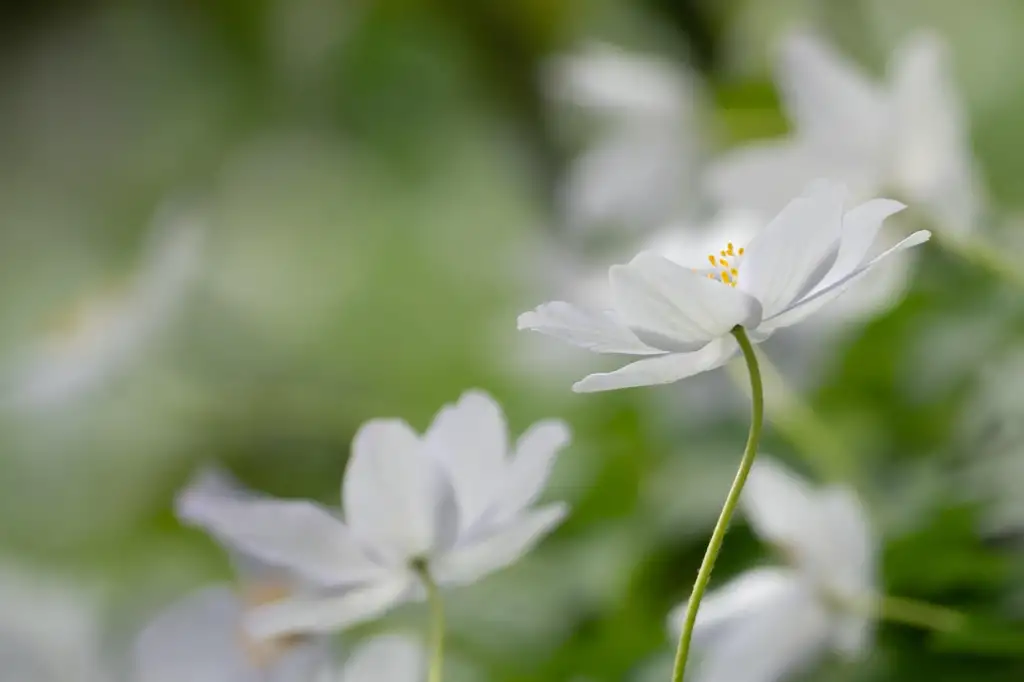
Most varieties are rated H7 on the RHS hardiness scale, meaning they will shrug off temperatures down to minus twenty degrees Celsius without complaint, which goes a long way toward explaining why they establish so readily across the UK regardless of region.
I say this with genuine fondness for the plant, but if there were ever a perennial built to outlast a nuclear winter, my money would be on the Japanese anemone. Once the rhizome network below ground gets going, it spreads sideways through the soil with a determination that puts most so-called thugs of the border to shame, sending up new shoots a surprising distance from the original clump, often popping through gravel, working under paving edges, or reappearing through the crown of a neighbouring shrub that has nothing to do with where you originally planted it.
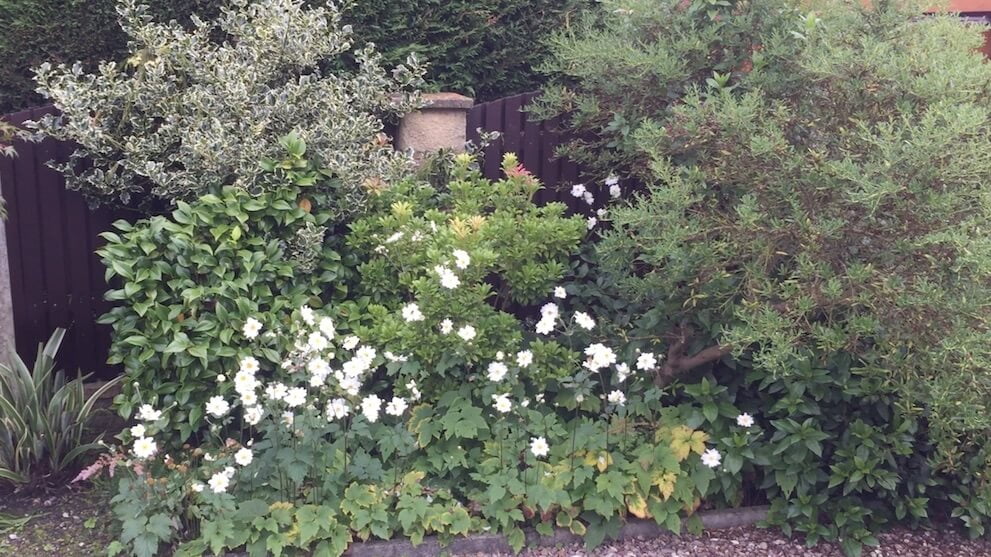
I had a client a few years back whose previous garden designer had planted a small clump of Japanese anemones along a shaded boundary, presumably to address the very dry-shade problem they are famous for solving. By the time I was called in, roughly a decade on, that small clump had marched its way across two-thirds of the back border, smothering everything in its path and sending questing shoots up through the middle of an established viburnum.
We ended up filling nearly a full builder’s skip with rhizome and root mass lifted from that one border alone, and even then I would not put money on every last fragment having come out, since any piece of root left behind is perfectly capable of regenerating a whole new plant.
None of this is a reason to avoid Japanese anemones. It is a reason to plant them with intent rather than as an afterthought. Give them a defined space, ideally bordered by a path, a hard edge, or a root barrier if you are planting near anything precious, and treat that space with full clearance as the worst-case scenario for what happens when nobody manages them for ten years, rather than the normal outcome of ordinary garden care.
Part of what makes Japanese anemones so hard to displace once they are in is the same trait that makes them so useful to a garden designer in the first place. They are equally happy in full sun, in dappled part shade, and in the dry shade under a mature tree or against a north-facing wall, which is a spread of conditions very few other reliable flowering perennials can cover.
Full sun suits them well as long as the soil does not dry out completely over summer, and in a sunnier spot you tend to get a slightly more compact plant with a heavier flush of flowers. Part shade is where most gardeners end up growing them, and it is arguably their happiest medium, since it mimics the woodland edge conditions they come from in the wild. Dry shade is where they earn their keep as a genuine problem solver. That difficult strip under a beech or against a fence in permanent shadow, where hostas sulk and most bedding simply dies, is exactly where a Japanese anemone will settle in and eventually thrive, tolerating a level of root competition and moisture starvation that would finish off most other flowering perennials.
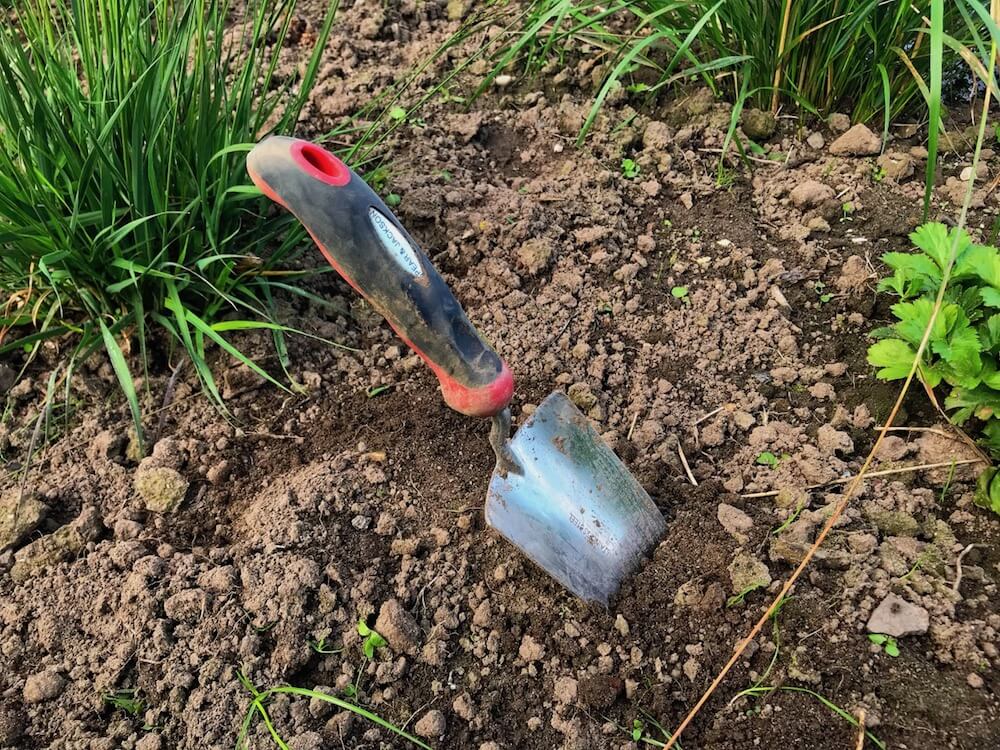
Soil that stays reasonably fertile and never sits waterlogged over winter suits them best, though established plants will cope with drier, leaner conditions once their root system has had a season or two to get going. This adaptability is precisely why I still specify them for tricky shaded corners on client projects despite knowing full well what can happen if nobody keeps an eye on them for the next decade.
By late August, most herbaceous borders are on the way out. Early-summer perennials have finished, roses are between flushes, and many gardens start to look tired just as the weather turns properly pleasant for sitting outside in the evening. Japanese anemones are one of the few plants that treat this as their moment to begin rather than end, opening their first flowers in late summer and carrying on in a steady, unhurried succession right through October and often into November, until the first proper hard frost finally calls time on the season.
For pure late-season value, nothing else in the perennial border comes close. Asters and sedums both do a good job of extending the season, but neither has the height, the airy movement on a breeze, or the sheer duration of flower that a well-established clump of Japanese anemones offers. Plant them towards the middle or back of a border where their tall, wiry stems can rise above lower autumn planting, and they will carry your garden’s interest through the exact weeks when everything else is quietly giving up for winter.
These are the ten varieties I come back to time and again on client projects and in my own garden, ranging from the classic white that most people picture when they hear the name to newer breeding that has extended the flowering season even further. Each spreads by rhizome in the same way, so the guidance on containment further down this guide applies to all ten equally.
Honorine Jobert is the Japanese anemone most people picture without realising it has a name, and it has been in cultivation since 1858, which tells you something about how reliable a plant has to be to stay in every good nursery’s catalogue for over a century and a half. Pure white, single flowers with a bright golden centre sit on tall, wiry stems above dark green foliage, and it holds the RHS Award of Garden Merit for earning its place in a border rather than being fashionable.
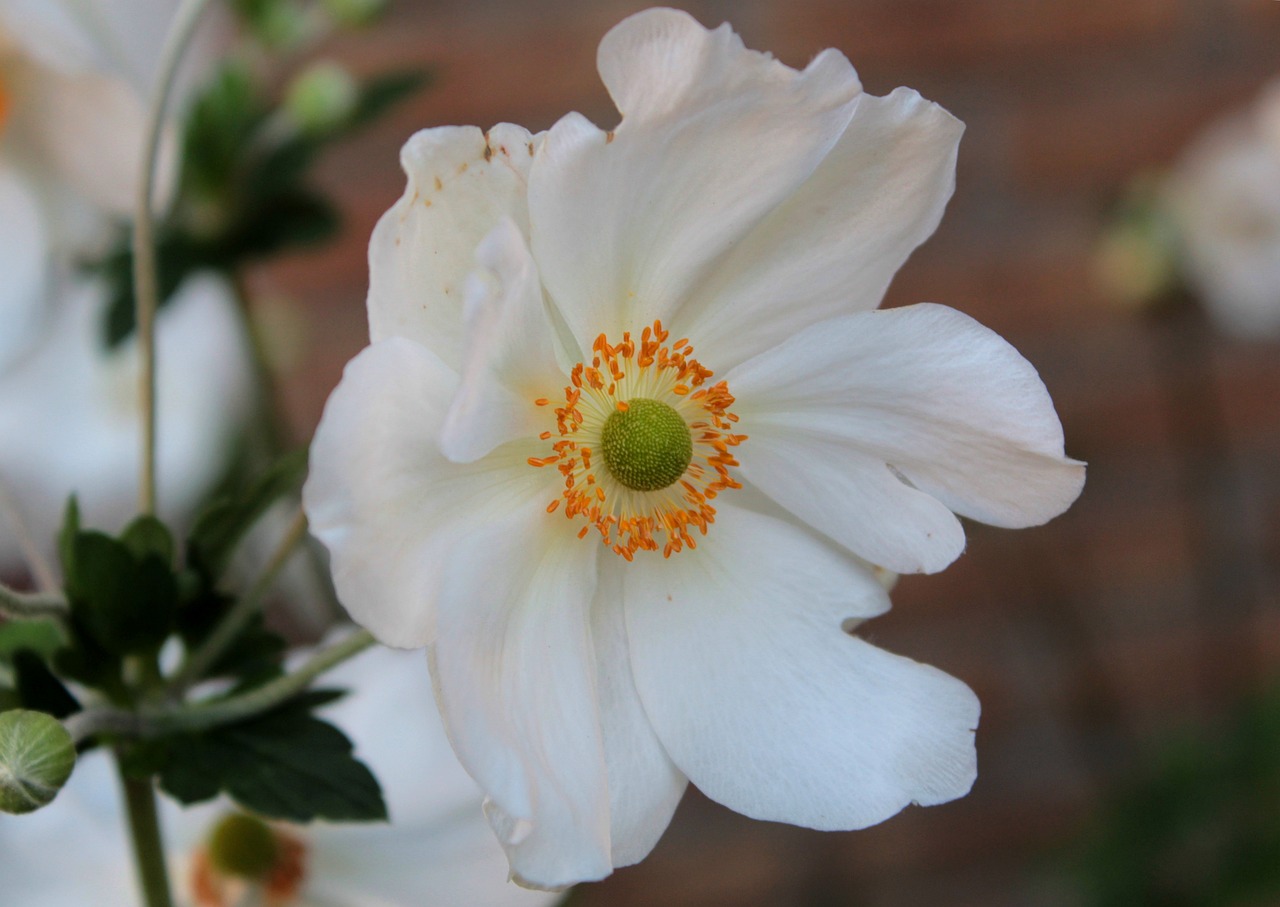
I use it constantly for lighting up a shaded corner, since the white flowers seem to glow in low evening light in a way pink varieties simply cannot match. It is also, worth saying plainly, one of the more vigorous spreaders on this list, so give it room from the outset.
🛒 Buy Anemone Honorine Jobert on Amazon UK
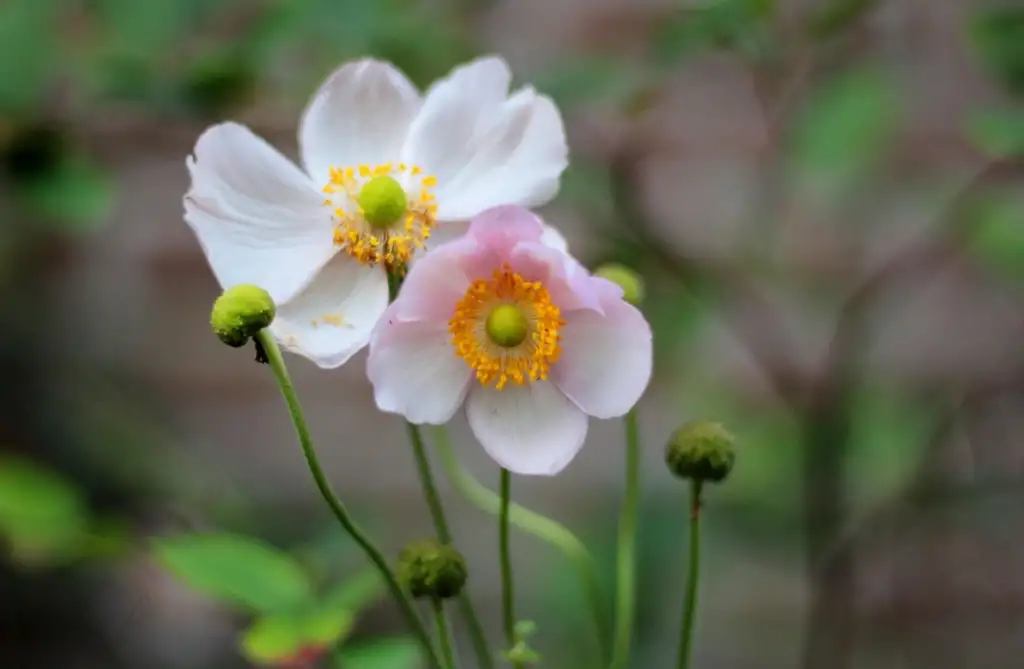
September Charm is, if anything, an even older cultivar than Honorine Jobert, first recorded in 1837, and it carries silvery pink single flowers with a noticeably darker reverse to each petal that catches the light beautifully when the wind gets into the border. It is slightly earlier into flower than most on this list, often starting in late July in a mild year.
I like pairing it with darker foliage plants nearby, since the contrast makes the pale flowers read even more clearly from a distance. It spreads at a similar rate to Honorine Jobert, so the two make a striking, if equally ambitious, pairing for a large border.
🛒 Buy Anemone September Charm on Amazon UK
Wild Swan is the newest variety on this list and the one I recommend most often for a smaller garden, since it is noticeably more compact than the older cultivars and has an extraordinarily long flowering season, often starting as early as June and continuing into October. The white flowers have a distinctive blue-violet flush on the reverse of each petal, which shows faintly through on the front as well, giving the whole plant a slightly cooler, more silvery presence than a pure white variety. Great with Echinacea white wan as a monochromatic planting scheme.
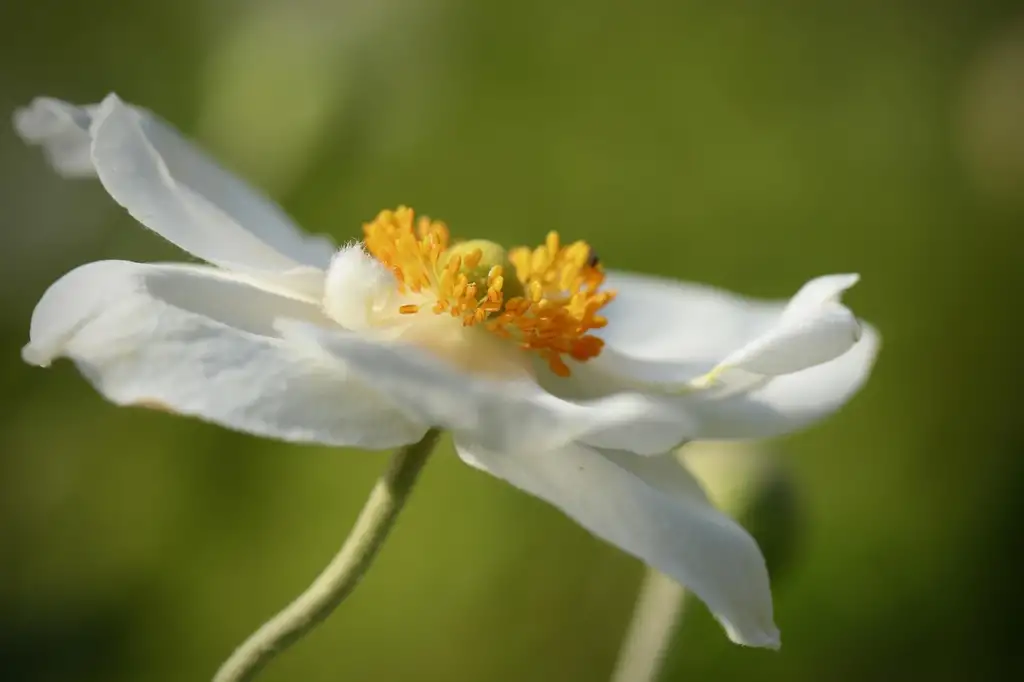
Bred in Scotland and now widely available, it is a useful introduction for anyone nervous about the spread of older varieties, since it is markedly less thuggish, though still a Japanese anemone at heart and not to be treated as fully contained.
🛒 Buy Anemone Wild Swan on Amazon UK
Königin Charlotte brings a softer, semi-double flower in a clear, soft pink, held on dark, almost black stems that create a striking contrast with both the flower colour and the foliage. It holds the RHS Award of Garden Merit and is one of the taller varieties commonly available, so it earns its place towards the back of a mixed border rather than at the front.
The semi-double form gives it slightly more presence from a distance than a single-flowered variety, without tipping into the fully ruffled, almost peony-like look of some double cultivars. I adore the dark stems, and they work well when planted with Thalictrum’ Black Stockings’, Astilbes, or other shade-loving plants like ferns.
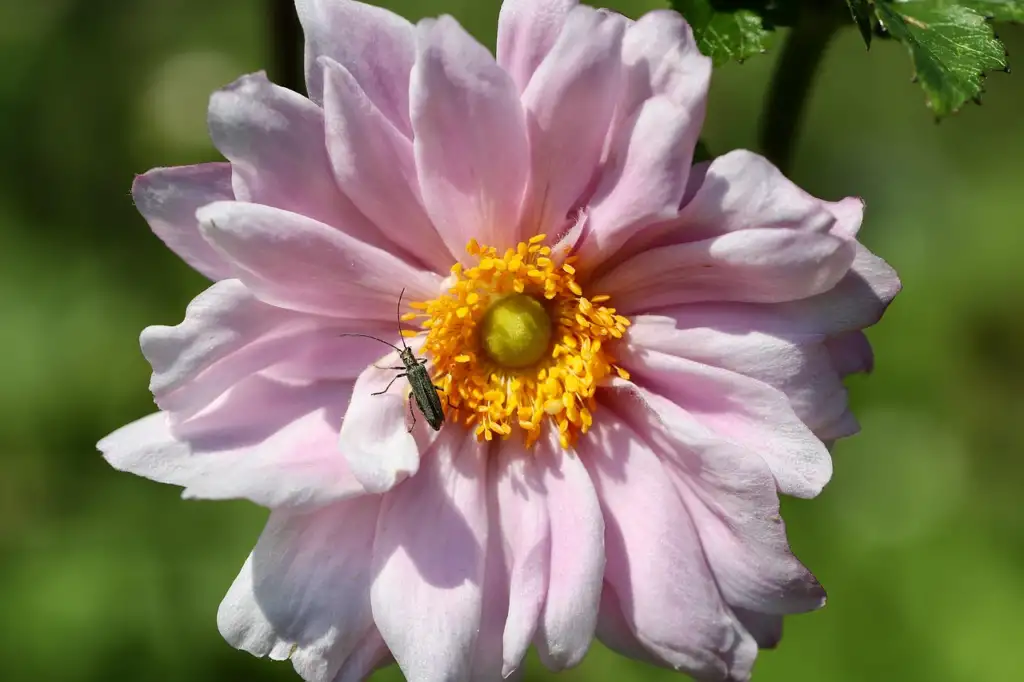
🛒 Buy Anemone Königin Charlotte on Amazon UK
Pamina is the variety I reach for when a client wants real depth of colour rather than the softer pastels most Japanese anemones offer. The double, ruffled flowers come in a deep rose pink that reads almost magenta in low autumn light, and the whole plant stays more compact than most of its relatives, which makes it a rare Japanese anemone worth considering for a large container.
That compact habit does not mean compact spread below ground, so do not mistake its tidier appearance above soil for an easier plant to contain long term. This little beauty can be a thug, which may work out well if you’ve got awkward, dry soil under conifers or need something to outcompete weeds like ground elder.
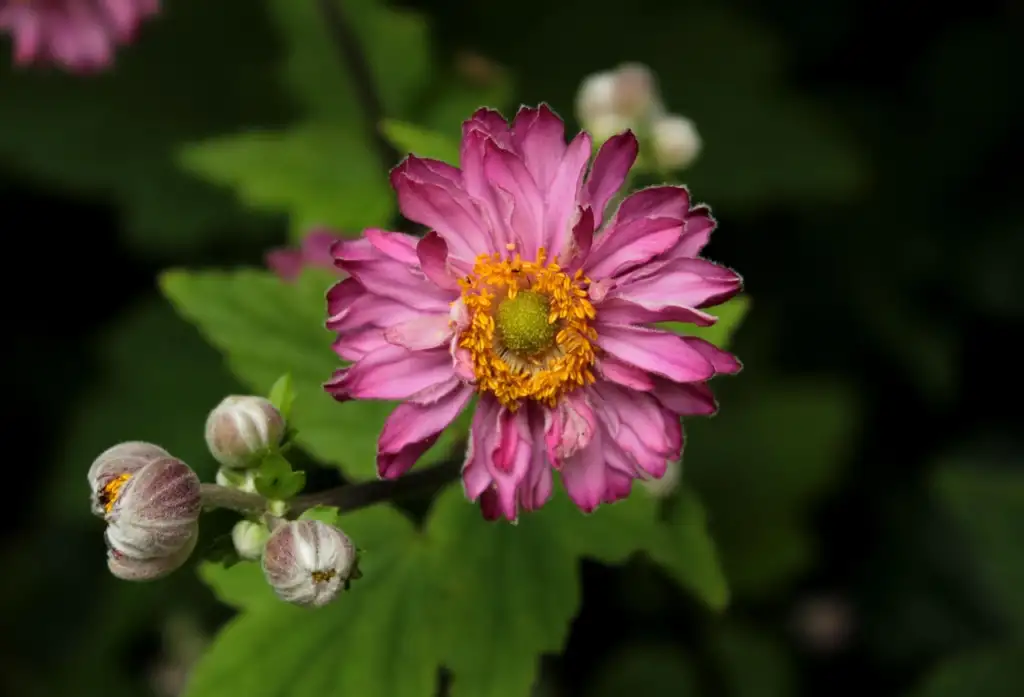
🛒 Buy Anemone Pamina on Amazon UK
Prinz Heinrich is one of the earliest Japanese anemones to flower, often opening its first deep pink, semi-double blooms in August while other varieties are still building buds. That early start gives it a useful role in bridging the gap between late-summer perennials and the main autumn display from the rest of this list.
The colour sits somewhere between Pamina’s deep magenta and September Charm’s softer pink, making it a useful middle ground if neither of those feels quite right for your planting scheme. It’s great in monochromatic colour wheel schemes and works with both whites and purples in the garden.
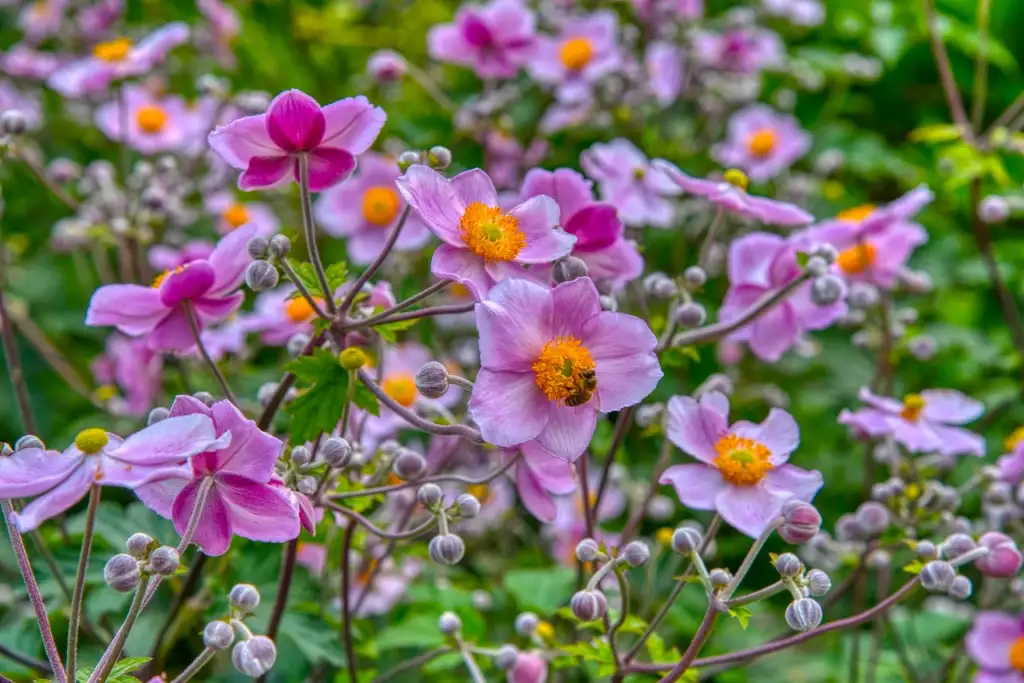
🛒 Buy Anemone Prinz Heinrich on Amazon UK
Whirlwind carries semi-double white flowers with an attractive twist to the petals that catches movement in a way flatter, single-flowered varieties do not, hence the name. It holds the RHS Award of Garden Merit and is a vigorous grower, reaching a good height quickly and flowering in real abundance once established.
If Honorine Jobert feels slightly too plain for your taste but you still want white, Whirlwind is the natural next place to look; it’s a real showstopper, and I’ve used it in a lot of my succession planting flower schemes for clients. They love the unusual pointed petals and striking yellow stamens.
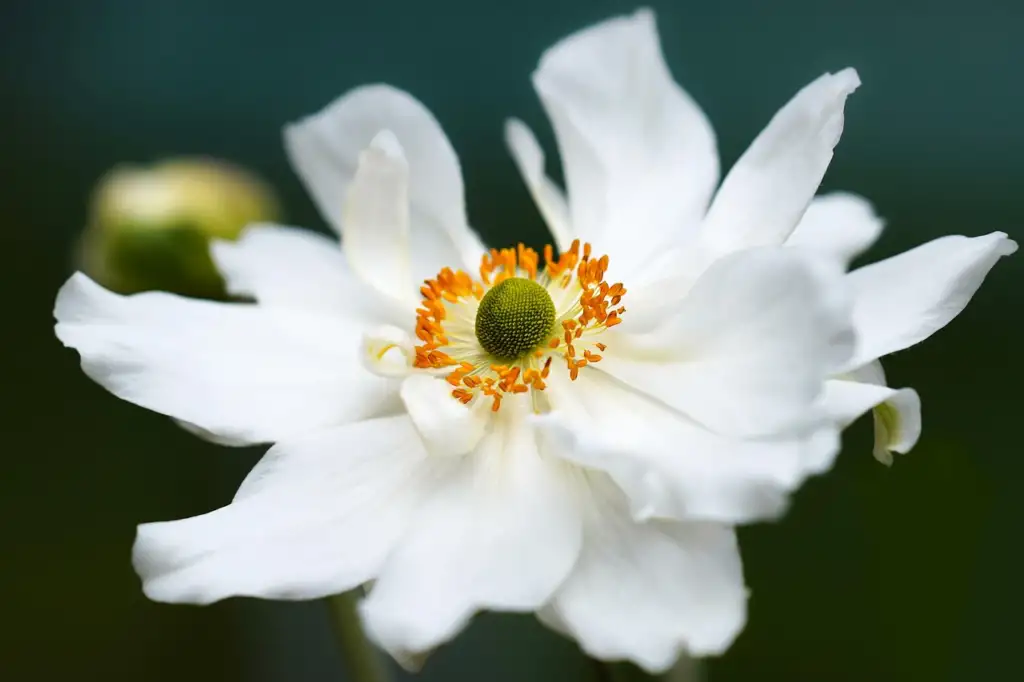
🛒 Buy Anemone Whirlwind on Amazon UK
Elegans is closer to the original wild species than most garden hybrids, carrying single, soft pink flowers on a noticeably smaller plant than the others on this list. It is the earliest to flower of the ten, sometimes starting in July, and its more modest size makes it a sensible starting point for anyone nervous about the spread of the taller hybrid varieties.
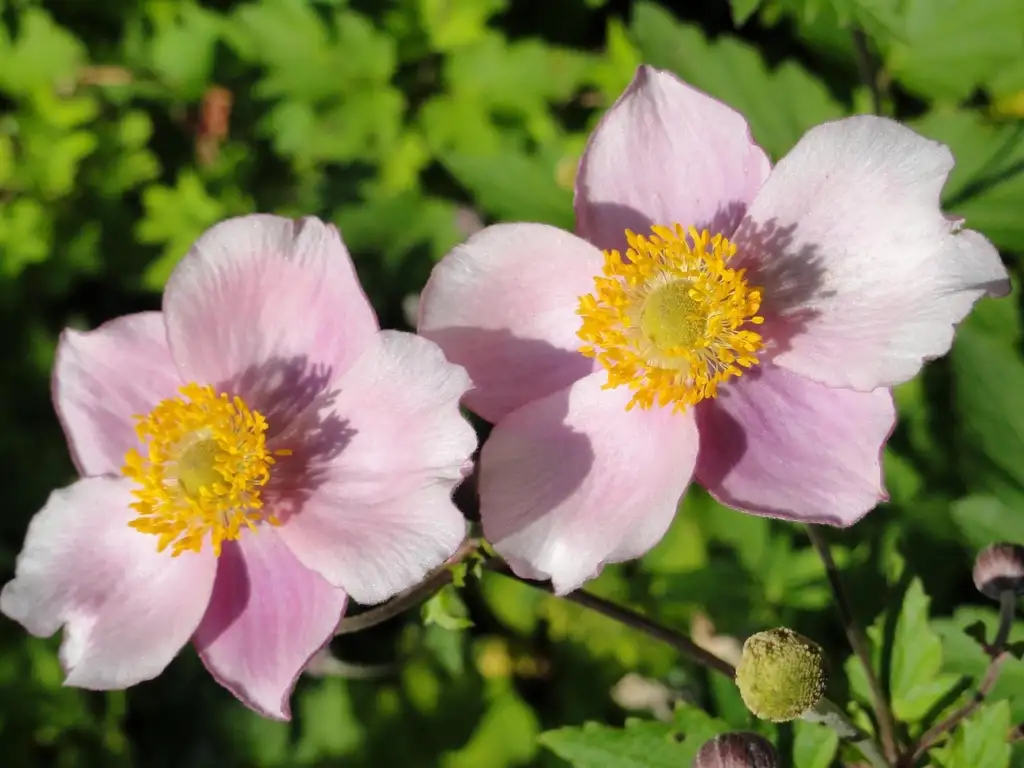
I would still not call it well-behaved, since it is a Japanese anemone through and through, but it is a reasonable middle ground between the group’s toughness and a more manageable footprint.
🛒 Buy Anemone Elegans on Amazon UK
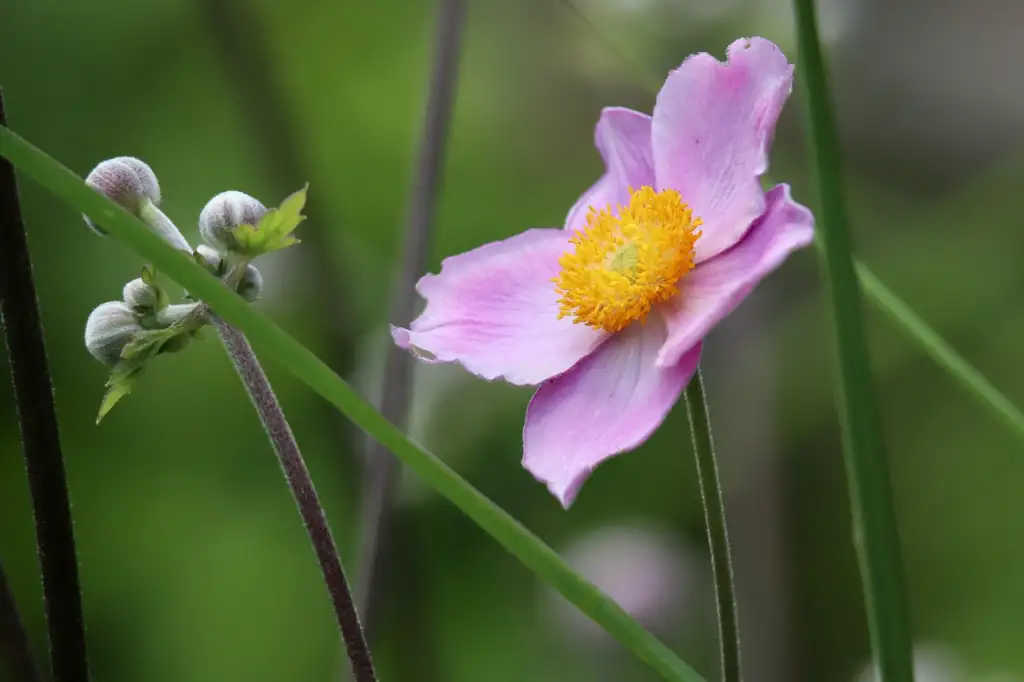
Serenade is a more recent introduction, bearing clear, single rose-pink flowers on a reasonably compact plant, sitting between Elegans and the taller hybrids in overall size. It is a straightforward, dependable choice where you want a clean, uncomplicated pink without the ruffled doubling of Pamina or the near-white blush of Wild Swan.
It combines well when planted alongside ornamental grasses, since its simple flower form does not compete visually with the movement that grasses bring to an autumn border.
🛒 Buy Anemone Serenade on Amazon UK
Andrea Atkinson is the one to plant if you want serious height, reaching up to a metre and a half in good conditions with large, creamy white single flowers held well above the foliage on strong, self-supporting stems. It is a robust, no-nonsense variety that stands up well to wind and rain without flopping, which not every tall perennial manages.
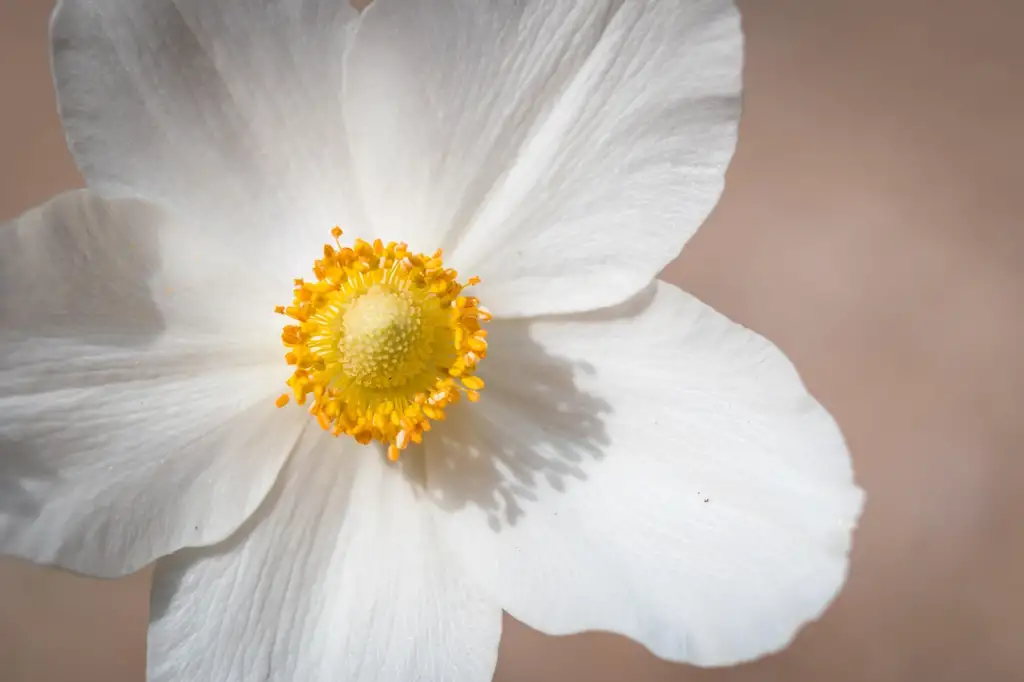
Reserve it for the very back of a border or as a specimen planting where its height can be appreciated rather than lost among shorter neighbours.
🛒 Buy Anemone Andrea Atkinson on Amazon UK
Japanese anemones are typically sold either as potted plants ready to go straight into the border, or as bare root rhizomes over the dormant season, and both establish well if planted correctly. For potted plants, dig a hole roughly twice the width of the pot, work in some well rotted organic matter if your soil is thin or sandy, and plant at the same depth the plant was sitting in its pot, firming in well and watering thoroughly.
Bare root rhizomes are planted a little differently. Lay the root horizontally in a shallow trench roughly five centimetres deep, cover with soil, and water in well. Spring is the best time to plant Japanese anemones, giving the root system a full growing season to establish before its first winter, though autumn planting from a container works too as long as you keep new plants watered through any dry spells before the ground cools.
Space plants at least 45 to 60 centimetres apart depending on the variety’s eventual spread, and resist the urge to plant them closer together for instant impact. Given how readily they fill space on their own once established, a tight initial planting scheme will look overcrowded within two or three seasons.
Ongoing care is minimal, which is part of why these plants have remained popular for nearly two centuries in British gardening. Water new plants regularly through their first summer while roots establish, after which established clumps rarely need supplementary watering except in a prolonged drought.
Cut the flowered stems back to ground level once flowering has finished, usually sometime in November once frost has taken the last blooms, tidying up any tatty foliage at the same time. Leaving the old foliage in place over winter offers a small amount of frost protection to the crown in a very exposed site, but in most UK gardens this is not necessary given how hardy these plants are. A light mulch of well-rotted compost applied in spring keeps the soil in good condition and suppresses weeds around new shoots, though avoid piling mulch directly against emerging growth.
Deadheading individual flowers is not necessary, since the plant continues to produce new buds regardless. Taller varieties occasionally benefit from discreet staking in exposed, windy spots, though most stand up well on their own in reasonably sheltered conditions.
Given everything covered earlier about that skip full of rhizome, this is the section worth reading properly before you plant rather than after. Japanese anemones spread through underground rhizomes that travel sideways through the soil, sending up new shoots at a distance from the parent plant, and any piece of root left in the ground when you try to remove one is capable of regenerating an entirely new plant on its own.
The most effective containment strategy is entirely preventative. Plant into a defined space bordered by paving, a path, a wall, or a buried root barrier, since Japanese anemones spread far less readily once they hit a genuine physical obstruction below ground. A large, bottomless container sunk into the border works as an improvised root barrier if you want the plant’s above-ground appearance without giving its roots free run of the bed. Avoid planting them directly beside choice, slow-growing shrubs or perennials you are not prepared to lose ground to over time, since a Japanese anemone will happily grow straight through the crown of a less vigorous neighbour.

If you are managing an established clump that has outgrown its space, dig out unwanted growth in spring or autumn when the soil is workable, tracing rhizomes outward from the main clump and removing as much root as you can find rather than simply pulling off top growth. Expect this to be an ongoing job rather than a one-off fix in a mature planting, and budget your patience accordingly, since even thorough removal often leaves a few fragments behind that reappear the following season.
Given how readily they spread on their own, propagating Japanese anemones deliberately feels almost redundant, but dividing an established clump is still the most reliable way to get more plants for free, or to move a variety you like to a new spot. Divide in spring or autumn, lifting a section of the clump with a fork and pulling or cutting it into smaller pieces, each with a portion of healthy root attached.
Root cuttings taken in winter, while the plant is dormant, are another reliable method favoured by nurseries, using sections of root a few centimetres long laid horizontally in trays of gritty compost until new shoots appear in spring. For most home gardeners, division is by far the simpler route and gives usable new plants within a single season.
Japanese anemones are largely trouble-free, which is another point in their favour given how much else they offer. The most common issue is powdery mildew on leaves during a dry summer, appearing as a pale grey dusting on foliage, particularly where air circulation is poor. Improving airflow by thinning overcrowded clumps and watering at the base rather than over the foliage usually keeps this in check without needing to reach for a fungicide.
Slugs and snails will take an interest in soft new growth in spring, though established plants generally outgrow any damage quickly once the leaves toughen up. Black, wilted, or scorched leaf margins in high summer usually point to underwatering during a genuine heatwave rather than disease, and a thorough soak tends to resolve the issue within a week or two. A recent Ninja on the forum had exactly this issue with a Japanese anemone suddenly wilting and discolouring, worth a read if you spot the same symptoms. Aside from these, the plant’s biggest genuine problem, as covered at length above, is simply itself.
It is not classed as an invasive species in the UK, but it is a vigorous spreader once established, travelling through the soil by rhizome and capable of covering significant ground within a decade if left unmanaged. Treat it as a plant that needs a defined space rather than one that stays politely where you first put it. You can see a similar rhizome removal battle play out in our forum thread on invasive sunchokes, where the same dig-and-trace approach applies.
Cut the flowered stems down to ground level once flowering has finished, typically in November once frost has taken the last of the blooms. There is no need to cut back earlier in the season, since the plant continues flowering right up until proper cold weather arrives. Our forum thread on cutting back and leaves covers the same principles for herbaceous perennials generally.
Yes, and this is one of their most useful qualities. Once established, Japanese anemones tolerate the dry shade under mature trees and against north facing walls better than most flowering perennials, making them a reliable solution for a difficult shaded corner.
They can, particularly the more compact varieties like Pamina, and a large container is an effective way to enjoy them while limiting how far their roots can spread. Use a container at least 40cm in diameter with good drainage, and expect to divide and refresh the plant every few years as it fills the available space.
Dig out as much of the rhizome as you can find, tracing roots outward from the visible clump rather than only removing top growth, since any root fragment left behind can regenerate a new plant. This is usually an ongoing job over more than one season for an established clump rather than a single afternoon’s work, so be prepared to keep checking the area and removing regrowth as it appears. Ninjas on the forum have faced exactly this with other rhizomatous spreaders, worth a read over in this thread on invasive sunchokes.
Most varieties flower from August through to the first hard frost, often into November in a mild autumn. A few varieties, including Elegans, Prinz Heinrich and Wild Swan, start noticeably earlier, sometimes from June or July.

Join over 100,000 gardeners on YouTube
Free gardening videos from the Garden Ninja, with 8 million views and counting.
Subscribe on YouTube, it’s freeKnowing which Japanese anemone to plant is one thing. Knowing how to weave it into a border that holds its shape and colour from spring right through to those last November blooms is a different skill entirely, and it is exactly what my online courses are built to teach.
With courses starting from just £29, you get the same design thinking I bring to client gardens, so a single tough, reliable perennial like this one becomes the anchor of a planting scheme rather than just a late-season stopgap.
For the garden you’ve already got, not the one you’re starting from scratch. Seven checklists and video lessons from BBC Garden Rescue’s Lee Burkhill, built to help you work out what’s worth keeping before you spend a penny.
Garden Design Examples for Small Gardens: 30 Design Templates & Planting Plans: In this online gardening course, I’ll walk you through 30 fantastic garden designs, explaining the logic behind the layout, the plant choices, and take-home tips for applying them in your own garden.
Learn how to transform and design your own garden with Lee Burkhills crash course in garden design. Over 5 hours Lee will teach you how to design your own dream garden. Featuring practical design examples, planting ideas and video guides. Learn how to design your garden in one weekend!
Garden Design for Beginners Online Course: If you want to make the career jump to becoming a garden designer or to learn how to design your own garden, this is the beginner course for you. Join me, Lee Burkhill, an award-winning garden designer, as I train you in the art of beautiful garden design.
Few perennials give you as much for as little effort as a Japanese anemone. They carry a garden through the exact weeks when everything else is winding down, tolerate a wide spread of light conditions from full sun to dry shade, and ask for almost nothing in return beyond a single cut back once winter arrives.
The one thing they ask of you happens before you even plant them: give real thought to where they go, and how contained you need that spot to be. Do that, and you get years of reliable autumn colour. Skip it, and you may be the one filling a skip a decade from now.
Happy Gardening!


Lee Burkhill, known as the Garden Ninja, is an award-winning garden designer and horticulturist with over 30 years of gardening experience and 15 years as a professional garden designer. A qualified RHS (Royal Horticultural Society) professional, Lee specialises in sustainable garden design and practical horticultural advice. He designs and presents on BBC1’s Garden Rescue and in leading gardening publications. Lee combines three decades of hands-on gardening knowledge with professional design qualifications to help gardeners create beautiful, functional outdoor spaces.
View all posts by Lee Burkhill








JOIN THE NINJAS

Be the first in line for new Guides, Discount codes and Offers