Hi @trailguru
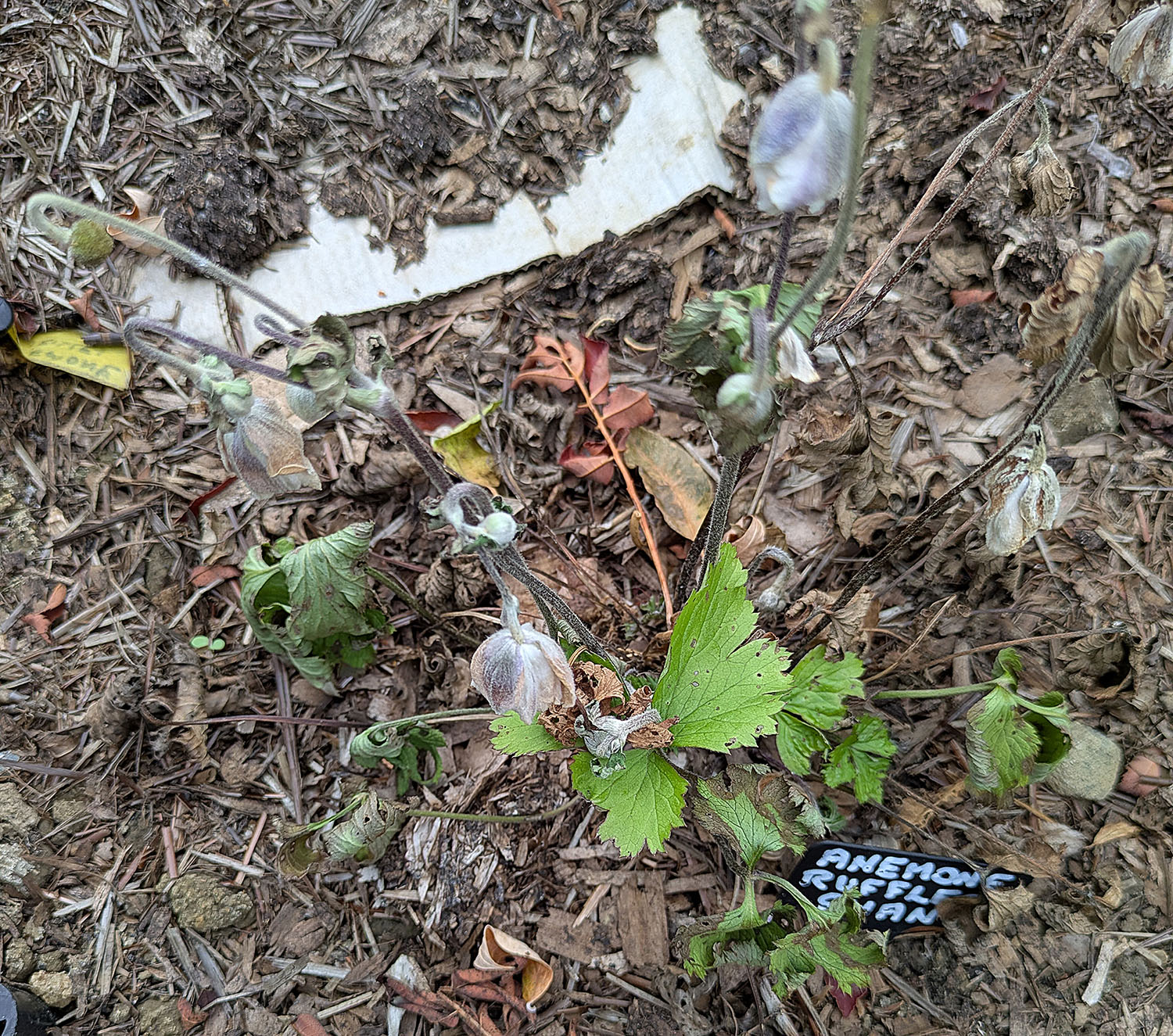
Thank you for the photo and the detailed description; this is a really interesting and rather puzzling case that I want to work through carefully with you. Looking at your Japanese Anemone 'Ruffled Swan' and reading your description of rapid collapse over just a few days with that characteristic grey-brown discolouration across both the leaves and the flower buds, there are three realistic possibilities here, and the speed of onset is actually the most important diagnostic clue.
Why the Rapid Onset Matters
Japanese anemones are genuinely tough plants once established. As I've written before, they are slow to establish in their first year and can sometimes seem to sulk, but once settled, they spread reliably and cope with a surprising amount of abuse and neglect. So when a settled anemone collapses dramatically over just a few days, something specific has triggered it rather than a gradual accumulation of stress. That rapid timeline narrows the suspects considerably.
Suspect One: Botrytis (Grey Mould)
This is my strongest suspicion looking at your photo and description combined. Botrytis cinerea, commonly called grey mould, is a fungal pathogen that causes exactly the grey-brown discolouration you're describing, affects both flowers and foliage simultaneously, and can progress with alarming speed once it takes hold, particularly in warm, humid conditions. After a prolonged heatwave followed by rain or increased humidity, the conditions for Botrytis become almost ideal. The fungus thrives in exactly that transition from hot and dry to warm and moist.
The flowers are often the first thing to show symptoms, turning soft and brown before the surrounding foliage follows. If you look closely at the affected tissue and can see any fuzzy grey-brown mould growth, particularly in the leaf axils or on the flower stalks, Botrytis is almost certainly your answer. Remove all affected material immediately using clean secateurs, disposing of it in the bin rather than the compost heap, and improve airflow around the plant. Avoid watering overhead.
Suspect Two: Drought Stress Followed by Vascular Collapse
Given the heatwave context, this cannot be ruled out. Prolonged heat stress causes plants to shut down their vascular systems to conserve moisture, and when water then becomes available again, the sudden change can trigger a rapid collapse as the plant's ability to regulate water movement is overwhelmed. The grey-brown colour that comes with this type of collapse is slightly different from fungal damage, usually starting at the leaf margins and tips before working inward, but the overall effect can look very similar in severe cases.
This is particularly likely if the plant had been very dry at the roots during the heatwave and then received significant water. The remaining green leaves you mention are the hopeful sign here, suggesting the root system is still functional and hasn't completely given up.
Suspect Three: Virus
Japanese anemones are known hosts for Tobacco Rattle Virus (TRV) and Raspberry Ringspot Virus (RRSV), both of which have been isolated from Anemone x hybrida in nurseries and garden settings. A viral infection can cause wilting, discolouration, and rapid deterioration of both flowers and foliage. TRV is spread by soil-dwelling nematodes, meaning it can arrive via contaminated soil or new plants. If you've recently added anything new to that area of the border, or if the plant was newly purchased, this is worth keeping in mind.
A virus cannot be cured. If viral infection is confirmed or strongly suspected, the most sensible course of action is removal of the entire plant, disposed of in the bin, to prevent spread to other plants in the vicinity.
What to Do Right Now
Start by removing all visibly affected material cleanly and carefully. If you suspect Botrytis, wipe your secateurs with disinfectant between cuts. Don't be tempted to water heavily from above; if the plant needs water, deliver it at the base. Hold off on any fertiliser, as feeding a stressed plant diverts energy it doesn't have.
Give the remaining green growth two to three weeks to show you whether the plant is recovering. New leaves pushing through from the base would be a very encouraging sign. If the whole plant continues to decline despite the remaining green leaves, carefully lift it, inspect the roots for any signs of rot or damage, and make a decision about replanting based on what you find.
Further Reading
Please do post an update once you've had a closer look at the affected tissue. If you can see any fuzzy grey coating on the damaged areas, that confirms Botrytis, and your next steps become much clearer.
Happy gardening!
Hi @trailguru
Thank you for the photo and the detailed description; this is a really interesting and rather puzzling case that I want to work through carefully with you. Looking at your Japanese Anemone 'Ruffled Swan' and reading your description of rapid collapse over just a few days with that characteristic grey-brown discolouration across both the leaves and the flower buds, there are three realistic possibilities here, and the speed of onset is actually the most important diagnostic clue.
Why the Rapid Onset Matters
Japanese anemones are genuinely tough plants once established. As I've written before, they are slow to establish in their first year and can sometimes seem to sulk, but once settled, they spread reliably and cope with a surprising amount of abuse and neglect. So when a settled anemone collapses dramatically over just a few days, something specific has triggered it rather than a gradual accumulation of stress. That rapid timeline narrows the suspects considerably.
Suspect One: Botrytis (Grey Mould)
This is my strongest suspicion looking at your photo and description combined. Botrytis cinerea, commonly called grey mould, is a fungal pathogen that causes exactly the grey-brown discolouration you're describing, affects both flowers and foliage simultaneously, and can progress with alarming speed once it takes hold, particularly in warm, humid conditions. After a prolonged heatwave followed by rain or increased humidity, the conditions for Botrytis become almost ideal. The fungus thrives in exactly that transition from hot and dry to warm and moist.
The flowers are often the first thing to show symptoms, turning soft and brown before the surrounding foliage follows. If you look closely at the affected tissue and can see any fuzzy grey-brown mould growth, particularly in the leaf axils or on the flower stalks, Botrytis is almost certainly your answer. Remove all affected material immediately using clean secateurs, disposing of it in the bin rather than the compost heap, and improve airflow around the plant. Avoid watering overhead.
Suspect Two: Drought Stress Followed by Vascular Collapse
Given the heatwave context, this cannot be ruled out. Prolonged heat stress causes plants to shut down their vascular systems to conserve moisture, and when water then becomes available again, the sudden change can trigger a rapid collapse as the plant's ability to regulate water movement is overwhelmed. The grey-brown colour that comes with this type of collapse is slightly different from fungal damage, usually starting at the leaf margins and tips before working inward, but the overall effect can look very similar in severe cases.
This is particularly likely if the plant had been very dry at the roots during the heatwave and then received significant water. The remaining green leaves you mention are the hopeful sign here, suggesting the root system is still functional and hasn't completely given up.
Suspect Three: Virus
Japanese anemones are known hosts for Tobacco Rattle Virus (TRV) and Raspberry Ringspot Virus (RRSV), both of which have been isolated from Anemone x hybrida in nurseries and garden settings. A viral infection can cause wilting, discolouration, and rapid deterioration of both flowers and foliage. TRV is spread by soil-dwelling nematodes, meaning it can arrive via contaminated soil or new plants. If you've recently added anything new to that area of the border, or if the plant was newly purchased, this is worth keeping in mind.
A virus cannot be cured. If viral infection is confirmed or strongly suspected, the most sensible course of action is removal of the entire plant, disposed of in the bin, to prevent spread to other plants in the vicinity.
What to Do Right Now
Start by removing all visibly affected material cleanly and carefully. If you suspect Botrytis, wipe your secateurs with disinfectant between cuts. Don't be tempted to water heavily from above; if the plant needs water, deliver it at the base. Hold off on any fertiliser, as feeding a stressed plant diverts energy it doesn't have.
Give the remaining green growth two to three weeks to show you whether the plant is recovering. New leaves pushing through from the base would be a very encouraging sign. If the whole plant continues to decline despite the remaining green leaves, carefully lift it, inspect the roots for any signs of rot or damage, and make a decision about replanting based on what you find.
Further Reading
Please do post an update once you've had a closer look at the affected tissue. If you can see any fuzzy grey coating on the damaged areas, that confirms Botrytis, and your next steps become much clearer.
Happy gardening!

 Lee Burkhill: Award Winning Designer & BBC 1's Garden Rescue Presenters Official Blog