For the garden you’ve already got, not the one you’re starting from scratch. Seven checklists and video lessons from BBC Garden Rescue’s Lee Burkhill, designed to help you decide what’s worth keeping before you spend a penny.
69


Whilst the days are noticeably lengthening and there’s a palpable sense of spring approaching, frosty nights and unpredictable weather still dominate the garden this month. This creates both exciting opportunities and frustrating limitations, making February a month that requires careful planning, realistic expectations, and a strategic approach to what you plant and where you plant it. The disconnect between increasing daylight and persistent cold defines everything about February gardening.
But fear not, there’s still plenty of enriching gardening to do!
As both a garden designer and someone who’s learned through decades of experience which early-season gambles pay off, I’ve developed a pragmatic approach to February planting. It’s fundamentally about preparation and positioning, and about avoiding the temptation to sow outdoors prematurely.
The heat-loving crops that will form the backbone of your summer harvests need to be started now, but they require protection and warmth. Meanwhile, the skeletal structure of your garden is at its most visible, making this an excellent time to assess what’s working and plan improvements, design-wise!
I’ll walk you through exactly what to plant, where to plant it, and crucially, what conditions each crop actually needs to succeed rather than survive!
[This page contains affiliate links (see full details here). If you purchase through these links, I may earn a small commission at no extra cost to you.]
Before rushing to sow everything in sight, it’s essential to understand what February actually offers in terms of growing conditions across the UK. Whilst average daytime temperatures are beginning to climb, nighttime temperatures regularly plummet, and soil temperatures remain stubbornly cold. This disconnect between increasing daylight hours and persistent cold is what makes February such a challenging month for outdoor sowing but an ideal time for protected propagation.
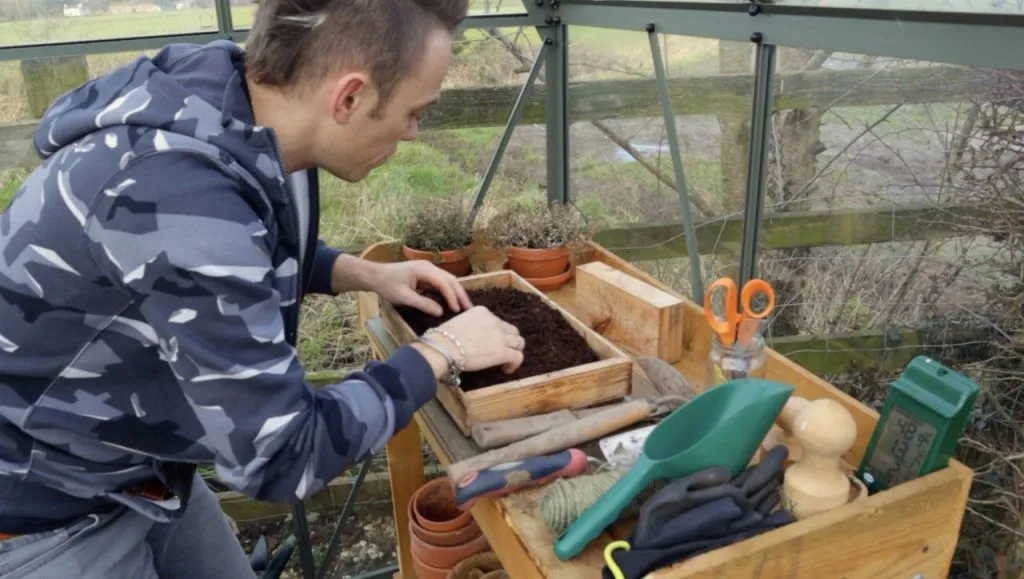
Soil temperatures in most parts of the UK hover between 3°C and 7°C in February, well below the minimum germination temperature for the majority of vegetable and flower seeds. Most seeds require soil temperatures of at least 10°C to germinate reliably, whilst heat-loving crops like tomatoes, peppers, and aubergines need 15°C to 20°C.
This is precisely why heated propagators or indoor windowsills become essential equipment during this month rather than optional extras. The reality is that February is primarily an indoor sowing month.
Any outdoor sowing attempts will be painfully slow to germinate and vulnerable to rotting in cold, wet soil. Even with cloches or cold frames, you’re only buying yourself a few degrees of protection, which helps with hardy crops but won’t suffice for tender plants. Understanding these limitations prevents disappointment and wasted seed.
The difference between successful February sowing and disappointing results often comes down to having the right equipment. Whilst it’s possible to germinate some seeds on a sunny windowsill, the most productive approach is to invest in proper propagation equipment that gives you control over temperature and humidity.
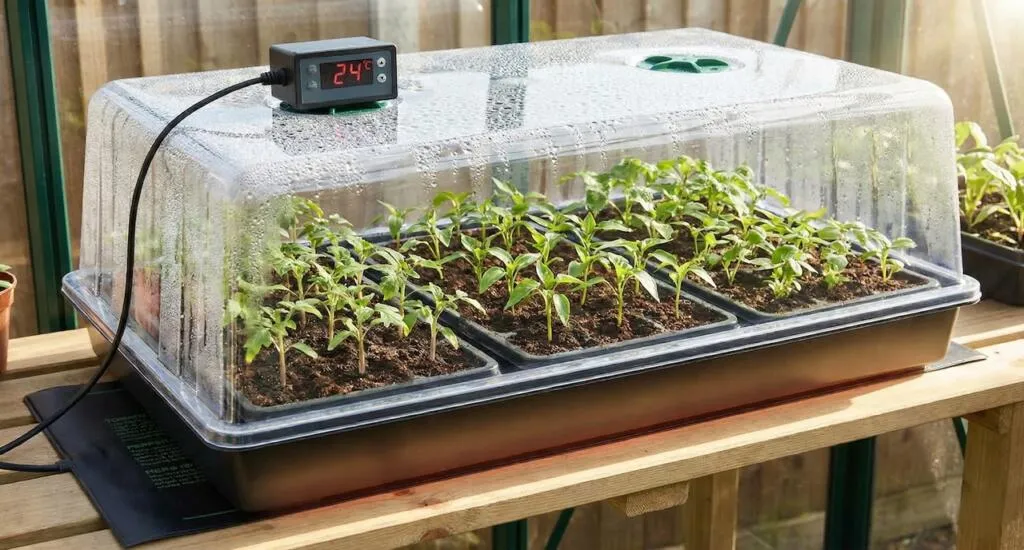
A heated propagator transforms February from a month of wishful thinking into one of genuine productivity. These units typically raise compost temperature by 8°C to 19°C above ambient room temperature, bringing cold compost up to the crucial 18°C to 25°C range that most seeds require for germination. Temperature control matters enormously because seeds germinate faster and more evenly at optimal temperatures, and the resulting seedlings are stronger.
The key advantage is the reliability of the ambient temperature for your little seedlings to germinate, Ninjas! You don’t want to shock them with cold, then heat; you need consistency, which is why the heating solutions are essential this month.
Without consistent warmth, germination becomes erratic. Some seeds sprout whilst others languish, leading to uneven batches where you’re constantly trying to manage seedlings at different stages. A thermostatically controlled propagator eliminates this variability, ensuring your entire tray germinates within days of each other.
For chillies and aubergines, which need the longest growing season of any crops, starting them in late January or early February with bottom heat is essential for achieving ripe fruit before autumn. Basic propagators without thermostats are better than nothing and work well on warm windowsills, typically maintaining temperatures around 8°C above room temperature.
However, thermostatically controlled models offer precision, allowing you to set exact temperatures for different crops. Tomatoes germinate best at 18°C to 20°C, whilst chillies prefer 24°C to 30°C. This flexibility means you can optimise conditions for whatever you’re sowing.
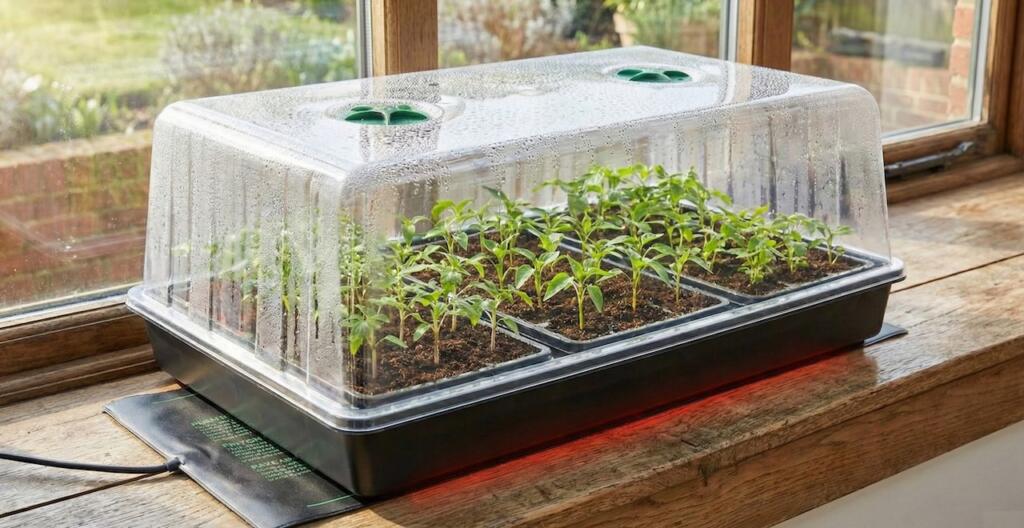
The critical point many gardeners miss is that seedlings should be removed from the heat immediately after germination.
Once those first leaves emerge, continued high temperatures cause leggy, weak growth. At this stage, seedlings need bright light and cooler temperatures around 15°C to 18°C to develop compact, sturdy growth. I move my seedlings from the propagator to an unheated greenhouse or conservatory as soon as they’ve germinated, which keeps them growing steadily without becoming stretched.
If you’re attempting to sow in February in an unheated greenhouse, you need to understand its limitations. An unheated greenhouse in February typically provides only 2°C to 5°C of frost protection compared to outdoor temperatures.
On sunny days, it can warm significantly, but nighttime temperatures will still drop close to freezing. This environment works for hardy crops like broad beans, peas, and early salads, but is inadequate for tender plants.
The overnight temperature is what determines success or failure.
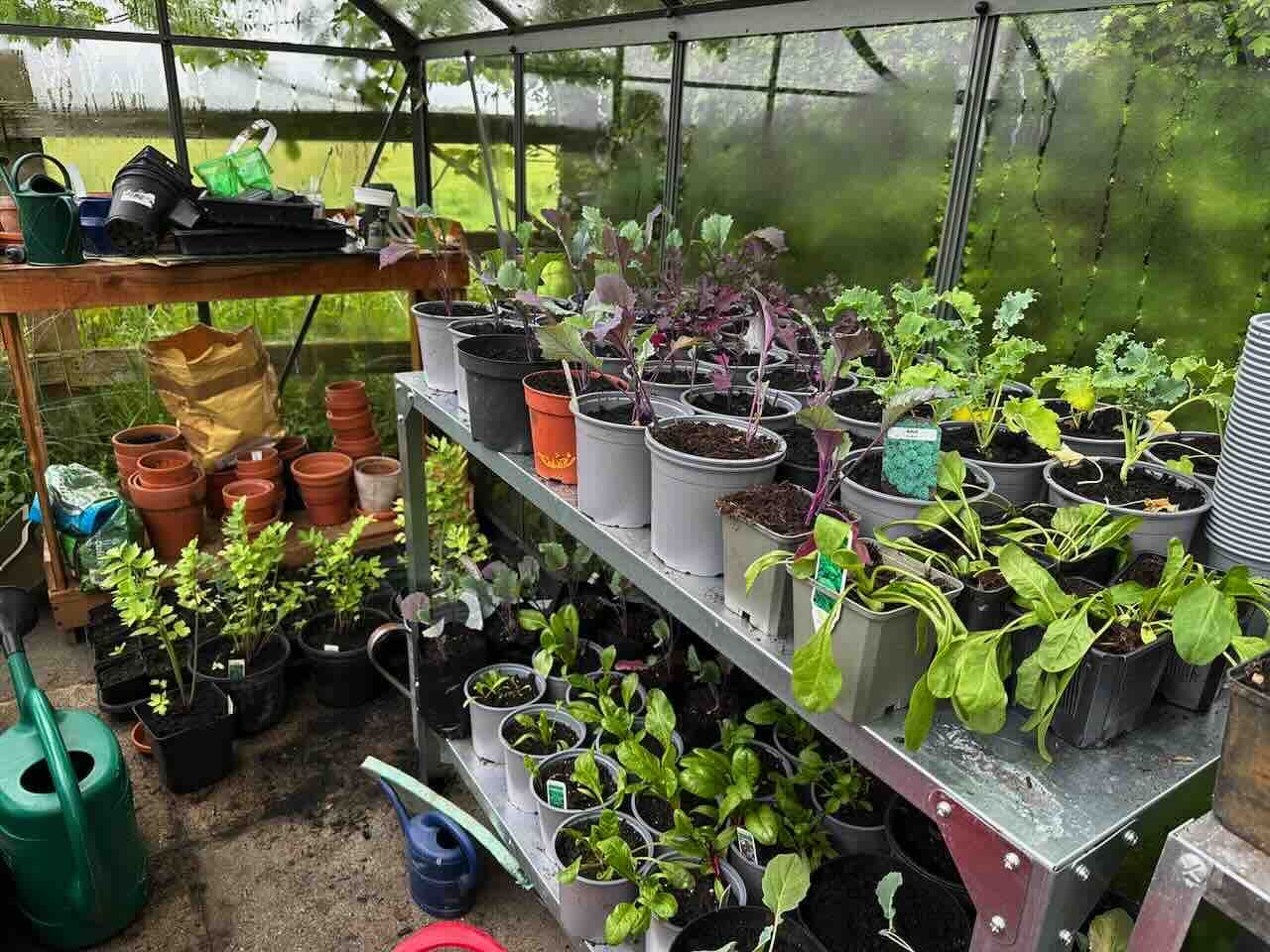
Even if your greenhouse warms nicely during the day, plummeting nighttime temperatures shock seedlings and dramatically slow growth. For tender crops sown in an unheated greenhouse, you’ll need supplementary heating or heavy fleece protection overnight. Many gardeners discover this the hard way when their enthusiastically sown tomatoes sit dormant for weeks, making no progress whatsoever.
A greenhouse thermometer that records minimum and maximum temperatures becomes invaluable equipment. It shows you exactly which conditions your plants experience overnight, rather than just the midday warmth you observe when you visit. I use an electric greenhouse heater when sowing to keep the temperature at roughly 10 degrees. You can also place a few pillar candles inside terracotta pots to take the edge off each night.
When those minimum temperatures consistently stay above 10°C, usually not until late March or April, you can confidently sow tender crops without additional heating. For February use, combining an unheated greenhouse with heated propagators or a fan heater gives you the best system for success!
Seeds germinate rapidly in the propagator’s warmth, then move to the greenhouse for growing on. Covering them with fleece overnight provides the few extra degrees of protection needed to prevent frost damage whilst maintaining good light levels and air circulation during the day.
February’s indoor sowing list focuses on crops that need a long growing season to reach maturity. These aren’t plants you could start later and still succeed with; they genuinely require this early start to produce worthwhile harvests before autumn arrives.
Tomatoes represent the archetypal February sowing project. Start them too early, and you’ll have enormous plants desperate to go outside whilst frost still threatens. Start them too late,e and fruit won’t ripen before cool September weather shuts down production. For greenhouse cultivation, late February sowing is ideal. For outdoor tomatoes destined for garden beds, waiting until mid to late March is actually preferable unless you have excellent facilities for growing them on.
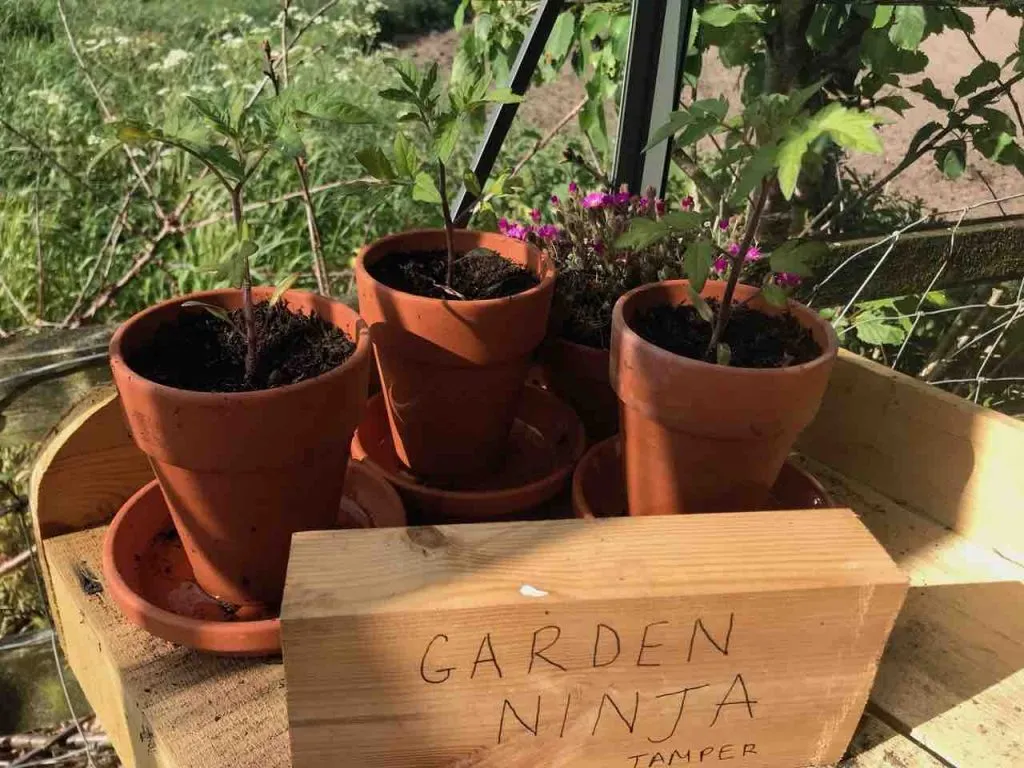
Tomato seeds germinate reliably at 18°C to 22°C, typically sprouting within 5 to 7 days at optimal temperature but taking 2 to 3 weeks in cooler conditions. This is where a heated propagator proves its worth. Once germinated, tomato seedlings need bright light immediately. Insufficient light causes the classic leggy appearance, with seedlings stretching desperately towards windows, developing weak, spindly stems that never quite recover.
The cardinal rule for tomato seedlings is: bright light plus cool temperatures equals strong plants.
That sunny windowsill might seem perfect, but if it’s above a radiator, you’re combining heat with low light levels, which can encourage weak growth. A cool but bright conservatory, porch, or greenhouse with maximum light exposure produces compact, sturdy seedlings with thick stems and dark green foliage.
Consider your eventual growing location when choosing varieties. Cordon varieties suit greenhouse growing, where you can support their indeterminate growth and harvest continuously. Bush varieties are better suited to outdoor containers or beds with limited space.
My experience designing gardens has shown me that most people overestimate their tomato requirements; six plants typically provide more than enough fruit for a family through summer and autumn, and sometimes I only recommend four if you’ve got summer holidays planned or know you don’t have many hungry guests living with you!
Chillies absolutely demand the earliest possible start. Their growing season from sowing to first ripe fruit spans 20 to 24 weeks for most varieties, with some superhot varieties requiring even longer. February sowing is actually pushing it for chillies; late January is better if you want mature fruit before October. Sweet peppers follow similar timeframes, though they mature slightly faster than their fierier relatives.
These crops need higher germination temperatures than tomatoes, ideally 24°C to 30°C for reliable sprouting within 7 to 14 days. At lower temperatures, germination becomes painfully slow and unpredictable. I’ve found that pre-warming the compost by placing trays in the propagator for 2 to 3 hours before sowing significantly improves germination speed. Seeds sown into cold compost take far longer to wake up, even if you then apply heat.
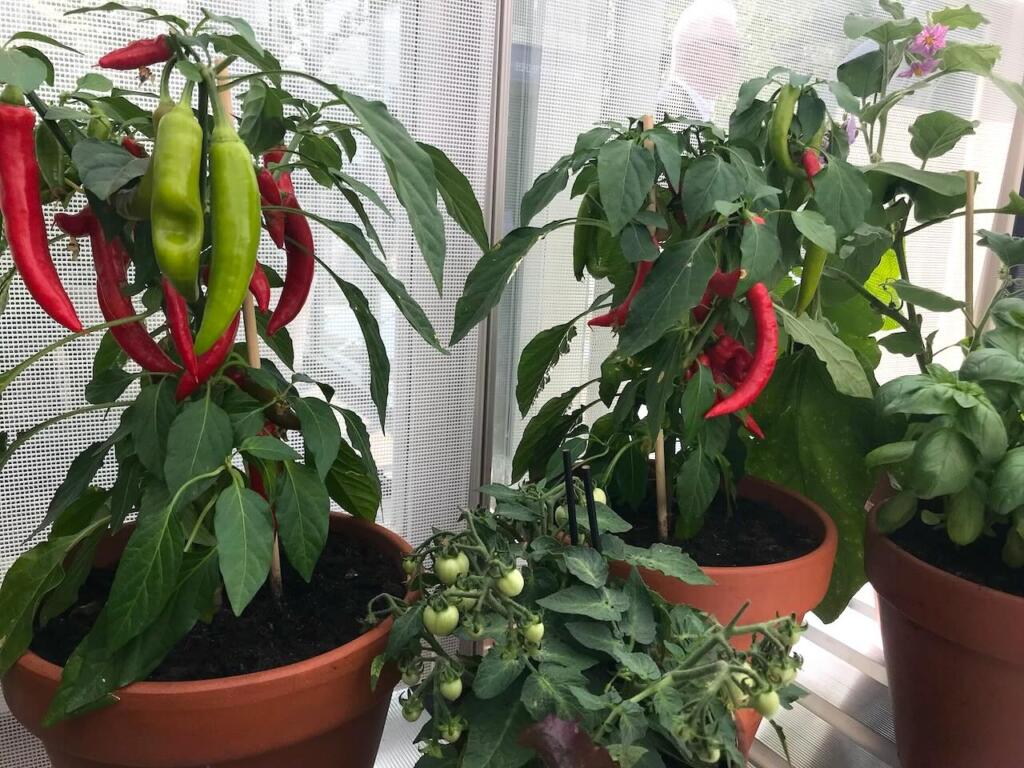
After germination, chilli and pepper seedlings grow frustratingly slowly compared to tomatoes. This isn’t a problem; it’s their natural growth pattern. They need consistent warmth around 18°C to 20°C and bright light, but won’t experience the rapid growth that tomatoes display. Patience is essential. By late May, when they finally move outside or into their final greenhouse positions, growth accelerates dramatically.
The common mistake is growing these plants in containers that are too small. Chillies and peppers develop substantial root systems and genuinely benefit from large pots. I typically pot them up progressively into 7.5-litre containers for their final position rather than the 5-litre pots many gardeners use. The extra root room translates directly into heavier crops and means less watering for you, dear gardener!
Aubergines are even more demanding than peppers in terms of warmth, making outdoor cultivation challenging in most UK regions. In fact, I would actively recommend not bothering with them based on my experience. I find them too demanding, and the crops are relatively lacklustre compared to tomatoes.
However, if yoy have plenty of space and time, then who am I to stop you?! They need consistent temperatures above 15°C for steady growth and genuinely prefer 20°C to 25°C for optimal development. This makes them primarily a greenhouse crop across most of Britain, though they’ll succeed outdoors in exceptionally warm summers or very sheltered southern gardens.
Sowing in late January or early February with bottom heat at 24°C to 28°C gets them going. They’re slower to germinate than tomatoes, typically taking 10 to 14 days even at optimal temperature. Once established, they required bright light and steady warmth, without temperature fluctuations. An unheated greenhouse is suitable for growing them only if minimum temperatures remain reliably above 12°C.
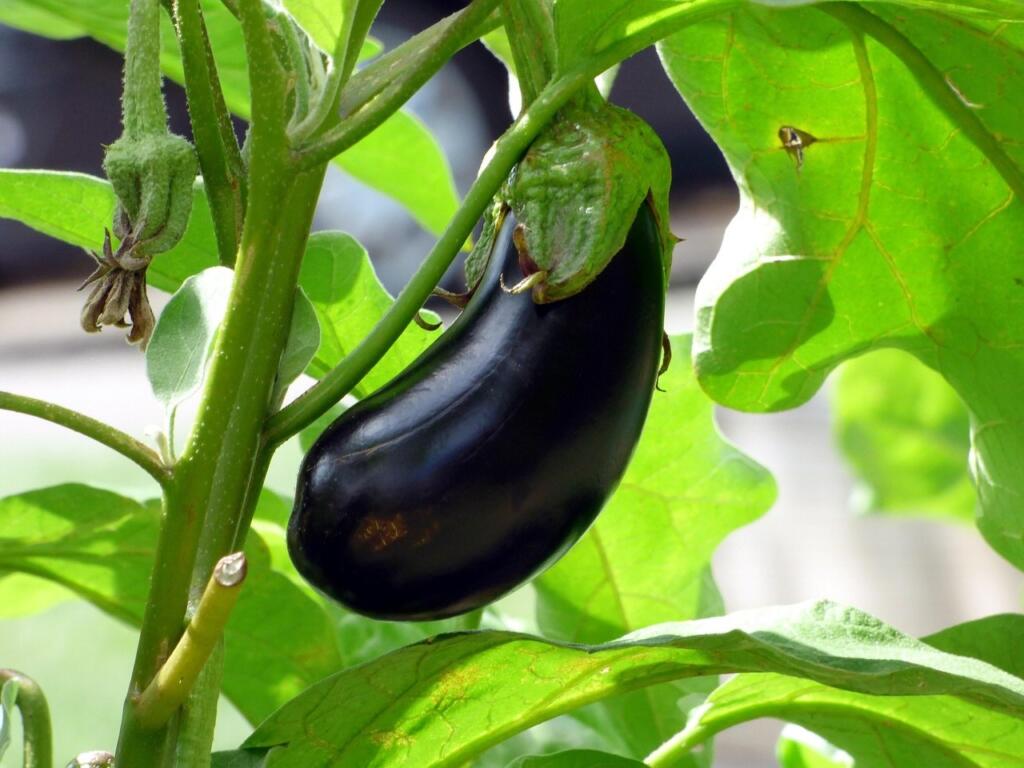
My experience with aubergines has taught me that fewer plants grown well outperform many plants grown adequately. Three or four plants in large containers with consistent warmth, generous feeding, and maximum light will produce more than eight plants struggling in marginal conditions. If your greenhouse space is limited, focus on tomatoes and peppers; they’re more forgiving and productive.
Starting onions and leeks from seed in February rather than buying sets or transplants gives you access to a far wider range of varieties whilst saving considerable money. Onion seeds germinate readily at 10°C to 15°C, making them suitable for unheated greenhouse sowing or bright windowsills, without the need for heated propagators.
Sow them in modular trays, placing 3 to 5 seeds per module. There’s no need to thin them; they’ll push each other apart as they grow, and you’ll plant out the entire clump together. This traditional technique reduces transplant shock and actually increases your overall harvest compared to single seedlings. Onions started in February will be ready for planting out in March or April, maturing for harvest in July through September,r depending on variety.
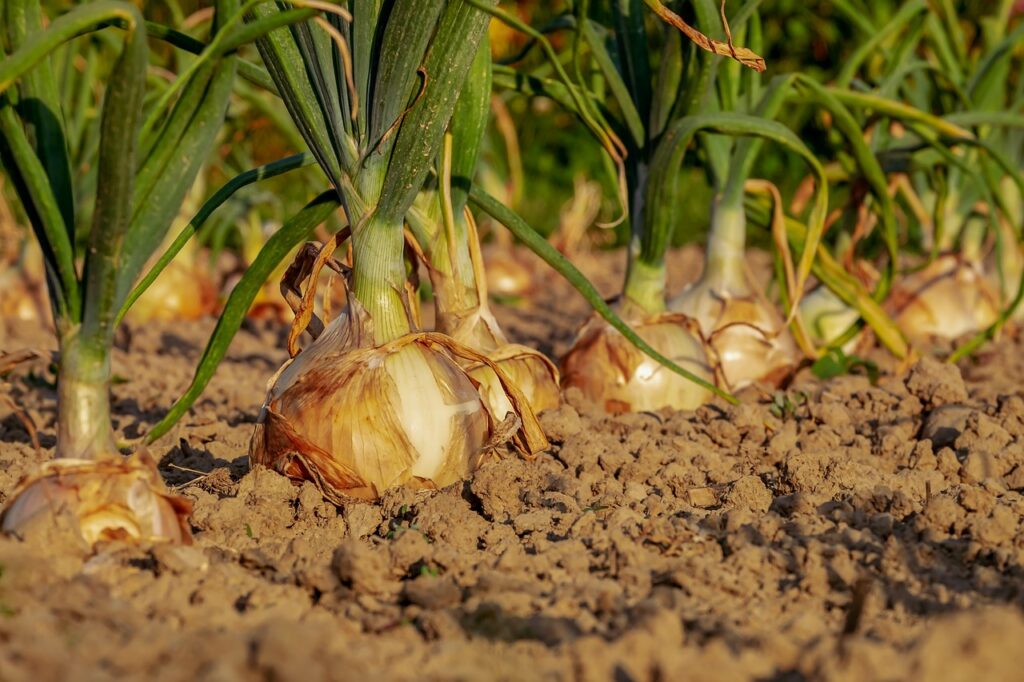
Leeks are even more straightforward. They’re genuinely hardy and tolerate cool conditions happily. February-sown leeks planted out in late April or May will be ready for harvesting from September onwards, providing that essential winter vegetable when little else is available. The investment in raising your own from seed rather than buying transplants pays off handsomely; you’ll have far more leeks than you could justify purchasing.
Whilst tender crops require indoor conditions, several hardy vegetables benefit from sowing under cover in February, giving them a valuable head start without the need for heated propagation. Cold frames, unheated greenhouses, and cloches provide 2°C to 5°C of frost protection and shelter from harsh weather, allowing these tough crops to establish.
Broad beans sown in February either directly in the soil beds of an unheated greenhouse or in deep containers will race ahead of outdoor sowings, often producing their first pods three to four weeks earlier. They germinate at temperatures as low as 5°C, though they’re much faster at 10°C to 15°C, typically sprouting within 7 to 14 days.
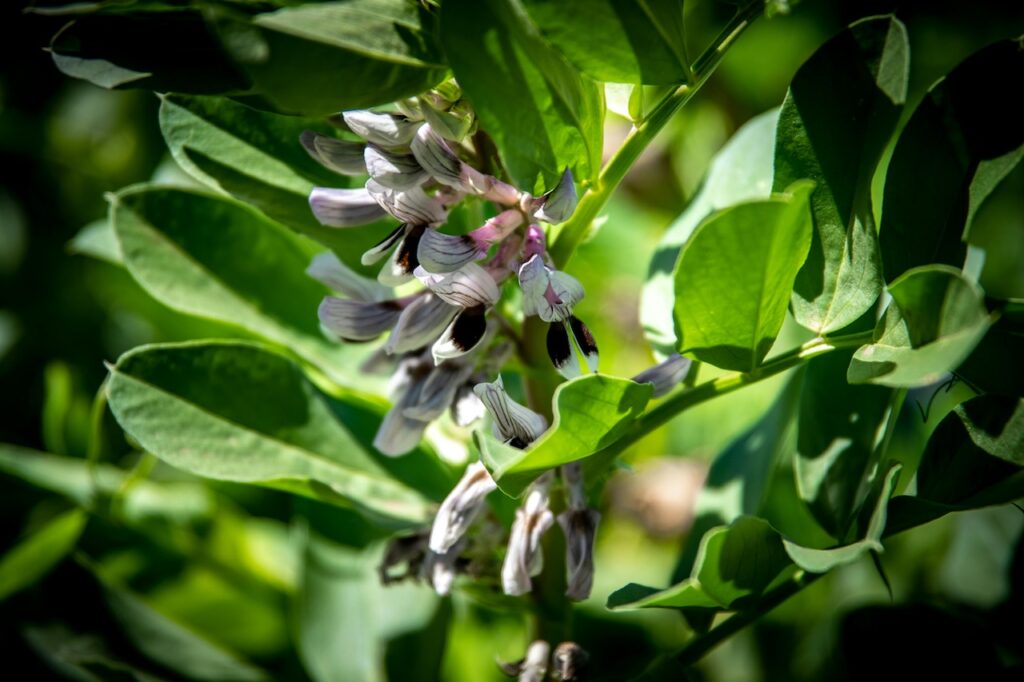
The key advantage of February sowing under cover is avoiding the slug predation that outdoor sowings are subject to. Those emerging shoots are like gourmet dining for slugs in damp February soil, but under cover, the seedlings establish quickly enough to outgrow vulnerability. Once they’re 15cm tall with multiple leaves, they can handle outdoor conditions even if temperatures remain cool.
I prefer sowing broad beans in deep modular trays or toilet roll tubes, one seed per module, planted 5cm deep. This allows me to raise them in the greenhouse, then plant them out when weather and soil conditions become more favourable in March or early April. The root disturbance is minimal, and I’m not committed to planting into potentially waterlogged soil.
Early pea varieties sown in February under cover provide that magical moment when you harvest the first fresh peas of the season, weeks before outdoor-sown crops mature. Peas germinate at 10°C, though they’re faster around 15°C, sprouting within 7 to 10 days in good conditions.
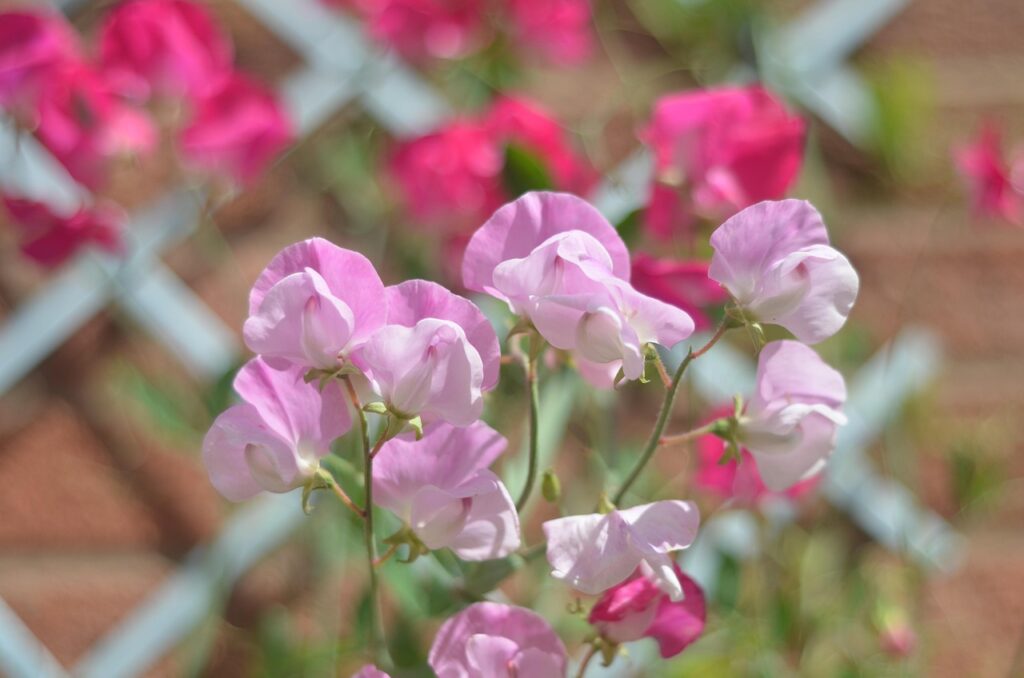
The traditional technique of sowing peas in guttering remains brilliant. Fill lengths of guttering with compost, sow Sweet peas in double rows along its length, and grow them under cover until they’re 10cm tall. When conditions outside improve, dig a shallow trench the same width as your guttering and slide the entire rooted pea mat into it.
There’s virtually no root disturbance, and your peas keep growing without you having to check
Choose early varieties specifically bred for rapid maturity. Maincrop peas sown this early won’t perform better than later sowings; they’re not programmed for these conditions. Early varieties like ‘Meteor’ or ‘Feltham First’ are specifically selected for their ability to crop quickly from early sowings.
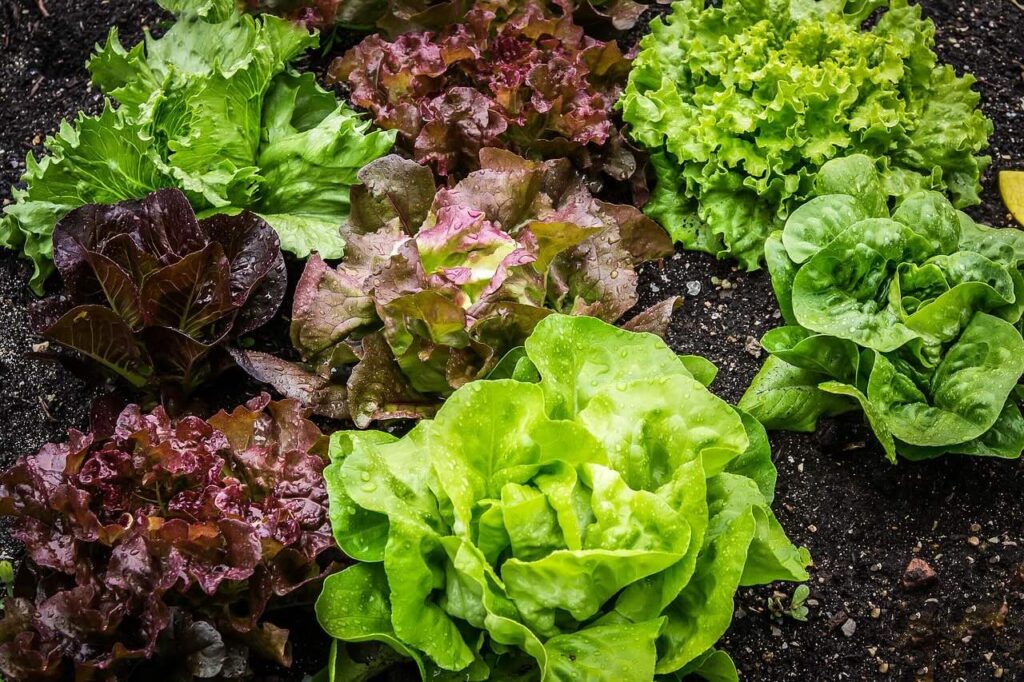
February sowings of lettuce, rocket, mizuna, mustard greens, and other salad leaves in an unheated greenhouse or cold frame provide fresh harvests when supermarket salads are at their most expensive and least inspiring. These crops don’t mind cool conditions; they actually prefer them to summer heat. At temperatures of 10°C to 15°C, they germinate reliably and grow steadily without bolting.
Sow them in shallow trays or modules, and harvest as cut-and-come-again crops rather than waiting for full hearts. This approach maximises productivity from minimal space. Within 4 to 6 weeks, you’ll be cutting fresh leaves, with repeat harvests every week or two as they regrow. The continuous harvest approach suits protected growing perfectly.
Hardy herbs, including parsley, chives, and coriander, also respond well ty sowing under cover in February. Parsley is notoriously slow to germinate, typically taking 3 to 4 weeks even in good conditions, so starting it now means you’ll have usable plants by late spring. Chives germinate faster but grow slowly in cool conditions. Coriander actually prefers cooler temperatures and will keep producing for weeks before eventually bolting when warmer weather arrives.
The harsh truth about outdoor planting in February is that your options are severely limited unless you live in the mildest parts of the southwest or have exceptionally well-drained, light soil. For most UK gardeners, outdoor sowing in February is a gamble that rarely pays off. The soil is too cold, too wet, or both.
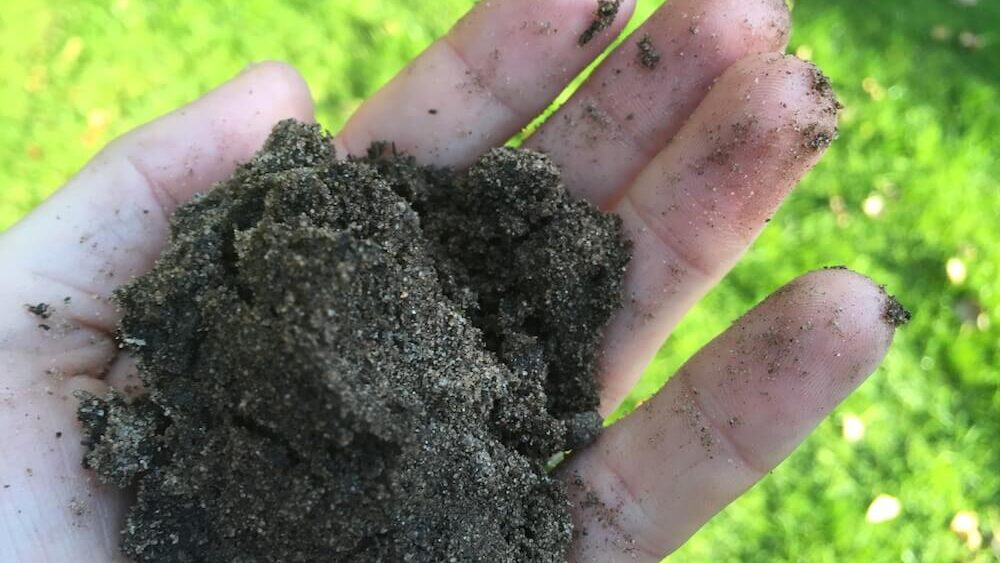
If you’re blessed with sandy, free-draining soil in a mild region, late February sowing of broad beans, hardy peas, spinach, and early carrots becomes possible. The critical test is whether your soil is workable. If it forms sticky clumps when you squeeze it, if puddles remain after rain, or if it’s obviously frozen, postpone sowing. Planting into these conditions invites disaster.
The workable soil test is simple but definitive. Take a handful of soil and squeeze it firmly. When you open your hand, the soil should crumble easily rather than form a solid clump. This indicates that soil moisture is at the right level for cultivation. Additionally, soil temperature matters enormously. If possible, use a soil thermometer; aim for at least 7°C for hardy crops. Below this, germination becomes so slow that seeds may rot before sprouting.
Even when conditions allow sowing, using cloches or fleece over seedbeds provides valuable insurance. This protection raises soil temperature by a few critical degrees, speeds germination, and protects emerging seedlings from the worst weather. I typically position cloches over prepared seedbeds for two weeks before sowing to warm the soil, then keep them in place until seedlings are established.
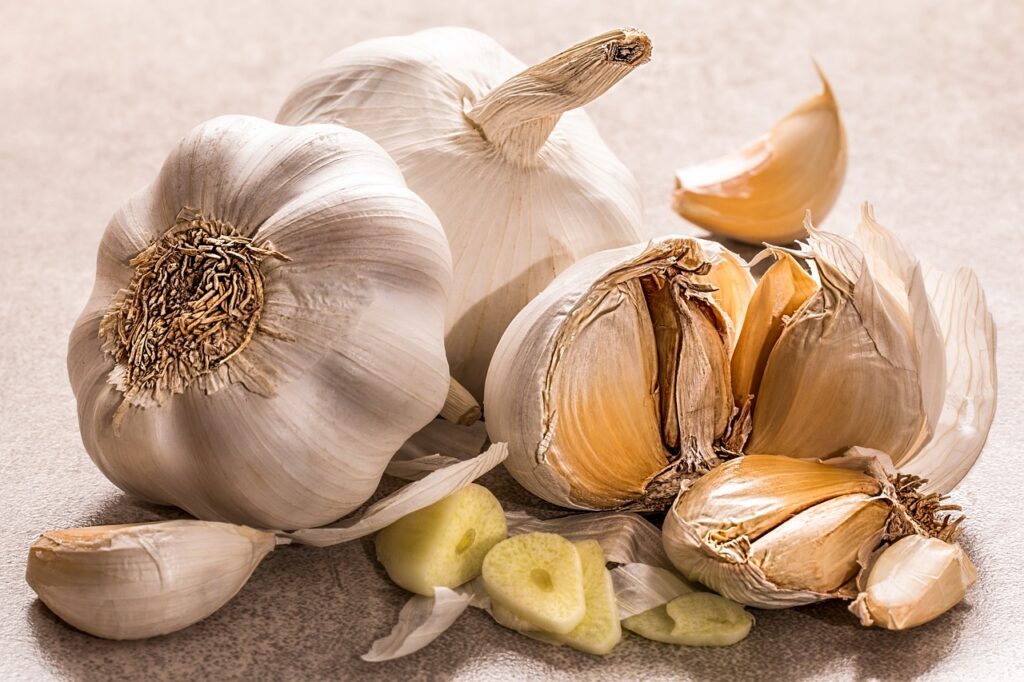
February resource final realistic opportunity for planting garlic and shallot sets. Ideally, these crops go in during November or December, giving them a cold period that improves bulb development. However, spring-planted varieties specifically bred to perform well from February plantings are available and will produce decent crops, though typically not quite as large as autumn-planted bulbs.
Plant individual cloves or sets in well-prepared soil, with the pointed end up and the tip just below soil level. Space them 15cm apart in rows 30cm apart. The key requirement is well-drained soil; waterlogged conditions cause bulbs to rot rather than grow. On heavy clay, consider raised beds or mounded rows to improve drainage around your crop.
One of February’s underappreciated advantages is how clearly it reveals your garden’s structural framework. With herbaceous perennials still dormant and deciduous shrubs bare, you can assess your borders objectively. This visibility makes February the ideal month for planning changes, identifying gaps, and understanding your garden’s winter performance. As a garden designer, I always conduct site assessments in winter because the garden’s bones are exposed.
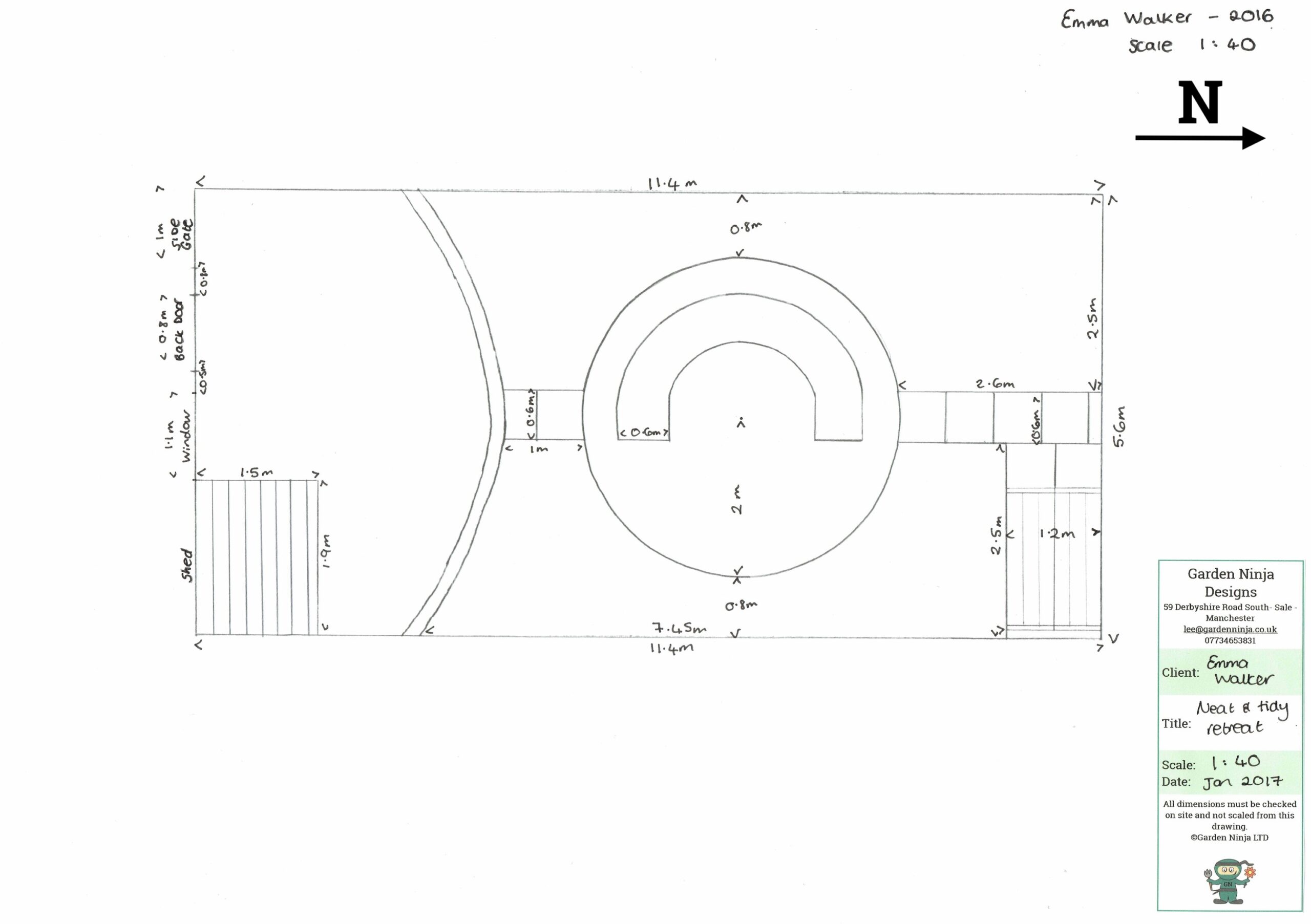
You can see which areas have structural interest carrying through to winter and which become vast expanses of bare soil. You’ll notice whether your garden has enough evergreen structure, whether paths and edges work effectively, and where gaps exist in your planting scheme. The fundamental question to ask whilst observing your February garden is: Does it look intentional? Well-designed gardens have interest in every season, not just spring and summer abundance.
If your garden looks frankly dismal in February, it’s telling you that structural planting is missing. Evergreen shrubs, ornamental grasses that hold their form through winter, trees with interesting bark, and carefully positioned structural plants transform a garden from seasonal to year-round.
Walk your garden at different times of day, noting where light falls, which areas remain persistently wet or dry, and where wind funnels through. These observations inform better planting decisions than any amount of summer assessment. That supposedly sunny border might receive only 2 hours of winter sun, which explains why certain plants struggle. The damp patch you’ve been battling could actually be a seasonal spring that emerges only in winter.
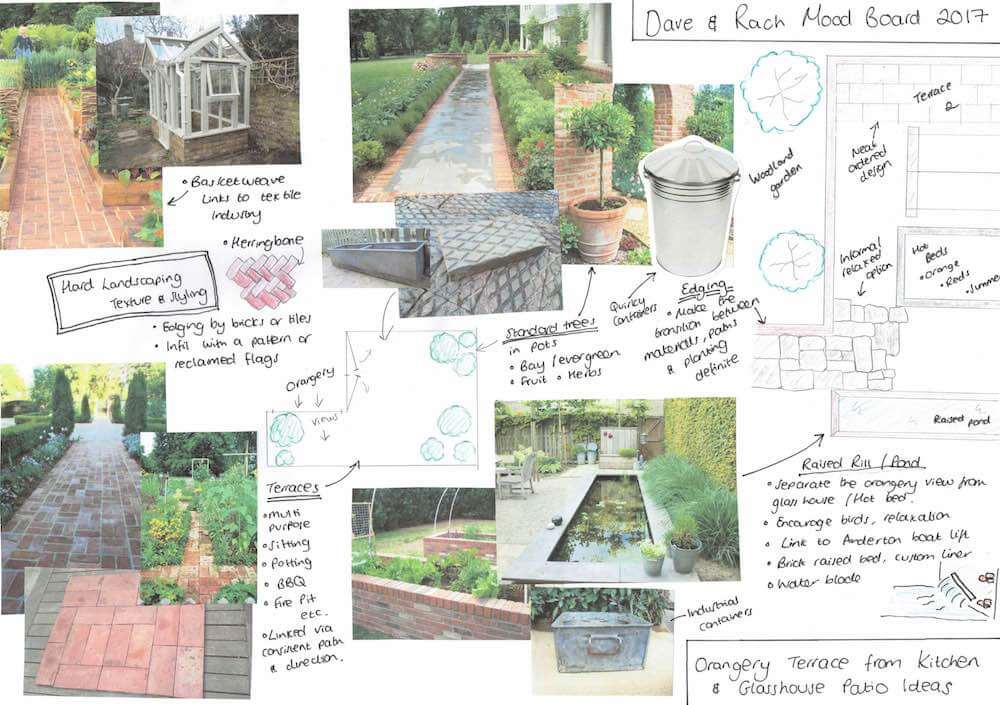
Make notes about what you’d like to change. Perhaps certain borders need restructuring, paths require edging, or that tired corner needs a feature tree. February gives you time to research plants, order bare-root stock, and plan improvements to implement in March and April, when conditions improve. The planning you do now directly determines your garden’s success for the entire growing season.
Whilst most gardeners associate cuttings with summer softwood techniques, February remains viable for hardwood cuttings, provided you protect them from severe frost. This propagation method allows you to multiply deciduous shrubs, soft fruit bushes, and some trees essentially for free, creating new plants that are genetically identical to their parents. The window for hardwood cuttings extends from leaf fall in November right through to late February before buds break.
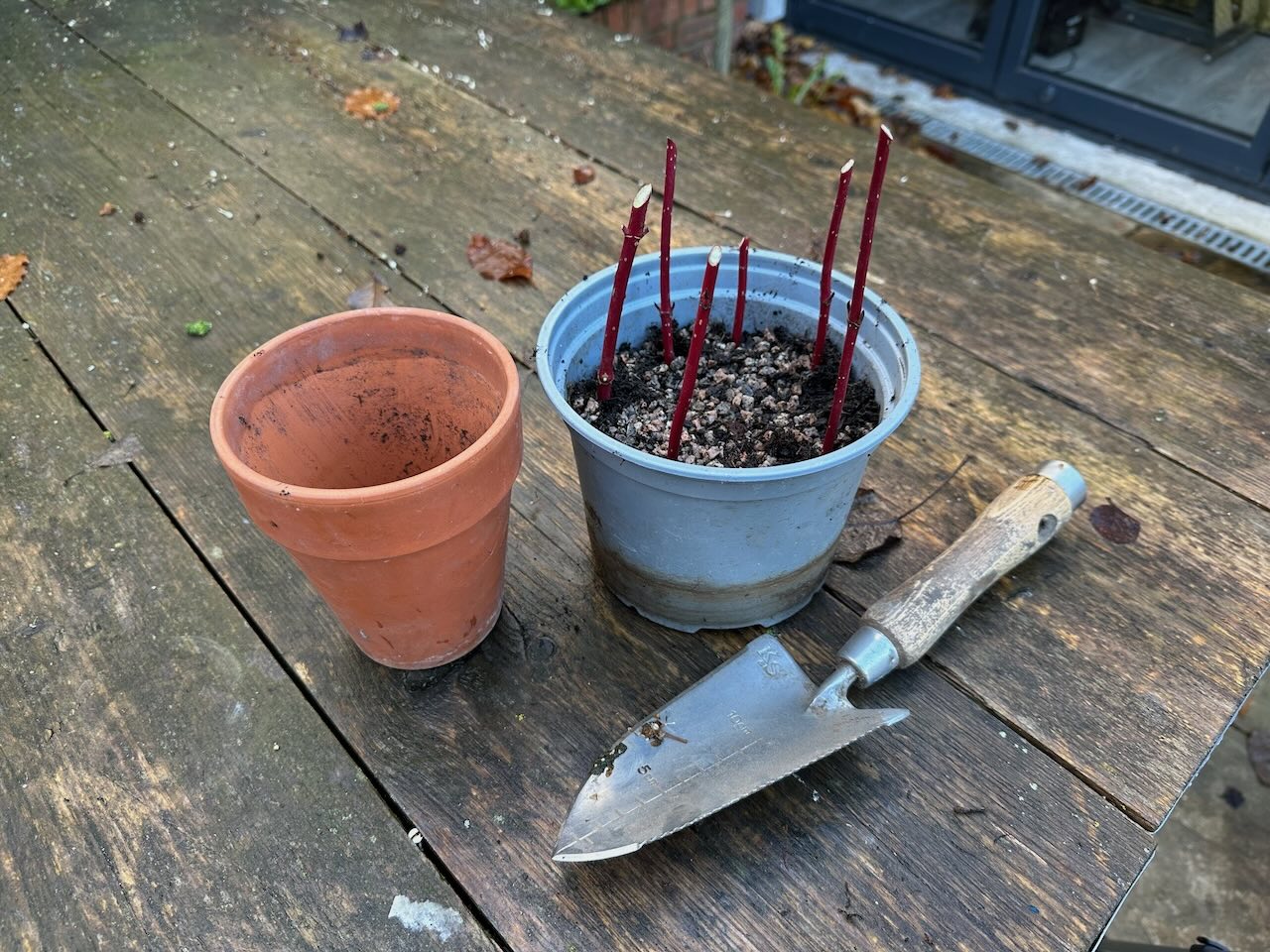
Taking them in February means you’re catching the tail end of this period, but they’ll still root successfully if conditions are carefully managed. The key requirement is protecting them from hard frost whilst ensuring they remain cool enough not to break dormancy prematurely. Dogwoods, willows, roses, currants, gooseberries, and buddlejas are all excellent candidates for February hardwood cuttings. These plants naturally develop roots from dormant wood when given appropriate conditions. Willows are famously easy to root, often rooting even when pushed into damp ground.
Select vigorous, healthy shoots from the current year’s growth. You want pencil-thick stems, approximately 20cm to 30cm long, and that have fully matured and developed proper bark. Avoid soft, green growth at shoot tips and any stems showing disease symptoms or damage.
Make the bottom cut straight across immediately below a bud node. This is where roots will emerge. The top cut should be angled just above a bud, with the slope allowing water to run off rather than sitting on the cut surface. This distinction between straight bottom cuts and angled top cuts serves a practical purpose: you’ll always know which end is which when planting, preventing the frustrating mistake of planting cuttings upside down.
The planting depth makes a significant difference to success rates. Insert cuttings so that two-thirds of their length is below soil level, with just one-third above ground. This substantial below-ground portion maximises rooting potential whilst minimising the amount of stem exposed to desiccating wind and temperature fluctuations.
Plant cuttings in containers filled with a mix of multipurpose compost and horticultural grit or sharp sand for drainage, placing 5 to 7 cuttings around the edge of each pot where drainage is best. Alternatively, plant them directly into a prepared trench in a sheltered part of your garden. Water them thoroughly after planting, then place the containers in an unheated greenhouse, a cold frame, or a sheltered location protected from the worst weather.
The critical difference between November hardwood cuttings and February ones is that February cuttings face increased risk from late winter cold snaps. Severe frost can damage developing root tissue, whilst repeated freeze-thaw cycles cause cuttings to heave out of the soil, exposing roots to air and desiccation.
Protect them with fleece during particularly cold nights, though remove it during the day to maintain air circulation and prevent condensation buildup, which can encourage fungal diseases. Check containers after frost and firm back any cuttings that have lifted. The rooting process takes 8 to 12 weeks, potentially longer for cuttings taken right at the end of the viable period, so patience is essential.
An ideal environment for hardwood cuttings is in a cold frame. They offer protection from frost but are unheated, the ideal place for them to slowly take root without you needing to water them every day!
Unlike softwood cuttings that need constant misting and high humidity, hardwood cuttings prefer much drier conditions. Keep the compost just barely moist but never waterlogged. Excessive moisture in cold conditions causes rot far more readily than insufficient water causes failure. I check my cuttings weekly, watering only if the compost surface feels dry when I press a finger into it.
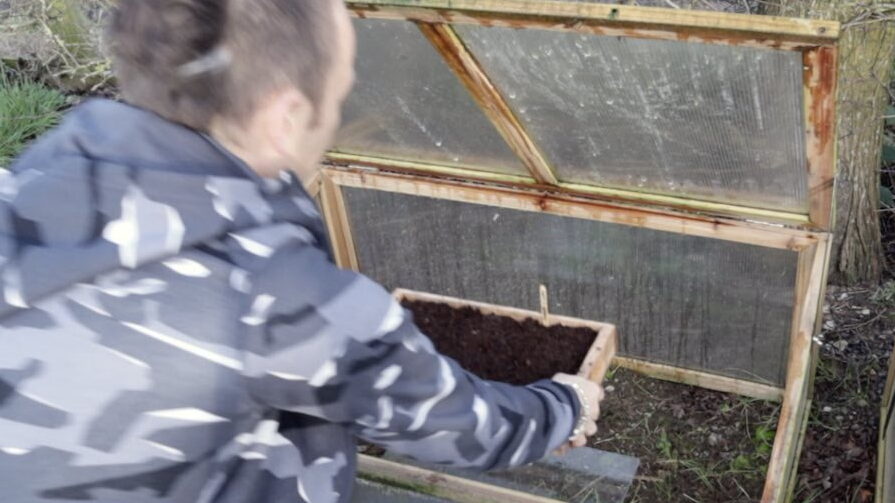
Starting summer-flowering bulbs indoors in February extends their blooming season considerably. Whilst these bulbs are typically planted directly in the garden in April or May, starting them in containers under cover in February means they’ll be actively growing when planted out, flowering weeks earlier than those planted directly.
Lilies, eucomis, liatris, and agapanthus all benefit from this approach—plant bulbs in containers using multipurpose compost mixed with additional grit for drainage. Place them in an unheated greenhouse or cold frame where frost protection prevents damage, but temperatures remain cool enough to avoid unnatural growth. Water sparingly until growth commences, then increase watering as leaves develop.
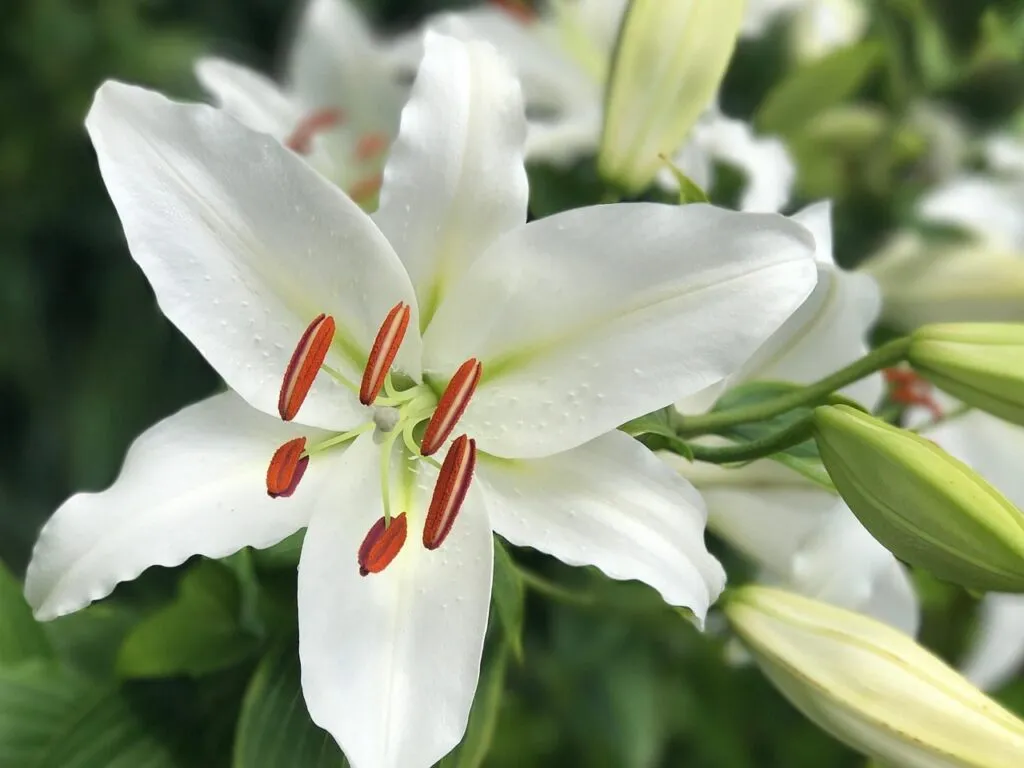
The beauty of this container approach is flexibility. You can move pots wherever colour is needed once they flower, essentially creating an immediate impact in your borders. Alternatively, plant out the entire pot in late spring, container and all, for a concentrated display. When flowering finishes, lift the pot and replace it with something else already coming into bloom.
February gardening already has enough inherent challenges without compounding them with avoidable mistakes. These are the errors I see repeatedly, both in my design work and from my own earlier experiences, before I learned to work with February’s limitations rather than against them. Sowing too early remains the classic mistake.
The temptation to start everything in early February because you’re excited about the growing season is understandable, but counterproductive. Seeds sown before conditions support their growth either rot or produce weak, stunted seedlings that never quite recover. Resist the urge to sow until you can provide the specific conditions each crop requires. Overwatering kills more February seedlings than any other cause. In cool conditions with limited light, plants use little water. Keeping compost constantly saturated encourages damping off, that frustrating fungal disease where seedlings collapse at the soil level and die.
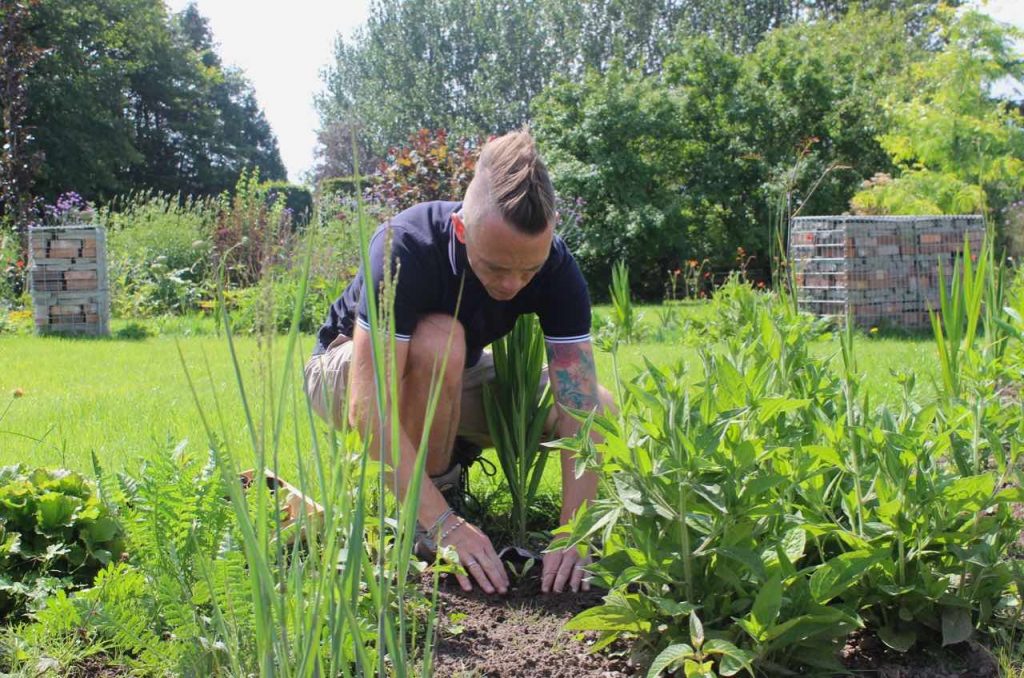
Water only when the compost surface dries, and always in the morning so excess moisture can evaporate during the day rather than sitting around roots overnight. Insufficient light produces leggy, weak seedlings regardless of how well you manage temperature and water. Those stretched, pale seedlings struggling on a north-facing windowsill or in the back of a greenhouse will never develop into productive plants. Be ruthless; if your available light is inadequate, delay sowing until March when natural light levels improve dramatically, or invest in supplementary LED grow lights.
Forgetting to label sowings seems trivial until you’re staring at unmarked trays trying to remember which tomato variety is which or whether these are peppers or aubergines. Always label immediately after sowing, including the variety name and sowing date. Pencil on wooden labels lasts indefinitely, whilst marker pen on plastic labels fades frustratingly quickly in sunshine.
The sowings you make in February form just the first phase of your growing season. Successful vegetable gardening involves succession sowing, where you make repeated small sowings of quick-maturing crops every two to three weeks, rather than a single large sowing that all matures simultaneously.
For salad crops, peas, and many vegetables, plan your next sowing dates now. February might be too early for outdoor sowing of many crops, but March, April, and May will arrive rapidly. Having a sowing schedule prevents the common scenario of eating nothing but lettuce for two weeks in June because it all matured together, then having no lettuce for the rest of the summer.
Keep a gardening diary recording exactly what you sow, when you sow it, and when it matures. This information becomes invaluable for planning future years. You’ll know precisely when to sow particular varieties for your specific garden conditions rather than relying on generic advice that may or may not suit your situation. Patterns emerge over several years, revealing which varieties perform consistently and which prove disappointing.
Ready to elevate your February gardening beyond basic tasks? My comprehensive online courses provide the expertise to transform you from enthusiastic beginner to confident garden creator.
With courses starting from just £29, you gain access to award-winning design knowledge.
For the garden you’ve already got, not the one you’re starting from scratch. Seven checklists and video lessons from BBC Garden Rescue’s Lee Burkhill, designed to help you decide what’s worth keeping before you spend a penny.
Garden Design Examples for Small Gardens: 30 Design Templates & Planting Plans: In this online gardening course, I’ll walk you through 30 fantastic garden designs, explaining the logic behind the layout and plant choices, plus take-home tips for applying them in your own garden.
Learn how to transform and design your garden with Lee Burkhill’s crash course in garden design. In over 5 hours, Lee will teach you how to design your dream garden. Featuring practical design examples, planting ideas and video guides. Learn how to design your garden in one weekend!
Garden Design for Beginners Online Course: Want to become a garden designer or design your own garden? This beginner course is for you. Join me, Lee Burkhill, an award-winning garden designer, as I train you in the art of beautiful garden design. Enjoy 20 hours of online study and video lessons, along with quizzes and a completion certificate.
February rewards strategic thinking and realistic assessment of your resources far more than optimistic enthusiasm. The gardeners who succeed in February are those who understand that this month is fundamentally about controlled environment growing rather than outdoor cultivation. Your heated propagator, windowsills, greenhouse, and cold frames become your primary growing spaces, whilst the outdoor garden remains largely dormant.
Focus your energy on the crops that genuinely need to be started now: tomatoes, chillies, peppers, aubergines, onions, leeks, sweet peas, and early salads under cover. Don’t waste time and seed attempting outdoor sowings that conditions don’t support. Use the bare bones visibility of your February garden to plan structural improvements that will benefit you for years to come.
February might test your patience, but the garden rewards those who work with the season’s limitations rather than fighting against them. Plan well, sow strategically, and prepare thoroughly, and your growing season will unfold successfully!
Happy February gardening!



Lee Burkhill, known as the Garden Ninja, is an award-winning garden designer and horticulturist with over 30 years of gardening experience and 15 years as a professional garden designer. A qualified RHS (Royal Horticultural Society) professional, Lee specialises in sustainable garden design and practical horticultural advice. He designs and presents on BBC1’s Garden Rescue and in leading gardening publications. Lee combines three decades of hands-on gardening knowledge with professional design qualifications to help gardeners create beautiful, functional outdoor spaces.
View all posts by Lee Burkhill






JOIN THE NINJAS
Be the first in line for new Guides, Discount codes and Offers