For the garden you’ve already got, not the one you’re starting from scratch. Seven checklists and video lessons from BBC Garden Rescue’s Lee Burkhill, designed to help you decide what’s worth keeping before you spend a penny.
69


Quick Answer
The best winter bedding plants for UK pots are winter pansies, violas, hardy cyclamen, primroses, bellis daisies, heathers and hellebores. Combine them with evergreens such as skimmia, heuchera and carex for structure, plant between September and November in peat free compost with added grit, and raise pots onto feet so they drain freely.
Winter containers get a bad reputation, with plenty of gardeners deciding there is no point bothering with pots once autumn fades. I think that is bonkers. Winter container gardening is one of the easiest ways to keep your garden looking alive through the dark months, and it takes far less effort than a summer display. The plants are tough, the rain does most of your watering, and a single planting in autumn can give you colour right through to April.

I’ve been planting up winter containers for as long as I can remember, and they are a small blast of hope when everything else in the garden looks dormant. A well planted pot positioned where you can see it from the kitchen window makes a grey January morning feel a lot less grim. Winter plants also need very little looking after compared with thirsty summer bedding, and the first flush of dwarf daffodils pushing through in February keeps you going until spring.

In this guide I’ll take you through the best winter bedding plants for pots and borders, the evergreens, grasses and winter flowering shrubs that give a display its backbone, how to plant up winter hanging baskets and window boxes, and how to keep everything alive through frost and heavy rain. Every plant has an at a glance table, so on a phone you can scroll straight to the details you need.
Jump To
This page contains affiliate links (see full details here). If you purchase through these links, I may earn a small commission at no extra cost to you, which helps keep the Garden Ninja blog free for everyone.
🛒 Browse winter bedding plant collections on Amazon UK
Winter containers are ideal for time poor gardeners and beginners because the plants do the heavy lifting. Summer bedding needs constant deadheading, feeding and watering. Winter plants grow slowly in the cold, get most of their water from the sky, and many of them flower for months without any deadheading at all. If you’ve ever come home from a week away in August to a pot of crispy petunias, winter pots will feel like a holiday.
For new gardeners they are also a good confidence builder. The plant selection is narrower and almost everything on the shelves in autumn is hardy, so it is hard to go badly wrong. Plant up in October or November, give the pots a quick check every couple of weeks, and they will give you colour through to April. There is no complicated feeding schedule, no aphid outbreaks and no daily watering in a heatwave.
Winter containers are good value too. The plants are cheap to buy as plugs or 9cm pots in autumn, a single planting gives you five to six months of display, and many of the evergreens and hardy perennials can be planted out into the garden afterwards rather than thrown away. My beginner’s guide to container gardening covers choosing pots and compost from scratch if you are brand new to growing in containers.
Every autumn the same question lands on the forum: is it too early, or too late, to plant winter bedding? The window is wider than most people think. The ideal time to plant winter bedding in the UK is from mid September to the end of October, while the soil and compost still hold some summer warmth. Plants set in during this window put down roots before the cold arrives, and roots are what carry them through frost and wet weather. You can keep planting through November, but growth will be slower and the display will take longer to fill out.
Garden centres start stocking winter pansies, violas and cyclamen in late August, and I’d hold off buying until the summer bedding has properly finished and nights start dropping below about 10°C. Wallflowers are sold as bare root bundles in October and need planting as soon as you get them home. Spring bulbs for underplanting go in at the same time as the bedding, with tulips planted a little later in November. If you’re filling borders rather than pots, the same timings apply, and my UK monthly planting calendar has a frost map to help you judge your own area.
Here are all 24 plants in this guide in one place. On a phone each plant shows as its own card, so you can scroll down without pinching and zooming.
| Plant | Type | Interest | Position | Best Use |
|---|---|---|---|---|
| Pansies and violas | Bedding | October to April | Sun or part shade | Pots, baskets, borders |
| Hardy cyclamen | Bedding | September to March | Part shade | Pots, under shrubs |
| Primroses and polyanthus | Bedding | January to May | Part shade | Pots, borders |
| Bellis daisies | Bedding | February to June | Sun | Pots, edging |
| Ornamental cabbage | Bedding | Foliage October to February | Sun | Pot centrepiece |
| Winter heathers | Bedding | December to April | Sun | Pots, baskets |
| Hellebores | Bedding perennial | December to April | Part shade | Large pots, borders |
| Wallflowers | Bedding | March to May | Sun | Borders, large pots |
| Brompton stocks | Bedding | March to May | Sun | Borders, pots |
| Ajuga | Groundcover | Foliage all year, flowers in spring | Sun or shade | Pots, baskets |
| Skimmia | Evergreen shrub | Buds all winter, flowers in spring | Shade | Pot centrepiece |
| Heuchera | Evergreen perennial | Foliage all year | Part shade | Pots, baskets |
| Euonymus fortunei | Evergreen shrub | Foliage all year | Sun or shade | Pots, window boxes |
| Compact hebes | Evergreen shrub | Foliage all year | Sun | Pots |
| Dwarf conifers | Evergreen | Foliage all year | Sun | Thriller plant |
| Ivy | Evergreen climber | Foliage all year | Sun or shade | Trailing edges |
| Carex | Evergreen grass | Foliage all year | Sun or part shade | Pots, baskets |
| Festuca glauca | Evergreen grass | Foliage all year | Sun | Pot edges |
| Cornus | Deciduous shrub | Red stems November to March | Sun | Tall thriller |
| Sarcococca | Winter shrub | December to February, scented | Shade | Large pots by doors |
| Mahonia | Winter shrub | November to March | Part shade | Large sheltered pots |
| Winter jasmine | Winter shrub | November to February | Sun or part shade | Pots with a trellis |
| Viburnum tinus | Winter shrub | November to April | Sun or part shade | Large pots |
| Daphne | Winter shrub | February to April, scented | Part shade | Sheltered pots |
Winter bedding plants are the workhorses of a winter display, giving you instant colour that lasts for months. They are cheap to buy, tough enough for most UK weather, and they work as well in a border as they do in a pot. These are the ten I rely on.
Pansies and violas flower through winter except during hard freezes, and they bounce back within days of the weather warming up. Modern winter flowering varieties come in almost every colour, from deep purples and bright yellows to near black. Violas have smaller flowers than pansies, but they produce far more of them and cope better with wind and rain, so I lean towards violas for exposed spots and hanging baskets.
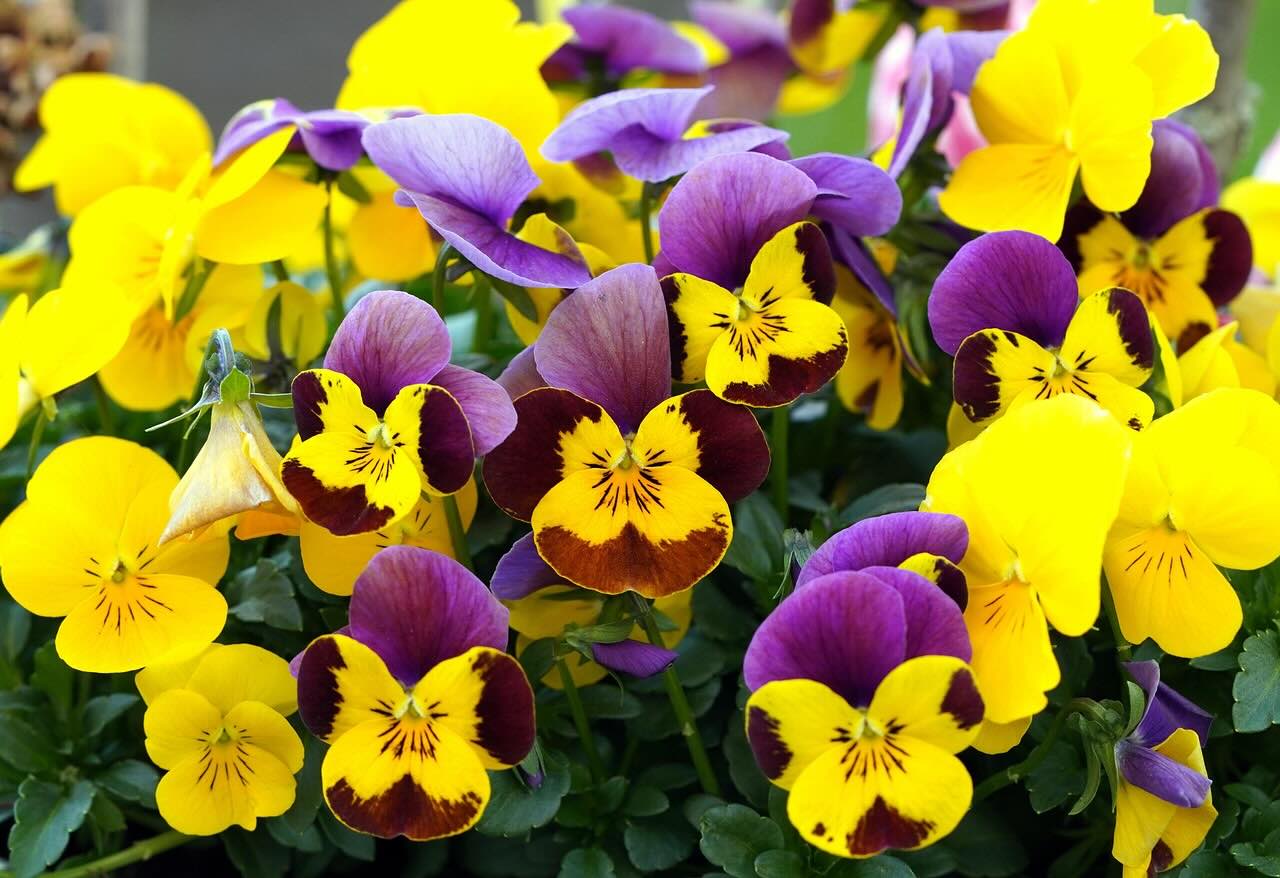
I always include a few trailing violas to soften the edges of a pot. Buy them as 9cm plants for instant impact, or as plug trays if you’re filling a lot of containers or a border. Pick off faded flowers every week or two, since pansies left to set seed stop flowering much sooner. If snow settles on them, don’t panic. Brush off heavy falls, and the plants will carry on once it thaws.
| Pansies and Violas at a Glance | |
|---|---|
| Botanical Name | Viola × wittrockiana and Viola cornuta |
| Plant Type | Hardy bedding, grown as an annual |
| RHS Hardiness | H6 |
| Height and Spread | 10cm to 20cm by 20cm |
| Flowering Period | October to April |
| Best Conditions | Sun or partial shade, free draining compost |
| Key Feature | Flowers through mild spells all winter |
🛒 Buy winter pansies and violas from Amazon UK
Cyclamen have swept back petals and silver marbled leaves, and they bring bright magenta, pink and white flowers to shady pots. It is worth knowing there are two quite different types on sale. Hardy cyclamen such as Cyclamen coum and Cyclamen hederifolium survive frost and will naturalise under trees and shrubs if you plant them out after their pot display. The large flowered florist cyclamen sold in autumn are tender and only last outdoors in sheltered spots in milder areas.
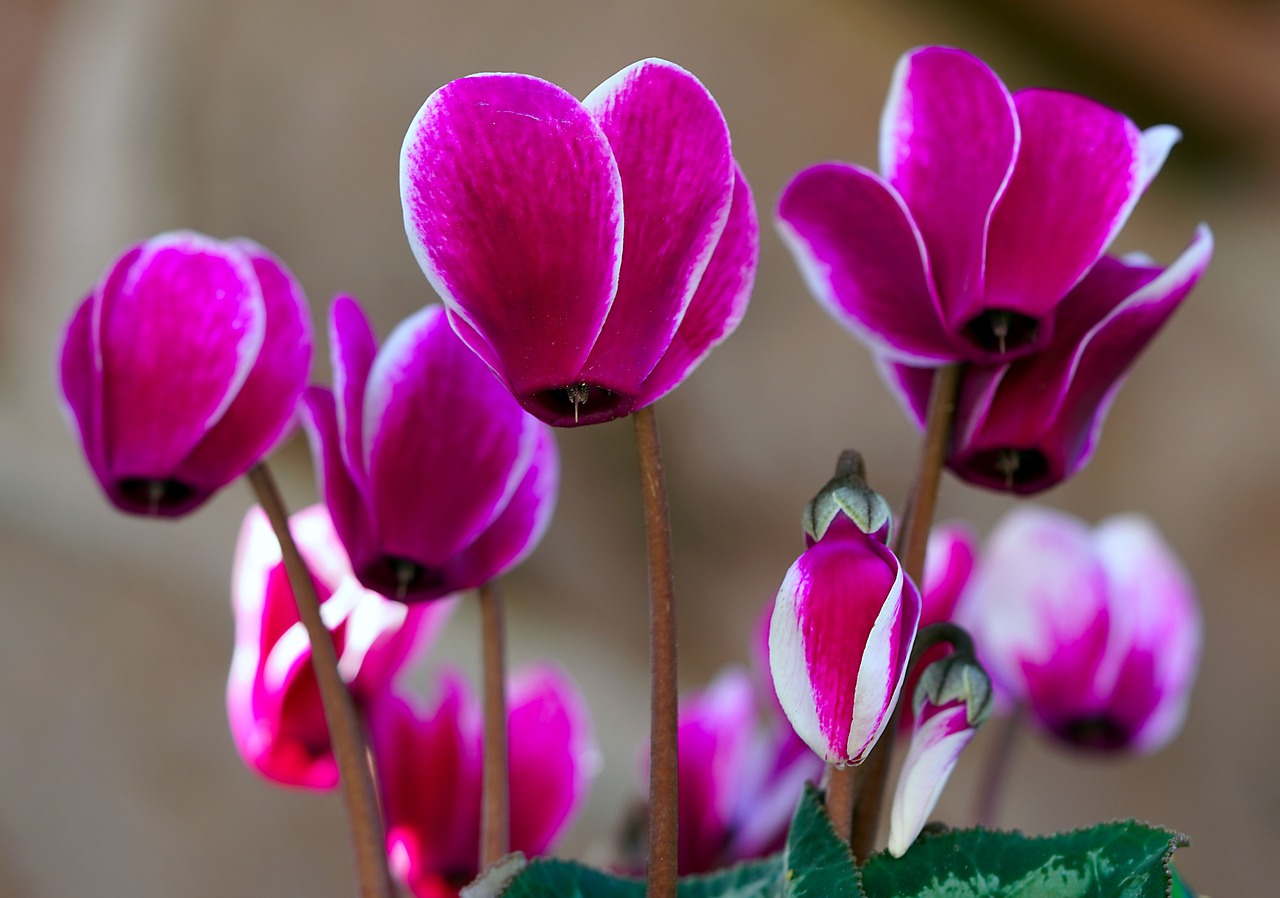
Cyclamen dislike sitting in wet compost, so plant them slightly proud of the surface and water around the plant rather than into the crown. I use 13cm plants to bring some winter colour to the pots here at Garden Ninja HQ, and I tuck the florist types up against the house wall where they get a little shelter from the worst of the frost.
| Hardy Cyclamen at a Glance | |
|---|---|
| Botanical Name | Cyclamen coum and Cyclamen hederifolium |
| Plant Type | Hardy tuberous perennial |
| RHS Hardiness | H5 (florist cyclamen are tender) |
| Height and Spread | 10cm to 15cm by 15cm |
| Flowering Period | September to March depending on species |
| Best Conditions | Partial shade, very free draining compost |
| Key Feature | Marbled foliage that looks good between flowers |
🛒 Buy hardy cyclamen from Amazon UK
Primroses and polyanthus bring a cheerful cottage garden feel to winter pots. They start flowering in late winter and keep going well into spring, bridging the gap as the pansies tire. Plant them in groups of three or five for impact rather than dotting single plants around, and don’t be shy with colour, since reds, oranges and hot pinks glow on a dull day.

The modern F1 varieties are tougher and more weather resistant than traditional types. You can grow them from seed, but they need cold stratification to germinate and can frustrate a beginner, so I suggest buying plants in pots. Once they finish flowering in spring, plant them into a shady corner of a border, where our native primrose in particular will naturalise over time.
| Primroses and Polyanthus at a Glance | |
|---|---|
| Botanical Name | Primula vulgaris and Primula Polyanthus Group |
| Plant Type | Hardy perennial, often grown as bedding |
| RHS Hardiness | H6 |
| Height and Spread | 15cm to 25cm by 20cm |
| Flowering Period | January to May |
| Best Conditions | Partial shade, moisture retentive compost |
| Key Feature | Can be planted out to naturalise afterwards |
🛒 Buy primroses and polyanthus from Amazon UK
Bellis daisies rarely get the attention they deserve for winter containers. These little pompom flowered plants come in pink, red and white and flower from late winter right through spring. They are hardy, cheap to buy as plugs, and give any display a relaxed cottage garden character.

Deadhead them regularly and they will keep blooming for months. I prefer the pink and red cultivars, since I find the pure white ones a little stark next to the deep greens of winter foliage. They are also compact enough for window boxes and the front of a hanging basket.
| Bellis Daisies at a Glance | |
|---|---|
| Botanical Name | Bellis perennis |
| Plant Type | Hardy perennial grown as biennial bedding |
| RHS Hardiness | H7 |
| Height and Spread | 10cm to 15cm by 15cm |
| Flowering Period | February to June |
| Best Conditions | Full sun, any reasonable compost |
| Key Feature | Pompom flowers from late winter |
🛒 Buy bellis daisies from Amazon UK
Ornamental cabbage and kale add bold foliage to winter pots. Their frilly leaves come in shades of pink, purple, cream and green, and the colours deepen as the weather gets colder. They remind me of going to the garden centre as a child with my pocket money to create winter pots, so they will always have a place in my containers.
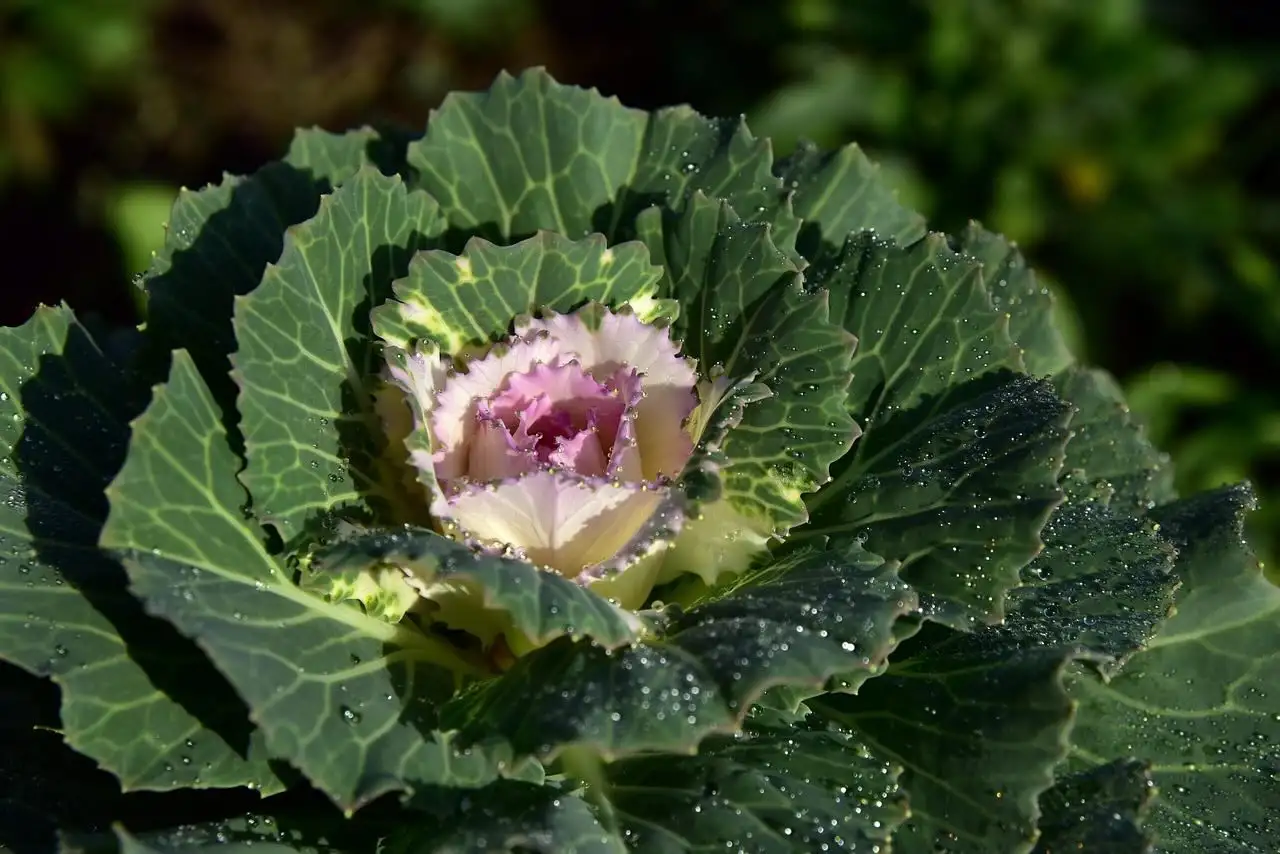
They grow very slowly once the weather cools, so buy them at roughly the size you want them to be in your display. They are edible in theory but bred for looks rather than flavour, so treat them as a centrepiece for a large pot rather than a crop. Pigeons can nibble them in a cold spell, and a few twiggy prunings pushed in around the plant will usually put them off.
| Ornamental Cabbage at a Glance | |
|---|---|
| Botanical Name | Brassica oleracea Acephala Group |
| Plant Type | Hardy biennial grown as annual bedding |
| RHS Hardiness | H5 |
| Height and Spread | 20cm to 30cm by 30cm |
| Flowering Period | Foliage October to February |
| Best Conditions | Full sun, firm fertile compost |
| Key Feature | Leaf colour intensifies in cold weather |
🛒 Buy ornamental cabbage and kale from Amazon UK
Winter flowering heathers are among the toughest plants you can put in a pot. Erica carnea and Erica × darleyensis varieties flower from December through to April in pinks, purples and white, and they give early bumblebees some welcome food on mild days. Many varieties also have gold or bronze foliage that adds colour even before the flowers open.
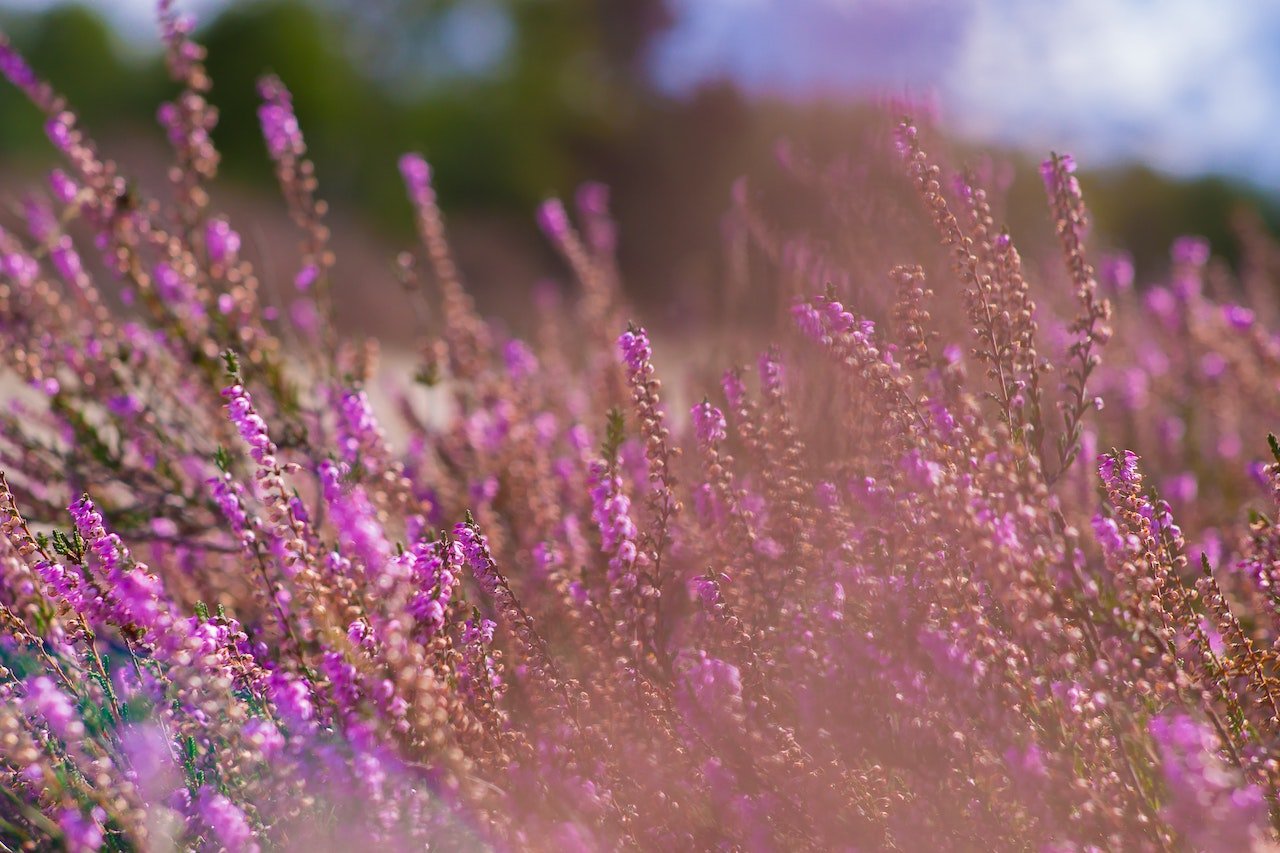
Unlike the summer flowering Calluna heathers, winter heathers tolerate lime, so they grow happily in ordinary peat free multipurpose compost and don’t need an ericaceous mix. Trim them lightly with shears straight after flowering to keep them compact. They also make a tidy, long lasting filler in hanging baskets and window boxes.
| Winter Heathers at a Glance | |
|---|---|
| Botanical Name | Erica carnea and Erica × darleyensis |
| Plant Type | Hardy evergreen shrub |
| RHS Hardiness | H7 |
| Height and Spread | 15cm to 30cm by 30cm to 45cm |
| Flowering Period | December to April |
| Best Conditions | Full sun, free draining compost |
| Key Feature | Early nectar for bumblebees |
🛒 Buy winter flowering heathers from Amazon UK
Hellebores are the plants I’d choose if I wanted a winter pot to become a permanent feature. The Christmas rose, Helleborus niger, opens pure white flowers from December, and the hybrid Lenten roses follow from February in shades of plum, pink, cream and speckled green. Their nodding flowers sit well at eye level in a raised pot, where you can actually see inside them.
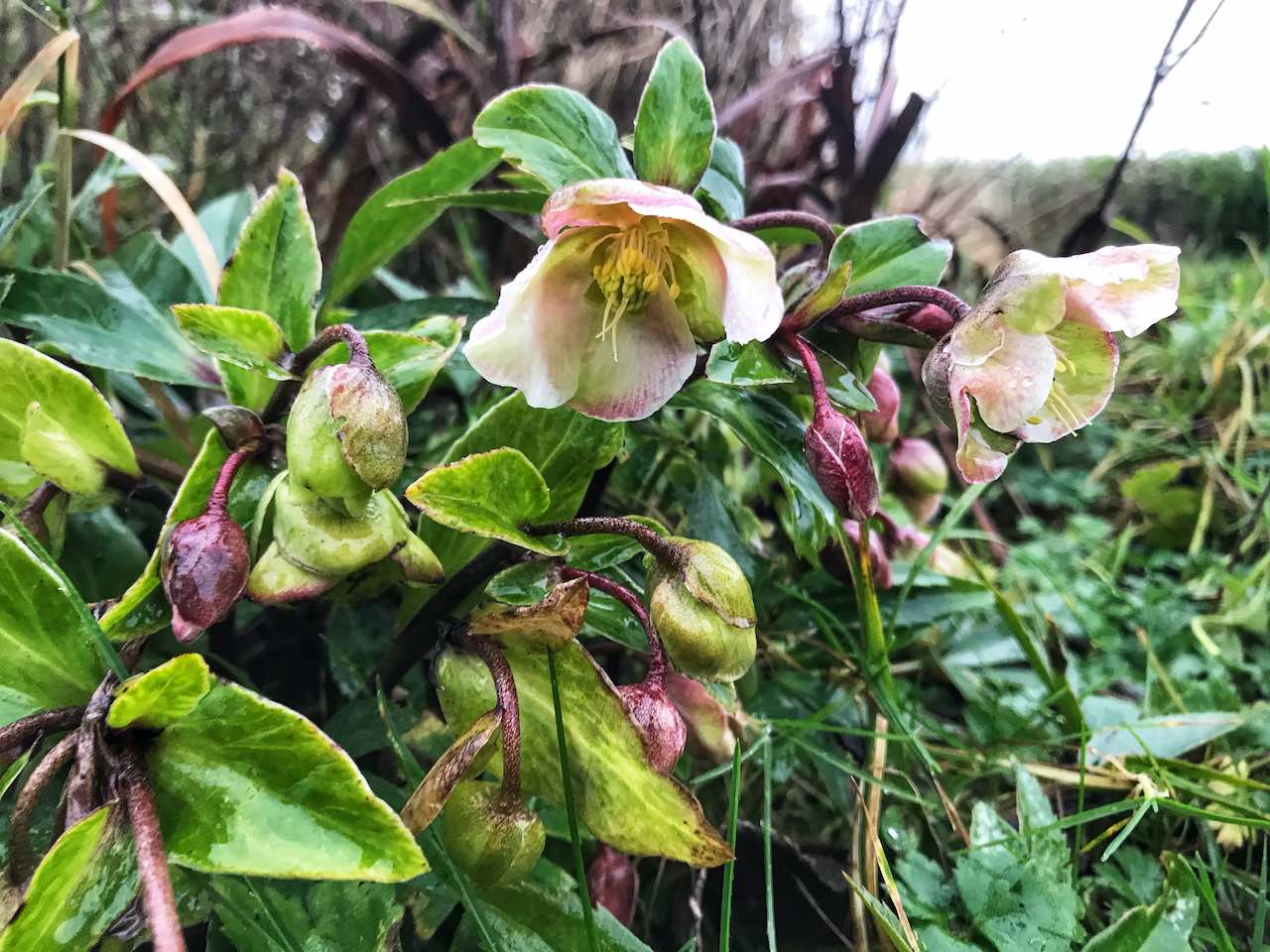
Hellebores cost more than bedding, but they live for years and can go into the border when they outgrow their pot. Cut off last year’s tatty leaves in early winter, just as the flower buds appear, so the flowers show clearly and leaf spot disease doesn’t spread. They prefer a heavy, moisture retentive compost, so John Innes No. 3 mixed with multipurpose compost suits them well.
| Hellebores at a Glance | |
|---|---|
| Botanical Name | Helleborus niger and Helleborus × hybridus |
| Plant Type | Hardy evergreen perennial |
| RHS Hardiness | H6 |
| Height and Spread | 30cm to 45cm by 45cm |
| Flowering Period | December to April |
| Best Conditions | Partial shade, rich moisture retentive compost |
| Key Feature | Long lived winter flowers year after year |
🛒 Buy hellebores from Amazon UK
Wallflowers are the classic autumn planted bedding for a spring display, and they are one of the plants the forum regularly asks about each October. You buy them as bare root bundles or young plants in autumn, plant them firmly, and they sit quietly through winter before bursting into scented flowers in March and April.
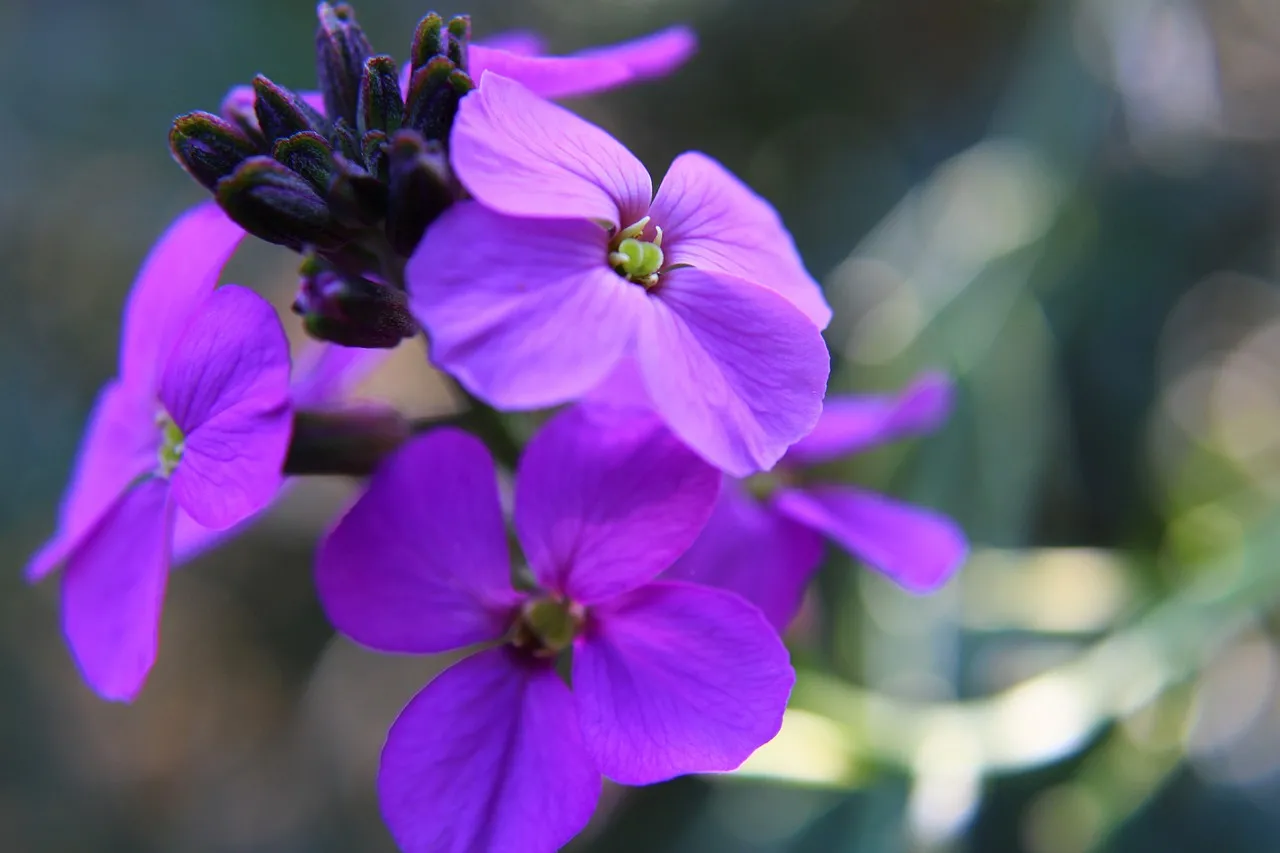
Plant bare root wallflowers as soon as you get them home, firming the soil or compost well around the stem, since they dislike being rocked by wind. Pinch out the growing tips at planting to encourage bushier plants with more flowers. They are brassicas, so avoid planting them in the same border soil year after year to reduce the risk of clubroot. The perennial Erysimum ‘Bowles’s Mauve’ is also a good choice for a large pot, since it flowers for months.
| Wallflowers at a Glance | |
|---|---|
| Botanical Name | Erysimum cheiri |
| Plant Type | Hardy biennial grown as bedding |
| RHS Hardiness | H5 |
| Height and Spread | 25cm to 45cm by 30cm |
| Flowering Period | March to May |
| Best Conditions | Full sun, well drained soil or compost |
| Key Feature | Scented spring flowers from an autumn planting |
🛒 Buy wallflower plants from Amazon UK
Brompton stocks give you tall spikes of intensely scented flowers in spring, in rich pinks, purples and creams. They are biennials, sown in early summer and planted out in autumn, so for most gardeners the easiest route is buying young plants in September or October and letting them establish over winter.
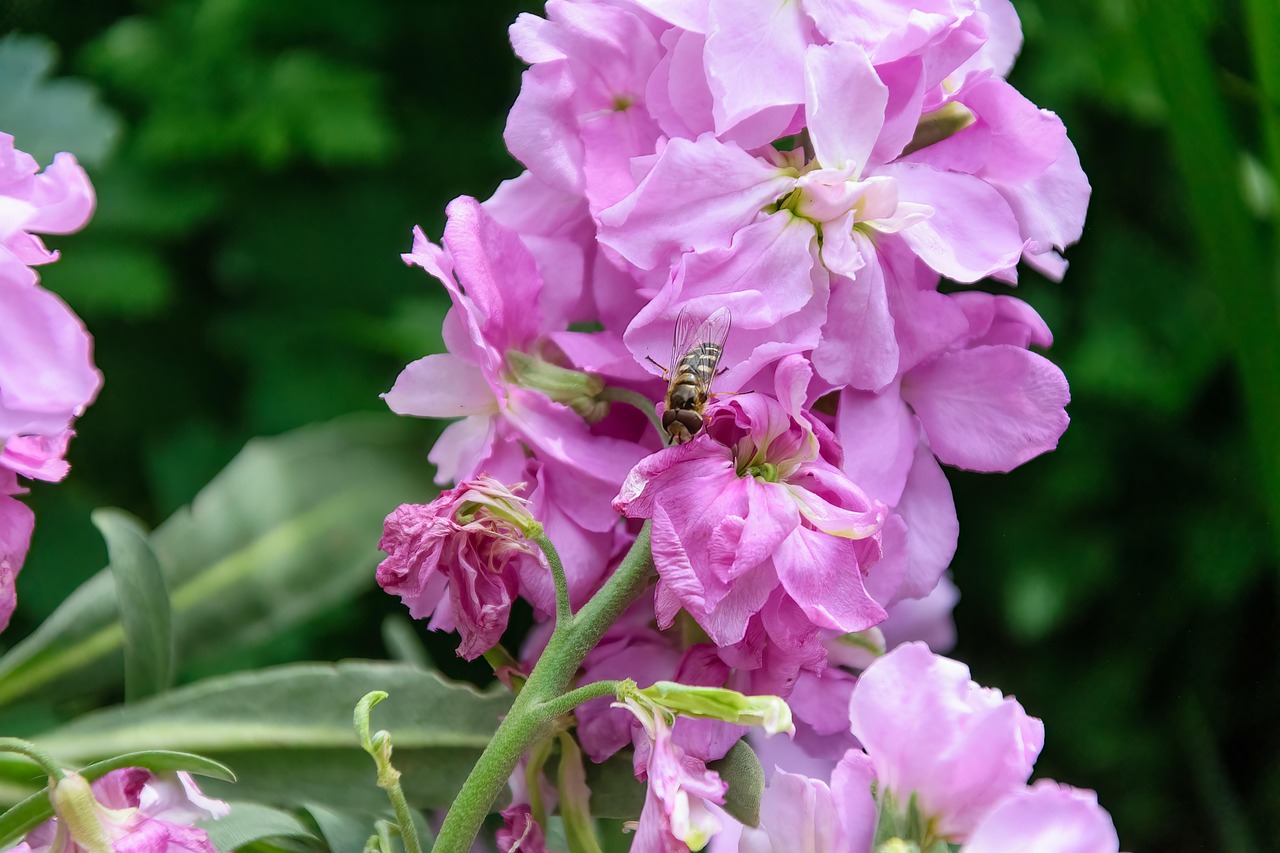
They are less tough than pansies in severe weather, so give them a sheltered spot near the house or a sunny wall, and avoid heavy, wet compost. The scent is the reason to grow them, which is why I place them by a front door or along a path where you brush past them in spring.
| Brompton Stocks at a Glance | |
|---|---|
| Botanical Name | Matthiola incana |
| Plant Type | Biennial grown as bedding |
| RHS Hardiness | H4 |
| Height and Spread | 30cm to 45cm by 30cm |
| Flowering Period | March to May |
| Best Conditions | Full sun, sheltered spot, free draining compost |
| Key Feature | Strong clove scent in spring |
🛒 Buy Brompton stock plants and seeds from Amazon UK
Ajuga, also called bugle, forms evergreen rosettes of glossy leaves in bronze, purple or variegated patterns. It spreads to fill gaps between other plants, trails gently over the rim of a pot, and produces short spikes of blue flowers in spring. The dark leaved varieties such as Ajuga reptans ‘Black Scallop’ contrast well with bright violas and cyclamen.
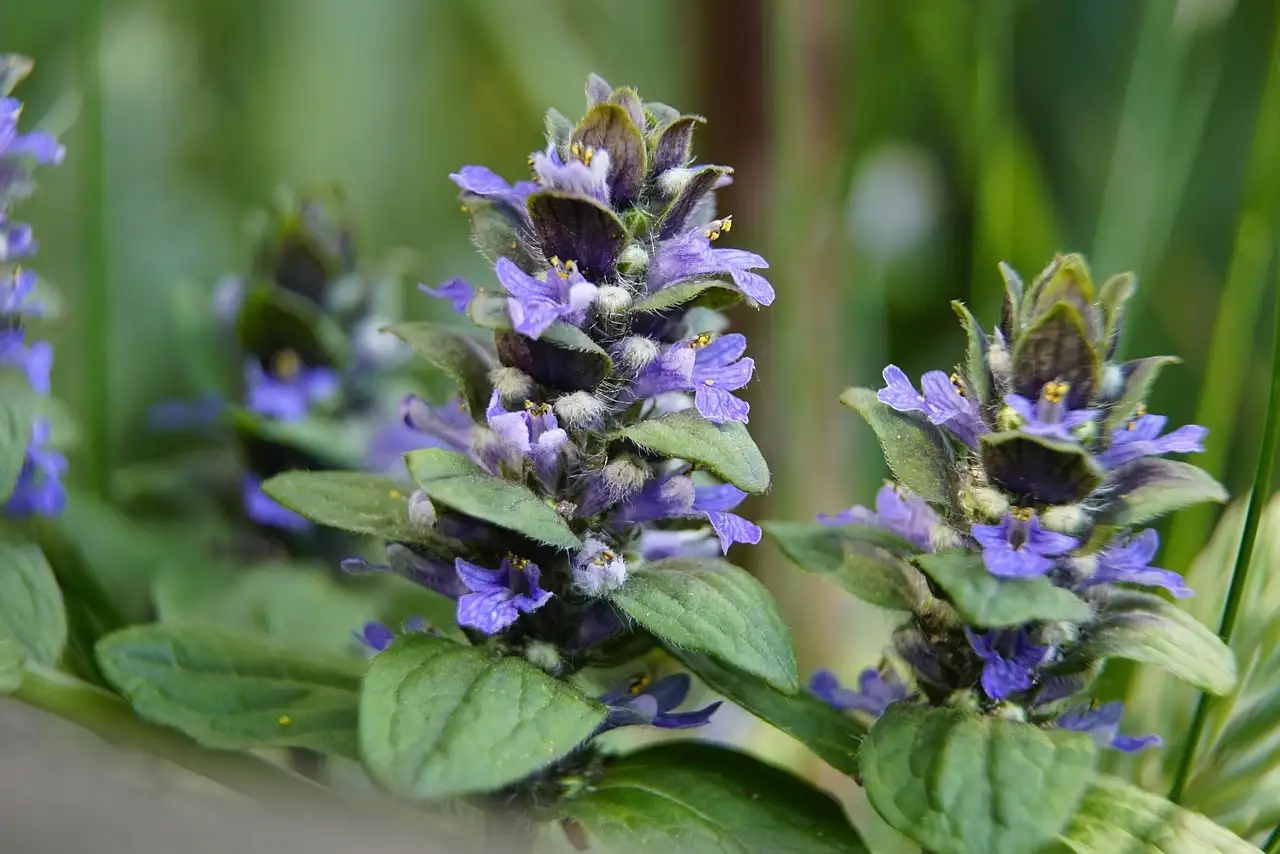
I have ajuga running through most of the dark, moody borders here at Garden Ninja HQ, and I lift a few rooted pieces each autumn to use in winter pots for free. At the end of winter, plant it back out as groundcover under shrubs, where it will help suppress weeds.
| Ajuga at a Glance | |
|---|---|
| Botanical Name | Ajuga reptans |
| Plant Type | Hardy evergreen perennial groundcover |
| RHS Hardiness | H7 |
| Height and Spread | 10cm to 15cm by 45cm |
| Flowering Period | April to June, foliage all year |
| Best Conditions | Sun or shade, moist compost |
| Key Feature | Dark foliage that sets off bright flowers |
🛒 Buy ajuga plants from Amazon UK
Evergreen shrubs and perennials provide the backbone of a winter container, giving shape and colour even on days when nothing is flowering. Think of them as an investment, since most will last for years in a pot or can be planted into the garden once they outgrow it. Mixing one or two evergreens with seasonal bedding also means you only replace a few plants each autumn rather than starting from scratch. My guide to essential evergreen shrubs has more options if you want to go bigger.
Skimmia is one of my first picks for a winter pot. The red flower buds form in autumn and hold all winter, then open to fragrant white flowers in spring, and the glossy evergreen leaves give structure through the rest of the year. Skimmia japonica ‘Rubella’ is the classic variety and the one you’ll see at most garden centres.
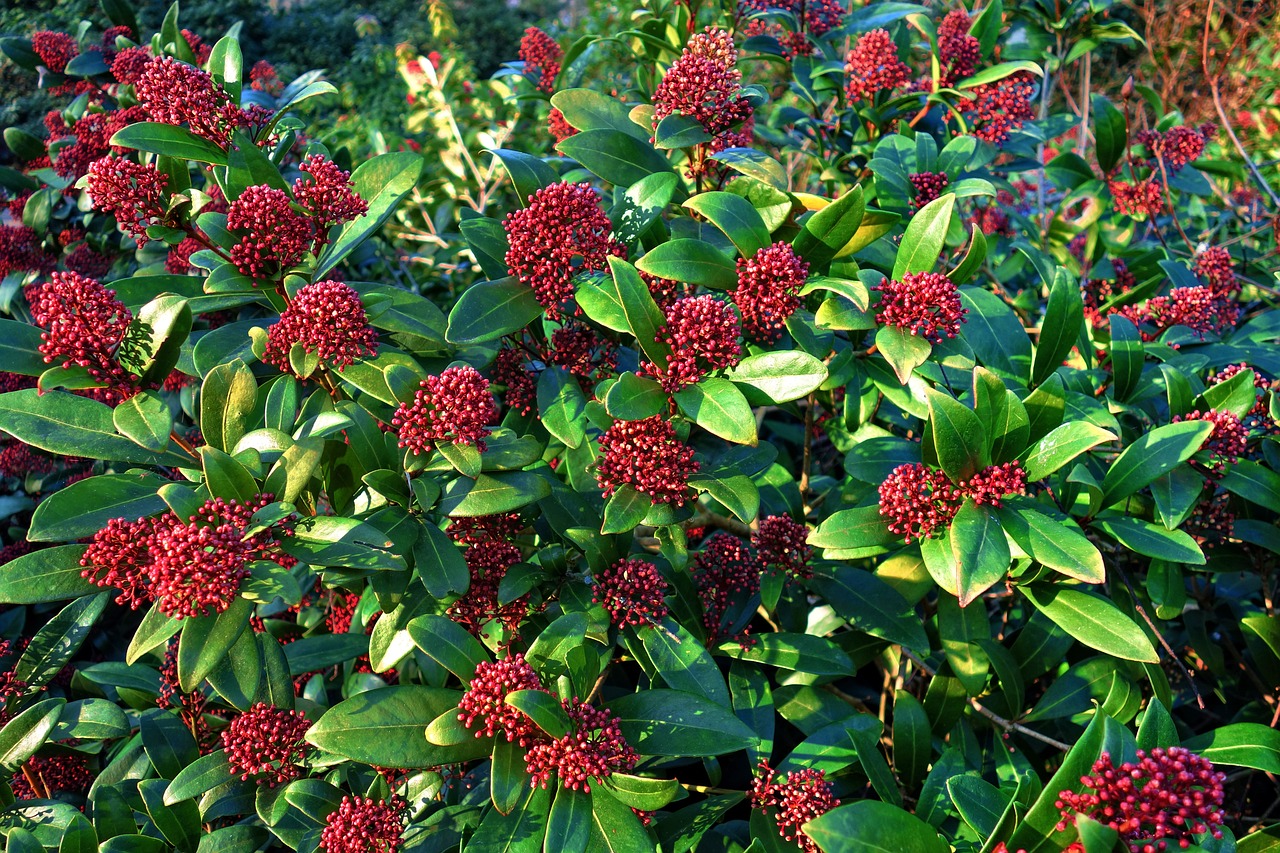
Skimmias prefer shade, and their leaves yellow in hot sun, so they suit north and east facing doorsteps. They like slightly acidic conditions, so if the leaves start to pale in a pot, mix some ericaceous compost into the top layer in spring. ‘Rubella’ is a male plant and won’t produce berries, which keeps its tight red buds on show all winter.
| Skimmia at a Glance | |
|---|---|
| Botanical Name | Skimmia japonica ‘Rubella’ |
| Plant Type | Hardy evergreen shrub |
| RHS Hardiness | H5 |
| Height and Spread | 60cm to 1m by 60cm to 1m (slow growing) |
| Flowering Period | Buds October to March, flowers April |
| Best Conditions | Partial to full shade, slightly acidic compost |
| Key Feature | Red buds that last all winter |
🛒 Buy skimmia plants from Amazon UK
Heucheras give you leaf colour from lime and amber through to deep purple and near black, and most varieties hold their leaves right through a UK winter. They are ideal fillers in a mixed pot, since one heuchera covers the same space as three or four bedding plants and looks good twelve months of the year.
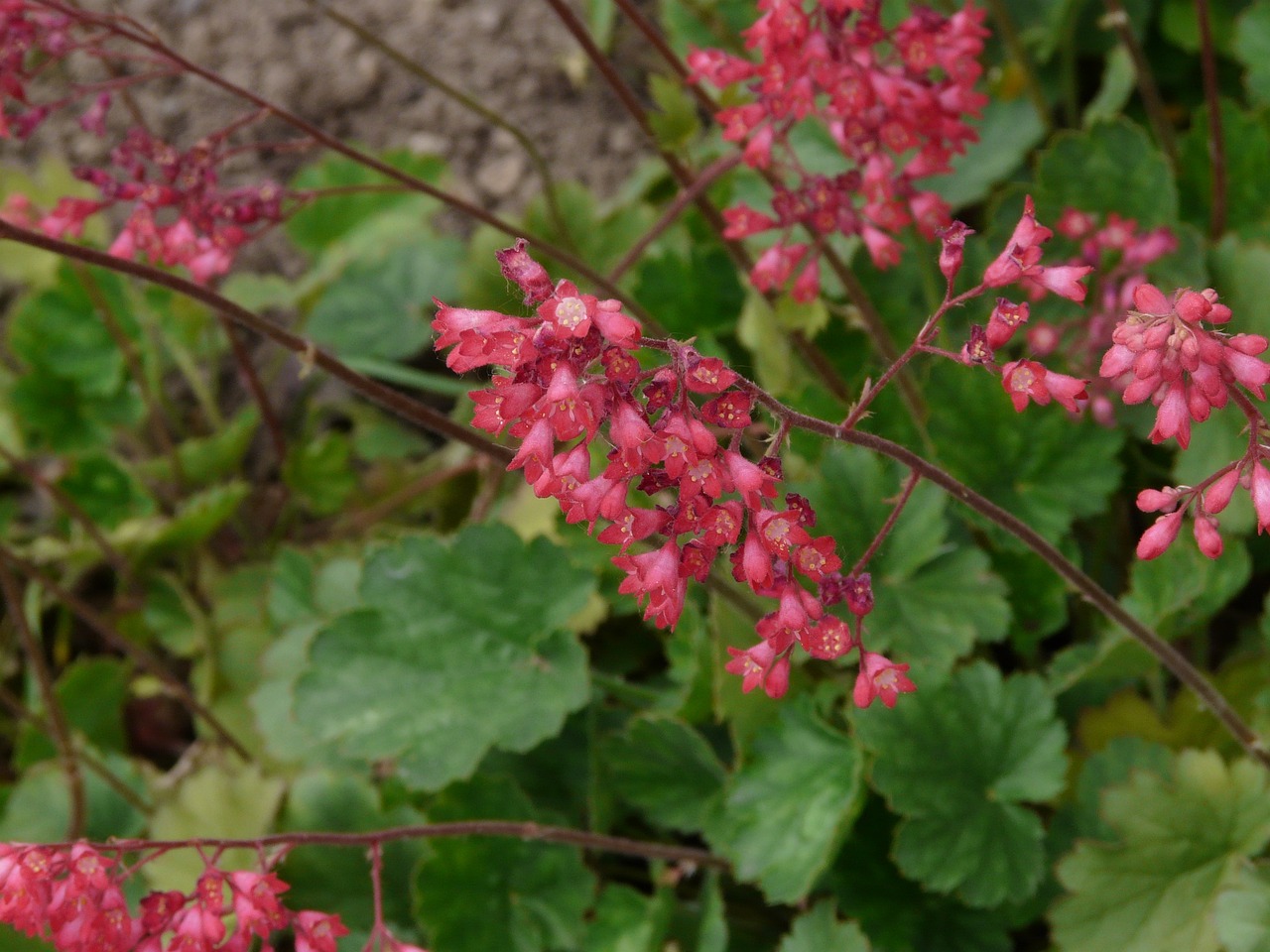
Vine weevil is the main enemy of heucheras in containers, since the grubs feed on the roots over winter. If a plant suddenly wilts and lifts out of the compost with no roots, that is the culprit, and a biological nematode treatment in late summer is the most effective control. Heucheras also tend to push themselves up out of the compost over time, so replant them a little deeper each autumn.
| Heuchera at a Glance | |
|---|---|
| Botanical Name | Heuchera cultivars |
| Plant Type | Hardy evergreen perennial |
| RHS Hardiness | H6 |
| Height and Spread | 20cm to 45cm by 30cm to 45cm |
| Flowering Period | Flowers June to August, foliage all year |
| Best Conditions | Partial shade, free draining compost |
| Key Feature | Year round leaf colour in a small space |
🛒 Buy heuchera plants from Amazon UK
Variegated Euonymus fortunei is about as close to indestructible as a container plant gets. Varieties such as ‘Emerald ‘n’ Gold’ and ‘Emerald Gaiety’ have bright cream or yellow edged leaves that light up a dark corner, and they often take on pink tints in cold weather.
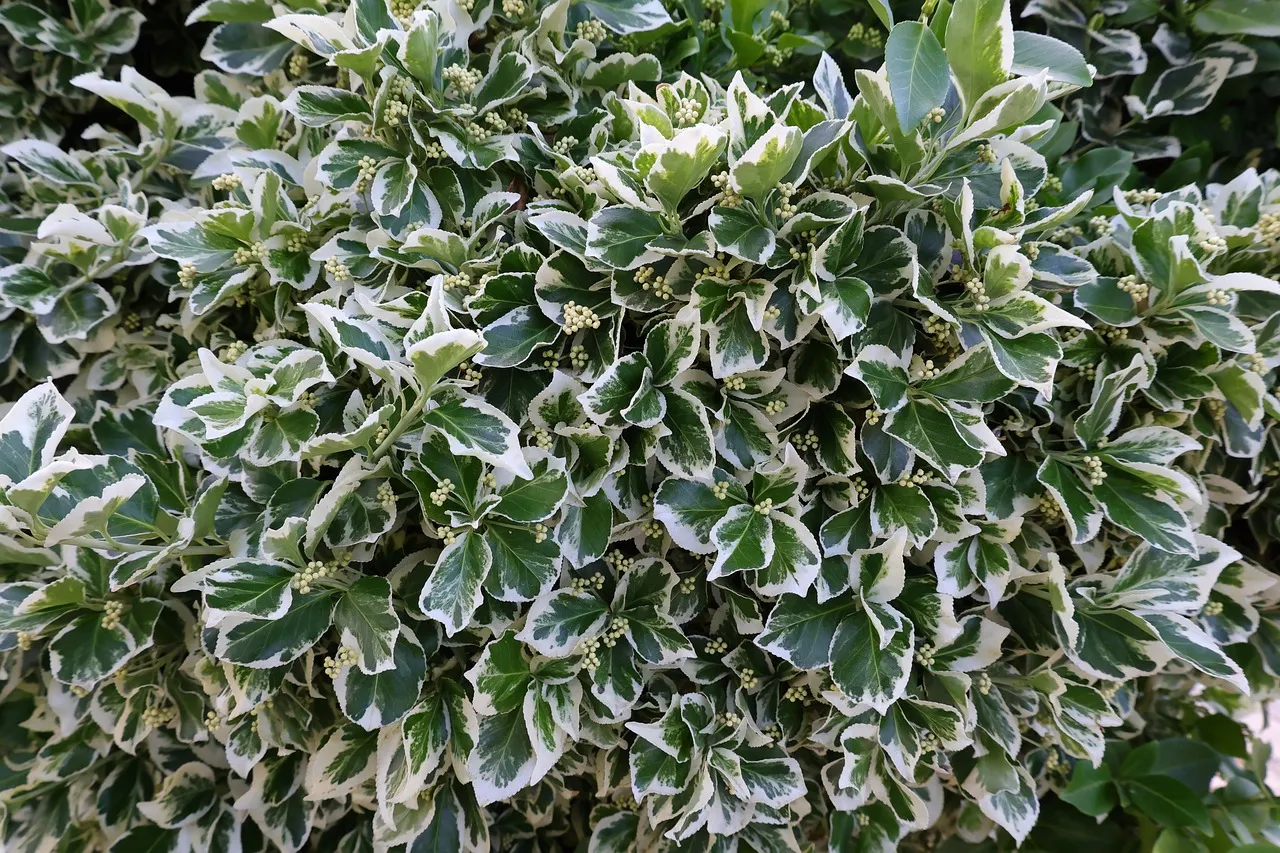
It grows in sun or deep shade, copes with wind and neglect, and can be clipped into a neat dome or left to trail over the edge of a window box. After a season in a pot it can go into a border as low evergreen groundcover. Watch for scale insects on the undersides of the leaves, and wipe them off with a damp cloth if you spot them.
| Euonymus Fortunei at a Glance | |
|---|---|
| Botanical Name | Euonymus fortunei ‘Emerald Gaiety’ |
| Plant Type | Hardy evergreen shrub |
| RHS Hardiness | H6 |
| Height and Spread | 60cm to 1m by 1m (slow in pots) |
| Flowering Period | Foliage all year |
| Best Conditions | Sun or shade, any reasonable compost |
| Key Feature | Bright variegation for shady pots |
🛒 Buy variegated euonymus from Amazon UK
Compact hebes give a rounded, evergreen shape that sits well in the middle of a winter pot. Varieties such as ‘Heartbreaker’ and ‘Magic Summer’ have pink and cream tinted foliage that colours up in the cold, and the small leaved types tend to be the hardiest. I used hebes as the fillers in the viola and ajuga pot pictured further down this guide.
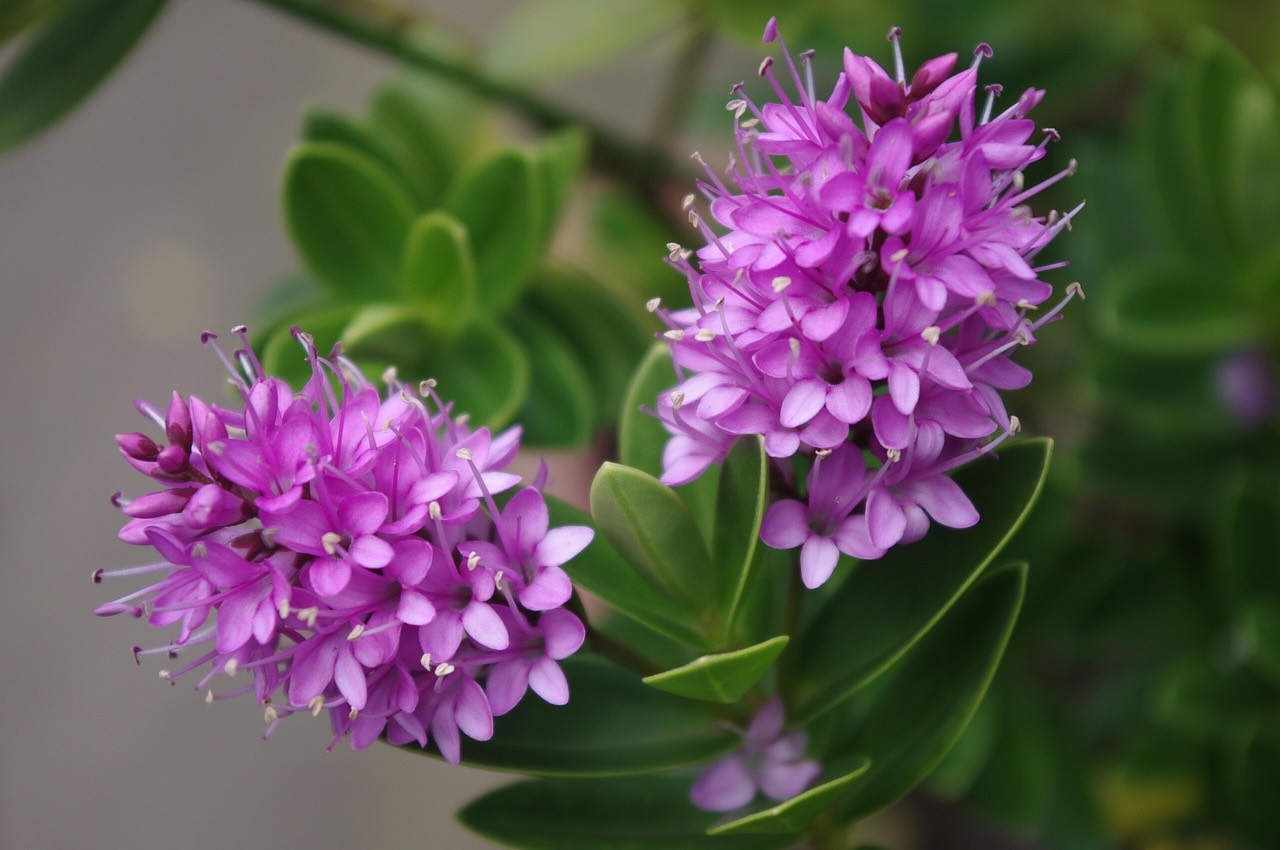
Large leaved hebes can be damaged in hard frosts, so choose small leaved varieties for exposed spots and don’t worry if a few tips brown in a cold snap. Trim lightly in spring to keep plants bushy. If you’re unsure whether a frost damaged hebe will recover, my dead or dormant guide walks through the scratch test.
| Compact Hebes at a Glance | |
|---|---|
| Botanical Name | Hebe cultivars |
| Plant Type | Evergreen shrub |
| RHS Hardiness | H4 (small leaved types are tougher) |
| Height and Spread | 30cm to 60cm by 45cm |
| Flowering Period | Flowers summer, foliage all year |
| Best Conditions | Full sun, free draining compost, shelter from wind |
| Key Feature | Rounded evergreen shape with winter leaf colour |
🛒 Buy compact hebe plants from Amazon UK
A small conifer placed as the thriller in a pot gives instant height and structure. Golden varieties such as Chamaecyparis lawsoniana ‘Ellwoodii Gold’ and Cupressus macrocarpa ‘Goldcrest’ add a pop of yellow, and blue Juniperus squamata ‘Blue Star’ makes a neat low mound.

Always check the ultimate size on the label, since some conifers sold as dwarf will still reach several metres in the ground. Conifers can’t regrow from old brown wood, so never cut back into bare stems. Water them through dry winter spells, especially pots sheltered under eaves, since conifers that dry out at the root brown quickly. My conifer pruning guide explains how to keep them in shape.
| Dwarf Conifers at a Glance | |
|---|---|
| Botanical Name | Chamaecyparis, Cupressus and Juniperus cultivars |
| Plant Type | Hardy evergreen conifer |
| RHS Hardiness | H5 to H7 depending on type |
| Height and Spread | 30cm to 1m by 30cm to 60cm in a pot |
| Flowering Period | Foliage all year |
| Best Conditions | Full sun, free draining compost |
| Key Feature | Instant height and structure |
🛒 Buy dwarf conifers from Amazon UK
Ivy is the easiest trailing plant for winter pots, baskets and window boxes. Small leaved variegated varieties such as Hedera helix ‘Glacier’ and ‘Goldchild’ soften the rim of a container and trail down to link a pot to the ground. Mature ivy in the wild also provides late nectar and berries for wildlife.
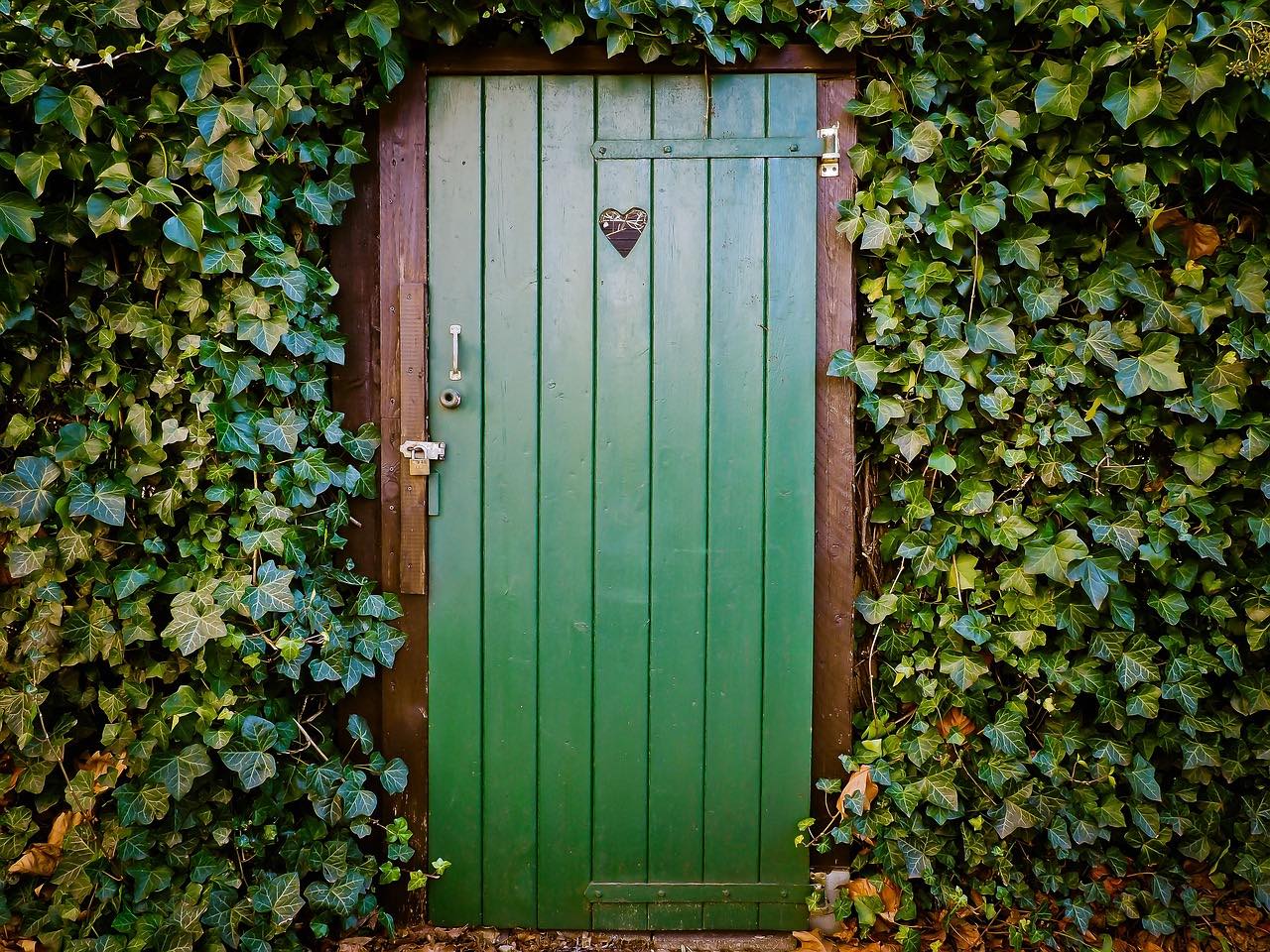
Buy ivy in 9cm pots for trailing, or look for trained ivy on small cane frames to add height. Once the display finishes, it can be planted against a wall or fence, though bear in mind it will climb and spread readily once it has room. Trim trailing stems in spring to keep it tidy.
| Ivy at a Glance | |
|---|---|
| Botanical Name | Hedera helix cultivars |
| Plant Type | Hardy evergreen climber |
| RHS Hardiness | H5 |
| Height and Spread | Trails 30cm to 1m in a pot |
| Flowering Period | Foliage all year |
| Best Conditions | Sun or shade, any compost |
| Key Feature | Trailing stems that soften pot edges |
🛒 Buy trailing ivy plants from Amazon UK
Grasses bring movement and texture to winter containers, and they look good dusted with frost or snow. They also contrast with the rounded leaves of bedding and evergreens, which stops a winter pot from looking flat. Coloured dogwood stems add a vertical accent that no other winter plant gives you. For more varieties, see my guide to the best ornamental grasses.
Carex are fully evergreen, hardy and come in a range of colours. Carex oshimensis ‘Evergold’ has cream and green striped leaves that brighten shady winter corners, and bronze types such as Carex buchananii add warmth next to orange and red bedding.
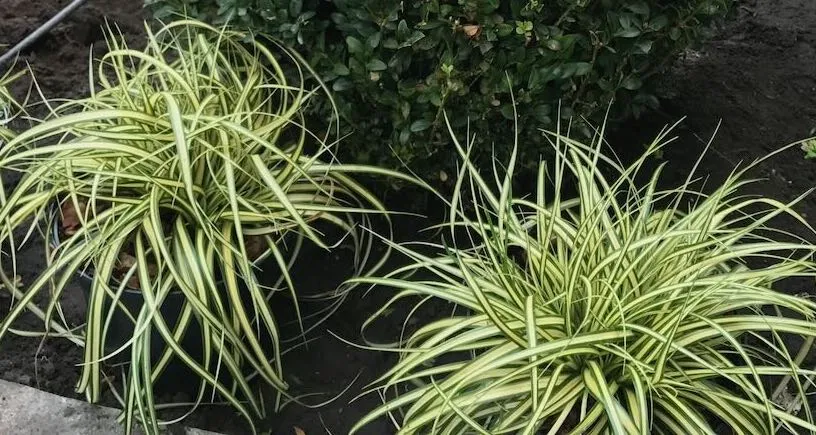
Carex works as underplanting beneath taller shrubs or on its own in a small pot. Comb out any dead leaves with your fingers in spring rather than cutting the plant back hard, since evergreen carex regrows slowly from a hard cut. They are also on my list of slug and snail proof plants, which helps in a damp winter.
| Carex at a Glance | |
|---|---|
| Botanical Name | Carex oshimensis ‘Evergold’ |
| Plant Type | Hardy evergreen sedge |
| RHS Hardiness | H5 |
| Height and Spread | 20cm to 30cm by 30cm to 40cm |
| Flowering Period | Foliage all year |
| Best Conditions | Sun or partial shade, moist compost |
| Key Feature | Bright striped leaves for shade |
🛒 Buy carex grasses from Amazon UK
Festuca glauca is a neat blue grass that stays compact and gives a strong colour contrast. I use it constantly in winter containers because it doesn’t outgrow its space, and the blue grey foliage works with almost everything, from pink cyclamen to red skimmia buds.

Plant it around the edge of a pot to create a textural collar. It needs sun and very free draining compost, and it sulks in wet, shady spots, so add extra grit when planting. Tease out the dead brown blades in spring to keep the colour fresh.
| Festuca Glauca at a Glance | |
|---|---|
| Botanical Name | Festuca glauca ‘Elijah Blue’ |
| Plant Type | Hardy evergreen grass |
| RHS Hardiness | H5 |
| Height and Spread | 20cm to 30cm by 30cm |
| Flowering Period | Foliage all year |
| Best Conditions | Full sun, gritty free draining compost |
| Key Feature | Blue foliage that suits any colour scheme |
🛒 Buy festuca glauca from Amazon UK
Once dogwoods drop their leaves in autumn they reveal bright red, orange or lime green stems that glow through winter. A single young Cornus alba ‘Sibirica’ or Cornus sanguinea ‘Midwinter Fire’ makes a tall, upright thriller in the centre of a large pot, and it looks dramatic against snow.
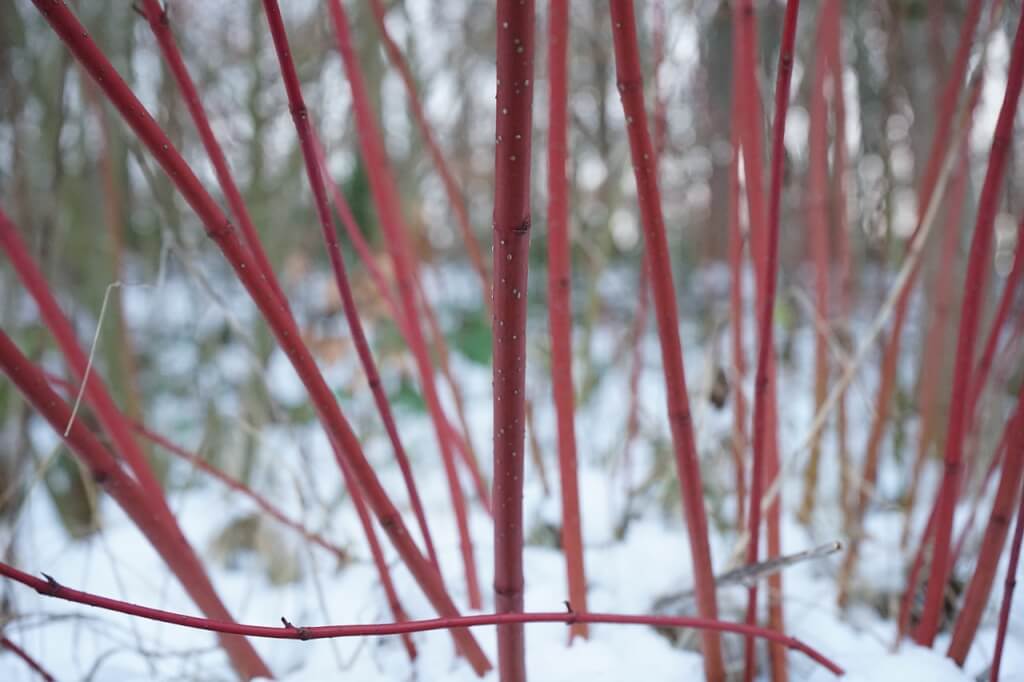
The best stem colour comes from young growth, so in a pot I cut all the stems back hard in March and let fresh ones grow over summer. After a couple of years, plant it out into a border where it has room to spread. My cornus pruning guide shows exactly where to cut.
| Cornus at a Glance | |
|---|---|
| Botanical Name | Cornus alba ‘Sibirica’ |
| Plant Type | Hardy deciduous shrub |
| RHS Hardiness | H7 |
| Height and Spread | 1m to 1.5m by 1m in a pot |
| Flowering Period | Stems November to March |
| Best Conditions | Full sun, moist compost |
| Key Feature | Coloured winter stems for height |
🛒 Buy red stemmed dogwood plants from Amazon UK
Winter bedding gives you instant colour, and winter flowering shrubs give a large container something special for years. These shrubs flower when little else does, often with a strong scent, and they live happily in a large pot of at least 40cm across. Place scented shrubs by a front door or path, since winter scent is only worth having if you walk past it every day. My guide to winter flowering plants covers more options for the ground.
Sarcococca is my favourite winter flowering shrub for containers. The tiny white flowers are so fragrant that one plant near your front door will scent the whole doorstep in January. It is shade tolerant, evergreen and tough, and Sarcococca confusa is the one to go for.
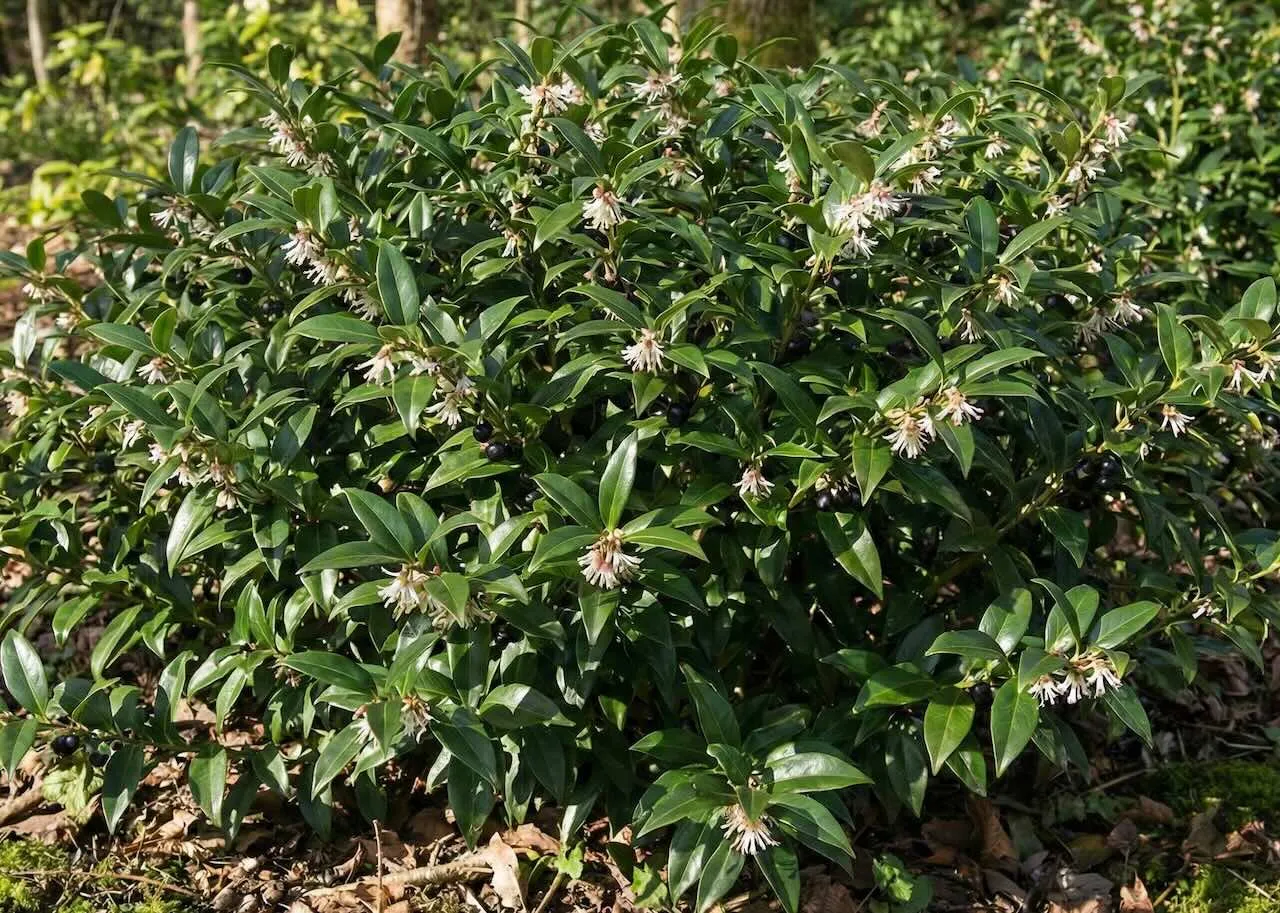
It grows slowly, so it stays in scale with a pot for many years, and it copes with dry shade under trees better than most shrubs. Glossy black berries often follow the flowers. Give it a 30cm pot as a minimum, and top dress with fresh compost each spring rather than repotting.
| Sarcococca at a Glance | |
|---|---|
| Botanical Name | Sarcococca confusa |
| Plant Type | Hardy evergreen shrub |
| RHS Hardiness | H5 |
| Height and Spread | 1m to 1.5m by 1m (slow growing) |
| Flowering Period | December to February |
| Best Conditions | Partial to full shade, any compost |
| Key Feature | Powerful winter scent |
🛒 Buy sarcococca from Amazon UK
Mahonia is a bolder choice, with architectural spiky foliage and bright yellow flower spikes from late autumn onwards. The flowers have a scent similar to lily of the valley and feed early bees on mild days. Mahonia × media ‘Winter Sun’ and ‘Charity’ are the varieties to look for.

It is a large shrub, so reserve it for a big container of at least 40cm and position it somewhere sheltered, since wind damages the leaves. Wear gloves when handling it, because the leaf edges are sharp. After a few years in a pot it will be happier planted into a shady border.
| Mahonia at a Glance | |
|---|---|
| Botanical Name | Mahonia × media ‘Winter Sun’ |
| Plant Type | Hardy evergreen shrub |
| RHS Hardiness | H5 |
| Height and Spread | 2m to 3m by 1.5m in the ground, smaller in a pot |
| Flowering Period | November to March |
| Best Conditions | Partial shade, sheltered spot |
| Key Feature | Scented yellow flowers for early bees |
Winter jasmine gives a splash of sunshine yellow on the darkest days. Despite the name it has no scent, but the flowers open on bare green stems from November right through to February, and it flowers reliably every year.
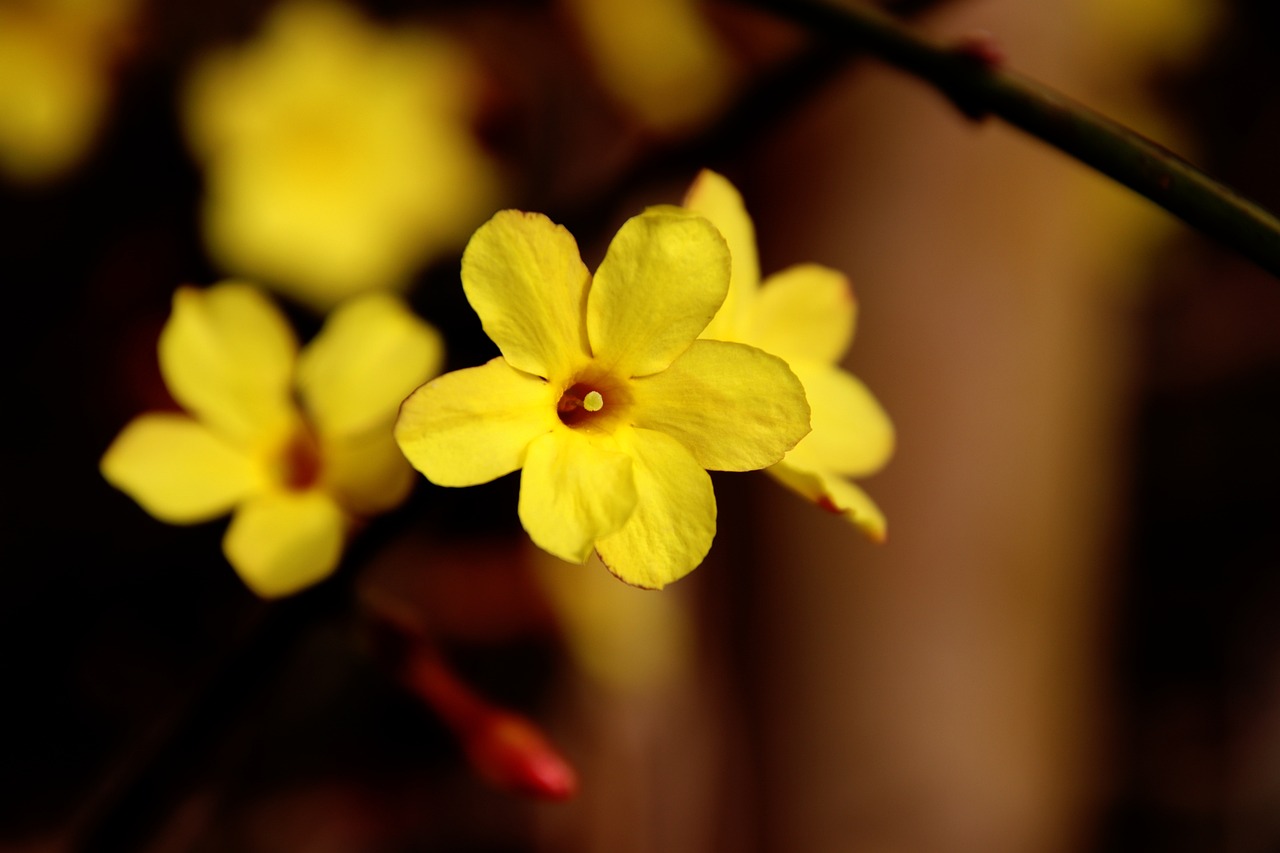
It isn’t a true climber, so in a pot I train it up a small obelisk or trellis, tying the stems in as they grow, or let it tumble over the edge of a large container. Prune straight after flowering, cutting flowered stems back to a pair of strong buds.
| Winter Jasmine at a Glance | |
|---|---|
| Botanical Name | Jasminum nudiflorum |
| Plant Type | Hardy deciduous wall shrub |
| RHS Hardiness | H4 |
| Height and Spread | 1m to 1.5m trained in a pot |
| Flowering Period | November to February |
| Best Conditions | Sun or partial shade, any compost |
| Key Feature | Bright yellow flowers on bare stems |
🛒 Buy winter jasmine from Amazon UK
Viburnum tinus is a dependable evergreen that flowers for months, with pink buds opening to clusters of small white flowers from November through to April. Blue black berries sometimes follow. The compact variety ‘Eve Price’ is the best choice for a container.
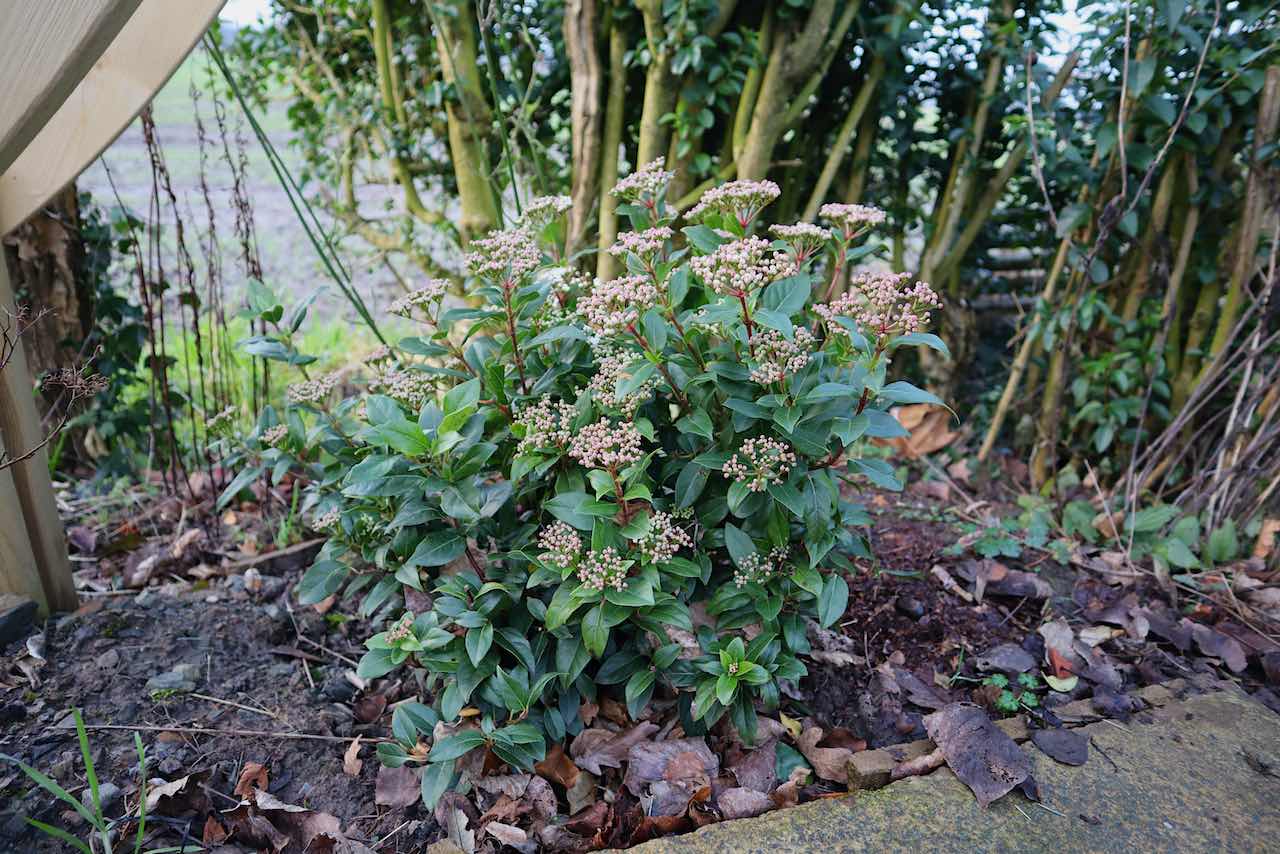
It tolerates sun or shade, copes with coastal wind, and responds well to a light trim after flowering to keep it compact. In a pot it needs a container of at least 40cm, and it can be moved into a hedge or border when it gets too big, where it will keep flowering for decades.
| Viburnum Tinus at a Glance | |
|---|---|
| Botanical Name | Viburnum tinus ‘Eve Price’ |
| Plant Type | Hardy evergreen shrub |
| RHS Hardiness | H5 |
| Height and Spread | 1m to 1.5m by 1m in a pot |
| Flowering Period | November to April |
| Best Conditions | Sun or partial shade, any compost |
| Key Feature | Flowers for up to six months |
🛒 Buy viburnum tinus from Amazon UK
Daphnes have some of the strongest scents of any garden plant, and Daphne odora ‘Aureomarginata’ flowers from February, with pale pink blooms above cream edged evergreen leaves. A potted daphne by the door is a treat on a cold late winter morning.

They are slow growing and dislike root disturbance, so pot them once into a large container and leave them alone. Use a free draining, slightly acidic compost, keep them sheltered from cold winds, and never let the compost dry out completely in summer. They cost more than most shrubs here, but a healthy plant will flower for many years.
| Daphne at a Glance | |
|---|---|
| Botanical Name | Daphne odora ‘Aureomarginata’ |
| Plant Type | Evergreen shrub |
| RHS Hardiness | H4 |
| Height and Spread | 1m to 1.5m by 1m to 1.5m (slow growing) |
| Flowering Period | February to April |
| Best Conditions | Partial shade, sheltered, free draining compost |
| Key Feature | Intense late winter fragrance |
🛒 Buy daphne plants from Amazon UK
Hanging baskets and window boxes don’t have to sit empty from October to May. A winter basket by the front door or a planted window box on a sill you look out of every day is a cheap way to keep colour at eye level, and the same plants that thrive in winter pots do the job here. The difference is that baskets and boxes hold less compost, so they dry out faster, freeze faster and are more exposed to wind.
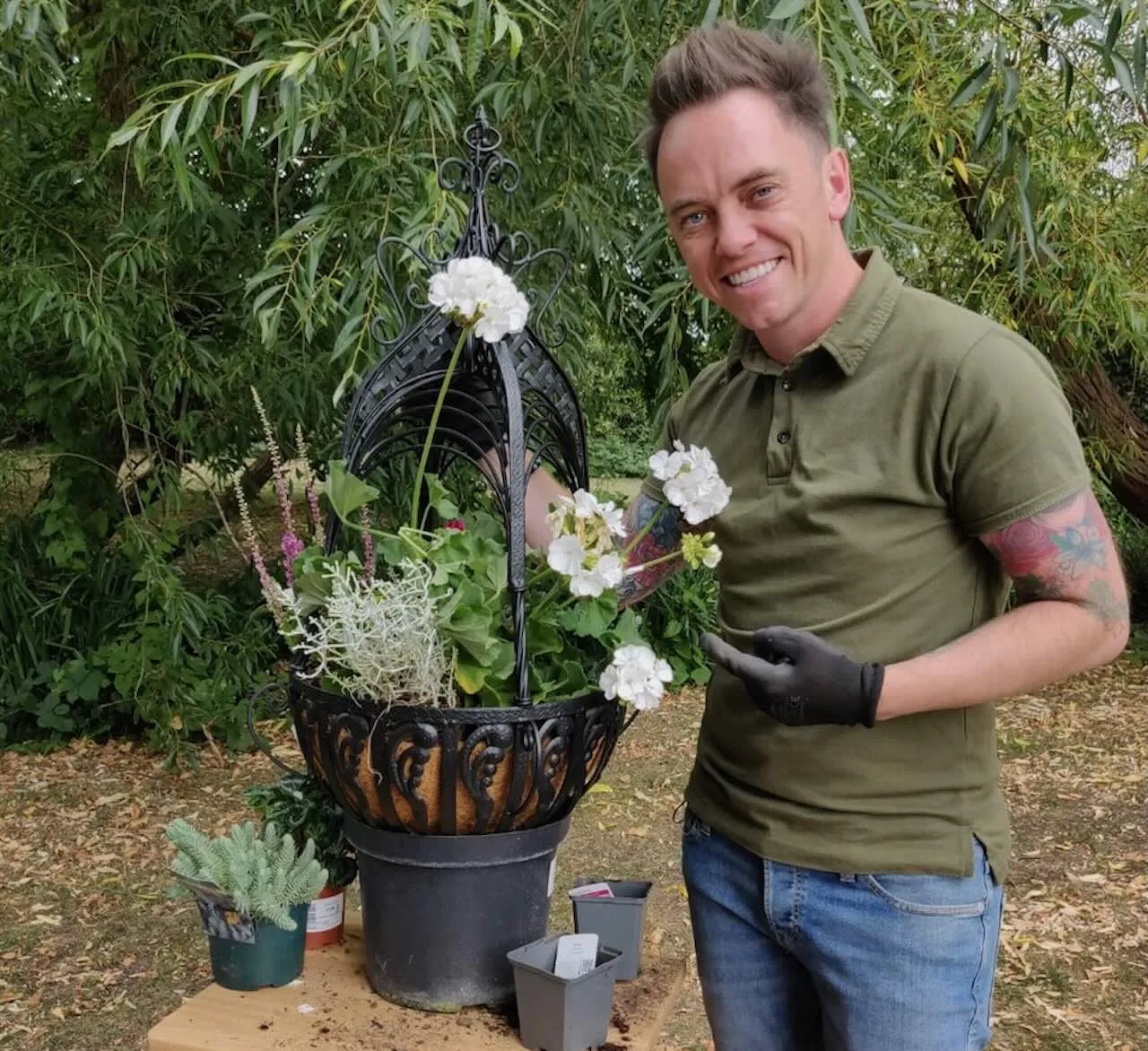
For a winter basket, choose a solid basket or a wire frame lined with a thick coir or wool liner, since thin moss liners let the compost freeze through. Fill with peat free multipurpose compost mixed with a handful of grit and some slow release fertiliser, then plant more tightly than you would in summer, as nothing will grow much before spring. Hang winter baskets somewhere sheltered, such as against a house wall or under a porch, rather than on an exposed fence where wind will batter them. Check the compost every week or two, since baskets under eaves can dry out even in a wet winter.
🛒 Buy coir lined hanging baskets from Amazon UK
These are the plants I reach for when I’m filling a winter basket or window box. The mix of a central evergreen, colourful fillers and trailing edges is the same formula I use for large pots.
| Plant | Role | Where to Place | Why It Works |
|---|---|---|---|
| Trailing violas | Spiller | Around the edge | Flowers through mild spells and trails over the rim |
| Variegated ivy | Spiller | Front and sides | Evergreen trails that hide the basket frame |
| Heuchera | Filler | Middle | Year round leaf colour from one plant |
| Hardy cyclamen | Filler | Middle, sheltered side | Pink, red and white flowers for shadier spots |
| Winter heather | Filler | Middle | Tough, compact and flowers until April |
| Carex ‘Evergold’ | Thriller | Centre | Arching striped leaves give height and movement |
| Skimmia ‘Rubella’ | Thriller | Centre of a window box | Red buds all winter in shade |
| Euonymus fortunei | Filler | Ends of a window box | Bright variegation that copes with wind |
| Dwarf narcissi and crocus | Bulbs | Tucked between plants | Spring flowers push through as bedding tires |
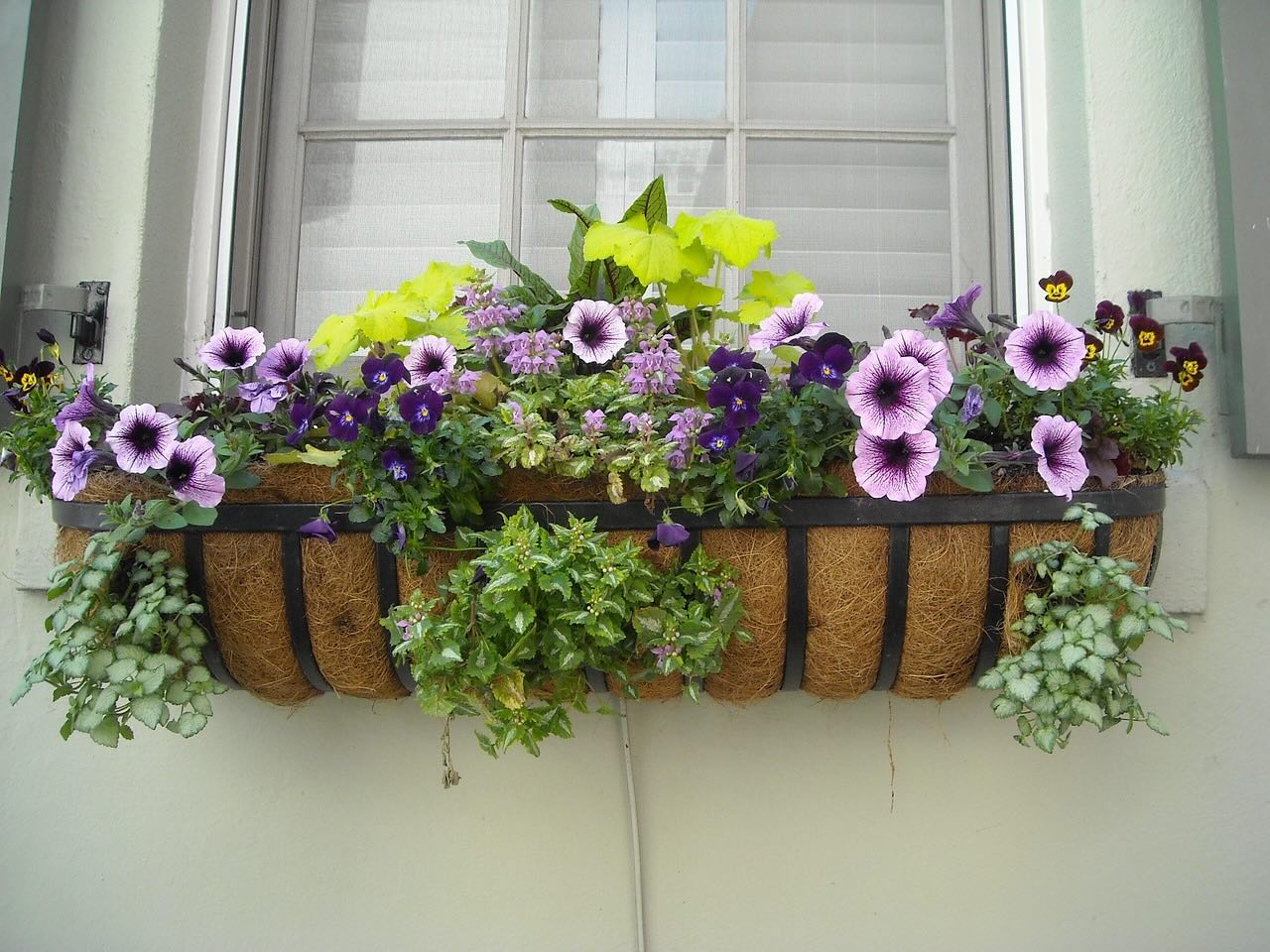
Window boxes follow the same rules. Use a box at least 20cm deep so the compost doesn’t freeze solid, drill extra drainage holes if the base has only one or two, and fix it securely, since a wet window box is heavy. On a shady sill, skimmia, ivy, heuchera and cyclamen will do well. On a sunny one, heathers, violas, festuca and dwarf conifers suit the brighter conditions. If you are gardening on a balcony, choose lightweight fibreglass or wooden troughs to keep the weight down.
🛒 Buy frost proof window box troughs from Amazon UK
Professional looking winter containers come from layering different plant heights, textures and flowering times. Think of a thriller in the centre, fillers around it and spillers trailing over the edge. This gives the display depth and makes it look good from every angle, and it is the same formula I use when designing planting schemes for clients.
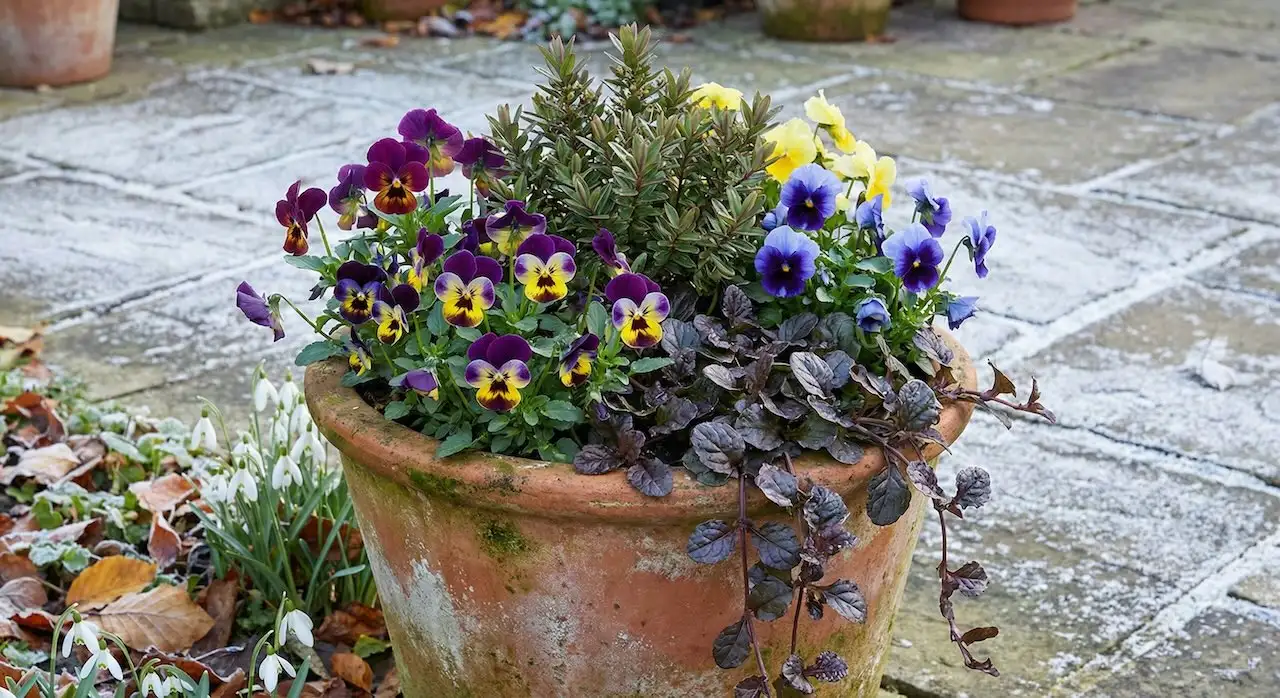
For a medium to large pot, use one tall thriller plant for height, such as a dwarf conifer, a dogwood or an upright grass. Add three to five fillers for body, such as skimmia, heuchera, hellebores or cyclamen, then two or three spillers to soften the rim, such as trailing ivy, violas or ajuga. Finally, underplant the whole lot with spring bulbs so the display keeps changing as winter turns into spring.
I always place the tallest plant slightly off centre rather than dead in the middle, which looks more natural and lets the other plants nestle around it. Use odd numbers of plants and group the same variety together rather than dotting singles around. Don’t be shy with plant numbers either. Plants barely grow in cold weather, so pack them in more tightly than you would for summer, and larger plants can touch each other without any problem.
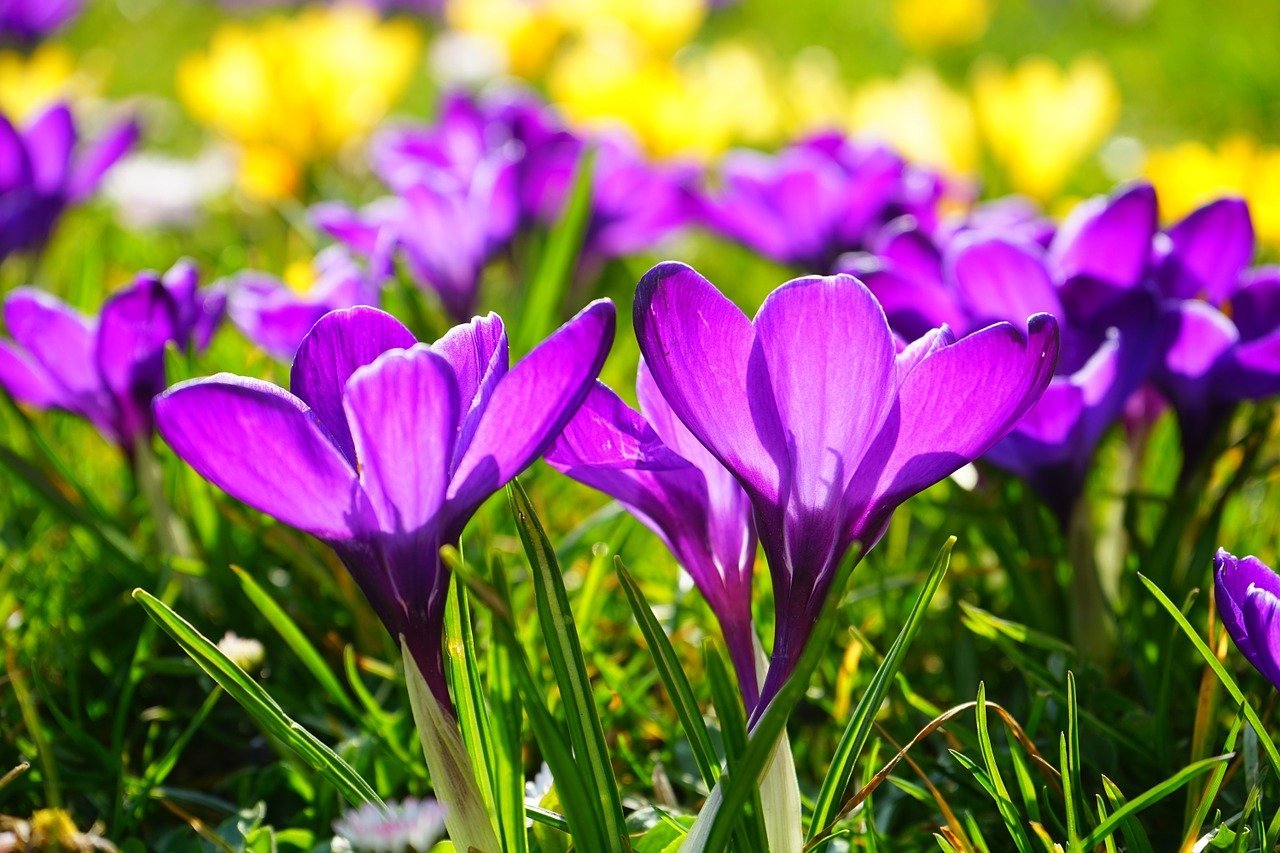
Underplanting with spring bulbs is the easiest way to extend a winter display. Tuck dwarf daffodils, crocus, snowdrops or early tulips into the gaps between your main plants at planting time, pushing them in around twice their own depth. They’ll push through in late winter and early spring, just as the bedding starts to tire. I use dwarf narcissi such as ‘Tete a Tete’, which flowers in February and March. For more ideas, see my spring bulbs by colour guide, and my honest take on bulb lasagnes explains why I prefer this simpler approach. My guide on how to plant bulbs in pots covers depths and compost for a container topped with bulbs.
🛒 Buy Tete a Tete dwarf daffodil bulbs from Amazon UK
Drainage decides whether a winter container succeeds. More plants in pots die from waterlogged compost in winter than from cold, because roots sitting in cold, airless compost rot. Make sure every pot has proper drainage holes in the base, and raise containers onto pot feet or bricks so water can escape freely. A pot standing in a puddle for weeks is one of the quickest ways to lose winter plants. My article on whether pots need drainage holes goes into this in more detail.
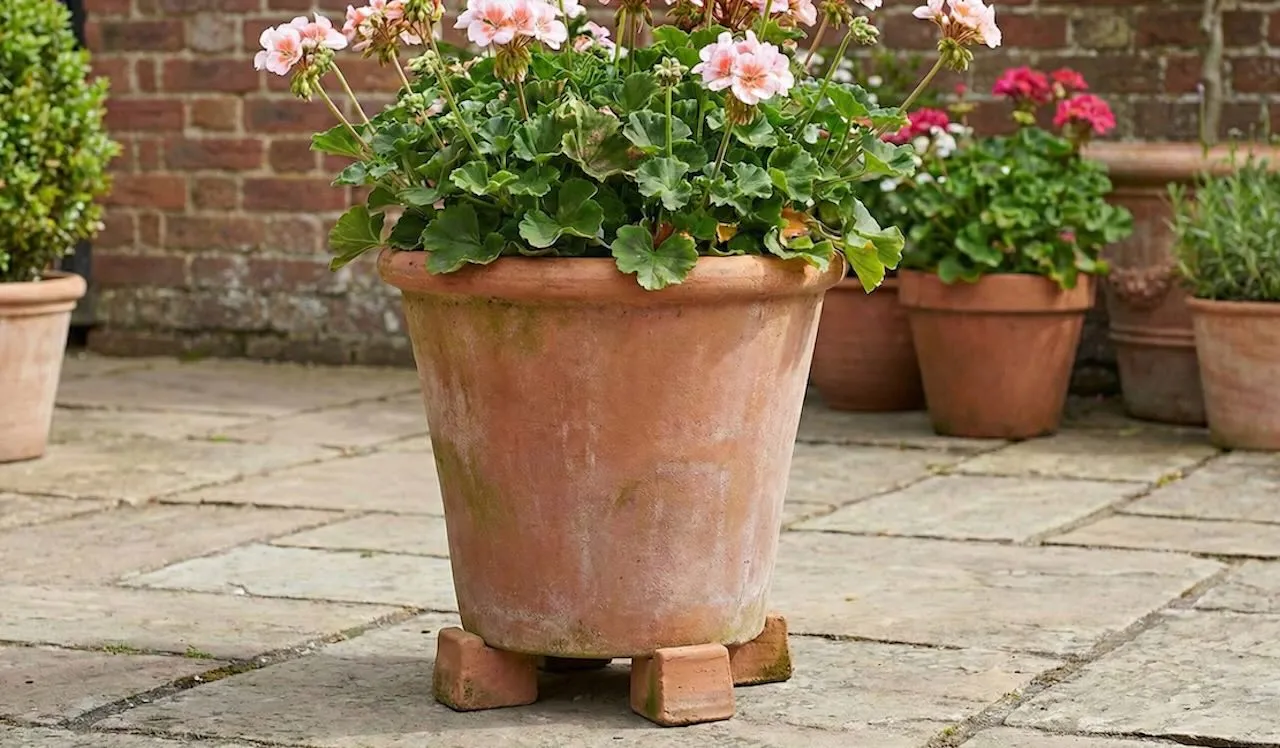
🛒 Buy pot feet for winter containers from Amazon UK
Use a good quality peat free compost with added grit. John Innes No. 3 suits winter containers well, since it is heavier, which stops pots blowing over in gales, and it holds nutrients for longer. If you’re using a lightweight peat free multipurpose compost, mix in about 20% horticultural grit to improve drainage and stability.
🛒 Buy horticultural grit for winter containers from Amazon UK
Feeding is minimal in winter because the plants aren’t actively growing. A slow release fertiliser mixed into the compost at planting is all you need until spring. Avoid liquid feeds during winter, since they encourage soft, sappy growth that frost damages easily, and save them for when growth starts again in March.
Winter pots need far less water than summer ones, but they still need checking. Pots under house eaves or in a porch can be completely sheltered from rain and dry out surprisingly quickly, so push a finger into the compost every week or two. When you do water, do it in the morning so the compost isn’t sitting wet when temperatures drop overnight, and skip watering altogether if a hard frost is forecast. Remove saucers for the winter so pots never stand in water, and remember that smaller containers dry out and freeze faster than large ones.
The whole point of winter containers is to lift your spirits during the dark months, so put them where you will see them. Place pots where they are visible from the kitchen window, beside the front door or along the path you use every day. A display hidden at the bottom of the garden where you never walk in January is a waste of good plants.
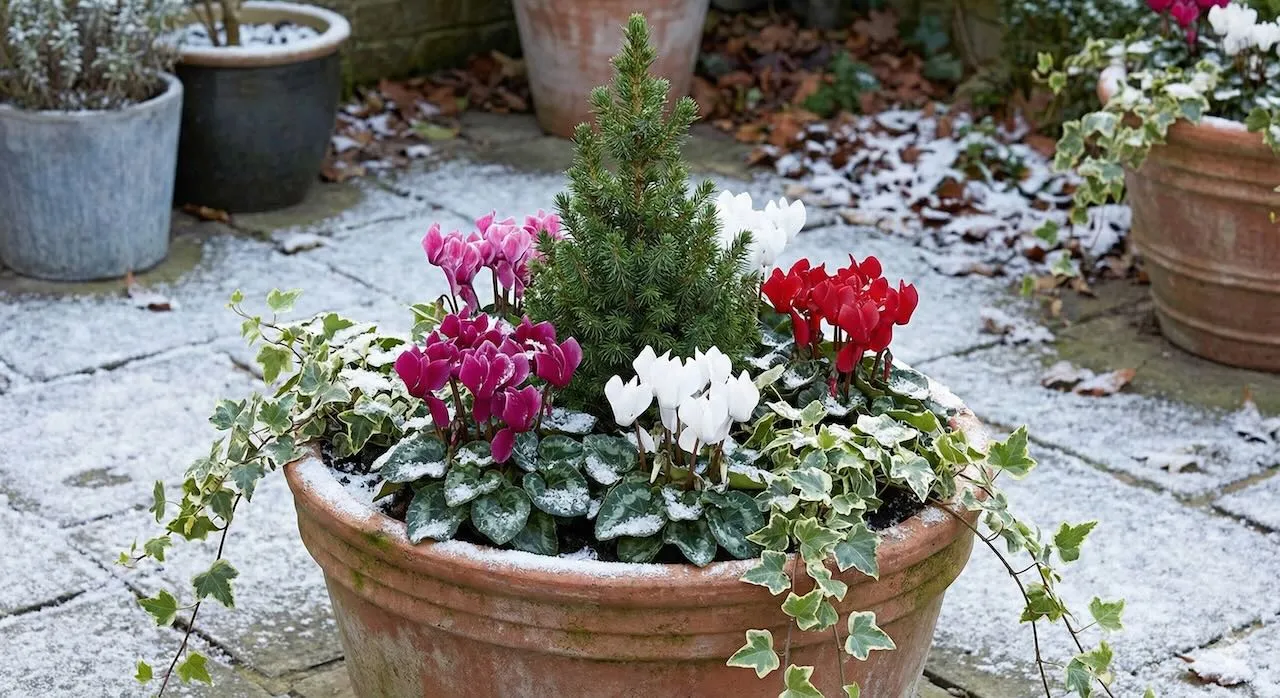
Group containers together rather than spacing them out. A cluster of three or five pots has far more impact than singles dotted around, and grouping also gives some frost protection, since larger pots shelter smaller ones. I always keep a group by my back door that I see every time I put the bins out or hang the washing.
Consider shelter too. A spot against a south or west facing house wall gets the most winter light and some warmth radiating from the building, which makes a noticeable difference to how well slightly tender plants such as stocks and florist cyclamen perform. Avoid exposed, windy corners where containers blow over and plants get battered.
Most winter bedding and hardy evergreens shrug off frost, but plants in pots are more vulnerable than those in the ground because their roots are exposed on all sides. The compost in a pot freezes solid far faster than garden soil, and roots frozen for days can’t take up water, even when the leaves look fine. A few simple precautions prevent most losses.
Choose containers labelled frost proof rather than frost resistant, since the latter can still crack. In a prolonged cold spell, wrap pots in bubble wrap or hessian to insulate the roots, but never wrap the foliage itself. Move the most tender plants into the shelter of a wall or porch during hard freezes, group pots together, and mulch the compost surface with bark or gravel. I cover all of these in more depth, including which plants need moving under cover, in my guide to protecting container plants from winter frost.
🛒 Buy hessian wrap for frost protecting pots from Amazon UK
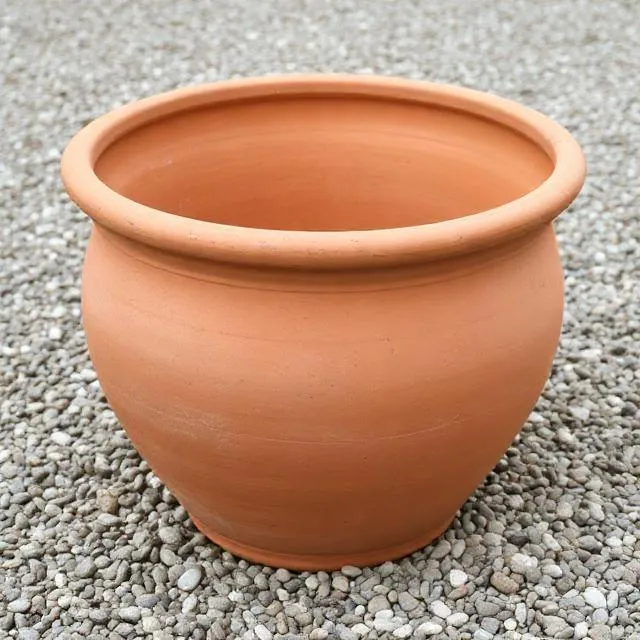
Terracotta suits winter planting, but cheap terracotta can crack in a hard frost when the compost is wet, as water in the clay expands as it freezes. Either buy frost proof terracotta, or choose plastic, fibreglass or wooden containers for winter. If you already own terracotta pots you love, double pot them by placing a plastic pot inside with a little gap for insulation. My guide to the best alternatives to terracotta pots has more ideas.
🛒 Buy frost proof terracotta pots from Amazon UK
Winter container maintenance is refreshingly light compared with summer. A quick check every couple of weeks is usually enough: pick off dead leaves and faded flowers, check for waterlogging after heavy rain, and make sure nothing has blown over or been knocked about by a delivery driver. Pansies and violas benefit from regular deadheading, primroses can be left alone until spring, and evergreen shrubs need nothing at all. The main job is enjoying them from a warm kitchen with a brew in hand.
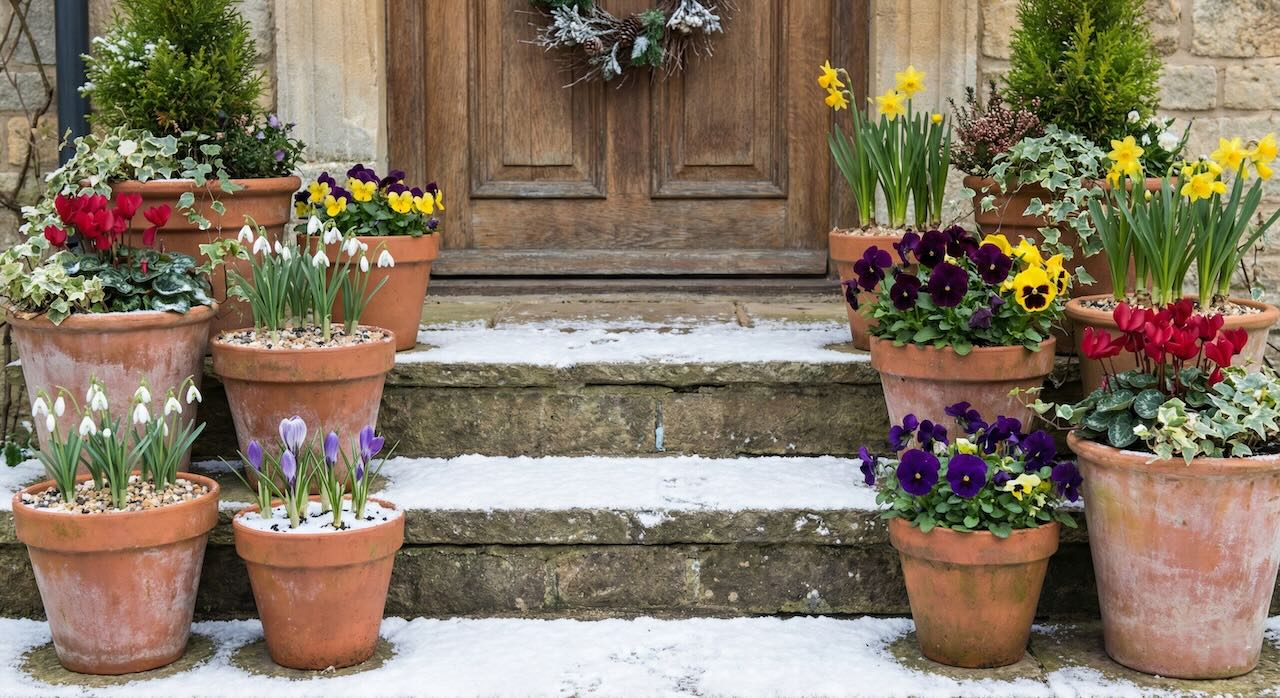
Come spring you have options. Hardy plants such as heucheras, grasses, hellebores and small shrubs can stay in their containers for another year or be planted out into the garden. Primroses, ajuga and hardy cyclamen can go into a shady corner to naturalise, and spent pansies can go on the compost heap. Refresh the top layer of compost, add summer plants, and your containers are ready for the next season. My guide on how to repot a container plant covers moving anything that has outgrown its pot.
The most reliable winter bedding plants in the UK are winter pansies, violas, hardy cyclamen, primroses and polyanthus, bellis daisies, winter flowering heathers and hellebores. Wallflowers and Brompton stocks are also planted in autumn for scented flowers in spring. Combine them with evergreens such as skimmia, heuchera and carex for structure.
Plant winter bedding from mid September to the end of October, while the compost and soil still hold some summer warmth, so the roots establish before cold weather arrives. You can continue planting through November, but plants will take longer to settle and fill out.
Hardy plants that survive a UK winter outside in pots include violas, heathers, hellebores, skimmia, heuchera, euonymus, ivy, carex, festuca, dwarf conifers, sarcococca and viburnum tinus. Good drainage matters as much as hardiness, so use gritty compost and raise pots onto feet to stop roots rotting.
Good plants for a winter hanging basket include trailing violas, variegated ivy, heuchera, winter heathers, hardy cyclamen and carex ‘Evergold’, with dwarf narcissi or crocus bulbs tucked between them. Use a thick coir or wool liner, plant tightly, and hang the basket somewhere sheltered from strong wind.
Yes, but far less often than in summer. Check the compost every week or two, especially for pots under house eaves or in porches, where rain can’t reach them. Water in the morning, never when a hard frost is forecast, and remove saucers so pots don’t sit in water.
Winter pansies, violas, primroses, bellis daisies, wallflowers and heathers all grow well in borders as well as pots. Plant them in groups at the front of a border or around the base of shrubs, and they will give you colour until spring bulbs and perennials take over.
Choose containers labelled frost proof, raise them onto pot feet so water drains away, and avoid letting compost become waterlogged, since water expanding as it freezes is what cracks pots. Wrapping pots in hessian or bubble wrap during long cold spells adds extra protection.
Winter pansies are technically short lived perennials, but they are grown as bedding because they become leggy and flower poorly after their first season. Most gardeners replace them each autumn, though violas will sometimes self seed and pop up again in pots and borders.

Join over 100,000 gardeners on YouTube
Free gardening videos from the Garden Ninja, with 8 million views and counting.
Subscribe on YouTube, it’s freeA winter pot works best when it fits into a wider plan for your garden, with colour, structure and scent placed where you’ll see them in every season. My online garden design courses show you how to choose plant combinations, position containers and design spaces that stay interesting through all twelve months.
Courses start from just £29, and the quieter winter months are the ideal time to learn the skills before spring planting begins.
For the garden you’ve already got, not the one you’re starting from scratch. Seven checklists and video lessons from BBC Garden Rescue’s Lee Burkhill, designed to help you decide what’s worth keeping before you spend a penny.
Garden Design Examples for Small Gardens: 30 Design Templates & Planting Plans: In this online gardening course, I’ll walk you through 30 fantastic garden designs, explaining the logic behind the layout and plant choices, plus take-home tips for applying them in your own garden.
Learn how to transform and design your garden with Lee Burkhill’s crash course in garden design. In over 5 hours, Lee will teach you how to design your dream garden. Featuring practical design examples, planting ideas and video guides. Learn how to design your garden in one weekend!
Garden Design for Beginners Online Course: Want to become a garden designer or design your own garden? This beginner course is for you. Join me, Lee Burkhill, an award-winning garden designer, as I train you in the art of beautiful garden design. Enjoy 20 hours of online study and video lessons, along with quizzes and a completion certificate.
Winter container gardening is one of the most satisfying jobs you can do in autumn for the effort involved. Plant winter bedding such as pansies, violas, cyclamen, primroses and heathers between mid September and the end of October, add evergreen structure from skimmia, heuchera, euonymus or a dwarf conifer, and soften the edges with ivy, carex or trailing violas. Underplant with dwarf bulbs, and the display will keep changing right through to April.
Give everything gritty, free draining compost, raise pots onto feet, and place them where you’ll see them every day, whether that is a pot by the back door, a basket by the porch or a window box outside the kitchen. For the price of a few coffees you can have a winter display that lifts your spirits for six months. Now get those containers planted up, Ninjas!
Happy Gardening Ninjas!


Lee Burkhill, known as the Garden Ninja, is an award-winning garden designer and horticulturist with over 30 years of gardening experience and 15 years as a professional garden designer. A qualified RHS (Royal Horticultural Society) professional, Lee specialises in sustainable garden design and practical horticultural advice. He designs and presents on BBC1’s Garden Rescue and in leading gardening publications. Lee combines three decades of hands-on gardening knowledge with professional design qualifications to help gardeners create beautiful, functional outdoor spaces.
View all posts by Lee Burkhill








JOIN THE NINJAS

Be the first in line for new Guides, Discount codes and Offers