For the garden you’ve already got, not the one you’re starting from scratch. Seven checklists and video lessons from BBC Garden Rescue’s Lee Burkhill, built to help you work out what’s worth keeping before you spend a penny.
69


Quick Answer
Skimmia japonica is a compact evergreen shrub for shade that needs very little care. Plant it in light to full shade in moist, well-drained, humus-rich soil or a pot of ericaceous compost. Only female plants carry berries, and they need a male nearby, unless you choose the self-fertile Skimmia japonica subsp. reevesiana. Yellow leaves usually mean too much sun or dry soil.
If you want a plant that simply gets on with the job, Skimmia is it. I grow it here at Garden Ninja HQ, in pots by the door and in the shadier corners of the borders, and it is one of the least demanding plants I own. It sits there happily all year, glossy and evergreen, with no real pest problems to speak of, and then in winter the female plants light up with berries that stop you in your tracks when everything else in the garden has gone to sleep.
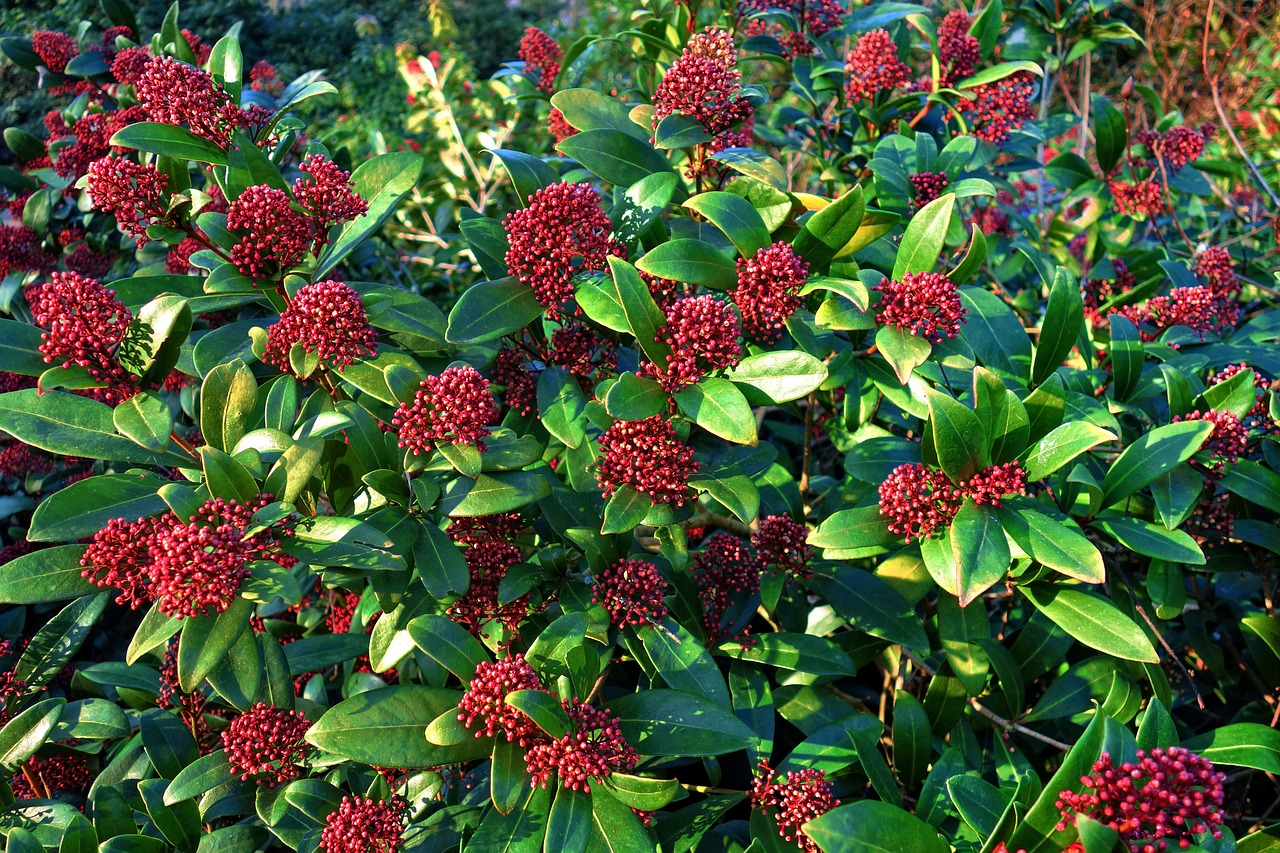
It is also one of the most asked-about shrubs on my forum. The thread about a sad, yellowing Skimmia has had more than 3,000 visits from Google, and almost every one of those visitors is asking the same question: why are my Skimmia leaves turning yellow? So this guide covers both halves of the story. First, how to grow Skimmia well in borders and containers, and then exactly what to do when it starts to look poorly.
Jump To
If you are starting from scratch, a Skimmia japonica ‘Rubella’ plant is the one I would buy first, because it looks good all winter on its own and it pollinates any female Skimmia you add later.
| Skimmia japonica At A Glance | |
|---|---|
| Botanical Name | Skimmia japonica |
| Plant Type | Compact evergreen shrub |
| RHS Hardiness | H5 |
| Height and Spread | Usually 0.5 to 1.5m each way, slow growing |
| Flowering Period | Buds from autumn, scented flowers March to May |
| Berries | Red berries on female plants, autumn through winter |
| Growing Conditions | Light to full shade, moist but well-drained, humus-rich soil, acid to neutral preferred |
Skimmia is what I call a doer. Once it is planted in the right spot, it asks for almost nothing. It does not need regular pruning, it does not sulk in cold weather, and in all the time I have grown it I have never had a serious pest problem on it. For a beginner gardener who wants something reliable in a shady spot, that makes it one of the easiest evergreen shrubs you can buy.
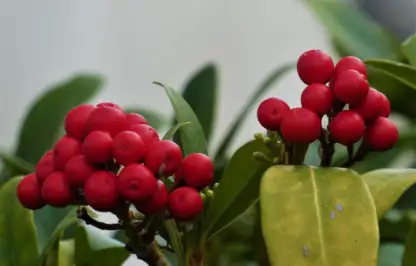
The real reason I love it, though, is winter. From October the female plants carry clusters of glossy red berries that last right through to spring, because the birds tend to leave them until there is nothing else about. The male plants put on their own show at the same time, with tight clusters of red or green flower buds that sit on the plant all winter before opening into scented white flowers in spring. On a grey January morning, a pot of Skimmia by the front door is arresting in a way very few plants manage at that time of year.
It is also one of the best shrubs I know for containers. Skimmia is naturally compact and slow growing, so it will sit in the same pot for years without outgrowing it, which is why you see it in almost every garden centre winter pot display. If you are putting together winter containers, my guide to winter container gardening shows how I pair it with other plants, and Skimmia features in my video on evergreen shrubs for beginners below.
This is the part of growing Skimmia that catches most people out. Most Skimmias are either male or female, and only female plants produce berries, and only when a male plant is growing close enough to pollinate them. If you have a Skimmia that flowers beautifully every spring but never berries, the chances are it is a male, or it is a lonely female with no male nearby.
Male plants are not second best. They generally have larger, showier and more strongly scented flower heads, and their winter buds are the main attraction on varieties such as ‘Rubella’. One male can pollinate several females, so the usual approach is to plant one male among three to five females, or in a mixed winter pot with one of each. Bees do the pollinating in spring, so the plants need to be within a few metres of each other.
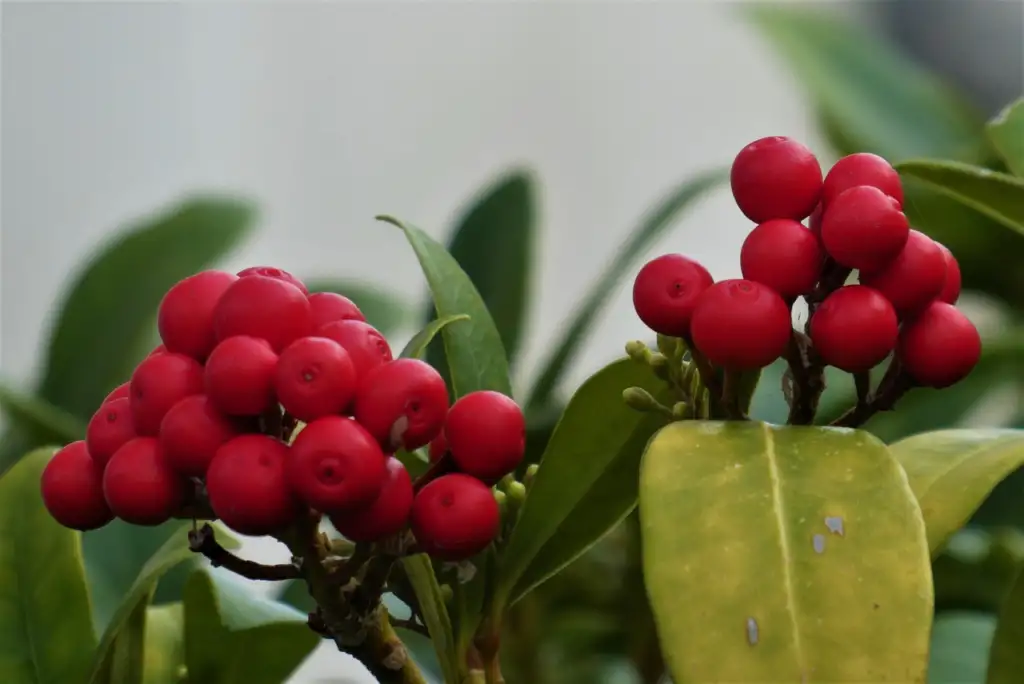
If you only have room for one plant and you want berries, choose Skimmia japonica subsp. reevesiana. It carries both male and female flowers on the same plant, so it berries on its own. It is slightly less hardy and prefers acid soil, so it is best grown in a pot of ericaceous compost in most gardens.
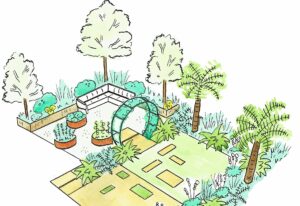
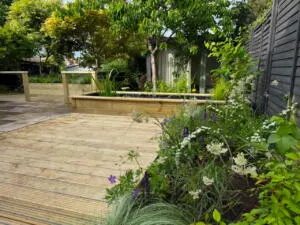
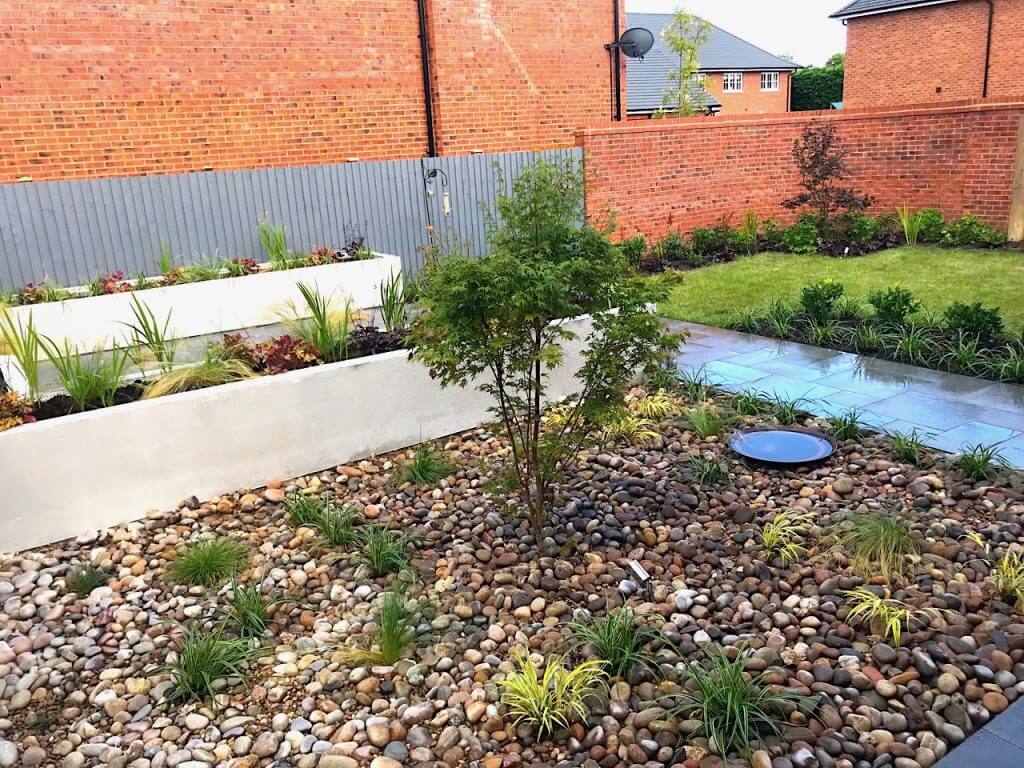
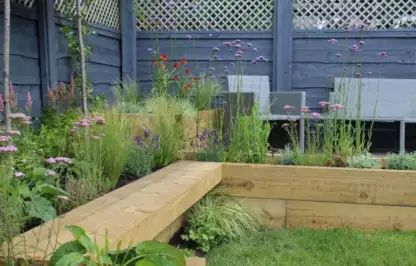
A tip from buying plenty of these over the years: always check the label for (m) or (f) after the variety name. Garden centres sell winter Skimmias in full berry or bud, and it is easy to come home with two males and wonder why nothing happens the following year. In the garden design below on the right, you can see a row of mixed Skimmias, male and female, that have been newly planted.
These are the varieties I would look for, with their sex, because that decides how you combine them.
| Variety | Sex | Winter interest | Best for |
|---|---|---|---|
| Skimmia japonica ‘Rubella’ | Male | Dark red buds all winter, scented white flowers in spring | Pots, the classic winter container Skimmia |
| Skimmia × confusa ‘Kew Green’ | Male | Green buds, very fragrant cream flowers | Sunnier spots, it copes with more sun than most |
| Skimmia japonica ‘Fragrans’ | Male | Heavily scented white flowers | Near doors and paths for the scent |
| Skimmia japonica ‘Nymans’ | Female | Large clusters of bright red berries | Berries, paired with a male |
| Skimmia japonica ‘Veitchii’ | Female | Red berries on a larger, upright plant | Borders and informal hedging |
| Skimmia japonica subsp. reevesiana | Both (self-fertile) | Red berries without a partner | Small spaces and single pots |
Skimmia is a woodland shrub, and it grows best in conditions that mimic a woodland edge: light to full shade, shelter from hot afternoon sun, and soil that stays moist without becoming waterlogged. A north or east-facing border, the base of a shady wall, or beneath the canopy of larger shrubs and trees all suit it. If you are working with a shady plot, my guides to plants for north-facing gardens and shade-loving plants have plenty of partners for it.
Full sun is the one position to avoid. In a sunny spot, especially one that dries out in summer, the leaves bleach, turn yellow and scorch, and the plant becomes thin and spindly. The exception is ‘Kew Green’, which tolerates more sun than the others as long as the soil does not dry out.
When it comes to soil, Skimmia prefers acid to neutral soil rich in organic matter, which is why it is often sold alongside Camellias and Rhododendrons. It is not a true ericaceous plant, though, and it will grow on neutral and slightly alkaline soils as long as you dig in plenty of leaf mould or compost. On chalky or very limy soil, grow it in a pot instead. My guide to the best plants for acidic soil covers the plants that pair well with it.
This is where Skimmia comes into its own, and it is how I grow most of mine. A pot lets you give it exactly the soil it likes wherever you live, and you can move it into the spotlight by the front door in winter and back into the shade for summer.
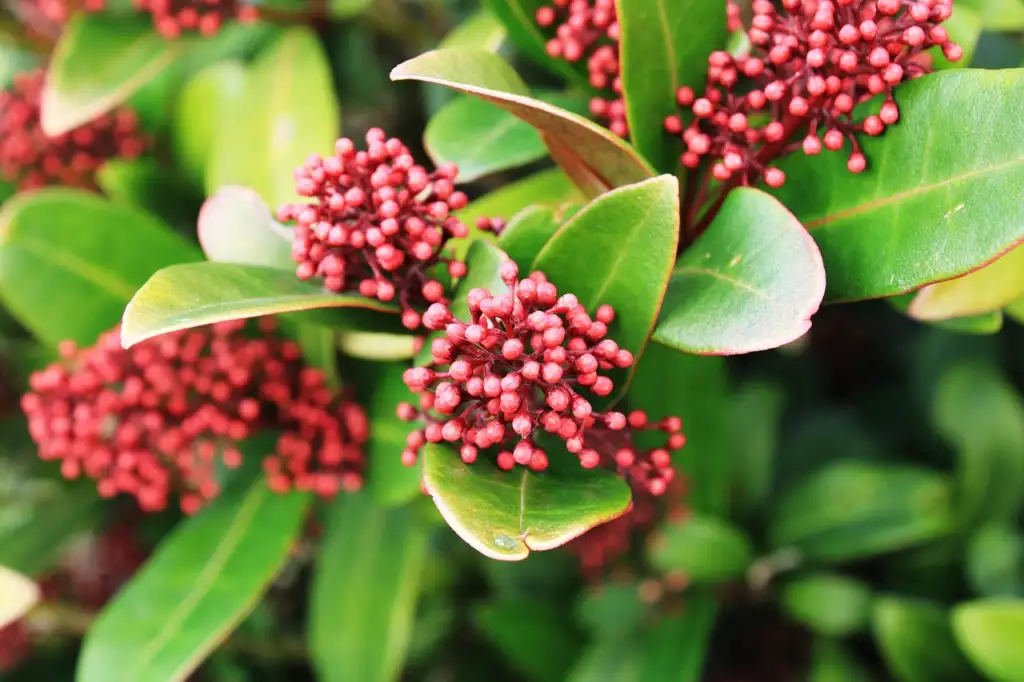
I plant Skimmia in a peat-free ericaceous compost, which keeps the roots slightly acidic and the leaves a deep, glossy green.
Choose a pot at least 30cm across for a single young plant, with drainage holes in the base, and raise it on pot feet so water can escape in wet winters. Glazed or frost-proof terracotta pots hold moisture better than thin plastic, which matters because a Skimmia that dries out in its pot is the one that turns yellow. Mix a few handfuls of fine bark or grit into the compost if it looks heavy.
Keep the compost evenly moist all year round, including in winter, when dry winds and heavy rain shadows under house eaves can dry pots out without you noticing. Use rainwater from a water butt if you can, especially in hard water areas, because tap water in limestone regions slowly raises the pH of the compost and can bring on yellowing over time. Feed once in spring with a slow-release ericaceous fertiliser and that is it for the year.
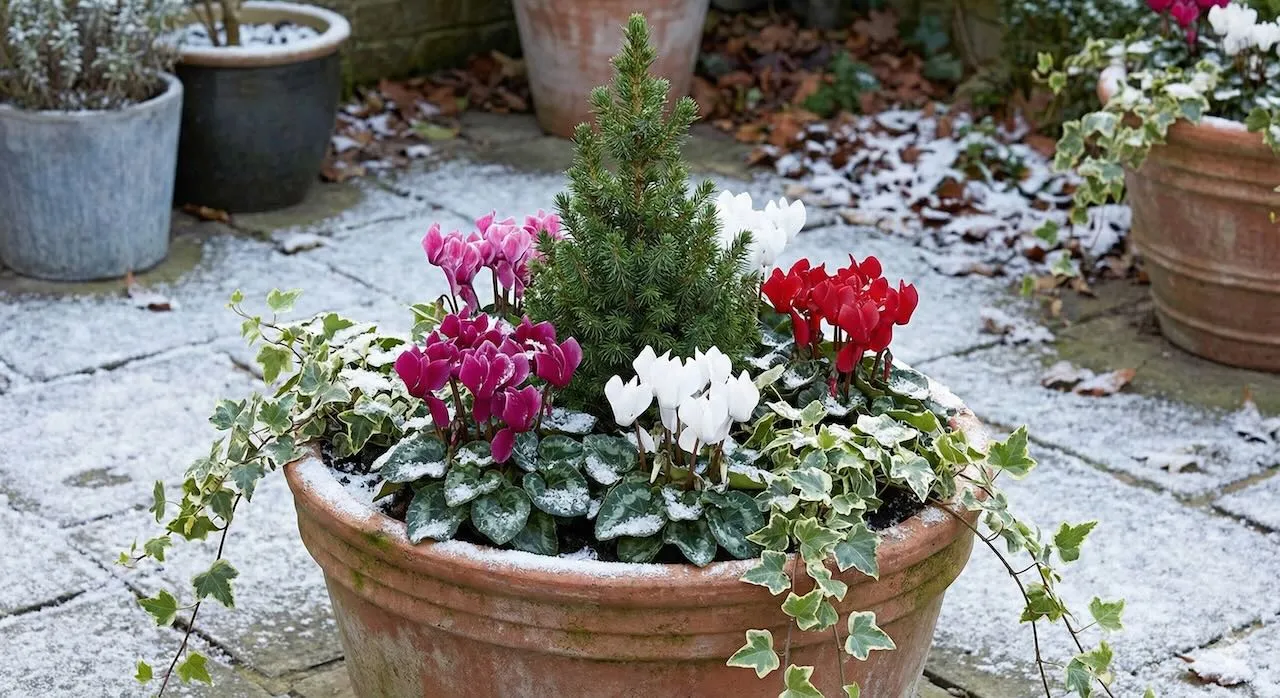
For a winter pot that looks good from October to April, I use a Skimmia as the centrepiece with trailing Ivy spilling over the edge, a Heuchera or Carex for contrast, and winter-flowering Violas or Cyclamen tucked in around the base. Pair a male ‘Rubella’ with a berrying female and you get red buds and red berries in the same pot.
Skimmia grows slowly, so it only needs moving into a larger pot every two to three years, in spring, when you can see roots circling the base or water runs straight through. Be wary of plants sold in full berry in tiny pots at Christmas. They have often been forced and are badly pot-bound, so tease the roots out gently when you plant them and expect them to take a season to settle. My container gardening guide covers repotting in more detail.
Plant Skimmia in autumn or spring, when the soil is moist and not frozen. Autumn planting gives the roots the whole winter to establish before the first dry spell.
For a low informal hedge or edging, space plants about 60 to 75cm apart. For a group of berrying plants, plant the male in the middle of the females so the bees move between them.
Once established in the ground, Skimmia needs very little looking after. Water it through long dry spells in its first two summers, and after that only in drought. A mulch of leaf mould or composted bark each spring keeps the roots cool and moist and feeds the soil slowly, which is usually all the feeding it needs. If growth looks pale or weak, give it a slow-release ericaceous feed in spring.
Pruning is almost never needed, because Skimmia naturally forms a neat dome. If a shoot grows out of shape or gets damaged, cut it back to a healthy leaf in spring once flowering has finished. Go easy on female plants, because heavy pruning removes the shoots that would carry next winter’s berries. My guide to low-maintenance evergreen shrubs has more plants that behave in the same easy way.
This is the question that sends more people to my forum thread on yellow Skimmia than any other. The good news is that yellowing is almost always about where and how the plant is growing, not a disease, so it can usually be fixed. Work through the causes below in order, because the first two account for most cases.
| Cause | What you see | How to fix it |
|---|---|---|
| Too much sun | Pale yellow or bleached leaves, worst on the sunny side, sometimes with brown scorch patches | Move it into shade in autumn or spring, or shade it with taller plants |
| Dry soil or compost | Overall yellowing, leaves dropping, plant looking thin and spindly | Water deeply and regularly, mulch, and add organic matter to the soil |
| Alkaline soil or hard water (lime-induced chlorosis) | Yellow leaves with green veins, worst on new growth | Repot into ericaceous compost, water with rainwater, apply sequestered iron |
| Waterlogging | Yellowing with soft, dark roots and a sour smell from the pot | Improve drainage, raise pots on feet, never let pots stand in water |
| Nutrient shortage | General yellowing on older leaves in a plant that has been in the same pot for years | Feed with an ericaceous fertiliser in spring and repot into fresh compost |
| Pot-bound roots | Yellowing and drying out quickly despite regular watering | Repot into a pot one size larger in spring |
These two go hand in hand, and together they cause most yellow Skimmias. The RHS notes that yellowing in Skimmia is more often down to sun and dryness than to soil pH, even though it is usually blamed on the soil. If your plant is in a bright spot, or in a pot that dries out between waterings, fix that first before reaching for any feed.
For a Skimmia showing lime-induced chlorosis, a sequestered iron plant tonic is the quickest way to bring the green back while you sort out the soil or compost.
On chalky or alkaline soils, or in pots watered with hard tap water, Skimmia struggles to take up iron. The giveaway is yellow leaves with veins that stay green, starting on the newest growth. For plants in pots, repot into ericaceous compost and switch to rainwater. For plants in the ground, a sequestered iron tonic will green the leaves up in a few weeks, but on truly chalky soil the long-term answer is to move the plant into a pot.
Like all evergreens, Skimmia sheds a few of its oldest leaves every year, usually in spring. If only the odd lower leaf is turning yellow and dropping while the rest of the plant looks healthy, that is normal and nothing to worry about.
Skimmia really is one of the most trouble-free shrubs you can grow, and at Garden Ninja HQ mine have never needed treating for pests. There are a few things worth knowing about, though.
Almost always this means the plant is male, or it is female with no male close enough to pollinate it. Check the label, and if you have a female on its own, plant a male such as ‘Rubella’ within a few metres. Hard pruning in spring can also remove the flowering shoots, so no flowers means no berries the following winter.
Brown, crispy edges usually point to cold, drying winds, frost on plants in exposed spots, or a pot that has dried out. Move pots to a sheltered spot for the worst of the winter and keep the compost moist.
In late spring you may occasionally see white, waxy egg masses on the stems and undersides of leaves. This is horse chestnut scale. It rarely does lasting harm, and scraping the scales off by hand is usually all that is needed.
As with most container plants, vine weevil grubs can eat the roots of Skimmias in pots, which shows up as sudden wilting and collapse. My vine weevil guide explains how to check for them and control them without chemicals.
In my designs, Skimmia does three jobs. It is a structural evergreen for the shady parts of a border, where its neat domed shape holds everything together in winter when the perennials have died back. It is a front-of-border edging plant along shady paths, where its scented spring flowers can be enjoyed at close quarters. And it is the anchor plant in winter containers, sitting at the heart of the pot while seasonal plants come and go around it.
Because it is slow growing and naturally compact, it is also one of the few evergreen shrubs I trust in small front gardens, where a fast-growing shrub would swamp a path within a couple of years. Planted in groups of three or five, with a single male in the middle, it gives you a patch of winter colour that needs nothing more than a mulch once a year.
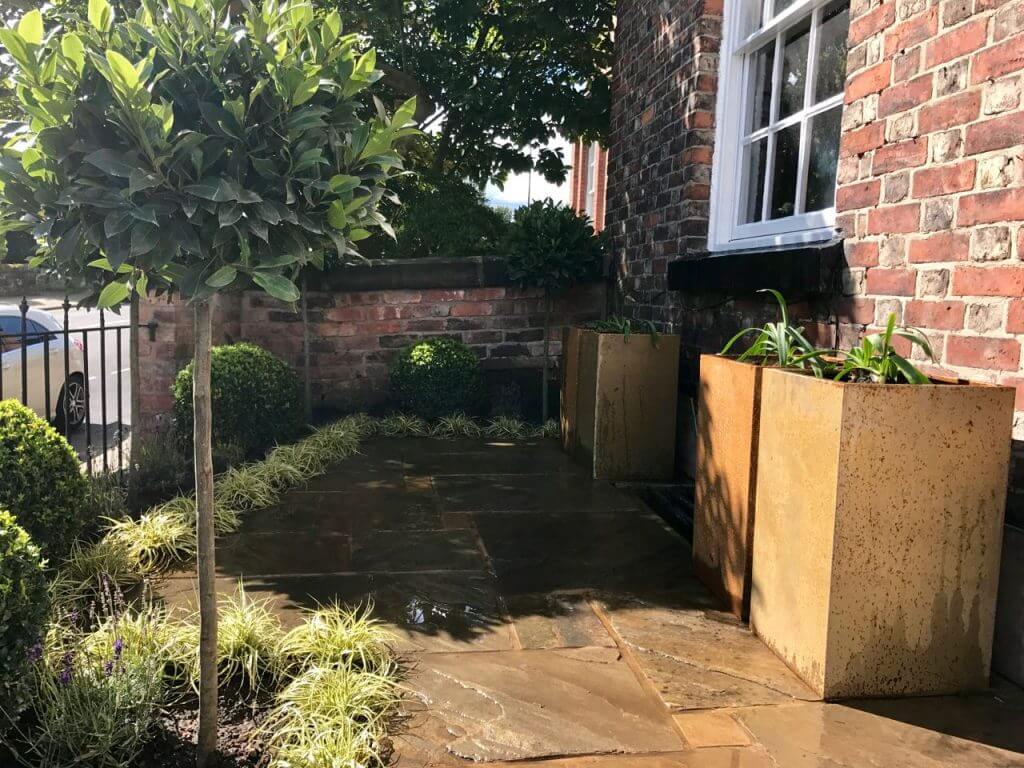
Skimmia enjoys the same shady, moist conditions as a lot of other good winter and woodland plants, which makes it easy to build a planting around. Ferns such as Dryopteris and Polystichum give contrasting feathery texture. Hellebores flower at the same time as the Skimmia buds are at their best. Heuchera and Carex add foliage colour at ground level, and spring bulbs such as Snowdrops and dwarf Daffodils push up between them. For height behind, Pieris, Camellia and Sarcococca all share its taste for shade and slightly acid soil. My guide to the best ground cover plants for shade has more ideas for underplanting.
For a front garden, a pair of matching Skimmias in pots either side of the door is one of the simplest and most effective winter displays you can put together. My guide to designing a front garden covers how to frame an entrance with planting.
Skimmia needs so little attention that its care calendar is short, but these are the jobs worth doing and when.
| Season | What the plant is doing | What to do |
|---|---|---|
| Winter (Dec to Feb) | Berries on females, red or green buds on males | Keep pots moist and sheltered from the worst frosts and winds, enjoy the display |
| Spring (Mar to May) | Scented flowers open, bees pollinate the females | Feed with slow-release ericaceous fertiliser, mulch, repot if needed, tidy any stray shoots after flowering |
| Summer (Jun to Aug) | Fresh leaves, green berries forming on females | Water in dry spells, especially pots, take semi-ripe cuttings in late summer |
| Autumn (Sep to Nov) | Berries ripen to red, buds form for next spring | Best time to plant, move pots into prominent positions for winter |
Skimmia japonica is fully hardy across most of the UK, so plants in the ground need no winter protection at all. Pots are a little more vulnerable, because the roots are above ground and the compost can freeze solid in a long cold spell. In a hard winter, group pots together against the house wall, raise them on pot feet so they do not sit in icy water, and wrap the pot itself in hessian or bubble insulation if temperatures are forecast to stay below freezing for several days.
The self-fertile subsp. reevesiana is slightly less hardy than the others, so give it the most sheltered spot you have. Heavy snow sitting on the plant can splay the branches, so brush it off gently with your hand when it settles.
Skimmias are sold everywhere from October to Christmas, often in full bud or berry, and a little care at the till saves disappointment later. Check the label for (m) or (f) so you know what you are getting, and if you want berries next year, buy at least one of each or a self-fertile subsp. reevesiana.
Look for plants with deep green, glossy leaves all the way to the base. Avoid any with yellowing leaves, brown tips or a pot full of circling roots, and slide the plant out of its pot if you can to check. Smaller plants in 1 or 2 litre pots are usually better value than big specimens, because they establish faster and catch up within a couple of years. And if you are buying for a winter pot display, remember that the berried female will only berry again next year if a male is close by.
Skimmia is easy to propagate from semi-ripe cuttings in late summer. Take 10cm cuttings from this year’s growth, just below a leaf joint, strip the lower leaves, and insert them into a pot of gritty, peat-free compost. Cover with a clear bag or put them in a cold frame, and they should root by the following spring. Cuttings keep the sex of the parent plant, so take them from a female if you want berries.
You can also layer a low branch by pegging it down into the soil in spring. It will root in place over the summer and can be cut from the parent and moved the following spring.
Skimmia prefers light to full shade. In full sun, particularly on dry soil, the leaves turn yellow and scorch and the plant becomes thin. Skimmia × confusa ‘Kew Green’ tolerates more sun than other varieties, as long as its soil stays moist.
Yellow Skimmia leaves are usually caused by too much sun or soil and compost that dries out. On alkaline soils or with hard tap water, yellow leaves with green veins point to lime-induced chlorosis. Move the plant into shade, keep it evenly moist, use ericaceous compost and rainwater for pots, and feed in spring.
Only female Skimmias produce berries, and they need a male plant nearby to pollinate the spring flowers. If your plant never berries, it is probably male, or a female without a male within a few metres. Skimmia japonica subsp. reevesiana is self-fertile and berries on its own.
Yes, Skimmia is one of the best shrubs for pots. It is compact, slow growing and evergreen, and grows well in ericaceous compost. Keep the compost evenly moist all year, water with rainwater if you can, and repot every two to three years in spring.
Skimmia berries and leaves are not edible and can cause stomach upsets if eaten, so keep them away from young children and pets. Handling the plant is not a problem.
Skimmia prefers acid to neutral conditions, so ericaceous compost is the best choice in pots. It is not a true ericaceous plant, though, and it will grow in neutral or slightly alkaline garden soil if you add plenty of organic matter.
Skimmia rarely needs pruning. If you need to tidy a stray shoot, do it in spring after flowering. Avoid heavy pruning on female plants, because it removes the shoots that carry the following winter’s berries.
Most Skimmia japonica varieties grow slowly to around 0.5 to 1.5m high and wide over many years, which is why they suit pots and small gardens so well.

Join over 100,000 gardeners on YouTube
Free gardening videos from the Garden Ninja, with 8 million views and counting.
Subscribe on YouTube, it’s freeEvergreen shrubs such as Skimmia are the backbone of a garden that works all year, and knowing where to put them is what makes a winter garden look designed rather than empty. My online garden design courses show you how I plan structure, planting and seasonal interest for real gardens, step by step. Courses start from £29 and you keep lifetime access.
For the garden you’ve already got, not the one you’re starting from scratch. Seven checklists and video lessons from BBC Garden Rescue’s Lee Burkhill, built to help you work out what’s worth keeping before you spend a penny.
Garden Design Examples for Small Gardens: 30 Design Templates & Planting Plans: In this online gardening course, I’ll walk you through 30 fantastic garden designs, explaining the logic behind the layout, the plant choices, and take-home tips for applying them in your own garden.
Learn how to transform and design your own garden with Lee Burkhills crash course in garden design. Over 5 hours Lee will teach you how to design your own dream garden. Featuring practical design examples, planting ideas and video guides. Learn how to design your garden in one weekend!
Garden Design for Beginners Online Course: If you want to make the career jump to becoming a garden designer or to learn how to design your own garden, this is the beginner course for you. Join me, Lee Burkhill, an award-winning garden designer, as I train you in the art of beautiful garden design.
Skimmia is one of the easiest evergreen shrubs you can grow: give it shade, moist but well-drained soil or a pot of ericaceous compost, and it will look after itself for years with no real pests to worry about. Plant a male with your females, or choose the self-fertile subsp. reevesiana, and you get winter berries and buds that light up a shady corner or front door when little else is doing anything.
If the leaves start to yellow, check the light and the watering before anything else, then the soil and water pH. And if you are still stuck, post a photo on my Skimmia forum thread and I will take a look.
Happy Gardening!


Lee Burkhill, known as the Garden Ninja, is an award-winning garden designer and horticulturist with over 30 years of gardening experience and 15 years as a professional garden designer. A qualified RHS (Royal Horticultural Society) professional, Lee specialises in sustainable garden design and practical horticultural advice. He designs and presents on BBC1’s Garden Rescue and in leading gardening publications. Lee combines three decades of hands-on gardening knowledge with professional design qualifications to help gardeners create beautiful, functional outdoor spaces.
View all posts by Lee Burkhill




JOIN THE NINJAS
Be the first in line for new Guides, Discount codes and Offers