For the garden you’ve already got, not the one you’re starting from scratch. Seven checklists and video lessons from BBC Garden Rescue’s Lee Burkhill, built to help you work out what’s worth keeping before you spend a penny.
69


Quick Answer
Most UK garden plums are ready to pick from the second week of August through to mid September, with Victoria plums typically hitting their peak in the third week of August. A ripe plum will have full colour, a faint powdery bloom, a slight give when gently squeezed and will twist away from the branch with almost no resistance. Once you have a glut, my spiced plum jam using equal weights of fruit and sugar, plus a plum upside down cake, are the two quickest ways to use it all up.
I get asked about plum timing every single year on the forum, usually from someone who picked a full basket a fortnight too early and ended up with a bowl of tart, hard fruit that never quite got there. Plums are one of those crops where patience pays off far more than it does with something like apples, because a plum picked at exactly the right moment is one of the best things you will eat all summer, and one picked too soon means you’re waiting a good week and dodging fruit flies before it’s ready!
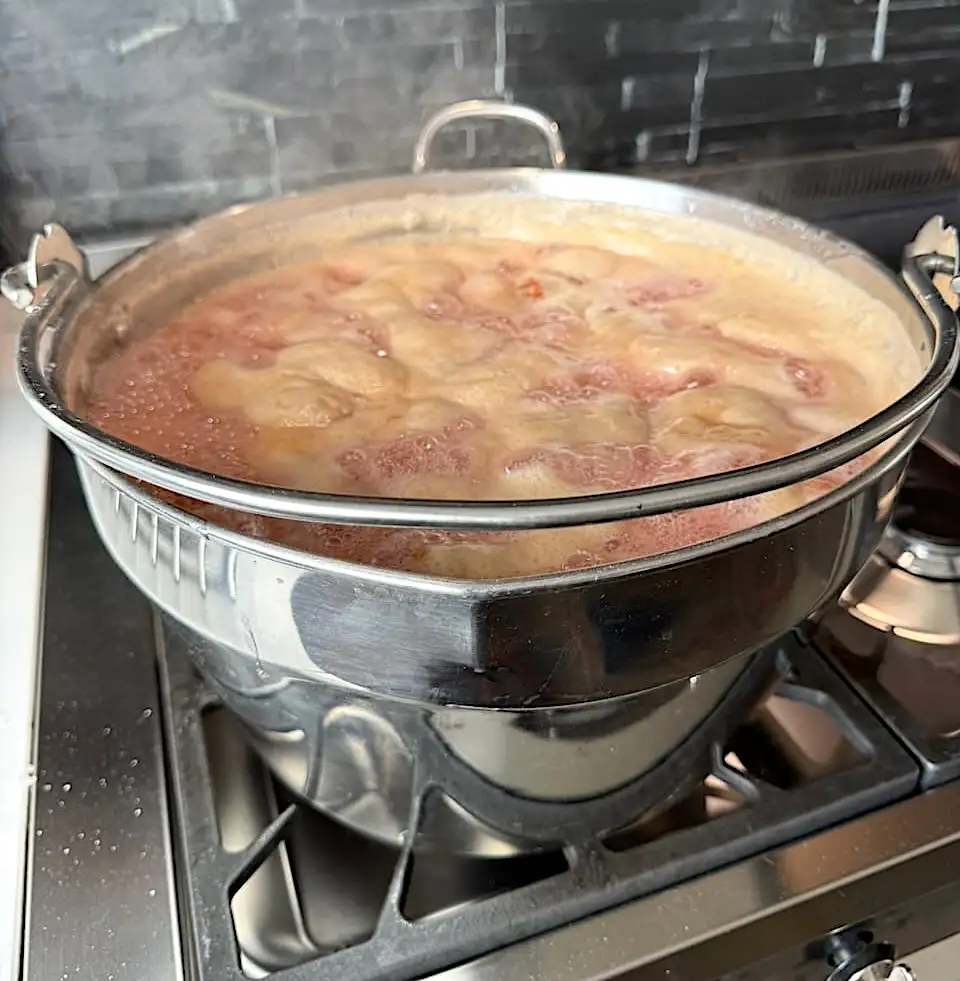
If you are about to take on a proper glut, a decent-sized preserving pan makes the whole job easier and safer than trying to boil jam in a standard saucepan. Buy a stainless steel preserving pan on Amazon UK, since the wide base and high sides stop the jam catching and give you room for a rolling boil without it spitting everywhere.
In This Guide
This page contains affiliate links for the plants and cooking items you may need. If you take action (i.e. subscribe, make a purchase) after clicking a link, I may earn some gardening commission, which helps me keep the Garden Ninja Blog free for all.
For most gardeners with a Victoria plum, the reliable British garden variety, the harvest window sits firmly in the second and third week of August, occasionally running into early September in a cooler, more northern garden or a shadier spot. I have a yearly calendar date called ‘Plum Harvest’ on the 16th of August here in the UK!
That said, plums do not read the calendar, and the actual date depends heavily on your variety, your local microclimate and how much sun the tree has had through July.
Early varieties such as Opal and some of the gages can start dropping fruit from late July, while later dessert varieties and some of the cooking plums will hang on until well into September. If you don’t have a plum tree of your own yet, Victoria is the reliable variety to plant on Amazon UK, since it is self-fertile, incredibly productive, and the one every UK garden centre stocks for good reason. I always tell people on the forum to think of it as a season rather than a date, because a single tree will often ripen its fruit over two or three weeks rather than all at once, with the fruit on the sunniest, south-facing side of the tree usually a good week ahead of anything tucked into shade.
The heatwave summers we have had recently have shifted this earlier for a lot of gardens, too. If your tree has had a hot, dry July, do not be surprised if you are picking a full week or more ahead of what you would consider normal. I check my own trees from the first week of August onwards during a hot year, simply because leaving it to the third week as a default has caught me out with overripe fruit dropping and going to waste on the ground.
| Plum Type | Typical UK Harvest Window |
|---|---|
| Early dessert varieties, Opal and similar | Late July to early August |
| Victoria (the classic British garden variety) | Mid to late August |
| Greengages | Late August to early September |
| Late cooking varieties and Marjorie’s Seedling | Early to mid September |
| Damsons, technically a Plum subspecies | September |
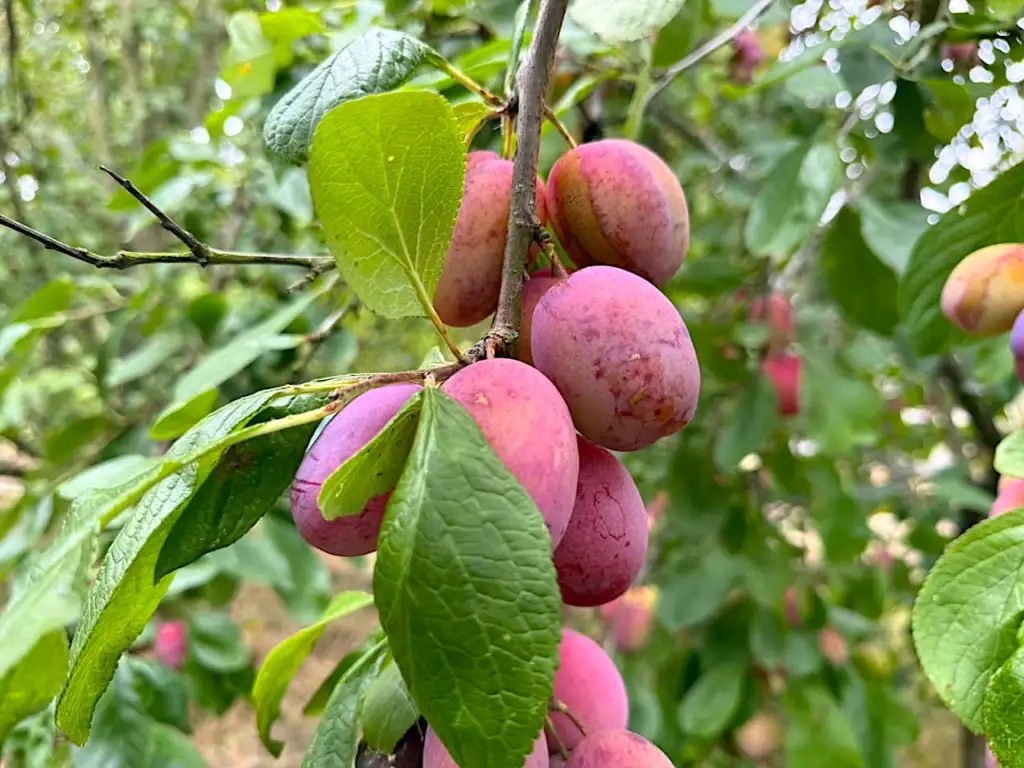
Colour alone will let you down here. A plum can look fully coloured a good week before it is actually ready, so I always use a combination of three checks rather than relying on the eye by itself. First, the squeeze test. A ripe plum gives very slightly under gentle pressure from your thumb, similar to a ripe peach, without feeling soft or mushy. If it feels hard as a golf ball, leave it for a few more days.
Second, look for the bloom. Ripe plums develop a faint, dusty, almost powdery white coating over the skin, which is a natural yeast bloom rather than anything applied. It is one of the clearest visual signs that a plum has fully matured on the tree, and you will lose it the moment you handle the fruit, so it is worth spotting before you start picking rather than after.
Third, and this is the test I trust most, cup the plum in your hand and lift gently upwards with a slight twist. A ripe plum will part from the spur with almost no resistance at all. If you have to tug or pull downwards to get it off, it needs longer. Unlike apples and pears, plums will not continue to ripen properly once picked in the way you might hope, so a plum taken too early tends to stay tart and never develops the full sweetness it would have had left on the tree.
However, don’t panic if you pick them before they fully ripen; that’s when you make jam. Believe it or not, boiling them gets them ripe in no time, so pick them even if only half-ripe for jam!
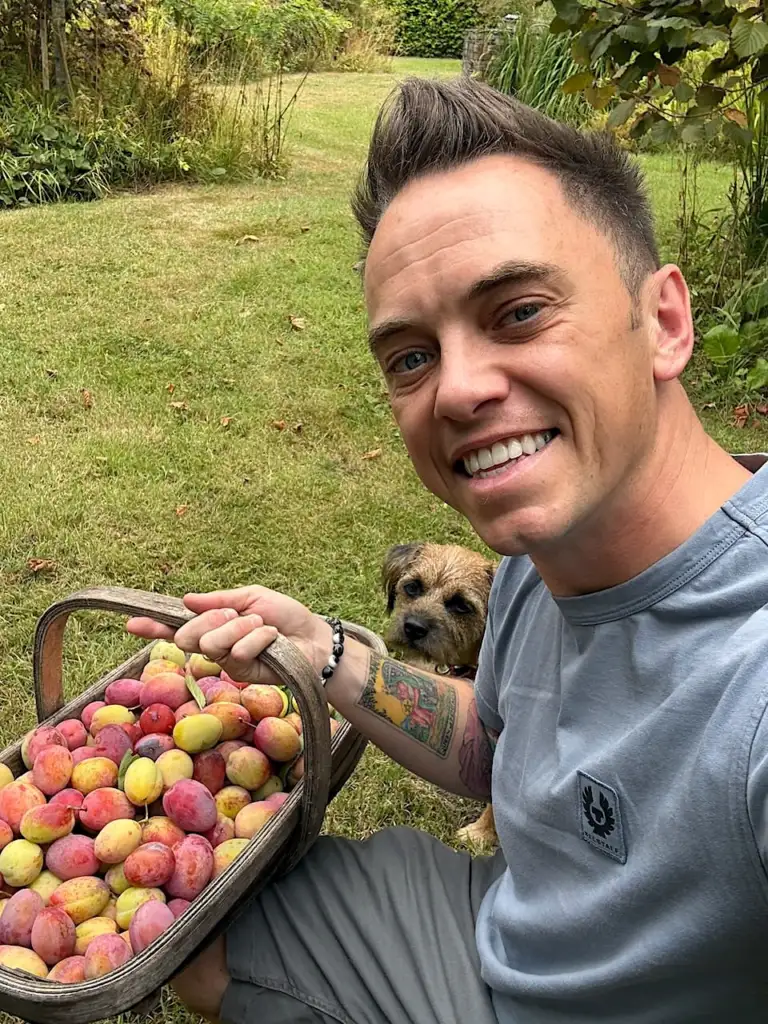
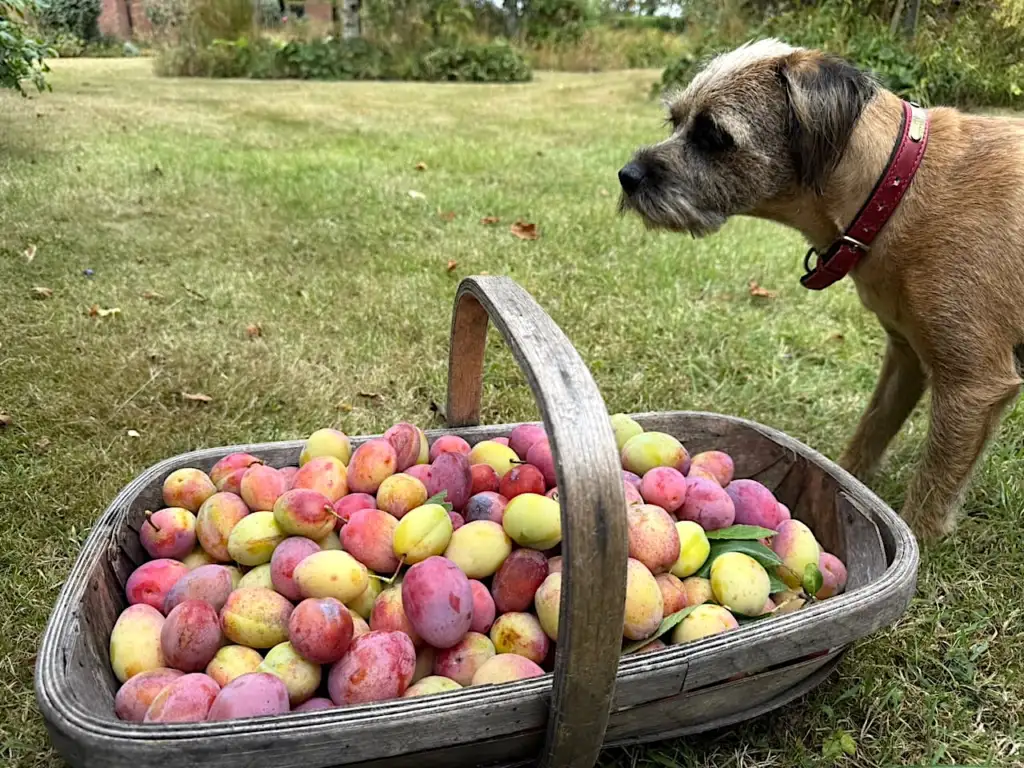
Plums bruise far more easily than people expect, and a bruised plum will start to break down within a day or two, which is no good if you are hoping to store some or give a few away. I pick into a shallow tray or a wide, low-sided basket rather than a deep bucket, since fruit at the bottom of a deep container gets crushed under the weight of everything piled on top.
Pick in the cooler part of the day, either first thing in the morning or early evening, since fruit picked in the heat of the afternoon softens and bruises more readily. Work through the tree in stages rather than trying to strip it all in one go. I usually do three or four passes over ten days to a fortnight, taking whatever is properly ripe each time and leaving the rest, which gives you a longer, steadier supply rather than one overwhelming glut followed by nothing.
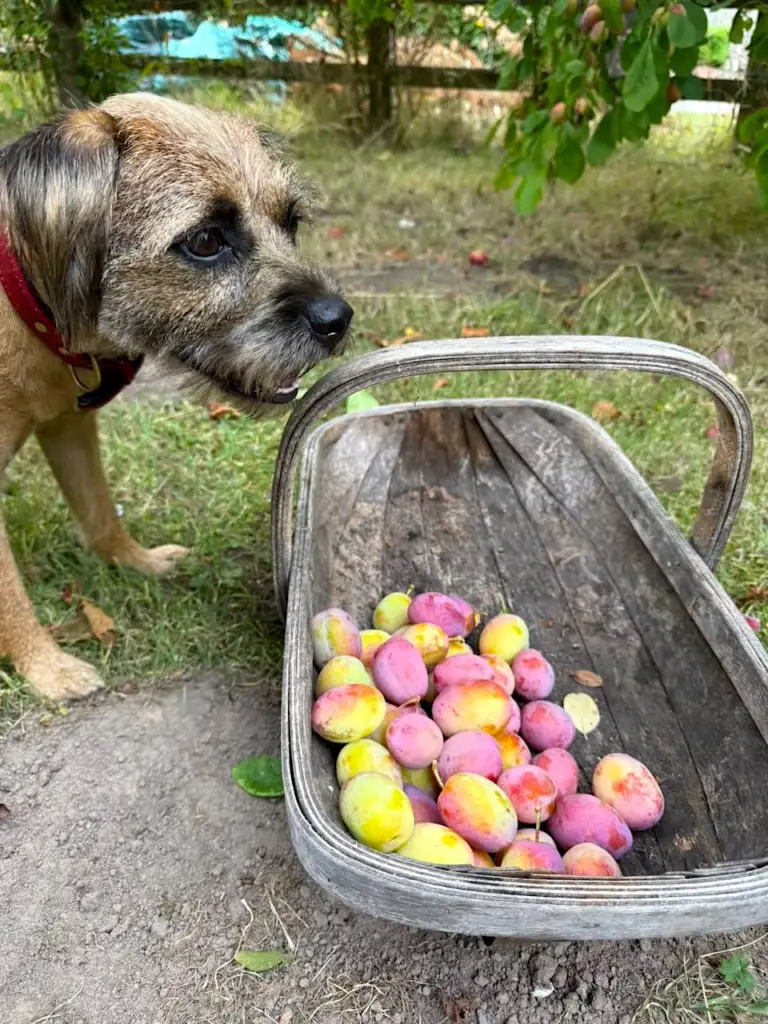
Keep an eye on wasps too. Once the first few plums split or drop, wasps will find the tree quickly, and a windfall left on the ground is one of the fastest ways to attract them into a garden you are trying to enjoy through the rest of late summer. Clearing fallen fruit daily during the peak of the harvest makes a real difference here.
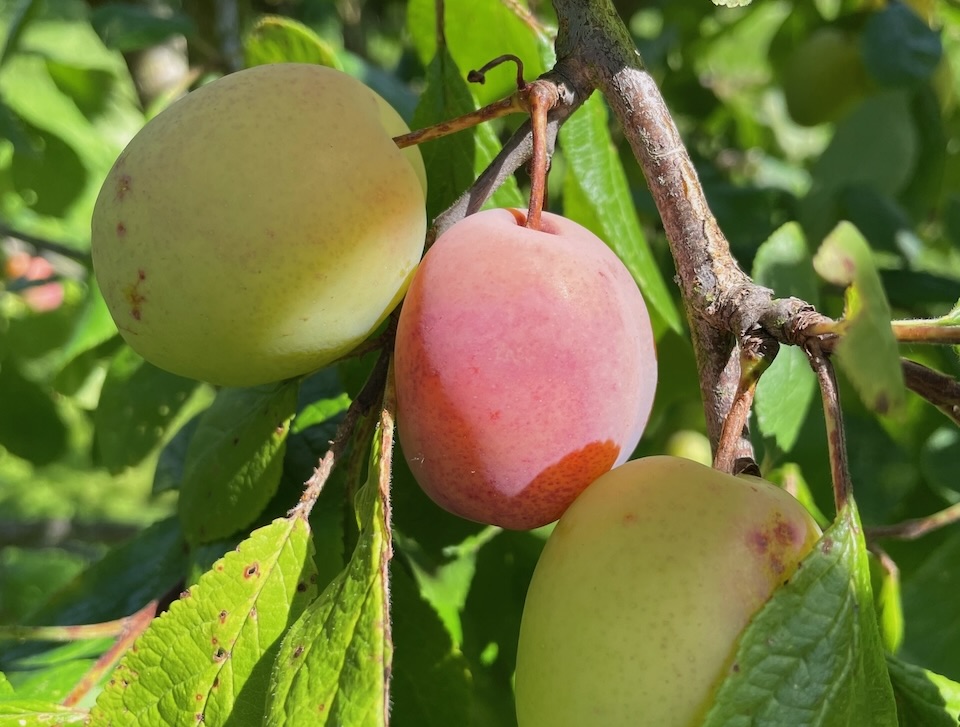
A productive Victoria plum can easily hand you fifteen to twenty kilos of fruit across a single season, which is easily four bucket loads and that is where the real fun starts. Fresh eating only accounts for so much of it before you need a plan for the rest. My honest ranking, based on years of dealing with my own glut, is jam first because it is the most forgiving and the most useful all year round, cake second because it uses a decent quantity in one go and freezes beautifully, then chutney if you fancy something savoury for the cheese board, and finally freezing the rest whole or halved for winter crumbles and compotes.
If chutney or gin appeal to you as well, I would point you towards my Damson recipes guide, since damsons are technically a plum subspecies and every single one of those recipes, the gin, the chutney, the fool and the clafoutis, works just as well with a regular plum. The method does not change; only the fruit does.
This is the recipe I make every single August, and it has not changed in years because there is nothing left to improve. Plums have decent natural pectin, particularly if you leave a few stones in while it boils, so this sets reliably without needing jam sugar or any added pectin. So you can make it with any old granulated sugar, win-win!
The spices lift it well beyond a standard plum jam without overwhelming the fruit, and a jar of this given as a gift always goes down well.
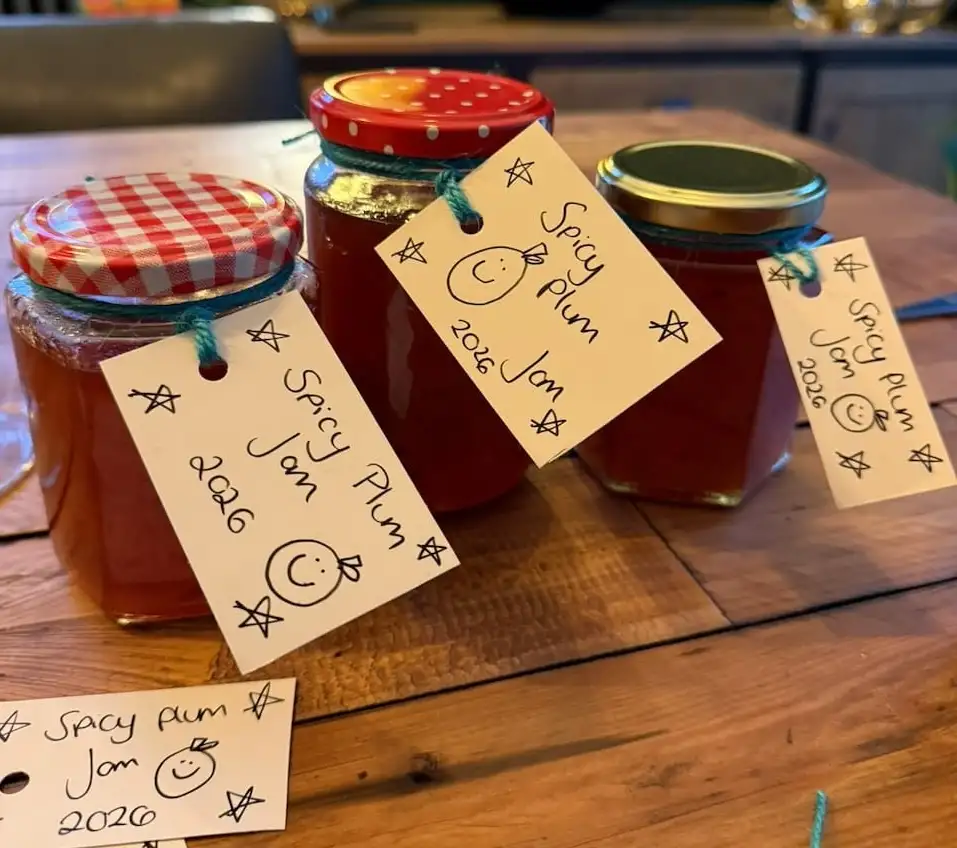
Ninja’s tip: If your plums are on the sweeter, riper side, add the juice of half a lemon at the same time as the sugar. It will not noticeably change the flavour, but the extra acidity helps the pectin set properly, which matters more with very ripe, softer fruit than with slightly firmer plums.
If jam is my go-to for a genuine glut, this is the recipe I reach for when I want something impressive with minimal effort for guests. It looks like it took a lot more work than it actually did, and it is a brilliant way to use eight or so plums in one go without any fiddly preserving equipment. It also freezes well once baked and cooled, which is handy if you find yourself with more plums than jam jars.
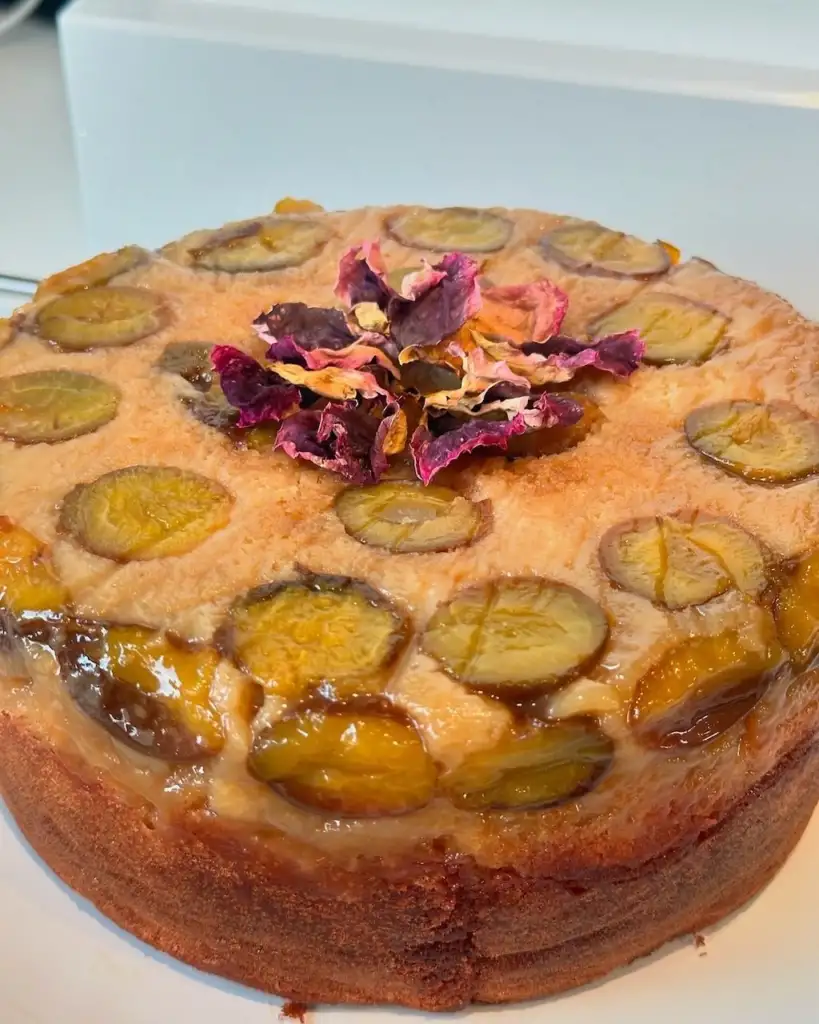
Serve this warm with a dollop of crème fraîche or a scoop of vanilla ice cream. It also keeps well for two to three days under a cake dome, and honestly tastes even better the next day once the plum juices have properly soaked into the sponge.
Fresh, unwashed plums will keep for three to five days at room temperature or up to two weeks in the fridge crisper drawer, though the flavour is at its best within the first few days of picking. For anything beyond that window, freezing is by far the easiest option. Halve and stone the fruit, lay the halves cut-side up on a tray lined with baking paper, and freeze until solid before transferring to a bag or container. Frozen this way they will keep for up to a year and are ready to go straight into a crumble, compote or the cake recipe above without needing to defrost first.
Once you have finished picking, late summer is actually the ideal time to give your plum tree any pruning it needs. Plums belong to the Prunus family along with cherries, and every variety in that group carries a real risk of silver leaf disease if you prune it in winter, so I always wait until September, once harvest is finished, to prune my plum trees I have written a full plum tree pruning guide covering the open goblet shape, tools, soil and feeding, and whether it is worth netting your tree against birds, so head there for the complete step by step approach.
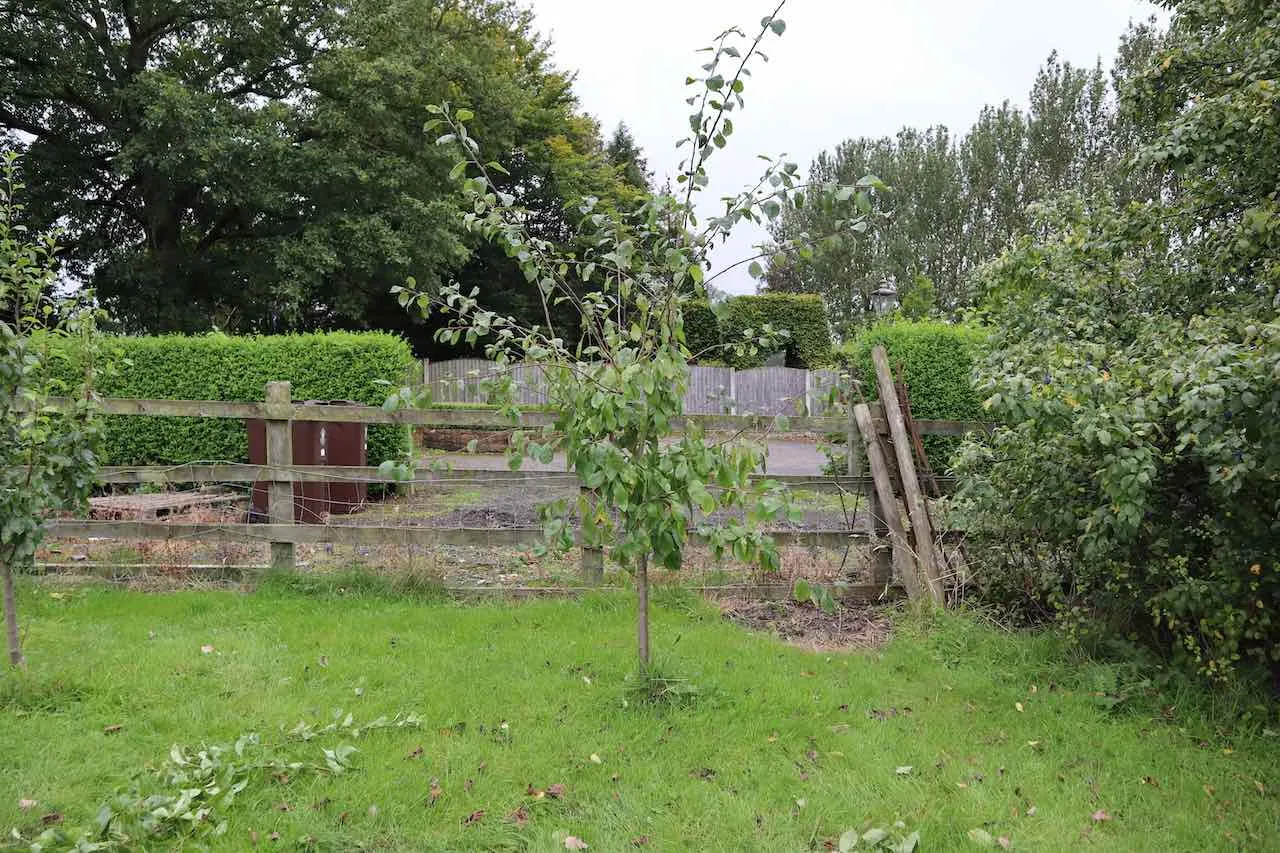
Focus on removing any dead, damaged or crossing branches first, then thin out anything that is crowding the centre of the tree to let more light and air through, which helps ripen next year’s fruit more evenly. Resist the urge to do a hard, dramatic prune all in one go. Plums respond much better to a light, regular tidy-up each year after harvest than to an aggressive cutback after years of neglect.
For a Victoria plum, the most common British garden variety, the second and third week of August is the reliable window in most years, though a hot July can bring this forward and a cooler, shadier garden can push it back towards early September.
Not in the way most people hope. A plum picked slightly underripe will soften a little at room temperature over a few days, but it will not develop the full sweetness it would have gained left on the tree. It is always worth waiting for the twist test to confirm ripeness before picking rather than picking early and hoping.
No. Plums carry enough natural pectin, particularly around the stones, to set reliably with just fruit and sugar in equal weights. Leaving a few stones in a muslin bag while it boils and fishing them out before jarring gives the set an extra helping hand without needing shop bought pectin.
Yes, the same equal weight method works across the whole plum family. Damsons will need slightly less sugar tolerance for tartness and greengages will produce a lighter, honeyed jam, but the ratios and method stay the same.

Join over 100,000 gardeners on YouTube
Free gardening videos from the Garden Ninja, with 8 million views and counting.
Subscribe on YouTube, it’s freeIf picking your own plums this month has got you thinking about what else your garden could be growing for you, my online courses walk you through exactly how to plan and plant a garden that earns its keep. Starting from just £29, you get the same practical thinking I use when designing productive gardens for clients, broken down into steps you can actually follow at home.
For the garden you’ve already got, not the one you’re starting from scratch. Seven checklists and video lessons from BBC Garden Rescue’s Lee Burkhill, built to help you work out what’s worth keeping before you spend a penny.
Garden Design Examples for Small Gardens: 30 Design Templates & Planting Plans: In this online gardening course, I’ll walk you through 30 fantastic garden designs, explaining the logic behind the layout, the plant choices, and take-home tips for applying them in your own garden.
Learn how to transform and design your own garden with Lee Burkhills crash course in garden design. Over 5 hours Lee will teach you how to design your own dream garden. Featuring practical design examples, planting ideas and video guides. Learn how to design your garden in one weekend!
Garden Design for Beginners Online Course: If you want to make the career jump to becoming a garden designer or to learn how to design your own garden, this is the beginner course for you. Join me, Lee Burkhill, an award-winning garden designer, as I train you in the art of beautiful garden design.
Watch for a slight give when you squeeze, a faint powdery bloom, and a plum that twists off the branch without a fight, and you will rarely pick one before it is ready. Once the harvest is in, my spiced jam and the upside-down cake will see off a good chunk of a glut between them, and whatever is left freezes beautifully for the months ahead. Then, once the last plum is off the tree, it is the perfect moment to give the tree a proper late-summer prune, ready for next year’s crop.
Happy picking, and happy jamming, Ninjas. If you make a batch of this jam or the cake, I would love to see it, so do tag me on Instagram or Facebook with your own plum-mageddon photos.


Lee Burkhill, known as the Garden Ninja, is an award-winning garden designer and horticulturist with over 30 years of gardening experience and 15 years as a professional garden designer. A qualified RHS (Royal Horticultural Society) professional, Lee specialises in sustainable garden design and practical horticultural advice. He designs and presents on BBC1’s Garden Rescue and in leading gardening publications. Lee combines three decades of hands-on gardening knowledge with professional design qualifications to help gardeners create beautiful, functional outdoor spaces.
View all posts by Lee Burkhill





JOIN THE NINJAS

Be the first in line for new Guides, Discount codes and Offers