For the garden you’ve already got, not the one you’re starting from scratch. Seven checklists and video lessons from BBC Garden Rescue’s Lee Burkhill, built to help you work out what’s worth keeping before you spend a penny.
69

Quick Answer
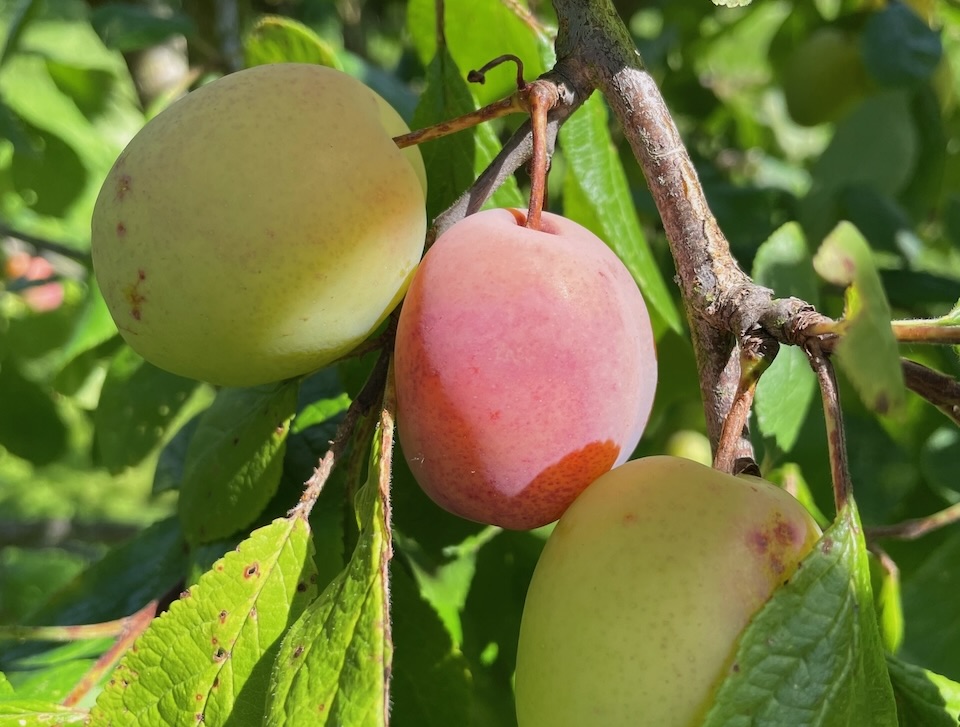
Prune a plum tree in September, straight after harvest, and never in winter. Plums belong to the Prunus family alongside cherries, and a winter cut leaves the wound open to silver leaf disease and bacterial canker for months in cold, damp weather. Remove dead or crossing wood first, thin any congested growth, and aim for an open goblet shape, taking no more than a quarter of the canopy in a single season.
Once you have picked the last of the fruit and made your plum jam for the year, September is the best moment to give your tree the attention it needs. This guide covers exactly when to prune, how to do it properly, what soil and feeding it needs to recover well, whether you should be netting it against birds, and how to spot the two diseases that timing alone protects against.
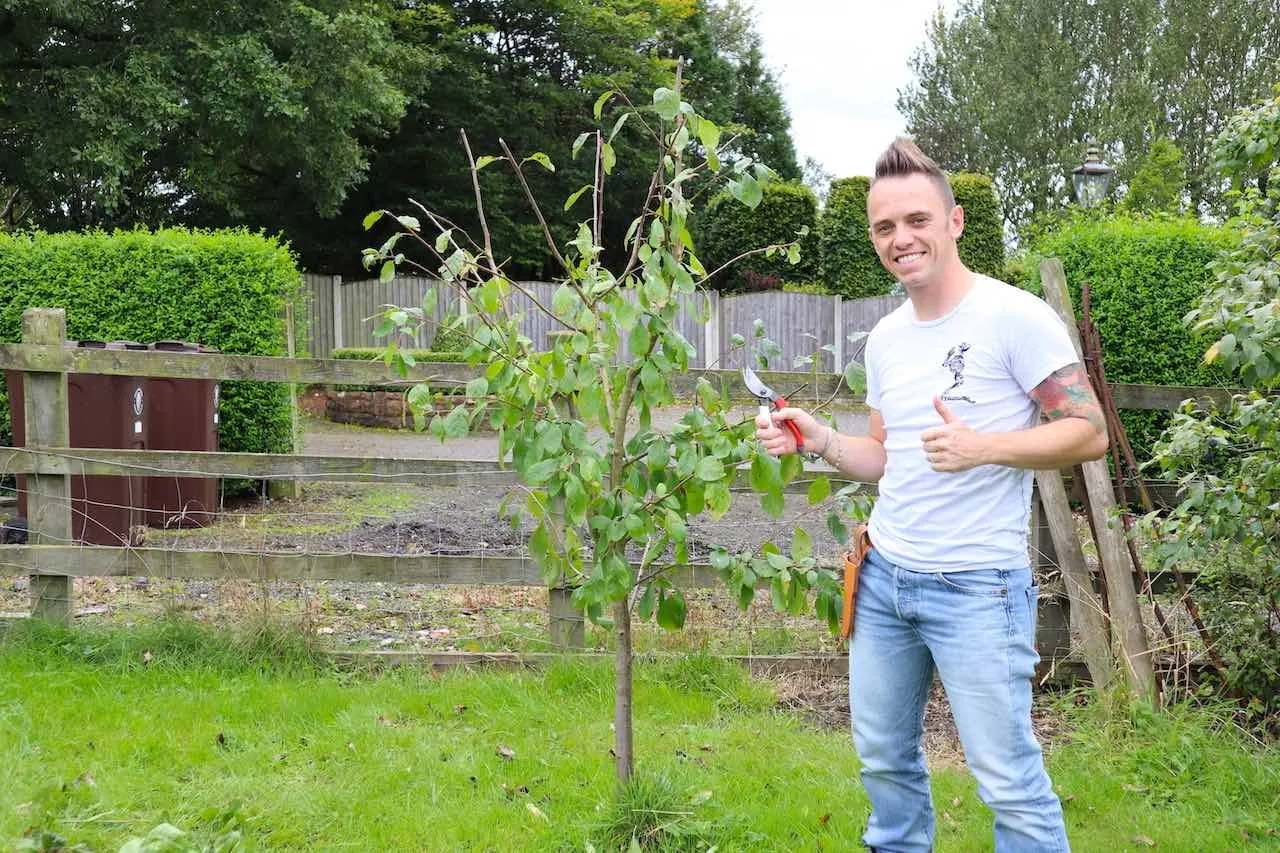
Before you start, make sure your tools are up to the job. Buy Felco 2 secateurs from Amazon UK, since a clean, sharp cut heals far faster than a ragged one torn out by blunt blades, and that matters even more on a Prunus that is already trying to close a wound quickly before the weather turns.
In This Guide
This page contains affiliate links for products I use and love. If you take action (i.e. subscribe, make a purchase) after clicking a link, I may earn some gardening commission, which helps me keep the Garden Ninja Blog free for all.
Left to its own devices, a plum tree will put on a huge amount of vigorous growth every year, particularly in a warm, wet British summer. That growth becomes congested fast, blocking light and air from the centre of the tree, which is exactly the environment fungal diseases love. Pruning is not really about keeping a plum tidy for the sake of it; it is about directing the tree’s energy towards fewer, stronger branches that can actually carry a decent crop without snapping under the weight.
Plums, like cherries, sit in the genus Prunus, and every stone fruit in that family, including greengages, damsons, apricots and almonds, follows the same summer-only pruning rule. Get the timing right, and everything else in this guide becomes fairly straightforward.
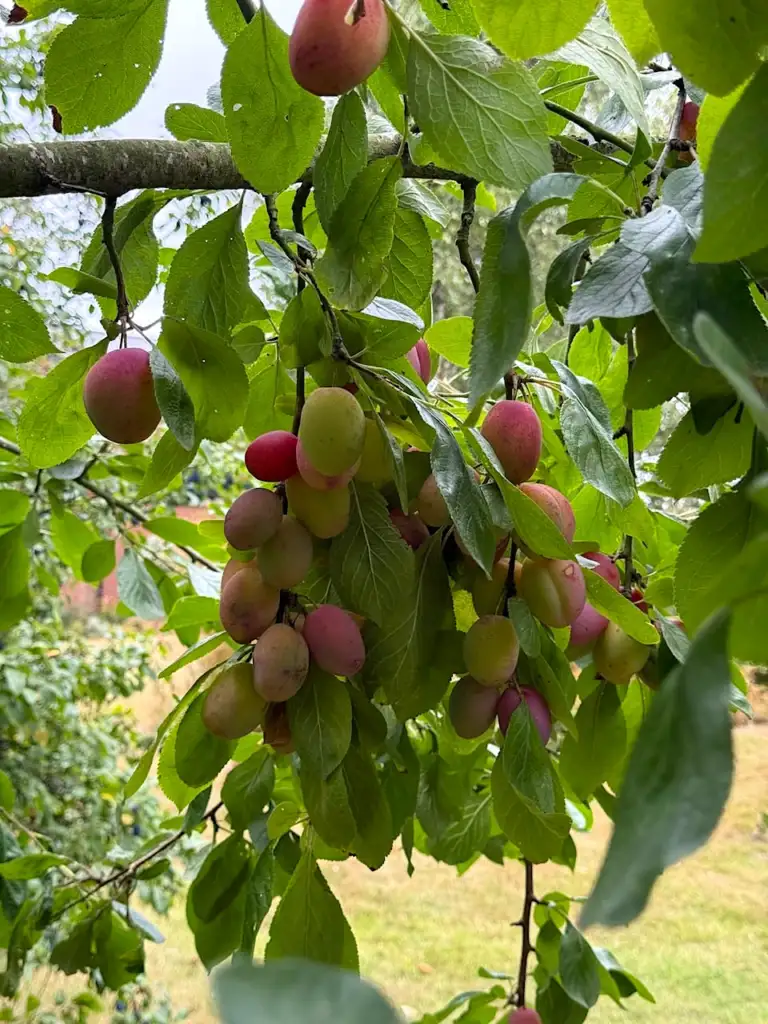
Most garden plums in the UK are grown as a bush, a fairly compact, open-centred tree on a semi-dwarfing rootstock such as Pixy or St Julien A, and this is what most of this guide assumes. A standard plum, grown on a more vigorous rootstock with a clear trunk before the branches start, needs the same open goblet approach but simply scaled up, since you are working with a bigger tree overall.
If space is truly tight, a fan-trained plum grown flat against a warm, sheltered wall is a brilliant alternative, and I would always recommend it over squeezing in an undersized bush tree that never quite settles. Fan training takes more formative work in the early years, tying young branches into wires to build the fan shape, but once established it needs a lighter annual tidy rather than a full structural prune, and the wall’s warmth helps ripen the fruit earlier too.
You do not need an enormous kit for this job, but the tools you do use need to be sharp and clean, since a crushed or torn cut on a Prunus heals far more slowly than a clean one, and a slow-healing wound is exactly what lets silver leaf spores in.
| Tool | What It’s For | Buy on Amazon UK |
|---|---|---|
| Secateurs | For anything up to around 1cm in diameter | Felco 2 secateurs |
| Loppers | For branches up to around 4cm thick | Felco bypass loppers |
| Pruning saw | For anything thicker than loppers can manage cleanly | Folding pruning saw |
| Gloves | To protect your hands from both the tools and any sap | Gold Leaf DRY TOUCH gloves |
| Disinfectant | To clean blades between cuts, particularly if you are removing anything diseased | Citrox natural garden disinfectant |
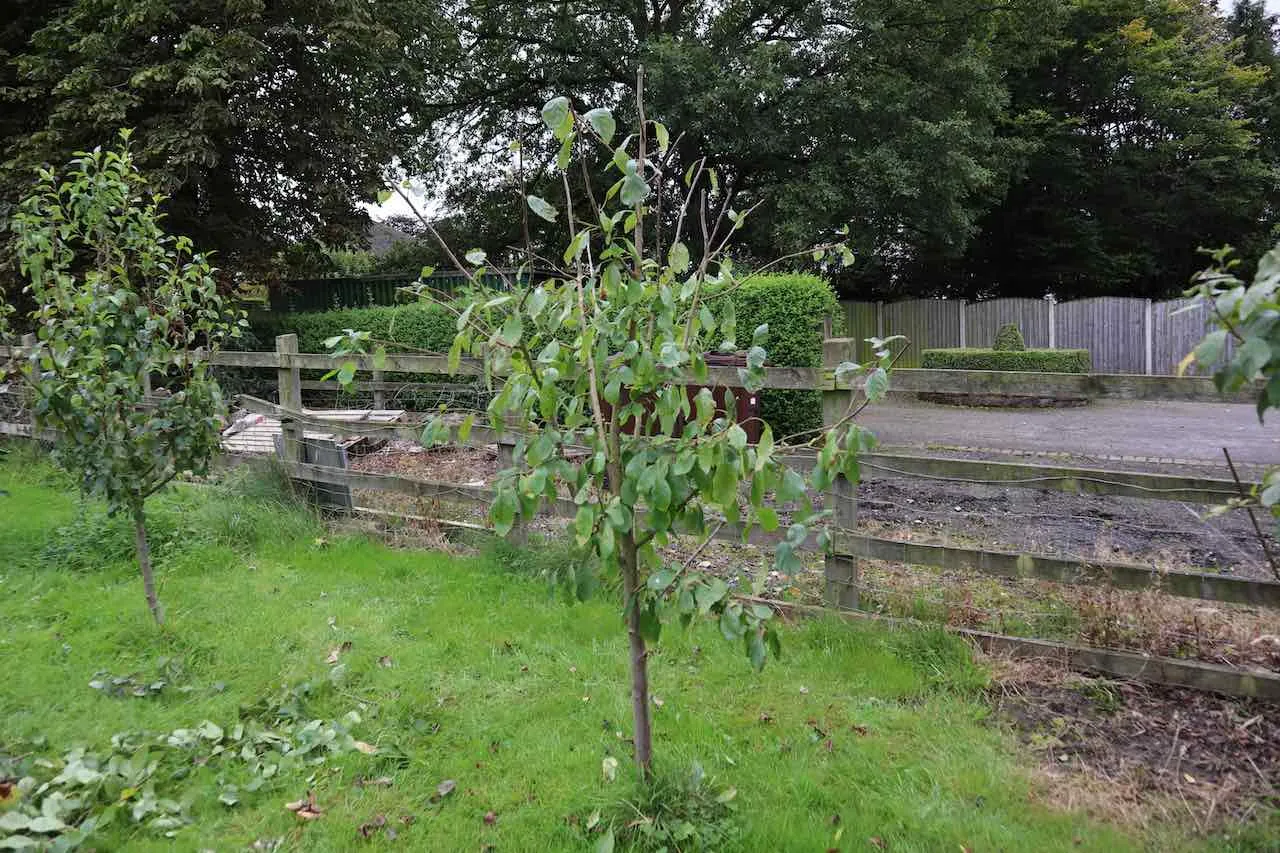
This is the single most important thing in this entire guide, so I am putting it plainly. Prune your plum tree in September, once you have finished harvesting, and never in winter. A late summer cut heals within a week or two in warm, dry weather, closing off the wound before disease spores are even active. A winter cut sits open for months through the coldest, wettest part of the year, which is precisely when silver leaf disease and bacterial canker spread most aggressively.
If your tree still has fruit on it into early September, wait until you have picked the last of it before you start. There is no benefit to rushing a prune before the harvest is finished, and every reason to wait the extra week or two.
💡 Top Tip
Never remove more than around a quarter of the live canopy in a single season. Plums, like cherries, don’t recover from a harsh cut the way an apple or pear does. Heavy pruning shocks the tree into a flush of weak, disease prone regrowth rather than the strong, fruitful wood you actually want. If you’ve inherited a badly neglected tree, spread the reduction across two or three Septembers rather than trying to fix it in one go.
Start every prune the same way: walk around the tree and identify anything dead, damaged, or obviously diseased. Known as the three prunings D’s! This wood contributes nothing to the tree and is often already harbouring the early stages of disease, so it always comes off first regardless of anything else you plan to do.
Cut back to healthy wood, just outside the branch collar where the branch meets the trunk or a larger limb. Removing this wood properly, rather than leaving a stub, closes the wound cleanly and stops it from becoming an entry point for disease later on.
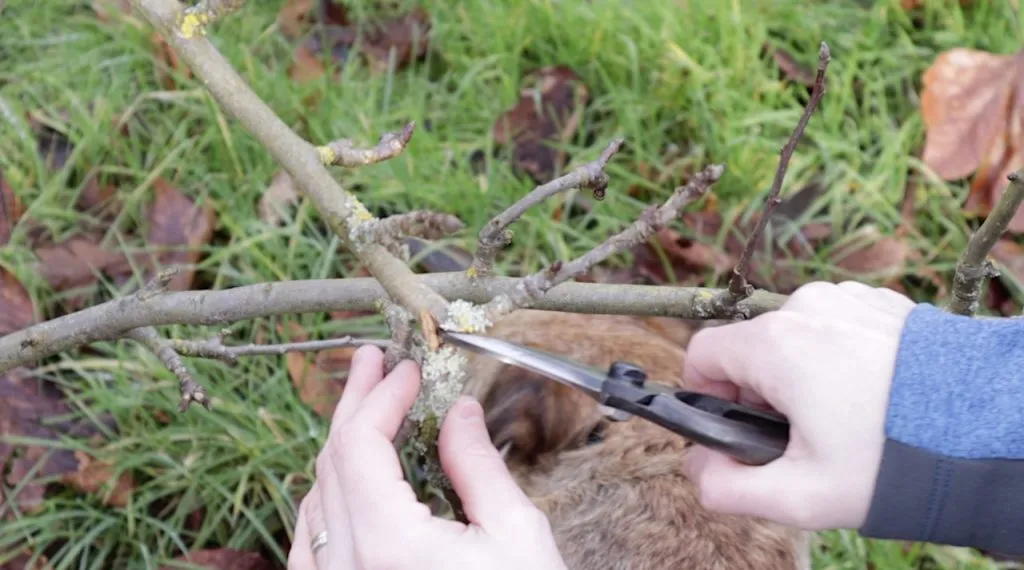
Next, look for any areas where the tree has become crowded, with branches crossing, rubbing against each other, or growing back in towards the centre. All of this blocks light and air from reaching the middle of the tree, which increases the risk of fungal problems and leaves fruit lower down poorly ripened and often smaller than it should be.
Take out the weaker of any two crossing branches, cutting back to its point of origin rather than leaving a stub. Aim to open the canopy up enough that you could comfortably throw a hat through the middle of the tree without it catching on anything.
The open goblet, sometimes called an open centre, is the classic shape for a bush plum tree, and it is the shape you should be working towards over the years rather than trying to achieve in a single prune. Picture holding your hand out flat with your fingers spread, as though cupping a large grapefruit. That gap between each finger, all facing outwards with space in between, is what you are recreating in the branch structure.
Choose four to six strong, well-spaced branches radiating outwards from the trunk at different heights, and remove any competing central leaders or weak growth fighting for the same space. An open, evenly spaced framework like this lets light reach every part of the canopy, which improves both fruit quality and the tree’s overall resistance to disease.
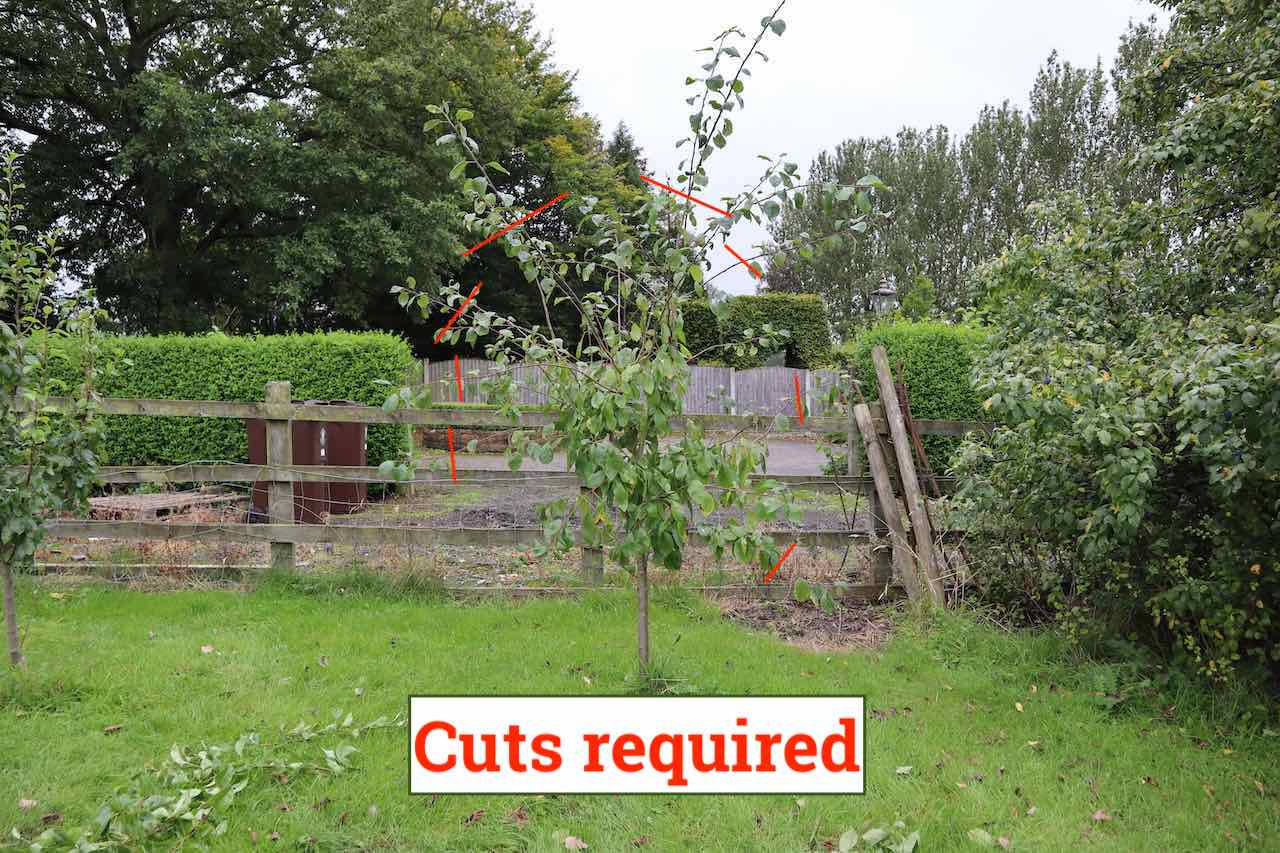
Plums fruit on spurs that build up on two-year-old and older wood, as well as on some of the previous year’s growth, so the goal here is a stable framework of branches rather than constant hard renewal. Once your open goblet shape is established, ongoing pruning is mostly about lightly reducing the current season’s whippy new growth by around a third, which encourages the tree to put its energy into forming fruiting spurs rather than chasing height.
Avoid the temptation to prune hard every year, chasing a bigger crop. A plum tree given a light, sensible tidy each September, rather than an aggressive cut back, will reward you with a far more consistent harvest over its lifetime.
One of the questions I get asked most often on the forum is what soil a plum tree actually needs, and the honest answer is that plums are far less fussy than most people expect. They will grow perfectly well in clay, sand or silt-based soil, which is one of the reasons I recommend them so often to clients with tricky, heavy garden soil that other fruit trees turn their noses up at.
The thing that matters most is moisture, and specifically not letting the tree dry out once the blossom has dropped and the young fruits are swelling. A plum under water stress at that stage is far more likely to drop its fruit early or develop split skins later in the season. If your soil is on the sandy, free-draining side, a proper weekly soak while the tree is in fruit makes a real difference, whereas a heavier clay soil generally holds enough moisture on its own through most summers.
Hold off on feeding a young, newly planted plum tree for its first couple of years. Let it put its energy into establishing a proper root system rather than lush top growth, and only start feeding if you spot genuine signs of stress, such as yellowing leaves or a rusty tinge, which usually point to water or nutrient deficiency rather than a lack of feed alone. Once a tree is established, a balanced feed applied in late winter or early spring, well before the September pruning window, sets it up nicely for the growing season ahead.
This comes up constantly from new plum owners watching birds strip a tree bare just as the fruit turns colour, and the honest answer is yes, netting is worth doing if you can manage it properly. The keyword there is properly. Simply draping a net loosely over the canopy does very little, since birds will happily perch on the outside and peck straight through wherever the net touches the fruit.
What actually works is a proper cage structure that holds the net away from the fruit entirely, leaving a genuine gap between the netting and any branch or plum a bird could reach. For a young or smaller tree, this is fairly easy to rig with a simple frame, and for a larger established tree it becomes more of a job, which is why plenty of gardeners accept a certain amount of bird loss as the price of growing a full-sized plum tree rather than netting the whole thing every year.
If you do net, take it down as soon as the harvest is finished. Leaving netting up into September when you come to prune is asking for a tangled mess of branches and mesh, and it is very easy to snag and tear both the net and new growth trying to work around it.
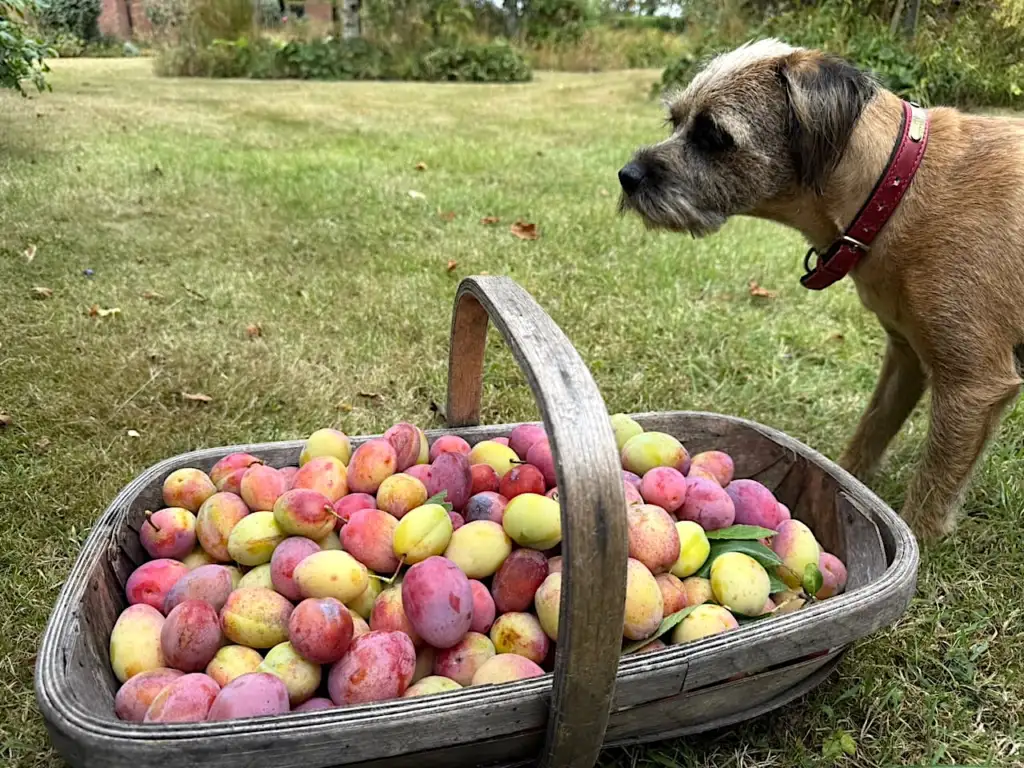
I have mentioned both diseases already, but they are worth explaining properly, because understanding exactly what you are protecting against makes the September only rule feel a lot less arbitrary and a lot more like common sense.
Silver leaf is caused by a fungus called Chondrostereum purpureum, and it gets its name from the distinctive silvery grey sheen that develops across affected leaves. The fungus enters through fresh pruning wounds and spreads internally, gradually restricting the flow of water and nutrients through the branch. Left unchecked, affected branches die back, and a badly infected tree can be killed outright.
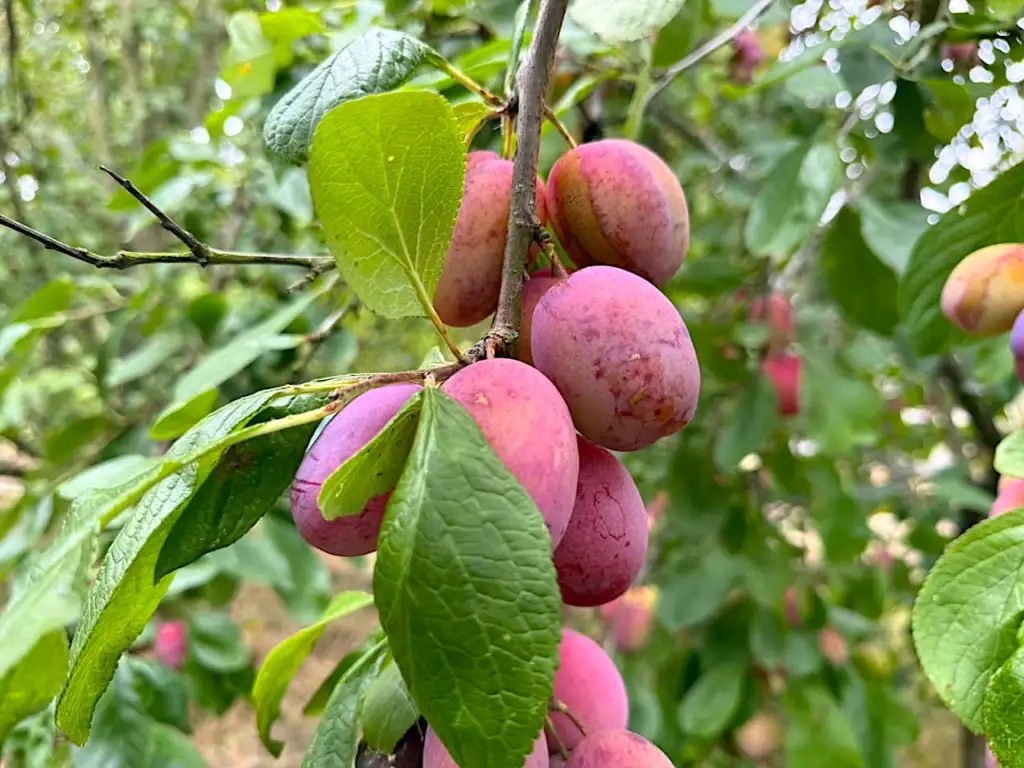
Spores are most active during cold, damp autumn and winter weather, which is exactly the window a September cut avoids entirely, healing over well before conditions turn in the fungus’s favour.
Bacterial canker is the other major risk, showing up as sunken, dead patches of bark on the trunk or branches, often accompanied by a thick, amber coloured gum oozing from the affected area, known as gummosis. Like silver leaf, it enters through fresh wounds and spreads fastest in cold, wet conditions, reinforcing why late summer really is the only sensible pruning window for this whole family of trees.
If you spot either disease, cut back well into completely healthy wood, disinfect your blades between every single cut, and remove the infected material from the garden entirely rather than composting it. There is no chemical cure for either disease once established, which is exactly why timing and good hygiene are your only real prevention.
September, once you have finished harvesting the fruit, is the ideal month for most UK gardens. This gives the wounds warm, dry weather to heal quickly before autumn’s cold, damp conditions set in.
No, this is the mistake I see most often. Winter cuts heal slowly in cold, damp conditions, leaving the wound exposed to silver leaf disease and bacterial canker for months. Only remove properly storm damaged or dangerous branches in winter, and treat it as an emergency exception rather than routine maintenance.
Plums are properly unfussy about soil type and will grow well in clay, sand or silt, provided it isn’t waterlogged. The thing that matters most is consistent moisture once the blossom has dropped and the fruit is swelling, since a dry spell at that stage causes stress, split fruit and early drop.
Yes, if you can do it properly. A net needs to be held clear of the fruit on a frame, since birds will simply peck through anywhere a loose net touches a branch or plum. Take the netting down as soon as harvest finishes so it doesn’t get in the way of your September prune.
Never more than around a quarter of the live canopy in a single season. Established trees usually only need light, maintenance level pruning each year. An overgrown or neglected tree is far better tackled gradually across two or three Septembers than fixed with one heavy cut.
This is gummosis, the classic sign of bacterial canker. Cut back into healthy wood well beyond the affected area, disinfecting your tools between every cut, and remove the infected material rather than composting it.

Join over 100,000 gardeners on YouTube
Free gardening videos from the Garden Ninja, with 8 million views and counting.
Subscribe on YouTube, it’s freeIf getting your plum tree right has given you a taste for proper, confident garden care, my online courses take you through the same thinking across the whole garden, not just the fruit trees. Starting from just £29, they give you the practical, step by step approach I use with design clients, minus the years it took me to learn it the hard way.
For the garden you’ve already got, not the one you’re starting from scratch. Seven checklists and video lessons from BBC Garden Rescue’s Lee Burkhill, built to help you work out what’s worth keeping before you spend a penny.
Garden Design Examples for Small Gardens: 30 Design Templates & Planting Plans: In this online gardening course, I’ll walk you through 30 fantastic garden designs, explaining the logic behind the layout, the plant choices, and take-home tips for applying them in your own garden.
Learn how to transform and design your own garden with Lee Burkhills crash course in garden design. Over 5 hours Lee will teach you how to design your own dream garden. Featuring practical design examples, planting ideas and video guides. Learn how to design your garden in one weekend!
Garden Design for Beginners Online Course: If you want to make the career jump to becoming a garden designer or to learn how to design your own garden, this is the beginner course for you. Join me, Lee Burkhill, an award-winning garden designer, as I train you in the art of beautiful garden design.
Now you know how to prune a plum tree properly, here are my other beginner fruit tree pruning guides to keep every tree in the garden healthy and productive.
Prune in September, straight after harvest, never in winter, and take off no more than a quarter of the canopy in any one year. Get those two things right, and almost everything else — the open goblet shape, the fruiting wood, the soil and watering — falls into place with a bit of common sense and a light touch each autumn.
Grab your sharpest secateurs, wait for that first September weekend once the last plum is picked, and give your tree the care it deserves. If you have got questions about your own tree, pop them on the forum; I read every single one.
Happy pruning, Ninjas.


Lee Burkhill, known as the Garden Ninja, is an award-winning garden designer and horticulturist with over 30 years of gardening experience and 15 years as a professional garden designer. A qualified RHS (Royal Horticultural Society) professional, Lee specialises in sustainable garden design and practical horticultural advice. He designs and presents on BBC1’s Garden Rescue and in leading gardening publications. Lee combines three decades of hands-on gardening knowledge with professional design qualifications to help gardeners create beautiful, functional outdoor spaces.
View all posts by Lee Burkhill





JOIN THE NINJAS
Be the first in line for new Guides, Discount codes and Offers