For the garden you’ve already got, not the one you’re starting from scratch. Seven checklists and video lessons from BBC Garden Rescue’s Lee Burkhill, designed to help you decide what’s worth keeping before you spend a penny.
69


Quick Answer
Hellebores are hardy, evergreen perennials that flower from December to April. Plant them in autumn or late winter in partial shade, in humus-rich soil that stays moist but drains freely, with the crown level with the soil surface. Cut off the old leaves as the flower buds emerge in midwinter, mulch each autumn, and give new plants two or three years to settle in and flower well.
Who doesn’t want to see nodding cups of white, pink, plum, slate and near-black open in January and February? Hellebores bring a burst of flowers in the dead of winter that lasts for weeks, often through snow and hard frost. Just when the garden needs it most! If you want this in your garden, consider including the showstoppers that are Hellebores!
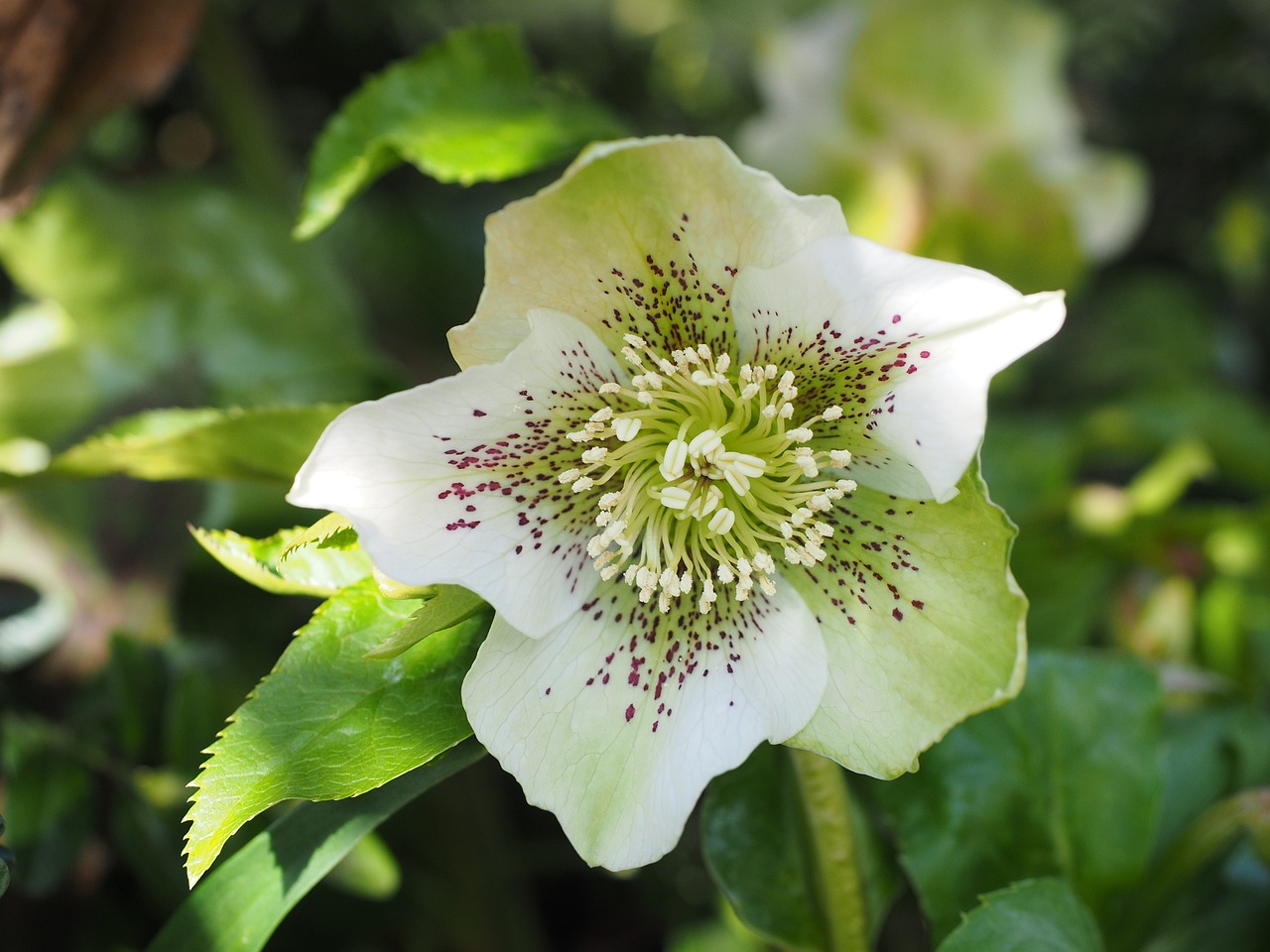
They do come with a few quirks. Most Hellebores are slow-growing and can be tricky to establish; the evergreen foliage looks tatty by midwinter just as the flowers arrive, and they sulk if they are baked in sun or left to dry out. Get the position and timing right, though, and a clump will flower for decades with very little help. I have grown them in client gardens across the country, in pots by my own front door and in the shady beds at Garden Ninja HQ, and this guide covers everything I have learned along the way.
Below you will find the best types to grow, where and when to plant, how to keep them in containers, when to cut back the leaves, why some plants refuse to flower and how to deal with the main diseases. If you are planning a whole planting scheme for the colder months, my guide to winter flowering plants pairs well with this one.

Jump To
This page contains affiliate links for products I use and love. If you take action (i.e. subscribe, make a purchase) after clicking a link, I may earn some gardening commission, which helps me keep the Garden Ninja Blog free for all.
🛒 Browse the full range of Hellebores at Primrose
Hellebores (Helleborus) are clump-forming perennials in the Buttercup family, native to Europe and western Asia, with one species, the Stinking Hellebore, growing wild in Britain. Almost all keep their leaves through winter, and the main garden types flower between December and April, which is why gardeners and early bees value them so much.
The flowers are not quite what they seem. The showy petals are actually sepals, tougher outer layers that protect the bud. Because sepals don’t drop like petals, a Hellebore flower stays on the plant for two or three months, slowly fading from its opening colour to a soft green or dusky pink as the seed pods swell in the middle. That long show is a big part of the appeal.
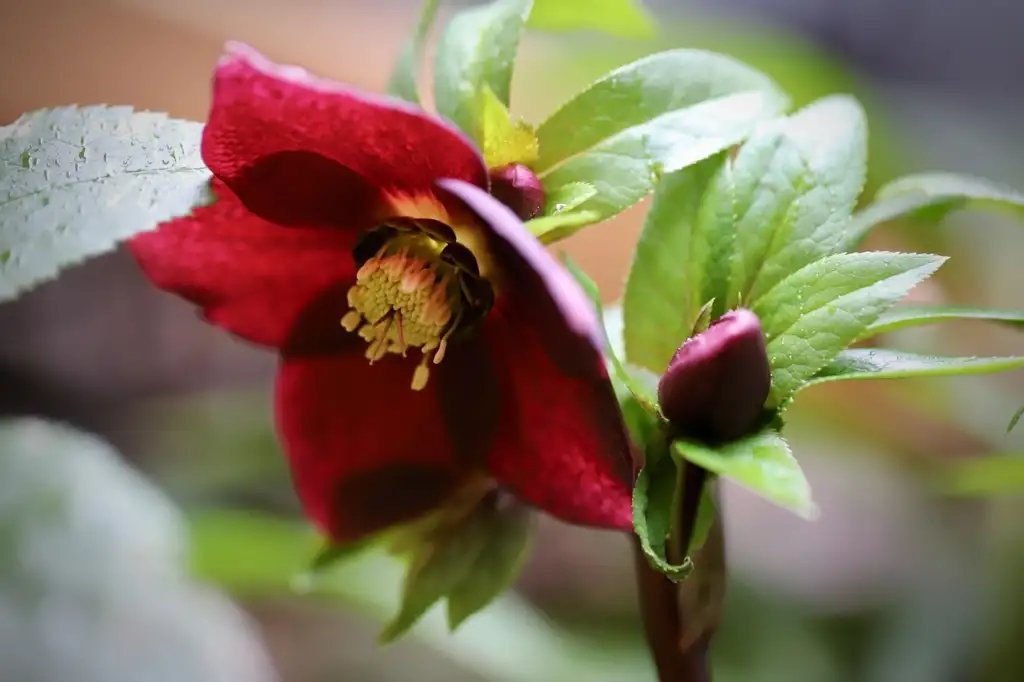
You will see two common names used a lot, and they refer to different plants. The Christmas Rose is Helleborus niger, a pure white species that flowers earliest, often from December. The Lenten Rose is the name gforthe blargegroup of garden hybrids, Helleborus × hybridus (you will still see them sold as Helleborus orientalis), which flower from late January into April ,around the time of Lent. Most of the Hellebores you see in garden centres in late winter are Lenten Roses.
Hellebores also bring early food for pollinators. On a mild February afternoon, you will often find a Bumblebee queen working her way around the open flowers, which is one reason they feature in my guide to early and late-season plants for bees.
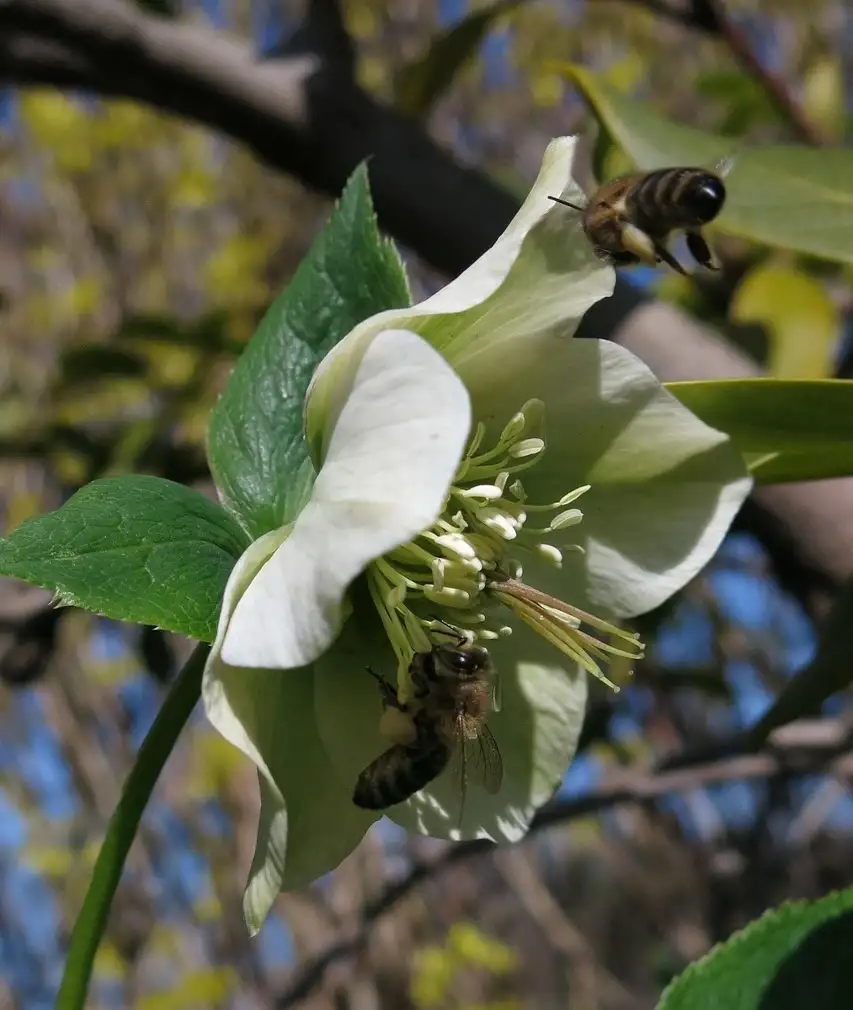
Hellebores split into two groups, and knowing which one you have changes how you prune them. The acaulescent types (Lenten Roses, the Christmas Rose and most hybrids) send up their leaves and flower stems straight from the ground. The caulescent types (the Corsican and Stinking Hellebores) carry their leaves and flowers on upright stems, a bit like a small shrub. Below, I’ve picked out the varieties I recommend most often, with links to the nurseries I buy from.
| Type | Flowers | Height | Best for |
|---|---|---|---|
| Lenten Rose (H. × hybridus) | Late January to April, every colour from white to near-black | 40 to 45cm | Shady borders, pots, the widest colour choice |
| Double Hellebores | February to April, layered rosette flowers | 30 to 45cm | Front door pots, cutting for bowls |
| Christmas Rose (H. niger) | December to March, pure white | 20 to 30cm | Earliest flowers, containers, festive displays |
| H. × ericsmithii and Frostkiss types | December to April, upward-facing, marbled leaves | 30 to 40cm | Pots and small gardens, more tolerant of sun |
| Corsican Hellebore (H. argutifolius) | January to April, pale green clusters | 60 to 90cm | Structure, drier soils, brighter spots |
| Stinking Hellebore (H. foetidus) | January to April, green bells edged maroon | 45 to 60cm | Wildlife gardens, dry shade under trees |
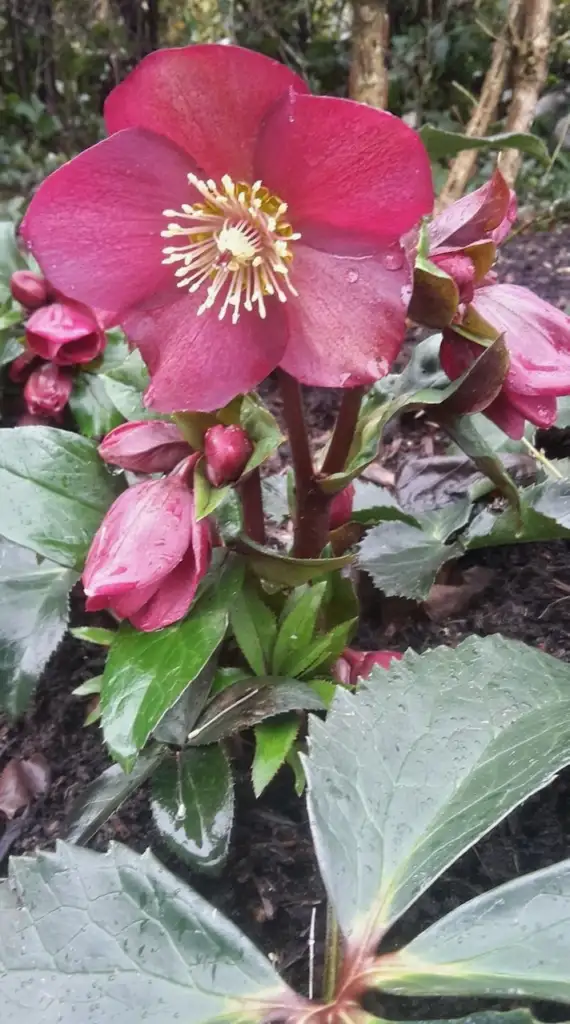
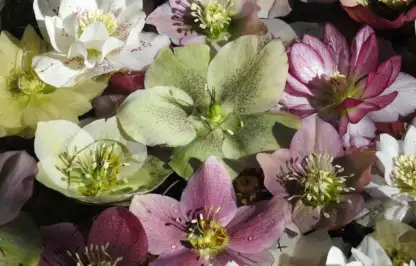
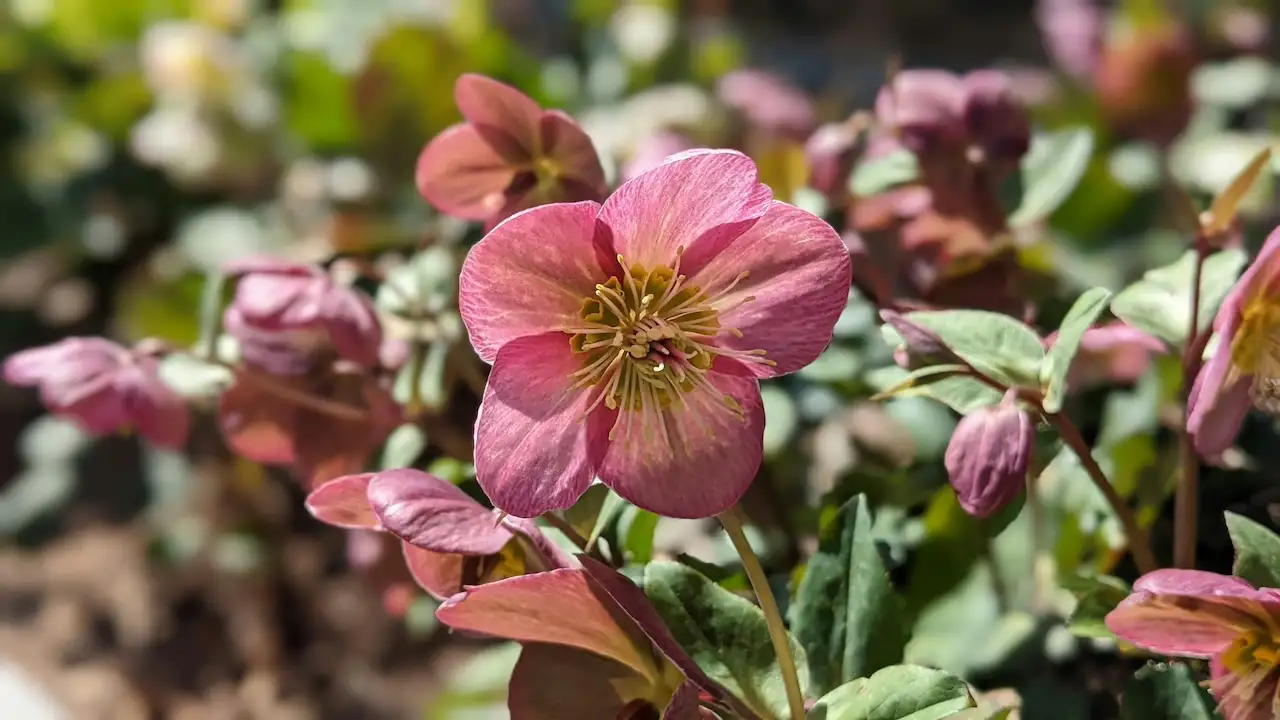
These are the backbone of any Hellebore planting and the ones I use most in client gardens. The flowers nod downwards in clusters of three to five per stem, and the colour range is enormous: pure white, primrose yellow, soft pink, plum, slate and almost black, often with freckles or a darker picotee edge. They are fully hardy, cope with clay and chalk, and a mature clump will hold forty or fifty flowers at once.
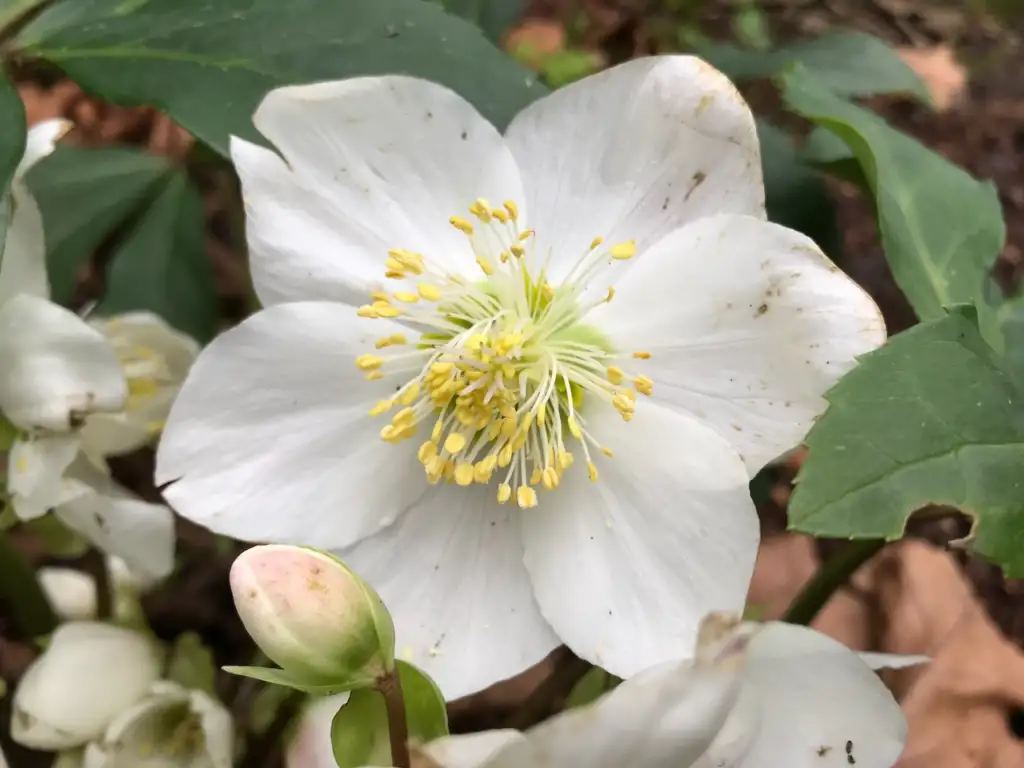
Because they hybridise freely, named seed strains vary a little from plant to plant. The Harvington strain, raised in Worcestershire, and the Ellen series from Germany are both reliable and well priced. If you like soft colour, consider ‘Pretty Ellen Pink’; for deep colour, ‘Harvington Red’ looks lovely against pale stone.
🛒 Buy Helleborus × hybridus ‘Pretty Ellen Pink’ from Primrose
🛒 Buy Helleborus × hybridus ‘Harvington Red’ from Crocus
Double Hellebores are Lenten Roses bred with extra layers of sepals, so each flower looks like a small Rose or Water Lily. They are slightly less vigorous than singles, and their heavier flowers nod more, so I like them in raised beds, on banks, or in tall pots where you can look up into them. They are also the best types for floating in a bowl of water indoors.
‘Double Ellen Picotee’, white with a fine pink rim, is one of the most popular and good value. For a clean, elegant look in a shady corner, ‘Harvington Double White’ lights up the gloom on a grey February morning.
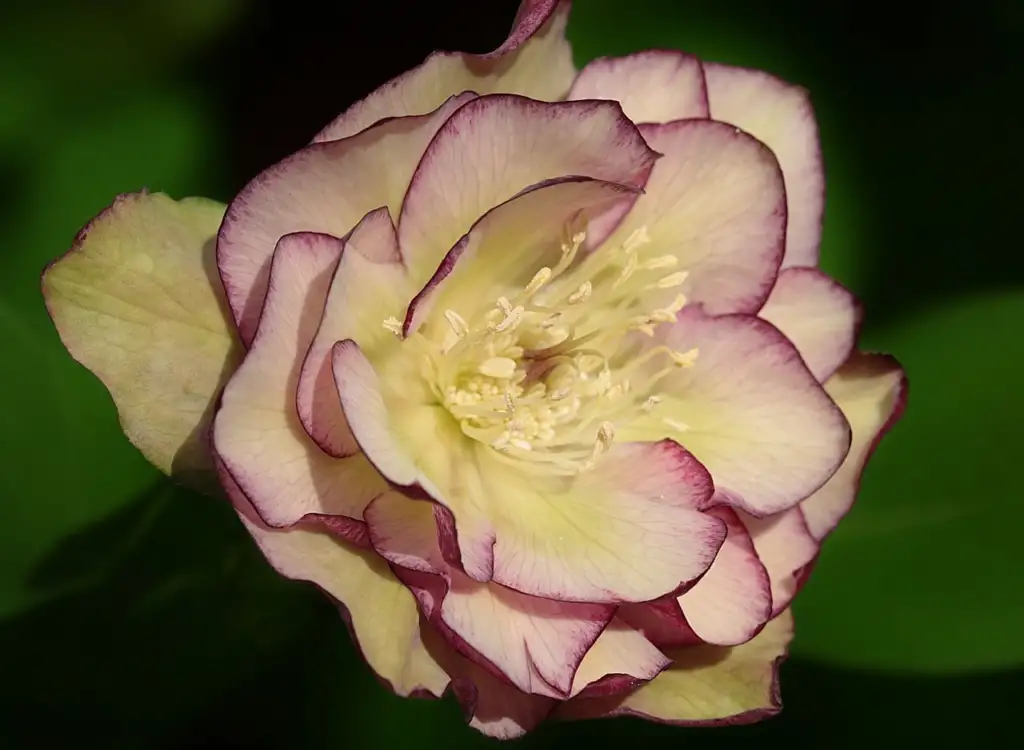
🛒 Buy Helleborus × hybridus ‘Double Ellen Picotee’ from Primrose
🛒 Buy Helleborus ‘Harvington Double White’ from Primrose
The Christmas Rose is the first to flower, with clean white, outward-facing blooms from December that often blush pink as they age. It is smaller and a little fussier than the Lenten Rose, preferring a neutral to slightly alkaline soil that never dries out, and it hates being disturbed once planted.
Most plants sold in garden centres before Christmas are ‘Christmas Carol’ or similar selections, forced to flower for the festive season. They make a superb front door pot for December, and planted out afterwards in a sheltered, shady spot, they will flower again in following winters, usually a few weeks later than the first time once they settle into a natural rhythm.
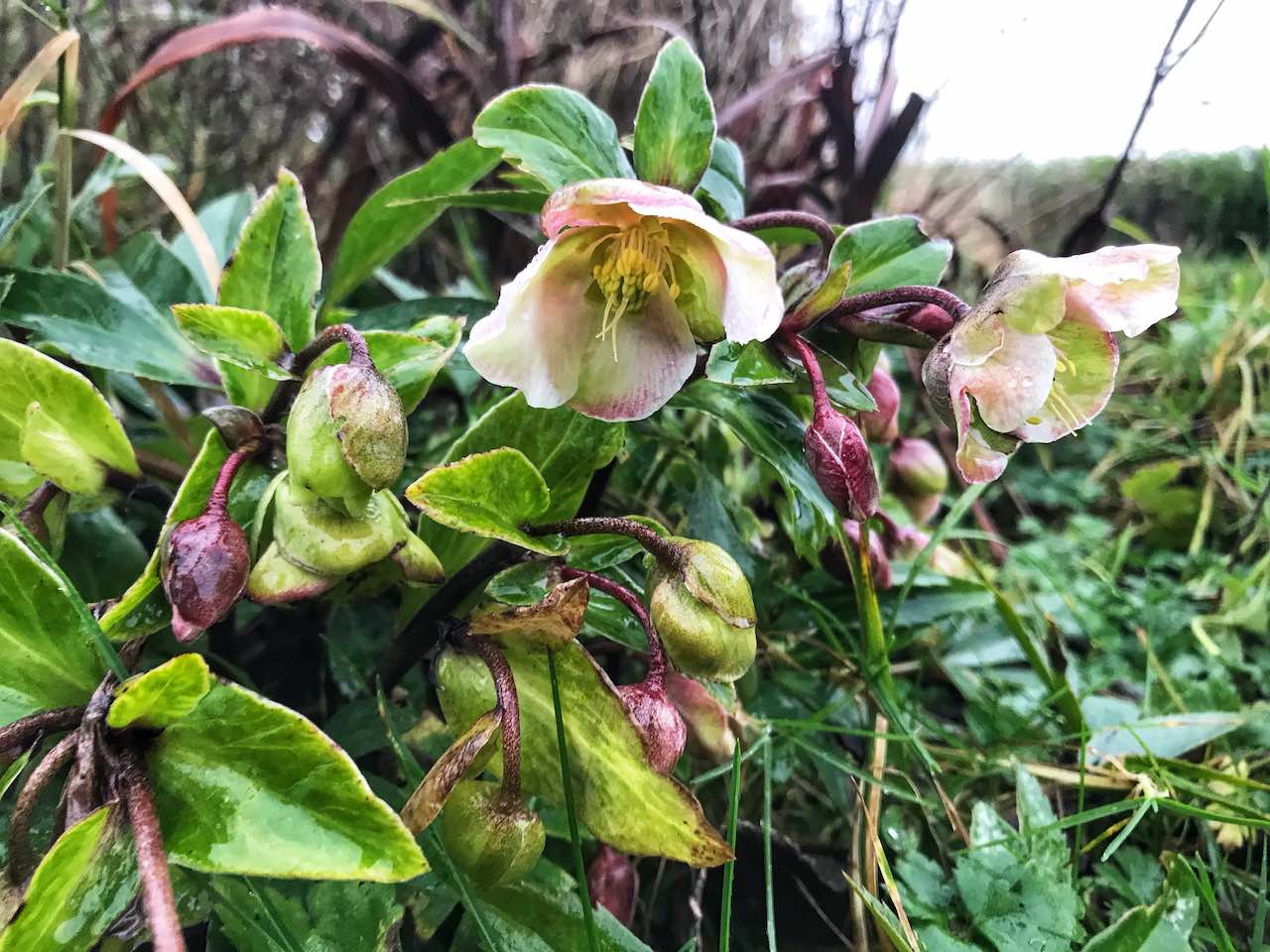
🛒 Buy Helleborus niger ‘Christmas Carol’ from Primrose
🛒 Buy Helleborus niger from Crocus
These are modern hybrids that combine the Christmas Rose with the Corsican and other species. The result is a compact plant with silvery, marbled leaves, flowers that face outwards or upwards instead of hanging their heads, and a long season from December into April. They tolerate brighter light better than most Hellebores, which makes them my first choice for patio pots.
‘Pirouette’ has white flowers flushed rose pink on dark stems. ‘Penny’s Pink’, from the Frostkiss series bred by Rodney Davey, has deep pink flowers and leaves splashed with cream and silver, so it earns its keep in a pot year-round.
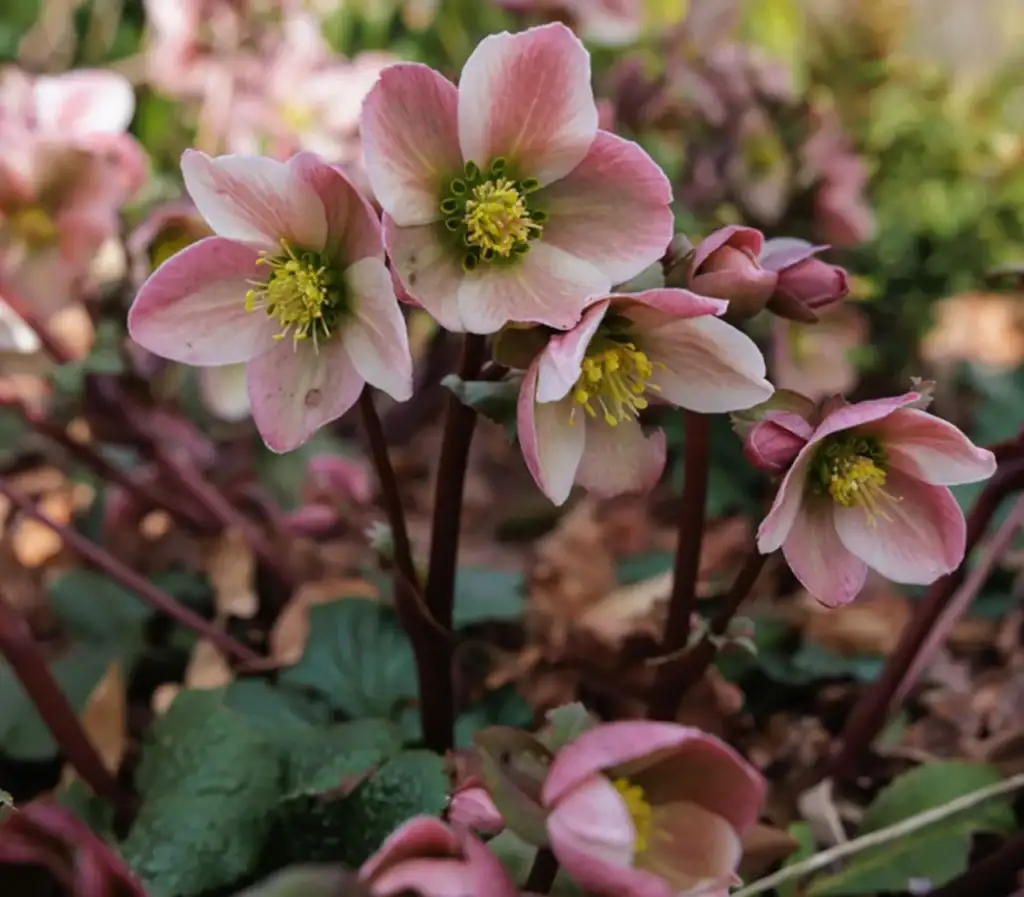
🛒 Buy Helleborus × ericsmithii ‘Pirouette’ from Primrose
🛒 Buy Helleborus Frostkiss ‘Penny’s Pink’ from Crocus
‘Walberton’s Rosemary’ is another Christmas Rose cross worth growing, this time with the Lenten Rose, and you will sometimes see it sold as Helleborus × lemperii. It is a vigorous, outward-facing pink that flowers from midwinter, holds its colour well, and is one of the easier Hellebores to establish.
🛒 Buy Helleborus ‘Walberton’s Rosemary’ from Crocus
If you like a moody planting scheme, the near-black Lenten Roses are some of the darkest flowers you can grow in a British winter. Up close, they read as deep plum and, from a distance, almost black, so plant them where low winter sun can backlight them, or next to white Snowdrops and silver foliage so they don’t disappear into the soil. They feature in my guide to purple and black plants for exactly that reason.
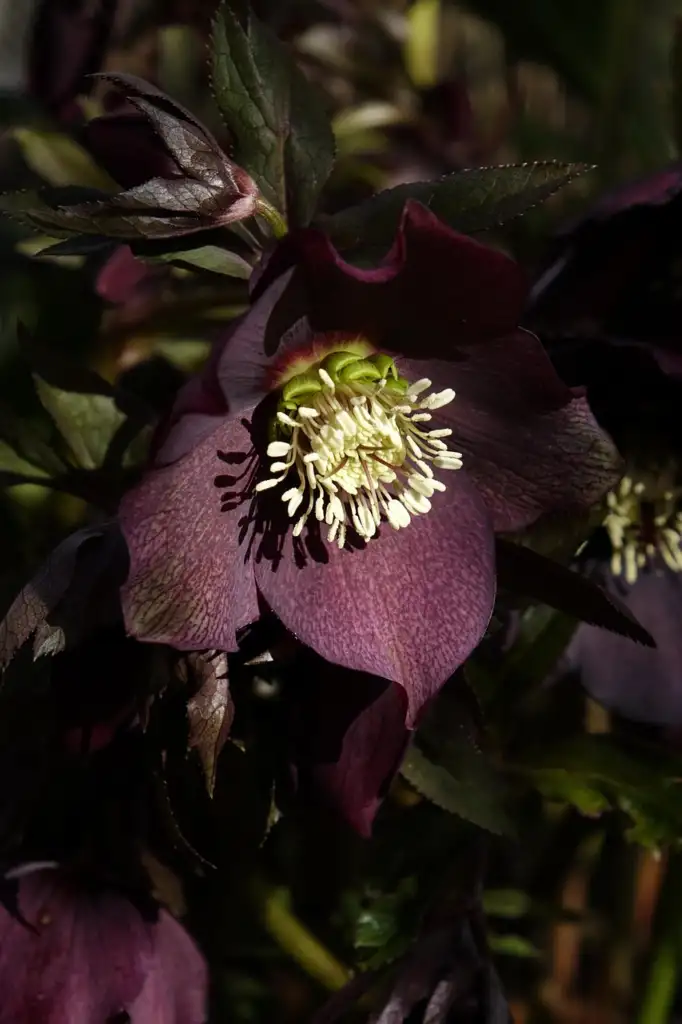
🛒 Buy Helleborus × hybridus ‘Harvington Black’ from Crocus
The Corsican Hellebore is the big architectural member of the family, with tough, prickly-edged, grey-green leaves on upright stems and large clusters of apple-green, cup-shaped flowers from late winter. It needs more sun and drier soil than the Lenten Rose, so it works well at the edge of a gravel garden or under a wall where other Hellebores would struggle.
Each stem flowers once, then dies back as new shoots emerge from the base, so pruning differs from the Lenten Rose, which I cover in the cutting-back section below. It self-seeds gently, and the seedlings grow true to type. It is also sometimes called the Holly-leaved Hellebore if you’re looking for it online or in garden centres by its common name.
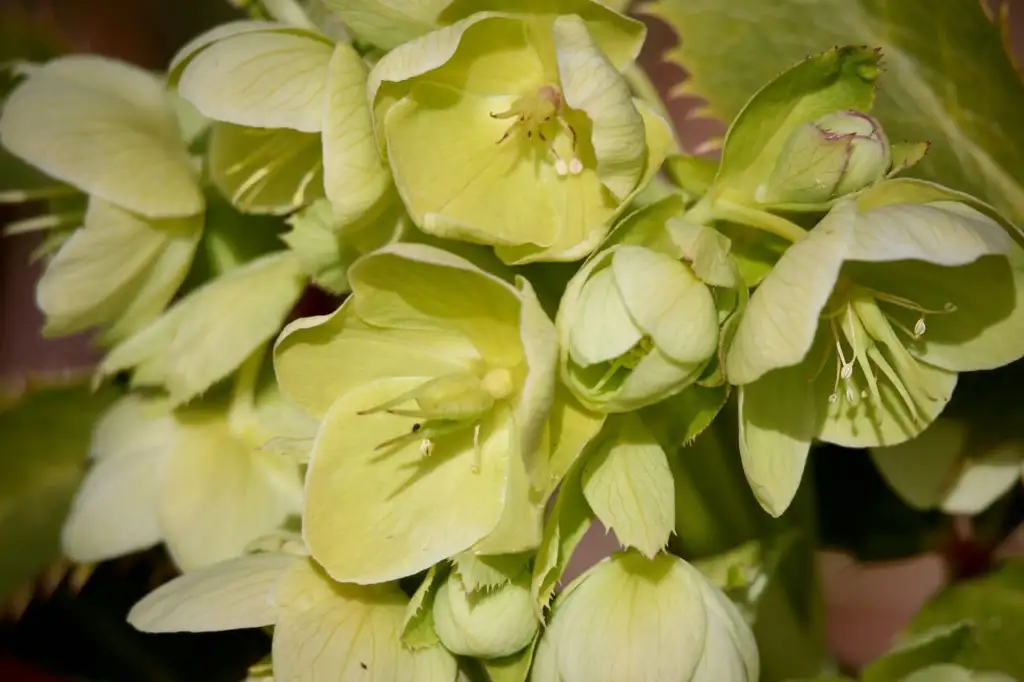
🛒 Buy Helleborus argutifolius from Primrose
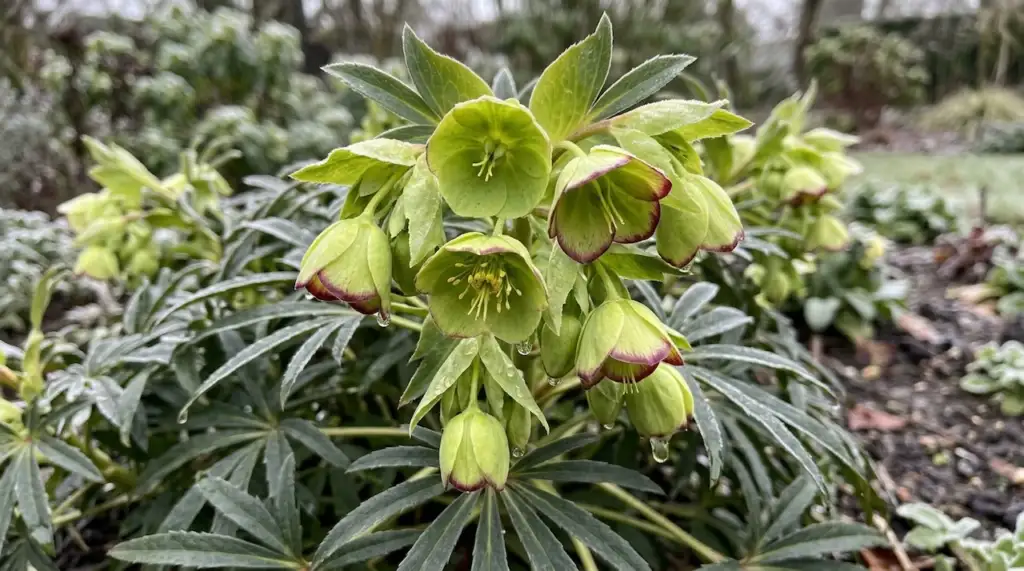
Don’t let the name put you off. The Stinking Hellebore is a British native with finely divided, almost black-green leaves and clusters of small, pale green bells rimmed in maroon. The smell only comes from bruised leaves, and you will not notice it in the garden. So just tread and weed carefully, Ninjas, and the aroma will never impact you!
It is the toughest of the lot for dry shade under trees and hedges, flowers from January and is a favourite of early Bumblebees. Like the Corsican, it carries its flowers on stems that die after flowering and self-seeds around, which suits wildlife or woodland gardens. My guide to ground cover plants for shade has more ideas for those difficult spots.
🛒 Buy Helleborus foetidus from Crocus
Get 15% off your Hellebores at Primrose
I have a reader discount with Primrose for 15% off plants. Pop your email in below and I will send the code straight to your inbox, along with my seasonal planting tips.
Hellebores are woodland-edge plants. In the wild, they grow in dappled light under deciduous trees, with roots in leafy, moisture-holding soil that never dries out completely and a canopy above them that keeps off the worst of the summer sun. Copy tha,t and they will thrive.
They like damp roo,ts and they do not like being baked ithe n sun, so partial shade is the target. Morning sun with afternoon shade is ideal, as is the light shade under a deciduous tree or shrub, which lets the winter sun reach the flowers and then shades the leaves once the canopy fills out in spring. A nort-h or east-facing border works well, and so does the shady side of a hedg,e as long as the soil there in’tt bone dry.
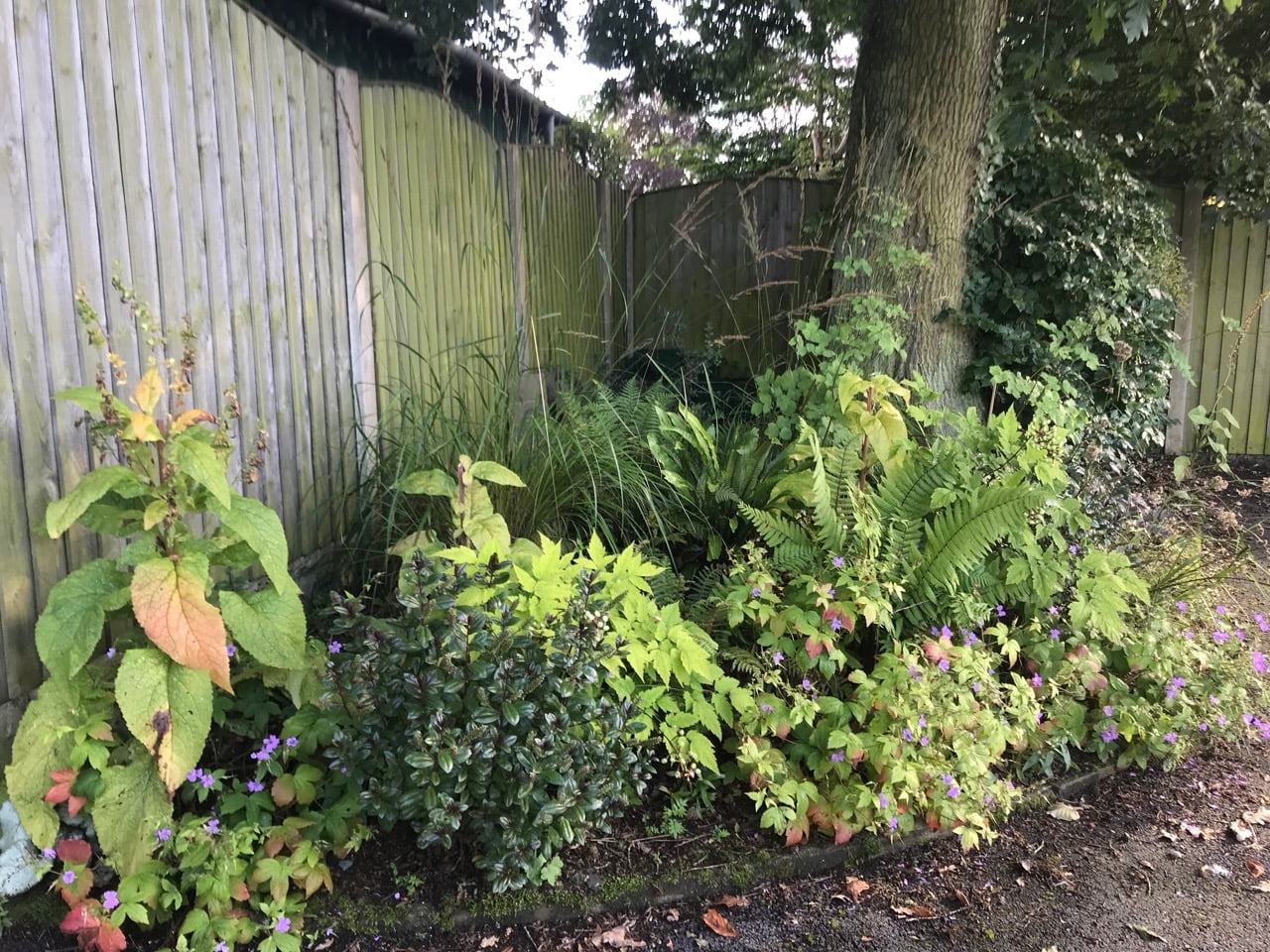
Deep, dense shade is the other extreme to avoid. Plants will survive under a thick evergreen or on the north side of a tall building, but they flower poorly. Full, hot sun scorchee leaves in summer and dries ourootsat exactlwhenme the plant is forming next winter’s flower buds.
Soil-wise, Hellebores want something rich in organic matter that holds moisture but drains freely. They are happy in clay as long as it doesn’t sit waterlogged in winter, and the Lenten and Christmas Roses both cope well with chalk. Sandy, free-draining soil needs plenty of compost or leaf mould dug in to stop it drying out. For more shady planting ideas, see my shade-loving plants for difficult borders and plants for north-facing gardens.
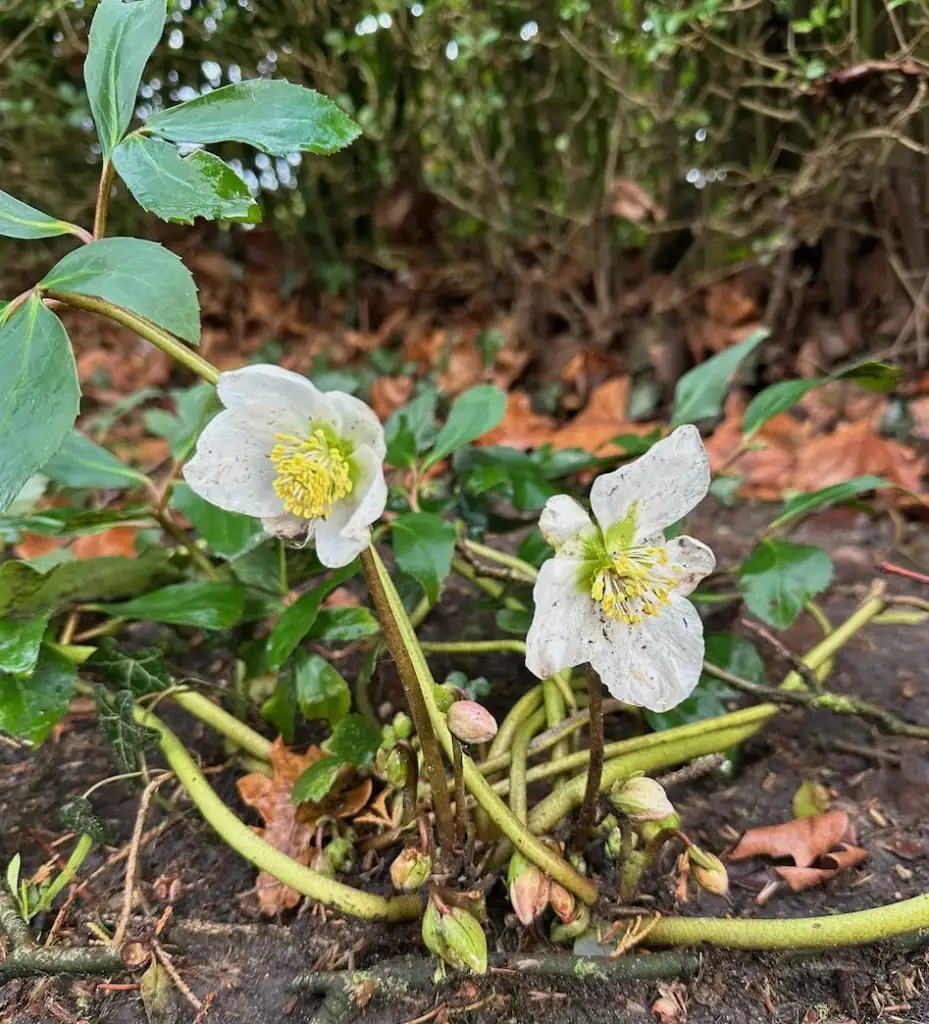
Think about where you will see them, too. Hellebores flower when you spend very little time in the garden, so plant them where youwill see them from a window, along a path you use every day, or beside the front door. On a sloping bed or raised border, you can look up into the nodding flowers instead of at their backs.
The best times to plant Hellebores in the UK are autumn (September to November) and late winter to early spring (February to April). Autumn planting gives the roots a few months in warm, moist soil to settle before the plant flowers. Late winter planting has one big advantage: the plants are in flower in the nursery, so you can pick the exact colour and form you want, which matters with seed-raised Lenten Roses that vary a little from pot to pot.
Pot-grown Hellebores can technically go in at any time the ground is not frozen or waterlogged. I avoid midsummer planting when I can, because a new plant with a small root system will struggle to keep up with demand in hot, dry weather, and that is a common reason new plants fail.
Because Hellebores take a while to settle in, the effort you put in on planting day pays off for years. They have a deep, fleshy root system that resents being moved, so pchoosethe spot carefully and plan oto leavethem there. Here is how I plant them.
Dig over an area about twice the pot’s width and a spade’s depth. Fork in a couple of generous handfuls of garden compost or leaf mould to improve drainage in clay and moisture retention in sand. I cover the options in more detail in my guide to the best soil improvers and compost.
Stand the pot in a bucket of water for twenty minutes before planting, until bubbles stop rising. A dry root ball planted iindamp soil can stay dry for weeks, awhichis one of the main reasons new Hellebores stall.
Set the crown, where the stems meet the roots, level with the surrounding soil, or no more than 2 to 3cm below it. Planting too deep is one of the most common reasons Hellebores fail to flower for years. Gently tease out any circling roots, backfill, firm with your hands, and water well.
Dust the roots with mycorrhizal fungi as you plant to help a slow-establishing plant like this build a bigger root system faster. I use it on most perennials and shrubs I plant in client gardens.

🛒 Buy Rootgrow mycorrhizal fungi from Amazon UK
Lenten Roses and the Christmas Rose need about 45cm between plants. The Corsican Hellebore needs 60 to 90cm. Plant in groups of three or five for a natural, drifting effect, and remember the clumps will slowly bulk up, so resist the urge to cram them in.
Finish with a 5cm layer of leaf mould or compost around (not over) the crown, and water weekly in dry spells through the first spring and summer. Expect a modest show in the first winter. The second winter is better, and by the third you should have a proper clump. That patience is part of growing Hellebores, and they repay it by flowering for twenty years or more.
Hellebores are great for containers, and growing them in pots is one of my favourite ways to use them. My trick is to move the pots to the front door or onto the patio for winter, where you can enjoy the flowers up close, then retire them somewhere shadier in spring and summer to recover. It means the display is right where you walk past it every day in January, and the plant spends the hot months tucked away in the cool conditions it prefers.
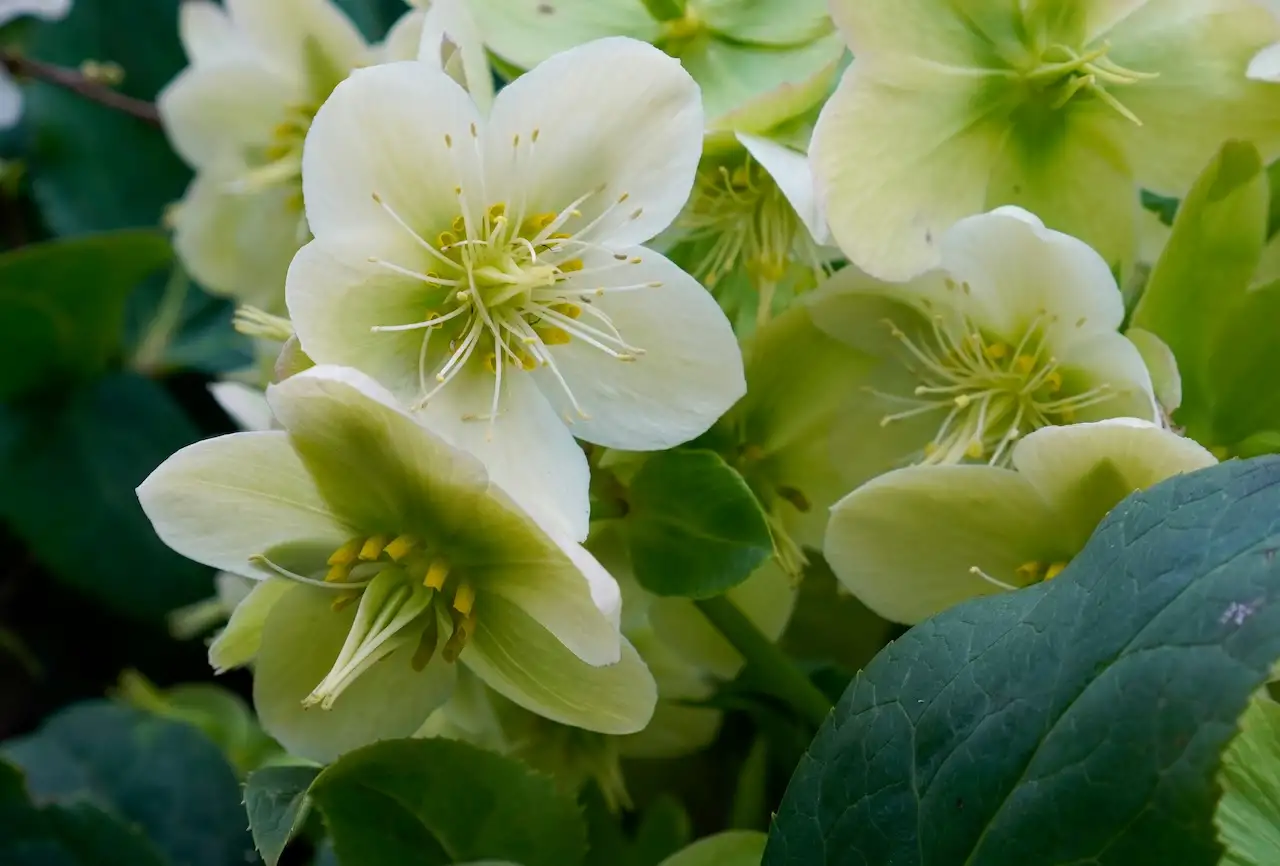
The traditional white Lenten Rose hybrids have done the best for me here, but white flowers do tend to look a bit mucky at ground level, where rain splashes soil up onto them. A quick wipe with a damp cloth will clean them up if they look battered after a downpour, but that’s why I grow mine in pots. Raised up off the ground, the flowers stay cleaner, and you see them at eye level, instead of looking down on a tatty clump at the back of a border.
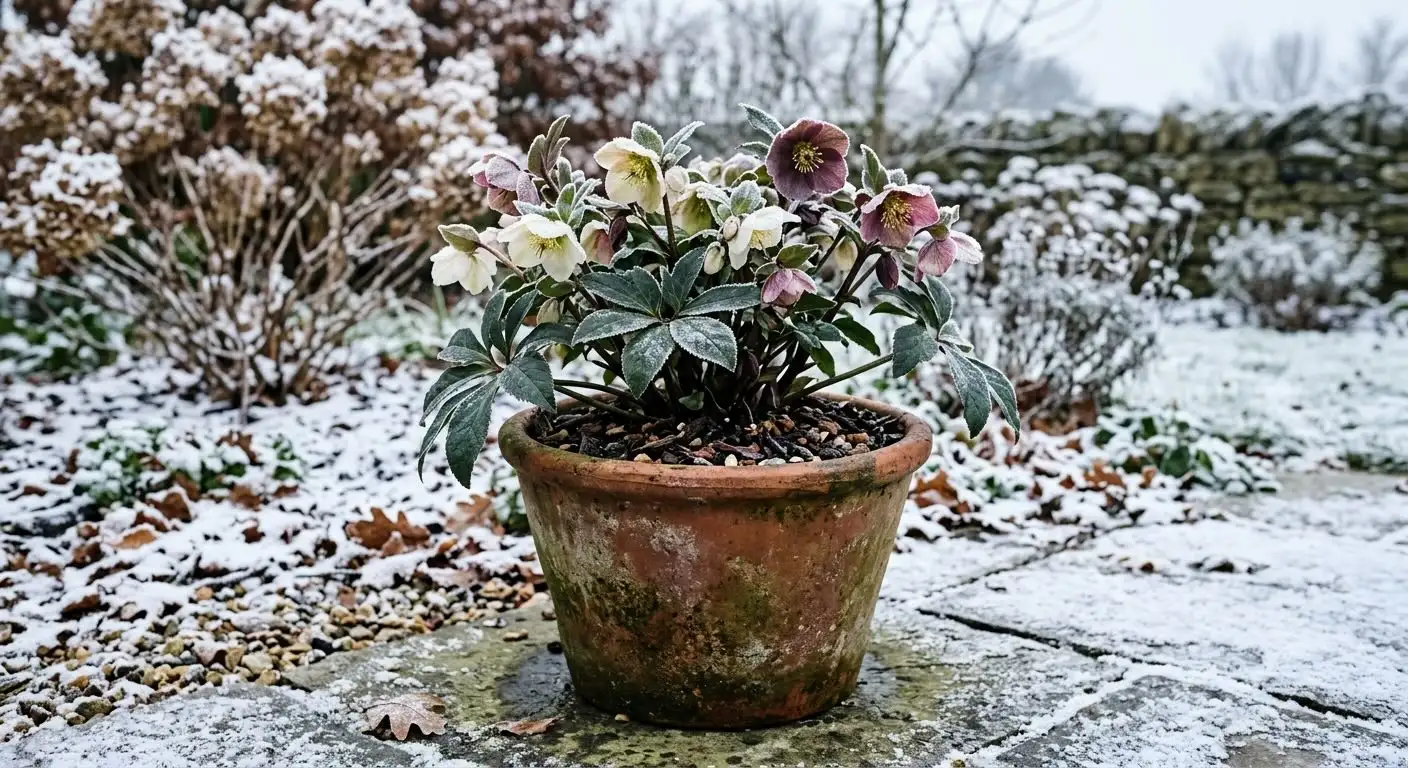
Hellebores have long, deep roots, so go for a pot at least 30cm deep and wide for a single plant, and bigger for a group. It needs to be frost-proof, since a pot that cracks in a hard frost takes the plant’s roots with it, and it must have drainage holes. Glazed stoneware, good-quality frost-proof terracotta, fibreclay, and thick plastic all work. My guide to alternatives to terracotta pots covers lighter options that are easier to move around, which matters if you’ll be shuffling the pot between the front door and the shade.
🛒 Shop frost-proof planters at Primrose
🛒 Buy a frost-proof glazed planter from Amazon UK
Use a loam-based compost such as John Innes No. 3, which holds moisture and nutrients far better than a multipurpose compost over several years. I add about a quarter by volume of peat-free multipurpose for extra organic matter and a couple of handfuls of grit for drainage. Raise the pot onto pot feet over winter so water can drain freely, as soggy compost in cold weather rots the roots.

🛒 Buy Westland compost with added John Innes from Amazon UK
Container plants dry out much faster than those in the ground, and Hellebores hate being dry, so check them weekly and water whenever the top few centimetres feel dry, especially from late spring to autumn when next winter’s flower buds are forming. Feed with a slow-release fertiliser each spring after flowering. Repot or top dress with fresh compost every two to three years. For winter pot combinations, I have plenty of ideas in my guide to winter container gardening, and the container frost protection guide covers what to do in a deep freeze.
The Christmas Rose and Frostkiss and ericsmithii types are the best Hellebores for pots because they are compact and hold their flowers up where you can see them. Lenten Roses work too, in a bigger pot.
By midwinter, the evergreen leaves on Lenten Roses usually look tatty: torn, flattened, blackened at the edges, and often marked with leaf spot. That tatty foliage tends to arrive just before the flowers, which is frustrating, and it is also exactly when the plant needs a tidy.
Snip off the old leaves around the flowers as they emerge, usually from late December to late January. Cut each leaf stalk right down at the base, close to the ground, as soon as you can see the flower buds pushing up through the crown. This does three jobs at once. The flowers are far more visible without a skirt of old leaves flopped over them; they don’t get as waterlogged or splashed with soil when it rains, and you remove the main source of leaf spot spores before they can spread to the new growth.
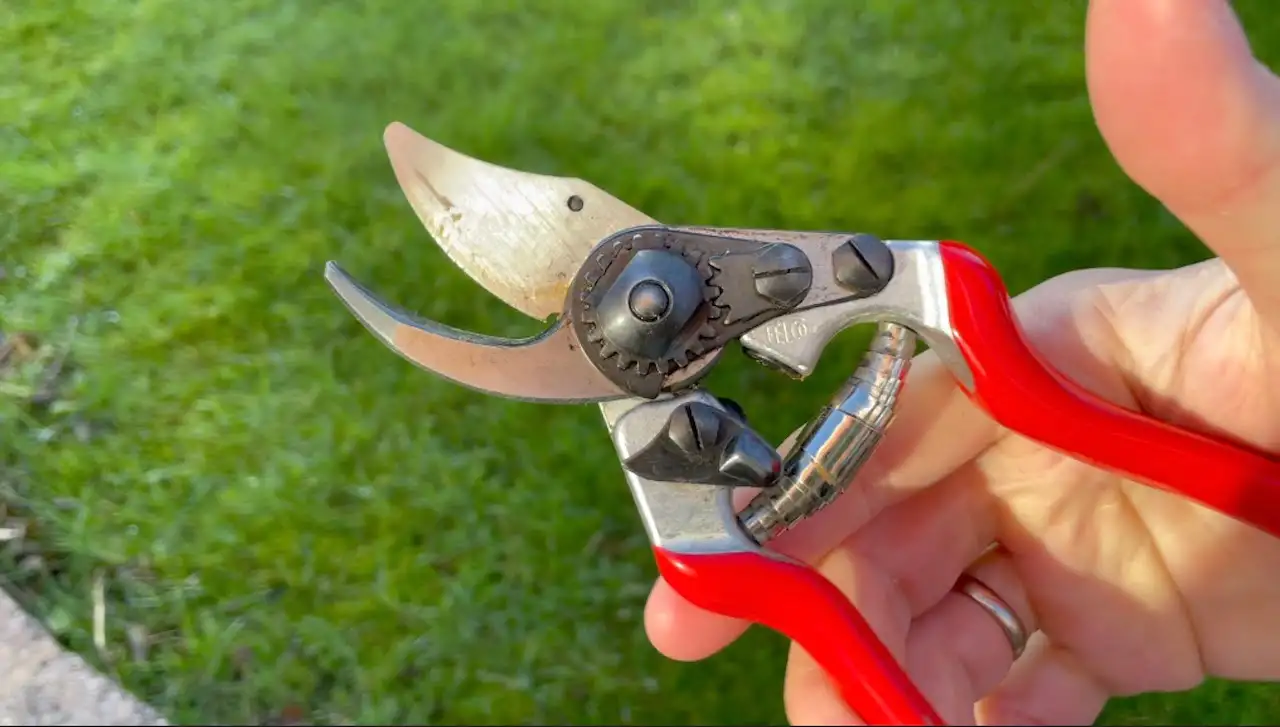
Take care not to snip the flower stems, which emerge from the same crown and can be hard to see among the leaves. I work slowly, holding each leaf stem and following it down to the base before I cut. Fresh foliage appears as the flowers fade in spring and covers the bare crowns for the rest of the year.
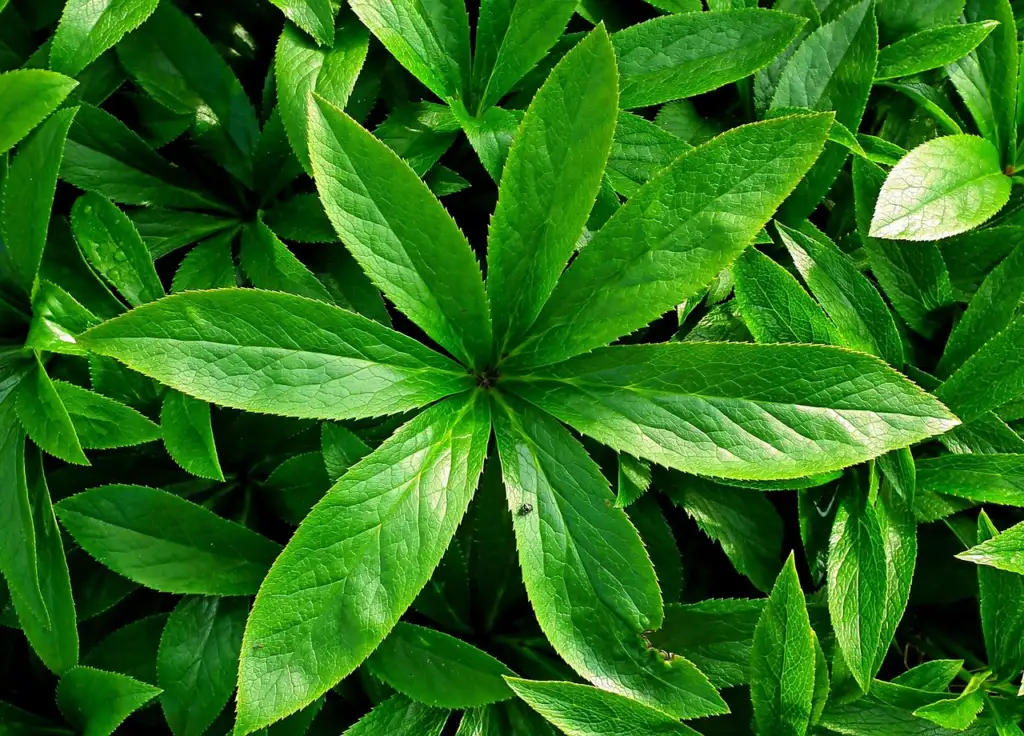
Use clean, sharp secateurs. I use Felco No. 2 for this and almost all my other pruning, and sharpening your secateurs first gives a clean cut that heals well.
🛒 Buy Felco No. 2 secateurs from Amazon UK
Wear gloves for this job. All parts of a Hellebore are toxic if eaten, and the sap can irritate skin, especially if you are cutting back a lot of plants. I use Gold Leaf Tough Touch gloves, which are thin enough to feel the stems. My gardening gloves review has other options.
🛒 Buy Gold Leaf Tough Touch gardening gloves from Amazon UK
Christmas Roses need much less. Their leaves are tougher and usually stay cleaner, so remove only those that are damaged or diseased. Corsican and Stinking Hellebores are different again: never cut their leaves in winter, because they carry next year’s flowers on the same stems. Instead, once a stem finishes flowering in late spring, cut it down to the base, leaving the new shoots already coming up beside it. Leave a few if you would like them to self-seed.
For a wider view of what to cut and when over the colder months, my winter pruning guide goes through it plant by plant.
Once established, Hellebores need very little from you. The main jobs are keeping the soil moist, feeding once a year and mulching.
Water new plants weekly in dry spells for their first year. Established clumps in the ground usually manage on rainfall, but in a long dry summer give them a thorough soak every week or so. This matters more than it looks, as Hellebores form their flower buds in late summer and autumn, and drought at that point means fewer flowers the following winter.
Feed with a general granular fertiliser such as blood, fish and bone in spring after flowering, sprinkled around the plant and lightly worked in. Then, each autumn, spread a 5cm mulch of leaf mould or well-rotted compost around the plants. This mimics the leaf litter they grow in naturally, feeds the soil, locks in moisture and keeps the roots cool.
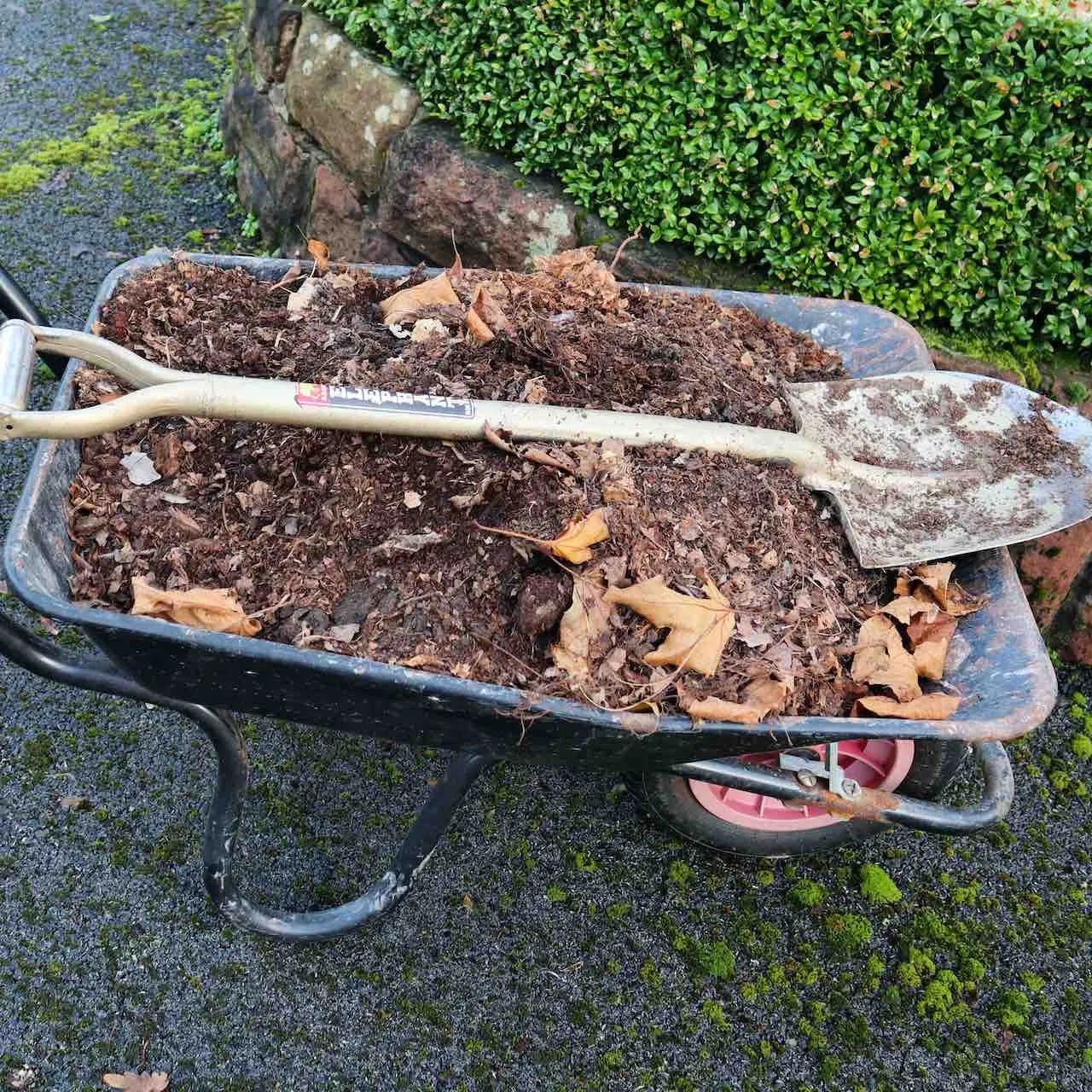
Leaf mould is my favourite mulch for Hellebores and costs nothing to make from fallen leaves. My guides to making leaf mould and mulching your garden explain how.
Hellebores are fully hardy and don’t need any winter protection in the ground. On a frosty morning you will often find the flowers and stems lying flat and looking dead. Leave them alone. They lose water from their cells to avoid freezing solid and stand back up within a few hours of the thaw. Pots are a different matter in a prolonged freeze, which my frost protection guide covers.
Frost is the biggest trickster with these melodramatic plants. They flop and wilt as if they have fainted, and many gardeners rip them out at this point, thinking it’s black death. It’s actually just the plant protecting itself. Hellebores aren’t daft, so a heavy frost lets them curtsey down to the ground, then stand back up when the coast is clear ,and the weather is less brutal. Give a flattened Hellebore a few hours after the thaw before you panic.
Deadheading is optional. The fading flowers stay attractive for weeks, but if you don’t want seedlings appearing around the plant, cut the flower stems off at the base once the seed pods start to swell in late spring. Removing them also saves the plant’s energy for growth.
I get asked about Hellebores more than any other, and it almost always comes down to one of the following.
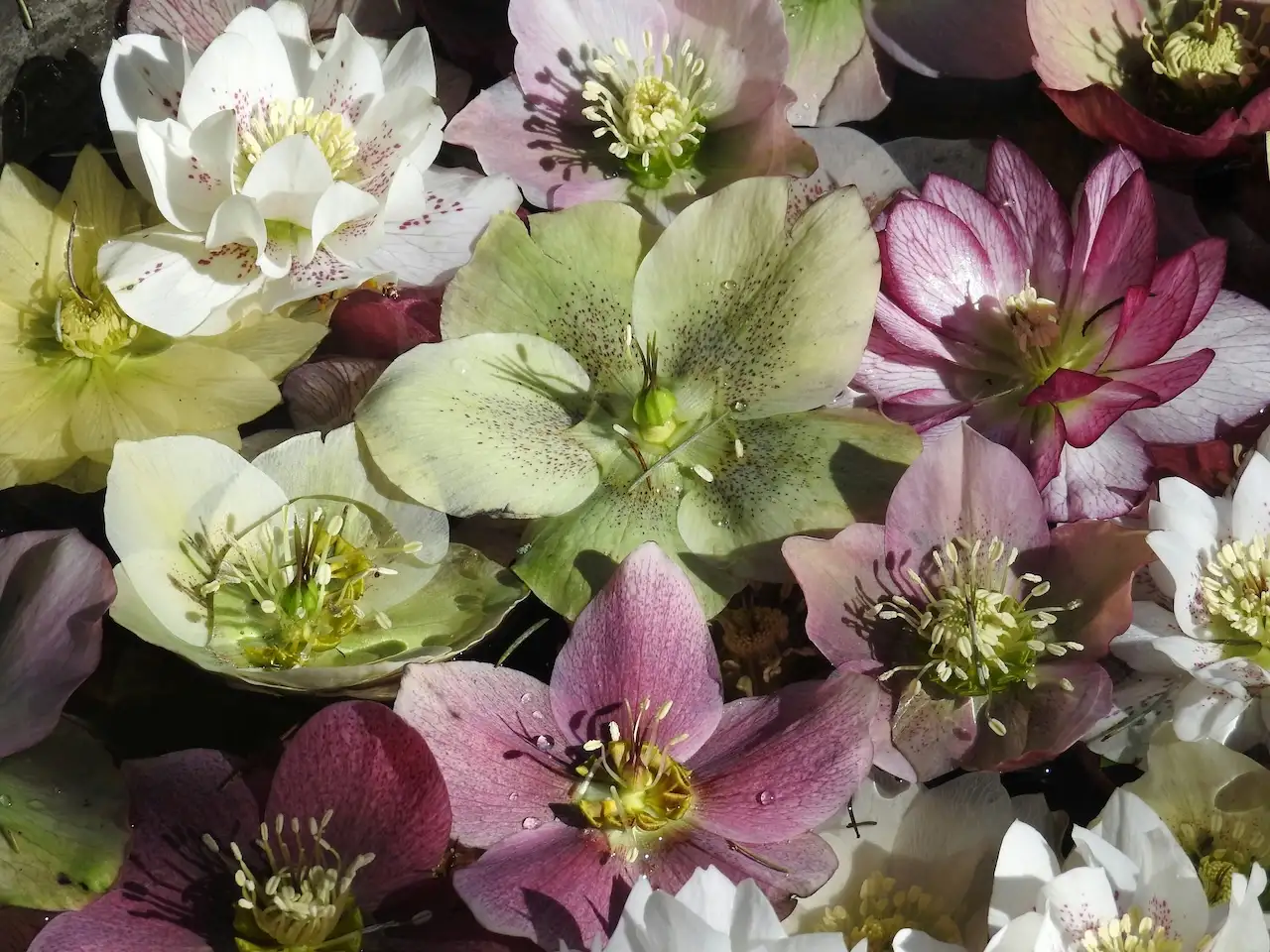
Young plants, and plants raised from seed, can take two or three years to flower properly. This is almost always why a Hellebore refuses to flower. The plants you see in full bloom in garden centres are forced under polytunnels, so when you plant them in a real garden, with real weather, they can sulk for a year or two until they get their feet under the table. A newly planted Hellebore puts its energy into roots first, so if the leaves look healthy, give it time.
If the crown is buried more than a few centimetres deep, the plant will often produce leaves but few flowers. This is a common mistake with new gardeners, who bury the crown thinking they are tucking the plant in nice and snug. It just leaves the crown sitting in cold, wet soil all winter, where it drowns and starts to rot. Carefully lift it in autumn and replant at the correct depth.
Next winter’s flowers form in late summer and autumn. A dry spell during that time, especially for plants in pots or under trees, reduces the number of flower buds. Mulching and summer watering help.
Deep, dense shade gives plenty of leaves but few flowers, and full sun scorches the plant and dries the roots. Move it to dappled or partial shade in autumn.
Hellebores dislike root disturbance and often skip a year of flowering after being moved, divided or planted out from a pot. They recover with time.
Heavy feeding with a high-nitrogen fertiliser, or lawn feed drifting onto the bed, produces lush leaves at the expense of flowers. Stick to a balanced feed once a year.
Hellebores are tough, but a few problems are worth knowing about, particularly as the first two can look similar at a glance.
A fungus (Microsphaeropsis hellebori) causes leaf spot, which shows up as round brown or black blotches on the leaves, often with concentric rings, and sometimes on the stems and flowers too. It is worse in wet winters and on plants with lots of old foliage. Cut off and bin (don’t compost) affected leaves; this is another good reason to remove old Lenten Rose leaves in midwinter. Good airflow helps.
Black death is caused by a virus (Helleborus net necrosis virus) spread by aphids, and it mostly affects Lenten Rose hybrids. Look for black streaks and net-like patterns along the veins of leaves and flowers, often with distorted new growth. Unlike leaf spot, the markings follow the veins in lines rather than forming round spots. There is no cure. Dig up the plant, bin it, and don’t replant a Hellebore in the same spot. Keeping aphids under control is the best prevention.
A lot of worried gardeners confuse black death with leaf spot, which many people call black spot, but black death is far more serious. Luckily, I’ve never had it here at Garden Ninja HQ, but I have seen it in a client’s garden in Liverpool. The veins on the leaves turned black, as if the plant had been bitten by some sort of satanic snake, and then the whole thing drooped, melted, and looked horrendous. I dug it up straight away, along with the plants next to it, and binned the lot rather than putting any of it on the compost heap. You will know if you have it because the plant looks like a melting black mound of mush, nothing like the neat round marks of leaf spot.
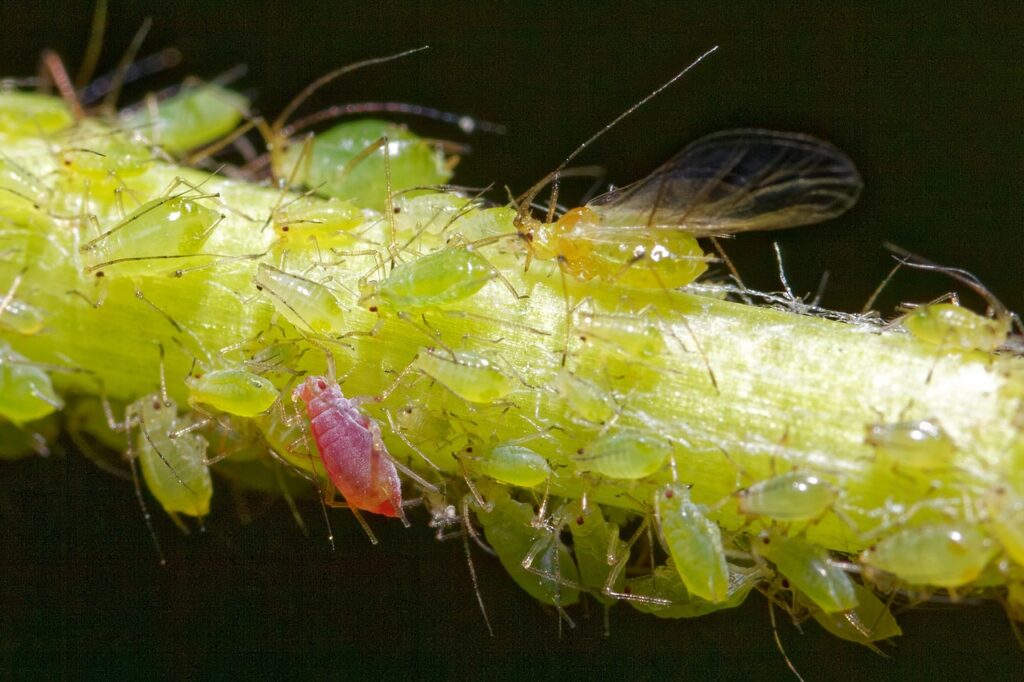
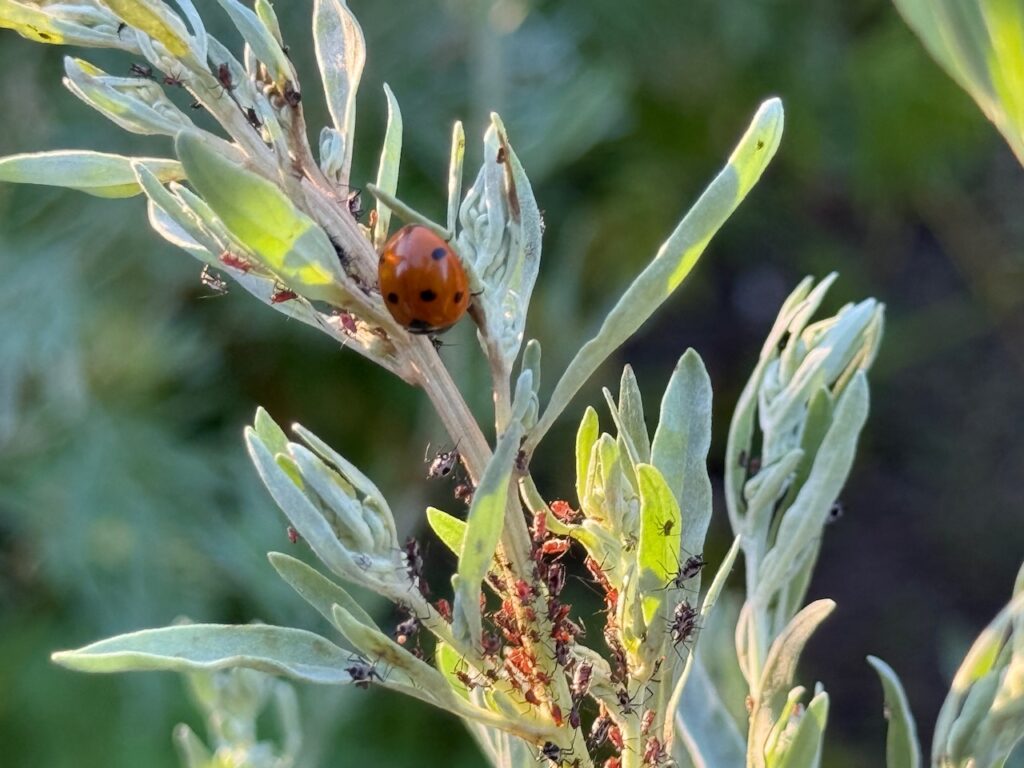
Greenfly gather on the new shoots and the undersides of the flowers in late winter and spring, and the sticky honeydew they leave attracts sooty mould. Squash small colonies by hand or wash them off with a jet of water, and encourage birds and Ladybirds that eat them. Check under the flowers when you cut back the old leaves.
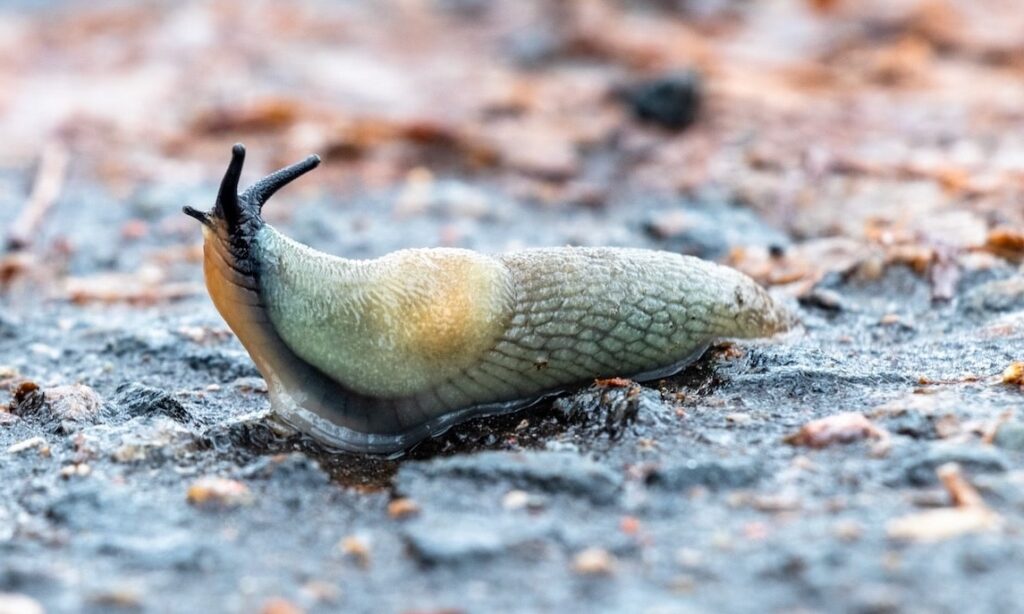
Downy mildew occasionally causes yellow blotches with a grey-brown, furry coating underneath the leaves in damp weather; remove affected leaves and improveairflow. Slugs and snails sometimes graze the flowers and young leaves in spring, though Hellebores are much less troubled than most perennials. Deer and rabbits generally leave them alone because they’re toxic.
You can divide Lenten Roses, but they don’t enjoy it and may take a year or two to flower well afterwards, so only divide a clump if it is large, congested, or flowering poorly in the middle. Do it in early spring straight after flowering, or in early autumn. Lift the whole clump with a fork, wash or shake off the soil, then pull or cut it into sections, each with at least two or three growing buds and a good amount of root. Replant at the same depth and water well. My guide to dividing herbaceous perennials shows the technique step by step.
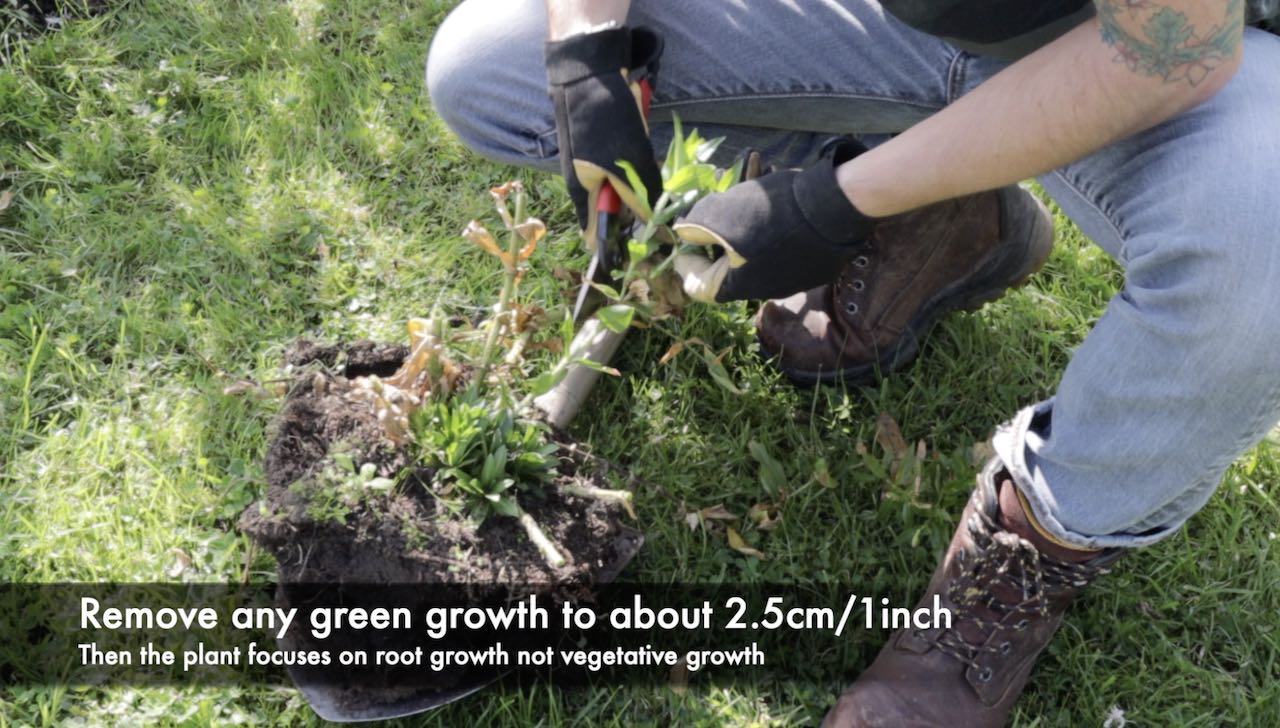
Don’t try to divide the Christmas Rose, the Corsican or the Stinking Hellebore. The Christmas Rose resents disturbance even more than the hybrids, and the two-stemmed species don’t divide successfully. Grow these from seed instead.
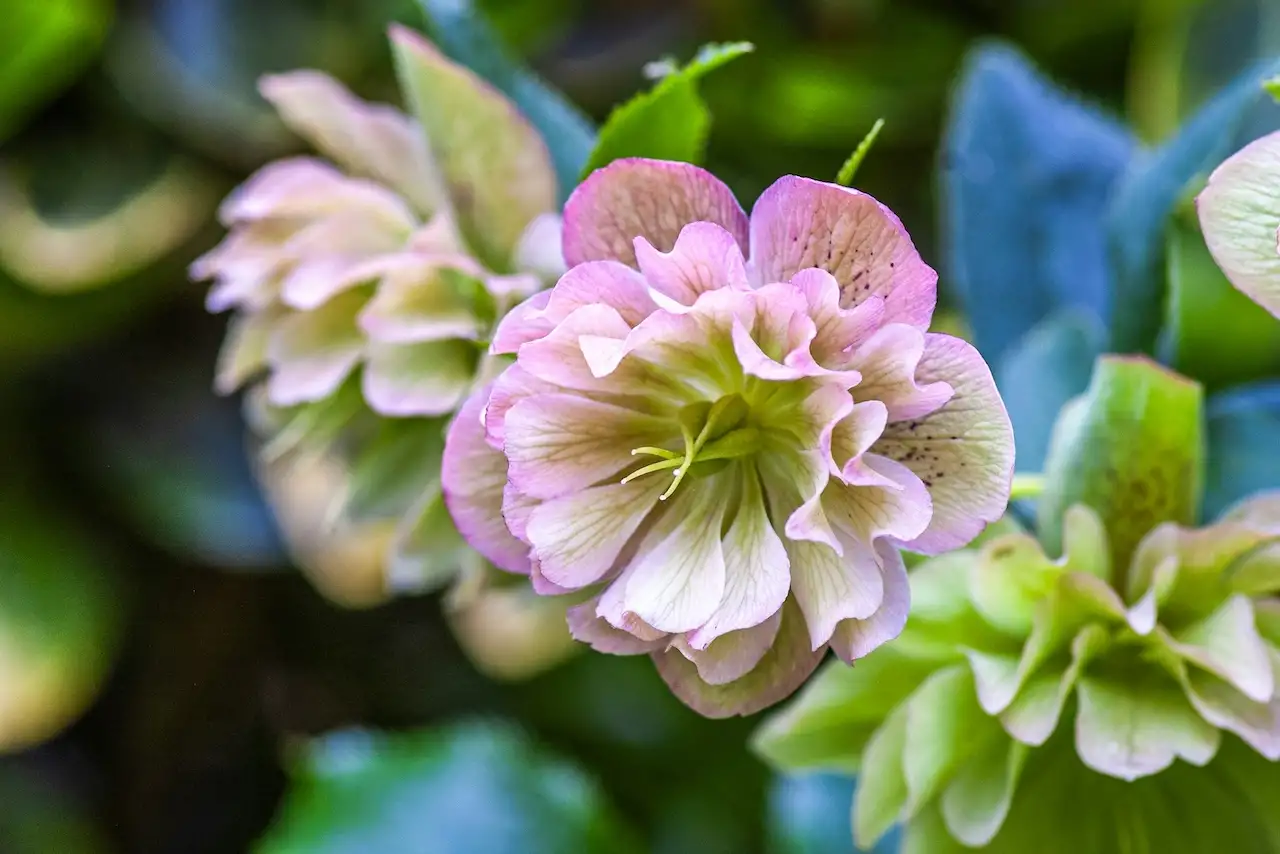
Self-seeded Hellebores are always a welcome treat, and I’m happy to find them popping up around an established plant in spring. Keep in mind that many modern hybrids are sterile and won’t set seed, including the ericsmithii and Frostkiss types, so if you want seedlings, make sure you’re growing one that can be pollinated, such as Lenten Roses or species like the Stinking and Corsican Hellebores.
Lift them carefully when they have two or three true leaves, then pot them on or move them straight to where you want them. Lenten Rose seedlingss won’t come true to the parent, which is half the fun, but expect a mix of colours and some muddier shades. They take two to three years to reach flowering size.
If you collect seed yourself, sow it fresh as soon as the pods split in late spring, on a gritty seed compost surface and cover it with a thin layer of grit. Leave the pot outside in a shady spot. The seed needs a warm-then-cold period before it germinates, so expect seedlings the following spring.
Hellebores look best in groups alongside other plants that like the same cool, shady conditions, and the trick is to combine them with partners that either flower at the same time or take over once they fade.
I include Hellebores in almost every shady garden I design on Garden Rescue because they stretch the flowering season into winter, something many beginner gardeners don’t think is possible, let alone try. Most people assume the garden simply shuts down from November to March. Pair Hellebores with Sweet Box (Sarcococca), Viburnum tinus ‘Eve Price’, and Witch Hazels (Hamamelis), and you get flowers and scent through the coldest months, a great way to start thinking about succession planting.
For winter and early spring, Snowdrops, Cyclamen coum and Winter Aconites flower at the same time and suit the same soil. Sweet Box (Sarcococca) adds scent, and Skimmia adds red buds and evergreen structure. For the rest of the year, Ferns, Pulmonaria, Epimedium, Brunnera and Heuchera carry the shady border through spring and summer when the Hellebores fade into the background.
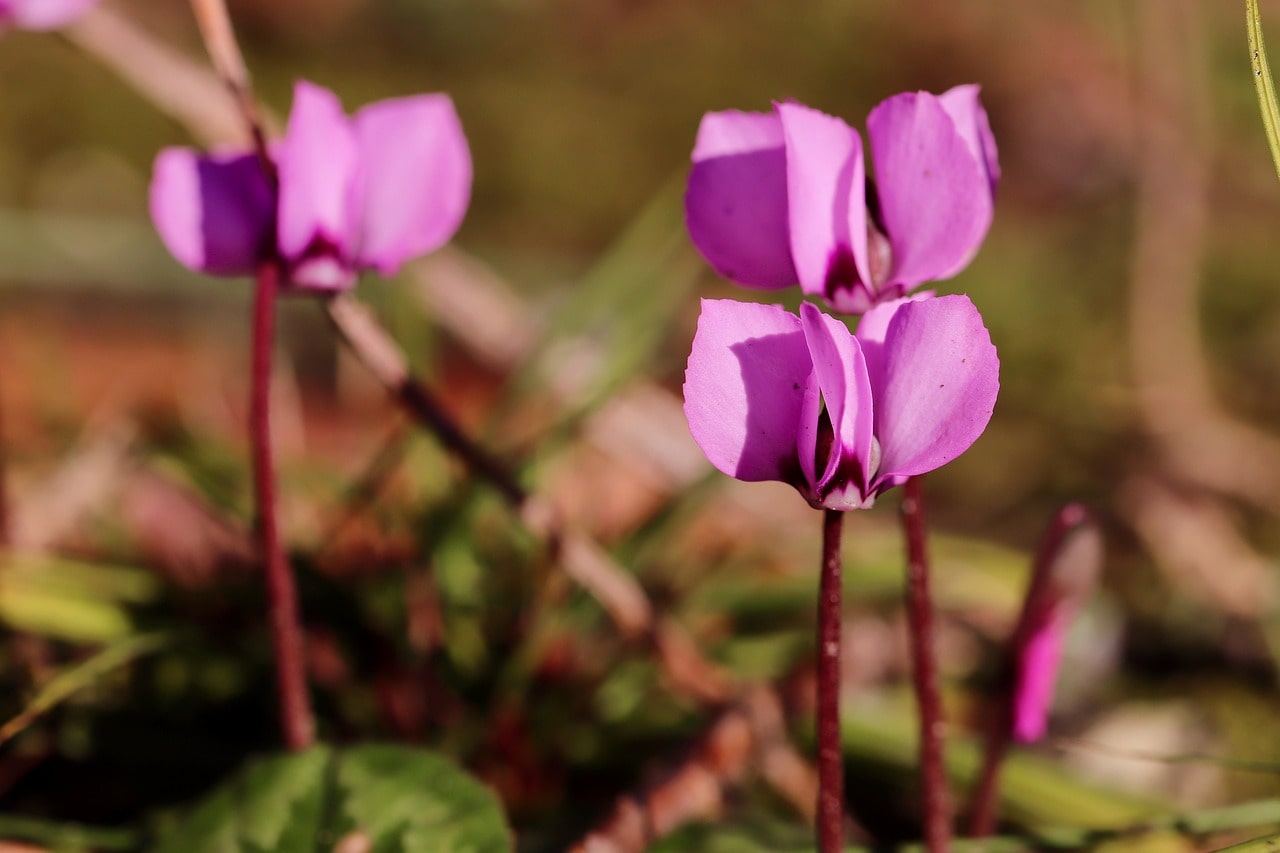
In pots, I like a Christmas Rose or a Frostkiss Hellebore with Skimmia ‘Rubella’, trailing Ivy, and a few Cyclamen for a front-door display that lasts all winter. You will find more planting partners in my guides to growing Skimmia, Heuchera and the best plants for clay soil in shade.
Plant Hellebores in partial or dappled shade, ideally under deciduous trees or shrubs or in a border that gets morning sun and afternoon shade. They need moist, humus-rich soil that drains freely. Avoid hot, full sun and dense, dry shade, both of which reduce flowering.
Yes. Use a frost-proof pot at least 30cm deep with drainage holes, filled with John Innes No. 3 mixed with some peat-free compost and grit. Move the pot to a front door or patio to enjoy the winter flowers, then into shade for spring and summer, and water regularly so the compost never dries out.
Cut the old leaves of Lenten Roses off at the base from late December to late January, as the flower buds appear. This shows off the flowers, stops them getting waterlogged and splashed, and removes leaf spot. Christmas Roses only need damaged leaves removed, and Corsican and Stinking Hellebores should be cut down to the ground after flowering.
Very little. Remove old Lenten Rose leaves as flowers emerge, watch for aphids, and leave frosted plants alone, as they recover once they thaw. Plants in pots benefit from being raised on pot feet and moved somewhere sheltered in a prolonged hard freeze.
Yes, all parts of a Hellebore are toxic if eaten, and the sap can irritate skin, so wear gloves when cutting them back. That said, many garden plants are poisonous to us and pets, so Hellebores are in good company alongside Foxgloves, Daffodils, and Ivy. A well-fed dog will usually resist the urge to dig up and eat an entire Hellebore because of its tough, serrated leaves and bitter taste. Deer and rabbits generally leave them alone for the same reason.
The Christmas Rose is Helleborus niger, a white species that flowers from December and prefers neutral to alkaline soil. The Lenten Rose is Helleborus × hybridus, a group of hybrids that flower from late January to April in a wide range of colours. Lenten Roses are more vigorous and easier to grow.
Lenten Roses naturally hold their flowers facing downwards. If the whole plant flops on a cold morning, that is a normal response to frost, and it will stand back up once it thaws. Drooping in warm weather usually means the roots are too dry, so water thoroughly.
The two main problems are leaf spot, a fungus that causes round brown or black blotches on the leaves, and Hellebore black death, a virus spread by aphids that causes black streaks along the veins. Control leaf spot by removing affected leaves. Dig up plants with black death and bin them.
Hellebores form slowly expanding clumps and do not spread by runners. Lenten Roses and the species self-seed gently around the parent plant, and the Corsican and Stinking Hellebores more freely, but many modern hybrids such as the ericsmithii and Frostkiss types are sterile and will not set seed. Seedlings are easy to lift, move, or give away in spring.
A pot-grown plant bought in flower will usually flower the following winter again, though often modestly until it is established. Plants raised from seed take two to three years to reach a size where they can flower. A well-sited clump can flower for 20 years or more.
Most Hellebores struggle in full sun because their leaves scorch and their roots dry out in summer. The Corsican Hellebore and the ericsmithii and Frostkiss hybrids tolerate more sun than the Lenten Rose, provided the soil stays reasonably moist.

Join over 100,000 gardeners on YouTube
Free gardening videos from the Garden Ninja, with 8 million views and counting.
Subscribe on YouTube, it’s freeHellebores are a lesson in planning for the quiet months: plants that look forgotten most of the year can carry the garden through winter. My online garden design courses teach you where those moments of winter interest go, and how they sit alongside the rest of your planting. If shade is your challenge, my guide to shade ground cover is a good next read.
Courses start from just £29, and dark evenings are a good time to plan next year’s garden.
For the garden you’ve already got, not the one you’re starting from scratch. Seven checklists and video lessons from BBC Garden Rescue’s Lee Burkhill, designed to help you decide what’s worth keeping before you spend a penny.
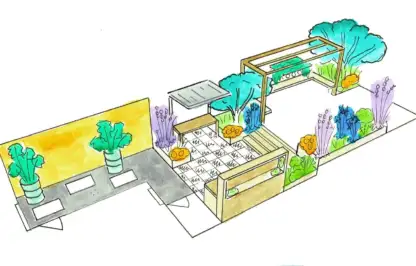
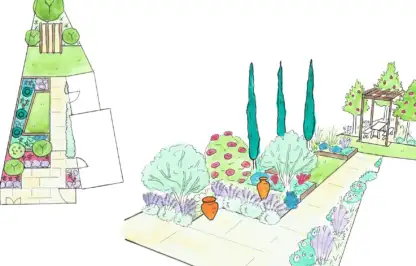
Garden Design Examples for Small Gardens: 30 Design Templates & Planting Plans: In this online gardening course, I’ll walk you through 30 fantastic garden designs, explaining the logic behind the layout and plant choices, plus take-home tips for applying them in your own garden.
Learn how to transform and design your garden with Lee Burkhill’s crash course in garden design. In over 5 hours, Lee will teach you how to design your dream garden. Featuring practical design examples, planting ideas and video guides. Learn how to design your garden in one weekend!
Garden Design for Beginners Online Course: Want to become a garden designer or design your own garden? This beginner course is for you. Join me, Lee Burkhill, an award-winning garden designer, as I train you in the art of beautiful garden design. Enjoy 20 hours of online study and video lessons, along with quizzes and a completion certificate.
Hellebores are ignored for most of the year, then give one of the best winter displays, flowering from December to April in partial shade and moist, humus-rich soil. Plant them in autumn or late winter with the crown level with the soil, mulch every autumn, water through dry summers and snip off the tatty old leaves as the flower buds emerge so the flowers can be seen and don’t get waterlogged.
They are slow to establish, so give new plants two or three years to bulk up. Lenten Roses offer the widest colour choice, the Christmas Rose flowers first, and the Frostkiss and ericsmithii types are best for pots that spend winter by the front door and summer in the shade. For more plants to fill the cold months, see my month-by-month winter garden jobs.
Happy gardening from The Garden Ninja! 🌿


Lee Burkhill, known as the Garden Ninja, is an award-winning garden designer and horticulturist with over 30 years of gardening experience and 15 years as a professional garden designer. A qualified RHS (Royal Horticultural Society) professional, Lee specialises in sustainable garden design and practical horticultural advice. He designs and presents on BBC1’s Garden Rescue and in leading gardening publications. Lee combines three decades of hands-on gardening knowledge with professional design qualifications to help gardeners create beautiful, functional outdoor spaces.
View all posts by Lee Burkhill







JOIN THE NINJAS

Be the first in line for new Guides, Discount codes and Offers