For the garden you’ve already got, not the one you’re starting from scratch. Seven checklists and video lessons from BBC Garden Rescue’s Lee Burkhill, built to help you work out what’s worth keeping before you spend a penny.
69


Quick Answer
Roses fail to flower for eight main reasons: not enough sun, wrong pruning time or technique, too much nitrogen fertiliser, lack of deadheading, drought or waterlogging stress, pest and disease pressure, blind shoots, or the plant being too newly planted to flower freely. Most of these are simple to diagnose and straightforward to fix, and in the majority of cases a non-flowering rose can be coaxed back into bloom within one season.
The good news, having designed gardens professionally for over twenty years, is that a non-flowering rose is almost never a lost cause. Unlike some plant problems where the underlying cause is genuinely mysterious, roses fail to flower for a fairly predictable set of reasons that can be worked through methodically. Identify the right cause, and in most cases, you will have a flourishing rose on your hands again within a single season.
The key is to resist the urge to immediately feed or hard prune, which is the instinctive response, but can make some problems worse. Instead, work through the checklist below in order, starting with the most common causes first. I have arranged them in roughly the sequence I follow when diagnosing a non-flowering rose in a client garden, which saves a lot of guesswork.
Jump To
If I had to identify the single most common cause of a non-flowering rose in a UK garden, it would be insufficient sunlight. Roses are not shade-tolerant plants. They need a minimum of six hours of direct sun per day to produce the energy required for flowering, and in a UK garden where light levels are already lower than in southern Europe, shade is a serious limiting factor.
A rose planted in too much shade will grow, often quite vigorously, but will channel that energy into stem and leaf production rather than flowers. The stems become drawn and leggy as the plant reaches for light, and the flower buds simply fail to develop.
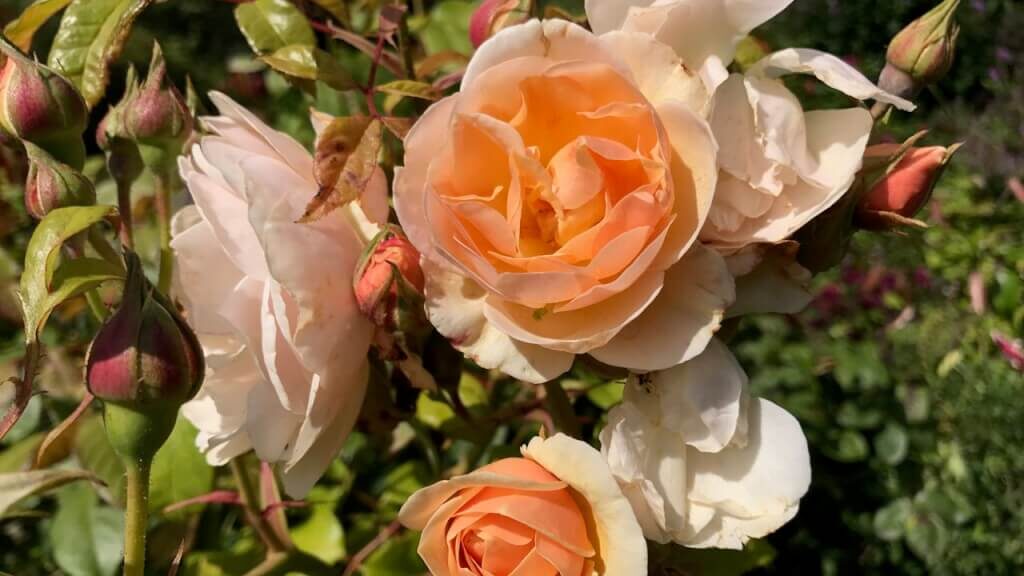
This is a problem that catches many gardeners out because it develops gradually. A rose planted in a perfectly sunny spot ten years ago may now be in deep shade because the surrounding trees and shrubs have matured. I have visited client gardens where a rose was clearly performing beautifully in old photographs, but had completely stopped flowering because a neighbouring tree had grown to cast a shadow across the whole border.
If this is your situation, the options are to cut back the overhanging growth casting shade, or to move the rose to a sunnier position during its dormant period in late winter.
💡 Top Tip
If you are unsure how much sun a spot receives, use your phone to take photos of the area at 8am, 12pm, 3pm, and 6pm on a clear day. The results are usually surprisingly illuminating and often reveal that a spot you thought was sunny is actually in shade for a significant part of the day.
Pruning at the wrong time is the second most common cause of a rose failing to flower, and it is particularly easy to do because the rules are different for different types of rose. The majority of modern bush roses, hybrid teas, and floribundas flower on new growth produced in the current season, so they are pruned hard in late winter, typically late February in the south of England and March in the north. Pruning at this time removes old wood and stimulates the vigorous new growth that carries the flowers.
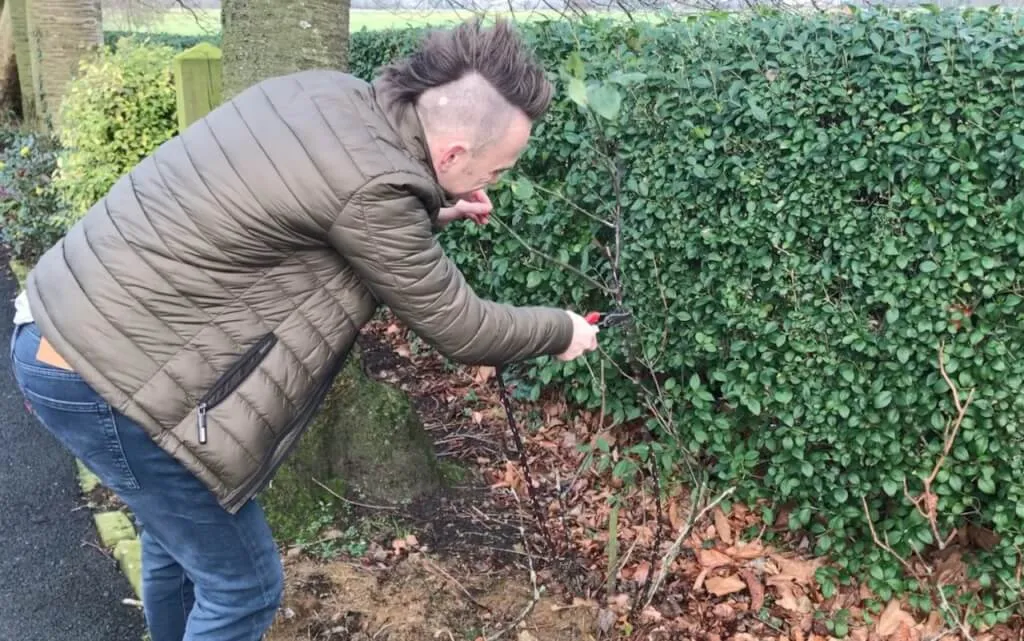
Rambling roses, however, flower on stems produced the previous year, and pruning them in late winter or spring removes the very wood that would have carried the summer flowers. A rambling rose pruned at the wrong time will produce masses of leafy growth and no flowers at all, which is a classic and very frustrating mistake.
Ramblers should be pruned immediately after flowering in summer, removing the stems that have just flowered to the base and tying in the new stems that will carry next year’s display. Once-flowering climbing roses follow a similar pattern. Repeat-flowering climbers can be lightly pruned in late winter to remove dead wood and shape the plant, but the main framework of old stems should be left intact.
Beyond timing, technique matters too. Pruning too lightly, leaving long, weak stems rather than cutting back to strong outward-facing buds, produces floppy growth that rarely flowers well. And failing to prune at all over several years results in a congested plant where the energy is dissipated across too many old stems. A properly pruned rose redirects all that energy into a smaller number of strong, vigorous new shoots that produce far better flowers.
💡 Top Tip
If you are unsure whether your rose is a rambler or a repeat-flowering climber, look at the number of flower flushes. Ramblers flower once, spectacularly, usually in June or July, then produce no more flowers that season. Repeat climbers produce several flushes from June through to October. The pruning timing follows from this distinction.
🛒 Buy bypass secateurs for rose pruning from Amazon UK
This is the cause that surprises most gardeners because it runs counter to the instinct that more feeding equals better results. Too much nitrogen, whether from a general-purpose fertiliser, excessive lawn feed washing through to nearby roses, or over-application of a rose-specific feed, causes the plant to put all its energy into producing lush, leafy growth at the expense of flowers. The result is a rose that looks impressively vigorous and healthy, with deep green leaves and strong stems, but produces few or no flowers.
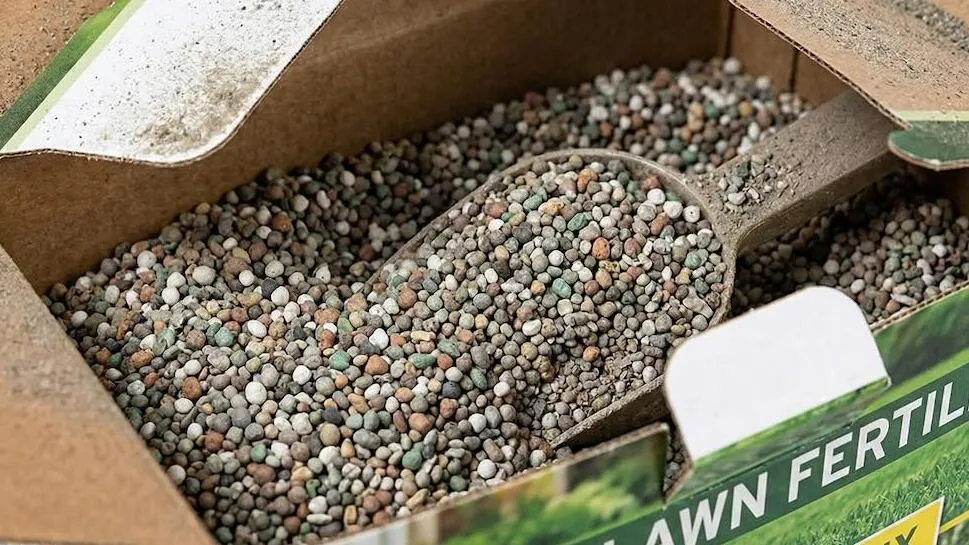
The tell-tale sign of nitrogen excess is lots of soft, sappy growth with very few buds. The leaves may also be unusually large and dark green. If this describes your rose, stop feeding entirely for the rest of the current season and switch to a potassium-rich feed, such as a tomato fertiliser or a dedicated rose fertiliser with a high potassium (K) content, in the following spring.
Potassium promotes flowering and disease resistance rather than leafy growth. A rose in a border typically needs feeding twice a year: once in March or April as growth gets underway, and again in July after the first flush of flowers. Container roses need feeding every two weeks through the growing season as nutrients leach from the compost with regular watering.
🛒 Buy rose fertiliser from Amazon UK
Deadheading is one of the simplest and most effective things you can do to keep a repeat-flowering rose producing blooms throughout the season. Once a flower is pollinated and begins to set seed, the plant’s energy shifts from flower production to seed development. The hips begin to form and the plant effectively considers its reproductive job done. By removing spent flowers before the hip develops, you remove that signal and encourage the plant to produce more flowers in its continued attempt to set seed.
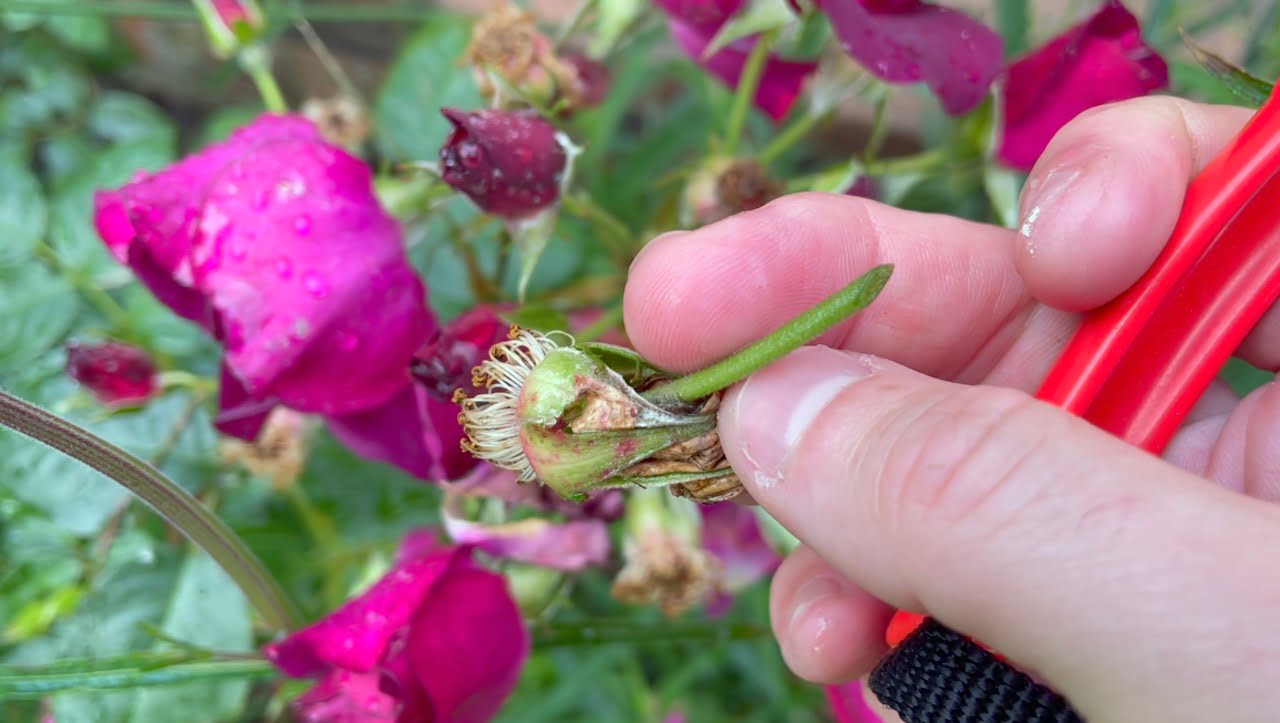
The correct technique is not simply to snap off the spent flower head but to cut the stem back to the first strong leaf with five leaflets below the spent bloom. This removes the weak stem tip and encourages a strong new flowering shoot to emerge from the leaf axil below. On a repeat-flowering rose, regular deadheading from June through to September can double or even triple the number of flowers produced compared to a plant that is left undeadheaded. The difference is genuinely dramatic and one of the easiest wins in the garden.
It is worth noting that once-flowering roses, ramblers, and species roses should not be deadheaded if you want to enjoy the hips, which are often a significant part of their ornamental value in autumn and winter. Rosa rugosa and Rosa moyesii in particular produce outstanding hips that are far more attractive than their somewhat brief flowering period.
🛒 Buy deadheading snips from Amazon UK
Roses need consistent moisture to flower well. A drought-stressed rose will drop its buds before they open as a survival mechanism, prioritising hydration of the core stems and roots over the energy-intensive process of flowering. This is particularly common in the height of a UK summer for roses planted in sandy or free-draining soil, and for container roses where the compost can dry out very rapidly in warm weather. A rose in dry conditions needs deep, infrequent watering rather than light daily sprinkling: a generous bucket of water at the base of the plant two or three times a week is far more effective than a light daily sprinkle that barely penetrates the soil surface.
At the other extreme, a rose in permanently waterlogged soil will suffer root damage that manifests as poor flowering, yellowing leaves, and eventual dieback. Roses prefer a moisture-retentive but free-draining soil, not one that holds standing water. A thick mulch of garden compost applied around the base of the plant in spring, kept well clear of the stem, does an excellent job of conserving moisture during dry periods while also improving soil structure over time.
🛒 Buy garden compost mulch from Amazon UK
A rose that is spending all its energy fighting off a pest infestation or fungal disease has very little left for flowers. Aphids are the most frequent offender: they cluster around developing buds from April onwards, sucking the sap before the bud has a chance to develop, and in severe infestations can prevent flowering almost entirely on badly affected stems. Check the growing tips and developing buds regularly from spring onwards and deal with aphid colonies early, either by rubbing them off by hand or with a targeted spray.
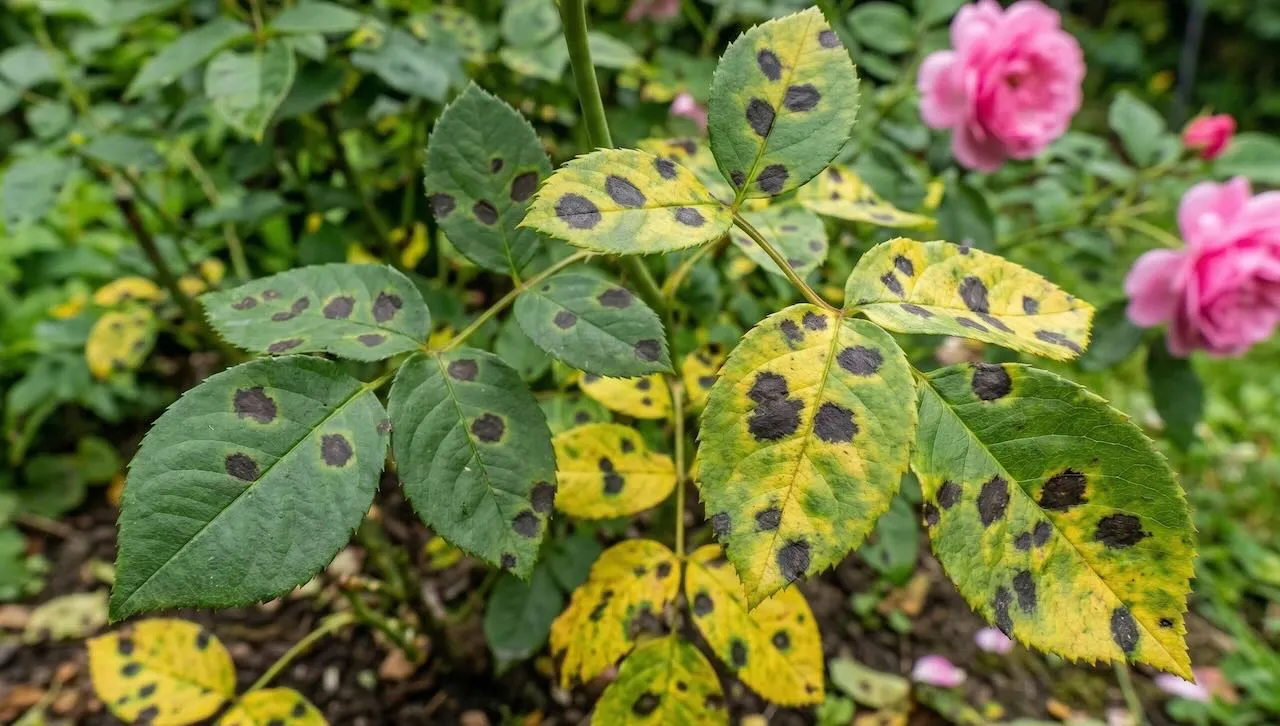
Black spot is the most damaging fungal disease for rose flowering because it causes premature leaf drop. A rose that has lost most of its leaves to black spot cannot photosynthesise and therefore cannot produce the energy needed to flower. Remove and dispose of any affected leaves without composting them, improve air circulation around the plant by opening up the centre during pruning, and avoid wetting the foliage when watering. Rose rust, which produces orange pustules on the undersides of leaves, causes similar problems through leaf loss and should be treated in the same way.
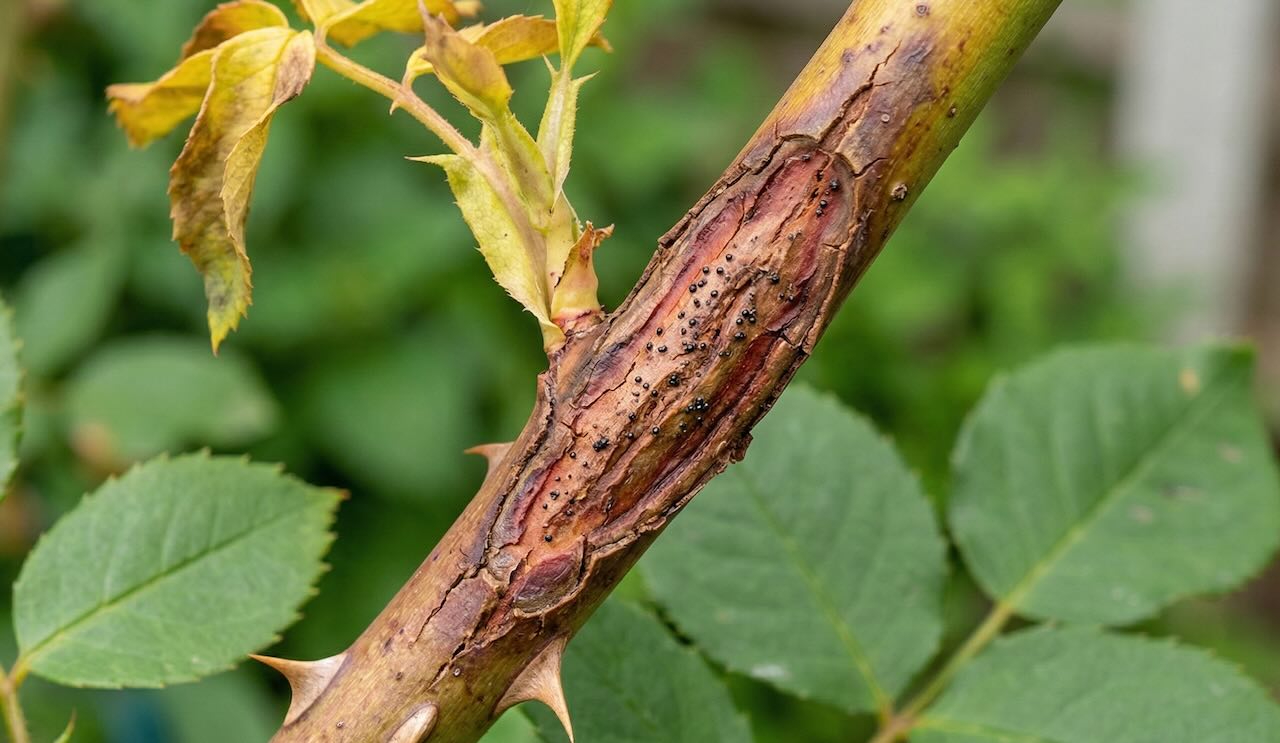
Rose canker, a fungal stem disease that causes dark, sunken patches on the stems, can also reduce flowering by disrupting the flow of water and nutrients through affected stems. Cut out any cankered wood back to healthy tissue, sterilising your secateurs between cuts, and dispose of the affected material without composting it.
Powdery mildew is worth mentioning separately because its effect on flowering is subtler than black spot but still significant. It appears as a white, dusty coating on young leaves and stems, and on buds that are in the process of developing. Buds affected by powdery mildew often fail to open at all, and those that do tend to be distorted or smaller than normal. It thrives in warm days combined with cool nights and poor air circulation, which describes a great many UK summers.
Pruning the centre of the plant open during the annual cut to improve airflow, and watering at the base rather than over the foliage, are the most effective preventive measures. Remove and dispose of any affected stems or buds rather than leaving them on the plant.
Blind shoots are stems that develop normally in every respect but end in a cluster of leaves rather than a flower bud. They look perfectly healthy and can be confused with ordinary leafy growth, but the key difference is that they never develop a terminal bud, no matter how long you wait. The RHS describes this as a condition in which flowering shoots develop but fail to form a flower bud, attributing it to environmental factors, including cold or fluctuating temperatures during the critical period of bud development in spring.
The treatment for blind shoots is to prune them back by about half to a strong outward-facing bud. This removes the blind tip and stimulates the plant to produce a new shoot from below, which, in most cases, will develop into a flower bud. It takes a few weeks, so please be patient; in most cases, it is a reliable solution. Blind shoots are more common after a cold or erratic spring, which is why they tend to be more prevalent in northern UK gardens and in exposed positions. A mild, settled spring generally produces far fewer blind shoots than a spring with frequent late cold snaps.
A newly planted rose, particularly a bare root plant put in during winter, often produces little or no flowering in its first season. This is completely normal. The plant is channelling its energy into establishing its root system rather than producing flowers, and pushing it to flower before the roots are ready is counterproductive.
Climbing and rambling roses often take two to three years before they flower freely, as they need to build a sufficient framework of stems and a strong root system before they can sustain significant flower production. Patience is genuinely the correct advice here.
A subtler problem is suckers growing from the rootstock below the graft union. Most garden roses are grafted onto a rootstock variety, and occasionally, strong shoots grow from the rootstock rather than the named variety. These sucker stems look vigorous and healthy, but will never produce the flowers of the grafted variety, and if left unchecked, they will gradually outcompete the named variety and take over the plant.
Sucker stems usually have seven leaflets rather than the five leaflets of most garden rose varieties, and they emerge from below the graft union at or below soil level. Remove them by tracing back to the rootstock and pulling them off at the point of origin rather than cutting them, which stimulates regrowth.
There is one further trap for gardeners replacing an old rose with a new one in the same spot. Rose replant disease, also called soil sickness, is a recognised problem where a new rose planted into ground that previously held a rose fails to thrive. The soil builds up a community of pathogens and nematodes over the years of the first rose’s life, reaching levels that the mature plant tolerates but that overwhelm a young, newly planted specimen. The new rose makes poor growth, flowers badly or not at all, and may eventually die.
The fix is straightforward: before replanting, excavate the soil to a depth and width of around 45cm and replace it entirely with soil brought in from a different part of the garden. It takes twenty minutes and makes an enormous difference to how the replacement rose establishes.
It is worth taking a step back and confirming what type of rose you have before concluding there is a problem at all. Not all roses flower repeatedly. Once-flowering roses, which include most ramblers, many old garden roses such as gallicas and albas, and Rosa moyesii, produce a single glorious flush of flowers in early to midsummer and then nothing more until the following year. If your rose flowered beautifully in June and then stopped, it may simply be a once-flowering variety behaving exactly as it should.

Hybrid tea roses and modern floribundas are bred specifically for repeat flowering and should produce multiple flushes from June through to October with proper deadheading and feeding. Shrub roses vary: David Austin English roses are repeat-flowering but some of the older shrub varieties are not. Checking the label or looking up your variety online takes thirty seconds and can save a season of unnecessary intervention. If you no longer have the label and cannot identify the variety, a useful rule of thumb is that if the rose flowered once and stopped in midsummer, it is likely a once-flowering type. If it had buds developing again by August but failed to open them, something in the growing conditions is likely the cause.
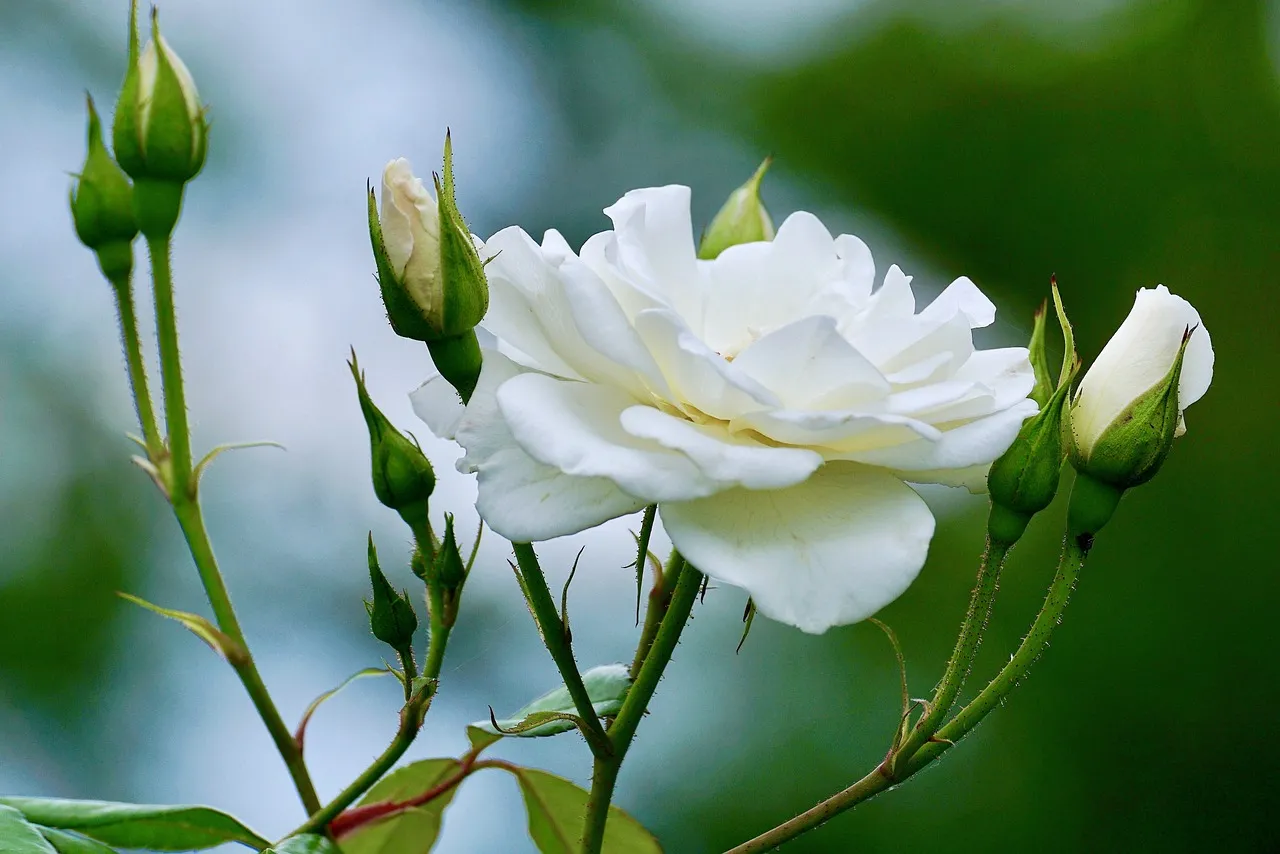
The most common cause of a rose producing abundant leafy growth with no flowers is too much nitrogen fertiliser, insufficient sun, or both. Excess nitrogen drives vegetative growth at the expense of flowering. Check the plant has at least six hours of direct sun per day, stop applying high-nitrogen fertilisers, and switch to a potassium-rich rose feed to encourage flower production.
A rose that flowered well previously but has stopped is most often the result of pruning at the wrong time, increased shade from neighbouring plants, or a change in feeding regime. If it is a rambling or once-flowering climbing rose, check whether it was pruned in late winter, which would have removed the flowering wood. If it is a repeat-flowering bush rose, check for increased shade, check the soil moisture, and consider whether the feeding programme has changed.
The single most effective thing you can do to increase flowering on a repeat-flowering rose is to deadhead consistently throughout the season, cutting spent blooms back to the first strong five-leaflet leaf below the flower. Feed twice a year with a rose-specific or potassium-rich fertiliser, ensure the plant receives at least six hours of sun, water deeply during dry spells, and prune at the correct time for the type of rose you have.
Rose buds that develop but fail to open are most commonly caused by a phenomenon called balling, where wet weather causes the outer petals to stick together and seal the bud closed. This is most common on roses with many petals in warm, humid or rainy conditions. Aphid damage around the bud can also prevent opening. Carefully peel away the outer stuck petals on balled buds to help them open. Remove any buds that have balled and gone brown promptly rather than leaving them on the plant, as grey mould can establish on balled buds and spread to adjacent healthy growth. Roses with fewer petals are less prone to balling.
Yes, roses are hungry plants and benefit from regular feeding, but the type of feed matters as much as the frequency. Use a rose-specific fertiliser or one with a higher potassium and phosphorus content relative to nitrogen. Feed once in March or April and again in July after the first flush. Avoid high-nitrogen general fertilisers, which promote leaf growth at the expense of flowers.
If you want to learn more about plants, design principles, and creating beautiful spaces, check out my online garden design courses. Whether you want to level up your plant knowledge, learn about design principles, or even start a career in garden design, I’ve got courses ranging from £29 to £199 that cover everything you need.
These courses aren’t just for people with gardens either! The principles of understanding plant needs, creating harmonious colour schemes, and designing beautiful functional spaces apply just as much to indoor plant arrangements as they do to full garden designs. You’ll learn how to read plants, troubleshoot problems, and create spaces that genuinely work for your lifestyle.
For the garden you’ve already got, not the one you’re starting from scratch. Seven checklists and video lessons from BBC Garden Rescue’s Lee Burkhill, built to help you work out what’s worth keeping before you spend a penny.
Garden Design Examples for Small Gardens: 30 Design Templates & Planting Plans: In this online gardening course, I’ll walk you through 30 fantastic garden designs, explaining the logic behind the layout, the plant choices, and take-home tips for applying them in your own garden.
Learn how to transform and design your own garden with Lee Burkhills crash course in garden design. Over 5 hours Lee will teach you how to design your own dream garden. Featuring practical design examples, planting ideas and video guides. Learn how to design your garden in one weekend!
Garden Design for Beginners Online Course: If you want to make the career jump to becoming a garden designer or to learn how to design your own garden, this is the beginner course for you. Join me, Lee Burkhill, an award-winning garden designer, as I train you in the art of beautiful garden design.
A non-flowering rose is one of the most common problems in UK gardens and one of the most fixable. Work through the causes in order: sunlight first, pruning timing second, feeding regime third, deadheading fourth, watering fifth, pest and disease pressure sixth, blind shoots seventh, and finally the plant’s age and type. In the majority of cases, the cause sits somewhere in the first three, and addressing it will bring the rose back into flower within one season.
The most important thing to avoid is reaching for high-nitrogen feed as a first response to a non-flowering Rose. It is the single intervention most likely to make the problem worse rather than better. Potassium, sun, water, timely pruning, and consistent deadheading are the tools that produce flowers. Get those right, and your Rose will reward you with fabulous flowers!
Roses are extraordinary garden plants and absolutely worth the small amount of attention they require. Once you understand what they need, they are far less temperamental than their reputation suggests.
Happy Gardening!



Lee Burkhill, known as the Garden Ninja, is an award-winning garden designer and horticulturist with over 30 years of gardening experience and 15 years as a professional garden designer. A qualified RHS (Royal Horticultural Society) professional, Lee specialises in sustainable garden design and practical horticultural advice. He designs and presents on BBC1’s Garden Rescue and in leading gardening publications. Lee combines three decades of hands-on gardening knowledge with professional design qualifications to help gardeners create beautiful, functional outdoor spaces.
View all posts by Lee Burkhill







JOIN THE NINJAS
Be the first in line for new Guides, Discount codes and Offers