Lavender Pruning, Propagating & Growing Guide for beginners
Lee Burkhill: Award Winning Designer & BBC 1's Garden Rescue Presenters Official Blog
Beginner level
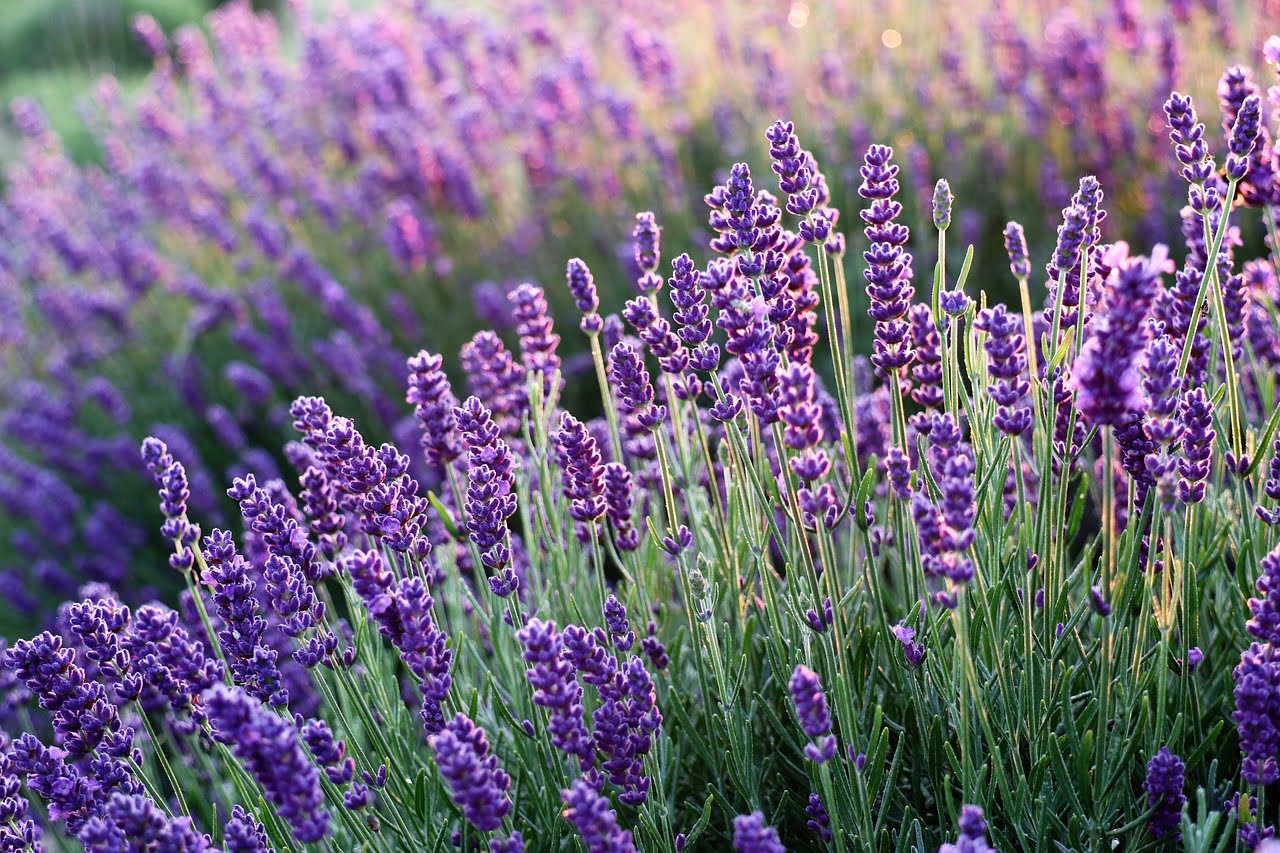
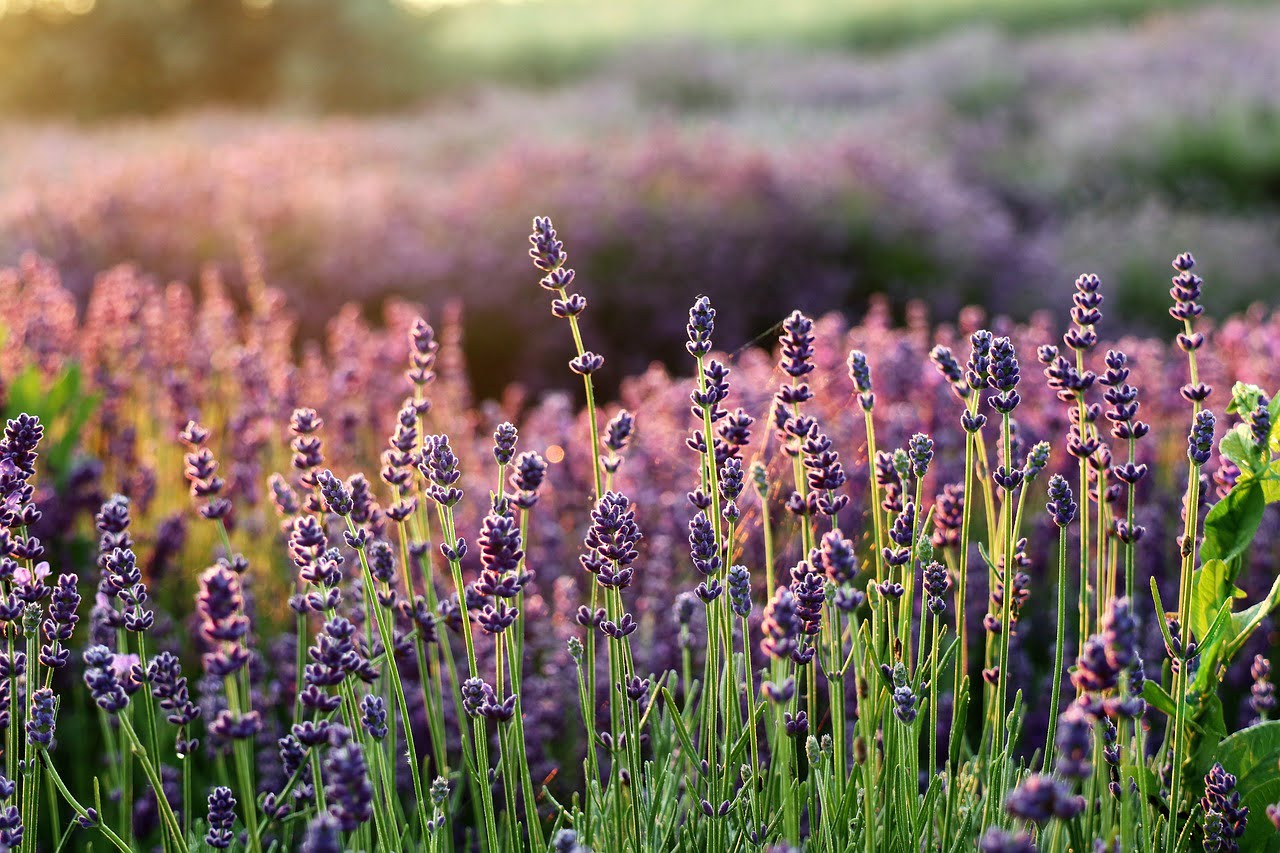
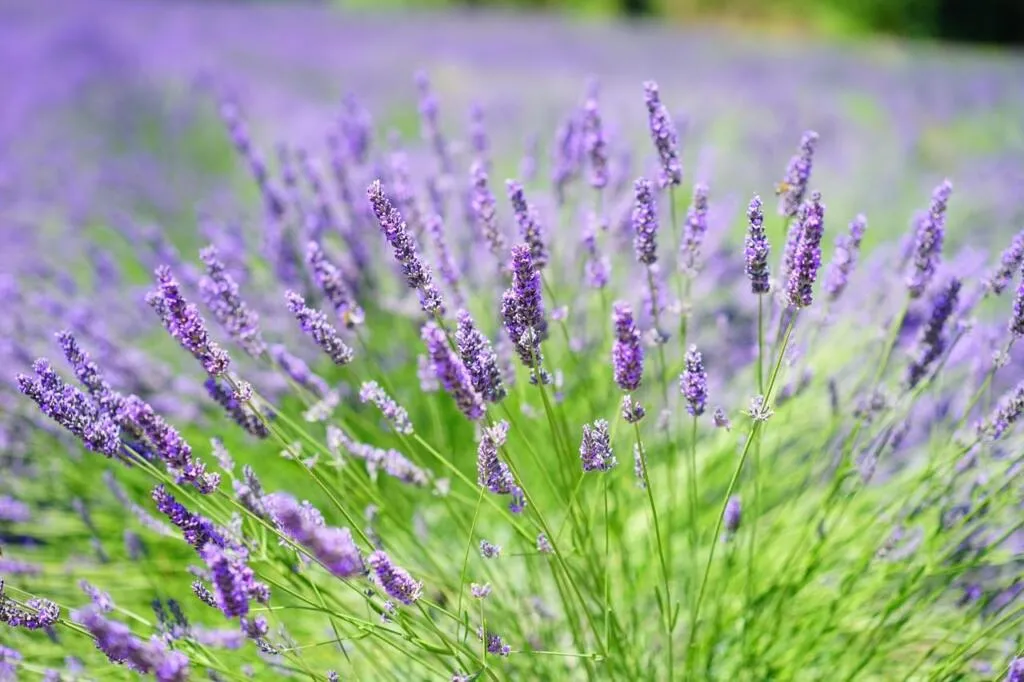
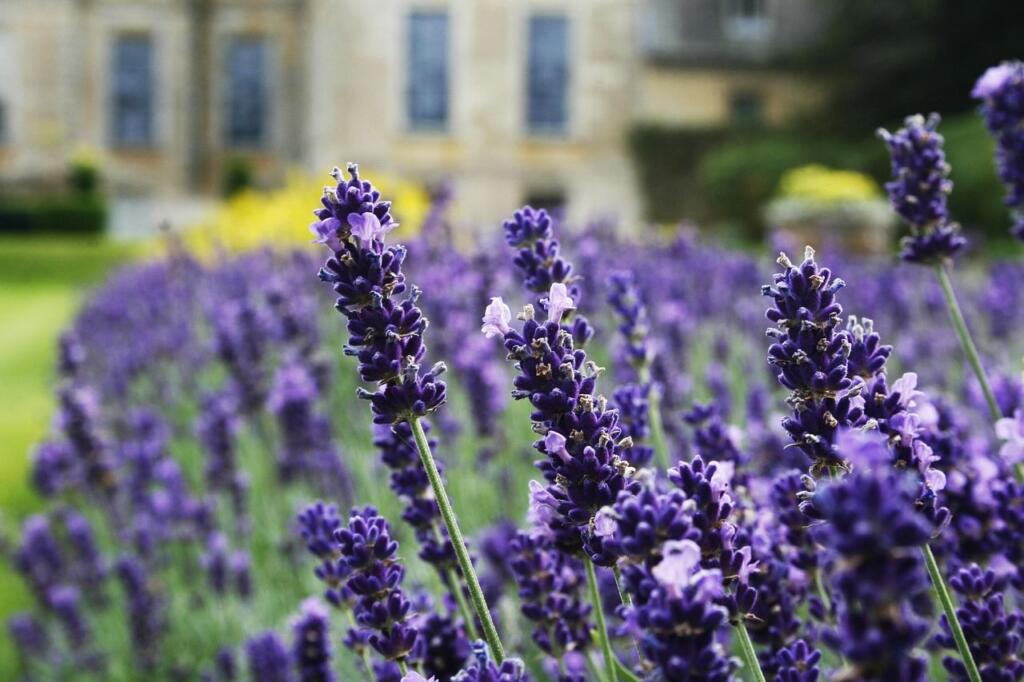
Lavender is a gorgeous lilac-coloured aromatic shrub which fills the garden with its relaxing scents. It adds mid-summer colour with its fragrant blooms and is also a great plant for bees. With some easy care, pruning and growing care, you too can have this fantastic purple shrub bringing joy to your garden. Let me show you how to easily care, grow and prune lavender in this guide.
Lavender is a plant that people are immediately drawn to in gardens because of its colour and heady scent! Lavender has beautiful aromatic foliage that brings heady scents to the garden, along with purple spikes of flowers. It has many uses, whether as an herb, for aromatherapy in the home, in sensory applications as you brush past it, or just as a beautiful, relaxing colour palette in the garden.
This is my ultimate guide to growing and caring for lavender. Whether a beginner or an expert gardener, this guide will show you how to grow, care for and prune lavender for years of enjoyment in your garden!
Quick Answer
Lavender thrives in full sun with at least 6 hours of direct light per day, free-draining poor soil and minimal watering. Prune annually after flowering in August or early September, removing one third of the leafy green growth only. Never cut into old woody stems. Choose English lavender for hardiness and longevity in UK gardens, French lavender for a longer flowering season in sheltered spots.
This page contains affiliate links for products I use and love. If you take action (i.e. subscribe, make a purchase) after clicking a link, I may earn some gardening commission which helps me keep the Garden Ninja Blog free for all.
1. What is lavender?
Lavender is a common name for the plant genus Lavandula. Comprising a mix of herbaceous perennials, shrubs and subshrubs. Lavandula comprises 47 different plant species. Lavender/Lavandula is part of the mint family Lamiaceae. Lavender belongs to the same aromatic herb group as sage, mint and deadnettles.
For the most part, lavender is considered an ornamental plant that is used as a culinary or sensory herb. Lavender is a plant found in the Mediterranean and other warm regions such as East Africa, Asia and India. It’s a hot garden plant requiring full sun and warm conditions to thrive.
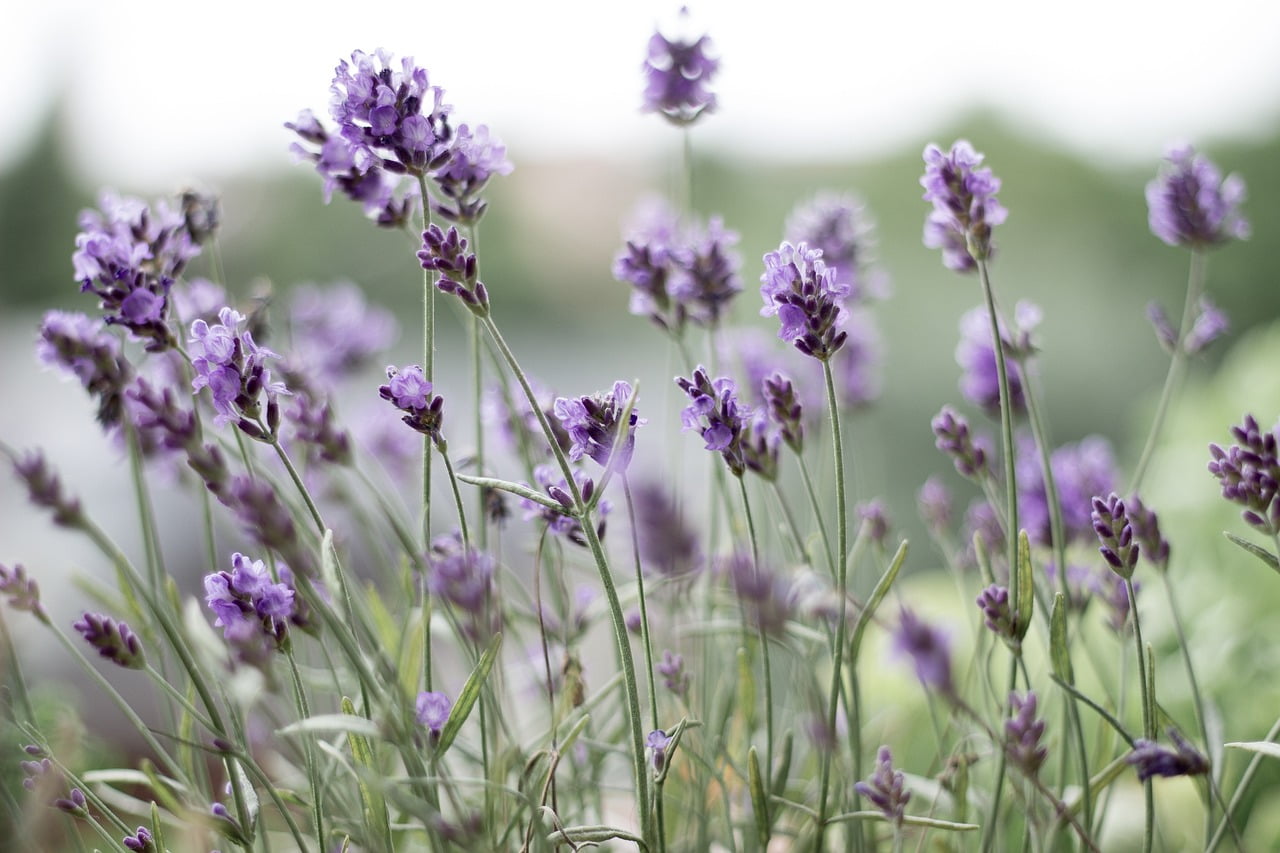
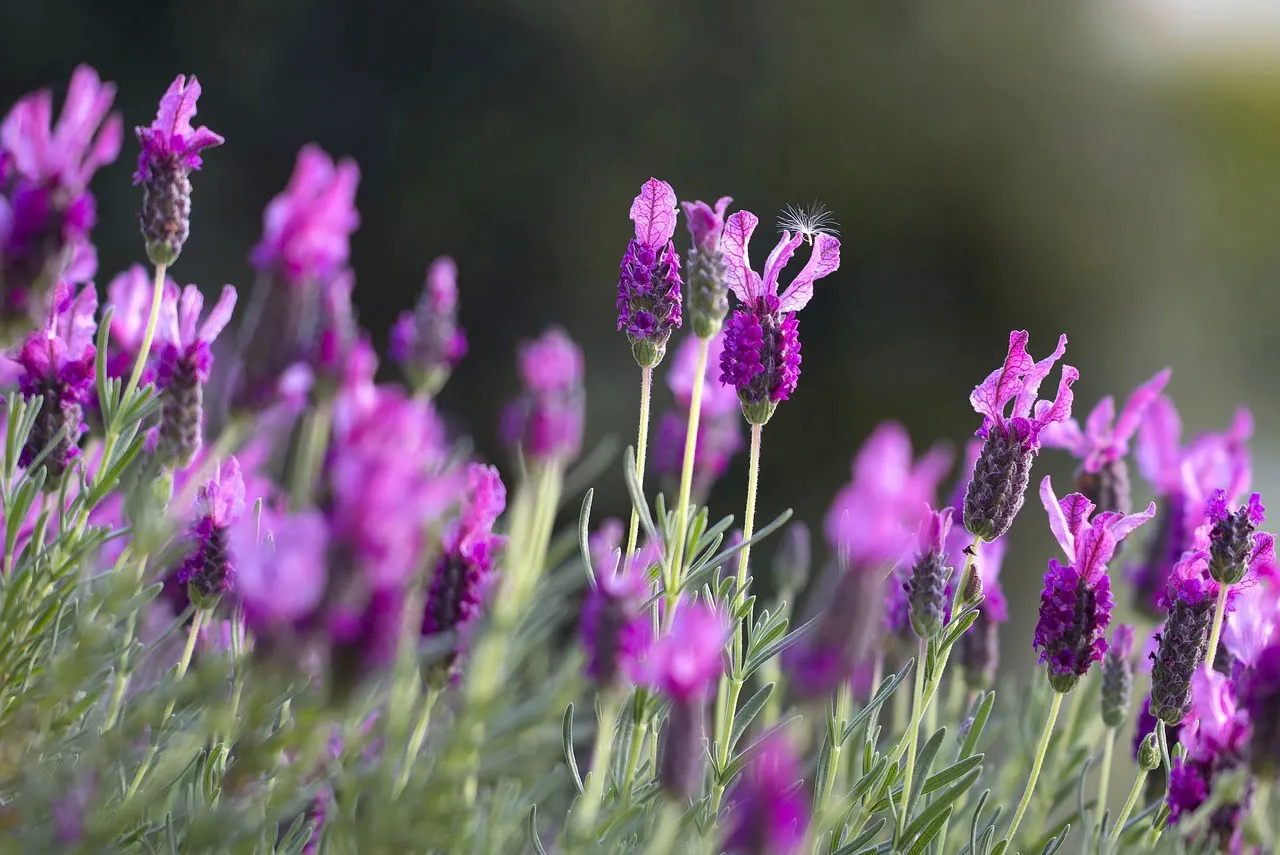
Lavender flowers are a whorl of petals on a flower spike. Making a tall, thin spear of beautiful purple or pink flowers. French lavender has wing-like bracts at the top of the spike, which are often mistaken for petals.
2. How to grow lavender
As lavender is a Mediterranean plant, it requires conditions similar to those of its native range. As with all plants, choosing the right plant for the right place is key. You may want to grow lavender in your garden, but you do need the following conditions for it to grow successfully.
With the above warm and bright garden conditions, lavender will thrive and provide gorgeous flowers and that infamous lavender scent as you brush past them. As it’s a hot climate plant, you want to mimic these conditions to get the best out of whichever lavender type you are growing.
If you don’t have the right conditions for growing lavender, why not try growing it in pots, which you can move to the sunniest parts of your garden? It also means you can experiment with the best position for your lavender. By planting in pots, you can choose a light peat-free compost mixed with some grit or perlite to provide the free-draining soil conditions that lavender plants love.
3. How to prune lavender correctly
Lavender responds well to yearly pruning. By pruning your lavender each year, you can ensure that it stays neat, tidy and full of flowers. In my experience designing hundreds of client gardens, lavender is the most chronically underpruned plant in the UK. Gardeners are afraid of cutting it too hard, so they give it a polite snip with kitchen scissors and wonder why it turns woody and gappy within a few years.
The best time to prune lavender is once it finishes flowering in late summer, ideally August into early September. Do not leave it later than mid-September, as the new growth that follows needs several weeks to harden off before the first frosts arrive. New growth left soft going into winter is far more vulnerable to frost damage than a well-timed prune would ever be.
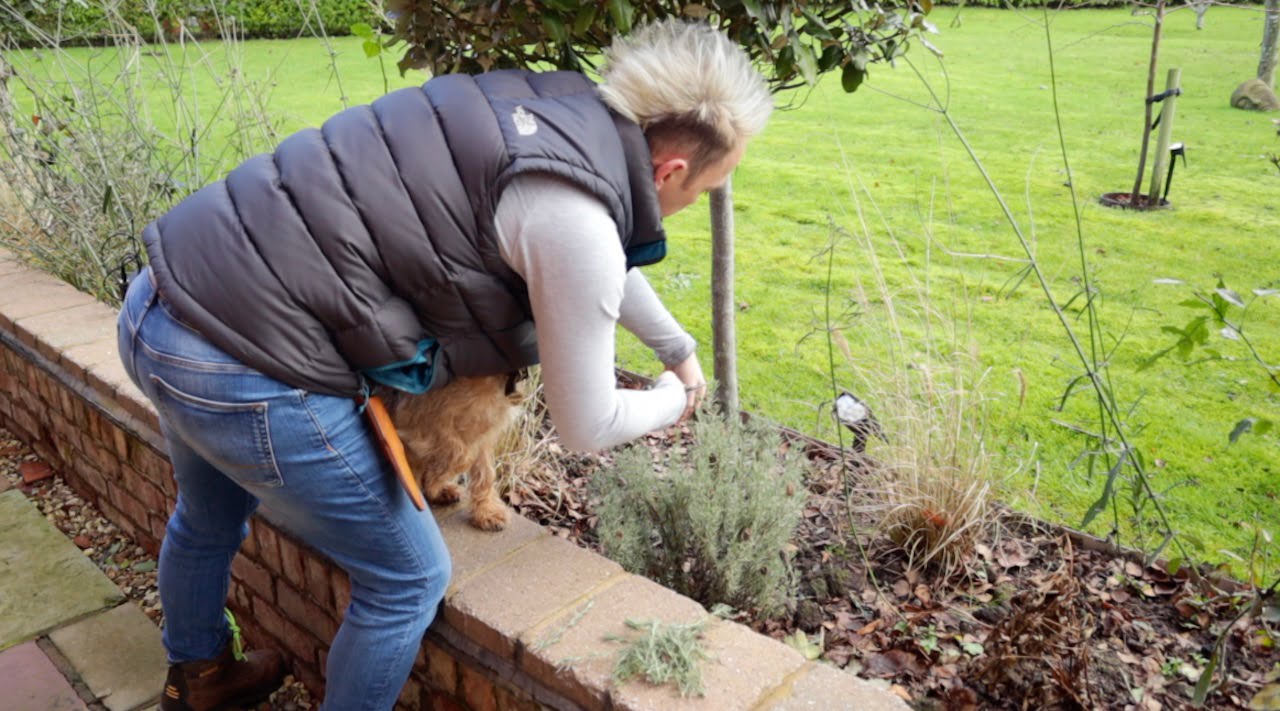
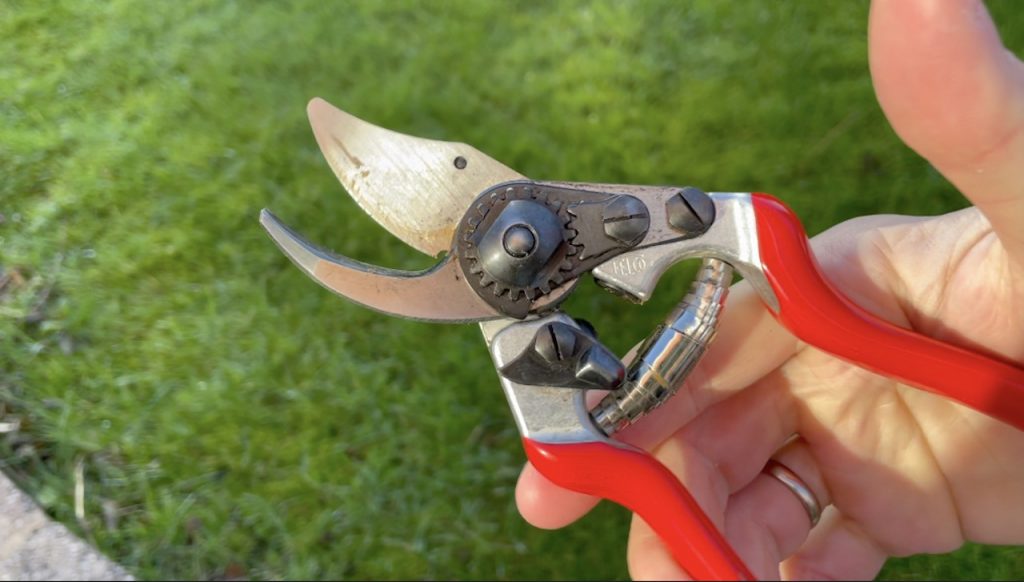
All you need to prune lavender is some sharp secateurs, a bucket for your clippings, and a clear, frost-free, dry day. For a lavender hedge, a pair of hedge shears will make lighter work of it and give a consistent finish across the row. Let’s look at the steps needed to prune lavender correctly.
Step 1: Use clean, sharp secateurs
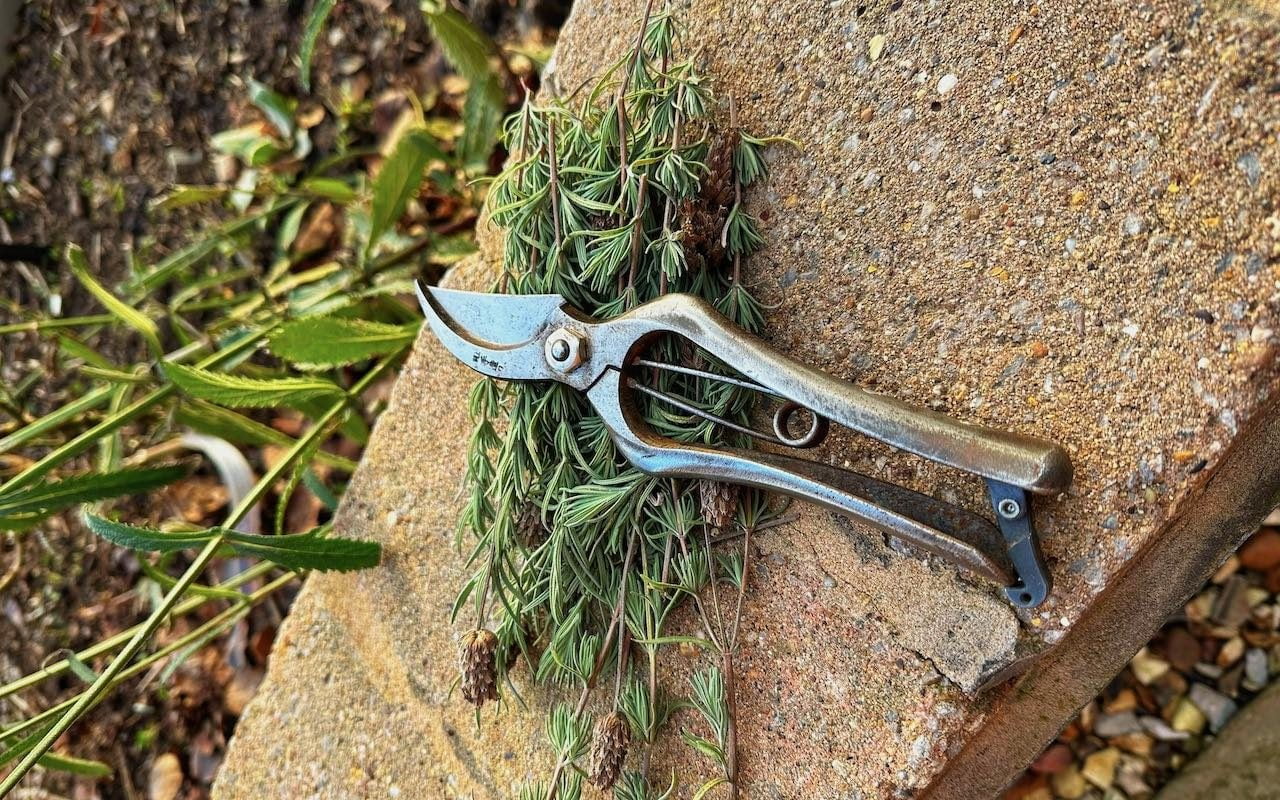
It’s important that you have the right tools, such as clean, sharp secateurs. Using old, dirty, or blunt secateurs will simply crush, tear and damage the plant. Leading to potential plant infection, injury or plant dieback. Taking 5 minutes to clean and sharpen your secateurs will prevent this from happening. If you are pruning multiple lavender plants in one session, wipe the blades with a clean cloth between each plant to avoid spreading any fungal spores from plant to plant.
Timing matters enormously here, and it is easy to get this right if you look at the plant rather than at the calendar. Your lavender is ready to prune when the flowers have gone over and started to turn grey or brown, and the bees have largely stopped visiting the spikes. Those are your two clearest signals. Do not prune while flowers are still attracting pollinators. Once the display is genuinely finished, get your secateurs out within a week or two rather than letting it drift into October.
Step 3: Take note of the old woody growth at the base
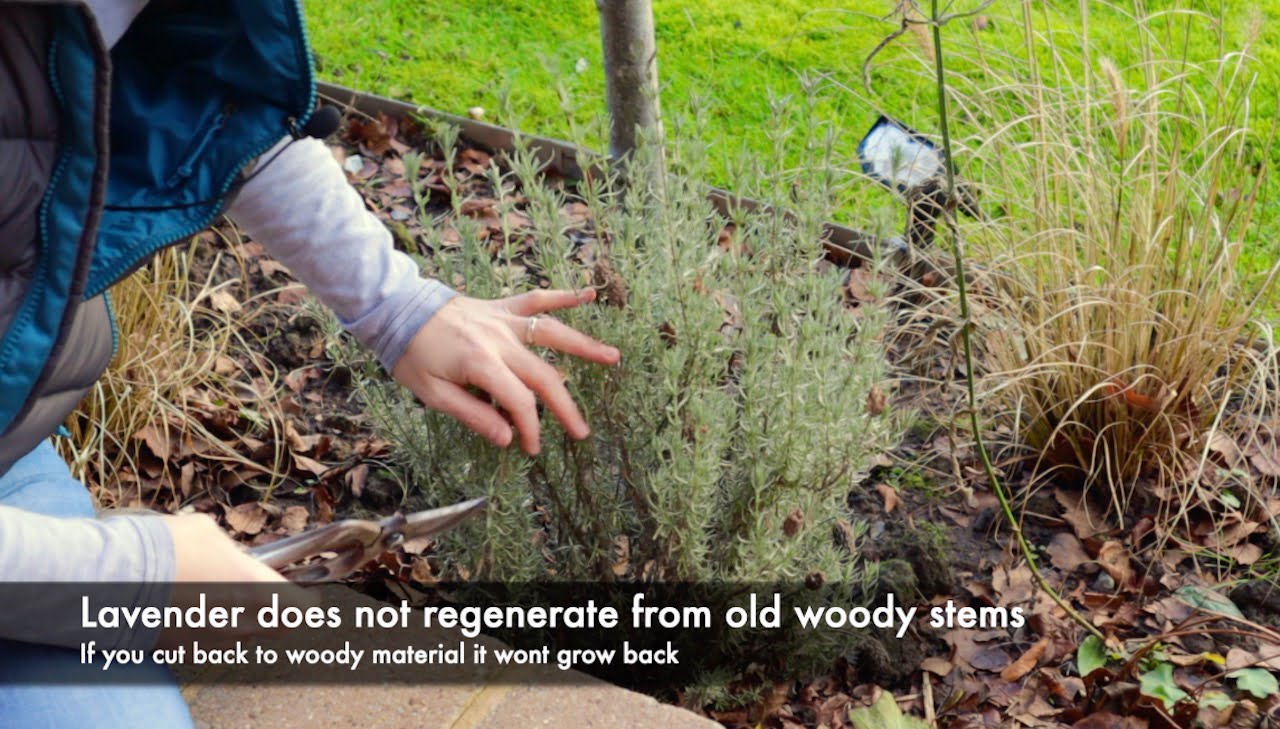
When pruning lavenders, avoid cutting back into old woody or brown stems. These older stems don’t usually regenerate. If you cut back to woody growth, that lavender stem won’t regrow. Take your time to identify how far up the lavender shrub the brown woody material is.
Make a note to cut only above that woody growth. You can see the woody growth at the base above, extending about 3 inches upward. Look closely, and you will often see tiny blue-grey buds sitting just above the point where green meets woody. Those buds are your target. Cut just above them, and the plant will break into fresh growth within days.
Step 4: Identify the fresh green leafy growth for pruning
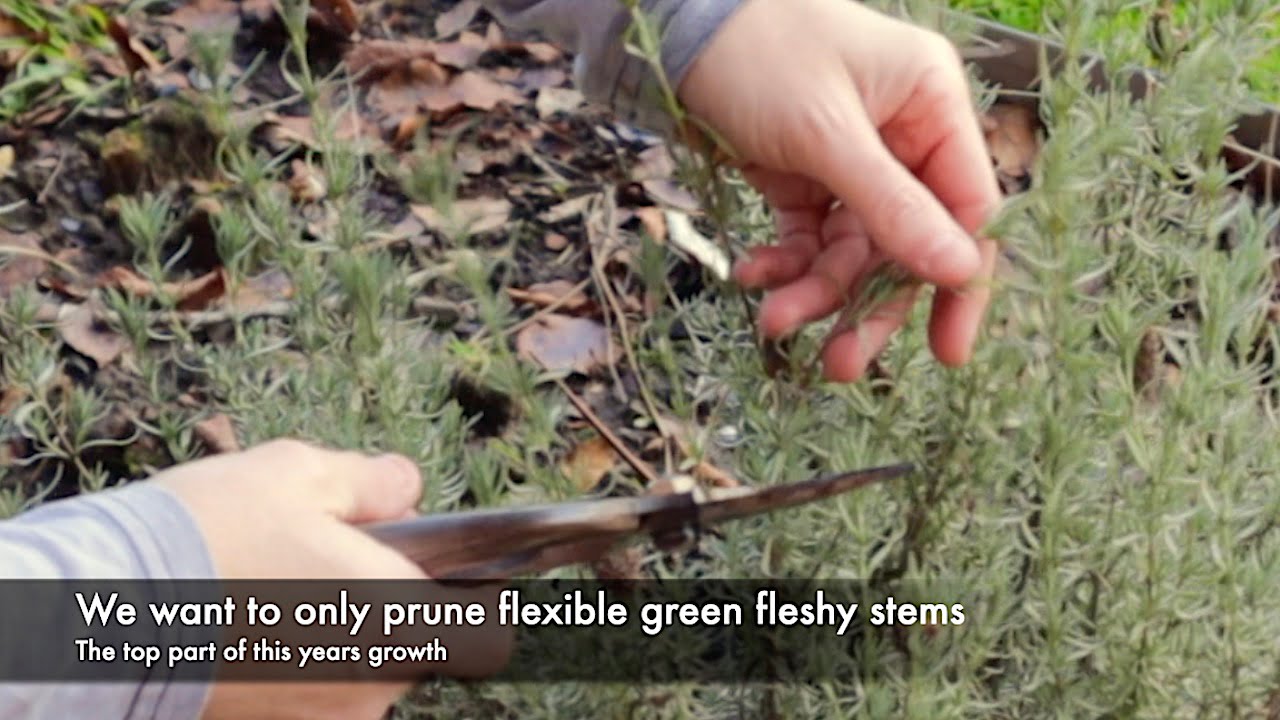
Lavender pruning takes place on this year’s fresh, leafy growth. You can see the green growth is different from the brown growth as it is soft and flexible compared to woody stems.
Stand back and familiarise yourself with this fresh growth. Now, get ready to prune!
Step 5: Prune out 1/3 of the fresh growth
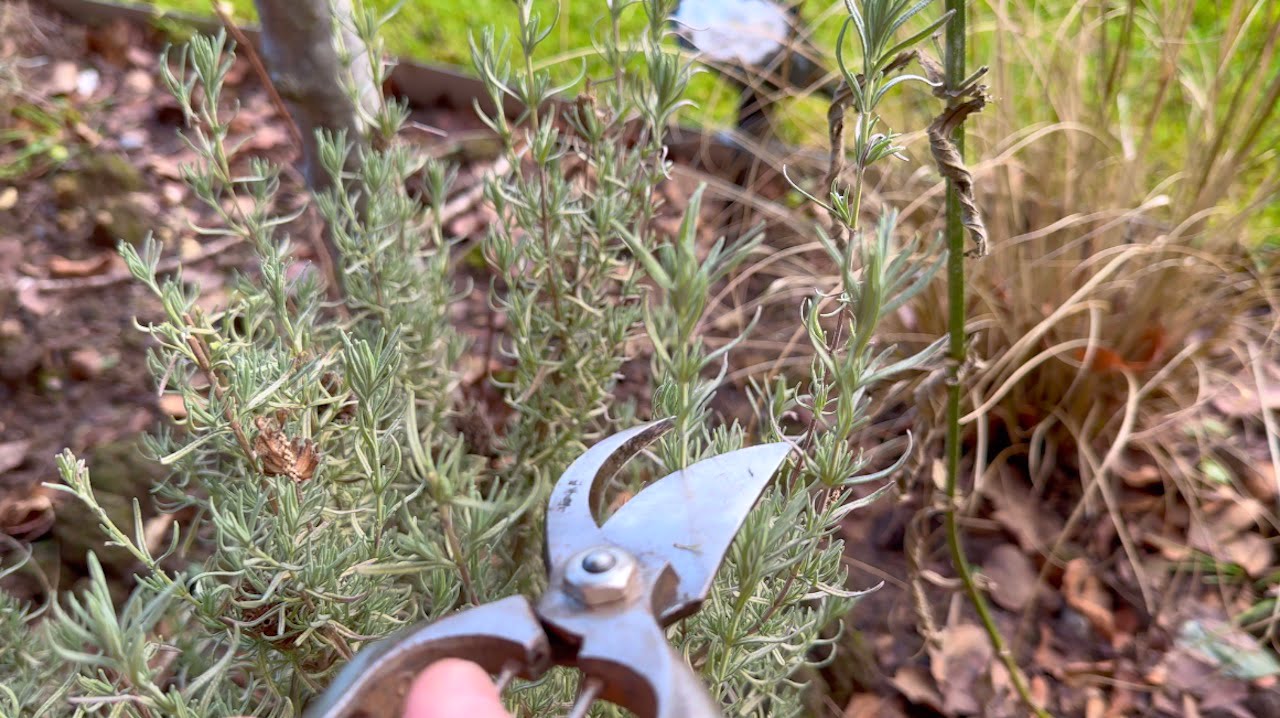
We aim to take back 1/3 of this year’s growth all over the lavender shrub. Using your sharp secateurs, trim off 1/3. This includes removing spent flowers from this year. For English lavender, aim to leave the plant sitting at roughly 2 to 3cm above the woody stems. This sounds drastic the first time you do it, but those tiny buds I mentioned above will push out strongly within a week or two in the late-summer warmth, and the plant will go into winter as a neat, compact mound, ready to flower the following year brilliantly.
Taking off this 1/3 helps keep the lavender in neat shape and prevents winter or frost winds from damaging it before spring arrives.
Step 6: Stand back and check your progress
Always keep standing back to check the overall balance of the pruning. If you’re a beginner gardener, it’s best to take your time when pruning and keep stepping back to see the shape. You want an even prune across the shrub to create a lovely, loose, spherical shape.
Before and after lavender pruning
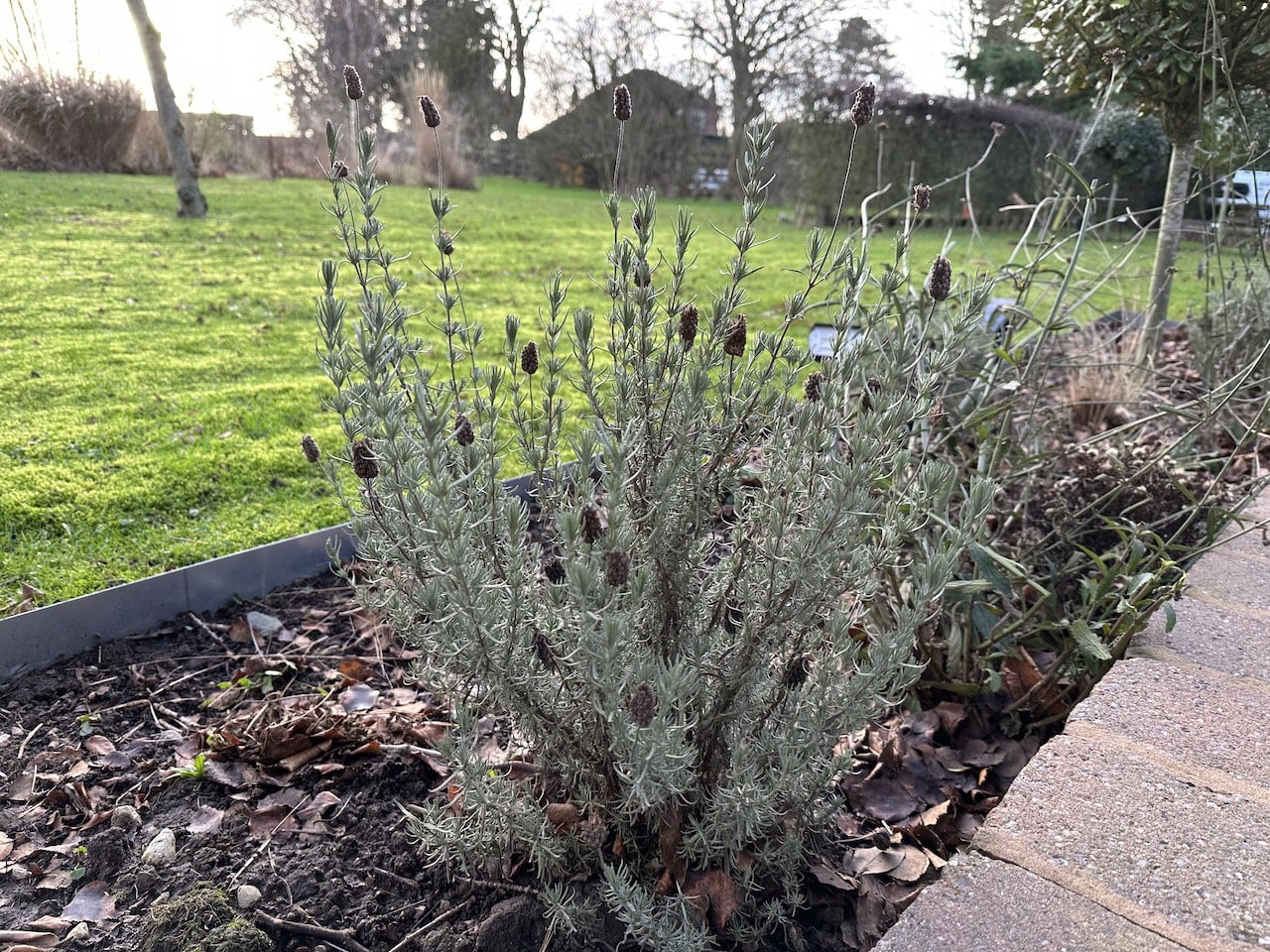
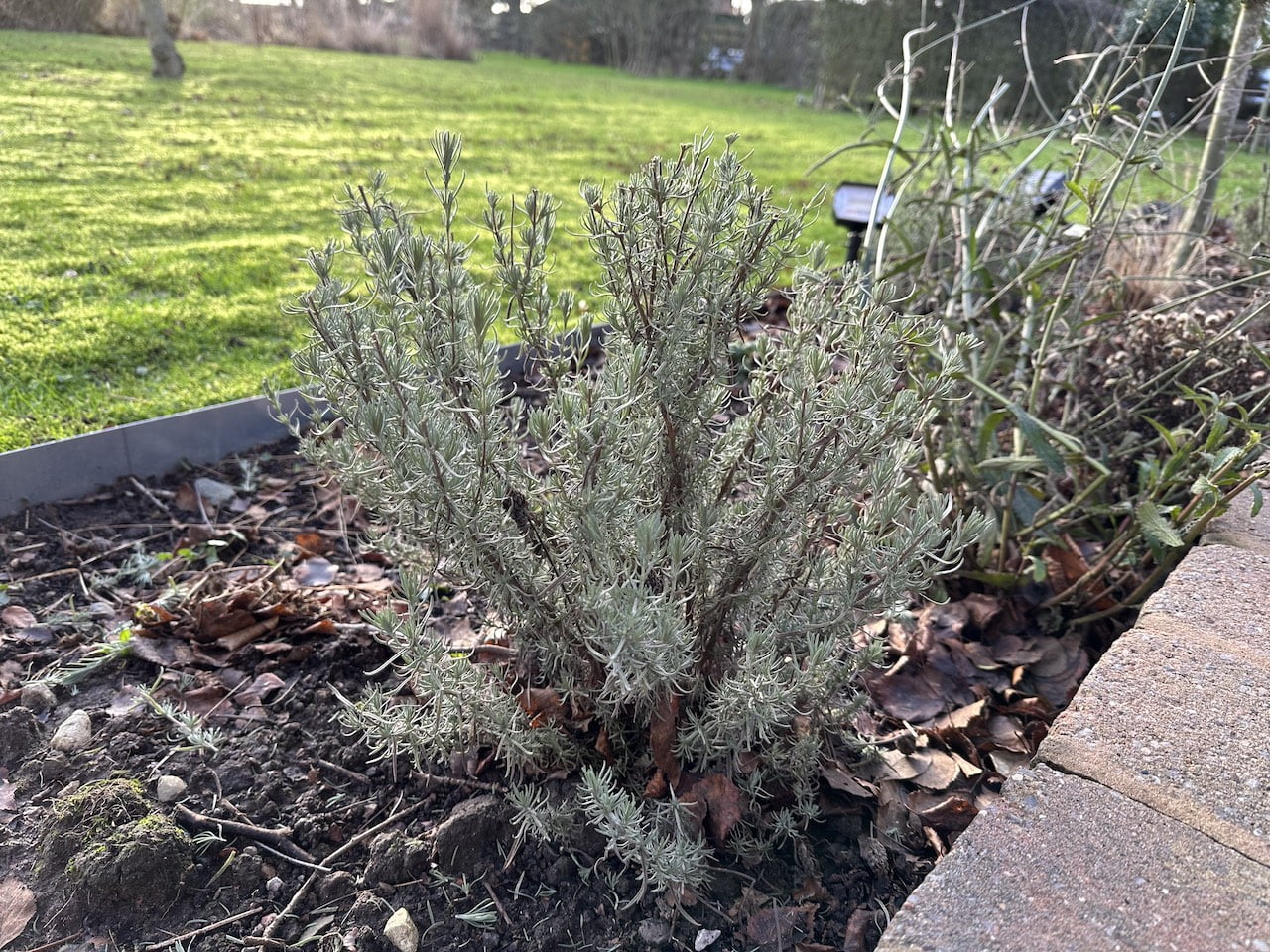
Sometimes, it’s easier to see pruning in before-and-after photos showing the changes in the plant. Below are two examples of how I have pruned this lavender. You can see that I have followed the following pruning rules:
Can you see how it’s been reduced, the flowers removed, and it has a much more compact shape? All ready for next year’s fresh growth and lavender-scented flowers.
4. When to prune lavender: a UK timing guide
Getting the timing right is just as important as knowing how to cut. Prune too early in the season and you sacrifice the final weeks of flowers and the pollinators that depend on them. Leave it too late and the fresh growth that follows will not have time to harden off before the first frosts, leaving the plant significantly more vulnerable over winter.
As a general rule for most UK gardens, aim to complete your main prune by the second week of September. If you garden in a mild area of the south or west of England, you can afford to run a little later. If you are in Scotland, the north of England, or a higher elevation, aim for late August to be safe. New growth needs at least four to six weeks of mild weather after pruning to harden off properly. That window closes fast once the nights get cold.
If you garden in Scotland or northern England, add a two-week buffer and aim to prune by mid-August. The growing season is shorter and the gap between late summer warmth and the first hard frosts is smaller. In the mild south-west, you can reasonably stretch into the second or third week of September without concern.
5. How to prune lavender: English, French and Lavandin
The three main lavender groups grown in UK gardens each need a slightly different approach. Treating all lavender the same is one of the most common reasons plants struggle or fail to flower well. Here is what I do differently for each.
Pruning English lavender (Lavandula angustifolia)
English lavender is the most forgiving and responds best to a reasonably confident prune. After flowering, cut back into the current season’s green growth, aiming to leave the plant sitting at around 2 to 3cm above the woody base. The plant will look very reduced straight after, which surprises many gardeners the first time they do it properly. Resist the urge to stop cutting too early. Those tiny grey-green buds at the base of the stems will push out strongly within days and produce the framework for next year’s flowers. Varieties like ‘Hidcote’ and ‘Munstead’ respond particularly well to this approach and will hold their neat mound shape reliably year after year.
Pruning Lavandin (Lavandula x intermedia)
Lavandin hybrids such as ‘Hidcote Giant’, ‘Grosso’, and ‘Sussex’ are naturally taller plants and can be pruned slightly higher than English lavender, leaving a little more of the green growth. Remove approximately one third of the season’s green growth after the long flower spikes fade in late summer. These varieties are slightly less hardy than pure angustifolia, so avoid pruning too late in northern gardens. Lavandin is the lavender most commonly used for commercial oil production in Provence, and the generous flower spikes are excellent for cutting and drying.
Pruning French lavender (Lavandula stoechas)
French lavender needs a gentler touch and different timing to English varieties. Rather than one big late summer prune, French lavender benefits from being trimmed after each flush of flowers throughout its long season from April to September. After the first main flush in early summer, cut back the spent flower heads and lightly shape the foliage into a rounded mound. Never cut French lavender hard into old wood, as it is far less likely to regenerate from woody stems than English lavender and the risk of losing sections of the plant is much higher. In late summer, give it another light shaping trim rather than the more confident prune you would apply to English varieties.
6. Should I prune lavender in spring?
A light spring prune is not the main event, but it can be genuinely useful as a tidy-up and a way to remove any winter damage before the growing season begins properly. The single most important rule for spring pruning is to wait until you can clearly see new green growth emerging before you cut anything at all.
English lavender in particular can look completely dead in late winter and early spring, with brown-tipped stems and no obvious signs of life. Do not be deceived by this and do not give up on it. By late March or April, tiny green shoots will begin to emerge from the base of the stems. Those shoots tell you which wood is alive and which is genuinely dead. Only once you can see them clearly should you go in with your secateurs to remove frost-damaged tips, cutting back just above the first visible green growth.
💡 Top Tip
Spring pruning should remove no more than 10 per cent of the plant’s overall growth. The bulk of the previous year’s stems will produce this summer’s flowers, so preserve them. The spring tidy-up is about damage removal and light shaping, not about reducing the plant’s size. Save that for August.
7. Should I deadhead lavender?
Deadheading spent lavender flowers throughout the summer is a small job that pays back generously in more blooms. When the first flower spikes have faded, snipping them off just above the foliage redirects the plant’s energy away from seed production and into producing new flowering shoots. On varieties such as ‘Hidcote Improved’ and many French lavenders, this can trigger a second flush of flowers within four to six weeks.
For deadheading, a light touch with sharp secateurs or even scissors is all that is needed. You are not pruning the plant at this stage, simply removing the spent flower stalks. This is quite different from the annual post-flowering prune, which cuts deeper into the current season’s growth. Think of deadheading as an ongoing summer maintenance task and the main August prune as the annual reset.
8. Pruning lavender in its first few years
Young lavender plants need a different approach from established ones, and one of the most common mistakes I see is treating a first- or second-year plant with the same confident prune you would give a mature shrub. The plant simply does not yet have the root system and established woody framework to recover as easily.
🌿 Lavender Pruning by Plant Age
Plant age
What to do
Year 1
Deadhead spent flowers only. Do not prune the plant. Let it establish.
Year 2
Light shaping prune after flowering, removing spent stems and lightly rounding the shape. Remove no more than one quarter of growth.
Year 3 onwards
Full annual prune each August. Remove one third of green growth, cutting to 2 to 3cm above the woody stems. Continue every year without fail.
The consistency of that annual prune from year three onwards is what separates a lavender that lasts a decade from one that turns woody and unproductive by year five. I have had English lavenders in my own clients’ gardens that were still flowering brilliantly at fifteen years old, simply because they received a confident prune every August without exception.
9. Common lavender pruning mistakes to avoid
In fifteen years of designing gardens professionally, these are the pruning mistakes I see most often. Every one of them is avoidable once you know what to watch for.
Pruning too timidly. The single most common problem. Gardeners give a light snip with kitchen scissors, the plant looks the same as before, and it gradually becomes woody and sparse. A confident cut into the green growth each August is what the plant needs.
Cutting into old wood. Lavender cannot regenerate from bare woody stems in the way that, say, buddleja or roses can. Once you cut below the green growth into brown wood, that section is gone permanently. Always cut above visible green.
Pruning too late in the season. Any later than mid-September in most of the UK and the fresh growth following the prune will not have time to harden off before the first frosts. Soft new growth going into winter is far more frost-vulnerable than a well-timed prune.
Skipping years. Missing one year’s prune is not a disaster, but missing two or three consecutive years will accelerate the woodiness significantly and the plant will be much harder to bring back. Annual pruning is genuinely the key.
Pruning French lavender like English lavender. French and Spanish lavenders need a lighter touch and different timing. Never give a French lavender the same confident August cut you would give an English one.
Using blunt or dirty tools. Blunt secateurs crush rather than cut, leaving ragged wounds that are far more susceptible to infection. Sharpen your blades before the pruning season and wipe them between plants.
10. What’s the difference between English and French lavender?
The main difference between English and French lavenders is their hardiness (how well they survive low temperatures) and their flowering duration (the length of time they flower). Depending on which of these requirements you need, you can pick between the two different types of lavender to best suit your needs. Alternatively, like me, you can use both in the garden to get the best of both worlds!
English lavender plant characteristics
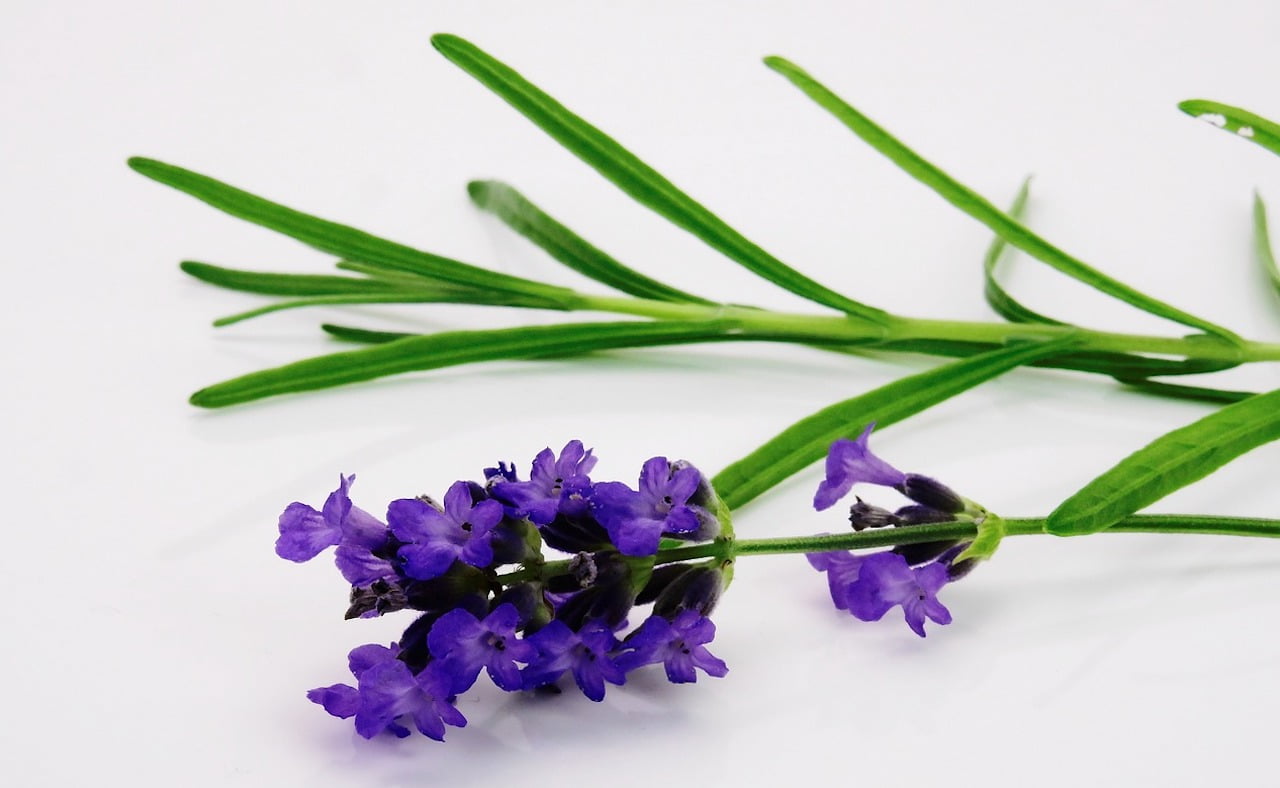
English lavender is far hardier than French lavender, meaning it can survive lower temperatures. It has a much more dainty appearance, with its flowers on long, thin stems with delicate silver-grey foliage. English lavender flowers in July and August for 4 to 6 weeks, depending on the weather. An example of English lavender can be seen below.
English lavender details
English lavender is much hardier than French lavender, surviving frosts and low temperatures (up to -15°C)
Flowers from July for 4 to 6 weeks only
Lives far longer, with a life span of 7 to 10 years
Dainty flowers are suitable for small hedges or planting next to paths
Best English lavender varieties to try
There are two main types of English lavender: angustifolia and x intermedia (the ‘x’ denotes a hybrid). Depending on your space or scent requirements, you may pick one over the other. Whether you want a smaller species or a taller, more elegant one. The main differences between the two English lavender species are:
Lavandula angustifolia is the bushy, hardy UK variety and is the shorter, stockier lavender up to 50cm tall.
Lavandula x intermedia is slightly later flowering than angustifolia and taller at 75cm and above.
Here are some English lavender varieties to try in your own garden:
Lavandula angustifolia ‘Munstead’, a compact deep purple variety and RHS AGM winner
French lavenders are far more blousey (a term for frilly, fluffy, or gregarious flowers), with a much larger, fatter flower spike. French lavenders have bracts (a modified leaf) that can look a bit like wings sticking out the top. French lavender flowers profusely in the UK between April and September.
French lavender is not as hardy as English lavender and is not frostproof
Flowers longer from April and have a shorter, fatter flower
French lavenders are bushier than English lavenders
Lives for up to 5 years before needing replacement
Best French lavender varieties to try
The French are famous for their love of lavender and ideal growing conditions in the south of France. French lavender is sometimes referred to as Spanish lavender, particularly in America. However, you can spot French lavender a mile off by the flowers and by identifying the stoechas species when looking at plant labels.
Below are a few gorgeous French lavenders to try:
Lavandula stoechas ‘Anouk’, compact with vivid purple bracts and excellent for pots
Lavandula stoechas ‘Ballerina’, white bracts with a purple base and very striking
Lavandula stoechas ‘Bandera Purple’, with a long flowering season and deeply fragrant
Lavandula stoechas ‘Pretty Polly’, with soft pink bracts and a lovely cottage garden feel
Lavender is one of the easiest shrubs to take cuttings from to propagate (create more) plants for free. The best way to propagate lavender is between June and September, when it is actively growing. Follow the steps below to propagate lavender from heel cuttings, or watch my softwood cutting video guide below.
Step 1: Choose a non-flowering side shoot
Identify a side shoot on your actively growing lavender and select a non-flowering side shoot. This ensures that the cutting doesn’t have a flower bud about to open. Using this will divert energy away from rooting and to the flower instead. Alternatively, take your cuttings in May before the flower buds have formed.
Step 2: Pull off the cutting with a heel attached
Pull off this cutting carefully. When pulling, you should find that a heel or sliver of the main plant comes off as you pull the side shoot away from the main stem. The reason why you want this heel is that it’s full of hormones that will root more easily.
You can simply take cuttings with secateurs, but you may need some rooting hormone if no heel is present. Remember which way up your cutting goes so you plant the correct end in the pot.
Step 3: Remove all but a few leaves at the top
Remove the leaves from the base of the cutting with a knife or scissors, leaving either 2 or 3 sets of leaves at the top. This ensures that you can bury the cutting’s stem, and the leaves don’t waste energy by simply rotting underground.
Step 4: Take a pot and fill it with 50% compost and 50% grit
Place your cuttings around the edge of a pot. Burying their bare roots into the growing media. Putting them near the edge of the pot keeps them warmer and provides better drainage than placing them in the centre of cold, wet compost.
Place them 1cm apart to give enough space for the roots. Water them well, cover them with a plastic bag, and place them somewhere warm. Ensure they do not dry out, and remove the bag each week to allow fresh air to circulate.
After a few weeks, you can cut a corner off the plastic bag to increase ventilation and prevent mould from forming.
Step 5: When you see roots coming through the bottom of the pot, they are ready
When the roots come out from the bottom, it’s time to pot them on. You can follow my guide below to show you how. Keep growing them somewhere warm and overwinter them in a cold frame or greenhouse.
Step 6: The year after, plant out healthy lavenders
Plant out the lavenders the following year in springtime after the last of the frosts.
12. When will lavender cuttings start to root?
Any time between 4 and 6 weeks. You can tell when they have rooted by small roots emerging from the plant pot’s drainage holes. You may also see fresh vertical growth from the plant with new leaves or side shoots.
13. How long do lavender plants live?
Lavenders are not the most durable plants and usually live for 5 to 10 years. This all depends on how often you prune them, the weather they are exposed to and other environmental factors.
If you prune your lavender well each year and pick English hardy varieties, then you could get from 15 to 20 years of life out of them before needing to replace them. Usually, we replace them because they have become very woody and their new growth is sparse.
The quick answer is no, not easily. Lavender can be pruned, but hard pruning (cutting back into old, woody stems) should be avoided at all costs. Lavender doesn’t regenerate well or sometimes at all from old wood, and cutting too far back may prevent new growth. I’ve seen so many social media posts on Instagram, TikTok and YouTube of supposed garden experts hacking them right back to old wood. With plenty of followers following suit and then ruining their lavender.
Instead, it’s recommended to do a light prune after flowering, trimming back about a third of the new growth without cutting into the woody base. Go easy with lavender. She doesn’t appreciate or tolerate hard pruning!
If lavender becomes too leggy or woody, you can try the quarter-by-quarter renovation method as a last resort. Rather than hard pruning the whole plant at once, cut one quarter of it hard back each autumn over four consecutive years. If new green growth appears from the pruned section the following spring, the plant has a chance. If no green appears from a section by mid-April after pruning, that part will not come back. This method is a gamble rather than a guarantee, and for badly woody lavender, a fresh plant in the right spot will outperform any attempt at rescue. For a full walkthrough, take a look at my lavender rescue guide.
15. Advice when buying lavender plants
Before rushing out to the garden centre to buy lavender, it’s important that we make sure we’re picking the right plants for the right place. When buying lavender from a nursery or online, you must look out for the following things:
Do I have a hot, sunny, free-draining position for this lavender?
Is the lavender species suitable for my needs, i.e. French for warmer gardens or English for colder areas?
Does the plant look healthy, i.e., with firm silver leaves and no signs of wilt or scorched leaves?
Check the ultimate height and spread of the lavender. Do you have the space for that species?
Inspect the plants for pests and diseases such as whiteflies, aphids, or Shab (Phomopsis lavandulae), a fungal disease that causes black spots and wilt.
16. Best lavender varieties for UK gardens: AGM guide
With hundreds of lavender cultivars available in UK garden centres and online nurseries, choosing the right one can feel overwhelming. I have narrowed the list down to the varieties I specify most often in professional designs, all of which have proven reliable in UK conditions. The RHS Award of Garden Merit is my first filter: it means the plant has been independently trialled and verified to perform well in British gardens.
🌿 Best Lavender Varieties for UK Gardens
Variety
Type
Hardiness
AGM
Best for
‘Hidcote’
angustifolia
H7, fully hardy
✅ Yes
Borders, edging, hedges
‘Munstead’
angustifolia
H7, fully hardy
✅ Yes
Compact spaces, containers
‘Vera’
angustifolia
H6, fully hardy
✅ Yes
Cutting, drying, taller borders
‘Grosso’
x intermedia
H6, fully hardy
✅ Yes
Large borders, oil production
‘Sussex’
x intermedia
H6, fully hardy
✅ Yes
Fragrance, cutting
‘Anouk’
stoechas (French)
H4, mostly hardy
✅ Yes
Pots, long season colour
‘Ballerina’
stoechas (French)
H4, mostly hardy
❌ No
Showstopper in containers
‘Hidcote Giant’
x intermedia
H6, fully hardy
❌ No
Statement planting, back of border
If I had to choose one variety for every garden in the UK, it would be ‘Hidcote’. It is compact at around 60cm, reliably hardy to minus twenty degrees Celsius, produces deep violet flowers on neat upright stems, and holds its shape well with annual pruning. I have specified it in hundreds of client gardens and it has never let me down. For something a little taller and more dramatic in a larger border, ‘Grosso’ is outstanding and produces some of the most strongly scented flowers of any lavender I have grown.
Lavender is one of those plants that makes everything around it look better. Over twenty years of professional garden design I have used it in more schemes than I can count, and the reason is simple: it provides structure, scent, colour and pollinator value all at once, and it pairs well with an enormous range of plants. Here are the combinations I come back to most often.
Classic Mediterranean border
Lavender alongside rosemary, Salvia nemorosa ‘Caradonna’, catmint (Nepeta ‘Walker’s Low’) and ornamental grasses like Stipa tenuissima creates a planting that almost looks after itself. All five plants share the same preference for full sun and free-draining soil, which means once established they need virtually no intervention beyond an annual prune. The lavender anchors the front and middle of the border with structure, the salvia provides upright vertical spikes in the same blue-purple palette, the nepeta softens the edges, and the stipa adds movement. This is my most-used combination for new build gardens and south-facing borders on chalk or sandy soil.
Lavender as path edging
One of the most satisfying uses of lavender in any garden is as a low hedge or path edging. A row of ‘Hidcote’ or ‘Munstead’ spaced 30cm apart along either side of a gravel or stone path creates a classic look that brushes against legs as you walk past, releasing that scent in the process. It is a simple device but one that transforms even a functional access path into something genuinely pleasurable. For this use I always recommend planting at least five plants per side to get a convincing run. With annual pruning the edging will stay tight and neat for years rather than collapsing into untidy mounds.
Lavender with roses
Lavender planted at the feet of shrub roses is a combination as old as English garden design and it still works perfectly. The grey-green foliage of the lavender provides a cool contrast to rose foliage, the violet flower spikes in June coincide beautifully with the first rose flush, and the low mounding habit covers the bare base of rose stems that most other underplanting options struggle to hide.
I have used ‘Hidcote’ beneath David Austin varieties like ‘Gertrude Jekyll’ and ‘The Generous Gardener’ many times, and the pairing looks as though it was always meant to be that way. There is also some anecdotal evidence, though not proven, that the strong aromatic oils in lavender foliage may deter aphids from nearby roses. Whether or not that is true, the visual result alone is worth it.
Lavender in a cottage garden scheme
In a cottage garden border, lavender works beautifully alongside alliums, achillea, echinacea, and hardy geraniums. The trick is to use lavender as the structural anchor while the other plants provide the informality. A group of three or five ‘Hidcote’ plants placed at regular intervals along the front of a border provides rhythm and repetition that holds the eye even when the more unruly cottage plants are doing their thing in between. Repetition of one plant is one of the most powerful tools in any planting design, and lavender is one of the most effective plants to repeat because its compact, consistent shape reads clearly from a distance.
💡 Top Tip
For a naturalistic planting scheme, try mixing three different lavender varieties with slightly staggered flowering times. ‘Hidcote’ flowers earliest in June, ‘Grosso’ follows in July, and ‘Sussex’ extends into August. Together they create a rolling sequence of purple across the border rather than a single simultaneous flush, and the bees are visiting almost continuously from June to September.
Plants that do not work well with lavender
Just as important as knowing what to pair lavender with is knowing what to avoid. Hostas, ferns, astilbes, and other moisture-loving plants are genuinely poor companions because their soil requirements are the opposite of lavender’s. Planting them together means either the lavender gets too much water and rots, or the moisture-loving plants struggle in the dry, gritty conditions lavender needs. Similarly, tall, vigorous perennials that spread rapidly, like certain varieties of ornamental grass or aggressive ground cover, can engulf lavender within a season or two and cut off the air circulation at the base of the plant, which lavender badly needs to stay healthy.
18. Growing lavender in containers
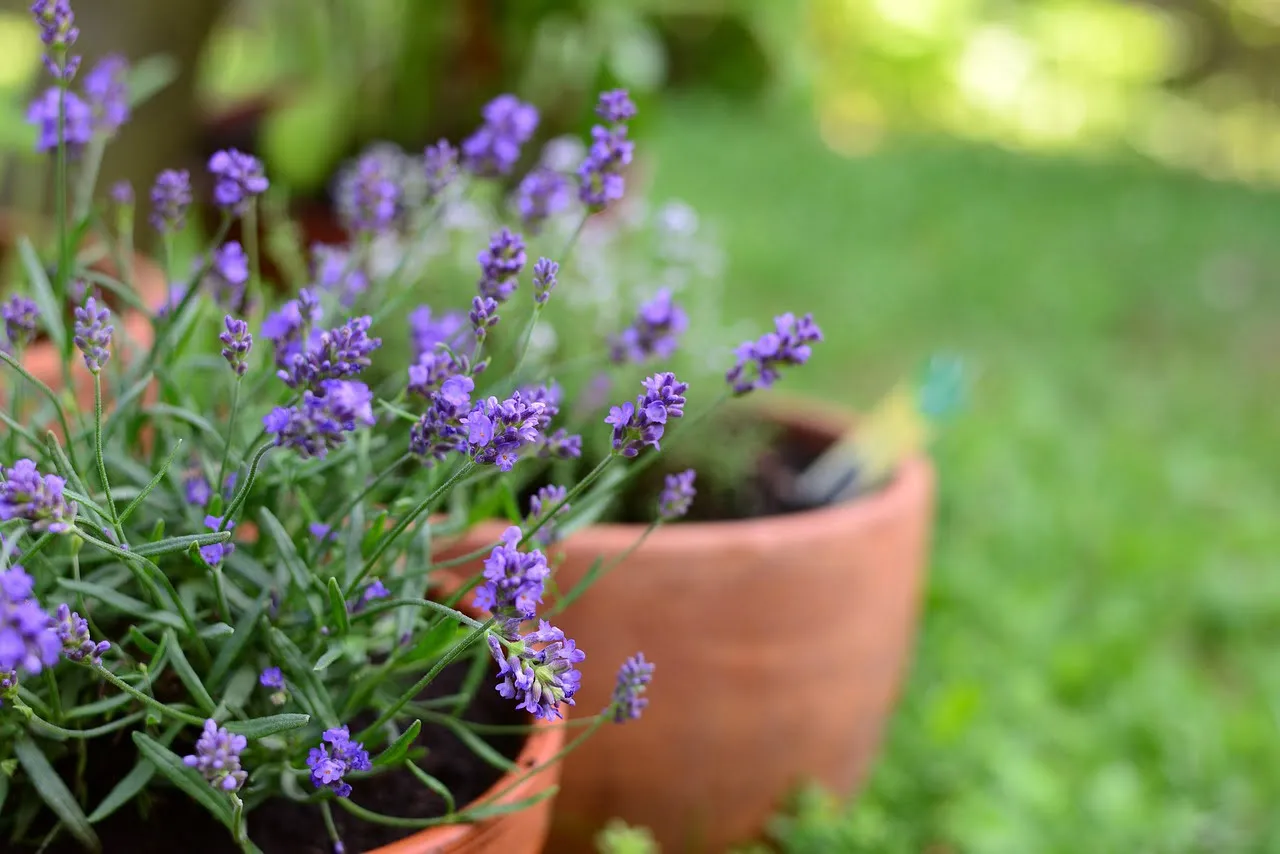
Lavender in containers is a genuinely excellent option if your garden soil is heavy clay or you have a shaded border with no suitable sunny spots. A container gives you complete control over the growing medium, allows you to move the plant to wherever the sun is strongest, and means you can overwinter more tender French lavenders in a sheltered spot rather than losing them to a hard frost. I have several French lavenders in terracotta pots on my own south-facing patio that have been going for three years now, and the display each summer is outstanding.
Choosing the right pot
Terracotta is my first choice for lavender in containers because it is porous, which means excess moisture can evaporate through the pot walls as well as through the drainage hole. This additional drainage is genuinely useful for a plant that is as sensitive to waterlogged roots as lavender. Plastic pots hold moisture for longer and are more likely to lead to root rot in a wet UK winter. If you are using plastic, make absolutely certain the pot has several large drainage holes and raise it slightly off the ground on pot feet to prevent the holes becoming blocked.
Pot size matters more than most gardeners appreciate. A lavender planted into a pot that is too small will become root-bound within a season, which stresses the plant and reduces flowering. For a single English lavender, use a pot of at least 25cm in diameter. For a French lavender, which spreads more widely, use 30cm as your minimum. Larger is generally better as long as the drainage is sound.
Compost mix for container lavender
The standard peat-free multipurpose compost sold in garden centres retains too much moisture for lavender in containers. I use a mix of roughly two parts loam-based compost (John Innes No. 2 or No. 3) to one part horticultural grit or perlite. This gives a free-draining but stable growing medium that holds just enough moisture for the plant’s needs without ever becoming waterlogged. Avoid adding organic matter, bark chip or any moisture-retentive amendments to the mix. Lavender in containers does not want a rich, fertile growing medium any more than it does in the ground.
Container lavender needs watering far less often than most gardeners assume. Water thoroughly when the top few centimetres of compost have dried out, then leave it alone until it dries out again. In a typical UK summer this might mean watering once or twice a week during a dry spell and barely at all during a wet period. In winter, move containers under a porch, against a house wall or into an unheated greenhouse, and water only very sparingly. Once every three to four weeks is usually more than enough.
For feeding, a single light application of a low-nitrogen, potassium-rich feed in late April is all that container lavender needs. A tomato feed at half the recommended strength applied once as growth resumes in spring is ideal. Do not feed through summer or autumn. Over-feeding with nitrogen produces lush, floppy growth and poor flowering on lavender in containers just as it does in the ground.
Overwintering lavender in containers
Hardy English lavenders in containers should survive a typical UK winter without any special treatment as long as the compost is free-draining and the pot is not sitting in standing water. The biggest winter risk in containers is the compost becoming waterlogged in prolonged wet weather rather than the cold itself. Moving the pot to a more sheltered position against a house wall, raising it on pot feet, and stopping watering entirely from October through to March will cover most eventualities.
French and Spanish lavenders in containers are more vulnerable and deserve extra care. Once nighttime temperatures start dropping below minus three or minus four degrees Celsius, move the pot into an unheated greenhouse, a cold frame, or against a sheltered south-facing wall with a layer of horticultural fleece loosely draped over the plant during the coldest spells. Do not bring them into a heated house: the warm, dry indoor air will cause the plant to break dormancy too early and it will be far more vulnerable when it goes back outside. Cool and frost-free is the aim, not warm.
💡 Top Tip
Repot container lavender into fresh compost every two years in spring. Over time the compost breaks down, drainage deteriorates and the nutrient levels drop to almost nothing. A refresh with the same gritty loam-based mix gives the plant a new lease of life and is far better for it than annual feeding in tired, degraded compost.
Lavender has several herbal and aromatic uses. Whether used in dried flowers or cuttings, they are taken to help provide a relaxing scent around the home. Lavender flowers can even be infused into wax, oils, or creams for use at home. Lavender is known for its relaxing properties, whether that’s for treating stress, insomnia, sickness or even nausea.
Here are a few examples of what lavender can be used for:
Lavender oil to help relax you
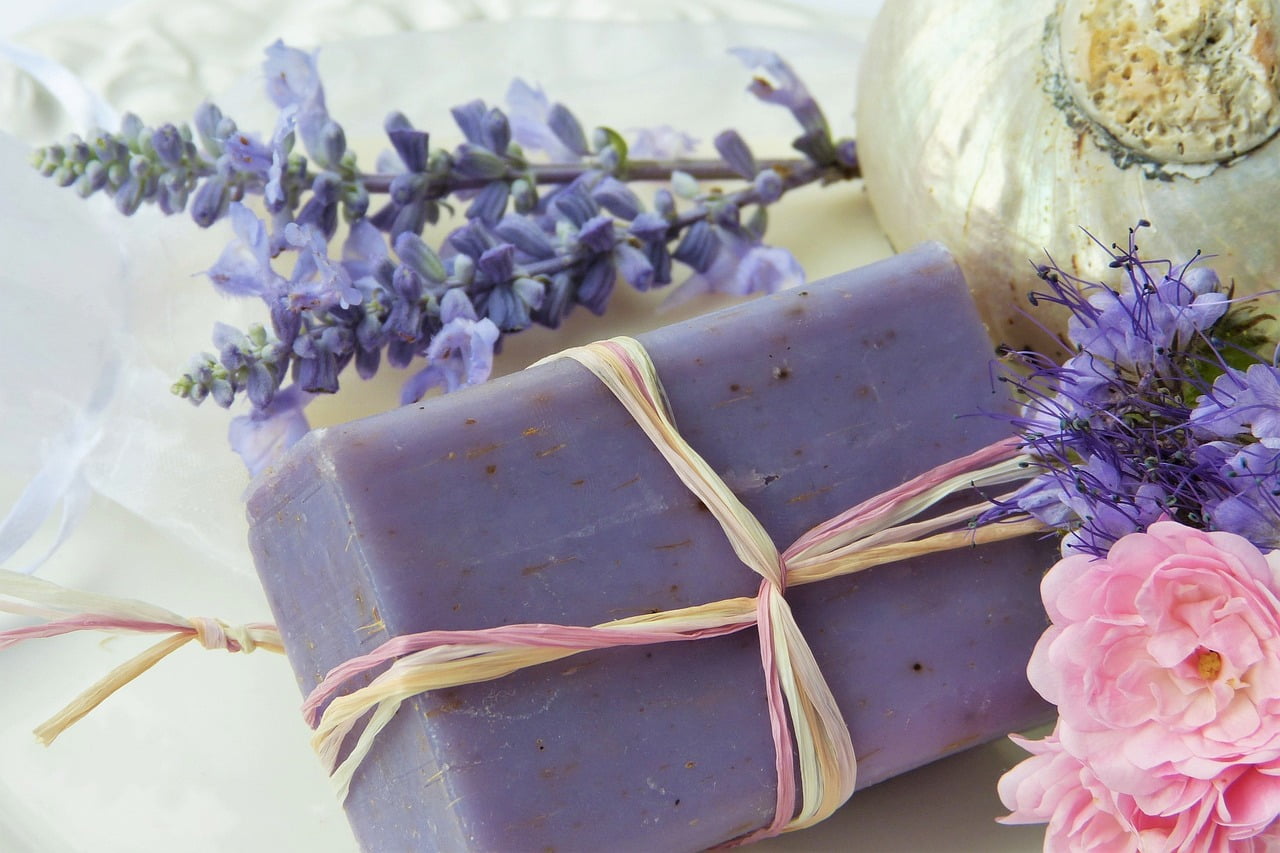
Soaps
Hand creams
Cake icing (the flowers add a lovely delicate flavour)
Tea infusions
Balms and salves
Lavender works really well in baking when the flowers, usually dried, are added to cake batter or even icing. They have a bright, light floral taste. Even adding lavender to oil when cooking chicken or roasted vegetables adds a unique aromatic twist to your cooking!
17. Lavender pests, diseases and their cures
Lavender is a super tough, easy-to-care-for shrub, even for a beginner gardener. However, there can be a few pests and diseases that can appear from time to time. Here’s a more detailed overview of the common pests and diseases of lavender plants, along with their solutions:
i) Lavender aphids (Aphis lavandulae)
These small, soft-bodied insects feed on the sap of lavender plants, especially new growth and flower buds. As they feed, they excrete honeydew, which can lead to the growth of sooty mould. Signs of aphid infestation include curled leaves, stunted growth, and distorted flowers. To control aphids, you can spray affected plants with a strong jet of water to dislodge them or use insecticidal soap or neem oil. Encouraging natural predators like ladybirds can also help keep aphid populations in check.
ii) Lavender leafhoppers (Empoasca spp.)
Leafhoppers are tiny, wedge-shaped insects that suck sap from lavender leaves, causing them to turn yellow or brown and curl up. They may also transmit diseases as they feed. Prune away heavily infested areas and use insecticidal soap or neem oil to control leafhoppers. Introducing beneficial insects like lacewings or predatory wasps can also help manage leafhopper populations.
iii) Lavender root rot (various fungi)
Root rot is a fungal disease that affects lavender plants when the soil remains consistently wet or poorly drained. The fungus infects the roots, causing them to rot and leading to symptoms such as wilting, yellowing leaves, and plant death. To prevent root rot, ensure lavender is planted in well-draining soil and avoid overwatering. Consider amending heavy clay soils with organic matter to improve drainage.
Downy mildew is a fungal disease that affects lavender plants, causing greyish-purple fuzzy growth on the underside of leaves. Infected leaves may turn yellow or brown and eventually drop from the plant. To prevent downy mildew, provide good air circulation around plants by spacing them appropriately and avoiding overcrowding. Water plants at the base to keep foliage dry, as moisture on leaves can promote the development of the disease. Fungicidal sprays may be necessary to control severe infections.
v) Lavender Fusarium wilt (Fusarium spp.)
Fusarium wilt is a soil-borne fungal disease that affects lavender plants, causing wilting, yellowing, and eventual death. The fungus infects the plant’s vascular system, disrupting water and nutrient transport. To prevent Fusarium wilt, avoid planting lavender in the soil where other susceptible plants have been affected by the disease. Practice crop rotation and avoid overwatering or waterlogged conditions, as the fungus thrives in moist environments. Don’t confuse this with nitrogen deficiency, which can also turn lavender leaves yellow. Nitrogen deficiency can be cured by a suitable plant feed.
Proper cultural practices, such as providing optimal growing conditions, prompt pruning and practising good garden hygiene, can also go a long way in preventing problems before they occur with lavender.
Your subscription could not be saved. Please try again.
Your subscription has been successful.
18. Frequently asked questions
When is the best time to prune lavender in the UK?
The best time to prune lavender in the UK is late summer, once the flowers have finished, ideally during August and no later than the second week of September. This gives the new growth that follows enough time to harden off before the first frosts. A light tidy-up prune in spring, once new green growth is clearly visible, can also remove any frost-damaged tips.
Can I prune lavender in spring?
Yes, a light spring prune is fine and often beneficial. Wait until you can clearly see new green growth emerging from the base of the stems before you cut anything. This growth tells you which stems are alive and which are dead. Remove frost-damaged tips back to just above the new green shoots. This is not a replacement for the main post-flowering prune in late summer but a useful tidy-up to start the season well.
Why is my lavender not flowering?
Poor flowering in lavender is almost always down to insufficient sunlight, overly rich or moisture-retentive soil, or a lack of annual pruning. Lavender that is shaded for more than half the day, fed with nitrogen-rich fertiliser, or left unpruned for several years will produce fewer and fewer flowers over time. Move it to a sunnier spot, stop feeding, and commit to an annual prune after flowering. Improvement should be noticeable within one season.
How do I stop lavender going woody?
Annual pruning is the single most effective way to slow the woodiness that develops in all lavender plants over time. Removing a third of the leafy green growth after flowering each year keeps the plant compact and encourages new green shoots to break lower down the stem. The longer you leave lavender unpruned, the faster it becomes woody and unproductive. Start from the plant’s second year onwards and prune consistently every season.
Should I deadhead lavender?
Yes, deadheading spent flower spikes throughout the summer encourages a second flush of flowers, particularly on varieties like ‘Hidcote Improved’. Snip the faded spikes off just above the foliage as soon as the flowers go over. This is separate from the main post-flowering prune and can be done as often as needed throughout the season.
Can I use hedge shears to prune lavender?
Yes, for a lavender hedge or a large number of plants, hedge shears are entirely appropriate and will give a neat, consistent finish far more quickly than secateurs alone. Use sharp, clean shears and work from one end of the hedge to the other in a smooth arc. For individual specimen plants, secateurs give you more precision and control over the final shape.
Ready to stop guessing and start designing with confidence? My Garden Design for Beginners online course takes you from blank canvas to brilliant layout, step by step.
I’m Lee Burkhill, award-winning garden designer and BBC1’s Garden Rescue presenter, and I’ve built this course around the same principles I use for every client garden — practical, honest, and designed to actually work in the real world.
In 20 hours of flexible online study you’ll cover:
Design principles that make any garden work
How to select and arrange plants like a professional
Styles and layouts to suit every size and shape of space
Video lessons, real-world case studies, quizzes, and a certificate on completion — all for just £199.
Enrol today and start designing your dream garden.
29
Garden Design Examples for Small Gardens: 30 Design Templates & Planting Plans
Garden Design Examples for Small Gardens: 30 Design Templates & Planting Plans: In this online gardening course, I’ll walk you through 30 fantastic garden designs, explaining the logic behind the layout, the plant choices, and take-home tips for applying them in your own garden.
Weekend Garden Makeover: A Crash Course in Design for Beginners
Learn how to transform and design your own garden with Lee Burkhills crash course in garden design. Over 5 hours Lee will teach you how to design your own dream garden. Featuring practical design examples, planting ideas and video guides. Learn how to design your garden in one weekend!
Garden Design for Beginners: Create Your Dream Garden in Just 4 Weeks
Garden Design for Beginners Online Course: If you want to make the career jump to becoming a garden designer or to learn how to design your own garden, this is the beginner course for you. Join me, Lee Burkhill, an award-winning garden designer, as I train you in the art of beautiful garden design.
Lavender is a classic staple of any cottage or sensory garden. Providing it has full sun and free-draining soil, lavender can be grown pretty much anywhere in the UK. Its heavy scent means that walking past it in your garden instantly brings a sense of calm and peace. Prune it every year after flowering in August, never cut into the old woody stems, choose an English variety for long-term reliability, and deadhead throughout summer for more flowers. Lavender is easy to grow and propagate, making it an excellent beginner gardening shrub. If your lavender is struggling rather than thriving, take a look at my complete lavender rescue guide.
Your subscription could not be saved. Please try again.
Your subscription has been successful.
Lee Burkhill
Lee Burkhill, known as the Garden Ninja, is an award-winning garden designer and horticulturist with over 30 years of gardening experience and 15 years as a professional garden designer. A qualified RHS (Royal Horticultural Society) professional, Lee specialises in sustainable garden design and practical horticultural advice. He designs and presents on BBC1’s Garden Rescue and in leading gardening publications. Lee combines three decades of hands-on gardening knowledge with professional design qualifications to help gardeners create beautiful, functional outdoor spaces.