For the garden you’ve already got, not the one you’re starting from scratch. Seven checklists and video lessons from BBC Garden Rescue’s Lee Burkhill, built to help you work out what’s worth keeping before you spend a penny.
69


When it comes to gardening in the United Kingdom, we often find ourselves battling unpredictable weather, with rain being a common occurrence. Coupled with the fact that most newly built gardens and plots come with heavy moisture-retentive, claggy clay soil, choosing wet soil plants can be a nightmare for gardeners. Sometimes, it’s a case of finding the best wet soil plant for your garden borders, which can be daunting for new gardeners.
Rather than fighting the boggy elements, why not embrace them by cultivating plants that thrive in wet soil? This approach makes for low-maintenance gardening by working with the soil conditions you have and helps support local wildlife.
In over 30 years of gardening and 15 years as a professional garden designer appearing on BBC1’s Garden Rescue, one of the most common conversations I have with clients is about waterlogged soil. The great news is that some of the most spectacular, dramatic plants on the planet positively thrive in conditions that would kill most ordinary garden plants stone dead.
In this article, Ninjas, we’ll explore fifteen plants that love wet soil and can add beauty and resilience to your garden. So grab yourself a brew from the dryness of your sofa, and let’s talk all things bog plant!
This page contains affiliate links for products I use and love. If you make a purchase after clicking one of these links, I may earn a small commission, which helps keep the Garden Ninja blog free for everyone. The products I recommend are ones I have used personally, and I only suggest things I genuinely believe in.
Let’s start off with a firework of a wet soil plant, the Ligularia genus. These are a real hidden gem of the bog or wet garden. Ligularia have striking serrated leaves, and some species have a dark purple or bronze underside, which in themselves are worth adding this plant to your collection! However, Ligularia also has another secret: egg yolk yellow spires of bright flowers mid-summer.
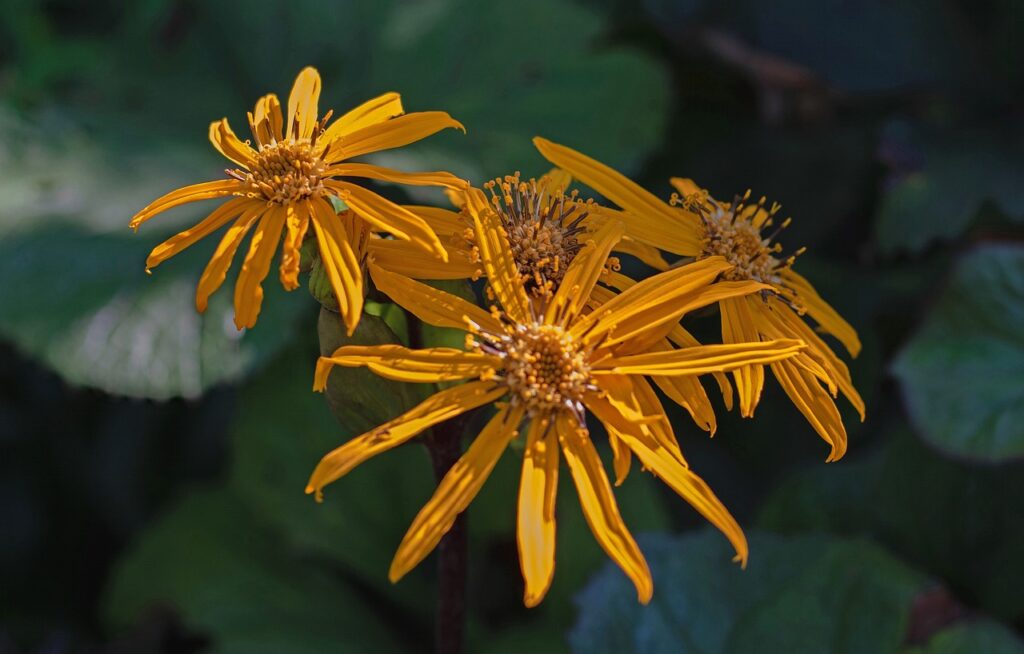
Try Ligularia przewalskii for full sun spots or Ligularia dentata for its waxy round leaf shape that looks a bit like a cartoon ear! The cultivar ‘Othello’ is a particular favourite of mine from my garden design work, with its deep mahogany purple leaf undersides creating genuine drama in damp borders.
What makes Ligularia so invaluable for wet gardens is its dual-season interest: those oversized, architectural leaves provide bold structure from the moment they emerge in spring, before the tall, branching flower spires take over in late July and August. They will add real wow to your garden even when not in flower, and that is something I always look for when specifying plants for clients on BBC Garden Rescue. A plant has to earn its space in every season to justify a place in a well-designed garden.
🛒 Buy Ligularia dentata on Amazon UK
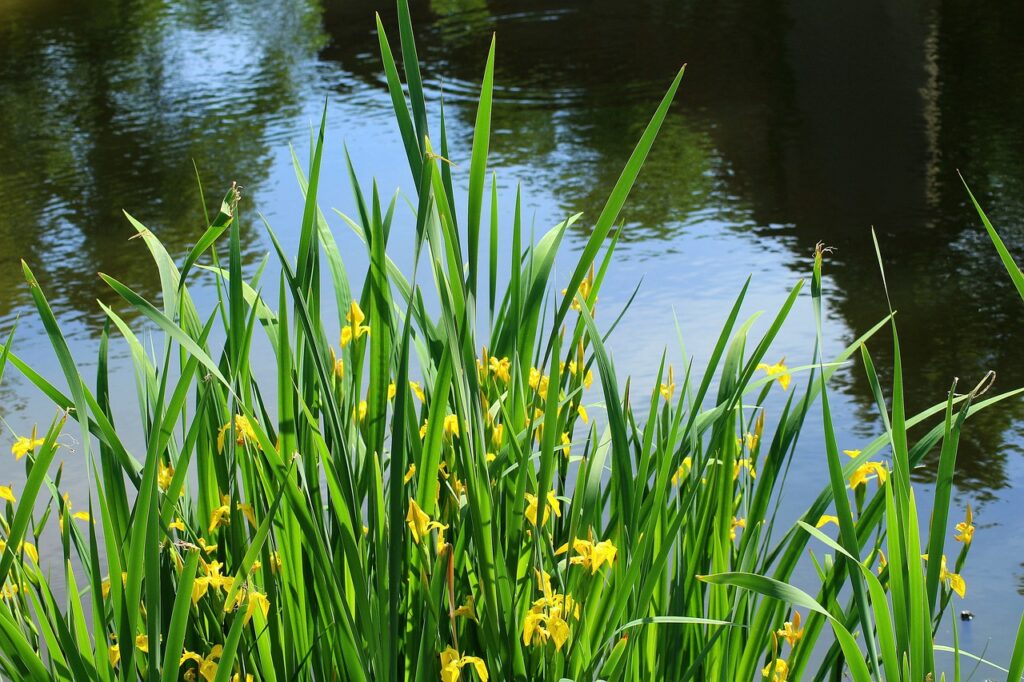
Iris pseudacorus, or the Yellow Flag Iris, is a beacon of cheerfulness in the world of botanical beauty. Its vibrant, sunny yellow flowers, reminiscent of fluttering flags, have been captivating gardeners and nature enthusiasts for centuries. This plant, native to Europe and Asia, has a fascinating history that adds to its charm.
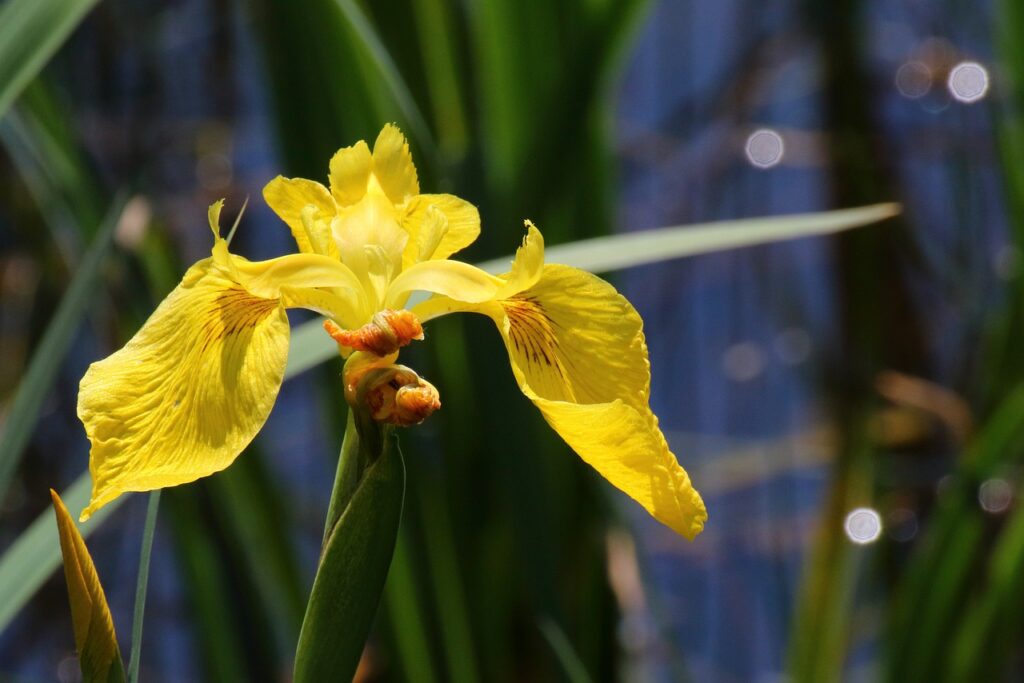
Yellow Flag Iris has been a cherished species for its aesthetic appeal and versatility. Historically, it was used as a medicinal plant in traditional herbal remedies, showcasing its practical significance. The name “pseudacorus” is derived from the Greek word “pseudo,” meaning “false,” which hints at its similarity to true aquatic irises.
Its resilience and adaptability are also remarkable. Yellow Flag Iris thrives in a variety of wetland environments, from shallow waters to marshy soils, making it a perfect choice for water gardens, pond margins, and damp areas.
The plant’s sword-like leaves, in addition to its sunny blooms, create a visual spectacle that brings life to these watery landscapes. From a design perspective, those tall, strap-like leaves are incredibly useful for providing strong vertical interest at pond margins and alongside water features, cutting through the rounded forms of other bog plants with real architectural authority. I have used this iris in numerous BBC Garden Rescue designs where clients have a naturally wet corner that needs transforming rather than avoiding.
Did you also know that Harris Tweed, the thick wool fabric from Scotland, used to be dyed with both Iris root and Bog Myrtle to get the distinctive yellow colouration? Fascinating!
🛒 Buy Iris pseudacorus on Amazon UK
Who says bog plants need to be foliage-heavy and lacking in flowers? Not Purple Loosestrife, that’s for sure, with its vibrant purple flowers. The purple spikes of Purple Loosestrife brighten up any wetland garden or boggy conditions. Loved by pollinators, this plant is a great choice for creating a natural wildlife habitat.
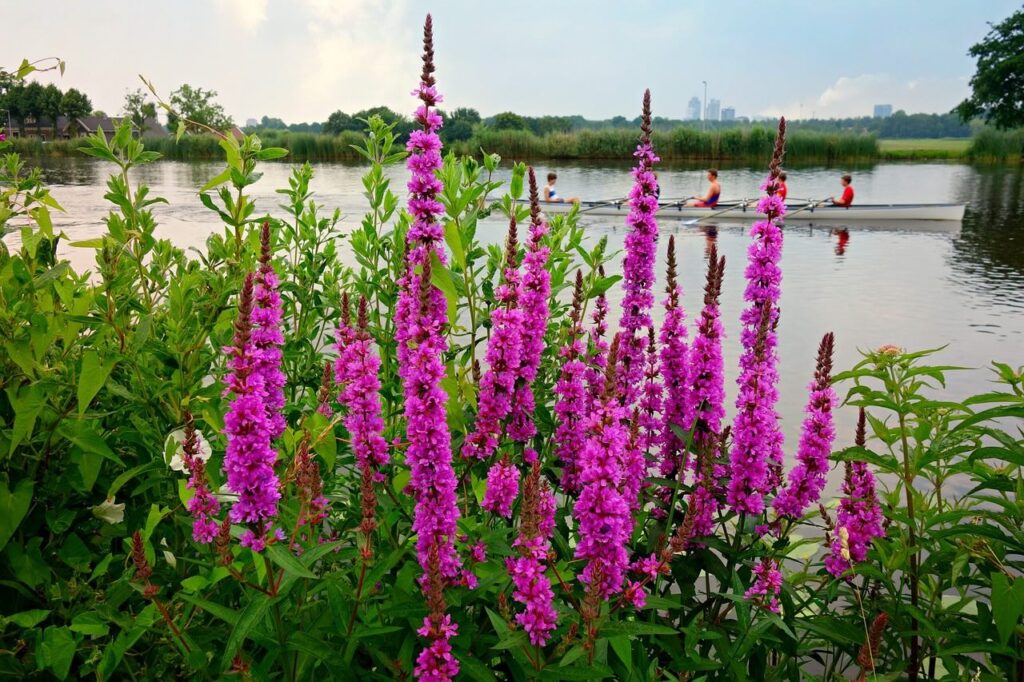
It flowers between June and August, offering vital pollen for insects and bees. In particular, long-tongued (also known as the proboscis) insects such as red-tailed bumblebees, brimstone butterflies and elephant hawk-moths. When you see a stand of Purple Loosestrife in full bloom on a warm July afternoon, with bumblebees practically queuing up to visit it, you quickly understand why this plant has its fans.
The tall candle-like flower spikes create brilliant vertical drama against the waterside, and the magenta-purple colouring is genuinely difficult to replicate with any other bog-tolerant plant.
However, it’s important to note that Purple Loosestrife is considered invasive in many areas, as it can outcompete native plants and disrupt local ecosystems. As a result, it is subject to control measures in certain regions to prevent its spread. Gardeners and conservationists should exercise caution when planting Purple Loosestrife and consider native alternatives to support local biodiversity.
🛒 Buy Lythrum salicaria on Amazon UK
Fancy a bog garden plant with real impact? If you have the space, Giant’s Rhubarb or Gunnera manicata is the one for you!
It is known for its immense size, with leaves that can reach up to 10 feet (3 metres) in diameter, making it one of the largest-leaved plants in the world. The leaves are deeply lobed and resemble those of rhubarb, which has earned it the “Giant Rhubarb” nickname. Have a look below at how big it can get once mature!

Gunnera manicata is typically found in wet, boggy areas or near water, and it thrives in consistently moist, well-draining soil. The plant is characterised by its large, umbrella-like leaves that provide ample shade and shelter for smaller plants and wildlife.
In the spring and summer, long spikes adorned with tiny, greenish-red flowers emerge from the centre of the plant, creating a unique and exotic appearance. That photograph above is genuinely me sheltering under one of these plants in a client’s garden during filming, which should give you a very real sense of the scale you are dealing with!
While Gunnera manicata is an impressive addition to a garden, it’s important to note that it requires substantial space due to its massive size! Additionally, it prefers a temperate climate and protection from harsh winter frosts. This is why I always advise you to cut down the massive leaves and then layer them back on top of the Gunnera crown (the bit emerging just above the soil) to help protect it from harsh frosts.
🛒 Buy Gunnera manicata on Amazon UK
If you need something a bit smaller for your bog garden or wet soil, why not introduce the moisture-loving Caltha palustris? The cheerful yellow flowers of the Marsh Marigold are a sure sign that spring has arrived.
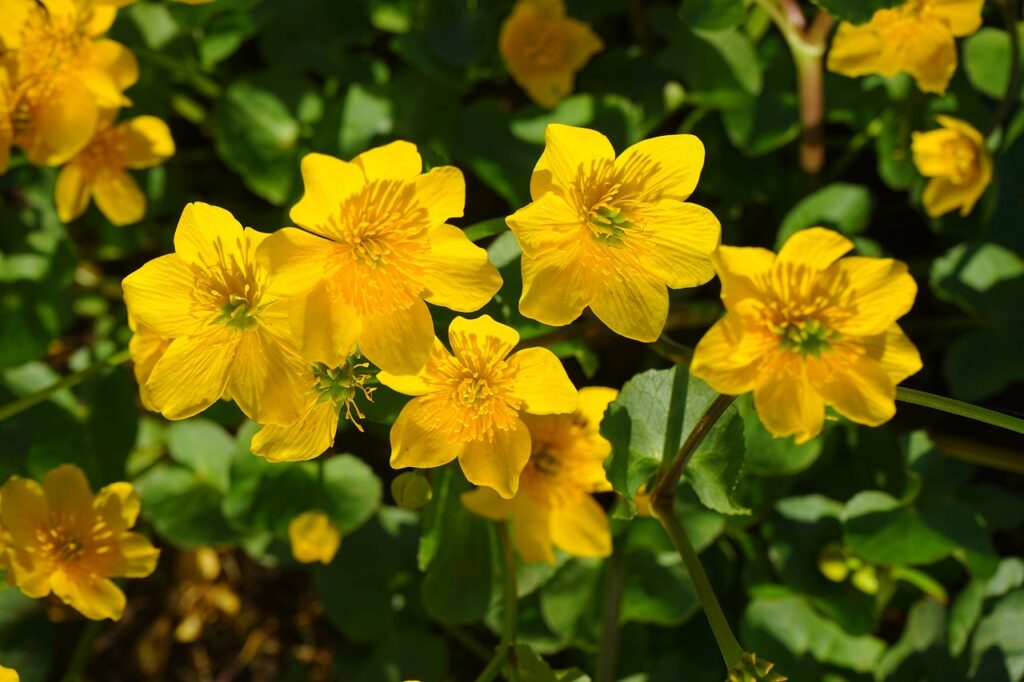
They thrive in wet areas and bring a burst of colour to waterlogged spots. Kingcup is its common name, and this plant is a great addition to the edges of ponds, boggy ditches or marshes. It’s no surprise that the Marsh Marigold is a relative of the buttercup. It needs rich, acidic soil or planted as a marginal in a pond where fish waste can provide optimal conditions for this to grow.
For early pollinators emerging on warm March and April days, Caltha palustris is one of the most important plants you can grow. Those glossy buttercup-yellow flowers appear when most other bog plants are just beginning to emerge from winter dormancy, providing a vital early nectar source for queen bumblebees and early-flying beetles.
You won’t need many of these as they spread incredibly quickly! Best of all, they are perennial and come back year after year.
🛒 Buy Caltha palustris on Amazon UK
Pond lovers should be excited to introduce this blue-flowering petite plant. The Water Forget-Me-Not works wonders in back garden ponds and water features as a marginal plant. Its sky-blue blossoms create a pop of colour to damp ground, especially if partnered up with the biennial out-of-water forget-me-not, Myosotis, in adjacent flower beds!
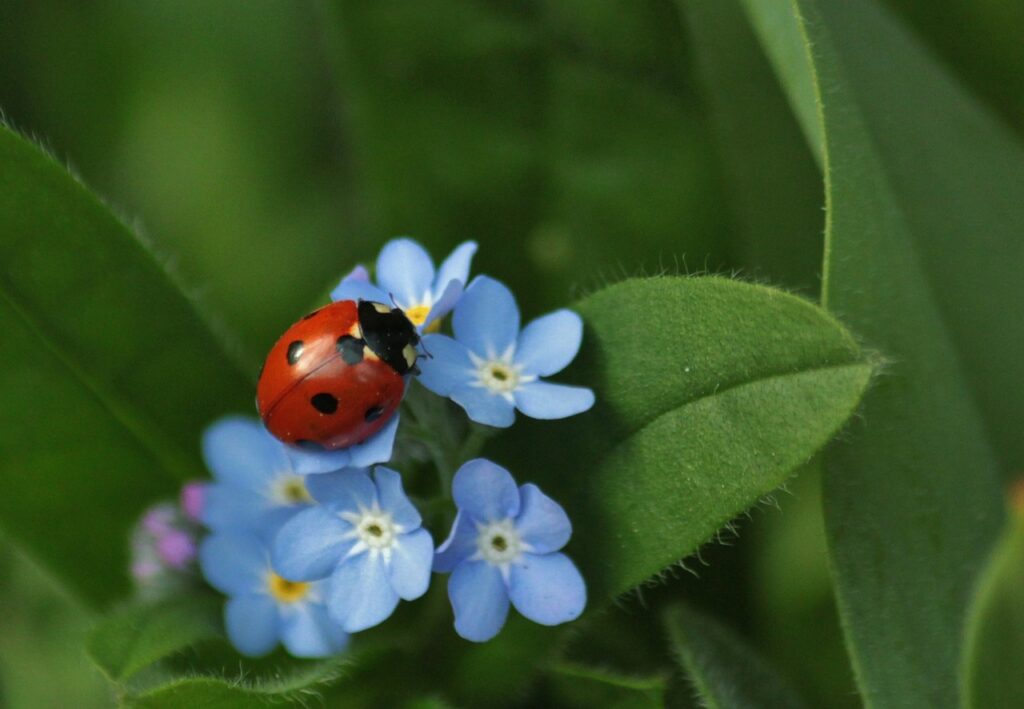
Nicknamed the ‘scorpion plant’ due to the way the flowers grow on stems curling up and inwards, it brings some much-needed colour during summer. As long as its roots are kept permanently damp, it will thrive on neglect! It makes a cute specimen for a ‘pond in a pot’ or a small ‘container pond’.
From a design standpoint, the delicate sky-blue flowers soften the harder edges of pond liners and create a seamless visual transition between water and land that always looks completely natural. I often recommend it for wildlife ponds specifically because newts and frogs love to shelter amongst its trailing stems in the shallow margins.
🛒 Buy Myosotis scorpioides on Amazon UK
Candelabra primulas are known for their striking tiered clusters of brightly coloured flowers that look like a candelabra in their shape. So, if you want to bring the unusual to your bog garden in spring, this little evergreen beauty shouldn’t be overlooked. They work well when planted near our native Primula vulgaris, which has a waxy ribbed evergreen leaf that complements the deciduous Candelabra primula beautifully.
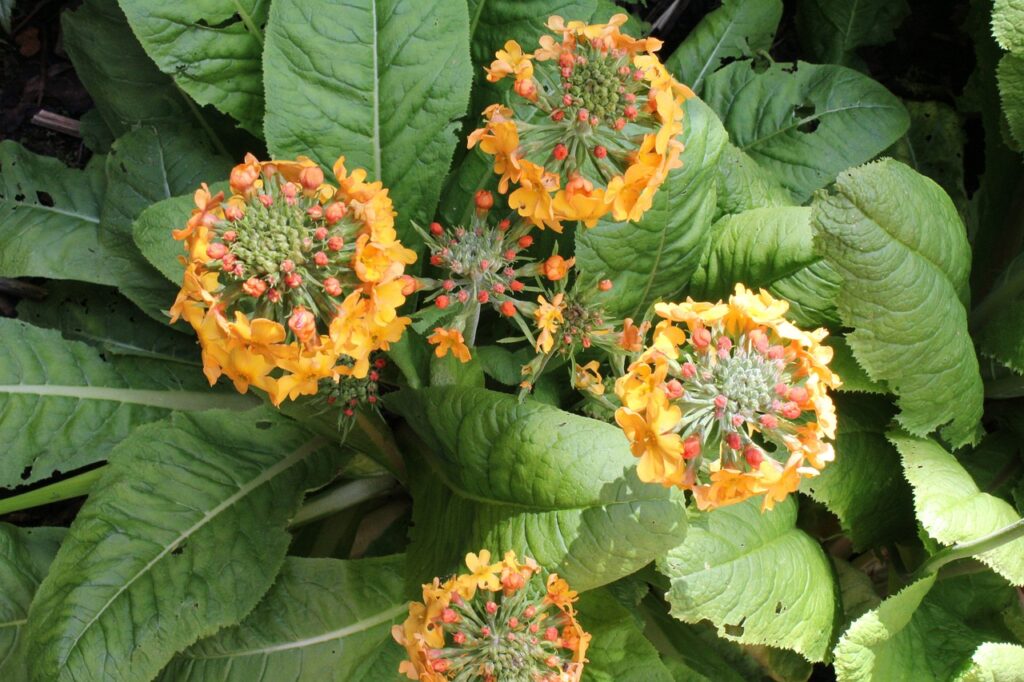
Primula bulleyana will also grow in relatively drier soils than just bog gardens as long as they don’t dry out. In my experience, they are pretty tolerant of moist to waterlogged soil types. They thrive in boggy conditions, making them an exceptional choice for wet gardens. They also work really well in container gardens or alpine arrangements in tufa pots.
The range of candelabra primulas available has expanded enormously in recent years, with hot oranges, deep crimsons and soft lilac-pinks all available. Planting a mixed group of five or seven in a boggy spot in partial shade creates a stunningly natural display that always prompts questions from visitors. One of the most photographed combinations I ever created on Garden Rescue was a drift of mixed candelabra primulas alongside Astilbe at the edge of a shaded bog garden. The effect was absolutely magical.
🛒 Buy Candelabra Primula on Amazon UK
Rodgersia is an interesting herbaceous perennial that loves damp roots due to the fact its leaves are so unusual and coarse! Their flowers fire up on 50cm long panicles that bring height to any damp garden border in the summer. The bronze-tinged pinnate leaves are pretty huge, too, at 20cm across. I consider them a smaller version of Gunnera for pocket gardens. Flowers are tiny and attract wildlife, but it’s more the leaves that attract attention!
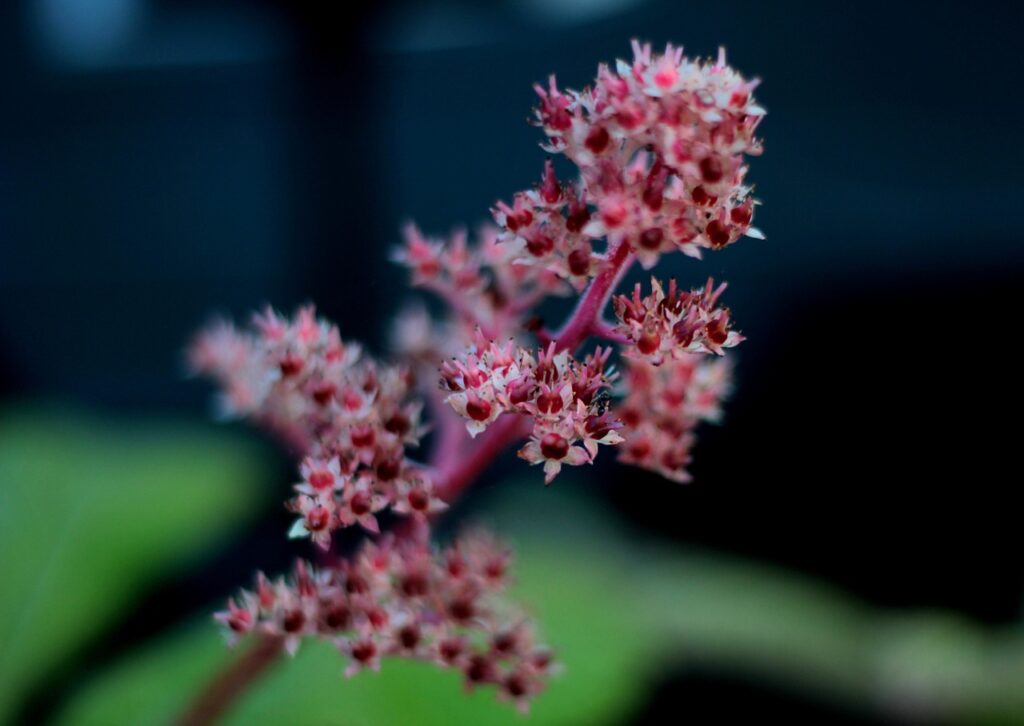
Rodgersia is great for shaded gardens where the soil is poor draining. What may surprise you is they won’t tolerate heavy clay, so sandy soil which frequently gets waterlogged is best. Soil that is adjacent to a stream, soakaway or leaking gutter is the best position. But once you’ve found a suitable spot they are absolutely worthwhile!
The cultivar ‘Superba’ is my personal recommendation, with particularly rich bronze-tinged foliage in spring that gradually deepens to a dark green by midsummer, giving you two entirely different visual effects from the same plant across a single growing season.
🛒 Buy Rodgersia pinnata on Amazon UK
Astilbes may not spring to mind when thinking of bog gardens as they are usually sold in garden centres with the dreaded ‘full sun or partial shade, any soil‘ label. Due to these misleading plant labels, Astilbes are often seen struggling across the country’s gardens in full sun and free-draining soil (leading to a slow death!). But would you believe that this plant, native to Asia, particularly regions in China, Japan, and Korea, is a damp or wet soil-loving specimen?
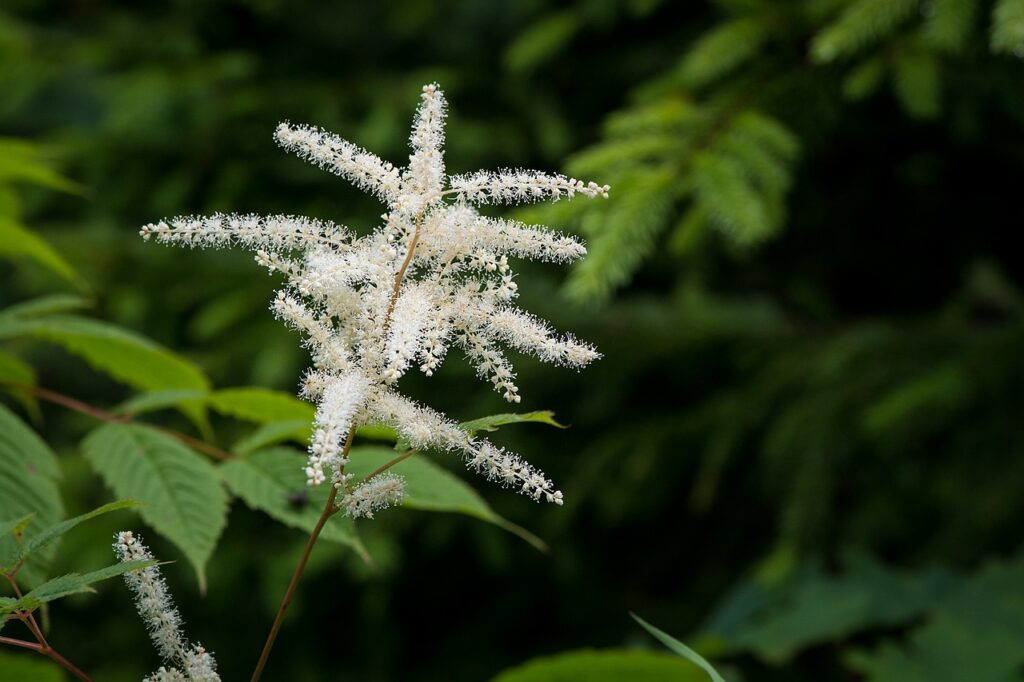
Astilbes grow naturally in the moist woodlands and along the banks of streams and rivers. Their love for consistently damp soil and shaded environments is a testament to their origins. Their tall plumes of feathery foliage will add a pop of colour to any dappled or shady damp spot. Their leaves have fern-like foliage, which blends beautifully in woodland schemes.
Ensure they have rich soil full of either leaf mould or organic matter for them to spread and flaunt their flowers each year! The range of flower colours now available is extraordinary, from deep crimson and hot pink through to soft lilac, white and cream, which means you can create sophisticated colour-themed planting schemes entirely from Astilbes in different varieties, all in the same boggy conditions.
🛒 Buy Astilbe plants on Amazon UK
Bog Bean, also known as Menyanthes trifoliata, is like a charming water-dwelling friend for your garden. This aquatic plant is a real eye-catcher, with elegant white flowers that resemble shooting stars. It’s a bit of a showstopper, thriving in wet areas like pond margins and waterlogged soil.
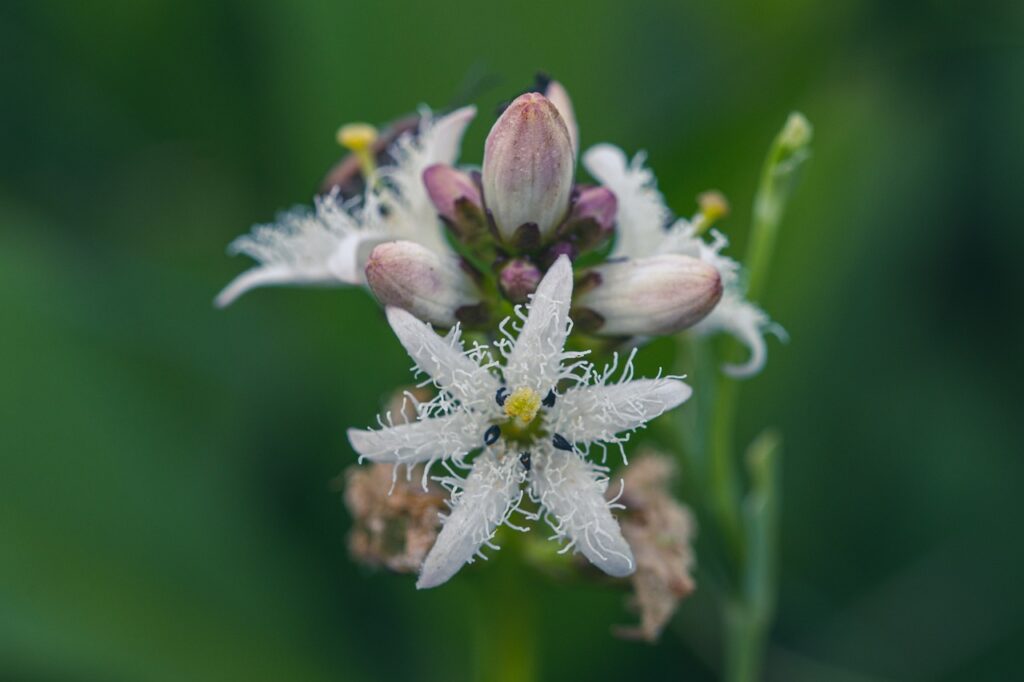
But it’s not just a looker; it’s a favourite of bees, adding a little extra buzz to your garden. With its delicate beauty and appeal to pollinators, Bog Bean is a delightful addition to any water feature or damp corner of your outdoor space.
Look closely at the individual flowers and you will find they are truly extraordinary, with their fringed, almost feathery white petals that give the entire plant a fairytale quality unlike anything else you can grow at a pond margin. This is a proper native British wildflower that was once found across wetlands throughout the UK, and growing it is a small but genuinely meaningful contribution to supporting the species in cultivation.
🛒 Buy Menyanthes trifoliata on Amazon UK
Mentha aquatica, or Water Mint, is like a burst of fresh air in your garden! This cheery herbaceous perennial not only adds a delightful touch of vibrant green to your outdoor space but also releases a refreshing, minty aroma when you brush against its foliage.
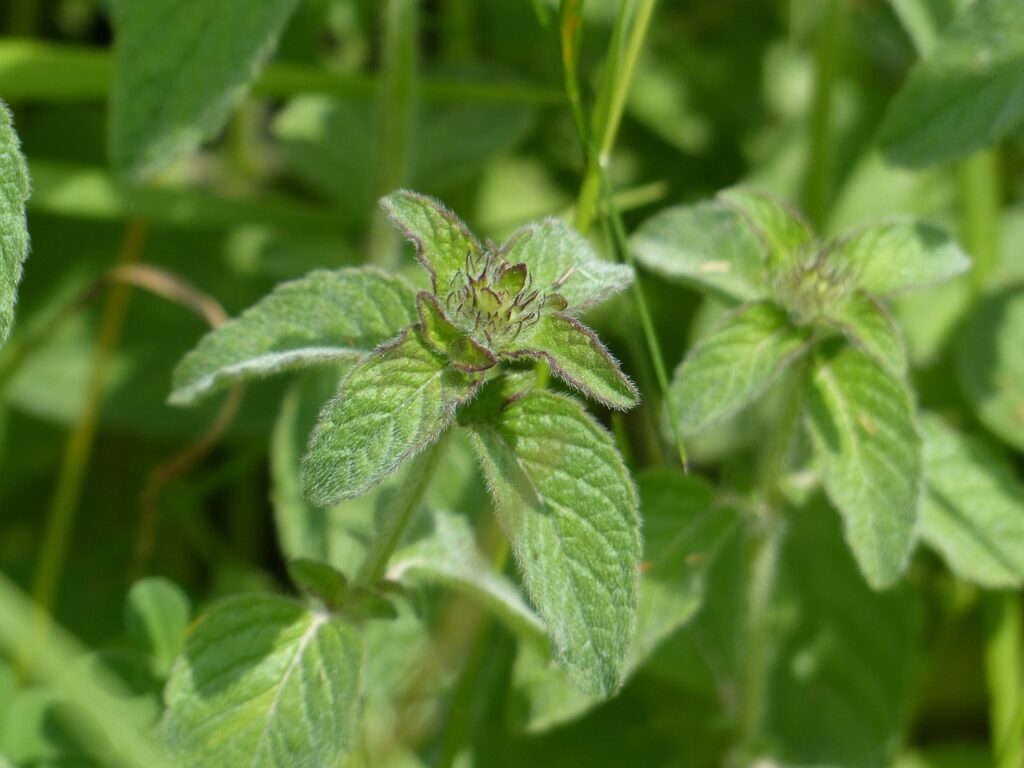
Water Mint is a favourite hangout for bees and other pollinators when it flowers in late summer, making your garden buzz with life. Whether you have a pond, stream, or a damp area that could use a little pep, Water Mint is here to liven things up.
It’s also worth knowing that Water Mint was used medicinally for centuries and is the ancestor of many of our modern culinary mints, having been extensively cultivated by ancient Romans who brought it to Britain nearly two thousand years ago. That historical connection adds an extra layer of interest to what is already a seriously useful and attractive plant.
The key with Water Mint is to contain it. Like all mint plants, it has a habit of running and spreading like wildfire. So ensure it is grown in a container pond or, if planted out in a pond, placed in a basket first.
🛒 Buy Mentha aquatica on Amazon UK
The Ragged Robin is an attractive herbaceous perennial that thrives in damp meadows and wetlands. Its pink or white, ragged-looking petals give it a distinct fringed or ragged flower appearance. I grow it here at Garden Ninja HQ in wet borders and my meadow and it’s a fabulous plant!
This wildflower’s whimsical appearance conceals its ecological significance as a vital food source for pollinators, particularly butterflies and bees. Its name is derived from the old English word “rybban,” meaning to divide or tear, referencing the deeply divided petals that give it a ragged or fringed appearance.
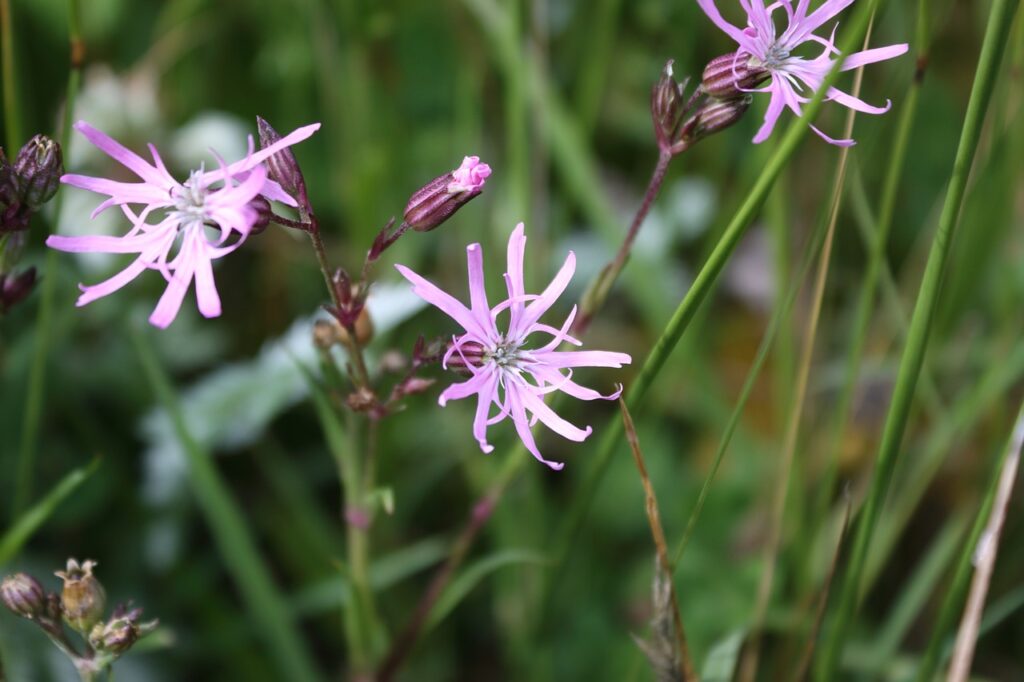
Ragged Robin is well-suited to wetter environments, thriving in damp meadows, marshes, and along riverbanks. Its captivating blooms bring an air of enchantment to these spaces and support local wildlife, making it a symbol of the delicate balance and beauty of natural ecosystems.
As a garden addition or a wild treasure, Ragged Robin reminds us that even the most unassuming plants can hold a world of wonder and play a crucial role in sustaining our natural world. Ragged Robin has declined significantly in the wild in the UK due to the draining of wetland habitats over the past century, making growing it in gardens genuinely important from both a conservation and a purely aesthetic perspective. So if you can, do try to incorporate it in your gardens, Ninjas!
🛒 Buy Lychnis flos-cuculi on Amazon UK
Who doesn’t love a cute, cheery flower in the garden? Well, the Geum is one of the cutest for wet soil. The Water Avens adds a touch of elegance to wet soils with its nodding, bell-shaped flowers. It attracts butterflies and bees, making it a pollinator-friendly choice for a small damp spot. Easy to grow and slow to spread, this delicate number is a real fairy tale beauty in the garden.
Its dainty, rich pink and peachy-coloured blooms add a pop of colour to damp, wet soils, like a floral celebration in the mud.
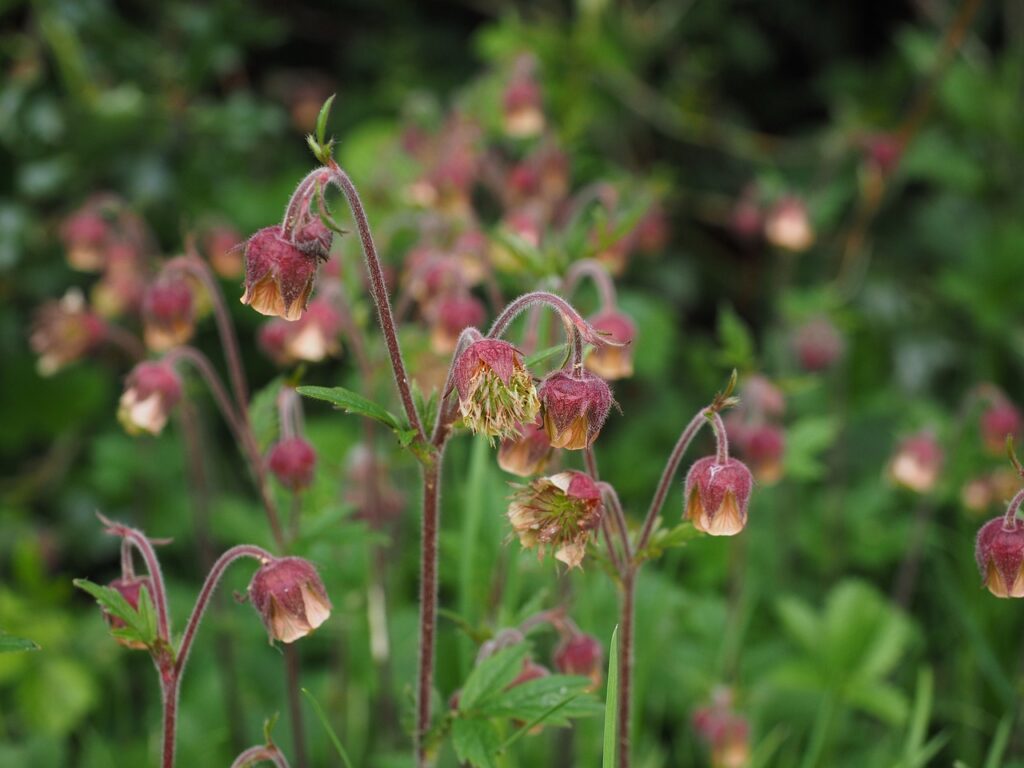
But here’s the thing: Water Avens isn’t just a pretty face. It’s like a good friend, offering a helping hand to your garden by preventing soil erosion. With its distinctive appearance and environmental prowess, this charming plant transforms soggy spots into vibrant, eco-friendly playgrounds.
Unlike many of its ornamental Geum cousins which are bred purely for large showy blooms, Geum rivale retains the quiet, understated elegance of a true British wildflower, which is why it sits so naturally in naturalistic planting schemes alongside Marsh Marigold, Ragged Robin and Water Forget-Me-Not.
🛒 Buy Geum rivale on Amazon UK
Who says bog plants need to be foliage-heavy and dark green? What about an ornamental grass to add to the mix?
Purple Moor Grass, or Molinia caerulea, is like the garden’s dancer, swaying gracefully in the breeze. With its feathery seed heads and slender stems, it brings a touch of elegance to your landscape. This ornamental grass is a purple-hued showstopper, perfect for planting near ponds and water’s edge. What really sets Molinia apart from other ornamental grasses is its extraordinary autumn transformation, when the entire plant turns a glowing golden yellow before the stems catch the low autumn light like burnished copper wire.
I regularly use it in my professional garden design work specifically for this seasonal interest value, and it has appeared in several of my BBC Garden Rescue designs for clients with naturally damp or boggy areas.
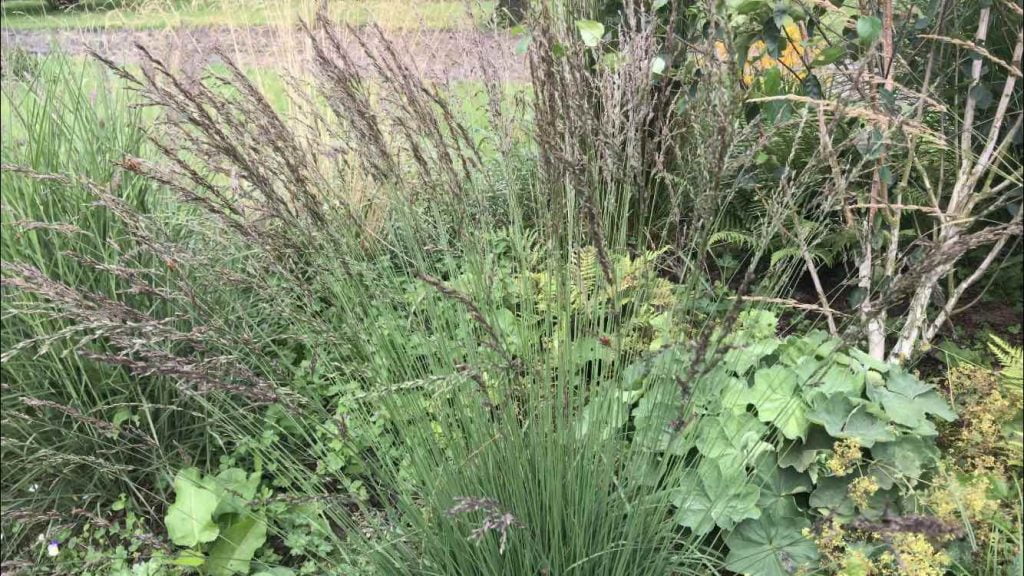
I use this throughout my garden designs because it will also tolerate drier soils, making this grass a great choice no matter what the soil type or sunlight levels in your garden! It self seeds everywhere, so you’ll soon end up with free Molinia plants popping up all over the place!
🛒 Buy Molinia caerulea on Amazon UK
Watercress, often found in streams and slow-flowing water, is not only a delightful addition to salads but also an attractive plant for wet areas in the garden. It can be grown in shallow, running water or boggy soil.
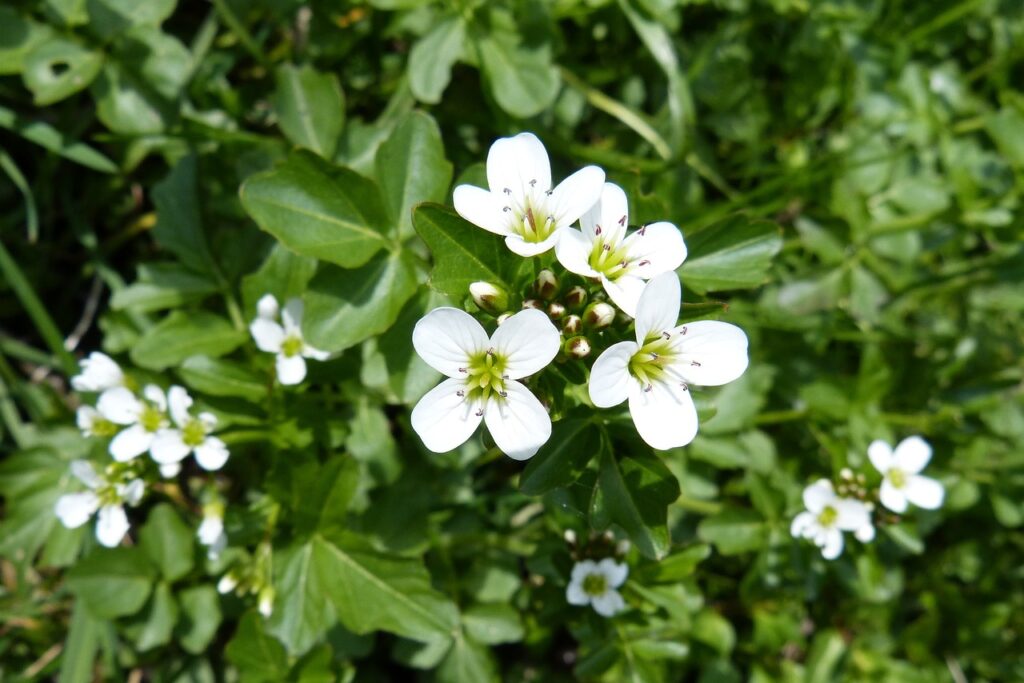
Begin by finding a spot that receives dappled sunlight or partial shade. While watercress thrives in aquatic conditions, you can cultivate it in consistently moist soil or even in containers placed in a shallow dish of water. Prepare the soil by ensuring it’s rich in organic matter and well-draining. Sow watercress seeds directly or transplant seedlings, leaving about 15 to 20cm of space between plants.
Regularly water your watercress to keep the soil consistently moist. Harvest by cutting the leaves as needed, which are best enjoyed in salads and sandwiches. Watercress is one of our most nutrient-dense native edible plants, packed with vitamins C and K along with iron and calcium, which makes it both a beautiful and genuinely useful addition to a wet garden.
Keep the water fresh by replacing it every couple of weeks with rainwater, and your watercress will keep producing!
🛒 Buy Watercress seeds on Amazon UK
Working with the soil you have rather than trying to replace it is a far more ecological approach to gardening. It’s like having a secret weapon that lets you embrace the unique qualities of your garden’s natural conditions. Wet-loving plants not only make gardening easier by reducing the need for constant watering but also contribute to the health of your local ecosystem.
By choosing the right plants for your wet soil, you create a mini-habitat where native wildlife can flourish, from pollinators to amphibians. All because the original conditions support this! Let’s take a look at a few more benefits of embracing wet-loving plants in your moisture-retentive garden soil.
By choosing plants that thrive in wet soil, you create a diverse and thriving ecosystem in your garden, attracting a variety of insects and wildlife. You’re working in balance rather than working against the conditions that your garden favours. A well-planted bog garden can support dozens of invertebrate species, several amphibian species and a remarkable range of visiting birds, turning what might otherwise feel like a gardening problem into one of the most ecologically valuable features in the entire plot.
Wet-loving plants are often well adapted to local conditions and require minimal care once established. Especially in terms of watering! Once a bog garden is planted up with the right species for the specific moisture levels and light conditions present, the plants largely manage themselves through the growing season, leaving you with a genuinely low-effort planting scheme that looks spectacular from spring to autumn.
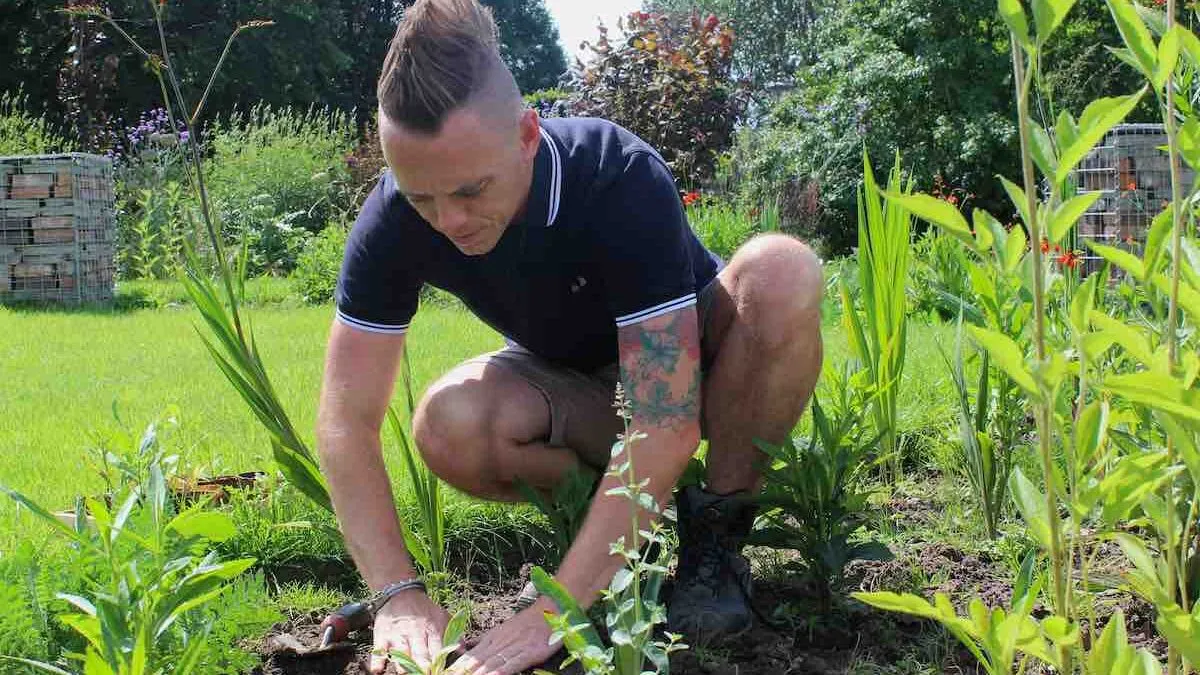
Planting these species can help prevent soil erosion in waterlogged areas. Their roots can help bind riverbanks, and they filter out particulates, improving water quality. Bog plants feed on excess nitrogen in the water, helping provide a balance for other aquatic life forms. This natural filtration function is one reason why reinstating bog garden planting along stream edges is actively recommended by the Environment Agency as part of natural flood management schemes.
The unique and colourful appearance of these plants can enhance the visual appeal of your garden, especially as many of them look so unusual compared to the usual garden planting schemes. The combination of bold architectural foliage, vivid flowers and graceful grasses that is possible in a well-designed bog garden is genuinely hard to replicate in any other planting context. So go for it!
Even with the best intentions and the right plant choices, bog gardens can sometimes present challenges. After 30 years of working with wet soils in my own garden and in client gardens across the UK, I’ve encountered most of the common problems and found practical solutions to all of them. Here are the issues I get asked about most frequently.
The most common cause of bog plant failure is not too little water but too much, combined with a lack of drainage. Bog plants need consistently moist soil, not permanently waterlogged or flooded conditions. There is a critical difference between the two. If water is pooling on the surface for days after heavy rain and not draining at all, the roots of even tolerant plants will eventually suffocate due to a lack of oxygen in the soil. The solution is to ensure your bog area has some drainage by piercing any liner with a fork at 30cm intervals and incorporating grit into the planting area. Plants like Rodgersia are particularly intolerant of truly waterlogged clay; always check the specific moisture tolerance of each plant before positioning it.
This is usually a question of plant selection rather than maintenance. Many bog garden plants are big, vigorous growers that will overwhelm smaller or less vigorous companions if not managed thoughtfully from the outset. Gunnera, Lythrum and Iris pseudacorus are particularly thuggish neighbours. The key is to give each plant adequate space when planting, which often means the garden looks sparse in the first year or two. Resist the temptation to cram plants in. In subsequent years, divide overcrowded clumps in spring and replant them with proper spacing, or pass them on to other gardeners. An autumn cutback of dead stems combined with a mulch of well-rotted leaf mould will keep things tidy and feed the soil beautifully for the following season.
Wet, nutrient-rich soil is exactly the conditions that thuggish weeds like rosebay willowherb, common reed and nettles absolutely love, so a degree of weeding is unavoidable. The best approach is to plant densely with your chosen bog plants so that the canopy closes quickly and shades out weed seedlings before they get established. Ground-covering plants like Caltha palustris, Myosotis scorpioides and Geum rivale are particularly effective at suppressing weeds at the front of a bog border. Avoid using weedkiller near water as even small amounts can have devastating effects on aquatic life. Hand weeding in winter, when the ground is softer and bog plants are dormant, is by far the most effective and ecologically safe approach.
Gunnera manicata is rated H4 on the RHS hardiness scale, meaning it is borderline hardy in the UK and can be killed outright by a sustained hard frost, particularly if the crown is left unprotected. If yours has failed to reappear by May, probe the crown gently with a finger. If it feels mushy and smells unpleasant, unfortunately the frost has won and the plant is gone. To prevent this in future, always fold the cut leaves back over the crown in November as described in the plant section above. In very exposed gardens or in Scotland and the north of England, a layer of horticultural fleece or straw secured over the crown gives additional protection. Starting with a plant grown from seed or division rather than buying a very large specimen can also help, as younger, smaller plants often develop greater cold tolerance over their first winter than expensive mature specimens.
These are the questions I’m most often asked about bog gardens and wet soil planting, both through the Garden Ninja forum and by viewers of BBC Garden Rescue. Hopefully, the answers below cover everything you need to get started with confidence.
A pond is a body of open standing water, whereas a bog garden is a patch of permanently moist or waterlogged soil in which plants root into the earth rather than floating in water. Bog plants need consistently wet soil but they do not grow directly in open water the way true aquatic plants such as water lilies do. Many of the best bog gardens are created at the margins of a pond, where the ground is naturally damp, but you can create a bog garden entirely without a pond by lining a shallow excavation with a punctured liner to retain moisture. The key principle is that bog plants want wet feet but they also need some drainage and oxygen around their roots to thrive long term.
Spring is unquestionably the best time to plant bog garden plants in the UK, ideally between March and May once the soil has begun to warm up but before the main growing season is fully underway. This gives plants the maximum growing season to establish their root systems before the following winter. That said, container-grown bog plants can technically be planted at any time of year as long as the ground is not frozen solid. Autumn planting (September to October) is also viable for most hardy species and has the advantage of allowing plants to establish during the cooler, damper months without the stress of summer heat. Avoid planting during hard frosts or in mid-summer heat.
Absolutely, and some of the most charming bog gardens I’ve ever designed have been in very modest spaces. A bog garden can be as small as a single large container, a half barrel or a raised bed with a liner, planted up with smaller species like Water Forget-Me-Not, Water Avens, Marsh Marigold and Ragged Robin. The key for small spaces is to avoid the large architectural giants like Gunnera and Yellow Flag Iris, which will simply overwhelm a confined planting. Stick to plants that reach no more than 60 to 75cm and choose species that are known to be clump-forming rather than running spreaders. Even a small bog feature will attract damselflies, frogs and bees within the first season.
Most bog garden plants are vigorous, naturally fertile-soil-loving species that do not need additional feeding once established in good, humus-rich soil. In fact, over-feeding bog plants with nitrogen-rich fertiliser is one of the fastest ways to create a weedy, out-of-control planting as the more vigorous species simply run riot. The best approach is to prepare the soil thoroughly before planting by incorporating generous quantities of well-rotted garden compost or leaf mould, and then to apply a mulch of the same material each autumn. This feeds the soil biology and the plants gently and naturally throughout the following season, replicating the way nutrients naturally accumulate in wetland soils.
From 30 years of experience and extensive work creating wildlife gardens on BBC Garden Rescue, my top five bog plants for wildlife would be: Yellow Flag Iris (Iris pseudacorus) for dragonfly and damselfly egg-laying; Menyanthes trifoliata (Bog Bean) for bees and as fish and amphibian shelter; Lychnis flos-cuculi (Ragged Robin) for butterflies and moths; Caltha palustris (Marsh Marigold) for early-emerging queen bumblebees; and Mentha aquatica (Water Mint) for an extraordinary range of bee and hoverfly species. Combine all five in a small bog garden and you will create a genuinely remarkable wildlife habitat that operates across the entire spring and summer season. Native plants consistently outperform exotic species for UK wildlife value.
The RHS recommends excavating to a depth of around 45cm for a constructed bog garden, which is sufficient to accommodate the root systems of the vast majority of bog perennials. Gunnera manicata is the exception, as its fleshy rhizomes and roots can penetrate considerably deeper in established specimens, so position it at the edge of your bog area where roots can extend into the surrounding soil. A 3cm layer of grit or gravel at the base of the excavation before backfilling with soil improves drainage and prevents anaerobic conditions developing. If you are creating a bog garden adjacent to an existing pond, simply allow the soil to taper naturally from pond depth to garden level and plant across the moisture gradient for the most naturalistic results.
Yes, several plants on this list can cause problems for pets and this is genuinely important to be aware of. Caltha palustris (Marsh Marigold) contains protoanemonin, which is irritating to the mouth and digestive system of cats and dogs if consumed. Iris pseudacorus can cause digestive upset if ingested by pets, and all parts of Lythrum salicaria should be treated with caution around animals. Watercress is generally considered safe for dogs in small quantities. If you have pets that regularly access your garden, I would recommend checking the RHS plant toxicity database for specific species before purchasing, and considering positioning bog plants behind a low barrier at the pond edge to reduce the risk of curious pets investigating. Most pets will instinctively avoid bitter-tasting foliage, but it is always better to be informed.
Yes, absolutely. Many of the plants on this list will grow perfectly well in ordinary heavy clay soil that is consistently moist throughout the year, without any need to create a lined bog garden feature. Clay soil, despite its reputation, is incredibly nutrient-rich and moisture-retentive, which makes it ideal for Astilbe, Rodgersia, Ligularia, Lythrum salicaria and Molinia caerulea in particular. The key is to improve the soil structure before planting by incorporating generous amounts of well-rotted organic matter, which will open up the clay’s structure, improve drainage slightly and make it much easier for plant roots to penetrate. Avoid working clay soil when it is very wet, as this destroys its structure. Wait until it is damp but workable, typically in early spring or autumn.
Ready to transform your gardening skills beyond just choosing plants? Garden Ninja’s expertly crafted online courses will fast-track your development from keen amateur to skilled garden designer in months rather than years. Starting at just £29, you’ll gain access to professional garden design expertise from BBC Garden Rescue’s Lee Burkhill, delivered at a fraction of traditional horticultural education costs.
For the garden you’ve already got, not the one you’re starting from scratch. Seven checklists and video lessons from BBC Garden Rescue’s Lee Burkhill, built to help you work out what’s worth keeping before you spend a penny.
Garden Design Examples for Small Gardens: 30 Design Templates & Planting Plans: In this online gardening course, I’ll walk you through 30 fantastic garden designs, explaining the logic behind the layout, the plant choices, and take-home tips for applying them in your own garden.
Learn how to transform and design your own garden with Lee Burkhills crash course in garden design. Over 5 hours Lee will teach you how to design your own dream garden. Featuring practical design examples, planting ideas and video guides. Learn how to design your garden in one weekend!
Garden Design for Beginners Online Course: If you want to make the career jump to becoming a garden designer or to learn how to design your own garden, this is the beginner course for you. Join me, Lee Burkhill, an award-winning garden designer, as I train you in the art of beautiful garden design.
What makes Garden Ninja courses so effective:
Incorporating plants that love wet soil into your garden can bring numerous benefits, from supporting local wildlife to creating a beautiful, low-maintenance landscape. The UK’s climate may be unpredictable, but these plants thrive in wet conditions, ensuring that your garden remains vibrant and lively even during the rainiest seasons.
So, if you’re looking to embrace the British weather and add a touch of natural beauty to your outdoor space, consider these wet-loving plants for your next gardening project. Whether you’re creating a fully designed bog garden feature or simply making the most of a consistently damp corner of an existing border, the plants on this list have been tried and tested in professional design practice and will genuinely reward your investment of time and money.
Make sure you visit my YouTube channel for more gardening guides. You can also check out my Twitter, Facebook or Instagram for more garden help and tips!
Happy gardening!



Lee Burkhill, known as the Garden Ninja, is an award-winning garden designer and horticulturist with over 30 years of gardening experience and 15 years as a professional garden designer. A qualified RHS (Royal Horticultural Society) professional, Lee specialises in sustainable garden design and practical horticultural advice. He designs and presents on BBC1’s Garden Rescue and in leading gardening publications. Lee combines three decades of hands-on gardening knowledge with professional design qualifications to help gardeners create beautiful, functional outdoor spaces.
View all posts by Lee Burkhill






JOIN THE NINJAS

Be the first in line for new Guides, Discount codes and Offers