Winter Flowering Plants: 15 Plants for the Cold Season
Lee Burkhill: Award Winning Designer & BBC 1's Garden Rescue Presenters Official Blog
Beginner level
Winter gardens don’t have to be dull or lifeless. With the right plant choices, your garden can burst into colour and charm even in the coldest months when everything else is asleep. As considerate gardeners extending the seasons by adding winter flowering plants is a clever way to help mother nature but also make fabulous looking flower beds. Here’s a guide to the top 10 winter flowering plants that can transform your garden into a winter wonderland.
While the frost may nip at your fingers, there are plenty of winter-flowering plants that thrive in the chill, bringing vibrant colours, delightful fragrances, and even attracting pollinators to your outdoor space. Whether you’re a seasoned gardener or just starting your journey, winter-flowering plants are a fantastic way to keep your garden lively and beautiful during the colder months.
In this post, we’ll explore some of the best winter bloomers, sharing tips for caring for them and why they’re worth adding to your garden. From cheerful hellebores to fragrant witch hazel, there’s something for every gardener. In my 30 years of garden design experience, including hundreds of projects and numerous series of BBC’s Garden Rescue, winter-flowering plants are consistently the most underused tool in a gardener’s armoury. So, grab a warm drink, get cosy, and let’s discover how to make your winter garden flourish! 🌿
This page contains affiliate links for products I use and love. If you take action (i.e. subscribe, make a purchase) after clicking a link, I may earn some gardening commission which helps me keep the Garden Ninja Blog free for all.
1. Hellebores (Christmas Rose)
❄️ Hellebore at a Glance
Ultimate Height
30 to 60cm (most varieties); up to 90cm (H. foetidus)
Good for early bumblebees; single flowers best for pollinators
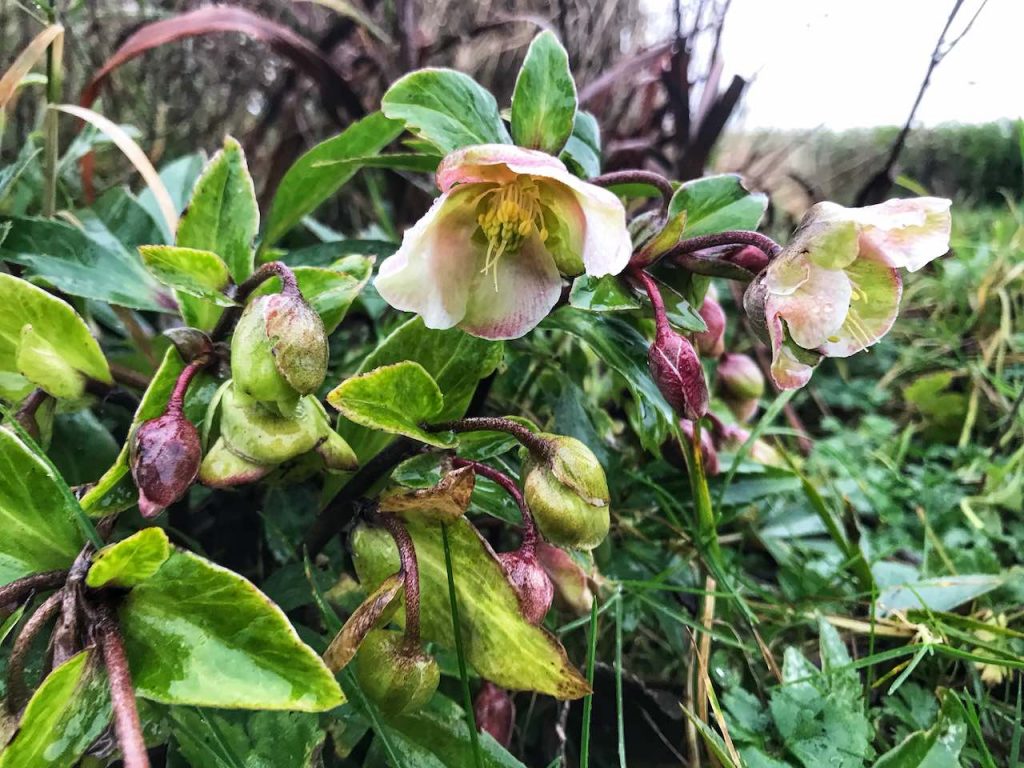
Hellebores, often referred to as “Christmas Roses” or “Lenten Roses,” are a standout choice for winter gardens. These hardy perennials bloom from late winter into early spring, brightening up the dreariest days with their elegant, cup-shaped flowers. Available in a stunning array of colours, they range from soft whites and pastel pinks to deep purples and even unique speckled varieties, offering a romantic touch to any garden setting.
Hellebores foliage is evergreen, providing year-round structure and texture even when not in bloom. On Garden Rescue, I have used hellebores in almost every winter garden brief we have encountered; they are genuinely one of the most reliable plants in the British gardener’s winter palette.
Hellebores thrive in partial shade, making them ideal for planting beneath deciduous trees or in sheltered garden corners. They prefer well-drained, rich soil and benefit from a protective layer of mulch to insulate their roots during harsh frosts. While hardy, a little maintenance goes a long way; removing old or damaged leaves before flowering enhances their appearance and helps prevent disease.
With minimal effort, these plants will reward you with their enchanting winter blooms year after year. One important note from the design studio: hellebores genuinely dislike being moved once established, so take time to choose the right position from the outset. Perfect for shaded areas, they bring a soft, romantic charm to garden beds, borders, and even in planted containers — a true blast of brightness in the dark, cold winter months.
🌿 Lee’s Expert Tip
The single most common mistake I see with hellebores is planting them facing away from eyeline. Their nodding, downward-facing flowers mean you genuinely need to get beneath them to appreciate their full beauty. Position them at the top of a gentle slope, on a raised bed, or in a container raised to sitting height, and you will see them in an entirely different light. Planting near a doorway or path where you naturally pause also makes a tremendous difference to how much you actually enjoy them through winter.
⚠️ Important Safety Note
All parts of hellebores are toxic if ingested and the foliage can cause skin irritation in some individuals. Wear gloves when handling or cutting back, and position with care in gardens where young children or pets have unsupervised access. The RHS maintains a comprehensive database of plants toxic to pets.
2. Winter Jasmine (Jasminum nudiflorum)
❄️ Winter Jasmine at a Glance
Ultimate Height
2.5m (wall-trained or scrambling)
Spread
2 to 3m
Flowering Period
November to March
RHS Hardiness
H5 (hardy in most of UK)
Position
Full sun to light shade; any well-drained soil
Wildlife Value
Moderate; provides early nectar on warm winter days
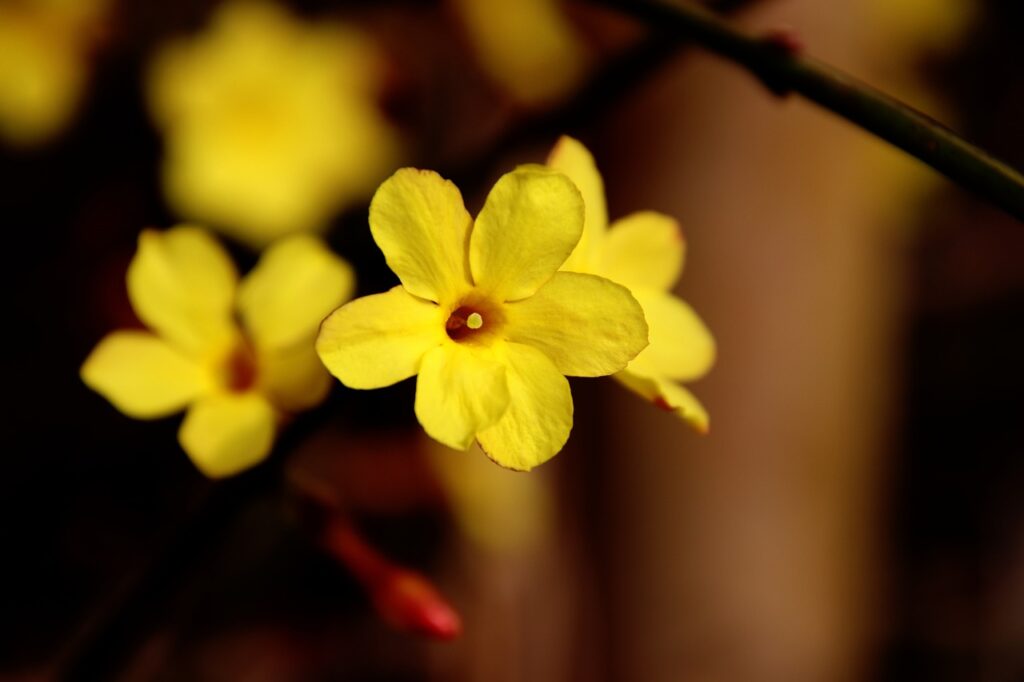
Jasminum nudiflorum, commonly known as Winter Jasmine, is a deciduous shrub prized for its bright yellow, star-shaped flowers that bloom from November to March. Its arching, trailing stems and abundant blossoms make it a standout feature in winter gardens when colour is often scarce. Though its flowers lack fragrance, their vibrant display more than compensates, lighting up otherwise dormant landscapes with cheerful yellow that can be seen from considerable distance across the garden.
This is a plant I have recommended on countless Garden Rescue makeovers where the brief demanded instant winter impact on a modest budget. This hardy winter shrub thrives in full sun to light shade and adapts well to a variety of soil types, provided they are well-drained. Once established, it is drought-tolerant and requires minimal maintenance, making it a versatile choice for gardeners of all skill levels. Prune it after flowering to encourage vigorous growth and maintain its shape.
Jasminum nudiflorum is ideal for training along walls, trellises, or pergolas, where its cascading stems create a flowing effect. It can also be used as ground cover on slopes or banks, providing erosion control while delivering vibrant winter colour. For smaller gardens, it grows well in large containers, offering flexibility in placement.
This plant’s cheery yellow flowers provide a sunny contrast to the muted tones of winter, making it an excellent addition to seasonal borders. Pair it with evergreen shrubs or red-stemmed dogwoods to create a striking visual impact that lasts through the whole of winter and into early spring.
🌿 Lee’s Expert Tip
Winter jasmine is one of the most reliable plants I know for north and east-facing walls, which are notoriously difficult to plant well. Its cheerful yellow flowers in the bleakest months genuinely transform the look of a difficult aspect. The key maintenance tip is to prune it hard immediately after flowering in spring, cutting flowered shoots back to strong buds. Gardeners who skip this annual prune end up with a tangled, unproductive mess within a few years. Done properly, it becomes more floriferous and manageable with each passing season.
Good for early butterflies and bees on warm winter days
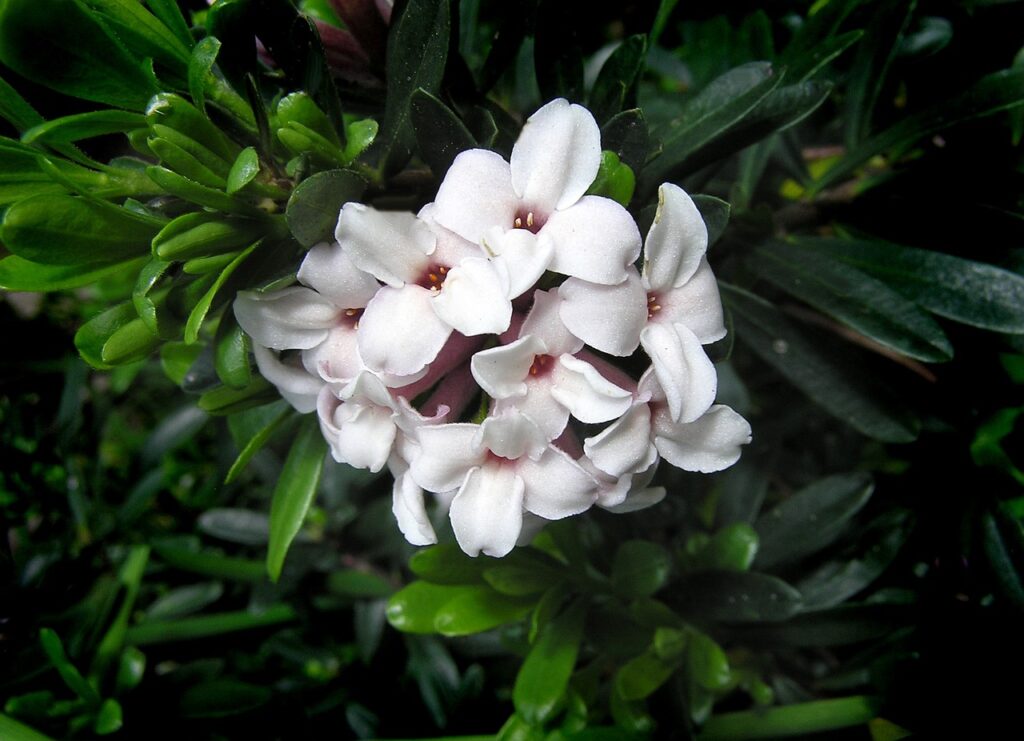
Daphne shrubs are beloved for their intoxicating fragrance, filling a garden with a delightful aroma even on the coldest days. From late winter to early spring, these plants boast clusters of small, star-shaped flowers in shades of pink, white, and sometimes even pale lavender. The flowers often appear before the foliage fully develops, making their display even more striking.
Some varieties, such as Daphne odora and Daphne bholua, are particularly prized for their robust scent and decorative blooms. I have specified Daphne bholua ‘Jacqueline Postill’ on more design projects than I can count; the fragrance it delivers from a single well-sited plant is genuinely extraordinary on still winter mornings.
Daphnes thrive in a sheltered spot with partial shade, making them ideal for borders near a house wall or under taller shrubs or trees. They prefer well-draining, slightly acidic soil enriched with organic matter such as compost. Watering should be moderate; overwatering or waterlogged conditions can lead to root rot, a common issue with these plants.
Mulching around the base helps maintain soil moisture and protects roots during harsh winters. They are relatively slow-growing but require minimal pruning — just a light trim after flowering to maintain shape. Their fragrance is particularly noticeable in still, cold air, creating a welcoming atmosphere around entrances or seating areas. Planted near windows or pathways, their delightful aroma can be enjoyed indoors and outdoors alike, ensuring they remain a cherished addition to any winter garden.
🌿 Lee’s Expert Tip
Daphne is one of those plants that rewards careful siting above almost anything else. Choose your position thoughtfully before planting because, like hellebores, Daphne genuinely resents being moved once established. A south or west-facing wall that provides shelter from cold drying winds while receiving winter sun is ideal. Never cultivate around the roots, as Daphne’s root system is surprisingly sensitive. I always place a flat stone over the root zone when planting to keep soil cool and moist; it makes a remarkable difference to establishment success.
⚠️ Important Safety Note
All parts of Daphne are highly toxic if ingested, and the berries are particularly dangerous to children. Wear gloves when handling. Position with great care in gardens where young children have unsupervised access.
Good for early bumblebees seeking first nectar of the year
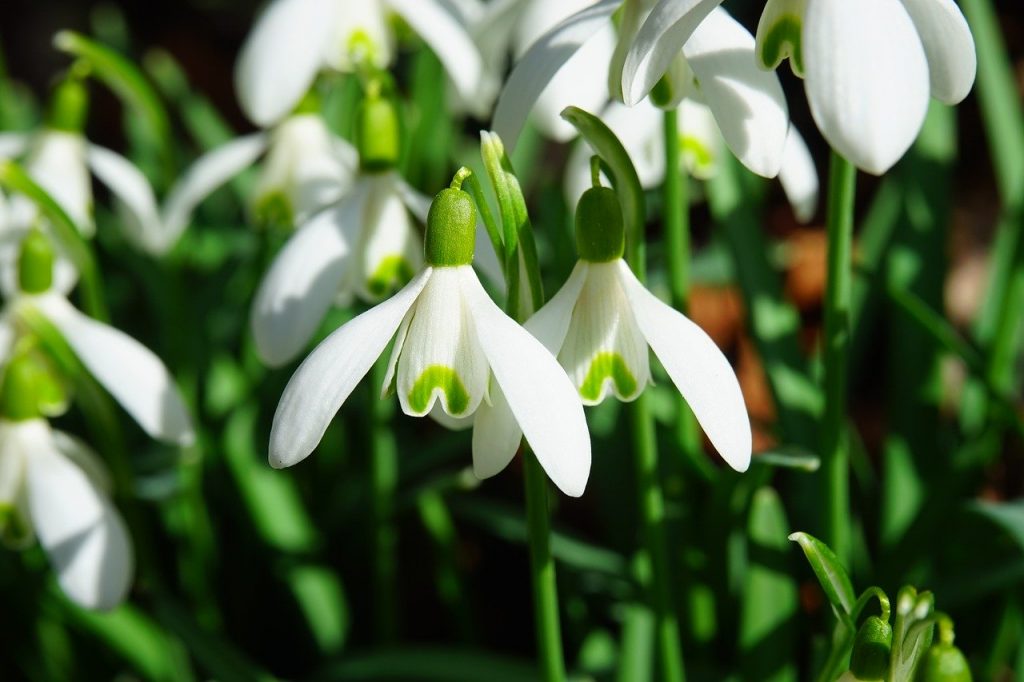
Snowdrops (Galanthus) are iconic winter bloomers with delicate, bell-shaped, pure white flowers that often emerge through frosty ground as early as January. Their blooms feature a signature nodding shape with a touch of green at the tips of their petals, creating a charming, understated beauty. These hardy perennials are among the first plants to flower in the new year, often while the ground is still covered in snow, earning them a reputation as symbols of endurance and resilience.
Few sights in the British gardening calendar are more quietly thrilling than the first snowdrops pushing through on a January morning. Interestingly, enthusiasts of these flowers are affectionately known as galanthophiles, a nod to the genus name Galanthus. These devoted collectors often participate in snowdrop fairs and swaps, trading rare varieties like Galanthus elwesii and Galanthus plicatus.
Snowdrops thrive in moist, well-drained soil enriched with organic matter like leaf mould or compost. They prefer dappled shade, such as under deciduous trees or alongside shaded garden borders. For best results, plant them in the autumn while their bulbs are still fresh.
To ensure healthy growth, divide overcrowded clumps after flowering before the leaves fully die back. This method, known as “in the green” division, helps establish new patches of these winter gems. Their pure white blooms are often seen as a symbol of hope and renewal, providing a touch of optimism amid winter’s cold grip. Snowdrops naturalize beautifully, forming elegant drifts over time that require little intervention once established.
🌿 Lee’s Expert Tip
Dry snowdrop bulbs from garden centres are notoriously unreliable, often failing to establish at all after their desiccating journey through the supply chain. The far superior method is to buy and plant “in the green” — that is, as growing plants immediately after flowering in February or March, while the foliage is still visible and the bulbs are actively growing. You pay a little more, but the success rate is incomparable. Plant at the same depth they were growing, in groups of at least 12 to 15 for genuine visual impact. Given time, they will spread to form the kind of luminous white drifts that stop visitors in their tracks.
5. Witch Hazel (Hamamelis)
❄️ Witch Hazel at a Glance
Ultimate Height
2.5 to 5m (slow-growing; often 2 to 3m in garden settings)
Spread
2.5 to 5m (wide-spreading habit)
Flowering Period
December to March (variety-dependent)
RHS Hardiness
H5 to H6 (hardy throughout UK; prefers shelter from cold wind)
Position
Full sun to partial shade; neutral to acidic, moist but well-drained soil
Wildlife Value
Good for early pollinators; outstanding autumn colour for wildlife habitat
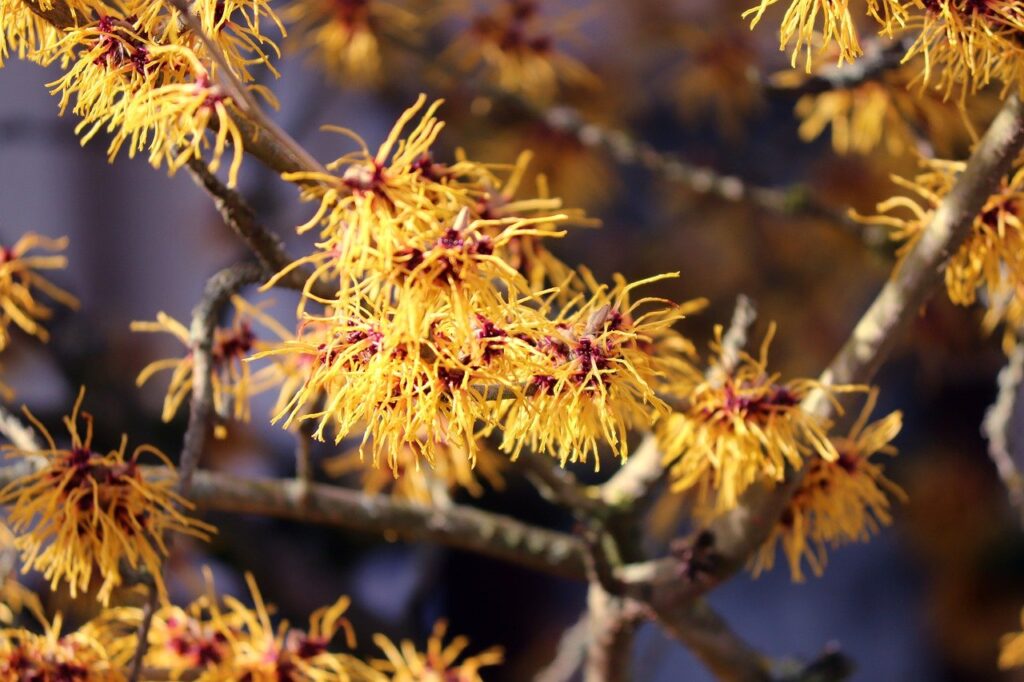
Witch hazel (Hamamelis) stands out in any winter garden, thanks to its distinctive, spidery flowers that bloom in shades of yellow, orange, or red from mid to late winter. These ribbon-like blossoms often appear on bare branches, adding a splash of vibrant colour against a stark winter landscape. The blooms emit a delicious, pleasant, citrusy fragrance that lingers, offering a sensory delight during the cold months.
Especially if planted near a front door or path in your garden, witch hazel becomes one of the most talked about plants you can own. This is one of those specimen plants that genuinely stops people in their tracks in February when nothing else has yet stirred in the garden.
Witch hazel thrives in acidic to neutral, well-draining soil enriched with organic matter. While it prefers a sunny location to produce the most abundant flowers, it also tolerates partial shade. Prune witch hazel sparingly, primarily to shape or remove dead wood, as excessive cutting can reduce the next season’s blooms. Mulching around the base helps retain moisture and protect the roots in harsh winter conditions.
Its unusual flower structure and range of warm hues add visual intrigue, making it a conversation starter in any garden. Witch hazel is also a resilient, low-maintenance plant, making it a practical and beautiful choice for gardeners looking to enhance their winter landscapes. Its ability to bloom during midwinter when few other plants dare to flower makes it an indispensable addition to any garden.
🌿 Lee’s Expert Tip
Witch hazel is a long-term investment and genuinely one of the finest specimen shrubs you can introduce to a garden. My variety recommendation for most UK gardens is Hamamelis × intermedia ‘Jelena’, which produces rich copper-orange flowers of exceptional fragrance, combined with outstanding autumn colour that turns the plant into a flaming torch before the leaves fall. One critical piece of advice: witch hazel absolutely will not thrive in chalky or alkaline soil, and I have seen many disappointed gardeners try to force the issue. If your soil sits above pH 7, grow it in a large container of ericaceous compost instead and it will reward you magnificently.
6. Cyclamen coum
❄️ Cyclamen coum at a Glance
Ultimate Height
5 to 8cm in flower
Spread
10 to 15cm (naturalises into generous colonies over time)
Flowering Period
January to March
RHS Hardiness
H5 (hardy throughout most of UK)
Position
Dappled to partial shade; well-drained soil with organic matter
Wildlife Value
Good for early bumblebees and moths; seeds dispersed by ants (myrmecochory)
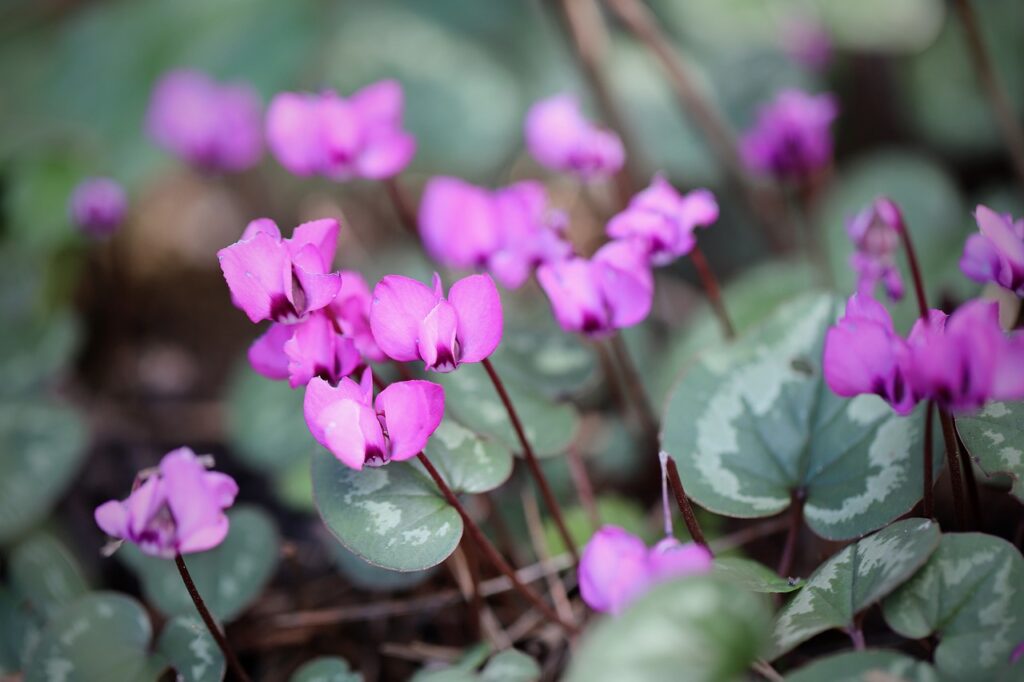
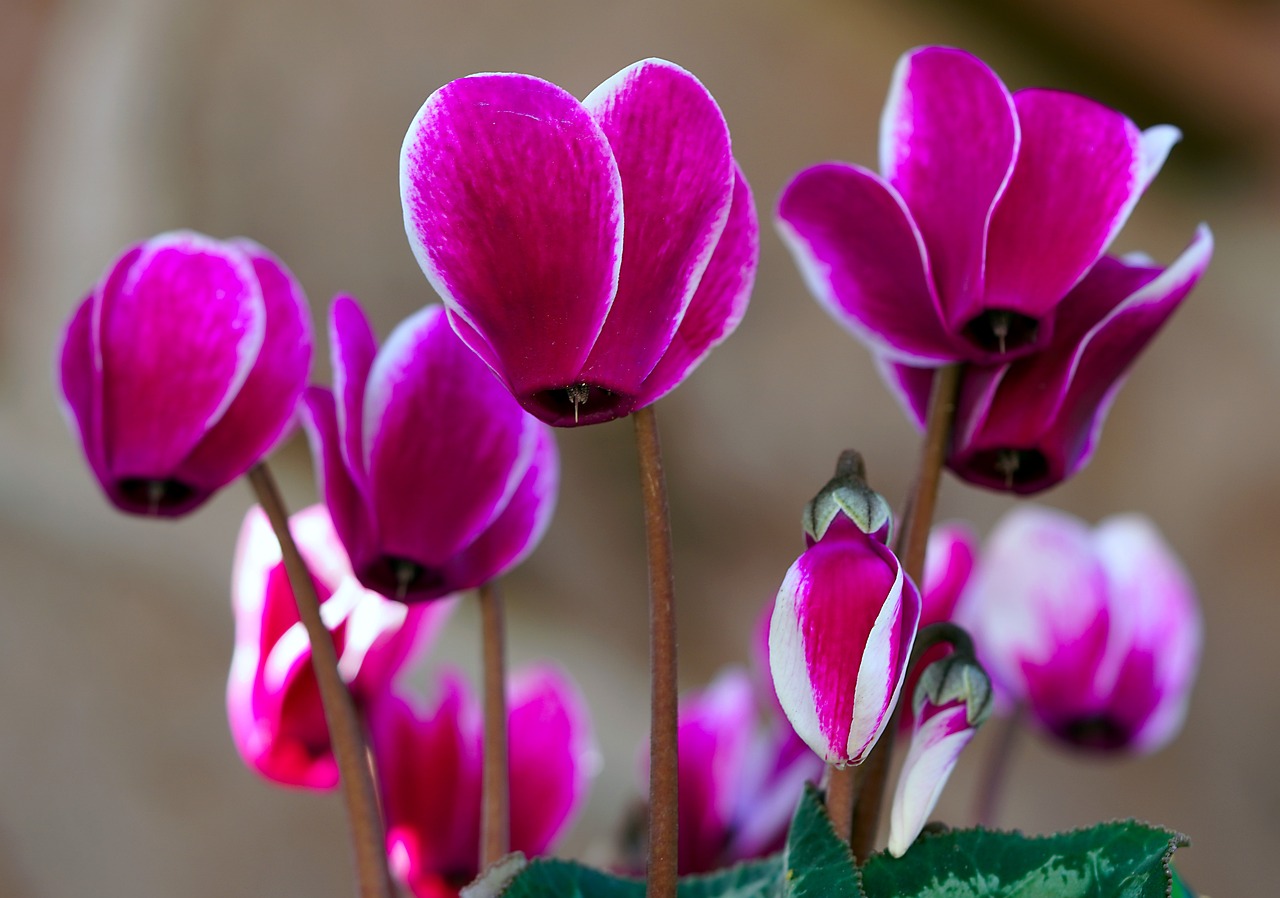
Hardy cyclamens are a delightful addition to any winter garden, providing vibrant colour and charm during the colder months. These low-growing perennials produce delicate, nodding flowers in shades of pink, magenta, or white, often appearing in waves from late autumn through early spring. Their blooms are complemented by beautifully patterned, heart-shaped leaves that add texture and interest even when the flowers are not blooming.
Cyclamen thrive in shaded spots, making them an excellent choice for brightening darker areas under trees or along woodland pathways, or for use in container gardens. They prefer well-drained soil with plenty of organic matter to mimic their natural forest floor habitat. Regularly removing dead foliage and flowers encourages fresh growth and keeps plants looking their best. While hardy, they benefit from a layer of mulch in particularly harsh winters to protect their tubers from frost damage.
Over time, they form drifts of colour that enhance the garden’s beauty and support local biodiversity by attracting pollinators like bees and moths during their blooming period. Cyclamens are a true winter gem, providing long-lasting beauty and resilience when many other plants are dormant.
Cyclamen are fascinating plants with a unique way of spreading their seeds. After flowering, the plant produces round seed pods on coiled stems, which gradually spiral downward to the ground as the pods mature. Inside these pods are sticky seeds coated with a sugary substance called elaiosome, which is highly attractive to ants. The ants collect these seeds and carry them back to their nests, eating the nutritious coating but discarding the seeds in nutrient-rich soil — effectively acting as unwitting gardeners, spreading cyclamen naturally throughout the garden.
This process, known as myrmecochory (ant-mediated seed dispersal), benefits the cyclamen and enriches the biodiversity of the garden as new plants establish themselves in various spots. The intricate coiled stems and interaction with ants make cyclamen a fascinating addition to a garden, adding beauty and an element of ecological intrigue.
🌿 Lee’s Expert Tip
Hardy cyclamen look spectacular planted beneath deciduous trees where they receive dappled light in winter and summer shade once the canopy closes. Plant the corms with the flattened side uppermost at a depth of around 3 to 5cm, and top-dress with a layer of leaf mould annually after flowering to gradually build the rich woodland soil these plants adore. Combining Cyclamen coum with snowdrops and winter aconites under a deciduous tree creates one of the finest small-scale winter plant combinations available to British gardeners, and costs very little to achieve.
7. Mahonia
❄️ Mahonia at a Glance
Ultimate Height
1 to 3m (dependent on variety; M. × media up to 3m)
Spread
1.5 to 2m
Flowering Period
October to February (variety-dependent)
RHS Hardiness
H5 (hardy throughout UK; some forms H4)
Position
Partial to full shade; any reasonable soil including dry shade
Wildlife Value
Outstanding for early bees; berries eaten by blackbirds and thrushes
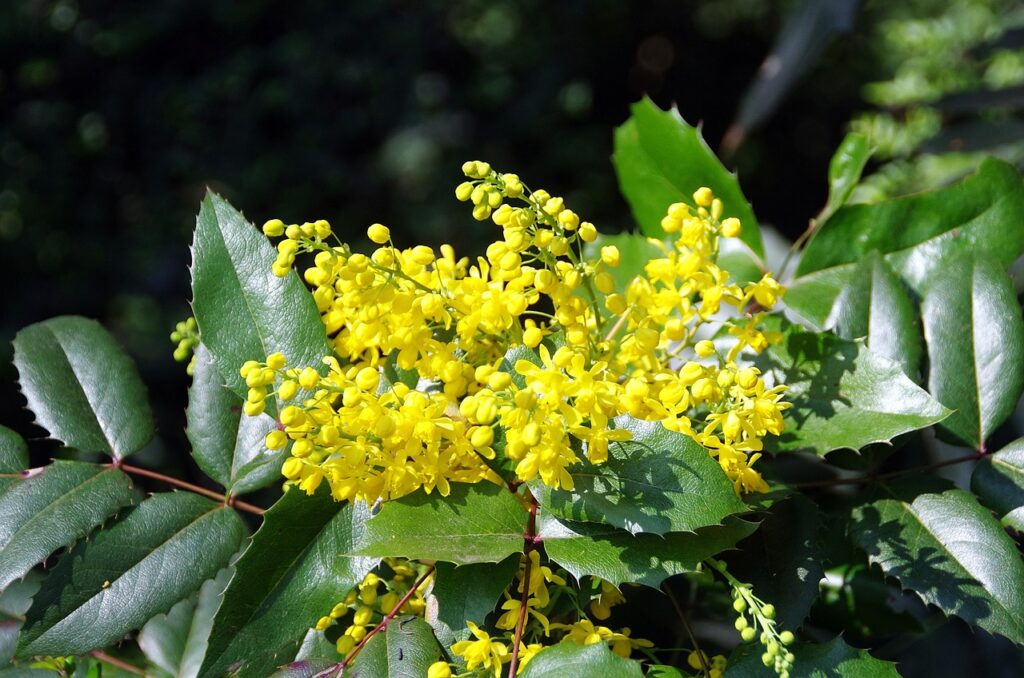
Mahonia is a robust evergreen shrub that offers striking beauty and resilience throughout winter. Sadly, it’s often overlooked as a car park shrub, but there is so much more to this tough as old boots evergreen. Known for its clusters of fragrant, yellow flowers that bloom during the colder season, it brings a burst of warmth and colour when most other plants are dormant.
These flowers appear from late autumn to early winter, providing a much-needed splash of colour and attracting early pollinators like bees. Following the blooms, Mahonia produces blue-black berries in late winter or early spring, enhancing its ornamental appeal and providing food for birds.
Mahonia thrives in partial to full shade, making it great for areas that don’t receive much sunlight, such as the north-facing sides of gardens or shaded corners. It prefers moist, fertile soil, and it’s important to keep it consistently moist, especially in summer. The shrub benefits from annual pruning after flowering to maintain shape and encourage healthy growth. Regularly cutting back any dead or damaged wood helps the plant retain a tidy appearance, preventing overcrowding and allowing air circulation.
The evergreen foliage provides structure and greenery through the winter, while the bright yellow flowers add a touch of sunshine. The berries, which change colour as they ripen, further contribute to the shrub’s ornamental value. The fragrant blooms also fill the air with a pleasant scent, enhancing the sensory experience of your garden during winter.
🌿 Lee’s Expert Tip
The secret to getting the most from Mahonia is choosing the right variety for your garden’s scale. For larger spaces, Mahonia × media ‘Charity’ or ‘Winter Sun’ produce long, architectural flower spikes that are genuinely dramatic, reaching up to 3m. For smaller gardens, Mahonia aquifolium ‘Apollo’ stays more compact and manageable. Whichever you choose, pruning is the key to keeping Mahonia looking its best; cut back any bare, leggy stems to a lower side shoot immediately after flowering. Within a season, the plant will respond with vigorous new growth that will carry next winter’s flowers.
8. Camellia (Winter-Flowering Varieties)
❄️ Winter Camellia at a Glance
Ultimate Height
1.5 to 3m (wall-trained specimens can reach 4m)
Spread
1.5 to 2.5m
Flowering Period
November to February (C. sasanqua); December to April (C. japonica)
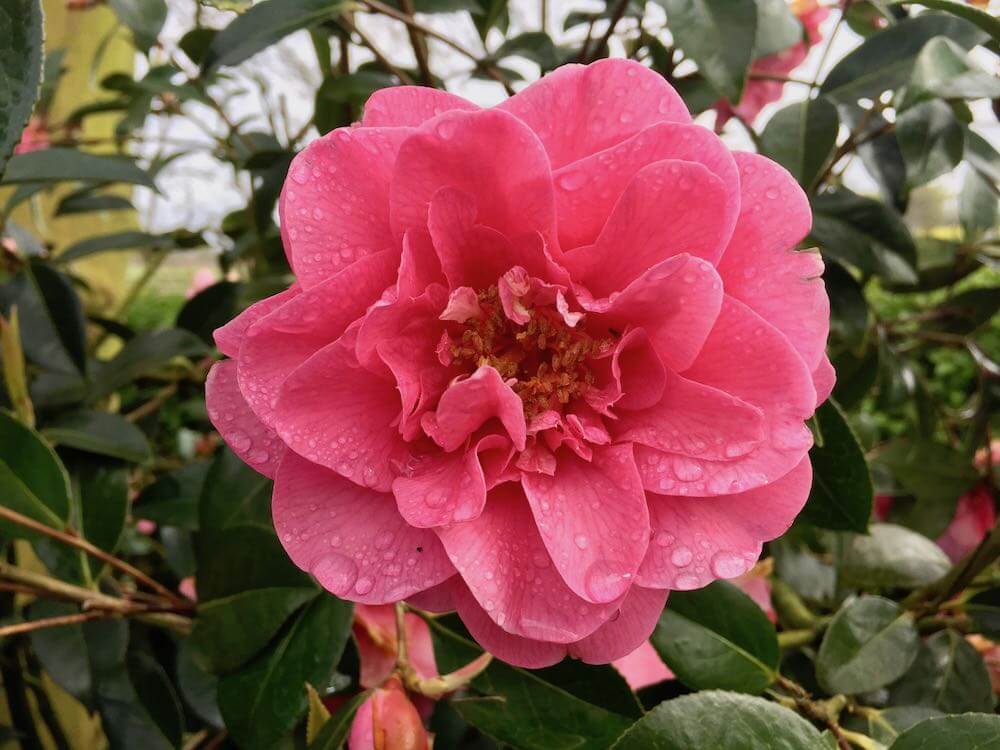
Camellias, particularly varieties like Yuletide and Spring Festival, are celebrated for their glossy, evergreen foliage and stunning blooms that brighten up the winter months. From December to February, these winter-blooming shrubs produce exquisite flowers in red, pink, and white shades. Their vibrant blooms create a striking contrast against the backdrop of the season’s duller tones, making them a popular choice for those looking to add colour during the colder months.
The blooms of Camellias, often large and showy, bring a sense of elegance with their delicate petals and lush, dense foliage. For true winter flowering in the UK, Camellia sasanqua is my professional first choice over C. japonica as it blooms from autumn into winter rather than spring, and generally has better frost tolerance of its flowers.
For optimal growth, Camellias prefer acidic, well-drained soil, making them ideal for planting in areas with naturally acidic conditions. These plants also thrive in a sheltered position, as they are somewhat sensitive to frost and harsh winds. Planting them in a spot with partial shade is crucial, as they naturally grow under the canopy of taller plants or trees in their native habitats.
Direct exposure to full sunlight can lead to leaf scorch and reduced flower quality. To ensure healthy growth, protect Camellias from strong winds, which can damage their delicate blooms and cause the flowers to drop prematurely.
🌿 Lee’s Expert Tip
The most common camellia mistake I encounter is east-facing planting. When camellia buds or open flowers are frozen overnight and then thawed rapidly by early morning sun from the east, the cell walls rupture and flowers turn brown almost instantly. A west or north-west facing wall, which warms slowly and avoids that rapid early-morning thaw, gives enormously better results. If you garden on alkaline soil, camellias in large containers of ericaceous compost are the only realistic option, and they perform beautifully when top-dressed annually with ericaceous compost and fed with a specialist acid plant feed in spring.
9. Erica (Winter Heath)
❄️ Erica (Winter Heath) at a Glance
Ultimate Height
15 to 30cm
Spread
30 to 60cm
Flowering Period
November to April (Erica carnea varieties)
RHS Hardiness
H6 (very hardy throughout UK)
Position
Full sun preferred; well-drained, acidic soil (E. carnea tolerates lime)
Wildlife Value
Excellent for early bumblebees and honeybees from late winter
Erica, commonly known as heathers, are a group of hardy evergreen shrubs that provide a burst of colour to gardens during the winter and early spring months. Don’t be put off by the old 1970s rockery gardens — they also have a place in more modern planting plans and layouts. These small yet resilient plants are renowned for their profusion of tiny, bell-shaped flowers in shades of pink, white, or purple.
The vibrant blooms are typically clustered along the plant’s branches, creating a blanket of colour that is especially striking when other plants have gone dormant for the winter. Native to Europe, Asia, and South Africa, Erica species have long been admired for their ability to thrive in challenging conditions.
Erica species thrive in well-drained, acidic soil, making them a perfect choice for gardeners with slightly acidic to neutral ground. An important exception is Erica carnea, which will tolerate lime and grow well in alkaline soil — making it a much more widely useful plant than most people realise. They prefer full sun, which encourages dense growth and prolific blooming, but they also tolerate partial shade.
Their ability to withstand the colder months and continue flowering from winter into early spring makes them stand out in gardens where many plants remain dormant. The long flowering season is one of Erica’s key selling points, with blooms often lasting into March and April. These plants are perfect for borders, rockeries, and containers, offering versatility in garden design while requiring relatively little maintenance once established.
🌿 Lee’s Expert Tip
The trick with winter heathers in a contemporary planting scheme is to combine them with structural grasses and bold evergreen foliage to move well beyond the dated rockery association. Try planting Erica carnea ‘Vivellii’, which has bronze-flushed foliage turning deeper in cold weather, alongside the black grass Ophiopogon planiscapus ‘Nigrescens’ and the steel-blue Festuca glauca. The colour combination is genuinely sophisticated and performs through the hardest winter months. Clip heathers lightly with shears immediately after flowering to prevent the bare, woody centre that develops when plants are left unpruned for years.
10. Sarcococca (Christmas Box)
❄️ Sarcococca at a Glance
Ultimate Height
1.5 to 2m (S. confusa); S. hookeriana var. humilis stays to 60cm
Spread
1 to 1.5m
Flowering Period
December to February
RHS Hardiness
H5 (hardy throughout UK)
Position
Partial to full shade; moist, humus-rich, well-drained soil
Wildlife Value
Good for early bees on warm days; black berries eaten by birds
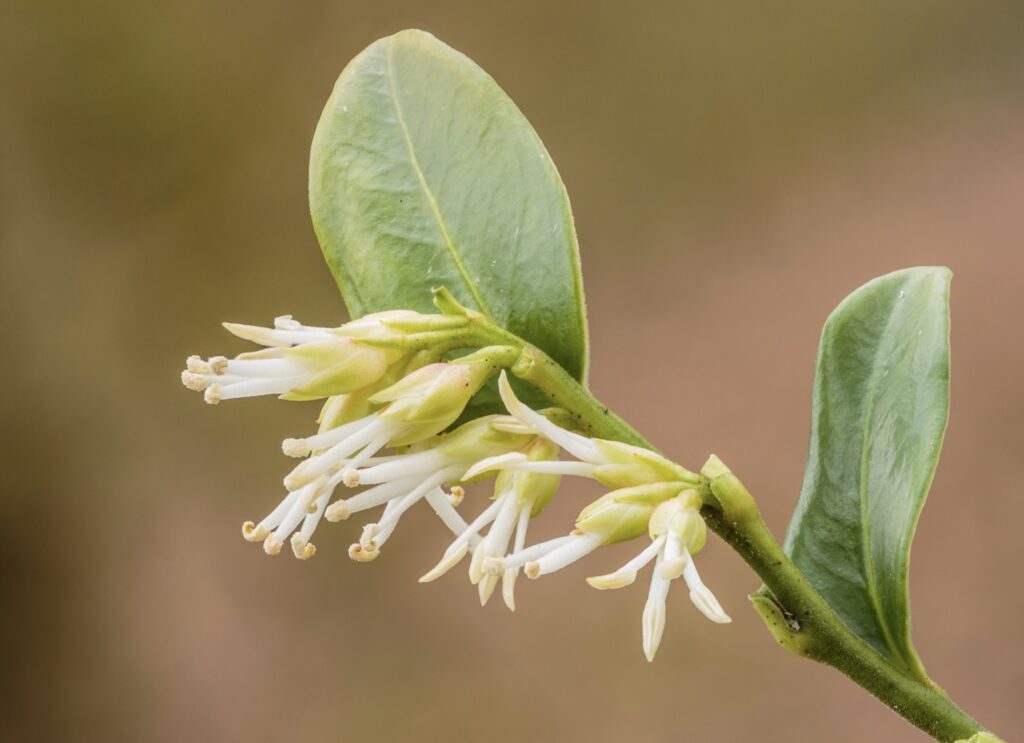
Sarcococca, commonly known as Sweet Box, is an evergreen shrub that adds charm to any garden, particularly during winter when many plants are dormant. For most of the year, it is a reliably handsome green presence, but then come winter, it really shines. One of its most distinguishing features is its tiny, fragrant white flowers blooming in midwinter — despite their small size, these flowers release a sweet, honey-like scent that fills the air and provides a welcome burst of fragrance during the colder months.
Following the flowers, Sarcococca produces glossy black berries, adding a touch of visual interest to the shrub well into the spring. These berries also attract wildlife, providing food for birds and insects.
This hardy shrub thrives in shaded or partially shaded locations, making it an excellent choice for areas with limited sunlight, such as the north side of buildings or under taller trees. Sarcococca prefers moist, fertile soil and is quite adaptable, tolerating different soil types as long as the drainage is good. Its preference for shade makes it perfect for planting in garden corners, beneath tree canopies, or in woodland gardens where other plants may struggle to grow.
Sarcococca is particularly well-suited for containers near doorways and pathways where its delightful fragrance can be appreciated up close. Its compact, low-maintenance nature makes it a good option for smaller gardens or urban spaces like balconies. Sweet Box is highly recommended for entrances and paths, where its winter scent and visual appeal make a lasting impression year after year.
🌿 Lee’s Expert Tip
Sarcococca confusa is, in my professional opinion, one of the most underused plants in British garden design. The fragrance from a single established specimen planted beside a front door or garden gate is extraordinary on a cold, still morning in January — visitors frequently stop and look around wondering where the scent is coming from, because the tiny white flowers are so inconspicuous. For smaller spaces and containers, seek out Sarcococca hookeriana var. humilis, which stays at a very manageable 60cm or so and spreads slowly by suckers to form a neat low-growing carpet of glossy evergreen foliage. Genuinely one of my most frequently recommended plants.
11. Cornus mas (Cornelian Cherry)
❄️ Cornus mas at a Glance
Ultimate Height
3 to 5m (multi-stemmed shrub or small tree)
Spread
3 to 5m
Flowering Period
February to March (on bare stems)
RHS Hardiness
H6 (very hardy throughout UK)
Position
Full sun to partial shade; any well-drained soil including clay
Wildlife Value
Excellent for early pollinators; red fruits eaten by birds in autumn
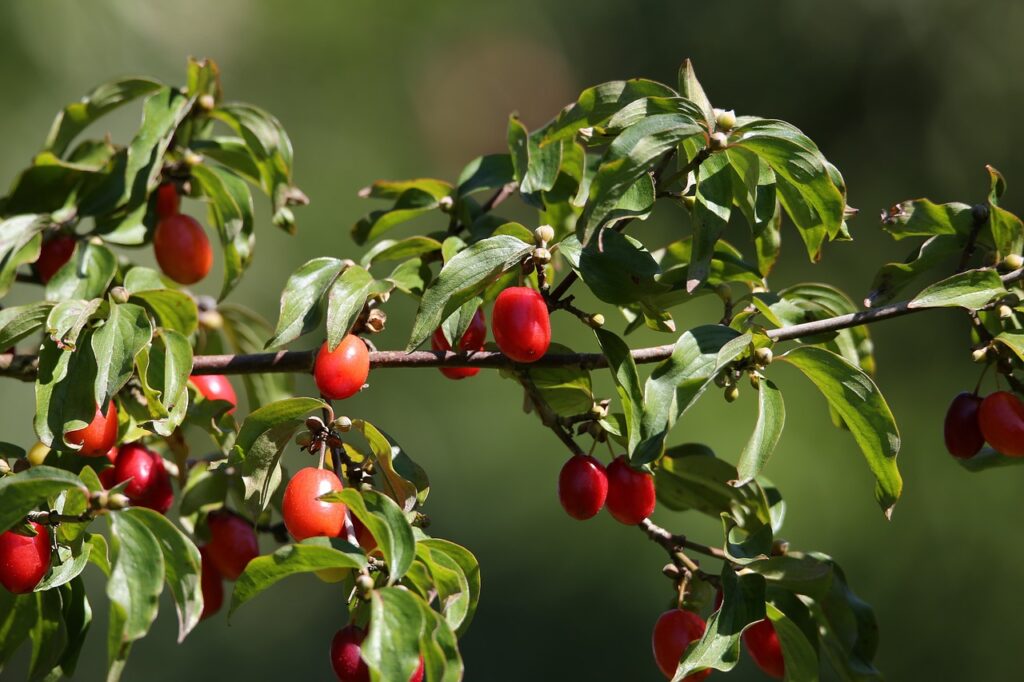
Cornus mas, commonly known as the Cornelian Cherry Dogwood, is a versatile deciduous shrub or small tree renowned for its winter charm. In late winter, it bursts into clusters of tiny, star-like yellow flowers that appear on bare branches before the leaves emerge, creating a golden haze that provides much-needed brightness during the cold months. By early autumn, the flowers are replaced by glossy red fruits, often likened to cherries, adding another layer of seasonal interest.
In 30 years of garden design, I find this plant is consistently overlooked in favour of more familiar winter shrubs — which is a genuine shame given how spectacular it looks in February when the whole garden is still sleeping around it.
Due to its adaptability, Cornus mas thrives in various garden settings and is a great beginner gardener shrub. It prefers a sunny to partially shaded position and well-drained soil enriched with organic matter. Though it tolerates clay soils, better flowering occurs in loamy, fertile ground.Water the plant during dry spells, especially in its first year, to establish strong roots.
I prefer to let this plant bush up over 3 to 7 years and then clear the lower stems to create a striking shrub form with beautiful winter structure. Its early blooms provide a crucial nectar source for bees and other pollinators when few other flowers are available. The edible, tart fruits can be used to make jams, jellies, or even homemade liqueurs, offering genuine culinary and ornamental benefits. Its multi-seasonal interest, from winter flowers to summer foliage and autumn berries, makes Cornus mas a must-have for any winter garden.
🌿 Lee’s Expert Tip
Cornus mas is exceptionally long-lived and develops real character and gravitas as it ages. The key to unlocking its full potential is patience combined with purposeful training. In its first five years, allow it to develop naturally. Then, from year five or six, begin removing the lower branches gradually each spring to lift the canopy and reveal the beautifully textured, flaking grey-brown bark beneath. The combination of bare winter branches studded with golden flowers above a visible stem structure is genuinely one of the most beautiful winter plant effects you can achieve in a British garden.
12. Iris unguicularis (Winter Iris / Algerian Iris)
❄️ Iris unguicularis at a Glance
Ultimate Height
20 to 30cm in flower
Spread
30 to 60cm (clump-forming)
Flowering Period
November to March
RHS Hardiness
H4 (hardy in most of UK; benefits from south-facing shelter)
Position
Full sun; poor, dry, well-drained soil; ideally against a south-facing wall
Wildlife Value
Good for early bumblebees on warm winter days
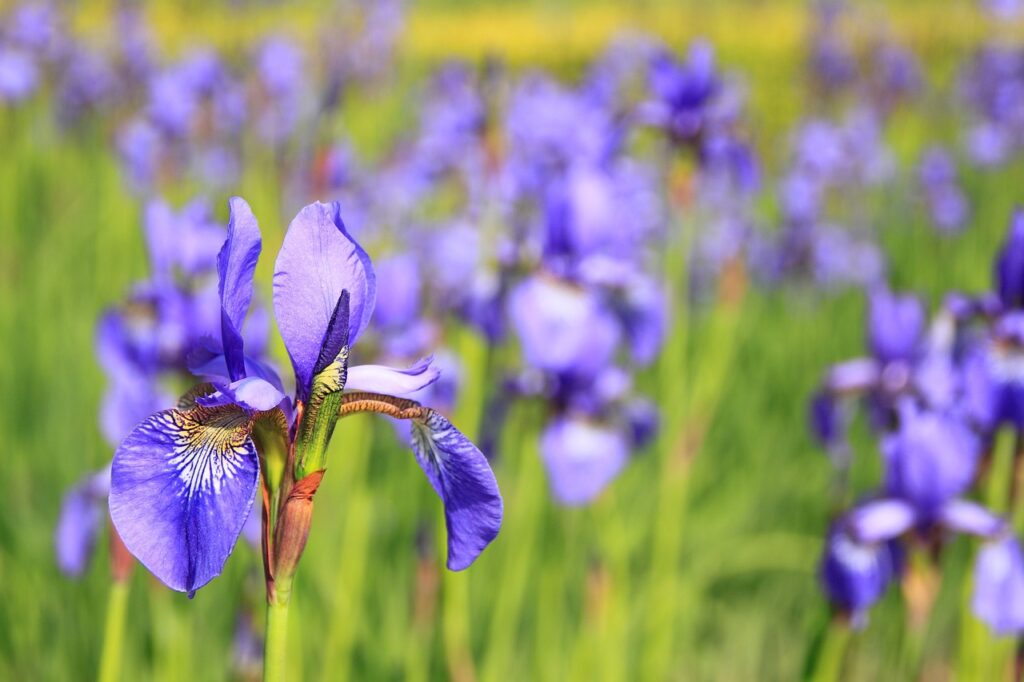
Iris unguicularis, commonly known as the Winter Iris, is a hardy perennial that blooms in late autumn through early spring, providing a splash of colour when most other plants are dormant. Known for its striking blue, violet, or pale lavender flowers, this winter-blooming iris stands out in the colder months. The blooms are held above the foliage on slender stems, creating an elegant display, and each flower lasts several days across a long blooming period.
The exquisitely scented flowers, with their golden markings on violet falls, belong in a class of their own for sheer winter elegance. Winter Iris thrives in full sun and well-drained soil, which is crucial for its success. It is particularly suited to planting against a south-facing wall, where the warmth and protection help the plant bloom earlier and thrive through colder conditions.
The heat absorbed by the wall during the day provides extra warmth at night, extending the blooming period. Well-drained soil is essential — Iris unguicularis does not tolerate excessive moisture and will fail in waterlogged ground. This species is perfect for borders, rock gardens, and containers thanks to its low-growing habit.
The slender, grass-like foliage forms a neat clump, ideal for filling gaps in garden designs without overwhelming other plants. Its ability to thrive in dry, poor soils makes it a favourite for xeriscaping or low-maintenance gardens. Its long bloom time from late autumn to early spring ensures months of seasonal interest, brightening the garden when fewer plants are in flower.
🌿 Lee’s Expert Tip
Iris unguicularis is one of the few plants that actually performs better in poor, dry conditions than in a well-fed, well-watered border. Rich soil and generous feeding promote leafy growth at the expense of flowers. Position it at the base of a warm south-facing wall in the driest spot you can find, and never feed it. Once a clump becomes congested after several years, divide it in early autumn, replant divisions with generous spacing, and it will reward you with a fresh flush of flowering energy. The flowers are delicate and best cut in bud and brought indoors to open in a vase on a windowsill — genuinely one of the most beautiful of all winter cut flowers.
13. Pansies (Winter Varieties)
❄️ Winter Pansies at a Glance
Ultimate Height
15 to 25cm
Spread
20 to 30cm
Flowering Period
October to May (will pause in hard frost, resuming when temperatures rise)
RHS Hardiness
H5 (hardy in most of UK)
Position
Full sun to partial shade; fertile, well-drained soil
Wildlife Value
Good for early bumblebees and hoverflies on milder winter days
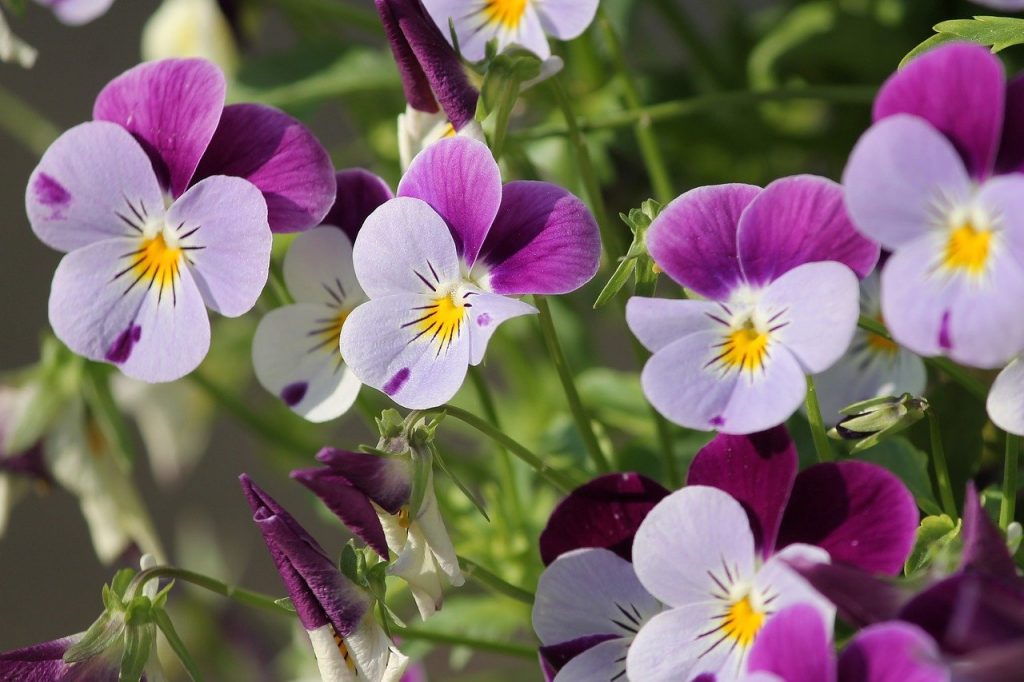
Winter pansies are beloved for their ability to bloom continuously throughout the colder months, offering vibrant displays when most other plants are dormant. These hardy plants produce cheerful flowers in yellow, purple, red, blue, and white, often with striking “faces” or patterns that add extra charm. Their blooms can last from autumn through spring, making them a reliable choice for maintaining garden interest year-round.
During periods of hard frost they pause and appear to die, but will almost always recover and re-flower as temperatures lift — a resilience that never ceases to impress. To ensure their best performance, plant winter pansies in well-drained, fertile soil and choose a sunny or partially shaded location.
They appreciate consistent moisture but dislike waterlogged roots, so avoid overwatering. Regularly deadheading spent flowers will encourage new blooms and extend the flowering season. Adding mulch around the base can help retain moisture and provide extra insulation during frosty weather.
Winter pansies are versatile, thriving in garden beds, borders, containers, and hanging baskets. These affordable annual plants add a blast of colour without a huge investment. Their resilience to cold temperatures and long flowering periods make them a staple of front garden containers — and have been for the last forty-odd years.
🌿 Lee’s Expert Tip
The single biggest improvement you can make to a winter pansy display is to treat them generously. Plant at genuinely close spacing — 15cm apart rather than the 20 to 25cm often suggested on labels — and the containers fill quickly with a lush, overflowing display rather than the sparse, dotted effect that lets down so many winter boxes and baskets. Feed weekly with a balanced liquid fertiliser and deadhead religiously every few days; plants that set seed stop flowering, whilst those kept deadheaded produce blooms relentlessly through the whole winter season.
14. Wintersweet (Chimonanthus praecox)
❄️ Wintersweet at a Glance
Ultimate Height
2.5 to 4m
Spread
2 to 3m
Flowering Period
December to February (on bare stems)
RHS Hardiness
H5 (hardy in most of UK; benefits from wall protection)
Position
Full sun to partial shade; well-drained soil; south or west-facing wall ideal
Wildlife Value
Good for early pollinators; provides nectar when little else is available
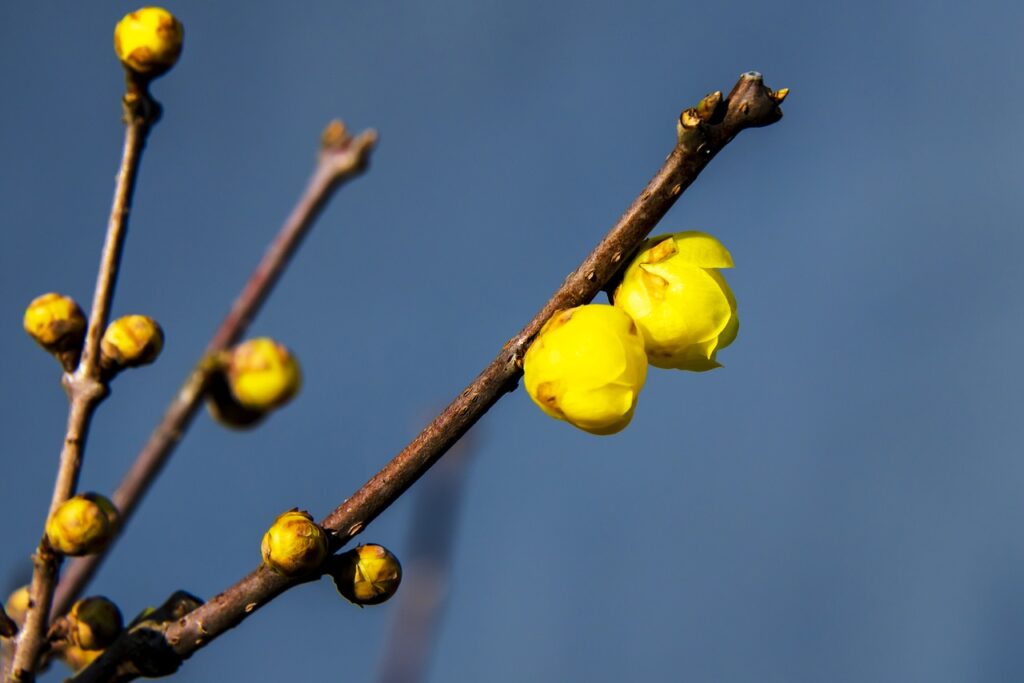
Chimonanthus praecox, known as wintersweet, is a deciduous shrub celebrated for its enchanting winter blooms and intense fragrance. From December through February, its bare branches become adorned with clusters of waxy, pale-yellow flowers featuring deep maroon centres. The blossoms exude a warm, spicy-sweet scent that permeates the garden, making it an excellent choice for planting near entrances, patios, or windows where the aroma can be enjoyed.
I love wintersweet. It’s one of the only plants that flowers on bare stems, and the look is truly arresting during the colder months. You don’t often see it used anymore, which is precisely why I would like to see this plant make a well-deserved comeback in British gardens.
Wintersweet is a hardy plant that thrives in well-drained soil and tolerates full sun and partial shade, making it versatile for various garden settings. It is relatively low-maintenance, needing only occasional pruning after flowering to maintain its shape. Its flowers provide essential nectar for early pollinators when few other plants bloom.
As the seasons change, its large, glossy green leaves emerge in spring, turning a warm golden hue in autumn, offering year-round interest. With its fragrance, beauty, and ecological benefits, Chimonanthus praecox is an essential winter garden plant that more gardeners should know and grow.
🌿 Lee’s Expert Tip
Wintersweet has one reputation that puts many gardeners off: it can take five to seven years from planting before it flowers reliably. This is entirely true, but think of it as a long-term investment that pays increasing dividends for decades once it matures. Positioning against a warm south or west-facing wall and in full sun genuinely shortens the wait to flowering by providing the summer warmth needed to ripen the wood that carries the following winter’s blooms. Once established, cut the flowered stems back to two or three buds immediately after flowering — this encourages strong new growth that will produce the following season’s fragrant display.
15. Winter Aconites (Eranthis hyemalis)
❄️ Winter Aconites at a Glance
Ultimate Height
5 to 10cm
Spread
5 to 8cm (naturalises into extensive colonies)
Flowering Period
January to March
RHS Hardiness
H6 (very hardy throughout UK)
Position
Partial shade to full sun (before tree canopy closes); moist, well-drained soil
Wildlife Value
Outstanding for early bumblebees; one of the earliest nectar sources of the year
Winter aconites (Eranthis hyemalis) are one of the standout choices for adding winter colour to your garden, offering vibrant, golden-yellow flowers that brighten up the coldest months of the year. These hardy perennials often emerge as early as January, just as the snow is beginning to melt, making them an excellent choice for creating visual interest in winter gardens when many other plants are dormant.
Their cheerful flowers are a welcome sight against winter’s drab grey and white. This is why I adore them — they create little pools of golden sunshine at ground level that are genuinely uplifting on the bleakest winter mornings.
Winter aconites thrive in moist, well-drained soil and particularly enjoy growing in shaded or partially shaded areas. They are perfect for planting beneath trees or shrubs, where the canopy provides shelter from the harshest winter weather. They also multiply over time, forming small colonies of bright yellow blooms each spring.
They can be a pain to grow from dry tubers, so try purchasing them in the green. Once established, they will easily colonise your borders or lawns, especially if you naturalise them beneath deciduous trees where conditions mirror their native woodland habitat.
🌿 Lee’s Expert Tip
The finest winter planting combination I know for beneath deciduous trees costs remarkably little to create: plant winter aconites, snowdrops, and Cyclamen coum together in generous numbers under any deciduous tree or large shrub in your garden. Each takes a few years to fully establish and naturalise, but within five years you will have a self-sustaining carpet of gold, white, and pink that appears reliably each January and February with absolutely no intervention from you. Plant at least 50 of each type for genuine impact — smaller numbers look sparse and unconvincing, whilst generous planting creates the kind of magical winter floor display that makes any garden look genuinely designed.
Planting Tips for Winter Gardens
Group for Impact: Plant in clusters for a more vibrant display. A single plant of most winter-flowering species makes little impression; generous drifts of five, seven, or more transform the effect entirely.
Add Evergreens: Mix winter-flowering plants with evergreens for a balanced structure that holds the garden together through the coldest months when deciduous plants are bare.
Think Fragrance: Position fragrant plants like Daphne, Sarcococca, or Witch Hazel near windows, front doors, or paths for maximum enjoyment on the coldest winter mornings.
Prepare the Soil: Enrich your soil with compost or organic matter to ensure plants thrive despite the cold. Most winter-flowering plants perform best in soil improved with well-rotted organic matter before planting.
Troubleshooting Winter Flowering Plants
Even the most experienced gardeners encounter problems with winter-flowering plants. Here are the most common issues I see in my design work and how to address them effectively.
My winter-flowering shrubs are not blooming despite looking healthy
The most frequent cause is incorrect pruning timing. Witch hazel, Chimonanthus, and Mahonia all flower on wood produced during the previous growing season. If you have pruned them back in late summer or autumn, you will have removed the wood that would have carried the winter flowers. Always prune these plants immediately after flowering in late winter or early spring, which gives the whole growing season for new wood to develop and ripen, ready for next winter’s display. A secondary cause is insufficient summer warmth, particularly affecting Chimonanthus and Daphne, which need a warm, sheltered position to ripen their flowering wood properly.
My Camellia flower buds are turning brown before they open
This is almost always the result of frost on buds followed by rapid thawing, which ruptures the delicate cells and causes the brown, papery collapse you see. It is particularly common on east-facing plants that catch early morning sun immediately after a night frost. The solution is repositioning to a west or north-west facing site if possible, or protecting exposed buds with a double layer of horticultural fleece on nights when frost is forecast. Never allow fleece to touch the buds directly as condensation can cause secondary frost damage at the point of contact. Prevention through correct siting is always more effective than cure.
My Daphne has suddenly died with no warning
Sudden Daphne death is a well-documented and genuinely frustrating phenomenon. It can be caused by waterlogging, root disturbance, phytophthora root rot, or, in some cases, has no identifiable cause at all. This is not a reflection of your gardening ability; even experienced professionals lose Daphne plants unexpectedly. The best preventative measures are ensuring excellent drainage before planting, never cultivating around the root zone, mulching to maintain consistent soil moisture, and avoiding root disturbance during planting of nearby plants. If you lose one, wait a season before replanting into the same spot, improving drainage with additional grit beforehand.
My winter pansies have stopped flowering in January
Winter pansies naturally pause flowering during the coldest periods, particularly when temperatures consistently drop below freezing. This is entirely normal and not a sign of failure. The plants are surviving rather than thriving, and will resume flowering as temperatures begin to lift in late February and March, often producing their most abundant display in spring. Ensure containers are raised off the ground on pot feet to prevent waterlogging, which is more damaging than cold alone. Feeding with a half-strength balanced liquid fertiliser on milder winter days helps maintain plant vigour, ready for the spring flush.
Your subscription could not be saved. Please try again.
Your subscription has been successful.
Frequently Asked Questions About Winter Flowering Plants
What is the best winter flowering plant for a shady garden?
For genuinely shady conditions, my first recommendations are Sarcococca confusa (Sweet Box) and Mahonia, both of which thrive in partial to full shade and produce extraordinary winter flowers and fragrance despite receiving minimal direct sunlight. Hellebores are also outstanding in partial shade and will naturalise beautifully beneath deciduous trees. Snowdrops and winter aconites do well in dappled shade under deciduous trees, where they receive winter light before the canopy closes. Hardy Cyclamen coum is another excellent choice for shaded spots, producing charming pink or white flowers from January through March. The one plant to avoid in deep shade is witch hazel, which needs at least some sun to flower well.
Which winter flowering plants attract pollinators in the UK?
The ecological value of winter-flowering plants is genuinely significant and often underappreciated. Mahonia is outstanding for bees, with its abundant yellow flowers providing early nectar from October onwards when little else is available. Winter aconites are among the most important early nectar sources in the British garden calendar, regularly attracting the first bumblebee queens emerging from hibernation. Snowdrops provide both nectar and pollen for early bumblebees. Sarcococca, Daphne, and Chimonanthus all attract early butterflies and bees on warmer winter days. Even Erica carnea (winter heather) provides valuable early forage for bumblebees from late winter. Planting a combination of these species creates a genuine wildlife corridor through the winter months, supporting pollinators at the most critical and food-scarce time of year.
When should I plant winter flowering plants in the UK?
The optimal planting window for most winter-flowering shrubs and perennials is autumn, ideally September through November, when soil temperatures are still warm enough to encourage good root establishment before winter sets in. Container-grown plants can technically be planted at any time the ground is not frozen, but autumn planting gives shrubs like Mahonia, Sarcococca, and witch hazel the best possible start. For bulbs such as snowdrops and winter aconites, the traditional advice is to plant dry bulbs in autumn, but as I mention in the guide above, purchasing “in the green” immediately after flowering in February or March gives vastly superior establishment results. Winter pansies can be planted from September through to December for immediate winter colour.
Are any winter flowering plants toxic to dogs or cats?
Several winter-flowering plants require careful positioning in gardens where pets have free access. Hellebores are toxic to both dogs and cats if ingested, potentially causing vomiting, abdominal pain, and in serious cases, more severe symptoms. All parts of Daphne are highly toxic, and the berries are particularly dangerous. Winter aconites (Eranthis) are toxic to pets if consumed. Cyclamen tubers and to a lesser extent the leaves and flowers are toxic to cats and dogs. Snowdrop bulbs are mildly toxic to dogs and cats. Camellias are generally considered non-toxic to pets, as are Mahonia, Sarcococca, and Erica. If you have pets that graze on garden plants, I strongly recommend checking each plant against the ASPCA’s toxic plants database and the RHS’s guide to plants harmful to pets before purchasing.
How do I keep my winter garden looking good when nothing is flowering?
The secret to a winter garden that looks genuinely well designed rather than simply not-yet-dead is structural planting chosen specifically for its off-season presence. Evergreen shrubs with interesting foliage provide the backbone; think Mahonia’s architectural holly-like leaves, the glossy rounds of Sarcococca, or the bold rosettes of Viburnum davidii. Deciduous shrubs with outstanding stem colour, particularly Cornus alba varieties with scarlet stems and Cornus sanguinea ‘Midwinter Fire’ with its flame-orange and yellow stems, provide dramatic winter interest that peaks in the coldest months when the leaves have fallen. Structural grasses such as Miscanthus and Pennisetum hold their seedheads through winter, adding movement and texture. And ornamental bark on trees like Betula (birch), Prunus serrula, and Acer griseum becomes genuinely luminous on bright winter days, particularly when struck by low winter sun.
Can I grow winter flowering plants in pots and containers?
Absolutely, and containers offer distinct advantages for winter displays because they allow you to move plants precisely where you want them as the season unfolds. Winter pansies are superb in containers and hanging baskets, providing months of cheerful colour. Hellebores perform beautifully in large pots filled with a soil-based compost, and the advantage of containers is that you can tilt pots slightly so the nodding flowers face upward for better appreciation. Sarcococca hookeriana var. humilis in a container beside a front door delivers extraordinary fragrance through the whole of winter. Erica carnea in terracotta pots creates classic winter displays and can be combined with Gaultheria procumbens and ivy for a traditional seasonal container arrangement. Use a loam-based compost such as John Innes No 3 for longer-term plantings rather than multi-purpose compost, which deteriorates quickly in containers.
Do winter flowering plants need feeding?
The feeding requirements of winter-flowering plants vary considerably by type and are often simpler than gardeners expect. Winter-flowering shrubs such as witch hazel, Mahonia, Sarcococca, and Daphne benefit from a single annual application of a general-purpose, slow-release fertiliser in spring as new growth begins, combined with an annual top-dressing of well-rotted compost or leaf mould. Avoid high-nitrogen feeds, which encourage leafy growth at the expense of flowers. Iris unguicularis actively performs better in poor, unfed conditions and should not be fed at all. Winter pansies in containers need regular feeding with a balanced liquid fertiliser, ideally weekly or at least fortnightly, to sustain their long flowering season. Hellebores in open ground rarely need feeding if the soil is in reasonable condition, though a light dressing of balanced fertiliser in spring after flowering and a mulch of compost are beneficial.
What are the most fragrant winter flowering plants for the UK?
The hierarchy of winter fragrance in the British garden is led by three outstanding plants. Chimonanthus praecox (wintersweet) has perhaps the most complex and intensely sweet scent of all winter flowers; a single stem cut and brought indoors will perfume a room for days. Daphne bholua ‘Jacqueline Postill’ delivers extraordinary fragrance that carries across a garden on still winter mornings in a way that surprises even experienced gardeners. Sarcococca confusa produces a honey-vanilla scent of remarkable intensity given how tiny its flowers are, and a well-established plant beside a doorway on a cold but calm January day is genuinely one of the finest sensory experiences the winter garden can offer. Witch hazel (Hamamelis mollis in particular) produces a sweet, citrus-edged fragrance that carries well on cold air. Mahonia offers a lighter, honey-like scent that is most noticeable on warm days when bees are working the flowers.
Can you plant during winter?
Whilst you can technically plant during winter, for the most part, I wouldn’t advise it. It’s tricky, puts plants under stress, and also can be a miserable experience for the gardener! Planting during winter or frost can jeopardize the health of your plants due to harsh environmental conditions. Here’s why delaying planting until spring or milder seasons is usually the best choice:
A) Frozen Ground Limits Root Growth
When the ground is frozen, soil particles become compacted, making it difficult for roots to penetrate. Without root expansion, plants can’t access water or nutrients, which are crucial for survival. The lack of root development can cause plants to weaken or die before spring arrives.
B) Water Absorption Problems
Cold weather slows down water movement in the soil. Frost can freeze water in the root zone, creating a barrier that prevents roots from absorbing moisture. Even evergreen plants, which retain leaves in winter, may suffer dehydration due to frozen ground.
C) Soil Structure and Digging Issues
Winter soil is often hard and clumpy due to frost, making digging and planting challenging. Attempting to plant in such conditions can damage the soil structure, leading to poor aeration and drainage when temperatures rise.
D) Temperature Shock and Frost Damage
Newly planted seedlings and young plants are especially vulnerable to frost damage. When temperatures plummet, frost can kill tender shoots and leaves. Even hardy plants can experience winter burn, a condition where foliage browns and dies due to exposure.
E) Dormancy and Slow Growth
Most plants enter a dormant phase during winter. Planting during this period means slow or no visible growth until spring. Dormancy also reduces the plant’s ability to recover from transplant shock, increasing its risk of failure.
F) Pests and Diseases
Winter moisture can promote fungal diseases such as root rot, especially if plants are waterlogged due to slow drainage in frozen soil. Some pests also overwinter in the ground, potentially attacking newly planted roots in early spring.
Some hardy plants, such as trees, shrubs, and winter vegetables like kale, can survive winter planting if the ground isn’t frozen. In milder climates, dormant plants such as roses or bulbs like daffodils can also be planted with proper protection.
Take your Garden to the Next Level & Learn Design!
If you’re interested in starting a career in garden design, my Garden Design for Beginners course is the perfect place to begin! I offer a number of courses from £29 to £199 to help you learn the basics of garden design.
In my most comprehensive course, I, Lee Burkhill—award-winning garden designer and presenter on BBC1’s Garden Rescue—will guide you through the process step by step, helping you go from a beginner to a confident designer ready to tackle any project.
What You’ll Learn:
Design Principles: Master the core concepts that form the foundation of great garden design.
Planting Techniques: Learn how to select and arrange plants to create beautiful, sustainable spaces.
Design Styles & Layout Options: Explore different garden styles to suit every type of outdoor space.
Course Features:
20 hours of study time
Flexible online learning that you can fit around your schedule
Engaging video lessons and quizzes to test your knowledge
Real-world case studies to put your learning into practice
Certification upon completion
This course is available now for just £199. Start your garden design journey today and gain the skills to create stunning spaces with confidence.
29
Garden Design Examples for Small Gardens: 30 Design Templates & Planting Plans
Garden Design Examples for Small Gardens: 30 Design Templates & Planting Plans: In this online gardening course, I’ll walk you through 30 fantastic garden designs, explaining the logic behind the layout, the plant choices, and take-home tips for applying them in your own garden.
Weekend Garden Makeover: A Crash Course in Design for Beginners
Learn how to transform and design your own garden with Lee Burkhills crash course in garden design. Over 5 hours Lee will teach you how to design your own dream garden. Featuring practical design examples, planting ideas and video guides. Learn how to design your garden in one weekend!
Garden Design for Beginners: Create Your Dream Garden in Just 4 Weeks
Garden Design for Beginners Online Course: If you want to make the career jump to becoming a garden designer or to learn how to design your own garden, this is the beginner course for you. Join me, Lee Burkhill, an award-winning garden designer, as I train you in the art of beautiful garden design.
In conclusion, incorporating winter-friendly plants into your garden is a fantastic way to add colour and life during the colder months. From vibrant flowers like Mahonia to evergreens such as Erica, the plants featured in this guide offer a wide variety of colours, textures, and fragrances that will brighten up your garden throughout the winter. Not only do these plants provide aesthetic appeal, but they also attract pollinators and support wildlife during a time when food and shelter are scarce. The winter garden, when planted thoughtfully with the species I have described above, can be every bit as beautiful and rewarding as the summer border, and in terms of sheer emotional impact!
By following my Ninja winter planting tips, you can ensure your garden carries itself through winter with a blast of colour. By not planting in the winter, you can save your hands from the cold and your plants from trouble. So get these beauties planted next autumn and ready to enjoy them in the following winter, Ninjas!
If you liked this article, why not check out my social media and Tweet, Facebook, or Instagram me? Why not visit my YouTube channel for garden design hints and tips? I’d love to hear from you!
Your subscription could not be saved. Please try again.
Your subscription has been successful.
         Posted on         Anne Wilson     Trustindex verifies that the original source of the review is Google. We thoroughly enjoyed our 1 hour consultancy with Lee. Before the meeting we had some ideas but were worried if they'd work. After speaking to Lee we now have a clear idea of what we can do in our garden and the confidence to do it (and go bold!). I am not sure why we hesitated in contacting the Garden Ninja as he is an expert in both plants and garden design and his shared knowledge will prevent us from making some costly mistakes.
Many Thanks Lee         Posted on         George Hoskins     Trustindex verifies that the original source of the review is Google. Lee’s knowledge of garden design is unmatched, but it’s his personable nature that makes the experience special. He helped me hone my garden’s flow and planting plan while taking the time to listen to and support me through broader personal conversations. He is patient, insightful, and a joy to work with. Highly recommended for anyone who values both expertise and a human touch.         Posted on         Rosemary Plum     Trustindex verifies that the original source of the review is Google. Absolutely brilliant experience. I could genuinely feel Lee’s passion for gardening, and everything he explained made perfect sense. He was incredibly generous with his knowledge, sharing practical advice in a clear, engaging, and easy-to-follow way. It was an inspiring consultation, and I came away feeling both confident and excited to put his ideas into action. I would highly recommend him to anyone looking to transform their garden with expert guidance.         Posted on         Alec Hart     Trustindex verifies that the original source of the review is Google. I am not a gardener; it doesn't float my boat. However, I love sitting in my garden with a glass, or food, or a book, so appreciate all the help I can get,even if I don't take it. This email seems to have lots for the proper gardener (which to be honest, I ignore) but also general guidance and direction that can get me out there doing stuff. I can't rate this as a gardener, but for me, I like the regular newsletters, pushing me to get out there and do a little more. Thank you so much... the advice you give me is free and appreciated, so this review is a genuine thank you from someone outside the 'club'. Readers can judge me as they will. 😉         Posted on         Aly Stott     Trustindex verifies that the original source of the review is Google. I watch a lot of Lee's videos and read all his emails/blogs. He gives great, easy to follow advice on so many topics related to gardening. I've also done his online garden design course which was fab and has helped me to focus on what works for my garden rather than wanting every lovely plant I see! Plus, he's very personable and has my favourite breed of dog 🐕 😁         Posted on         Janne Moeller     Trustindex verifies that the original source of the review is Google. Garden Ninja is a very clever gardener and down to earth :-)         Posted on         Paul Tippett     Trustindex verifies that the original source of the review is Google. Love the video's and all the helpful advice on his website         Posted on         Emily Hewitt     Trustindex verifies that the original source of the review is Google. I had a fantastic one-hour online consultation with Lee to go through my ideas for my garden. For the last couple of years I’d been struggling with layouts, sketching out countless plans but never feeling confident about the direction I was taking. During the consultation, I felt so happy and excited—Lee’s professional expertise was exactly what I needed. He reassured me that I was on the right track with some of my plans, showed me which ideas may not work, and also introduced fresh design insights I could never have thought of on my own.

After our session, Lee followed up with a brilliant list of planting suggestions tailored to what I want from my garden, along with some design sketches on the photos I’d shared.

Honestly, it was the best money I’ve ever spent—a true investment in my garden. Lee has given me not only the confidence to move forward with my ideas, but also an abundance of new perspectives and practical tips to make my garden the best it can be. I came away from the consultation feeling inspired and genuinely excited about bringing my garden to life.

I'm also keen to join some of Lee's online courses and his website is a treasure trove of useful tips and info.

Thank you again Lee!

Emily (Robinson)         Posted on         Jo Bedford     Trustindex verifies that the original source of the review is Google. Lee has provided me with no end of help and advice about gardening through his social media. He's so knowledgeable,  so friendly and always happy to help. I was lost before I discovered him and his work.       Load more        Verified by Trustindex  Trustindex verified badge is the Universal Symbol of Trust. Only the greatest companies can get the verified badge who has a review score above 4.5, based on customer reviews over the past 12 months. Read more
Lee Burkhill
Lee Burkhill, known as the Garden Ninja, is an award-winning garden designer and horticulturist with over 30 years of gardening experience and 15 years as a professional garden designer. A qualified RHS (Royal Horticultural Society) professional, Lee specialises in sustainable garden design and practical horticultural advice. He designs and presents on BBC1’s Garden Rescue and in leading gardening publications. Lee combines three decades of hands-on gardening knowledge with professional design qualifications to help gardeners create beautiful, functional outdoor spaces.