For the garden you’ve already got, not the one you’re starting from scratch. Seven checklists and video lessons from BBC Garden Rescue’s Lee Burkhill, built to help you work out what’s worth keeping before you spend a penny.
69

Quick Answer
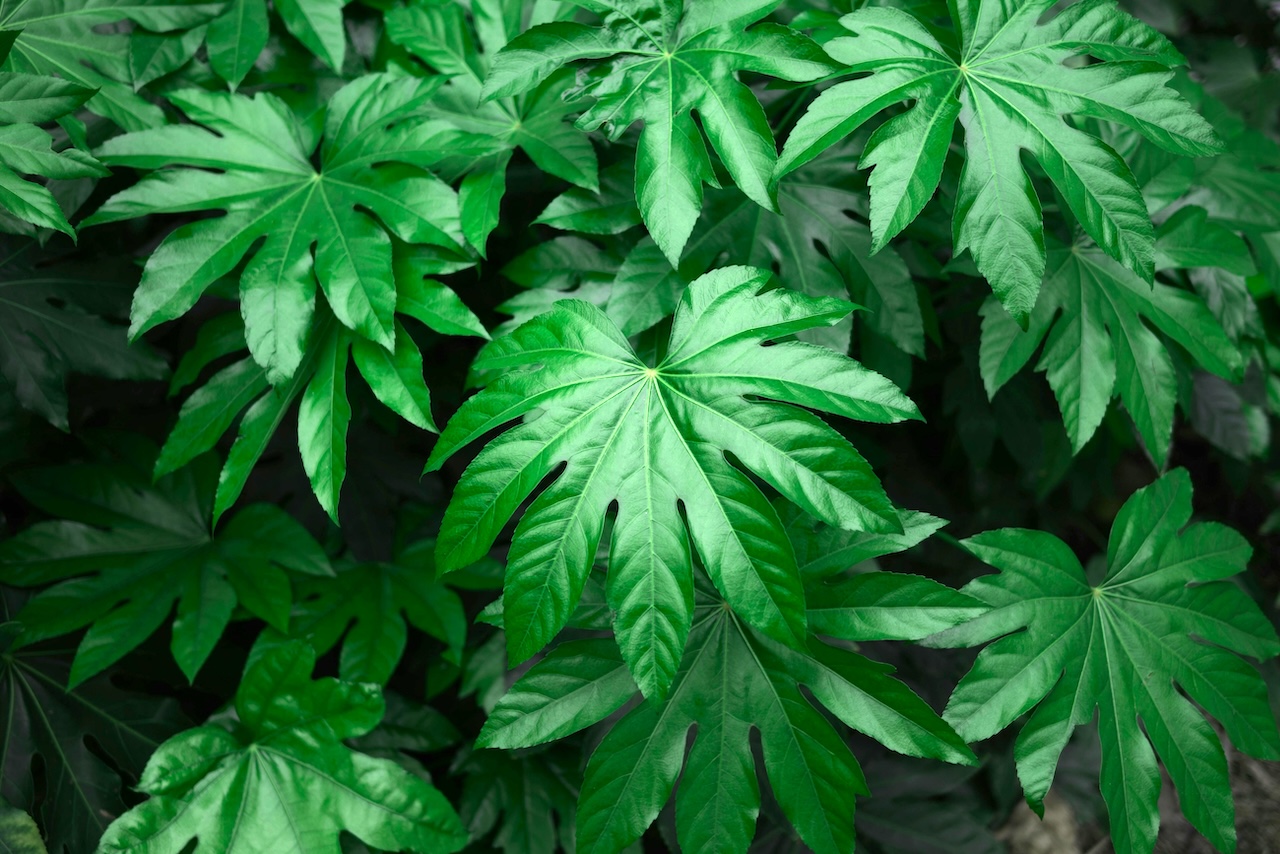
Fatsia japonica is a big, glossy, hand-shaped leaved evergreen shrub that copes with deep shade, pollution, coastal wind and near total neglect better than almost anything else you can plant. It wants planting in the ground rather than a container long term, tolerates full shade to part sun, and needs an occasional hard prune once it gets leggy and bare at the base. The straight species is unbeatable for reliable, low maintenance evergreen structure, though it works best planted in numbers rather than as a single lonely specimen.
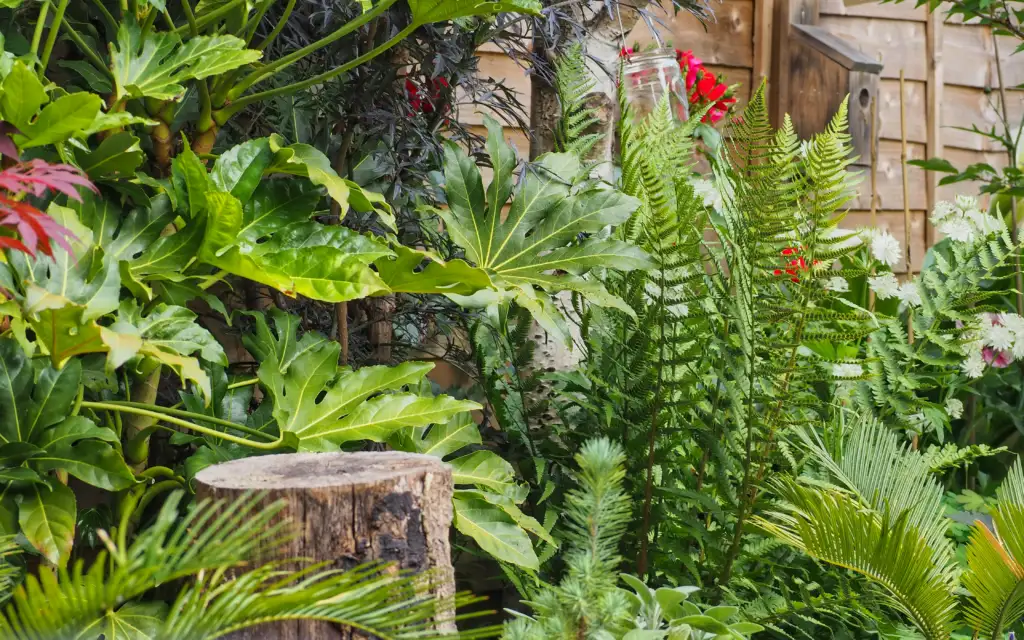
If you have ever watched Garden Rescue and thought the planting plan looked oddly familiar, there is a good chance a Fatsia japonica was involved somewhere. No shade to Chris or Charlie Dimmock either, since we use them a lot too.
I will hold my hands up here as one of the worst offenders for adding them whenever a tropical or awkward scheme comes up. When you need reliable, fast, evergreen structure in a shaded corner on a tight filming schedule and questionable soil, this plant earns its keep time and time again.
I want to be honest with you: Fatsia is not my favourite shrub in the way a well-grown viburnum or a decent hydrangea is. I find them a little lacklustre, and the fact that they can soon outgrow smaller gardens and look blocky.
On its own, one plant sitting in a border can read as a bit of a one-hit wonder, a single big glossy leaf shape repeated over and over with not much else going on. Where it earns its place depends on the setting, which this guide covers in full, rather than just telling you to go buy one!
Jump To
This page contains affiliate links for products I use and love. If you take action (e.g., subscribe or make a purchase) after clicking a link, I may earn a small affiliate commission, which helps me keep the Garden Ninja Blog free for all.
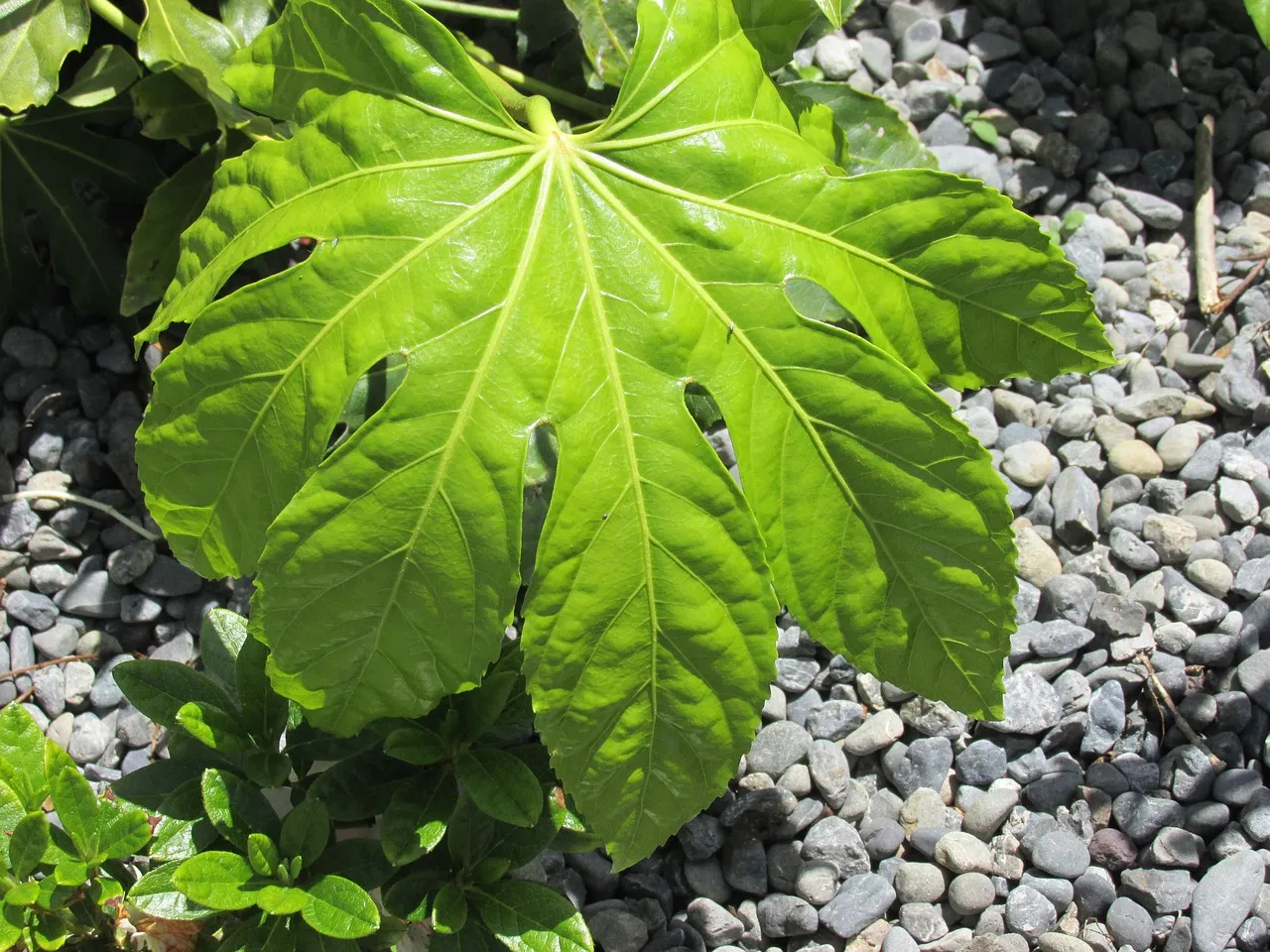
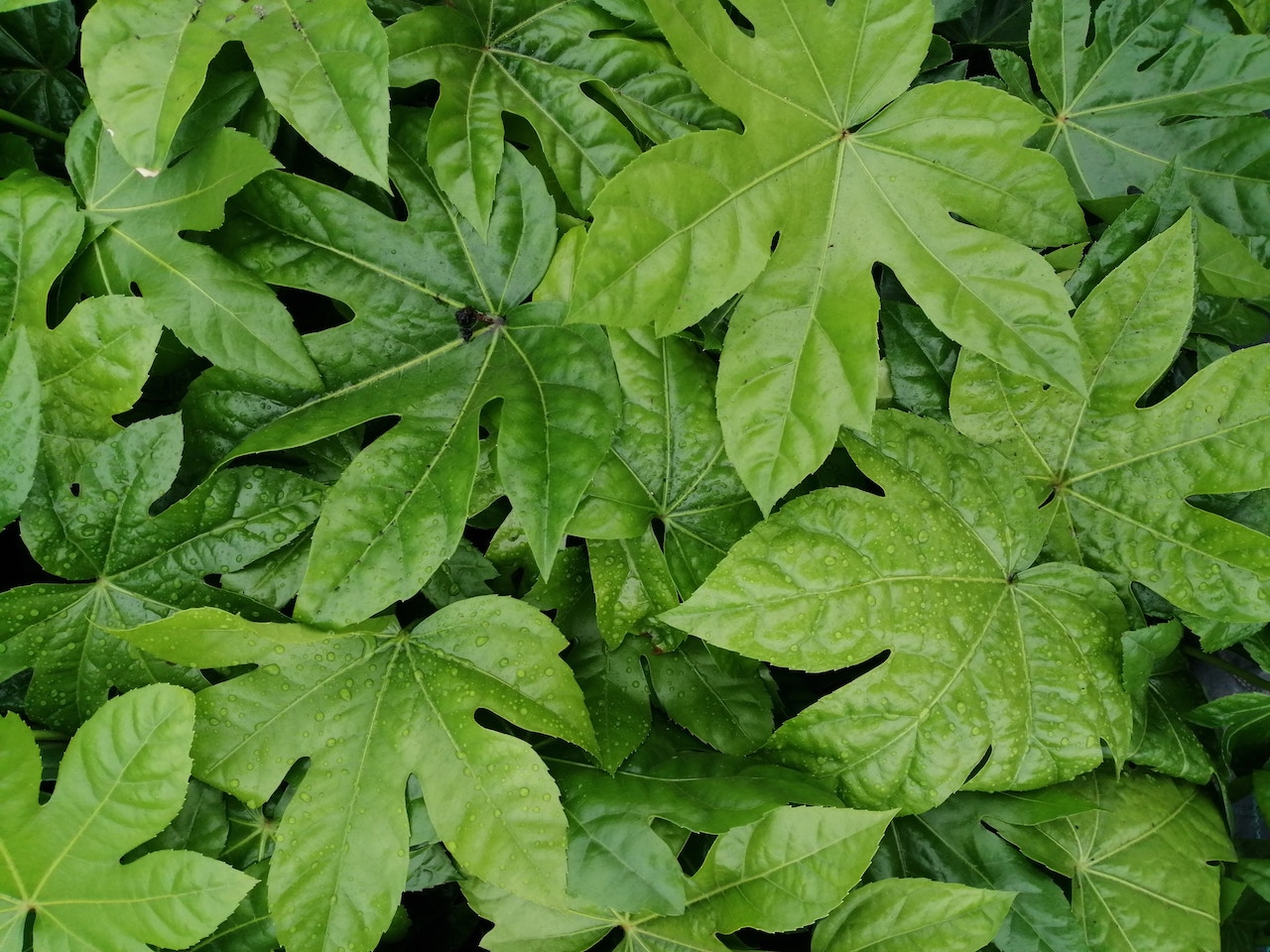
Fatsia japonica, sometimes called the Japanese aralia or paper plant, is an evergreen shrub in the Araliaceae family, native to woodland and coastal areas of Japan, Taiwan and South Korea. It is grown almost entirely for its foliage, large, deeply lobed, glossy dark green leaves shaped a bit like an open hand, each one commonly 20 to 40 centimetres across on a mature plant.
Left to its own devices, it forms a rounded, multi-stemmed shrub reaching 1.5 to 4 metres in height and a similar spread over time, though it is slow in its first few years, so most gardeners underestimate how much space to give it. It is rated H4 on the RHS hardiness scale, meaning it copes with UK winters in all but the coldest, most exposed inland sites, and it tolerates full shade better than almost any other evergreen shrub commonly available, which is the actual reason it turns up in so many gardens, including plenty of mine.
I will level with you here, Ninjas. Fatsia japonica is not a plant I get excited about the way I do about a well-chosen ative shrub (hello Viburnum opulus) or a decent multi-stemmed tree (Medlar germanica anyone?!).
Planted as a single specimen in an otherwise ordinary border, it can read as a bit of a one-hit wonder, one big leaf shape, repeated, with not a huge amount of seasonal change to keep your eye interested through the year. If that is the only tropical or architectural note in the whole garden, it tends to look slightly stranded rather than intentional!
Where it earns its keep, and where I will always use it on a client project without hesitation, is when coupled with other tropical forms or large leaf shrubs such as Phormiums or Himalayan honeysuckle. When Fatsia os planted as part of a proper scheme rather than a single full stop it works well as a filler plant.
You need several to achieve a tropical, jungle-adjacent feel, repeated along a longer border or used as full stops around your garden, so the leaf shapes read as a pattern rather than a solitary shape on its own.
One Fatsia looks like a single piece of big-leaved foliage. Three or five (different species, which we will cover below), worked in among other big-leaved or architectural planting, start to look deliberate and take you into garden design and away from guesswork.
I do understand exactly why it is so widely planted, even in gardens I am designing myself. In a cold, shaded, low-maintenance garden where nothing else wants to grow, Fatsia gives you a glossy, architectural evergreen foil that asks for almost nothing in return. It just needs suitable planting around it to help layer the flower bed without dominating it.
For a client who wants structure without the ongoing commitment, or a shaded side return that gets almost no direct light all year, it is very hard to argue with on pure performance, even if it is rarely the plant I would call my personal favourite in a scheme. Fatsia is the beginner’s friend in the shrub world!
Fatsia’s real party trick is deep, dry shade, the kind of spot under a canopy or against a north-facing wall where most other evergreen shrubs sulk or simply fail to establish. It will also take full sun in a cooler UK garden, though the leaves can scorch a little in a hot, exposed, south-facing spot with no shelter, so part shade to full shade remains its happiest range. It copes well with coastal exposure, urban pollution, and poor air quality, which is another reason it turns up so reliably in city gardens and courtyards.
Any reasonable garden soil suits it, from clay through to sandy, as long as it is not permanently waterlogged, and it has no strong preference for pH. Young plants benefit from some shelter from cold, drying winds in their first couple of winters, but established plants are considerably tougher than they look, shrugging off frost, wind and general neglect in a way few other large-leaved evergreens manage.
This is worth flagging clearly, since it is one of the most common mistakes I see with this plant. Fatsia is often sold and displayed as a container plant, particularly for a shaded courtyard or a front step, and it will look fantastic in that role for the first year or two.
The problem shows up around year three, once the root system has fully filled whatever pot it is in. Growth slows, leaves start coming in noticeably smaller than the older growth below them, and the whole plant can begin to sulk, yellow, or, in a bad case, simply give up and die, even with regular feeding and watering.
The reason is fairly simple. This is a shrub that wants to become a substantially large plant with a proportionally large root system to match, and no reasonably sized domestic container provides the root space it needs once it matures.
If you want the container look, treat it as a medium-term display plant and plan to move it into open ground within a couple of years, rather than expecting it to live happily in the same pot indefinitely. If a container is truly your only option, go as large as you practically can, use a good-quality loam-based compost, and expect to repot every year or two into the next size up rather than topping up the compost and hoping.
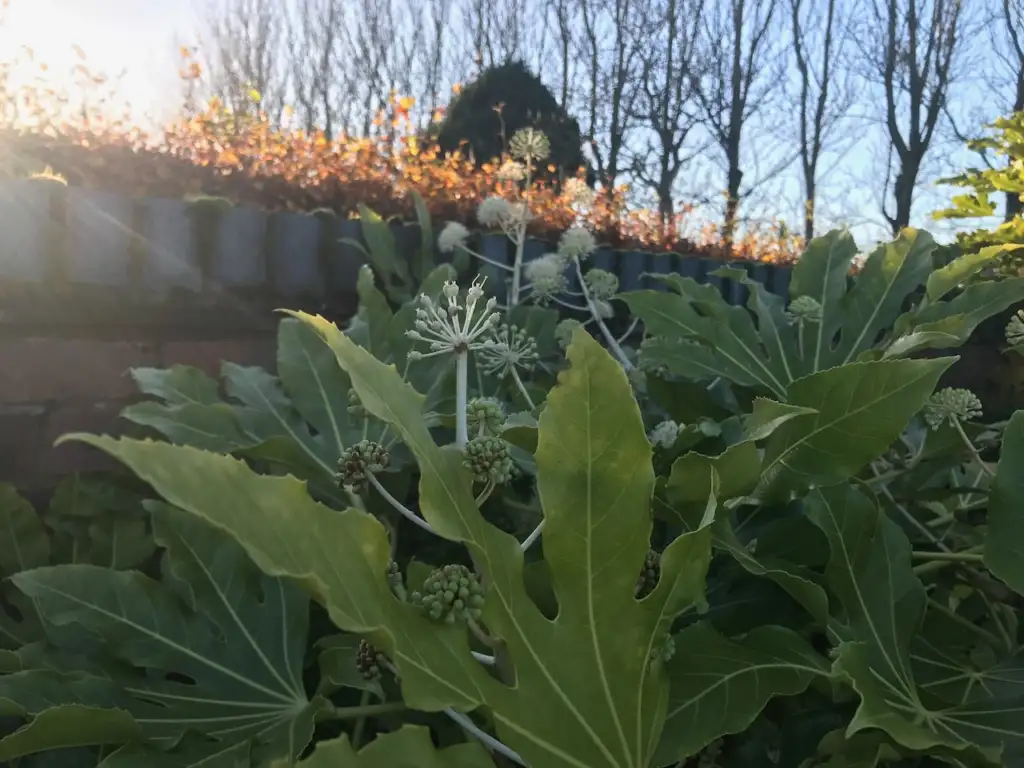
Ask most people what a Fatsia flower looks like, and you will get a blank stare, which is a shame, since this plant does flower, and the structure is distinctly strange once you actually stop and look. In October and November, mature plants send up clusters of small, creamy-white flowers arranged in round, spiky umbels that look more like a firework or a sea urchin than a typical garden flower, held well above the leaves on branching stems. This is the best part of Fatsias in my opinion; the alien flowers are lovely, if not short-lived.
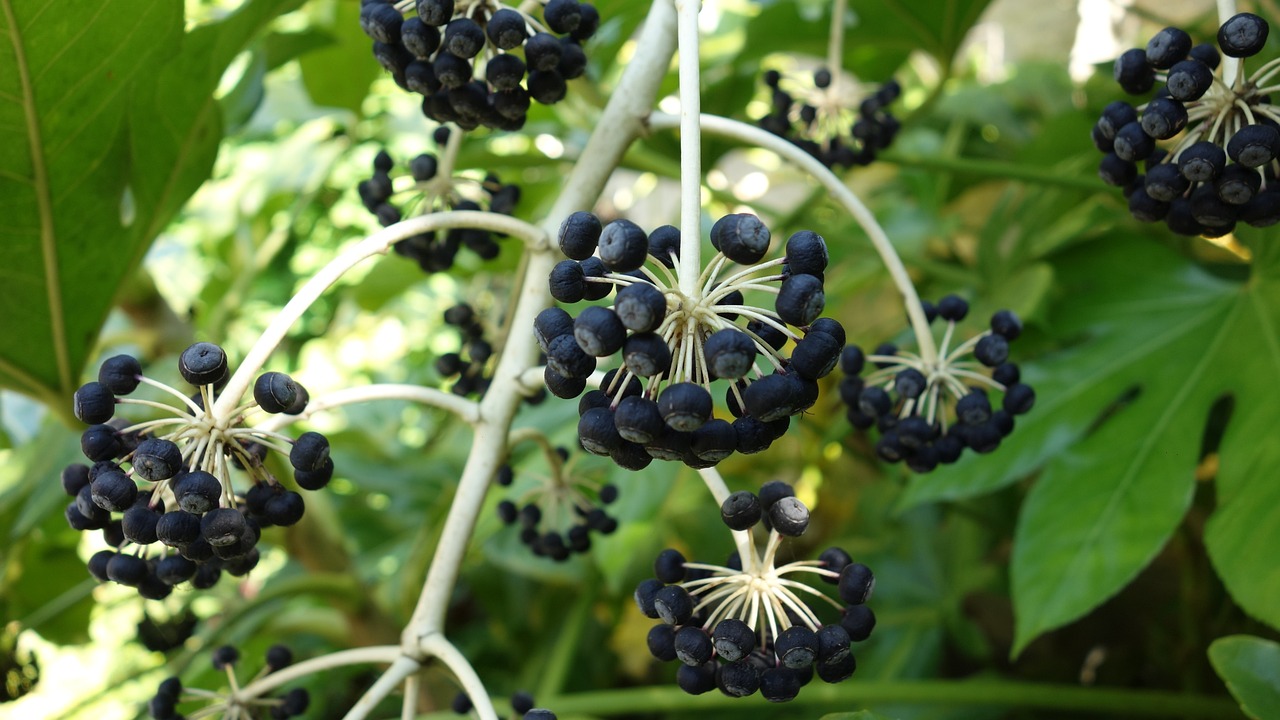
They are also a useful late-season source of nectar for pollinators, flowering at a time of year when very little else is offering anything, which is worth knowing if wildlife value factors into your planting choices. The flowers are followed by clusters of small black berries through winter, adding a second, quieter point of interest most people walk straight past without noticing, since all the attention tends to go to the leaves.
Both the odd flower structure and the berries are worth pointing out to anyone visiting your garden in late Autumn, since it surprises people who assumed this was a plant that never flowered at all.
The plain green species covered above is the one doing most of the heavy lifting in UK gardens, but a handful of other forms are worth knowing about if you want something with a bit more visual interest, or a distinctly different leaf shape.
Spider’s Web is the speckled, white-flecked variegated form, with fine white markings scattered across each leaf that do look like a web has been thrown over the plant. I will be honest, it is not to my personal taste at all. Something about the speckling gives me a bit of the ick rather than reading as elegant variegation the way it does on some other shrubs.
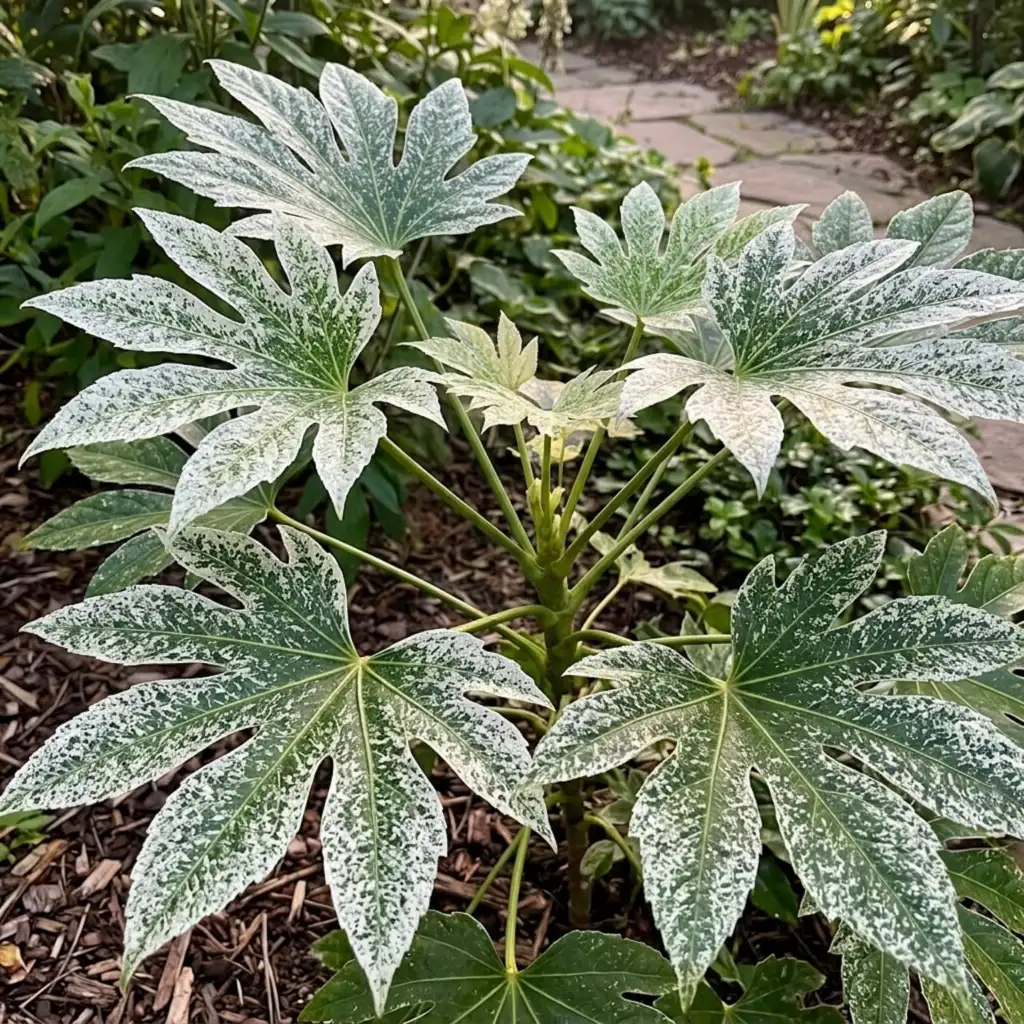
That said, I completely understand the appeal to many gardeners, as it brings noticeably more light and visual interest to a truly dark corner than the plain green species does, and plenty of my clients have specifically asked for it over the plain form for exactly that reason.
It is generally a touch slower growing and slightly less hardy than the straight species, so give it a little extra shelter in a harsh, exposed garden.
🛒 Buy Fatsia Japonica Spider’s Web on Amazon UK
Variegata carries a cream-to-white margin around the edge of each leaf rather than Spider’s Web’s scattered speckling, which, to my eye, reads as a much cleaner, more classic form of variegation. It brightens a shaded spot in the same way Spider’s Web does, without quite the same busy, mottled effect, and it is the variegated form I would reach for first on a client project.
🛒 Buy Fatsia Japonica Variegata on Amazon UK
Green Fingers is technically a different but closely related species, Fatsia polycarpa, rather than a cultivar of Fatsia japonica, but it is close enough in habit and care to belong on this list. The leaves are far more deeply cut, with narrow, finger-like lobes that give it a noticeably more exotic, almost palm-like look than the broader, more solid leaf shape of the straight species.
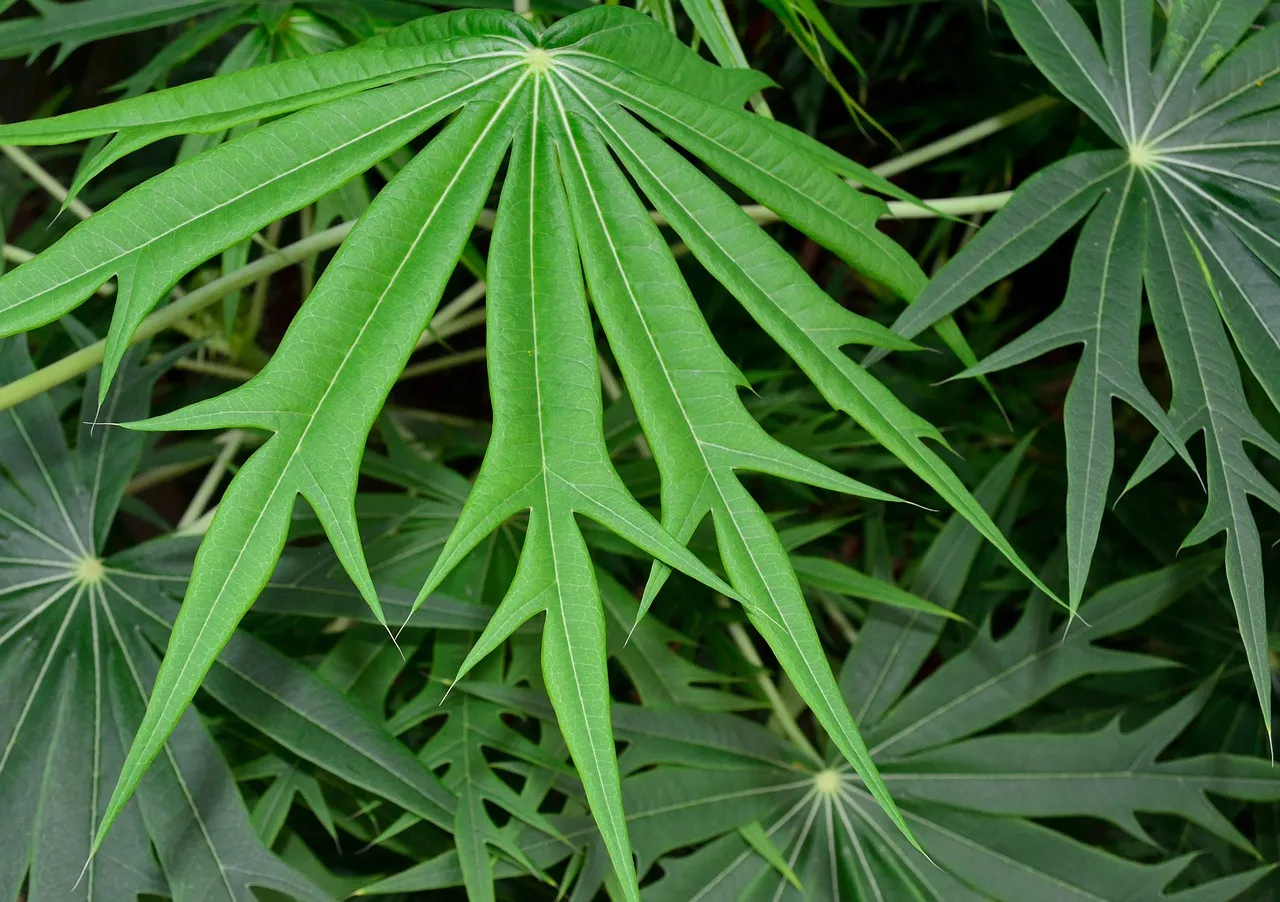
Care is essentially identical to the straight species: same shade tolerance, same hardiness, same reluctance to stay happy in a pot long term. Treat the advice throughout the rest of this guide as applying equally to Green Fingers.
🛒 Buy Fatsia Polycarpa Green Fingers on Amazon UK
Given everything I have said about Fatsia being a bit of a one-hit wonder on its own, this section is arguably the most useful in the whole guide. The plants you put around it are what turn a single glossy shrub into a proper scheme, and Fatsia’s bold, tropical-looking leaf shape makes it a natural anchor for a hardy exotic or hot-coloured planting style, provided you back it up with enough other big, confident planting to match its energy.
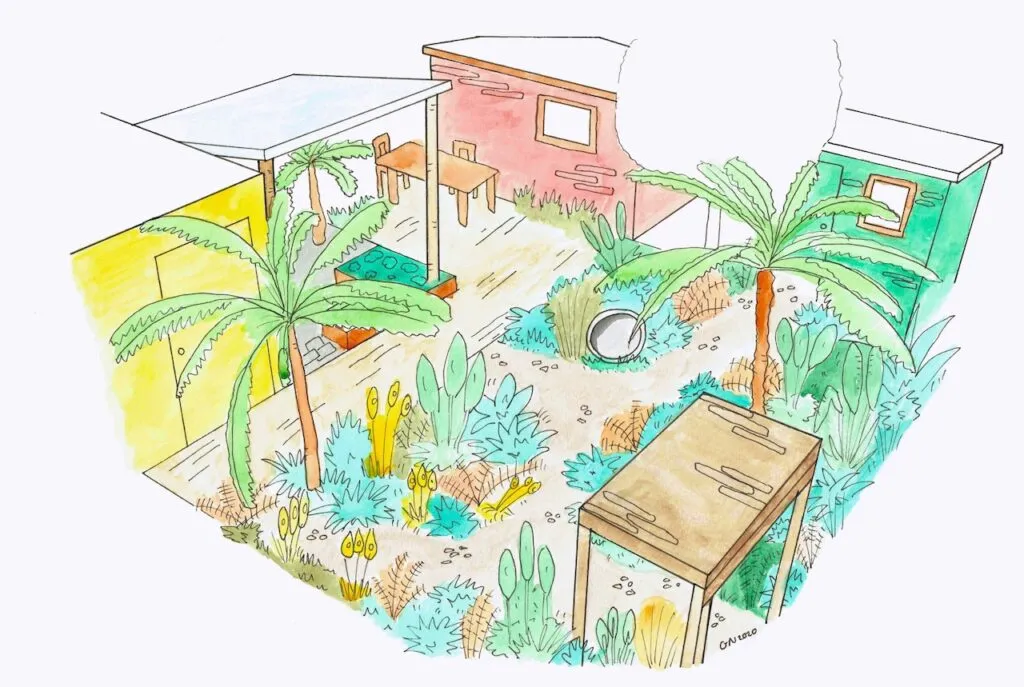
Hardy tropicals are a good starting point, since they share Fatsia’s bold, oversized leaf language and don’t need winter protection in most of the UK. Cannas bring similar architectural leaves in a warmer colour range, and, combined with Fatsia’s dark, glossy green, the contrast in leaf shape and colour reads as exotic rather than just green on green.
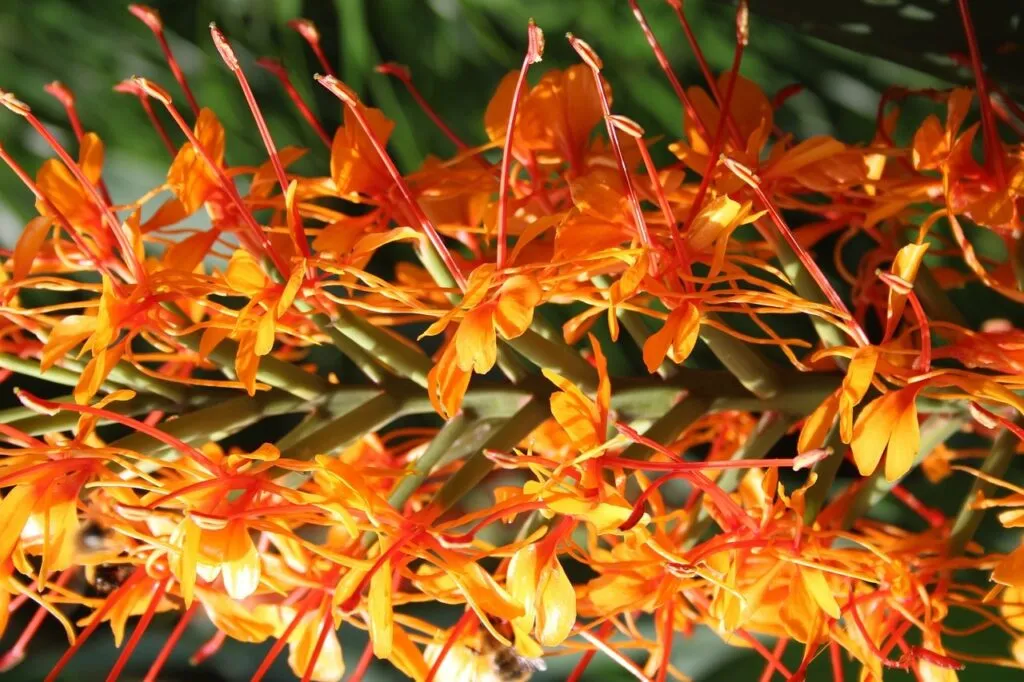
Ginger lilies (Hedychium) are another natural partner, bringing tall, cane-like stems and often deliciously scented flowers late in the season, at a similar scale to a mature Fatsia and tolerating the same reasonably sheltered, part-shaded conditions.
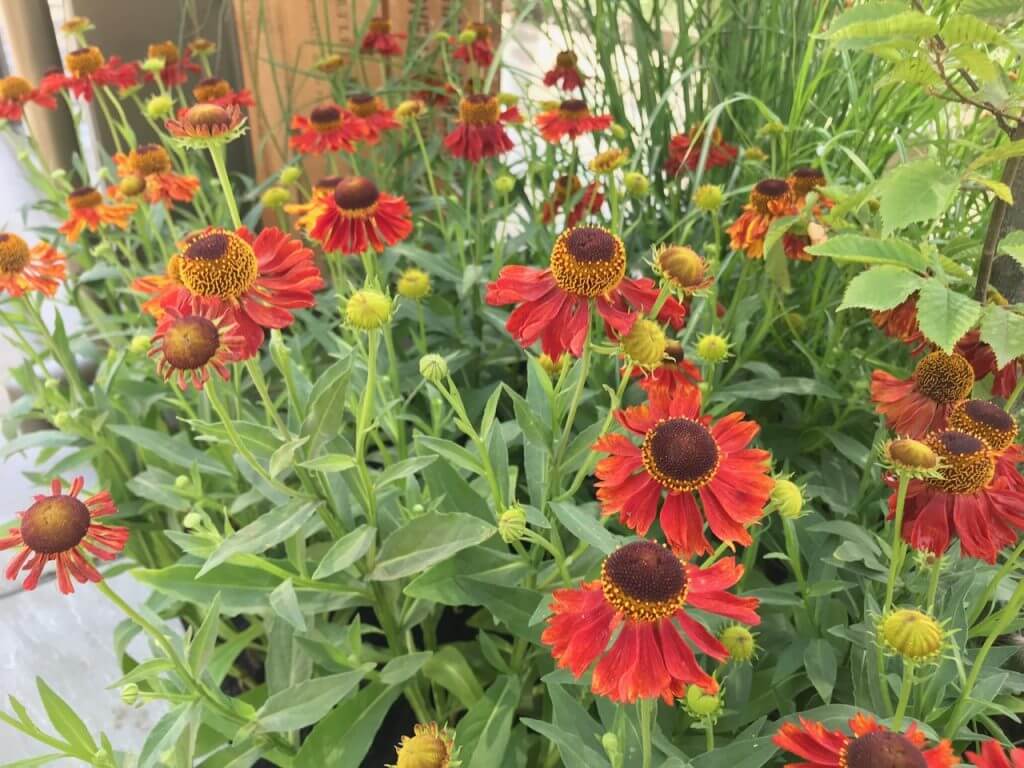
For colour at ground level, heleniums and crocosmia both work brilliantly against Fatsia’s dark foliage. Heleniums bring hot reds, oranges and yellows through summer into early Autumn, and their daisy-like flower heads give you exactly the seasonal movement and colour change that Fatsia alone cannot offer.
Crocosmia does a similar job with narrower, sword-like foliage that contrasts nicely against Fatsia’s broad, hand-shaped leaves, and its own fiery orange and red flower spikes through summer.
🛒 Buy Crocosmia Lucifer Bulbs on Amazon UK
🛒 Buy Hedychium Ginger Lily on Amazon UK
Put these together as a red-hot or hot tropical planting scheme, with Fatsia and cannas providing the big glossy leaf structure, heleniums and crocosmia bringing the fire-coloured flowers, and you get a border that earns the word exotic rather than a single shrub trying to do all the work on its own.
Left unpruned for long enough, Fatsia tends to become leggy, with bare, woody lower stems and all the leaf cover pushed up into a tuft at the top, which is not a good look and leaves an awkward gap at the base of a border. This is entirely normal for the plant, not a sign that anything is wrong, and it responds very well to a proper hard prune to correct it.
Spring, once the worst frosts have passed, is the best time to hard prune, typically April in most of the UK. Fatsia tolerates being cut back hard remarkably well, so do not be shy about it.
For a seriously leggy, overgrown plant, cut the bare stems back to around 30 to 60 centimetres from the ground, just above a visible growth bud or node where you can see the plant has previously produced new shoots. It will look alarmingly stark for a few weeks. My winter pruning guide below will show you how to prune back stems as a demonstration, but do wait until spring to prune Fatsias, as heavy frosts can damage recently cut branches.
Fresh growth typically breaks from lower down the stem within a month or so in reasonable weather, and you will have a fuller, more compact plant with leaf cover right down to ground level again by the following year.
If the plant is only mildly leggy rather than seriously overgrown, a lighter approach works too. Remove individual bare or overly long stems right back to ground level or to a lower side shoot, rather than cutting the whole plant down uniformly, which lets you thin and reshape it gradually over a couple of seasons instead of one dramatic chop.
Whichever approach you take, always cut back to just above a node or visible bud, using clean, sharp secateurs or loppers depending on stem thickness, and remove any crossing or damaged growth at the same time.
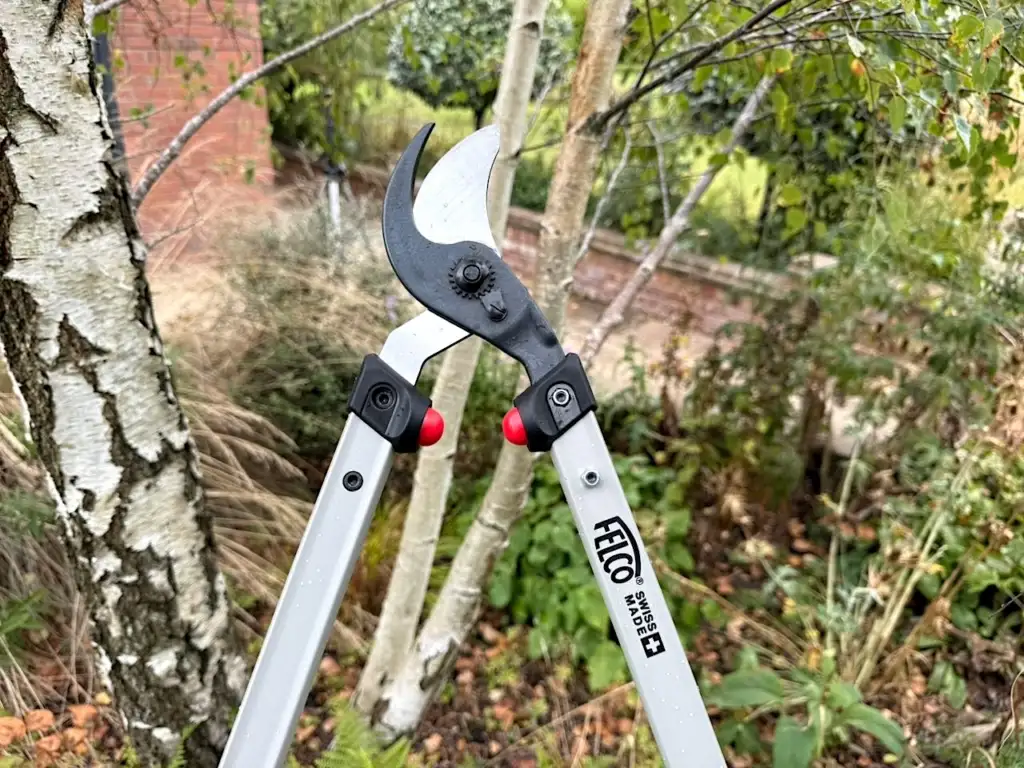
🛒 Buy Felco Loppers for Hard Pruning on Amazon UK
Beyond that occasional hard prune, Fatsia asks for very little. Water new plants regularly through their first summer while they establish, after which established plants in the ground rarely need supplementary watering except in a prolonged drought. An annual spring mulch of well-rotted compost or manure around the base helps retain moisture and feeds the plant through the growing season, though it is far from essential on reasonable soil.
Variegated forms like Spider’s Web and Variegata can occasionally throw a shoot of plain green growth, which is more vigorous than the surrounding variegated growth and will eventually take over the whole plant if left unchecked. Cut these reverted, all-green shoots out at the base as soon as you spot them to keep the variegation.
Fatsia is largely trouble-free outdoors in the ground, but a few issues come up regularly, particularly with plants kept in containers or indoors. Yellowing leaves are most often a sign of overwatering or poor drainage rather than a nutrient problem, since Fatsia’s roots dislike sitting wet, though on an older plant a small amount of natural lower leaf yellowing and drop is entirely normal as the plant sheds ageing growth.
A drooping, wilted appearance, particularly in a container or indoor plant, usually points to the root-bound container problem covered earlier in this guide, where the pot has simply become too small to support the plant.
There is a well-used, long-running thread on our own forum from a Ninja whose indoor Fatsia japonica was not doing very well, which walks through exactly this kind of container and light-related struggle in detail and is worth a read if your own plant is looking sorry for itself. There is also a useful thread on an odd-looking Fatsia polycarpa that covers some of the same troubleshooting for the Green Fingers relative.
Scorched, crispy leaf edges usually mean too much direct sun or drying wind for the plant’s liking, particularly on a young or recently moved specimen, and are best solved by relocating to a shadier, more sheltered spot rather than trying to nurse the damaged leaves back. Aphids and scale insects will occasionally take an interest in soft new growth, but rarely cause serious damage on an established outdoor plant.
Semi-ripe cuttings taken in late summer are the most reliable way to propagate Fatsia at home. Choose a healthy, non-flowering shoot from this year’s growth, take a cutting around 10 to 15 centimetres long just below a leaf node, and remove the lower leaves.
Reduce any remaining large leaves by about half to cut down on moisture loss while the cutting roots. Dip the cut end in rooting hormone, insert into a free-draining cuttings compost, and keep in a warm, sheltered spot out of direct sun until roots establish, which typically takes six to ten weeks.
Fatsia can also be grown from seed collected from the black winter berries, though seed-raised plants take considerably longer to reach a useful size than cuttings, and variegated forms like Spider’s Web will not come true from seed, so cuttings are the only reliable way to propagate those.
🛒 Buy Rooting Hormone Powder on Amazon UK
Fatsia japonica is considered mildly toxic to both dogs and cats if chewed or eaten, typically causing stomach upset rather than anything more serious. It is sensible to keep a close eye on a young or particularly nibble-prone pet around it, and to contact your vet if you notice symptoms after your pet has been chewing the leaves.
Yes, Fatsia japonica is fully evergreen, keeping its large, glossy leaves year-round rather than dropping them. This is one of the main reasons it is planted so widely for reliable, low maintenance structure in a shaded garden.
Hardy tropicals like cannas, ginger lilies (Hedychium), heleniums and crocosmia all pair well with Fatsia, echoing its bold, architectural leaf shape while bringing colour and seasonal change that Fatsia alone cannot offer. See the companion planting section above for a fuller breakdown.
A mature Fatsia japonica typically reaches 1.5 to 4 metres in height, with a similar spread, depending on growing conditions and pruning. It is slow to establish in its first couple of years, which often leads gardeners to underestimate its eventual size and plant it too close to other shrubs or a boundary.
Spring, once the worst frosts have passed and typically around April in the UK, is the best time for a hard prune on a leggy or overgrown plant. Light shaping or the removal of damaged growth can be done at any time of year without issue.
Yellowing is most commonly caused by overwatering or poor drainage, since Fatsia’s roots dislike sitting in permanently wet soil. A small amount of natural yellowing and leaf drop on the oldest, lowest leaves is normal on an established plant. If the whole plant is yellowing at once, particularly in a container, check the roots are not sitting in waterlogged compost.
It prefers part to full shade and is one of the best evergreen shrubs available for truly deep, dry shade under a mature tree or against a north-facing wall. It tolerates full sun in a cooler garden, but leaves can scorch in a hot, exposed, south-facing position.

Join over 100,000 gardeners on YouTube
Free gardening videos from the Garden Ninja, with 8 million views and counting.
Subscribe on YouTube, it’s freeKnowing that Fatsia works best in numbers rather than as a lonely single specimen is one thing. Knowing how to actually build a proper hardy tropical or hot-coloured scheme around it, one that reads as deliberate rather than accidental, is exactly what my online courses are built to teach.
With courses starting from just £29, you get the same design thinking I bring to client gardens, so a plainly useful but unglamorous shrub like Fatsia becomes part of a wider planting scheme rather than a single evergreen full stop in an otherwise empty shaded corner.
For the garden you’ve already got, not the one you’re starting from scratch. Seven checklists and video lessons from BBC Garden Rescue’s Lee Burkhill, built to help you work out what’s worth keeping before you spend a penny.
Garden Design Examples for Small Gardens: 30 Design Templates & Planting Plans: In this online gardening course, I’ll walk you through 30 fantastic garden designs, explaining the logic behind the layout, the plant choices, and take-home tips for applying them in your own garden.
Learn how to transform and design your own garden with Lee Burkhills crash course in garden design. Over 5 hours Lee will teach you how to design your own dream garden. Featuring practical design examples, planting ideas and video guides. Learn how to design your garden in one weekend!
Garden Design for Beginners Online Course: If you want to make the career jump to becoming a garden designer or to learn how to design your own garden, this is the beginner course for you. Join me, Lee Burkhill, an award-winning garden designer, as I train you in the art of beautiful garden design.
Well-grown Fatsia japonica will never be the plant that makes me weak at the knees the way a really well-grown perennial border does, and on its own in a border it can read as a bit of a one-hit wonder. But I would be doing you a disservice if I let personal taste or low-maintenance needs dictate an honest recommendation, because for deep shade, coastal exposure, a low-maintenance structure, or that glossy tropical foliage a cold garden badly needs, it is very hard to beat.
Plant it in the ground rather than a pot you will regret by year three, give it room to become the size it actually wants to be, back it up with a few companions so it reads as a scheme rather than a solitary full stop, and do not be afraid to hack it back hard once it gets leggy. Do that, and even a confirmed sceptic like me has to admit it earns its keep.
Happy Gardening!


Lee Burkhill, known as the Garden Ninja, is an award-winning garden designer and horticulturist with over 30 years of gardening experience and 15 years as a professional garden designer. A qualified RHS (Royal Horticultural Society) professional, Lee specialises in sustainable garden design and practical horticultural advice. He designs and presents on BBC1’s Garden Rescue and in leading gardening publications. Lee combines three decades of hands-on gardening knowledge with professional design qualifications to help gardeners create beautiful, functional outdoor spaces.
View all posts by Lee Burkhill