For the garden you’ve already got, not the one you’re starting from scratch. Seven checklists and video lessons from BBC Garden Rescue’s Lee Burkhill, designed to help you decide what’s worth keeping before you spend a penny.
69


Quick Answer: For branches between 25mm and 50mm thick, quality bypass tree loppers are the right tool. The Felco 221-80 is my top pick, since its 80cm handles reach most jobs without a ladder. For thicker or dead wood, a telescopic ratchet anvil lopper such as the Spear & Jackson Razorsharp handles what secateurs cannot.
I have been pruning trees and shrubs for thirty years, and I’ll admit, I love pruning as a way of encouraging growth, taking cuttings or tidying up and renovating old shrubs. If there is one tool that separates a tidy, healthy garden from a hacked-about one, it is a decent pair of loppers. Secateurs will only get you so far before you need heavier-duty tools. Once a stem is thicker than your thumb, you are either reaching for a saw or reaching for loppers, and choosing correctly between the two makes the difference between a clean cut that heals well and a ragged one that invites disease in and leaves you frustrated as the plant struggles to recover.
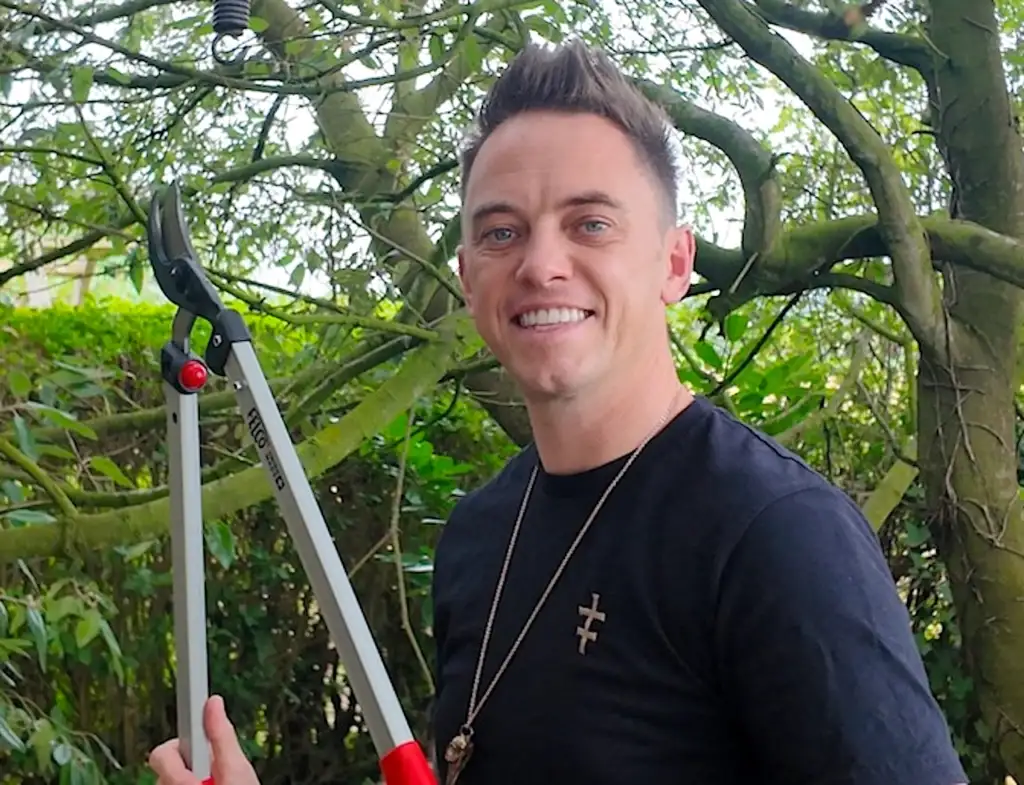
This guide is my honest view, drawn from what I actually reach for on-site, not from what a manufacturer has sent me for a quick promo. I will cover which cutting action suits which job, what to actually look for before you spend your money, my genuine top picks for UK gardens including the best extending tree loppers if you have got tall trees or hedges to reach into, and exactly when in the year you should and should not be reaching for loppers at all.
Jump To
Before we get into the details, if you are working out where loppers fit in with your existing tools, my secateurs guide covers the smaller cutting jobs, and the pair I reach for first on any given day is still the Felco 2. For thicker material, my top lopper recommendation is the Felco 221-80, available on Amazon UK, and I will explain exactly why further down this guide.
This page contains affiliate links for products I use and recommend. If you take action after clicking a link, I may earn a small gardening commission, which helps keep the Garden Ninja blog free for everyone.
This is the question I get asked more than almost any other, usually from someone standing in front of an overgrown shrub with a pair of secateurs that are visibly struggling. Secateurs are designed for stems around 20-25mm in diameter, roughly the thickness of your thumb. Push them past that, and you are not making a clean cut; you are crushing, bruising and forcing, which damages both the plant and the tool.
Loppers exist precisely to fill the gap between secateurs and a pruning saw, handling stems from roughly 25mm to 50mm in diameter, depending on the model, with two-handed leverage to cut cleanly.
The reason loppers cut thicker material so much more easily than secateurs comes down to simple mechanics. A pair of secateurs gives you maybe 15cm of handle to generate cutting force. Loppers with 60cm or 80cm handles give you four or five times that leverage, and the compound or ratchet mechanisms found on some models multiply the force further still. That is why I can take a 40mm stem out with loppers in one clean action that would take several exhausting, ragged attempts with secateurs.
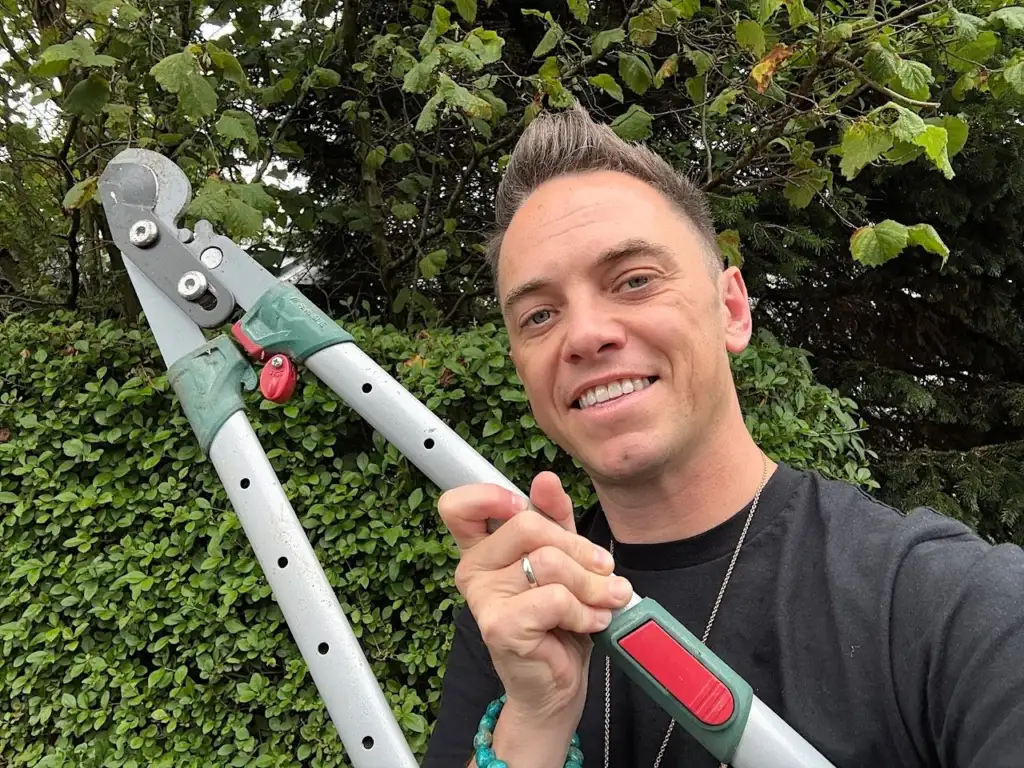
Beyond 50mm, even the best loppers start to struggle, and you should reach for a pruning saw instead. I go through this decision in more detail in my guide to pruning low-hanging fruit tree branches, where the saw takes over once loppers have done what they can.
As a rough rule I give clients: secateurs for anything under a thumb’s width, loppers for anything up to a wrist’s width, and a saw for anything beyond that. It sounds simple because it is, and following it will save your tools and your plants a lot of unnecessary damage.
I see this mistake most often on established roses, where old, woody stems are left because secateurs cannot manage them and loppers are never bought. My beginner’s guide to pruning roses covers this in detail, but the short version is that a good pair of loppers allows you to carry out a proper renovation prune on a neglected shrub. Without huffing and puffing and getting frustrated when pruning cuts snag, or your secateurs get caught. This is often because beginner gardeners think secateurs can be forced through far thicker woody material than they can.
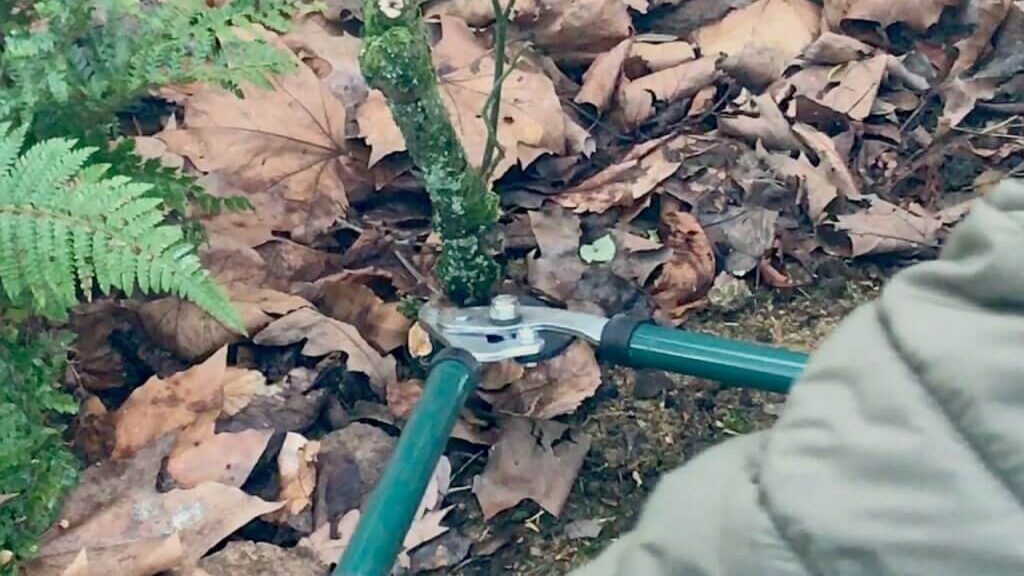
Loppers cut through much thicker material and are essential for any thorough pruning of mature shrubs such as old philadelphus and cornus that have not been touched in years. Without loppers, that thick old wood simply gets left in place, and the shrub never gets the renewal it needs.
Just as with secateurs, loppers come in bypass and anvil designs, and getting this choice right matters more than the brand you end up buying. Trust me when I say bypass loppers are the choice 95% of the time, but let me explain why.
Two curved blades pass each other in a scissor action, and this is my default recommendation for the vast majority of pruning work. Bypass loppers give a clean, precise cut on live wood, which heals faster and looks far tidier than a crushed one. If you are pruning fruit trees, roses, or any shrub that is still actively growing, you want to use bypass pruners.
Every top pick in this guide, except for the dedicated dead wood option, is a bypass design, because that is what most UK gardens need most of the time. Anvil loppers are reserved for the most experienced pruner and should be left alone. Bypass loppers are suitable for beginner gardeners through to pros and are far easier to use and maintain!
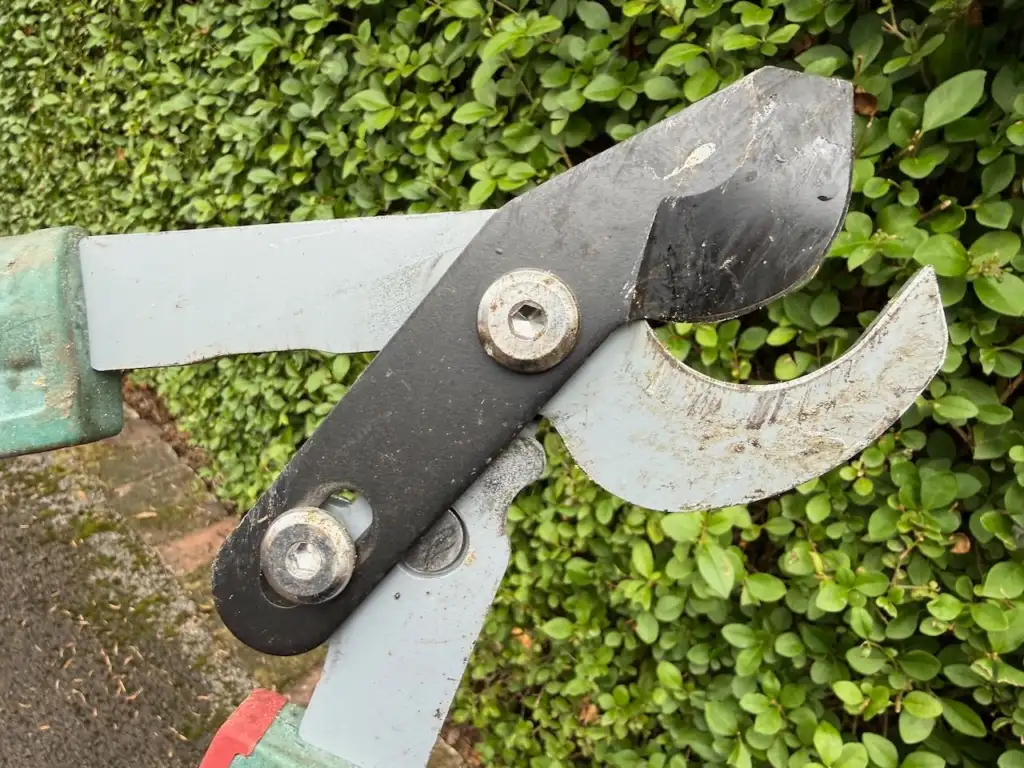
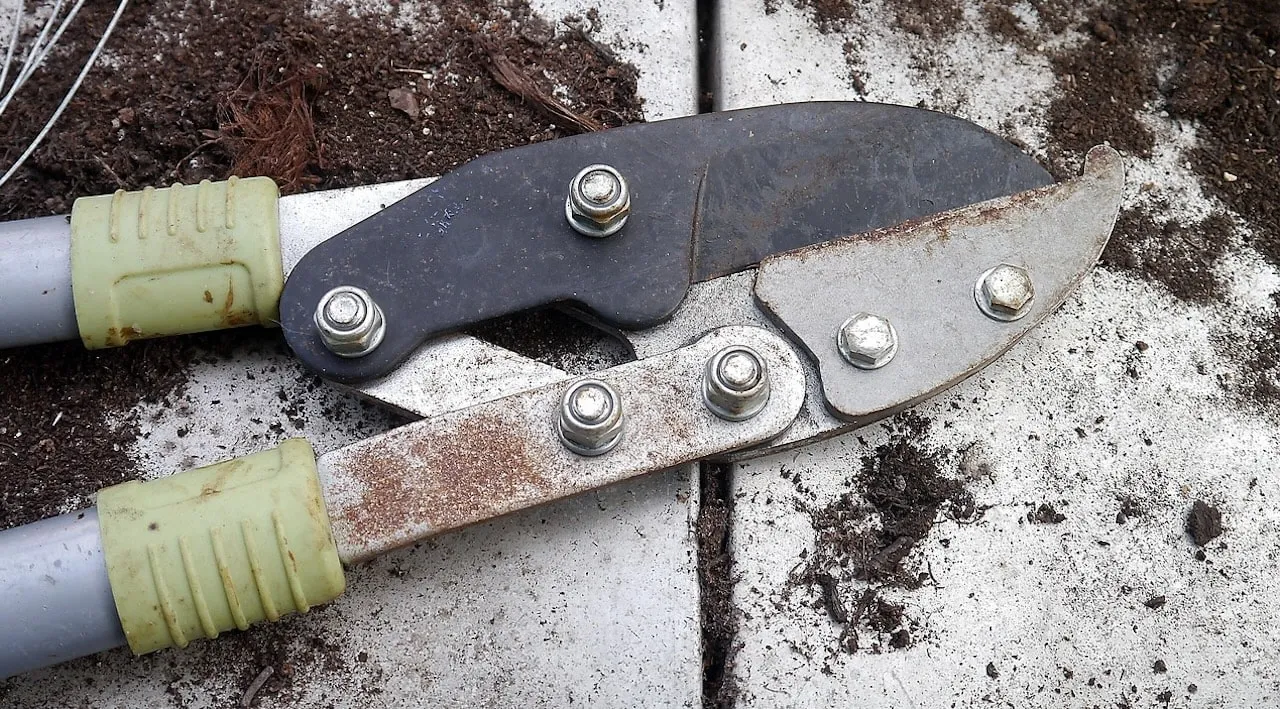
A single blade closes onto a flat metal anvil rather than passing another blade, a bit like a blacksmith striking an anvil. This provides much more of a crushing force for the same hand effort, making anvil loppers the better choice for dead, dry, or diseased wood you are removing rather than shaping.
The trade-off is that on live green wood or fresh stems, an anvil lopper tends to bruise and crush rather than slice cleanly, so I would not reach for one to prune a healthy fruiting stem. Where anvil loppers earn their place is clearing storm-damaged branches, removing dead wood after winter, or working through material that is simply too tough and dry for a bypass blade to bite into cleanly.
💡 Lee’s Professional View
I keep both types in my kit, but the bypass pair gets used on roughly nine jobs out of ten. If you can only justify buying one set of loppers, make it bypass. You can always fall back on secateurs or a saw for the odd bit of dead wood, but you cannot get a clean cut on live growth from an anvil blade, and I would rather have the versatile option covering the majority of my pruning needs.
Once you know whether you need bypass or anvil, there are a handful of practical details that separate loppers you will still be using in a decade from loppers that end up in the shed, bent and forgotten, after one hard season.
Cutting capacity, not just handle length. Every reputable lopper manufacturer states a maximum branch diameter, and it is worth taking that figure with a small pinch of salt. The stated capacity assumes fresh, green wood. Push a pair of 35mm capacity loppers through a 35mm piece of dry oak, and you will struggle, whereas the same loppers will glide through 40mm of soft, sappy growth without much fuss. Buy slightly above the capacity you think you need, particularly if much of your pruning is on established, woody shrubs rather than young growth.
Handle length and leverage. Longer handles give you more mechanical advantage and more reach, but they also add weight and become harder to manoeuvre in a tight border or between other branches. A 40cm pair is lovely for close in shrub work but gives you very little extra reach over secateurs. A 60cm to 80cm pair is the sweet spot for most general tree and shrub maintenance, giving you real leverage on thick stems and enough reach to work into the crown of a small tree without a ladder. Beyond that, telescopic loppers extending past 90cm start to earn their keep for particularly tall or awkward growth, which I cover in the extending loppers section below.
Blade steel. As with secateurs, hardened carbon steel or SK5 Japanese steel will hold an edge far longer than basic stainless steel, though it needs occasional sharpening to stay that way. A PTFE or non-stick coating on the blade is a properly useful, unfussy feature on loppers, since it reduces sap build-up and resistance as you cut, which matters more on a long stroke than it does on a short secateur snip.
Weight and handle material. Aluminium handles are light and perfectly strong enough for the vast majority of garden use. Fibreglass and steel tube handles add durability for particularly heavy professional use but come with a weight penalty that becomes noticeable after twenty minutes of overhead pruning. I have used both, and for a domestic garden or even a busy allotment, aluminium is the sensible choice. Save the heavier, more industrial handles for arborists and estate teams working all day, every day.
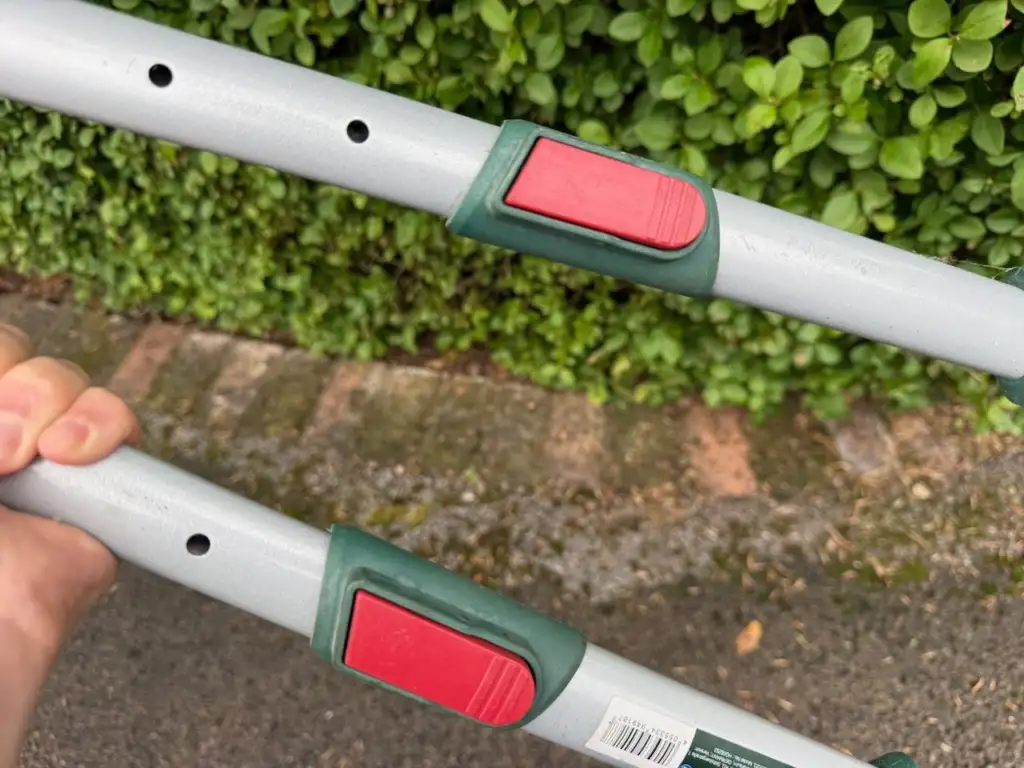
Fixed length or telescopic. Telescopic loppers extend your reach without a ladder, which sounds like it should always be the better option. In practice, telescopic handles add weight, add a mechanism that can loosen or seize over time, and reduce the precision of your cut compared with a fixed-length pair, because you are managing more leverage at a greater distance from the cutting head.
My honest view is that a good fixed-length pair with a properly useful handle length, such as 60cm to 80cm, covers most maintenance pruning without a ladder in sight. Telescopic loppers earn their place specifically for taller trees, overgrown hedges, or branches that are truly out of comfortable reach, which is exactly why I have picked out the best one separately further down this guide. But….extendable loppers tend not to be as robust and often at full extension can feel wobbly and like they are about to bend, given they are putting all their pressure on the small pivot point in the extension.
Weight, if grip or fatigue is a concern. Loppers are inherently heavier than secateurs, and a telescopic pair extended to its full length puts noticeably more strain on the shoulders and wrists than the same pair collapsed down. If arthritis, reduced grip strength, or general fatigue is a factor, a ratchet mechanism properly earns its keep here, since it lets you complete a thick cut in several light squeezes rather than one forceful one. It is worth handling a pair in person before you buy if this applies to you, since the difference between a well-balanced 1.2kg pair and an awkwardly weighted 1.9kg pair is far more noticeable in the garden than it sounds on a spec sheet.
Replacement parts. Exactly as with secateurs, this is the detail most people overlook and the one that determines whether your loppers last five years or twenty. Felco sell every spring, blade, buffer and bolt separately, and their loppers can be fully stripped down and rebuilt. Cheaper brands rarely offer this, which means the moment a spring fails or a blade chips, the whole tool is scrap. If you are spending serious money, check parts availability before you buy, not after something breaks.
These are the loppers I would happily recommend to a client, a friend, or my own family, based on what I have actually used across thirty years of professional and personal pruning.
Around £110 to £120
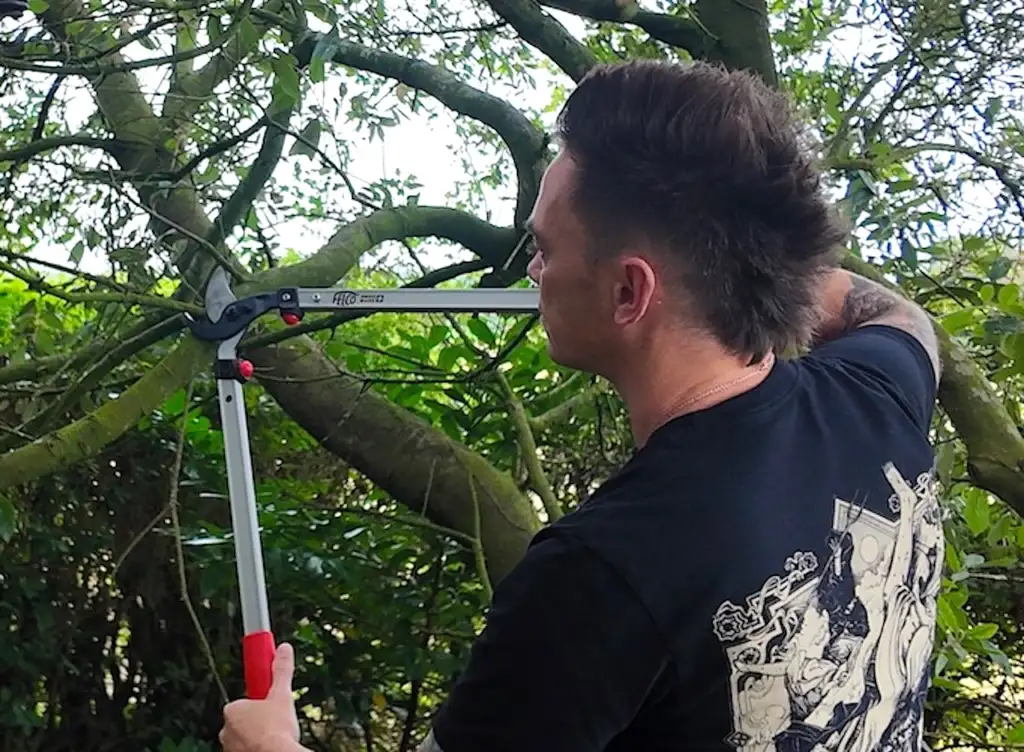
This is the pair I reach for on most general maintenance jobs, and it earns the top spot for one simple reason. The 80cm handles give you enough leverage and reach to prune well into the crown of a small tree, tackle overgrown shrubs, and reach branches that would otherwise mean fetching a ladder, without adding the weight or complexity of a telescopic mechanism. For the vast majority of maintenance pruning on established trees and shrubs, an 80cm fixed handle gives you all the reach you actually need, which is why I do not bother taking a ladder out for most jobs any more.
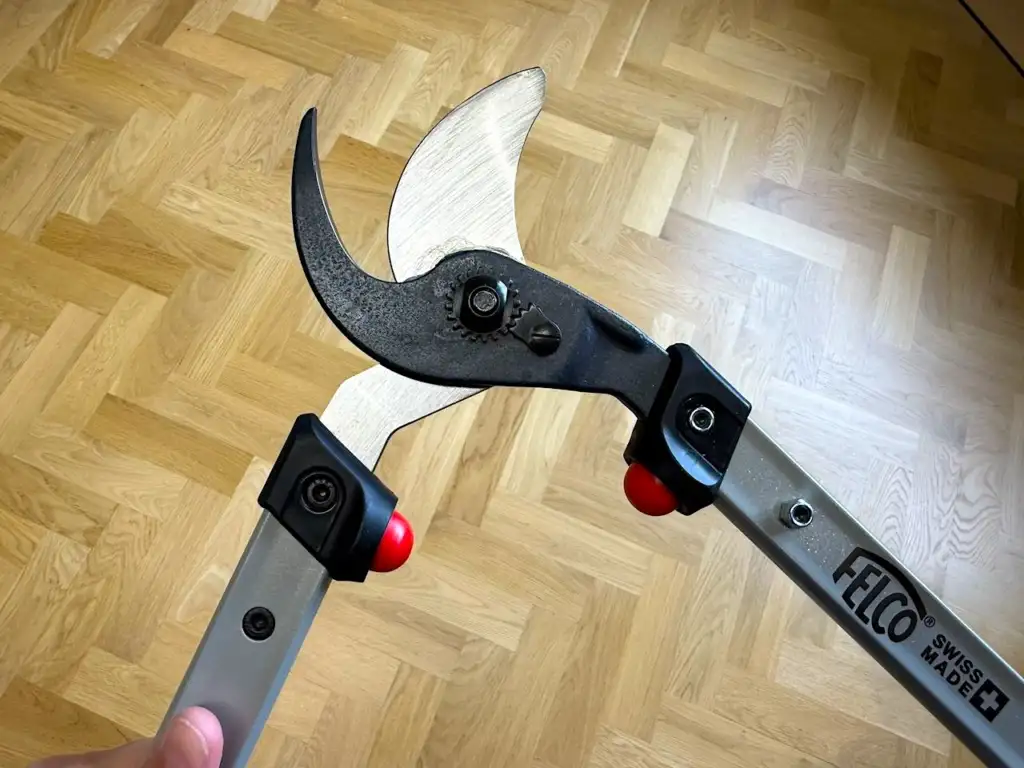
The curved bypass head, with its hooked counter blade, pulls the branch into the cut rather than letting it slip away, a small detail that makes a real difference when working overhead or at an awkward angle. The blade and forged counter blade are hardened Swiss steel, the handles are lightweight aluminium with an I-beam construction that keeps the whole tool from feeling front-heavy, and every component is replaceable, exactly as you would expect from Felco.
I used these recently in my own orchard with several mature apple trees which needed a late summer maintenance prune and they made light work of branches that would have required two hands, a ladder, and a lot of patience for anything smaller.
The cutting capacity is around 45mm on green wood, which comfortably covers the vast majority of tree and shrub maintenance you will do in a UK garden. At around 1.24 kg, it is not the lightest tool in the shed, but the weight is well balanced along the handle length rather than concentrated at the head, so it does not feel tiring even after a long session.
| Felco 221-80 at a Glance | |
| Type | Bypass, fixed 80cm handle |
| Cutting capacity | Around 45mm on green wood |
| Weight | 1.24kg |
| Best for | General tree and shrub maintenance, reaching into the crown of small trees without a ladder, established fruit trees and roses |
🛒 Buy the Felco 221-80 Long Reach Loppers from Amazon UK
Around £95 to £110
If your pruning is mostly closer to hand, dense shrub borders, roses, congested growth where you need to get in between stems rather than reach overhead, the shorter 211-60 is the better tool. The 60cm handles give you plenty of leverage for a 35mm cutting capacity while staying compact enough to work in tighter spaces than the 221-80 can manage comfortably. These are the bulletproof good all-rounders, great for smaller shrubs, young fruit trees and any light maintenance on trees.
It uses the same curved, pulling-cutting head design as its longer sibling, so the cut quality is identical, and the same rubber shock absorbers protect your wrists during repeated cuts. The beauty is they are perfectly weighted and balanced so no more arm ache!
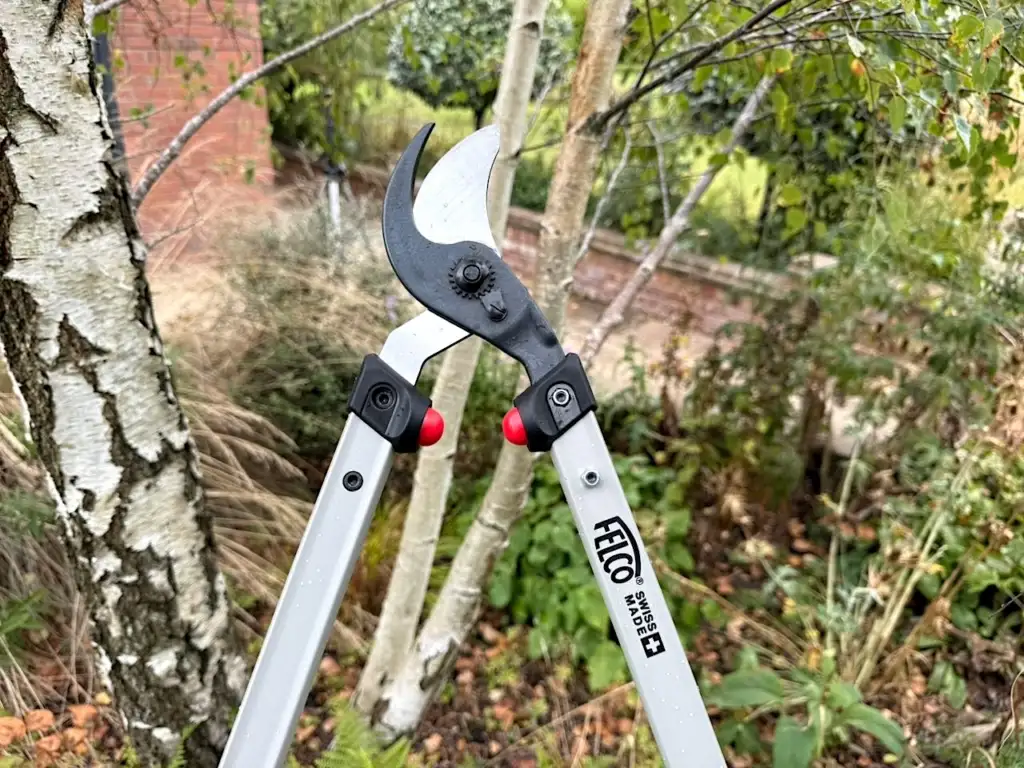
I keep a pair of these alongside my longer loppers precisely because they are easier to control in a crowded border where an 80cm handle would be fighting the surrounding growth as much as the branch you are actually trying to cut. Think of the 211-60 as the more nimble option and the 221-80 as the reach option, the boy racer of the two and choose based on where most of your pruning actually happens rather than which sounds more impressive on paper.
| Felco 211-60 at a Glance | |
| Type | Bypass, fixed 60cm handle |
| Cutting capacity | Around 35mm |
| Best for | Dense shrub and rose borders, congested growth, gardeners who prioritise control and manoeuvrability over maximum reach |
🛒 Buy the Felco 211-60 Loppers from Amazon UK
For particularly tall trees, overgrown hedges that have got away from you, or branches that sit just beyond comfortable reach even with an 80cm fixed pair, telescopic tree loppers are worth having in the shed. They will not replace a good fixed length pair for everyday maintenance, but for the specific job of reaching high without a ladder, they are hard to beat.
Around £75 to £90
Wolf-Garten is a German brand with a reputation similar to Felco among people who use their tools professionally, and the RR900T is currently the standout telescopic lopper on the UK market. It was awarded a BBC Gardeners’ World Magazine Best Buy as the best telescopic lopper, scoring higher than any other lopper the magazine tested that year. Having read through the technical detail and a good number of owner reviews, it earns that position fairly.
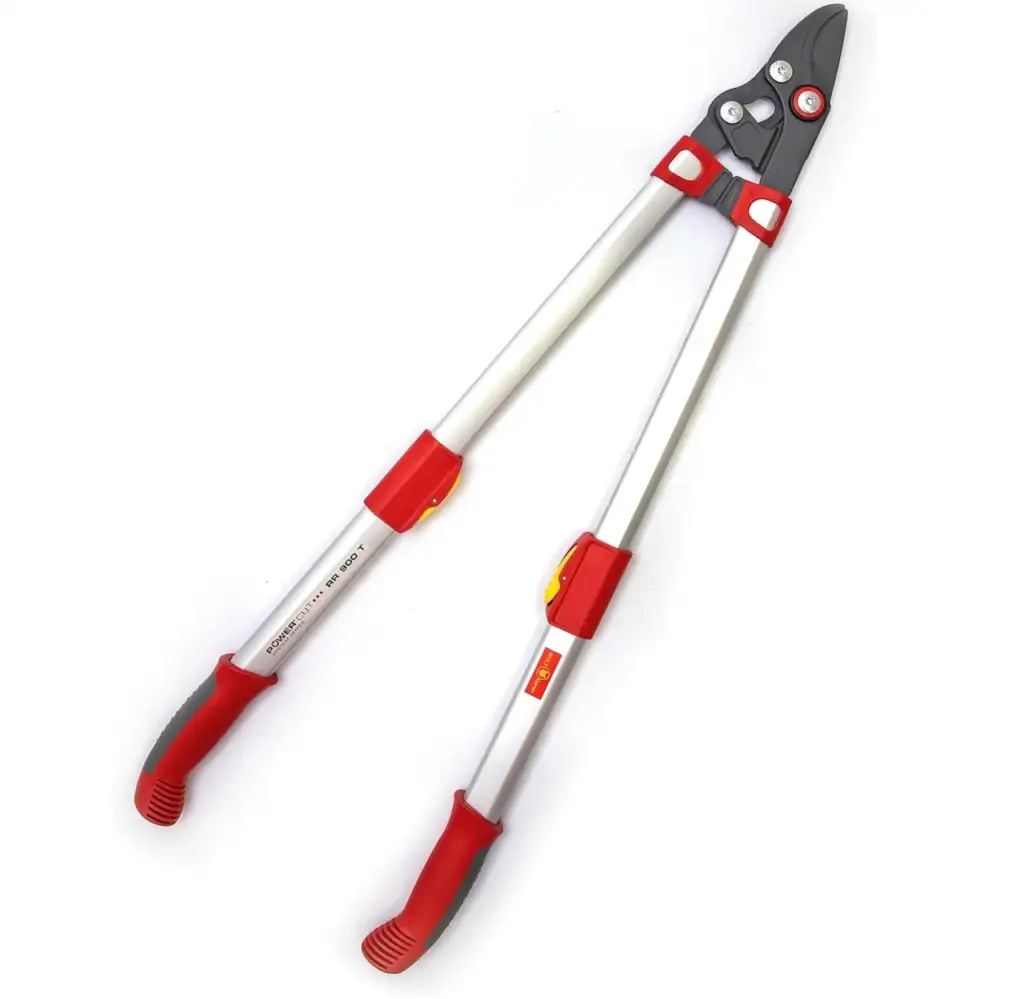
Unlike the anvil pair below, this is a bypass design that provides a clean scissor cut suited to live, healthy wood rather than the crushing action of an anvil blade. The handles telescope from 65cm to 90cm, and a dual-pivot cutting head multiplies your hand force by roughly four times, which can surprise beginner gardeners. Though the pivot mechanism can be a bit strange to get used to!
A 50mm branch at full extension does not require anywhere near the effort you would expect. At around 1.75kg it is properly light for a telescopic pair, which matters once you are holding it overhead for any length of time. The blades are replaceable and can be sharpened, which I love over needing to be swapped out entirely, and the whole tool carries a ten-year guarantee.
If you want a telescopic pair that handles live growth cleanly and reaches high, this is the one I would point you to first. Keep the anvil option below in the kit alongside it for dead or storm-damaged wood, where the extra crushing force earns its place.
| Wolf-Garten RR900T at a Glance | |
| Type | Bypass, telescopic 65cm to 90cm |
| Cutting capacity | Around 50mm at full extension |
| Weight | 1.75kg |
| Best for | Tall trees and hedges, live wood pruned at height, one telescopic pair that does not compromise on cut quality |
🛒 Buy the Wolf-Garten RR900T Telescopic Loppers from Amazon UK
Around £30 to £40
Spear and Jackson have been making tools in Sheffield since 1760, and this pair is consistently one of the best selling and best reviewed loppers on Amazon UK, with thousands of reviews sitting comfortably above four and a half stars. The twist and lock telescopic handles extend from around 40cm right up to 80cm, giving you an extra arm’s length of reach exactly when you need it, and the mechanism is simple enough that it does not fiddle about or work loose mid job.
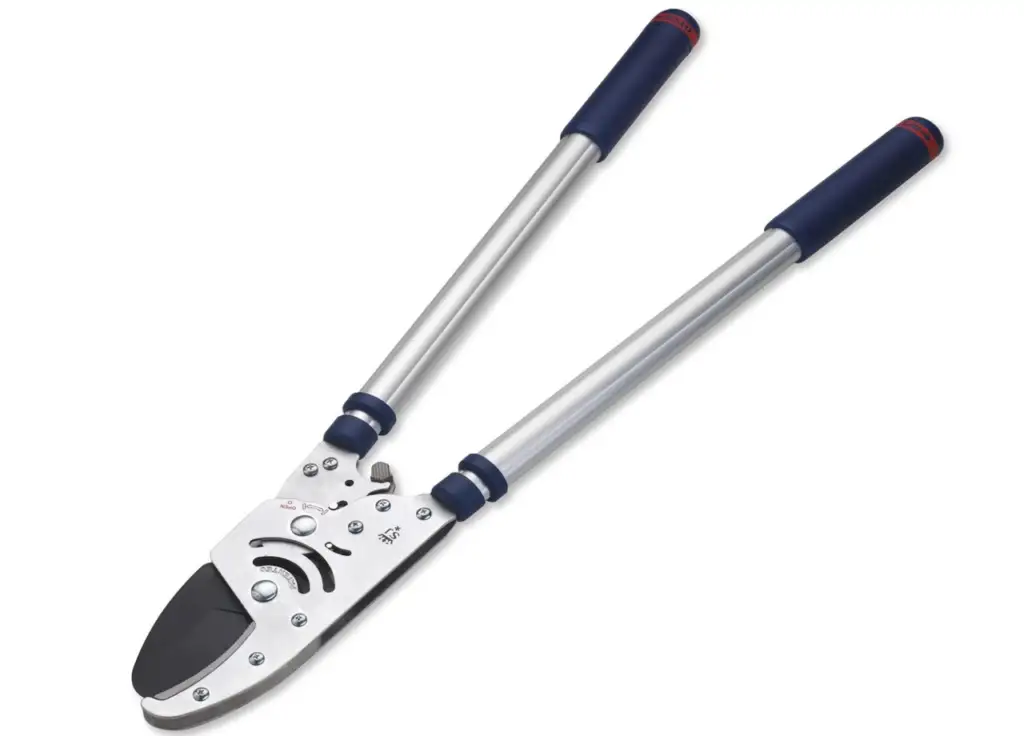
The clever part is the ratchet mechanism. Rather than relying on a single powerful squeeze to force the blade through a thick branch, the ratchet advances the cut in several short, manageable strokes. Less pushing and more relaxing Ninjas! This means you can cut through branches up to around 50mm thick without anywhere near the hand strength you’d need to do it in one push. This makes a difference on long pruning sessions or if grip strength is a concern. The blade is PTFE-coated SK5 carbon steel, which resists rust and glides through wood with far less friction than an uncoated blade, and the anvil itself is a softer metal designed to protect the cutting edge rather than blunt it over time.
Because this is an anvil design, it is at its best on dead, dry or properly tough wood rather than delicate live growth, which pairs neatly with its role as the reach specialist in your kit. I would keep this for the awkward, high, or stubborn branches, and reach for a bypass pair for everything else. It also comes with a ten-year guarantee, which says a great deal about how confident the manufacturer is in the build quality, and matches what I have seen from these in the field.
| Spear & Jackson Razorsharp at a Glance | |
| Type | Anvil, telescopic 40cm to 80cm |
| Cutting capacity | Around 50mm |
| Best for | Tall trees and hedges, branches beyond comfortable reach, dead or storm-damaged wood, maximum reach without a ladder |
🛒 Buy the Spear & Jackson Razorsharp Telescopic Loppers from Amazon UK
Not everyone needs or wants to spend over £100 on loppers, and that is entirely reasonable. If you have an occasional bit of shrub maintenance rather than an orchard to look after, a sturdy budget-friendly pair will do the job perfectly well for a season after season, provided you do not expect it to last quite as long as a Felco and you clean and maintain them.
Around £30 to £40
Kent and Stowe make properly solid, unfussy garden tools, and their SureCut bypass loppers were awarded a Best Buy for value by BBC Gardeners’ World Magazine. Usually I’m a bit dubious about magazine awards, but having used them, I find they’re a solid pair of budget loppers.
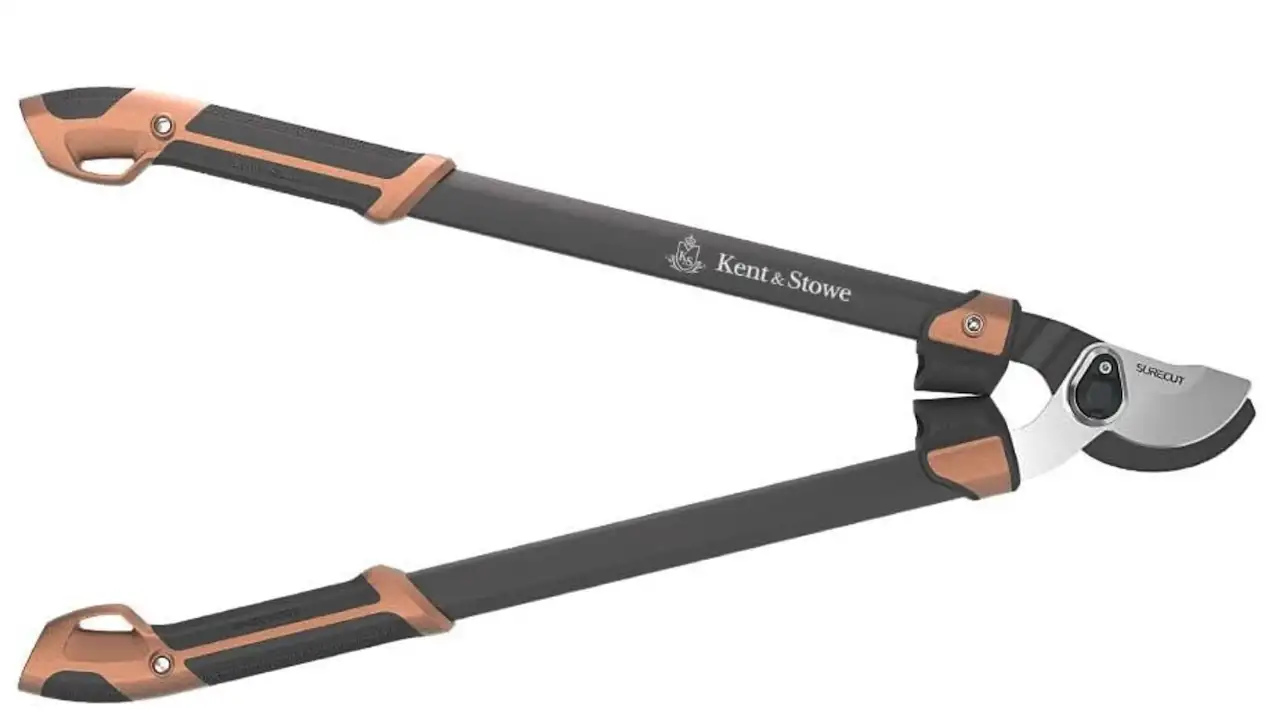
The carbon steel blades give a clean cut on live wood, the handles are a sensible length for general shrub and small-tree maintenance, and the build feels a step above the cheapest options you will find on the shelf next to them. They will not have the replaceable parts or lifetime feel of a Felco, but for most domestic gardens doing routine seasonal maintenance, they represent honest value.
| Kent & Stowe SureCut at a Glance | |
| Type | Bypass, budget |
| Best for | Routine domestic pruning, a reliable bypass pair without the premium price tag |
🛒 Find Kent & Stowe SureCut Loppers on Amazon UK
Around £45 to £55
Fiskars’ PowerGear mechanism uses a shifting pivot point that moves further along the blade as you close the handles, which multiplies your cutting force without needing the ratchet stroke of the Spear and Jackson pair above. I love Fiskars’ tools, as these were the first proper tools I ever invested in when I got my first home. The bright orange accents on the handles also make them super easy to find!
It sits slightly above pure budget pricing, but the leverage it provides on tough, dry, or dead wood is noticeably better than a standard single-pivot design at a similar price. Non-stick-coated, hardened-steel blades and a fixed 80cm handle length round out a properly capable tool for the money.
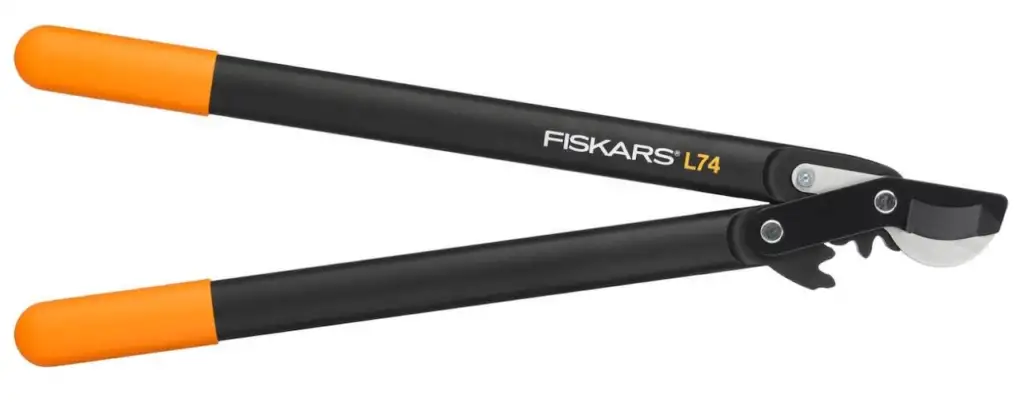
| Fiskars PowerGear X at a Glance | |
| Type | Anvil, fixed 80cm handle |
| Best for | Deadwood clearance, dry or brittle branches, strong cutting power without paying premium Felco prices |
🛒 Find Fiskars PowerGear X Anvil Loppers on Amazon UK
Owning the right loppers is only half the job. Using them at the right time of year, and with the right technique, is what actually protects your trees and shrubs from the stress and disease risk that comes with a badly timed or badly executed cut.
Autumn through to late winter or early spring is the window I do almost all of my lopper work in, and there is good horticultural reasoning behind it rather than it simply being convention. Once deciduous trees and shrubs have dropped their leaves, you can see the entire structure clearly, which makes it far easier to spot crossing branches, congestion, and dead wood before you commit to a cut. The plant is also dormant during this period, meaning it is not actively pushing sap and energy into new growth, so a large cut causes far less physiological stress than it would in high summer.
Late winter and early spring, just before growth resumes, is my preferred window for anything that needs a harder renovation prune, since the plant is about to put its energy straight into healing and new growth rather than sitting exposed through months of cold, wet weather with a fresh wound. Autumn suits lighter tidying and removing anything that has clearly died back over summer, giving the plant a clean structure to go into winter with.
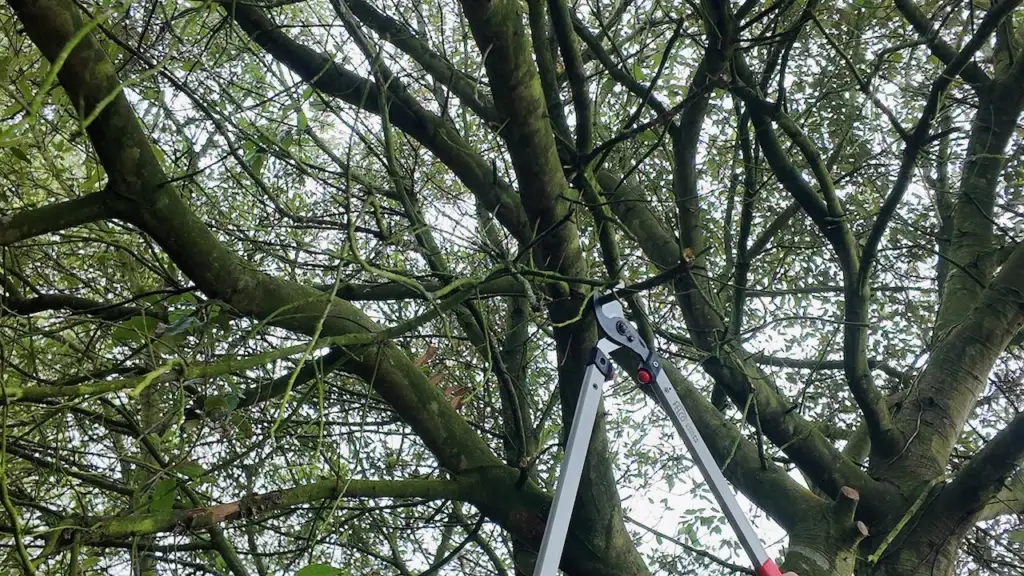
I would avoid reaching for loppers in the middle of summer unless the tree or shrub has become damaged or infected. Cutting into actively growing wood during the growing season diverts energy the plant would otherwise be putting into establishing itself, can trigger a flush of soft, vulnerable regrowth that has no time to harden before autumn, and leaves a larger, fresher wound exposed during exactly the period when fungal spores and pests are at their most active. If a branch has snapped in a summer storm, or you can see clear signs of disease such as canker or dieback, that is a genuine exception. Remove the damaged or infected material promptly regardless of season, because leaving it in place risks the problem spreading, but treat that as an emergency intervention rather than routine maintenance, and get back to your normal winter or early spring schedule for everything else.
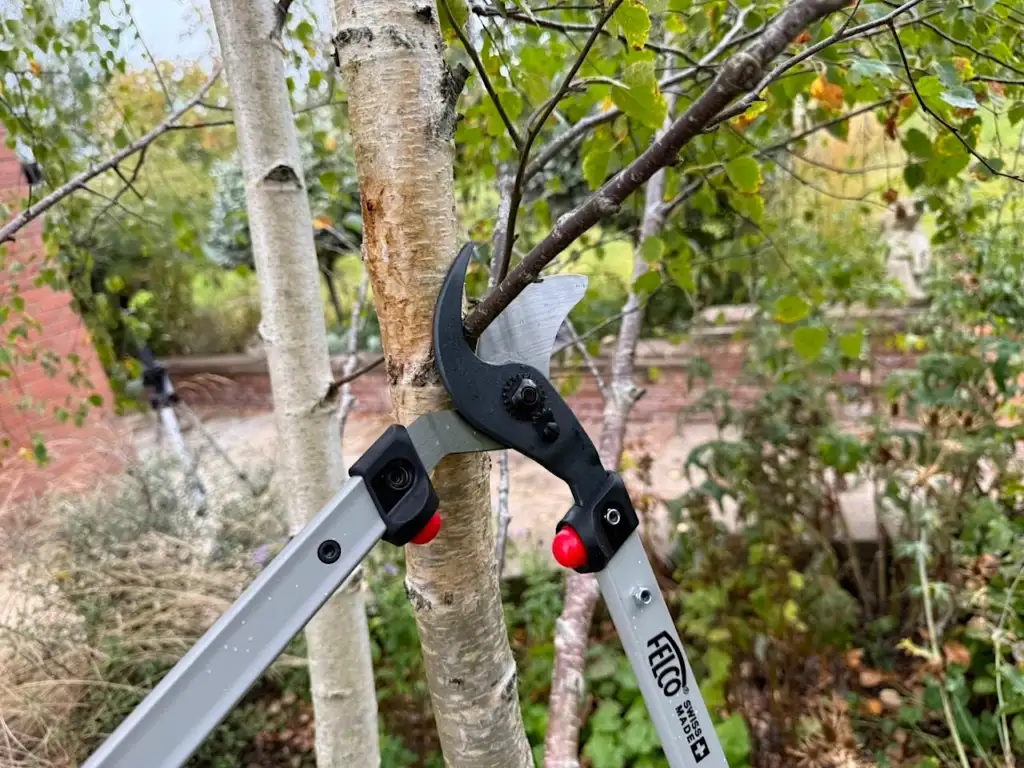
The one significant exception to the dormant season rule is spring-flowering shrubs that bloom on the previous year’s wood, for which pruning immediately after flowering, rather than in winter, protects next year’s display. If you are unsure where a specific plant falls, my guides to pruning pear trees, magnolias, and philadelphus each cover the correct seasonal window for that particular plant, since the general rule above has genuine, well-documented exceptions.
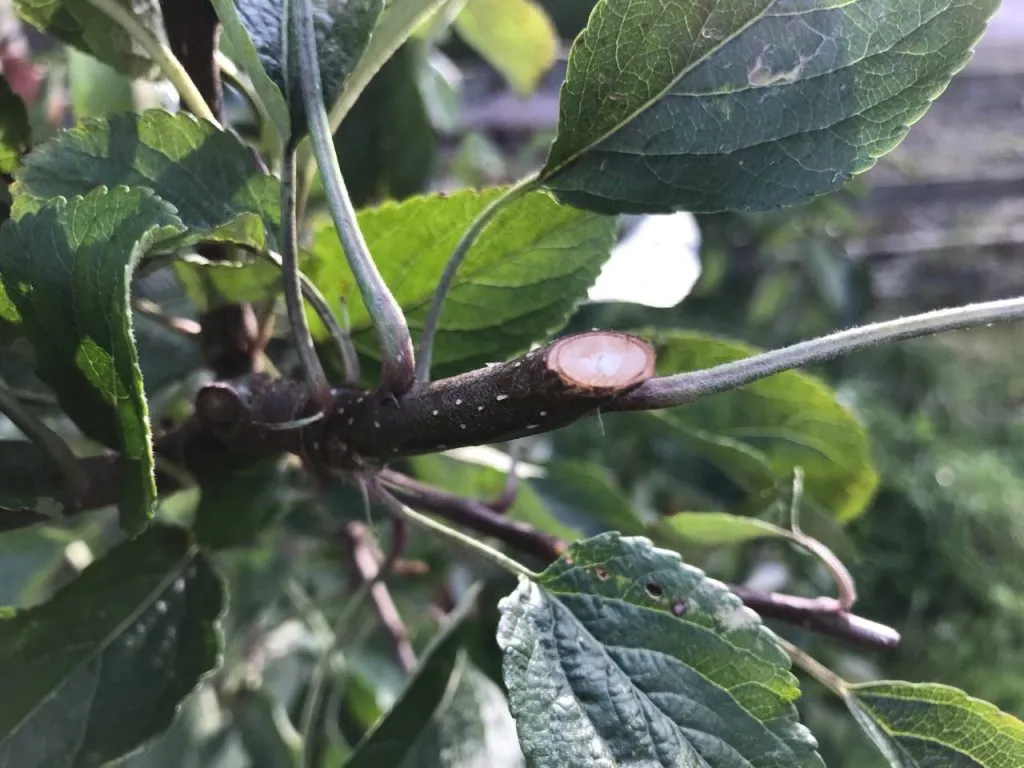
Position the branch as far into the throat of the blade as possible, close to the pivot, rather than out near the tips. This gives you far more cutting force for the same hand effort and reduces the chance of the branch slipping or the blade twisting mid cut. On a bypass pair, angle the cut slightly, following the natural line just above a bud or side shoot rather than cutting flush across the stem, which encourages healthy regrowth and sheds water away from the wound rather than pooling on it.
For anything approaching the top of a lopper’s stated capacity, a single steady squeeze is far kinder to both the tool and the branch than several rushed, forced attempts. If you find yourself really straining, that is your signal that the branch is too thick for loppers and it is time to switch to a pruning saw instead. Forcing loppers past their genuine capacity is the single most common way I see good tools get bent or blunted prematurely.
Keep your blades clean and sharp through the season. A build up of sap slows the cut and increases the effort needed, and a dull blade crushes rather than slices, leaving a ragged wound that heals far more slowly. The same sharpening principles I cover in my secateur sharpening guide apply to loppers, though the scale is different. A curved lopper blade is generally too large for a pocket whetstone to handle comfortably, so I use a flat diamond file worked along the bevelled edge in the same direction as the factory grind, taking care never to touch the flat back face. If you are moving between plants showing signs of disease, such as canker or fireblight, wipe the blade with methylated spirits or a diluted disinfectant between cuts, exactly as you would with secateurs, to avoid spreading the problem across your garden.
Most quality bypass loppers handle branches up to around 35mm to 45mm in diameter on live wood, with some anvil and ratchet models stretching to 50mm on tougher material. Beyond that, you are risking damage to the tool and a poor quality cut on the plant. If you are having to force it, switch to a pruning saw instead.
For most gardens, a good fixed length pair with 60cm to 80cm handles covers the vast majority of maintenance pruning without a ladder. Telescopic loppers are worth the extra weight and cost specifically if you have tall trees, an overgrown hedge, or branches that truly sit beyond comfortable reach even with a longer fixed pair.
Bypass for the vast majority of pruning on live, healthy growth, since the scissor action gives a clean cut that heals well. Anvil for dead, dry, or diseased wood you are removing rather than shaping, where the extra crushing force makes light work of tough material a bypass blade would struggle with.
Tree loppers is just another name for garden loppers used on branches rather than stems, the same bypass or anvil tools covered throughout this guide, so you do not need to buy a separate tool badged specifically as a tree lopper. They are ideal for smaller tree branches and general crown thinning, typically up to 40mm to 50mm. For anything thicker, particularly on established trees, a pruning saw gives a cleaner, safer cut without straining the tool or risking a torn branch that pulls bark away from the trunk.
Routine lopper work is best kept to autumn through to late winter or early spring, while most trees and shrubs are dormant. Summer pruning should be limited to removing seriously damaged, dead, or diseased wood, since cutting into actively growing material during the season diverts the plant’s energy and leaves a fresh wound exposed at a time when pests and disease are most active.
In my experience, yes. A quality pair with replaceable parts can truly last twenty years or more with proper care, which works out far cheaper per year than replacing a budget pair every few seasons. If your pruning is occasional, a well chosen budget pair will serve you perfectly well, but if you are pruning regularly, the investment pays for itself many times over.
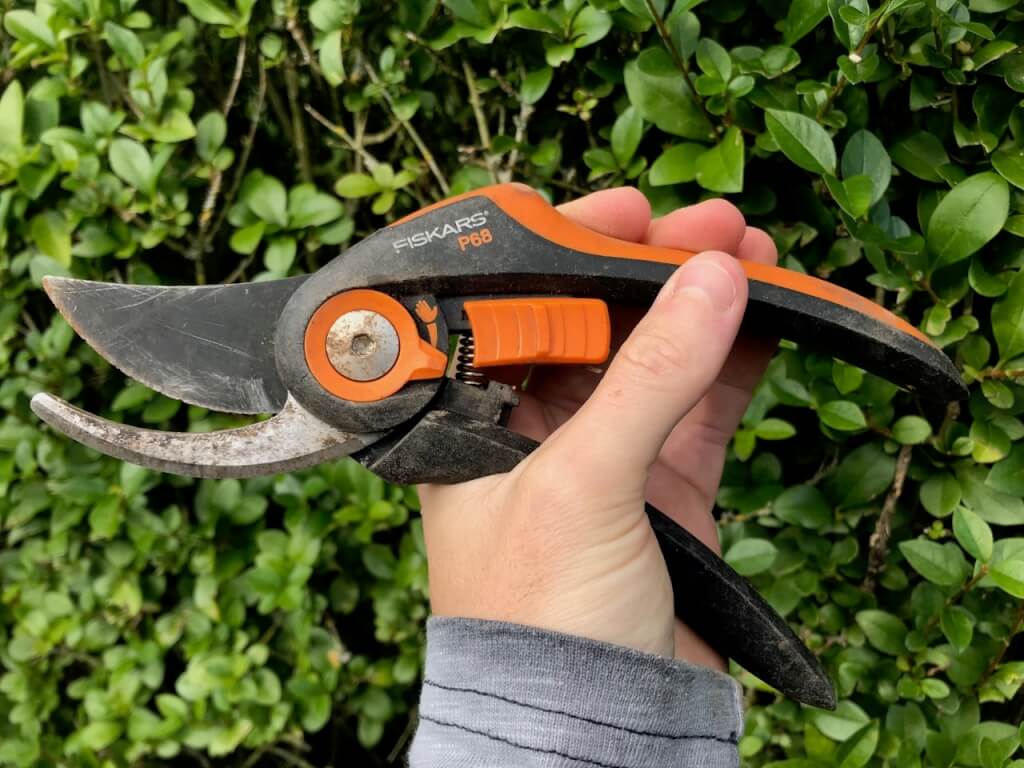
If loppers are filling out your pruning kit for the first time, it is worth pairing this guide with my best secateurs guide for the smaller cutting jobs loppers are not designed for, and my roundup of essential garden tools if you are building a full kit from scratch. Between secateurs, loppers, and a decent pruning saw, you will have every pruning job in a typical UK garden covered.
| Loppers | Type | Price | Best For |
|---|---|---|---|
| Felco 221-80 | Bypass, long reach | £110 to £120 | General maintenance without a ladder |
| Felco 211-60 | Bypass, compact | £95 to £110 | Dense borders, close in control |
| Wolf-Garten RR900T | Bypass, telescopic | £75 to £90 | Live wood pruned at height, best overall telescopic |
| Spear & Jackson Razorsharp | Anvil, telescopic | £30 to £40 | Dead wood at height, budget telescopic |
| Kent & Stowe SureCut | Bypass, budget | £30 to £40 | Routine domestic pruning |
| Fiskars PowerGear X | Anvil, budget | £45 to £55 | Dead wood, dry or brittle branches |

Join over 100,000 gardeners on YouTube
Free gardening videos from the Garden Ninja, with 8 million views and counting.
Subscribe on YouTube, it’s freeChoosing the right loppers is one piece of the puzzle. Knowing exactly where, when and how to cut is what actually gets you a healthier, better-shaped garden year after year. My online courses walk you through the reasoning behind proper pruning and planting decisions, not just a list of instructions to follow blindly.
Courses start from just £29, and cover everything from beginner garden planning through to full design principles.
For the garden you’ve already got, not the one you’re starting from scratch. Seven checklists and video lessons from BBC Garden Rescue’s Lee Burkhill, designed to help you decide what’s worth keeping before you spend a penny.
Garden Design Examples for Small Gardens: 30 Design Templates & Planting Plans: In this online gardening course, I’ll walk you through 30 fantastic garden designs, explaining the logic behind the layout and plant choices, plus take-home tips for applying them in your own garden.
Learn how to transform and design your garden with Lee Burkhill’s crash course in garden design. In over 5 hours, Lee will teach you how to design your dream garden. Featuring practical design examples, planting ideas and video guides. Learn how to design your garden in one weekend!
Garden Design for Beginners Online Course: Want to become a garden designer or design your own garden? This beginner course is for you. Join me, Lee Burkhill, an award-winning garden designer, as I train you in the art of beautiful garden design. Enjoy 20 hours of online study and video lessons, along with quizzes and a completion certificate.
For most UK gardens, the Felco 221-80 is the pair I would recommend without hesitation. Its 80cm handles give you the reach for general tree and shrub maintenance without needing a ladder or a telescopic mechanism, and the build quality means it will still be cutting cleanly in twenty years’ time. If most of your pruning happens closer to hand in dense borders, the more compact Felco 211-60 is the better fit. For particularly tall trees or overgrown hedges, add the Wolf-Garten RR900T to your kit for reaching live growth at height, or the Spear and Jackson Razorsharp for the same job on dead and storm-damaged wood. And if budget is the priority, the Kent and Stowe SureCut bypass loppers will handle routine domestic pruning perfectly well.
Whichever pair you choose, keep the blades clean and sharp, save the hard cutting for autumn through to early spring, and only reach for loppers in summer when a branch is seriously damaged or diseased. Get those basics right and a good pair of loppers will earn its place in your shed for decades.
Make sure you visit my YouTube channel for more gardening guides, and follow me on Instagram or Facebook for daily garden help and tips.
Happy Gardening Ninjas!


Lee Burkhill, known as the Garden Ninja, is an award-winning garden designer and horticulturist with over 30 years of gardening experience and 15 years as a professional garden designer. A qualified RHS (Royal Horticultural Society) professional, Lee specialises in sustainable garden design and practical horticultural advice. He designs and presents on BBC1’s Garden Rescue and in leading gardening publications. Lee combines three decades of hands-on gardening knowledge with professional design qualifications to help gardeners create beautiful, functional outdoor spaces.
View all posts by Lee Burkhill









JOIN THE NINJAS

Be the first in line for new Guides, Discount codes and Offers