For the garden you’ve already got, not the one you’re starting from scratch. Seven checklists and video lessons from BBC Garden Rescue’s Lee Burkhill, built to help you work out what’s worth keeping before you spend a penny.
69


Quick Answer
Designing a townhouse or terraced garden successfully comes down to three things: breaking the space into distinct zones, using vertical growing to maximise every centimetre of boundary, and choosing low-maintenance plants that earn their place in all four seasons. A small plot is never a barrier to a beautiful garden. With the right design approach, even a 6 x 8 metre terraced garden can feel spacious, private, and deeply relaxing.
Most people who come to me with a townhouse or terraced garden are carrying the same frustration: they have a space that should be an outdoor room, a place to relax and entertain, but it feels more like a corridor or a fishbowl. Too overlooked to sit in comfortably. Too narrow or oddly shaped to make any sense. Paved over in a moment of defeat, with a couple of pots that never quite look right.

I have designed well over a hundred small urban gardens throughout my career, and what always strikes me is how much potential lies in these plots. The constraints that make them feel difficult, the shared boundaries, the compact dimensions, and the overlooking are actually the design brief. Every single one of those problems has a solution that makes the garden more interesting, not less. This guide pulls together everything I know about making terraced and townhouse gardens work, from the design principles that apply to any small urban plot down to the specific plants and materials that perform best in these conditions.
Jump To
Before any design work begins, it is worth being honest about what you are dealing with. Terraced and townhouse gardens share a set of characteristics that are almost universal, and understanding them is the first step to solving them properly.
Shape is the first challenge. Most terraced house gardens in the UK are long and narrow, typically between five and eight metres wide and often two to three times as long as they are wide. This creates what designers call the corridor effect: a space that feels like a passage rather than a destination. Square plots have the opposite problem, feeling boxy and hard to give any sense of movement or journey. Both require specific design responses rather than generic advice.
Access is more problematic than most people realise before they start a project. In many mid-terrace properties, the only access to the back garden is through the house, which means every bag of compost, every paving slab, and every piece of garden furniture has to come through the hallway and kitchen. This affects what is practically achievable and what materials you can use. End terrace properties or those with a side gate have a significant advantage that is worth designing around.
Overlooking is the complaint I hear most often. Shared boundaries on two or three sides, loft conversions, tall neighbouring properties, these all mean that almost every move you make in a terraced garden is visible from somewhere. This is not just about privacy from neighbours but about the psychological feeling of being on show, which prevents people from relaxing in their own garden.
Shade and aspect combine to create tricky growing conditions. Urban terraced properties cast hard shade in predictable patterns, and the aspect of your garden (which direction it faces) determines how much usable sun you actually get. A north-facing terraced garden is a genuine challenge, but even south-facing urban plots lose hours of direct sun to neighbouring walls and buildings that do not appear on a simple compass check.
💡 Top Tip
Before you spend a penny on a terraced garden, spend a day watching where the sun falls at different times of day. Mark on a rough sketch where gets morning sun, afternoon sun, and which areas are always in shade. This will be the single most useful piece of information you have when it comes to deciding where to put seating, planting, and paving.
The best way to illustrate how these principles work in practice is to walk through a real project. A few years ago I was asked to redesign a small terraced garden in Manchester for a young couple who had essentially given up on using it. The plot was 6 x 8 metres, south-facing, and surrounded by neighbours on all three sides. It was about as overlooked as it is possible to be in a city garden.
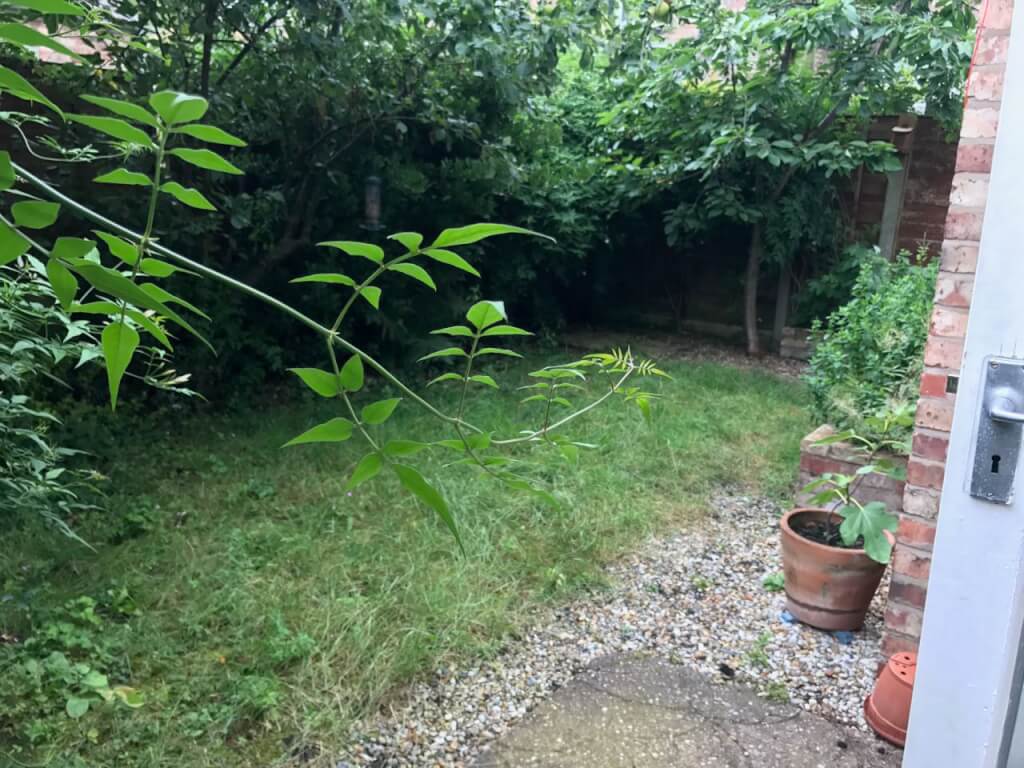
The clients had family ties to Guernsey and wanted the garden to evoke something of the lush, semi-tropical feel of that island, despite being in Manchester. They wanted privacy, two or three different seating positions, and planting that would survive being left for a few weeks without turning into a disaster. They also wanted to avoid a lawn entirely, since there was not enough light or space for it to thrive.
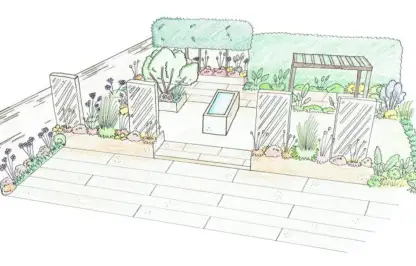
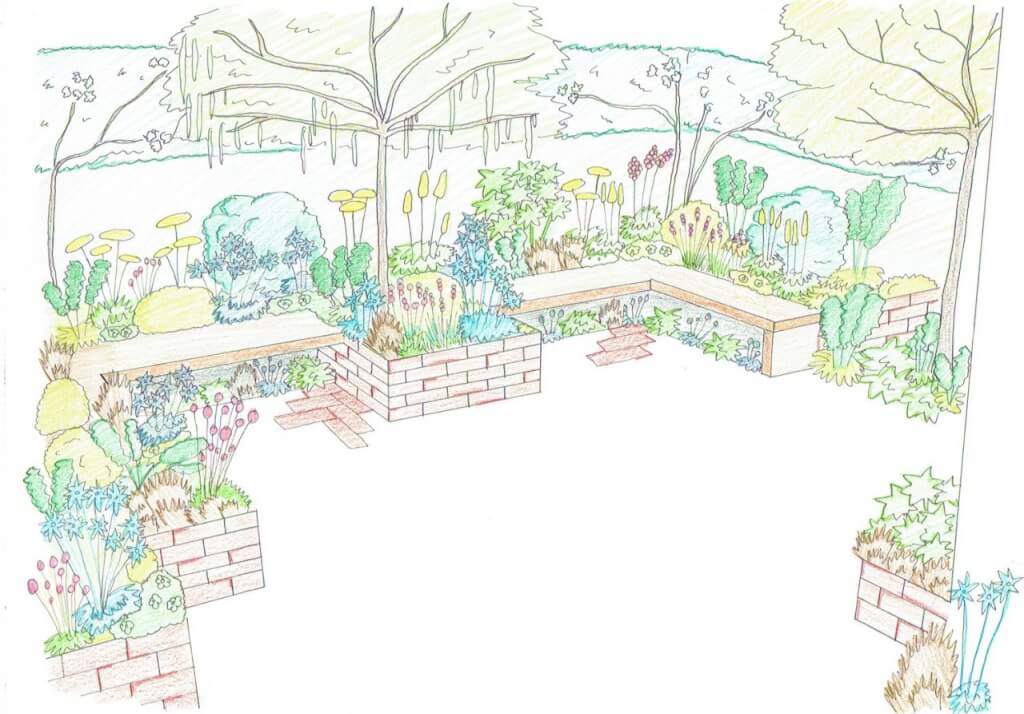
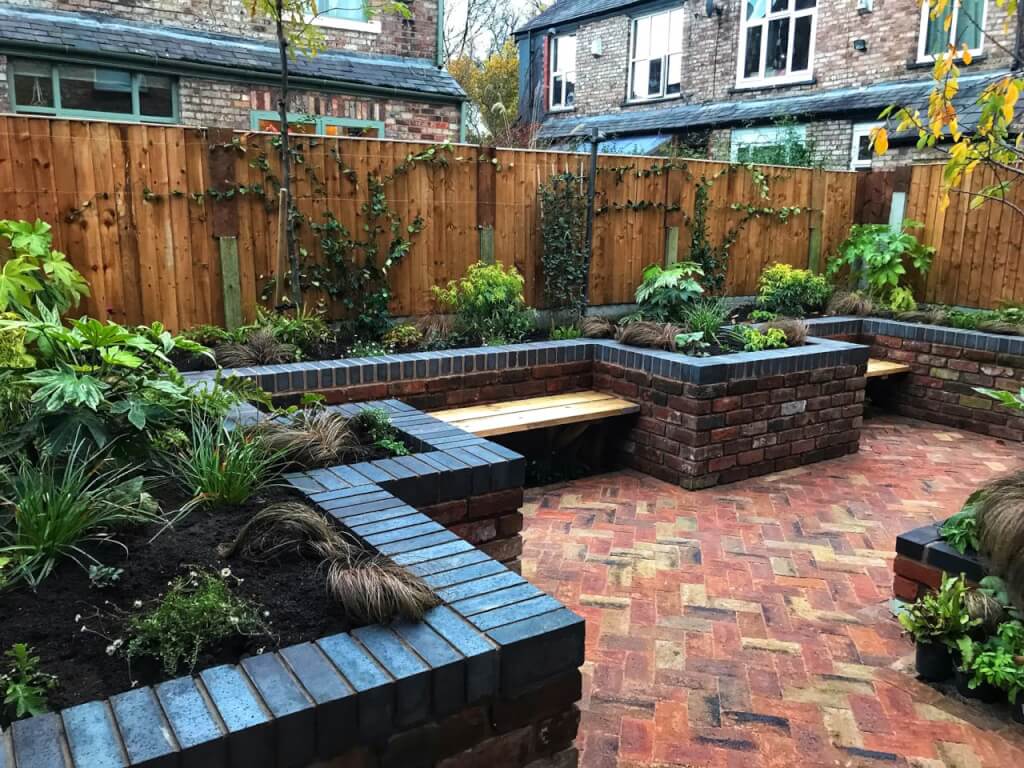
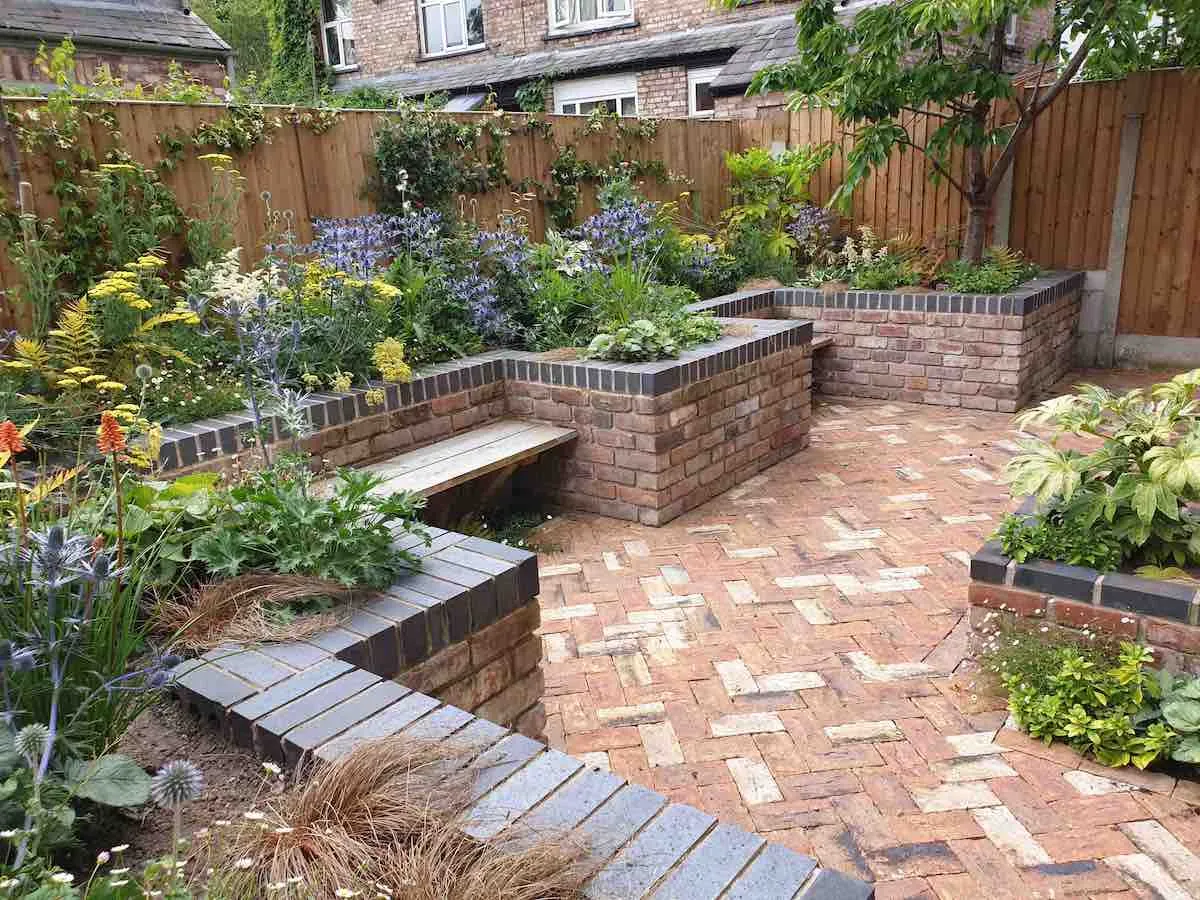
The design solution centred on a dog-leg raised bed arrangement that created a sequence of nooks and angles rather than a single open rectangular space. By breaking the garden into sections using reclaimed brick raised beds, I could provide different seating positions at different heights and angles, which simultaneously broke up the sightlines from neighbouring windows and gave the couple the variety of spaces they wanted. A herringbone brick path linked everything together and gave the space a sense of craft and intention from the very first moment you stepped out of the back door.
The shape of your terraced garden is the design constraint you have to address before anything else, and the response differs significantly depending on what you are working with.
The instinct with a long narrow garden is almost always to put a path down the middle with borders either side. I urge you to resist this, because it does exactly what you do not want: it emphasises the narrowness and turns the garden into a corridor you walk through rather than a space you inhabit. The path down the middle gives the eye a straight line to follow all the way to the back fence, making the garden feel simultaneously longer and thinner than it actually is.
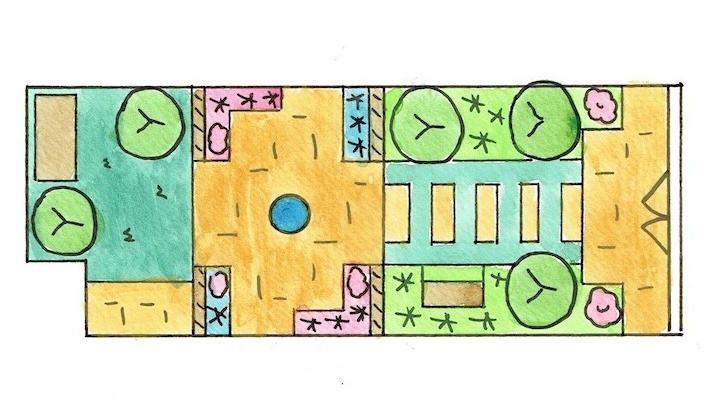
The better approach is to divide the length into a sequence of rooms or zones. A paved seating area near the house, a central planted zone, and a more practical area at the rear, each separated by a subtle shift in level, material, or planting, creates the feeling of moving through different spaces. The eye cannot see from one end to the other, so the garden feels larger. Diagonal paving or angled raised beds are particularly effective because they pull the eye across the width of the garden rather than along its length, which is exactly the visual trick you want to play.
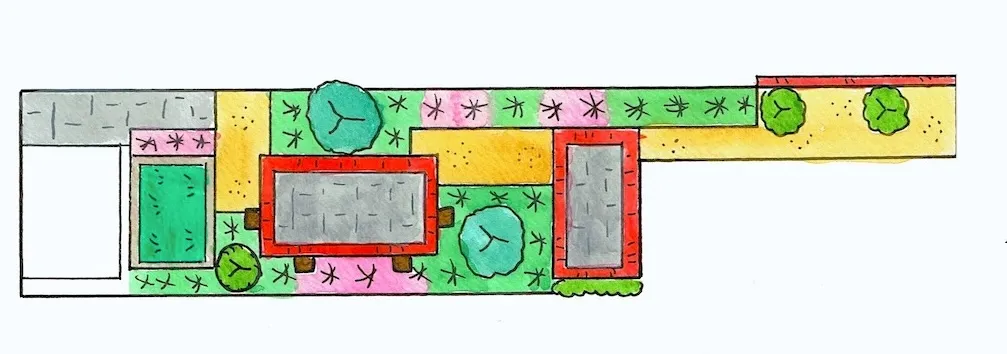
Square plots feel boxy because there is no obvious focal point and the four equal walls create a static, uninviting enclosure. The solution is to introduce diagonal geometry or circular forms that break the right angles and give the eye something dynamic to follow. A circular lawn or circular paved terrace immediately transforms a square plot, because the curve creates a sense of movement and makes the surrounding borders feel deeper and more interesting than they actually are.
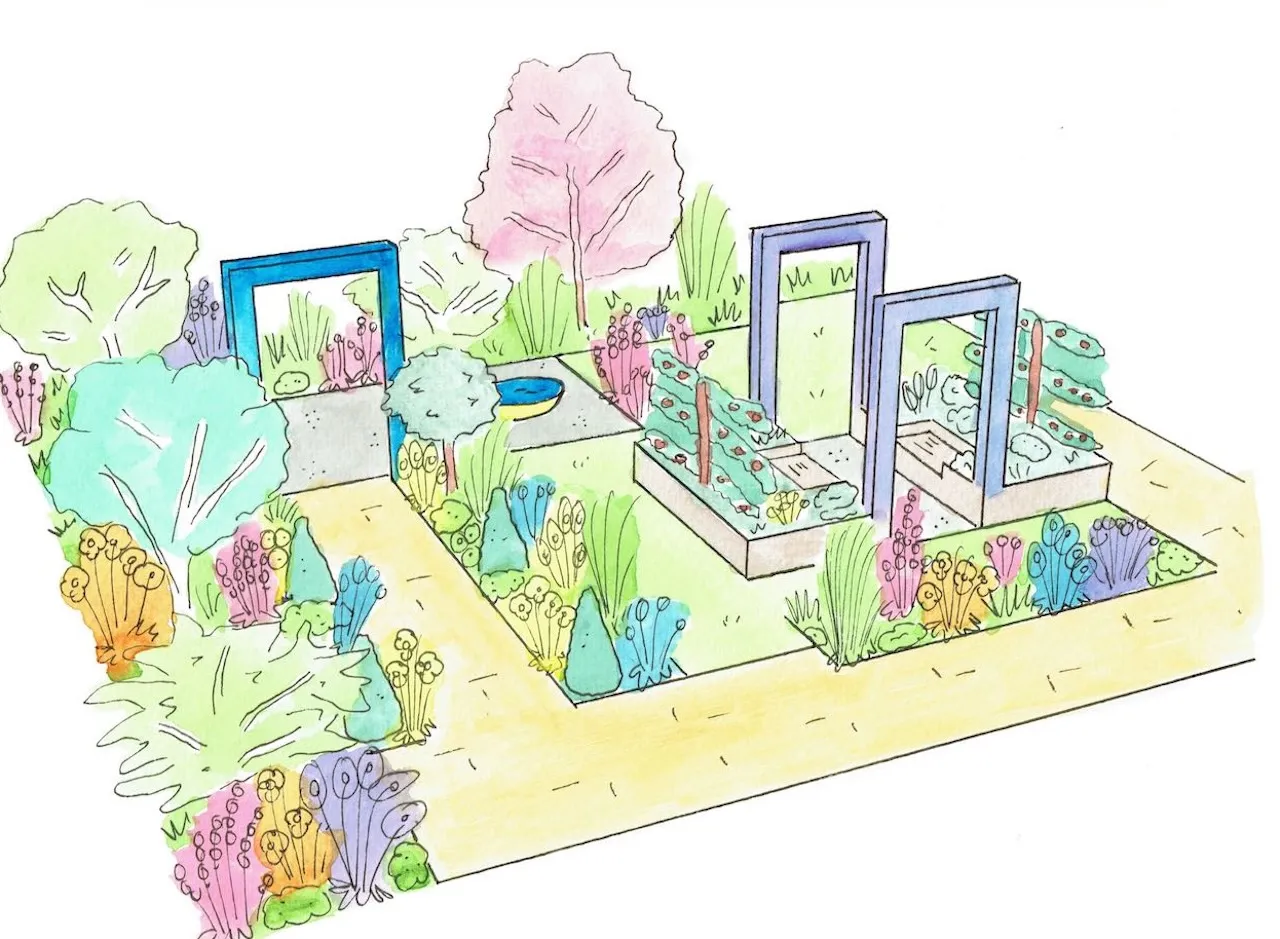
Alternatively, setting the main paved area at 45 degrees to the house creates a diamond shape within the square, which again breaks the static geometry and gives the borders a more interesting, tapered form. I used this approach in the Manchester garden, where the dog-leg arrangement of the raised beds introduced angles that prevented the eye from reading the space as simply a small rectangle with plants around the edges.
Zoning is one of the most counter-intuitive but most effective tools in small garden design. The instinct in a tiny space is to keep it open and uncluttered, and to avoid subdividing it because it already feels small enough. In practice, the opposite is true. Dividing a small garden into two or three distinct areas, even with subtle devices like a change of paving material, a low planting threshold, or a slight change in level, makes the space feel significantly larger because the eye cannot take it all in at once.
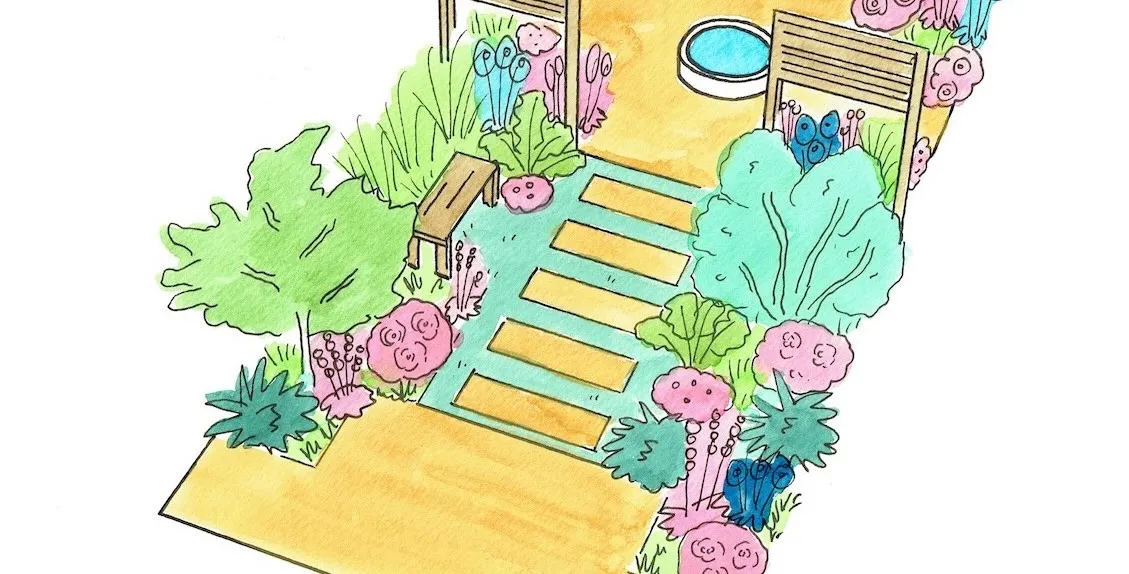
In a terraced garden the most useful zones are typically a main seating and dining area nearest the house, a planted middle zone that provides the visual interest and the privacy screening, and a more functional rear zone for storage, composting, or growing edibles. These do not need hard separation between them. A simple change of material underfoot, moving from paving to gravel to decking for example, signals the transition between zones without the need for walls or structures that would take up precious space.
💡 Top Tip
In a terraced garden, the seating zone should not be pushed right against the back fence. Sitting surrounded by garden on all sides feels infinitely more relaxing than sitting with a fence immediately behind you. Move the main terrace in from the boundary and allow planting behind and to the sides, and the space will feel twice as large.
The number of seating positions matters more than most people realise. In the Manchester project, one of the key design decisions was to provide three distinct places to sit rather than one large terrace. A bistro area near the house catching the midday sun, a built-in seat within the raised bed dog-leg for the afternoon, and a further perch at the garden’s end for early evening sun. This meant the couple moved around their garden through the day, which made it feel far more spacious and interesting than if they had simply sat in one spot. It also incidentally solved much of the privacy problem, because different seating positions interrupted different sightlines from neighbouring windows.
In a townhouse or terraced garden, complete privacy is rarely achievable and attempting to create it by building everything up to maximum height tends to make the situation worse rather than better. Tall solid boundaries block light, cast dense shade, and create a prison rather than a garden. They can also trigger neighbourly friction and, if they breach permitted development rules, planning issues.
The more effective approach is to create the feeling of privacy rather than the absolute fact of it. In the Manchester garden, there was simply no way to prevent the neighbours from occasionally seeing into the space. Townhouses are built too close together for that to be achievable without walls of impractical height. What the design could do was break the eye line, give the couple multiple seating options so they could move out of the direct view from any given window, and use planting to create a sense of enclosure that made being in the garden feel private even if technically it was not.
The specific techniques that work best in terraced gardens are covered in detail in my overlooked back garden design guide, but the key principles are worth summarising here. Use standard trees or pleached screens to intercept sightlines at height without blocking light at ground level. Create nooks and angles in the design, as in the dog-leg raised bed arrangement, so you are sitting within a partial enclosure rather than exposed in the middle of an open rectangle. Use vertical planting on the boundaries to soften and blur them without the bulk of a hedge. And position the most used seating areas away from the most problematic sightlines.
In a small terraced garden, the boundary surfaces, fences, walls, and pergola structures, represent a significant growing opportunity that most people ignore. Vertical planting on a three-metre fence panel gives you effectively three square metres of growing space that costs nothing in terms of ground area. In a garden where ground space is at such a premium, this is too valuable to waste on bare fence panels.
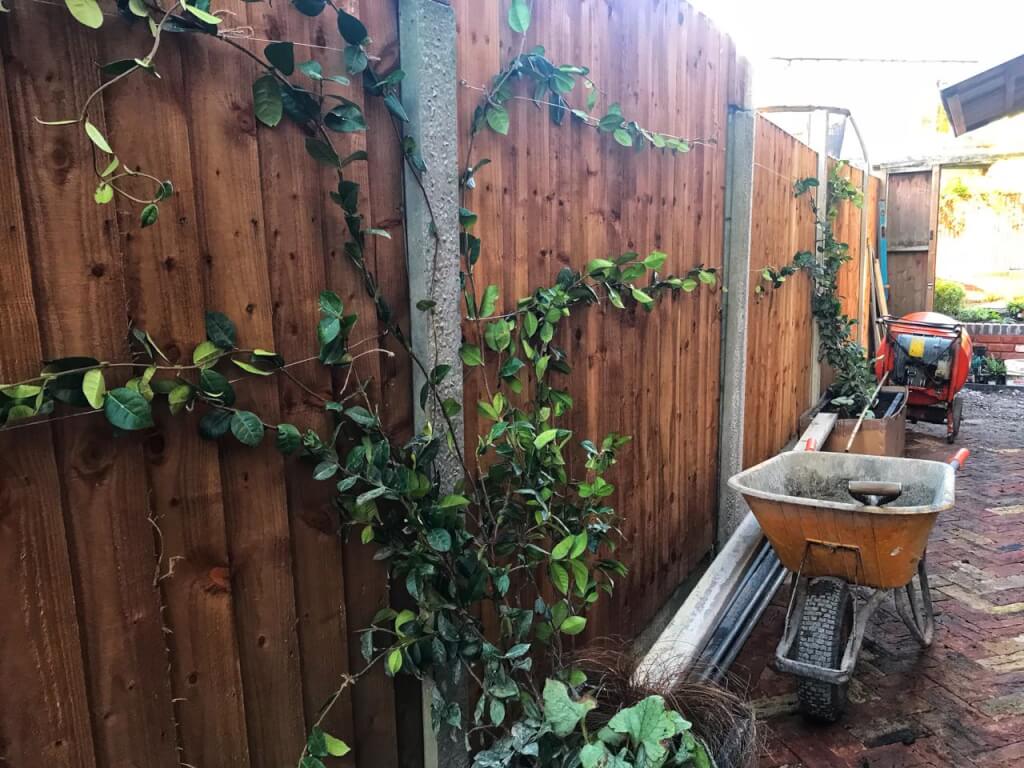
In the Manchester project I trained large Trachelospermum jasminoides (star jasmine) over a network of horizontal wires fixed to the fence panels. The wires cost very little and take an afternoon to install. The plants were put in as decent-sized specimens, and within two growing seasons they had colonised the lower half of each fence panel. By year three the boundaries had effectively disappeared behind a wall of glossy evergreen foliage, scented with vanilla in summer and holding its leaves through winter. The garden felt as much as twice as large simply because the hard boundaries had been replaced with something soft, green, and seemingly extending outwards.
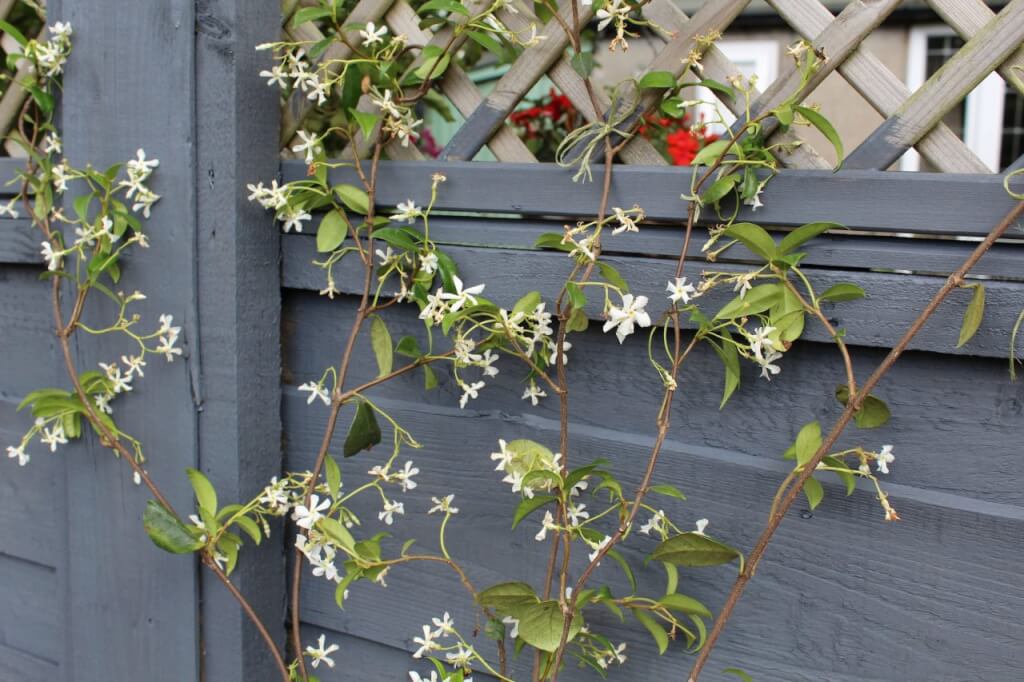
The key distinction for vertical growing in a terraced garden is between climbers that need support and those that are self-clinging. For fence-mounted wire systems, you want plants that will wind themselves around the wires or need only occasional tying in, rather than self-clingers like ivy or Virginia creeper which attach directly to the fence surface and can cause damage to timber panels over time.

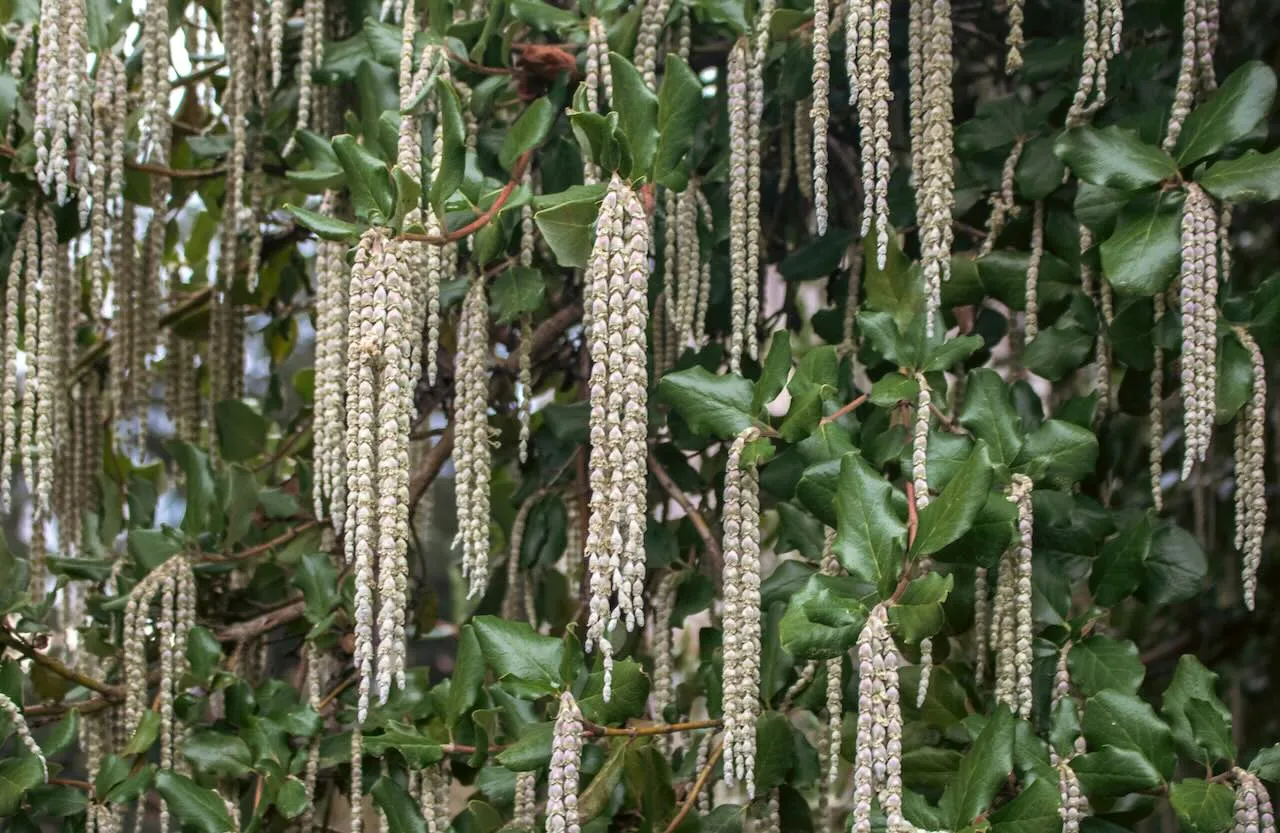
Garrya elliptica ‘James Roof’ deserves special mention for north-facing aspects and shaded walls, where the choice of climbers is much more limited. It produces extraordinary long silver-grey catkins from December through to February, which are unlike anything else that can be grown against a wall in the UK. In the Manchester garden it brought genuine winter interest to the shadier boundaries while the Trachelospermum covered the sunnier fence runs.
🛒 Buy Trachelospermum jasminoides on Amazon UK
🛒 Buy Garrya elliptica on Amazon UK
In a small terraced garden, hard landscaping tends to take up a larger proportion of the overall space than in a larger garden, which means the choice of material matters more. The wrong paving choice will dominate visually and set the tone of the whole garden in a way that a single paving choice never would in a larger space.
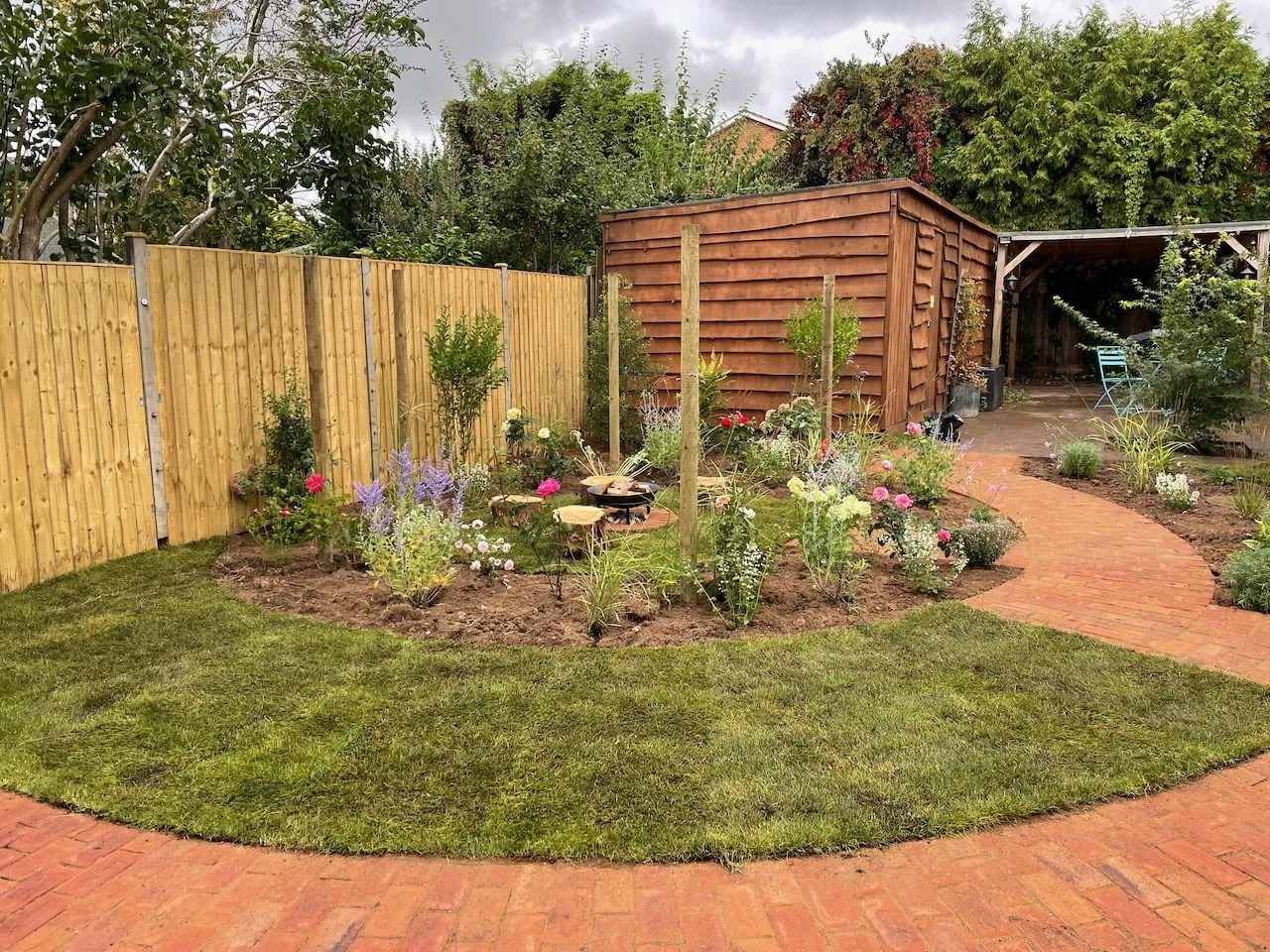
For terraced and townhouse gardens I almost always recommend materials that tie back to the architecture of the property. Victorian and Edwardian terraces were built of brick, and reclaimed or heritage-style brick paving or setts naturally connects the garden to the house in a way that imported grey porcelain never quite does. Herringbone brick in particular, the pattern used in the Manchester project, has a warmth and crafted quality that gives even the smallest garden a feeling of care and considered design.
That said, paving choices come down to several practical factors alongside aesthetics. Permeability matters significantly in urban gardens, where the combination of multiple impermeable surfaces across a block of terraces can create significant surface water problems. Any paving area over 5 square metres that is not permeable requires planning permission if it is in the front garden, and sustainable drainage is increasingly important in back gardens too. Permeable block paving, gravel, or paving laid on a sand bed with open joints are all better than mortar-bedded solid slabs from a drainage perspective.
Mixing materials within a small garden works well when each material is given a clear purpose rather than dotted randomly across the space. In the Manchester project the herringbone brick covered the circulation and seating areas while planting was used as soft underseat cover rather than a separate paved surface. This gave the garden two clear materials: brick and plants, with no awkward transitions between different hard surfaces.
Raised beds do more work in a small terraced garden than almost any other single design element, and they are significantly underused. Most people think of raised beds as a grow-your-own feature, a functional grid of timber boxes for vegetables. In a terraced garden design context they are something entirely different: structural elements that define zones, create height variation, provide built-in seating, and give the planting a three-dimensional quality that flat borders cannot match.
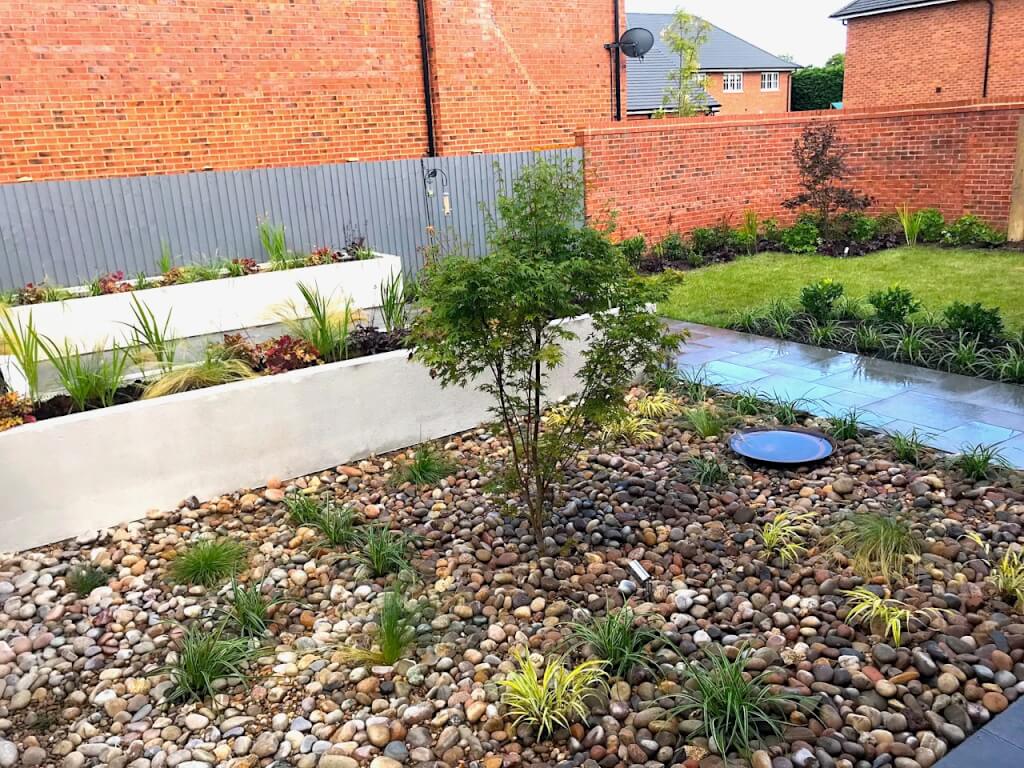
In the Manchester project, the reclaimed brick raised beds were designed with a wide flat coping that doubled as seating. The bed height was set at approximately 450mm, which is the ideal sitting height, meaning the beds functioned as both boundary definition and integrated seating without taking up any additional space. The dog-leg shape of the beds created the private nooks I was looking for and gave the planting within them a generous depth that made the borders look established and substantial even in year one.
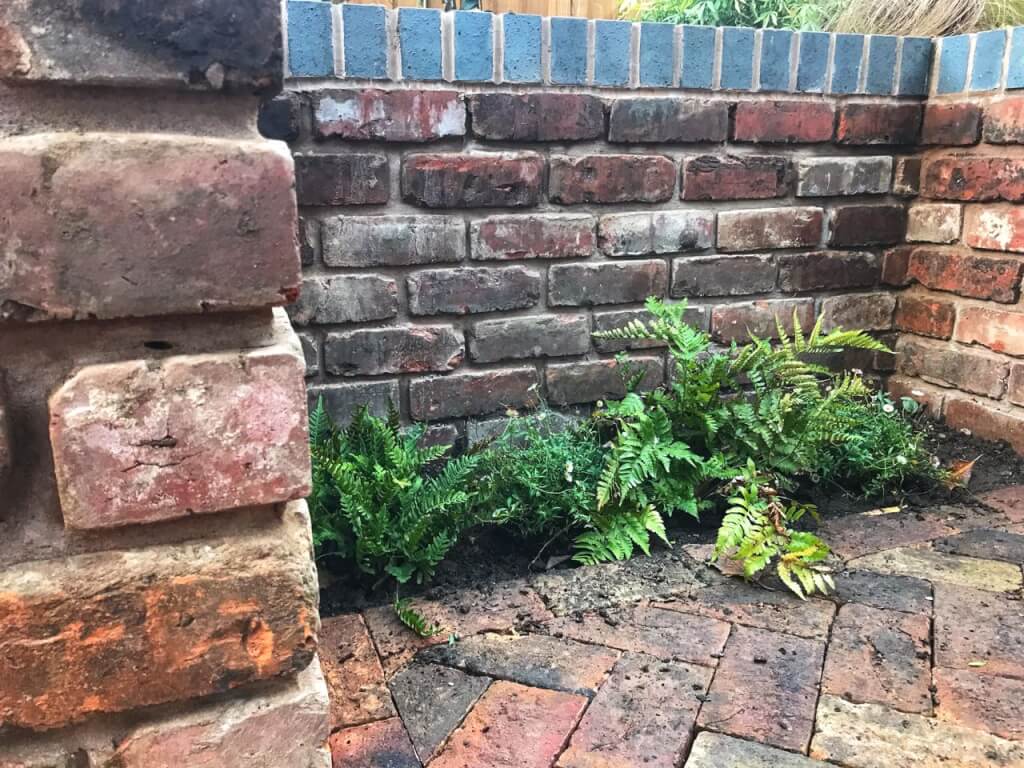
The material choice for raised beds in a terraced garden should reflect the character of the property. Reclaimed brick works beautifully with Victorian and Edwardian terraces. Sleepers have a contemporary robustness that suits modern developments. Galvanised steel or Corten steel raised beds are increasingly popular in contemporary urban gardens and age attractively over time. Whatever material you choose, make the beds generous in width as well as height: a raised bed less than 600mm wide is frustratingly difficult to plant well and tends to dry out rapidly.
🛒 Browse galvanised raised beds on Amazon UK
Planting choices in a small terraced garden have to work harder than in any other garden type, because every plant is visible from the house almost all the time. There is nowhere to hide a plant that looks scruffy in winter or that only performs for three weeks of the year. The requirement for year-round interest is more pressing here than in any larger space, and the need for plants that tolerate the specific conditions of an urban garden, pollution, variable drainage, shade from neighbouring properties, is equally important.
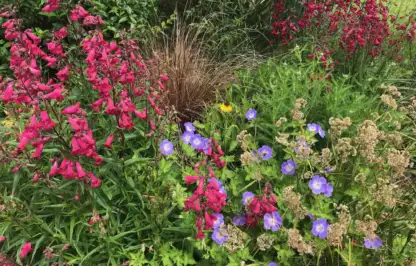
The Guernsey brief in the Manchester project led me to explore coastal-inspired planting, and the results taught me something that has influenced my approach to urban gardens ever since: coastal plants are remarkably well adapted to urban conditions. They are bred to tolerate exposure, variable moisture, occasional neglect, and poor soils. They tend to have strong architectural forms that look good even when not in flower. And the colour palette of coastal planting, the blues, silvers, yellows, and warm oranges of sea holly, red-hot pokers, fleabane, and ornamental grasses, is unlike anything else in gardening.
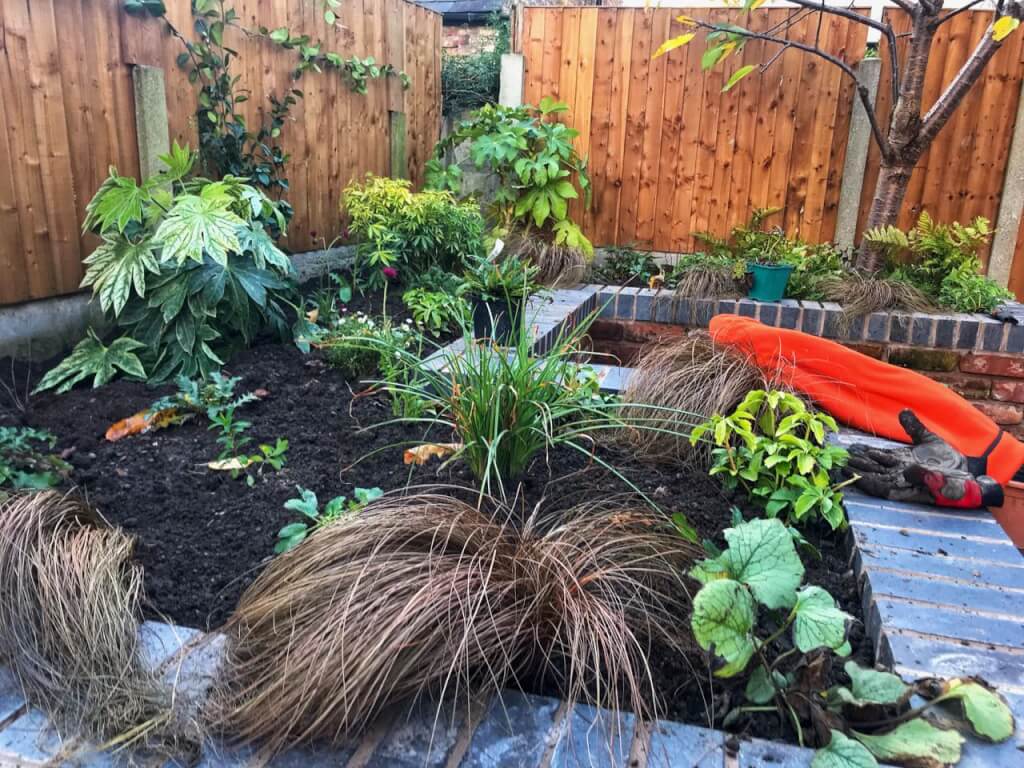



The evergreen backbone of the planting is what holds the garden together through winter, when all the herbaceous material has gone over and the garden is most visible from the house. Fatsia japonica is outstanding in this role for shaded or partially shaded urban gardens: the large, deeply lobed glossy leaves are architectural at any time of year, the plant tolerates deep shade and city pollution without complaint, and it produces dramatic cream flower heads in autumn followed by black berries that the birds appreciate.

In the Manchester project, Choisya ternata (Mexican orange blossom) provided evergreen structure in the sunnier positions, with the bonus of intensely fragrant white flowers in spring and again in late summer. A Gleditsia triacanthos tree was selected specifically for its light, feathery canopy that provides height and privacy without blocking too much of the garden’s limited sunlight.

🛒 Buy Fatsia japonica on Amazon UK
🛒 Buy Choisya ternata on Amazon UK
This is one of the most important questions in townhouse and terraced garden design, and most people arrive at the answer only after spending time and money on a lawn that did not work. The honest answer is that in many small terraced gardens, a lawn is not the right choice, and the clients who decide against one almost always end up more satisfied with their garden than those who keep one in.
The problem with a lawn in a small terraced garden is threefold. First, it requires light to perform well, and many urban gardens simply do not have enough. A lawn in partial to full shade becomes a worn-out, muddy strip within a couple of seasons, no matter how good the seed mix is. Second, it requires maintenance equipment, which has to be stored somewhere, and storage in a small garden is always a premium. A mower, a scarifier, an aerator, the infrastructure of lawn care takes up a significant proportion of the space available in a garden that might be only 6 x 8 metres. Third, and most importantly, in a small terraced garden, a lawn almost always ends up being a walkway rather than a usable space. If the lawn is less than about three metres wide, it is practically impossible to sit on it and enjoy it in the way you would in a larger garden.
The Manchester clients wanted to keep a small lawn when we first spoke. After discussing how they actually used the garden, and what they would need to maintain it, they decided against it entirely. The space that would have been lawn became a planted underseat area beneath the raised bed seating, which softened the hard surfaces, improved drainage, and looked beautiful. Not once in the years since have they expressed any regret about the decision.
💡 Top Tip
If you do want a lawn in a small terraced garden, the minimum useful width is around 2.5 to 3 metres, and it needs at least four to five hours of direct sun per day to perform decently. Use a shade-tolerant seed mix and be honest with yourself about how much maintenance you are willing to do. A lawn that receives less than four hours of sun per day will always be a source of frustration rather than pleasure.
A water feature might seem like an extravagance in a small garden, but in an urban terraced plot it provides something that planting and paving cannot: the sound of running water. City gardens are rarely quiet. Traffic noise, neighbour noise, and the ambient hum of urban density are constant. A well-positioned water feature does not eliminate these sounds but it masks them, providing a white noise of moving water that allows the brain to tune out the background and feel more relaxed.
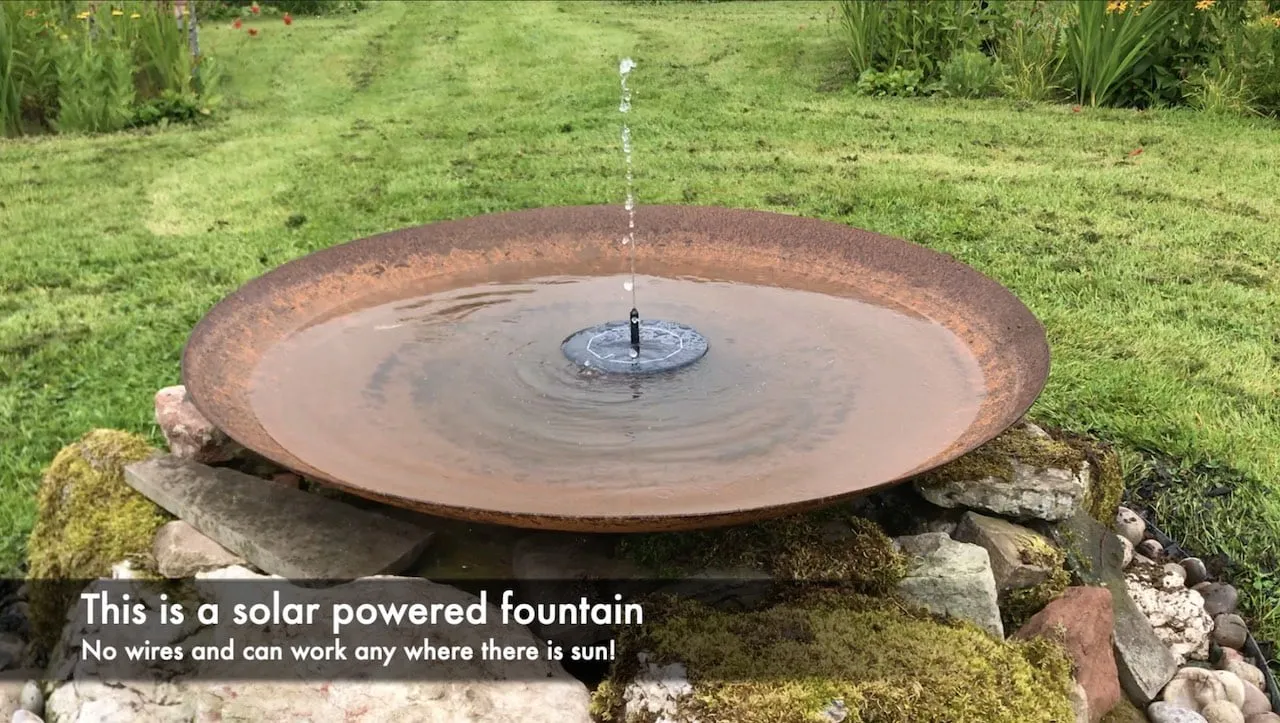
For a small terraced garden, I usually recommend a self-contained wall-mounted feature or a raised pool rather than a ground-level pond. The reasons are practical: ground-level water in a small garden with children is a safety concern, and a raised feature takes up less effective floor space while still providing the visual and acoustic benefits. Solar-powered pumps have improved enormously in recent years, meaning a mains electrical connection is no longer necessary for most small fountain and bubble features, which removes what was historically the main barrier to installation.
🛒 Browse solar water features on Amazon UK
Having designed, built, and visited hundreds of small urban gardens, the same mistakes appear so consistently that they are worth listing directly. Avoiding these will save you both money and frustration.
Putting a path down the middle of a long narrow garden is the most common single mistake I see, and it is almost always the instinctive first idea. It turns the garden into a corridor and makes it feel smaller, not larger. The solution is zones and diagonal geometry, as described above.
Buying too many small plants in an attempt to fill the space quickly is another consistent error. A collection of small plants in individual pots or dotted around the borders makes a small garden feel cluttered and chaotic. Far better to buy fewer, larger specimens that immediately give the garden scale and structure, and let the space breathe between them. In a small garden, negative space, the areas between plants, is as important as the plants themselves.
Installing a lawn that gets inadequate light is something I have addressed above, but it bears repeating as a mistake because it is so common and so demoralising. A struggling lawn in a small garden is immediately obvious and makes the whole space look neglected.
Ignoring the aspect when designing the layout is a mistake that creates problems for years. Positioning the main seating area on the shaded side of the garden because it is near the back door, rather than in the part that actually gets afternoon sun, means you will rarely use it comfortably. Always design around the sun, not around convenience.
Choosing paving that clashes with the house creates a disconnect between the building and the garden that is immediately uncomfortable. In a small terraced garden, the house is always visible from the garden and vice versa, making the relationship between the two materials more important than in a larger property where the house recedes into the background.
Trying to screen everything rather than breaking sightlines is the privacy mistake I mentioned earlier. Solid high boundaries are rarely the right answer in an urban garden, blocking light and creating a defensive atmosphere that works against the relaxed feeling you are trying to achieve.
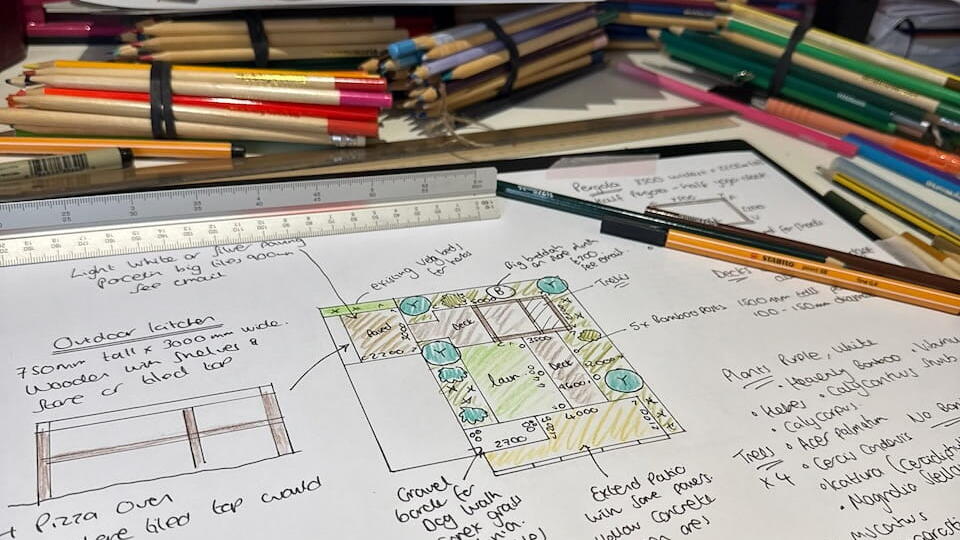
The most effective techniques are: dividing the space into zones rather than leaving it as one open rectangle; using diagonal geometry in the paving or raised beds to pull the eye across the width; placing climbing plants on all boundaries to blur and soften the hard edges; positioning seating away from the fence rather than against it; and choosing fewer, larger plants over lots of small ones. Circular forms are particularly effective in boxy square plots.
For a Victorian or Edwardian terraced house, reclaimed brick or heritage-style block paving in a herringbone or basketweave pattern connects the garden to the architecture naturally. For contemporary new-build terraces, porcelain paving or composite decking tends to sit more comfortably with modern buildings. Whatever you choose, permeable paving or open mortar joints with a gravel bed is better for drainage than solid-mortar pointing.
In most small terraced gardens, a lawn is not the best use of the space. Lawns in small urban plots are often too narrow to use comfortably, require maintenance equipment that takes up significant storage space, and perform poorly in the partial shade most terraced gardens experience. The space is almost always better as a combination of paving and planting. If you do want a lawn, it needs to be at least 2.5 to 3 metres wide, receive a minimum of four hours of direct sun per day, and use a shade-tolerant seed mix.
Complete privacy is rarely achievable. The more effective approach is to create the feeling of privacy: use vertical climbing plants to blur hard fence lines, create multiple seating positions so you can move out of any given sightline, and use raised beds or planting to create partial enclosure around the main seating area. Standard trees or pleached screens intercept sightlines at height without blocking light. For a full treatment of this topic, see my overlooked back garden design guide.
Avoid a path down the middle, which emphasises the narrowness. Instead, divide the length into a sequence of zones using changes in material, level, or planting. Use diagonal paving or angled raised beds to pull the eye across the width. Plant taller specimens across the width at intervals to create visual breaks. Multiple seating positions at different points along the length encourage you to use the whole depth of the space.
A simple replant with new paving in a 6 x 8 metre garden might cost between £3,000 and £8,000 for materials and labour. A more comprehensive redesign including raised beds and bespoke features would typically range from £8,000 to £20,000 for a plot of that size. A professional design consultation and plan, separate from the build, typically costs £500 to £1,500 depending on the scope.
🌿 Key Takeaways for Townhouse and Terraced Garden Design
Zone before you plant. Divide the space into distinct areas and design the zones first. Everything else, paving, planting, structures, flows from that decision.
Fight the narrow corridor with diagonal lines and circular forms. A path down the middle of a long narrow garden is almost always the wrong answer.
Use every boundary surface as growing space. Climbers on wires turn dead fence panels into living walls within two growing seasons.
Raised beds earn their space. Designed at sitting height with wide copings, they replace paving, provide planting depth, and create built-in seating all at once.
Fewer, larger plants beat many small ones. In a small garden, scale matters. A plant that is already 600mm tall when it goes in looks established from day one and gives the garden the sense of presence it needs.
Question the lawn honestly. If you cannot give it four hours of sun per day and the maintenance it needs, the space will serve you better without one.
Enjoyed reading my guide on townhouse garden design? Well, my Garden Design for Beginners course will help you design the whole space around them. Step-by-step video lessons, real-world case studies, and a design certificate at the end — all taught by me, Lee Burkhill, award-winning designer and BBC1’s Garden Rescue presenter.
For the garden you’ve already got, not the one you’re starting from scratch. Seven checklists and video lessons from BBC Garden Rescue’s Lee Burkhill, built to help you work out what’s worth keeping before you spend a penny.
Garden Design Examples for Small Gardens: 30 Design Templates & Planting Plans: In this online gardening course, I’ll walk you through 30 fantastic garden designs, explaining the logic behind the layout, the plant choices, and take-home tips for applying them in your own garden.
Learn how to transform and design your own garden with Lee Burkhills crash course in garden design. Over 5 hours Lee will teach you how to design your own dream garden. Featuring practical design examples, planting ideas and video guides. Learn how to design your garden in one weekend!
Garden Design for Beginners Online Course: If you want to make the career jump to becoming a garden designer or to learn how to design your own garden, this is the beginner course for you. Join me, Lee Burkhill, an award-winning garden designer, as I train you in the art of beautiful garden design.
Even in a garden that measures six metres by eight, even in a plot surrounded on three sides by neighbours, even in a space that has spent years doing nothing but gathering moss and disappointment, there is a beautiful garden waiting to be designed. The constraints of a terraced garden are the raw material of the design, not obstacles to it. The Manchester garden I described above is proof of that. The couple who once avoided going outside now spend their evenings out there, moving between their different seating positions depending on the light. That is what good design in a small space can do.
If you have questions about your own terraced garden, drop them in the comments below or find me on the Garden Ninja forum where I answer garden design questions regularly. You can also follow me on Instagram and Facebook for more garden design ideas. Happy gardening!



Lee Burkhill, known as the Garden Ninja, is an award-winning garden designer and horticulturist with over 20 years of professional experience. A qualified RHS horticulturist, Lee specialises in sustainable garden design and has designed hundreds of small urban gardens across the UK. He designs and presents on BBC1’s Garden Rescue and writes for leading gardening publications.
View all posts by Lee Burkhill