For the garden you’ve already got, not the one you’re starting from scratch. Seven checklists and video lessons from BBC Garden Rescue’s Lee Burkhill, built to help you work out what’s worth keeping before you spend a penny.
69


Quick Answer
The best climbing plants for UK gardens include Clematis, Honeysuckle, Jasmine, Wisteria and Star Jasmine for scent and flower, Ivy, Climbing Hydrangea and Virginia Creeper for shade and difficult walls, and Climbing Roses and Campsis for sunny, sheltered spots. Match the climber to the aspect and the support it actually needs to climb (self-clinging, twining, or tied in) rather than choosing on looks alone, and most of the disappointment people report with climbers traces back to that mismatch rather than the plant itself.
Climbing plants do more work per square metre of border than almost anything else you can grow, as they bring greenery to the vertical layer of gardening rather than just the ground. A well-chosen climber can soften a bare fence panel, disguise an ugly shed wall, frame a doorway, or turn a flat, two-dimensional garden into something with real height and layering. All from a root run that might only be thirty centimetres wide. Which makes climbers a brilliant choice for small, awkward or balcony gardens.

I use them constantly in client designs for exactly this reason, and the number of forum messages I get asking specifically about Honeysuckle and Jasmine tells me plenty of people are drawn to planting them but not always sure which one actually suits their wall, their aspect, or how much maintenance they are prepared to take on! Which is where I come in, Ninja. I’m going to help you choose the very best climber for your garden based on my 30 years of experience!
Jump To
1. Choosing the Right Climbing Plant 2. Clematis Montana 3. Clematis Armandii 4. Honeysuckle 5. Common Jasmine 6. Star Jasmine 7. Wisteria 8. Virginia Creeper 9. Ivy 10. Climbing Hydrangea 11. Climbing Rose 12. Akebia 13. Campsis (Trumpet Vine) 14. Passion Flower 15. How to Support and Train Climbers 16. Best Climbers for Shade 17. Best Evergreen Climbers 18. Frequently Asked QuestionsThis page contains affiliate links for products I use and recommend. If you take action after clicking a link, I may earn a small gardening commission, which helps keep the Garden Ninja blog free for everyone.
Before falling for a particular flower or scent, work out three things about the spot you actually have, because these matter more to how well a climber performs than almost any other factor. Aspect comes first: a south or west facing wall bakes in the afternoon sun and suits the more Mediterranean, heat loving climbers like Wisteria, Star Jasmine and Campsis, while a north or east facing wall stays cooler and shadier and calls for something like Ivy, Climbing Hydrangea or Virginia Creeper instead, all three of which will sulk rather than thrive on a hot, dry, south facing spot.
Second, think about how the plant actually climbs, because this decides whether you need to fit any support at all. Self-clinging climbers such as Ivy, Virginia Creeper and Climbing Hydrangea attach themselves directly to brick or render using aerial roots or adhesive pads. Thus they need no wires or trellis, though this also means they can damage soft or already crumbling pointing over time, so are best kept off any brick or render in poor repair. Ivy doesn’t cause buildings to become damaged, but on an already damaged building its tendrils can work more mortar and brickwork loose.
Twining climbers, including Honeysuckle, Wisteria, Jasmine and Akebia, wind their own stems around a support as they grow and need horizontal wires or a trellis to twist around. Tendril climbers such as Clematis and Passion Flower reach out with fine curling tendrils that need something narrow, around the thickness of a pencil or less, to grasp onto, so a chunky trellis batten alone often is not quite enough without some additional wire or mesh woven through it.
Climbing Roses are the odd one out on this list, since they have no natural climbing mechanism at all and rely entirely on you tying the long, arching stems onto a support by hand, and you should defo read my rose pruning guide for when and how to train them.
Third, be realistic about eventual size and vigour before you plant, since this is where clients often regret it most further down the line. Wisteria, Virginia Creeper and vigorous Clematis such as montana can all comfortably cover a two-storey wall within a handful of years and need committed pruning to keep in bounds, while others on this list, Star Jasmine and Akebia among them, stay far more modest and are a better fit for a smaller garden or a single fence panel.
Most of the climbers below need something to climb, so before you plant, an expanding wooden trellis panel fixed a few centimetres off the wall gives twining and tendril climbers something to grip from day one, rather than leaving them to flop about looking for support that isn’t there.
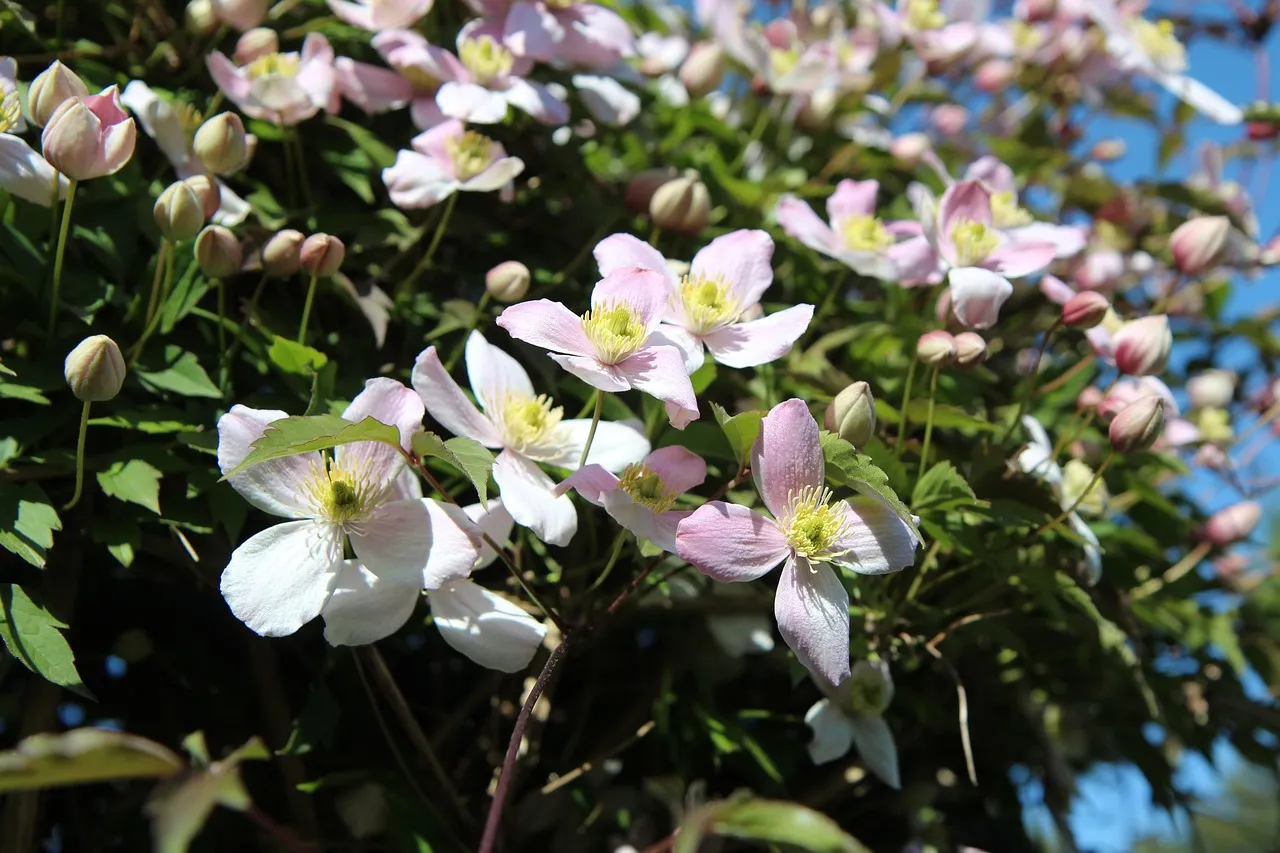
If you need to cover a large expanse of fence, shed or wall quickly and are not too precious about a fast growing climber with ambition, then look no further than Clematis montana. This Clematis is one of the fastest and most forgiving climbers you can plant! It even recovers from a butchering of hard pruning if it gets too vigorous.
It is a tendril climber, so needs a trellis, wire or netting to grip onto, but once established it will happily scramble eight metres or more in a single season, smothering itself each April and May in a mass of scented, pale pink or white four-petalled flowers against fresh green foliage.
It sits in Clematis pruning group one, meaning it flowers on the previous year’s growth and needs no routine pruning at all beyond keeping it within bounds, which for a plant this vigorous usually means an annual trim straight after flowering rather than a considered pruning regime. Like most Clematis, it wants its roots kept cool and shaded, ideally with a paving slab or other plants positioned over the root zone, while the top growth reaches up into full sun.
| At A Glance | |
|---|---|
| Botanical Name | Clematis montana |
| Plant Type | Deciduous tendril climber |
| RHS Hardiness | H6 |
| Height and Spread | 8 to 12m height, 3 to 4m spread |
| Flowering Period | April to May |
| Best Conditions | Sun or part shade, roots shaded, fertile well-drained soil |
| Key Feature | Extremely vigorous spring cover, minimal pruning needed |
My full guide to Clematis pruning groups covers montana alongside the other two pruning groups in detail, which is worth reading before you buy if you are choosing between Clematis varieties for the first time.
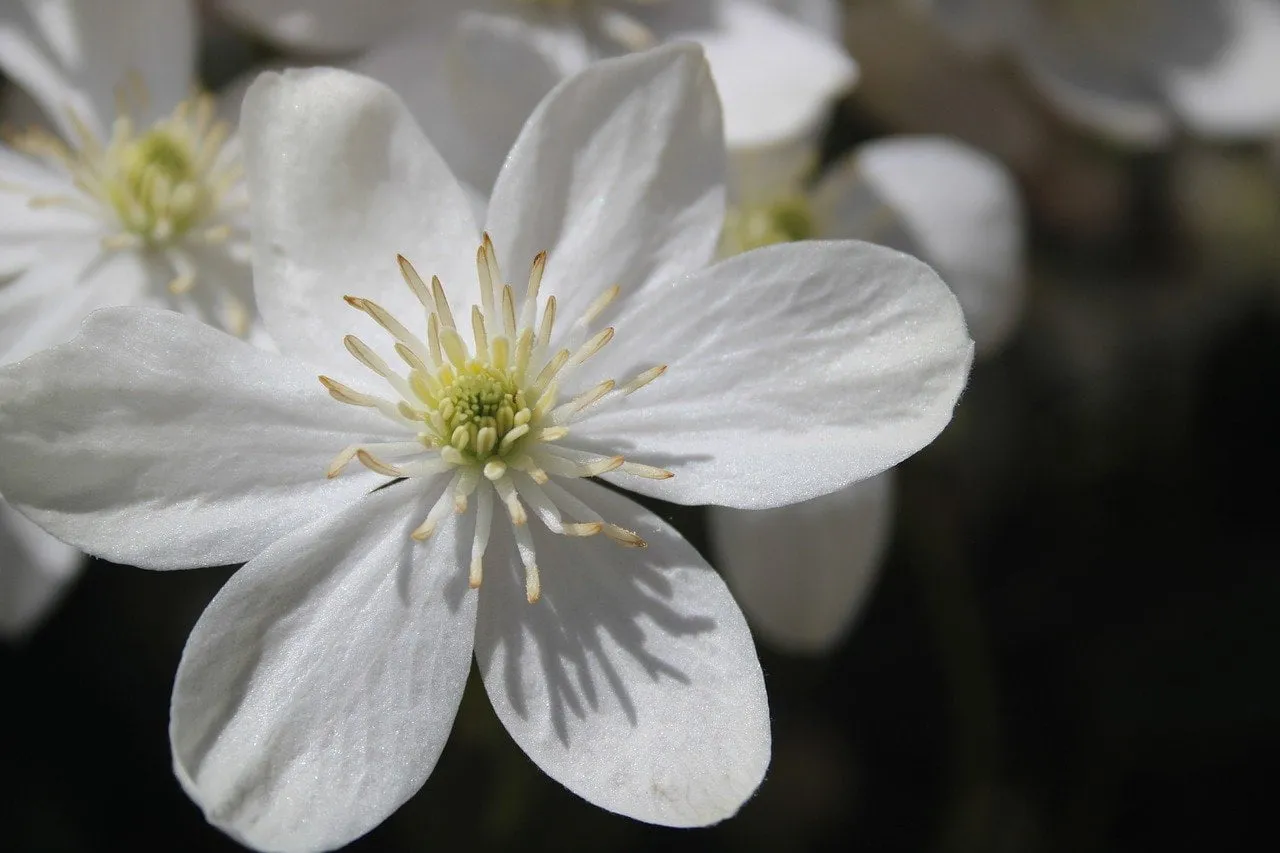
Where montana is grown for sheer coverage, Clematis armandii earns its place on this list as one of the very few evergreen Clematis. It keeps its glossy, leathery, dark green leaves through winter when most climbers on this list have gone bare. What’s also fabulous is it flowers at the very end of winter, usually late February here in the UK. With clusters of vanilla-scented white or blush flowers that are a welcome sight while the rest of the garden is only just waking up.
It needs a sheltered spot, ideally a warm wall out of the worst of any cold winter wind, since its evergreen leaves are more prone to wind scorch than a deciduous climber that simply drops its foliage before winter arrives. It also sits in pruning group one alongside montana. So it needs little routine attention beyond restricting it to the space available and removing any wind damaged leaves in spring, and unlike montana it does not respond well to hard renovation pruning if it is ever left to get away from you, so keeping on top of its size from the start matters more here than with most Clematis.
| At A Glance | |
|---|---|
| Botanical Name | Clematis armandii |
| Plant Type | Evergreen tendril climber |
| RHS Hardiness | H4 to H5 |
| Height and Spread | 5 to 9m height, 2 to 3m spread |
| Flowering Period | March to April |
| Best Conditions | Sheltered, sunny wall, protected from cold wind |
| Key Feature | Evergreen foliage with vanilla-scented early spring flowers |
Honeysuckle, Lonicera periclymenum, is the plant behind more forum messages than almost any other climber on this site. This classic climbing plant is heavily scented and well behaved, however, a lot of new gardeners panic when it fails to flower, usually because it’s been overfed or planted in full south facing sun!
It is a twining climber, so needs wires or trellis to wind around, and it rewards you through the second half of summer with clusters of tubular pink, cream and yellow flowers whose scent becomes especially powerful at dusk, when the plant is doing its best work attracting moths for pollination rather than daytime bees.
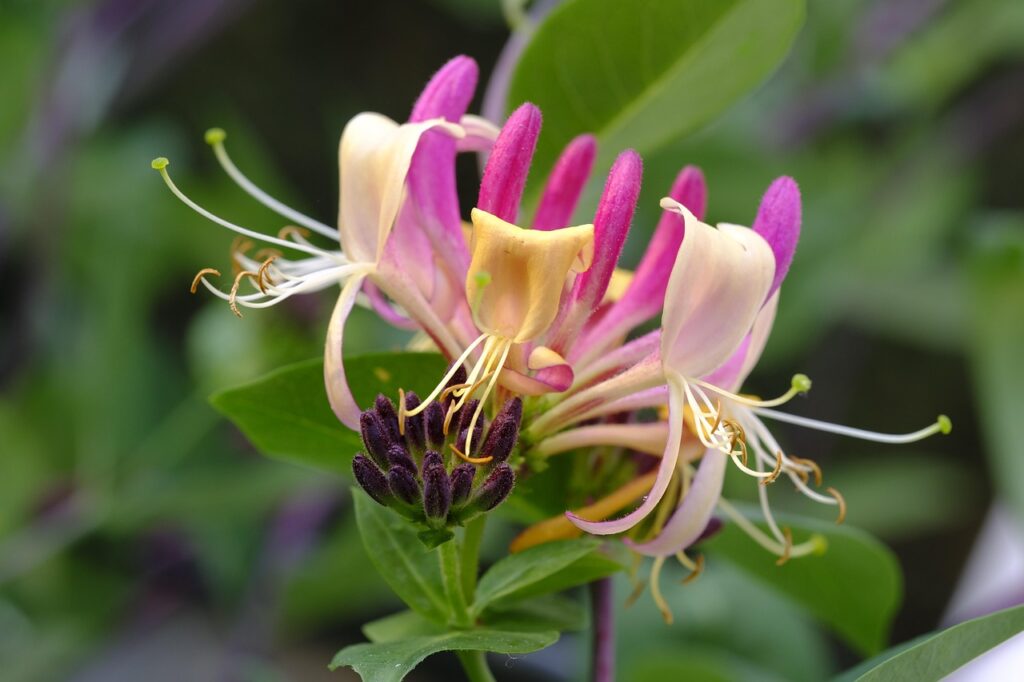
It is happiest with its top growth in sun and its roots in cool, shaded areas, exactly the same requirements as Clematis, which makes the two excellent planting companions along the same fence line or support. Honeysuckle can be pruned hard after flowering if it has become congested or bare at the base, and established plants respond well to renovation if needed, making it a forgiving choice for anyone nervous about pruning a climber for the first time.
| At A Glance | |
|---|---|
| Botanical Name | Lonicera periclymenum |
| Plant Type | Deciduous twining climber |
| RHS Hardiness | H6 to H7 |
| Height and Spread | 4 to 7m height, 1.5 to 2.5m spread |
| Flowering Period | June to September |
| Best Conditions | Sun to part shade, roots kept cool and shaded |
| Key Feature | Intensely scented flowers, strongest at dusk, loved by pollinators |
True Jasmine, Jasminum officinale, is often confused with Star Jasmine below, but the two belong to entirely different plant families and behave quite differently in the garden. Common Jasmine is a twining, largely deciduous climber that loses most of its leaves over a winter. Common Jasmine produces the scent most people actually picture when they hear the word Jasmine, an intense, sweet fragrance from clusters of small white star shaped flowers through mid to late summer.
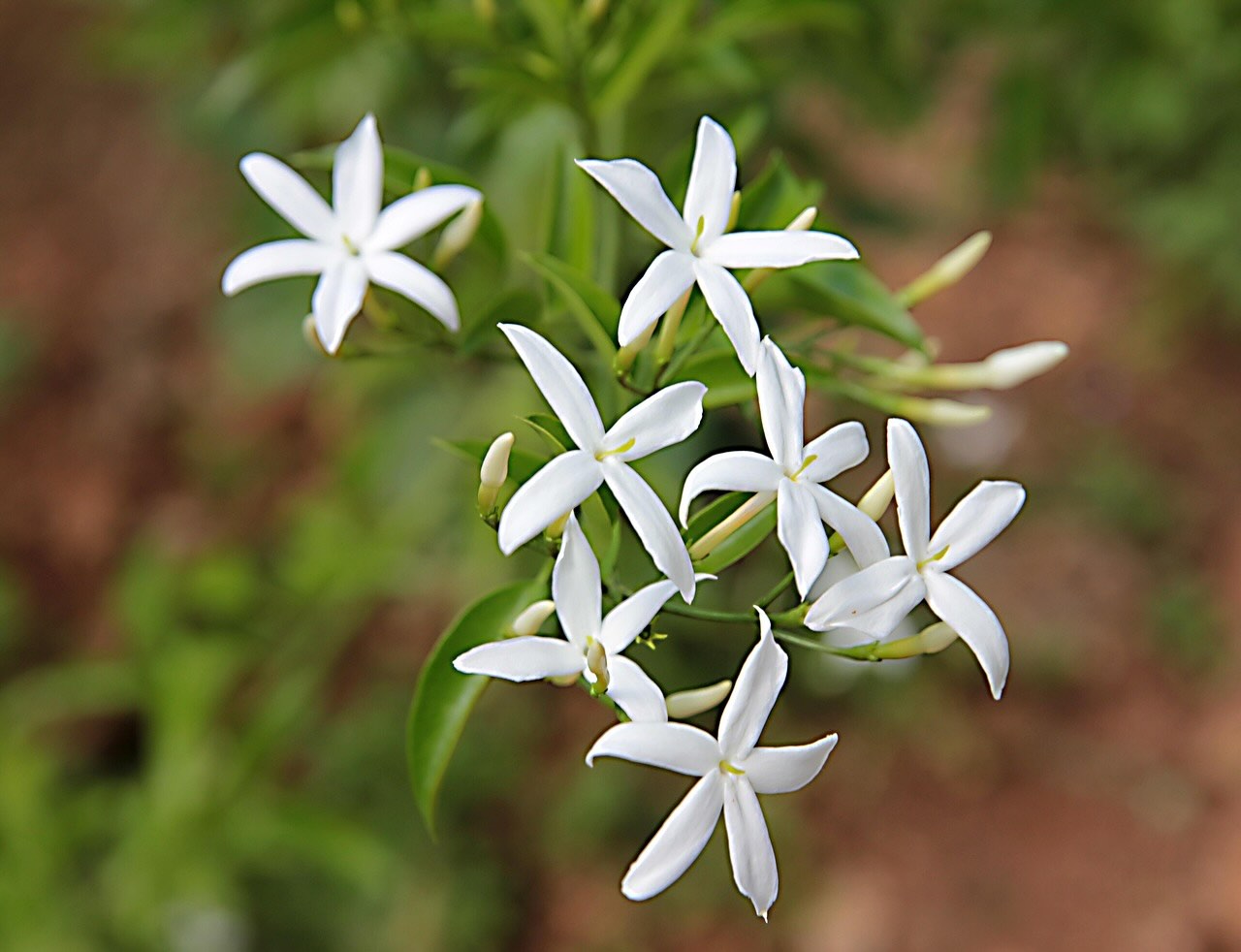
It wants a warm, sheltered, sunny wall to perform at its best, since it can be tender in a hard winter without that protection, and it needs a trellis or wires to twine around from an early stage, or the whippy young growth tends to flop rather than climb. Once established, it needs relatively little beyond an annual thinning of congested growth after flowering and tying in any wayward stems as they extend. I always use my Felco secateurs to give my Jasmine a hard cut back in winter!
| At A Glance | |
|---|---|
| Botanical Name | Jasminum officinale |
| Plant Type | Deciduous to semi-evergreen twining climber |
| RHS Hardiness | H4 to H5 |
| Height and Spread | 8 to 12m height, around 1.5m spread |
| Flowering Period | July to September |
| Best Conditions | Warm, sheltered, sunny wall |
| Key Feature | Classic, intensely sweet Jasmine scent |
Star Jasmine, Trachelospermum jasminoides, is one of the most popular low-fuss evergreen climbers I recommend, and it is easy to see why once you have grown one. It keeps glossy, dark green foliage all year round, twines its way up a support without much fuss. This climber produces honey scented, star shaped white flowers through summer that carry real presence without becoming as vigorous or demanding as Wisteria or true Jasmine.
As it keeps its leaves, it’s often used in smaller gardens where year round greenery is key, and we use this plant on Garden Rescue so frequently I’m actually nearly (but not quite) fed up of tying them to trellises and pergolas!
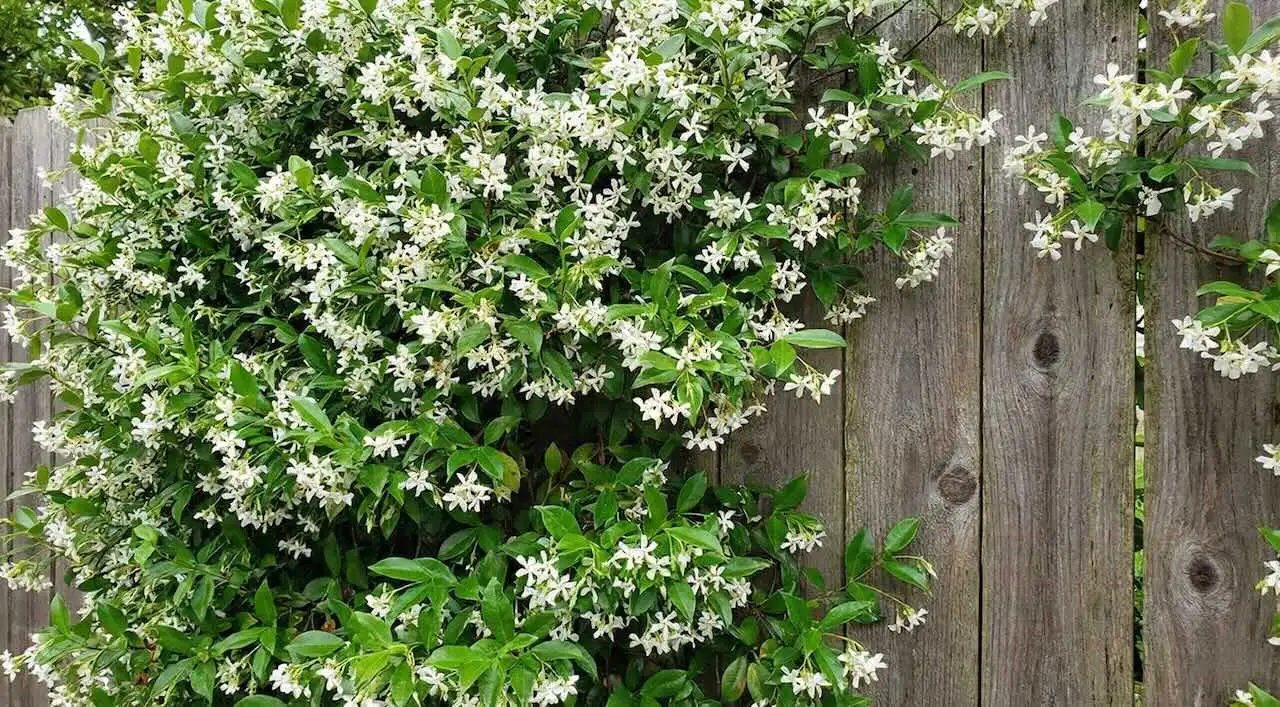
Give it a sheltered, sunny to part shaded wall and it needs surprisingly little intervention once established, beyond a tidy up straight after flowering finishes in late summer. It is not entirely maintenance free though, since left unchecked it will happily outgrow a small trellis, and I cover exactly when and how to bring an overgrown plant back under control in my dedicated Star Jasmine pruning guide, linked below.
| At A Glance | |
|---|---|
| Botanical Name | Trachelospermum jasminoides |
| Plant Type | Evergreen twining climber |
| RHS Hardiness | H4 |
| Height and Spread | 6 to 9m height, 1.5 to 2.5m spread |
| Flowering Period | June to August |
| Best Conditions | Sheltered, sunny to part-shaded wall |
| Key Feature | Low maintenance evergreen cover with honey-scented flowers |
My Star Jasmine pruning and care guide covers timing and technique for keeping an established plant tidy, along with what to do if yours has already got away from you.
Wisteria is the statement climber on this list, and few plants match its pendulous, scented lilac racemes hanging from a pergola or the front of a house in late spring. It is a strong twining climber that needs a sturdy support, since a mature plant carries considerable weight, and it wants full sun and fertile, well drained soil to flower reliably rather than putting all its energy into leafy growth instead.
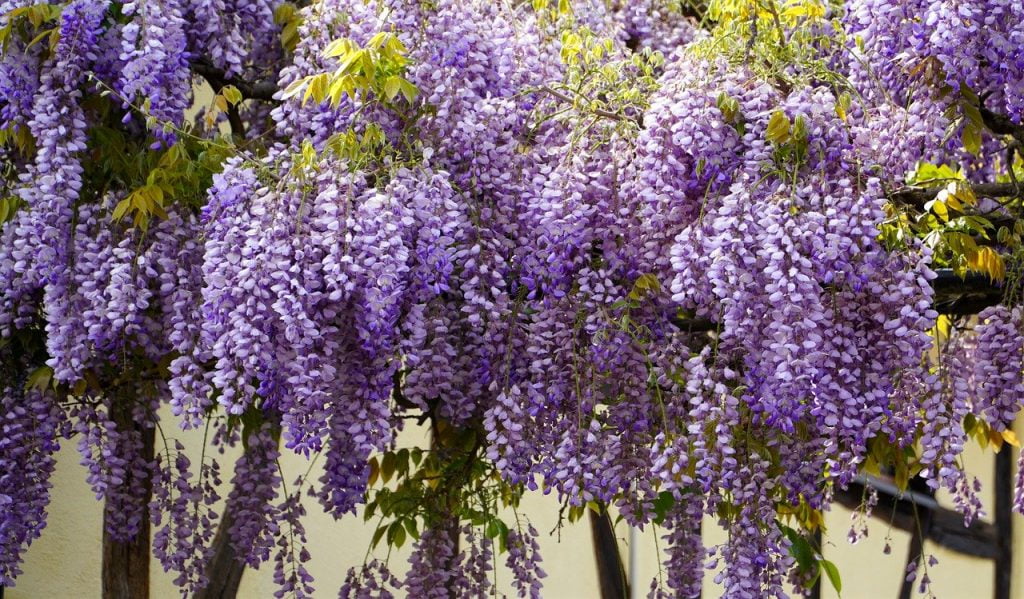
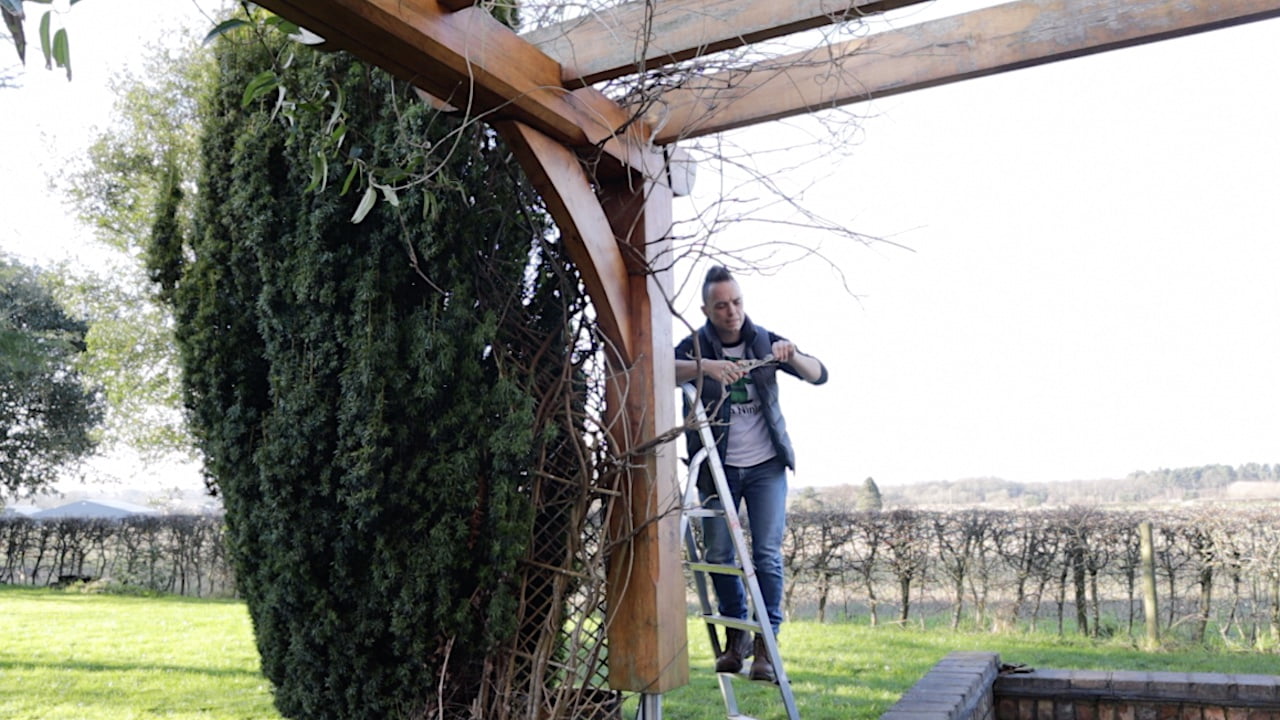
Wisteria is also the climber most likely to disappoint a beginner if pruning is skipped, since a plant left entirely to its own devices tends to produce lush foliage with very few flowers. It needs pruning twice a year, a summer cut back after flowering to control growth and let light reach the base, and a harder winter prune to spur buds that will flower the following spring.
| At A Glance | |
|---|---|
| Botanical Name | Wisteria floribunda / sinensis |
| Plant Type | Deciduous twining climber |
| RHS Hardiness | H5 to H6 |
| Height and Spread | Up to 20m against a wall, wide spread |
| Flowering Period | May |
| Best Conditions | Full sun, sturdy support, fertile well-drained soil |
| Key Feature | Dramatic pendulous flower racemes, needs twice yearly pruning |
I cover the full twice-yearly routine, including how to fix a Wisteria that has stopped flowering, in my complete Wisteria pruning guide.
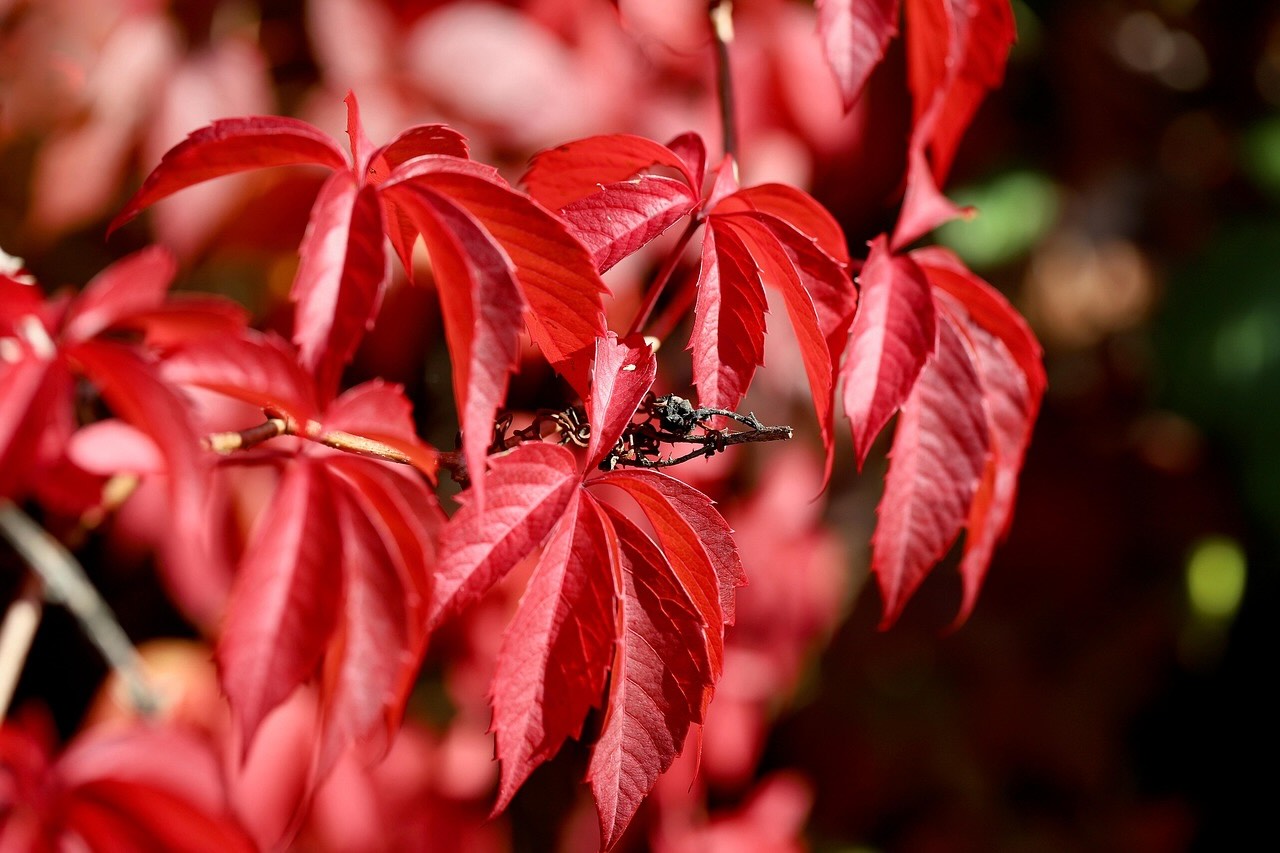
Virginia Creeper, Parthenocissus quinquefolia, earns its spot here on foliage alone rather than flower, given its blood red leaves and voracious appetite to climb and grow! The small summer flowers are largely insignificant and you need a microscope to spot them.
What it delivers instead is coverage almost nothing else on this list can match, self-clinging by tiny adhesive pads rather than needing any support, tolerant of full sun or fairly deep shade, and finishing the year with a blaze of scarlet and burgundy autumn colour before the leaves drop for winter. Though beware, I grew this in my first tiny garden against a fence post and within two years it had overtaken everything and the neighbours were a bit mad. Though I loved it, I had to keep hard pruning it to keep them happy. You have been warned, it’s probably the fastest growing climbing plant you can use here in the UK, make of that what you will!
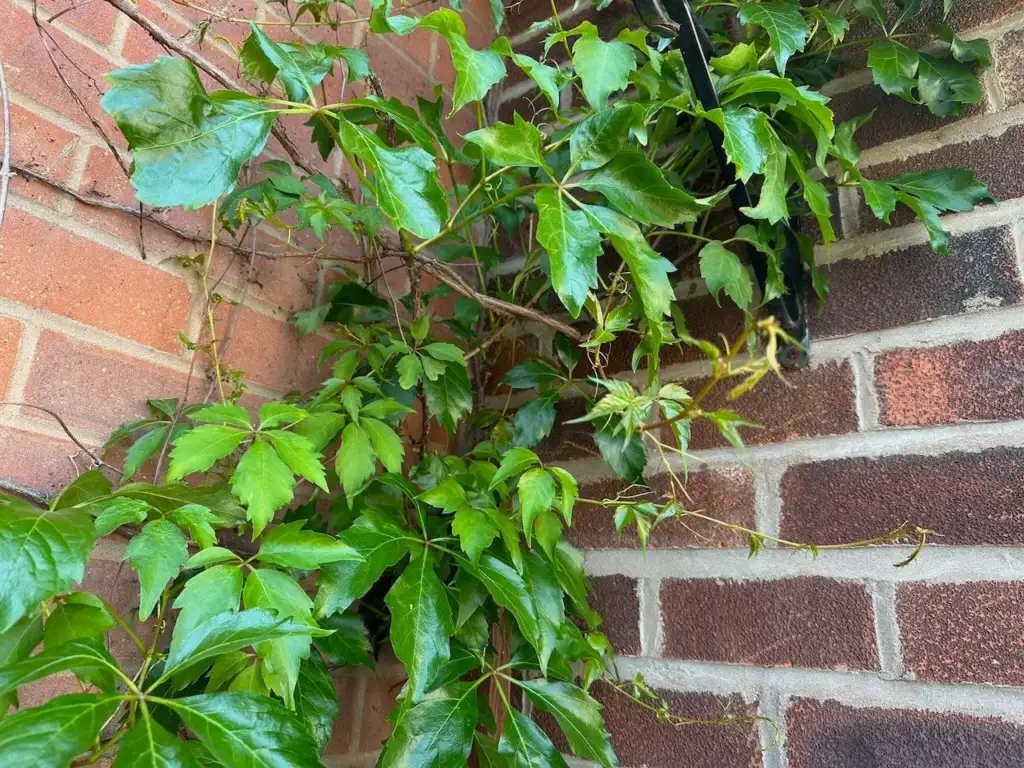
Its self-clinging adhesive pads are also the thing to be most careful about, since they can pull at soft render, old pointing or paintwork over time in a way a twining or tied in climber never will. It is a good match for a sound brick wall in any aspect, including a difficult north wall where little else on this list will grow at all, but I would think twice before planting it against anything with existing render or repair issues.
| At A Glance | |
|---|---|
| Botanical Name | Parthenocissus quinquefolia |
| Plant Type | Deciduous self-clinging climber |
| RHS Hardiness | H6 to H7 |
| Height and Spread | Up to 20m, wide spread |
| Flowering Period | Insignificant, grown for foliage |
| Best Conditions | Sun or shade, any aspect including north walls, sound brick only |
| Key Feature | Spectacular fiery red autumn foliage |
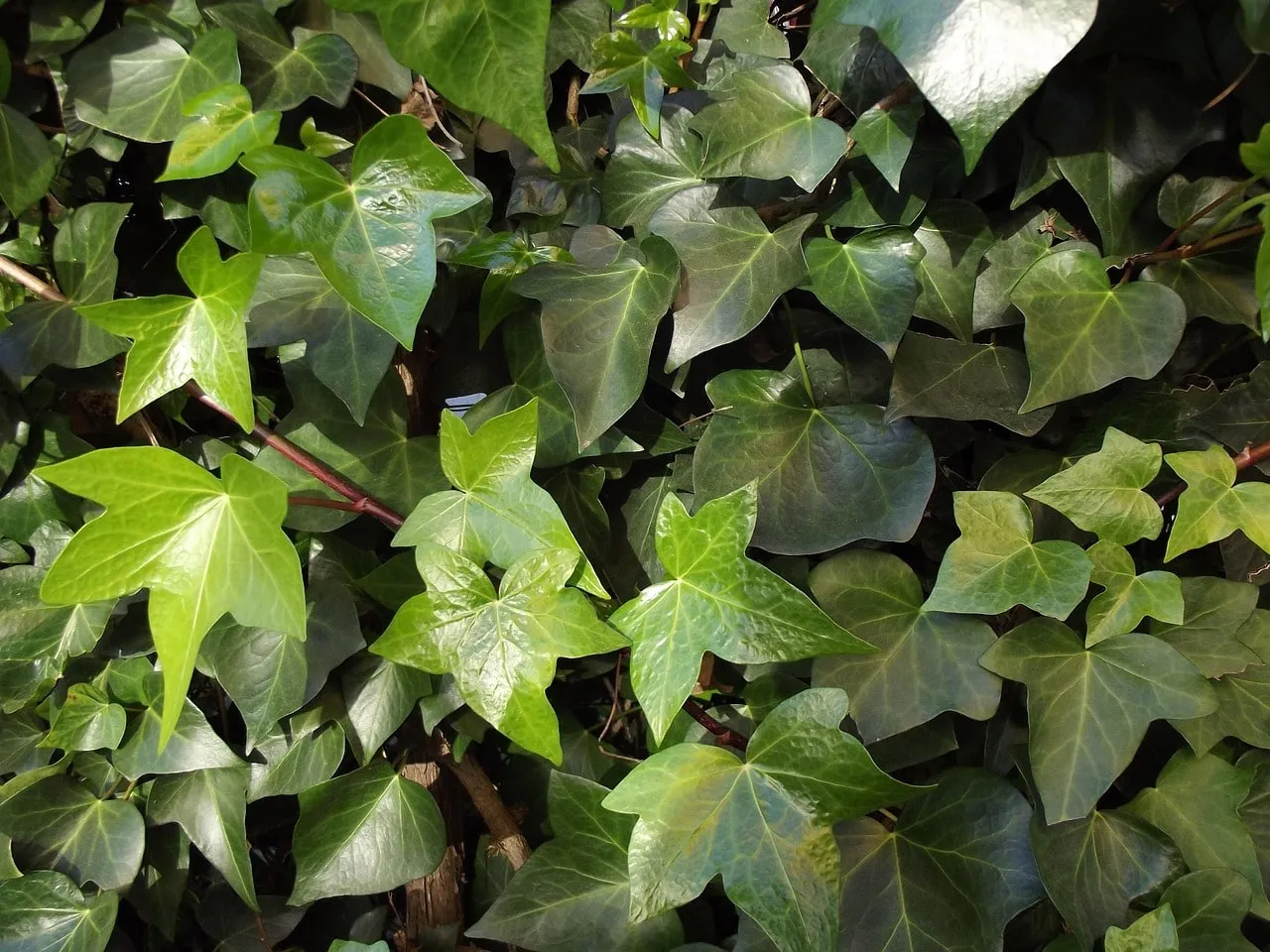
Ivy, Hedera helix, is the toughest, most tolerant plant on this entire list but people snub it so frequently, as they either think it’s boring or will start ripping down fences and walls with its tendrils, neither of which are true! I recommend Ivy when a client has more or less given up on getting anything else to grow in a particularly difficult spot. It will cope with the deepest shade of any climber here, tolerates almost any soil, and clings to brick, render or fencing entirely on its own using aerial roots, needing no support of any kind once it has a foothold.
Its evergreen cover makes it valuable for year round screening and privacy, and mature growth produces flowers and berries through autumn and winter that are an important late season food source for pollinators, including honeybees drawn to its late nectar, and birds. The trade off for all that toughness is vigour, since Ivy left unchecked will happily climb well beyond where you want it, get into guttering and roof spaces, and become heavy enough on an old or weak structure to cause real damage, so an annual cut back to keep it within its allotted space is worth building into your routine from the start rather than after it has become a problem.
| At A Glance | |
|---|---|
| Botanical Name | Hedera helix |
| Plant Type | Evergreen self-clinging climber |
| RHS Hardiness | H6 to H7 |
| Height and Spread | Up to 15m or more, wide spread |
| Flowering Period | September to November on mature growth |
| Best Conditions | Full shade to full sun, tolerates any soil |
| Key Feature | Toughest, most shade tolerant evergreen cover on this list |
Climbing Hydrangea, Hydrangea anomala subsp. petiolaris, is a plant I recommend specifically for a difficult north or east facing wall, because it is one of the very few flowering climbers that actually prefers shade rather than merely tolerating it. It clings by aerial roots without needing support, and produces flat, lacecap heads of white flowers in early summer against attractive heart shaped, glossy foliage. It’s a really unusual choice that most gardeners don’t even know exists!
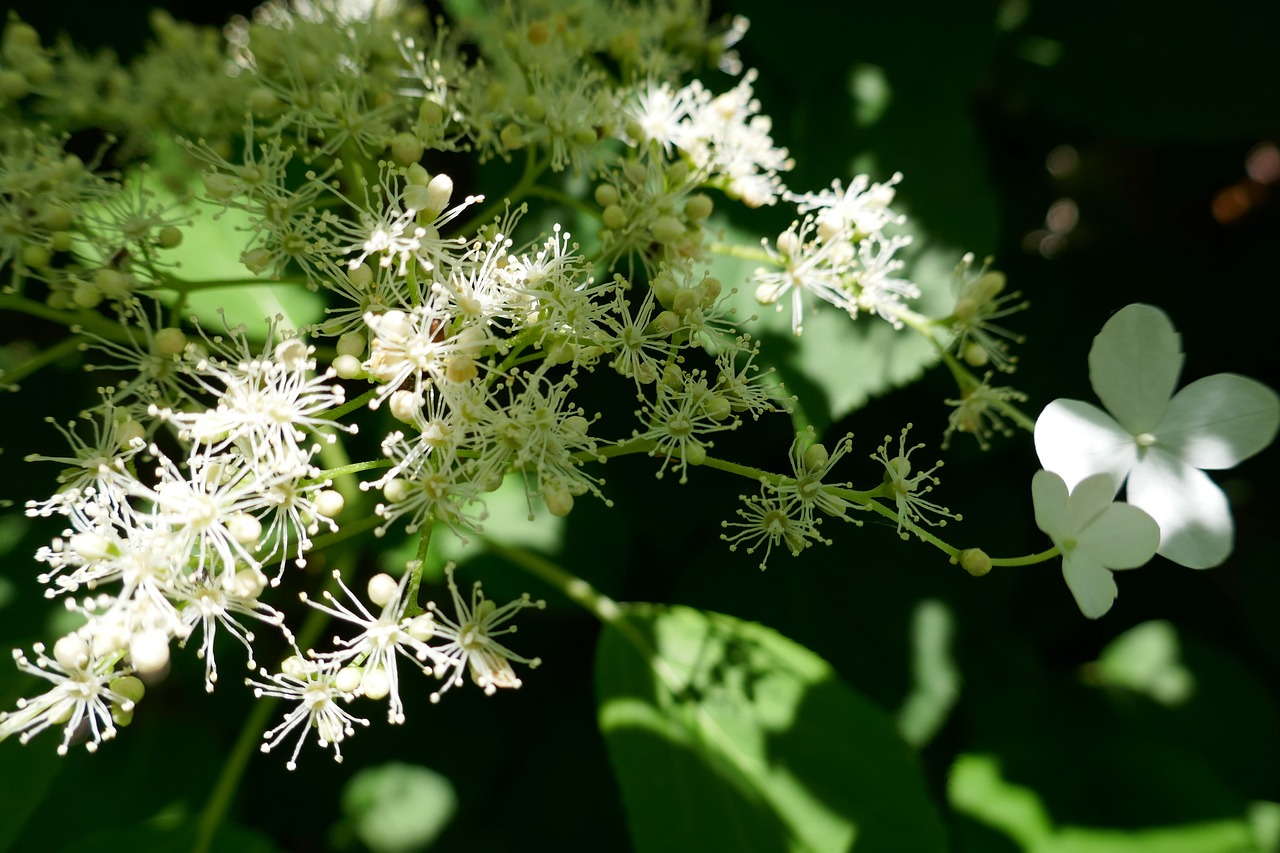
The one thing worth noting about committing to it is patience, since Climbing Hydrangea is notably slow to establish, often putting on very little visible growth for the first two or three years while it builds a root system, before growth accelerates noticeably from around year four onward. This climbing plant needs very little routine care, tolerating deep shade that would leave most other climbers struggling, and eventually reaching a considerable size on a mature wall.
| At A Glance | |
|---|---|
| Botanical Name | Hydrangea anomala subsp. petiolaris |
| Plant Type | Deciduous self-clinging climber |
| RHS Hardiness | H6 |
| Height and Spread | Up to 12m height, 2 to 4m spread |
| Flowering Period | June to July |
| Best Conditions | North or east facing wall, part shade |
| Key Feature | Shade loving by genuine preference, thrives where little else flowers |
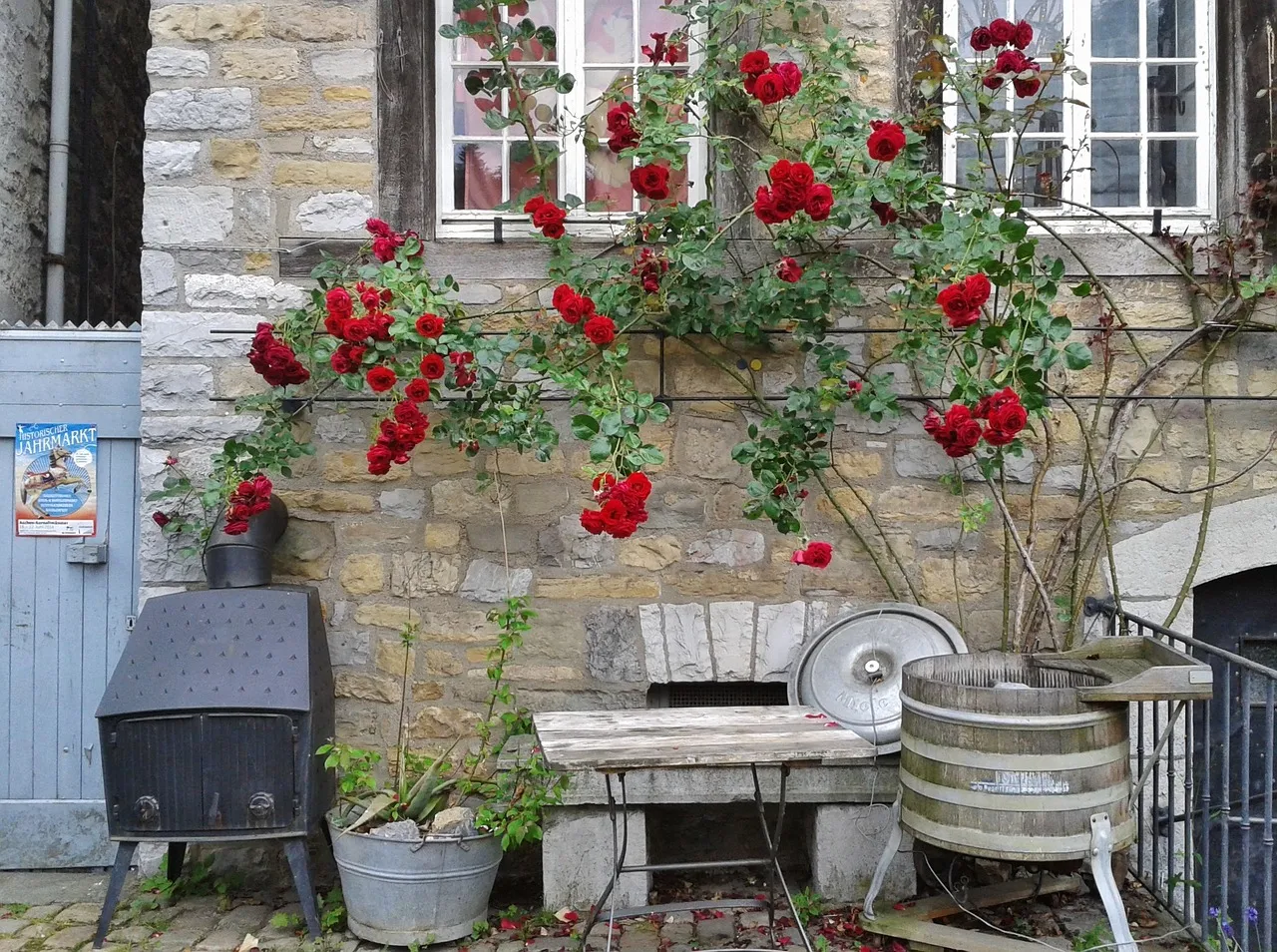
Climbing Roses are the odd one out on this list botanically, since a rose has no natural climbing mechanism of its own at all. What you are really doing when you grow one is training long, arching stems onto a support by hand, tying them in as they extend, which gives you far more control over the eventual shape than any self-clinging or twining climber offers, at the cost of needing that regular hands on attention.
In return for that effort, modern Climbing Rose cultivars offer repeat flowering right through summer into early autumn, in a colour range no other climber here can match, and many carry a strong classic rose scent alongside the flower. Give a Climbing Rose full sun and fertile, well drained soil, tie in new growth horizontally where you can rather than letting it shoot straight up, since horizontal training encourages far more flowering side shoots along its length, and feed and mulch it each spring the way you would any hungry, repeat flowering rose.
| At A Glance | |
|---|---|
| Botanical Name | Rosa, climbing cultivars |
| Plant Type | Deciduous climber, requires tying in |
| RHS Hardiness | H5 to H6 |
| Height and Spread | 3 to 5m height, 2 to 3m spread |
| Flowering Period | Repeat flowering, June to September |
| Best Conditions | Full sun, fertile well-drained soil |
| Key Feature | Repeat flowering with the widest colour range on this list |
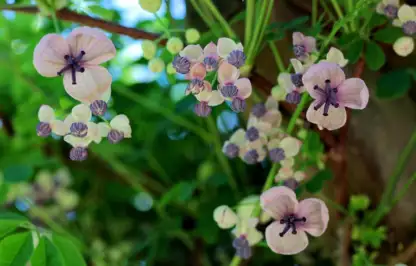
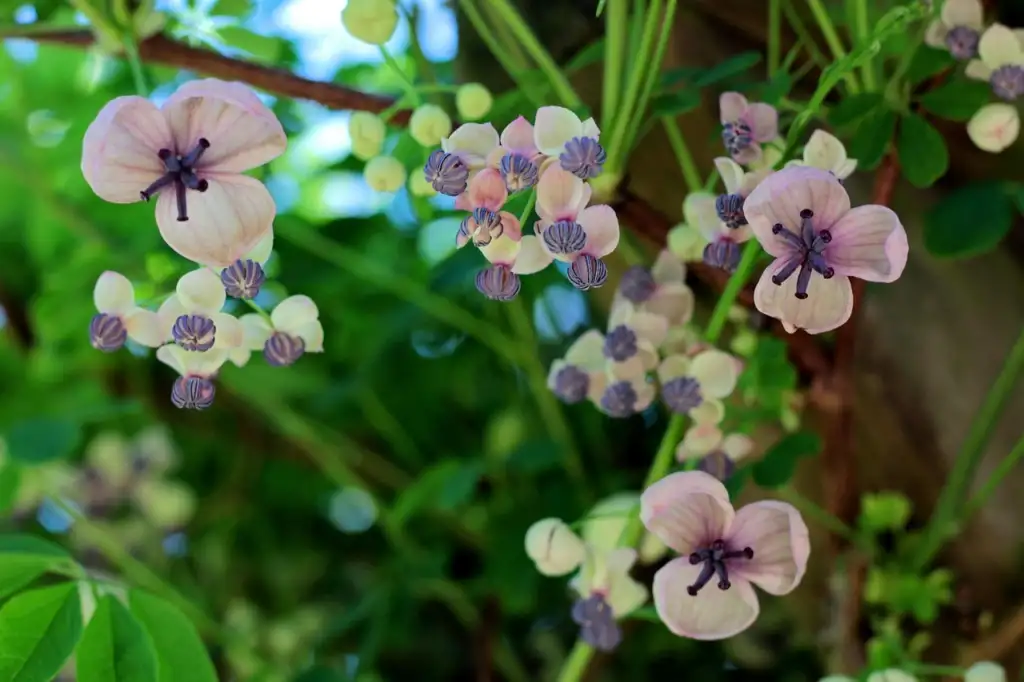
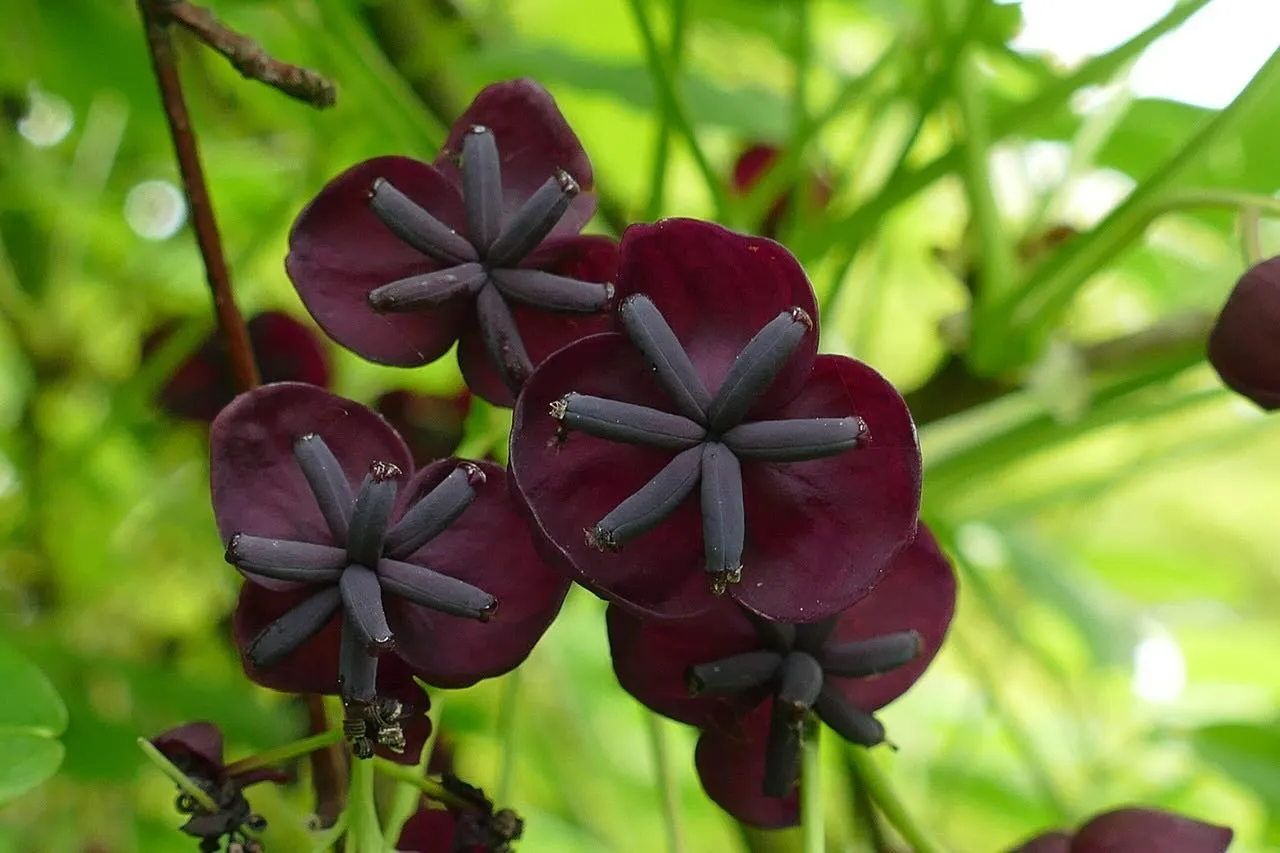
Akebia quinata, the chocolate vine, is the plant I recommend most often to clients who want something a little different from the Honeysuckle and Clematis everyone else on the street already has. It is a semi-evergreen twining climber with attractive divided foliage, and in April it produces small, unusual maroon flowers with a genuine, distinct scent of chocolate and vanilla, best appreciated up close near a doorway, seating area or window rather than from across the garden.
It is refreshingly undemanding, tolerating sun or part shade and coping with poorer soil than most of the scented climbers on this list, and needs only a light tidy after flowering to keep it in shape. In a mild, sheltered garden it will hold onto much of its foliage through a typical winter, though it behaves more properly deciduous in a colder or more exposed spot.
| At A Glance | |
|---|---|
| Botanical Name | Akebia quinata |
| Plant Type | Semi-evergreen twining climber |
| RHS Hardiness | H5 |
| Height and Spread | Up to 10m height, 2 to 4m spread |
| Flowering Period | April |
| Best Conditions | Sun or part shade, tolerates poorer soil |
| Key Feature | Unusual chocolate and vanilla scented flowers |
Campsis, commonly called Trumpet Vine, is the exotic looking option on this list, self-clinging by aerial roots and producing large, flared, trumpet shaped flowers in vivid orange or red through late summer that would look at home in a far warmer climate than most of the UK offers. It needs a warm, sheltered, sunny wall to flower well, and can be a little slow and reluctant to establish and bloom in its first couple of seasons before settling in properly. I love using this in tropical style gardens because it looks so exotic but is as tough as old boots!
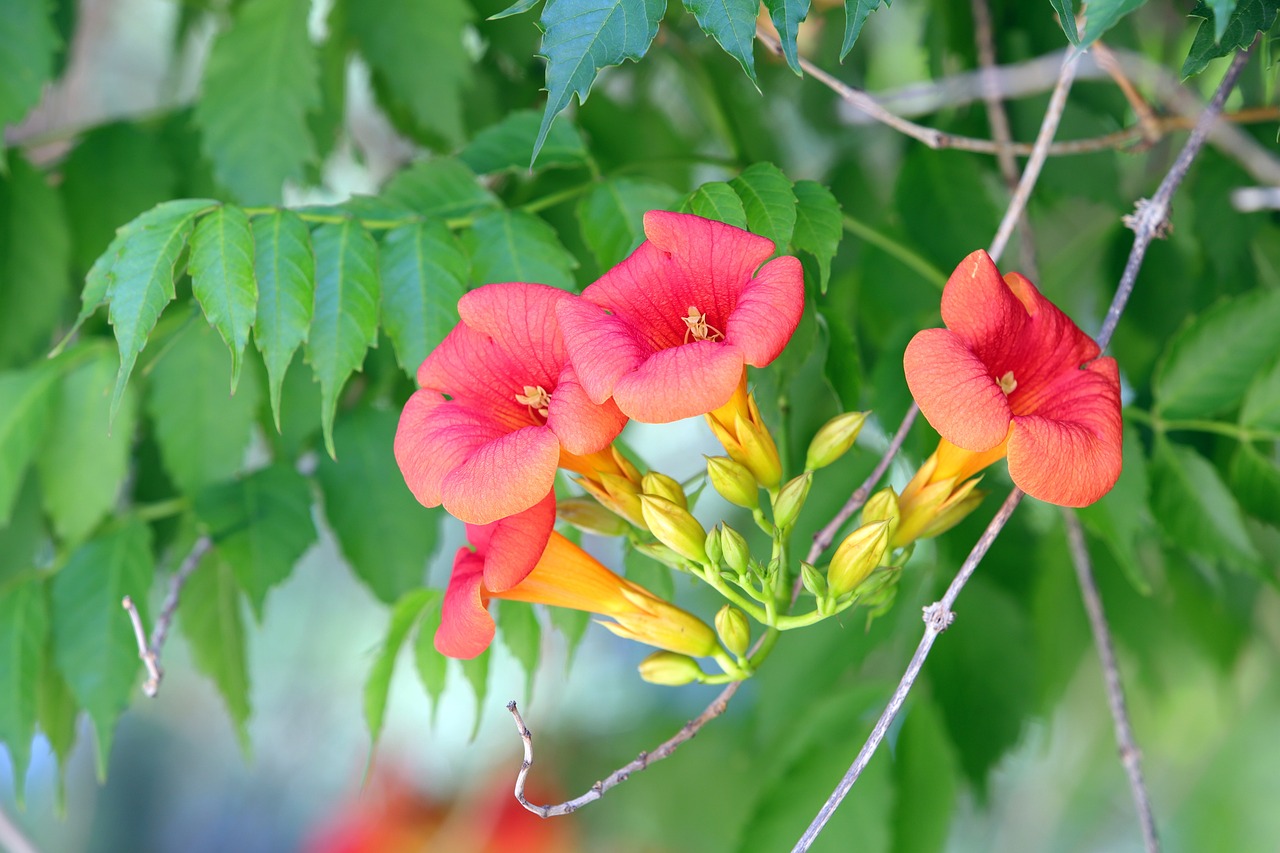
Once established, though, it thrives on a degree of neglect, tolerating poor soil and irregular watering far better than most of the scented climbers on this list, and a hard prune in late winter each year, cutting the previous season’s growth back to a permanent woody framework, keeps it flowering freely rather than running to bare, leggy stems.
| At A Glance | |
|---|---|
| Botanical Name | Campsis x tagliabuana |
| Plant Type | Deciduous self-clinging climber |
| RHS Hardiness | H4 to H5 |
| Height and Spread | Up to 9m height, 3 to 4m spread |
| Flowering Period | July to September |
| Best Conditions | Full sun, warm sheltered wall |
| Key Feature | Exotic trumpet-shaped flowers, thrives on neglect once established |
Passiflora caerulea is grown as much for the sheer architectural strangeness of its flowers as for general garden cover, each bloom a striking ring of white and purple filaments around a central crown that looks more like something from a botanical illustration than a plant that grows perfectly happily against a British garden wall. It is a tendril climber, so needs a trellis or wire to grip onto, and flowers steadily through summer into early autumn given a warm, sheltered, sunny spot.
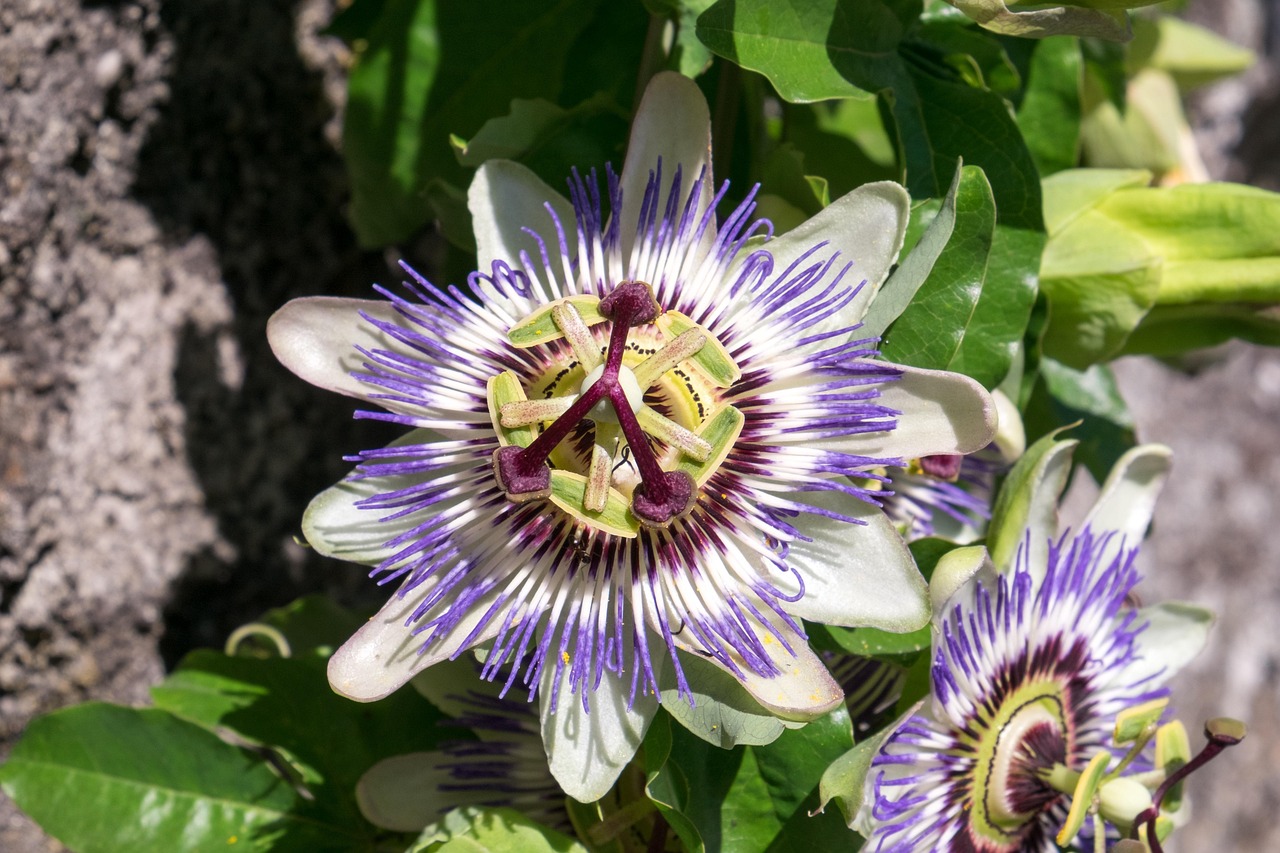
In a sheltered garden it can be semi-evergreen, while in a colder or more exposed spot it will die back to the base over winter and reshoot vigorously from the roots the following spring, which makes it more forgiving of a hard winter than its exotic appearance might suggest. A light prune in spring to remove any frost damaged growth and tie in new shoots is usually all the routine care it needs.
| At A Glance | |
|---|---|
| Botanical Name | Passiflora caerulea |
| Plant Type | Semi-evergreen to deciduous tendril climber |
| RHS Hardiness | H4 |
| Height and Spread | Up to 10m height, 2 to 3m spread |
| Flowering Period | July to September |
| Best Conditions | Warm, sheltered, sunny wall |
| Key Feature | Extraordinary architectural flowers, reshoots readily after a hard winter |
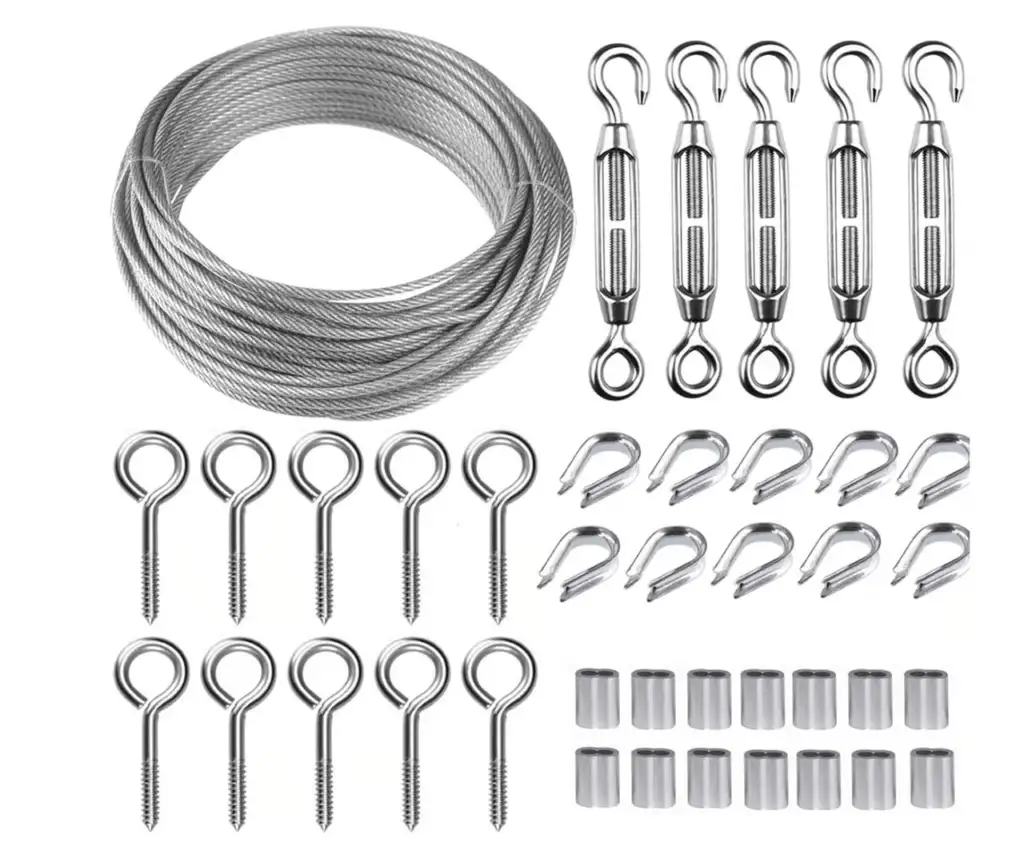
Getting the support right before you plant, rather than reacting to a floppy or wayward climber a year later, makes a genuine difference to how quickly a new plant establishes. For a twining climber like Honeysuckle, Jasmine or Wisteria, horizontal wires spaced around thirty to forty centimetres apart, fixed to vine eyes screwed into the wall and tensioned properly, give the plant a clear structure to wind around from the base upward and are considerably more durable long term than a timber trellis, which will eventually rot where it meets damp soil.
A set of vine eyes and tensioned wire is the support system I reach for most often on client projects for exactly this reason, since it disappears visually against the wall once the plant has covered it and lasts for decades rather than needing replacing.
Tendril climbers such as Clematis and Passion Flower need something narrower to grip, closer to the thickness of a pencil, so wire mesh or netting fixed over a trellis frame works better on its own than trellis battens alone. Self-clinging climbers, Ivy, Virginia Creeper, Climbing Hydrangea and Campsis, need no support structure at all and will attach directly to brick or stone, though I would always check the condition of render or pointing before planting one of these against it, since the aerial roots and adhesive pads that make them so easy to grow are also what can work into and worsen existing cracks over a number of years.
Whatever the climbing mechanism, keep any support at least five to eight centimetres clear of the wall surface rather than flush against it. This gap allows air to circulate behind the foliage, which noticeably reduces the fungal problems that can build up in a dense, damp climber left pressed directly against brick or render, and it also gives you room to get a hand or a pair of secateurs behind the growth for routine tying in and pruning without having to fight the plant for access.
A north or east facing wall is one of the situations I get asked about most, since it rules out several of the sun loving climbers on this list entirely. Climbing Hydrangea is the standout choice here, one of the few climbers that actually prefers shade rather than merely surviving it, followed closely by Ivy, which will grow in conditions darker than almost anything else you could plant. Virginia Creeper also copes well in shade, though its autumn colour tends to be less intense than on a sunnier wall, and Honeysuckle will flower reasonably well in part shade provided it gets at least some direct sun reaching the top growth through the day, even with its roots kept cool and shaded as it prefers regardless of aspect.
If a bare framework of stems through winter is not what you want against a boundary you look at every day, three climbers on this list earn their place specifically for evergreen cover. Star Jasmine is my usual first recommendation, combining reliable year round foliage with genuine summer flower and scent without becoming as vigorous as some evergreen alternatives. Ivy remains the toughest and most shade tolerant option where conditions are difficult. Clematis armandii sits between the two, evergreen and early flowering but wanting more shelter and a warmer wall than either of the others to perform reliably, so is worth reserving for a more protected spot in the garden rather than an exposed boundary.
Clematis montana and Virginia Creeper are both capable of eight metres or more of growth within a couple of seasons once established, making them the fastest options for quickly covering a large, bare wall or fence. That same vigour means both need committed annual pruning to keep them within bounds.
Ivy, Virginia Creeper, Climbing Hydrangea and Campsis are all self-clinging, attaching themselves directly to brick, stone or render using aerial roots or adhesive pads. Check the condition of the surface before planting one of these, since their attachment method can worsen existing cracks or poor pointing over time.
Self-clinging climbers can work into and worsen cracks in soft render or poor pointing over a number of years, though they rarely cause damage to sound brick or stone in good repair. Twining and tendril climbers grown on a trellis or wires kept clear of the wall surface pose little risk to the structure itself, which is one reason I generally recommend a support system over relying on a self-clinger against anything other than solid masonry.
Star Jasmine and Common Jasmine both carry a strong, classic scent well suited to a doorway or a window that gets opened regularly, while Honeysuckle’s fragrance becomes most noticeable at dusk, making it better suited to a seating area used in the evening than a spot you only pass during the day.
Yes, though the more vigorous options on this list, Wisteria, Virginia Creeper and Clematis montana among them, are much harder to keep properly fed and watered in a container long term than in open ground. Star Jasmine, Akebia and smaller Clematis cultivars are generally better suited to container growing if space is limited.

Join over 100,000 gardeners on YouTube
Free gardening videos from the Garden Ninja, with 8 million views and counting.
Subscribe on YouTube, it’s freeChoosing the right climber is one decision inside a much bigger planting plan, and matching aspect, support and vigour correctly across an entire border or boundary is exactly the kind of thinking I work through with clients on every design project. My courses break that process down into something you can apply to your own garden at your own pace, whatever stage you are starting from.
Courses start from just £29, giving you the same planning approach I use professionally without needing to book a full consultation.
For the garden you’ve already got, not the one you’re starting from scratch. Seven checklists and video lessons from BBC Garden Rescue’s Lee Burkhill, built to help you work out what’s worth keeping before you spend a penny.
Garden Design Examples for Small Gardens: 30 Design Templates & Planting Plans: In this online gardening course, I’ll walk you through 30 fantastic garden designs, explaining the logic behind the layout, the plant choices, and take-home tips for applying them in your own garden.
Learn how to transform and design your own garden with Lee Burkhills crash course in garden design. Over 5 hours Lee will teach you how to design your own dream garden. Featuring practical design examples, planting ideas and video guides. Learn how to design your garden in one weekend!
Garden Design for Beginners Online Course: If you want to make the career jump to becoming a garden designer or to learn how to design your own garden, this is the beginner course for you. Join me, Lee Burkhill, an award-winning garden designer, as I train you in the art of beautiful garden design.
The right climbing plant comes down to matching three things properly: the aspect and light your wall or fence actually gets, how the plant climbs and whether it needs a support fitted before planting, and how much vigour and ongoing pruning you are realistically prepared to commit to. Get those three right and almost any climber on this list will reward you, whether that is Wisteria’s dramatic spring display, Star Jasmine’s low maintenance evergreen scent, or Ivy quietly covering a wall nothing else would grow against. Choose against the conditions you actually have rather than the picture that first caught your eye, and the climber is far more likely to still be thriving in ten years than needing replacing in two.
Whichever climber you choose, give it the right wall, the right support and a little patience in that first season while the roots establish, and it will pay you back many times over in flower, scent or simple year round cover. Happy gardening.


Lee Burkhill, known as the Garden Ninja, is an award-winning garden designer and horticulturist with over 30 years of gardening experience and 15 years as a professional garden designer. A qualified RHS (Royal Horticultural Society) professional, Lee specialises in sustainable garden design and practical horticultural advice. He designs and presents on BBC1’s Garden Rescue and in leading gardening publications. Lee combines three decades of hands-on gardening knowledge with professional design qualifications to help gardeners create beautiful, functional outdoor spaces.
View all posts by Lee Burkhill




JOIN THE NINJAS
Be the first in line for new Guides, Discount codes and Offers