For the garden you’ve already got, not the one you’re starting from scratch. Seven checklists and video lessons from BBC Garden Rescue’s Lee Burkhill, built to help you work out what’s worth keeping before you spend a penny.
69


Quick Answer
If you have inherited a garden or never quite got round to your own, start by assessing aspect, drainage and soil, then audit what is worth keeping before you remove anything. Spend on safety and soil first, learn your garden’s seasonal rhythm, and buy the handful of tools that actually earn their place. This guide walks through each step, and the New Garden Starter Kit turns it into a working checklist you complete yourself.
I am Lee Burkhill, presenter of BBC One’s Garden Rescue, an RHS-qualified horticulturist and a Chelsea Flower Show award-winning garden designer. This guide is built specifically for gardening for beginners in the UK who already have a garden to work with, whether that is inherited, neglected, or simply unfamiliar. I will walk through the same process I use on site with a new client, assessing what you have got, working out what is worth keeping, and sequencing your spending so the expensive decisions come after you actually understand the space, not before.

Jump To
This page contains affiliate links for products I use and love. If you take action (i.e., subscribe or make a purchase) after clicking a link, I may earn some gardening commission, which will help me keep the Garden Ninja Blog free for all.
If your garden is truly a blank plot, bare earth, rubble, nothing established at all, my guide to starting a garden from scratch is the right place to begin instead of this one. That guide walks through building a garden up from nothing.
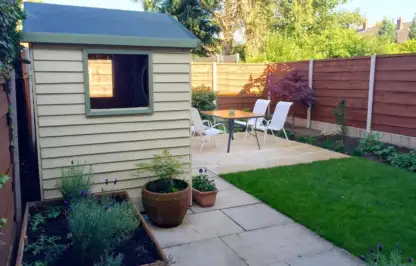
This guide is for the opposite situation: a garden that already has shrubs, borders, a lawn, maybe a shed or a greenhouse, all put there by someone else’s decisions rather than yours. That is a properly different starting point, and it needs a different first move. Instead of designing onto empty ground, you are reading what is already there and deciding what to keep, what to change, and what to leave entirely alone. Get that read wrong and you either waste money removing something that was fine, or spend years living with something that never worked in the first place.
Before any decision about what stays or goes, you need three pieces of information: aspect, drainage and soil. Skipping this step is the single most common reason a beginner border looks wonderful in month one and patchy by month six.
Stand in the garden at three points in the day, morning, midday and early evening, and note where the sun actually falls rather than where you assume it falls. A garden that looks flooded with light at midday can be in shade for the rest of the day, and a spot that seems sunny in June can be almost entirely shaded in February once the sun sits lower in the sky. Judging a garden’s light on one sunny weekend rather than across the year is the mistake I see beginners make more than any other.
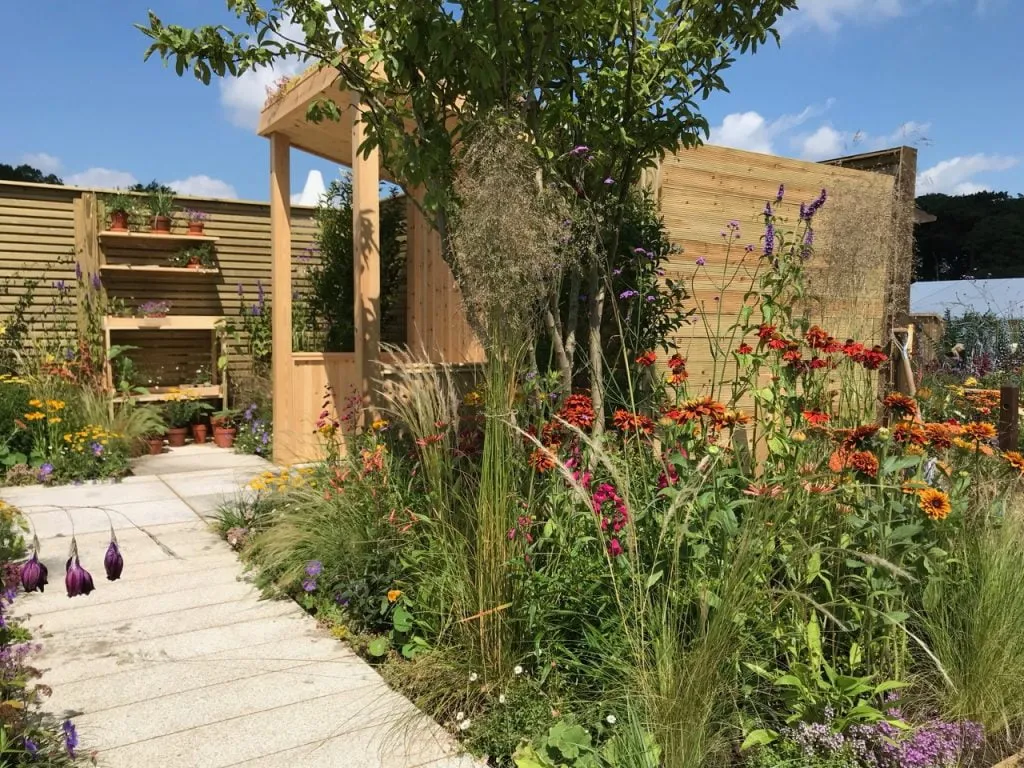
I think of a client who inherited a side return that looked shaded enough to fill with a lovely hosta collection, planted with real care that first spring. By August she had lost half of them to leaf scorch. The return only looked shady in spring, before next door’s extension started catching the afternoon sun from May onward. Nobody had watched that space across a proper season before planting it, and that one gap in the assessment cost more in replacement hostas than the whole audit would ever have taken in time.
Drainage takes ten minutes and costs nothing. Dig a hole roughly thirty centimetres deep and wide, fill it with water, and time how long it takes to drain. Under an hour is free draining, one to four hours is normal for most UK gardens, and anything over four hours means you are working with heavy or compacted soil that needs attention before you plant anything that dislikes wet feet.
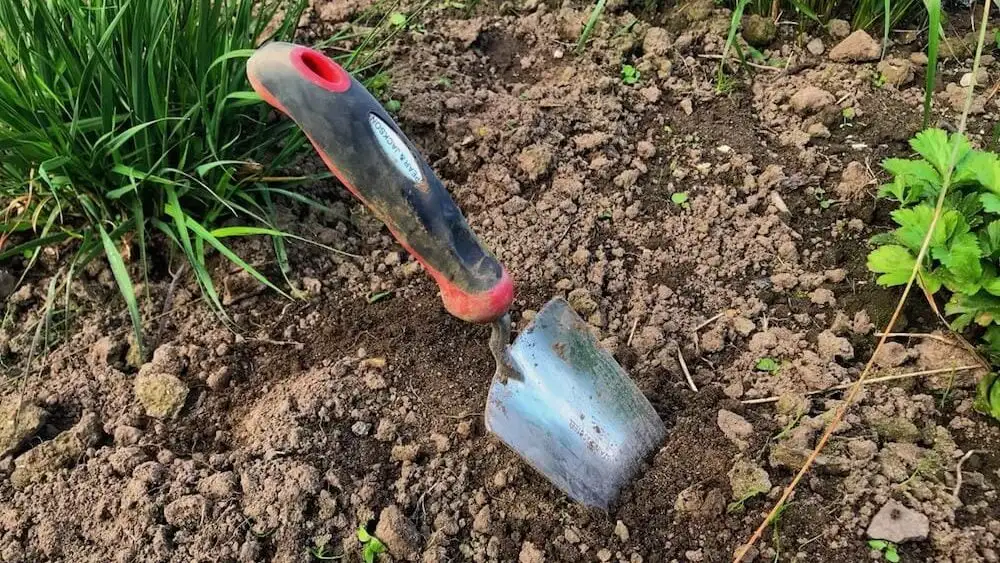
Finish with soil type. Take a handful of moist soil and rub it between your fingers, gritty and falling apart means sandy, silky and sticky means clay, somewhere in between with a good crumb structure means loam. A cheap pH testing kit, a few pounds from any garden centre, used in two or three spots rounds out the picture, since pH can shift noticeably from one end of a garden to the other, especially near old walls or where builders’ rubble sits under the topsoil. It is a small spend that saves you buying plants suited to soil you do not actually have.
This is the step that saves the most money and the most regret, and it is the one beginners rush past fastest. An inherited garden almost always has more worth keeping than it first appears, and the single most repeated regret I hear, on the forum and from clients, is pulling out an established shrub or tree only to replace it with something a fraction of the size that takes years to catch up. Removal is permanent. Almost nothing else in this process is, which is exactly why it deserves patience rather than a weekend of enthusiastic clearing.
Rather than getting technical about it, look at the overall shape of a shrub first. A plant with a sound framework underneath the mess, just too big or leggy for its spot, is almost always worth keeping and responds well to a hard prune, cutting the oldest third of the growth right back. One that has collapsed in on itself or gone hollow in the middle is a harder sell. Evergreens are more cautious territory, conifers and many broadleaf evergreens will not reshoot from bare, leafless wood, so trim these back to just above healthy green growth rather than cutting blind into the middle.
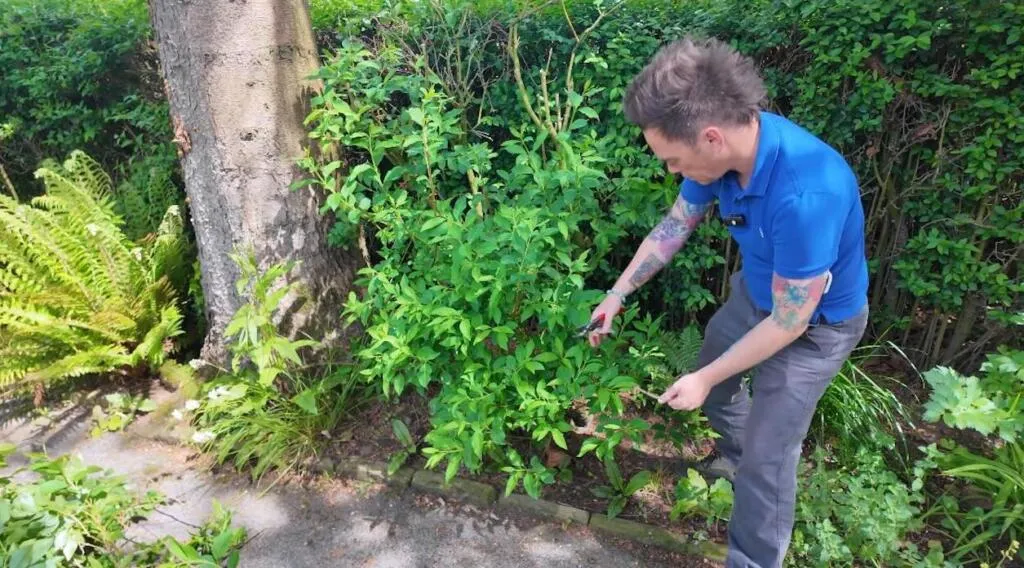
I remember walking an inherited garden with a client who was convinced the enormous, gappy shrub dominating one corner was simply dead and needed to come out before anything else could happen. It turned out to be a lilac that had never been pruned in perhaps fifteen years. We took out the oldest third of the stems that winter, and by the second spring it was flowering properly for the first time anyone could remember. The skip cost we avoided paid for a season of new perennials elsewhere in the garden instead.
Give hard landscaping the same patience. Cleaning and repointing a tired but structurally sound patio is almost always cheaper than starting again, and good stone can often be lifted and relaid somewhere more useful if it is simply in the wrong spot.
One more thing worth checking before you move any soil: a handful of weeds carry legal weight in the UK. Japanese knotweed is not illegal to have growing in your garden, but you are legally required to control it and stop it spreading onto neighbouring land, and there have been well publicised court cases where landowners were held liable for exactly that. If you spot the distinctive hollow stems with purple speckles and large shovel shaped leaves, get a professional identification before you touch it.
🌱 The New Garden Starter Kit
This entire guide, turned into seven checklists you actually fill in
Everything above is the thinking. The New Garden Starter Kit is the doing, seven working checklists and video lessons covering the Site Assessment, the Reuse Audit, Budget Priority, Seasonal Planting, Tool Essentials, Common Mistakes, and a Simple Garden Plan you sketch yourself. Built for exactly the situation this guide describes, an inherited or established garden, not a blank canvas.
Start the New Garden Starter Kit — £69Almost nobody has an unlimited budget, and the gardens that come together best are rarely the ones where everything happened in one weekend. Spend first on anything structural or safety-related: broken fencing, unsafe paving, drainage problems, since this is the one place delay always costs more later. Soil improvement belongs in this first tier too, and it is the line beginners cut most often when money is tight.
Good soil does real double duty, holding moisture during dry spells while draining freely after rain, and that structural improvement is invisible once the plants are in, which is exactly why it gets skipped and regretted.
I worked with a family who understandably wanted their whole first year’s budget going into a new patio and some statement planting, treating soil improvement as an optional extra to add later if funds allowed. We compromised on a smaller patio, and the difference went into properly conditioning three borders before anything went in the ground.
Eighteen months later, those borders needed almost no supplemental watering through a dry summer, while a similar unconditioned bed we did for a neighbour on the same street was still struggling. Same rainfall, same aspect, different soil.
Spend next on structural planting and any hard landscaping repairs that are cheaper to fix now than once new planting is in around them. Everything ornamental, border filling, furniture, pots, waits until the framework is settled.
On the numbers, hard landscaping such as new paving is consistently the most expensive line item per square metre, often several times the cost of soft landscaping like turf and planting for the same area, largely because of labour rather than materials. That alone is a reason to prioritise repairing existing hard surfaces over replacing them wholesale if your budget is tight, and it is exactly where the Reuse Audit above pays for itself. A rough sense of the gap helps when you are deciding whether to keep, repair or replace.
| Item | Full replacement | Keeping or renovating what is there |
|---|---|---|
| Patio, budget concrete | Roughly £50 to £80 per m² | Rarely worth repointing, cheap enough to replace if damaged |
| Patio, Indian sandstone | Roughly £80 to £130 per m² | Roughly £15 to £25 per m² to clean and repoint |
| Patio, porcelain or premium stone | Roughly £100 to £200 or more per m² | Roughly £15 to £25 per m² to clean and repoint |
| Lawn | New turf, £15 to £25 per m² | Scarify and overseed, roughly £150 to £250 for a typical garden |
| Feature tree | Semi mature or mature, £1,000 or more | Young specimen from around £100, established around £250 |
These are rough UK market ranges rather than quotes for your specific garden, and prices move, so treat the table as a sense check rather than a budget you can copy exactly. What it tells you plainly is that a patio can usually be cleaned and repointed for a fraction of what replacing it costs, and that a tree’s price is really a measure of how many years someone else has already grown it for you.
Whatever total figure you land on, set aside ten to fifteen per cent as contingency before you start; gardens are full of surprises once you start digging.
Beginner gardens go wrong less often because the wrong plants were chosen and more often because the right jobs happened at the wrong time of year. Spring is for dividing overcrowded perennials while they are still small and easy to lift, and planting summer bulbs once frost risk has passed. Summer is about maintenance, deadheading and watering deeply and less often rather than a light daily sprinkle, since a plant watered deeply sends roots down to chase the moisture, building the kind of deep root system that shrugs off a dry spell.
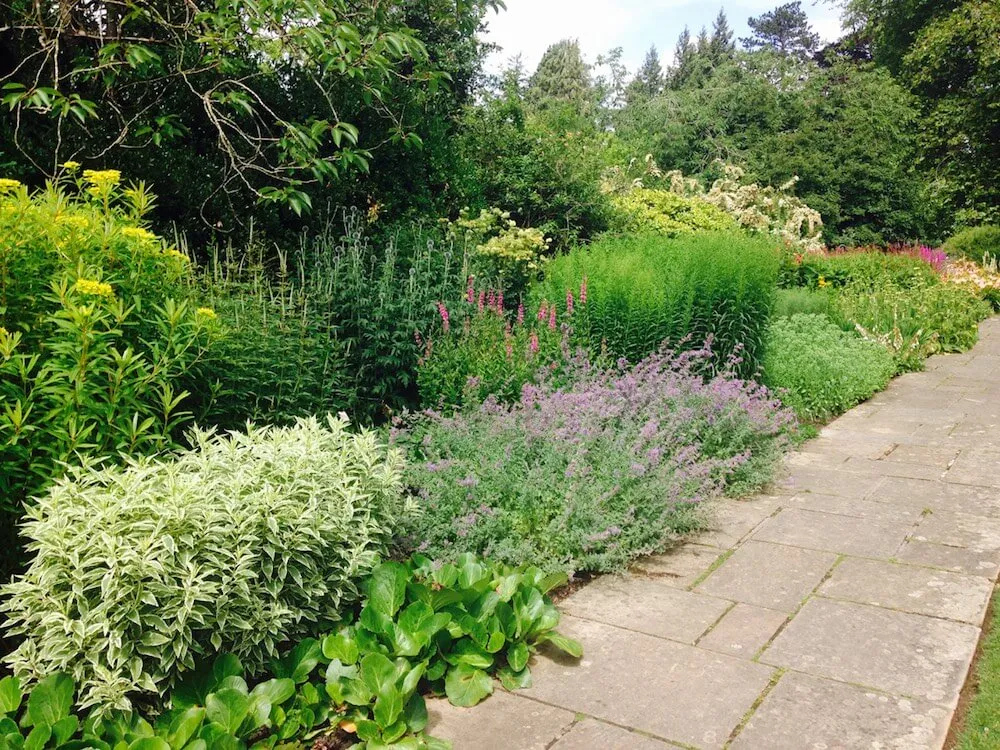
Autumn is the best planting season for most trees, shrubs and hedging, better than spring in most cases, because the soil stays warm enough for root growth for weeks after the air has cooled, giving a full season of quiet establishment before the plant faces its first summer. I once had a client keen to get a new boundary hedge in immediately during early summer heat. We agreed to prepare the ground and wait for autumn instead, and the hedge she eventually planted that October, establishing through a mild, damp winter, outgrew a similar hedge her neighbour planted the following May by a clear season’s growth within eighteen months. Nothing about the plants themselves was different. The only variable was the calendar.
| When | What to do | Why |
|---|---|---|
| Spring | Divide overcrowded perennials | Easiest to lift and split while they are still small |
| Spring | Plant summer flowering bulbs | Once the risk of frost has properly passed |
| Summer | Deadhead repeat flowering plants | Keeps the blooms coming rather than the plant setting seed |
| Summer | Water deeply and less often | Sends roots down to chase the moisture, building a deep root system that shrugs off a dry spell |
| Autumn | Plant trees, shrubs and hedging | Soil stays warm for weeks after the air cools, giving a full season to establish before the first summer |
| Autumn | Divide spring and early summer flowering perennials | The plant can put its energy into roots rather than flowers |
| Autumn | Take hardwood cuttings | The cheapest way to multiply anything you would like more of |
| Winter | Structural pruning of deciduous plants | Dormant and leafless, so you can actually see the framework you are cutting |
| Winter | Protect anything tender | Ahead of the first hard frost |
| Any season, if you have one | Use a greenhouse for seed sowing, cuttings and overwintering | Builds confidence fast and extends what a beginner garden can do |
If you have inherited a greenhouse, do not let it sit empty. A few trays of easy annuals or vegetables sown from seed builds real confidence fast, and the same glass gives cuttings a sheltered spot to root and offers the safest place to overwinter anything tender.
You do not need a shed full of kit to start well, you need a small number of tools that outlast several cheap versions of the same thing. Here are the five I would buy first, and my full tool guide covers the complete list in more depth. Budget versions of all five together can be found for well under fifty pounds, but I would rather you spent closer to one hundred and fifty on fewer, better tools that will still be sharp in ten years, particularly the secateurs.
A client once proudly showed me a shed full of tools bought as a starter bundle online, a dozen pieces still in their packaging, several of which she had never once used, and one pair of secateurs so poorly aligned they were bruising every stem she touched. We spent less on one proper pair of secateurs and a decent trowel than the bundle had cost, and she used those two pieces every single week from then on. Quality concentrated in the tools you actually reach for beats quantity spread across ones you do not.
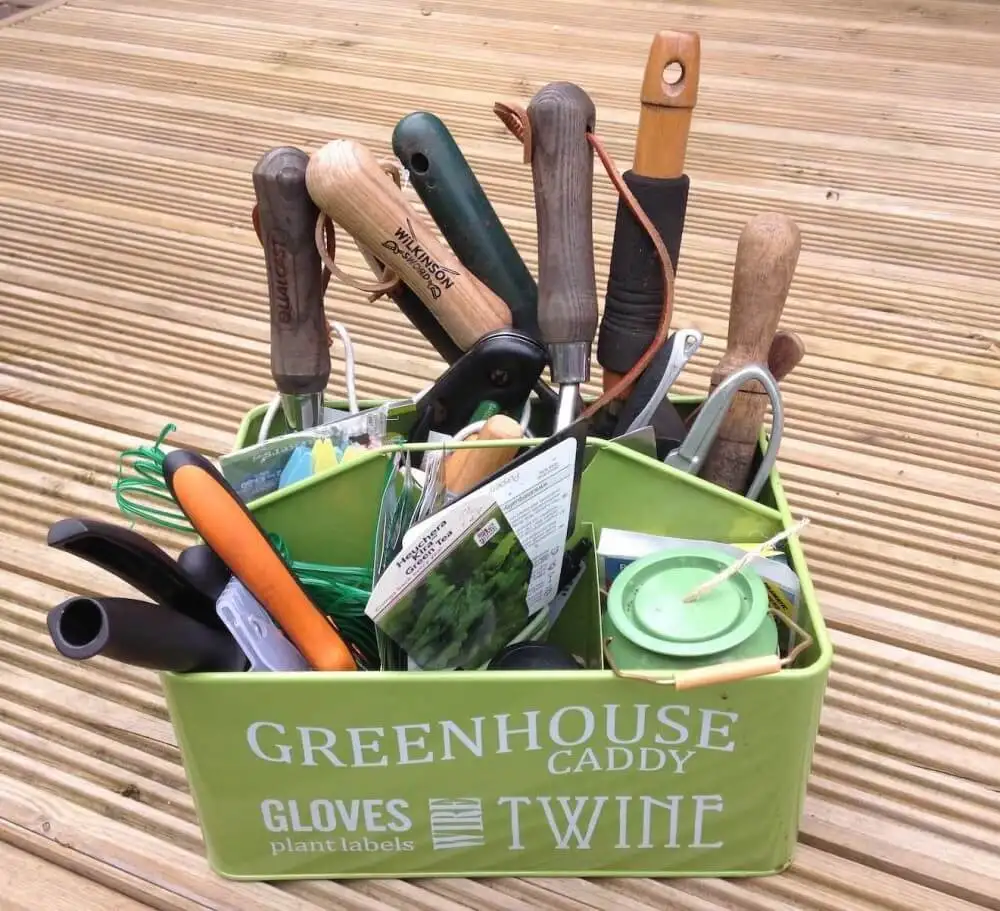
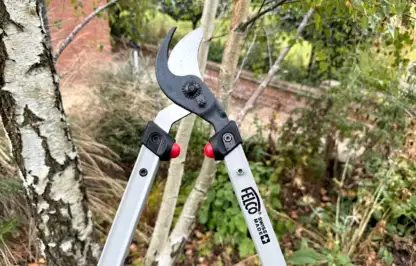
If you buy exactly one tool properly this year, make it this one. Sharp, well aligned bypass blades slice cleanly through a stem, leaving a wound the plant can seal quickly. A poor pair crushes the stem instead, and that crushed wound is exactly where disease gets in. I have used the same pair of Felco 2s for years and they have outlasted every cheap alternative I tried before them.
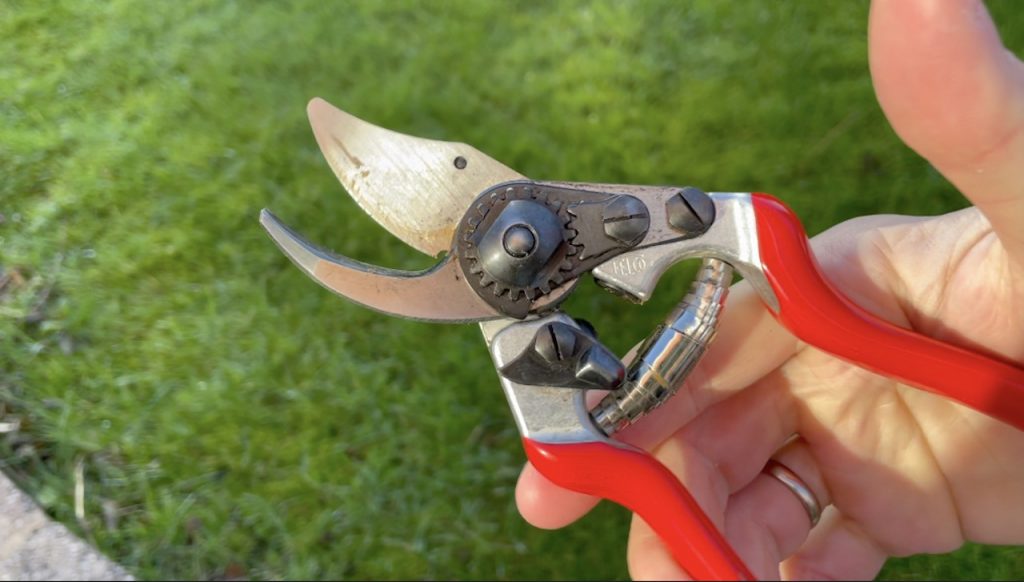
🛒 Buy Felco 2 Bypass Secateurs on Amazon UK
Small enough to store anywhere and versatile enough for almost everything at container and small border scale. Choose steel over plastic every time, plastic trowels are close to useless in anything but the lightest compost.
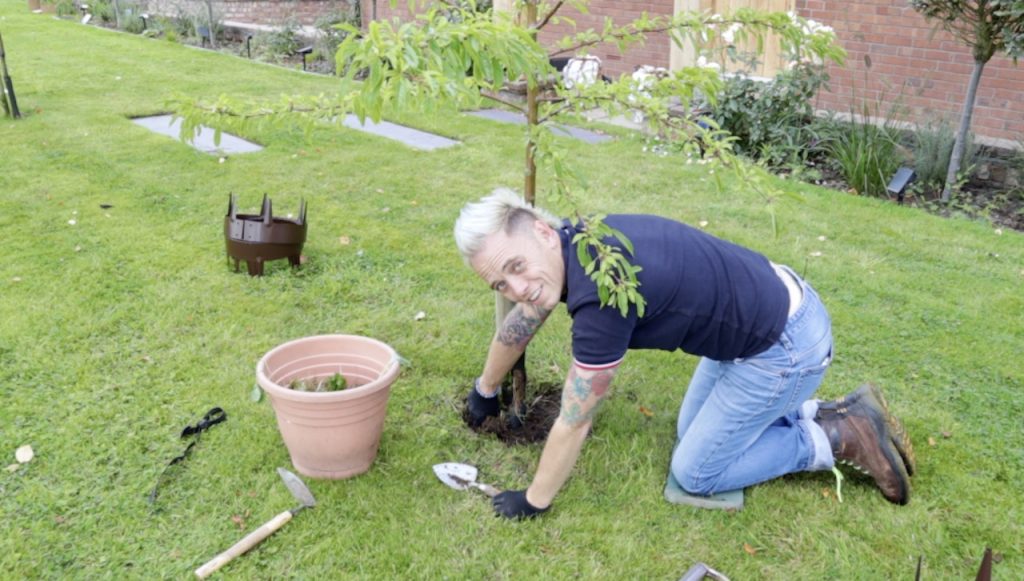
🛒 Buy a Stainless Steel Trowel on Amazon UK
The tool that actually gets things done once you are digging in earnest, planting shrubs, moving soil, cutting through turf. Buy once and buy properly, cheap spades with thin pressed heads bend the moment they meet a hidden root or a builder’s brick.
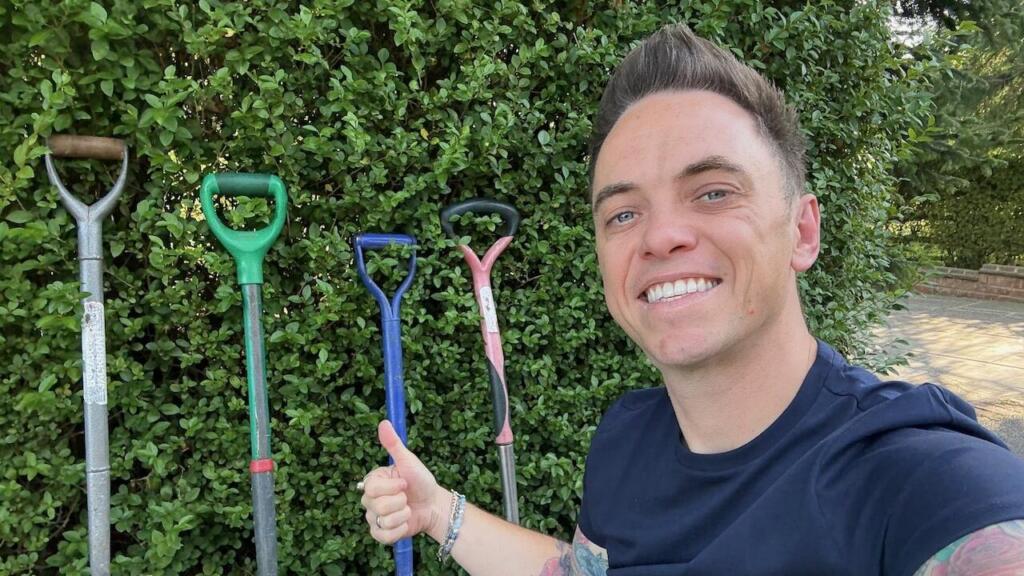
🛒 Buy a Garden Spade on Amazon UK
Part knife, part narrow trowel, this earns its keep faster than any other tool on this list. The wide, forged blade digs out deep rooted weeds, opens compost bags, and marks seed drills without flexing the way a kitchen knife would.
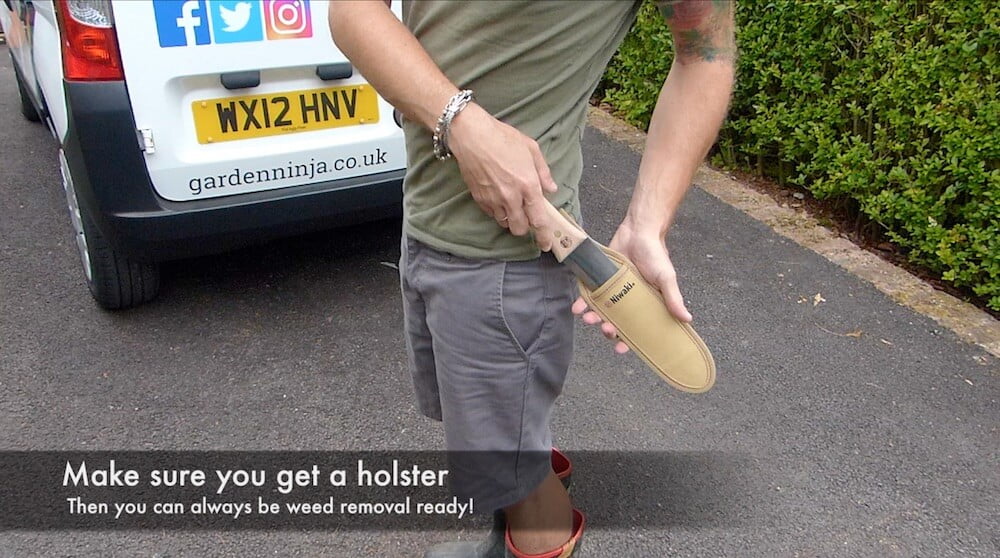
🛒 Buy a Hori Hori Knife on Amazon UK
Sounds unnecessary right up until the point it very much is not. One of the best value items you will ever buy, doubling as a makeshift seat or somewhere to rest tools so they do not vanish into a border.
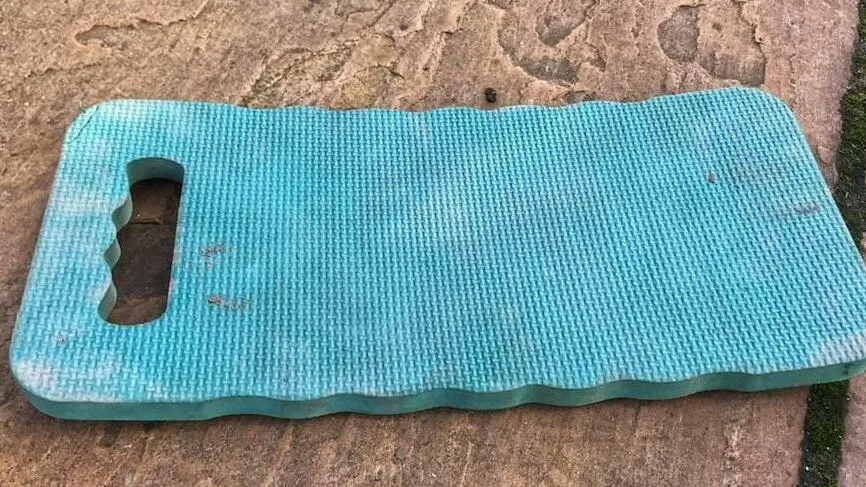
🛒 Buy a Kneeling Pad on Amazon UK
The mistake I see more than any other is not checking a plant’s eventual height and spread before it goes in the ground, judging only by its size in the pot. A plant that looks modest at the garden centre can outgrow a border within three years.
Pruning at the wrong time of year runs a close second. A client once asked me, slightly sheepishly, why her beautiful standard rose kept losing its flush of flowers only to sulk for weeks afterwards. She had been shearing it back hard with hedge trimmers whenever it looked untidy, at whatever time of year suited her weekend, rather than deadheading lightly through summer and saving the one proper hard prune for late winter. Once we matched the pruning to the plant’s actual habit rather than her calendar, it flowered close to continuously the following year.
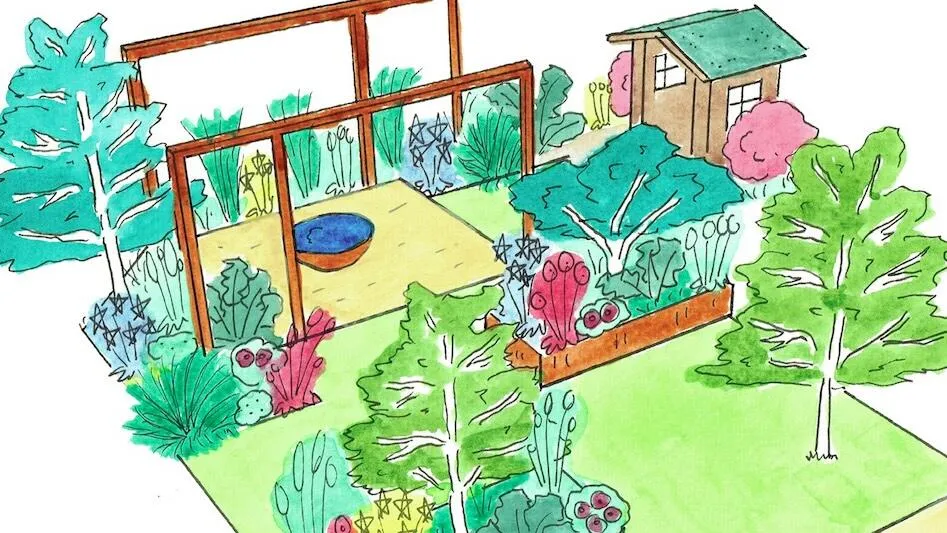
Two planning mistakes are worth flagging specifically. Ripping out a perfectly sound patio simply to replace it with a slightly bigger version in exactly the same spot, without asking whether that spot is right at all, just gives you a bigger version of the original mistake. And committing to a large shed or garden office before you have designed the rest of the space effectively fixes everything else in the garden around it once it is built.
A quieter mistake, but a common one, is buying a full trolley of plants on the first warm weekend of the year, before you know what your garden’s aspect and soil actually support. Buy a handful, see what actually thrives over a full season, and let that tell you what to buy more of, rather than gambling a whole border’s worth of plants on a single guess.
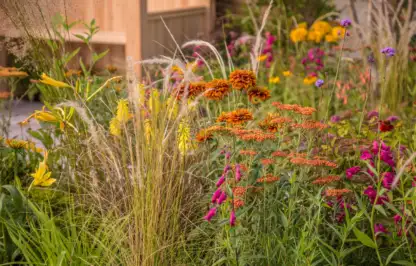
Once you have assessed the site, audited what you are keeping, and sequenced your spending, colour is where a garden stops being a list of correct decisions and starts feeling like yours. This is deliberately the last step rather than the first, choosing a planting palette before you know your aspect, soil and what is already established is how beginners end up with plants that fight the space rather than complementing it.
I have seen more than one border planted with genuine enthusiasm and no plan at all, one of everything, every colour fighting its neighbour, and it never reads as intentional no matter how healthy the individual plants are.
Colour is one of the most powerful tools in any garden designer’s toolkit, and once you start thinking about planting through the lens of a single colour, the whole design process becomes so much more intentional and rewarding. Whether you are drawn to cool, calming tones or bold, high-impact drama, there is a dedicated Garden Ninja colour guide to help you make the most of every border, bed, and container in your garden.
As a BBC1 Garden Rescue presenter and award-winning garden designer with over 20 years of professional experience, I have used every one of these colours extensively across hundreds of real garden designs. These guides are not theoretical colour wheel exercises. They are practical, plant-by-plant resources drawn from years of hands-on planting design, so you can be confident that every plant listed actually performs in UK conditions.
Bold, passionate, and utterly unforgettable, red flowers create the highest impact borders in any garden.
Explore Red Flowers →From deep violet to soft lavender, purple flowers bring an effortless sense of style and atmosphere to any planting scheme.
Explore Purple Flowers →Sunshine in plant form, yellow flowers lift any border with warmth, energy, and cheer that lasts from early spring to late autumn.
Explore Yellow Flowers →True blue flowers are some of the rarest in the plant world, which is precisely what makes them so prized and so satisfying to find.
Explore Blue Flowers →Crisp, elegant, and luminous in low light, white flowers are the designer’s secret weapon for creating a sense of calm and space in any garden.
Explore White Flowers →From a barely there blush to deep magenta, pink flowers are endlessly versatile and bring a warmth and softness that works in almost any garden style.
Explore Pink Flowers →From the tropical flame of Crocosmia to the smouldering copper of Helenium, these 35 orange flowering plants will transform your borders from March to October.
Explore Orange Flowers →Moody purples and near black foliage bring drama and atmosphere to a border, working as a striking foil for every other colour on this list.
Explore Dark & Gothic Plants →Each guide follows the same comprehensive structure I use when designing planting plans for my professional clients: trees, shrubs, perennials, ground cover, bulbs, and climbers, all with hardiness ratings, ultimate dimensions, growing conditions, and my personal top tips drawn from real garden design experience. Whether you are starting from scratch with a blank canvas or looking to refine an existing border, these guides give you the plant knowledge to make confident, properly informed choices.
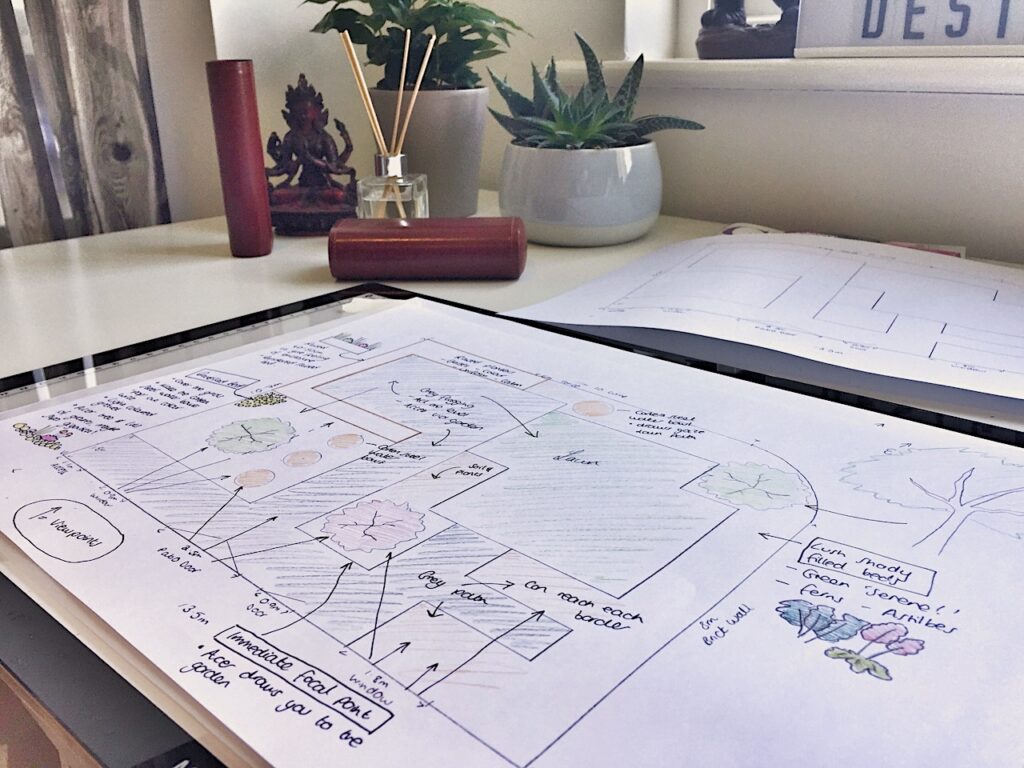
Everything in this guide is the thinking behind a good beginning. What turns it into an actual garden is writing it down: a rough sketch of your boundaries and what you are keeping, your top three budget priorities in order, and a note of what goes in first once the season is right. It does not need to be good. It needs to exist.
A tape measure, a pencil and a sheet of squared paper is all you actually need. Measure your boundaries and anything fixed you are keeping, then draw it at a simple scale, 1:100 for most average sized gardens so the whole plot fits on one page, or 1:50 for a smaller garden where you want to see more detail. At 1:100, one centimetre on paper stands for one metre in the garden. At 1:50, one centimetre stands for half a metre. Get the boundary and the fixed features down accurately first, then sketch the looser ideas, borders, seating, planting, on top. The scale only matters for the bones. The rest can stay a rough idea until you are standing in the space deciding for real.
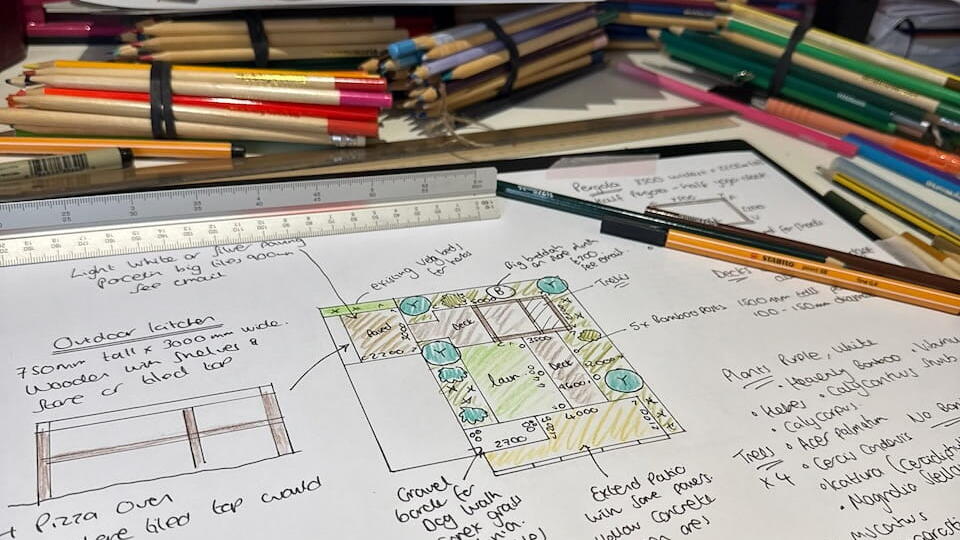
If you would rather work through all of this properly rather than piecing it together from articles, the New Garden Starter Kit walks through every step above as a checklist you complete against your own garden, finishing with exactly that plan on paper.
Start by assessing aspect, drainage and soil, then audit every shrub and tree to work out what is worth keeping before you remove anything. Removal is permanent, so this is the step worth taking slowly.
Look at the overall shape rather than getting technical about it. A shrub with a sound framework underneath the mess, just overgrown or leggy, is almost always worth a hard prune. One that has collapsed or gone hollow in the middle is a harder sell.
A blank canvas garden has nothing established to work around, so the process is building up from empty ground. An inherited or established garden already has decisions in it made by someone else, and the first job is reading and auditing what is there before you plant or remove anything.
A small number of well-made tools beats a large number of cheap ones. Bypass secateurs, a steel trowel, a border spade, a hori hori knife and a kneeling pad cover almost everything a beginner needs before anything more specialist.
Autumn is the best planting season for most trees, shrubs and hedging, since the soil stays warm enough for root growth for weeks after the air has cooled, giving the plant a full season to establish before its first summer.
For the garden you’ve already got, not the one you’re starting from scratch. Seven checklists and video lessons from BBC Garden Rescue’s Lee Burkhill, built to help you work out what’s worth keeping before you spend a penny.
Garden Design Examples for Small Gardens: 30 Design Templates & Planting Plans: In this online gardening course, I’ll walk you through 30 fantastic garden designs, explaining the logic behind the layout, the plant choices, and take-home tips for applying them in your own garden.
Learn how to transform and design your own garden with Lee Burkhills crash course in garden design. Over 5 hours Lee will teach you how to design your own dream garden. Featuring practical design examples, planting ideas and video guides. Learn how to design your garden in one weekend!
Garden Design for Beginners Online Course: If you want to make the career jump to becoming a garden designer or to learn how to design your own garden, this is the beginner course for you. Join me, Lee Burkhill, an award-winning garden designer, as I train you in the art of beautiful garden design.
Gardening for beginners in the UK looks different depending on what you are actually starting with. If your garden is truly empty, build up from nothing. If you have inherited or finally decided to tackle an established garden, the job is different: read the site, audit what is worth keeping, spend in the right order, learn the calendar, and buy a lean set of tools rather than a shed full of them. Colour comes last, once the bones are settled.
None of this needs to happen in a weekend, and most of it should not. Take it slowly, particularly the audit, and you will end up with a garden that works with what was already there rather than fighting it.
Happy Gardening, Ninjas! Take your time with the audit, get in touch on the forum if you are not sure what you are looking at, and enjoy getting to know the garden you have already got.



Lee Burkhill, known as the Garden Ninja, is an award-winning garden designer and horticulturist with over 30 years of gardening experience and 15 years as a professional garden designer. A qualified RHS (Royal Horticultural Society) professional, Lee specialises in sustainable garden design and practical horticultural advice. He designs and presents on BBC1’s Garden Rescue and in leading gardening publications. Lee combines three decades of hands-on gardening knowledge with professional design qualifications to help gardeners create beautiful, functional outdoor spaces.
View all posts by Lee Burkhill






JOIN THE NINJAS
Be the first in line for new Guides, Discount codes and Offers