For the garden you’ve already got, not the one you’re starting from scratch. Seven checklists and video lessons from BBC Garden Rescue’s Lee Burkhill, built to help you work out what’s worth keeping before you spend a penny.
69


Quick Answer
The best time to overseed a UK lawn is September to mid October, with April to mid May as second best. Mow short, rake or scarify out the thatch, aerate, then sow grass seed on the existing lawn at 25 to 35g per square metre in two directions. Keep it moist until it germinates in 7 to 21 days.
I’ve overseeded dozens of lawns over my career, in my own garden and on client projects, and the results still surprise people. A lawn that looked beyond saving in March, with bare patches, thin coverage and that general air of defeat after a hard UK winter, can be thick and green by early summer with nothing more than the right seed, decent preparation and consistent watering. That’s available to every gardener reading this, however bad your lawn looks right now.
The reason overseeding isn’t more widely practised is that most gardeners assume a patchy lawn needs to be dug up and replaced. That assumption costs a lot of unnecessary time and money. In the vast majority of gardens I visit, the existing lawn just needs thickening up by sowing grass seed on top of it once the surface has been prepared. The old grass provides structure, the new seed fills the gaps, and within a few weeks you have a visibly better lawn that keeps improving month on month.
This guide is written for beginners and covers the lot: when to overseed, how to prepare a lawn for reseeding so the seed actually germinates, which seed mix to choose, how to overseed the whole lawn versus reseeding bare patches, how long grass seed takes to grow, aftercare, and the products I use. Whether you’re dealing with a scarified lawn that looks like a ploughed field, summer drought damage, dog patches, or a lawn that has slowly thinned out over the years, you’ll find the fix below.
Jump To
This page contains affiliate links for products I use and trust. If you buy through one, I may earn a small commission at no extra cost to you, which helps keep the Garden Ninja blog free for everyone.
If you only buy one thing before you start, make it a decent seed mix with named grass varieties on the box, such as Johnsons Quick Lawn seed, which I’ve used for overseeding tired family lawns for years.
Overseeding simply means sowing new grass seed over an existing lawn. There’s no digging, no stripping turf and no starting from scratch. You work with what’s already there and fill the gaps with fresh, vigorous grass plants that thicken the sward, crowd out weeds and bring back the deep green a tired lawn has lost. Reseeding and overseeding are the same job described two ways, so if you’ve been searching for how to reseed a lawn, you’re in the right place.
Grass plants don’t live forever. Even in a well kept lawn, individual plants age, thin and die out over the years. Foot traffic, the dog, drought, moss treatments and the general seasonal battering of a UK garden mean the grass population is always slowly declining unless it’s topped up. Overseeding is how you counter that natural loss and keep the lawn dense enough to resist the weeds and moss waiting to move into any gap.
The difference between a lawn that’s overseeded every year or two and one that never is becomes obvious within two or three seasons. The overseeded lawn stays thick and competitive. The neglected one gradually develops the familiar patchwork of thin grass, moss and spreading broadleaf weeds. I treat overseeding as routine maintenance that keeps a lawn out of trouble, rather than something to reach for once it’s already struggling.
The situations that most often call for it are thinning from age and wear, bare patches after moss removal or scarifying, damage from summer drought or winter waterlogging, dog urine patches, compacted areas where people walk, and shady corners where the original seed mix was never suited to the conditions. Each of these can be fixed with the right seed and preparation, and I cover all of them below.
Timing matters more than anything else in overseeding. Sow at the wrong time of year and even the best seed either fails to germinate or produces seedlings too weak to survive what comes next. Get it right and germination is quick, establishment is strong, and the new grass is part of the lawn within weeks.
Early autumn, from September to mid October, is the best time to overseed a UK lawn. The soil is still warm from summer, the air is cooler so the seedbed dries out more slowly, weeds are slowing down and rain is more reliable. The new grass gets several weeks to root before winter slows everything, and it goes into spring as an established plant rather than a seedling.
Spring, from April to mid May, is the second best window. It’s also the time most people think about their lawn, because that’s when it looks its worst after winter. Spring overseeding works well as long as you can keep the seedbed moist through what is often a dry April. The main risk is a dry spell in the first fortnight, before the seed has germinated and rooted, so if you can commit to watering every day for that period, you’ll get very good results.
| Period | Suitability | Notes |
|---|---|---|
| September to mid October | Best | Warm soil, reliable moisture, less weed competition. Ideal for overseeding the whole lawn. |
| Late October | Possible | Fine in the South and West if the soil is still above 8°C. Too late in most of Scotland and northern England. |
| April to mid May | Good | Post winter refresh. Needs daily watering if April is dry, and weeds compete harder than in autumn. |
| Late May to August | Poor | High drought risk, weed pressure and heat stress on seedlings. Avoid unless you can water daily. |
| November to March | Avoid | Soil too cold for reliable germination. Seed sits dormant, rots or is eaten by birds. |
Grass seed will just about germinate at around 6°C, but at that temperature it’s slow and patchy. For reliable, even germination, aim for a soil temperature of 8°C or above at 5cm deep. A soil thermometer costs very little and takes the guesswork out of it, and it’s one of the most useful bits of lawn kit you can own.
🛒 Buy a soil thermometer on Amazon UK
This is the question I get asked most at this time of year, and the answer depends on where you live and what the soil is doing. Here in the North West I aim to have seed down by the first week of October, because our soil cools quickly once the nights draw in. Gardeners in the South, the South West and coastal areas can often sow until the end of October, as long as the soil is still above 8°C.
If you’ve missed the window, don’t sow anyway and hope. Seed sown into cold soil sits there all winter, where it’s eaten by birds or rots before it can germinate. Use the time instead to scarify, aerate and top dress, so the lawn is fully prepared for an April sowing. My UK winter garden jobs calendar covers what else the lawn needs over winter.
One of the most common mistakes I see is gardeners buying the cheapest bag of grass seed without checking whether it suits their lawn. Grass seed isn’t a generic product. Different mixes are formulated for different jobs, and the wrong one either struggles against the existing grass or comes up looking noticeably different from the rest of the lawn.
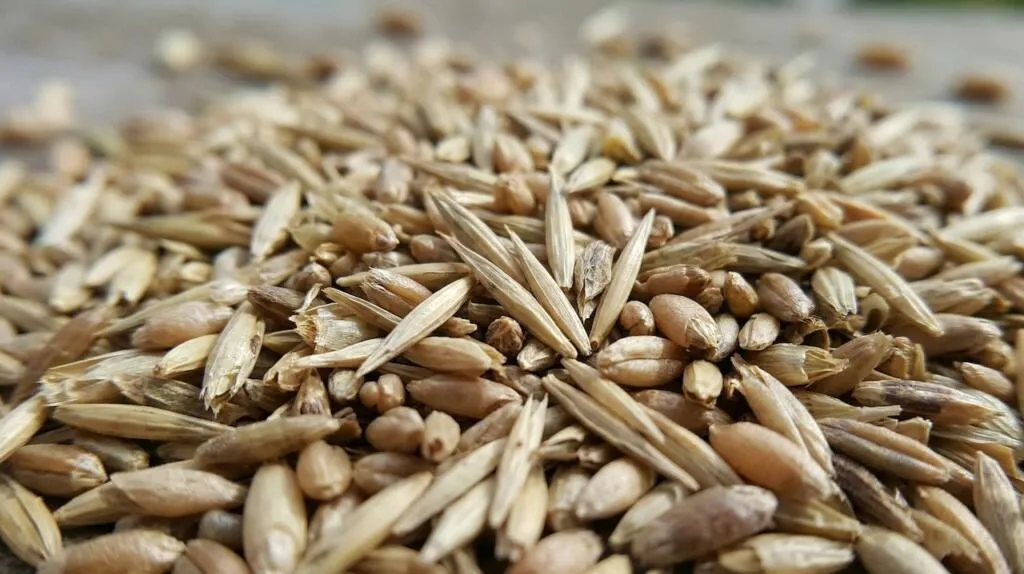
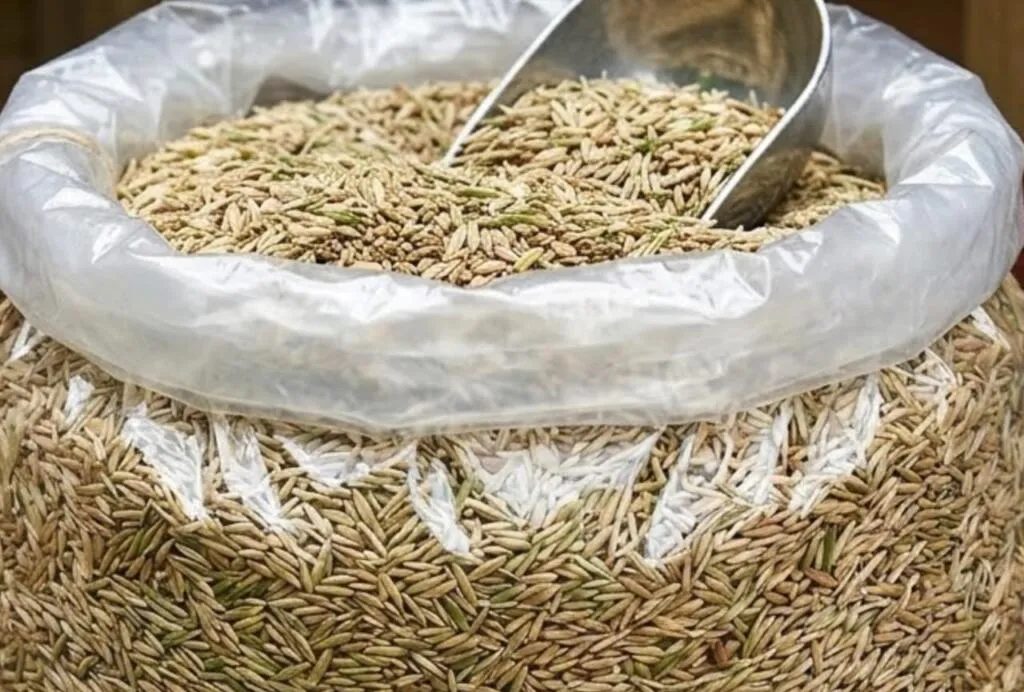
For most UK garden lawns, a general purpose or hard wearing mix of Perennial Ryegrass and Fescues is the right seed for overseeding. Perennial Ryegrass establishes quickly, copes with wear and stays green for most of the year. The Fescues give the finer leaf and density that make a lawn look cared for rather than agricultural. Together they give the balance of speed, toughness and looks that suits nearly every domestic garden.
There are four main types of mix worth knowing about. A general purpose or family lawn mix suits most gardens where children, dogs and regular foot traffic are part of life. A luxury or fine lawn mix contains more Fine Fescues and Bents, giving a denser, more manicured finish but less tolerance of heavy use.
A shade tolerant lawn seed contains grasses suited to low light under trees or beside north facing fences, where a general mix will struggle. A drought tolerant mix is worth considering on free draining sandy or chalky soil where summer drought is a regular problem. If you’re not sure which you have, my guide to working out your soil type will help.
Match the new seed to the existing lawn wherever you can. If your lawn is a hard wearing mix and you overseed it with a fine lawn mix, the new grass will look and grow differently, creating a patchwork that can look worse than the bare patches you started with. When in doubt, a general purpose mix blends into almost any domestic lawn.

💡 Top Tip
Check the ingredients on the back of any grass seed box before you buy it. A quality mix lists named grasses such as Perennial Ryegrass, Slender Creeping Red Fescue, Chewings Fescue and Browntop Bent. Cheap bags often contain coarse agricultural Ryegrass and unnamed varieties that produce a rough, clumpy, fast growing lawn that looks nothing like the fine turf you’re trying to improve. With grass seed, you get what you pay for.
🛒 Buy Johnsons Tuffgrass hard wearing lawn seed on Amazon UK
Seed to soil contact is everything. A grass seed sitting on a mat of thatch, dead moss and old clippings has almost no chance, because it can’t reach the soil where the moisture is. The best investment you can make in overseeding is time spent preparing the surface. Rushing straight into sowing without preparation is the main reason overseeding fails.
The preparation follows a simple order. Start by mowing a notch or two lower than your usual height on your lawn mower. You want to expose the soil and reduce competition from the existing grass. Don’t scalp the lawn to bare earth, as that stresses the established grass, but a close cut makes a big difference to how much seed reaches the soil.
Next, scarify or rake hard to pull out thatch, dead moss and debris. This is the step most people skip, and it makes the biggest difference to germination. Thatch is the layer of dead material that builds up between the soil and the green blades, and even half a centimetre of it is enough to stop seed reaching the soil.
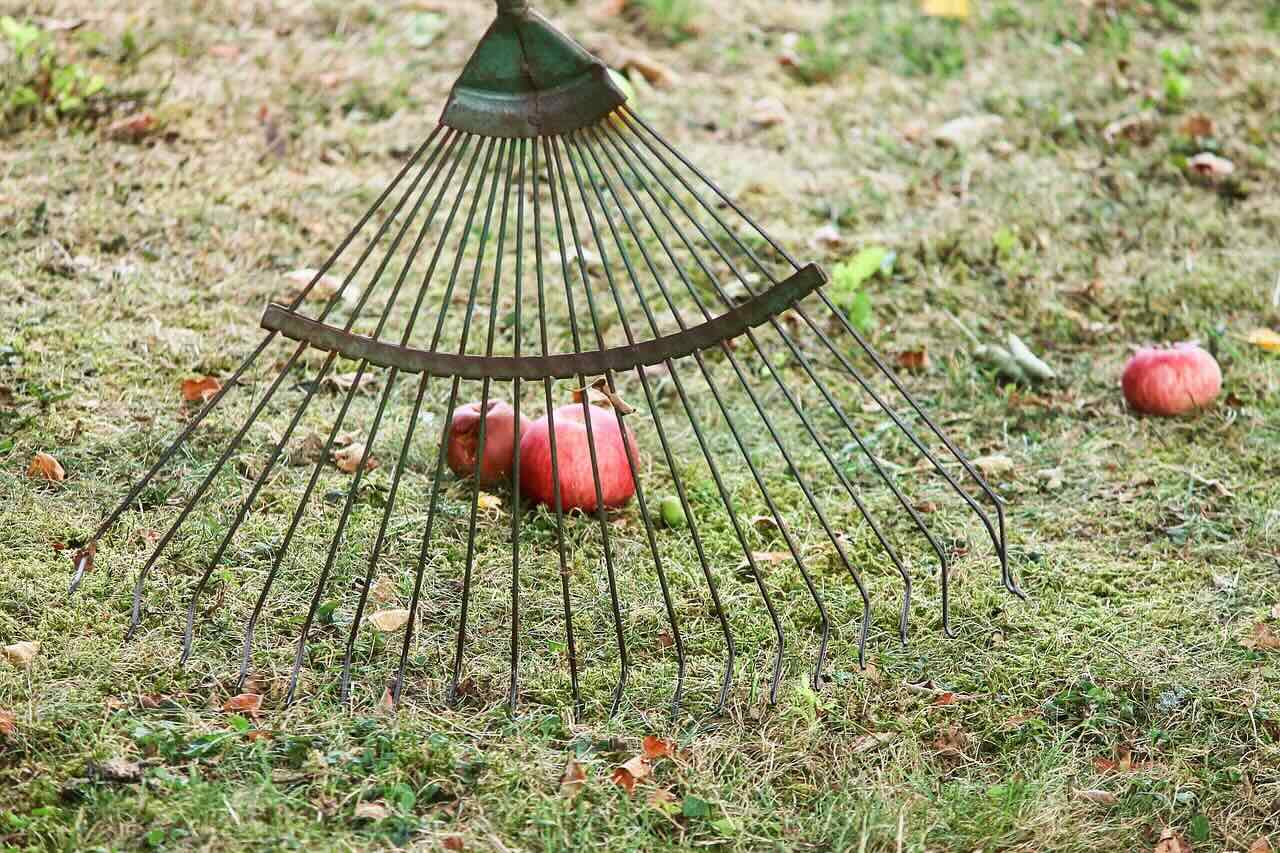
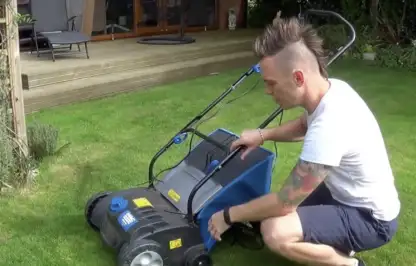
A spring tine rake pulled firmly across the lawn in two directions will clear plenty of thatch from most small and medium lawns. For larger lawns or a heavy build up, a powered scarifier does a far better job, and my honest guide to the best lawn scarifiers compares the models I’ve tested. My step by step scarifying guide covers the process itself.
🛒 Buy a spring tine lawn rake on Amazon UK
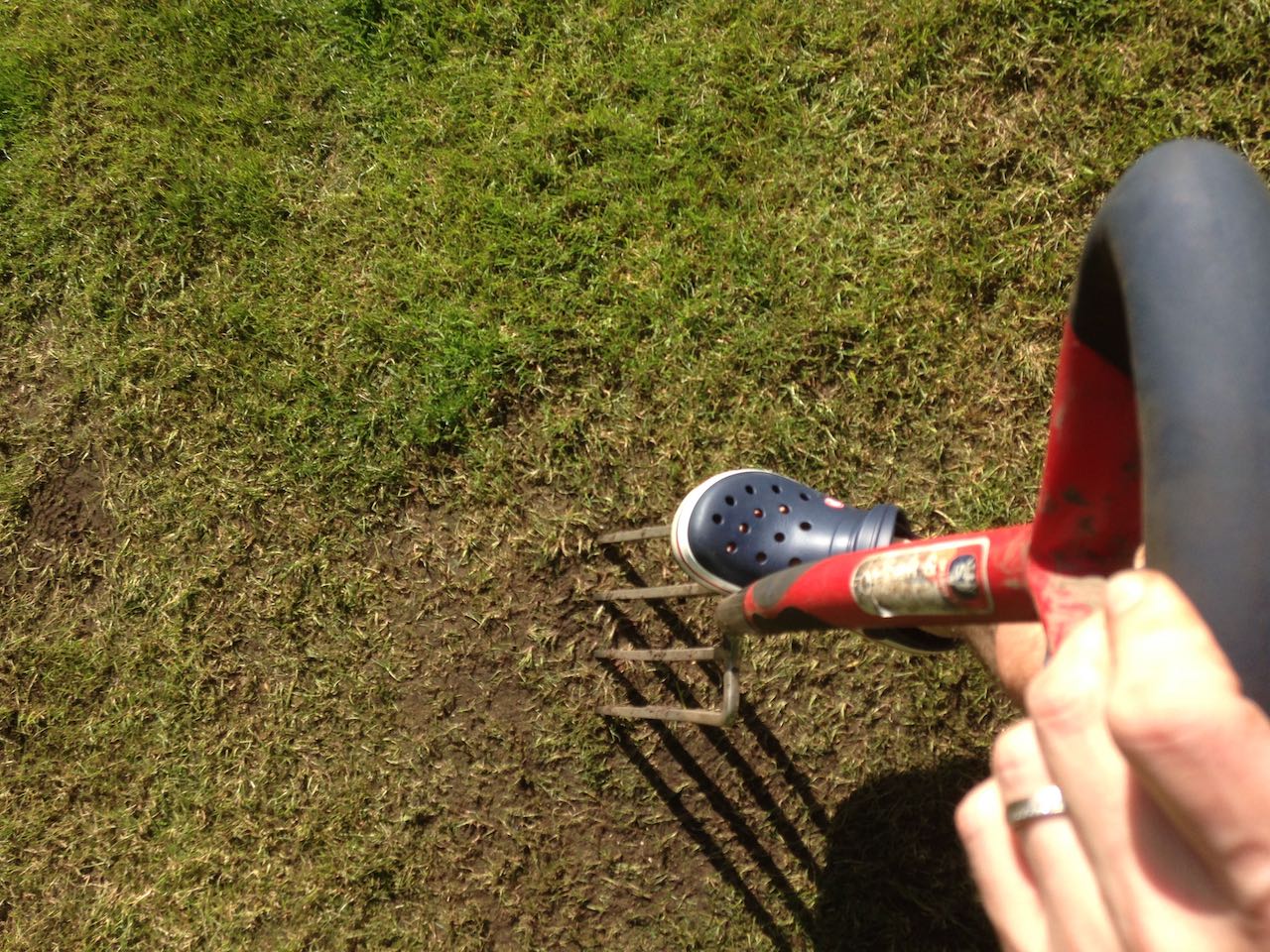
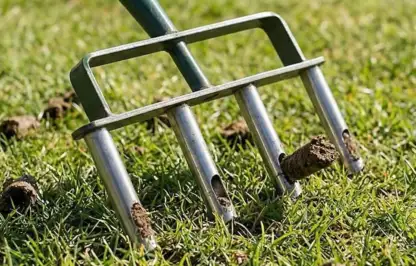
After scarifying, aerate anywhere that feels hard underfoot or holds puddles. Push a hollow tine aerator or a garden fork into the soil every 10 to 15cm across the problem areas to make channels for seed, water and air. If the whole lawn feels firm, aerate all of it. On compacted clay this one step makes a visible difference to how evenly the seed comes up.
🛒 Buy a hollow tine lawn aerator on Amazon UK
Finally, top dress the prepared surface with a thin layer of sandy loam or a ready made lawn dressing. It fills the aeration holes, gives the seed a fine bed to settle into and evens out small dips. Spread it 2 to 3mm deep and work it in with the back of a rake or a stiff brush so it sits at or just below the tops of the grass. You’re creating a contact layer for the seed, not burying the lawn.
🛒 Buy lawn top dressing on Amazon UK
💡 Top Tip
Water the lawn thoroughly the day before you overseed, then let the surface dry a little before sowing. A damp seedbed gives the seed moisture straight away without the risk of seed floating or washing into low spots, which happens when you sow onto a waterlogged surface.
With the preparation done, sowing grass seed on an existing lawn is straightforward. What matters is spreading the seed evenly at the right rate. Too little and you won’t get enough new plants to make a visible difference. Too much and the seedlings fight for light and water, producing weak, spindly grass that thins out again as the stronger plants take over.
Most UK seed boxes recommend 25 to 35g of seed per square metre when overseeding an existing lawn, so follow the rate on your packet. For a very thin or patchy lawn, go towards the top of that range. Measure the lawn before you start and work out how much seed you need in total. Running out halfway and finishing with a different seed or a different rate leaves visible bands in the result.
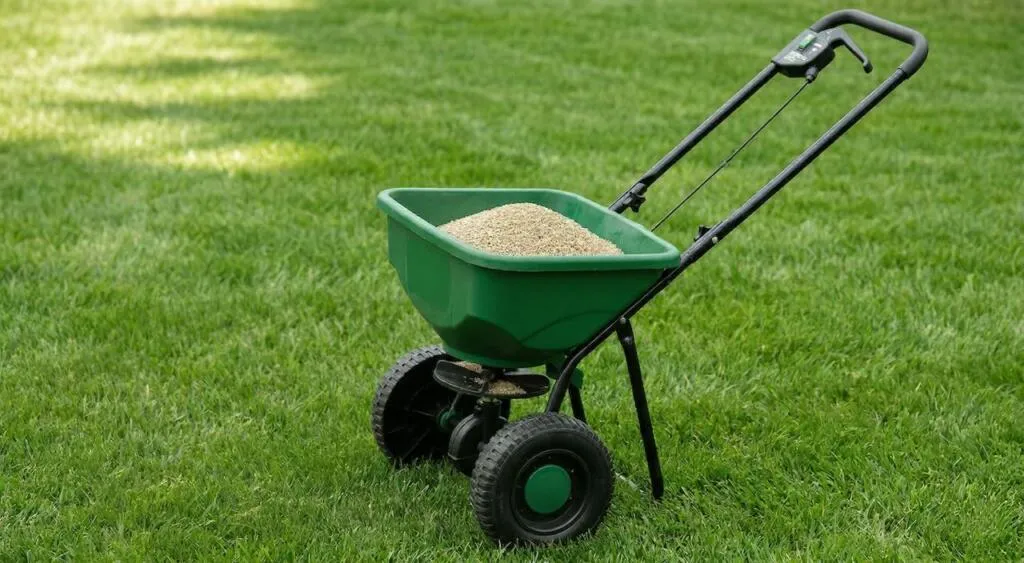
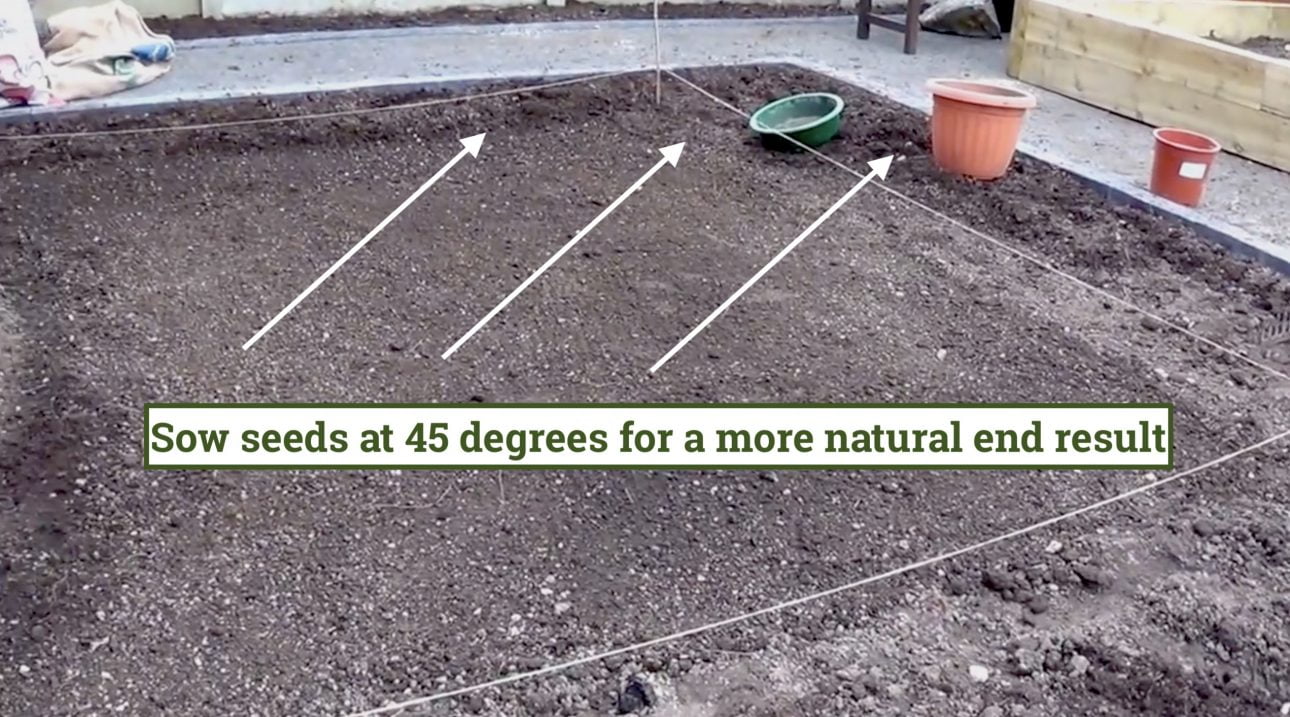
Split the seed into two equal halves. Sow the first half walking up and down the lawn, then the second half walking across it at right angles. This cross hatch method is what professionals use, and it gets rid of the stripes and gaps you get from going in one direction only.
A spreader makes it far easier and more even than throwing seed by hand, and the Scotts EasyGreen spreader is the one I’d point most people towards. My lawn spreader buying guide compares it with the alternatives.
🛒 Buy the Scotts EasyGreen spreader on Amazon UK
If you’re reseeding in autumn, this is also the moment to add a pre seed fertiliser. These are low in nitrogen and high in phosphate, which feeds root growth rather than leafy top growth. Spread it at the same time as the seed, or mix it into your top dressing.
🛒 Buy A1 Lawn pre seed fertiliser on Amazon UK
Once the seed is down, rake it very lightly into the surface with a spring tine rake. Grass seed is tiny and carries very little stored energy, so if it’s buried more than about 5mm deep the shoot runs out of steam before it reaches the light. You’re aiming to settle each seed into contact with the soil, where it won’t dry out, rather than cover it.
Keep the seed no deeper than 5mm. Then firm it in with a light roller, or by walking over the area in flat soled shoes.
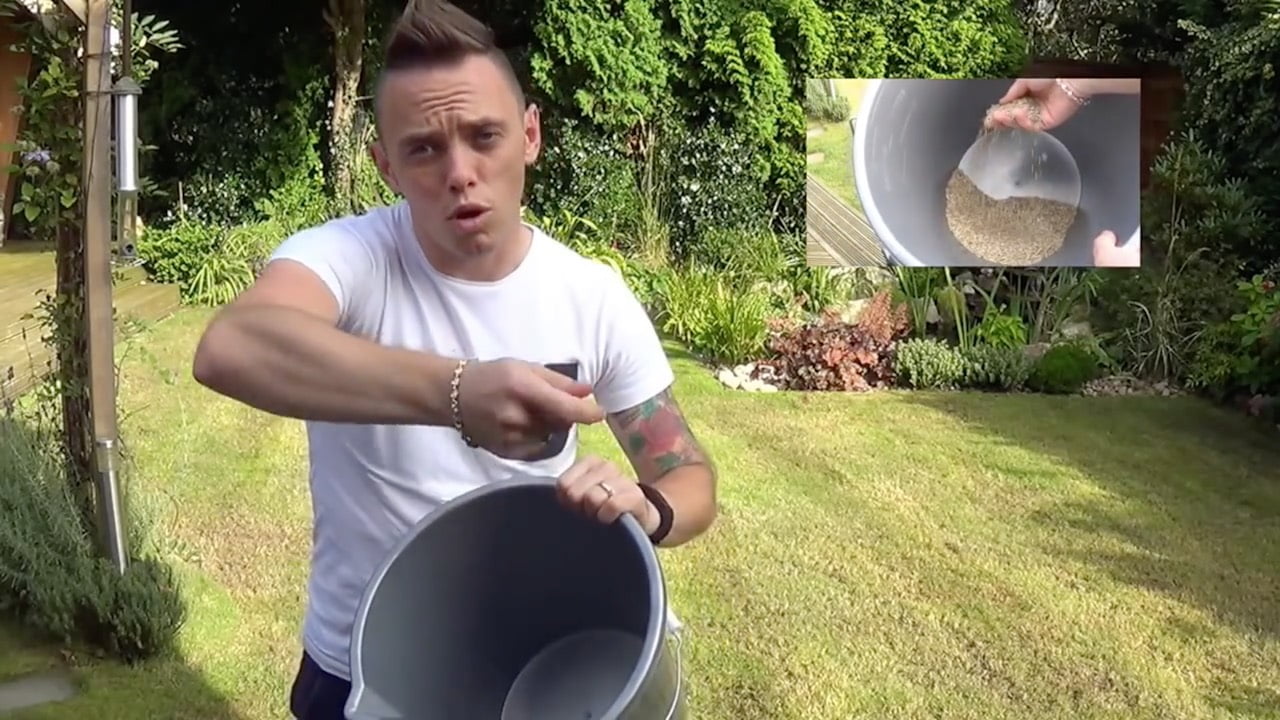
Every autumn I watch people literally cover their entire lawn with grass seed, tipping box after box over it until the grass looks like it’s been snowed on. I’ve seen lawns so thickly coated you couldn’t see a single blade underneath. The thinking is always that more seed means a thicker lawn, but the opposite happens.
A blanket of seed sits on the surface where it can’t reach the soil, it goes mouldy in damp weather, and it’s a free buffet for the Wood Pigeons. The seedlings that do come up are so crowded they fight each other for light and end up weak and spindly.
It’s far better to sow lightly than to smother. Stick to the rate on the box, spread it evenly in two directions, and trust the new grass to tiller and fill out over the following weeks. You’ll save money on seed and get a denser lawn at the end of it.
The other mistake I see all the time is people blasting freshly sown seed with a hose on a jet or high pressure setting. The force lifts the seed and washes it into the low spots, so you end up with bare humps and clumps of seedlings in the dips. That’s why I always sieve a thin layer of spent compost over my seed and water lightly with a fine spray.
The compost keeps the seed hydrated between waterings and holds it in place against rain, hoses and hungry birds. Old compost from last summer’s pots is ideal, as long as you riddle out any lumps first.
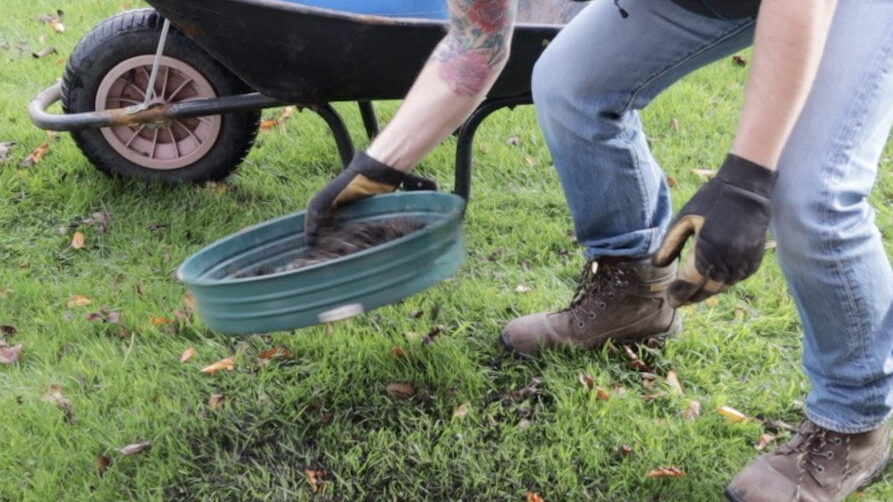
Water the whole area thoroughly straight after sowing, using a fine sprinkler setting so the seed isn’t washed about. Never use a jet setting on new seed. Then keep it moist until germination. That watering commitment is what makes or breaks spring overseeding in particular, and I cover it in the aftercare section below.
| Job | Seed rate | Notes |
|---|---|---|
| Overseeding a thin lawn | 25 to 35g per m² | Follow the packet. Cross hatch in two directions. |
| After scarifying | 35g per m² | Sow within 24 hours of scarifying. |
| Reseeding bare patches | 35 to 50g per m² | Fork and level the patch first. |
| Lawn repair kit | As per box | Best for patches under a square metre. |
Overseeding the whole lawn and reseeding bare patches are related jobs, but they’re not quite the same. A bare patch has no existing grass competing for water and nutrients, so seed establishes more easily, but the exposed soil also dries out faster and weeds move in quicker. The preparation and aftercare need to reflect that.
Before reseeding any bare patch, work out why the grass died there in the first place. Dog urine burn is the easy one: the nitrogen and salts in the urine scorch the grass, and the fix is to water the patch heavily for a week or two to flush them through before you reseed. A patch worn bare by feet will die again unless you sow a harder wearing mix or move the traffic.
A patch under a tree is usually dealing with root competition, shade and dry soil all at once. Irregular dead patches that lift like carpet in autumn can be grubs, so check my guides to chafer grubs and leatherjackets before you sow.
Diagnosing the cause first saves a lot of frustration. I’ve seen gardeners reseed the same patch three times in one season because the underlying problem was never fixed. The seed comes up, the same conditions kill it, and the cycle repeats. Five minutes spent understanding why a patch is bare will save you hours of reseeding.
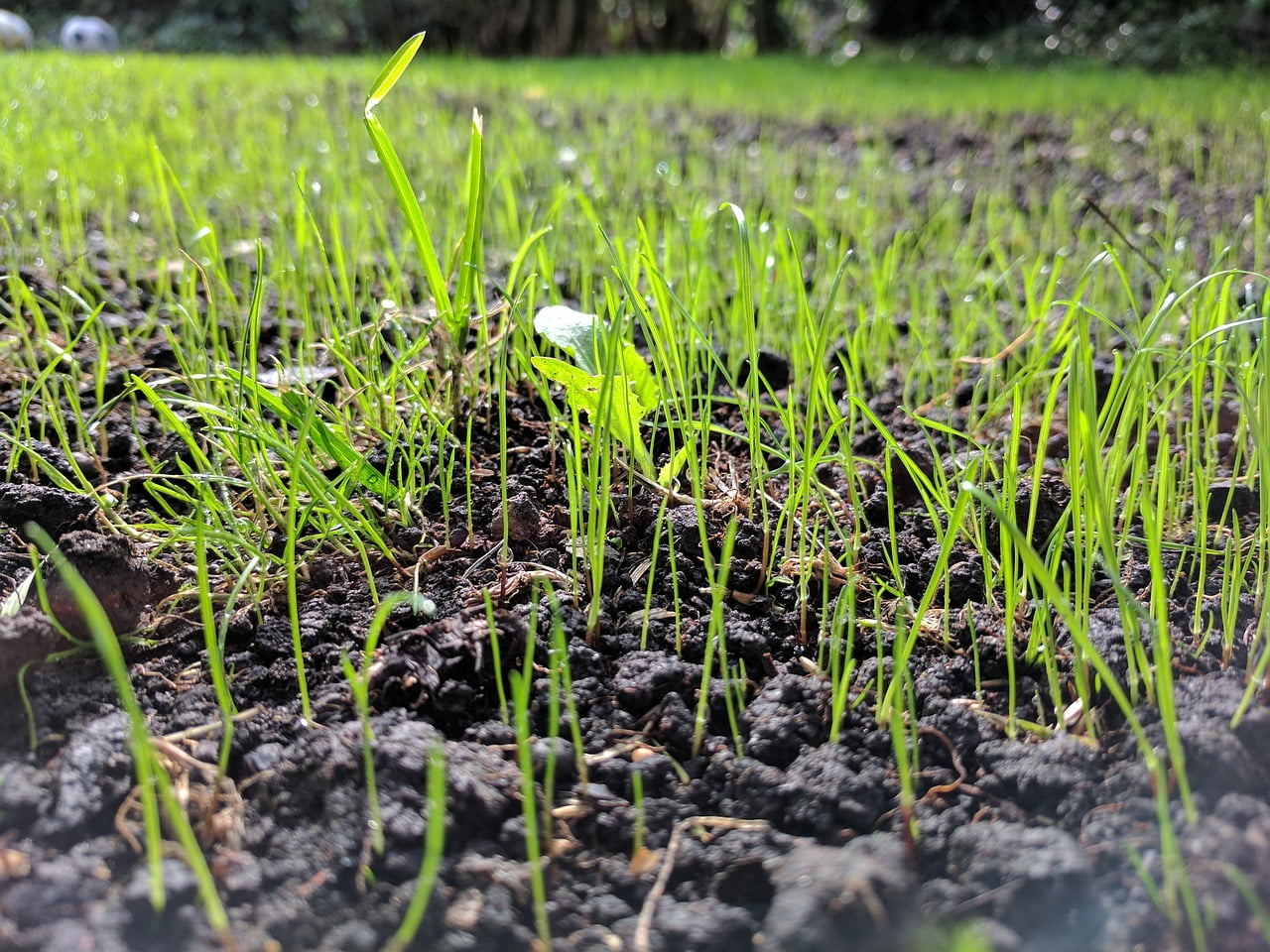
For a straightforward bare patch, the repair is simple. Fork the soil 5 to 10cm deep to break up compaction and pull out any dead roots. Rake it level and firm it gently with your foot.
Add a thin layer of topsoil or lawn dressing to improve the seedbed and bring it level with the surrounding lawn, then firm it again. Sow at 35 to 50g per square metre, rake in lightly, firm down and water well. Keep the patch moist until the seed germinates, which takes seven to ten days in warm conditions.
For very small patches, around the size of your palm, it can be quicker to cut a plug of turf from an out of sight corner of the lawn and drop it into the gap. Cut the plug and the hole to exactly the same depth so it sits level, firm the edges and water it in. You get an instant repair, and the donor spot can be reseeded at the same time.
Lawn repair kits combine grass seed with a coir or compost carrier and often a little starter fertiliser in one product, designed to make patching easier. Miracle-Gro Patch Magic and Pronto Ultra Patch are the best known in the UK, and they’re useful in the right situation.
The main advantage over plain seed is the carrier. The coir or compost holds moisture around the seed far better than bare soil does, which makes a real difference on dry, free draining soil or during a dry spring when the seedbed dries out between waterings. That’s the main reason kits give more reliable results on small patches than plain seed.
For patches smaller than a square metre, a repair kit is a convenient choice that works very well. For larger areas they quickly become more expensive than plain grass seed with a separate top dressing. My rule of thumb is a repair kit for individual patches, and plain seed with top dressing for anything covering more than a few square metres.
🛒 Buy Miracle-Gro Patch Magic on Amazon UK
One important caveat: don’t sow any seed, kit or otherwise, onto a lawn that has recently had a weed and feed. The herbicides can stay in the soil for several weeks and stop grass seed germinating. Check the label, which usually says to wait at least six weeks, before overseeding treated areas. My guide to getting rid of weeds in a lawn has the gentler options.
Grass seed that dries out during germination doesn’t recover. Established grass can survive drought and bounce back when the rain returns, but a seed that dries out just as its first root pushes into the soil is dead, and no amount of watering afterwards will bring it back. That’s why aftercare matters as much as anything else in this guide, and it’s where most overseeding failures happen.
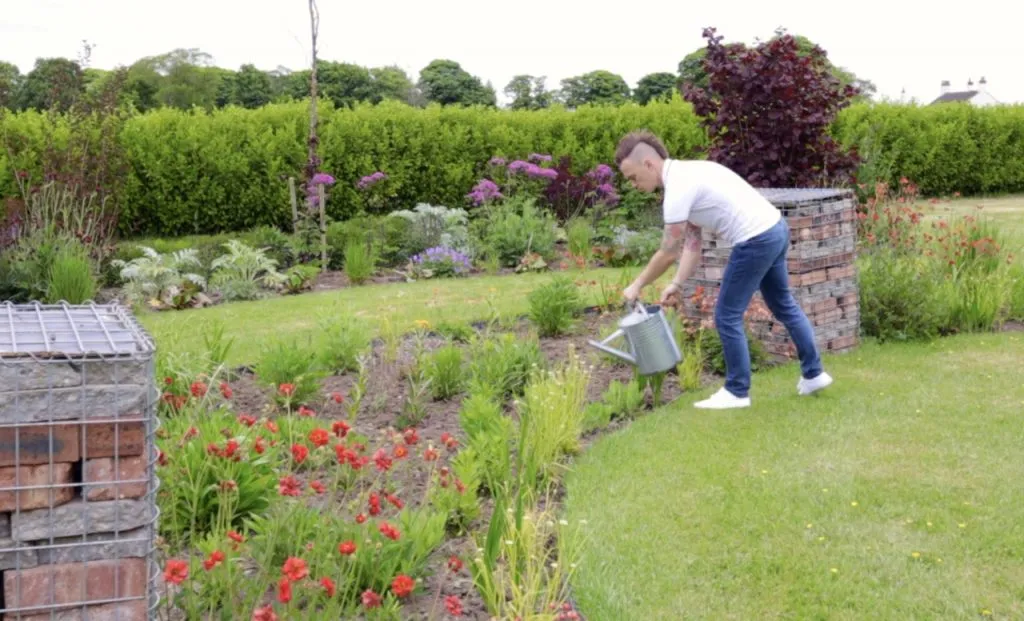
Keep the seedbed moist from the day you sow until the new grass is 3 to 4cm tall and has had its first cut. In autumn, UK rain often does the job for you, which is one more reason it’s the better window. In spring, especially in a dry April or May, you’ll need to water every day, weekends included.
Use a fine sprinkler setting so the seed isn’t washed into the low spots. If you’re unsure whether the lawn needs it, the finger test works for seedbeds too.
🛒 Buy an oscillating lawn sprinkler on Amazon UK
I learned this the hard way early in my career, when I overseeded a client’s lawn in a very dry April. I watered every day for the first week, then a busy run of jobs meant I missed three days in the second week. The result was patchy: good coverage where the soil held moisture, and almost nothing along the fence where it drained fastest. I had to go back and reseed those strips three weeks later.
Daily watering for the first two weeks is the commitment spring overseeding needs, so be honest with yourself about whether you can manage it before you sow. Once germination is clearly visible, drop to every other day and stretch the gap as the roots deepen. After the first cut, the new grass can usually look after itself in normal UK weather, with extra watering only in long dry spells.
Birds are the other threat. Wood Pigeons in particular can clear a freshly sown patch in a morning. Garden twine criss crossed over pegs is often enough to put them off on small areas, and fine netting pegged over the surface works best where they’re a real problem. Many coated seeds also put birds off, which is worth checking on the box.
🛒 Buy garden bird netting on Amazon UK
Grass seed germinates at different speeds depending on temperature, moisture and the grass type. Perennial Ryegrass is the quickest of the common lawn grasses, usually showing within five to ten days in warm conditions. Fescues and Bents are slower, often taking ten to twenty one days. In a mixed seed you’ll usually see the Ryegrass first and the finer grasses follow a week or so later, which is completely normal.
As a rough guide, autumn overseeding in September shows green within a week or two, gets its first cut after four to six weeks, and looks like part of the lawn by the following spring. Seed sown in early October in cooler soil can take three weeks to appear, so don’t panic and resow too early.
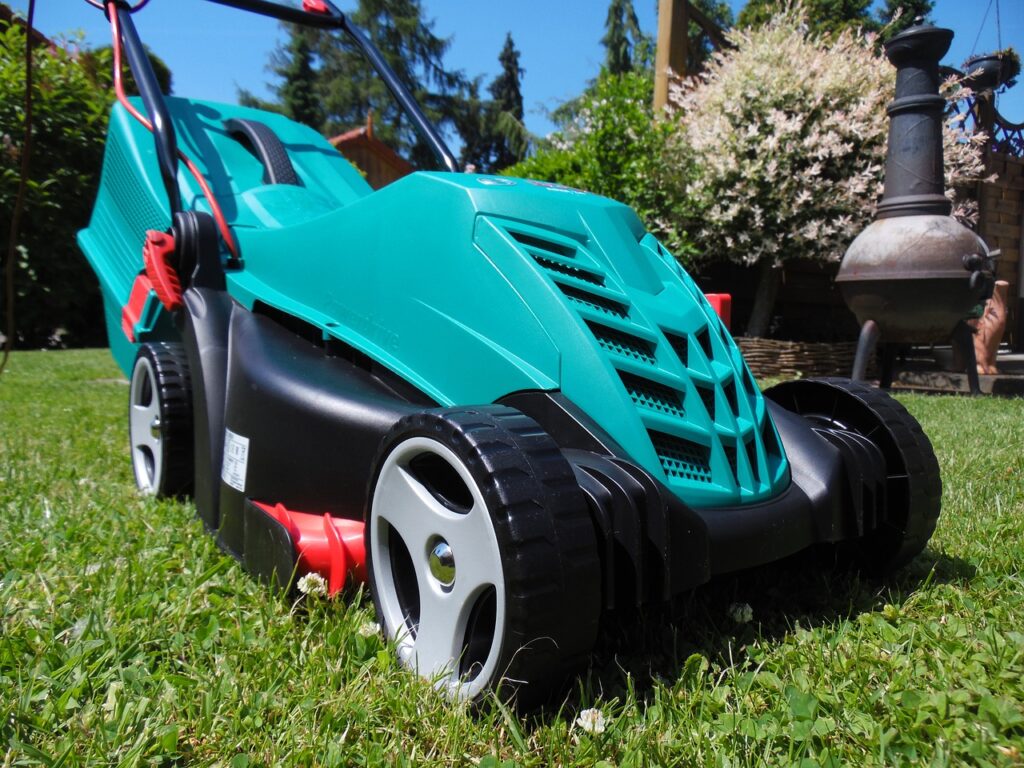
Don’t mow the new grass until it’s at least 5cm tall. Mowing too early is one of the most common mistakes, and a blunt blade can pull shallow rooted seedlings straight out of the soil. When you do cut, set the mower to its highest setting and take off no more than a third of the leaf. That encourages the seedlings to tiller and spread sideways, which is what thickens a lawn.
Over the next two or three cuts, bring the height down gradually to your usual setting. That gives the new grass time to build a root system before it faces regular close mowing. Rushing it produces weak grass that can’t compete with the established turf.
Four to six weeks after sowing, once the new grass is clearly established, give the lawn a light feed. In autumn use an autumn lawn feed, which is low in nitrogen, and in spring a balanced feed. Avoid high nitrogen feeds on very young grass, as they push soft top growth before the roots can support it. My complete UK lawn feeding guide covers what to use and when.
Scarifying and overseeding belong together, and if you’re doing one you should almost always do the other at the same time. Scarifying strips out the thatch that blocks seed from the soil and opens up the surface, which is exactly what overseeding needs. Both jobs share the same autumn and spring windows, so it makes sense to do them on the same weekend.
Straight after scarifying, your lawn will look alarming. I can’t stress this enough, because I’ve had clients ring me in a panic after their first go, convinced they’ve destroyed the lawn. It will look as though it’s been through a shredder, with bare soil showing and the grass thin and ragged. That’s normal, and it means the scarifier has done its job.
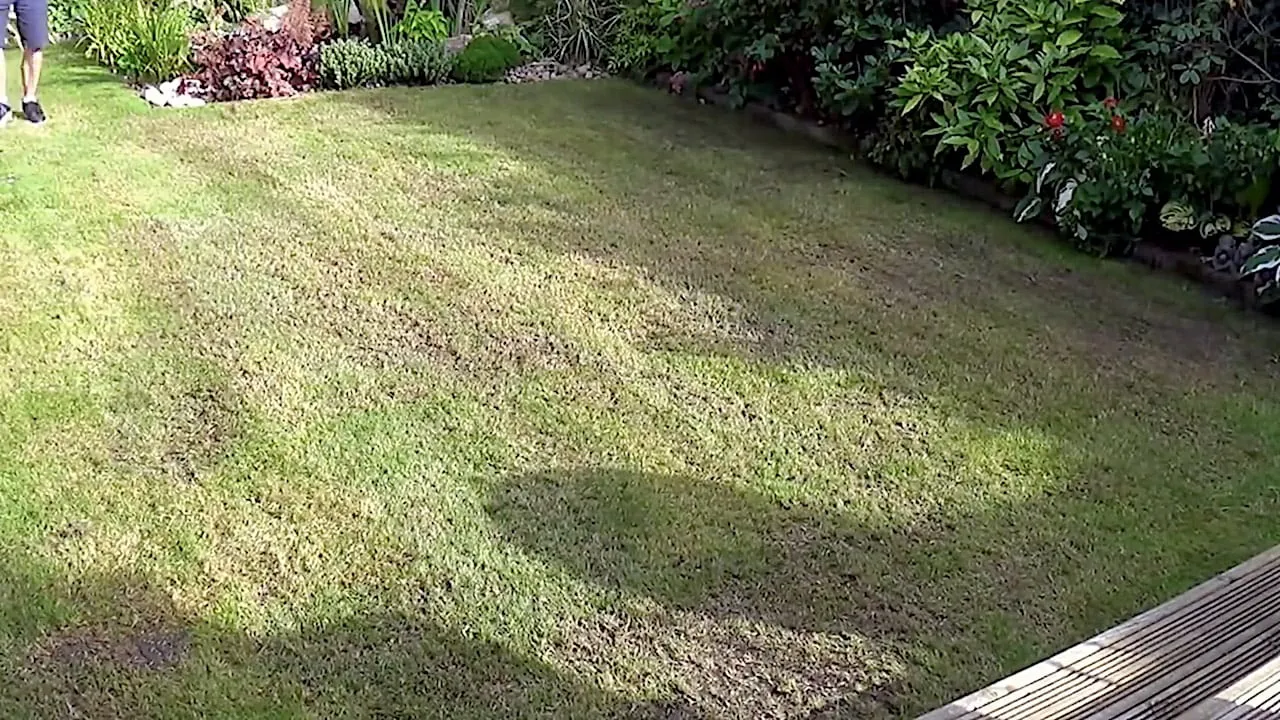
Overseed within 24 hours of scarifying, while the surface is perfectly prepared. The scarifier has already done the hard work of opening up the soil, so the seed has near ideal conditions. Sow at around 35g per square metre, more if the lawn looks very bare, water thoroughly and start the aftercare routine.
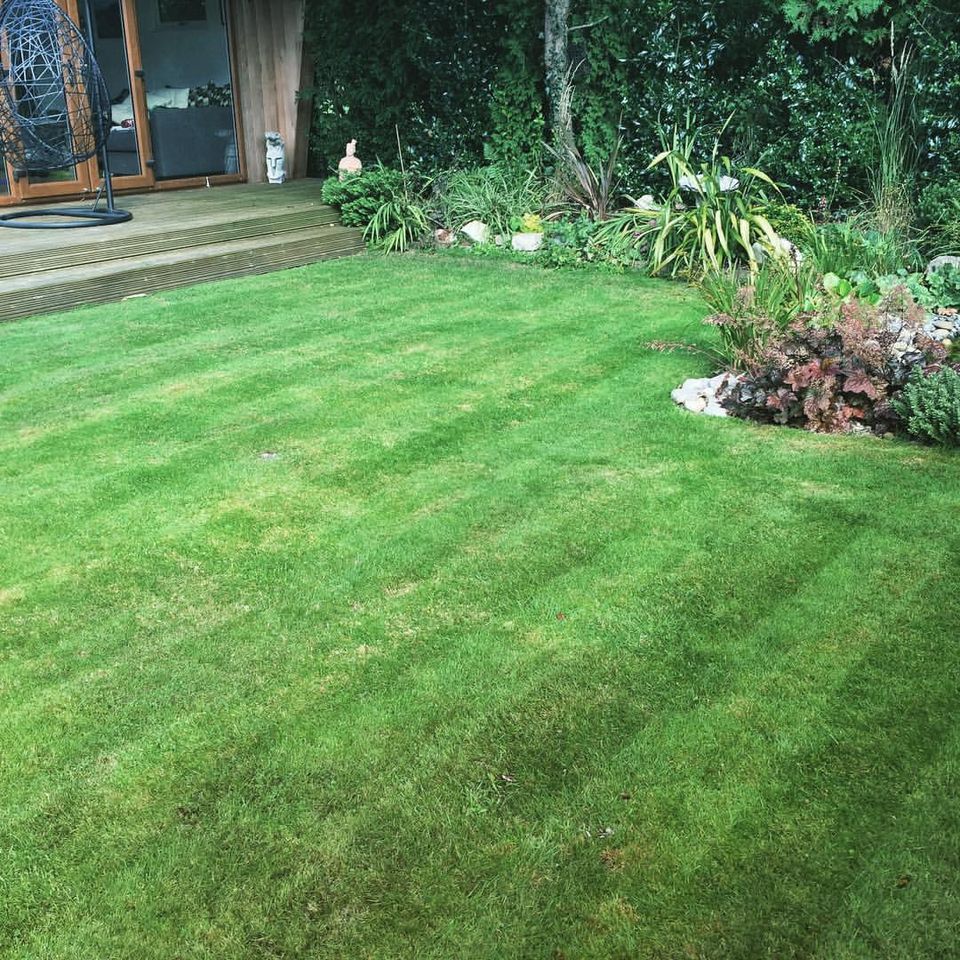
Recovery from scarifying and overseeding together is quick in good conditions. You’ll see new germination within ten days, the lawn will be greening up within three to four weeks, and by six weeks it will look better than it did before you started. The photo below is the same lawn six weeks after I scarified and overseeded it, and it kept thickening through the following season as the new grass matured.
Shade is the one problem a seed mix can’t fully solve. No lawn grass thrives in deep, permanent shade, and if an area gets less than three or four hours of direct sun a day, even a shade tolerant mix will give thin coverage that needs reseeding regularly. In those spots, overseeding buys you time rather than a permanent fix.
Shade tolerant mixes containing Hard Fescue, Strong Creeping Red Fescue and Browntop Bent still do far better in low light than general mixes, so always use one there. Raise the mowing height a notch in shady areas, keep foot traffic off them, and lift the lower branches of any trees casting shade so more dappled light reaches the grass. If a corner never holds a lawn, it may be better planted up, and my list of shade loving plants has plenty of options.
Dog patches are among the most common bare patches in UK gardens. They’re most often caused by female dogs, because they empty their bladder in one spot, and the concentrated nitrogen and salts scorch the grass. You’ll usually see a dark green ring around the edge where diluted urine has acted as a feed.
Flush the patch with plenty of water for a week or two, then reseed with a hard wearing mix at 35 to 50g per square metre. If it keeps happening, a gravel or bark area the dog is trained to use will save you reseeding every month.
Paths and play areas worn bare by feet will only reseed successfully if you deal with the compaction first. Fork the area deeply, work in some sharp sand to improve drainage, reseed with the hardest wearing mix you can find, and keep people off it while it establishes. Without that break, you’ll just repeat the cycle.
For most family lawns, overseeding once a year in autumn keeps the grass thick enough to hold its own against moss and weeds. Lawns that get heavy use from children, dogs or football, or that sit in part shade, benefit from a light overseed in both spring and autumn. A well kept ornamental lawn with little traffic can often go two or three years between sowings.
The easiest way to judge it is to look closely at the lawn in late summer. If you can see soil between the grass plants when you part the blades with your fingers, it’s time to overseed. I build it into the autumn routine in my month by month lawn care planner, alongside scarifying, aerating and the autumn feed.
Overseeding is simple, but a handful of mistakes either cut the results right down or cause the whole job to fail. These are the ones I see most often.
Sowing at the wrong time of year is the most basic error. Seed sown from November to February is largely wasted. The soil is too cold for reliable germination, and seed sitting in cold, wet soil over winter rots, gets attacked by fungus or feeds the birds. Wait for September or April, do it properly, and germination is far more reliable.
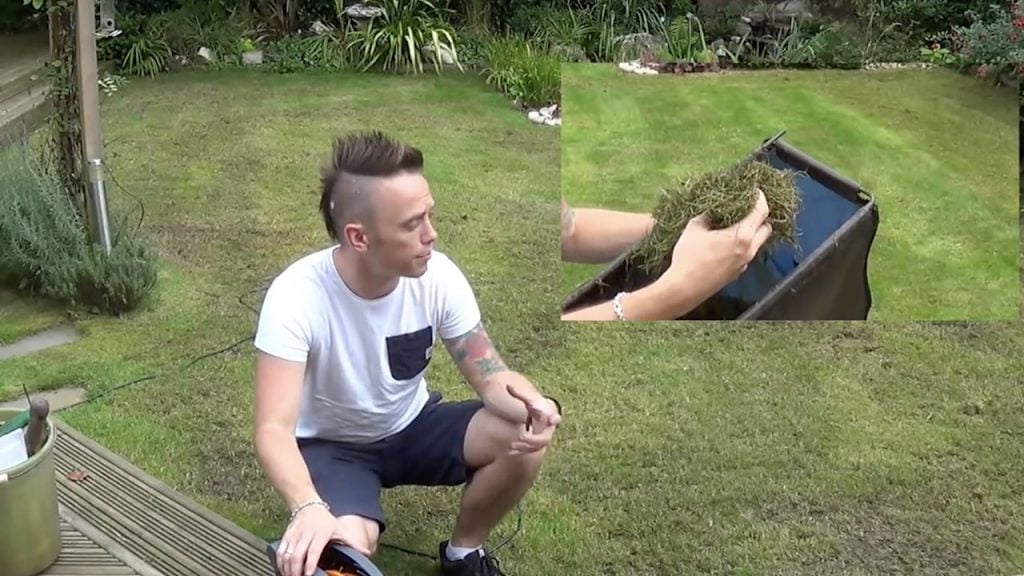
Skipping the preparation is the second big mistake. Sowing seed over thick thatch without raking or scarifying is like sowing onto a doormat, because the seed has nowhere to go. I’d rather see someone spend 90 minutes preparing and 15 minutes sowing than the other way round.
Using too much seed in the belief that more is better is another one, and I cover why above. Seedlings need space. Sowing at twice the recommended rate gives overcrowded seedlings that compete for light and water and thin out quickly as the weakest die. The rates on the box are set to give good density without overcrowding, so stick to them.
Mowing too soon catches out a lot of people, particularly those who can’t bear a slightly shaggy lawn. Wait until the new grass is 5cm tall before the first cut. One early pass with a blunt blade can undo weeks of work in minutes.
Letting the seedbed dry out during germination is the most preventable cause of failure. If you can’t water daily for two weeks in spring, overseed in autumn when the rain is more reliable. If you’re overseeding a lawn that browned off in summer, check my guide to why lawns go brown first, as most drought browned grass recovers on its own once the rain returns.
These are the products I use myself or recommend to clients for overseeding and patching UK lawns. If you’re starting from nothing, the seed, a rake and a spreader will cover most jobs, and the rest make the results more reliable.
| Product | What I use it for | Where to buy |
|---|---|---|
| Johnsons Quick Lawn seed | General purpose overseeding of family lawns | View on Amazon UK |
| Johnsons Tuffgrass lawn seed | Hard wearing lawns used by children and dogs | View on Amazon UK |
| Shade tolerant lawn seed | Lawns under trees or beside north facing fences | View on Amazon UK |
| Miracle-Gro Patch Magic | Reseeding small bare patches | View on Amazon UK |
| A1 Lawn pre seed fertiliser | Feeding roots at sowing time | View on Amazon UK |
| Scotts EasyGreen spreader | Spreading seed and feed evenly | View on Amazon UK |
| Spring tine lawn rake | Raking out thatch and working seed in | View on Amazon UK |
| Hollow tine aerator | Relieving compaction before sowing | View on Amazon UK |
| Lawn top dressing | Creating a fine seedbed and levelling | View on Amazon UK |
| Soil thermometer | Checking the soil is above 8°C | View on Amazon UK |
| Oscillating sprinkler | Keeping the seedbed moist | View on Amazon UK |
In warm, moist soil above 10°C, Perennial Ryegrass germinates in five to ten days and Fescues in ten to twenty one days. Expect the first cut four to six weeks after sowing. In cooler October soil around 8°C, germination can take three weeks, so give it time before resowing. If nothing appears after three weeks in good conditions, the usual causes are dry soil, seed sitting on thatch rather than soil, or birds.
Not necessarily. In the South, South West and coastal areas you can usually overseed until the end of October if the soil is still above 8°C at 5cm deep. In northern England and Scotland, aim to have seed down by the first week of October. If the soil has dropped below 8°C, prepare the lawn now and sow in April instead.
You can, but most of it won’t grow. Seed scattered onto an unprepared lawn sits on the thatch and old clippings, where it dries out or gets eaten. For good results, mow short, rake or scarify out the thatch, and aerate before sowing grass seed on an existing lawn, then rake it in lightly and keep it moist.
For overseeding an existing lawn, most UK seed boxes recommend 25 to 35g per square metre. Reseeding bare patches needs 35 to 50g per square metre. Measure your lawn first and buy enough seed to finish the job in one go at the same rate.
Yes, with the right timing. Apply moss killer, wait for the moss to blacken (usually one to two weeks), scarify out the dead moss, then overseed straight away. Iron sulphate moss killers don’t stop grass seed germinating once the moss is raked out, but a combined moss and weed killer containing herbicide usually needs a gap of six weeks or more, so check the label. My moss removal guide covers the whole process.
Use a pre seed fertiliser at sowing time, spread with the seed or mixed into the top dressing. It’s low in nitrogen and high in phosphate to help roots develop. Avoid high nitrogen feeds on freshly sown grass. Four to six weeks later, once the new grass has had its first cut, apply a seasonal lawn feed.
Patchy results almost always come from uneven spreading, seed sitting on thatch instead of soil, dry spots during germination, or birds eating the seed. Minor gaps usually fill in as the seedlings tiller and spread. For bigger gaps, fix the cause and reseed those areas four to six weeks later.
Keep off it as much as you can until the new grass has been cut at least once, which is usually four to six weeks after sowing. Light foot traffic to water is unavoidable, so wear flat soled shoes. After the first cut it copes with light use, and after two or three cuts it’s close to the toughness of the established lawn.

Join over 100,000 gardeners on YouTube
Free gardening videos from the Garden Ninja, with 8 million views and counting.
Subscribe on YouTube, it’s freeA thick, healthy lawn makes every border around it look better, and if you’ve enjoyed getting the grass right, the next step is designing the space that surrounds it. My online courses walk you through layout, planting and design the same way I approach client gardens on Garden Rescue.
With courses starting from just £29, you can learn at your own pace and plan your garden with confidence.
For the garden you’ve already got, not the one you’re starting from scratch. Seven checklists and video lessons from BBC Garden Rescue’s Lee Burkhill, built to help you work out what’s worth keeping before you spend a penny.
Garden Design Examples for Small Gardens: 30 Design Templates & Planting Plans: In this online gardening course, I’ll walk you through 30 fantastic garden designs, explaining the logic behind the layout, the plant choices, and take-home tips for applying them in your own garden.
Learn how to transform and design your own garden with Lee Burkhills crash course in garden design. Over 5 hours Lee will teach you how to design your own dream garden. Featuring practical design examples, planting ideas and video guides. Learn how to design your garden in one weekend!
Garden Design for Beginners Online Course: If you want to make the career jump to becoming a garden designer or to learn how to design your own garden, this is the beginner course for you. Join me, Lee Burkhill, an award-winning garden designer, as I train you in the art of beautiful garden design.
Overseeding is the most cost effective way to improve a UK lawn. It needs no specialist kit beyond a rake, a spreader and a hose, it costs a fraction of new turf, and done at the right time with proper preparation it turns a thin, patchy lawn into one you’re proud of. Sow in September to mid October or April to mid May when the soil is above 8°C, mow short, rake or scarify out the thatch and aerate before sowing grass seed on the existing lawn at 25 to 35g per square metre in two directions.
Sow lightly rather than smothering the lawn, sieve a little spent compost over the seed, and water gently every day until it germinates. Wait for 5cm before the first cut, and feed lightly four to six weeks later.
Pair overseeding with scarifying whenever you can, because the combined recovery is faster and more thorough than either job on its own. Overseeding works best as part of a full routine of feeding, aerating and moss control, and these guides will help you build that out: how to feed your lawn, how to scarify a lawn, how to get rid of moss in your lawn and my lawn care month by month planner.
Happy gardening!


Lee Burkhill, known as the Garden Ninja, is an award-winning garden designer and horticulturist with over 30 years of gardening experience and 15 years as a professional garden designer. A qualified RHS (Royal Horticultural Society) professional, Lee specialises in sustainable garden design and practical horticultural advice. He designs and presents on BBC1’s Garden Rescue and in leading gardening publications. Lee combines three decades of hands-on gardening knowledge with professional design qualifications to help gardeners create beautiful, functional outdoor spaces.
View all posts by Lee Burkhill








JOIN THE NINJAS
Be the first in line for new Guides, Discount codes and Offers