For the garden you’ve already got, not the one you’re starting from scratch. Seven checklists and video lessons from BBC Garden Rescue’s Lee Burkhill, designed to help you decide what’s worth keeping before you spend a penny.
69


Quick Answer
The best lawn scarifier for most UK gardens is the Bosch UniversalVerticut 1100 for electric corded use, the VonHaus 1500W as the best value alternative, and the Hyundai HYSC210 for larger petrol-powered work. For small lawns or occasional use, the Darlac DP888 manual scarifier is a BBC Gardeners’ World Best Buy that works surprisingly well without a cable in sight. The right machine depends on your lawn size, thatch depth, and how often you plan to scarify.
I have been scarifying lawns for over twenty years, from compact urban terraces in Manchester to large garden lawns that take the better part of a day to cover properly. In that time, I have used many machines, made a fair number of expensive mistakes by choosing the wrong tool for a particular lawn, and watched the scarifier market change considerably as cordless technology has improved and the range of available machines has expanded. This guide is what I wish someone had written for me when I was starting out.
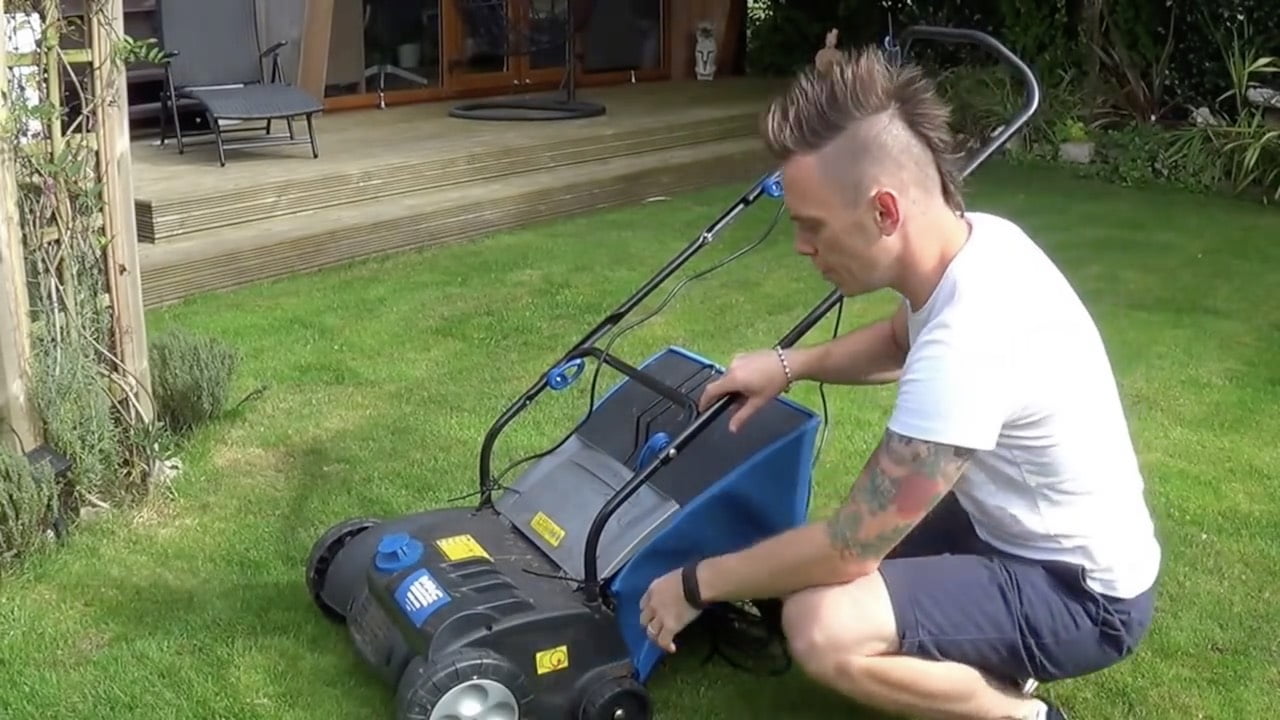
The truth is that most gardeners buy far more of a machine than they need. I had a client once who bought a professional-grade petrol scarifier for a lawn roughly the size of a large living room rug. It took her longer to get the machine out of the garage and fill it with fuel than it did to scarify the lawn, and she could have achieved the same result with a manual rake and a cup of tea. Matching the machine to the lawn is the most important decision you will make, so I have structured this guide around lawn size as much as product quality.
Jump To
Before spending anything, it is worth knowing whether your lawn actually needs scarifying. The test is straightforward: push your fingers down into the grass base and feel what is there between the green leaf blades and the soil. A thin layer of fibrous material, less than about half a centimetre, is normal and healthy. It retains moisture and provides a slight cushion. Thatch more than a centimetre deep is where you start to have a problem: water and nutrients cannot reach the roots properly, the lawn stays wet on the surface after rain, which encourages moss and disease, and the grass thins out over time.
The other sign to look for is the spongy feeling underfoot. If your lawn bounces slightly when you walk on it, like a trampoline, that is almost always thatch. A healthy lawn should feel firm and solid rather than soft and springy. If you are mowing and the mower seems to skim over the surface without collecting cleanly, that is another indicator that thatch has built up to a level where scarification will make a real difference. Though I also have the opinion that on massive lawns, like the acreage at home, I simply leave the moss in. It’s a great carbon and water store, but if you want a more formal lawn, then thats where scarifying comes in really handy.
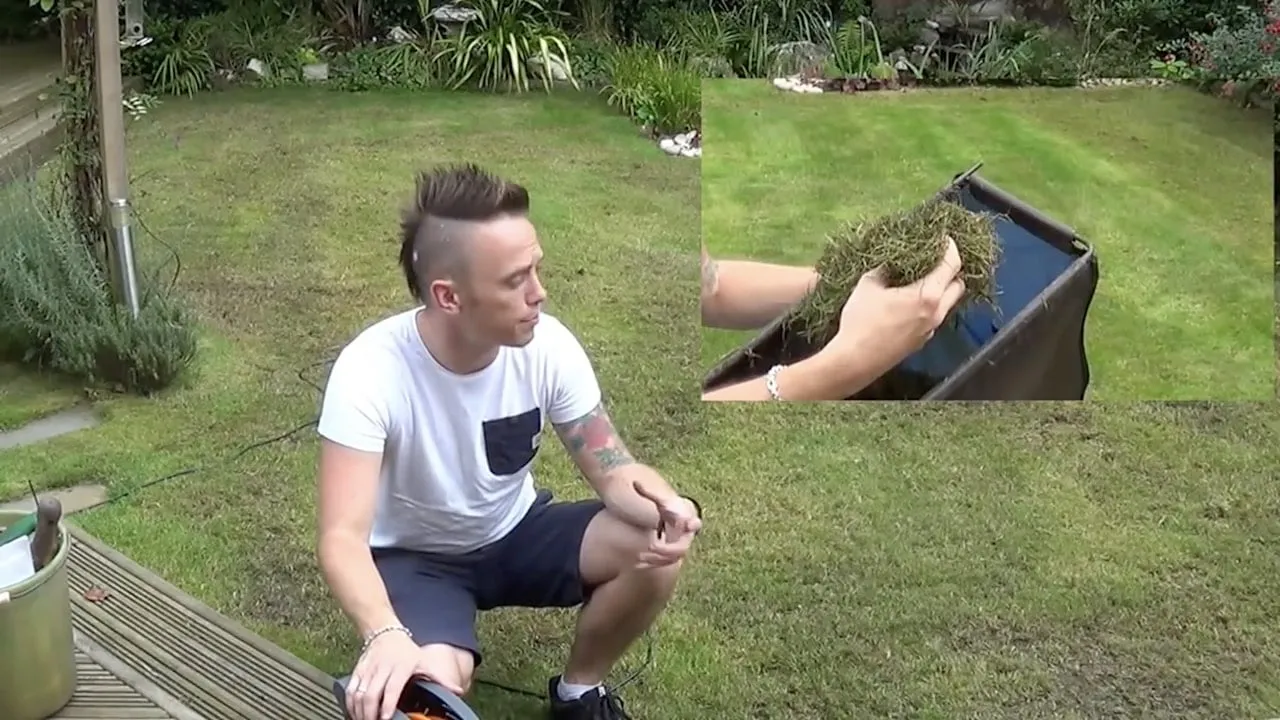
The scarifier market breaks down into three power categories: manual, electric corded, and petrol. Within electric, you now also have cordless battery options, which are improving in quality and popularity. Each category suits a different lawn size and usage pattern, and the decision is less about brand loyalty than it is about matching power output and working width to the job.
Manual scarifiers use hand power through a wheeled frame with steel blades or tines. They are quiet, require no electricity or fuel, and are perfectly adequate for small lawns where you are doing light annual maintenance rather than heavy renovation. Electric corded models suit the majority of UK suburban gardens, offering genuine scarifying power with steel blades cutting into the soil surface without the maintenance demands of a petrol engine. Petrol models provide more torque for heavy thatch, larger working widths to cover ground faster, and the freedom to work without a cable, at the cost of more noise, more maintenance, and a higher upfront investment.
This causes more confusion than almost anything else in lawn care, partly because manufacturers are not always consistent in how they name their products. I want to give you a clear explanation because buying the wrong type of machine is a genuinely common and frustrating mistake.
A lawn rake uses flexible wire or plastic tines to pull surface moss, dead leaves, and loose debris from the lawn without cutting into the soil. It is the gentlest option, suitable for regular surface tidying and light moss removal, but it does not address compacted thatch that has bonded into the soil layer. Many cheap electric machines sold as scarifiers are actually rakers in disguise: if the working part uses wire tines rather than rigid steel blades, it is a raker. For small lawns, these are great, but you will need some serious elbow grease and stamina to use it to scarify deep thatch!
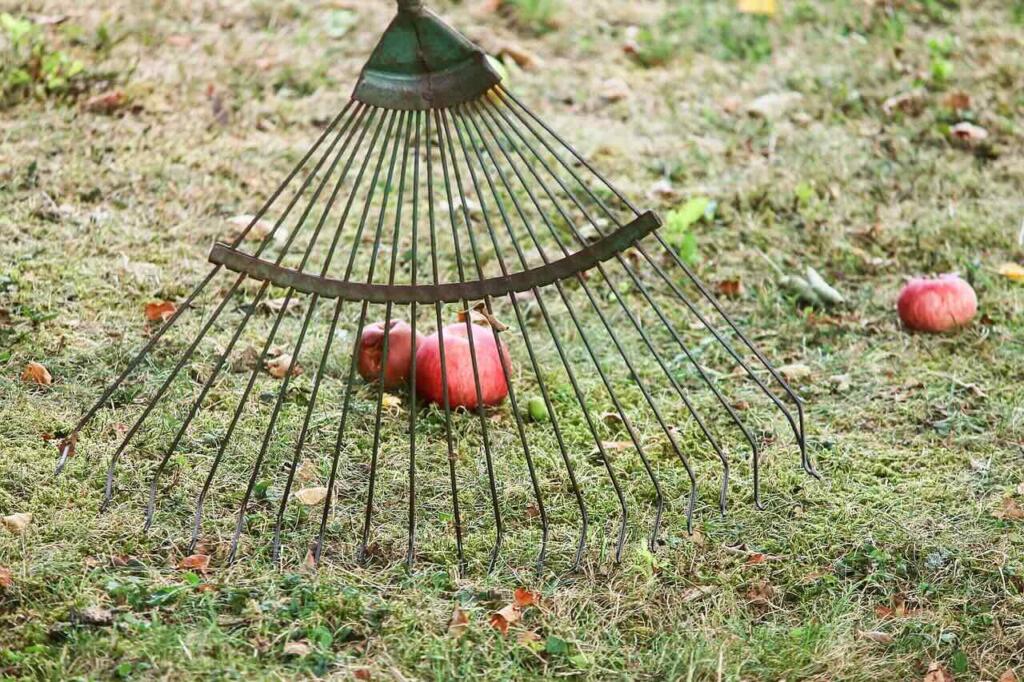
A dethatcher sits in the middle of the spectrum: more aggressive than raking but less invasive than full scarification. It removes the upper thatch layer without cutting as deeply into the soil surface. Useful for lawns that need annual maintenance rather than renovation.
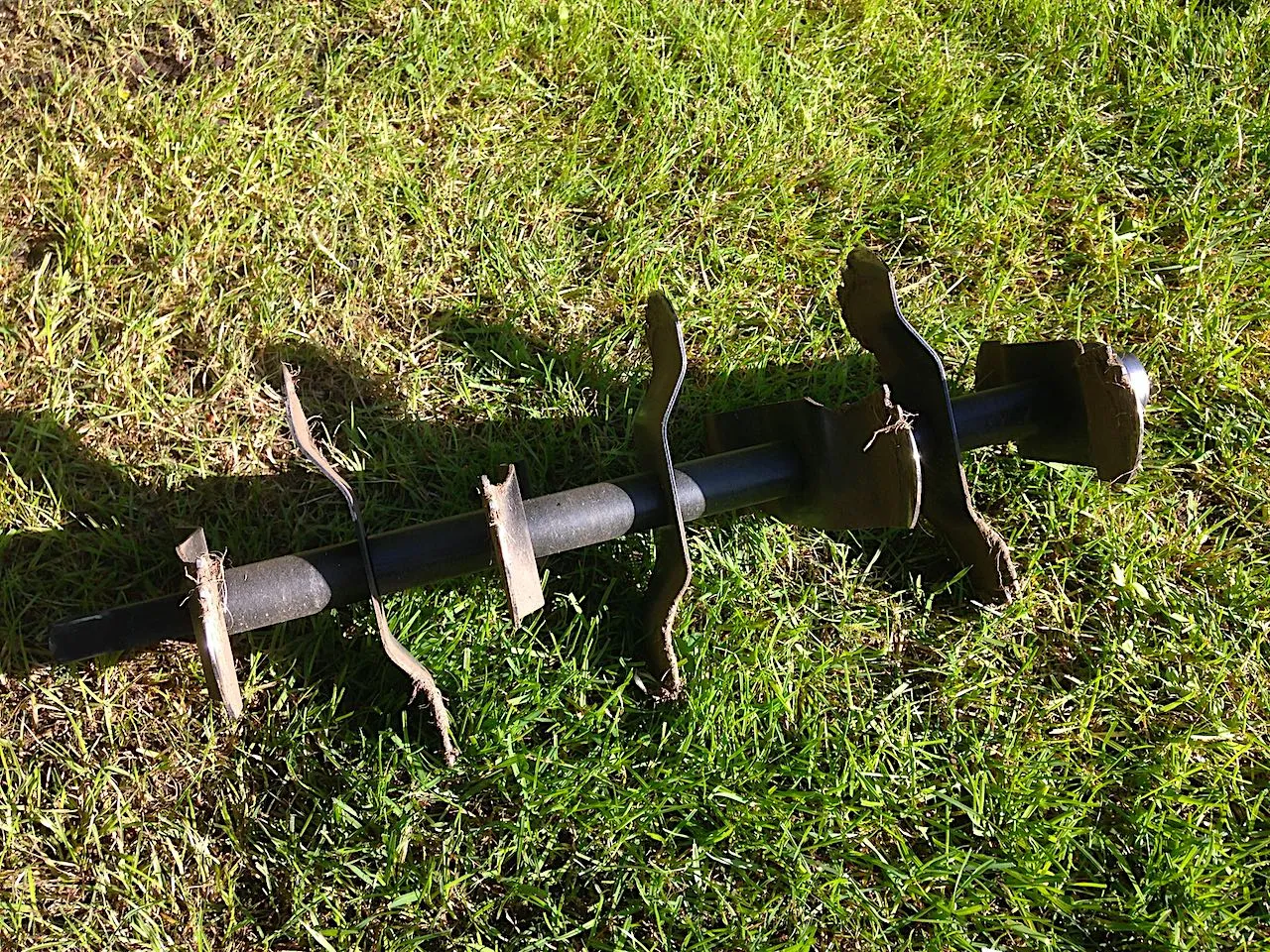
A true scarifier uses rigid steel blades that rotate and cut directly into the soil, typically to a depth of 2 to 3mm. This is what you need for serious thatch removal, moss remediation after treatment, and lawn preparation for overseeding. When I talk about scarifying a lawn professionally, this is what I mean. The blade close-up below shows the difference: rigid, knife-like steel cutting blades rather than flexible wire tines.
Do not underestimate a good manual scarifier. For lawns up to around 75 to 100 square metres, a quality wheeled manual machine will do the job properly and costs a fraction of even the cheapest electric models. There is no cable to manage, no motor to maintain, and it is genuinely quiet enough to use on a Sunday morning without upsetting the neighbours.
The Darlac DP888 is the standout product in the manual category and has been for years. It holds a BBC Gardeners’ World Best Buy and is genuinely one of those tools that does exactly what it claims to do without any drama. The telescopic handle adjusts from 97cm to 1.5m, so you can set it to a comfortable working height rather than stooping, and the 32cm working width, with 11 sharp steel blades, covers ground more efficiently than you might expect from a hand tool. For small lawns, this makes it much more comfortable than using a rake alone and less back-breaking!
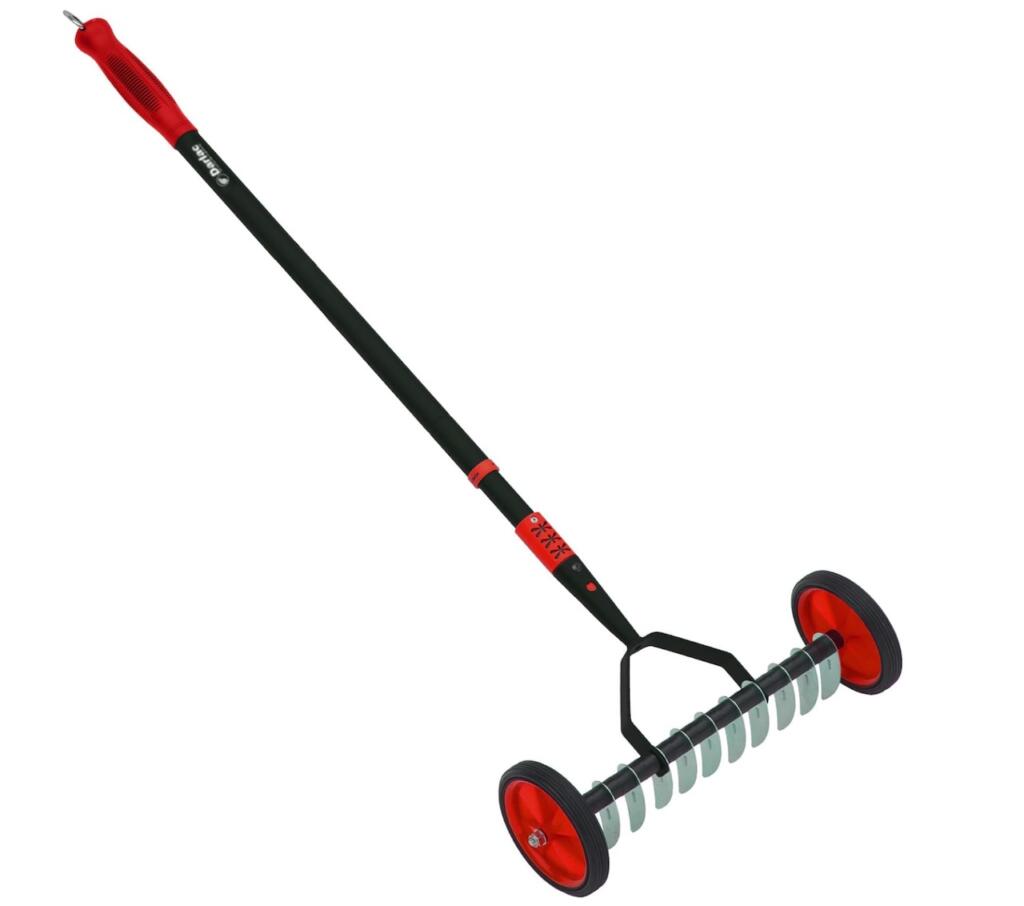
What I like about it is the build quality. The steel frame is treated for corrosion resistance, the twist-lock handle is solid rather than rattly, and the two wheels make it super easy to push along the turf without the blades dragging awkwardly. I have used one of these on my own lawn between electric scarifications, especially for mossy patches near shady spots caused by trees, etc. It keeps thatch at bay very effectively for a machine that costs under £50. If your lawn is small and in reasonable condition, this is all you need. Ninjas, and it’s a gentle cardio workout too!
🛒 Buy the Darlac DP888 Manual Scarifier on Amazon UK
Electric corded scarifiers are the right choice for the majority of UK domestic gardens. As much fun as the mannual scarifyer is for say 30 minutes use, anything over that and it becomes a bit too much of an effort. Electric scarifiers take out 95% of all the manual work and make scarifying medium to larger gardeen lawns a breeze!
They deliver speedy scarifying power with steel blades rather than wire tines, they are easier to start and maintain than petrol machines, and the power output is consistent throughout the job rather than varying with battery charge. The 10m cable that most models include comfortably covers lawns of up to about 250 square metres if you position the socket sensibly or use an extension lead.
The main things to look for are motor wattage (1,000W to 1,100W is the sweet spot for domestic use), whether the machine uses steel blades or wire tines (blades only for true scarification), working width (32cm to 38cm suits most domestic lawns), collection box capacity (50 litres saves you constantly stopping to empty it), and whether it has a separate raking drum as well as a scarifying drum, which adds versatility for lighter work between main scarifications.
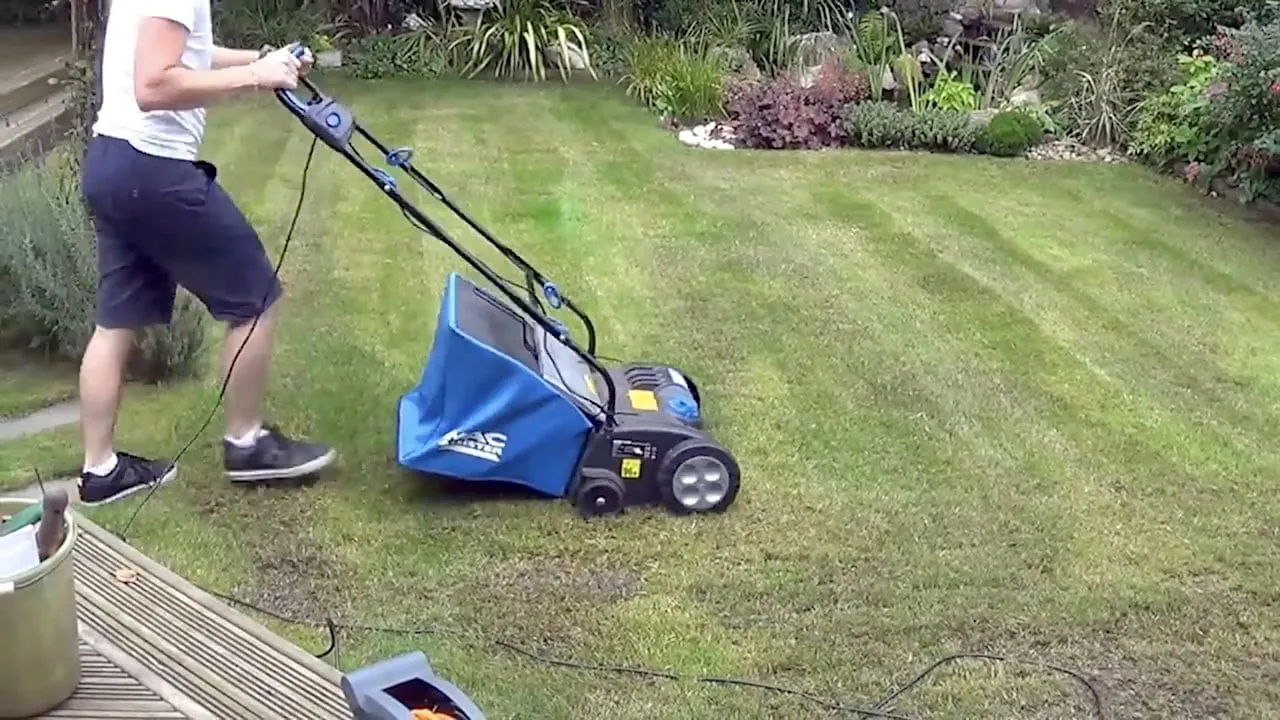
This is the machine I recommend most often to clients who ask me what to buy, and it has been at or near the top of the electric scarifier category for several years for good reason. The 1,100W Powerdrive motor combined with Bosch’s Jet-Collect system, which uses profiled air inlets to draw debris into the 50-litre collection box rather than leaving it scattered behind the machine, makes this genuinely more effective and less messy to use than most of the competition at a similar price.
The 14 rotating BOR steel blades do proper scarification rather than raking, the four height settings run from plus 5mm for surface work down to minus 10mm for serious thatch removal, and the double-folding handle and stackable collection box mean it stores in a footprint of around 40cm deep, which matters in a typical UK garage or shed. The collection box capacity of 50 litres is noticeably larger than most competitors at this price point, which means fewer stops to empty it on a typical lawn.
💡 Top Tip
Remove the collection box and let all the thatch simply fire out the back, that way you scan just scoop it up every 30 mins or so rather than emptying the box every 3 minutes!
I have used this machine on dozens of client lawns of varying sizes and conditions. It handles light annual maintenance on a well-kept lawn and moderately neglected lawns with significant thatch equally well. Where it starts to struggle is on very heavy thatch, over about 2cm deep, where a petrol machine’s torque becomes invaluable and saves your wrists from being battered by manual scarifiers that jam in heavy thatch or bumpy lawns. For the vast majority of UK domestic lawns in normal to moderate condition, the Bosch is the right answer.
💡 Top Tip
With the Bosch UniversalVerticut, start on the shallowest setting for the first pass and only go deeper on the second cross-hatch pass if the thatch is clearly not coming out. Starting too deep on a dry lawn in late summer can strip out more grass than thatch, which is counterproductive. Work up to the depth you need rather than diving straight in.
🛒 Buy the Bosch UniversalVerticut 1100 on Amazon UK
The VonHaus range comes in both 1500W and 1800W variants — the 1800W version has a slightly larger 38cm working width and bigger 45-litre collection box, making it a good step up if your lawn is toward the larger end of the electric range. The 1500W is the product I would recommend to anyone who wants a capable electric scarifier at a price point below the Bosch but does not want to compromise on the fundamentals. The 1,500W motor actually outpowers the Bosch on paper, the 32cm working width is the same, and the interchangeable scarifying and raking drums give you genuine flexibility for different tasks throughout the season without needing to buy two separate machines.
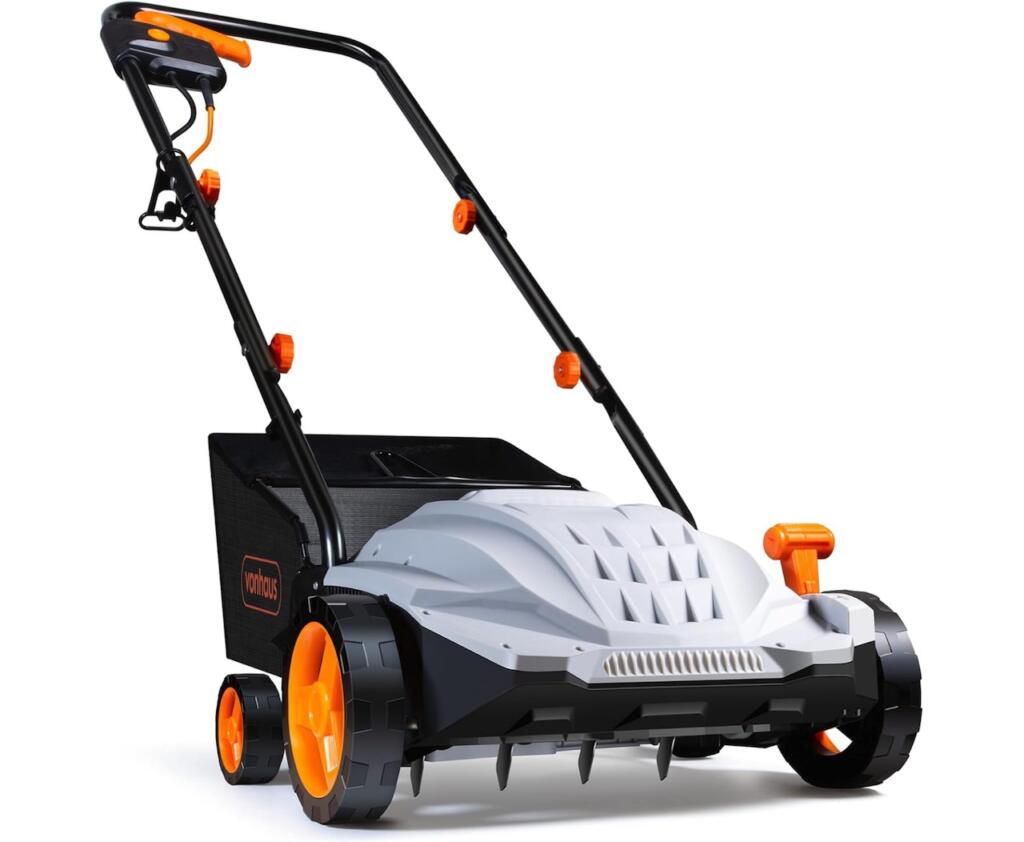
The collection box is smaller at 30 litres compared to Bosch’s 50 litres, which means more stops to empty on a larger or heavily thatched lawn, and the build quality is a step below Bosch’s in terms of materials and finish. But remember, you can just remove the box and cable-tie the back flap up so the thatch can fire straight out the back! But for a lawn up to about 200 square metres being scarified once or twice a year, the VonHaus will do the job reliably, and it’s cheaper if you’re on a budget. It has a two-stage safety trigger to prevent accidental starts and a thermal motor cut-out to prevent overheating, which are both features worth having on a powered scarifier.
🛒 Buy the VonHaus 1500W Scarifier on Amazon UK
If budget is the primary constraint and your lawn is on the smaller side, the Einhell GC-SA 1231 is a capable entry-level machine that performs adequately for occasional domestic use. It is not built for heavy renovation work or for lawns with serious thatch accumulation, and the build quality reflects the price point. As a machine for light annual maintenance on a well-kept lawn, it does what it needs to do. The 1,200W motor is sufficient for most domestic scarification needs and is widely available on Amazon with a good track record of reviews.
My honest view is that the price gap between this and the VonHaus is small enough that most gardeners are better off stretching to the VonHaus for the extra motor power and interchangeable drums. But if you genuinely need the most affordable entry point and have a small, lightly thatched lawn, the Einhell will serve you well for a few seasons.
🛒 Buy the Einhell GC-SA 1231 on Amazon UK
Petrol scarifiers are for larger lawns, severe thatch problems, and gardeners who want professional-level results and are prepared to pay and maintain accordingly. The torque from a petrol engine allows the blades to cut deeper and more consistently into dense thatch than an electric motor can manage without stalling, which makes a real difference on lawns that have not been properly scarified in several years or that have very heavy moss problems.
The working widths are typically larger too, at 38cm to 45cm, which means you cover ground faster on a big lawn. The trade-off is weight, noise, fuel management, and the need for basic engine maintenance: winterising the fuel, cleaning the air filter, and occasionally servicing the engine. If you have a lawn under 300 square metres in reasonable condition, I would always recommend an electric machine first. Petrol becomes the right choice when the lawn is large, the thatch is serious, or you are doing professional renovation work.
The Hyundai HYSC210 is the petrol scarifier I would point most domestic gardeners toward if they have decided they need a petrol machine, or you have a large, uneven lawn with a LOT of thatch. Petrol scarifiers have far higher torque (pulling power) and can cope with much harsher lawn conditions, such as clay, bumps, rocks, or debris. Electric ones struggle with any tricky lawn conditions.
The 212cc four-stroke OHV engine delivers strong, consistent torque, the 400mm working width covers a large lawn considerably faster than any electric model, and Hyundai’s build quality on their garden machinery range has improved substantially over the past few years to the point where it competes credibly with more established brands at a lower price.
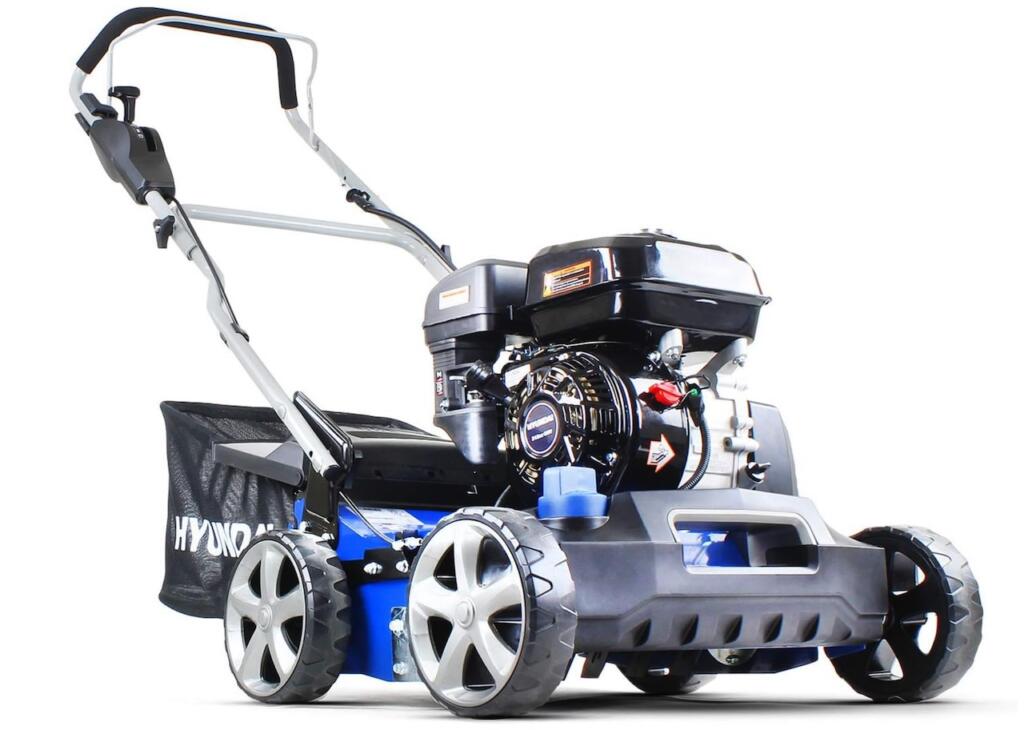
The five adjustable cutting heights, foldable soft-grip handle, and 45-litre grass box are all practical features that make the machine genuinely usable rather than just powerful on paper. Hyundai includes a three-year warranty with registration on their garden machinery, which adds meaningful purchase confidence. For lawns over 300 square metres or with heavy thatch that an electric machine would struggle with, this is where I would start looking.
Do bear in mind that each winter you will need to empty the fuel to stop it going off and then not restarting the year after. Old fuel can cause blockages and may mean your machine needs to be taken in for flushing. Every 3-5 years, make sure any petrol lawn equipment is properly serviced, oiled and maintained.
🛒 Buy the Hyundai HYSC210 Petrol Scarifier on Amazon UK
The STIHL battery scarifier is at the upper end of what a domestic gardener would seriously consider, but it earns its place in this guide because it represents a genuinely different level of build quality, cutting performance, and longevity compared to the consumer-grade petrol machines. STIHL’s engineering is exceptional: the blades cut deeper and more cleanly, the machine handles heavy renovation work without the strain you feel on cheaper engines, and it will still be running properly in fifteen years if it is serviced correctly. The fact that it uses a rechargeable battery also makes it a more environmentally friendly choice and far quieter than petrol models, and no cable to trip over!
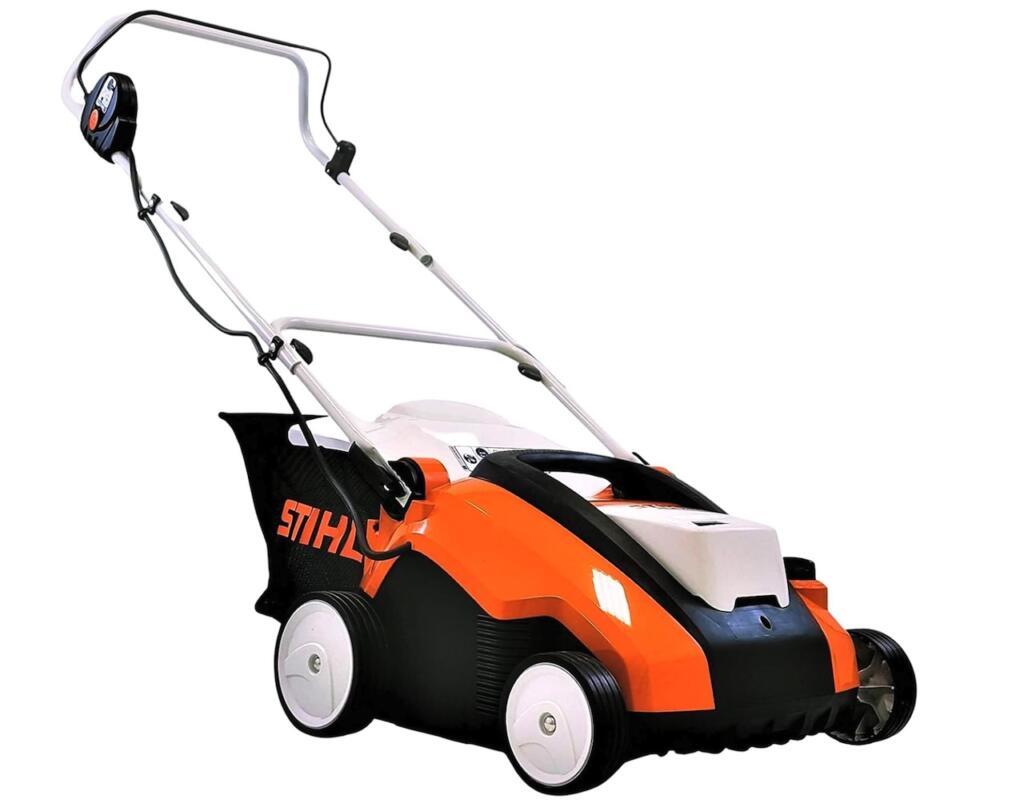
However, it comes at a significant price increase of nearlty £500m when you add the battery pack on. For most domestic gardeners with lawns up to 500 square metres, the Hyundai delivers 80% of the capability at around half the price, which is usually the better call.
🛒 Search for STIHL Scarifiers on Amazon UK
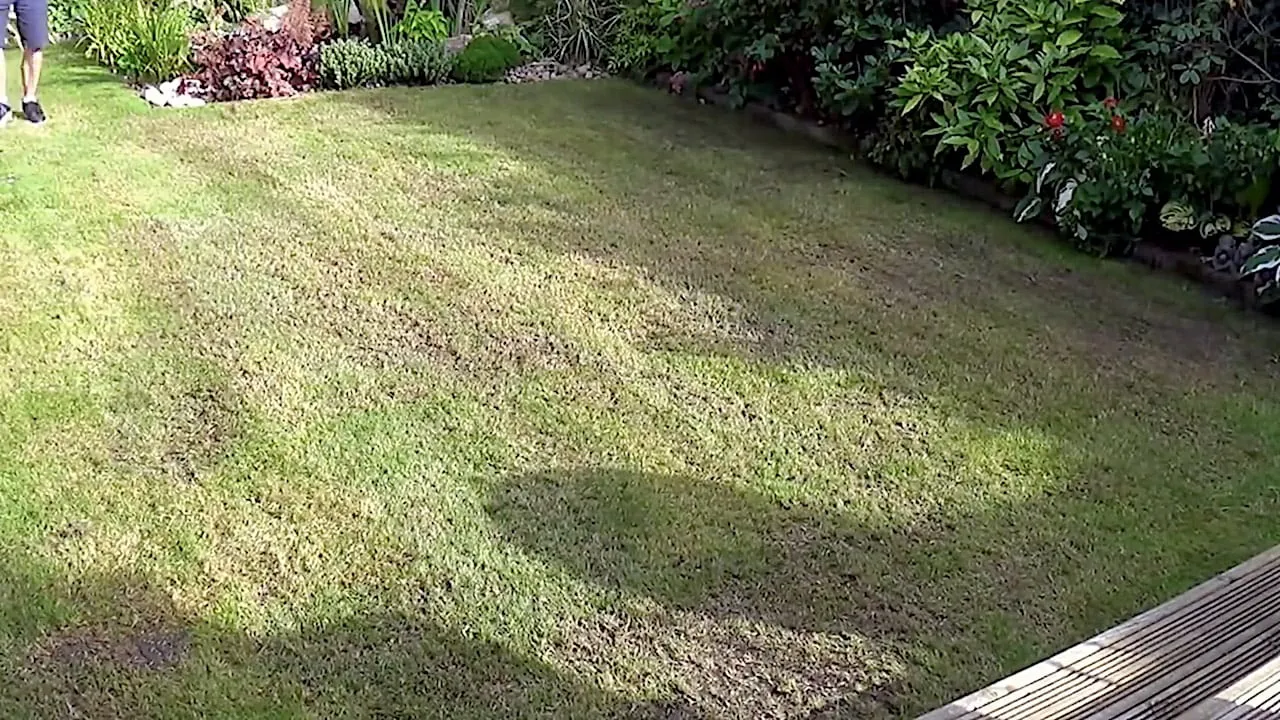
This is a question I get asked regularly and the honest answer depends on how often you are going to scarify. Most UK lawns benefit from scarification once a year, in either autumn or spring. If you are doing it annually, the maths on hiring versus buying shift quite quickly in favour of buying a decent electric machine.
Hiring a petrol scarifier from a tool hire company typically costs £40 to £60 per day. Over three years of annual hiring that is £120 to £180, which is already pushing toward the cost of a quality electric scarifier that will last a decade. The hire machine is also almost always a large, heavy petrol model designed for professional renovation work, which is substantially more machine than most domestic lawns need. You will spend time collecting it, loading it, returning it, and paying the fuel, and if you damage it in any way the hire company will charge you accordingly.
My recommendation is that if you have a lawn larger than about 150 square metres, buying an electric scarifier outright is almost always the better long-term decision both financially and in terms of convenience. If you have a genuinely large lawn over 400 square metres that requires a petrol machine and you are only going to scarify it once, hiring makes sense. Professional scarification services are also worth considering for very large or severely neglected lawns: typical costs run from about £150 for a 100 square metre lawn up to £400 or more for large properties with serious thatch problems.
💡 Top Tip
If you are considering hiring, ask the hire company whether their machine uses steel blades or wire tines. Many hire machines marketed as scarifiers are actually heavy-duty lawn rakers, which will collect debris but will not cut into the thatch layer properly. A true scarifier blade cuts into the soil; a raking tine simply brushes the surface.
This is the most useful framework for making a purchasing decision, and it is one that most guides skip over in favour of listing products without context. Here is how I think about lawn size and machine choice based on two decades of doing this work.
These size thresholds also shift depending on how frequently you scarify and the condition of the thatch. A lawn that is scarified annually in good condition can be managed at the lower end of each category. A lawn that has not been properly scarified in five years or has very heavy moss and thatch will need more machine than the size alone suggests, because the blades are working harder through denser material and a less powerful motor will stall or slow significantly.
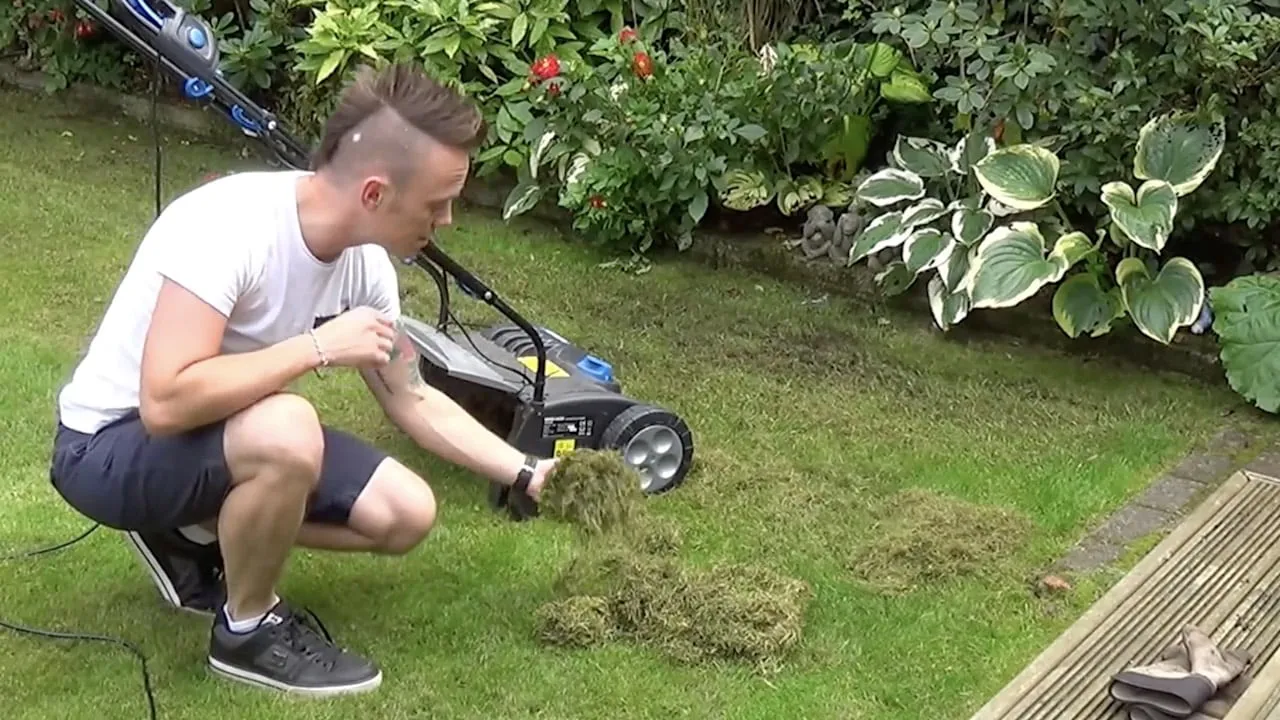
A scarifier fixes a patchy lawn, but it will not tell you whether the border next to it is worth keeping or whether the rest of your spending is in the right order. My guide to gardening for beginners with an established garden covers the whole process, lawn included.
The two best windows are Autumn, from September to October, and spring, from late March to April. Autumn is the more popular and generally the more effective timing for most UK lawns: the grass is still growing, the soil retains warmth, and there are six to eight weeks of growing season left for the lawn to recover before the cold sets in. Spring scarification is appropriate for lawns that are heavily moss-affected after a wet winter, but be aware that it can stress the grass more because it occurs during peak growth demands. Never scarify during drought, frost, or when the lawn is waterlogged. For the full step-by-step guide to the process, see my complete guide to scarifying a lawn.
Once a year is sufficient for most domestic lawns, ideally in Autumn as part of the full renovation programme alongside aeration and overseeding. Fine ornamental lawns with fescue and bent grasses, which naturally produce more thatch through their rhizome root system, may benefit from twice-yearly scarification. Ryegrass-dominant lawns, by contrast, produce relatively little thatch and may only need scarifying every other year if they are well-maintained. The thatch depth test I described at the start of this guide is the most reliable indicator of whether your lawn needs it this season.
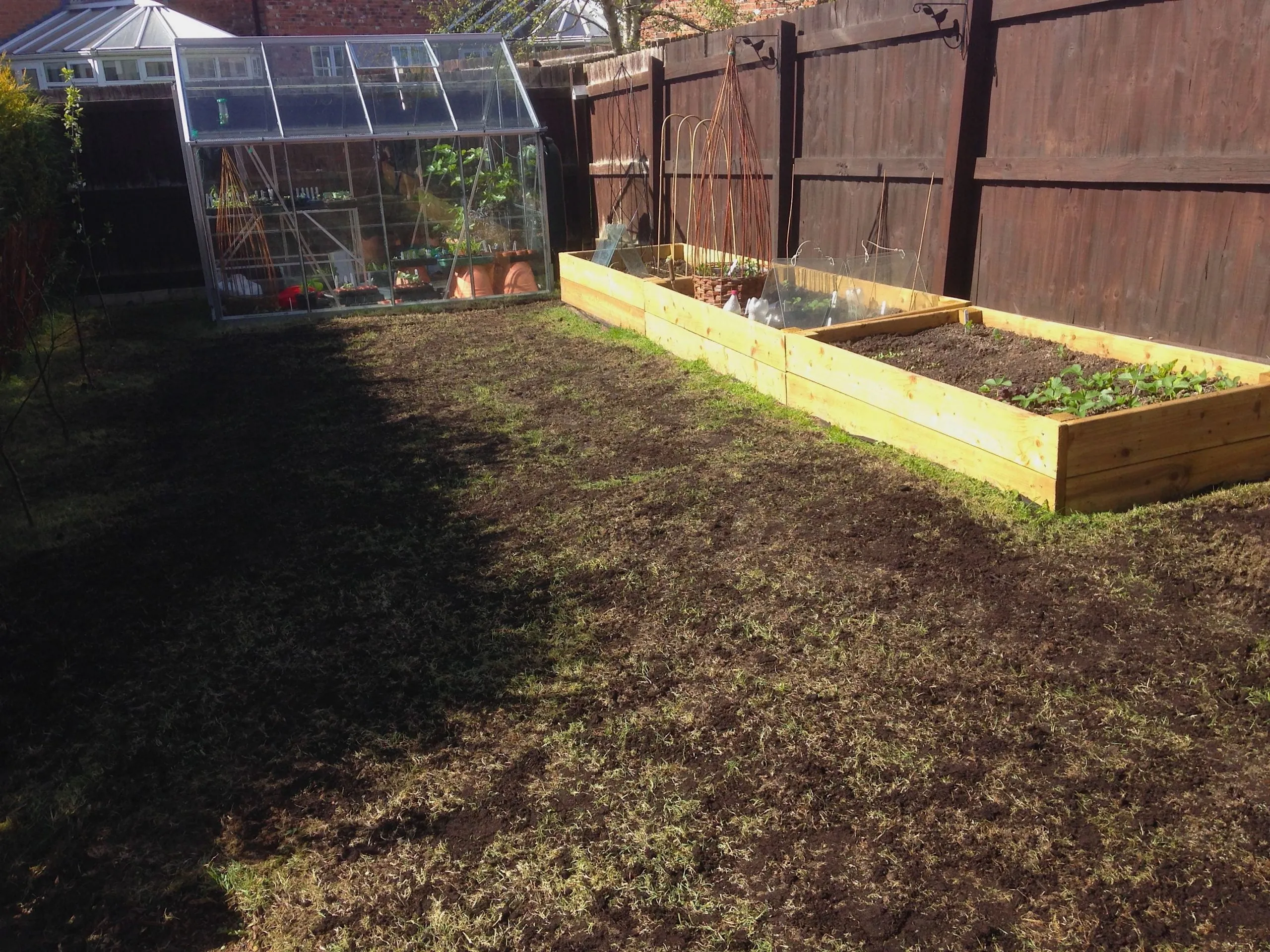
This is completely normal, and it is the thing I spend the most time reassuring clients about after an Autumn renovation! A freshly scarified lawn looks like it has been attacked and brutalised. The grass is thin, the soil is partially exposed, and the collection bags are full of what appears to be most of the lawn. Within four to six weeks, the grass recovers and thickens, and the difference in quality and colour compared to the unscarified state is usually striking. If you have overseeded after scarifying, the new grass seedlings will start to emerge within five to ten days. The lawn that looks terrible in late September will look substantially better by late October and genuinely good by the following spring.
No, not in the first year. Wait at least twelve months before scarifying a lawn from new turf, and at least two to three years before scarifying a seeded lawn heavily. Young grass plants have not established a root system deep enough to withstand the physical disruption of scarification, and scarifying too early can pull out the grass plants rather than just the thatch. In the first year, focus on mowing, feeding, and aeration if the soil is compacting. Scarification can wait until the lawn is properly established.
Scarify first, then aerate. Scarification removes the thatch layer that would otherwise clog the aeration holes with debris, making the aeration less effective. Once the thatch is cleared and the soil surface is open from scarification, hollow-tine aeration can penetrate properly, and the combination of the two treatments gives you the best possible preparation for overseeding and Autumn feeding. The full sequence for autumn renovation is: mow short, scarify, aerate, overseed, top dress if needed, then apply autumn fertiliser. My complete autumn renovation guide covers the full programme in detail.
For the vast majority of UK domestic gardens, electric is the better practical choice. It starts immediately with no fuel management, it is quieter, lighter, and easier to maintain, and for lawns up to about 300 square metres, it delivers fully adequate scarifying power. Petrol becomes genuinely better rather than just more powerful when the lawn is large enough that cable management becomes a real issue, when the thatch is so dense that a lower-torque electric motor stalls on it, or when you are doing frequent, large-scale professional renovation work. Do not let anyone persuade you that petrol is inherently superior: for most domestic use, it is simply more machine than the job requires.
Ready to stop guessing and start designing with confidence? My Garden Design for Beginners online course takes you from blank canvas to brilliant layout, step by step.
I’m Lee Burkhill, award-winning garden designer and BBC1’s Garden Rescue presenter, and I’ve built this course around the same principles I use for every client garden — practical, honest, and designed to actually work in the real world.
In 20 hours of flexible online study, you’ll cover:
Video lessons, real-world case studies, quizzes, and a certificate on completion — all for just £199.
Enrol today and start designing your dream garden.
For the garden you’ve already got, not the one you’re starting from scratch. Seven checklists and video lessons from BBC Garden Rescue’s Lee Burkhill, designed to help you decide what’s worth keeping before you spend a penny.
Garden Design Examples for Small Gardens: 30 Design Templates & Planting Plans: In this online gardening course, I’ll walk you through 30 fantastic garden designs, explaining the logic behind the layout and plant choices, plus take-home tips for applying them in your own garden.
Learn how to transform and design your garden with Lee Burkhill’s crash course in garden design. In over 5 hours, Lee will teach you how to design your dream garden. Featuring practical design examples, planting ideas and video guides. Learn how to design your garden in one weekend!
Garden Design for Beginners Online Course: Want to become a garden designer or design your own garden? This beginner course is for you. Join me, Lee Burkhill, an award-winning garden designer, as I train you in the art of beautiful garden design. Enjoy 20 hours of online study and video lessons, along with quizzes and a completion certificate.
Match the machine to the lawn, and you will not go far wrong. For small lawns under 100 square metres, the Darlac DP888 manual scarifier is all you need. For most UK domestic gardens up to 300 square metres, the Bosch UniversalVerticut 1100 is the best overall electric choice, with the VonHaus 1500W as a strong, lower-cost alternative. For large lawns or serious thatch problems, the Hyundai HYSC210 petrol machine delivers the torque and working width to get the job done efficiently.
Whatever machine you use, remember that the technique matters as much as the kit. Scarify when the grass is actively growing, use a cross-hatch pass pattern for even coverage, and always overseed and feed afterwards. The machine opens the door; the aftercare is what makes the difference in how the lawn looks six weeks later. For the complete lawn care programme alongside scarification, these guides cover everything that follows on from the work:
👉 How to Scarify a Lawn: The Complete UK Guide
👉 How to Aerate a Lawn: Hollow Tine vs Solid Tine
👉 How to Overseed a Lawn: The Complete UK Guide
👉 Best Lawn Fertilisers UK: A Garden Designer’s Complete Guide
👉 The Complete Autumn Lawn Renovation Programme
Happy Gardening!

Lee Burkhill, known as the Garden Ninja, is an award-winning garden designer and horticulturist with over 30 years of gardening experience and 15 years as a professional garden designer. A qualified RHS (Royal Horticultural Society) professional, Lee specialises in sustainable garden design and practical horticultural advice. He designs and presents on BBC1’s Garden Rescue and in leading gardening publications. Lee combines three decades of hands-on gardening knowledge with professional design qualifications to help gardeners create beautiful, functional outdoor spaces.
View all posts by Lee Burkhill








JOIN THE NINJAS
Be the first in line for new Guides, Discount codes and Offers