For the garden you’ve already got, not the one you’re starting from scratch. Seven checklists and video lessons from BBC Garden Rescue’s Lee Burkhill, built to help you work out what’s worth keeping before you spend a penny.
69


At A Glance
White works with every planting style and every colour scheme, brightens shady corners, glows at dusk, and supports night-flying pollinators. This guide covers 35 of the best white flowering trees, shrubs, perennials, bulbs and climbers for UK gardens, with hardiness, size and flowering season for each.
Whether you’re designing a classic white border inspired by Sissinghurst or simply want to lift a shady corner with some luminous planting, white flowers are the most versatile and brightening colour in the garden designer’s toolkit.

White is a garden colour (tone) that works absolutely everywhere, with nearly everything, in every style of garden, and it’s the one most gardeners massively underestimate. Now, before you click away thinking this sounds about as exciting as a blank wall, hear me out! White flowers are not boring. They are, in my professional opinion as an award-winning garden designer and BBC1’s Garden Rescue presenter, one of the most powerful and sophisticated tools you can reach for in any planting scheme.
I’ve been designing gardens for over twenty years. In nearly every project, white plants have played a crucial role, whether as the hero of a dedicated white border, a peacemaker between clashing colours, or a way to make a shady north-facing bed feel alive and luminous. The famous white garden at Sissinghurst is perhaps the most celebrated example, but you absolutely do not need a Kent castle to pull this off. A small urban garden, a terraced house backyard, or even a collection of containers can be transformed by the clever use of white-flowering plants.
In this guide, I’m sharing 35 of the best white flowers for UK gardens, covering trees for structure, shrubs for backbone, herbaceous perennials for seasonal interest, and a handful of reliable annuals and bulbs for seasonal flair.
I’ve included hardiness ratings, ultimate sizes, and my personal tips based on experience growing and designing with these plants, not just theoretical knowledge from a book. I’ve also included direct links to buy plants ready to go into your garden, which makes it even easier to get cracking.
Jump To
This page contains affiliate links for products I use and love. If you take action (i.e. subscribe, make a purchase) after clicking a link, I may earn some gardening commission, which helps me keep the Garden Ninja Blog free for all.
Let me be straight with you before we dive into the plant list. White flowers carry an unfair reputation for being safe, bland, or the choice you make when you cannot be bothered to pick a real colour. That is completely wrong, and I’m going to tell you exactly why.
On the colour wheel, white sits entirely outside the spectrum, which means it works with literally everything. Clash a hot orange with a bright pink, and you’ll get a scheme that makes eyes water. Drop some white in between, and suddenly it mellows out the brightness. This is why white is such a fundamental tool in professional garden design. It is the great harmoniser, the reset button, the breathing space that lets every other colour do its job properly.
One of the biggest challenges in urban gardening is shade, and very few colours perform as well as white in those difficult low-light conditions. White petals catch and reflect even the most minimal light, making them clearly visible and beautiful on overcast days, in shady borders, and especially as the evening draws in. If you enjoy your garden with a glass of something after work, white flowers absolutely come into their own at dusk when everything else fades into the gloom.
Many white-flowered plants have co-evolved with moths and other night-flying pollinators, producing their strongest fragrance after dark. This is brilliant news if you care about garden wildlife, because moth populations are declining at an alarming rate, and anything we can do to support them matters enormously. Planting white-flowered species such as Phlox paniculata, Nicotiana, and Jasmine is actively beneficial for the ecology of your outdoor space.
This is something I talk about a lot on Garden Rescue, and it’s backed up by every garden psychology study I’ve ever read. White-dominated planting creates feelings of calm, clarity, and spaciousness. In a small urban garden where walls can feel oppressive and the space is tight, a predominantly white planting scheme can make the space feel significantly larger and more peaceful. That is worth a great deal in a city environment.
If there is one white-flowering tree I recommend to almost every urban garden owner, it is this one. Magnolia stellata produces absolutely stunning star-shaped white flowers on bare stems from late February through April, often before a single leaf has appeared. The effect is breathtaking: those clean white blooms against the winter-naked branches, sometimes with frost still on the ground, is one of the most beautiful sights in any early spring garden. It is compact, slow-growing, and easily manageable in a smaller urban space, making it essentially perfect.
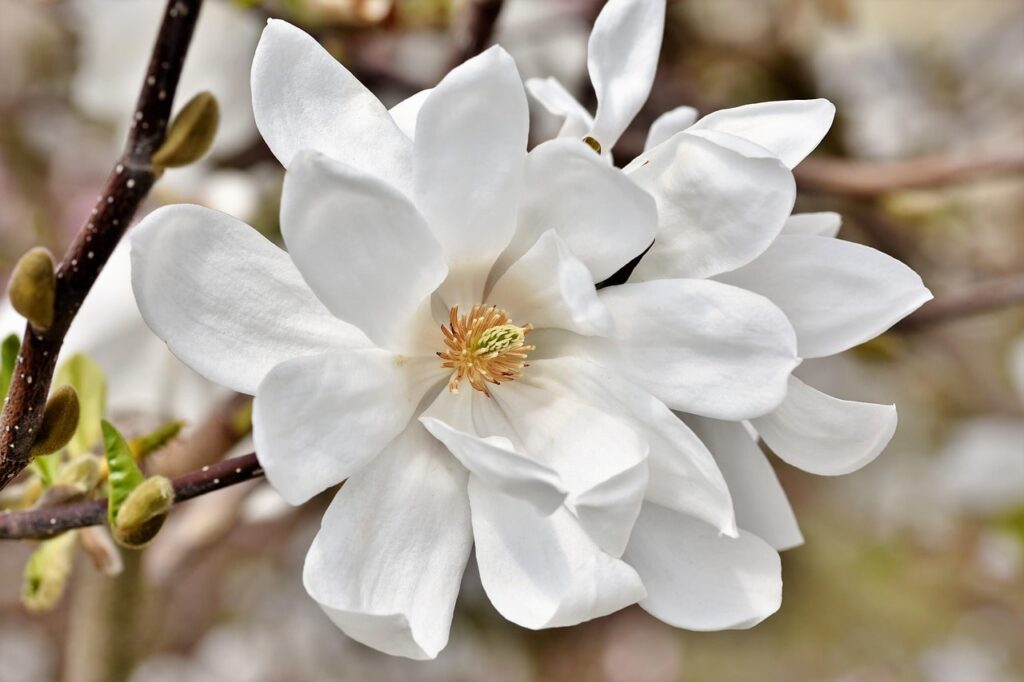
Best Growing Conditions: Full sun or partial shade in moist but well-drained, slightly acidic soil. Shelter from harsh east winds and late frosts if possible, as the flowers can brown quickly if caught by a sharp late frost.
Top Tip: This is my number one recommendation for small trees for small gardens. It is slow enough never to overwhelm a compact space, yet structural enough to be a genuine focal point year-round. Plant it where you can see it from a window; you will appreciate it every single February when it starts performing. If your soil is alkaline, plant in a large container with ericaceous compost and it will thrive beautifully.
| At A Glance | |
|---|---|
| Botanical Name | Magnolia stellata |
| Plant Type | Tree/shrub |
| RHS Hardiness | H5 |
| Height and Spread | 2.5m |
| Flowering Period | Feb-April |
| Key Feature | Early spring spectacle |
🛒 Buy Magnolia stellata on Amazon UK
Nicknamed the Great White Cherry, and quite rightly so. Tai-Haku produces the largest flowers of any ornamental cherry tree, with single white blooms up to 6cm across that open in April against bronze-copper young foliage. The combination is spectacular and unlike anything else in the spring garden. This tree has real presence, perfect for larger urban gardens or as a central focal point in a medium-sized space where you want maximum impact in spring.
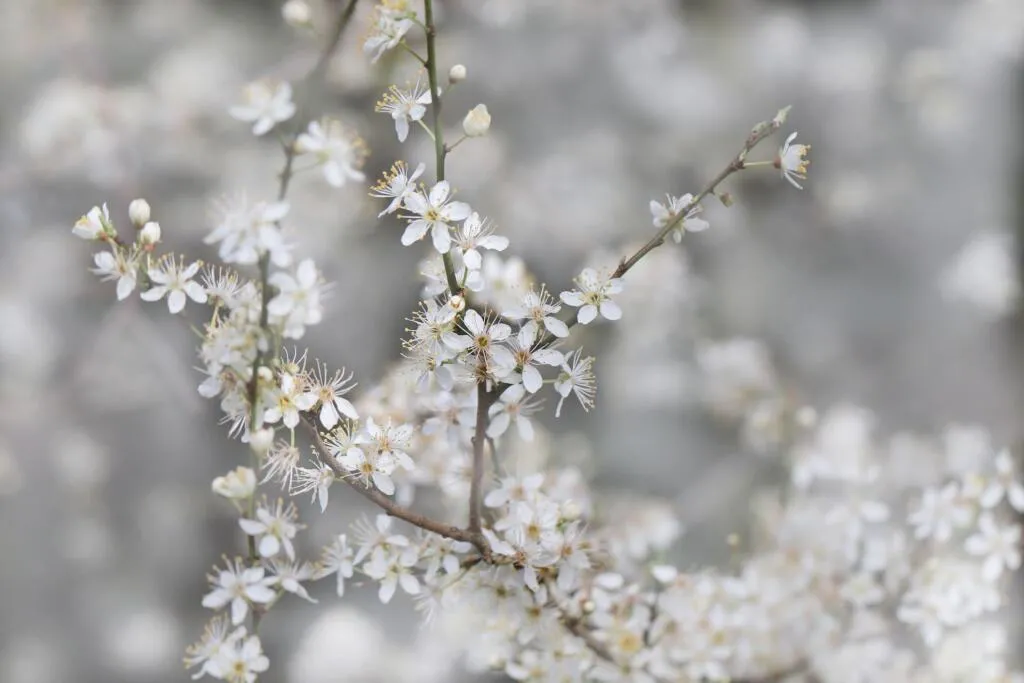
Best Growing Conditions: Full sun in any reasonable, moist but well-drained soil. Avoid waterlogged ground.
Top Tip: This is a larger tree, so make sure you have the space before committing. The spring blossom lasts only two to three weeks, but it is absolutely worth it, one of the most stunning flowering trees in British horticulture. The autumn foliage colour also turns lovely shades of amber and orange, giving you two seasons of real drama.
| At A Glance | |
|---|---|
| Botanical Name | Prunus ‘Tai-Haku’ |
| Plant Type | Tree |
| RHS Hardiness | H6 |
| Height and Spread | 8m |
| Flowering Period | April |
| Key Feature | Largest cherry blossom |
🛒 Buy Prunus ‘Tai-Haku’ on Amazon UK
Amelanchier is one of those trees that earns its keep year-round, and in smaller urban gardens, that multi-season interest is absolutely vital. In spring, it produces masses of delicate white star-shaped flowers at the same time as the bronzy-copper young leaves emerge; the combination is delicate yet striking. In summer the flowers give way to small purple-black berries that birds love. In autumn, the foliage turns the most incredible shades of fiery orange and red.
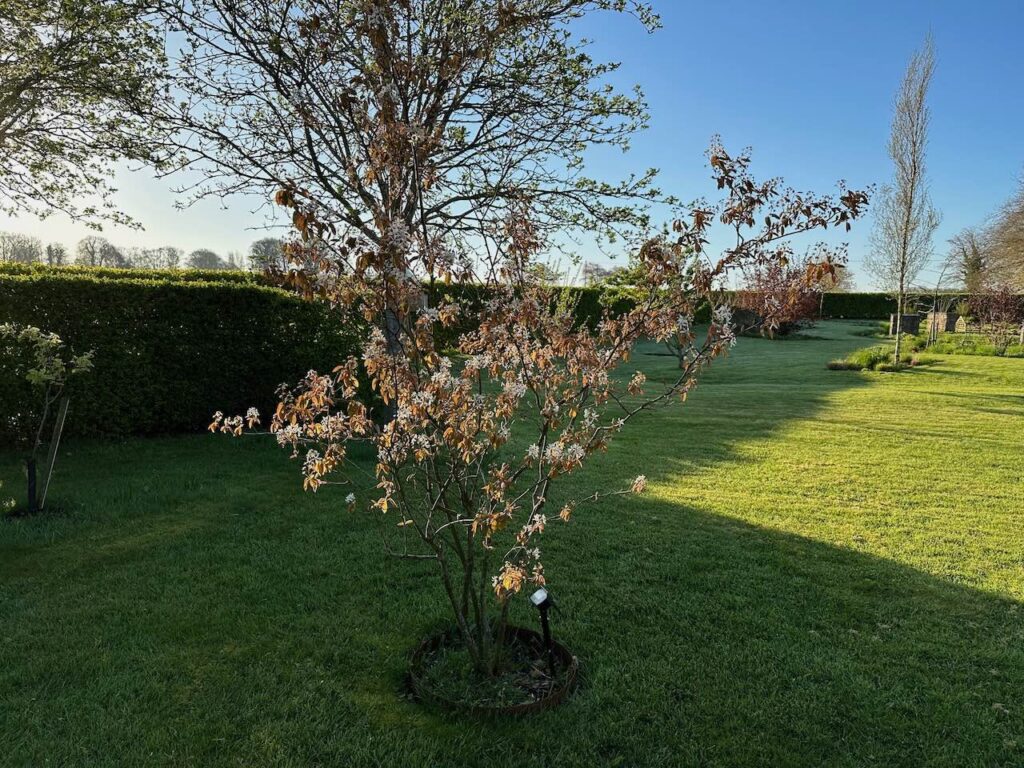
Best Growing Conditions: Sun to partial shade in moist but well-drained, slightly acidic soil. Very adaptable and tolerant. My one here at Garden Ninja HQ, pictured above, brings gorgeous displays from my kitchen with white in spring, through to pink, and then the leaves change colour in autumn. It’s literally an awesome small tree for a garden!
Top Tip: This is probably my most-recommended tree for urban gardens, full stop. White flowers, brilliant autumn colour, wildlife value, and it tolerates a wide range of conditions, including pollution and clay soils. It can be grown as a multi-stem for a more naturalistic effect, keeping height manageable and looking stunning. Fantastic value plant.
| At A Glance | |
|---|---|
| Botanical Name | Amelanchier lamarckii |
| Plant Type | Tree |
| RHS Hardiness | H6 |
| Height and Spread | 6m |
| Flowering Period | April-May |
| Key Feature | Multi-season interest |
🛒 Buy Amelanchier lamarckii on Amazon UK
Annabelle is one of those plants that properly stops people in their tracks. Those enormous, snowball-like heads of pure white flowers from July through September are jaw-dropping; each flowerhead can reach up to 25cm across, and a well-established plant covered in them is one of the most spectacular sights in the summer garden. If you can find the improved ‘Strong Annabelle’ (also sold as ‘Incrediball’), even better, as it has been specifically bred with sturdier stems that hold those huge blooms upright rather than flopping in rain. It is one of my absolute go-to white shrubs for urban gardens of any size.
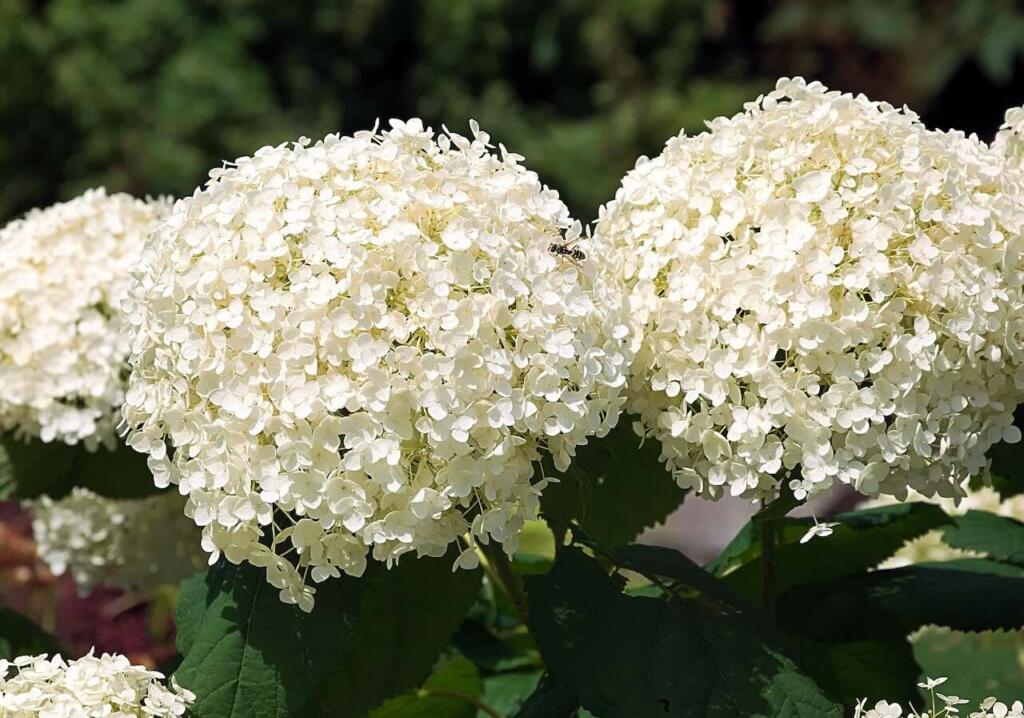
Best Growing Conditions: Sun to partial shade in moist, fertile, well-drained soil. Can tolerate more shade than most hydrangeas.
Top Tip: Cut back fairly hard in early spring. I usually take stems back to about 30cm from the ground, and my guide here will show you how to do this. This encourages strong new growth and the best flower production. The flowerheads turn an attractive pale lime-green as they fade in autumn, and then dry beautifully for winter interest. Do not let the plant dry out in summer, as it will show very quickly in wilting leaves.
| At A Glance | |
|---|---|
| Botanical Name | Hydrangea arborescens ‘Annabelle’ |
| Plant Type | Shrub |
| RHS Hardiness | H6 |
| Height and Spread | 1.2m |
| Flowering Period | July-Sept |
| Key Feature | Giant snowball blooms |
🛒 Buy Hydrangea arborescens ‘Annabelle’ on Amazon UK
This is one of those plants I recommend to absolutely everyone, and most people have never heard of it. Sarcococca confusa is a compact evergreen shrub that produces tiny, white, almost invisible flowers from December through March, and the fragrance they emit is absolutely extraordinary. One plant near a front door or path can perfume your entire entrance for months during the depths of winter, which is one of the most uplifting things a plant can do. It also grows happily in deep shade, which makes it essential for those really difficult north-facing beds where nothing else will flower.
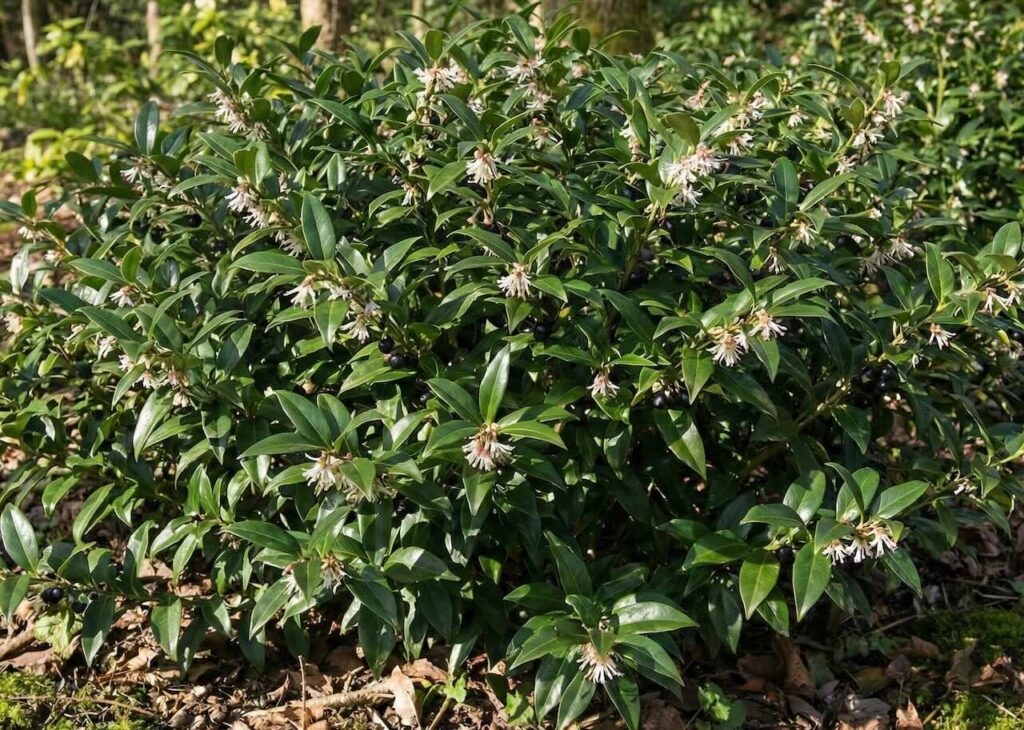
Best Growing Conditions: Shade to partial shade in moist, humus-rich, well-drained soil. One of the best shrubs for deep shade and difficult spots.
Top Tip: Plant this near your front door, by a path, or beneath a window, anywhere the winter fragrance can be enjoyed. It is also a brilliant container plant, meaning it can go on a shaded patio or balcony where you would never normally get winter flowers and scent. Requires very little pruning or maintenance once established. Black berries follow the flowers in spring, adding additional wildlife interest.
| At A Glance | |
|---|---|
| Botanical Name | Sarcococca confusa |
| Plant Type | Shrub |
| RHS Hardiness | H5 |
| Height and Spread | 1.5m |
| Flowering Period | Dec-March |
| Key Feature | Winter fragrance |
🛒 Buy Sarcococca confusa on Amazon UK
Viburnum tinus is an absolute workhorse of the garden, and ‘Eve Price’ is the best variety for most gardens. This compact evergreen shrub produces clusters of pink buds that open to white flowers from November through to April, almost half the year of flowering interest, which is remarkable for any plant. The glossy dark green leaves look good year-round, it tolerates both sun and shade, and it grows happily in most soil types. It is, frankly, almost impossible to kill.
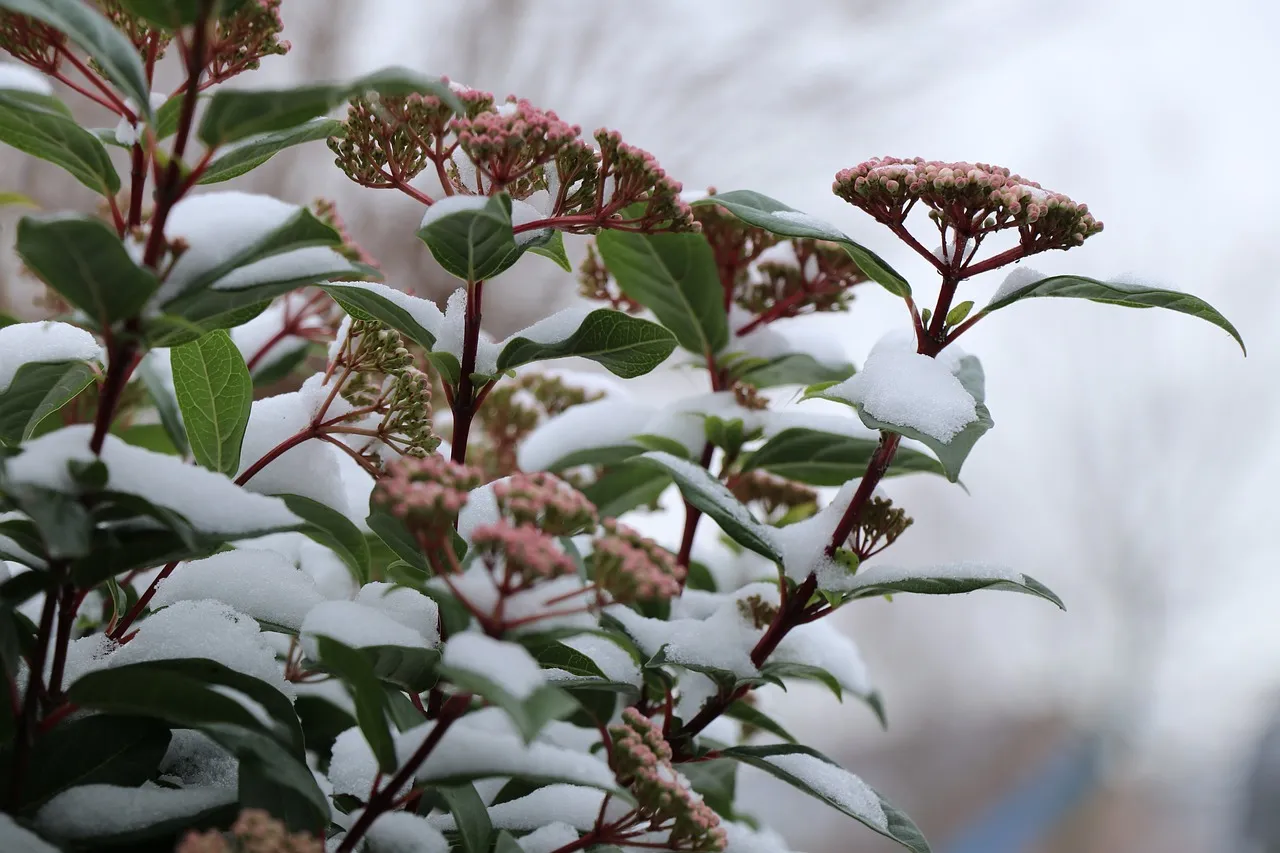
Best Growing Conditions: Sun to shade in any reasonable, well-drained soil. Very adaptable and pollution-tolerant, ideal for urban gardens.
Top Tip: Brilliant for hedging, as a standalone specimen, or as an evergreen structure in a mixed border. Blue-black berries follow the flowers, which birds love. If it gets a bit large, it responds very well to hard pruning after late spring flowering. One of the most reliable garden shrubs available.
| At A Glance | |
|---|---|
| Botanical Name | Viburnum tinus ‘Eve Price’ |
| Plant Type | Shrub |
| RHS Hardiness | H5 |
| Height and Spread | 2m |
| Flowering Period | Nov-April |
| Key Feature | 6 months flowering |
🛒 Buy Viburnum tinus ‘Eve Price’ on Amazon UK
Every garden needs a mock orange. The fragrance of Philadelphus in full flower is, in my opinion, one of the single best scents in the entire garden calendar. ‘Belle Etoile’ is a particularly beautiful variety, producing large single white flowers with a distinctive purple-flushed centre and golden stamens in June and July. The perfume is extraordinary and carries on the breeze for remarkable distances. It is a deciduous shrub, so it earns its space through sheer performance during its flowering season rather than year-round interest.
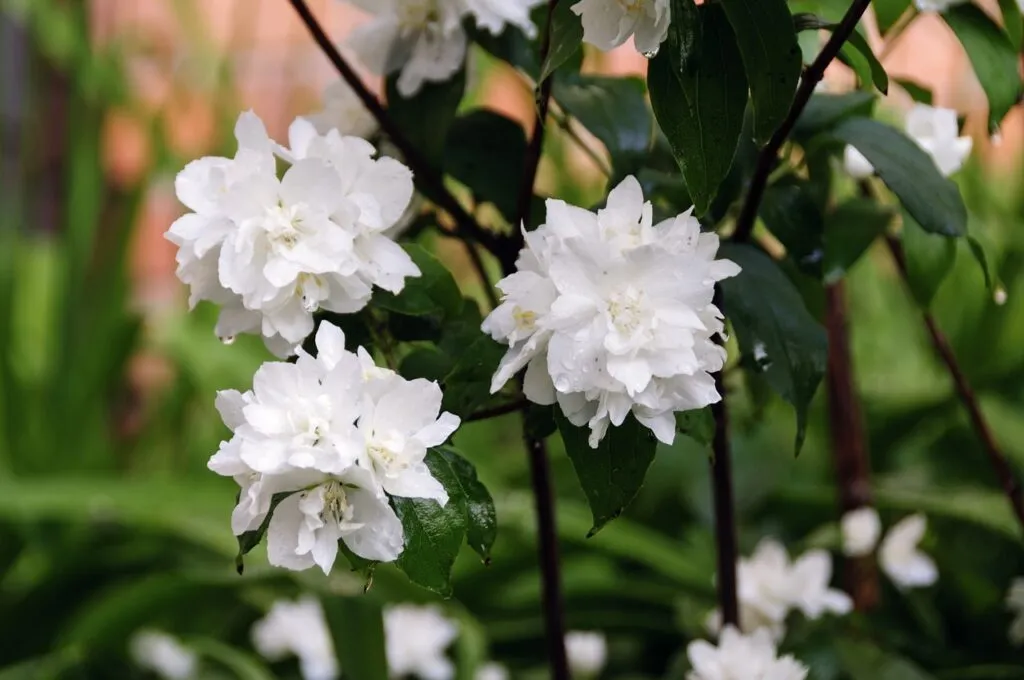
Best Growing Conditions: Full sun to partial shade in any reasonable, well-drained soil. Completely bombproof once established.
Top Tip: Prune immediately after flowering by removing about a third of old stems at ground level to maintain vigour and a good flower display the following year. Plant near seating areas or paths where you can really appreciate the scent on summer evenings. A classic British garden shrub for very good reasons. If you do not have one, get one immediately.
| At A Glance | |
|---|---|
| Botanical Name | Philadelphus ‘Belle Etoile’ |
| Plant Type | Shrub |
| RHS Hardiness | H6 |
| Height and Spread | 1.5m |
| Flowering Period | June-July |
| Key Feature | Exceptional fragrance |
🛒 Buy Philadelphus ‘Belle Etoile’ on Amazon UK
Choisya is one of those incredibly versatile evergreen shrubs that earns its place in almost any garden. The glossy, aromatic leaves look fantastic all year round, and it flowers twice, producing masses of sweetly scented white flowers in May and often again in late summer or autumn. It is remarkably tough, tolerating everything from full sun to quite heavy shade, and is largely untroubled by pests and diseases. The variety ‘Aztec Pearl’ is particularly beautiful with narrower, more delicate leaves.
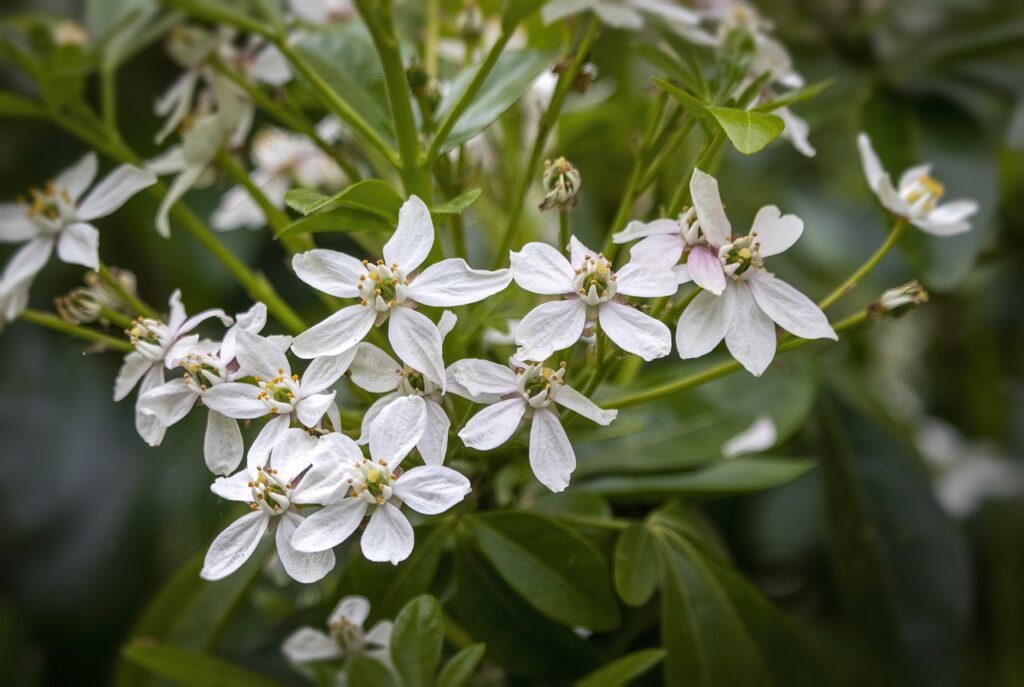
Best Growing Conditions: Sun to partial shade in well-drained soil. Shelter from cold, drying winds in colder areas.
Top Tip: One of the best multi-purpose evergreen shrubs for urban gardens. It responds well to pruning if it outgrows its space; cut back after flowering in spring. The aromatic leaves release their scent when brushed, making it brilliant near paths and doorways. Bees absolutely love the flowers.
| At A Glance | |
|---|---|
| Botanical Name | Choisya ternata |
| Plant Type | Shrub (evergreen) |
| RHS Hardiness | H4 |
| Height and Spread | 2m |
| Flowering Period | May + Aug |
| Key Feature | Flowers twice, evergreen |
🛒 Buy Choisya ternata on Amazon UK
While it starts life with a very distinct lime-green colour, Limelight transitions to creamy white as summer progresses, making it one of the most interesting and sophisticated white shrubs. The enormous conical panicles of flowers from July through September are properly architectural, looking simultaneously dramatic and elegant. Unlike mophead hydrangeas, which need specific soil conditions, paniculata hydrangeas are completely unfussy about soil pH, making them far more versatile in urban gardens with unknown or alkaline soils.
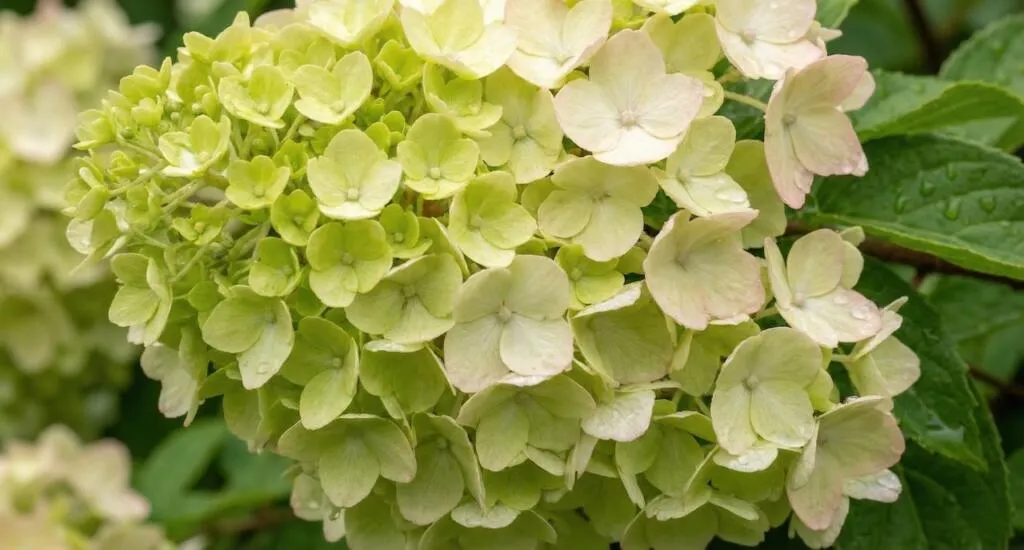
Best Growing Conditions: Full sun to partial shade in moist, well-drained soil. Much more tolerant than other hydrangea species.
Top Tip: Prune hard in late winter or early spring, taking stems back to a low framework of about 60cm. This produces the strongest growth and the best flowers. The dried flowerheads look fantastic through winter and can be cut for indoor arrangements. Absolutely stunning, planted in groups of three.
| At A Glance | |
|---|---|
| Botanical Name | Hydrangea paniculata ‘Limelight’ |
| Plant Type | Shrub |
| RHS Hardiness | H6 |
| Height and Spread | 2m |
| Flowering Period | July-Sept |
| Key Feature | Lime to white transition |
🛒 Buy Hydrangea paniculata ‘Limelight’ on Amazon UK
‘Iceberg’ is probably the world’s most popular rose, and it has earned that status entirely on merit. It produces masses of pure white, lightly fragrant flowers from June through October, with remarkable consistency and disease resistance for a white rose, which is particularly relevant given that white roses can be prone to blackspot. Both the shrub form and the climbing version are indispensable, with the climber ideal for covering fences, walls, and pergolas in urban gardens, where vertical planting is often underused. The flowers keep coming all season with minimal deadheading, which is brilliant for busy gardeners.
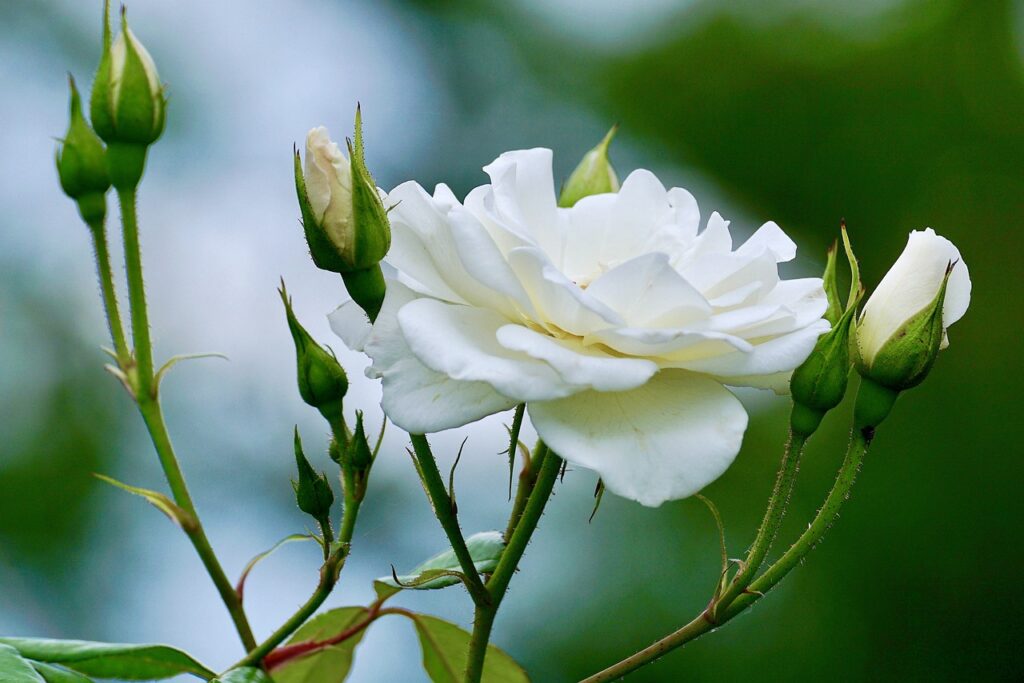
Best Growing Conditions: Full sun in rich, well-drained soil. Feed generously through the growing season.
Top Tip: Mulch generously with well-rotted manure in spring and feed fortnightly from May to August for the best performance. Deadhead regularly, but do not cut into old wood late in the season. One of the most reliable and rewarding roses you can grow, a genuine all-timer.
| At A Glance | |
|---|---|
| Botanical Name | Rosa ‘Iceberg’ |
| Plant Type | Shrub/Climber |
| RHS Hardiness | H6 |
| Height and Spread | 1.2m/5m |
| Flowering Period | June-Oct |
| Key Feature | Repeat flowering, reliable |
🛒 Buy Rosa ‘Iceberg’ on Amazon UK
Spiraea is one of those workhorses that flowering garden design simply could not do without. ‘Snowmound’ is aptly named; in May and June, it is absolutely smothered in tiny white flowers along every arching stem, creating the impression of a wave of white foam breaking across your border. It is completely hardy, unfussy about soil, tolerates some shade, and requires minimal maintenance beyond a tidy-up after flowering. The RHS has given it an Award of Garden Merit, which is a thoroughly deserved endorsement. I use this underused hidden gem all the time in my garden design practice.
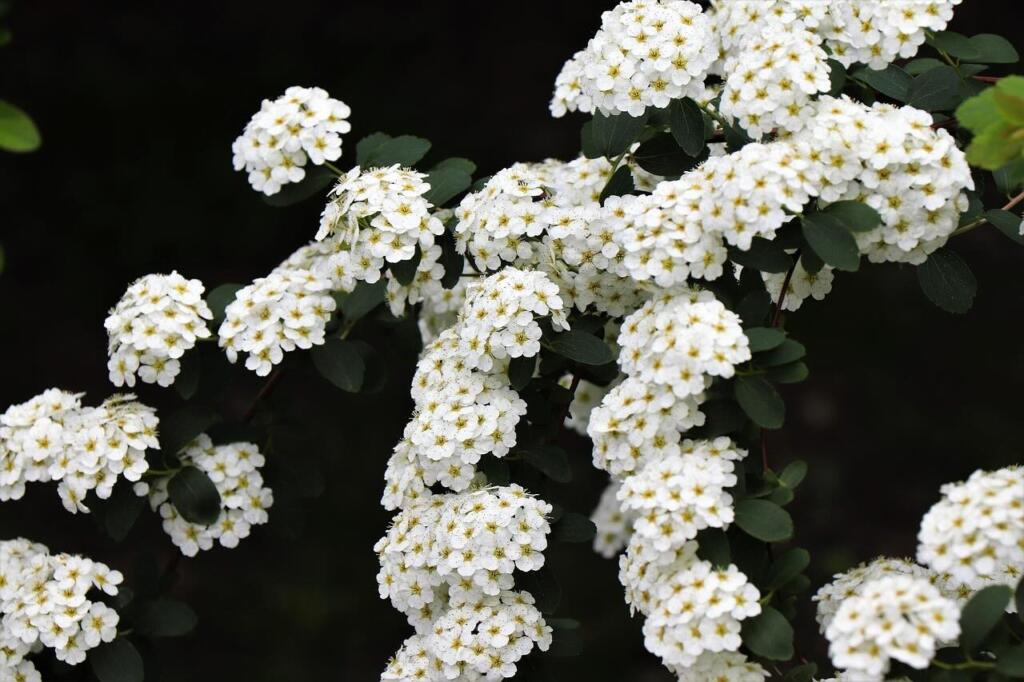
Best Growing Conditions: Full sun to partial shade in any reasonable, moist but well-drained soil.
Top Tip: Cut back after flowering to keep the plant compact and productive. Works brilliantly alongside spring bulbs and early perennials in a mixed border. Excellent value, easy to grow, and completely reliable, exactly what a good garden shrub should be.
| At A Glance | |
|---|---|
| Botanical Name | Spiraea nipponica ‘Snowmound’ |
| Plant Type | Shrub |
| RHS Hardiness | H6 |
| Height and Spread | 1.5m |
| Flowering Period | May-June |
| Key Feature | Arching white foam |
🛒 Buy Spiraea nipponica ‘Snowmound’ on Amazon UK
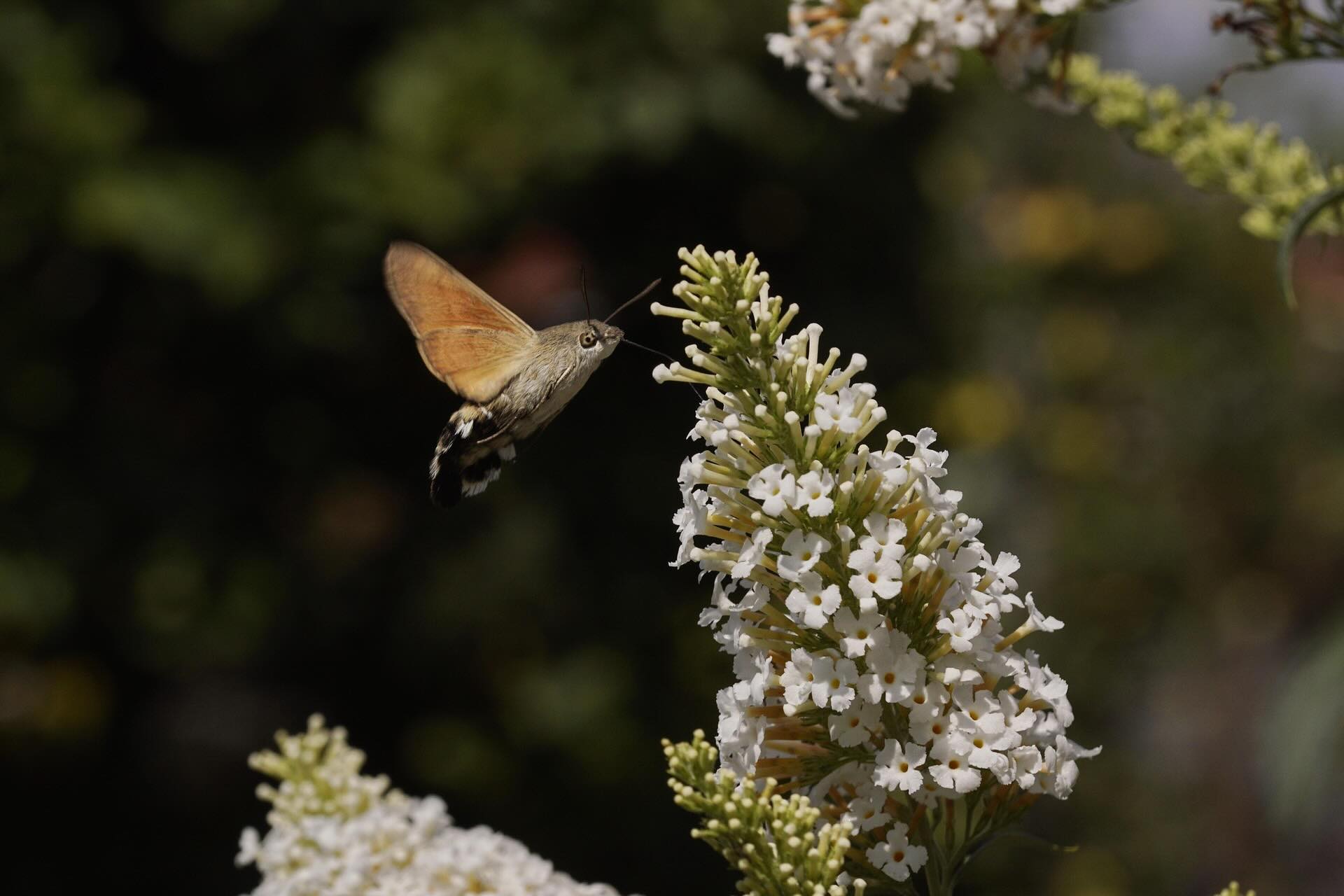
Most people know Buddleja for its purple varieties, but the white varieties are quietly stunning and often create a more sophisticated feel in the garden. ‘White Profusion’ produces long, tapering spikes of pure white flowers from July through September, and the wildlife value is extraordinary. On a warm summer afternoon, a well-established plant in full flower can be covered in dozens of butterflies simultaneously. It is one of the most effective pollinator plants you can grow in a UK garden, period.
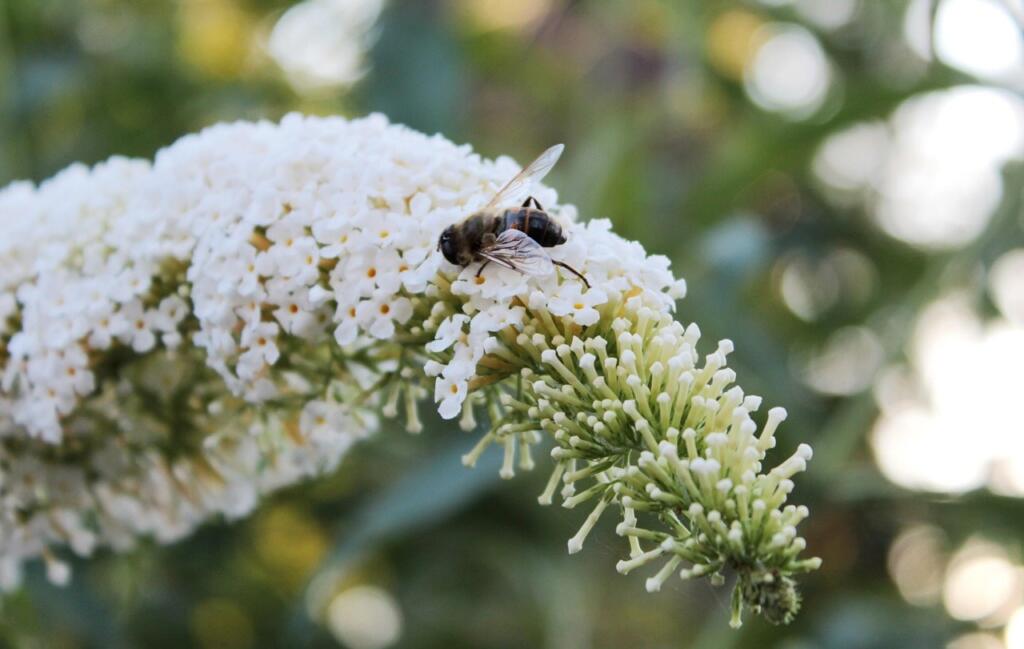
Best Growing Conditions: Full sun in well-drained soil. Very drought-tolerant once established.
Top Tip: Prune hard in March, taking stems back to about 30-45cm from the ground. This might feel brutal, but it produces the best growth and the most spectacular flowers. Without pruning, buddleja becomes leggy and woody very quickly. Brilliant for sunny, exposed spots where other shrubs struggle.
| At A Glance | |
|---|---|
| Botanical Name | Buddleja davidii ‘White Profusion’ |
| Plant Type | Shrub |
| RHS Hardiness | H6 |
| Height and Spread | 2.5m |
| Flowering Period | July-Sept |
| Key Feature | Butterfly magnet |
🛒 Buy Buddleja davidii ‘White Profusion’ on Amazon UK
Summer phlox is one of the quintessential cottage garden perennials, and ‘White Admiral’ is one of the finest white varieties available. It produces large, flat-topped heads of pure white, intensely fragrant flowers from July through September above mid-green foliage. The fragrance is extraordinary, particularly in the evening when it becomes almost intoxicating. This is one of those plants that changes the atmosphere of a garden. Moths absolutely love it, which is excellent for nocturnal pollinator populations.
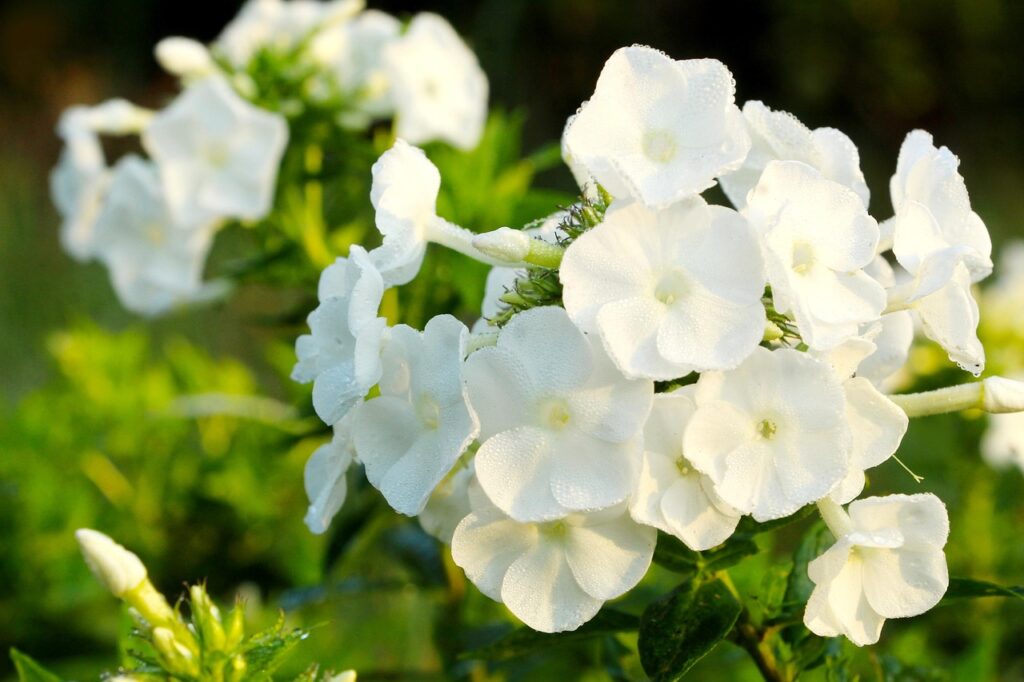
Best Growing Conditions: Full sun to partial shade in moist, fertile, well-drained soil. Avoid dry conditions, as they encourage powdery mildew.
Top Tip: Keep plants well-watered in dry spells to prevent powdery mildew, which is phlox’s one weakness. Deadhead the central truss to encourage side shoots and extend flowering. Divide clumps every three to four years to maintain vigour. Plant near seating areas or paths where you can appreciate that magnificent evening fragrance.
| At A Glance | |
|---|---|
| Botanical Name | Phlox paniculata ‘White Admiral’ |
| Plant Type | Perennial |
| RHS Hardiness | H6 |
| Height and Spread | 90cm |
| Flowering Period | July-Sept |
| Key Feature | Evening fragrance |
🛒 Buy Phlox paniculata ‘White Admiral’ on Amazon UK
Astrantia is one of my absolute favourite perennials, and for white gardens it is practically indispensable. Those intricate, pincushion-like flowerheads, surrounded by papery white bracts, are unlike anything else in the plant world: complex, architectural, and endlessly fascinating up close. ‘Snow Star’ produces these beautiful white and green-tipped flowers from June through August above attractive, deeply divided foliage. It is a superb plant for partially shaded borders where many white-flowered perennials simply will not perform.
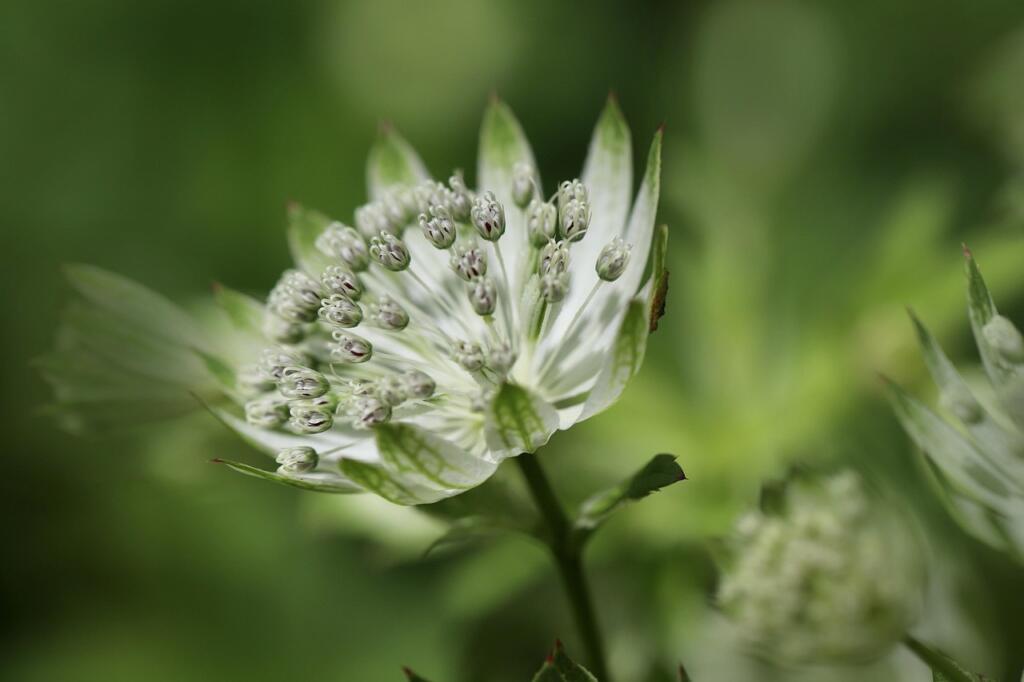
Best Growing Conditions: Partial shade to sun in moist, humus-rich soil. Will tolerate drier conditions if mulched.
Top Tip: Cut plants back after the first flush of flowers for a second wave of blooms later in the season. Astrantia self-seeds reliably, so you will soon have free plants appearing around the garden, a brilliant quality in any perennial. Pollinators are very attracted to the flowers. Combine with ferns and hostas in a shaded border for a sophisticated, low-maintenance scheme.
| At A Glance | |
|---|---|
| Botanical Name | Astrantia major ‘Snow Star’ |
| Plant Type | Perennial |
| RHS Hardiness | H6 |
| Height and Spread | 80cm |
| Flowering Period | June-Aug |
| Key Feature | Intricate pincushion flowers |
🛒 Buy Astrantia major ‘Snow Star’ on Amazon UK
Coneflowers are one of the most important plants you can grow for late-season pollinator support, and ‘White Swan’ is the definitive white variety. It produces those characteristic, large daisy-like flowers with drooping white petals and a prominent orange-brown central cone from July through September. The architectural quality of those seedheads in autumn and winter is properly beautiful, and birds, particularly goldfinches, will come to strip them of seeds through the colder months if you resist the urge to cut them back.
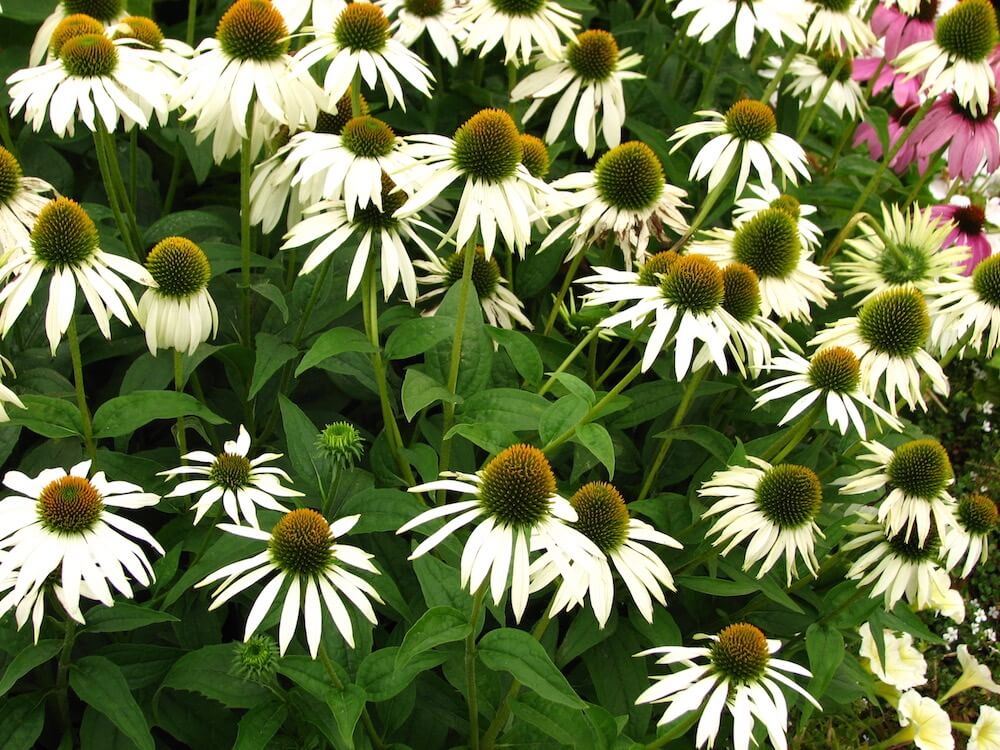
Best Growing Conditions: Full sun to partial shade in well-drained, fertile soil. Very drought-tolerant once established.
Top Tip: Leave seedheads standing through autumn and winter for birds and for structural interest. Plants will self-seed if conditions suit them, giving free plants for future years. Divide congested clumps in spring every three to four years. Looks brilliant planted in bold drifts with ornamental grasses for a prairie-inspired border.
| At A Glance | |
|---|---|
| Botanical Name | Echinacea purpurea ‘White Swan’ |
| Plant Type | Perennial |
| RHS Hardiness | H6 |
| Height and Spread | 75cm |
| Flowering Period | July-Sept |
| Key Feature | Wildlife seedheads |
🛒 Buy Echinacea purpurea ‘White Swan’ on Amazon UK
Shasta daisies are classic cottage garden perennials that flower with enormous generosity and cheerfulness. ‘Wirral Supreme’ is an RHS Award of Garden Merit winner, producing large double white flowers with golden yellow centres from June through August. They are brilliant for cutting. A vase of these on a summer kitchen table is properly wonderful, and they keep performing in the garden for weeks with minimal intervention.
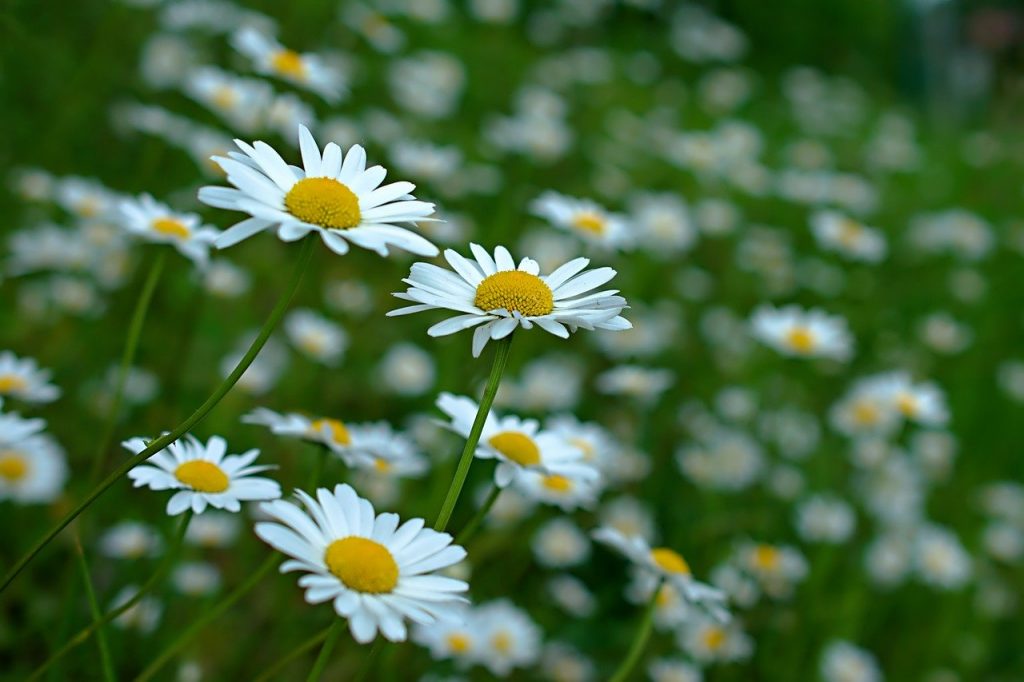
Best Growing Conditions: Full sun in well-drained, fertile soil. Tolerates poorer soils reasonably well.
Top Tip: Deadhead regularly to keep flowers coming. Divide clumps every 2 to 3 years in spring, as the centres can die out if left too long. Brilliant for the middle of a border and absolutely fantastic as a cut flower. Pairs beautifully with blue salvias and yellow rudbeckias for a classic summer combination.
| At A Glance | |
|---|---|
| Botanical Name | Leucanthemum x superbum ‘Wirral Supreme’ |
| Plant Type | Perennial |
| RHS Hardiness | H6 |
| Height and Spread | 75cm |
| Flowering Period | June-Aug |
| Key Feature | Classic shasta daisy |
🛒 Buy Leucanthemum x superbum ‘Wirral Supreme’ on Amazon UK
Hardy geraniums are among the most useful perennials in any garden, and the white form of our native bloody cranesbill is particularly elegant. ‘Album’ produces masses of pure white, saucer-shaped flowers with delicate veining from May right through to October, an extraordinarily long season of interest. The finely cut, dark green foliage is attractive in its own right and turns lovely shades of autumn red, giving genuine multi-season interest from one very reliable plant.
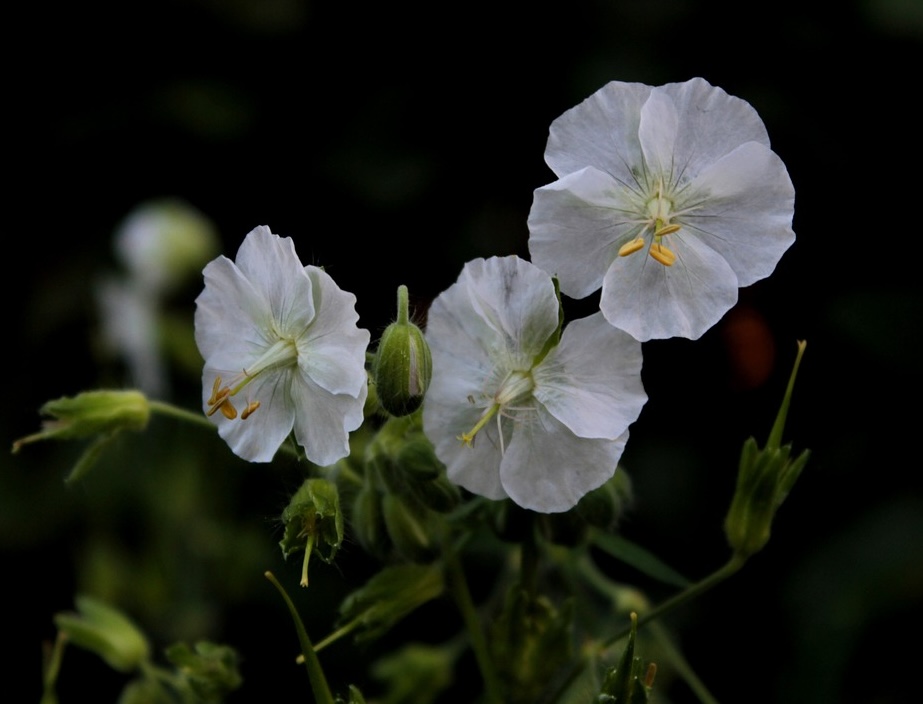
Best Growing Conditions: Sun to partial shade in well-drained soil. Remarkably drought-tolerant once established. Brilliant for difficult dry spots.
Top Tip: Cut the whole plant back hard after the first main flush of flowers, and it will regenerate quickly with fresh foliage and another wave of blooms later in the season. Brilliant as ground cover, at the front of borders, or trailing over low walls. Almost completely maintenance-free once established, a superb value plant.
| At A Glance | |
|---|---|
| Botanical Name | Geranium sanguineum ‘Album’ |
| Plant Type | Perennial |
| RHS Hardiness | H6 |
| Height and Spread | 30cm |
| Flowering Period | May-Oct |
| Key Feature | 5-month season |
🛒 Buy Geranium sanguineum ‘Album’ on Amazon UK
White foxgloves are among the most romantic and atmospheric plants you can grow in a British garden. The tall, pure-white, spotlessly clean bell-shaped flowers, from May through July, create a naturalistic, dappled-woodland feel that looks properly wonderful in urban gardens where you want to soften hard edges and create a sense of wildness. They are biennials: you grow them in one year, and they flower the next. Once established along a border, they self-seed reliably and will return year after year without any effort on your part.
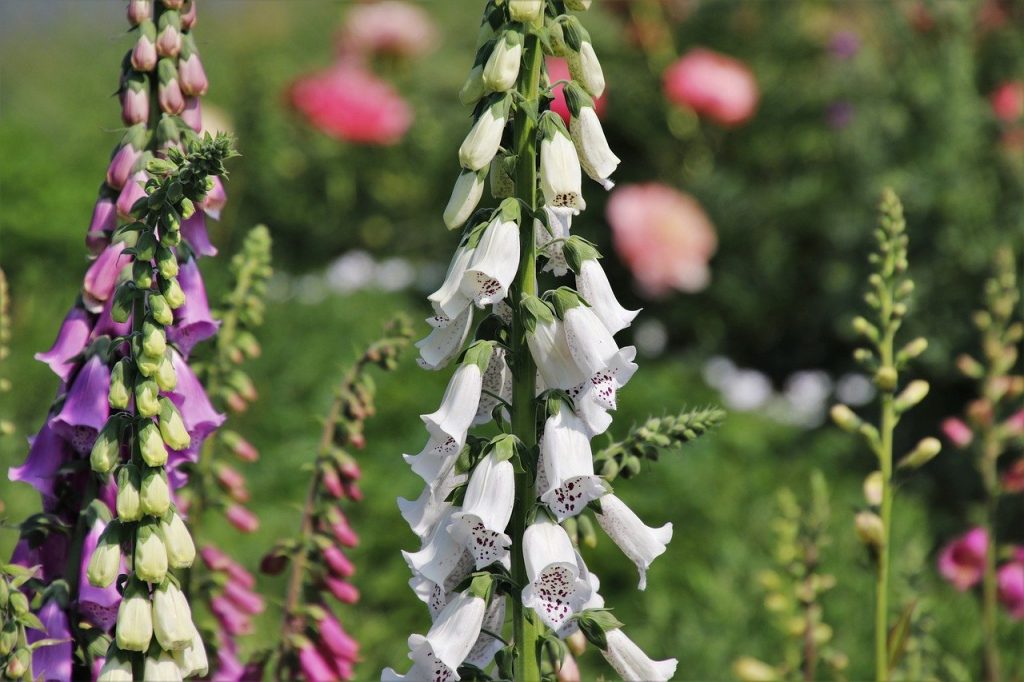
Best Growing Conditions: Partial shade to sun in moist but well-drained, humus-rich soil. Particularly brilliant for shady or woodland-style borders.
Top Tip: Allow some seedheads to ripen and scatter to ensure future generations in the border. If you want to keep plants white rather than have them revert to pink, remove any pink-flowered plants before they set seed. Plant in drifts for maximum impact. Bees, particularly bumblebees, are absolutely mad for foxgloves, and the long pollen-rich tubes are perfect for them.
| At A Glance | |
|---|---|
| Botanical Name | Digitalis purpurea f. albiflora |
| Plant Type | Biennial |
| RHS Hardiness | H6 |
| Height and Spread | 1.5m |
| Flowering Period | May-July |
| Key Feature | Self-seeds reliably |
🛒 Buy Digitalis purpurea f. albiflora on Amazon UK
This is a plant that not enough British gardeners know about, and it absolutely should be grown much more widely. Veronicastrum virginicum ‘Album’ produces elegant, vertical spires of tiny white flowers from July through September that create a beautiful vertical accent in the border without being stiff or overly formal. The whorled foliage arranged around the stems is architectural even when the plant is not in flower. It is brilliant for prairie or naturalistic planting schemes and works beautifully with ornamental grasses.
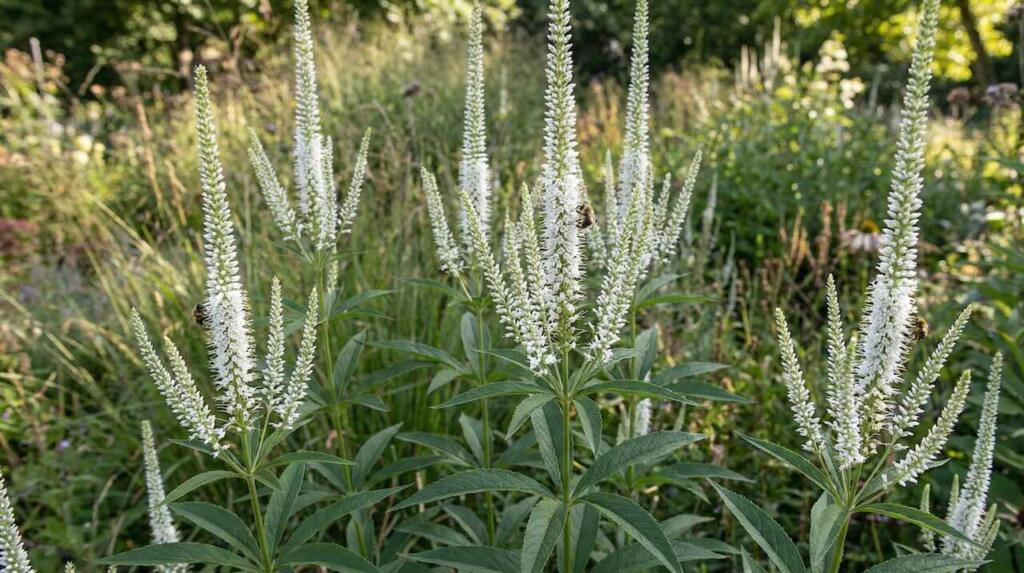
Best Growing Conditions: Full sun to partial shade in moist, fertile soil. Better in consistently moist conditions than in dry spots.
Top Tip: This is one of those plants that looks fantastic even after flowering, the seedheads provide autumn and winter interest and are used by birds. No staking is required despite the height, as the stems are strong and upright. Brilliant with Echinops, Persicaria, and ornamental grasses in a naturalistic planting scheme.
| At A Glance | |
|---|---|
| Botanical Name | Veronicastrum virginicum ‘Album’ |
| Plant Type | Perennial |
| RHS Hardiness | H6 |
| Height and Spread | 1.5m |
| Flowering Period | July-Sept |
| Key Feature | Elegant vertical spires |
🛒 Buy Veronicastrum virginicum ‘Album’ on Amazon UK
Peonies are the most extravagantly glamorous perennials in the entire British garden calendar, and a good white variety is properly breathtaking. ‘White Wings’ produces large, single white flowers with creamy-white petals and a central boss of golden stamens in late May and June. The lightly scented flowers are elegant rather than fussy; they have real purity and clarity. Yes, the flowering season is relatively brief, but peonies earn their space through the sheer magnificence of that display.
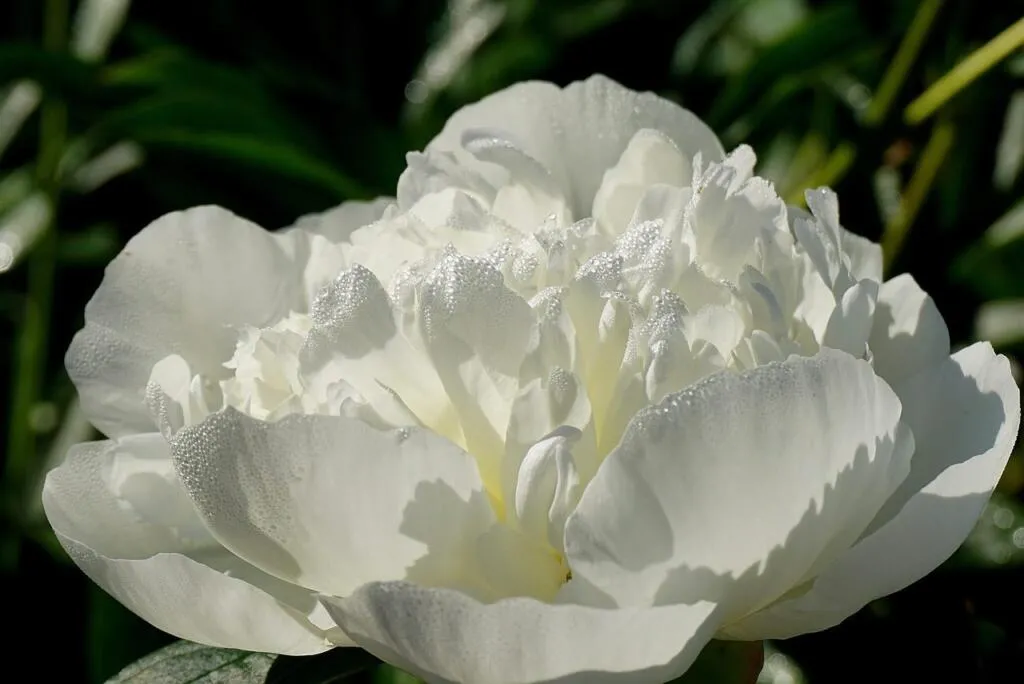
Best Growing Conditions: Full sun to partial shade in deep, fertile, well-drained soil. Excellent drainage is important as peonies hate sitting in wet ground.
Top Tip: Plant with the buds (eyes) no more than 2 to 3cm below the soil surface, as planting too deeply is the most common reason peonies fail to flower. Do not move them once established, as they sulk for several years after being disturbed. Feed in early spring with a balanced fertiliser. Stake in exposed positions as the flowers are heavy. Worth every bit of patience and care they require.
| At A Glance | |
|---|---|
| Botanical Name | Paeonia lactiflora ‘White Wings’ |
| Plant Type | Perennial |
| RHS Hardiness | H6 |
| Height and Spread | 80cm |
| Flowering Period | May-June |
| Key Feature | Glamorous, scented blooms |
🛒 Buy Paeonia lactiflora ‘White Wings’ on Amazon UK
Japanese anemones are absolutely invaluable for late-season white flower interest, and ‘Honorine Jobert’ is the classic white variety. It has been grown in British gardens since the 1850s, which tells you everything you need to know about its reliability and quality. Pure white flowers with golden stamens on tall, wiry stems from August right through October provide crucial colour at a time when most perennials are winding down. It gradually spreads to form large colonies, which gives it incredible value once established.
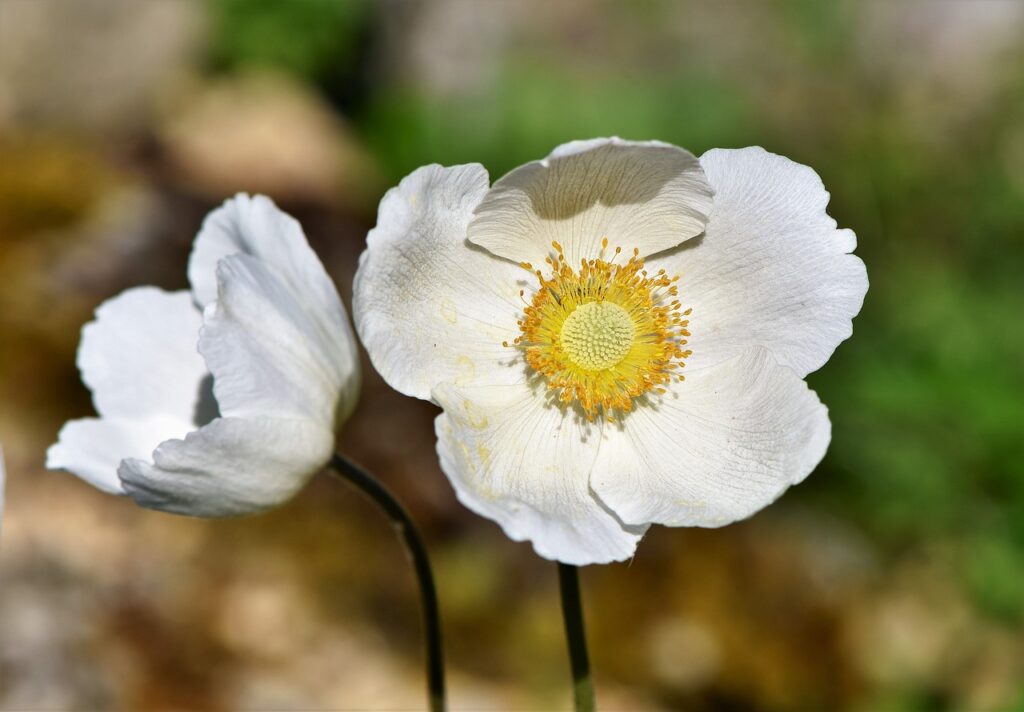
Best Growing Conditions: Sun to partial shade in moist, humus-rich, well-drained soil. Particularly good in partially shaded borders.
Top Tip: This plant can take a year or two to really settle in before performing at its best, so be patient. Once established, it will spread happily, which is brilliant for naturalising under trees or in large borders. Bees continue foraging on these flowers well into October when there is precious little else available, an absolute must for any white garden scheme.
| At A Glance | |
|---|---|
| Botanical Name | Anemone x hybrida ‘Honorine Jobert’ |
| Plant Type | Perennial |
| RHS Hardiness | H6 |
| Height and Spread | 1.2m |
| Flowering Period | Aug-Oct |
| Key Feature | Late-season beauty |
🛒 Buy Anemone x hybrida ‘Honorine Jobert’ on Amazon UK
This plant causes real jaw-dropping reactions when it’s at its peak. Persicaria polymorpha produces enormous, billowing clouds of tiny creamy-white flowers from June through September on a plant that can reach seriously impressive proportions. It looks like a white cloud has descended on your garden, which sounds bonkers but is actually quite magnificent. In a larger urban garden where you want a bold, contemporary statement planting, this is absolutely the plant to reach for.
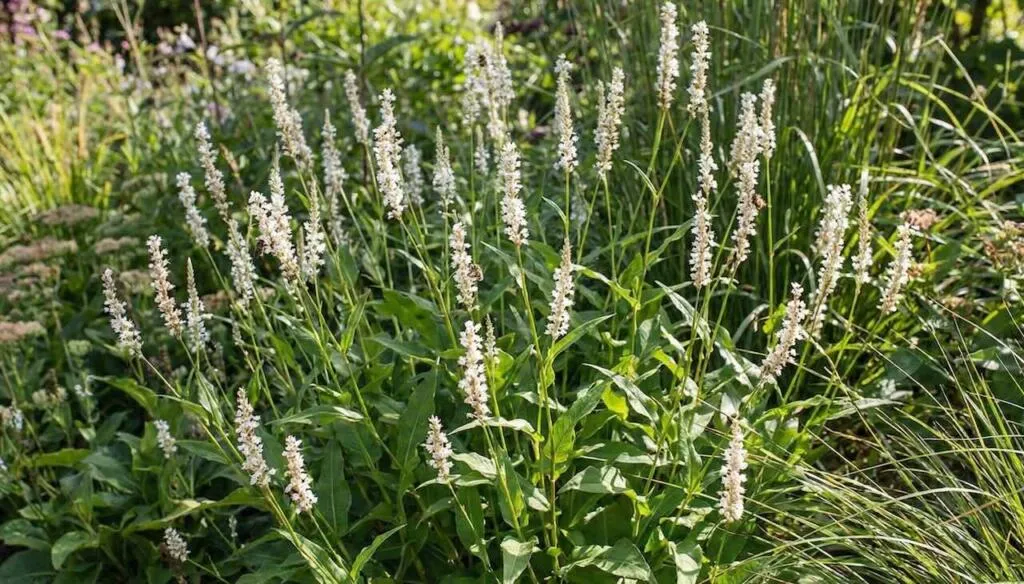
Best Growing Conditions: Full sun to partial shade in moist, fertile soil. Very tolerant and adaptable once established.
Top Tip: Cut back hard in late winter or early spring as new growth begins. This is a large plant that needs ample space, wonderful as a standalone architectural specimen or as the anchor of a large border. The flowers age to attractive pinkish-cream shades as they mature, extending interest further into the season.
| At A Glance | |
|---|---|
| Botanical Name | Persicaria polymorpha |
| Plant Type | Perennial |
| RHS Hardiness | H6 |
| Height and Spread | 2m |
| Flowering Period | June-Sept |
| Key Feature | Cloud-like billowing flowers |
🛒 Buy Persicaria polymorpha on Amazon UK
Libertia is a beautiful, architectural evergreen perennial that is still relatively underused in British gardens despite being completely suited to our climate. Clumps of strappy, dark green leaves produce elegant spikes of pure white flowers with golden stamens in May and June, followed by attractive orange-amber seed capsules through summer and autumn. The foliage often takes on wonderful bronze and orange tints in winter, making this plant look interesting year-round.
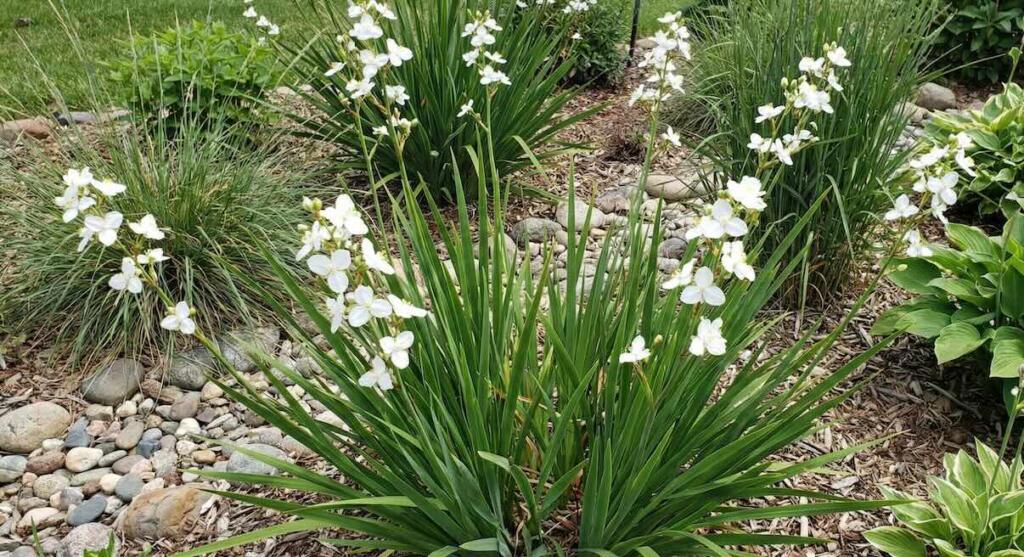
Best Growing Conditions: Full sun in well-drained, fertile soil. Excellent in coastal and urban gardens where conditions tend to be milder.
Top Tip: The strappy foliage provides brilliant textural contrast against softer, rounded perennials. Brilliant planted alongside grasses, heleniums, and achilleas in a contemporary mixed border. Mulch the crown in colder inland areas to provide some winter protection. An underrated gem that deserves far more use.
| At A Glance | |
|---|---|
| Botanical Name | Libertia grandiflora |
| Plant Type | Perennial |
| RHS Hardiness | H4 |
| Height and Spread | 90cm |
| Flowering Period | May-June |
| Key Feature | Architectural & year-round |
🛒 Buy Libertia grandiflora on Amazon UK
White yarrow is a brilliant plant for hot, dry, sunny spots where many white perennials refuse to perform. Those distinctive flat-topped flowerheads provide perfect landing platforms for a wide range of insects, and ‘White Beauty’ keeps those flowers coming from June through September with minimal intervention. The ferny, aromatic foliage is attractive in its own right, and the whole plant tolerates drought and poor soils better than almost anything else in the white perennial repertoire.
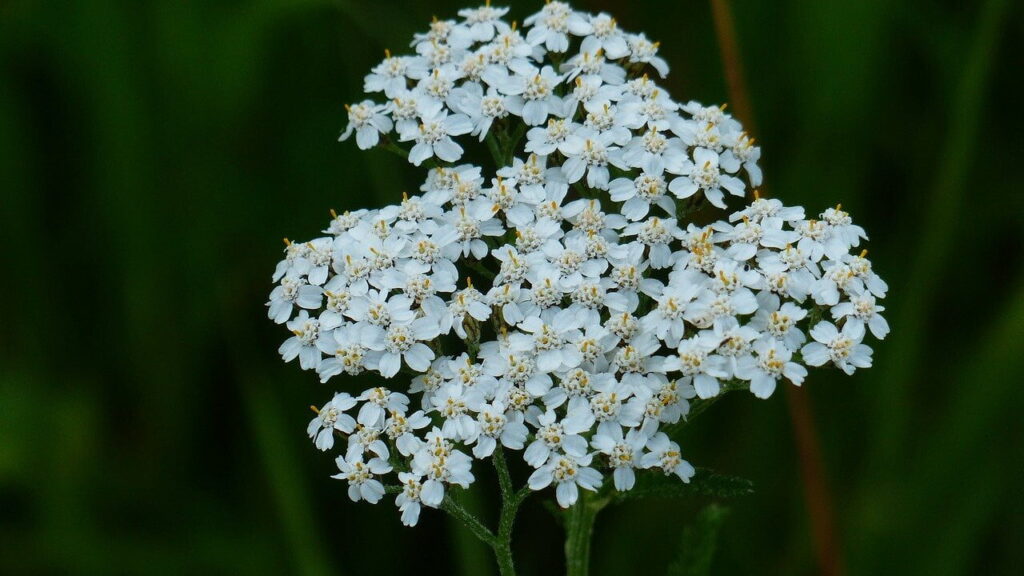
Best Growing Conditions: Full sun in well-drained, even poor soil. Thrives on neglect and drought once established.
Top Tip: Perfect for gravel gardens, coastal borders, and any hot, sunny spot where maintaining soil moisture is difficult. Cut back after the first flush of flowers for a second wave of blooms. The dried flowerheads look beautiful in arrangements. Hoverflies, bees, and butterflies all use these flowers extensively, making them properly invaluable to garden wildlife.
| At A Glance | |
|---|---|
| Botanical Name | Achillea millefolium ‘White Beauty’ |
| Plant Type | Perennial |
| RHS Hardiness | H6 |
| Height and Spread | 60cm |
| Flowering Period | June-Sept |
| Key Feature | Drought-tolerant |
🛒 Buy Achillea millefolium ‘White Beauty’ on Amazon UK
Tall bellflowers add a beautiful, airy, cottage-garden quality to any border, and the white form is particularly lovely. Campanula lactiflora ‘Alba’ produces masses of small, open, bell-shaped white flowers in great branching sprays from June through August; the overall effect is light, frothy, and completely romantic. It is one of those plants that looks wonderful growing through and alongside other perennials, softening harsher shapes and adding movement to the border.
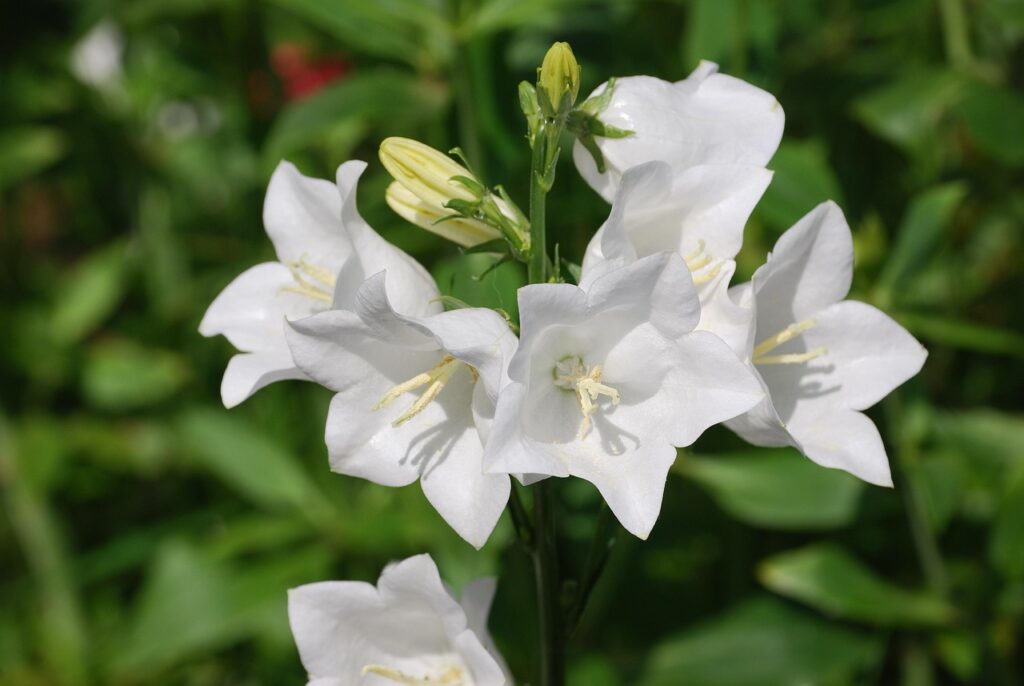
Best Growing Conditions: Full sun to partial shade in moist, fertile, well-drained soil.
Top Tip: May need staking in exposed positions, but looks more natural if allowed to lean slightly and thread through neighbouring plants. Cut back after the main flush of flowers for a second, albeit smaller, display. Divide every three years to maintain vigour. An absolute classic of the summer herbaceous border.
| At A Glance | |
|---|---|
| Botanical Name | Campanula lactiflora ‘Alba’ |
| Plant Type | Perennial |
| RHS Hardiness | H6 |
| Height and Spread | 1.5m |
| Flowering Period | June-Aug |
| Key Feature | Airy, cottage-garden feel |
🛒 Buy Campanula lactiflora ‘Alba’ on Amazon UK
Named after the famous white garden where it performs so brilliantly, Pulmonaria ‘Sissinghurst White’ is a superb ground cover plant for shady spots. Pure white flowers appear from February through April above large, silver-spotted evergreen leaves that look fantastic year-round. It is one of the very earliest perennials to flower, providing crucial nectar for emerging early bumblebees when little else is available. The foliage is beautiful, and the silver markings seem to glow in shady areas.
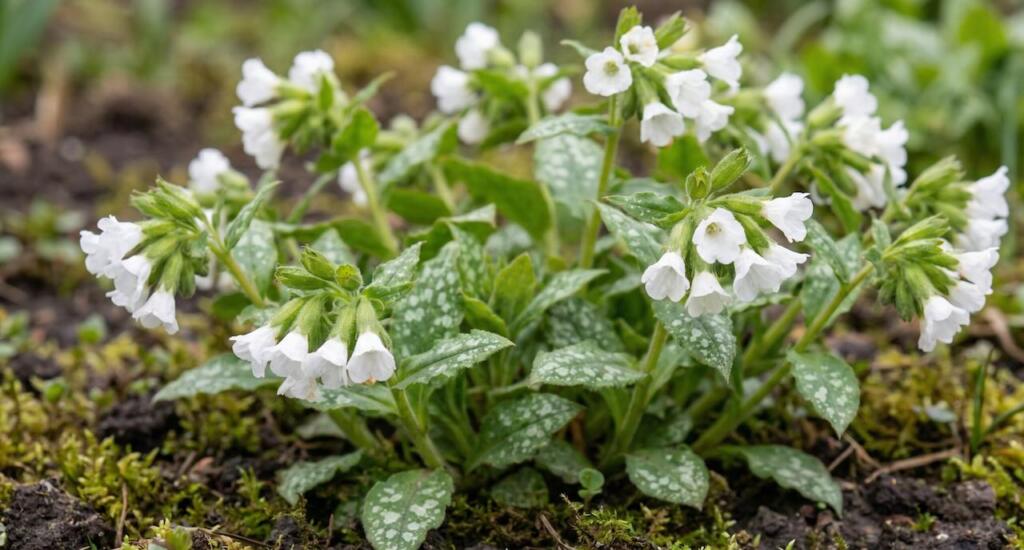
Best Growing Conditions: Shade to partial shade in moist, humus-rich soil. Brilliant for difficult, shady spots under trees and alongside north-facing fences.
Top Tip: Cut the foliage back hard after flowering; the plant produces fresh, clean new leaves quickly, which look dramatically better than the tatty post-flowering foliage. Plant in drifts for maximum impact in shaded areas. Slug-resistant once established, which is a bonus in most UK gardens.
| At A Glance | |
|---|---|
| Botanical Name | Pulmonaria ‘Sissinghurst White’ |
| Plant Type | Perennial |
| RHS Hardiness | H6 |
| Height and Spread | 30cm |
| Flowering Period | Feb-April |
| Key Feature | Early flowers, silver foliage |
🛒 Buy Pulmonaria ‘Sissinghurst White’ on Amazon UK
Candytuft is one of those enormously cheerful, unpretentious plants that produces a completely spectacular display for its size. ‘Snowflake’ is smothered in pure white flowers from April through June above compact, dark green evergreen foliage that looks neat year-round. It is brilliant for rock gardens, the very front of borders, trailing over low walls, or the edges of raised beds. It also makes a superb container plant and is virtually maintenance-free once established.
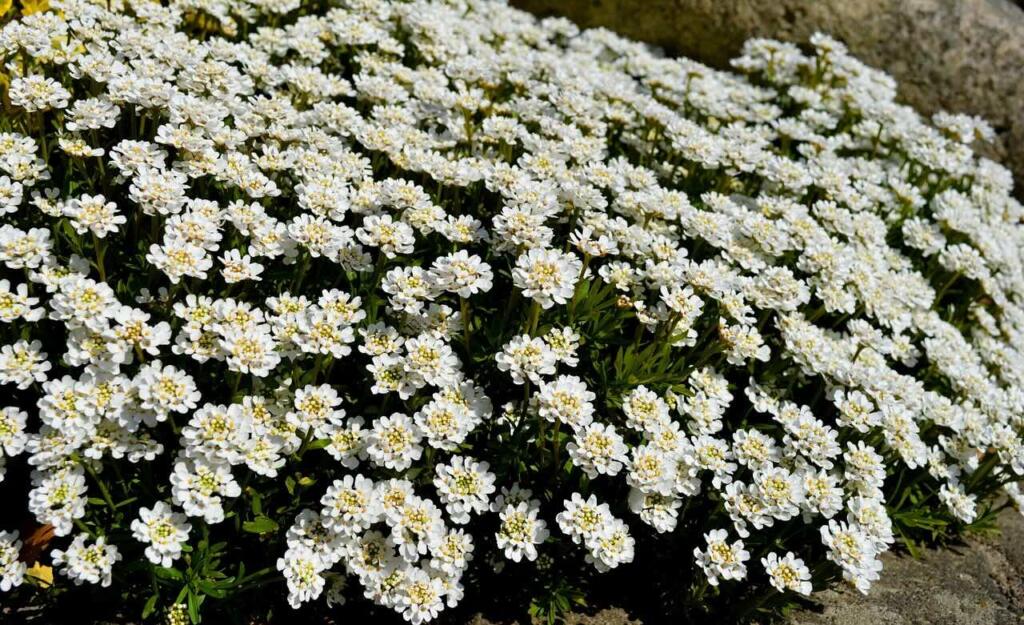
Best Growing Conditions: Full sun in well-drained, even chalky soil. Excellent drainage is important. Brilliant for chalk and limestone gardens.
Top Tip: Trim back lightly after flowering to keep the plant compact and encourage better flowering the following year. Do not cut into old wood. Brilliant planted alongside blue aubretia and yellow alyssum for a classic spring front-of-border combination. Easy as anything and completely reliable.
| At A Glance | |
|---|---|
| Botanical Name | Iberis sempervirens ‘Snowflake’ |
| Plant Type | Perennial |
| RHS Hardiness | H6 |
| Height and Spread | 25cm |
| Flowering Period | April-June |
| Key Feature | Front of border evergreen |
🛒 Buy Iberis sempervirens ‘Snowflake’ on Amazon UK
White saxifrage is a brilliant choice for the very front of borders, rockeries, raised beds, and any spot where you need low-growing, long-lasting white flowers. The cushion-forming evergreen foliage looks tidy all year, then in May and June, it is completely covered in dainty white flowers on delicate stems. It is the kind of plant that makes a disproportionately big impact for its small stature. When it is in full flower, it properly stops you in your tracks.
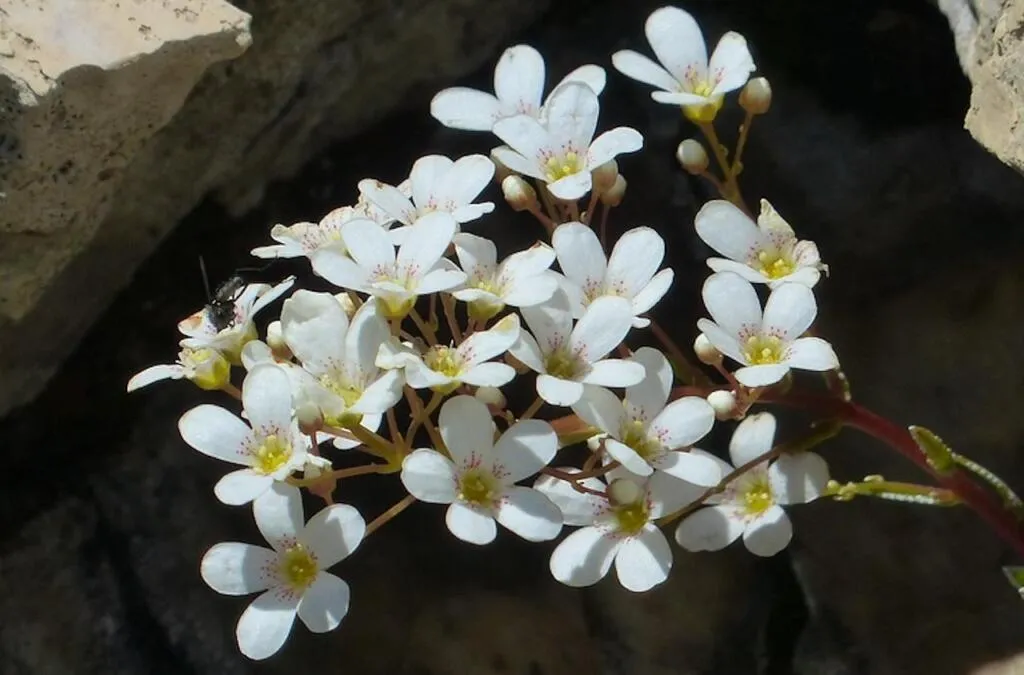
Best Growing Conditions: Sun to partial shade in well-drained, gritty soil. Brilliant for containers, rockeries, and raised beds.
Top Tip: Perfect for growing between paving stones, in wall crevices, or at the front of raised beds where drainage is excellent. Very low maintenance and long-lived once established. Pollinators love the flowers. A reliable workhorse of the small, structured garden.
| At A Glance | |
|---|---|
| Botanical Name | Saxifraga ‘Alba’ |
| Plant Type | Perennial |
| RHS Hardiness | H6 |
| Height and Spread | 20cm |
| Flowering Period | May-June |
| Key Feature | Rockery & edging |
🛒 Buy Saxifraga ‘Alba’ on Amazon UK
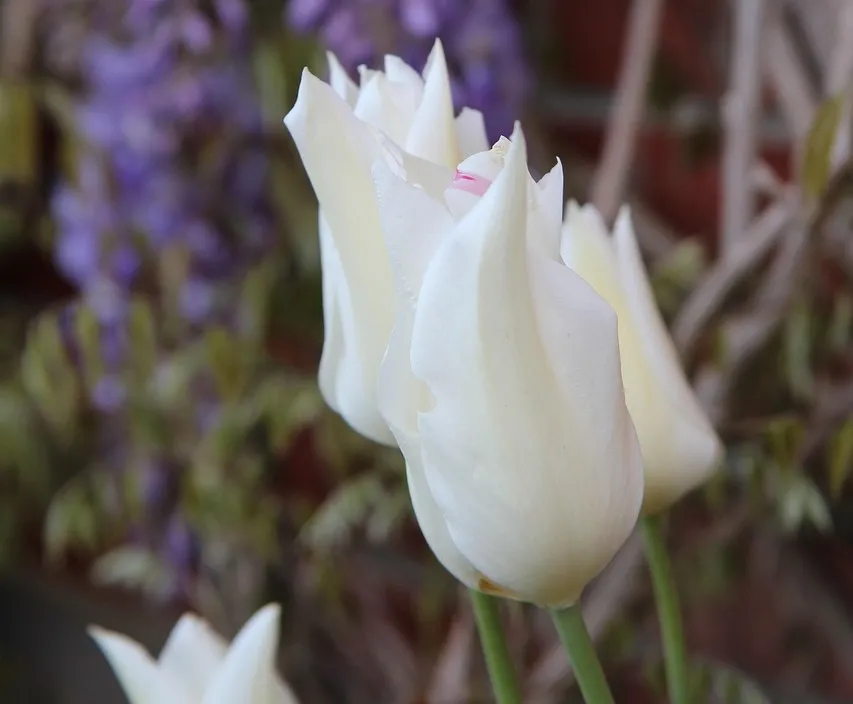
If you are going to grow white tulips, and you absolutely should, then ‘White Triumphator’ is the one to choose. This lily-flowered variety produces those elegant, long-petalled flowers with reflexed tips on tall stems in April and May. The pure, clean white is almost luminous, and the elegant, slightly exotic shape is simply beautiful. It is a far more sophisticated and interesting flower than the standard round-headed white tulip, and it creates a properly glamorous display in borders or containers.
Best Growing Conditions: Full sun in well-drained soil. Plant in November, three times the bulb’s depth.
Top Tip: In heavy soils, lift bulbs after the foliage has died down and store dry until autumn, or simply treat as annuals and plant fresh each November. For the best display, plant in groups of at least fifteen to twenty bulbs, single bulbs dotted around look lost. Stunning combined with dark purple alliums or blue forget-me-nots.
| At A Glance | |
|---|---|
| Botanical Name | Tulipa ‘White Triumphator’ |
| Plant Type | Bulb |
| RHS Hardiness | H6 |
| Height and Spread | 60cm |
| Flowering Period | April-May |
| Key Feature | Elegant lily-flowered |
🛒 Buy Tulipa ‘White Triumphator’ on Amazon UK
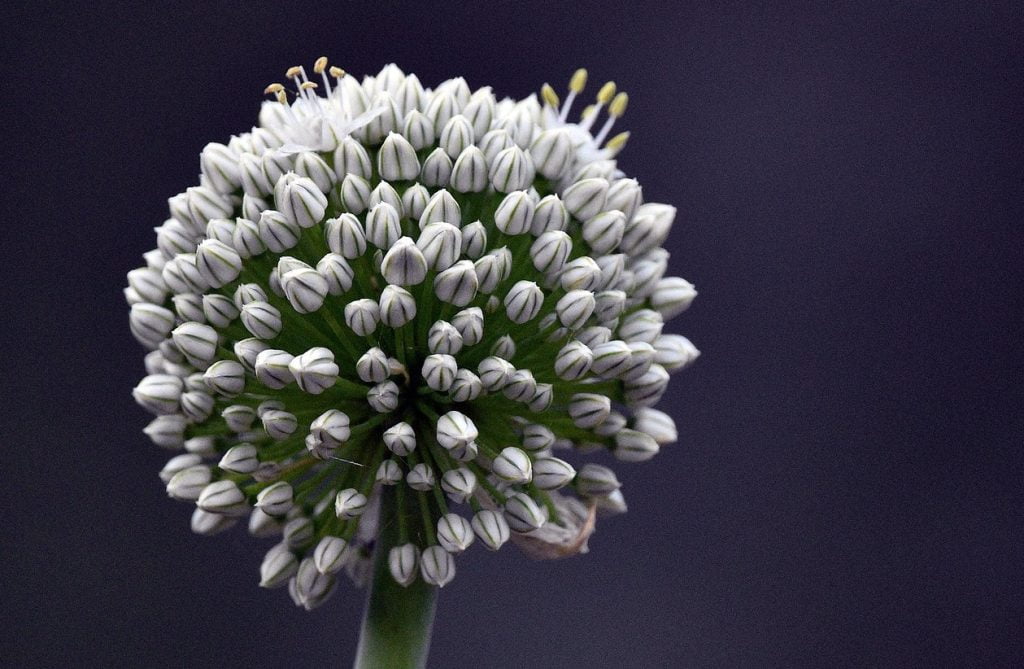
White alliums are a wonderful plant to lift garden design schemes, and ‘Mount Everest’ is the finest variety for most gardens. Those perfectly spherical, pure-white, star-shaped flowers on tall, architectural stems in late May and June are properly stunning; they add a different quality of structure and drama to the border that almost nothing else achieves. Pollinators love the flowers, and the seedheads that follow are attractive well into summer and beyond.
Best Growing Conditions: Full sun in well-drained soil. Plant in autumn at three times the depth of the bulb.
Top Tip: The foliage dies down before flowering, which can look untidy. Plant them through lower-growing perennials that will conceal this, leaving the architectural stems and flowerheads floating above. Plant in bold groups of at least ten to fifteen for a dramatic impact. Outstanding when grown alongside geraniums, salvias, and other mid-height perennials.
| At A Glance | |
|---|---|
| Botanical Name | Allium ‘Mount Everest’ |
| Plant Type | Bulb |
| RHS Hardiness | H6 |
| Height and Spread | 90cm |
| Flowering Period | May-June |
| Key Feature | Architectural spheres |
🛒 Buy Allium ‘Mount Everest’ on Amazon UK
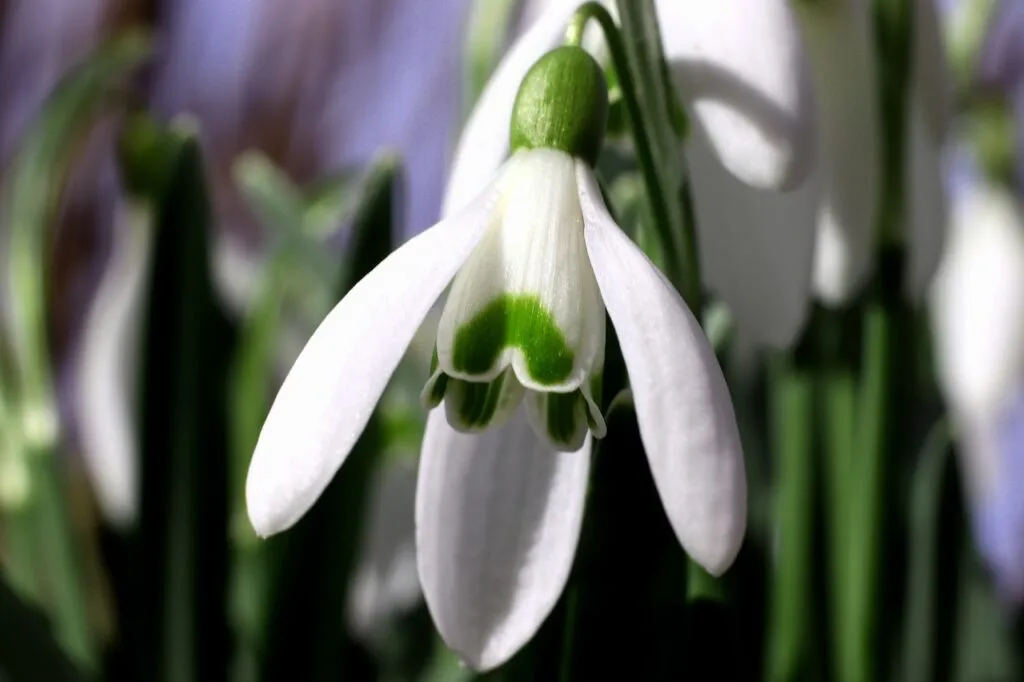
No list of white flowers for British gardens would be complete without the snowdrop, and honestly, is there a more uplifting sight in the entire horticultural calendar? Those dainty white bells pushing through frozen ground from January through March deliver a properly powerful emotional charge, the definitive signal that winter is ending and spring is on its way. They naturalise beautifully under deciduous trees and in grass, and once established, will spread to create increasingly generous drifts over the years.
Best Growing Conditions: Partial shade in moist, humus-rich soil. Brilliant under deciduous trees and shrubs.
Top Tip: Snowdrops establish themselves most successfully when planted ‘in the green’, immediately after flowering, while the foliage is still green, rather than as dry bulbs in autumn. Plant in bold drifts for the most impact, and allow them to naturalise undisturbed. Early bumblebees emerging from winter hibernation rely heavily on snowdrop pollen, so these flowers are critically important for wildlife.
| At A Glance | |
|---|---|
| Botanical Name | Galanthus nivalis |
| Plant Type | Bulb |
| RHS Hardiness | H7 |
| Height and Spread | 10cm |
| Flowering Period | Jan-March |
| Key Feature | Winter hope & pollinators |
🛒 Buy Galanthus nivalis on Amazon UK
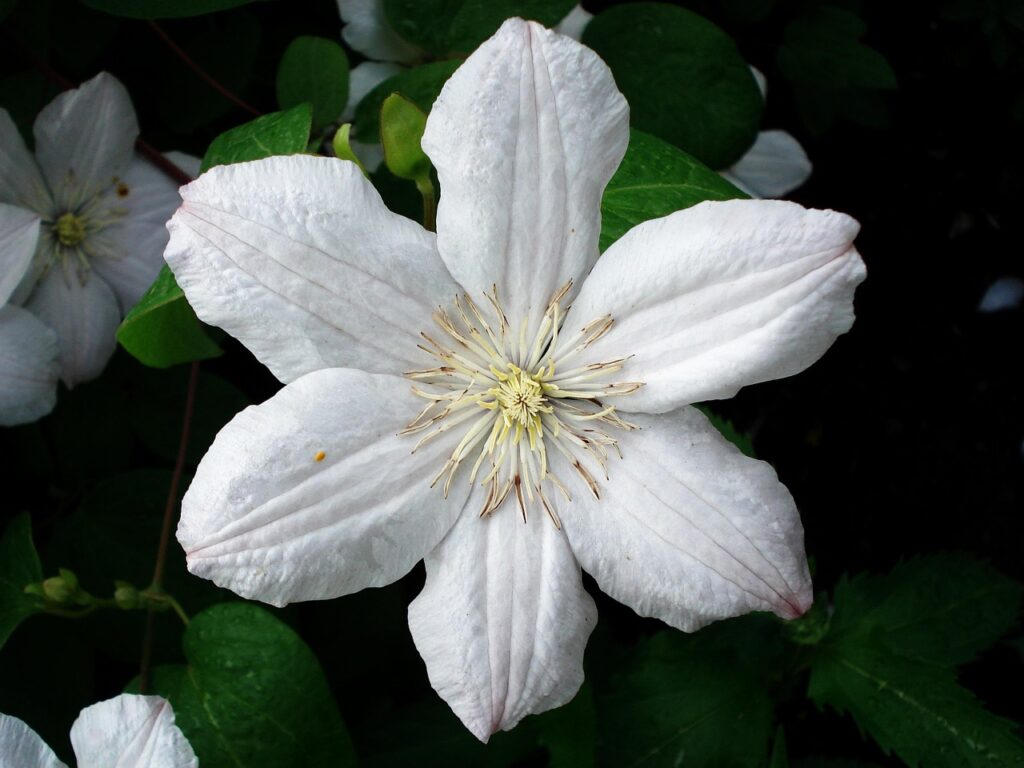
White clematis have a romanticism and elegance that coloured varieties simply cannot match, and ‘Alba Luxurians’ is one of the most beautiful of the lot. It produces masses of small, nodding, greenish-white flowers from July through October, and the subtle green tipping on the petals adds a sophisticated quality that looks brilliant against dark foliage or natural timber. It is a viticella type, which means it is extremely vigorous, highly disease-resistant, and requires a simple Group 3 hard prune in February or March.
Best Growing Conditions: Sun or partial shade with roots in shade and head in sun. Moist but well-drained soil.
Top Tip: Plant deeply with the crown 8cm below soil level. The long flowering season and excellent disease resistance make this one of the most practical and beautiful white climbers available. Brilliant grown through dark-leaved shrubs, up obelisks, or on trellis panels against a wall.
| At A Glance | |
|---|---|
| Botanical Name | Clematis ‘Alba Luxurians |
| Plant Type | Climber |
| RHS Hardiness | H6 |
| Height and Spread | 4m |
| Flowering Period | July-Oct |
| Key Feature | Long-season, easy |
🛒 Buy Clematis ‘Alba Luxurians’ on Amazon UK
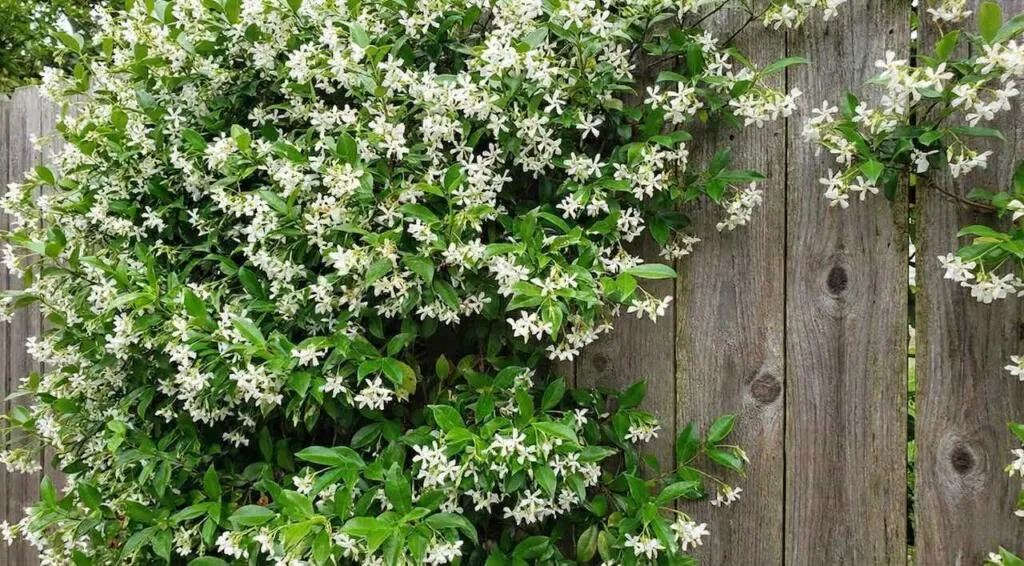
Star jasmine is simply one of the finest climbing plants available for UK urban gardens. The evergreen foliage looks immaculate year-round, providing a lush green backdrop even in winter. In June and July, it produces masses of small, pinwheel-shaped, intensely fragrant white flowers that create one of the most beautiful and evocative scents in any garden. It is absolutely perfect for covering trellis, fences, and walls in sheltered urban gardens, and is significantly more reliably hardy than many people assume.
Best Growing Conditions: Full sun to partial shade in well-drained soil. A south or west-facing sheltered wall is ideal.
Top Tip: Give it a warm, sheltered position, and it will reward you magnificently. Slow in the first year or two as it establishes, but once it gets going, it is vigorous and covered in flowers annually. Prune after flowering to keep in check if necessary. The fragrance on a warm summer evening from a well-established plant is one of the most wonderful garden experiences you can have.
| At A Glance | |
|---|---|
| Botanical Name | Trachelospermum jasminoides |
| Plant Type | Climber (evergreen) |
| RHS Hardiness | H4 |
| Height and Spread | 9m |
| Flowering Period | June-July |
| Key Feature | Extraordinary fragrance |
🛒 Buy Trachelospermum jasminoides on Amazon UK
‘Rambling Rector’ is one of those extraordinary garden plants that has to be seen in full flower to be believed. This vigorous rambler produces enormous clusters of small, semi-double white flowers with golden stamens in June and July. When a mature plant is in full bloom, it is absolutely jaw-dropping, a complete waterfall of white.
It is not a plant for small gardens as it can reach 9 metres or more, but for covering a large wall, growing into a mature tree, or clothing an outbuilding, it is without equal.
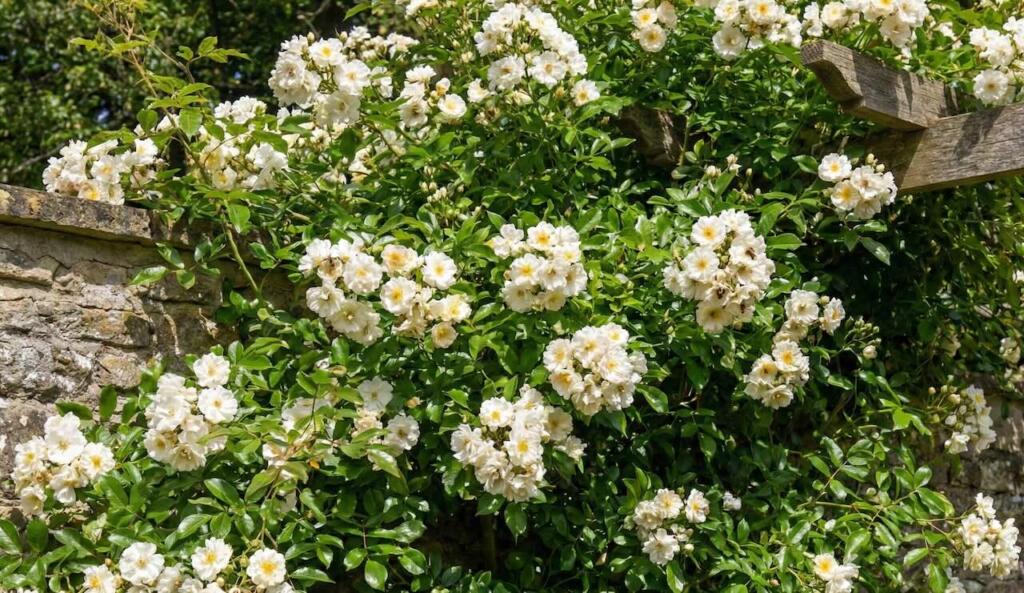
Best Growing Conditions: Full sun in rich, well-drained soil. Very vigorous and adaptable once established.
Top Tip: This is a once-flowering rose; the June and July display is spectacular but brief. Red hips follow and provide brilliant wildlife value through autumn and winter. Prune after flowering, removing some of the oldest stems. Give it the space it deserves, and it will be one of the most spectacular things in your garden once a year.
| At A Glance | |
|---|---|
| Botanical Name | Rosa ‘Rambling Rector’ |
| Plant Type | Climber |
| RHS Hardiness | H6 |
| Height and Spread | 9m |
| Flowering Period | June-July |
| Key Feature | Spectacular mass display |
🛒 Buy Rosa ‘Rambling Rector’ on Amazon UK
The climbing hydrangea is, in my view, one of the most underrated garden plants available. It is completely self-clinging via small aerial rootlets, meaning it will cover a wall without needing wires or trellis. It is fully deciduous, so it loses its leaves in winter, but the attractively peeling cinnamon-coloured bark is beautiful in its own right through the colder months.
In June and July, it produces large, flat-topped, lacecap-style flowerheads of creamy white that are very beautiful and hugely popular with pollinators. It will tolerate north-facing aspects where little else will flower, which makes it invaluable in urban gardens.
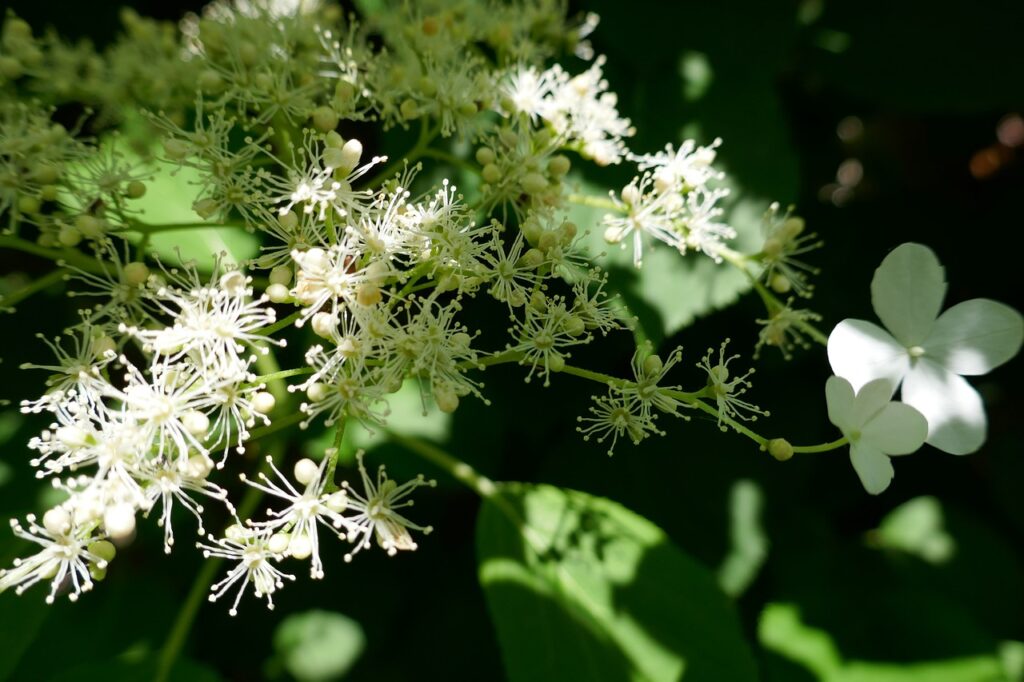
Best Growing Conditions: Sun to deep shade. One of the few flowering climbers that thrives on a north-facing wall. Moist but well-drained soil.
Top Tip: This plant can be slow for the first two to three years while it establishes, but once it starts growing, it is vigorous and completely reliable. Do not panic if it seems to do nothing in the first season. It does not generally need regular pruning, though it can be tidied after flowering if necessary. One of the most reliable white flowering climbers for shade, absolutely invaluable.
| At A Glance | |
|---|---|
| Botanical Name | Hydrangea petiolaris |
| Plant Type | Climber |
| RHS Hardiness | H5 |
| Height and Spread | 15m |
| Flowering Period | June-July |
| Key Feature | Best climber for shade |
🛒 Buy Hydrangea petiolaris on Amazon UK
Now that you have your plant list sorted, let me share my professional designer’s perspective on how to use these plants effectively. White gardens are among the trickiest to design well, not because white is difficult to work with, but because the success or failure of a white scheme depends entirely on the quality of the supporting cast.
When you remove colour from the equation, your eye immediately focuses on texture, form, and foliage. This means the plants you choose to support your white flowers become critically important. Dark, glossy evergreen foliage like that of Viburnum tinus or Choisya creates a brilliant contrast against pure white blooms. Silvery foliage, such as Artemisia or Stachys byzantina (Lamb’s Ears), creates a softer, more romantic effect. Architectural foliage, such as grasses or phormiums, adds structure and a contemporary edge. Think about your supporting cast as carefully as you do your white flowers.
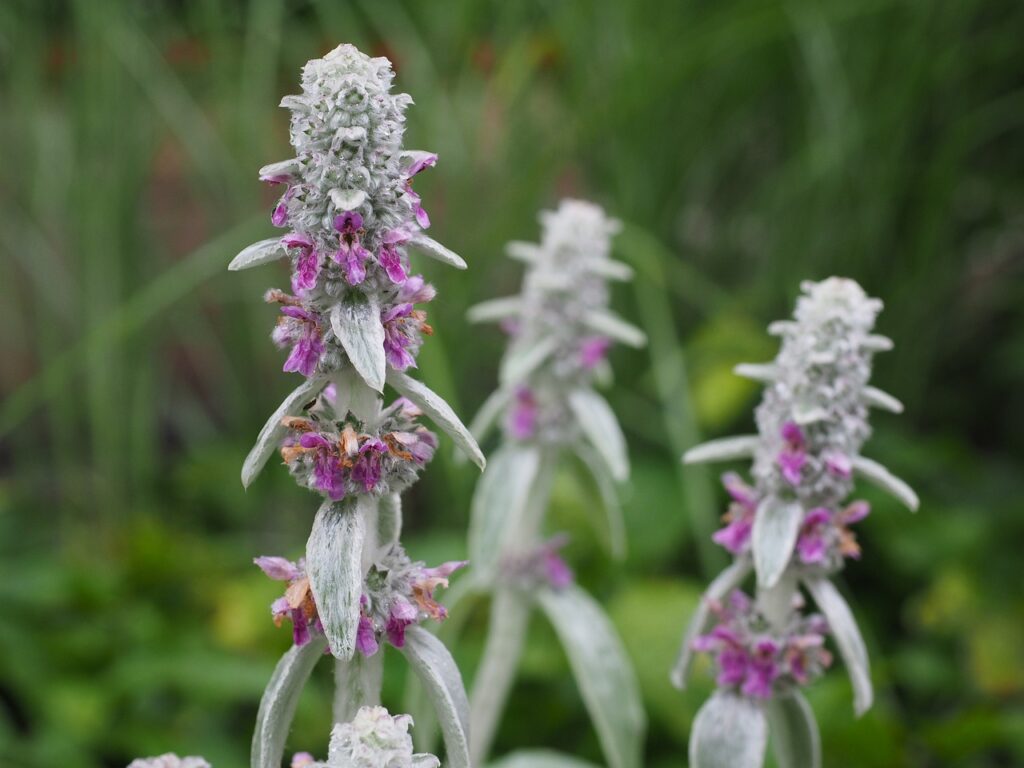
The secret to a successful white garden is achieving white flower interest across as much of the year as possible. Start with Sarcococca and Pulmonaria in winter and early spring, move through snowdrops and white tulips in spring, bring in Alliums, Philadelphus, and Choisya in early summer, transition to Phlox, Echinacea, and Hydrangea in high summer, and finish the season with Japanese Anemones and Persicaria in autumn. Map this out on paper before you plant, and you will have white interest for at least nine months of the year.
This is something that catches many gardeners out. Pure optical white, creamy white, greenish-white, and bluish-white are all quite different colours, and placing them next to each other can create an unpleasant clash rather than the serene harmony you are aiming for. As a general rule, warm, creamy whites work brilliantly together, as do cool, pure whites, but mixing warm and cool whites side by side can look jarring. Take sample cuts of plants to a garden centre and hold them alongside each other before committing to large-scale planting.
If you enjoy your garden in the evening, and for many urban gardeners who work long hours, this is precisely when they get to appreciate their outdoor space, position your most strongly white plants where the fading light will catch them. White flowers glow as dusk falls, while darker colours disappear. A group of white Phlox at the end of a path, or a white Hydrangea ‘Annabelle’ by a seating area, will light up your garden in the most beautiful way as the sun goes down.
The instinct when designing a border is to fill every gap, but with white planting, this approach can actually undermine the very qualities you are trying to achieve. White gardens work best when there is genuine breathing space between plants, areas of green foliage, dark mulch, or open ground that allows each white flower to register clearly rather than being lost in a confused mass of whiteness. Restraint in white gardens is a real virtue. Plant boldly, but do not overcrowd.
| Plant | Type | Flowering Season | Height | Hardiness | Key Quality |
|---|---|---|---|---|---|
| Plant | Type | Flowering Season | Height | Hardiness | Key Quality |
| Magnolia stellata | Tree/shrub | Feb-April | 2.5m | H5 | Early spring spectacle |
| Prunus ‘Tai-Haku’ | Tree | April | 8m | H6 | Largest cherry blossom |
| Amelanchier lamarckii | Tree | April-May | 6m | H6 | Multi-season interest |
| Hydrangea ‘Annabelle’ | Shrub | July-Sept | 1.2m | H6 | Giant snowball blooms |
| Sarcococca confusa | Shrub | Dec-March | 1.5m | H5 | Winter fragrance |
| Viburnum tinus ‘Eve Price’ | Shrub | Nov-April | 2m | H5 | 6 months flowering |
| Philadelphus ‘Belle Etoile’ | Shrub | June-July | 1.5m | H6 | Exceptional fragrance |
| Choisya ternata | Shrub (evergreen) | May + Aug | 2m | H4 | Flowers twice, evergreen |
| Hydrangea paniculata ‘Limelight’ | Shrub | July-Sept | 2m | H6 | Lime to white transition |
| Rosa ‘Iceberg’ | Shrub/Climber | June-Oct | 1.2m/5m | H6 | Repeat flowering, reliable |
| Spiraea ‘Snowmound’ | Shrub | May-June | 1.5m | H6 | Arching white foam |
| Buddleja ‘White Profusion’ | Shrub | July-Sept | 2.5m | H6 | Butterfly magnet |
| Phlox ‘White Admiral’ | Perennial | July-Sept | 90cm | H6 | Evening fragrance |
| Astrantia ‘Snow Star’ | Perennial | June-Aug | 80cm | H6 | Intricate pincushion flowers |
| Echinacea ‘White Swan’ | Perennial | July-Sept | 75cm | H6 | Wildlife seedheads |
| Leucanthemum ‘Wirral Supreme’ | Perennial | June-Aug | 75cm | H6 | Classic shasta daisy |
| Geranium sanguineum ‘Album’ | Perennial | May-Oct | 30cm | H6 | 5-month season |
| Digitalis f. albiflora | Biennial | May-July | 1.5m | H6 | Self-seeds reliably |
| Veronicastrum ‘Album’ | Perennial | July-Sept | 1.5m | H6 | Elegant vertical spires |
| Paeonia ‘White Wings’ | Perennial | May-June | 80cm | H6 | Glamorous, scented blooms |
| Anemone ‘Honorine Jobert’ | Perennial | Aug-Oct | 1.2m | H6 | Late-season beauty |
| Persicaria polymorpha | Perennial | June-Sept | 2m | H6 | Cloud-like billowing flowers |
| Libertia grandiflora | Perennial | May-June | 90cm | H4 | Architectural & year-round |
| Achillea ‘White Beauty’ | Perennial | June-Sept | 60cm | H6 | Drought-tolerant |
| Campanula lactiflora ‘Alba’ | Perennial | June-Aug | 1.5m | H6 | Airy, cottage-garden feel |
| Pulmonaria ‘Sissinghurst White’ | Perennial | Feb-April | 30cm | H6 | Early flowers, silver foliage |
| Iberis ‘Snowflake’ | Perennial | April-June | 25cm | H6 | Front of border evergreen |
| Saxifraga ‘Alba’ | Perennial | May-June | 20cm | H6 | Rockery & edging |
| Tulipa ‘White Triumphator’ | Bulb | April-May | 60cm | H6 | Elegant lily-flowered |
| Allium ‘Mount Everest’ | Bulb | May-June | 90cm | H6 | Architectural spheres |
| Galanthus nivalis | Bulb | Jan-March | 10cm | H7 | Winter hope & pollinators |
| Clematis ‘Alba Luxurians’ | Climber | July-Oct | 4m | H6 | Long-season, easy |
| Trachelospermum jasminoides | Climber (evergreen) | June-July | 9m | H4 | Extraordinary fragrance |
| Rosa ‘Rambling Rector’ | Climber | June-July | 9m | H6 | Spectacular mass display |
| Hydrangea petiolaris | Climber | June-July | 15m | H5 | Best climber for shade |
Colour is one of the most powerful tools in any garden designer’s toolkit, and once you start thinking about planting through the lens of a single colour, the whole design process becomes so much more intentional and rewarding. Whether you are drawn to cool, calming tones or bold, high impact drama, there is a dedicated Garden Ninja colour guide to help you make the most of every border, bed, and container in your garden.
As a BBC1 Garden Rescue presenter and award winning garden designer with over 20 years of professional experience, I have used every one of these colours extensively across hundreds of real garden designs. These guides are not theoretical colour wheel exercises. They are practical, plant by plant resources drawn from years of hands on planting design, so you can be confident that every plant listed actually performs in UK conditions.
Bold, passionate, and utterly unforgettable, red flowers create the highest impact borders in any garden.
Explore Red Flowers →From deep violet to soft lavender, purple flowers bring an effortless sense of style and atmosphere to any planting scheme.
Explore Purple Flowers →Sunshine in plant form, yellow flowers lift any border with warmth, energy, and cheer that lasts from early spring to late autumn.
Explore Yellow Flowers →True blue flowers are some of the rarest in the plant world, which is precisely what makes them so prized and so satisfying to find.
Explore Blue Flowers →Crisp, elegant, and luminous in low light, white flowers are the designer’s secret weapon for creating a sense of calm and space in any garden.
Explore White Flowers →From a barely there blush to deep magenta, pink flowers are endlessly versatile and bring a warmth and softness that works in almost any garden style.
Explore Pink Flowers →From the tropical flame of Crocosmia to the smouldering copper of Helenium, these 35 orange flowering plants will transform your borders from March to October.
Explore Orange Flowers →Moody purples and near black foliage bring drama and atmosphere to a border, working as a striking foil for every other colour on this list.
Explore Dark & Gothic Plants →Each guide follows the same comprehensive structure I use when designing planting plans for my professional clients: trees, shrubs, perennials, ground cover, bulbs, and climbers, all with hardiness ratings, ultimate dimensions, growing conditions, and my personal top tips drawn from real garden design experience. Whether you are starting from scratch with a blank canvas or looking to refine an existing border, these guides give you the plant knowledge to make confident, properly informed choices.
If this guide has got you thinking about creating a dedicated white border or redesigning your existing garden around a more cohesive colour scheme, my Garden Design for Beginners course is the ideal place to start. I walk you through every stage of the design process, from understanding your space and working with colour theory, right through to final planting plans you can actually implement yourself.
With courses ranging from £29 to £199, there is something for every stage of the gardening journey, whether you just want some inspiration and templates or a comprehensive, professional-level understanding of garden design you can apply to every aspect of your outdoor space.
For the garden you’ve already got, not the one you’re starting from scratch. Seven checklists and video lessons from BBC Garden Rescue’s Lee Burkhill, built to help you work out what’s worth keeping before you spend a penny.
Garden Design Examples for Small Gardens: 30 Design Templates & Planting Plans: In this online gardening course, I’ll walk you through 30 fantastic garden designs, explaining the logic behind the layout, the plant choices, and take-home tips for applying them in your own garden.
Learn how to transform and design your own garden with Lee Burkhills crash course in garden design. Over 5 hours Lee will teach you how to design your own dream garden. Featuring practical design examples, planting ideas and video guides. Learn how to design your garden in one weekend!
Garden Design for Beginners Online Course: If you want to make the career jump to becoming a garden designer or to learn how to design your own garden, this is the beginner course for you. Join me, Lee Burkhill, an award-winning garden designer, as I train you in the art of beautiful garden design.

Join over 100,000 gardeners on YouTube
Free gardening videos from the Garden Ninja, with 8 million views and counting.
Subscribe on YouTube, it’s freeWhat gets me most excited about planting white flowers is their sheer versatility and staying power. Whether you are working with a tiny urban courtyard, a shaded north-facing garden, a modern contemporary space, or a romantic cottage-style border, white flowers work. They calm, they illuminate, they make peace between clashing colours, they attract wildlife, and they glow magnificently in the fading evening light when you are finally sitting down to enjoy your outdoor space after a long day.
Stop thinking of white as the safe, boring choice. In the hands of a thoughtful designer, which you absolutely can be, white is the most powerful, the most sophisticated, and ultimately the most transformative colour in the entire garden palette. Pick a few of these plants, start with what suits your soil and aspect, and watch what happens to your garden over the next few seasons.
Happy gardening, Ninjas. Now go and make something beautiful!


Lee Burkhill, known as the Garden Ninja, is an award winning garden designer and horticulturist with over 30 years of gardening experience and 15 years as a professional garden designer. A qualified RHS (Royal Horticultural Society) professional, Lee specialises in sustainable garden design and practical horticultural advice. He designs and presents on BBC1’s Garden Rescue and in leading gardening publications. Lee combines three decades of hands on gardening knowledge with professional design qualifications to help gardeners create beautiful, functional outdoor spaces.
View all posts by Lee Burkhill







JOIN THE NINJAS

Be the first in line for new Guides, Discount codes and Offers