What is a Knot garden? Design & planting tips for a formal garden
Lee Burkhill: Award Winning Designer & BBC 1's Garden Rescue Presenters Official Blog
Expert level
Knot gardens are the primadonnas of all garden design. Sharp, sophisticated, demanding and show-stopping. They can also work incredibly well in small garden spaces if you have the time and the diligence to pander to their every want. This guide will give you the low down on formal knot gardens to decide if they are for you!
Quick Answer
A knot garden is a formal garden style based on symmetrical, interlocking patterns of clipped low hedging, traditionally planted with herbs, aromatic plants, and topiary. Originating in Tudor England, knot gardens use plants such as box, germander, thyme, rosemary, and santolina to create geometric patterns best appreciated from above. They are high maintenance but produce one of the most architecturally striking garden compositions available.
For the most part, knots in life are a pain. They may be causing drama tying your shoelaces, snagging up your weave, or preventing you from rearranging your garden climbers due to tightly tied twine. One place where a knot is welcomed is in the formal garden design style of knot gardens. Knots here are celebrated and a key part of the design architecture. So let’s take a closer look at what a knot garden is, how to plant one, and whether it is a suitable garden design for your green space.
I have designed knot gardens and parterre gardens as part of my work with private clients and through my appearances on BBC’s Garden Rescue, and one thing I always tell people is this: a knot garden looks effortless from above and is anything but effortless to achieve. The reward, though, is a garden space with genuine architectural presence that performs beautifully all year round.
This page contains affiliate links for products I use and recommend. If you purchase after clicking a link, I may earn a small gardening commission, which helps me keep the Garden Ninja blog free for everyone.
1. What is a knot garden?
Knot gardens are symmetrical, formal garden layouts inspired by the style of a knotted rope, using low-growing herbs or aromatic plants to create interlacing patterns. They are usually built on square frameworks to create pure symmetry, so that the design can be folded on either axis with the pattern lining up perfectly. The beds between the hedging patterns are typically filled with herbs, culinary plants, coloured gravel, or clipped topiary. Repetition, control, and exacting symmetry are essential.
Knot gardens were first established in England during the reign of Queen Elizabeth I in the 16th century, and they remained a defining feature of grand estate gardens through the Tudor and Stuart periods. Today, they range from enormous formal parterres at historic houses to compact interpretations in town gardens, and the design principles remain exactly the same, whatever the scale.
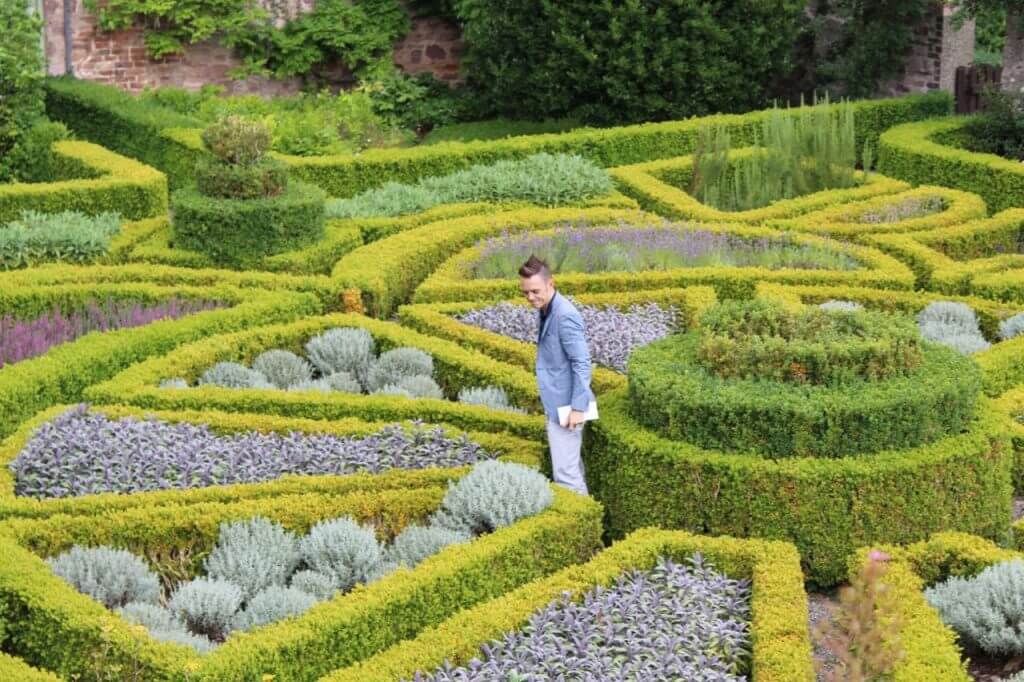
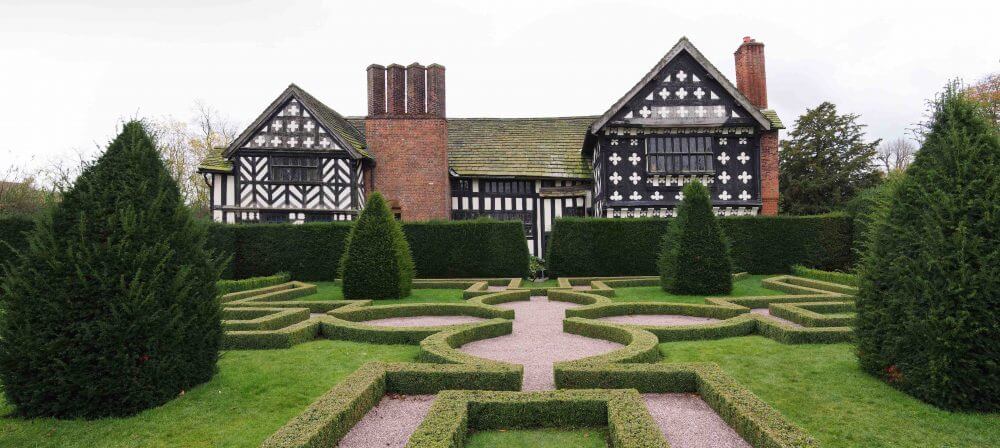
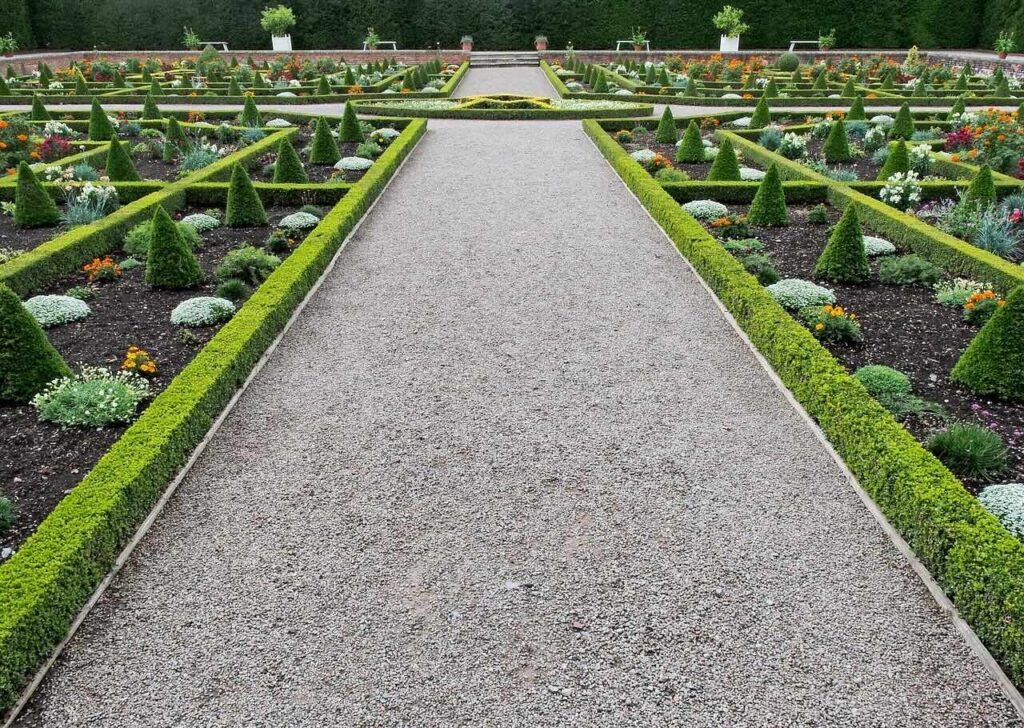
Visiting formal gardens like Bodelwyddan Castle gives you an immediate sense of the geometric precision that makes knot gardens so compellingLittle Moreton Hall in Cheshire has one of the best-preserved Tudor knot garden examples in the country
2. Knot garden vs parterre: what is the difference?
Knot gardens often get confused with parterre garden designs. For most garden designers, knot and parterre gardens go hand in hand. I like to split them out for newer gardeners to help them fully understand each one. Parterres are similar to knots but feature more intricate design patterns, with evergreen plants edging the beds, and they originate from medieval times. Parterres tend to keep all their hedges at the same height throughout. Knot gardens are slightly different in that the hedging can rise and fall to follow the visual undulation of an actual rope or knot.
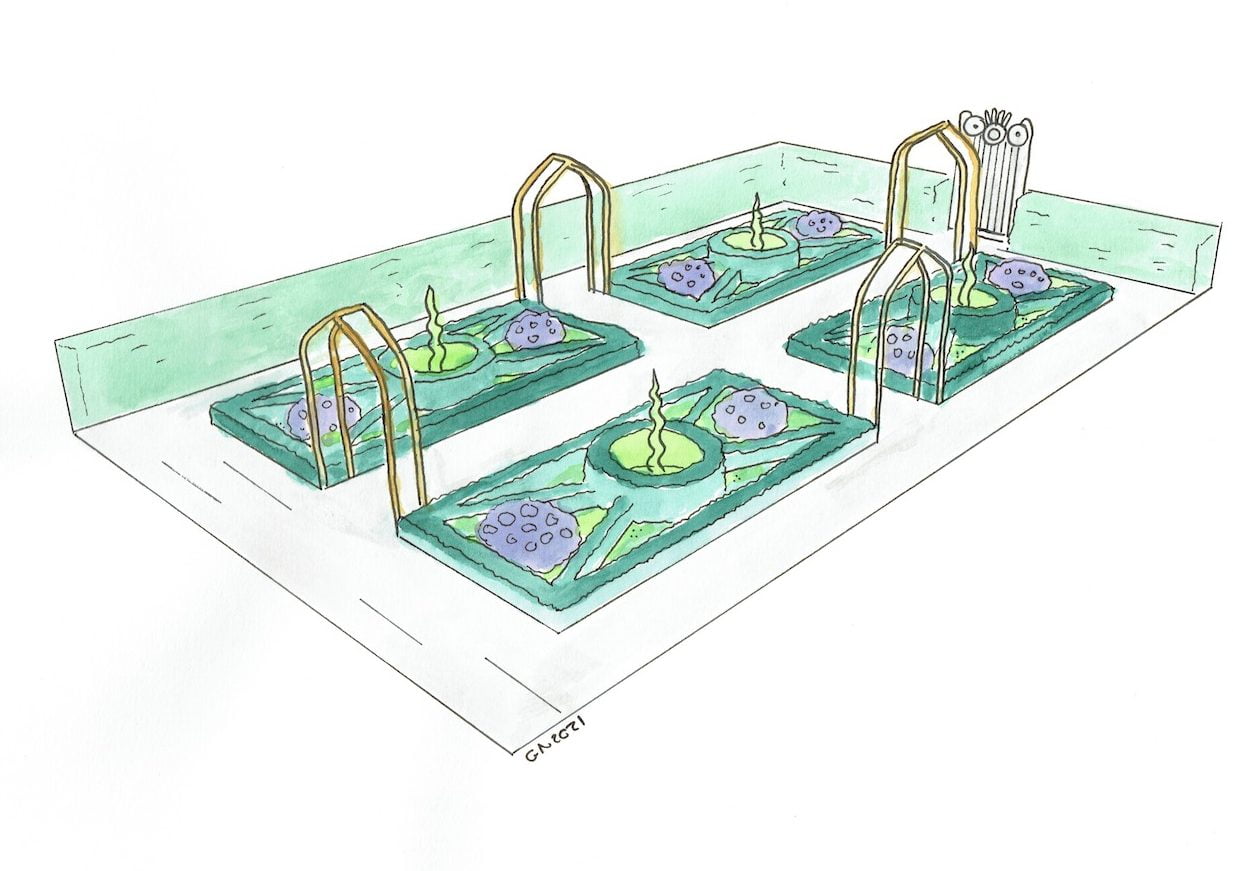
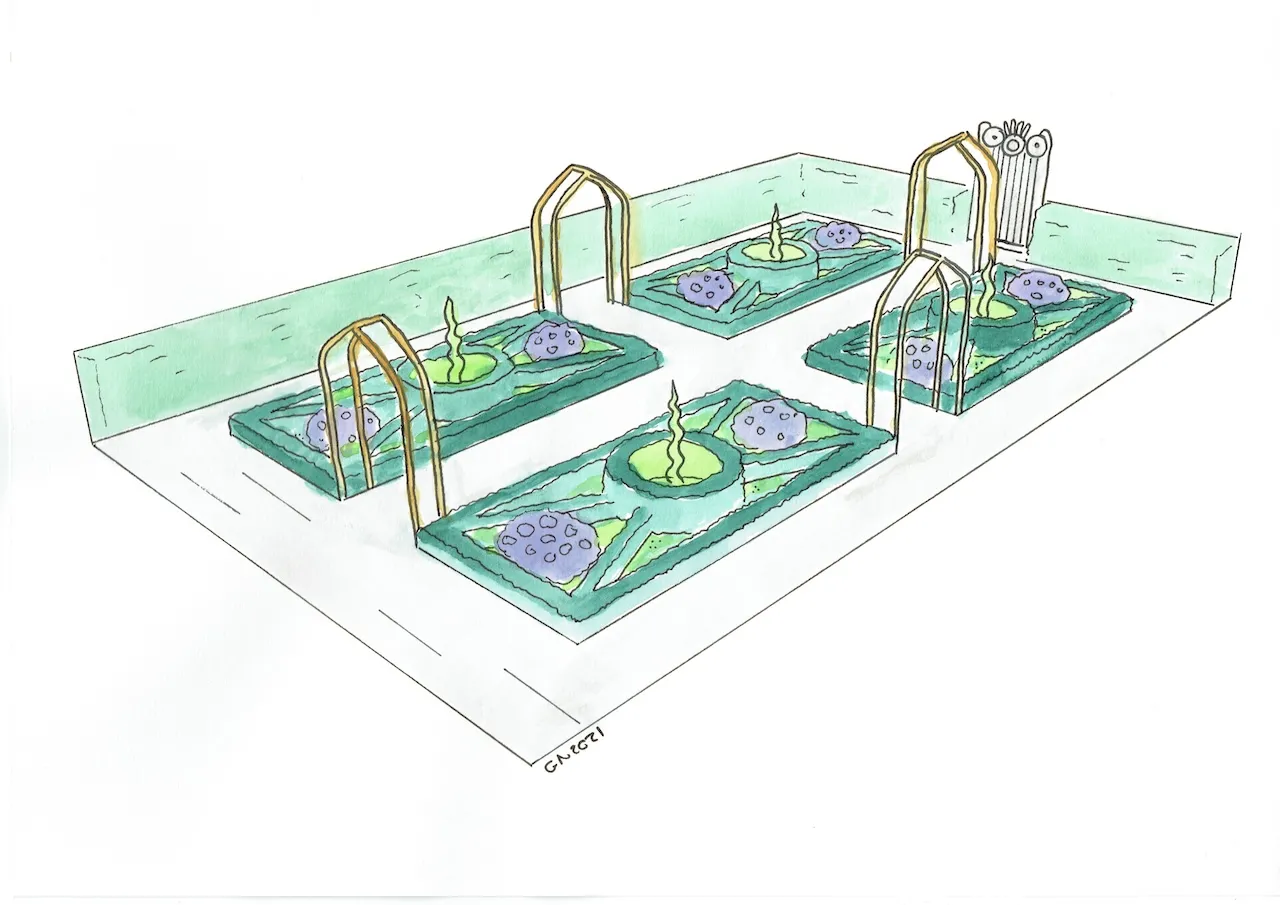
My own interpretation of a knot garden for a client with a long, thin garden, using rectangles instead of squares to work with the proportions of the space
Knot gardens have a rich history dating back centuries, with origins in the medieval gardens of Europe, often associated with dynasties, power, and the ambitions of extraordinarily wealthy families. Initially conceived as functional and ornamental spaces within monastic and castle gardens, knot gardens gained popularity during the Renaissance, particularly in England and Italy.
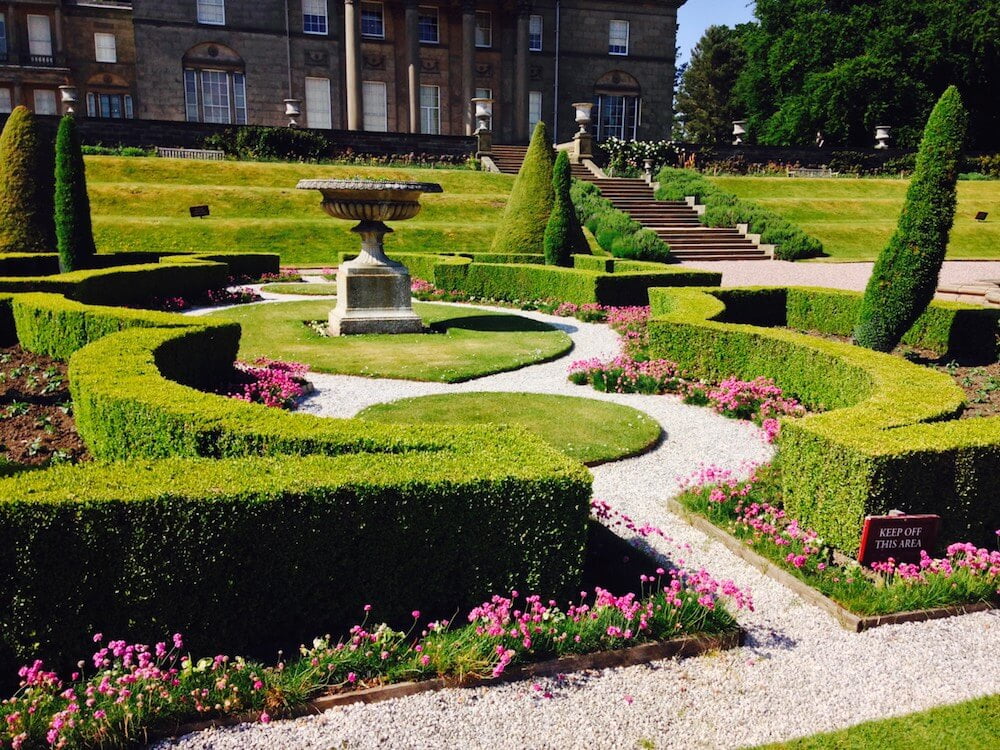
The interlocking geometric patterns of a classic knot garden are best appreciated from an elevated viewpoint, which is why they were often placed beneath windows of great houses
During the Middle Ages, knot gardens served practical purposes, providing herbs for culinary and medicinal use. The intricate patterns formed by low-growing plants or hedges were designed to resemble woven knots or interlocking geometric shapes, symbolising unity, order, and infinity. In Renaissance Europe they evolved into elaborate displays of horticultural artistry, becoming symbols of wealth and status among the aristocracy. They were meticulously planned and laid out, often featuring complex geometric patterns inspired by Islamic and Moorish designs as well as motifs from tapestries and embroidery.
English knot gardens reached the height of their popularity during the Tudor period, from the late 15th to early 17th centuries, when they became integral elements of grand estate gardens and formal parterres. Influential garden designers such as Gertrude Jekyll and Edwin Lutyens revived interest in knot gardens during the Arts and Crafts movement of the late 19th and early 20th centuries, blending traditional knot garden designs with modern landscape principles.
Today, knot gardens continue to be cherished for their timeless elegance and architectural beauty. While they may no longer serve the same functional purposes as their medieval counterparts, they remain beloved features in formal gardens, historic estates, and public landscapes, and increasingly in smaller private gardens where their geometric precision creates a powerful contrast against informal planting.
4. Key features of a knot garden
If you feel enthused reading the criteria below, a knot garden might be for you. If they fill you with dread, a more informal garden design is probably a better fit.
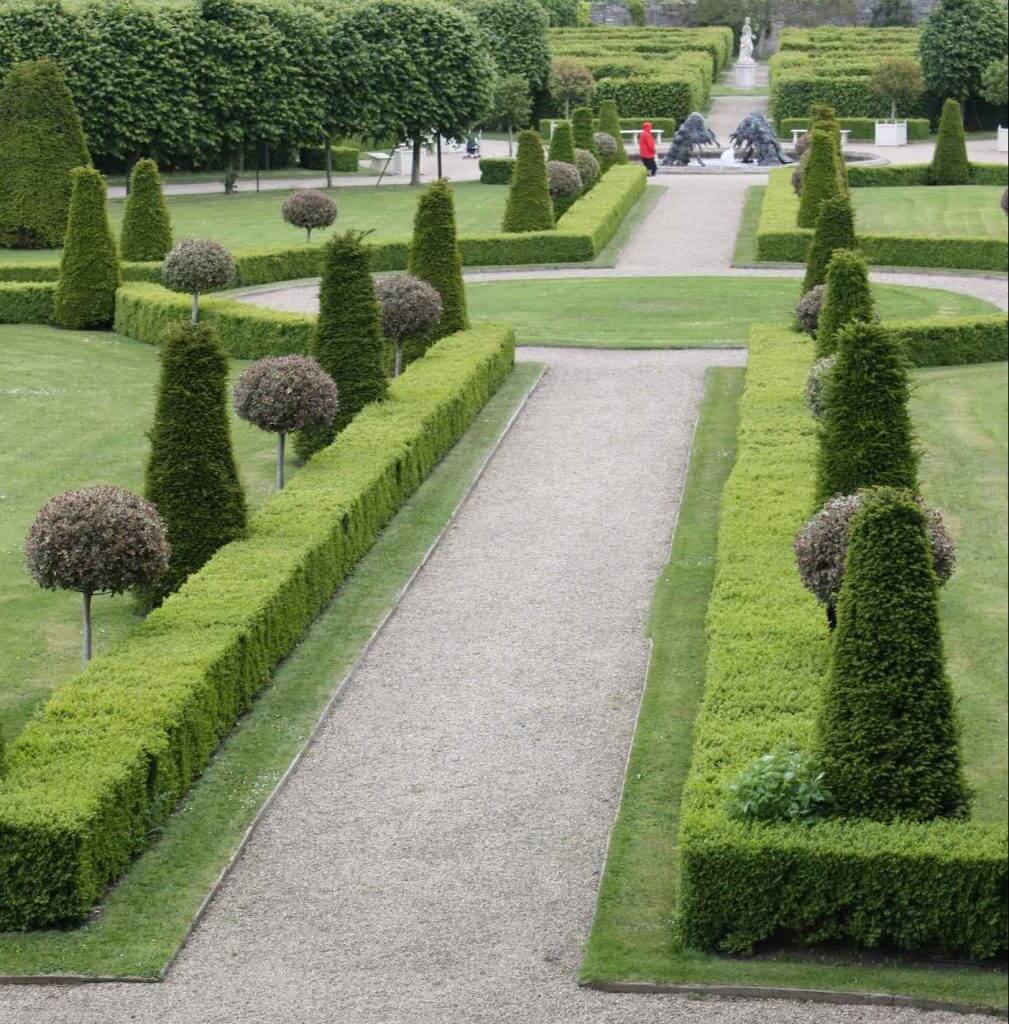
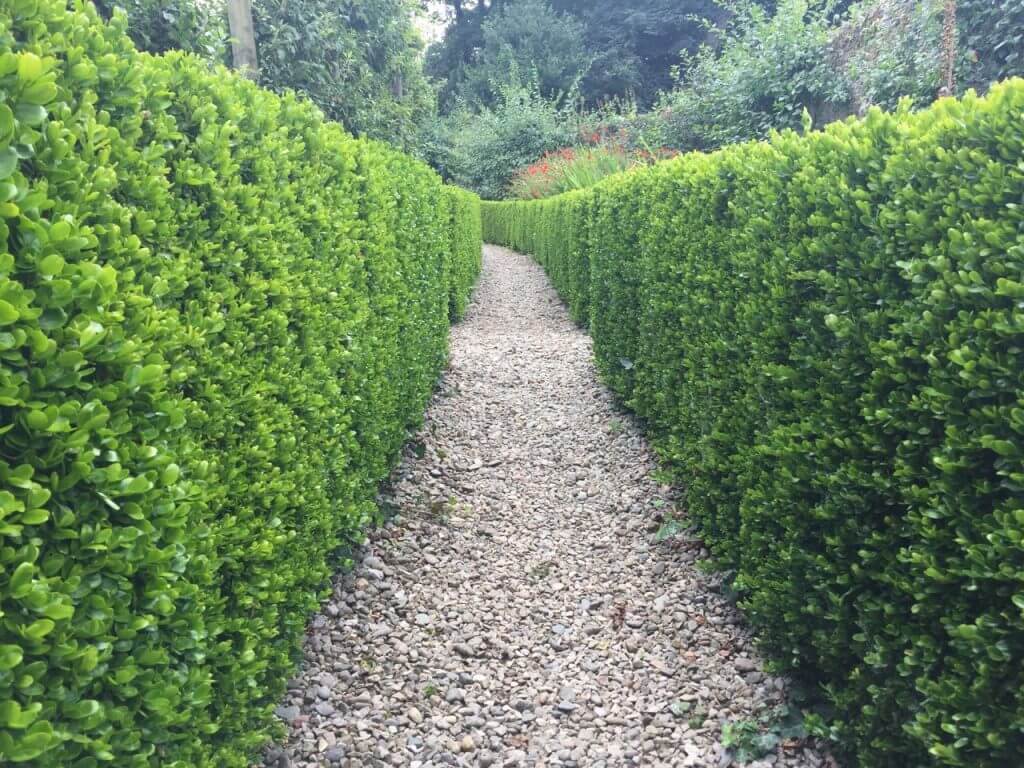
The clipped hedging at Tatton Park demonstrates the level of precision that defines formal garden design, including knot gardens
A knot garden is characterised by its perfect symmetry, so that the design reads the same from any angle and can be folded on both horizontal and vertical axes without breaking the pattern. The plants used are typically low-growing, aromatic, and able to withstand repeated clipping throughout the growing season. The spaces between the hedging elements are filled with something that creates contrast: fine gravel, coloured crushed stone, herbs allowed to grow a little more freely, or seasonal bedding. High maintenance is not optional in a knot garden. It is fundamental to the effect.
The layout is almost always based on a square or rectangular grid, which gives the designer a framework onto which the interlocking rope or knot pattern is then overlaid. The pattern should be legible from a first-floor window or an elevated viewpoint, which is why historically knot gardens were sited directly beneath the principal windows of the house they served.
💡 Top Tip
Before laying out any knot garden, spend time looking at the space from your first-floor windows. The pattern will only read properly from above. If you cannot see the whole garden from an elevated position, the geometric impact will be lost and you will experience the maintenance without receiving the full visual reward.
5. Plants for a knot garden
Usually aromatic plants are used in knot gardens to create scent as visitors brush past them, adding a genuine sensory dimension. The best plants for this style are ones that encourage people to run their hands through them and slow down their journey through the garden. Given that most of these plants come from warmer, drier climates, knot gardens are most suited to south-facing gardens or full-sun positions, though a few shade-tolerant alternatives exist.
Below are the plants I recommend most often when designing knot gardens, with At A Glance tables so you can assess suitability at a glance before purchasing.
Box is the classic structural plant of the formal garden and the most commonly used hedging element in knot garden design. It’s small, dark, evergreen leaves clip to a clean, precise edge and hold their shape between cuts better than almost any other plant. It is the ultimate knot garden framework plant. Box does have well-publicised pest and disease problems in the UK, particularly box blight and box tree caterpillar, so factor in a vigilant monitoring programme if you choose it. Ilex crenata is a good alternative if these concerns put you off.
Germander is one of the most historically authentic plants you can use in a knot garden, with a documented history in this style stretching back to Tudor gardens. It is a low, aromatic, semi-evergreen shrublet with small glossy leaves and pink-purple flowers in late summer. It clips very well to tight outlines, tolerates drought once established, and has a pleasant herbal scent when brushed. Where box blight is a concern, germander is an excellent knot garden substitute for structural hedging.
🌿 At A Glance: Germander
Botanical Name
Teucrium chamaedrys
Plant Type
Semi-evergreen sub-shrub
UK Hardiness
H5 (hardy)
Height (clipped)
15–30cm
Best Conditions
Full sun, well-drained soil. Drought tolerant
Key Feature
Historically authentic; aromatic; good box alternative
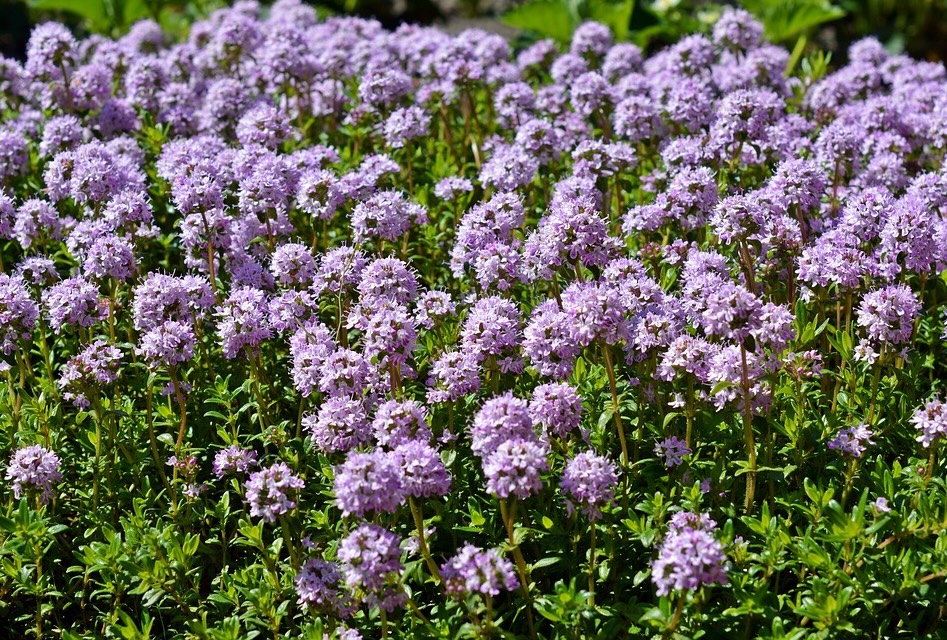
Thyme is one of the great dual-purpose plants for knot gardens. It creates a low, dense, highly aromatic mat of tiny leaves that can be clipped to define the edges of the knot pattern, and then harvested for cooking throughout the summer. The flowers in early summer attract bees in considerable numbers, which adds a wildlife dimension to the formality. Common thyme clips well and recovers quickly, but always avoid cutting back into old woody growth as thyme does not regenerate from bare wood. Silver and golden-leaved varieties add visual contrast to the pattern.
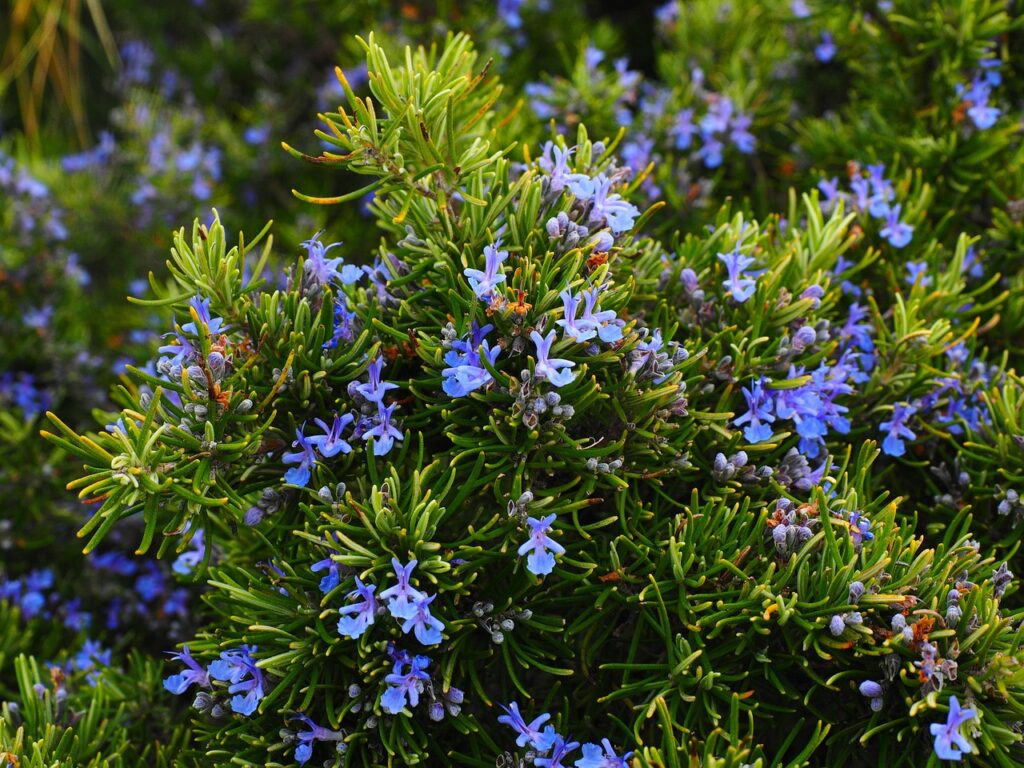
Rosemary has been used in formal and knot gardens since medieval times, prized for its intense aromatic scent, its silvery-grey foliage, and its tolerance of clipping. It grows more vigorously than most knot garden plants, which means it can be used to create taller structural elements within the pattern as well as lower hedging outlines. Upright varieties such as ‘Miss Jessopp’s Upright’ are the best choice for formal clipping. Prostrate varieties work as infill within the pattern. Always clip rosemary immediately after flowering rather than into old wood.
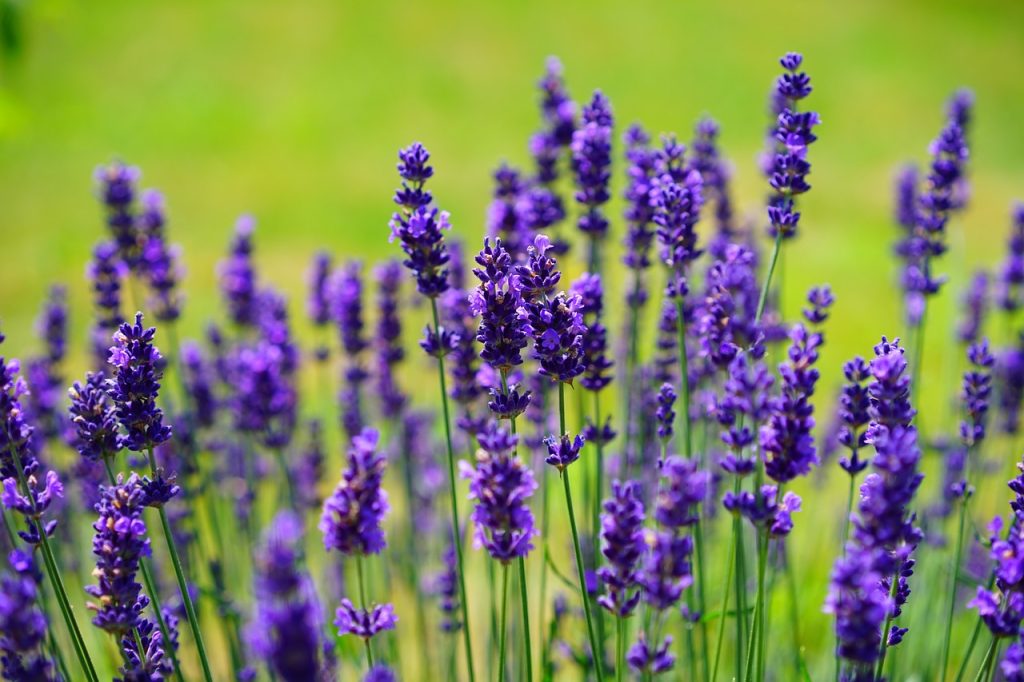
Lavender is one of the most beloved aromatic plants available and performs well as a low hedge in knot garden infill sections or as a low structural element within the pattern itself. English lavender is the hardiest option for UK gardens and produces the longest-lasting flowers. The purple-blue flower spikes in July are spectacular against clipped box or santolina, and the dried seed heads hold visual structure through winter. Cut back by one-third after flowering each year to keep plants bushy and prevent woody die-back.
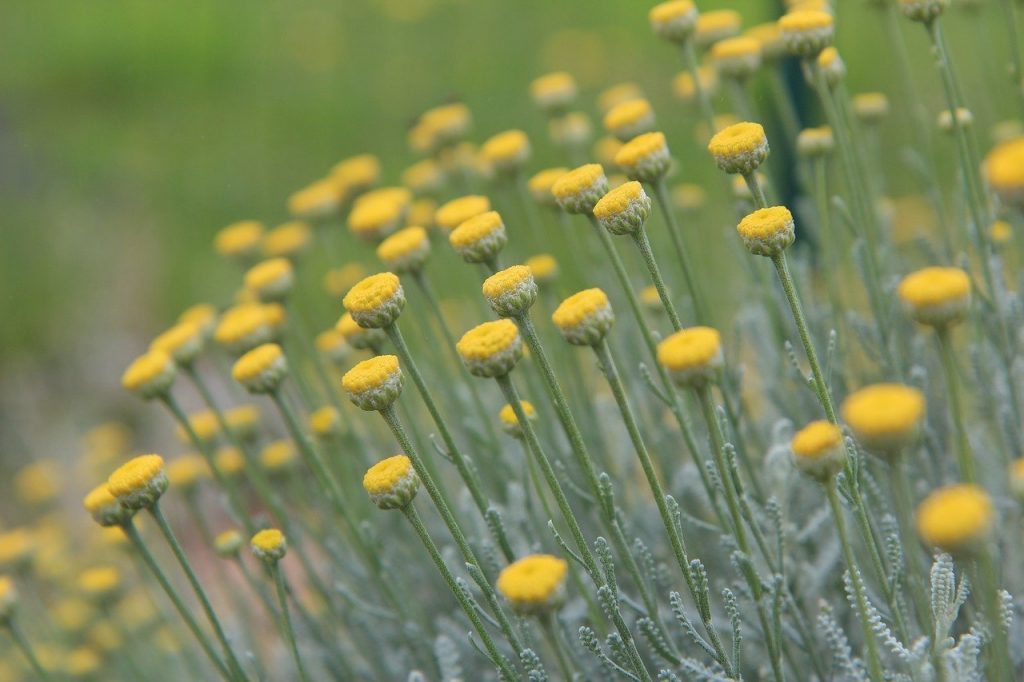
Santolina, or cotton lavender, is one of the most visually striking plants in the knot garden toolkit. Its silvery-white, thread-like foliage creates a beautiful tonal contrast against the deep green of box or the purple-grey of lavender, which is exactly what gives a knot garden its pattern legibility. It clips cleanly and holds a tight edge. The bright yellow button flowers in summer are cheerful, but can be removed if you want to maintain the crisp silver foliage effect without the distraction. Clip lightly every spring to prevent the centre from opening up.
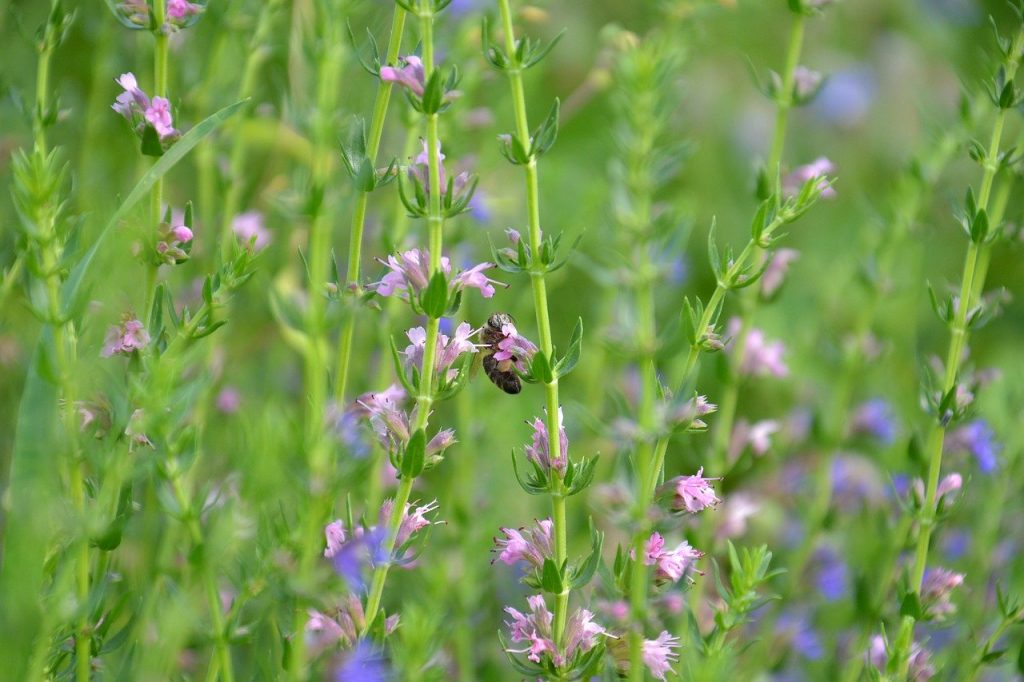
Hyssop is a semi-evergreen aromatic herb with deep blue-purple flower spikes in late summer, beloved by bees and butterflies. It has been grown in formal herb gardens and knot gardens since medieval times, when it was valued both for its medicinal properties and its ability to be clipped into neat low hedging. It tolerates some shade, which is unusual among knot garden plants, and performs well on chalky or poor soils where lavender or rosemary might struggle.
🌿 At A Glance: Hyssop
Botanical Name
Hyssopus officinalis
Plant Type
Semi-evergreen sub-shrub
UK Hardiness
H5 (hardy)
Height
30–60cm
Best Conditions
Full sun to partial shade, well-drained or chalky soil
Key Feature
Deep blue flowers; bee-friendly; tolerates some shade
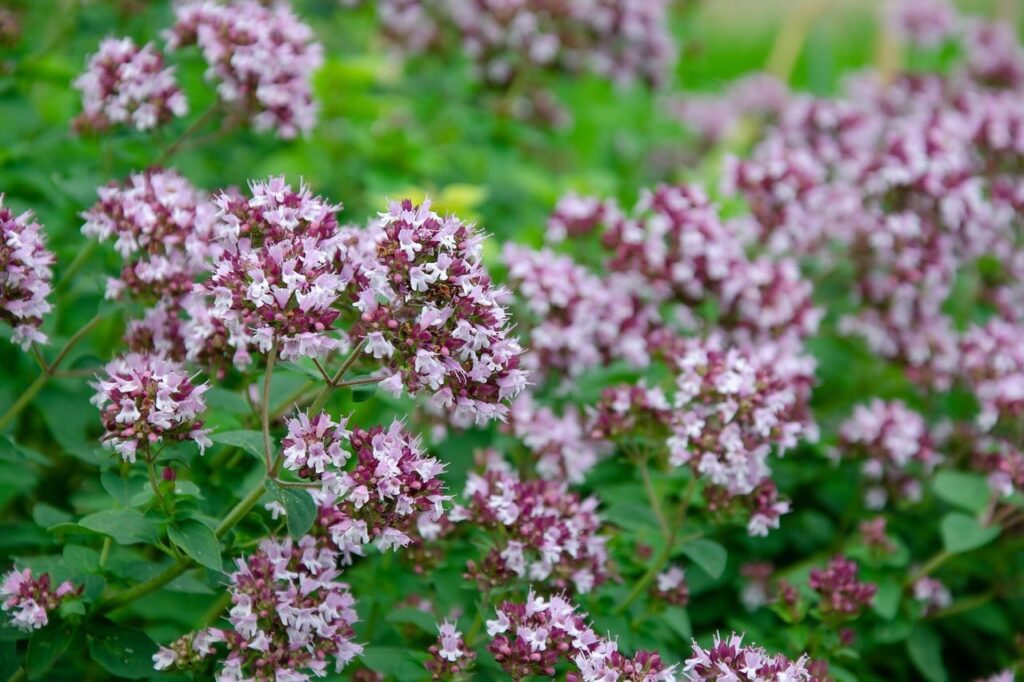
Marjoram brings warmth and an intensely herbal fragrance to the knot garden, with small, rounded leaves and clusters of tiny pink or white flowers in summer that are highly attractive to pollinators. It is less amenable to tight clipping than box or germander but works extremely well as an infill plant within the panels of the knot pattern, allowed to grow a little more freely between the structural hedging lines. Both the green and the golden-leaved varieties are useful for adding tonal variation.
🌿 At A Glance: Marjoram
Botanical Name
Origanum vulgare
Plant Type
Hardy perennial herb
UK Hardiness
H6 (fully hardy)
Height
30–60cm
Best Conditions
Full sun, well-drained soil
Key Feature
Intensely aromatic; excellent for pollinators; edible
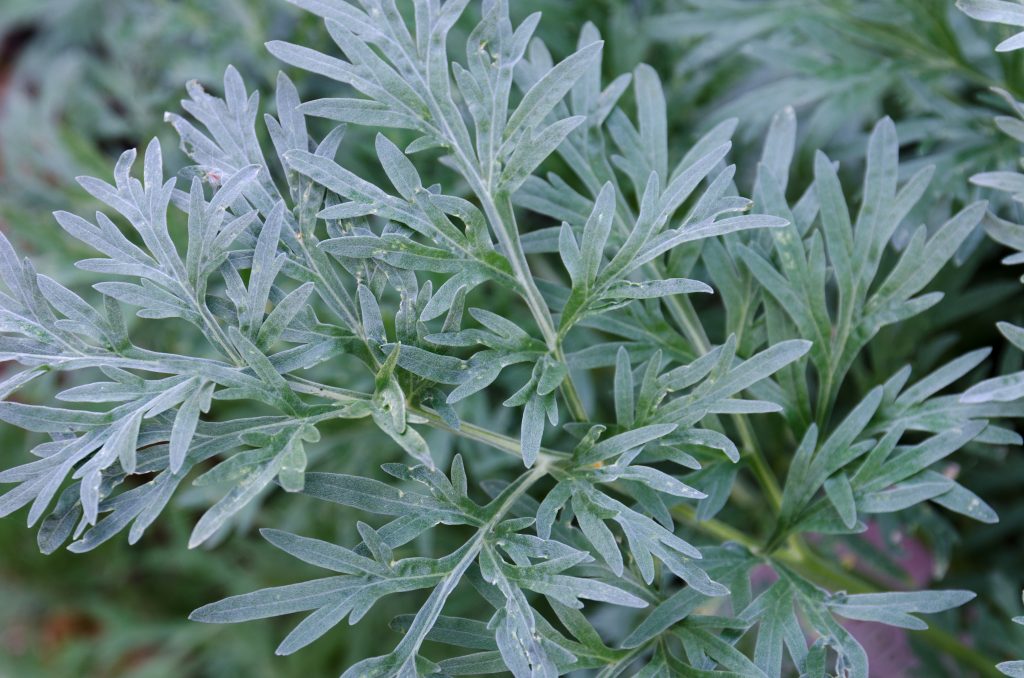
Artemisia, or wormwood, provides one of the most distinctive foliage effects available for the knot garden: feathery, intensely silver-grey leaves that shimmer in sunlight and create extraordinary contrast against darker structural hedging. It has a bitter, medicinal fragrance and was historically valued for its insect-repelling properties as well as its ornamental character. Use it as an infill plant within the knot pattern where its sprawling habit can be contained, and its silver foliage can be used to create visual contrast panels.
This plant also has a fantastic history in folklore and witchcraft, as one of the most protective plants and spirits. Often used in rituals and incenses for protection, having this somewhere in your garden will certainly bolster your security and support from the occult side of things! I grow pretty much every cultivar and variety of Mugwort/Wormwood here at Garden Ninja HQ.
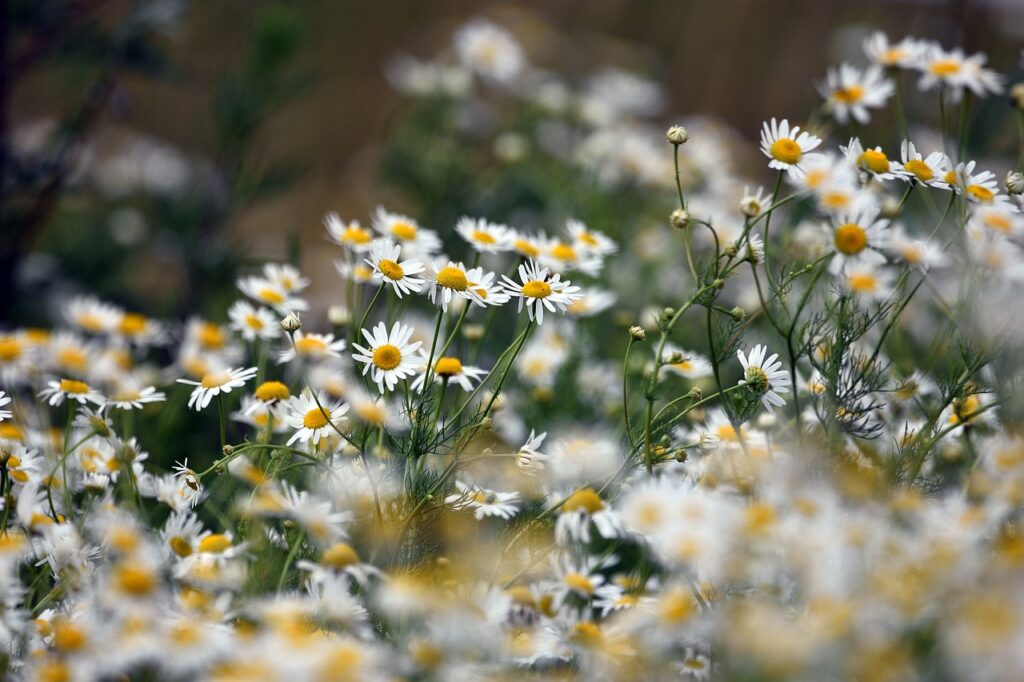
Chamomile has a special place in the history of the English formal garden, most famously as the plant used to create chamomile lawns at great houses. In the knot garden, it serves as a low, ferny-textured infill plant with an intensely apple-like fragrance when stepped on or brushed. Not to mention the fact that you can brew the flowers up as a tea to relax and calm the nerves! The non-flowering variety ‘Treneague’ stays compact and never needs deadheading, making it the best choice for a knot garden where you want a low carpet effect between the structural hedging lines.
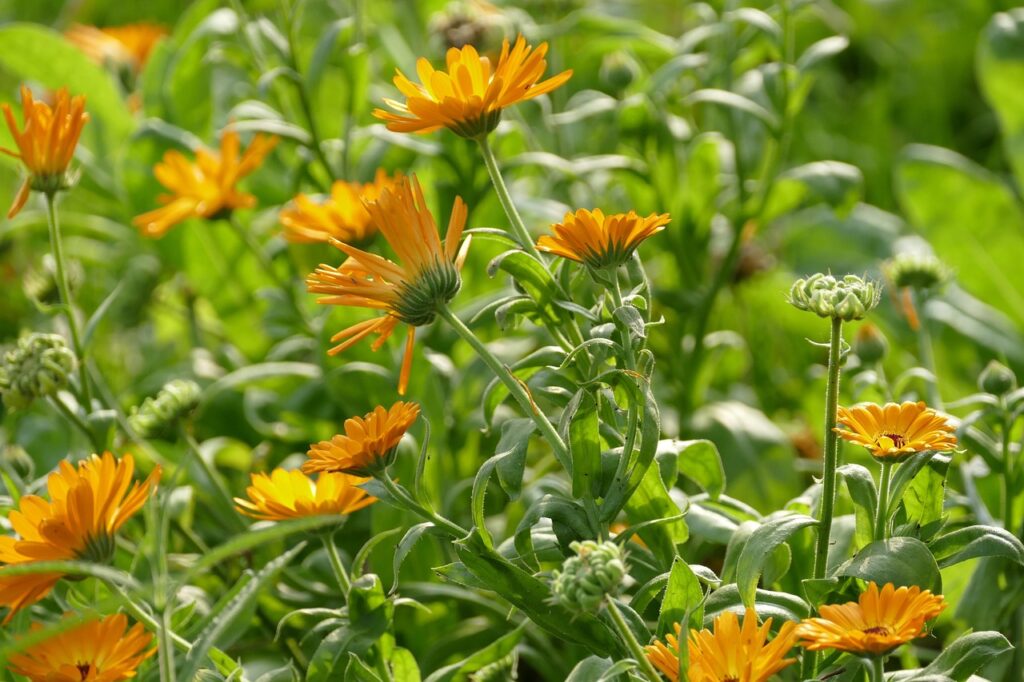
Calendula, or pot marigold, is one of the most useful annual infill plants for the knot garden panels, producing a long season of vivid orange and yellow flowers from early summer right through to the first frosts. It self-seeds reliably, which means once established it will reappear each year without replanting. Calendula has been grown in formal herb gardens for centuries, valued for its edible petals, medicinal properties, and sheer vigour.
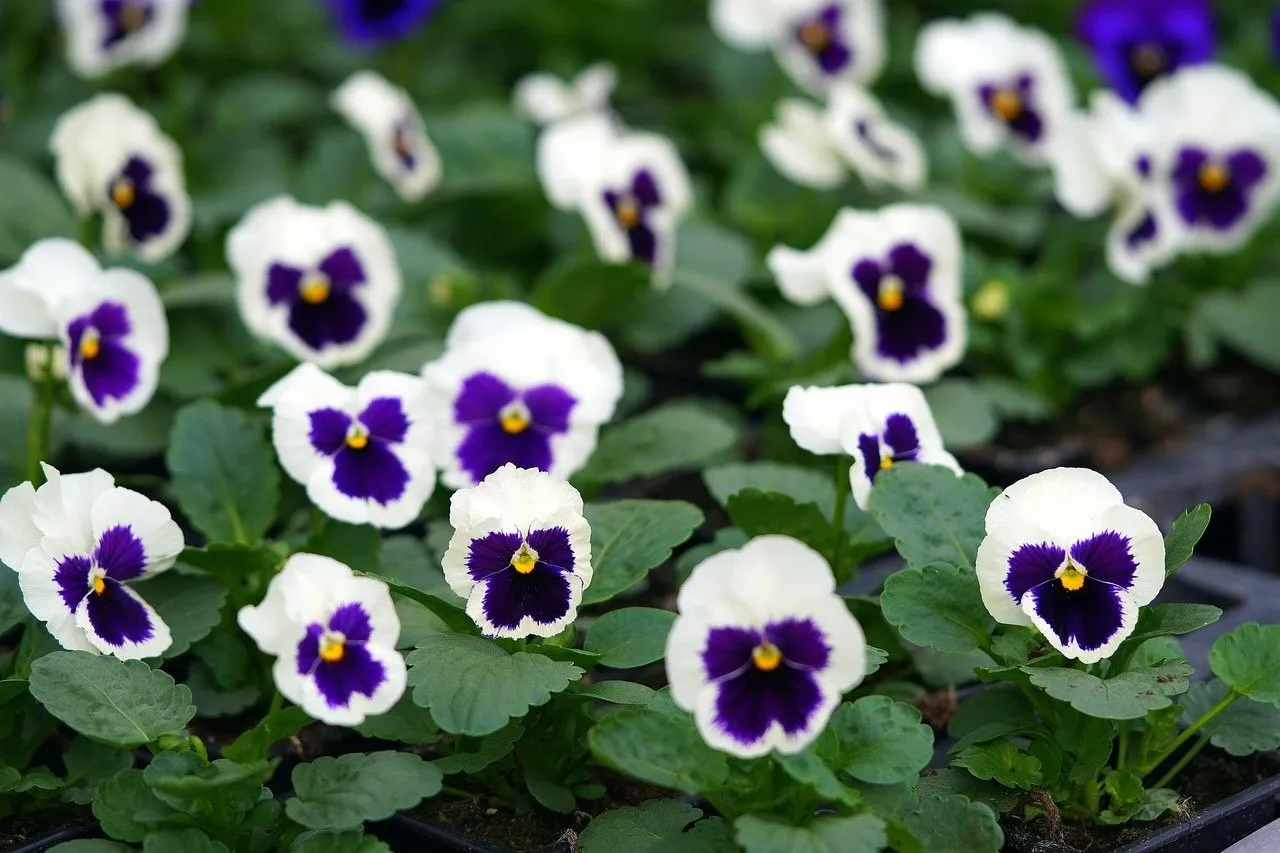
Sweet viola brings exquisite seasonal colour and fragrance to the knot garden, particularly in spring and again in cooler autumn weather. The flowers are edible, crystallised violas were a feature of Tudor and Stuart banquets, and sweet violet has been grown in formal gardens since the Middle Ages. Use it as an infill plant that is replaced or refreshed seasonally, or allow it to naturalise in the shaded panels of the knot where it will spread gently without becoming invasive.
Beyond the twelve plants detailed above, the following are also excellent additions to the knot garden toolkit. Lemon balm (Melissa officinalis) produces intensely lemon-scented leaves and tolerates more moisture than most knot garden herbs. Acanthus (Acanthus mollis) provides bold, architectural infill with its dramatic, deeply lobed leaves and tall flower spikes. Mallow (Malva sylvestris) provides tall stems with pink and purple flowers as a backdrop. Tanacetum or costmary (Tanacetum balsamita) has camphor-scented leaves and a long history in formal herb gardens. The essential rule for all infill plant choices is that they must contribute either colour, texture, fragrance, or all three. They must not visually overwhelm the structural hedging lines that define the pattern.
💡 Top Tip
If you live in an area with box blight or box tree caterpillar pressure, consider replacing all box in your knot garden with Ilex crenata (Japanese holly), which offers a similar appearance and clips just as well, or germander, which has a longer historical association with knot gardens than box anyway.
6. How to design and lay out a knot garden
Designing a knot garden from scratch requires more planning time than almost any other garden style, but the process is enormously satisfying, and the principles are straightforward once you understand them. I work through this process with clients on BBC’s Garden Rescue, and the same methodology applies whether the garden is large or small.
Planning the knot pattern on paper before committing to any planting is the most important step in the design process
Start by drawing your available space to scale on squared paper. The pattern needs to be built on a grid with each cell being the same size, typically 60cm to 1.2m square depending on the overall dimensions. The knot pattern is then overlaid on this grid, with the hedging lines crossing at regular, symmetrical intervals to create the interlocking rope effect.
Once the pattern is agreed on paper, transfer it to the ground using canes and string lines, measuring carefully from a central axis so the symmetry is accurate. Mark out the hedging lines with sand or grit before buying any plants. Walking around the marked-out pattern before purchasing anything will tell you immediately whether the proportions feel right. The most common error is making the individual panels too small, which makes the whole pattern feel cramped and difficult to maintain.
Plant your structural hedging first, spacing young box, germander, or santolina at 15–20cm intervals and backfilling with a mix of compost and the existing soil. Water thoroughly and mulch the base of the hedge lines. Allow one full growing season before filling the panels with infill plants, as the young hedging needs to establish without competition for water and nutrition. The infill plants can be added in year two once the structure is beginning to form.
Planning a formal garden on paper before any plants are bought saves enormous time and prevents expensive mistakes. I hand-draw initial concepts like this for every formal design project
7. Benefits of a knot garden
A knot garden offers a distinctive set of advantages that few other garden styles can match, particularly for gardeners who value structure, history, and a garden that performs all year round.
Aesthetic impact: Knot gardens are visually striking and add a sense of formality and elegance that few other garden compositions can match. When well maintained, they are genuinely arresting from both ground level and above.
Year-round structure: Because the design relies primarily on evergreen hedging plants, the knot garden retains its architectural character through every season. It looks as good on a grey January day as it does in the height of summer.
Versatility: Knot gardens can be designed at almost any scale. A very small courtyard garden can accommodate a simplified knot pattern; a larger space allows greater complexity and more intricate interlacing patterns.
Sensory richness: The combination of aromatic herbs, fragrant flowers, and textural foliage creates a garden that engages all the senses. Running your hand along a clipped row of rosemary or stepping on a mat of chamomile is a genuinely pleasurable experience that few other garden styles provide.
Historical connection: Designing and maintaining a knot garden connects you directly to one of the oldest garden traditions in English history. There is something deeply satisfying about working with the same plants and the same patterns that Tudor gardeners used five centuries ago.
8. Drawbacks of a knot garden
A knot garden is not for the time-poor or the gardener who wants a low-effort outdoor space. Being honest about the demands is essential before committing to one.
Initial investment: Designing and planting a knot garden is labour-intensive and expensive. The structural hedging plants need to be bought in quantity at close spacing, and the whole layout requires careful setting out before any planting begins.
High maintenance clipping: Maintaining the crisp geometry of a knot garden requires clipping the hedging at least twice a year, and in a vigorous growing season some plants need three cuts to stay sharp. This is skilled, time-consuming work that cannot be skipped without the pattern losing its definition.
Disease risk: Dense, repeated planting of the same species in tight proximity creates conditions where pests and diseases spread quickly. Box blight and box tree caterpillar in particular can devastate a knot garden that relies on box for its structure. Vigilant monitoring and prompt treatment are non-negotiable.
Sun requirement: Most of the best knot garden plants demand full sun and very well-drained conditions. A shaded or north-facing garden will struggle to support the plant palette that makes a knot garden work most effectively.
💡 Top Tip
If full sun is not available throughout the day, focus your knot garden on the sunniest portion of the space and use a shade-tolerant structural plant like Ilex crenata or hyssop for the sections that receive less sun. A partial knot garden in the right conditions will always outperform a full knot garden in the wrong ones.
9. Knot garden maintenance through the year
The maintenance calendar for a knot garden is more demanding than for almost any other garden style. Getting on top of it early each season and staying ahead of it is far less work than attempting to rescue a knot garden that has been allowed to grow out of shape. Here is how I approach the year.
Regular, precise clipping is the single most important maintenance task in a knot garden, and it defines the pattern and keeps the design legible
In spring, give the structural hedging its first cut of the year as the new growth begins. This is usually around April or May depending on the season. Remove any winter-damaged stems on rosemary and lavender, cutting back to the first healthy bud. Check the infill plants for winter damage and replace anything that has not survived. This is also the time to top-dress the beds with a thin layer of garden compost, avoiding the crowns of the hedging plants.
In summer, clip the structural hedging a second time in July or August once the main flush of growth has settled. Deadhead any flowering infill plants you want to keep compact. Keep the gravel or coloured stone infill raked and weed-free. Weeding between the hedging lines is the most time-consuming regular task in a knot garden and cannot be neglected without the pattern becoming obscured.
In autumn, cut back any herbaceous infill plants that have finished for the season. Tidy the edges of all hedging panels and check for any signs of box blight. Remove fallen leaves promptly from within the pattern, as accumulated leaf litter can encourage disease and smother low-growing infill plants.
In winter, the knot garden largely maintains itself, but is vulnerable to snow damage on the hedging. Shake heavy snow from the tops of clipped hedging rather than allowing it to sit and press the stems outward. This is the season when the geometric architecture of a well-maintained knot garden is most visible and most satisfying.
📅 Knot Garden Maintenance Calendar
Season
Key Tasks
Spring
First clip of structural hedging. Remove winter damage. Top-dress beds. Replace failed infill plants.
Summer
Second clip of hedging (July or August). Deadhead. Weed between hedging lines. Rake gravel infill.
Autumn
Cut back herbaceous infill. Tidy edges. Check for box blight. Remove fallen leaves promptly.
Winter
Shake snow from clipped hedging. Enjoy the geometric structure. Plan any changes for spring.
Your subscription could not be saved. Please try again.
Your subscription has been successful.
10. Frequently asked questions about knot gardens
How much does it cost to create a knot garden?
The cost of a knot garden varies considerably with size and plant choice. A small knot garden of around 4m x 4m planted with box hedging at 15cm spacing requires approximately 100 box plants for the hedging lines alone, plus infill plants and any gravel or stone for the panels. Budget for professional design time if you want help with the pattern layout. Ongoing costs are primarily labour for clipping, which in a small garden you can do yourself with a pair of good-quality hand shears.
Can I create a knot garden in a small space?
Yes, and some of the most successful knot gardens I have seen are in quite small courtyards and town gardens. The key is to simplify the pattern appropriately for the scale. A very small space suits a single interlocking square pattern rather than a complex multi-element design. A simplified knot garden in a 3m x 3m space can still be enormously effective, particularly if it is sited where it can be viewed from above.
What is the best alternative to box for a knot garden?
The best alternatives to box are Ilex crenata (Japanese holly), which looks almost identical to box from a distance and is completely resistant to box blight, and germander (Teucrium chamaedrys), which has a longer historical association with English knot gardens than box does. Lonicera nitida is very fast-growing but needs frequent clipping to stay sharp. Yew is excellent for taller structural elements, but too slow for the lower knot lines. Lavender works well in warmer, sunnier positions as a low hedging substitute.
How often do I need to clip a knot garden?
Most knot garden hedging plants need clipping twice a year: once in late spring as new growth settles down, and once in midsummer to tighten the outline before the end of the growing season. In a good growing year with warm, wet conditions, a third light clip may be needed in early autumn on box and Lonicera. Never clip after September in the UK, as new growth stimulated by late clipping can be damaged by the first frosts.
Can I have a knot garden in a shaded garden?
Most knot garden plants demand full sun and will not perform well in shade. However, a simplified knot garden using shade-tolerant structural plants is possible. Ilex crenata tolerates partial shade, as does hyssop, sweet violet, and some ferns for infill. If your garden receives fewer than four hours of direct sun, a fully authentic knot garden will be difficult to sustain. Consider a simplified formal parterre using box and shade-tolerant ground cover plants as an alternative.
Design the Garden You’ve Always Wanted
Ready to stop guessing and start designing with confidence? My Garden Design for Beginners online course takes you from blank canvas to brilliant layout, step by step.
I’m Lee Burkhill, award-winning garden designer and BBC1’s Garden Rescue presenter, and I’ve built this course around the same principles I use for every client garden — practical, honest, and designed to actually work in the real world.
In 20 hours of flexible online study you’ll cover:
Design principles that make any garden work
How to select and arrange plants like a professional
Styles and layouts to suit every size and shape of space
Video lessons, real-world case studies, quizzes, and a certificate on completion — all for just £199.
Enrol today and start designing your dream garden.
29
Garden Design Examples for Small Gardens: 30 Design Templates & Planting Plans
Garden Design Examples for Small Gardens: 30 Design Templates & Planting Plans: In this online gardening course, I’ll walk you through 30 fantastic garden designs, explaining the logic behind the layout, the plant choices, and take-home tips for applying them in your own garden.
Weekend Garden Makeover: A Crash Course in Design for Beginners
Learn how to transform and design your own garden with Lee Burkhills crash course in garden design. Over 5 hours Lee will teach you how to design your own dream garden. Featuring practical design examples, planting ideas and video guides. Learn how to design your garden in one weekend!
Garden Design for Beginners: Create Your Dream Garden in Just 4 Weeks
Garden Design for Beginners Online Course: If you want to make the career jump to becoming a garden designer or to learn how to design your own garden, this is the beginner course for you. Join me, Lee Burkhill, an award-winning garden designer, as I train you in the art of beautiful garden design.
Knot gardens are genuinely beautiful and genuinely demanding. The symmetry, the aromatic planting, and the historic character make them one of the most rewarding formal garden styles available, but they require consistent clipping, vigilant weeding, and a full-sun position to perform at their best. The plants you choose for your hedging lines are the most important decision, so spend time getting that right before buying anything else. Box, germander, santolina, and lavender are your four most reliable structural choices; thyme, rosemary, chamomile, calendula, and viola fill the panels with fragrance, colour, and character.
What do you think? Let me know on social media, or head to the Garden Ninja forum to ask your knot garden questions directly. You can also follow me on YouTube for more garden design vlogs.
Your subscription could not be saved. Please try again.
Your subscription has been successful.
Lee Burkhill
Lee Burkhill, known as the Garden Ninja, is an award-winning garden designer and horticulturist with over 30 years of gardening experience and 15 years as a professional garden designer. A qualified RHS (Royal Horticultural Society) professional, Lee specialises in sustainable garden design and practical horticultural advice. He designs and presents on BBC1’s Garden Rescue and in leading gardening publications. Lee combines three decades of hands-on gardening knowledge with professional design qualifications to help gardeners create beautiful, functional outdoor spaces.