For the garden you’ve already got, not the one you’re starting from scratch. Seven checklists and video lessons from BBC Garden Rescue’s Lee Burkhill, designed to help you decide what’s worth keeping before you spend a penny.
69


Quick Answer
Water new turf until the soil underneath is wet as soon as it is laid, then soak it every two to three days for the first fortnight, easing to twice a week by week five. Keep off it for two weeks. Once it passes the tug test, usually at three to four weeks, mow on a high setting taking off only the top third. Do not feed it for at least six to eight weeks.
This guide walks you through new turf aftercare week by week: how much to water, how to tell if you are overdoing it, when you can walk on it, the tug test, the first mow, feeding, and how to fix the problems that crop up. I have included real questions from readers on the Garden Ninja forum, because seeing what went wrong for someone else is often the quickest way to spot it in your own garden.
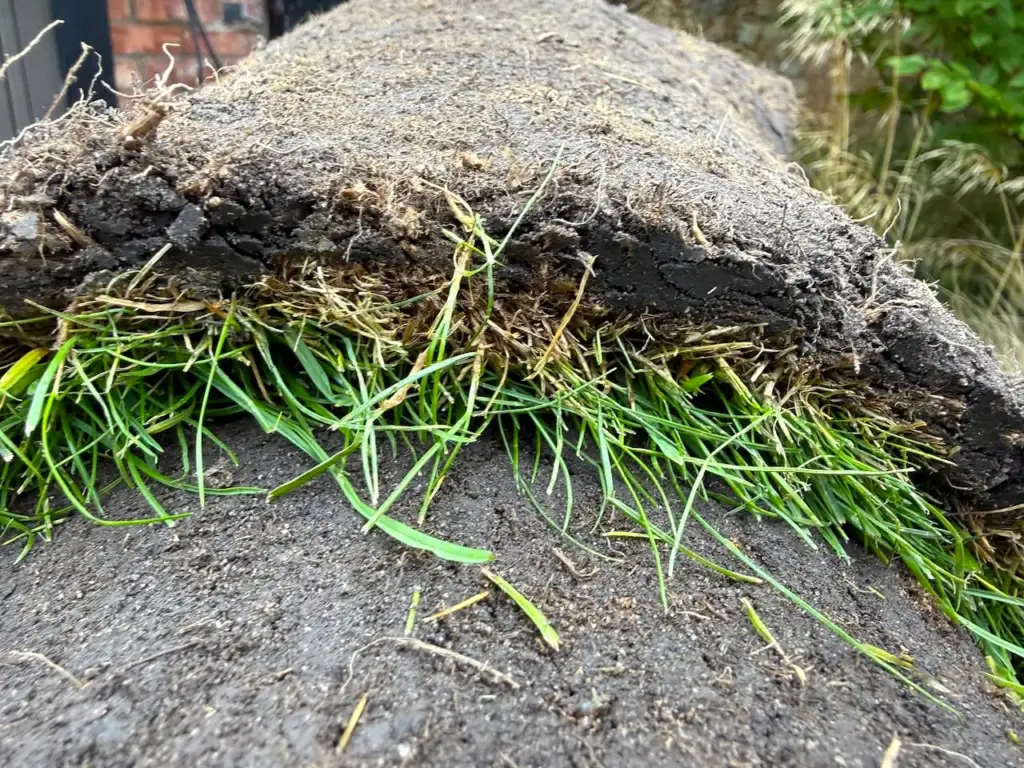
If you have not laid your turf yet, start with my step by step guide on how to lay turf. Good preparation makes aftercare far easier.
Jump To
This page contains affiliate links for products I use and trust. If you buy through one, I may earn a small commission at no extra cost to you, which helps keep the Garden Ninja blog free for everyone.
🛒 Find an oscillating garden sprinkler on Amazon UK
New turf goes through clear stages as it roots and knits together. Here is what to expect and what to do at each one, based on the lawns I have laid and watched grow over more than thirty years. Treat the timings as a guide: turf laid in a warm September roots faster than turf laid in a cold March.
🌿 New Turf Aftercare at a Glance
| Week | Watering | Foot traffic | What to look for |
|---|---|---|---|
| Day 1 | Soak until the soil underneath is wet | None | Lift a corner to check the soil is wet. |
| Weeks 1 to 2 | Deep soak every 2 to 3 days, more in heat | None, use a plank if you must | Joints starting to close, grass staying green. |
| Weeks 3 to 4 | Deep soak every 3 to 4 days | Light use once it passes the tug test | Turf resists a firm tug. First mow when 5 to 7cm. |
| Weeks 5 to 6 | Deep soak twice a week in dry weather | Normal light use | Joints invisible, even colour. |
| Weeks 7 to 8 | Once a week in dry spells, then only in drought | Normal family use | Springy, established lawn. |
For the first fortnight the roots are pushing out of the turf base into your prepared soil. This is when turf is most vulnerable to drying out, and also to being drowned. Water deeply every two to three days, or more often in hot, windy weather, and check every morning by lifting a corner. The soil underneath should feel moist, like a wrung out sponge, not sodden. Keep off it completely. By the end of week two the joints should start to look less obvious and the grass should still be a fresh green.
By now the roots should be anchoring the turf into the soil. Try the tug test, which I explain below. Once it passes, you can stretch watering to every three to four days, but make each session longer so the water soaks deeper and draws the roots down after it. This is usually when the first mow is due.
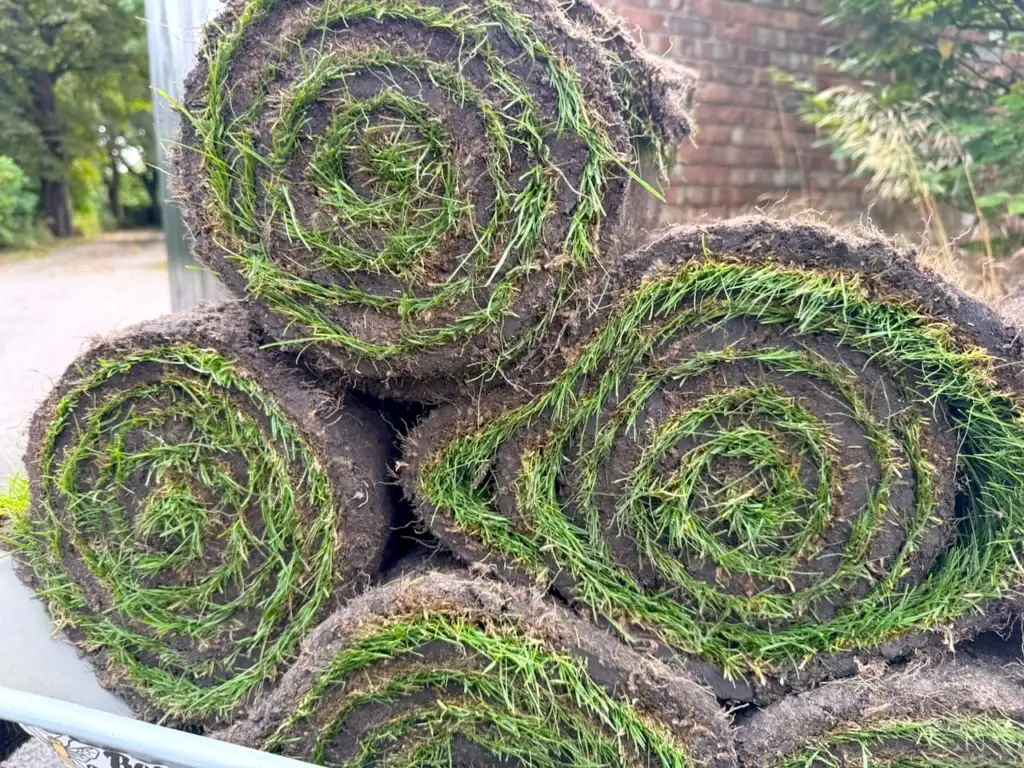
The turf is turning into a lawn. Ease watering back to twice a week in dry weather, then once a week, then only during droughts. Normal family use can start from around week six, though I would keep football matches and trampolines off until week eight. By the end of week eight the joints should be invisible and the lawn should feel springy underfoot.
Water new turf thoroughly as soon as it is laid, then give it a deep soak every two to three days for the first two weeks. After that, water every three to four days until about week five, then twice a week in dry weather. In a heatwave you may need to water daily for the first fortnight, and after heavy rain you can skip a session.
The important word is deep. A deep soak means the water soaks through the turf and into the soil beneath it. With a sprinkler that usually takes 30 to 45 minutes in one spot, depending on your water pressure. The only reliable check is to lift a corner of a roll an hour after watering. If the soil underneath is moist, you have done enough. If it is dry, you need more. If it is waterlogged and squelchy, you are overdoing it.
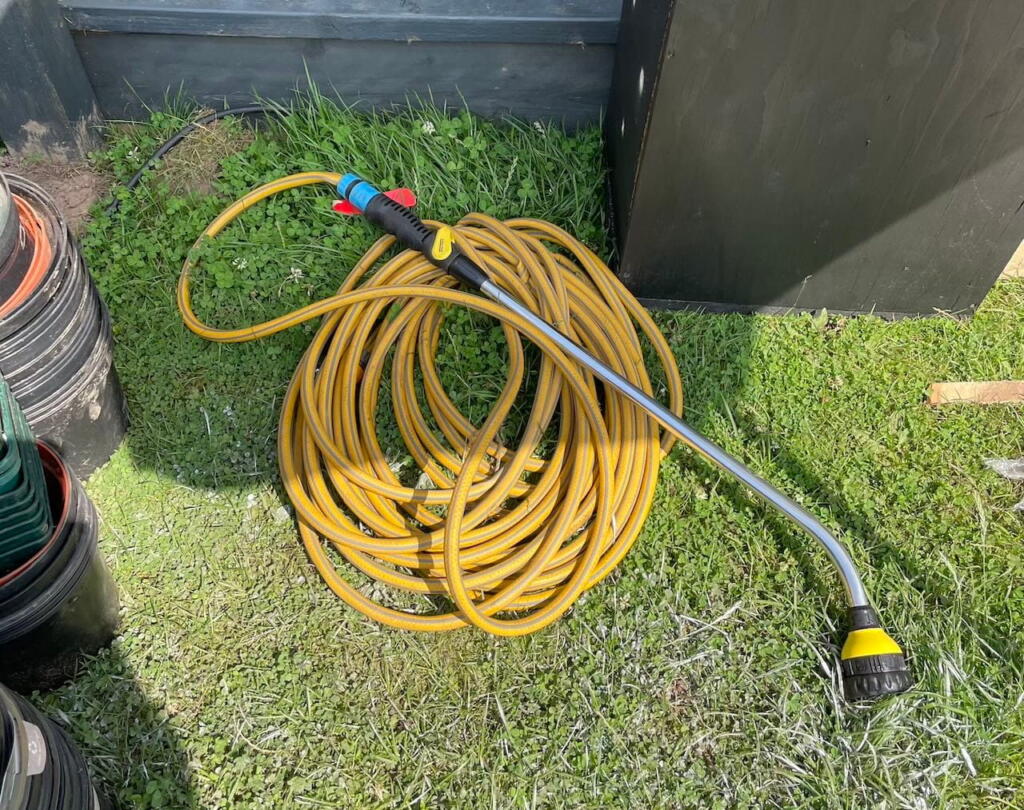
Water early in the morning. Less water is lost to evaporation, and the grass dries off during the day, which reduces the risk of disease. Evening watering keeps the turf wet all night and, on soil that is already damp, it is a common route to waterlogging. Give the edges and corners extra attention, especially where turf meets a path or patio, because they dry out first.
Light daily sprinkles are the most common mistake I see. They keep the surface wet but never reach the soil below, so the roots stay in the turf instead of growing down. They also encourage Annual Meadow Grass (Poa annua), a weed grass that loves constantly damp surfaces.
🛒 Find a lawn sprinkler with a timer on Amazon UK
Yes, and it is far more common than people think. New turf needs moisture, but roots also need air. When the soil is kept saturated, the air spaces fill with water, the roots suffocate and the grass begins to yellow, brown and rot. Waterlogged turf also stays soft, so it dents underfoot and the joints can open as the rolls swell and shrink.
One reader on the forum had turf laid on a hot July weekend and was watering it three times a day for an hour at a time. Within two days the turf was browning and the ground sank when he walked on it. His plan was to water even more. I told him to stop watering entirely for 24 to 48 hours to let the soil drain, then switch to one long soak in the early morning only. A week later parts of the lawn had greened up again, and the browning that remained was down to the heatwave rather than the watering.
Signs you are overwatering new turf:
If you spot these, stop watering until the soil underneath feels just moist, then water less often. It feels wrong to hold back water from brown turf, but in this case it is the fix.
Keep off new turf completely for the first two weeks. Footprints press the turf into soft, wet soil, leave dips that are hard to fix later, and tear the fragile new roots. If you need to get across to a shed or a tap, lay a scaffold board or a few planks down and walk on those to spread your weight.
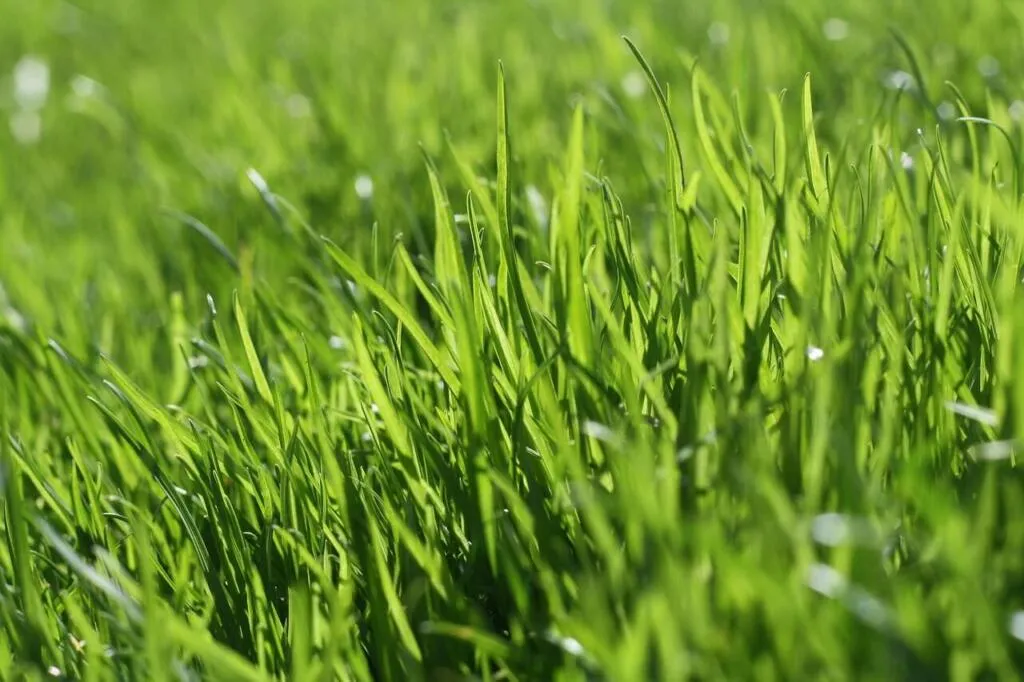
You can walk on it lightly after two weeks if you need to, for example to move a sprinkler, but wait for the tug test before regular use. Most turf is rooted enough for light walking at three to four weeks. Children and dogs are harder on a lawn than adults, so I would keep them off until week five or six. Full family use, including ball games, can usually start from about week eight.
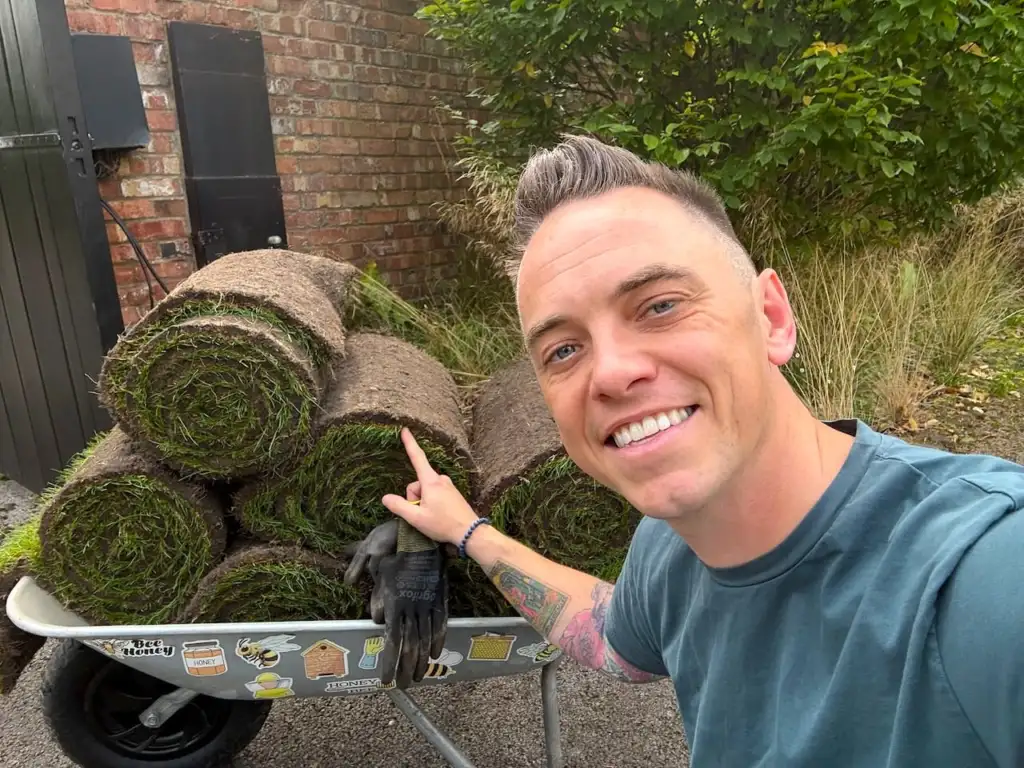
Turf usually takes two to three weeks to start rooting into the soil and four to six weeks to root firmly, in spring or autumn. In cold weather it can take twice as long, and in warm, moist soil it can be quicker. The way to check is the tug test.
Grab a handful of grass in the middle of a roll and pull upwards firmly but gently. If the turf lifts and you can see the soil underneath, it has not rooted yet. Press it back down, water it, and try again in a week. If the grass tears before the turf moves, or you feel strong resistance, the roots have taken hold. Test in a few spots, including the edges, because some areas root faster than others.
If the turf still lifts easily after four weeks in spring or autumn, something is wrong underneath. The usual causes are a compacted layer under the topsoil, turf laid on soil that was too dry or too loose, or overwatering that has rotted the new roots.
Give new turf its first cut once it passes the tug test and the grass has grown to about 5 to 7cm, which is usually three to four weeks after laying. Choose a day when the turf is dry and the soil underneath is firm, so the mower does not leave wheel marks.
Set your mower to its highest setting and take off no more than the top third of the grass. If it is 7cm tall, cut it to about 5cm. Scalping new turf is the quickest way to stress it, because the grass is still putting its energy into roots. Over the next few cuts you can lower the blades a notch at a time to your normal mowing height.
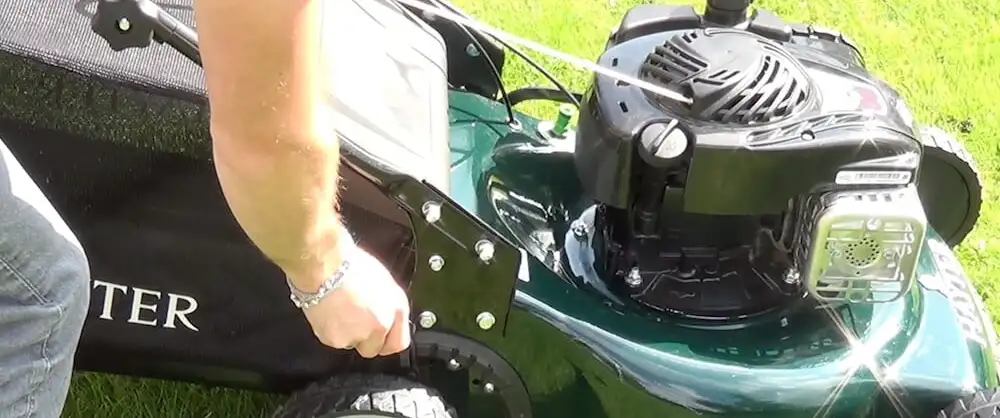
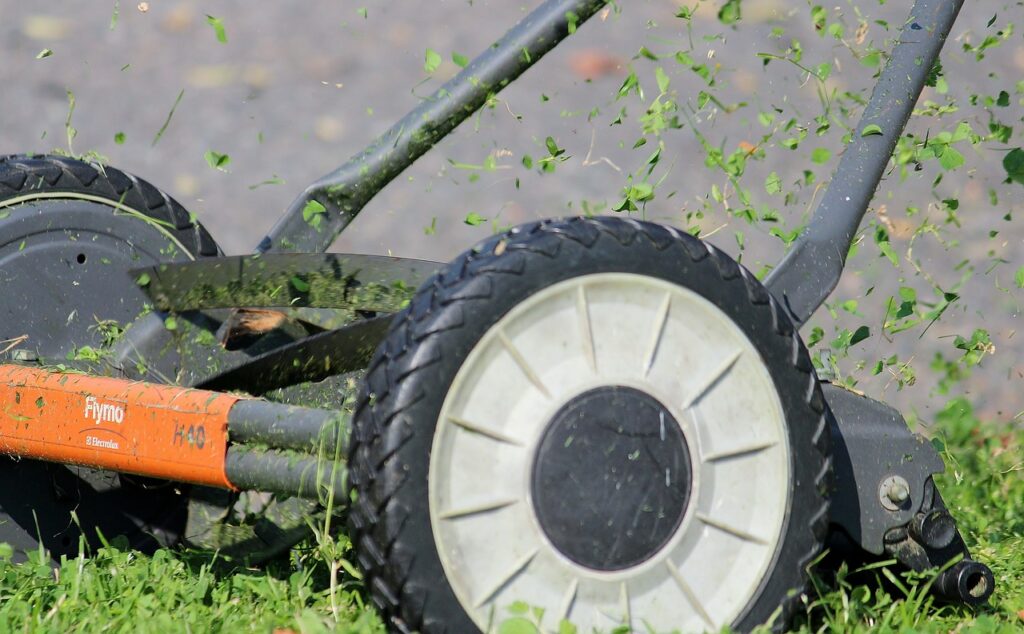
Make sure the blades are sharp, because blunt blades tear the grass and can pull up turf that has not fully rooted. For the first few mows, cut diagonally across the lines you laid the turf in, so the mower wheels do not run along the same joints every time. A light electric rotary or push mower is gentler than a heavy self-propelled machine at this stage. My guide to choosing a lawn mower covers the options, and if you are thinking about a robot mower, wait until the lawn is fully established before you install the boundary wire.
Collect the clippings from the first few mows rather than leaving them on the lawn. Wet clippings can smother young grass and hold moisture against it. Once the lawn is established after about eight weeks, leaving fine clippings on the surface returns nutrients to the soil.
No, not straight away. New turf is grown in fertile soil and arrives with plenty of nutrients. If you feed it in the first few weeks, the grass has no reason to send roots down into your soil to look for food, and you get lush top growth sitting on shallow roots. I tell readers to hold off feeding new turf for at least the first six to eight weeks, and if it was laid in autumn, to wait until the following spring. A pre-turf fertiliser raked in before laying gives it everything it needs until then.
When the time comes, use a balanced spring and summer granular feed with nitrogen, phosphorus and potassium, applied at the rate on the pack with a spreader for even coverage. For an autumn feed, use a low nitrogen autumn formula. Avoid weed and feed products for the first year, because the herbicide in them can damage young grass. My guide on how to feed your lawn covers the timings and products in more detail.
🛒 Find a granular spring and summer lawn feed on Amazon UK
Most new turf problems look worse than they are. Turf is tough, and in my experience the vast majority of struggling new lawns recover once the cause is fixed. Here are the problems I am asked about most, with what usually causes them.
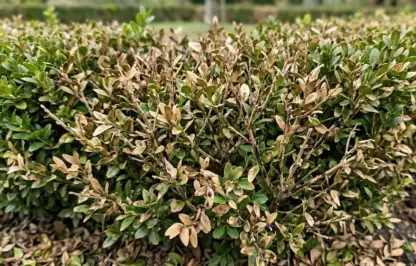
Yellow patches on new turf usually mean one of three things. If the turf was yellow when you unrolled it, it sat rolled up too long before delivery and lost chlorophyll in the dark. It usually greens up within a week or two in daylight. If it turns yellow after laying, check the moisture under it: both drought and waterlogging cause yellowing. A reader on the forum asked why parts of her new turf had gone yellow two weeks after laying. She had fed it on the first day and was watering twice daily. My advice was to stop feeding, cut watering to about three deep soaks a week, and give the turf time. For more causes, see my guide to why lawns turn yellow or patchy.
Brown patches in the first few weeks are usually drought at the edges and on high spots, or waterlogging in low spots. Lift the turf corner in a brown area and look at the soil. Dry and dusty means more water. Wet and sour smelling means less. In a heatwave, new turf can go brown and crispy as a survival response even when watered properly. It looks alarming, but the roots are usually alive, and the grass greens up again when the weather cools. My guide to watering lawns in a heatwave explains what is happening.

Gaps open up when turf dries out and shrinks, or when it was stretched to fit during laying. Brush a mix of sieved topsoil and sharp sand into the gaps and water it in, and the grass will creep across within a few weeks. For wider gaps, cut a strip from a spare roll or an out of sight edge and slot it in. For bigger bare areas, rake the soil, sow a hard wearing mix from my best grass seed picks and keep it damp, and my guide to how long grass seed takes to grow tells you what to expect. Then look at your watering, because gaps are a sign the turf has been allowed to dry out.
Edges curl when they dry out faster than the middle, which is very common along paths and patios that hold heat. Press them down, water them more often than the rest of the lawn, and brush a little sieved topsoil along the cut edge to keep the moisture in. If edges keep lifting after a month, check for gaps underneath where the soil was not raked level to the path.
Mushrooms in new turf are harmless and nothing to worry about. A reader who found mushrooms all over her new lawn a couple of months after laying wanted to know whether to kill them. I told her to leave them alone. They are the fruiting bodies of fungi breaking down organic matter in the soil, often from compost in the topsoil, and they are a sign of healthy, living soil. They usually disappear within a week or two. If you have dogs or small children, pick them off and bin them, as some can be toxic if eaten.
Weeds in new turf come from two places: seeds and roots in your soil, and seeds already in the turf from the field it was grown in. A forum reader had Dandelion, Couch grass and Horsetail appear seven weeks after his new lawn was laid. That mix points to perennial roots left in the subsoil. Regular mowing weakens most of them, and Dandelions are easy to lift with a knife or hori hori. Annual weeds die out once you start mowing. Avoid weedkillers for at least six months, and see my guide to lawn weeds for the stubborn ones.

Sometimes the problem is the turf itself. Another reader described a new lawn that was thin and patchy after its first winter, with coarse broad leaved grasses and no fine grasses at all. That pointed to a mix of poor ground preparation, a coarse seed mix in the turf and a very wet winter that killed off the finer grasses. The fix there is to improve the drainage and soil with aeration and top dressing, then overseed with a better mix in autumn.
Turf laid in autumn needs much less watering, because rain and cooler temperatures do most of the work. Check the soil under a corner once a week and only water if it is dry. Keep leaves raked off, because a layer of wet leaves blocks light and causes yellow patches within days. Give it a final high cut before growth stops, usually in late October or November.
Turf laid in late autumn or winter will root slowly, and some of it may not root properly until spring. Keep off it when it is frosty or waterlogged, as walking on frozen grass breaks the blades and walking on wet turf compacts the soil underneath. Do not feed it until spring. My guide to winter lawn care covers the rest of the colder months.

Soak new turf as soon as it is laid, then water deeply every two to three days for the first two weeks, and every three to four days until about week five. After that, water twice a week in dry weather. Each session should wet the soil under the turf, so lift a corner to check rather than going by time alone.
Yes. Saturated soil starves the roots of air, so overwatered turf turns yellow then brown, feels spongy underfoot and can rot. If the soil under a lifted corner is squelchy, stop watering for a day or two until it is just moist, then water less often. Early morning soaks are better than several sessions a day.
Keep off new turf completely for two weeks, then walk on it only lightly until it passes the tug test, usually at three to four weeks. Children and dogs should stay off until around week five or six, and full use, including ball games, can normally start from about eight weeks after laying.
New turf starts rooting into the soil after about two to three weeks and is usually firmly rooted after four to six weeks in spring or autumn. Cold weather slows it down, and warm, moist soil speeds it up. Use the tug test: if the turf resists a firm pull, the roots have taken hold.
Cut new turf once it passes the tug test and the grass is 5 to 7cm tall, usually three to four weeks after laying. Set the mower to its highest setting, take off no more than the top third, use sharp blades and mow when the turf is dry and the soil is firm.
New turf turns yellow if it sat rolled up too long before laying, if it is too dry, or if it is waterlogged. Turf that was yellow on arrival usually greens up in daylight within a week or two. Lift a corner to check the soil moisture, and adjust watering so the soil underneath is moist but not sodden.

Join over 100,000 gardeners on YouTube
Free gardening videos from the Garden Ninja, with 8 million views and counting.
Subscribe on YouTube, it’s freeOnce the lawn is down and growing, the borders, paths and seating around it are what bring the garden together. My online courses teach you how to plan those spaces with confidence, using the same steps I follow on every design project.
Courses start from £29, so you can plan the next stage of your garden for less than the cost of a few rolls of turf.
For the garden you’ve already got, not the one you’re starting from scratch. Seven checklists and video lessons from BBC Garden Rescue’s Lee Burkhill, designed to help you decide what’s worth keeping before you spend a penny.
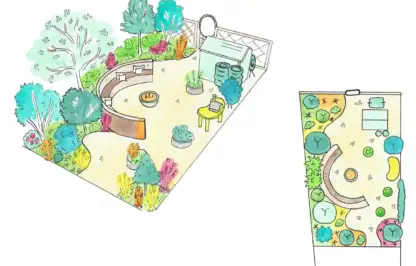
Garden Design Examples for Small Gardens: 30 Design Templates & Planting Plans: In this online gardening course, I’ll walk you through 30 fantastic garden designs, explaining the logic behind the layout and plant choices, plus take-home tips for applying them in your own garden.
Learn how to transform and design your garden with Lee Burkhill’s crash course in garden design. In over 5 hours, Lee will teach you how to design your dream garden. Featuring practical design examples, planting ideas and video guides. Learn how to design your garden in one weekend!
Garden Design for Beginners Online Course: Want to become a garden designer or design your own garden? This beginner course is for you. Join me, Lee Burkhill, an award-winning garden designer, as I train you in the art of beautiful garden design. Enjoy 20 hours of online study and video lessons, along with quizzes and a completion certificate.
New turf aftercare is mostly about watering well for eight weeks. Soak it on day one, give it deep soaks every two to three days for the first fortnight, then gradually water less often but deeply. Check the soil under a corner rather than guessing, and remember that too much water causes as many problems as too little.
Keep off it for two weeks, use the tug test to check it has rooted, and give it a high first cut at 5 to 7cm. Hold off feeding for at least six to eight weeks, and if problems appear, check the moisture underneath first. If you are still at the planning stage, my guides to laying turf and the turf cost calculator will help you get off to a good start.
Happy Gardening!


Lee Burkhill, known as the Garden Ninja, is an award-winning garden designer and horticulturist with over 30 years of gardening experience and 15 years as a professional garden designer. A qualified RHS (Royal Horticultural Society) professional, Lee specialises in sustainable garden design and practical horticultural advice. He designs and presents on BBC1’s Garden Rescue and in leading gardening publications. Lee combines three decades of hands-on gardening knowledge with professional design qualifications to help gardeners create beautiful, functional outdoor spaces.
View all posts by Lee Burkhill







JOIN THE NINJAS
Be the first in line for new Guides, Discount codes and Offers