For the garden you’ve already got, not the one you’re starting from scratch. Seven checklists and video lessons from BBC Garden Rescue’s Lee Burkhill, designed to help you decide what’s worth keeping before you spend a penny.
69

Quick Answer
Grass seed takes 7 to 21 days to germinate in the UK when the soil is above 8°C and kept moist. Perennial Ryegrass appears first, in 5 to 10 days, Fescues take 7 to 14 days and Bents 10 to 21 days. A new lawn is usually ready for its first cut after four to eight weeks and for light use after eight to twelve.
This guide gives realistic germination times for UK gardens by month and soil temperature, explains why different grasses germinate at different speeds, takes you from sowing to the first cut week by week, and finishes with a checklist for when your grass seed isn’t growing.
Jump To
This page contains affiliate links for products I use and trust. If you buy through one, I may earn a small commission at no extra cost to you, which helps keep the Garden Ninja blog free for everyone.
🛒 Find a soil thermometer on Amazon UK
Grass seed needs two things to germinate: moisture and warmth. Provided the seedbed is kept damp, soil temperature is what sets the pace. Below about 6°C, very little happens. Between 8 and 10°C, germination takes two to three weeks. Above 12°C, the fastest grasses can be up in under a week. That is why the same packet of seed can take five days in September and a month in March.
🌿 Grass Seed Germination Time by Month (UK)
| Month sown | Typical soil temperature | First shoots | Full cover |
|---|---|---|---|
| March | 5 to 7°C | 14 to 28 days, often longer | 6 to 8 weeks |
| April | 7 to 10°C | 10 to 21 days | 4 to 6 weeks |
| May | 10 to 14°C | 7 to 14 days | 3 to 5 weeks |
| June to August | 14 to 18°C | 5 to 10 days if watered | 3 to 4 weeks |
| September | 12 to 16°C | 5 to 10 days | 3 to 4 weeks |
| October | 8 to 12°C | 10 to 21 days | 5 to 8 weeks |
| November to February | Below 8°C | May not germinate until spring | Not reliable |
These are typical figures for a mixed lawn seed sown in moist soil in an average UK garden. Southern and coastal gardens tend to sit at the faster end, and northern, upland and exposed gardens at the slower end. A soil thermometer pushed 5cm into the ground first thing in the morning gives you a far better guide than the calendar.
Moisture matters just as much. Seed that dries out after it has started to swell can die, and seed sown into dry soil simply waits until rain arrives. If your seed is taking far longer than the table suggests, the most likely reason is that the seedbed has been drying out between waterings.

Lawn seed is a mix of grasses, and they do not all germinate at the same speed. This catches a lot of people out. You see a flush of green in the first week, then notice that it looks thin and uneven, and assume the rest has failed. In most cases the slower grasses are simply still on their way.
🌿 Germination Speed by Grass Type
| Grass | Typical germination | Found in |
|---|---|---|
| Perennial Ryegrass (Lolium perenne) | 5 to 10 days | Hard wearing and family lawn mixes |
| Creeping Red Fescue (Festuca rubra) | 7 to 14 days | Most mixes, especially fine and shade lawns |
| Chewings Fescue (Festuca rubra subsp. commutata) | 7 to 14 days | Fine ornamental lawns |
| Hard Fescue (Festuca brevipila) | 10 to 21 days | Shade and drought tolerant mixes |
| Browntop Bent (Agrostis capillaris) | 10 to 21 days | Fine ornamental lawns |
| Smooth-stalked Meadow Grass (Poa pratensis) | 14 to 28 days | Hard wearing and shade mixes |
Perennial Ryegrass is the sprinter. It germinates fast, establishes quickly and gives you that first green haze. Fescues follow a few days later and fill in between. Bents and Smooth-stalked Meadow Grass are the slowest, and Smooth-stalked Meadow Grass can take a month in cool soil. A Ryegrass rich family lawn mix will look green much sooner than a fine Fescue and Bent mix, even if both are sown on the same day.
So if you have sown a fine ornamental or shade mix, expect to wait longer and do not judge the result until at least three weeks have passed. My guide to the best grass seed explains what is in each type of mix and which suits which garden.
Here is what a lawn sown in early autumn or late spring typically looks like as it grows, from bare soil to its first cut. In colder conditions, stretch each stage out by a week or two.
The seedbed is raked to a fine tilth, the seed is sown in two passes and lightly raked in, and the surface is watered with a fine spray. My guide on how to sow grass seed covers this stage step by step. From now on, keep the top centimetre of soil damp.
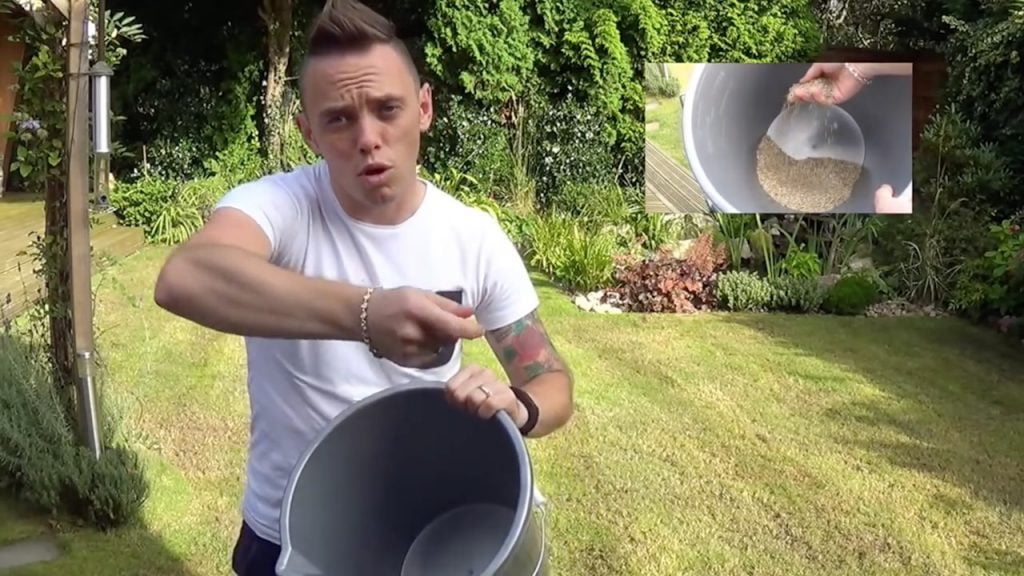
You will not see much above ground, but the seed is taking up water and splitting open. This is when drying out does the most damage, so check the surface every day in dry weather. In warm soil, the first Ryegrass shoots may appear towards the end of the first week as fine green threads.
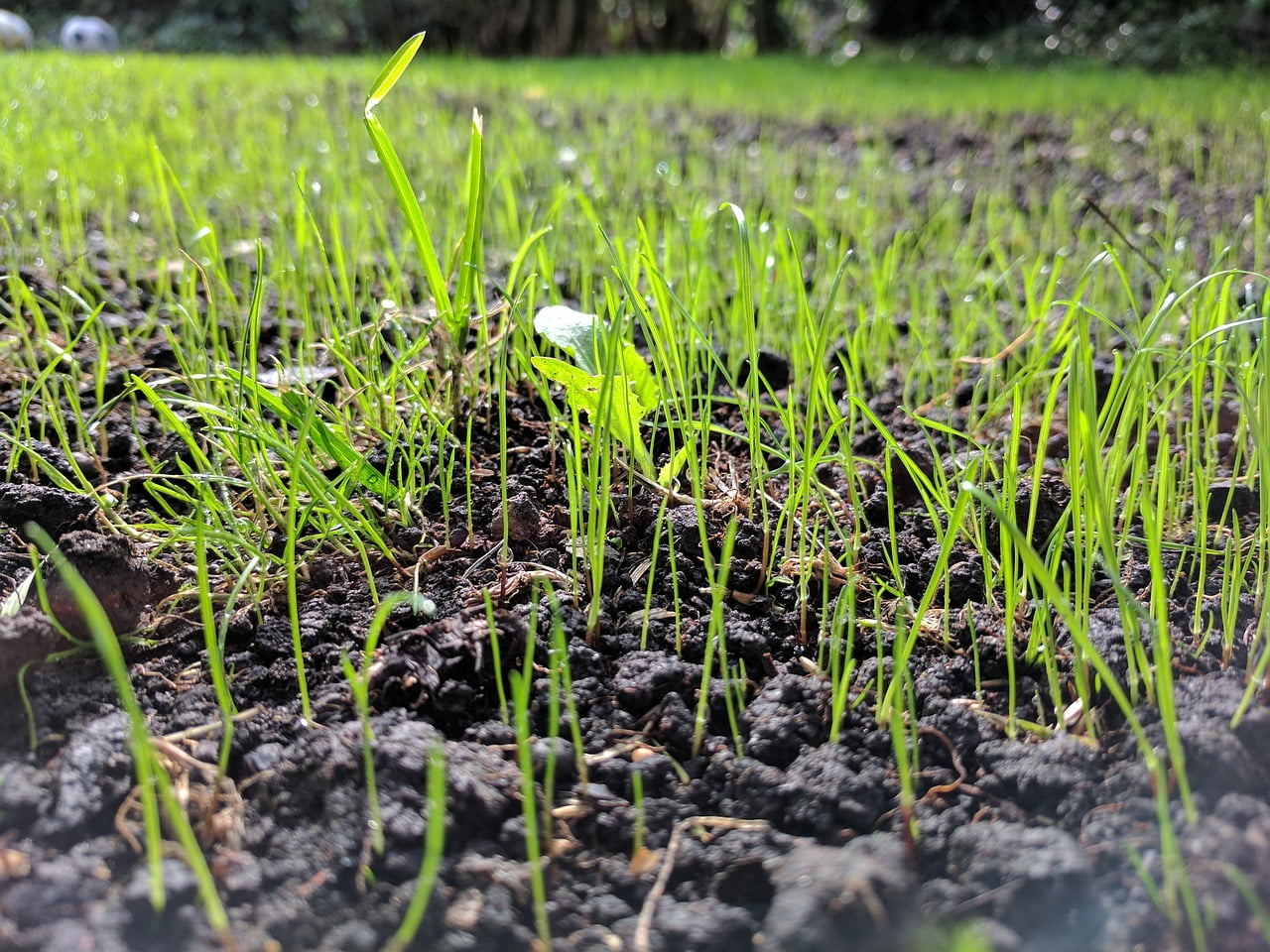
Ryegrass and the faster Fescues come through, giving the soil a green tint when you look across it at a low angle. Individual seedlings are thin, upright and only a centimetre or two tall. Keep watering little and often, and keep off it completely.
The slower Fescues and Bents appear, and the lawn begins to look more even. Seedlings are now 2 to 5cm tall. Once most of the area is green and the grass is about 2.5cm tall, start watering less often but more deeply, to encourage the roots to grow down.
Smooth-stalked Meadow Grass is the last to arrive. The young grass starts to produce side shoots, called tillers, and the lawn begins to thicken. This is the time to check for bare patches and resow them, while the soil is still warm.
When the grass reaches 5 to 7cm tall, give it its first cut, taking off only the top third with sharp blades on a high setting. Firm the lawn gently beforehand by rolling or treading so the mower does not pull up loose seedlings. In autumn, this might be the only cut before winter.
After two or three cuts, the lawn can take light foot traffic. An autumn sown lawn will normally be ready for full family use the following spring, and a spring sown lawn by late summer.
The first signs of germination are easy to miss. Get down low and look across the soil towards the light rather than straight down on it. Early on you will see a faint green fuzz, like a five o’clock shadow, before you can pick out individual blades.
You can also check the seed itself. Scrape back a little soil and look at a few seeds. A seed that is germinating will look swollen and may have split, with a tiny white root or a pale green shoot emerging. A seed that has not started will look exactly as it did in the packet. A seed that has rotted will be soft, dark and mushy, which usually means the soil is too wet or too cold.
You cannot change the weather, but you can give your seed the best possible start. The biggest single factor you control is timing. Sow when the soil is warm, ideally above 10°C, and seed will come up in days rather than weeks. Late August and September are the quickest months in most UK gardens.
Next comes seed to soil contact. Seed that is pressed into a fine, firm tilth takes up water quickly and evenly, while seed sitting loose on clods of soil dries out between waterings. Rake it in lightly after sowing and, on small areas, firm it gently with the back of the rake or by treading on a plank.
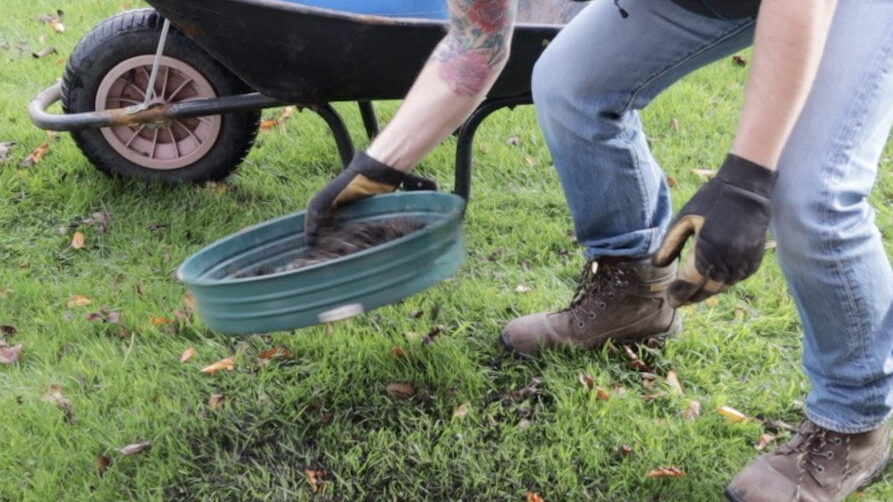
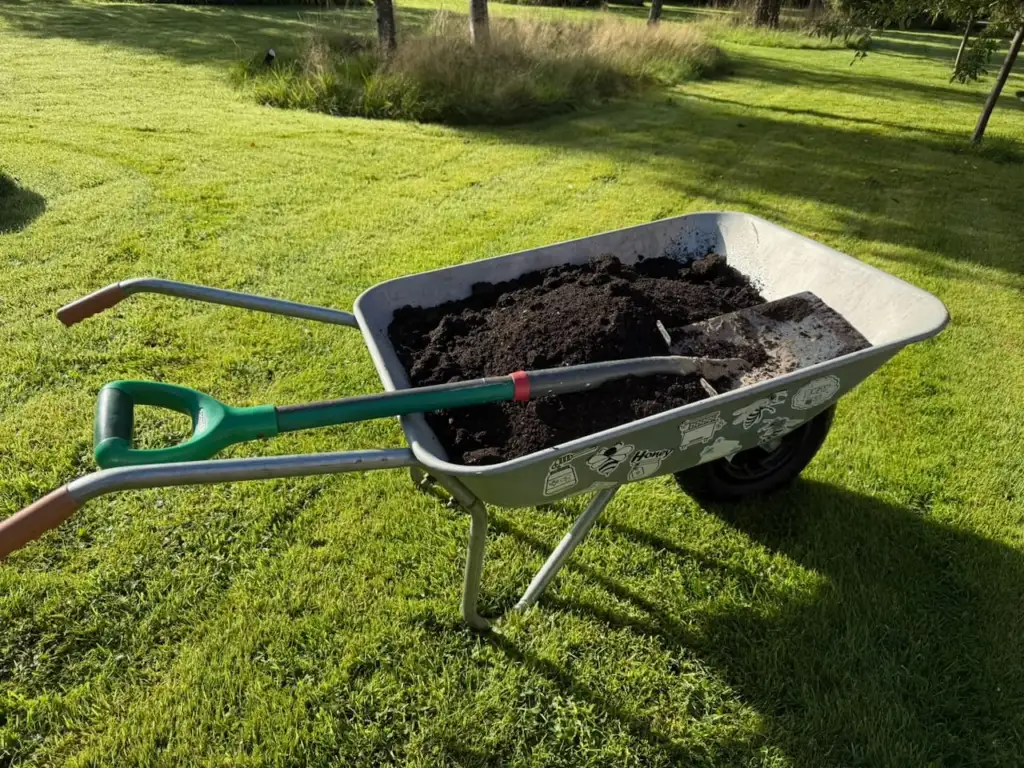
Then keep the moisture constant. A light dusting of sieved compost and a daily check in dry weather make a big difference. On small areas, a sheet of horticultural fleece pegged over the seed holds warmth and moisture and keeps the birds off, and it can shave a few days off germination in spring. Take it off as soon as the grass is through. Finally, use fresh seed from a mix that suits the season. Ryegrass rich mixes germinate faster in cooler soil than pure Fescue mixes, which is worth knowing if you are sowing at the edges of the season.
If you have seen nothing after 10 days in warm weather, or after three weeks in cool weather, something is probably holding it back. Work through this checklist. In my experience, the first three causes account for most failures.
🌿 Grass Seed Not Growing: Diagnostic Checklist
| What you see | Likely cause | What to do |
|---|---|---|
| Nothing after 3 weeks, soil cold | Soil below 8°C | Wait. It will germinate when the soil warms. Resow any gaps in spring. |
| Nothing, soil surface dry and crusty | Seedbed drying out | Water lightly every day. Sieve a thin layer of compost over the seed to hold moisture. |
| Bare patches, seed husks on the surface | Birds eating the seed | Resow patches and put up a string grid or fleece. |
| Seed in clumps and puddles | Heavy rain or a strong hose jet | Rake gently to spread, resow bare areas, water with a fine spray. |
| Patchy, some areas green | Uneven sowing or seed buried too deep | Resow thin areas. Rake seed in lightly, no deeper than 1cm. |
| Seeds soft, dark and mushy | Waterlogged or very cold soil | Improve drainage, let the soil dry a little, resow when warmer. |
| Nothing at all, even in warm moist soil | Old or poor quality seed | Test a few seeds on damp kitchen paper. Buy fresh seed if few sprout. |
| Green, then yellowing seedlings | Too wet, too dry or damping off | Water deeply but less often and improve airflow. |
| Lots of seedlings that are not grass | Weed seeds in the soil | Hand weed large weeds. Mowing will kill most annual weeds. |
This is the most common reason in early spring and late autumn. Seed sown into cold soil sits dormant and waits. It is not dead, but the longer it sits, the more is lost to birds and rot. If you sowed in October or March and nothing has appeared, check the soil temperature. If it is below 8°C, the only fix is patience.
Grass seed needs the top centimetre of soil damp for the whole time it is germinating. A single hot, windy day can dry out the surface, and if the seed had already started to swell, it may die. If the surface looks pale, dry and crusty, water more often with a fine spray. A thin layer of sieved compost over the seed makes a big difference in dry spells.
If you see empty seed husks, bare patches with tiny peck marks, or a crowd of pigeons on your lawn every morning, birds are the problem. Resow the bare areas and protect them with a criss-cross of string on short canes, or horticultural fleece pegged over small patches.
Grass seed needs to be close to the surface. Seed raked in too deeply, or covered with more than a centimetre of soil, often fails to reach the light. Heavy rain soon after sowing can wash seed into low spots, leaving bare areas and clumps. Rake gently to spread any clumps and resow the gaps.
If everything else is right and still nothing appears, test the seed. I explain how below. Cheap seed can have low germination rates, and old seed loses vigour every year.
Keep off newly seeded grass as much as you possibly can for the first eight weeks. Before germination, footsteps push the seed into the soil and leave dips. Once the seedlings are up, their roots are tiny and a single step can crush or uproot them. After the second or third cut, usually around eight weeks, light walking is fine. Full use, including children and dogs, is best left for twelve weeks or, for an autumn sown lawn, until the following spring. Lay planks down if you need to cross it in the meantime.
Grass seed stays viable for two to three years if it is stored well, and some will still germinate after five, though the percentage that comes up drops each year. Heat, damp and humidity shorten its life, so keep opened packs sealed in an airtight container somewhere cool, dry and dark. A shed is fine if it stays dry, but a garage that gets hot in summer or damp in winter is not ideal, and mice love grass seed.
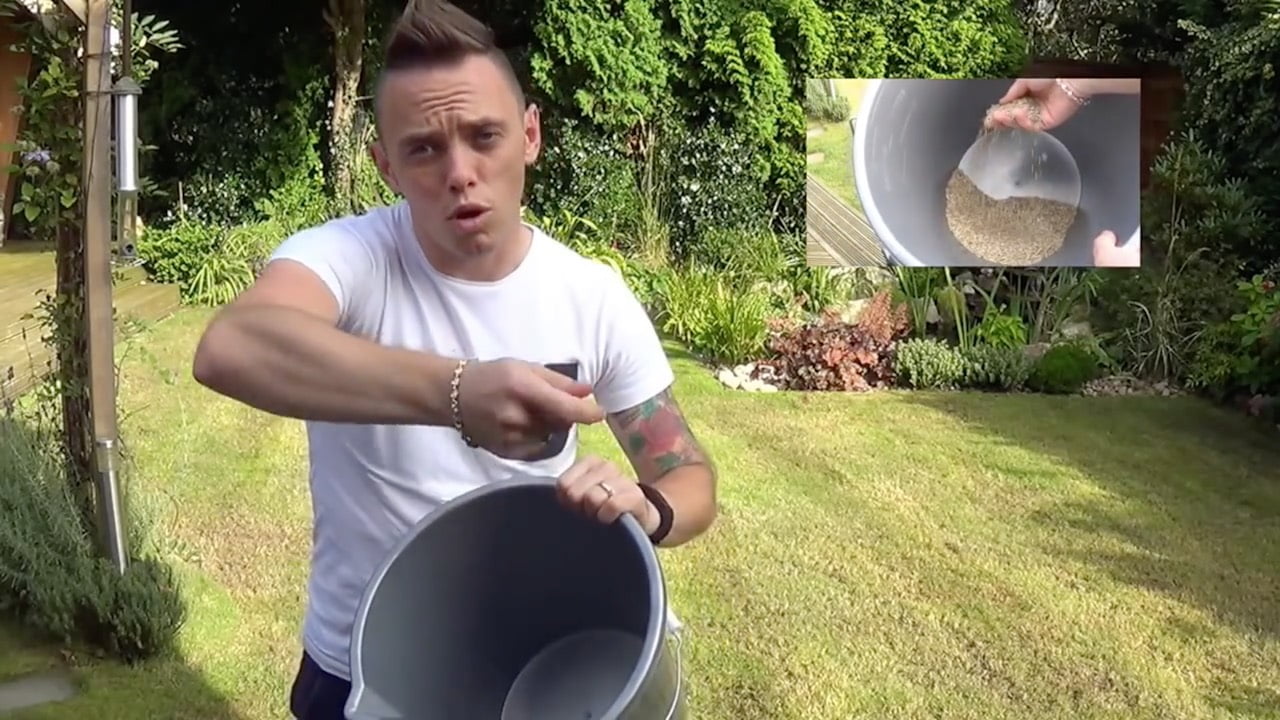
To test old seed, scatter 20 seeds on a few sheets of damp kitchen paper, fold it over, and put it in a sealed food bag or tub somewhere warm, such as a kitchen windowsill. Check after 7 to 14 days. If 15 or more have sprouted, the seed is good. If fewer than half have sprouted, buy fresh seed or sow the old seed at a heavier rate for patching only.
💡 Top Tip: keep a little seed back
When you sow a new lawn, keep back a small bag of the same seed for patching. Sown into gaps a few weeks later, it matches the rest of the lawn perfectly, where a different mix would stand out as a different shade of green.
Grass seed takes 7 to 21 days to germinate in the UK in moist soil above 8°C. Perennial Ryegrass is quickest at 5 to 10 days, Fescues take 7 to 14 days and Bents take 10 to 21 days. The lawn is usually ready for its first cut after four to eight weeks and for light use after eight to twelve weeks.
The most likely reasons are cold soil, a seedbed that has dried out, or birds eating the seed. If the soil is below 8°C, it may simply be waiting for warmer weather. Check that the surface is staying damp, look for bird damage, and test a few seeds on damp kitchen paper if nothing else explains it.
Some will, but the results are usually poor. Seed scattered on unprepared ground or on top of an existing lawn dries out, washes away or is eaten by birds before it can root. For reliable germination, the seed needs to be raked lightly into a fine, firm, moist seedbed.
Keep the top centimetre of soil damp until the seed germinates. In dry, warm weather that can mean a light watering with a fine spray once or twice a day. Once most of the grass is up and about 2.5cm tall, water less often but more deeply to encourage deep roots.
Grass seed should sit in the top few millimetres of soil, so rake it in lightly rather than burying it. Seed covered by more than about 1cm of soil often runs out of energy before it reaches the surface. A thin dusting of sieved compost is fine because it holds moisture around the seed without burying it.
Stored somewhere cool, dry and airtight, grass seed usually germinates well for two to three years. After that, fewer seeds sprout each year. Test old seed by sprouting 20 seeds on damp kitchen paper. If fewer than half germinate within two weeks, it is time to buy fresh seed.

Join over 100,000 gardeners on YouTube
Free gardening videos from the Garden Ninja, with 8 million views and counting.
Subscribe on YouTube, it’s freeThose weeks of waiting for grass seed to come up are the perfect time to plan what goes around it. My online garden design courses show you how to shape borders, choose plants and lay out a garden that works for the way you live.
With courses from £29, it is a low cost way to make sure the rest of the garden is as good as your new lawn.
For the garden you’ve already got, not the one you’re starting from scratch. Seven checklists and video lessons from BBC Garden Rescue’s Lee Burkhill, designed to help you decide what’s worth keeping before you spend a penny.
Garden Design Examples for Small Gardens: 30 Design Templates & Planting Plans: In this online gardening course, I’ll walk you through 30 fantastic garden designs, explaining the logic behind the layout and plant choices, plus take-home tips for applying them in your own garden.
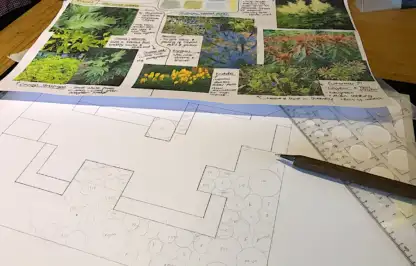
Learn how to transform and design your garden with Lee Burkhill’s crash course in garden design. In over 5 hours, Lee will teach you how to design your dream garden. Featuring practical design examples, planting ideas and video guides. Learn how to design your garden in one weekend!
Garden Design for Beginners Online Course: Want to become a garden designer or design your own garden? This beginner course is for you. Join me, Lee Burkhill, an award-winning garden designer, as I train you in the art of beautiful garden design. Enjoy 20 hours of online study and video lessons, along with quizzes and a completion certificate.
In moist UK soil above 8°C, grass seed germinates in 7 to 21 days, with Ryegrass first and Fescues, Bents and Smooth-stalked Meadow Grass following over the next two to three weeks. Expect a first cut at four to eight weeks and light use after eight to twelve.
If nothing is happening, check the soil temperature, keep the seedbed damp, protect it from birds and test the seed if all else fails. For the full sowing method, see my guide on how to sow grass seed, and for help choosing a mix, my guide to the best grass seed in the UK.
Happy Gardening!


Lee Burkhill, known as the Garden Ninja, is an award-winning garden designer and horticulturist with over 30 years of gardening experience and 15 years as a professional garden designer. A qualified RHS (Royal Horticultural Society) professional, Lee specialises in sustainable garden design and practical horticultural advice. He designs and presents on BBC1’s Garden Rescue and in leading gardening publications. Lee combines three decades of hands-on gardening knowledge with professional design qualifications to help gardeners create beautiful, functional outdoor spaces.
View all posts by Lee Burkhill








JOIN THE NINJAS
Be the first in line for new Guides, Discount codes and Offers