For the garden you’ve already got, not the one you’re starting from scratch. Seven checklists and video lessons from BBC Garden Rescue’s Lee Burkhill, designed to help you decide what’s worth keeping before you spend a penny.
69


Quick Answer
To level a lawn, fill shallow dips by top dressing with a sandy loam mix no more than 1cm deep at a time, letting the grass grow through between layers. For deeper hollows or bumps, cut an H shape in the turf, peel it back, add or remove soil, then relay it and firm it down. Level in spring or early autumn while the grass is growing.
I have levelled lawns in my own garden and on plenty of client projects, from gentle undulations that needed a few bags of top dressing to new build plots where the ground had sunk by several centimetres. This guide covers why lawns go uneven, when to level, and the three methods I use, from the lightest to the most thorough.
Jump To
This page contains affiliate links for products I use and trust. If you buy through one, I may earn a small commission at no extra cost to you, which helps keep the Garden Ninja blog free for everyone.
🛒 Find a lawn levelling rake on Amazon UK
Before you start levelling, work out why the lawn went bumpy in the first place. If you fix the surface but not the cause, the lumps and dips come back, and all the effort is wasted. These are the usual culprits.
This is the most common cause in newer gardens. If a lawn was laid on loose, unfirmed soil, or over a trench for drains or cables, the soil slowly settles and leaves dips. New build gardens are particularly prone to it, because the topsoil is often spread loosely over compacted ground and rubble. This is why I am so insistent on treading the soil firm before laying turf, as I explain in my guide on how to lay turf.
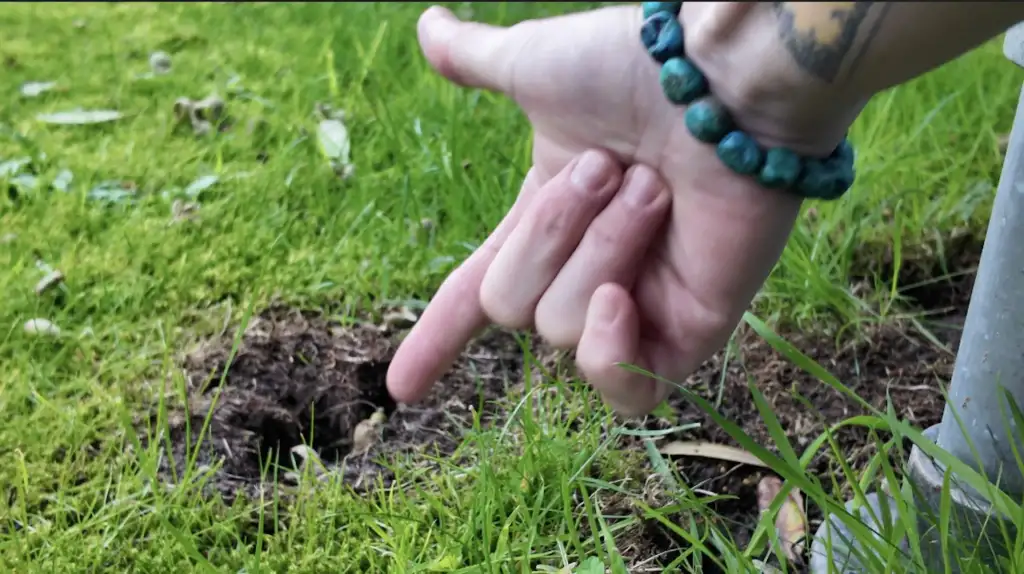
Molehills and the tunnels underneath them leave lumps on the surface and soft, sinking runs below. Earthworm casts, the little piles of soil worms leave on the surface in autumn and spring, get squashed by the mower and gradually build into a lumpy texture. Worms are good for the soil, so the aim is to brush casts away when dry, not to get rid of the worms. If moles are the problem, see my guide on dealing with moles. Birds, Badgers and Foxes digging for chafer grubs or leatherjackets can also leave the surface torn and uneven.
Water that sits in low spots softens the soil, and footsteps sink into it, making the hollows deeper. Lawns on heavy clay are especially prone to this. Heavily used routes, such as the path from the back door to the shed, compact and sink over time. Buried tree roots, old foundations and rubble can create bumps as they push up or settle.
A thick layer of thatch, the spongy layer of dead grass and moss at the base of the lawn, can make the surface feel uneven underfoot. Mowing too low on a slightly uneven lawn makes the problem look worse, because high spots are scalped and low spots left long. Scarifying, which I cover in my guide on how to scarify a lawn, deals with thatch.
The best time to level a lawn in the UK is early autumn, from September to mid October, with spring, from April to May, as the second choice. The grass is growing actively at both times, so it recovers quickly from being lifted or covered, and the soil is moist enough to work without being waterlogged. Autumn is my first choice, because it fits neatly with scarifying, aerating and overseeding in my autumn lawn renovation programme.
Avoid levelling in summer, when grass under top dressing or freshly relaid turf can dry out and die in hot weather, and in winter, when the grass is not growing and the soil is too cold and wet to work. Top dressing in particular needs the grass to be growing so it can push up through the new layer.
🌿 When to Level a Lawn
| Season | Rating | Why |
|---|---|---|
| Spring (April to May) | Good | Grass growing, soil warming. Water if it turns dry. |
| Summer (June to August) | Avoid | Heat and drought stress newly covered or relaid grass. |
| Early autumn (September to mid October) | Best | Warm soil, reliable rain, quick recovery. |
| Winter (November to March) | Avoid | No growth, cold and wet soil. |
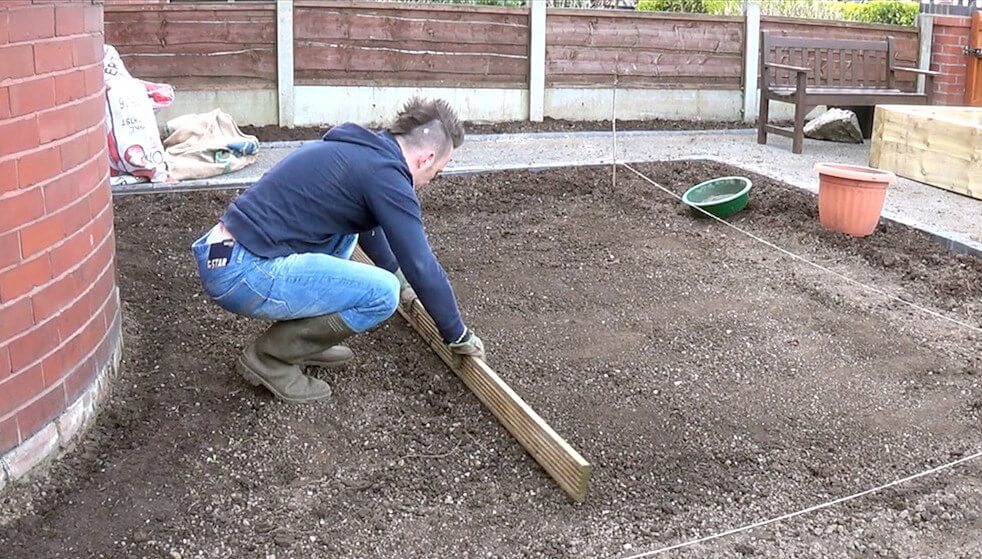
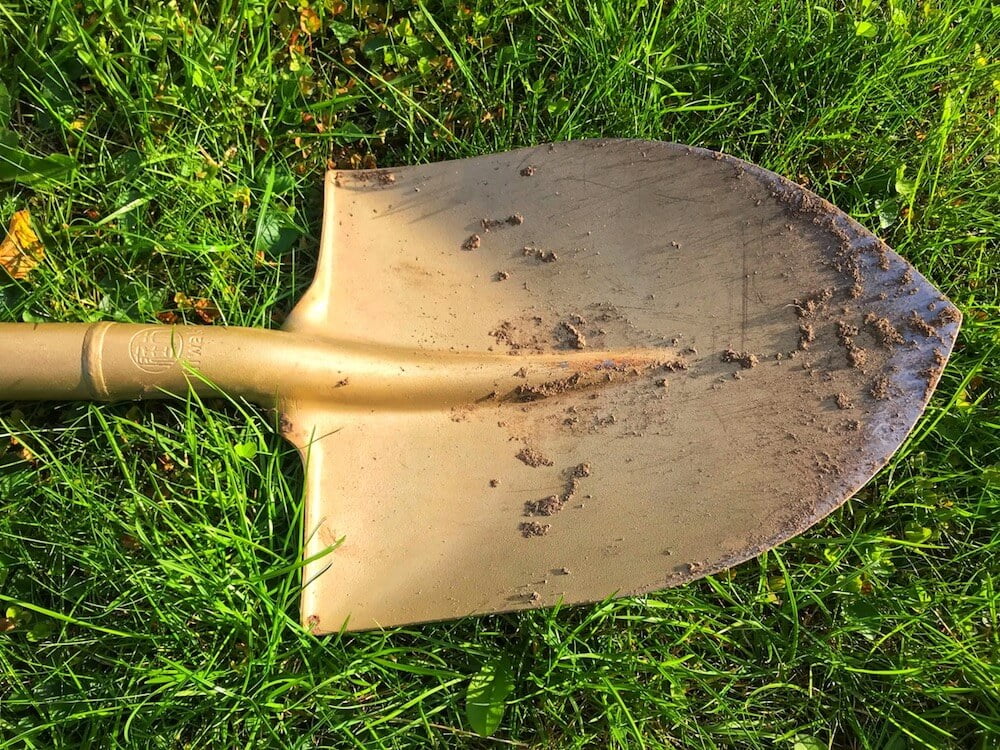
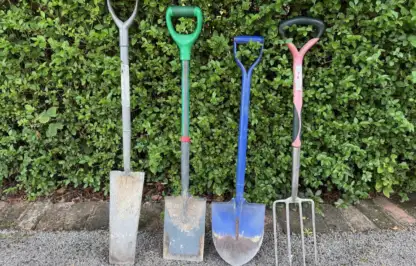
You do not need specialist equipment for most levelling jobs. A half moon edger or sharp spade, a garden fork, a stiff brush, a landscaping rake and a wheelbarrow will cover nearly everything. For larger areas of top dressing, a lawn levelling rake, a wide rake with a flat frame, spreads top dressing quickly and evenly and is worth having if you have a big lawn. A long straight plank or a spirit level helps you see the high and low spots.
For the soil, use a sandy top dressing. You can buy ready mixed lawn top dressing in bags, or make your own from roughly three parts sharp sand, two parts sieved topsoil or loam and one part fine compost. On heavy clay, increase the sand. On light sandy soil, increase the loam and compost. Avoid pure sand, which can create layers that block drainage, and avoid soil with stones or weed roots in it.
For shallow dips up to about 2.5cm deep, and for a generally lumpy surface, top dressing is the easiest method. You spread a thin layer of sandy soil over the low areas and let the grass grow up through it. It takes a few applications for deeper dips, but there is no digging involved and the lawn stays usable throughout.
Mow the lawn a little shorter than usual, and rake or scarify out any thatch so the top dressing can reach the soil. If the lawn is compacted, aerate it first with a fork or hollow tine aerator, which helps the dressing work down into the soil.
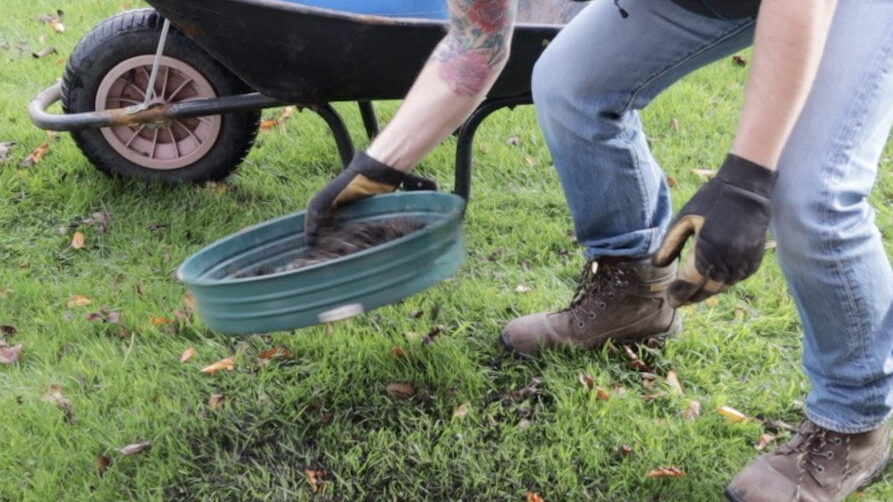
Tip small heaps of top dressing into the dips and spread it with the back of a rake or a levelling rake, working it into the base of the grass. Then brush it in with a stiff broom. The key rule is that the grass blades must still be visible after spreading. Never cover the grass with more than about 1cm of dressing in one go. Any deeper and it will smother the grass, which turns yellow and dies.
Water the area to settle the dressing, and let the grass grow through it for three to four weeks. If the dip is still there, repeat. A 2cm hollow might take two applications spread over a season. For a thin lawn, mix a little grass seed into the dressing so new grass fills in as the level rises. My guide to top dressing a lawn goes into the mixes and quantities in more detail.
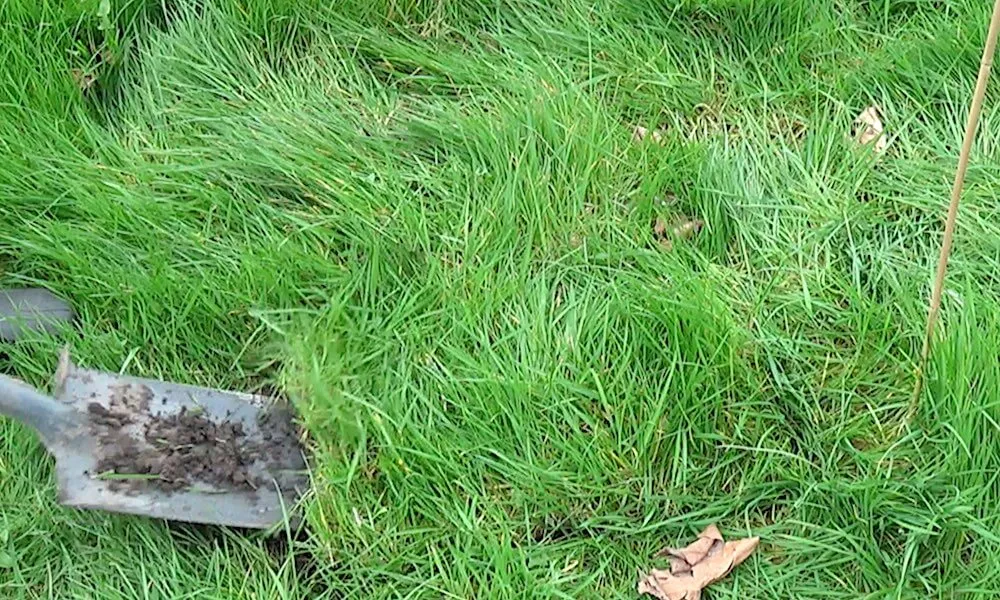
💡 Top Tip: find the low spots after rain
The easiest way to see exactly where the dips are is to look at the lawn after heavy rain or a long soak with the sprinkler. Puddles mark the low spots. Push a cane in next to each one so you know where to put the top dressing once the lawn has dried out.
For hollows deeper than about 2.5cm, or for distinct bumps, top dressing would take too long or smother the grass. Instead, you lift the turf, adjust the soil underneath, and put the turf back. It sounds drastic, but the grass recovers within a few weeks if you do it in spring or autumn.
Using a half moon edger or a sharp spade, cut a line through the centre of the hollow or bump and extend it a little beyond the edges. Then cut a line across each end to make an H shape. For a small, round hollow, a simple cross through the middle works too.
Slide a flat spade horizontally under the turf, about 3 to 5cm down, and carefully peel back the flaps on each side like opening a book. Keep the turf in one piece if you can, and keep it damp while it is rolled back.
For a hollow, fork over the exposed soil lightly, then add top dressing or sieved topsoil and firm it down with your heel until it is level with the surrounding soil, allowing for the thickness of the turf. For a bump, scrape away soil until the surface is level. Check with a plank laid across the area. Aim to finish very slightly high, because the soil will settle a little.
Fold the turf back into place, press the cuts together, and firm it down with your feet or the back of a rake. Brush a little top dressing into the cuts and water thoroughly. Keep it moist for the next two to three weeks, as you would for new turf, and avoid mowing it until it has rooted again.
When the whole lawn is badly uneven, or a large area has sunk, it is quicker to lift all the turf, level the soil underneath and relay it. This is a bigger job, but you keep your existing lawn and avoid buying new turf. If the lawn is also full of weeds and moss, it may be worth replacing it with new turf while the ground is bare, and my turf cost calculator will show you what that would cost.
Lift the turf in strips with a turf cutter, which you can hire by the day. Cut it to an even thickness of around 3 to 4cm and roll each strip up, keeping the rolls in the shade and damp. My video below shows how to use a turf cutter safely.
With the turf off, fork over the soil, remove stones, roots and rubble, and add topsoil to the low areas. Rake the whole area level, check it with a plank and spirit level, then tread it firm on your heels in two directions and rake a fine tilth on top. This is exactly the same preparation as for a brand new lawn, and my turf laying guide covers each step in more detail. Then relay the turf in a staggered brick pattern, butt the joints tightly and water it in well. My new turf aftercare guide covers watering it until it roots again.
Work quickly once the turf is lifted. Rolled turf starts to deteriorate within a day or two, especially in warm weather, so plan to relay it the same day or the next morning. For a large lawn, work in sections, lifting, levelling and relaying one area at a time.
Yes, but only a thin layer at a time. You can spread up to about 1cm of sandy top dressing over grass to fill shallow dips, as long as the grass blades still show through. The grass will grow up through it within a few weeks. Piling several centimetres of soil on top of grass smothers it, and the grass underneath turns yellow and dies, leaving a bare patch that needs reseeding. For anything deeper than 2.5cm, lift the turf and add the soil underneath it instead.
Use a sandy top dressing rather than ordinary garden soil or topsoil. Garden soil can contain weed seeds, and heavy soil spread over grass can form a crust that sheds water. A sandy mix improves drainage and works down into the lawn far better.
No, I would not use a heavy roller to level a lawn. Rolling flattens small lumps temporarily, but it does not move soil from the high spots to the low ones, so the dips are still there. What it does do is compact the soil, squeezing out the air the roots need and making drainage worse, which leads to moss and weak grass. On clay soil, it can cause real damage.
A light roll has its place. Firming newly sown grass before its first cut, or pressing down turf lifted by frost in spring, is fine with a light roller or the back roller of a cylinder mower. For levelling, use top dressing or the lift and pack method instead.
Once your lawn is level, a few habits will keep it that way. Aerate once a year, ideally in autumn, to relieve compaction and help drainage. Top dress after aerating with a thin layer of sandy dressing, which fills small dips before they become noticeable. Mow at a sensible height for your grass, usually 3 to 4cm for a family lawn, so the mower does not scalp high spots.
Brush away worm casts when they are dry, before the mower squashes them flat. Deal with problems like drainage or mole activity early, and keep heavy use spread across the lawn rather than wearing a single path. For a full year of lawn care tasks, my lawn care month by month guide sets out what to do and when.

For shallow dips under 2.5cm, top dress with a sandy loam mix no more than 1cm deep, let the grass grow through and repeat as needed. For deeper hollows or bumps, cut an H shape in the turf, peel it back, add or remove soil, then relay and firm it. For a very uneven lawn, lift the turf, level the soil and relay it.
Level a lawn in early autumn, from September to mid October, or in spring, from April to May. The grass is growing at both times, so it recovers quickly from being covered or lifted, and the soil is workable. Avoid summer, when heat stresses the grass, and winter, when it is not growing.
You can spread a thin layer of up to about 1cm over grass, but a sandy top dressing works better than plain topsoil. Make sure the grass blades still show through, and let the grass grow up before adding more. For dips deeper than 2.5cm, lift the turf and add soil underneath instead.
No. Rolling does not move soil from high spots to low spots, so it does not truly level a lawn, and a heavy roller compacts the soil, which harms drainage and root growth. Use top dressing or lift and pack the low areas instead. A light roll is only useful for firming new grass or frost lifted turf.
As a guide, a 1cm layer over one square metre needs 10 litres of top dressing, so a 25kg bag usually covers around 1.5 to 2 square metres at that depth. For general top dressing across a whole lawn, much thinner layers are used, and one bag can cover 5 to 10 square metres. Check the coverage on the bag.

Join over 100,000 gardeners on YouTube
Free gardening videos from the Garden Ninja, with 8 million views and counting.
Subscribe on YouTube, it’s freeChanges in level, from a gentle slope to a terraced garden, are one of the most useful tools a designer has. My online garden design courses show you how to work with the levels in your garden to create spaces that look good and work well.
Courses start from £29, so you can learn how to plan your whole garden around the space you have.
For the garden you’ve already got, not the one you’re starting from scratch. Seven checklists and video lessons from BBC Garden Rescue’s Lee Burkhill, designed to help you decide what’s worth keeping before you spend a penny.
Garden Design Examples for Small Gardens: 30 Design Templates & Planting Plans: In this online gardening course, I’ll walk you through 30 fantastic garden designs, explaining the logic behind the layout and plant choices, plus take-home tips for applying them in your own garden.
Learn how to transform and design your garden with Lee Burkhill’s crash course in garden design. In over 5 hours, Lee will teach you how to design your dream garden. Featuring practical design examples, planting ideas and video guides. Learn how to design your garden in one weekend!
Garden Design for Beginners Online Course: Want to become a garden designer or design your own garden? This beginner course is for you. Join me, Lee Burkhill, an award-winning garden designer, as I train you in the art of beautiful garden design. Enjoy 20 hours of online study and video lessons, along with quizzes and a completion certificate.
Start by finding out why the lawn is uneven, then choose the method to match the problem. Shallow dips need top dressing a centimetre at a time. Deeper hollows and bumps need the turf lifted, the soil adjusted and the turf relaid. A badly uneven lawn may need lifting and relaying completely. Do the work in early autumn or spring while the grass is growing.
Avoid heavy rollers and thick layers of soil on top of grass, and keep the lawn level with yearly aeration and top dressing. If you end up starting again, my guides to laying turf and sowing grass seed will take you through it.
Happy Gardening!


Lee Burkhill, known as the Garden Ninja, is an award-winning garden designer and horticulturist with over 30 years of gardening experience and 15 years as a professional garden designer. A qualified RHS (Royal Horticultural Society) professional, Lee specialises in sustainable garden design and practical horticultural advice. He designs and presents on BBC1’s Garden Rescue and in leading gardening publications. Lee combines three decades of hands-on gardening knowledge with professional design qualifications to help gardeners create beautiful, functional outdoor spaces.
View all posts by Lee Burkhill







JOIN THE NINJAS
Be the first in line for new Guides, Discount codes and Offers