How to design a Dog friendly garden: 50+ Plants, DIY Ideas & Expert Tips for UK Gardens
Lee Burkhill: Award Winning Designer & BBC 1's Garden Rescue Presenters Official Blog
Intermediate level
Dogs can be a gardener's best friend or a rambunctious teenage nightmare! Pulling up your prize plants, turning your grass yellow with excitement, wanting to get their little noses in everything or taste your prize vegetables. Fear not though, Garden Ninja has some garden design hints and tips to ensure near perfect harmony between you, your dog and dream garden.
If you’ve ever stood in your garden watching your beloved pooch systematically destroy your prize Dahlias whilst simultaneously wondering if those mysterious holes appearing overnight are the work of garden goblins or your ‘innocent’ terrier, then you’re in exactly the right place.
I’ve seen it all in my years designing gardens for dog owners and on BBC1’s Garden Rescue. From Labradors who’ve turned lawns into lunar landscapes to pocket-sized pugs who’ve somehow managed to scale supposedly dog-proof fences. But here’s the thing that might surprise you: creating a garden that’s spectacular for both plants and your beloved dog is possible!
There are usually two types of dog-friendly garden design clients.
The one who has just welcomed a dog into their family and realised their garden is getting ruined with puppy excitement.
Then there is the super forward-thinking soon-to-be dog owner who wants to dog-proof their garden to have the best of both worlds!
This Dog-friendly garden design guide should help you avoid frustration when designing a garden for your dogs. Whilst it might not be rocket science, this article could save you some heartache from plants that don’t survive, turf that turns yellow and flower beds that become a playground for your beloved dog!
This page contains affiliate links for products I use and love. If you take action (i.e., subscribe or make a purchase) after clicking a link, I may earn a gardening commission, which helps me keep the Garden Ninja Blog free for all.
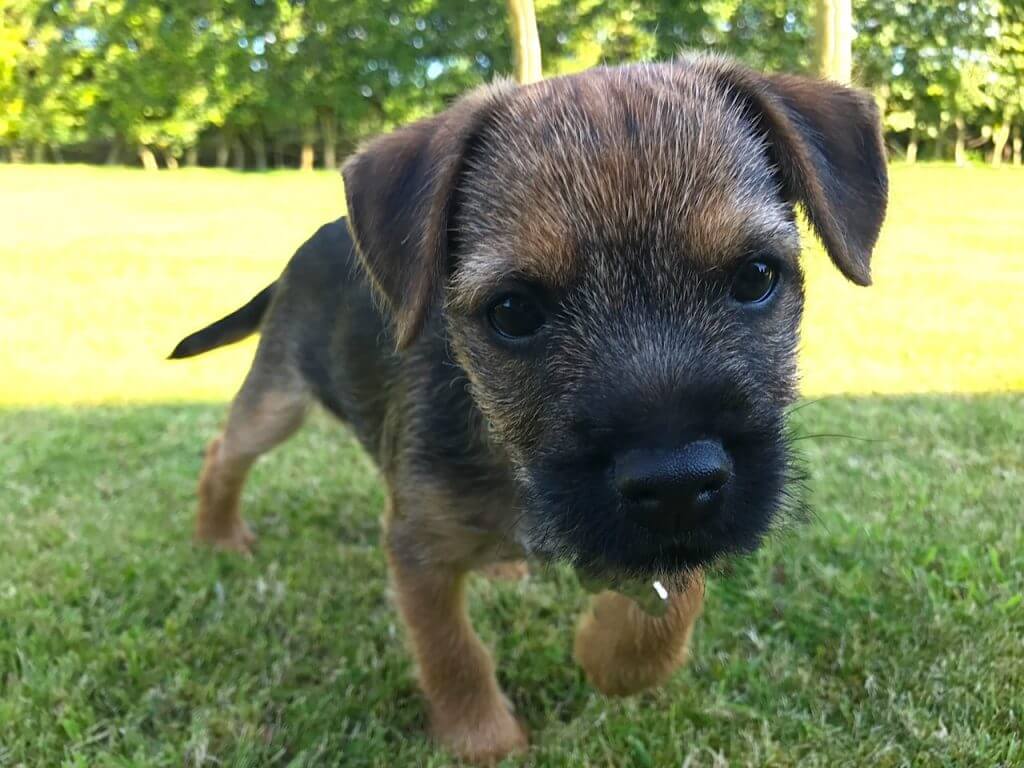
Even the best-trained puppy or dog will want to accompany you wherever you go in the garden, especially if it’s a new garden. Now, most garden fanatics will know that trying to eliminate all threats can be difficult, if not impossible. Reducing the risk of danger is relatively easy with some planning.
Before you start any new garden design or planting, ensure your garden is a safe haven for dogs. If you know you have a busy road, a gap in the hedge or a set of really key, delicate plants, then the best idea is to ensure your dog can’t harm or be harmed by your plants.
Hurdles and a small trellis can be a good natural screen for an area you really need to keep your dogs off, such as seedlings or vegetables. Obviously, as time passes and your dog learns which areas are off-limits, you can reduce or even eliminate these small screens. It all depends on your dog’s attitude and how well-trained they are.
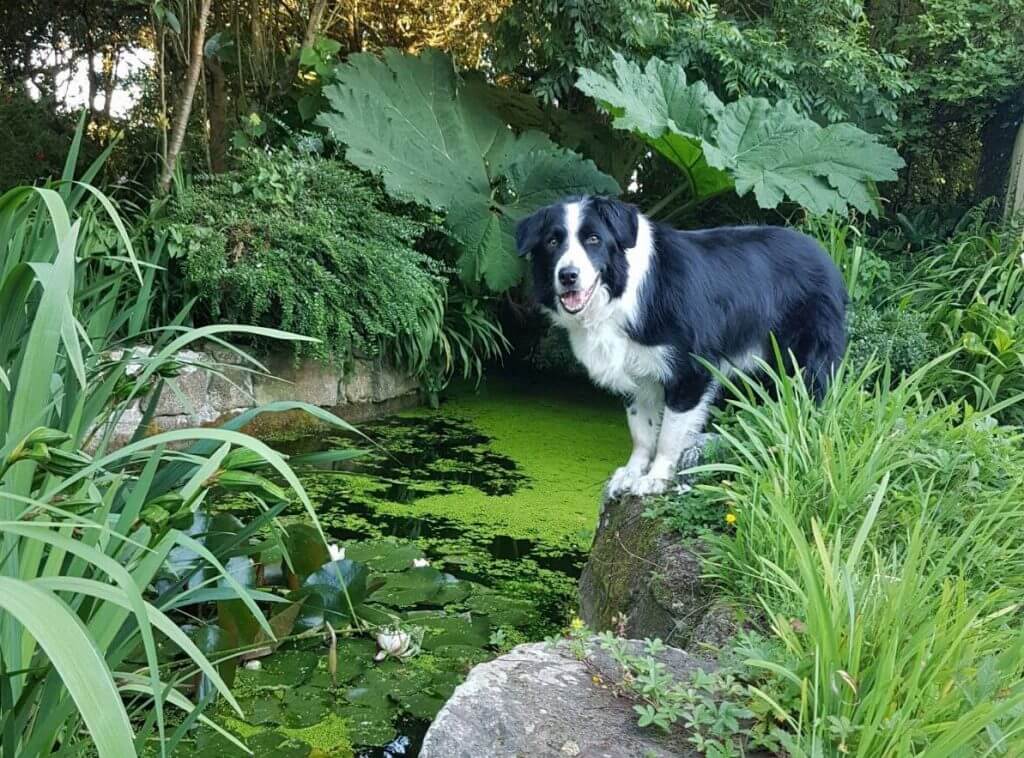
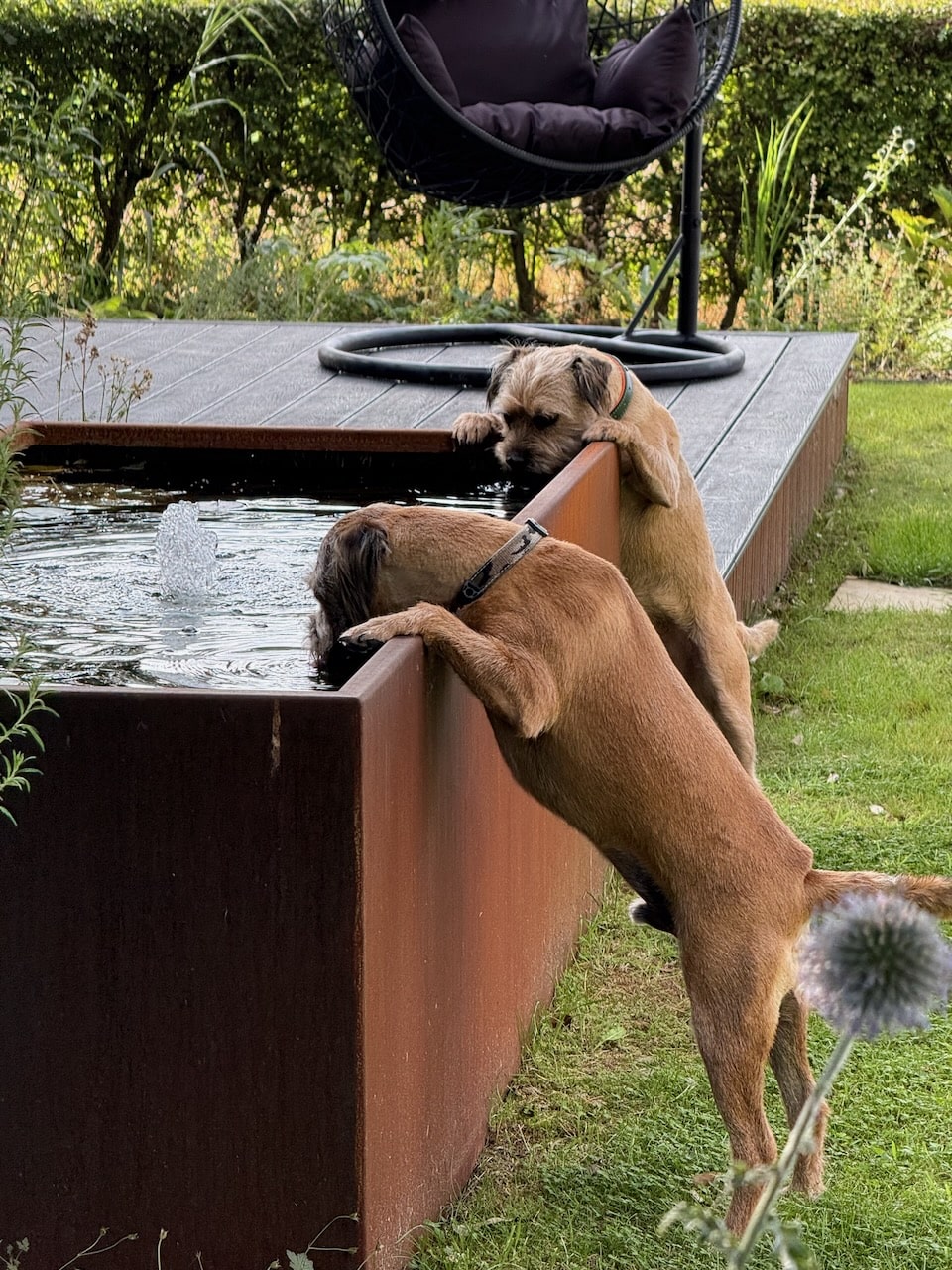
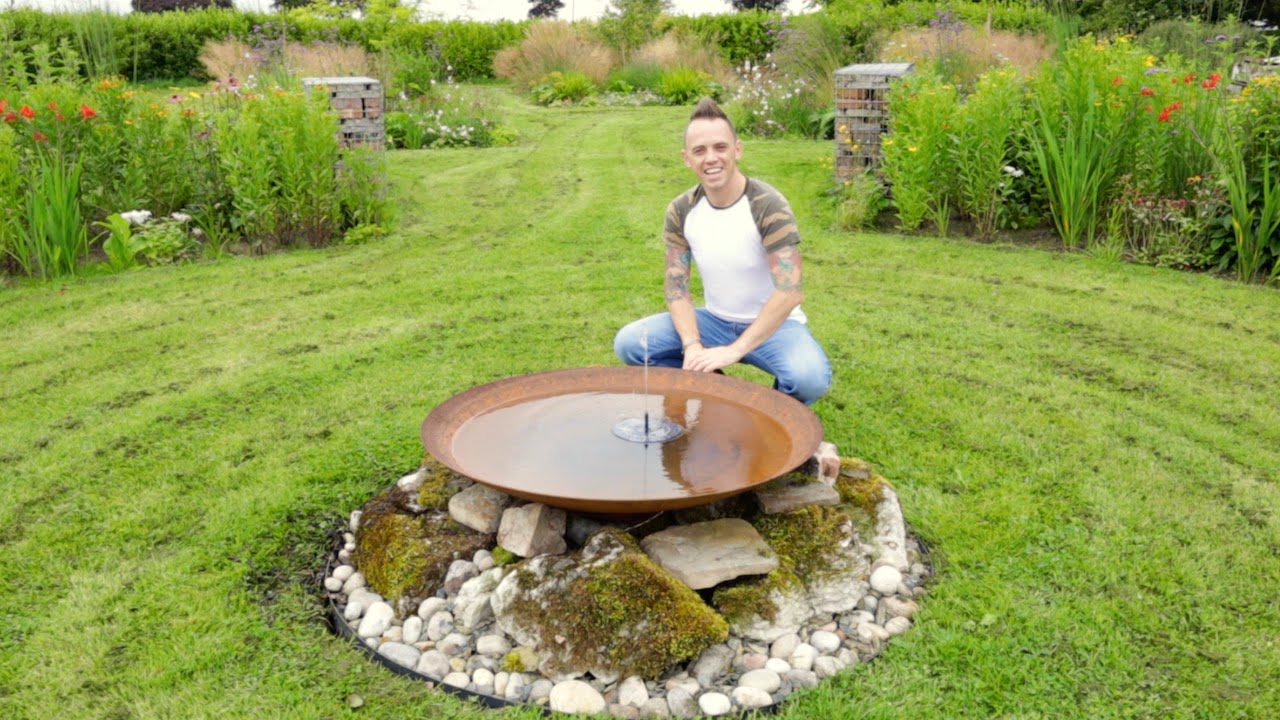
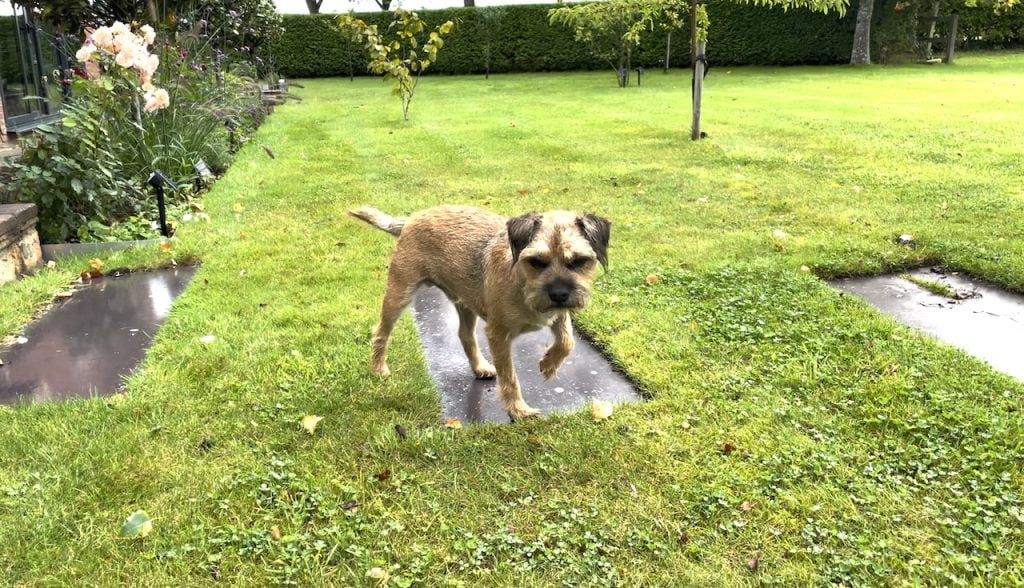
Always screen off ponds until your dog is accustomed to them, and always use a shoreline so they can exit if needed. This dog is a seasoned pro at water safety!
Making your dog feel safe in the garden will reduce the likelihood of them getting overly excited and provide consistency. If you’re introducing new features, be aware that your dog will see these as a new challenge or something they must explore. So bear that in mind.
Always consider safety first, and remember your dog isn’t a mind reader, so it’s best to be safe than sorry when designing your garden.
2. Paths and hard surfaces for dogs
Paths and surfaces are the first things I consider when designing a garden for dogs. This is because, in our busy lives, dog owners may sometimes have to use their gardens as places for their dogs to exercise. Sometimes, with work and family, going out for that walk through the woods is not going to happen.
Therefore, paths and surfaces in your garden must allow a dog to walk and, if possible, run. I always prefer hard landscapes for this purpose. It also means that dogs can scratch their claws as they run, saving the need for endless nail clipping. It also provides a suitable surface for cleaning and hosing down after any accidents!
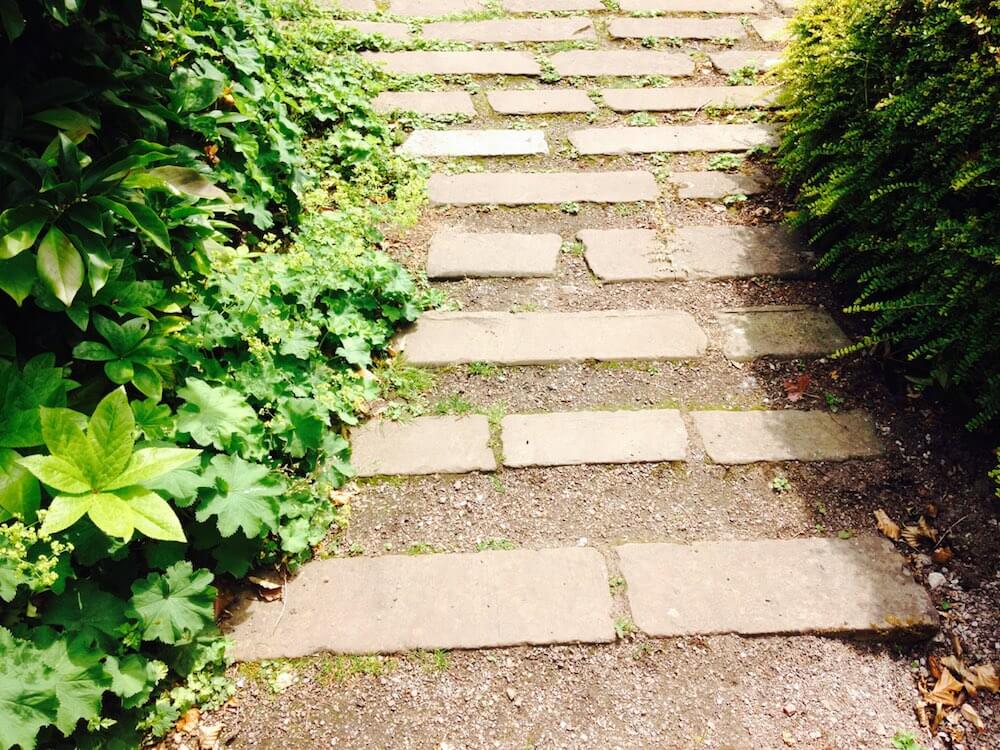
A mix of pavers and compressed hardcore can create a gorgeous and functional look that is dog-friendly
Gravel is usually a no-no, as dogs tend to get over-excited and dig through it. It can also lead to issues with dog ‘waste’ and young pups potentially swallowing very small gravel. Scottish cobbles and pebbles, however, are fine for mulching or edging beds. These are about the size of a large potato, and only the most tenacious hungry dog would try to swallow one.
The Dogs Trust show garden at Hampton Court in 2016 featured large cobbles.
Be careful with gravel; always choose large cobbles that can’t be easily swallowed or chewed. Also, dog mess can be really tricky to pick up on a gravel bed!
3. How to fence off a garden for a puppy
This is a common question that I’m asked when people have just brought a puppy home. You then realise your garden hedging suddenly has gaps in it, or your fence has developed a loose panel and needs a quick fix! This guide is for when you need a solution that is both lower-cost and quick to implement.
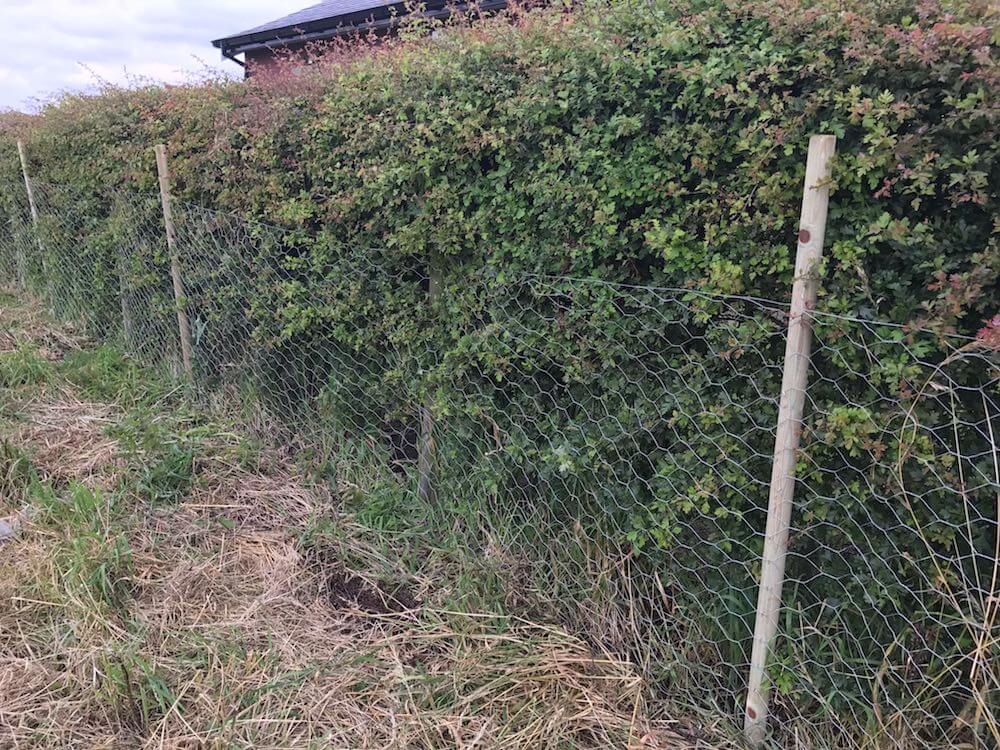
This is especially true if you have a large garden or you want to screen off a smaller area. The quick answer is to use wood fence posts and chicken wire to sensitively screen off those gaps without a huge, expensive wooden fence.
Even a Hawthorn hedge will need a secure mesh fence to stop pups escaping!
Equipment needed to dog-proof a garden:
Fence posts
Fence Post Driver
Chicken wire (Small gauge holes)
Staple gun
Tent pegs
Step 1 – Position fence poles
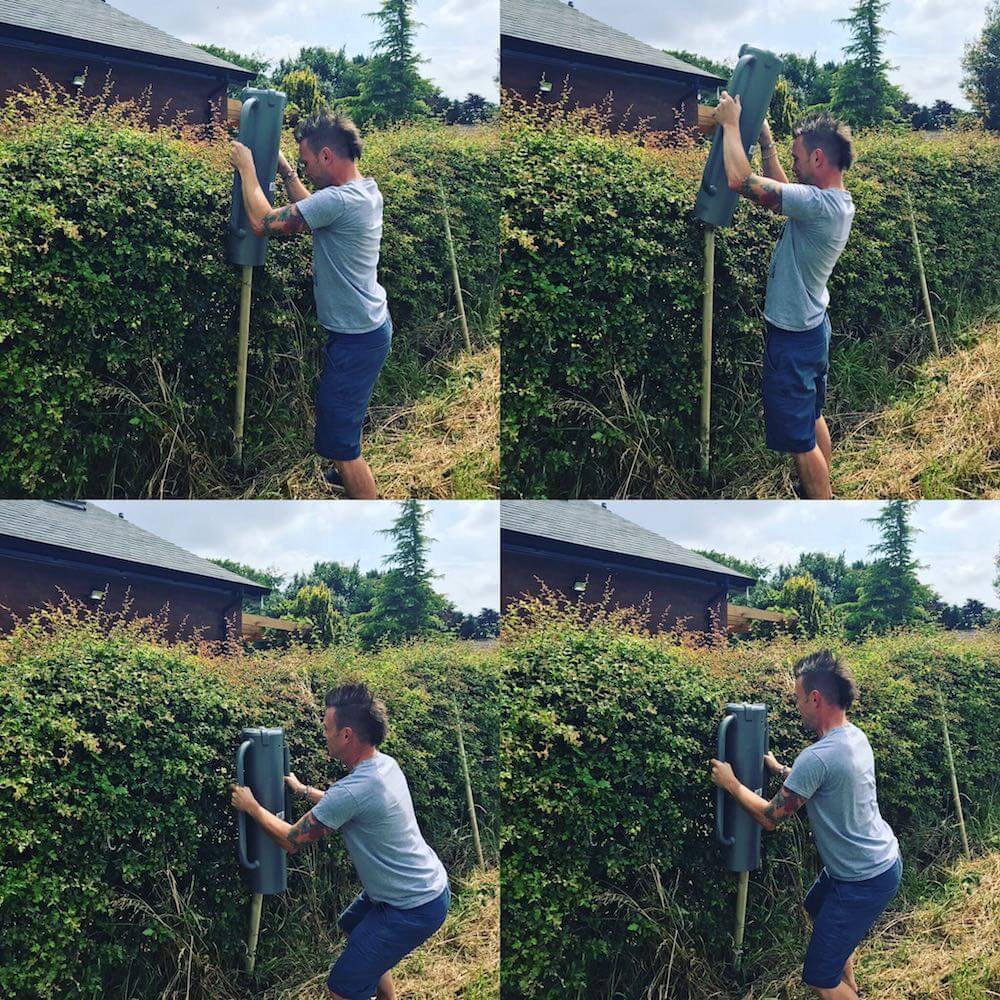
Position your fence posts 2-3 meters apart, then use the fence post driver to drive them into the ground. A few heavy downward thrusts by the driver should do it. The closer the posts, the better, as this allows less loose mesh in the middle for a dog to tunnel under.
Use a post driver to hammer your fence stakes in – it’s great cardio!
Step 2 – Unroll the chicken wire for the dog friendly fence
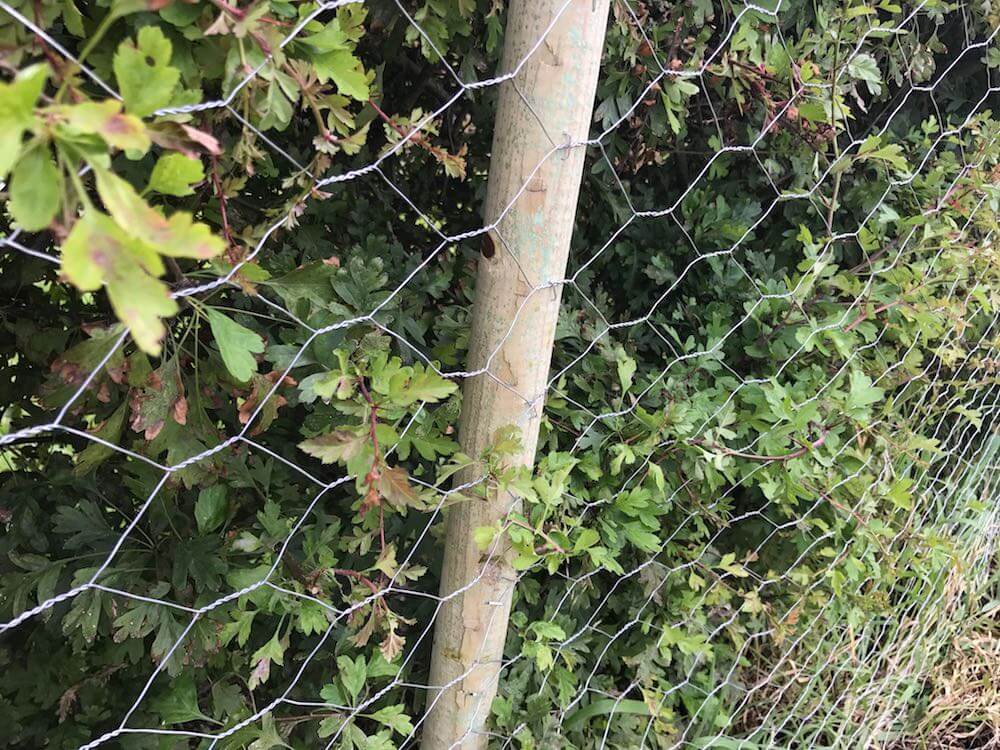
Unwrap the chicken wire and, using a heavy-duty staple gun, staple the first end to the first post. Ensure it’s extremely secure all the way down to the ground.
Using a staple gun will save fiddling about with a hammer and clips
Step 3 – Use tent pegs to secure the mesh
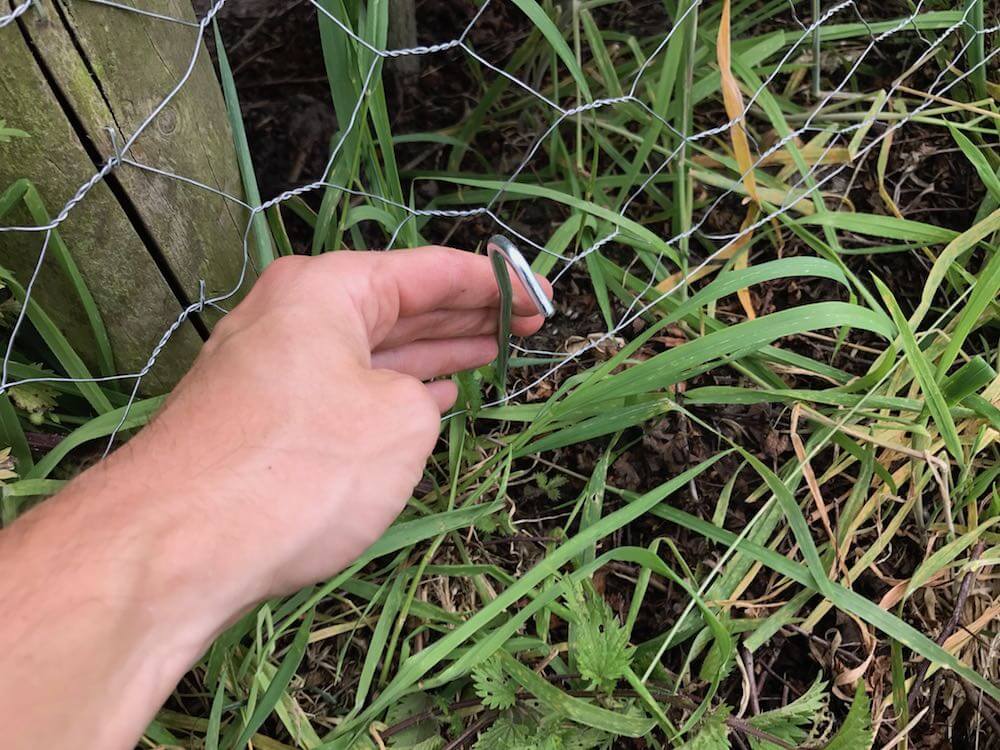
Once you’ve stapled all your chicken wire to your fence posts, it’s time to use tent pegs to double-secure the wire between the posts. Hammer the tent pegs in at an angle to secure the bottom of the wire from tenacious pups!
Tent pegs are not just for glamping; they help secure the bottom of the fence at a low cost.
I’ve found this to be the most cost-effective way to secure an area of the garden. It’s also super quick, meaning even if you’ve left it to the last minute, you can still secure your garden before your pup arrives.
Fences keep puppies safe and secure
4. Create a dog friendly play zone in the garden
All dog owners know that dogs just want to play when out in the garden. The stimulus of flowers, soil, insects and textures can sometimes send them into an absolute frenzy.
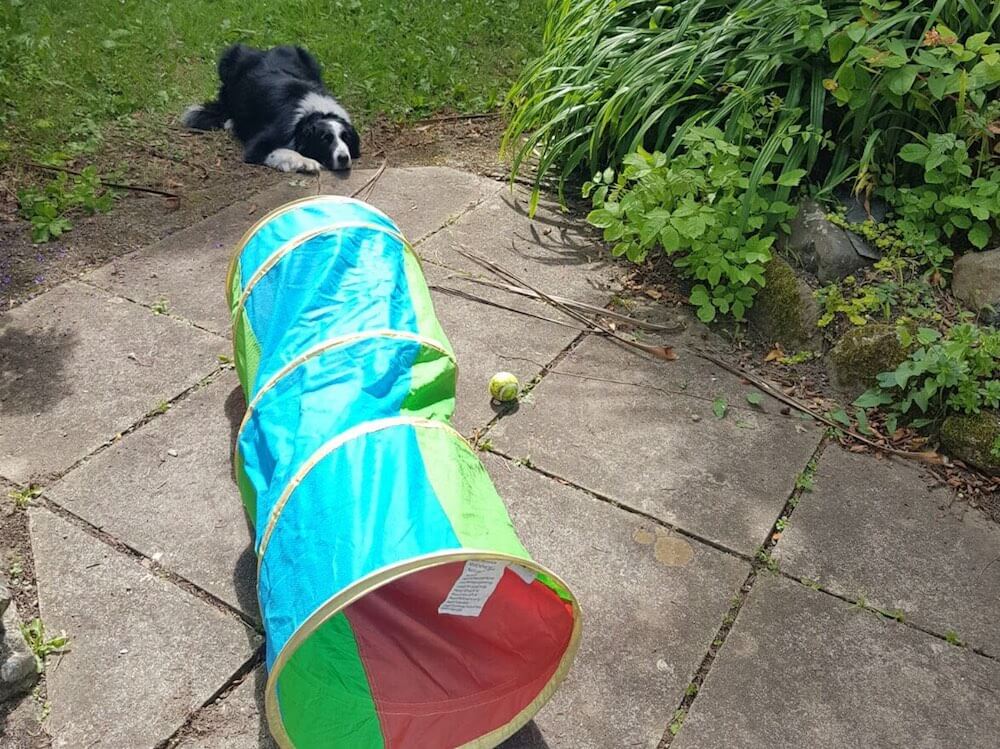
To ensure that your beloved dogs don’t run riot through your prize borders, create a specific play zone for them in your garden. This can be an area where you have their toys, which is probably well landscaped or low-maintenance.
Make a point of playing with your dogs here, rather than the more manicured parts of the garden. Put their water and food bowl out there to give them ownership of this part of the garden. Reward them when they play there to reinforce the zone as theirs. They are then less likely to take over other areas of the garden!
5. Dog-friendly plants
Dogs don’t have hands, so they pretty much use their mouths and noses to identify and explore the world. This is also true with plants. For the most part, all a dog or puppy will experience when chewing a plant is an unfamiliar taste that they probably won’t like. They do it once, learn and then don’t do it again. Who am I kidding? They will do it several times until you stop them!
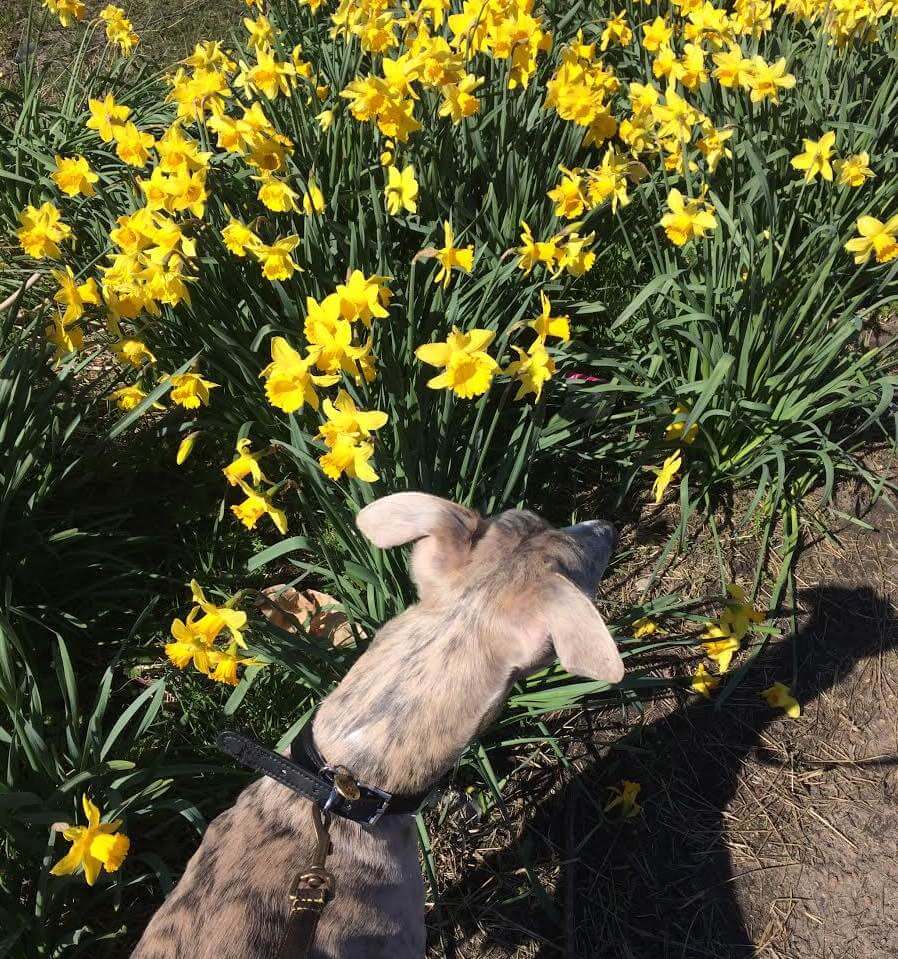
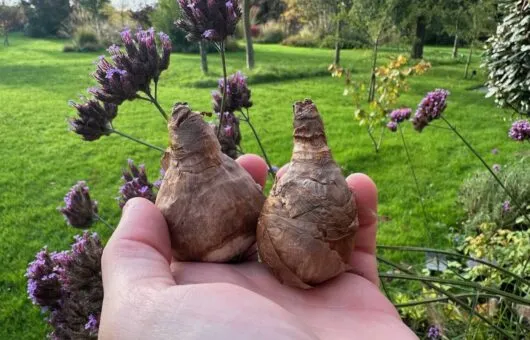
Daffodil bulbs are toxic, but not their flowers
Safe Trees for Dog Friendly Gardens
Let’s dive in and explore the safest trees to add height to your dog-friendly garden designs. After all, every garden needs some privacy and height from trees, which also double as a haven for birds and wildlife!
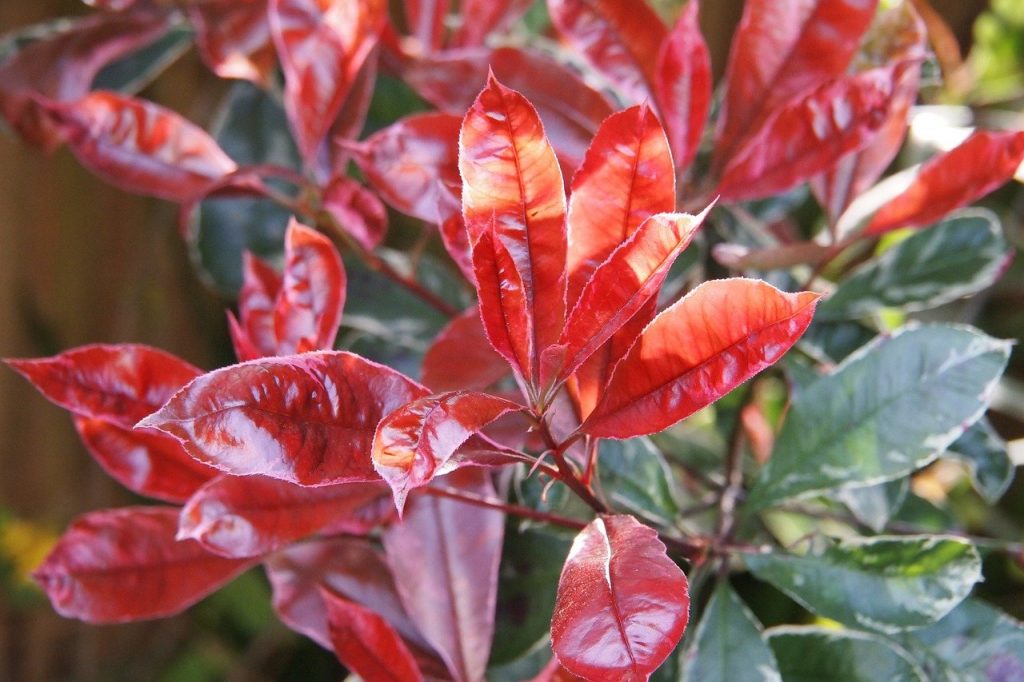
1) Photinia Red Robin
This is my absolute go-to screening tree for dog gardens. The glossy evergreen leaves provide year-round privacy, whilst the bright red new growth creates spectacular seasonal colour. It’s tough as old boots, handles pollution brilliantly, and creates perfect shade zones for hot summer days. Plant 1.5 metres apart for screening, or use as a stunning specimen tree.
I can’t tell you how many clients worry about fruit trees around dogs, but apples are completely safe. The spring blossom is absolutely magical, and both you and your dog can enjoy the Autumn harvest! Choose disease-resistant varieties like ‘Discovery’ for early fruit or ‘Egremont Russet’ for that proper English apple flavour. Just clear up windfalls promptly to prevent wasps. Yes, the pips can be toxic, but your dog would have to eat so many of them or bucketfuls of crab apples. So, in my experience, finding apples and crab apples is perfectly safe for dogs!
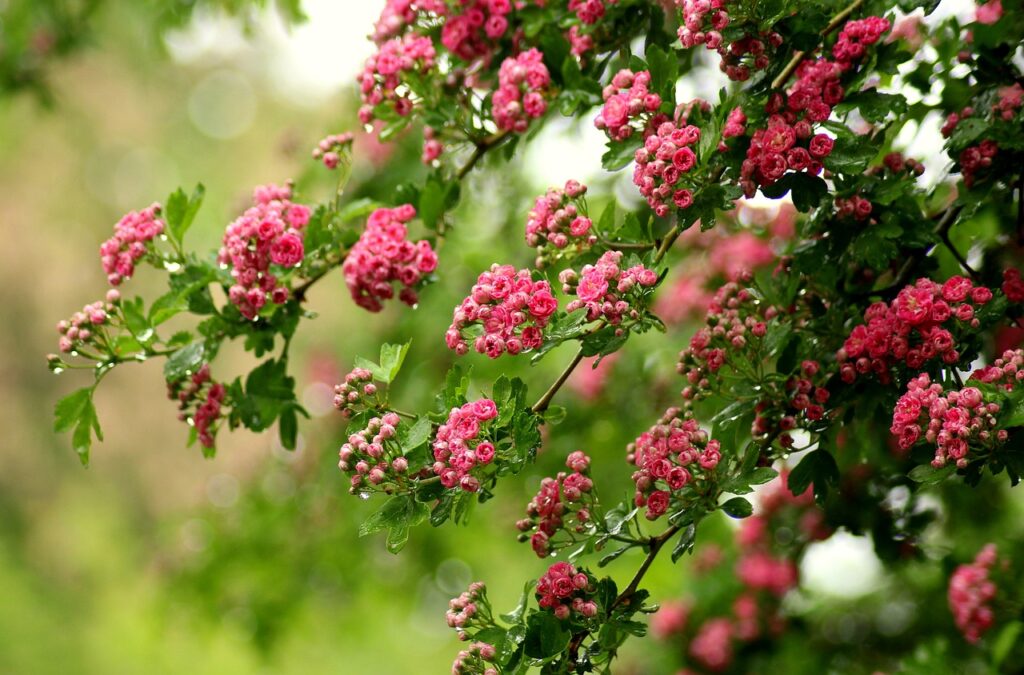
This native beauty is practically indestructible and offers fantastic wildlife value while enhancing dog safety. The May blossom creates clouds of white flowers, followed by red berries that birds adore. It’s perfect for informal hedging and creates impenetrable barriers that’ll keep even the most determined escape artist contained.
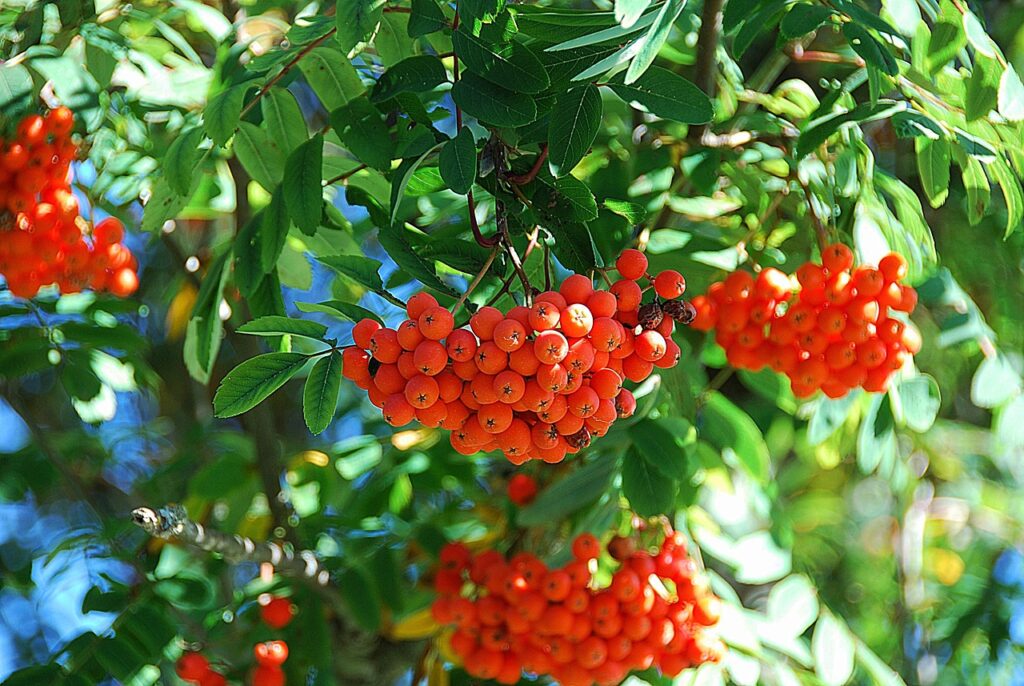
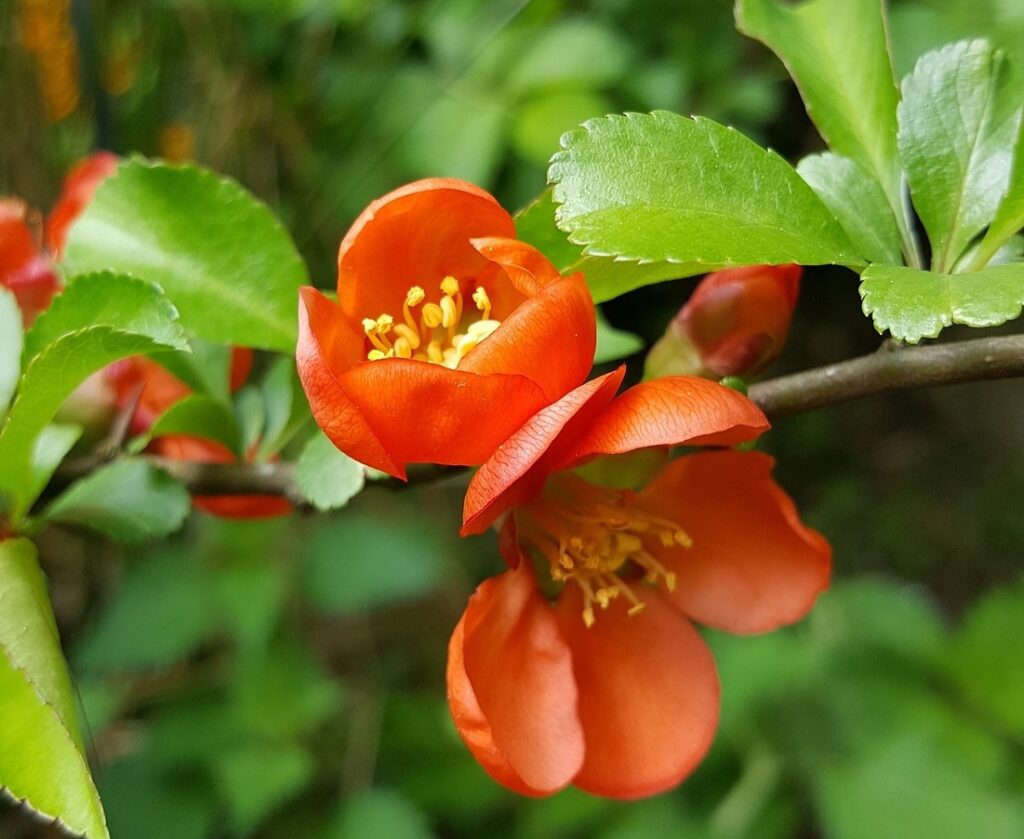
Stunning spring flowers, brilliant Autumn colour, and bright orange berries make this tree a four-season star. Completely safe for dogs and absolutely beloved by wildlife. It’s particularly good for smaller gardens as it rarely exceeds 8 metres and has a naturally neat habit.
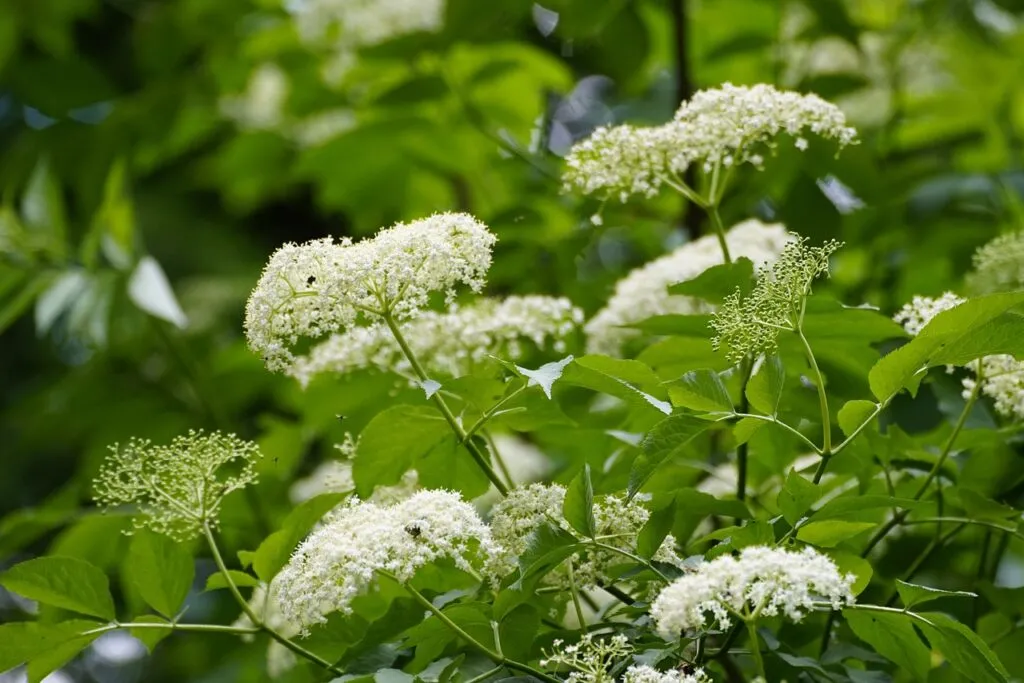
Fast-growing and forgiving, elder produces masses of creamy flowers in summer, followed by dark purple berries. Both flowers and berries are edible for humans (think elderflower cordial and elderberry wine), whilst being completely safe for dogs. It’s also brilliant for wildlife, supporting over 40 species of birds and mammals.
Now that your dog-friendly designs have some height from trees, the next step in planning your dog-friendly flower beds is to add shrubs as the backbone of the garden. Below are the most dog-friendly beginner shrubs to start with.
6) Lavender (Lavandula angustifolia)
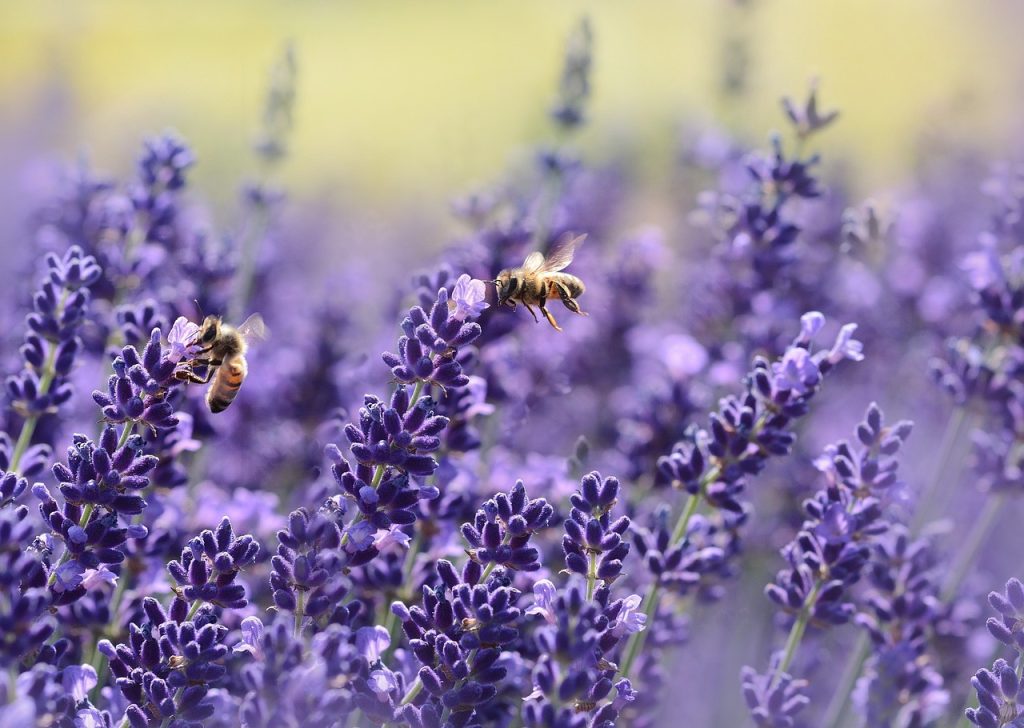
The ultimate sensory plant for dog gardens is lavender! The texture is irresistible to dogs who love brushing against it, whilst the scent provides a natural pest deterrent. ‘Hidcote’ offers deep purple flowers and compact growth, whilst ‘Munstead’ gives you earlier blooms and a slightly larger size. Plant in groups of 3-5 for maximum impact. Lavenders are also excellent for bees and beekeepers!
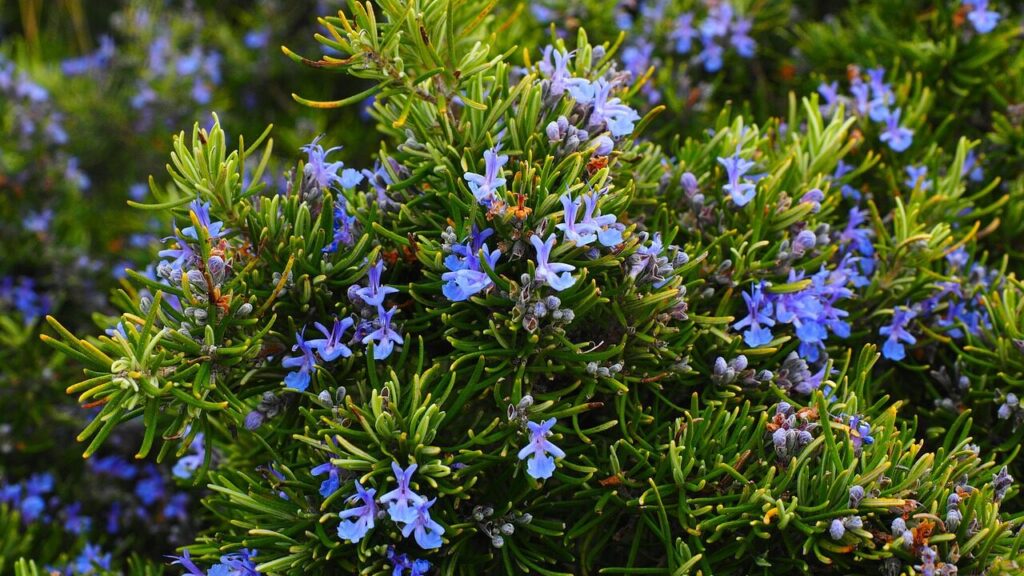
A brilliant evergreen structure plant that dogs seem to respect instinctively. I rarely see them damaging it. The blue flowers appear almost year-round in mild areas, and you can harvest them for cooking. ‘Miss Jessopp’s Upright’ creates excellent informal hedging, whilst prostrate varieties like ‘Prostratus’ work brilliantly cascading over walls.
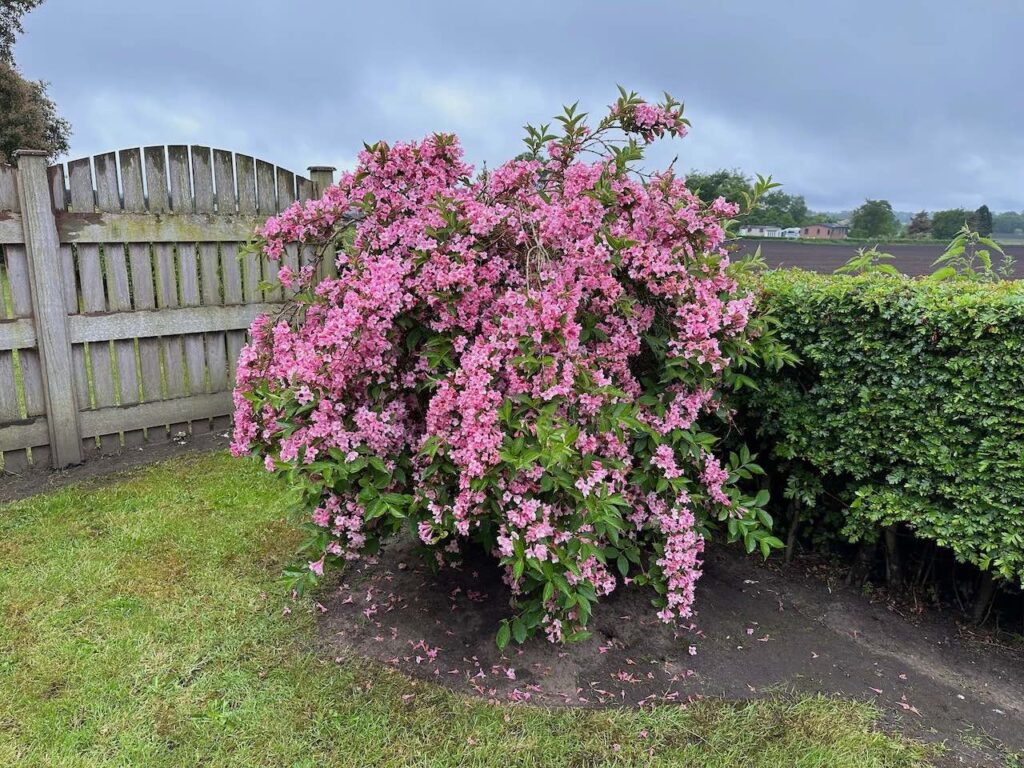
Easy-care deciduous shrubs that produce masses of tubular flowers in late spring. Dogs seem naturally drawn to brush against the soft leaves, but they never cause damage. ‘Bristol Ruby’ offers deep red flowers, whilst ‘Variegata’ combines cream-edged leaves with pink blooms for season-long interest. It’s absolutely bomb proof and my dogs ignore it, unlike my bees, which love its pollen and nectar, just look at the example below! Weigela is great for taking divisions and softwood cuttings, too.
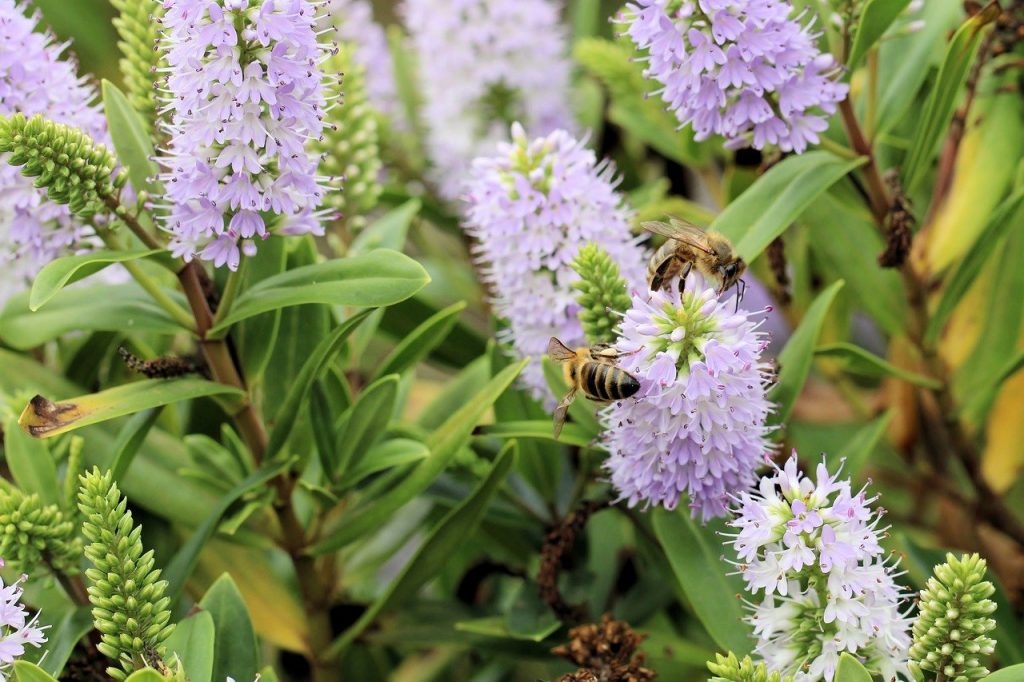
These New Zealand natives are absolutely bulletproof in dog gardens. They handle trampling, recover quickly from damage, and flower for months on end. ‘Great Orme’ produces bright pink spikes, ‘Purple Shamrock’ offers deep purple flowers with purple-tinged leaves, whilst compact varieties like ‘Heartbreaker’ stay under 50cm and flower continuously.
Next up for your dog friendly flower beds is the herbaceous perennial layer. These plant types return year after year, are great for wildlife or cut-flower gardens, and add seasonality to the garden. Dogs love sniffing and foraging around them, too!
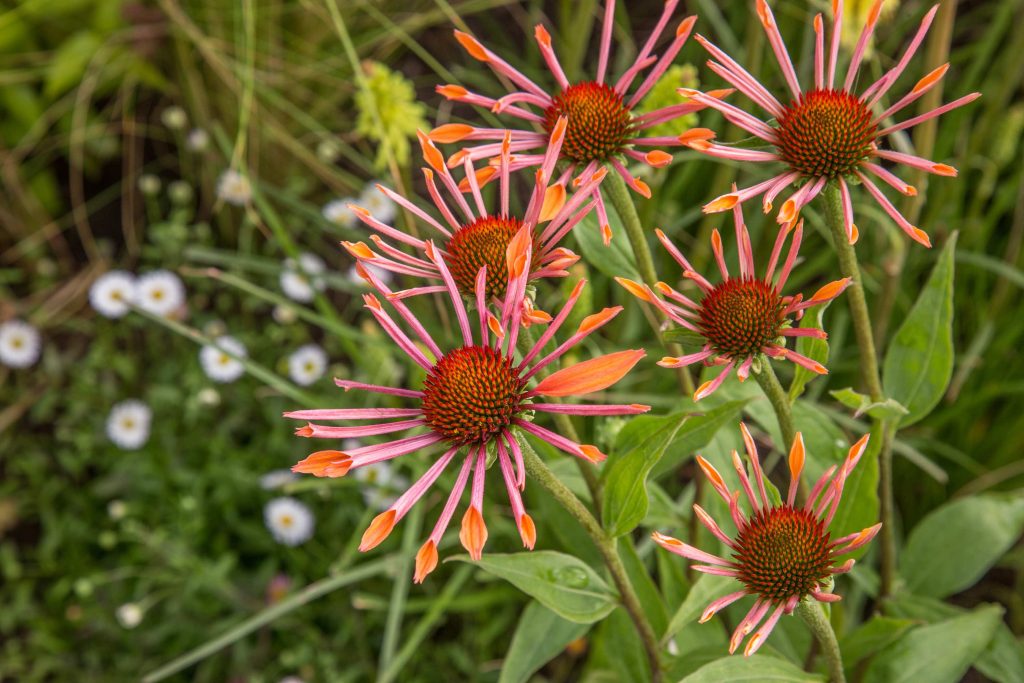
11) Echinacea (Purple Coneflower)
These prairie natives are tough enough to handle dog traffic whilst providing spectacular summer colour. The sturdy stems rarely break even when dogs brush past them, and the seed heads provide winter food for birds. ‘Magnus’ offers huge purple blooms, whilst ‘White Swan’ creates elegant white flowers that glow in evening light.
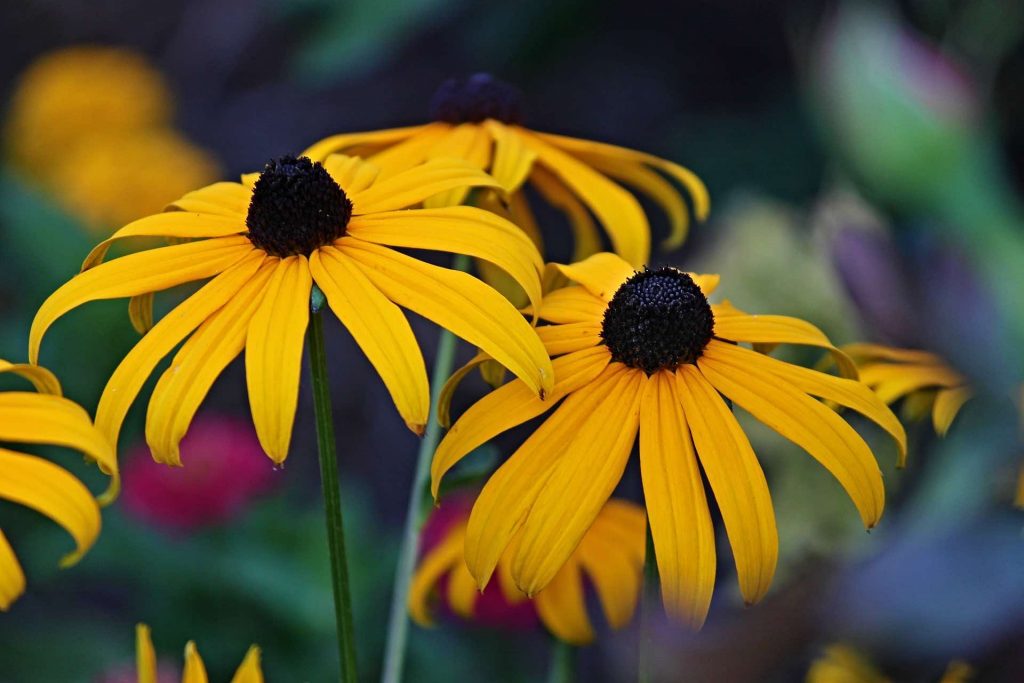
Absolutely bomb-proof perennials that thrive on neglect and produce masses of golden flowers from midsummer until frost. Dogs rarely show interest in the slightly rough leaves, making them perfect for front-of-border positions. ‘Goldsturm’ is the classic choice, whilst ‘Prairie Sun’ offers unusual yellow petals with green centres.
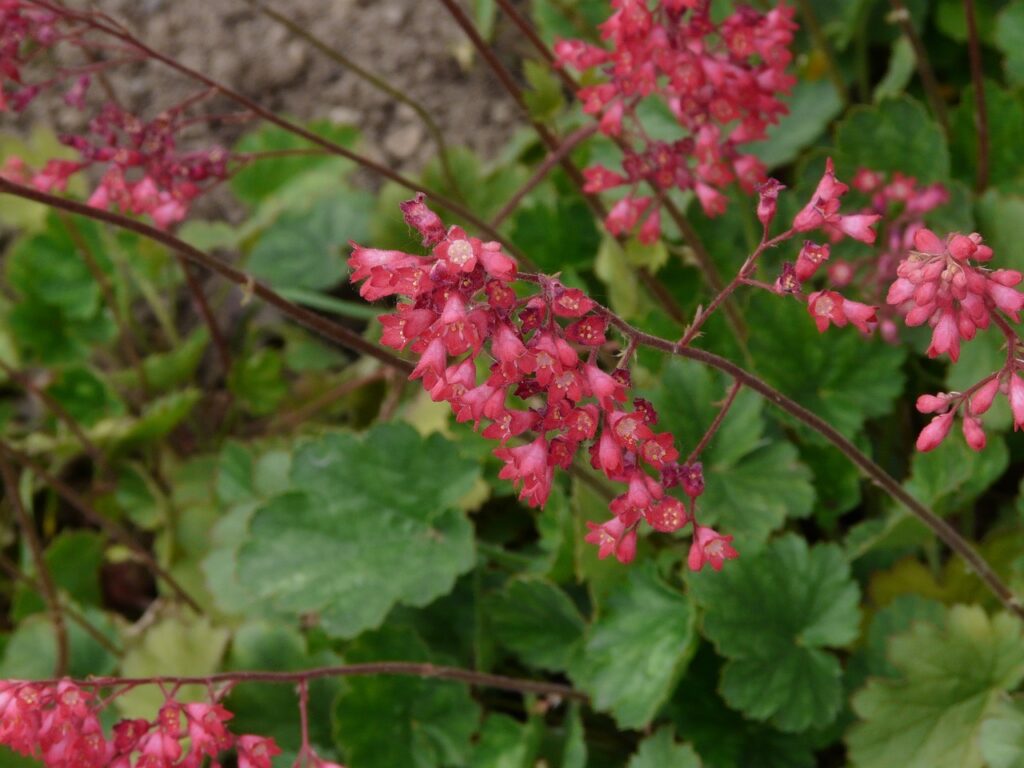
The ultimate foliage plants for dog gardens, offering incredible leaf colours from lime green to deep burgundy. They form neat clumps that dogs naturally walk around rather than through, and the delicate flower spikes add vertical interest. ‘Lime Rickey’ provides bright lime foliage, whilst ‘Palace Purple’ offers deep burgundy leaves that contrast beautifully with green plants.
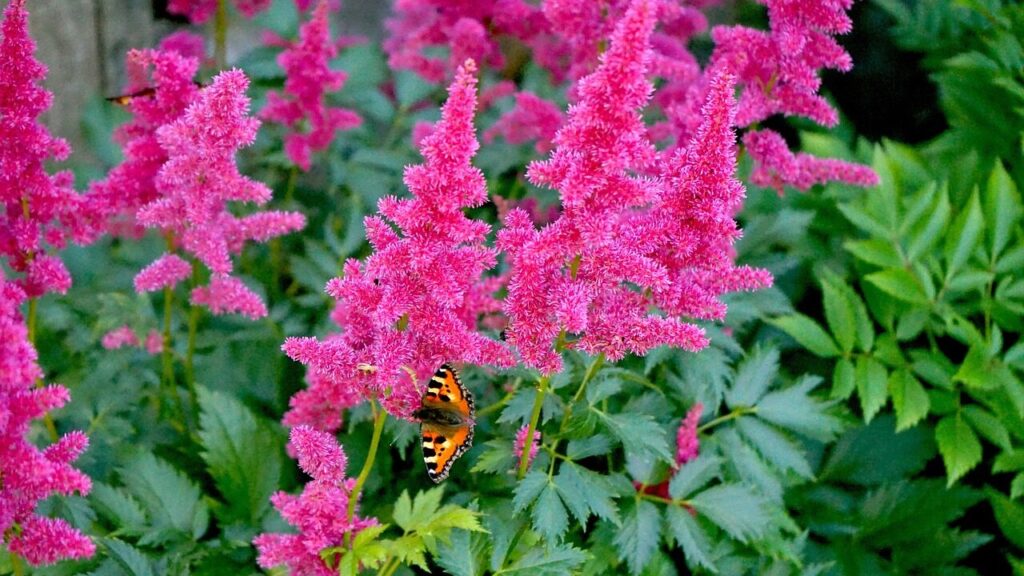
These shade-loving perennials create fluffy plumes of flowers in colours from white through pink to deep red. Dogs seem naturally drawn to brush against the ferny foliage, but it’s completely safe and recovers quickly from any damage. ‘Bridal Veil’ offers pure white flowers, whilst ‘Fanal’ provides deep red blooms that glow in dappled shade.
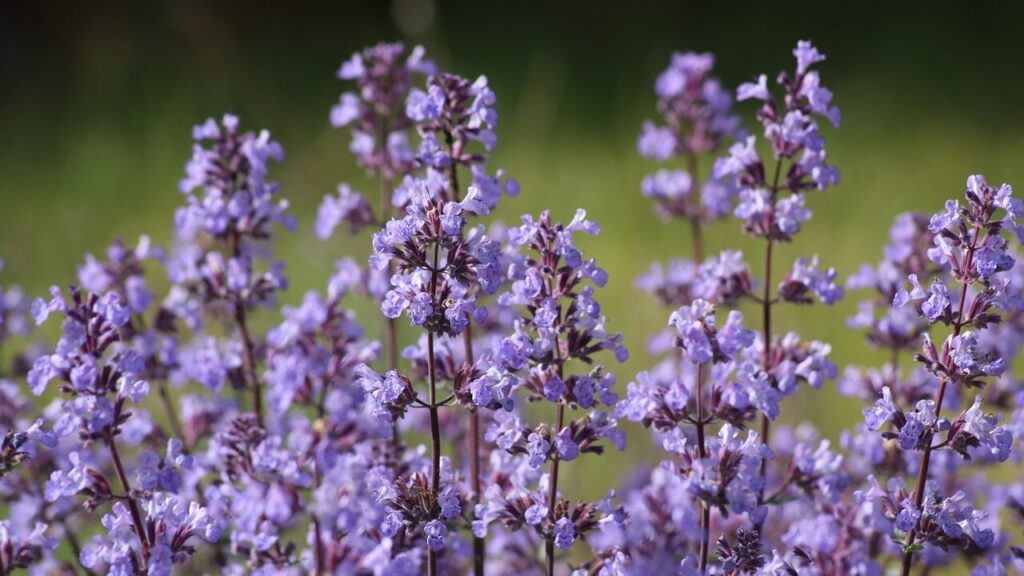
Don’t be fooled by the name – whilst cats adore it, dogs seem largely indifferent, making it perfect for mixed pet households. The soft grey-green foliage and clouds of blue flowers create a cottage garden atmosphere, whilst the aromatic leaves naturally deter many pests. ‘Walker’s Low’ forms neat mounds perfect for path edges.
There are some plants that dogs can actually eat, though most won’t. Herbs and edible plants make great sensory elements for any garden design, not just dog friendly ones. Here are my best dog-friendly edible plants for the lower groundcover layer of your flower bed designs and plans.
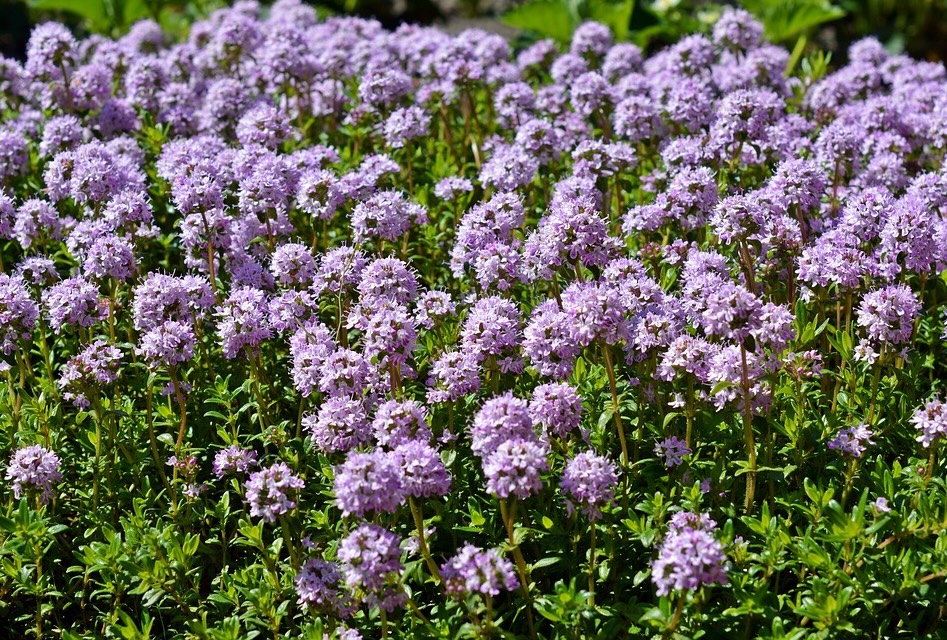
16) Thyme (Thymus vulgaris)
This Mediterranean herb creates aromatic carpets that release fragrance when walked on, providing natural sensory experiences for dogs. It’s drought-tolerant once established and produces masses of tiny flowers beloved by bees. Common thyme works well for cooking, whilst creeping varieties like ‘Coccineus’ form fragrant groundcover.
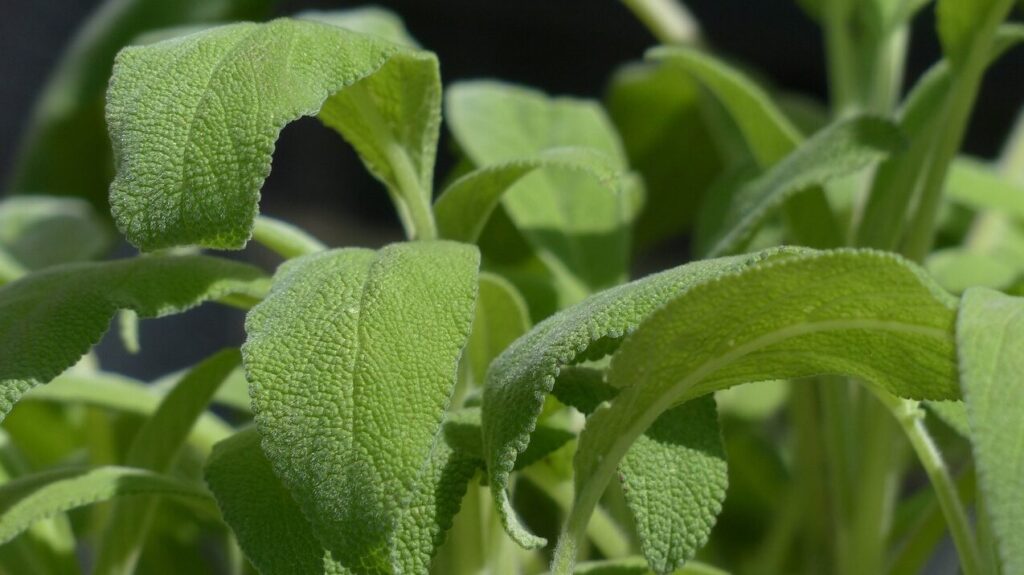
The soft, silvery leaves provide wonderful textural contrast in mixed plantings, whilst being completely safe for curious mouths. Purple sage offers gorgeous purple-grey foliage, whilst ‘Tricolour’ combines cream, green, and pink variegation for season-long interest.
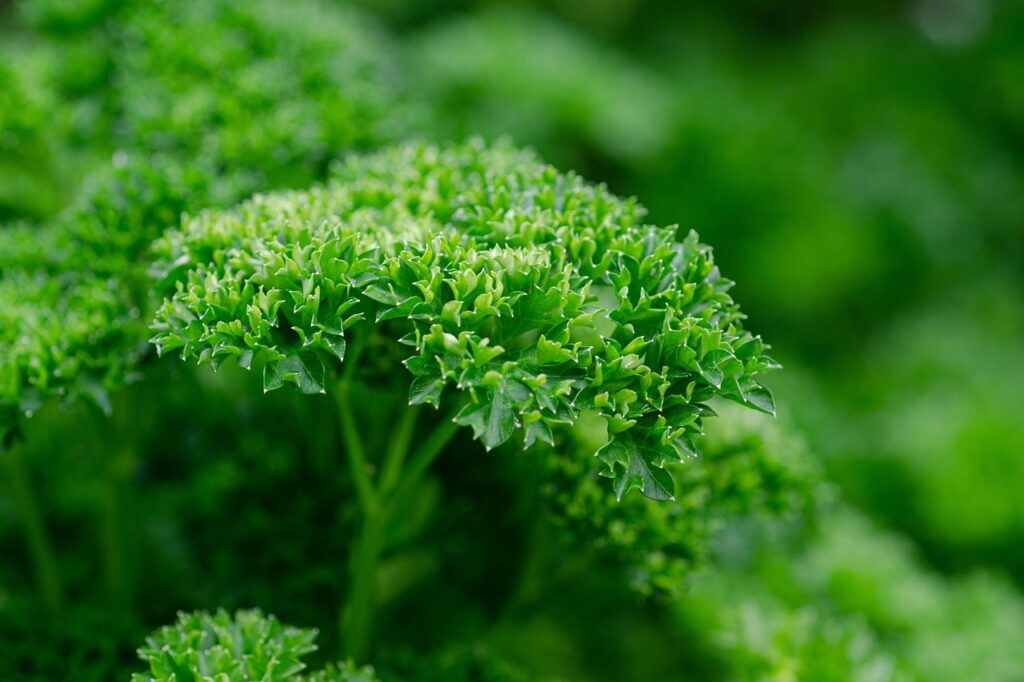
Both flat-leaf and curly parsley are safe for dogs and provide fresh herbs for your kitchen. Flat-leaf parsley offers superior flavour for cooking, whilst curly parsley creates attractive edging for vegetable gardens. Resow every spring for continuous supplies.
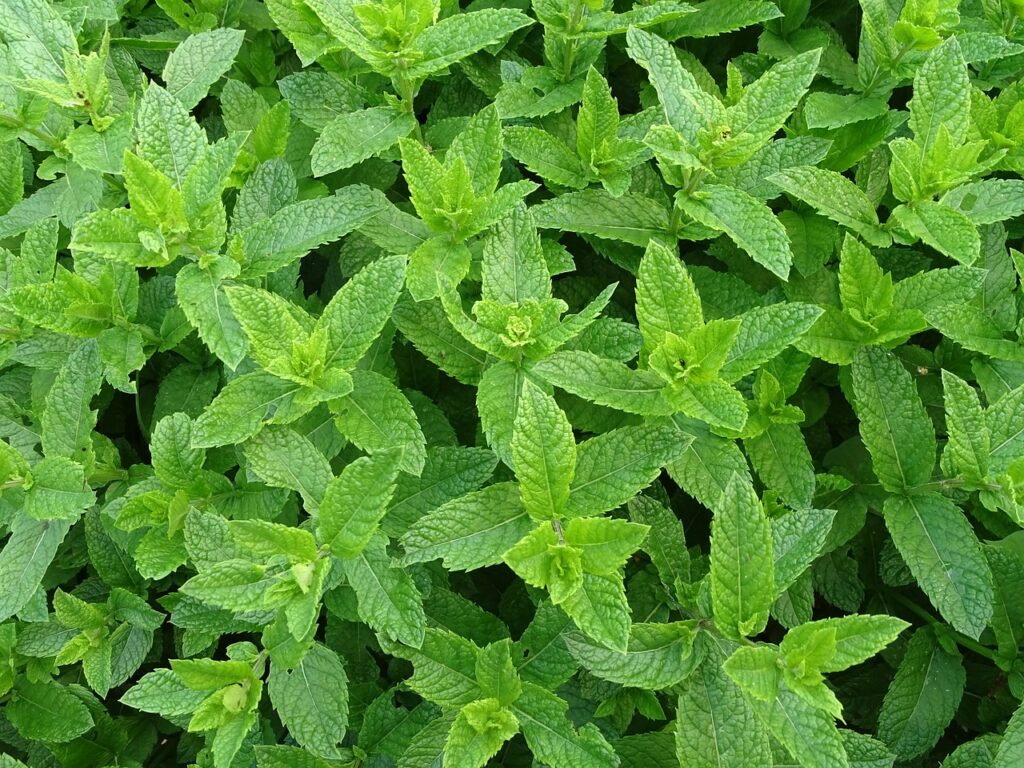
Most mint varieties are safe for dogs, though their vigorous spreading habit means they’re best contained in pots or designated areas. Spearmint and peppermint are the safest choices, whilst chocolate mint offers unusual bronze-purple foliage and a delicious scent.
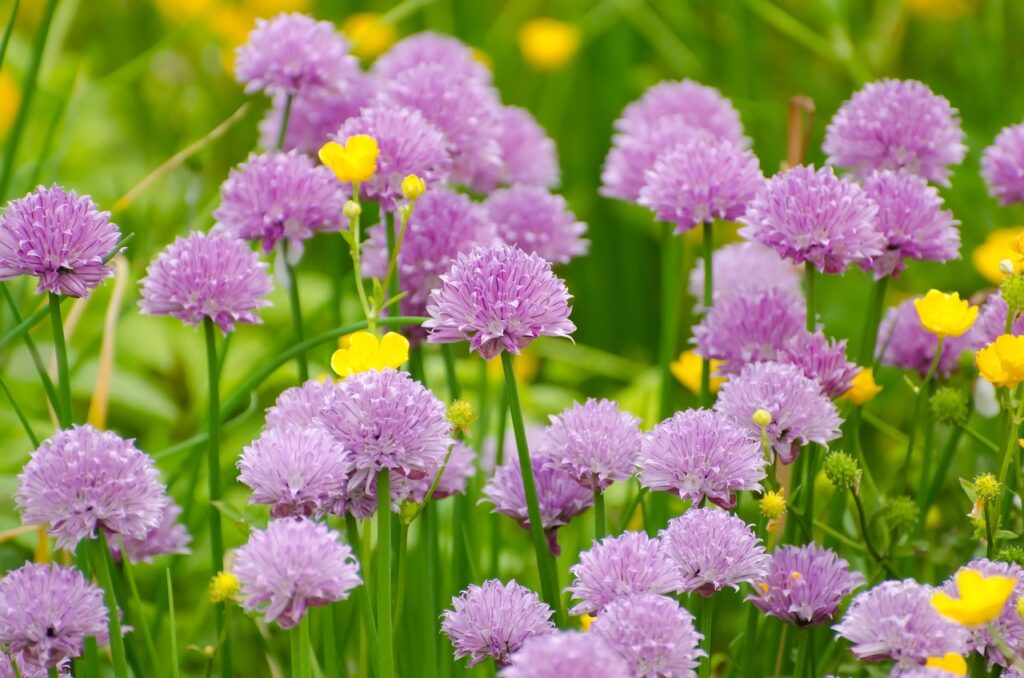
These onion-family members are safe for dogs despite the toxicity of their Allium relatives. The grassy foliage provides vertical accents in herb gardens, whilst the purple pom-pom flowers are both beautiful and edible. Cut regularly to encourage fresh growth and prevent self-seeding.
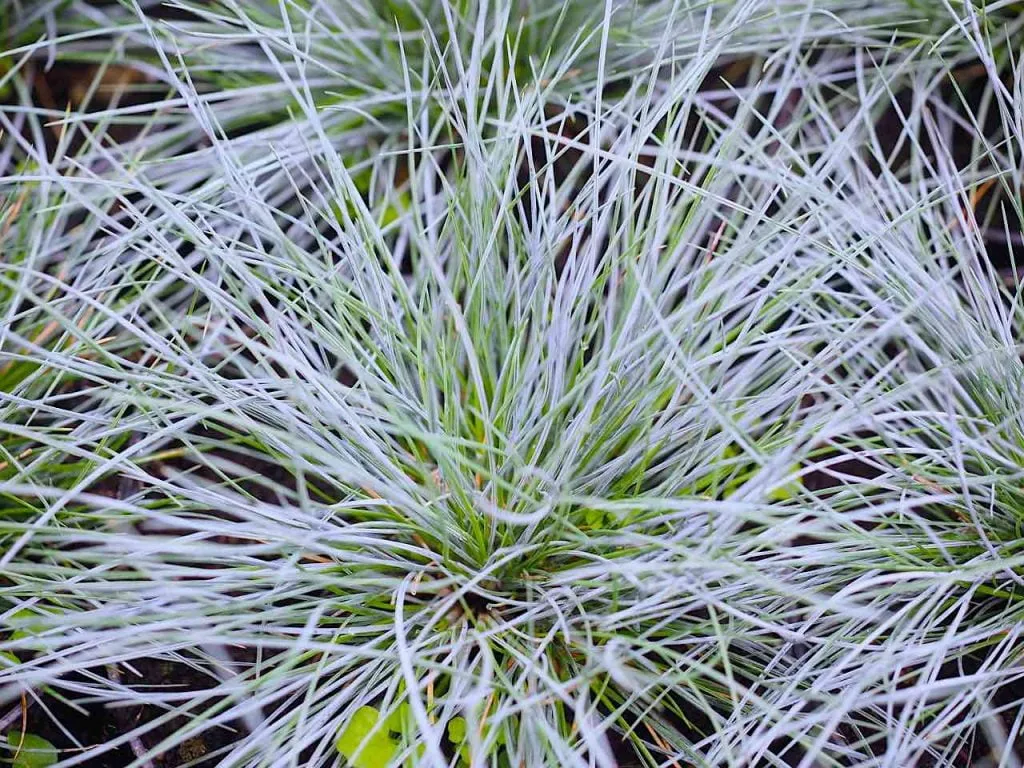
These architectural grasses form neat tufts of blue-grey foliage that dogs rarely damage. They’re drought-tolerant once established and provide year-round structure. Plant in groups for maximum impact, or use as edging along paths and borders.
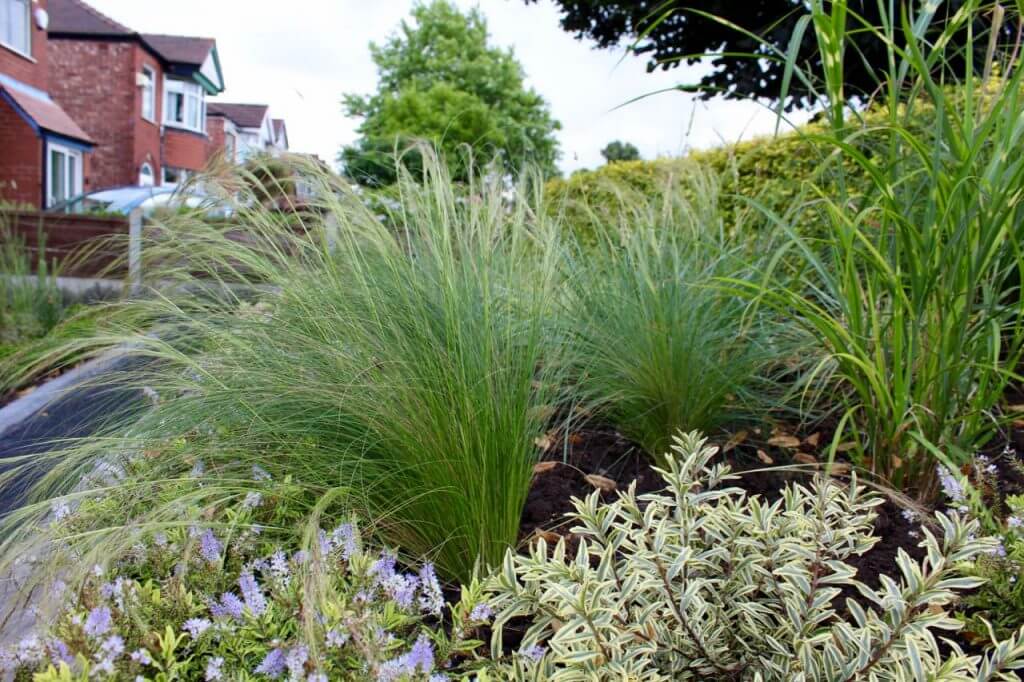
Creates clouds of fine-textured foliage that move beautifully in the slightest breeze. Dogs seem to naturally avoid walking through it, making it excellent for creating no-go zones around delicate plantings. The feathery seed heads provide winter interest.
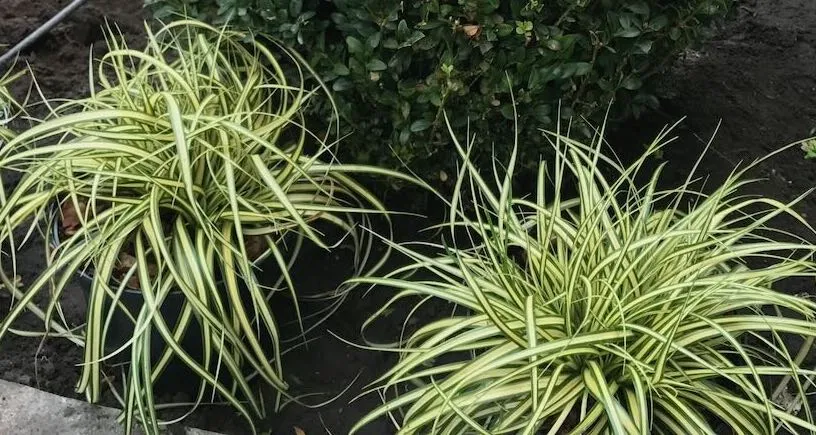
These grass-like plants offer incredible variety in size, colour, and form. Most are safe for dogs and tolerate both sun and shade conditions. ‘Ice Dance’ offers cream-edged foliage perfect for brightening dark corners, whilst ‘Bronze Form’ provides unusual copper-bronze colouring.
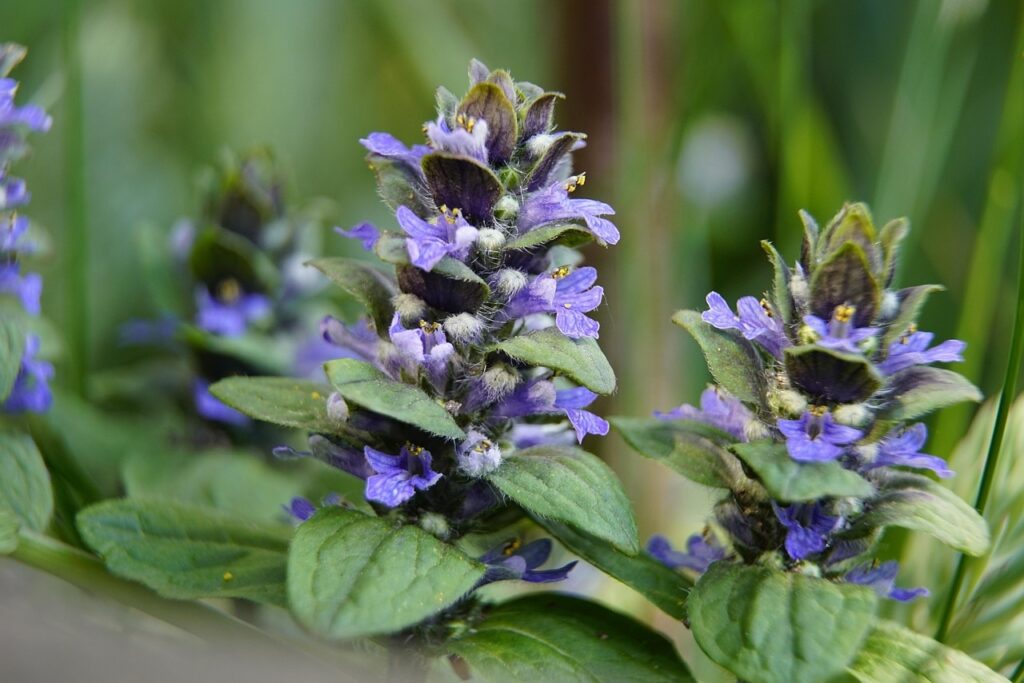
This spreading groundcover creates dense mats of glossy leaves topped with spikes of blue flowers in spring. It’s virtually indestructible underfoot and naturally spreads to fill gaps. ‘Chocolate Chip’ offers tiny bronze leaves, whilst ‘Burgundy Glow’ combines cream, pink, and green variegation.
Your subscription could not be saved. Please try again.
Your subscription has been successful.
7. Plants Toxic to Dogs
Several toxic plants that are found in everyday gardens are poisonous to dogs. I always add a note of caution to this, as nearly all plants are toxic if ingested in significant amounts. It goes without saying that you should avoid or screen off any of these plants in your garden if you’re worried, unless you have a seasoned, well-behaved dog that has gone through the chewing phase. It’s common sense, but also don’t fear toxicity in plants, as most of the time your dog would have to eat kilograms of seeds, pips or bulbs for the effects to be fatal!
Even so, it’s wise to avoid these plants if you’re worried, have a puppy, or have young children as well. The Kennel Club provides a list of other no-go plants, which I’ve included below. Always check the RHS Plant Finder to see if the plants you are considering using are toxic. I find that giving my dog a toy when we’re out in the garden saves us from any potential plant chewing.
DEADLY PLANTS – Immediate Veterinary Attention Required if Eaten
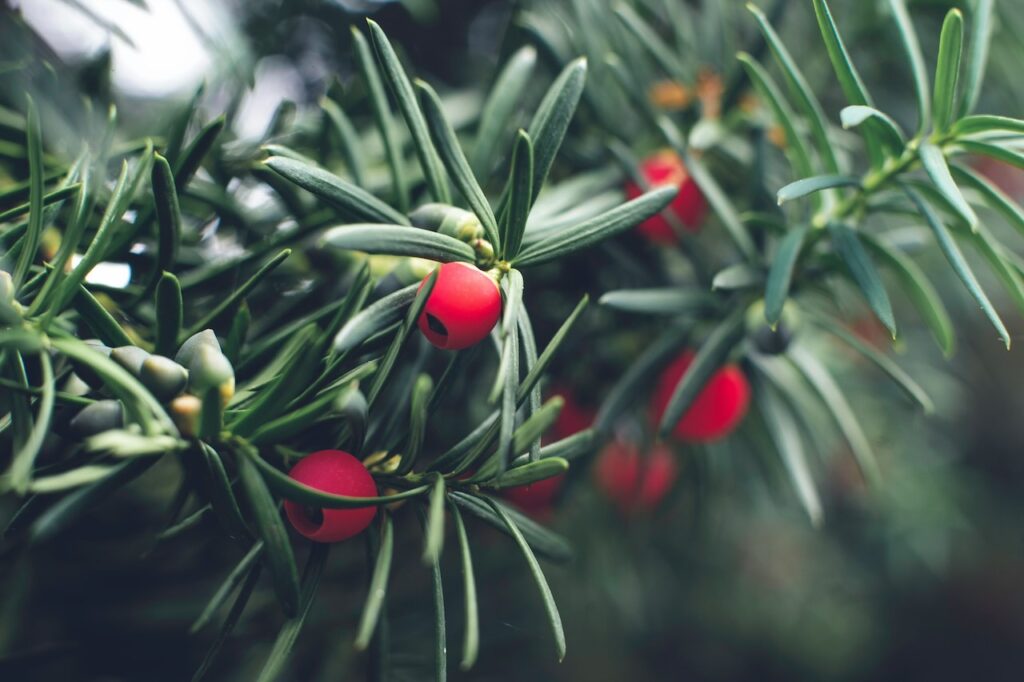
Yew (Taxus baccata) – This is the plant that causes the most concern with dog owners. Every part except the berry flesh is highly toxic, and just a few leaves can be fatal to dogs. The seeds inside the berries are also deadly. Yew is ubiquitous in British gardens, often used for hedging and topiary. Symptoms appear rapidly and include vomiting, breathing difficulties, and cardiac arrest. However, that said, I have Yew here at home, and Barry and Percy have never touched them, so whilst super toxic, it depends on whether your dogs are bored enough to try to eat it!
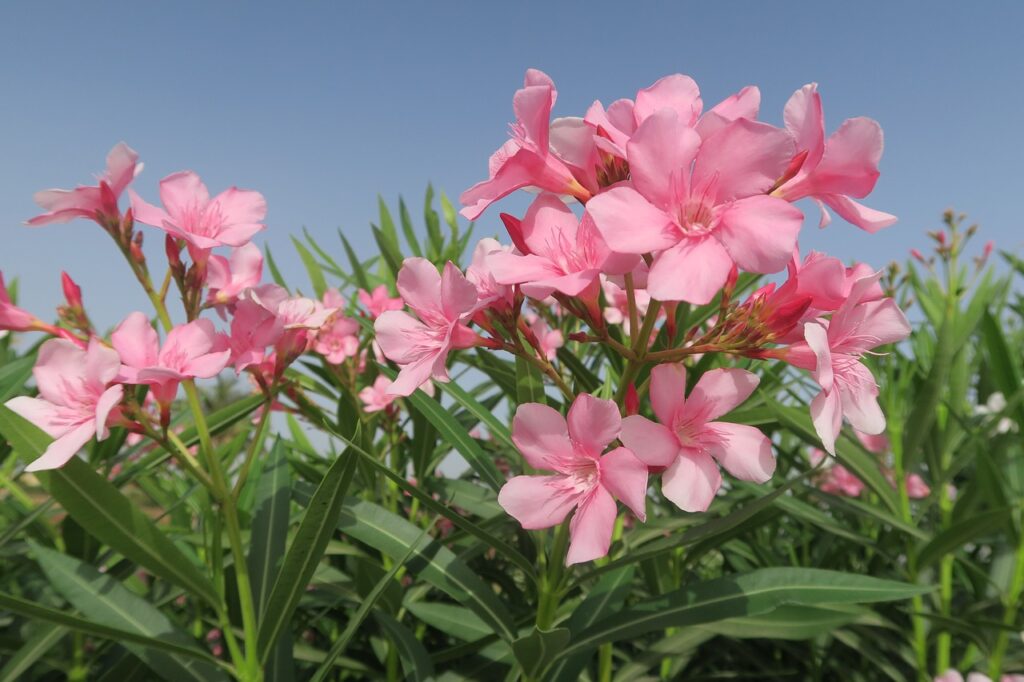
Oleander (Nerium oleander) – Every single part of this Mediterranean shrub is extremely poisonous. Even burning the clippings creates toxic smoke. Just a small amount can cause severe heart problems, vomiting, and death. Symptoms can appear within hours and include drooling, abnormal heart rate, and collapse.
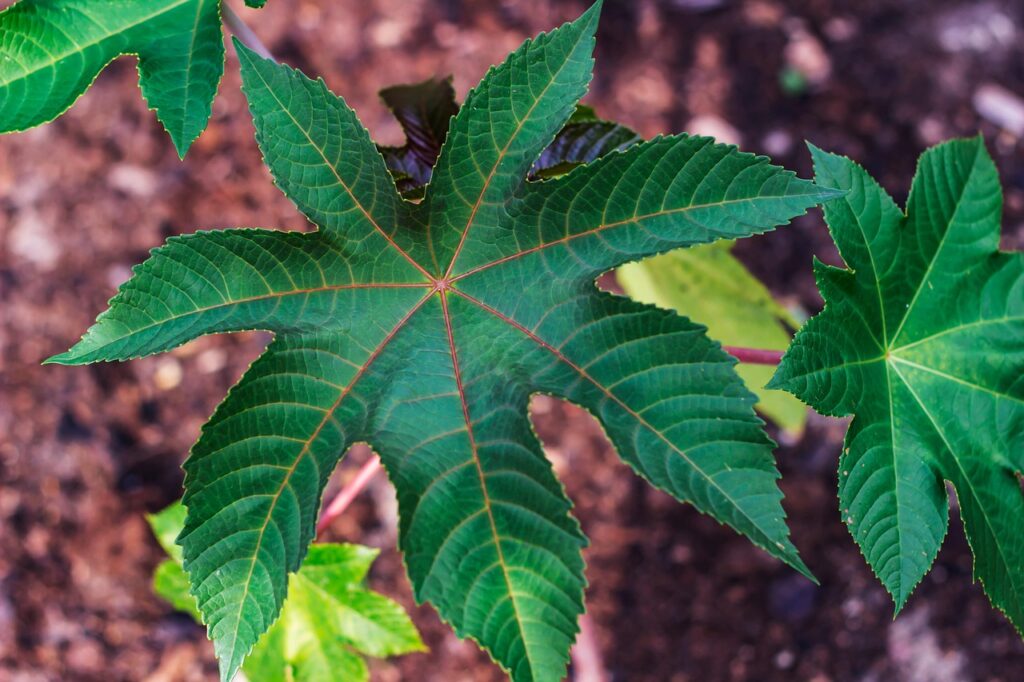
Castor Oil Plant (Ricinus communis) – The seeds contain ricin, one of the most toxic naturally occurring substances. Even one seed can be fatal to a dog. Often grown as an annual for its dramatic foliage, but sometimes for certain dogs, the risk is simply too great. Symptoms include severe vomiting, diarrhoea, and organ failure.
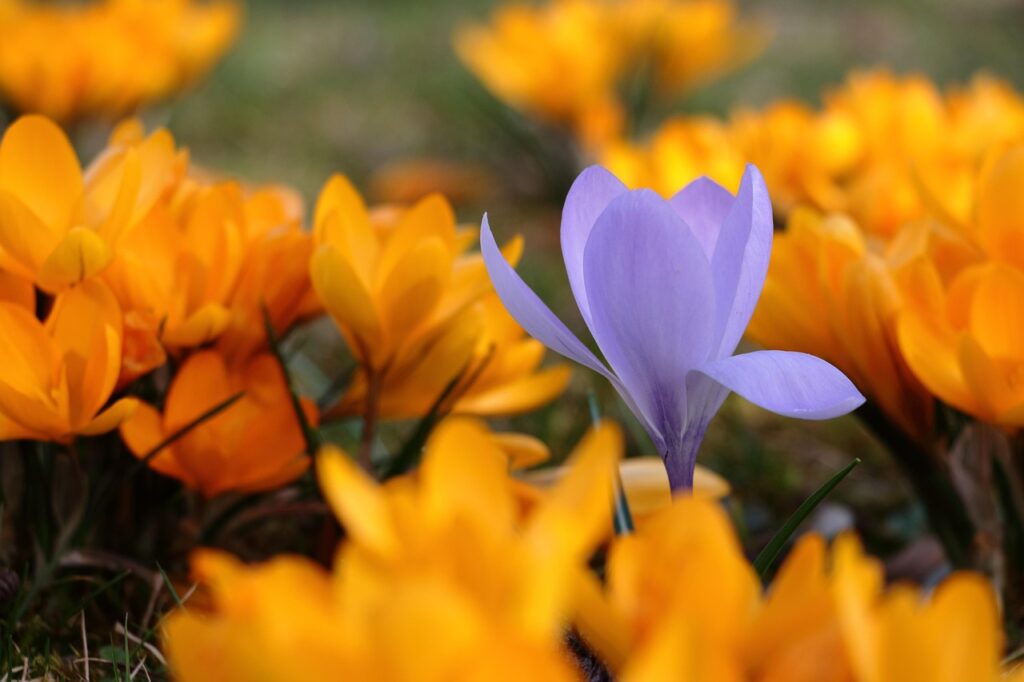
Autumn Crocus (Colchicum autumnale) – Not to be confused with spring crocuses (which are also toxic but less severely), Autumn crocuses contain colchicine, which affects every organ system. Symptoms may not appear for several days, making treatment more difficult. Signs include vomiting, diarrhoea, and multiple organ failure.
HIGHLY TOXIC PLANTS – Serious Health Risks
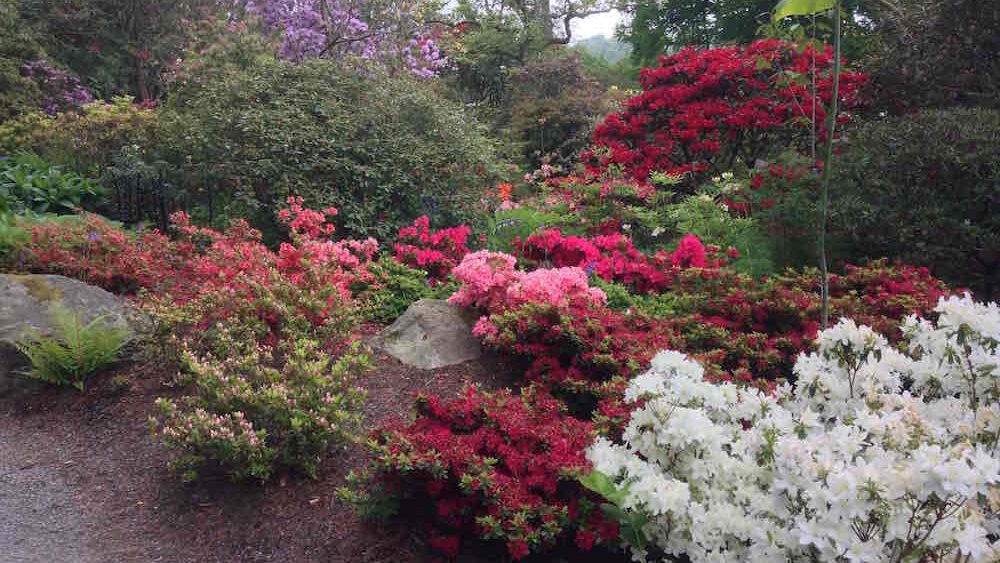
Azaleas & Rhododendrons (Rhododendron species) – These popular spring-flowering shrubs contain grayanotoxins that affect the cardiovascular and nervous systems. Even small amounts can cause vomiting, diarrhoea, weakness, and potentially fatal heart problems. Honey made from these flowers is also toxic, but again, bees and beekeepers don’t offer Rhododendron as forage for their hives! So it’s all about the quantities.
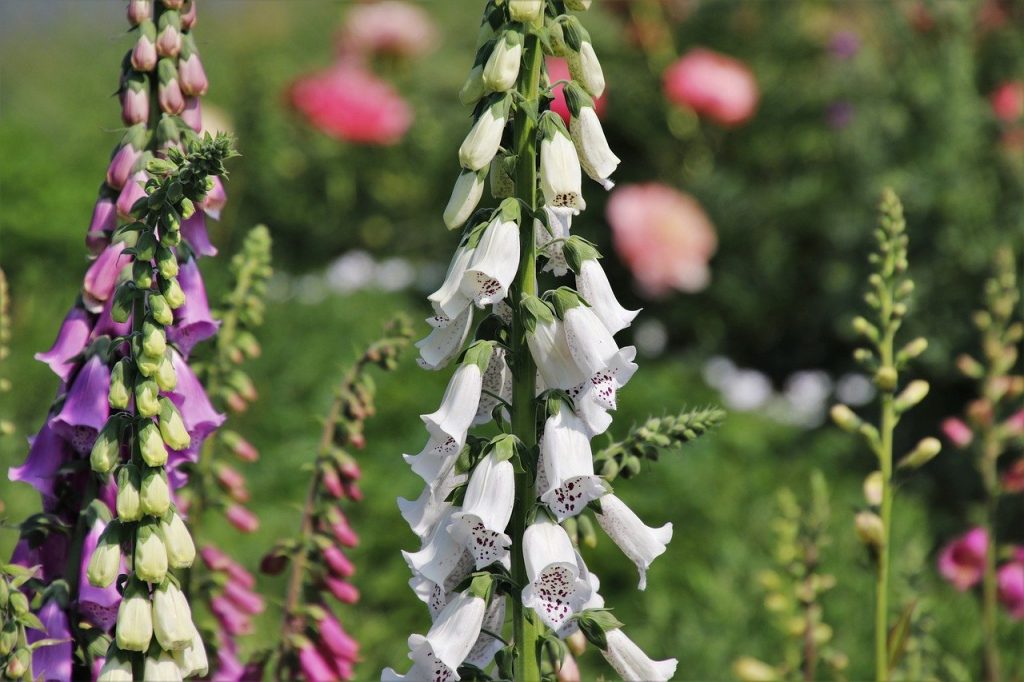
Foxgloves (Digitalis purpurea) – These cottage garden favourites contain cardiac glycosides that affect heart function. All parts are toxic, including dried leaves and seeds. Symptoms include nausea, vomiting, diarrhoea, and dangerous heart rhythm abnormalities. Again, I grow this at Garden Ninja HQ with no issues with my dogs.
Daffodils (Narcissus species) – The bulbs are the most toxic part, containing lycorine and other alkaloids. Dogs can sometimes dig up and chew bulbs, especially newly planted ones. Symptoms include intense vomiting, diarrhoea, abdominal pain, and in severe cases, cardiac arrhythmias and respiratory depression.
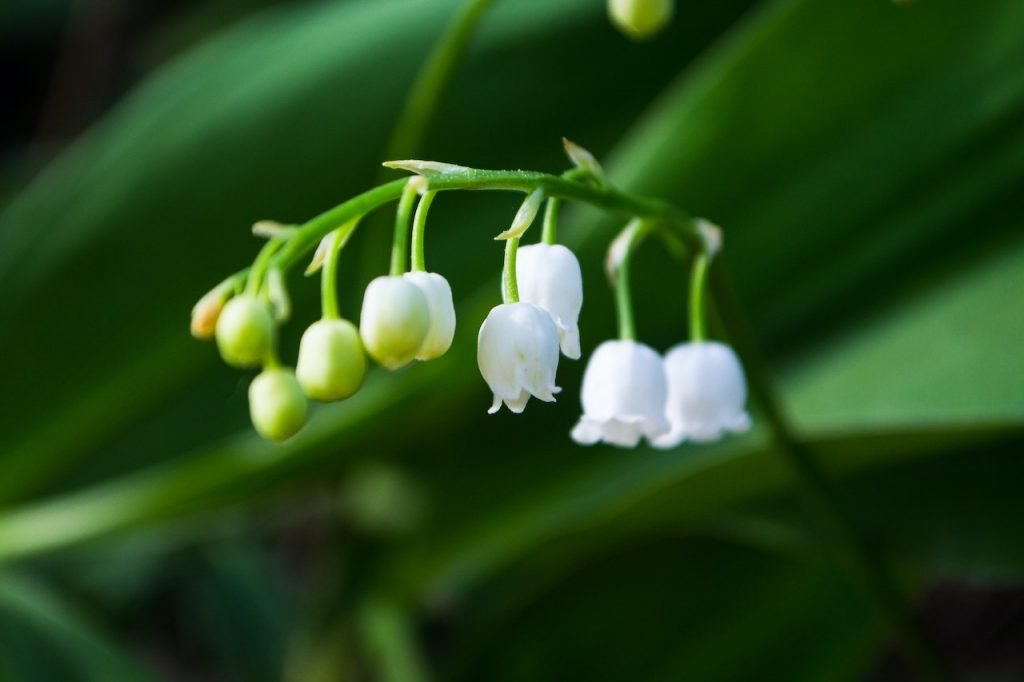
Lily of the Valley (Convallaria majalis) – Every part contains cardiac glycosides similar to digitalis. This spreading groundcover often goes unnoticed until dogs start showing symptoms. Even water from vases containing cut flowers can be toxic. Signs include vomiting, reduced heart rate, and severe cardiac rhythm disturbances.
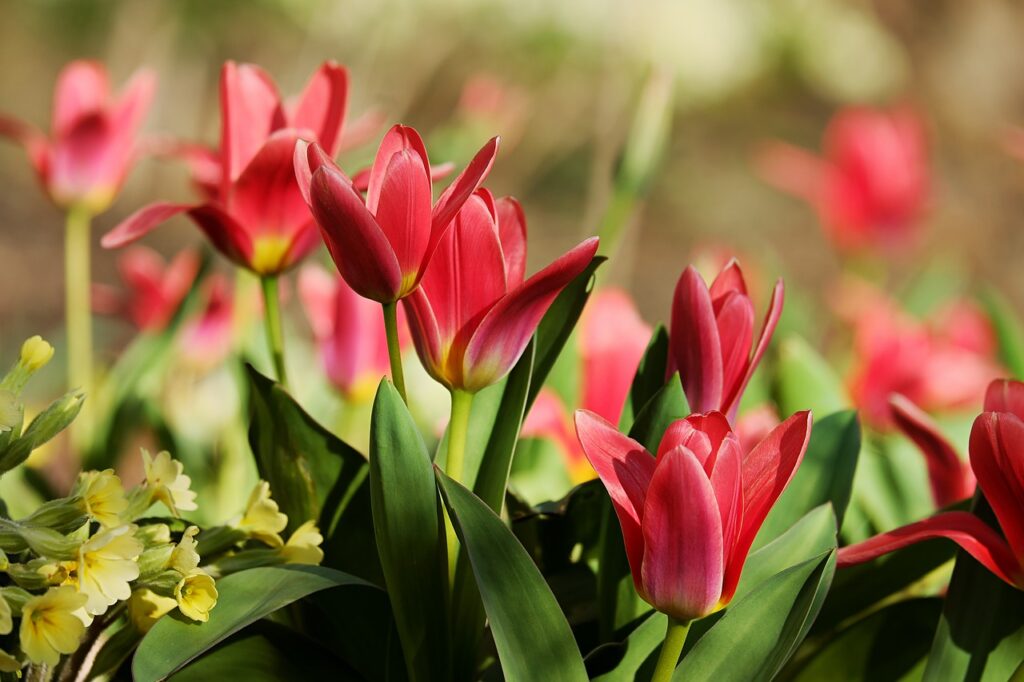
Tulips & Hyacinths (Tulipa & Hyacinthus species) – The bulbs contain the highest concentration of toxins, particularly tulipins and other alkaloids. Freshly planted bulbs in Autumn are especially attractive to dogs. Symptoms include intense drooling, vomiting, diarrhoea, and depression.
MILDLY HARMFUL PLANTS – Monitor & Remove Access if worried
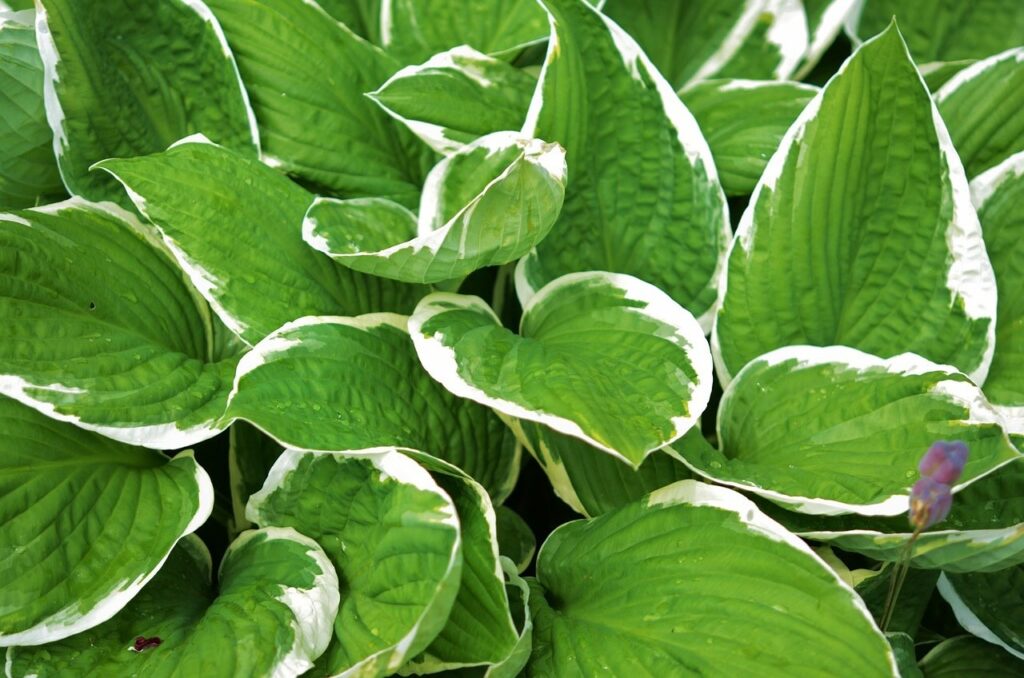
Hosta (Hosta species) – These popular shade plants contain saponins that cause gastrointestinal upset. Whilst rarely fatal, they can cause significant discomfort with vomiting and diarrhoea. The broad leaves seem particularly tempting to some dogs.
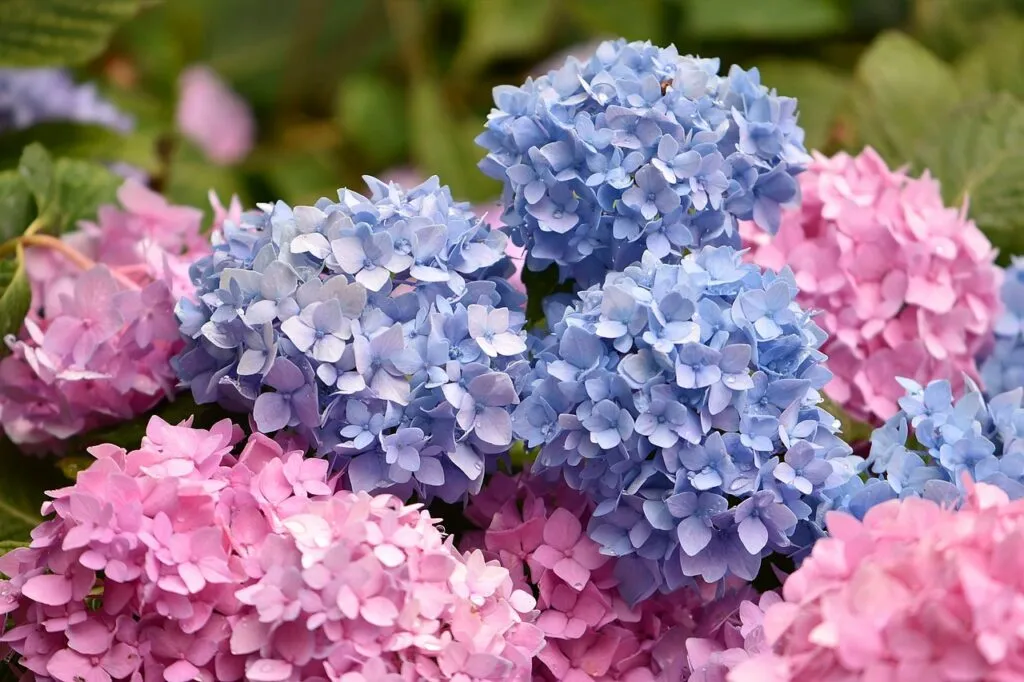
Hydrangea (Hydrangea species) – Contains cyanogenic glycosides that can cause stomach upset and, in large quantities, more serious symptoms. The flower heads and leaves are most toxic when wilted. Most dogs need to consume quite large quantities to show severe symptoms.
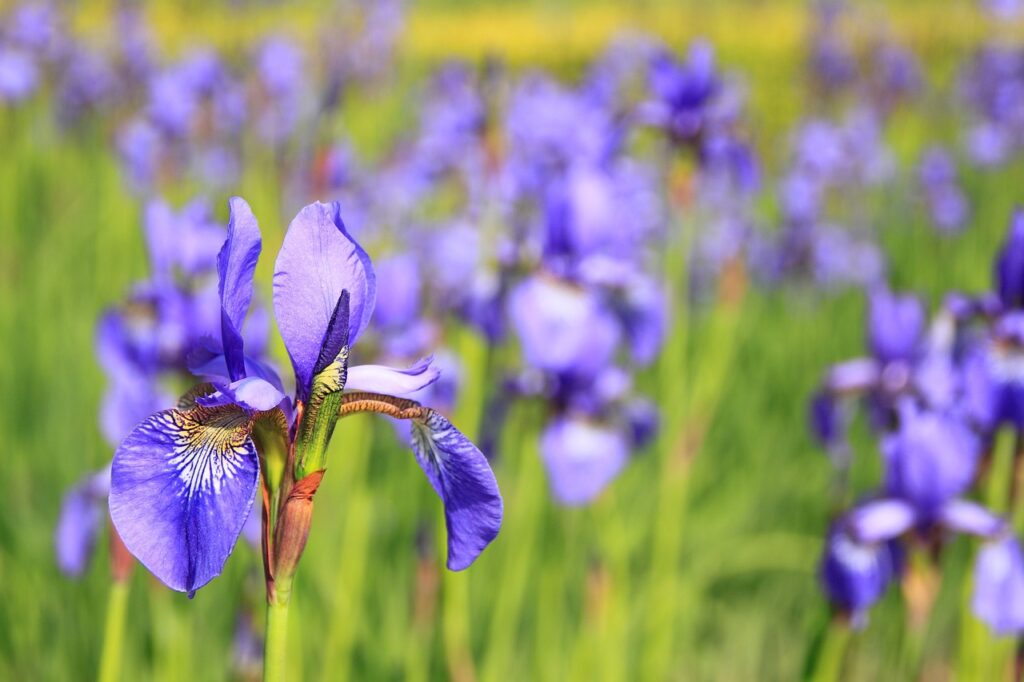
Iris (Iris species) – The rhizomes (underground stems) contain irisin and other irritating compounds. Dogs occasionally dig up and chew iris rhizomes, causing mouth irritation, drooling, vomiting, and diarrhoea.
6. Dog Friendly Garden Design Example
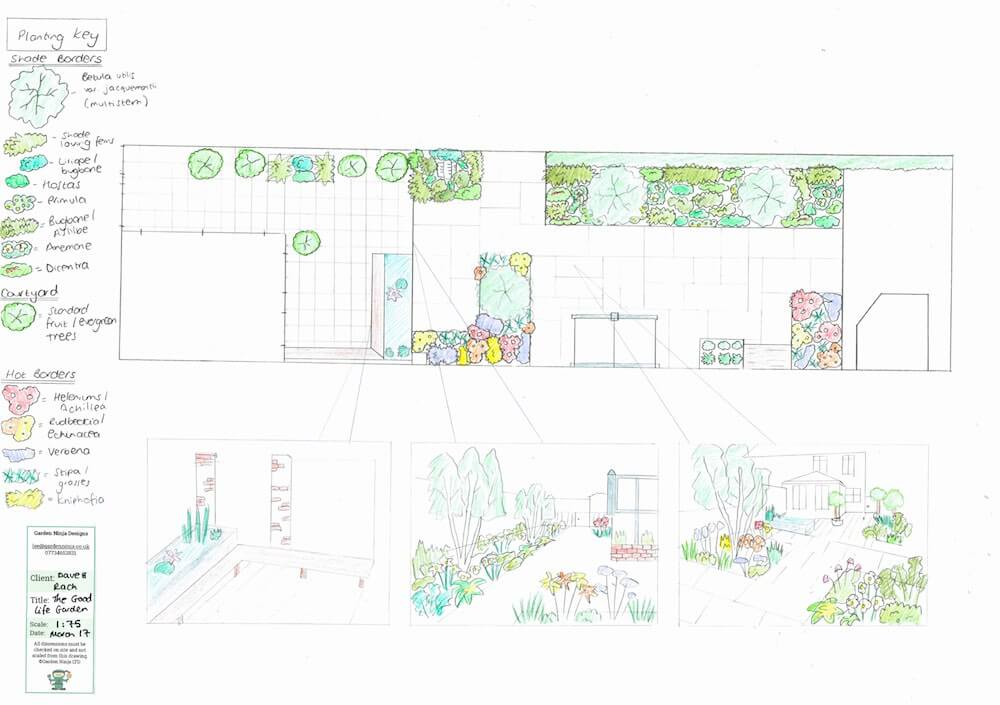
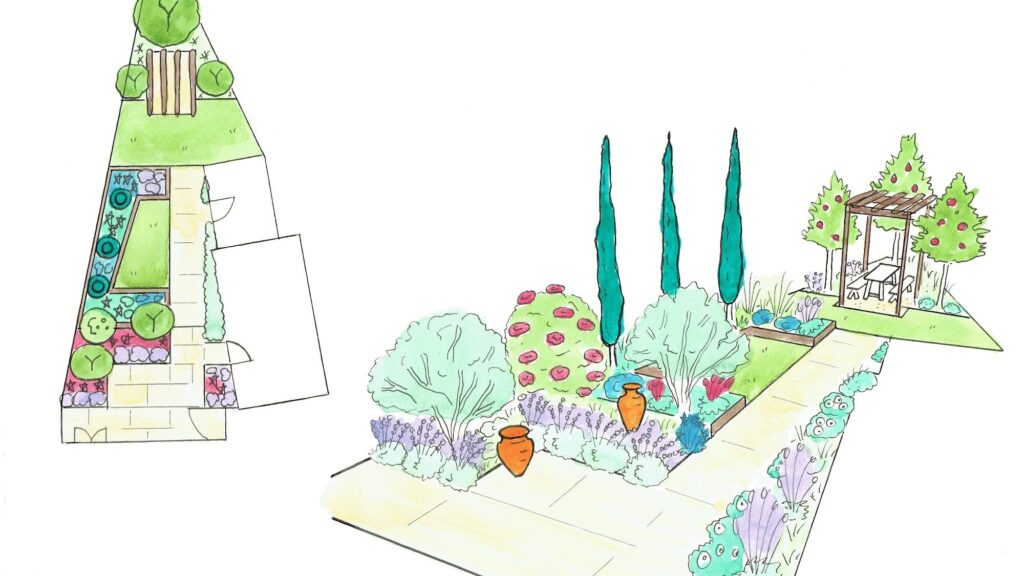
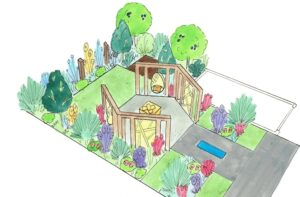
Here is an example of a dog-friendly garden design I created for a client. The client had two adult dogs. One was a basset hound that loved to dig; the other was a German Shepherd who loved clawing up grass. Their back garden was in a complete state of disrepair, so they called Garden Ninja in to redesign it and make it dog-proof!
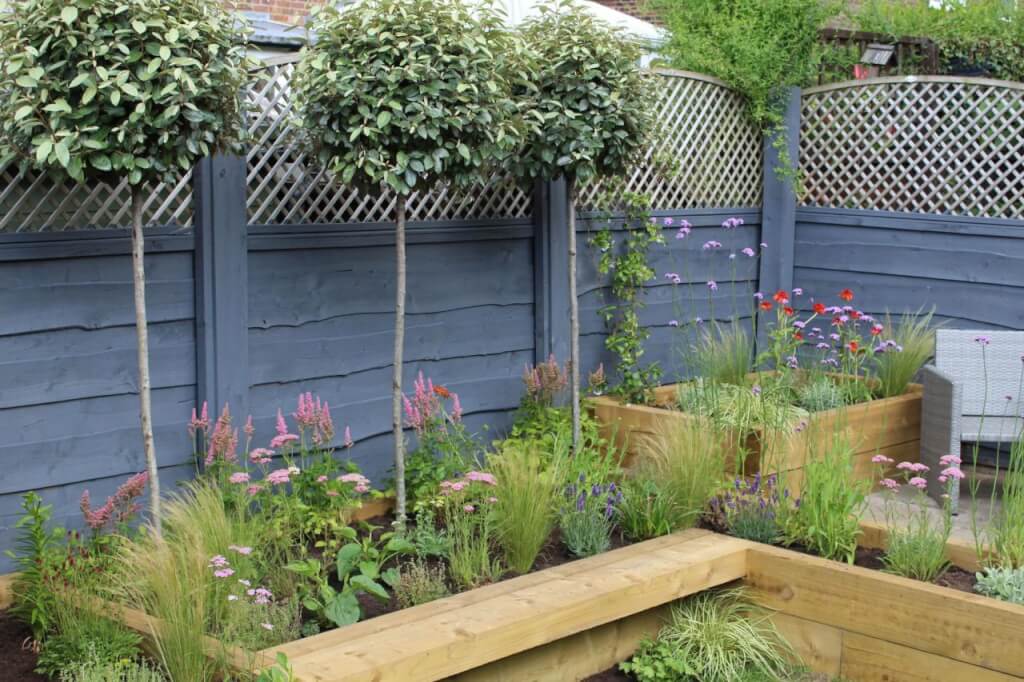
An example of one of my Dog Friendly Garden Designs
This dog friendly garden has been designed with zones. This means that there are separate areas in the garden for different uses. We used hard landscaping and pavers to ensure the routes through the garden could be cleaned and to help keep dogs’ claws down, too.
Dog Zones
The flagged terrace directly outside the square orangery, on the left side of the design, is the dog zone. It is where the dog’s food, water and play toys will be kept. It’s also a space with a seating area for people to sit with the dogs. It features a raised rill water element for added interest. This way, the dogs can’t fall into the water. It also acts as a screen for some of the more delicate beds. At the far left is a summer house and fenced-off area for the dogs, awelllll, which can be used if guests are coming over or the couple want to garden without the dogs getting their noses into their beds!
Woodland Zone
There is a woodland area full of ferns, Dicentra, Hostas and dog-friendly ‘bulletproof’ plants. This area is tightly packed with low-growing, shade-loving plants. The dogs in this garden have never eaten plants;s, even so, the plants are non-toxic.
Working Zone
Then there is a working area in the middle with a glasshouse and beautiful annual flowers, such as Rudbeckia and Stipa grasses. There is zero turf in this design due to the previous issues. There’s plenty of hard landscaping that can be easily washed and brushed to keep it clean. You may also see paths intentionally designed in this garden between the woodland and dog zone.
This is so the dogs have a refuge if the garden gets busy, and so they stay out of the way of wheelbarrows and other people. Also, as the sun moves around, the dog beds can be moved so they can always find shade. This is to prevent the dogs from getting too stressed, for example, like when the garden is in full swing, for say, a garden BBQ!
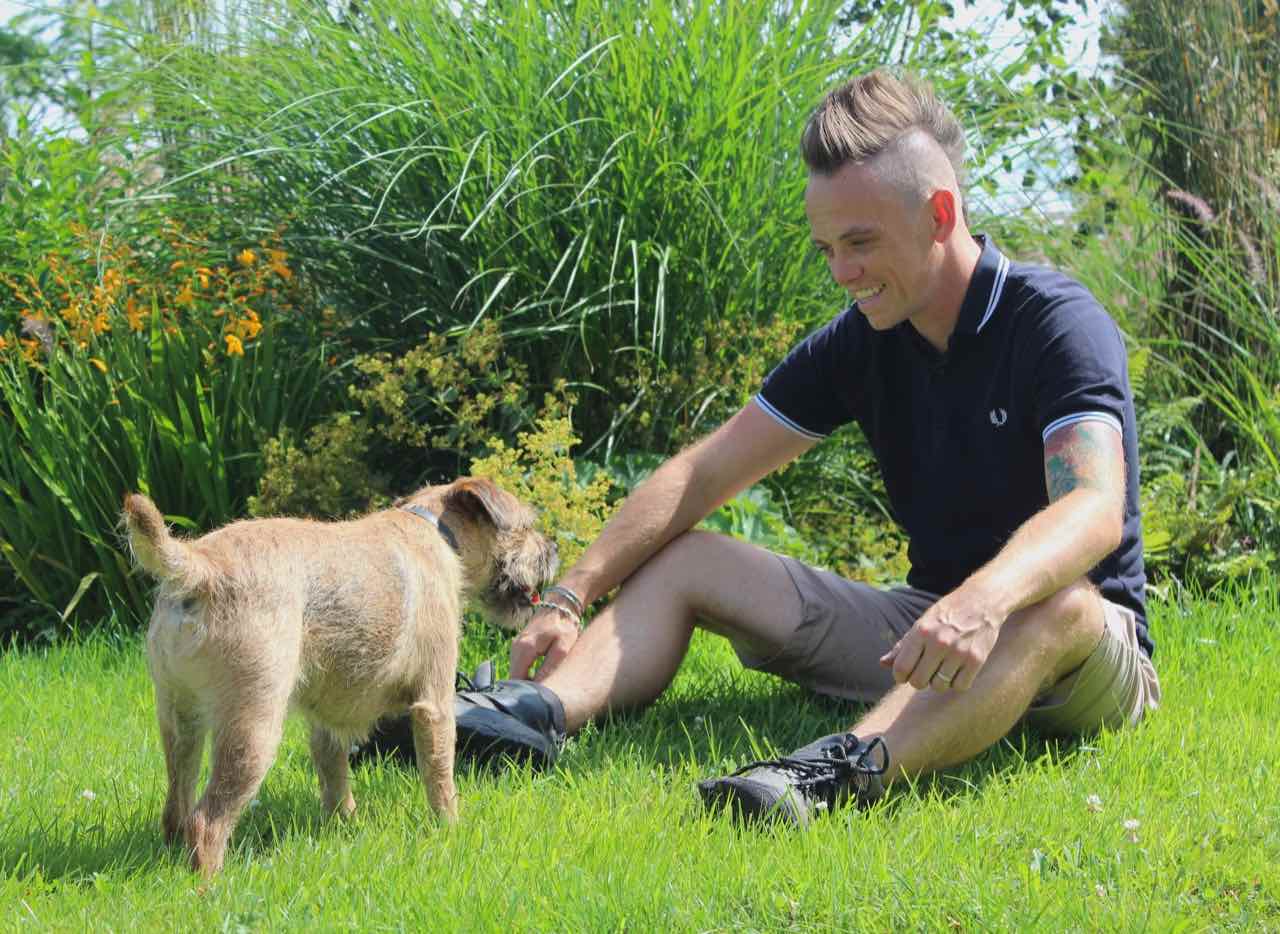
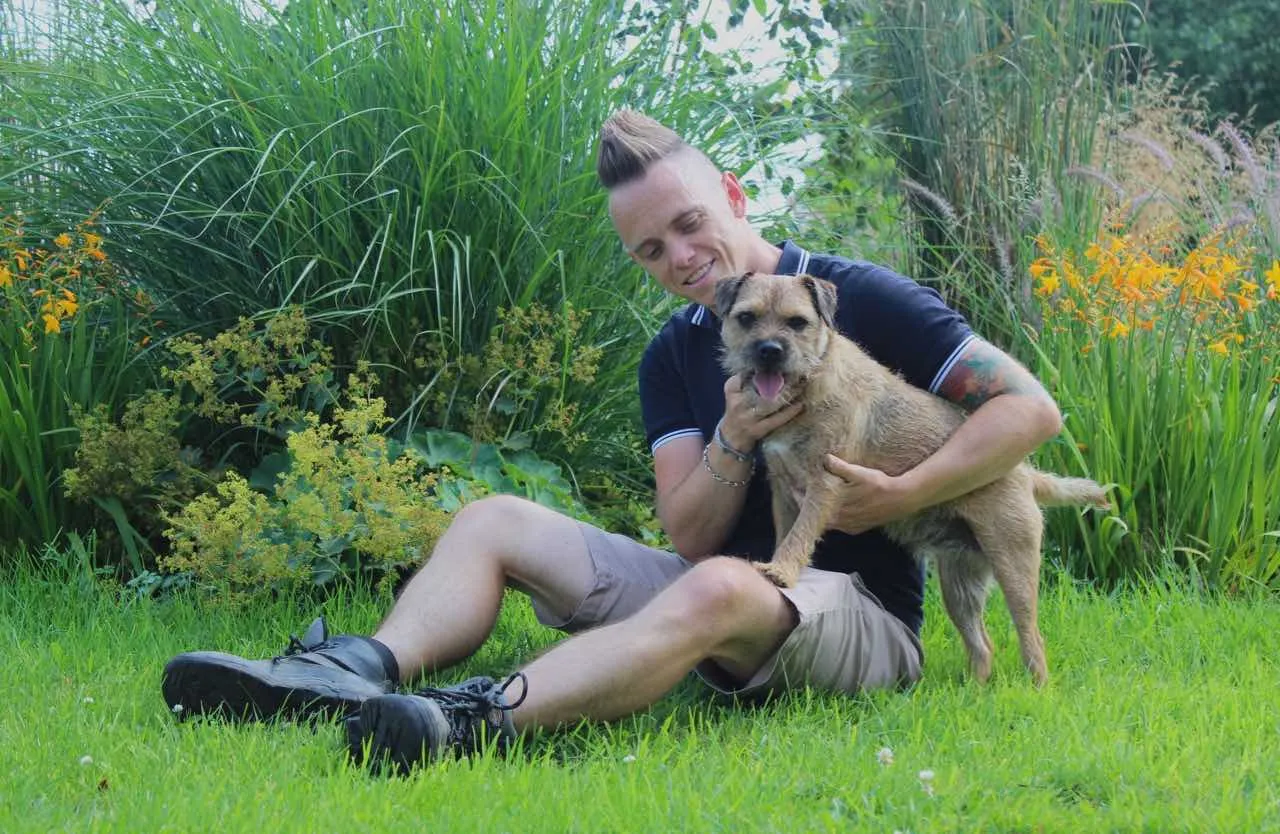
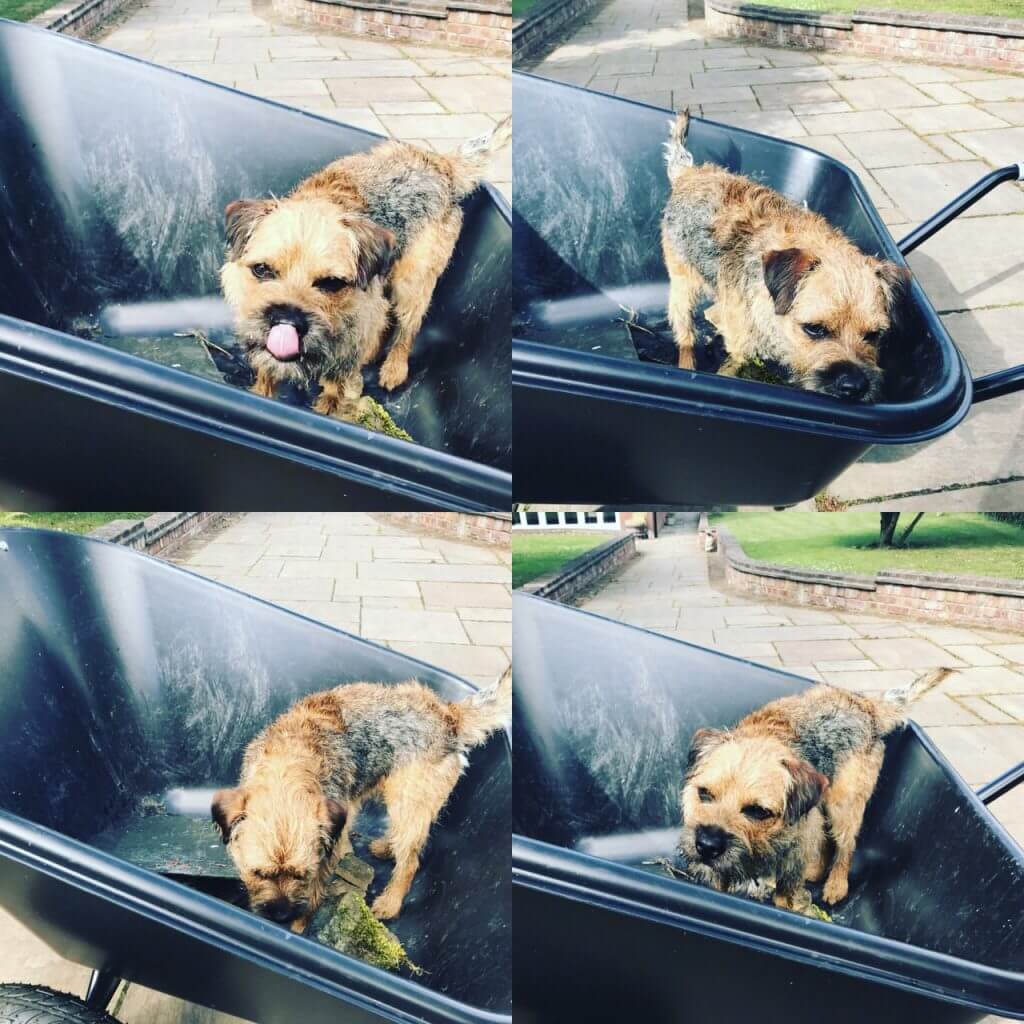
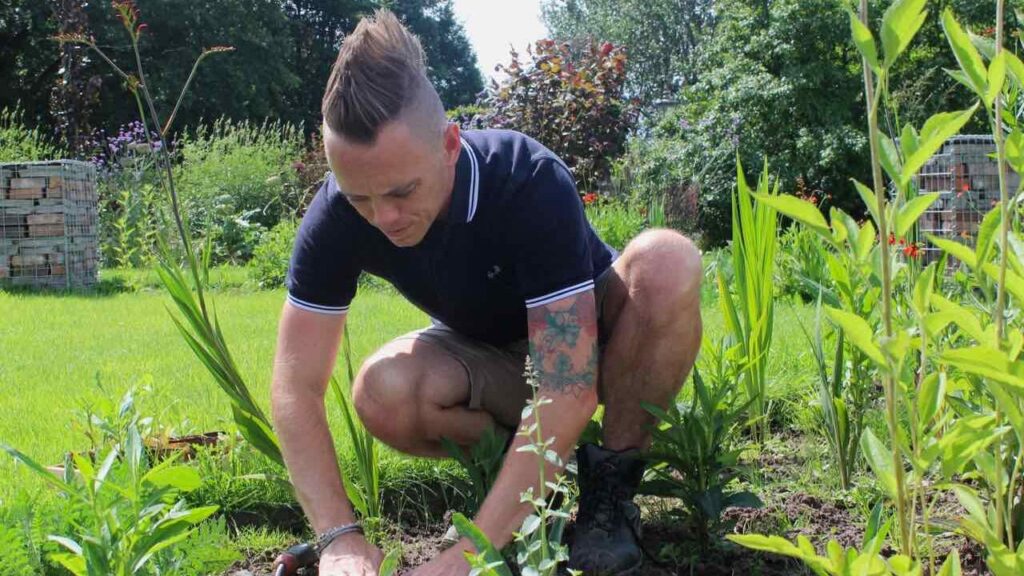
Barry loves helping me in my garden!
7. No dig for victory
So what has this got to do with dog-friendly garden design? Well, dogs are renowned for their love of digging, especially if they see you digging in the garden each year. The no-dig method reduces the need to dig and means your dog is less likely to imitate you. It also means less labour for you and more time to spend with your dog. It’s a win-win!
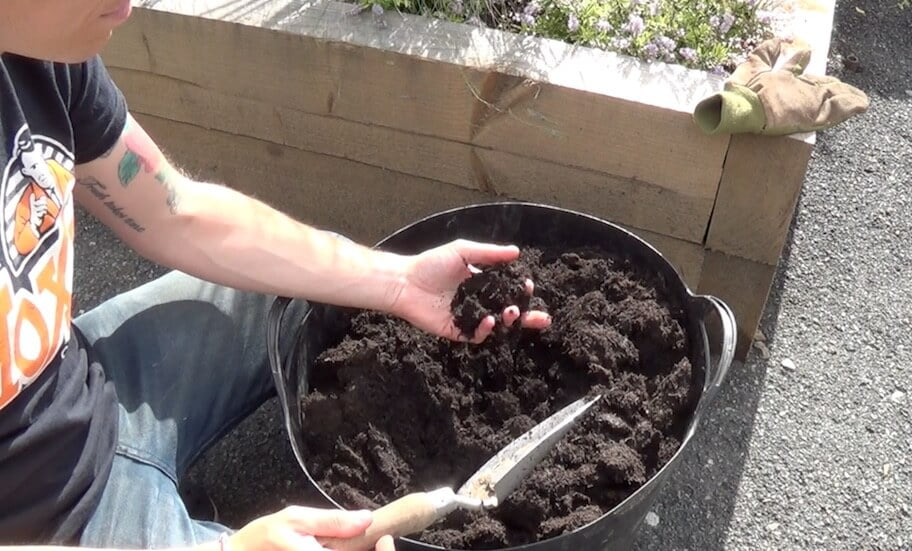
The no-dig gardening method is gaining popularity at the moment, and for good reason. It’s organic, super easy to achieve and helps the environment. No-dig is where you cultivate the ground the very first time you use it, i.e., dig and add organic matter, then leave it.
All that’s needed is a layer of mulch at the end of each season.
You plant in it but never rotovate or re-dig the border. The aim is for the plants’ roots, along with the natural microbes, organisms, and bacteria living in the soil, to keep it cultivated for you. Breaking it up enables water to drain and nutrients to be absorbed, converted into food sources for living organisms and plants. It’s also super easy once established. At the end of each growing season, you simply add organic matter, such as compost, st to the beds as mulch and let nature do the rest.
Now, here is a bone of contention: Yellow lawns. So why does having a dog turn your lawn green? It’s because dogs’ urine can leave scorch marks on the grass when they pee. No, some say it’s down to the acidity of the dog’s pee, or to the high nitrogen content. So I urge you always to do your own research on the cures for yellow or brown grass spots.
The Tomato Juice Cure?
Sometimes dog and gardening blogs recommend giving dogs a spoonful of tomato juice to help reduce urine acidity. I’ve got gardeners who swear by it. Others argue it can cause urinary tract infections. I’m no vet. Surely dogs digest more questionable foods than natural tomato juice? So I’m not sure I buy into the risks of tomato juice. Again, there arseveralof methods, but you know your dog best.
The watering method
The only fully natural way to fully remove this is to char your dough around, g watering the spots after they go. That or train them to wee in a particular spot. What may help is to accept that part of the lawn will turn yellow, or replace it with hard landscaping that we can just wash off.
Seasonal Dog Garden Care: Your Monthly Action Plan
Below is a high-level plan for dog-friendly garden maintenance, with specific dog-proofing and enrichment activities to help you and your dog fully enjoy your green space.
After months of watching your garden hibernate, March brings that first hint of spring energy, and your dog feels it too! This is when I start getting calls from panicked clients whose dogs are suddenly showing renewed interest in digging up the garden.
Essential March Tasks:
Boundary Security Check: Winter weather often damages fencing and gates. Walk your entire perimeter with a critical eye, paying attention to fence bases where frost may have shifted posts or created gaps.
Lawn Recovery Assessment: Those yellow patches from winter urination will be showing clearly now. Apply a high-potash feed to affected areas and overseed with a hard-wearing grass mix. I recommend keeping a bucket of water handy for immediate dilution of fresh deposits.
Tool Safety Audit: Before spring gardening begins in earnest, secure all tools in dog-proof storage. Garden sheds should have proper latches that curious paws can’t open.
Remove any storm-damaged branches from dog-safe trees and shrubs. Dead wood attracts insects that might tempt curious dogs to investigate.
The soil’s warming up, growth is accelerating, and your dog’s energy levels are climbing. This is prime time for establishing new plantings before summer heat stress.
Essential April Tasks:
New Planting:Plant container-grown dog-safe shrubs and perennials. The soil’s workable, but plants have time to establish before summer stress sets in.
Mulch Application: Apply a 5cm layer of organic mulch around established plants. This suppresses weeds, retains moisture, and creates clear boundaries that many dogs naturally respect.
Lawn Care: Begin regular feeding with a dog-safe, organic lawn food. Start mowing on a higher setting – longer grass copes better with dog activity.
April’s perfect for installing automated irrigation systems. Dogs appreciate consistent soil moisture, and you’ll have one less garden chore to compete with dog playtime.
May: Full Spring Mode
Everything’s growing rapidly now, including your dog’s excitement about garden adventures—May’s traditionally the month when dogs rediscover their love of digging in newly warmed soil.
Essential May Tasks:
Digging Pit Maintenance: Refresh sand in designated digging areas and bury new toys to maintain interest.
Pest Prevention: Apply organic slug controls around vulnerable plants. Avoid metaldehyde-based products, which are toxic to dogs.
Water Feature Preparation: If you’re planning dog-safe water features, May’s ideal for installation before summer heat makes water irresistible.
British summers can be surprisingly hot, and dogs don’t handle heat stress as well as we do. June’s when I start implementing serious cooling strategies in dog gardens.
Essential June Tasks:
Shade Assessment: Check that shaded areas remain cool throughout the day. Tree canopies that provided adequate shade in spring may need to be supplemented as the sun climbs higher.
Water Station Setup: Establish multiple water points around the garden. I prefer ceramic or stainless steel bowls that don’t heat up like plastic ones.
Paving Temperature Monitoring: Dark surfaces can become painfully hot. Test surfaces with your hand – if it’s too hot for you, it’s too hot for dog paws.
Deep water newly planted dog-safe plants early in the morning. Established plants should be fine with natural rainfall, but keep an eye on container plantings.
July’s often our hottest month, and both gardens and dogs feel the stress. This is when good design really pays off.
Essential July Tasks:
Cooling Strategies: Consider temporary shade structures for dogs who insist on sunbathing. Pop-up gazebos work brilliantly.
Lawn Care: Raise the mowing height to at least 4cm. Longer grass stays cooler and copes better with dog activity.
Plant Monitoring: Watch for signs of stress in dog-safe plants. Wilting in extreme heat is normal, but persistent wilting needs attention.
If you’re using sprinklers for lawn care, run them early in the morning when dogs are less likely to be outside. Many dogs love playing in sprinklers, but wet paws pick up more dirt.
August: Maintaining Momentum
Late summer often brings dry spells that stress both plants and overheated dogs. August care focuses on maintaining what you’ve established whilst preparing for Autumn.
Essential August Tasks:
Deep Watering: Water established plants deeply but infrequently to encourage deep root development.
Deadheading: Remove spent flowers from dog-safe perennials to encourage continued blooming.
Lawn Renovation Planning: Assess areas of winter damage and plan Autumn renovation work.
Autumn CARE (September – November)
September: Preparation Phase
September’s brilliant for garden preparation – the summer’s stress is easing, but there’s still warmth in the soil for new projects.
Essential September Tasks:
New Plantings: Plant container-grown dog-safe trees and shrubs. They’ll establish well in Autumn conditions.
Lawn Renovation: Scarify, overseed, and feed damaged areas of the lawn. Use a seed mix designed for high-wear areas.
Boundary Maintenance: Repair any summer damage to fencing before Autumn storms.
Start reducing watering frequency as temperatures drop and rainfall increases.
Water System Protection: Drain outside taps and irrigation systems to prevent freeze damage.
Shelter Check: Ensure dog shelter areas are weatherproof and comfortable.
WINTER CARE (December – February)
Winter Maintenance Mode
Winter garden care in dog-friendly spaces focuses on maintaining safety and preparing for the next growing season.
Essential Winter Tasks:
Ice Safety: Clear icy patches from main pathways to prevent slipping hazards for both humans and dogs.
Indoor Activities: Plan indoor enrichment activities for dogs when the weather prevents access to the garden.
Garden Planning: Use winter months to plan next year’s improvements and order plants for spring delivery.
Frequently Asked Questions: Dog Friendly Gardens
Q: How much does it cost to create a dog-friendly garden?
A: The cost varies enormously depending on your starting point and ambitions. I’ve helped clients create fantastic dog-friendly transformations for as little as £500 using DIY approaches, plant propagation, and phased implementation. At the other end, comprehensive redesigns with professional landscaping can reach £15,000+.
My experience shows most successful transformations fall into three budget categories for design costs (landscaping costs would be extra):
Budget Approach (£300-800): Focus on safety essentials, basic zoning, and DIY solutions
The most cost-effective approach is often to start with safety and infrastructure, then build up plant collections through propagation and plant swaps over 2-3 years.
Q: Can small gardens work for large dogs?
A: Absolutely! I’ve created successful gardens for Great Danes in spaces as small as 6m x 4m. The key is intelligent design rather than sheer size. Large dogs need:
Clear pathways that accommodate their turning circles
Robust plants that won’t be damaged by tail-wagging and movement
Adequate shade and water access
Mental stimulation to compensate for the limited physical exercise space
Vertical design becomes crucial,s using walls, trellises, and elevated elements to maximise the sense of space. The most successful small-dog gardens I’ve designed focus on the quality of experience rather than the quantity of space.
Q: What’s the minimum garden size needed for a dog?
A: There’s no legal minimum, but from a welfare perspective, any outdoor space is better than none if designed thoughtfully. I’ve seen tiny balconies transformed into valuable dog spaces with artificial grass, sensory elements, and careful plant selection.
The real question isn’t size but function. A well-designed 3m x 2m space can provide toileting, sensory stimulation, and outdoor access, significantly improving a dog’s quality of life. Obviously, larger breeds and high-energy dogs benefit from more space, but creative design can make even tiny areas valuable.
Q: How do I know if a plant is definitely safe for my dog?
A: This is one of the most important questions I get asked. My approach is always conservative when in doubt: don’t plant it. Especially if your dog is a puppy or has a habit of eating things they shouldn’t. Here’s my verification process for dog-safe plants outside of the species I already know:
Multiple Source Verification: Check at least three reliable sources, including the RHS plant finder, ASPCA database, and veterinary resources
Specific Variety Research: Many plant families have both safe and toxic members, so research the exact variety
Veterinary Consultation: For dogs with particular health conditions or strong chewing habits, discuss plant choices with your vet
Observe Your Dog’s Behaviour: Even safe plants can cause stomach upset if consumed in large quantities.
After 15+ years designing dog gardens, I’ve learned that most dogs naturally avoid plants they shouldn’t eat. Problems usually occur with curious puppies, bored dogs, or when toxic plants are particularly accessible or appealing.
Q: My dog ate something I think was poisonous from the garden – what should I do?
A: Immediate Action Required:
Don’t panic, but act quickly – collect a sample of what they ate if possible
Contact your vet immediately – don’t wait for symptoms to appear
Do NOT induce vomiting unless specifically instructed by a veterinary professional
Monitor closely – note any changes in behaviour, breathing, or appearance
Information for Your Vet:
What plant/substance was consumed
Approximate quantity eaten
Time of consumption
Your dog’s weight and age
Any symptoms already appearing
Keep your vet’s emergency number and the Animal PoisonLine (01202 509000) saved in your phone. Quick action can be literally life-saving.
Q: Are there any plants that are toxic to dogs but safe for cats, or vice versa?
A: Yes, and this creates real challenges for multi-pet households. Some key differences:
Toxic to Dogs, Safe for Cats:
Grapes and raisins (extremely dangerous for dogs; cats show little interest)
Onions and garlic (more toxic to cats in smaller quantities)
Toxic to Both:
Azaleas and rhododendrons
Daffodils and tulips
Yew and oleander
For multi-pet gardens, I stick to plants that are safe for all species, even if it limits choices. It’s simply not worth the risk of mixed messages or accidental poisoning.
Q: How do I stop my dog from destroying my lawn?
A: Ah, the eternal question! After designing hundreds of dog gardens, I’ve learned that perfect lawns and active dogs rarely coexist peacefully. Here’s my practical approach:
Urine Dilution: Keep a watering can handy and dilute urine spots immediately after your dog goes
High-Traffic Protection: Use temporary fencing to protect damaged areas while they recover
Strategic Placement: Train your dog to use less visible areas for toileting
Grass Variety Selection: Overseed with hard-wearing varieties like perennial ryegrass mixed with fescue
Acceptance Strategy: Sometimes the best solution is embracing a ‘lived-in’ lawn rather than pursuing perfection
The most beautiful dog gardens I’ve designed often have imperfect lawns but incredible overall character. Focus on creating spaces that work for your lifestyle rather than magazine-perfect aesthetics.
Q: My dog keeps escaping from the garden – what can I do?
A: Escape artists require detective work to solve the problem permanently. My systematic approach:
Identify the Method: Are they digging under, jumping over, or finding gaps?
Timing Analysis: When do escapes happen? Boredom, triggers from outside, or separation anxiety?
Motivation Assessment: What’s driving the behaviour? Intact animal instincts, social reasons, or fear?
Height Modifications: Most dogs need 6-foot minimum fencing, but athletic breeds may need 8 feet
Dig-Proofing: Install buried mesh extending 60cm out from the fence base at a 45-degree angle
Gap Elimination: Check gates, fence joints, and potential squeeze-through spots
Environmental Enrichment: Bored dogs are escape artists – increase mental stimulation and exercise
Desensitisation: Gradually reduce reactivity to outside triggers through training
Routine Establishment: Many escapes happen during transitions – establish consistent routines
I’ve found that most escape problems resolve when the underlying cause is addressed rather than when barriers are just increased.
Q: Can I use chemical pest controls in a dog-friendly garden?
A: This is a complex area where plant health and pet safety must be carefully balanced. My professional approach is that I don; ‘t use pesticides or insecticides at all in my garden, but everyone is different:
Avoid Completely:
Slug pellets containing metaldehyde (can be fatal to dogs)
Ant powders and granules (dogs walk through then lick their paws)
Any products specifically labelled as toxic to mammals
Use with Extreme Caution:
Systemic insecticides (ensure manufacturer specifies pet safety)
Weedkillers (keep dogs away for a minimum of 48 hours after application)
Fungicides (generally less problematic but still require care)
Preferred Alternatives:
Biological Controls: Nematodes for slug control, beneficial insects for aphids
Companion Planting: Marigolds for pest deterrence, herbs for natural protection
If I wouldn’t let my own dog in the area immediately after treatment, I don’t recommend it to clients. Pet safety always trumps garden perfection.
Transform Your Garden Skills with Garden Ninja’s Online Courses
Ready to elevate your gardening expertise beyond lawn care? Garden Ninja’s comprehensive online courses can accelerate your journey from an enthusiastic beginner to a confident garden creator in just weeks, rather than years. With courses starting from just £29, you can access award-winning garden design knowledge from BBC Garden Rescue presenter Lee Burkhill without the expense of traditional garden design education.
Garden Design Examples for Small Gardens: 30 Design Templates & Planting Plans
Garden Design Examples for Small Gardens: 30 Design Templates & Planting Plans: In this online gardening course, I’ll walk you through 30 fantastic garden designs, explaining the logic behind the layout, the plant choices, and take-home tips for applying them in your own garden.
Weekend Garden Makeover: A Crash Course in Design for Beginners
Learn how to transform and design your own garden with Lee Burkhills crash course in garden design. Over 5 hours Lee will teach you how to design your own dream garden. Featuring practical design examples, planting ideas and video guides. Learn how to design your garden in one weekend!
Garden Design for Beginners: Create Your Dream Garden in Just 4 Weeks
Garden Design for Beginners Online Course: If you want to make the career jump to becoming a garden designer or to learn how to design your own garden, this is the beginner course for you. Join me, Lee Burkhill, an award-winning garden designer, as I train you in the art of beautiful garden design.
Having both a garden and a dog can be a life-changing experience for the better. Your garden doesn’t need to suffer or become off-limits because you want to have a dog. It just takes a bit of careful planning and structure to ensure that both you and your dog enjoy your garden to its full potential.
Using hard landscaping can help reduce mess and keep your dog’s claws short. One less trip to the dog groomer! Choosing dog-friendly plants can help keep dogs who like to chew, especially puppies, safe in the garden. For any real dangers or delicate areas, a hedge and a trellis are a must to keep dogs out of the more precious parts of your garden.
Providing a dog play zone and haven will reduce the need for dogs to run riot through the garden, as they have their own space. But most of all, make sure you’re having fun with your dog in the garden! Plants will always grow back if damaged, and holes can be filled back in.
If you’re looking for a dog-friendly garden design, why not get in touch? Alternatively, if this article has been useful, why not share it to help spread the word about dog-friendly gardens!
Your subscription could not be saved. Please try again.
Your subscription has been successful.
Lee Burkhill
Lee Burkhill, known as the Garden Ninja, is an award-winning garden designer and horticulturist with over 30 years of gardening experience and 15 years as a professional garden designer. A qualified RHS (Royal Horticultural Society) professional, Lee specialises in sustainable garden design and practical horticultural advice. He designs and presents on BBC1’s Garden Rescue and in leading gardening publications. Lee combines three decades of hands-on gardening knowledge with professional design qualifications to help gardeners create beautiful, functional outdoor spaces.
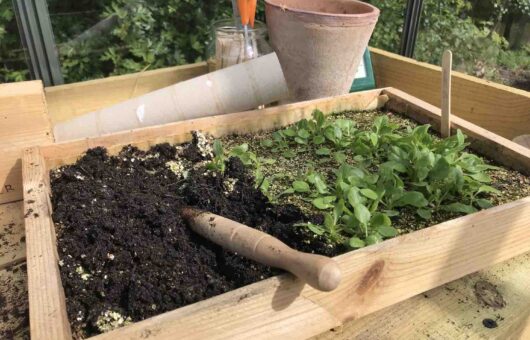
I wish to pot a few plants in my small garden, but have read that compost is seriously dangerous to dogs.
Can you advise on an alternative.
Would appreciate your input.
Thank you


















I wish to pot a few plants in my small garden, but have read that compost is seriously dangerous to dogs.
Can you advise on an alternative.
Would appreciate your input.
Thank you
Hi Lee. Can you advise which architectural plants are safe for dogs please? Thank you, Karen.