For the garden you’ve already got, not the one you’re starting from scratch. Seven checklists and video lessons from BBC Garden Rescue’s Lee Burkhill, built to help you work out what’s worth keeping before you spend a penny.
69

Quick Answer
For most UK gardens under 500m², a quality cordless mower now matches petrol for cutting performance, and the real decision is which battery platform to buy into. Starting from scratch, my picks are the Greenworks G40LM41K2X for an all-round medium lawn and the EGO LM1702E-SP if you want the best self-propelled performance money can buy. If you already own cordless tools on the Ryobi ONE+, STIHL AK, or Bosch 18V platform, staying on that platform for your mower saves real money on batteries you already own. For the full picture on every mower type, my main lawn mower guide covers petrol, corded electric, and cylinder mowers too.
What this guide covers that a general mower buying guide cannot is the question that actually decides which cordless mower you should buy: battery platform. Most people research cutting width and collection box size and never stop to ask whether the batteries they already own for a hedge trimmer or a strimmer could power their new mower too. Get that decision right and you save money for years. Choose the wrong cordless mower system and you end up with two incompatible battery systems cluttering the shed.
This is the guide I wish had existed when I bought my first cordless mower, so here is all my experience Ninjas to stop you making mistakes when buying a new lawn mower.
Which mower guide do you actually need?
This page goes deep on cordless and battery mowers specifically. For petrol, corded electric, cylinder mowers, or the full lawn size and budget framework, my Best Lawn Mower UK 2026 guide covers every type. If a robot mower is what you are actually after, my Best Robot Lawn Mower UK 2026 guide covers wire-free navigation and the wildlife safety research most buying guides skip. And if you want the wider case for going cordless across your whole toolkit, not just the mower, see my Best Cordless Garden Tools UK 2026 guide.
Jump To
This page contains affiliate links. If you purchase after clicking one of my links, I may earn a small commission at no extra cost to you. This helps keep the Garden Ninja blog free for everyone.
Cordless mowers suit the large majority of British gardens, and the reasons come down to how most of us actually garden. Most UK lawns sit under 500m², most of us mow weekly rather than daily, and most of us would rather not spend a Saturday morning on carburettor maintenance. A cordless mower removes the noise, the fumes, and the annual service, and gives most gardens more than enough runtime on a single charge.
Where cordless still comes up short is at the extremes. A large lawn, anything pushing past 700 to 800m², will usually need more than one battery swap to finish in a single session, and at that point a self-propelled petrol mower or a ride-on starts to make more practical sense. So use your common sense, there’s no point needing more than two expensive batteries; if that’s the case, consider a robot mower or a ride-on instead.
Long, wet, or heavily overgrown grass also asks more of a battery mower than a petrol engine, since the motor works harder and drains faster through thick growth. My main lawn mower guide has a full lawn size breakdown if you want to work out which category you fall into.
The other honest caveat is upfront cost. A quality cordless mower with two batteries and a charger typically costs more than an equivalent petrol machine, sometimes considerably more for a premium self-propelled model. The saving comes later, in the servicing, fuel, and maintenance you never pay for, and in the batteries doing double duty across your other garden tools. Over a five to six year ownership, most gardeners come out ahead, but it is worth going in with your eyes open on the initial outlay.
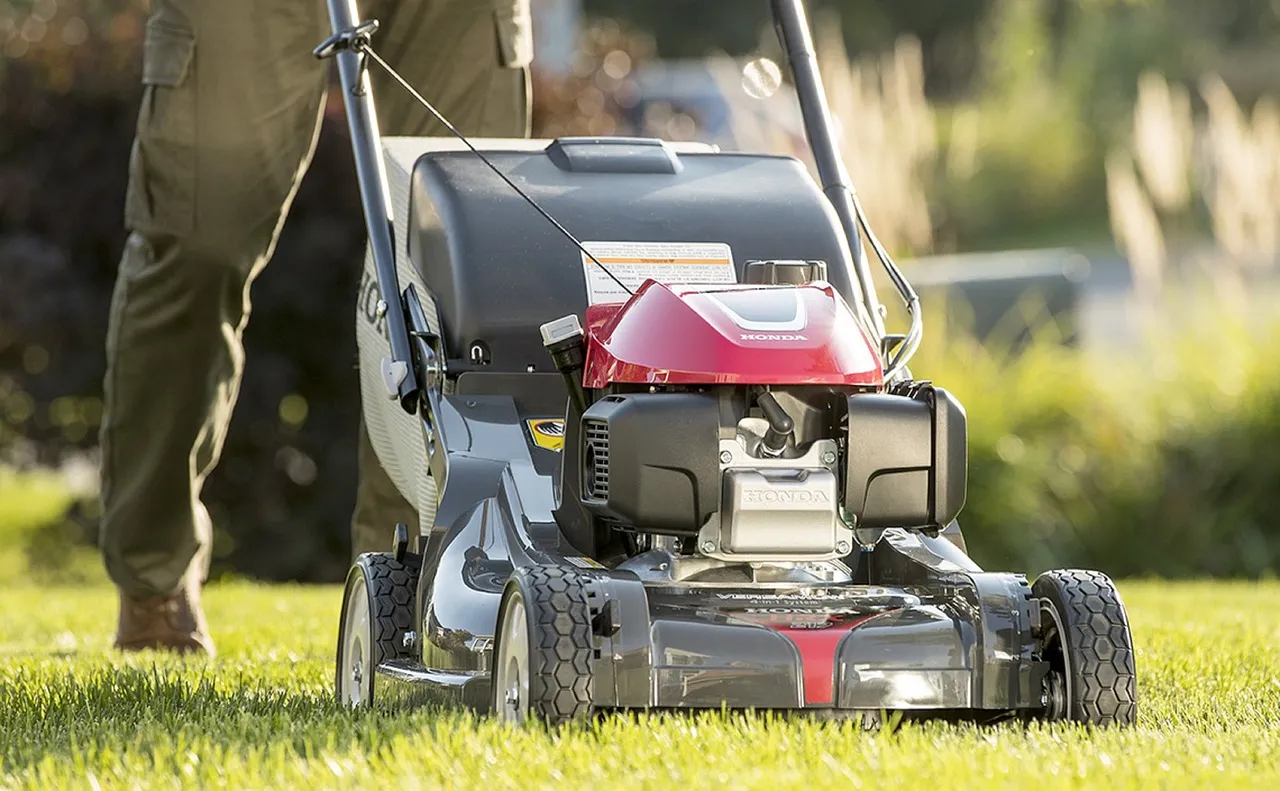
Noise is worth a mention on its own, because it changes when you can actually mow rather than just how pleasant it is. Petrol mowers sit well above the noise level most local by-laws and considerate-neighbour etiquette allow for a Sunday morning or a summer evening.
A cordless mower runs quietly enough to cut the lawn early on a weekend or after work on a long summer evening without every neighbour on the street knowing about it. It makes more of a loud hum than a roaring petrol engine and fast spinning blades echoing off a metal cutting chamber. For anyone in a terraced street or a close-set suburban estate, that flexibility over when you can mow is worth as much as any spec on the page.
Every cordless tool brand builds its batteries to work across a whole range of tools rather than just one. Buy a mower on the same platform as a hedge trimmer or strimmer you already own, and that battery, or a spare from the same range, works in both. Buy on a different platform for every tool, and you end up with three chargers, three battery types, and none of them interchangeable.
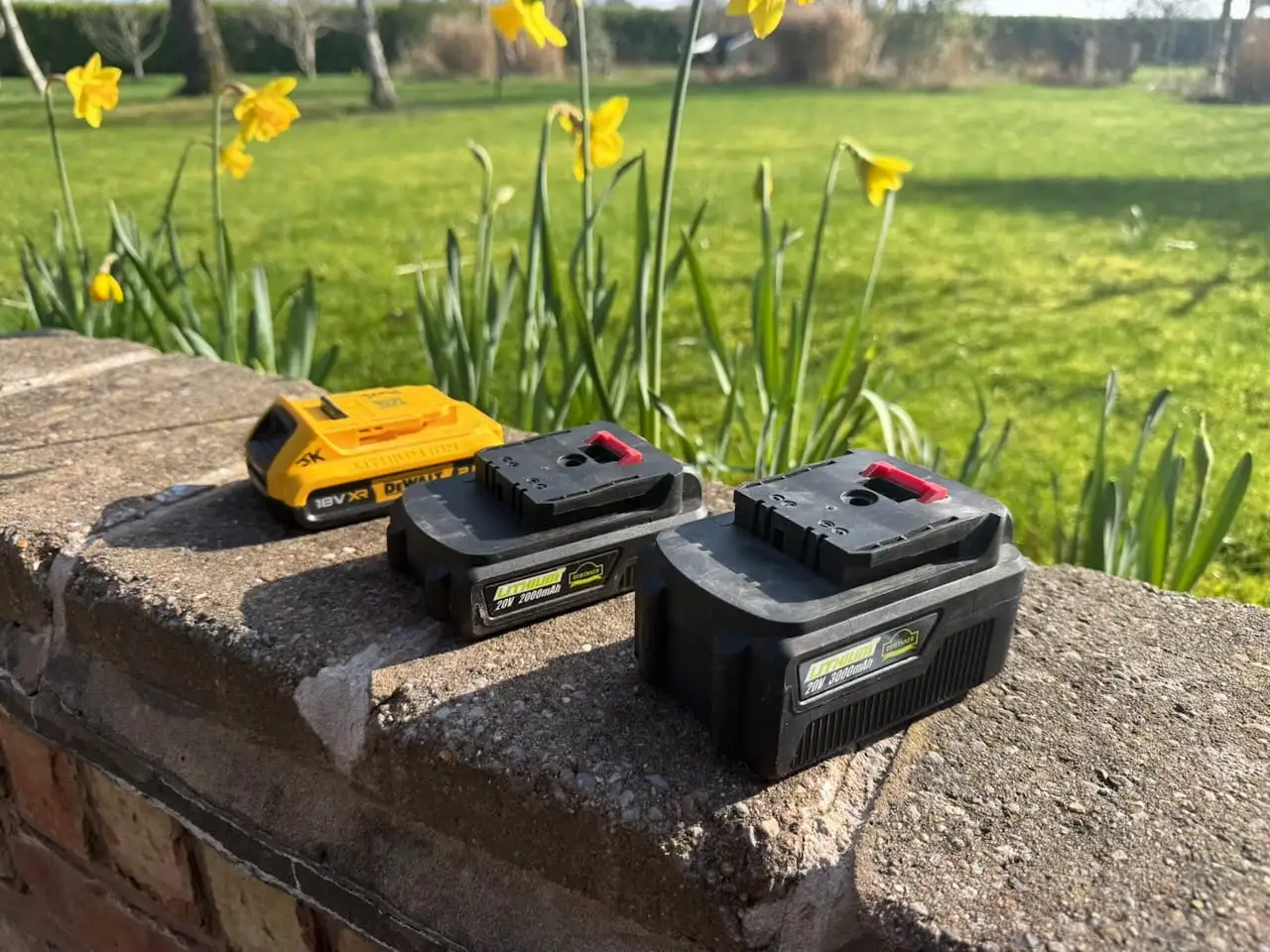
I have run Ryobi ONE+ hedge trimmers and blowers on client hedge work for years, and the platform’s real strength is breadth rather than raw power: one 18V battery works across an enormous range of tools, from mowers and trimmers through to drills and workshop kit.
For a domestic garden with a mix of DIY and gardening tools already on ONE+, adding a mower to that same battery pool is close to a no-brainer. The trade-off is that 18V is the lowest voltage of the platforms here, so a Ryobi mower suits a small to medium lawn rather than anything with serious size or slope.
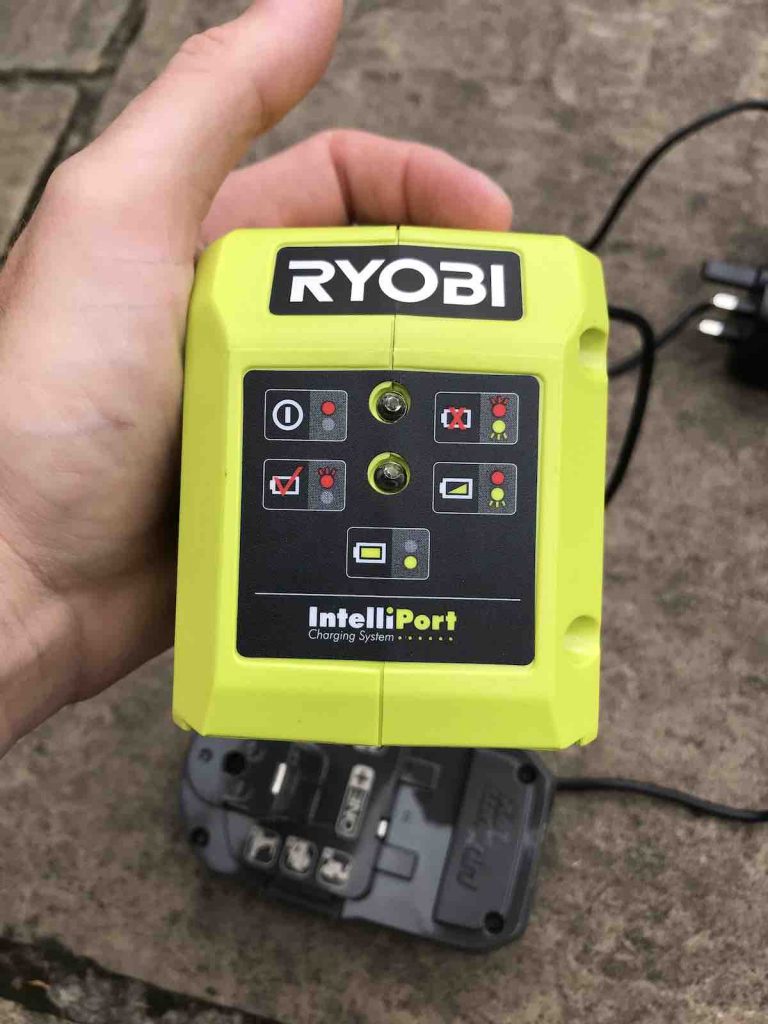
I have used STIHL’s battery hedge trimmers and the FSA 45 strimmer on plenty of client gardens, and STIHL’s AK and AP battery systems are built with a professional bias that shows in the build quality and the runtime under load.
If you already own STIHL kit, a STIHL cordless mower on the same platform is a strong choice, and one I would point a client towards without hesitation. The batteries and chargers cost more than most rivals, which is easier to justify once you are already invested in the ecosystem than as a first purchase.
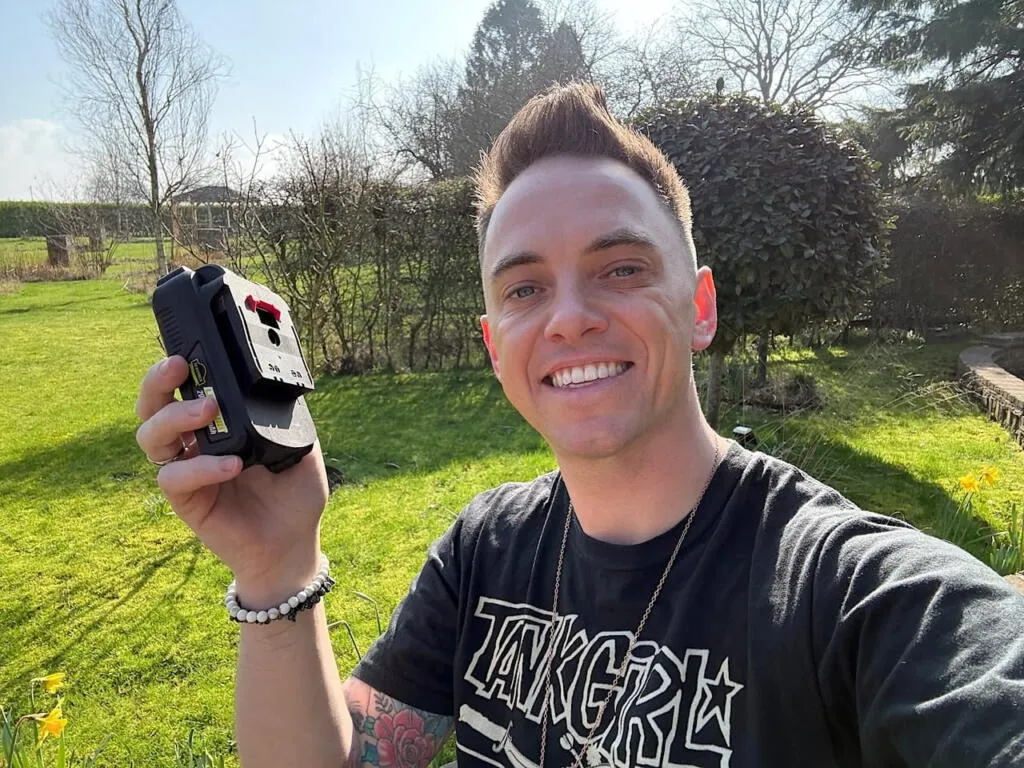
Bosch’s green DIY range, not to be confused with their blue professional tools, covers a similarly wide spread of garden and household tools on one battery. I have reviewed the corded Bosch Rotak 34R and tested a Bosch Indego robotic mower extensively in my own garden, and Bosch’s cordless mowers carry the same sensible, easy-to-live-with character.
My own first cordless mower purchase, over fifteen years ago now, was a Bosch, and it is still the platform I have the longest personal history with of anything in this guide. It remains a good middle-ground choice today too: widely available, reasonably priced, and Bosch’s batteries are among the easier ones to find own-brand and third-party replacements for.
These two are the platforms I recommend when someone is starting from scratch with no existing cordless tools to consider. Both run at a higher voltage than the DIY-oriented platforms above, which translates directly into more torque for thicker grass and longer runtime per charge.
EGO in particular has built a strong reputation on battery performance specifically, which is why the LM1702E-SP is one of my top picks below. Greenworks covers a similar range of tools at a slightly lower price point, and the 40V platform is well proven on British lawns.
As a rough decision framework: if you already own two or more battery tools on one platform, buy the mower on that platform, full stop, the savings outweigh almost any spec difference with a rival brand. If you own one battery tool, weigh the mower’s own merits against the convenience of staying put.
And if you own nothing yet, treat the mower purchase as the first decision in a platform you may well be buying into for the next decade of hedge trimmers, strimmers, and blowers, not just this one machine.
💡 Top Tip
Before you buy, open the drawer where your existing battery tools live. If there is already a hedge trimmer, strimmer, or blower in there, check its platform first. Matching your mower to it is very often the cheapest cordless upgrade you will ever make.
Personally selected by Lee Burkhill — BBC Garden Rescue presenter and professional garden designer, chosen by battery platform as well as lawn size.
Greenworks G40LM41K2X
40V Cordless with 2 Batteries
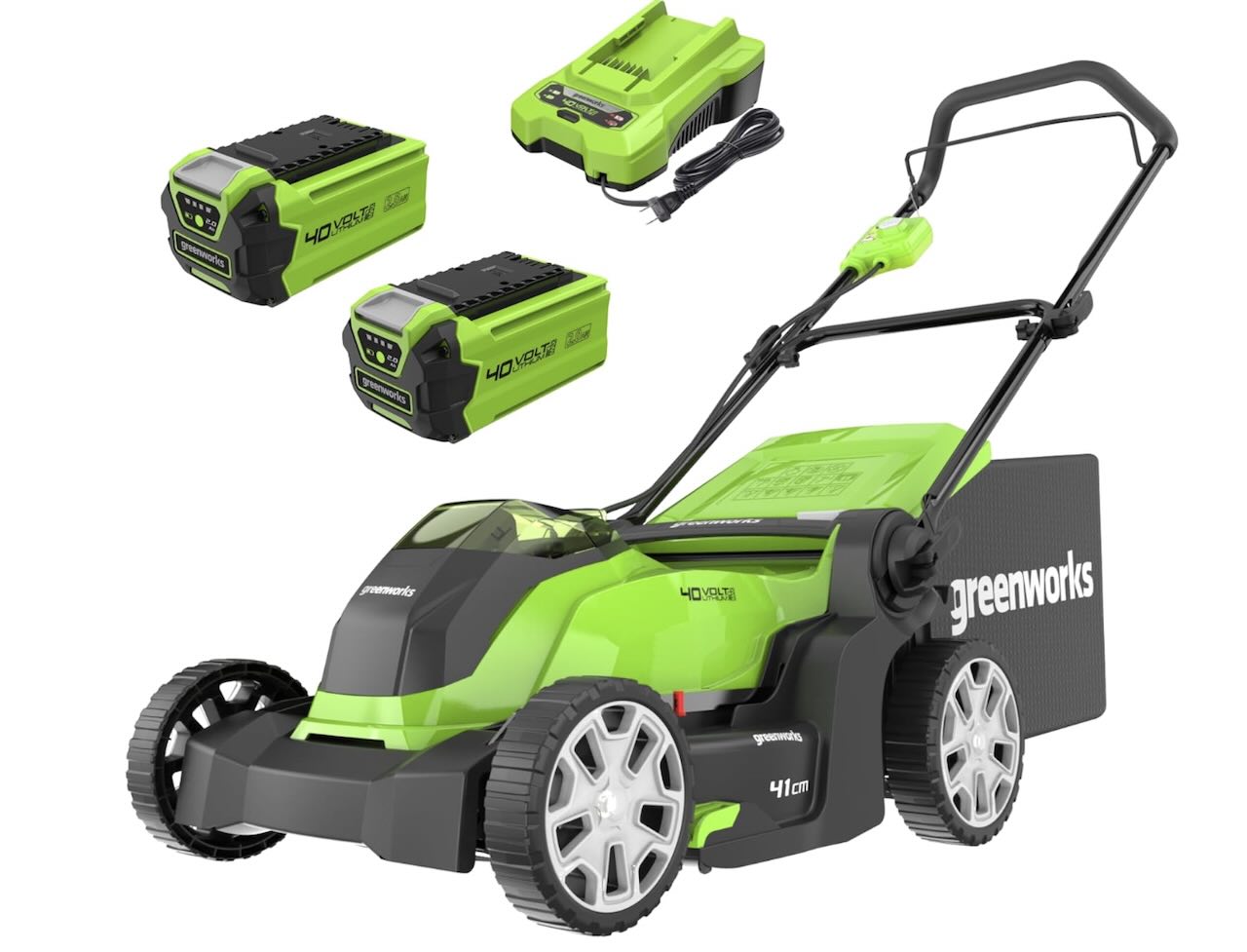
I love the colour on this one, that bright lime green is instantly findable in a messy garage or shed rather than lost among the grey and black plastic most other brands use. It’s also nice and light, which matters when you’re lifting it over a wall, across a terraced garden, or in and out of a van between jobs, exactly why I’d point small jobbing gardeners towards it as much as homeowners. Two 40V batteries come in the box, giving genuine coverage of up to 500m² across two charges, and over 1,100 UK Amazon reviews back up the value. No prior platform commitment required, and no compromise on cutting performance either.
🛒 Check Price on Amazon UK
EGO LM1702E-SP
56V 42cm Self-Propelled
I’ll be honest, I’m a lazy mower myself, usually wiped out before I’ve even got to the digging and planting, so self-propelled mode matters to me more than most specs on this page. This one doesn’t just push itself, it feels like being gently pulled along, the same reason I love the Hayter petrol mower I use at home: it drags me round the lawn rather than the other way round. EGO’s 56V ARC Lithium platform backs that up with real torque through thick grass, and the 55L bag rarely needs emptying mid-cut. Named best self-propelled cordless mower by BBC Gardeners’ World, with a five-year domestic warranty.
🛒 Check Price on Amazon UK
Ryobi 18V ONE+ Brushless Lawnmower
40cm Cordless
Of everything in this guide, the Ryobi has the widest interoperability I’ve found: the same battery runs my hand tools, leaf blower, and strimmer, and the build quality across the range is the best of any platform here. The handles in particular are the comfiest of the lot, which matters more than people expect if you’re mowing every week rather than once a fortnight. Where it falls short is capacity and cut duration; the 18V brushless motor suits a small to medium lawn well, but it is not the choice for anything larger or steeply sloped.
🛒 Check Price on Amazon UK
STIHL RMA 235 Cordless Lawn Mower
AK Platform
STIHL orange is instantly recognisable, and it’s no accident it’s my favourite colour too; look at any of my hot borders and planting schemes and orange is in there somewhere. Design aside, the AK platform’s batteries are impressively stable and long lasting under load, though the mower body itself looks a touch more plasticky than some of the others here. If you already own STIHL cordless kit, that trade-off is easy to live with. The batteries and chargers cost more than most rivals, which makes far more sense as an addition to an existing toolkit than as your very first cordless purchase, and you will never lose this mower in a garden.
🛒 Check Price on Amazon UK
Bosch CityMower 18V-32-300
Bosch 18V Green Range
This was the first electric mower I ever bought, over fifteen years ago now, and I’ve had a soft spot for Bosch ever since. It’s super light and pleasantly quiet, though you’ll want two batteries, since it struggles to get through a larger lawn on one charge. Fine for a small front and back lawn, less so beyond that. One quirk worth knowing: it has a very particular way the battery has to be inserted and ejected, which I learned the hard way on my first one, so take your time with it rather than forcing it.
🛒 Check Price on Amazon UK⚠️ Affiliate disclosure: links above are Amazon UK affiliate links using the gardenninja-21 tag. If you buy after clicking, I earn a small commission at no extra cost to you. I only recommend products I would use myself or that have outstanding independently verified reviews.
Every cordless mower listing leads with a voltage figure, 18V, 40V, 56V, and it is the single most misunderstood spec in the category. Voltage on its own tells you how much power the motor can draw at any given moment, not how long the mower will run. The runtime you actually get in your garden is determined by watt-hours, which is voltage multiplied by amp hours, not voltage alone.
A 40V 5Ah battery holds 200 watt-hours of energy. A 56V 2Ah battery holds 112 watt-hours. Despite the higher voltage number, the second battery actually holds less total energy and will run out sooner under the same load. When you compare two mowers on paper, look at the watt-hour figure, or calculate it yourself from voltage times amp hours, rather than assuming the higher voltage number wins.
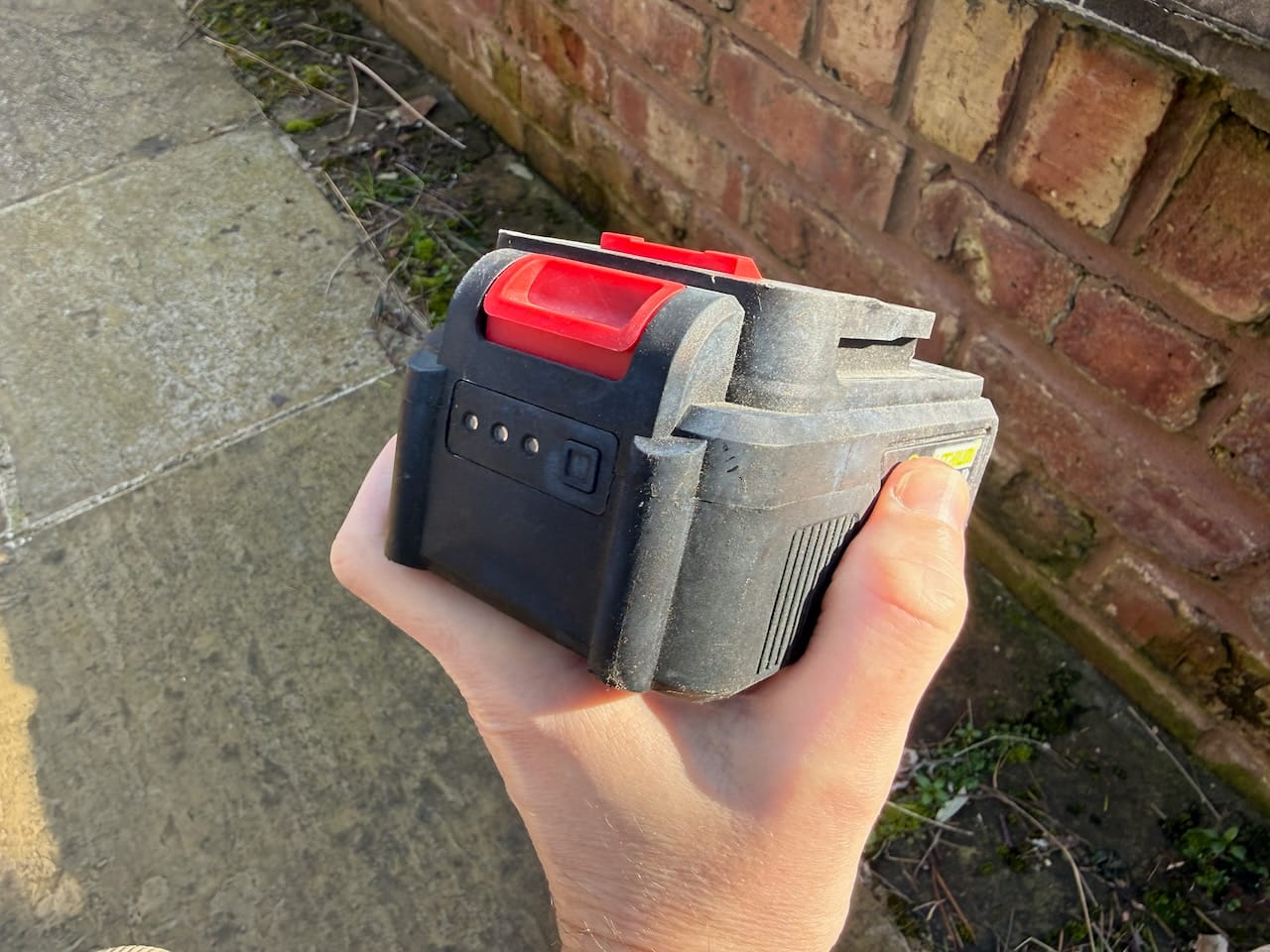
Manufacturer runtime figures are measured in ideal conditions: dry, short, even grass, on a flat lawn. Real British lawns are rarely that cooperative, and I would discount any quoted runtime by around 20 to 25% when working out what you will actually get week to week. A mower quoted at covering 500m² per charge will usually manage a comfortable 350 to 400m² on a typical fortnightly cut with mixed grass conditions.
If your lawn sits close to the edge of a mower’s quoted range, buy a spare battery rather than assume the first charge will be enough. A second battery is almost always cheaper than the frustration of finishing a lawn with a strimmer because the mower died two-thirds of the way round, and most platforms sell spare batteries as a standalone purchase for exactly this reason.
| Battery | Watt-Hours | Typical Realistic Coverage |
|---|---|---|
| 18V 4Ah (Ryobi ONE+) | 72Wh | Up to 250m² |
| 18V 5Ah (STIHL AK, Bosch 18V) | 90Wh | 250 to 350m² |
| 40V 2Ah x2 (Greenworks) | 160Wh | 350 to 450m² |
| 56V 4Ah (EGO) | 224Wh | 400 to 480m² |
Cutting width matters slightly differently on a cordless mower than on petrol, because a wider deck draws more power from the battery on every pass. A 32cm deck on an 18V platform will comfortably outlast a 42cm deck on the same battery, simply because there is less grass being cut per second. Match the cutting width to both your lawn size and your battery platform, not to lawn size alone.
As a rough guide, 18V platforms suit cutting widths from 30 to 35cm, 40V platforms handle 38 to 42cm comfortably, and the higher-voltage 56V and 60V platforms can support a wider 42cm-plus deck without the runtime penalty being severe. If you want a wide cut on a lower-voltage platform, expect to compensate with a spare battery.
Self-propulsion draws additional power from the battery on top of the cutting motor, so a self-propelled cordless mower will always run for less time per charge than the push version of the same model. For a small, flat lawn, a push cordless mower is perfectly manageable and stretches your runtime further. For anything with a slope, or a lawn where a petrol mower would previously have needed self-propulsion, the battery drain is worth accepting.
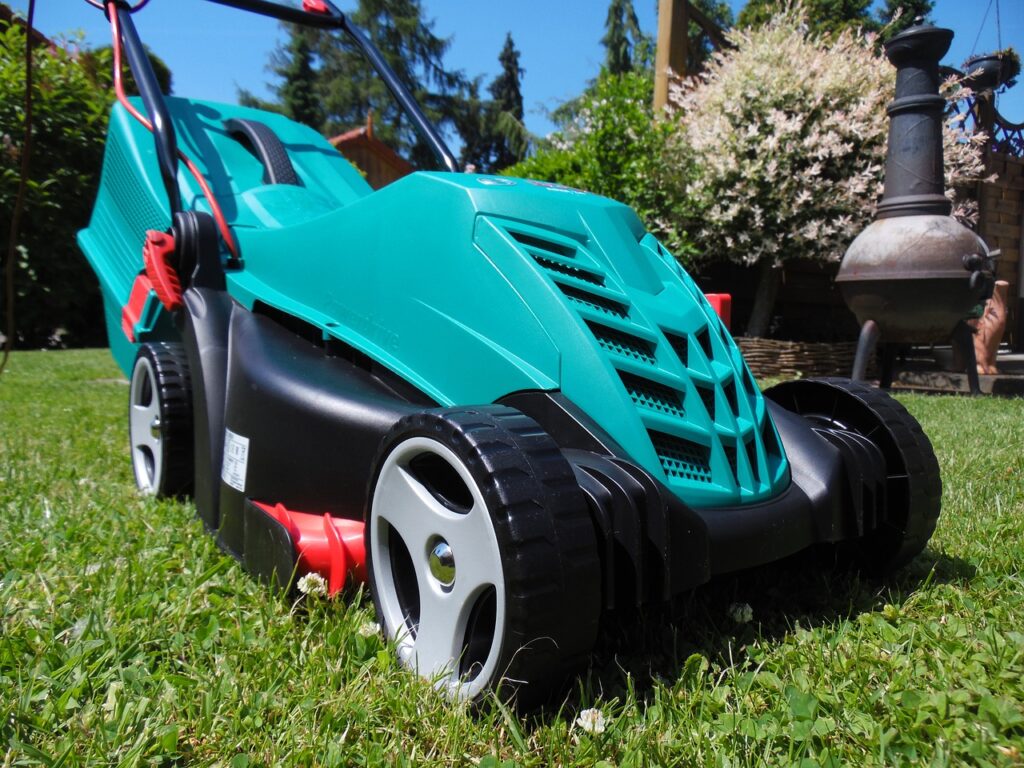
The EGO LM1702E-SP is the clearest example of self-propulsion done well on a cordless mower. Budget self-propelled cordless mowers often feel jerky, surging and dragging as the drive struggles to keep pace with the battery output. EGO’s system avoids that entirely. If self-propulsion is a priority for you, that smoothness is worth paying for over a bargain-bin alternative.
Mulching is worth a mention here too, since it interacts with battery life more than most buyers expect. Mulching (chopping and returning clippings to the lawn rather than collecting them) puts extra load on the motor compared with simple collection, because the blade cuts the grass a second time on the way down.
On a cordless mower, mulching regularly will noticeably shorten your runtime per charge, so it suits the higher-voltage platforms far better than an entry-level 18V mower. If your battery is already close to the edge of covering your lawn, switch to plain collection rather than mulching until you have a spare battery to fall back on.
Lithium-ion batteries lose usable capacity in cold weather, typically 10 to 20% less runtime below around 5°C compared to a mild spring day. This rarely matters in practice, since most of us are not mowing in January, but it is worth knowing for the first cold cut of early spring. Bringing the battery indoors to warm up before you start will noticeably improve performance on a cold morning.
Wet or damp grass is a bigger practical issue than cold. A cordless mower will drain faster and struggle more in damp grass than a petrol equivalent, because the motor works harder to cut through moisture-laden blades and the clippings clog the deck more readily. Where possible, wait for the lawn to dry, even by an hour or two, before mowing with a battery machine. If you regularly mow damp British lawns, factor that into your runtime expectations rather than trusting the manufacturer’s dry-grass figure.
That clogging is also the most common reason a cordless mower will suddenly stop cutting even though the battery shows plenty of charge left. It is rarely a fault with the mower itself.
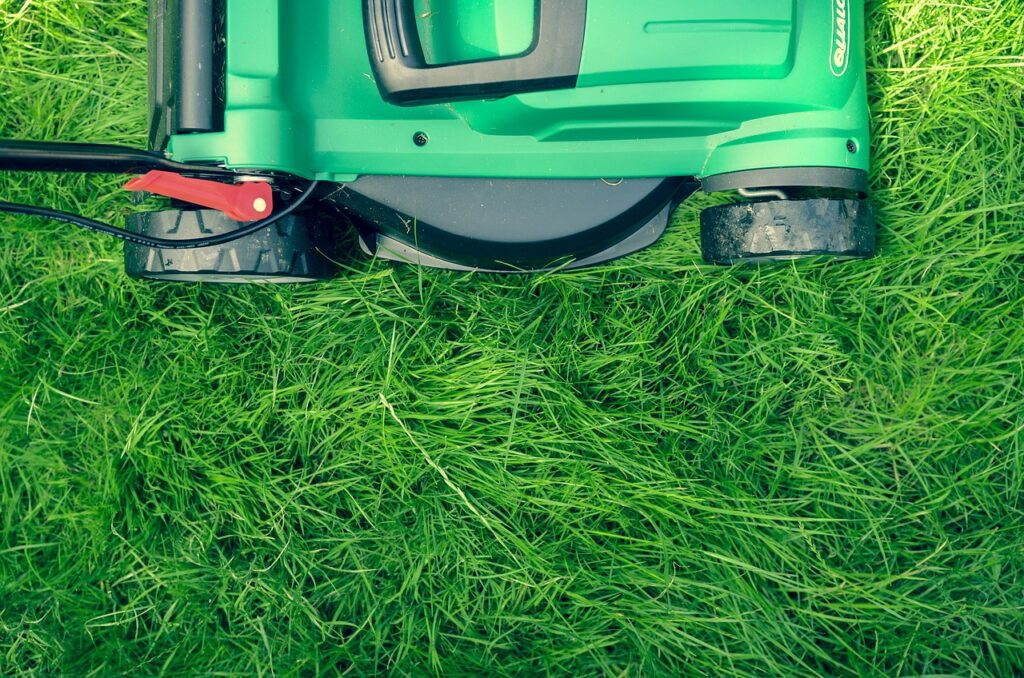
Nine times out of ten it is a wedge of wet, clagged grass jammed in the cutting chamber or the chute to the collection bag, or a build-up of dry, crusty grass packed around the blades from a previous cut. Cordless and corded electric mowers are simply not as tolerant of blockages as a petrol engine, which will often power through the same obstruction without stalling.
Make cleaning the chamber part of your routine rather than something you only do once it stops working. At the end of every cut, remove the battery first, then carefully tip the mower onto its side with the collection bag off and clear out any built-up grass from the chamber and chute. It takes two minutes and will save you standing in the garden wondering why a fully charged mower has stopped working.
Every platform has its own release mechanism for getting the battery in and out, and it is worth learning yours before you are stood on the lawn trying to work it out. I learned this the hard way on my first Bosch mower years ago, it has a very particular sequence to insert and eject the battery, and forcing it rather than following that sequence is the easiest way to damage the connector.
Take five minutes with the manual the first time you use any new mower, whatever the platform, and it will save you a battery pack that will not seat correctly later on.
A well cared for lithium-ion battery should give you four to six years of reliable service before capacity degrades noticeably, and how you store it over winter has more influence on that lifespan than almost anything else. Store batteries at roughly 40 to 60% charge rather than fully charged or fully flat, in a cool, dry location such as a garage. A shed that regularly drops below -10°C over winter is not a suitable storage spot.
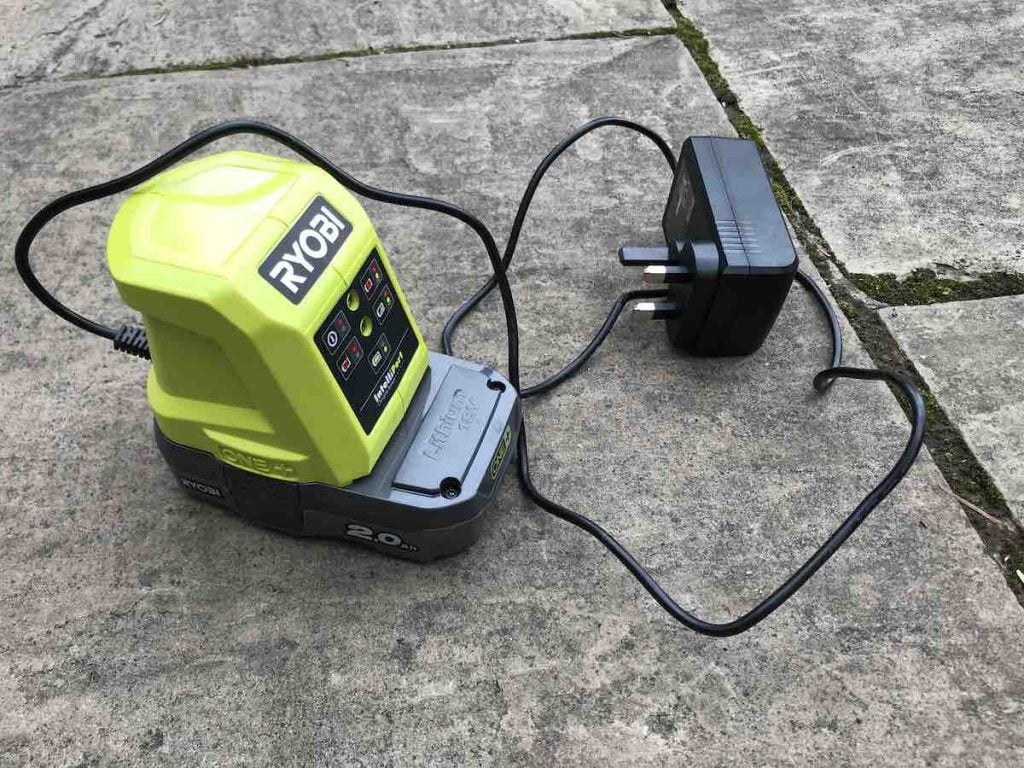
Do not leave a battery on the charger indefinitely once it reaches full charge. Most modern smart chargers manage this automatically and stop drawing power once full, but older chargers do not, and prolonged trickle charging shortens battery life over time.
Charge to full, remove promptly, and store at partial charge over any extended period the mower will not be used. Replacement batteries are sold separately by every platform covered in this guide, so a degraded battery after five or six years is a far cheaper fix than replacing the whole mower.
My main lawn mower guide covers this comparison in full, but the short version is worth having here too. Petrol still wins on raw runtime and power for large or heavily overgrown lawns. Corded electric is the cheapest option but tethers you to a socket, which becomes tedious past roughly 200m². Cordless sits between the two, and for most gardens under 500m² it is now the sensible default rather than a compromise.
| Factor | Cordless Battery | Petrol | Corded Electric |
|---|---|---|---|
| Noise | Quiet | Loud | Quiet |
| Annual servicing | None beyond blades | Required | None beyond blades |
| Runtime limit | Battery capacity | Fuel tank | Cable length |
| Best for | Most gardens under 500m² | Large or overgrown lawns | Small lawns near a socket |
| Ongoing cost | Low, occasional battery replacement | Fuel plus annual service | Lowest running cost |
There is no single best cordless mower, because the right choice depends on your lawn size and, more importantly, which battery platform you already own. If you are starting from scratch, the Greenworks G40LM41K2X and EGO LM1702E-SP are my two standout picks. If you already own Ryobi ONE+, STIHL AK, or Bosch 18V tools, staying on that platform is usually the smarter buy. Full reasoning for each is in the picks section above.
For most UK gardens under 500m² with no serious slopes, a quality cordless mower now matches petrol for cutting performance, with the added benefits of lower noise, no fumes, and no annual servicing. Petrol still has the edge for larger lawns, heavily overgrown grass, or continuous use beyond what a couple of batteries can cover.
Only if the mower and the hedge trimmer are on the same battery platform from the same manufacturer, such as both being Ryobi ONE+ or both being STIHL AK. Voltage alone is not enough; the battery connector and platform must match exactly. Check the specific platform name on both tools before assuming compatibility.
Neither voltage alone tells you which is better; watt-hours (voltage multiplied by amp hours) determines actual runtime and power delivery. A higher-voltage platform such as 56V generally allows for more torque and a wider cutting deck without as steep a runtime penalty, but a well-specified 40V battery can outperform a smaller 56V one on paper. Compare the watt-hour figure directly rather than voltage in isolation.
A well-maintained lithium-ion battery from a reputable brand typically gives four to six years of service before capacity degrades noticeably. Store at 40 to 60% charge over winter, avoid leaving it on the charger indefinitely, and keep it in a cool, dry location. Every platform in this guide sells replacement batteries separately, so a degraded battery is a far cheaper fix than replacing the mower.
Cordless mowers cope with damp grass but drain faster and struggle more than a petrol equivalent, since the motor has to work harder to cut through moisture-laden blades and clippings clog the deck more readily. Wait for the lawn to dry where possible, and expect reduced runtime on a wetter cut.
Most quality cordless mowers comfortably handle lawns up to 500m² on one or two charges. Beyond that, either a spare battery becomes essential or a petrol mower or ride-on starts to make more practical sense, since a large lawn will usually need more battery swaps than most gardeners want to manage in a single session.
If your lawn sits close to the edge of your mower’s quoted runtime range, yes. A spare battery is almost always cheaper than the frustration of finishing a lawn with a strimmer because the mower died partway round, and most manufacturers sell batteries as a standalone purchase for exactly this reason.
A corded electric mower plugs into the mains and never runs out of power, but the cable limits how far from a socket you can mow and becomes tedious to manage on anything over 200m². A cordless mower runs on a battery, freeing you from the cable entirely, at the cost of a finite runtime per charge. For most gardens, cordless has become the more practical choice; corded electric still suits a small, simple lawn close to a power point.
A capable entry-level cordless mower with a battery and charger included starts from around £200 to £250. A well-specified mid-range model, such as the Greenworks G40LM41K2X, typically runs £250 to £400. Premium self-propelled models on the strongest platforms, such as the EGO LM1702E-SP, sit closer to £500 to £700. Buying into an existing battery platform can reduce the effective cost significantly, since you are only paying for the mower body rather than a battery and charger as well.

Join over 100,000 gardeners on YouTube
Free gardening videos from the Garden Ninja, with 8 million views and counting.
Subscribe on YouTube, it’s freeSorted your mower? My Garden Design for Beginners course will help you shape the rest of the space around it, from lawn edges to planting, with the same practical, no-nonsense approach as this guide. Step-by-step video lessons, real-world case studies, and a design certificate at the end, all taught by me, Lee Burkhill, award-winning designer and BBC1’s Garden Rescue presenter.
For the garden you’ve already got, not the one you’re starting from scratch. Seven checklists and video lessons from BBC Garden Rescue’s Lee Burkhill, built to help you work out what’s worth keeping before you spend a penny.
Garden Design Examples for Small Gardens: 30 Design Templates & Planting Plans: In this online gardening course, I’ll walk you through 30 fantastic garden designs, explaining the logic behind the layout, the plant choices, and take-home tips for applying them in your own garden.
Learn how to transform and design your own garden with Lee Burkhills crash course in garden design. Over 5 hours Lee will teach you how to design your own dream garden. Featuring practical design examples, planting ideas and video guides. Learn how to design your garden in one weekend!
Garden Design for Beginners Online Course: If you want to make the career jump to becoming a garden designer or to learn how to design your own garden, this is the beginner course for you. Join me, Lee Burkhill, an award-winning garden designer, as I train you in the art of beautiful garden design.
Choosing a cordless mower comes down to two things: your lawn size, and whether you already own cordless tools on a particular battery platform. If you are starting from scratch, the Greenworks G40LM41K2X or EGO LM1702E-SP will serve most gardens under 500m² very well. If you already own Ryobi ONE+, STIHL AK, or Bosch 18V tools, matching your mower to that platform is almost always the smarter buy over the long run.
Whatever you choose, buy a spare battery if your lawn sits close to the edge of the quoted runtime, store your batteries at partial charge over winter, and expect a genuine four to six years of service from a well cared for battery before it needs replacing. For petrol, corded electric, or the full lawn size and budget framework, my main lawn mower guide covers every type side by side.
If you have a question about your specific garden, come and ask in the Garden Ninja forum and I reply personally to every post.
Happy Gardening!

Lee Burkhill, known as the Garden Ninja, is an award-winning garden designer and horticulturist with over 30 years of gardening experience and 15 years as a professional garden designer. A qualified RHS (Royal Horticultural Society) professional, Lee specialises in sustainable garden design and practical horticultural advice. He designs and presents on BBC1’s Garden Rescue and in leading gardening publications. Lee combines three decades of hands-on gardening knowledge with professional design qualifications to help gardeners create beautiful, functional outdoor spaces.
View all posts by Lee Burkhill










JOIN THE NINJAS

Be the first in line for new Guides, Discount codes and Offers