For the garden you’ve already got, not the one you’re starting from scratch. Seven checklists and video lessons from BBC Garden Rescue’s Lee Burkhill, built to help you work out what’s worth keeping before you spend a penny.
69


Quick Answer
Water plants at the base with a watering can or hose rather than a sprinkler, giving established plants a thorough soak once or twice a week rather than a daily splash. Prioritise new plantings, vegetables and containers first, let an established lawn go dormant and brown, since it will recover, and check your local hosepipe ban status before reaching for the hose.
Watering a garden can be a time-consuming and sometimes thankless task. In a heatwave, it is essential to water your plants efficiently to prevent them from wilting, becoming stressed, or dying from exhaustion. Before you reach for the sprinkler and set your alarm for 5 am, you may want to read this guide to watering plants first.
Jump To
This page contains affiliate links for products I use and love. If you take action (i.e. subscribe, make a purchase) after clicking a link, I may earn some gardening commission which helps me keep the Garden Ninja Blog free for all.
The first myth to debunk is that watering plants during a heatwave will create droplets on leaves that turn into mini magnifying glasses, scorching and burning the leaves. I hear this one constantly, at talks, in the forum, even from fellow gardeners who really ought to know better by now, and it is, for the most part, false. Plants survive quite happily in the wild with sun showers, and they cope with a downpour followed by blazing sunshine every single summer without any of us rushing out to mop their leaves dry afterwards. They are simply not that delicate as to be frazzled by a shower followed by the sun.
If this theory held any water, so to speak, every garden in Britain would be a scorched mess after the first thundery downpour of the summer, and that plainly is not what happens. Where I do spot real leaf scorch on a hot day, the culprit is almost always something else entirely. A plant recently moved from a shady spot into full sun without being hardened off properly will struggle, and so will a plant that was already drought stressed and thin leaved long before a single drop of water ever touched it. Water is very rarely the villain here. **The magnifying glass theory is one of those bits of gardening folklore that gets repeated so often it becomes accepted wisdom, and it is well overdue for retirement.**

Another half myth perpetuated by the misconception that somehow plant roots will rise up and get scorched in the sun. Ideally, you want to water when plants are at their optimum condition to actively take up water. In the early morning and late evening, plants are transpiring, using water, far slower, so yes, it is true you should try and water at these times where you have the choice.
However, it’s a myth that you can only water at these times. If you need to water in the midday sun then you can, and your plants will thank you far more for a soak now than a perfectly timed drink six hours later. Of course, more of this water will evaporate and you will need a bit more of it for the plant to take it up given the speed of its transpiration is increased in full sun. It’s not technically true that watering in the middle of the day will harm plants, and treating it as an absolute rule can end up doing more damage than good.
In practice, what this means for you is simple. If you walk past a wilting hydrangea or a parched tomato plant at two in the afternoon, get the watering can out there and then rather than anxiously waiting for the sun to dip. A plant flagging in the middle of the day is telling you something urgent, and leaving it to suffer for another six hours purely out of loyalty to a watering timetable does it no favours whatsoever. Treat dawn and dusk as sensible habits for your routine watering rounds, not as a rule you need to police yourself over when a plant is clearly crying out for a drink.
Unless you’re working in a controlled greenhouse with a proper misting system, this one is pretty much useless, and I say that as someone who has watched more than one client stand out in the garden with a fine spray attachment, convinced they were giving their plants a spa treatment. Covering plants and flower beds with a fine mist of water will simply evaporate before it has any meaningful cooling effect. Yes, it may slow down transpiration in plants, the method of water being taken up by the roots, distributed around the plant, then released via leaf stomata, but in an open garden during a proper heatwave this is a highly inefficient use of both your time and your water butt.
Where misting truly earns its keep is with humidity loving houseplants indoors, ferns, orchids and the like, which evolved in far more humid conditions than a British summer typically provides. Outdoors in a heatwave, though, save yourself the effort and the water, and put both towards a proper soak at the base of the plant instead. It will do considerably more good than a few minutes of what is essentially decorative drizzle.
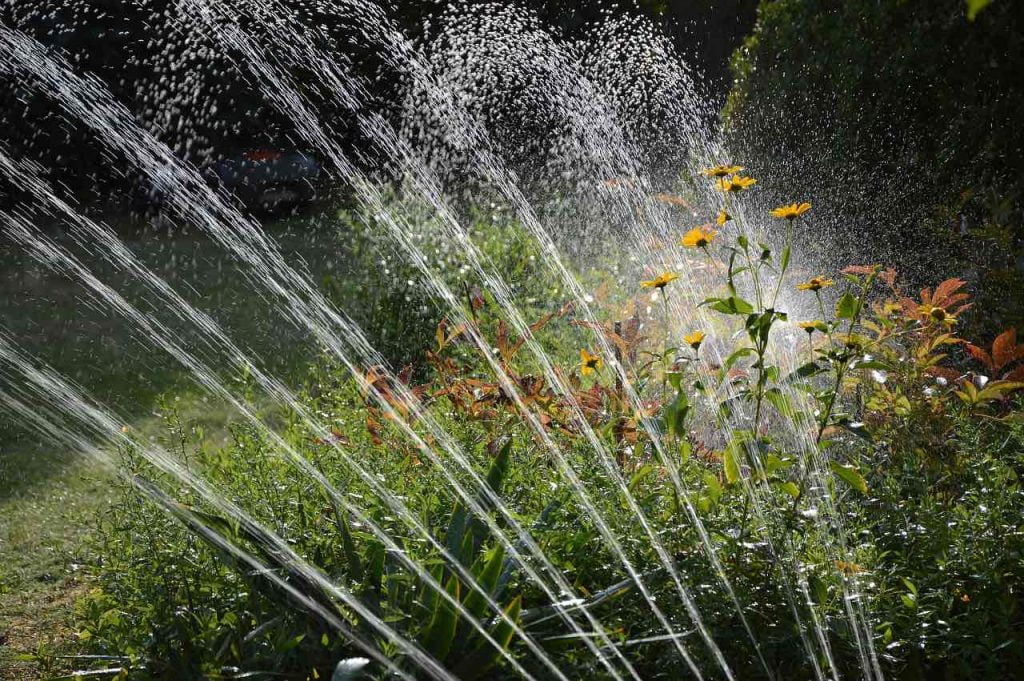
Another falsity. Sprinklers are only efficient in terms of time spent standing there with the hose rather than trudging back and forth with a watering can. In terms of actually getting water to where a plant needs it, they are properly inefficient, especially in a heatwave. They water indiscriminately, wetting leaves, paths and surrounding lawn areas that did not need a drop, while only a modest share of that water ever reaches the root zone where it can actually do some good, since a good deal of it simply evaporates in the air on a hot day before it lands.
I understand the appeal. Setting a sprinkler running and wandering off to get on with something else feels far more sensible than standing there with a watering can for twenty minutes. But if you actually want your plants to survive a heatwave rather than just look watered for an afternoon, that twenty minutes with a can, aimed precisely at the base of the plants that need it most, will outperform an hour of sprinkler time on every single occasion. Save the sprinkler for topping up a paddling pool, not for keeping your borders alive.
If you only buy four things to get your garden through a proper heatwave, these are the ones I’d reach for. None of it is complicated or expensive, and between them they cover the base watering technique, the containers that dry out fastest, and the borders that benefit from a bit of long term protection rather than daily intervention.
With the sustained heat we’ve had this summer, several UK water companies have already declared Temporary Use Bans, commonly known as hosepipe bans, in their supply areas, with more regions under drought monitoring and issuing voluntary advisories. Given how often I get asked about this, it felt worth addressing properly here rather than leaving it as an afterthought.
A hosepipe ban restricts using a hosepipe connected to your mains supply for garden watering, car washing, filling paddling pools and topping up ornamental fountains. Breaching one carries a fine of up to £1,000. The good news for anyone following this guide already is that watering cans and drip irrigation are exempt from every current ban, so the base watering technique I recommend below works whether or not your supplier has declared restrictions.
Restrictions are declared by individual water companies for their own supply area, not nationally, so your neighbour on a different supplier’s network might be under entirely different rules to you. Since these bans are announced, lifted and extended throughout the summer as reservoir levels change, I’d always recommend checking your specific water company’s website directly for the current status in your postcode rather than relying on general news coverage, since the picture can shift within days.
💡 Top Tip
Even without a hosepipe ban in your area, switching to a watering can and the base watering technique below is honestly more effective than a hose or sprinkler for most garden watering. It’s one of those rare cases where doing the water conscious thing is also simply the better gardening technique.
Ok so we’ve debunked the myths, but how should you water plants? This may sound incredibly obvious, but there is a very clear correct efficient way vs the usual let’s just soak anything method that most new gardeners use.
The best way to water a plant in a heatwave and at any other time is to water as closely to the roots as possible, giving the plant a thorough soaking. It’s better to water thoroughly once a week than a drizzle every day, which just encourages shallow rooting in plants.
I use a five-second rule with a watering can or hose, watering each plant at the base for at least five seconds. This means the plant has the best chance of taking up that water. Spraying the entire bed for a few minutes is largely a waste of time, and whilst sprinkler systems are a time saver, they usually miss key parts of your flower beds and can be a real waste of water.
🛒 Buy a metal watering can with a fine rose from Amazon UK
If time or a hosepipe ban means you can’t water everything, it helps to have a priority order in your head. This is roughly the order I work through on client gardens during a prolonged dry spell.
Container plants are the ones I worry about most during a genuine heatwave, since they have no surrounding soil to draw moisture from and can dry out completely within a single hot day. During sustained heat, most pots will need checking daily, and small pots on a sunny patio may need watering both in the morning and in the evening.
Water thoroughly until water runs freely from the drainage holes, which indicates the entire root ball is wet rather than just the top layer. If a pot has dried out so much that water runs straight through without being absorbed, stand it in a shallow tray or saucer of water for an hour to rehydrate from below, then remove the tray so it isn’t sitting permanently waterlogged.
Grouping containers together creates a slightly more humid, sheltered microclimate and allows larger pots to shade smaller, more vulnerable ones. If you’re ever unsure whether a pot actually needs watering, a soil moisture meter takes the guesswork out of it entirely, since compost can look dry on the surface while still being damp a few centimetres down.
🛒 Buy a soil moisture meter from Amazon UK
This is one of the most common questions I get during a hot spell, and the honest answer for most established lawns is no. Grass is remarkably good at dealing with drought. When conditions turn dry, it goes into a dormant state and turns brown, which looks alarming but is a completely normal survival response rather than the lawn dying. Once rain returns, an established lawn will green back up within a couple of weeks in most cases.
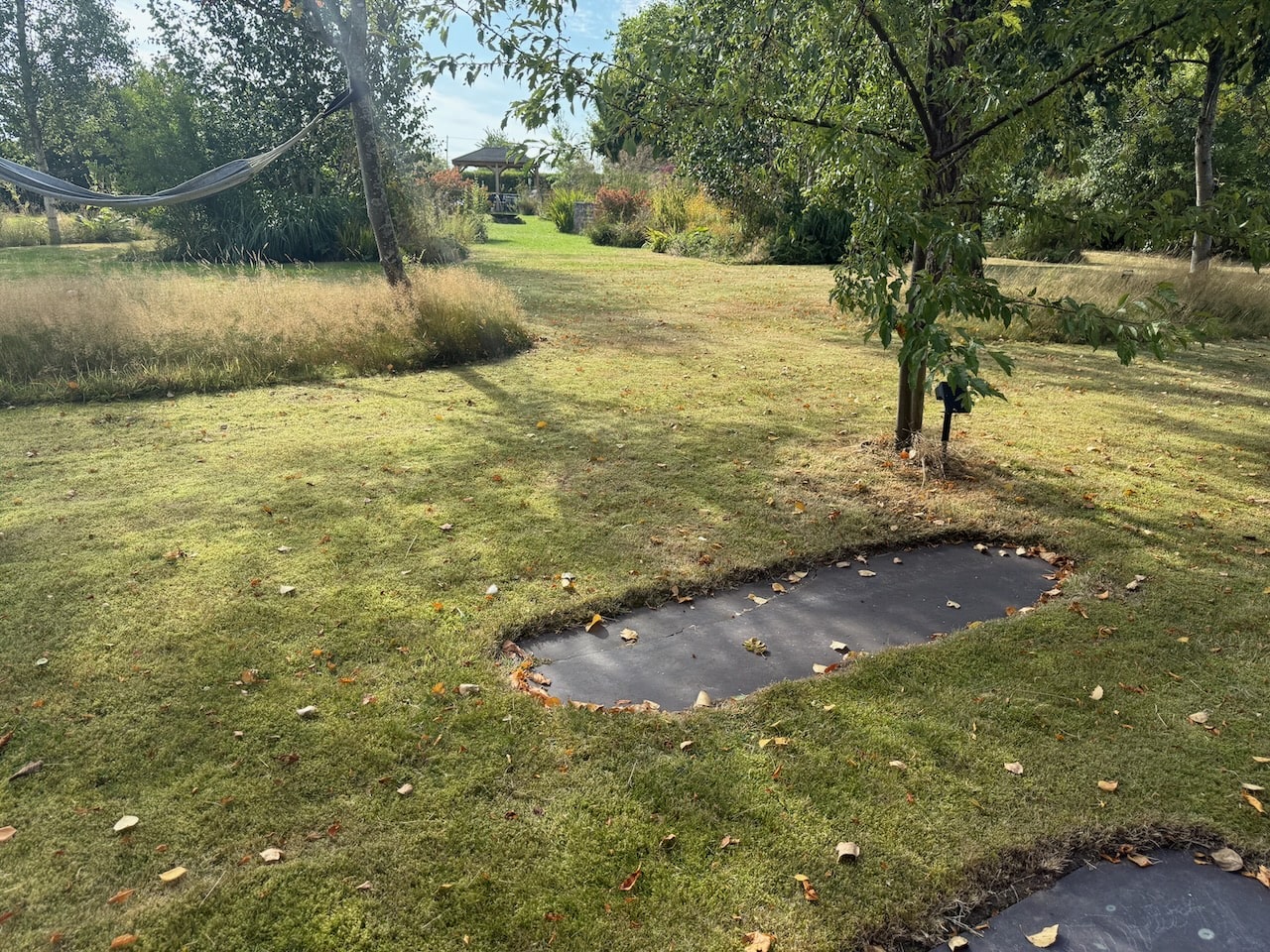
Watering an established lawn during a heatwave is largely a waste of water anyway, since it evaporates so quickly in the heat that you’d need to water daily to make any real difference, which is neither practical nor sensible given the pressure on water supplies during these periods. Save your watering effort for the plants that truly can’t cope without it.
The one exception is a lawn seeded or turfed within the last year. New grass has shallow, undeveloped roots and can die rather than simply go dormant if it dries out completely, so newly established lawns do need regular watering to get through their first summer.
Prevention is always easier than recovery. For tender plants, young vegetables, and anything recently planted, a length of shade netting or horticultural fleece rigged over canes or a simple frame can meaningfully reduce temperatures and moisture loss during the hottest part of the day. It doesn’t need to look elegant to work.
🛒 Buy garden shade netting from Amazon UK
If you’re planning any new planting, think about where the midday and afternoon sun hits hardest and position anything heat sensitive out of that direct path, behind a fence, under a tree canopy, or on a north-facing aspect. Hanging baskets and small pots on an exposed patio can also simply be moved to a shadier spot for the duration of a heatwave rather than fighting a losing battle against the sun where they are.
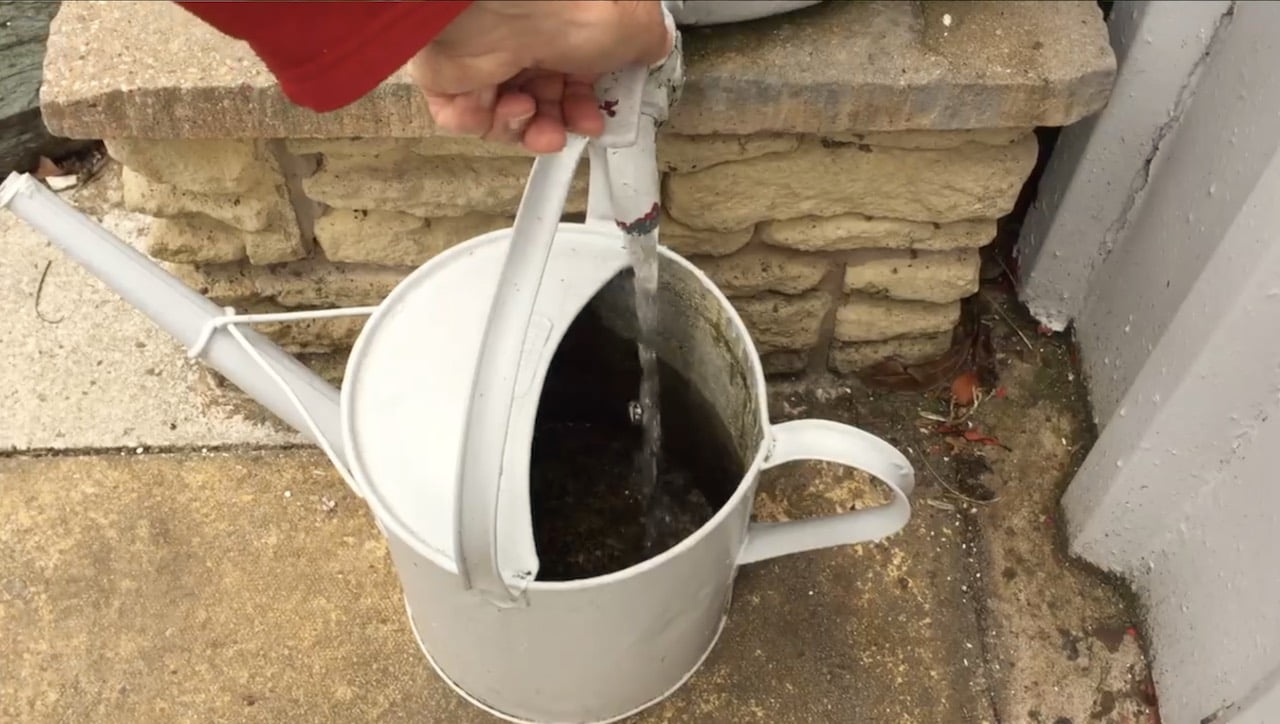
🛒 Buy a 200 litre water butt with stand and tap from Amazon UK
🛒 Buy peat free mulching compost from Amazon UK
Heat affects garden visitors just as much as it affects your plants. A shallow dish of water with a few pebbles in it gives bees and other pollinators somewhere safe to drink without risk of drowning, and it’s a properly simple addition that costs nothing if you’ve already got a saucer spare. Keep bird baths topped up too, and refresh the water every couple of days in hot weather to stop it stagnating.
A few extra things worth holding off on until the heat breaks, since a stressed plant needs stability far more than extra intervention.
It may sound really obvious that I’m telling you how to water plants. However, if you consider the thousands of gardeners and preciousness of water resources, then watering more efficiently not only benefits plants but the environment too.
Yes. Watering cans and drip irrigation systems are exempt from every current UK hosepipe ban. What’s restricted is connecting a hosepipe to your mains tap for garden watering, so switching to a can filled from the tap or a water butt keeps you fully within the rules.
In almost all cases, yes. An established lawn that has gone brown during a dry spell is dormant, not dead, and will green up again within a couple of weeks once regular rain returns. Newly seeded or turfed lawns are the exception and do need regular watering to survive their first summer.
Established plants in open ground generally do best with one thorough soak a week rather than daily splashes, which encourages deeper, more drought resilient roots. Container plants are the exception and often need checking daily, sometimes watering both morning and evening in sustained heat.
No, this is a myth. Water droplets don’t scorch leaves like a magnifying glass. Watering in full sun is simply less efficient, since more water evaporates before the plant can take it up, so mornings and evenings are preferable but not essential.
Prioritise new plantings from the last year, then vegetables and fruiting plants, then containers and hanging baskets, then established shrubs and perennials. Leave the lawn until last, or skip it entirely, since established grass survives drought by going dormant.
Join over 100,000 gardeners on YouTube
Free gardening videos from the Garden Ninja, with 8 million views and counting.
Subscribe on YouTube, it’s freeReady to transform your gardening skills beyond just plopping plants in pots? Garden Ninja’s expertly crafted online courses will fast track your development from keen amateur to skilled garden designer in months rather than years. Starting at just £29, you’ll gain access to professional garden design expertise from BBC Garden Rescue’s Lee Burkhill, delivered at a fraction of traditional horticultural education costs.
For the garden you’ve already got, not the one you’re starting from scratch. Seven checklists and video lessons from BBC Garden Rescue’s Lee Burkhill, built to help you work out what’s worth keeping before you spend a penny.
Garden Design Examples for Small Gardens: 30 Design Templates & Planting Plans: In this online gardening course, I’ll walk you through 30 fantastic garden designs, explaining the logic behind the layout, the plant choices, and take-home tips for applying them in your own garden.
Learn how to transform and design your own garden with Lee Burkhills crash course in garden design. Over 5 hours Lee will teach you how to design your own dream garden. Featuring practical design examples, planting ideas and video guides. Learn how to design your garden in one weekend!
Garden Design for Beginners Online Course: If you want to make the career jump to becoming a garden designer or to learn how to design your own garden, this is the beginner course for you. Join me, Lee Burkhill, an award-winning garden designer, as I train you in the art of beautiful garden design.
If you’ve found this guide helpful why not follow me on Youtube where I’ve got plenty of garden guide vlogs. You can also Tweet, Facebook or Instagram me with your questions or thoughts.
Happy Gardening.

Lee Burkhill, known as the Garden Ninja, is an award-winning garden designer and horticulturist with over 30 years of gardening experience and 15 years as a professional garden designer. A qualified RHS (Royal Horticultural Society) professional, Lee specialises in sustainable garden design and practical horticultural advice. He designs and presents on BBC1’s Garden Rescue and in leading gardening publications. Lee combines three decades of hands-on gardening knowledge with professional design qualifications to help gardeners create beautiful, functional outdoor spaces.
View all posts by Lee Burkhill




You must be logged in to post a comment.
JOIN THE NINJAS
Be the first in line for new Guides, Discount codes and Offers



Hi Lee, I have about 20 pots in my garden of various sizes – large and small, and a few young plants in my border, and an Amalanchier I planted earlier this year. I’m currently watering them with a hosepipe at soil level. Prob is I have a back problem and my osteopath has told me not to lift anything heavy, which includes my 11kg disabled pug and a 12 pack of 500ml bottled water – but I need to lift both and do suffer for it. Watering cans are very heavy, even if half full, and means rather than just carrying one can, full or not, I’ll have to carry 50 cans. I’ll really suffer for that. What do you suggest I do?
Hi Susan, Great to hear from you and sorry about your back. Ok in your case I wouldn’t recommend a watering can but a long reach hose wand, also called a watering wand, that means you can stop heavy lifting or even bending, I’ve used these on show gardens to save my back from being battered! You can find one here
All the best Lee