For the garden you’ve already got, not the one you’re starting from scratch. Seven checklists and video lessons from BBC Garden Rescue’s Lee Burkhill, built to help you work out what’s worth keeping before you spend a penny.
69

🌱 Quick Answer
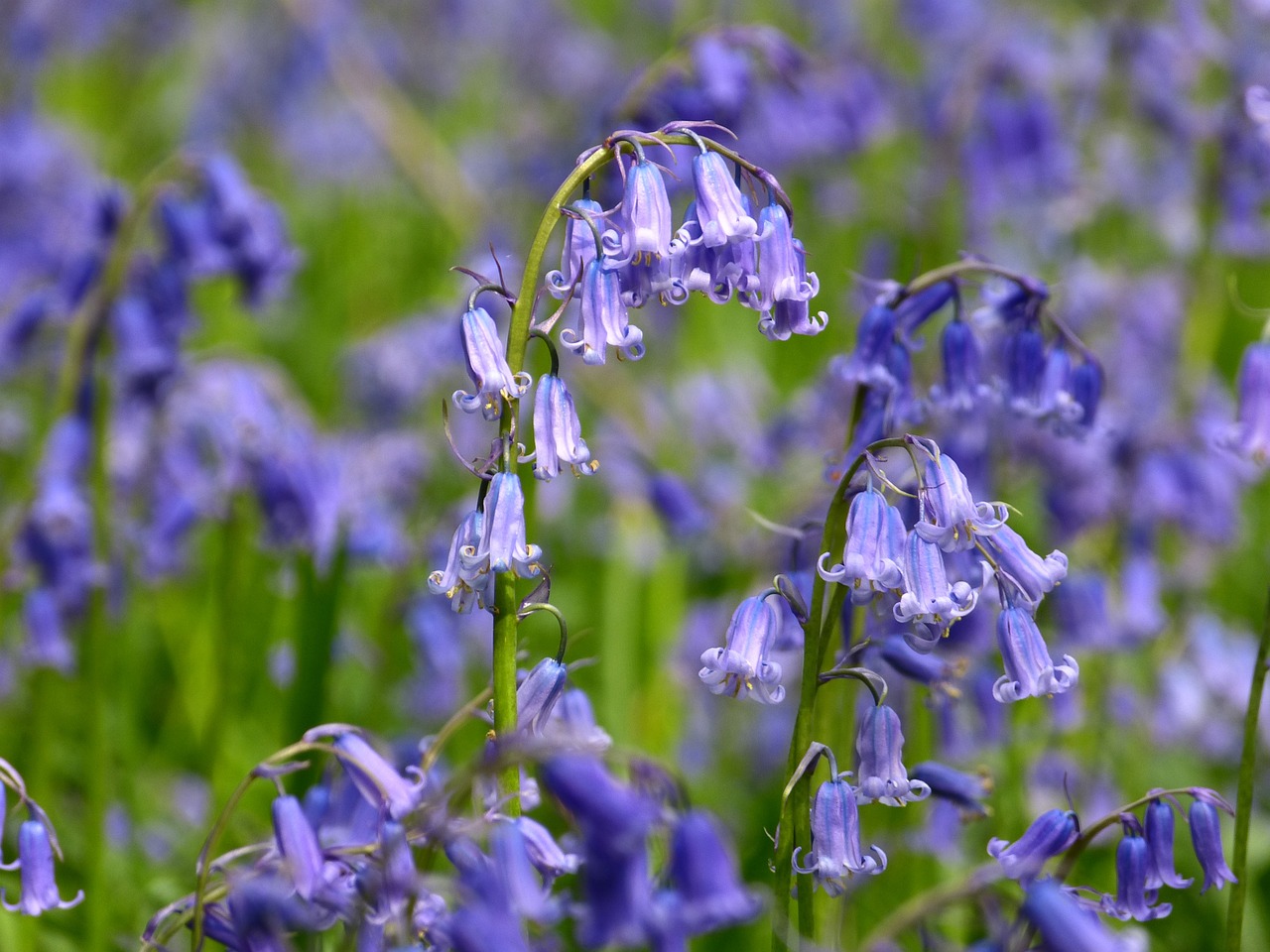
English bluebells droop to one side, have narrow leaves, deep violet flowers with curled back tips, cream pollen and a sweet scent. Spanish bluebells stand upright with flowers all round the stem, broad leaves, paler open bells and blue pollen. Plant cultivated English bluebells 10cm deep in autumn, or in the green in spring.
Here’s a confession to start us off. I have both types of bluebell in my own garden, English and Spanish, and they’ve rubbed along together for years without a punch being thrown. It’s not that I actively encouraged the Spanish version, but they were already here, and I don’t dig out and remove them. I celebrate both types!
That doesn’t mean the difference doesn’t matter, because it does, especially if you live anywhere near an ancient woodland. But it does mean you don’t need to go at your borders with a spade and a crusader’s zeal the moment you spot a slightly chunkier bluebell.
In this guide, I’ll show you exactly how to tell English, Spanish, and hybrid bluebells apart in about three seconds, whether you should actually dig up the Spanish ones, what the law says about picking and digging, and how to plant English bluebells properly so you get a carpet rather than a sulk.

And because it wouldn’t be one of my guides without it, there’s a good helping of folklore at the end, including yet another Greek god who couldn’t be trusted with a discus.
Jump To
This guide contains affiliate links, which means I may earn a small commission if you buy through them, at no extra cost to you. If you’re ready to plant, always buy English bluebell bulbs that are clearly labelled as grown from cultivated stock, like these.
🛒 Buy English Bluebell Bulbs Grown from Cultivated Stock on Amazon UK
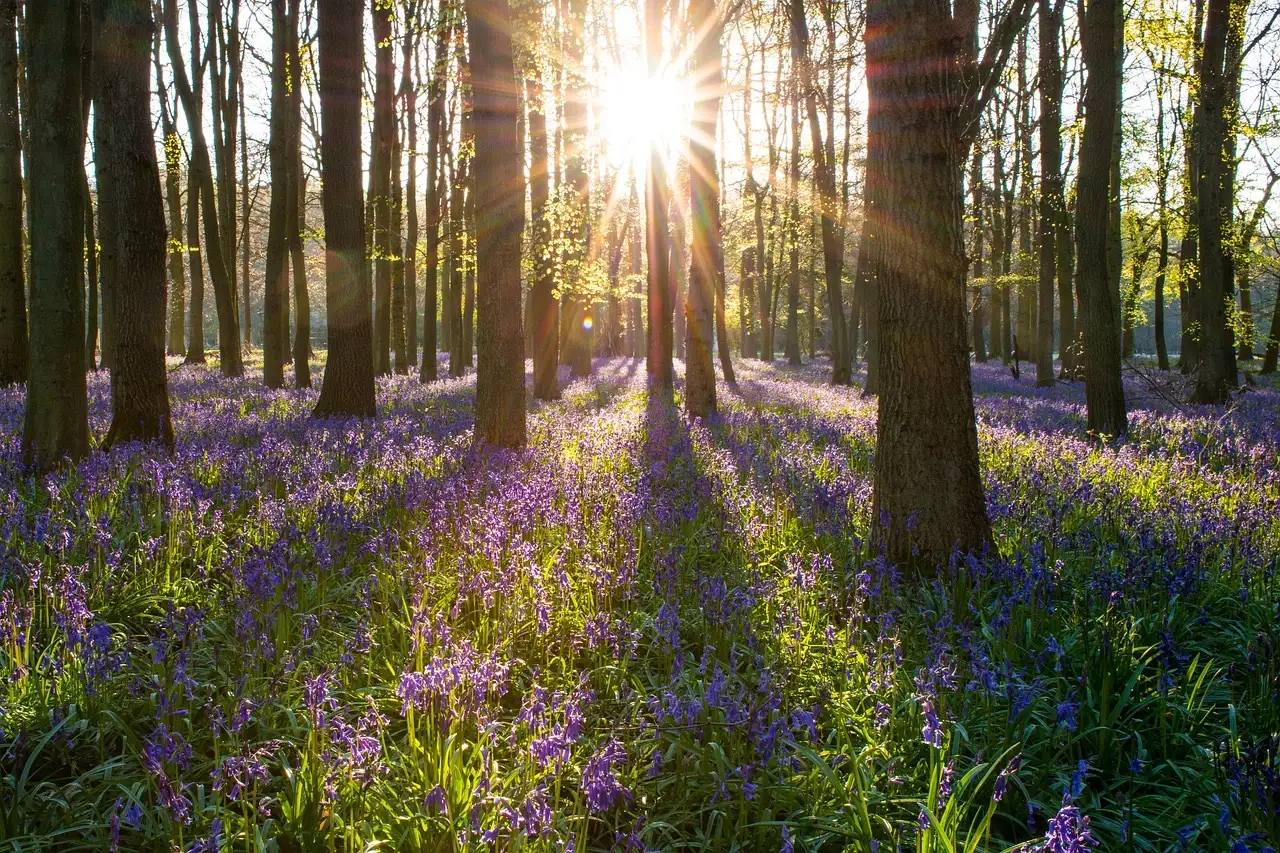
Our native bluebell, Hyacinthoides non-scripta, is a much bigger deal than most people realise. The UK is home to more than half of the world’s bluebells, which makes a British bluebell wood in late April one of the great natural spectacles anywhere on the planet, and a lot more than a nice Sunday walk.
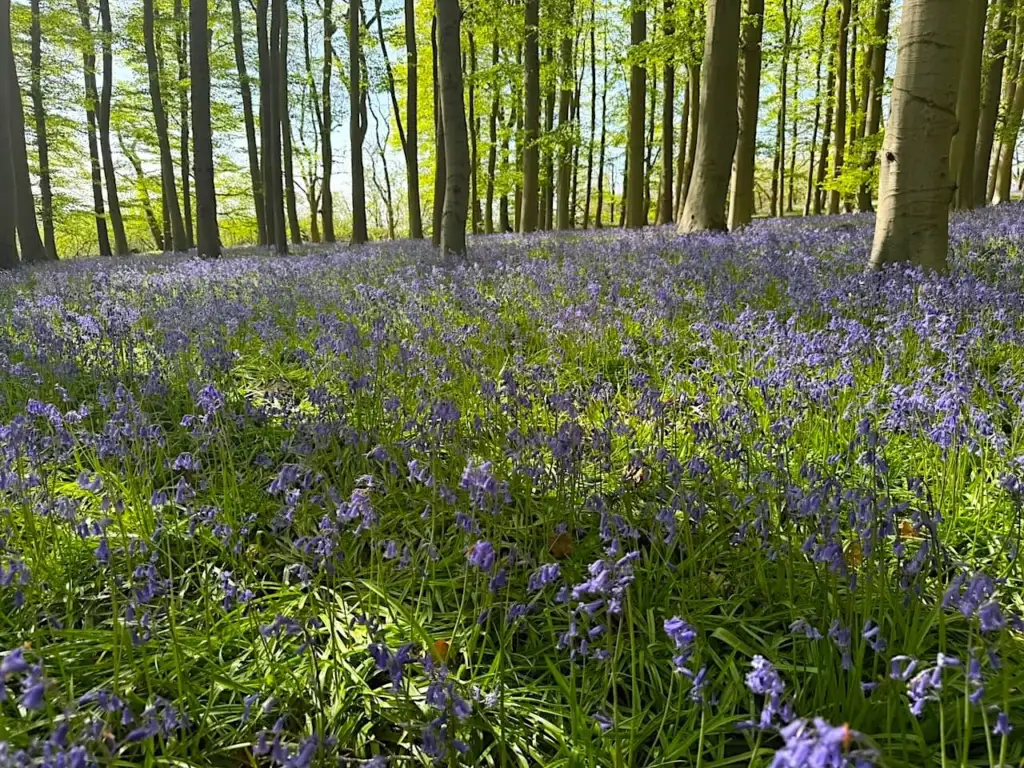
They’re also a classic indicator of ancient woodland, because they spread so slowly that a proper carpet can take decades, even centuries, to form. See the Bluebell wood below in Coton, Northampton, which draws in thousands of visitors each year!
The Spanish bluebell, Hyacinthoides hispanica, was a popular Victorian garden plant that did what garden plants tend to do and hopped the fence, first being recorded growing wild in 1909. The problem isn’t really the Spanish bluebell itself.
It’s that the two species cross very easily, producing a fertile hybrid, Hyacinthoides x massartiana, which is vigorous, seeds freely and can dilute native populations when it gets into woodland.
A Plantlife survey found hybrid or Spanish bluebells in around one in six broadleaved woodlands, which is why conservation groups get twitchy about them.
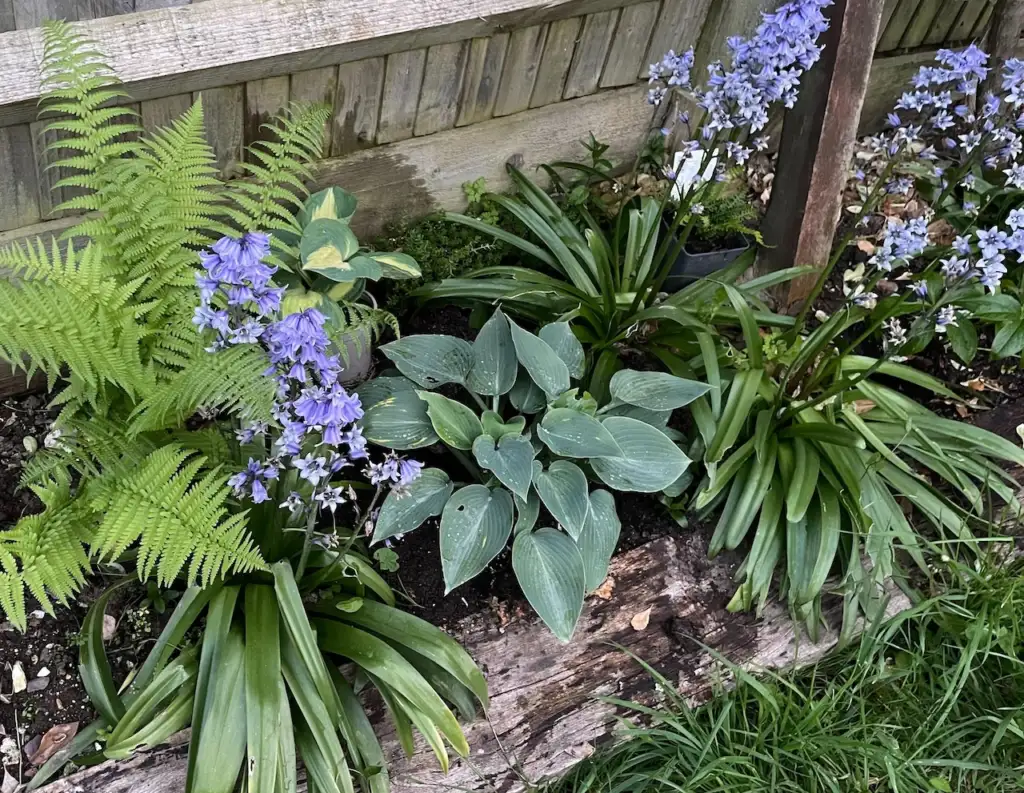
Here’s the twist that most guides skip over. Botanical recording by the BSBI suggests that most, if not all, of the non-native bluebells growing in British gardens aren’t pure Spanish bluebells at all, but that hybrid.
So when you’re peering at your border trying to work out if you’ve got Spanish bluebells, the real answer is often “a bit of both”. Bear that in mind in the next section, because hybrids don’t always read the identification textbook.
Once you know what to look for, you’ll never unsee it. I tell people on my forum to use the three second test: look at the stem, look inside a flower, then have a sniff.
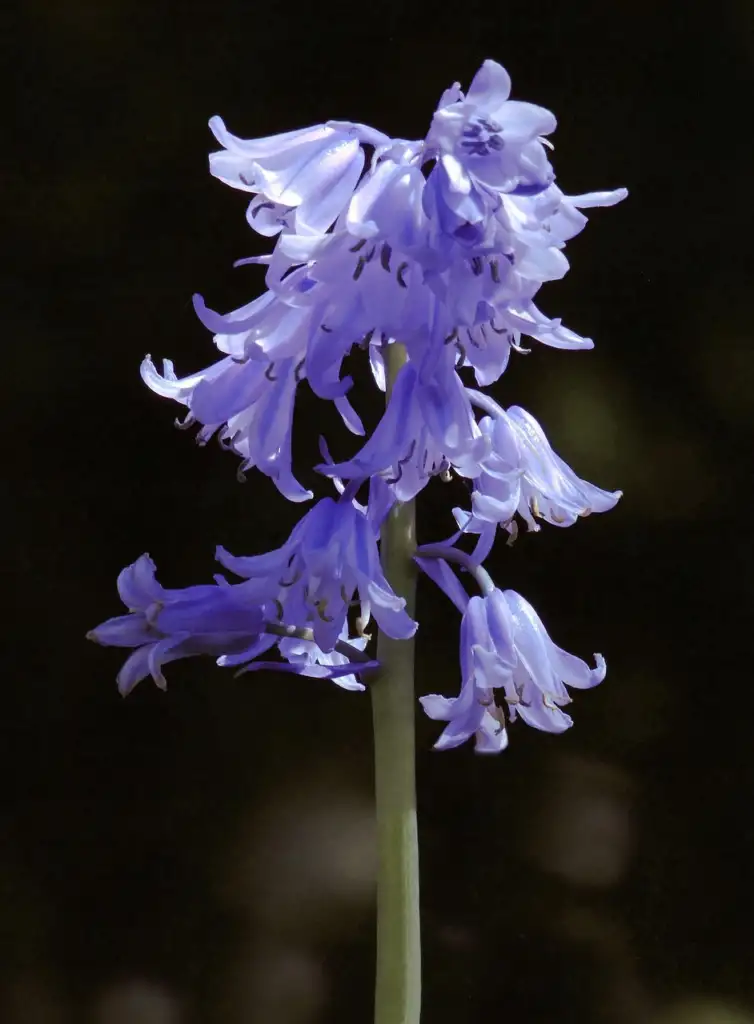
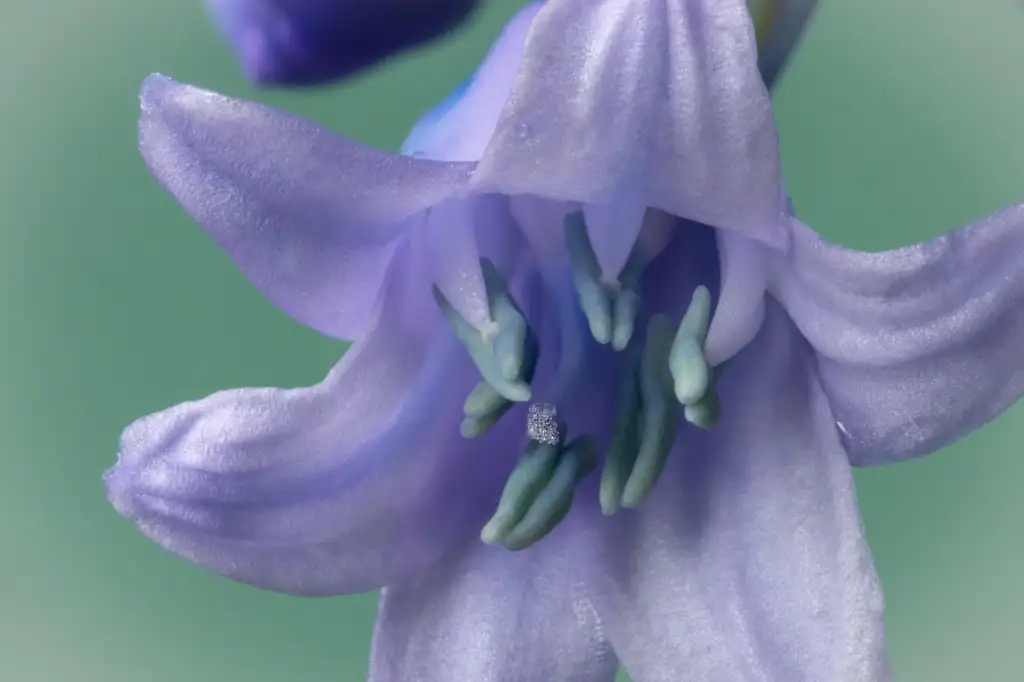
Nine times out of ten that settles it, and you’ll look very knowledgeable doing it on a woodland walk and can feel very high and mighty with your non-hort friends, Ninjas! The first image here is the classic English Bluebell, the one below that with the blue pollen is the Spanish Bluebell.
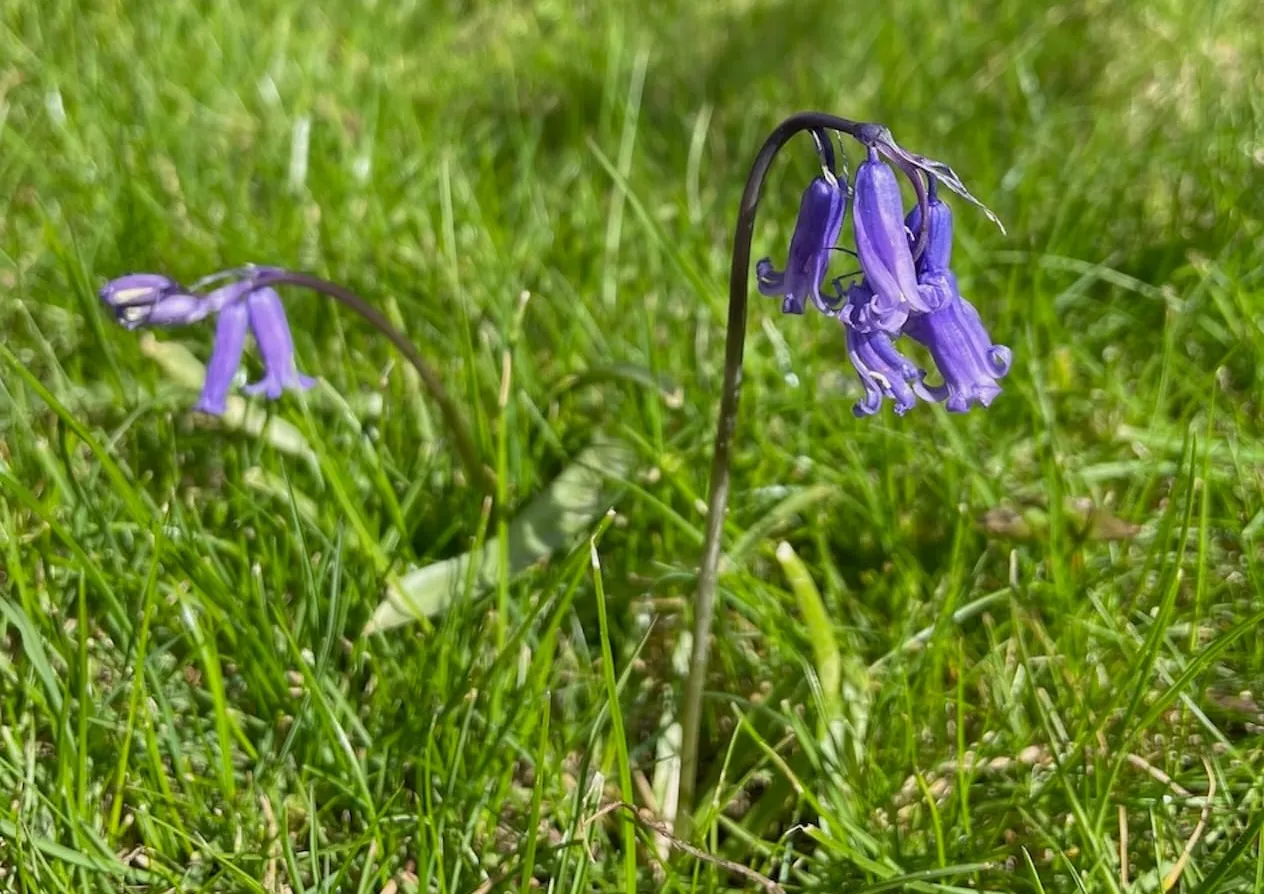
A) Look at the stem. English bluebells have an arching stem that droops over at the tip like a shepherd’s crook, with all the flowers hanging off one side. Spanish bluebells have a stiff, upright stem with flowers arranged all the way round it, a bit like a hyacinth. From across a garden, English bluebells look like they’re bowing politely. Spanish ones look like they’re queueing for a bus.
B) Look inside a flower. Tip a bell up and look at the pollen on the anthers. In English bluebells, the pollen is creamy white; in Spanish bluebells it is blue or bluish. At the same time, look at the shape of the flower. English bells are narrow tubes with the petal tips curled right back. Spanish bells are wider, more conical and open, with petals that flare out rather than curl.
C) Have a sniff. English bluebells have a lovely sweet scent, and a whole wood of them on an April afternoon is something else. Spanish bluebells have little or no scent at all. The leaves are another clue: English bluebell leaves are narrow, usually around 1 to 1.5cm wide. Spanish ones are broad and strappy, often 3cm or more across.
| Feature | English bluebell | Spanish bluebell |
|---|---|---|
| Stem | Arching, drooping at the tip | Stiff and upright |
| Flower arrangement | All on one side of the stem | All around the stem |
| Flower colour | Deep violet blue | Paler, powder blue (also pink and white) |
| Flower shape | Narrow tube, petal tips curled back | Open cone or bell, petals flared |
| Pollen (anthers) | Creamy white | Blue |
| Scent | Sweet and strong | Little or none |
| Leaves | Narrow, around 1 to 1.5cm wide | Broad, often 3cm or more wide |
| Height | Up to around 30cm | Up to around 40cm |
| Where you’ll find it | Woodland, hedgerows, shady gardens | Gardens, verges, roadsides, woodland edges |
This is where it gets fiddly. Hybrid bluebells sit anywhere on the spectrum between their parents, so you’ll find plants with broad leaves but a slightly drooping stem, or flowers mostly on one side but with blue pollen.
If a plant shows a mix of features, especially blue or bluish pollen alongside a partly one-sided stem, it’s most likely a hybrid. Plants growing near houses, on verges or in gardens that have never been woodland are very likely to be hybrids or Spanish, even if they look quite native from a distance.
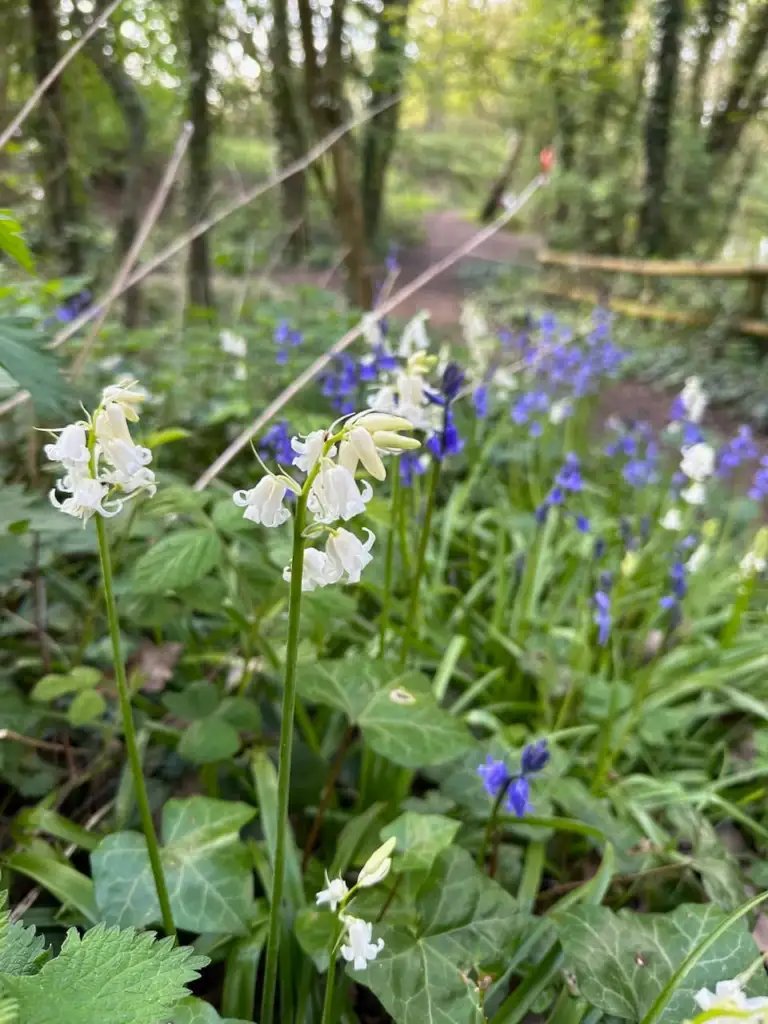
White and pink bluebells turn up in both species. A white English bluebell does occur naturally in the wild as a rare mutation, and it’ll still have the drooping one-sided stem, cream pollen and scent, like the one above.
Most of the white and pink bluebells you see in gardens, though, are Spanish or hybrid types, and the pink ones in particular are almost always garden forms. Use the same three checks and ignore the colour. If you want white flowers in shade with less baggage, my list of the best white flowers for UK gardens has plenty of options.
One more naming wrinkle for my Scottish readers: in Scotland, “bluebell” traditionally means the harebell, Campanula rotundifolia, a completely different summer flowering plant. So if a Scot tells you bluebells flower in August, they’re not wrong, they’re just talking about something else entirely.
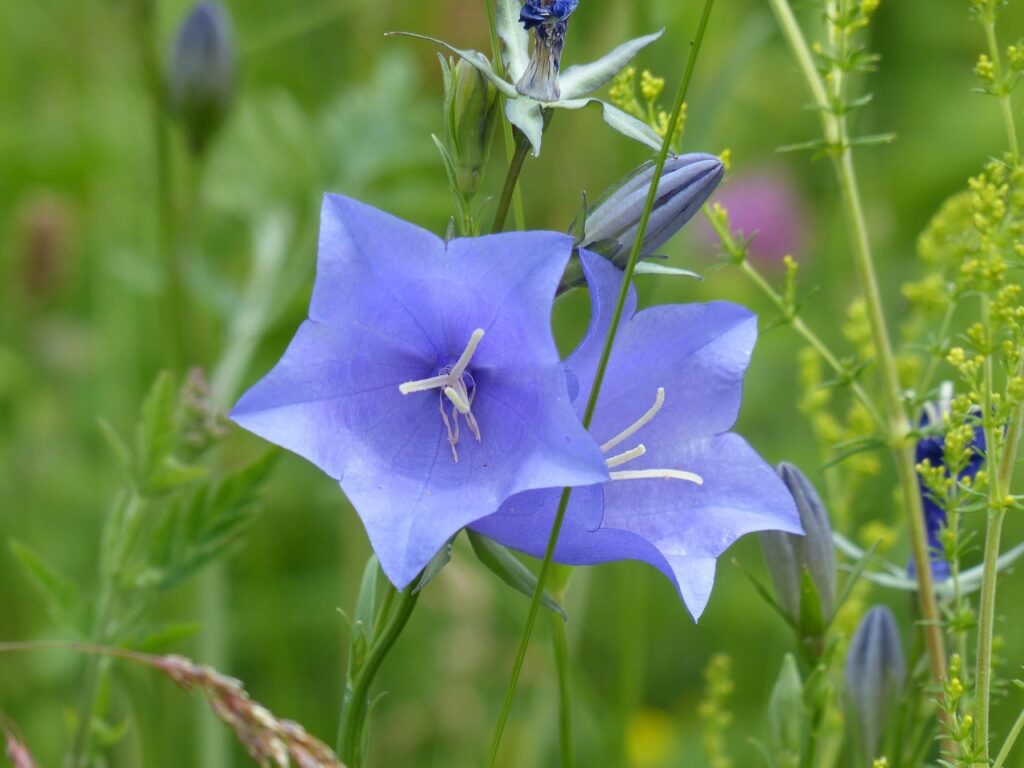
Bluebells flower from mid April to late May, with the peak usually around the last week of April and the first week of May. The south of England and sheltered spots come out first, and the north and higher ground can be a good two weeks behind, so a Cornish bluebell wood can be over while a Cumbrian one is just getting going.
A mild spring brings them forward, a cold one holds them back. Each stem flowers for two or three weeks, and a wood as a whole puts on its show for about a month.
Spanish and hybrid bluebells flower at roughly the same time, often a touch later. The leaves of all of them appear much earlier, pushing through in January and February, which is handy if you’re trying to spot broad leaved Spanish types in a border before they’ve flowered.
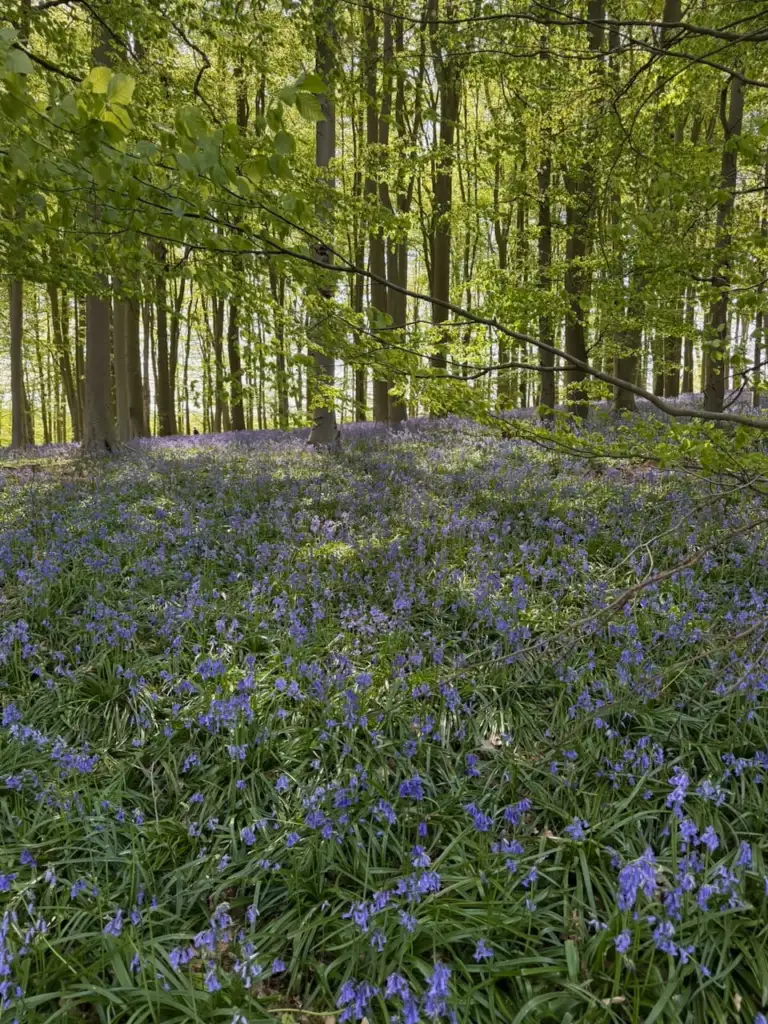
Bluebells ask for very little, but doing the right job at the right time is the difference between a sulky clump and a spreading carpet. This is the calendar I work to, and my month by month bulb planting calendar covers everything else you might be planting.
| When | What to do |
|---|---|
| January to March | Leaves push through. A good time to spot broad leaved Spanish types in a border before they flower. |
| March to May | Buy and plant bluebells in the green straight after flowering. Lift and divide congested clumps. |
| Mid April to late May | Flowering time, peaking late April to early May. Deadhead Spanish and hybrid bluebells as they fade. |
| June to July | Leaves yellow and die back. Leave them alone and don’t mow bluebell areas until they’ve gone. |
| July to August | Collect ripe seed from English bluebells if you want to sow your own. |
| September to November | Plant dry bulbs the day they arrive, sow seed, and mulch established patches with leaf mould. |
This is the question I get asked more than any other about bluebells, and my answer surprises people. For most residential gardens, I’d leave them be.
A few years ago a Ninja on my forum asked whether to rip out the Spanish bluebells in a shady north facing border, and I told her the same thing I’ll tell you now: trying to eradicate them from a garden is close to impossible, digging out big clumps does real damage to your soil, and buying in replacements carries its own carbon cost.
They flower for a month, feed the bees, then disappear. Any flowering plant in a difficult shady border is better than bare soil.
As I said at the start, I grow both types at Garden Ninja HQ and they’ve coexisted for years. The sky has not fallen in.
The exception is if you live next to woodland or wild native bluebells. If your garden backs onto an ancient wood, a hedgerow full of English bluebells or a nature reserve, the risk of bees carrying Spanish or hybrid pollen into that wild population is real, and the RHS advises against growing them there. In that situation it’s worth removing them and replacing them with English bluebells over a few seasons.
If you do decide they’re going, be ready for a long game. Bluebell bulbs sit surprisingly deep, often 15cm or more down in established clumps, and every little bulblet you miss will come back. Garden weedkillers don’t work on them either, according to RHS trials, which suits me fine because I’d rather you didn’t reach for chemicals in a shady border full of wildlife anyway.
Dig them out with a fork in spring when the leaves are showing, so you can see exactly where they are, and go deep. Sift through the soil for small bulbs. At the very least, cut off the flower stems as soon as the flowers fade so they can’t set seed, because seed is how hybrids spread furthest.
Repeat for a few springs, and keep on top of the stragglers. My guide to organic weed removal has more on tackling persistent bulbs and roots without chemicals.
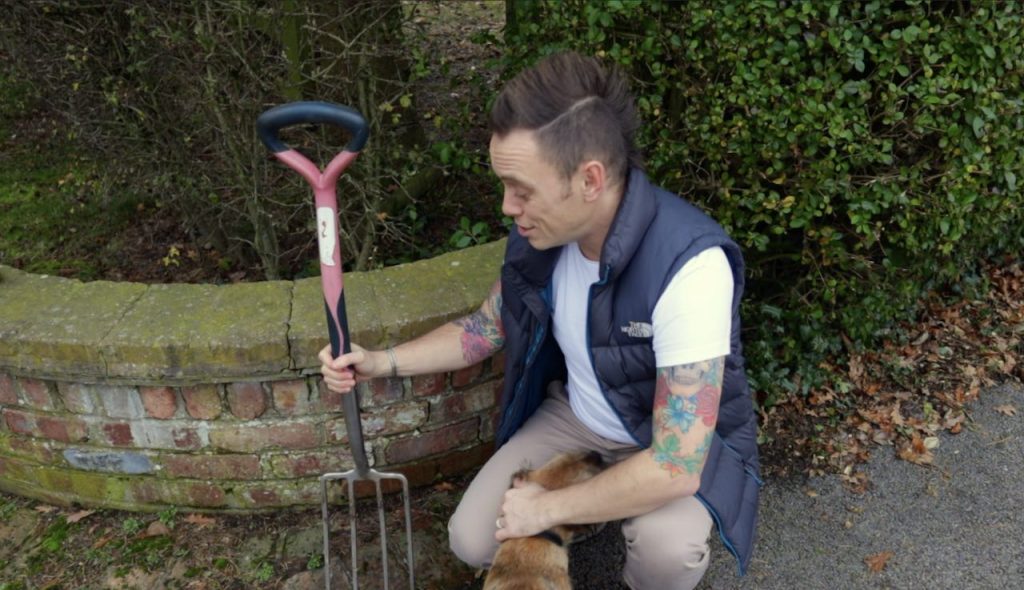
🛒 Buy the Spear & Jackson Kew Gardens Solid Forged Digging Fork from Amazon UK
Whatever you do, don’t dump the bulbs over the fence, in a lay-by or on the edge of a wood. Spanish and hybrid bluebells are listed on Schedule 9 of the Wildlife and Countryside Act in England and Wales, which makes it an offence to plant them or cause them to grow in the wild. Bag them and put them in your council green waste or general waste, rather than a home compost heap, where the bulbs will happily carry on living.
🛒 Buy Ram Heavy Duty Reusable Garden Waste Sacks from Amazon UK
If you like the look of those big strappy leaves and blue spring flowers but want to replace Spanish bluebells, these are the swaps I suggested on the forum, and they all cope with shade.
Wild garlic flowers at the same time and gives you white starry flowers, though it spreads enthusiastically too, so don’t say I didn’t warn you. Brunnera macrophylla gives you clouds of forget-me-not blue flowers in spring and gorgeous silvered leaves for the rest of the year.
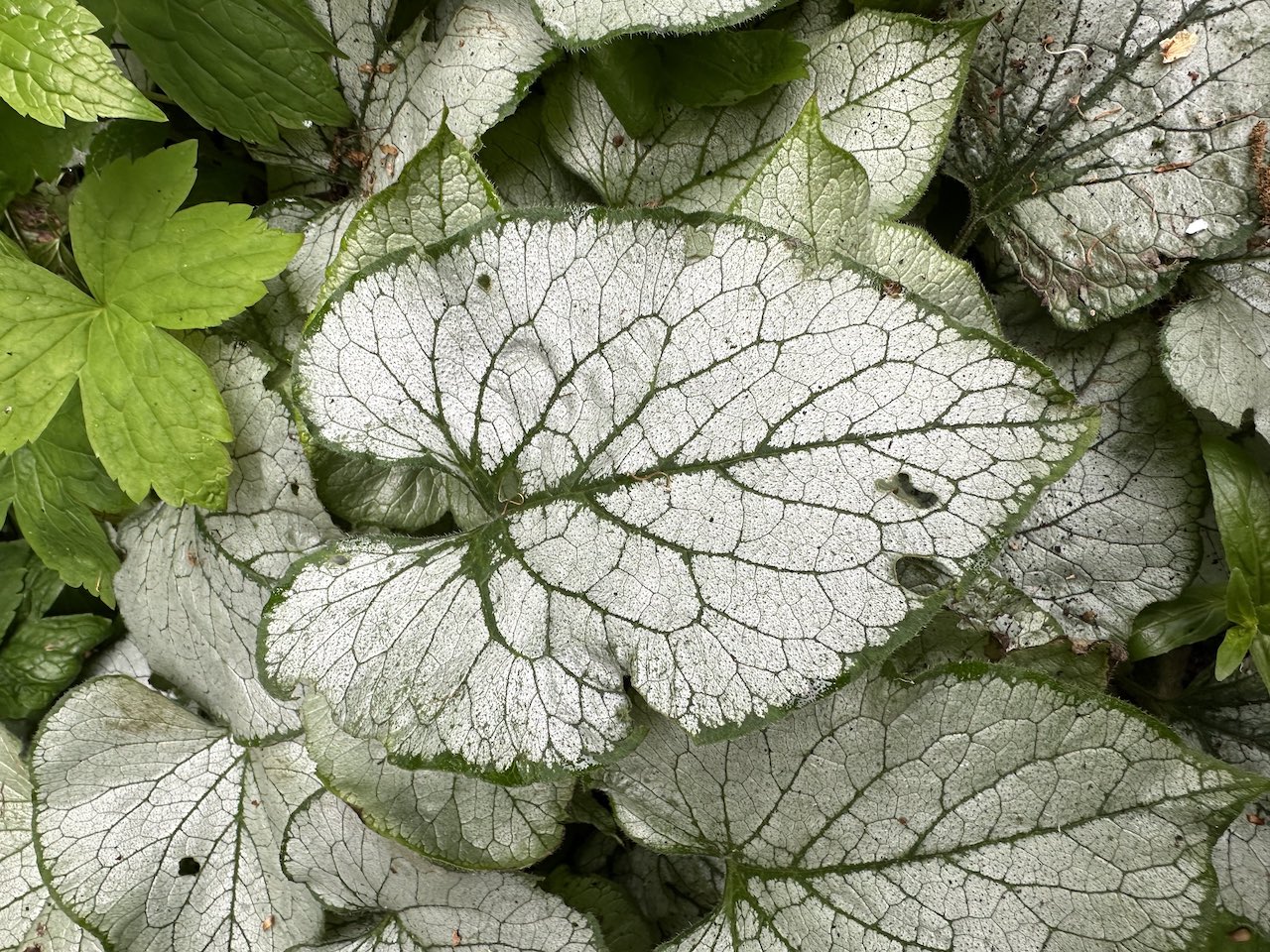
And an evergreen sedge such as Carex ‘Everest’ gives you that strappy foliage all year round without any of the bluebell politics. For more ideas in the same colour, my guide to true blue flowers is a good hunting ground. If you’d rather stay with bulbs, Anemone blanda copes with dappled shade and Muscari gives you blue in sun or part shade, and my spring bulbs by colour guide has plenty more.
You’ll find more ideas in my guides to shade loving plants for difficult borders and the best ground cover plants for shade.
Native bluebells are protected under the Wildlife and Countryside Act 1981. It’s an offence to dig up or uproot any wild plant without the landowner’s permission, and since 1998 the bluebell has been listed on Schedule 8 of the Act, which makes selling wild collected bluebell bulbs or seed an offence too.
That was brought in to stop unscrupulous suppliers stripping woodlands to fill garden centre shelves, which used to happen on a shocking scale.
Picking a few flowers isn’t singled out in the same way, but please don’t. Bluebells are slow and fragile; the flowers wilt almost as soon as they’re picked, and trampling the leaves weakens the bulbs so badly that a patch can take years to recover.
On National Trust land, nature reserves and most managed woods, picking is banned anyway. Stay on the paths, take photos, and let the fairies keep their flowers. More on the fairies later.
The practical upshot for gardeners is simple. Never dig up bluebells from the wild, and only buy bulbs, plants or seed that are clearly labelled as grown from cultivated stock from a reputable supplier.
If a listing is vague about where the bulbs came from, or they’re suspiciously cheap and arrive caked in woodland soil, walk away. Ideally, choose bulbs that are UK-sourced and UK-grown too, which cuts the risk of importing pests and diseases along with them. My guide on buying healthy plants online covers what to look for.
If you want to see bluebells at their best, nothing in a garden will ever quite match an ancient bluebell wood in full flow, and the UK has some of the finest in the world.
National Trust sites such as Ashridge Estate in the Chilterns are famous for them, and in the Lake District, the bluebells at Rannerdale Knotts near Buttermere are unusual for flowering across an open fellside rather than under trees. I’ve also visited the bluebell wood at Coton, near Northampton, which has a huge and beautiful display.
The Woodland Trust and National Trust both publish lists of their best bluebell woods each spring, and your local Wildlife Trust will have reserves near you.
When you go, stick to the paths. Don’t be that Instagrammer who wants to get in amongst the bluebells. Walking in them crushes them and reduces their ability to reproduce or even come back the next year.
Bluebell leaves are surprisingly fragile, and once they’re crushed they can’t feed the bulb, so a patch that’s been trampled for a selfie can take years to recover. Keep dogs on the paths too, and resist the urge to pick.
If you want to do something useful on your visit, record the date you see the first bluebells in flower for the Woodland Trust’s Nature’s Calendar project, which has been tracking the effects of weather and climate on the seasons for centuries. It takes two minutes, and it’s proper citizen science.
Bluebells are woodland plants, so think like a wood. The ideal spot is dappled shade under deciduous trees or shrubs, where there’s plenty of spring sunshine before the canopy leafs up, and cool shade for the rest of the year while the bulbs are dormant. They love moist but well-drained soil with plenty of organic matter, the kind of crumbly, leafy ground you get under a hedge or an old tree.
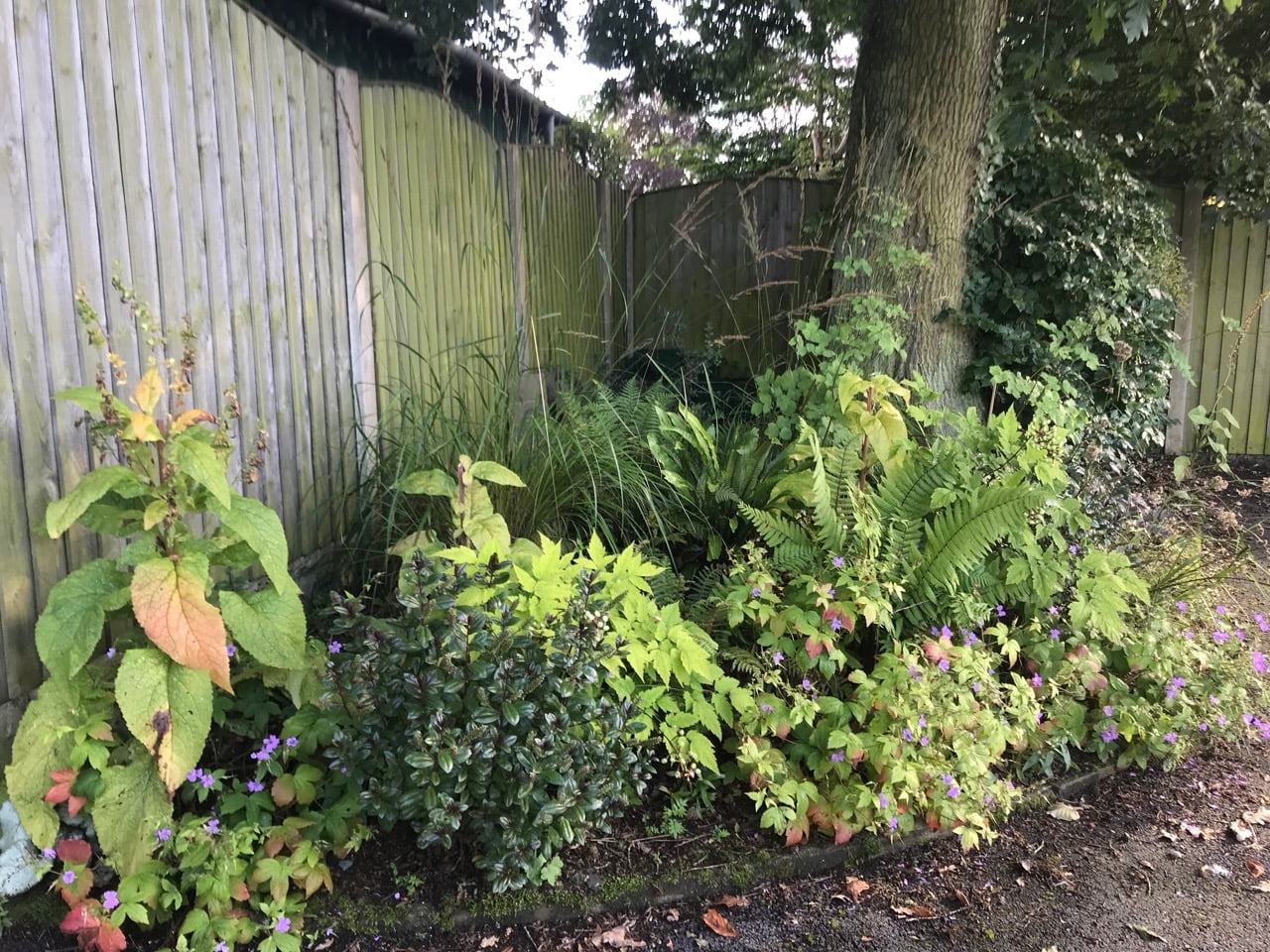
They’re ideal for the shady bits of the garden where lawns struggle and other bulbs sulk: under trees, beneath hedges, along a north facing boundary, or in a wild corner you’d like to feel a bit more woodland.
They’ll grow in sunnier spots, but in full sun the stems tend to stand more upright and the flower colour fades, which rather defeats the object and makes identification even harder. Heavy clay is fine as long as it isn’t waterlogged; my guide to plants for heavy clay soil in shade has plenty of good companions.
Good companions are other woodland plants that share the same timing: snowdrops and early crocus before them, then primroses, wood anemones, ferns, foxgloves and hardy geraniums to take over as the bluebell leaves die back. Under the same deciduous trees where I drift crocus bulbs for February, bluebells take over the show in late April, which gives you three months of colour from one patch of otherwise useless shade.
Daffodils and tulips overlap with the start of bluebell season, and alliums carry the colour on in a sunnier part of the border once the bluebells fade. My guides to planting daffodil bulbs, planting tulips and growing alliums have the timings.
Bluebells look wonderful naturalised in rough grass or an unmown corner under trees, and they’re one of my favourite bulbs for turning the base of a Silver Birch into a woodland in miniature. For a natural look, throw handfuls of bulbs across the area and plant each one where it lands, rather than lining them up like soldiers.
The catch is the mowing. The leaves need to die back fully before you cut, which often means leaving that patch alone until late June, so bluebells are better suited to a meadow area or a relaxed corner than a lawn you want to keep tidy for the barbecue.
My guides to planting under trees in lawns and creating a wildflower meadow the easy way show how to make those areas work.
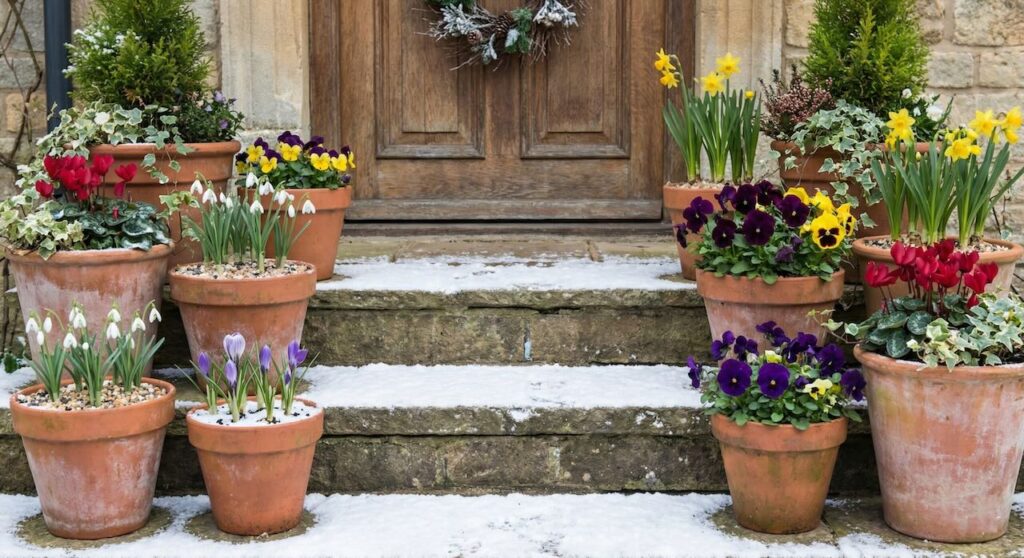
You can, although they’re happier in the ground long term. Use a deep pot, at least 30cm, filled with peat free compost mixed with a good handful of leaf mould, plant the bulbs 10cm deep, and keep the pot in a cool, shady spot where the compost won’t dry out.
It’s a handy way to enjoy a few English bluebells on a shady patio or to check your plants are the real thing before they go out into the garden. After two or three years, plant them out in the green after flowering. My guide to planting bulbs in pots covers compost and aftercare in more detail.
🛒 Buy Melcourt Sylvagrow Peat Free Compost from Amazon UK
If you’re tempted to layer bluebells in with other bulbs, read why I loathe bulb lasagnes first.
You’ve got three ways to plant bluebells, and which one you choose depends on your budget, your patience and the time of year. Bulbs in the green are the most reliable, dry bulbs the most convenient, and seed the cheapest and slowest by a country mile.
| Method | When and how |
|---|---|
| Dry bulbs | September to November. Plant 10cm deep and 10cm apart the day they arrive. |
| In the green | March to May, straight after flowering. Plant at the same depth they grew, with leaves attached. |
| Seed | Sow fresh seed in late summer or autumn. Expect four or five years to the first flowers. |
Dry bulbs are sold from late summer and should go in the ground between September and November. The crucial thing to know is that bluebell bulbs have no protective papery tunic like a tulip or daffodil, so they dry out fast and hate hanging around. Plant them the day they arrive.
If your courier has left them sitting in a depot for a week, which in my experience of mail-order plants is entirely possible, soak any wrinkly ones for an hour or two before planting and hope for the best.
Plant them around 10cm deep and roughly 10cm apart, pointed end up. Rather than dotting them in evenly, plant in loose groups of five to ten bulbs with gaps between the groups, which looks far more natural and gives them room to fill in.
Loosen the soil well, work in a couple of handfuls of leaf mould or garden compost, set the bulbs in, backfill and water. Dry bulbs can be a bit shy in their first spring, often producing leaves and only a few flowers, so don’t panic if year one is underwhelming.
If you’re planting a few hundred bulbs in groups, a long-handled bulb planter saves your knees and makes light work of taking out neat plugs of soil, even under trees. My guide to using a bulb planter shows how to get the best from one.
🛒 Buy the Burgon & Ball RHS Long Handled Bulb Planter from Amazon UK
This is my preferred method for bluebells, as it is for snowdrops. Bulbs in the green are lifted and sold straight after flowering in spring, with their leaves still on, so they establish much faster than dry bulbs because they’ve never been allowed to dry out. Buy them from a supplier that grows its own stock, never from anyone digging up woodland.
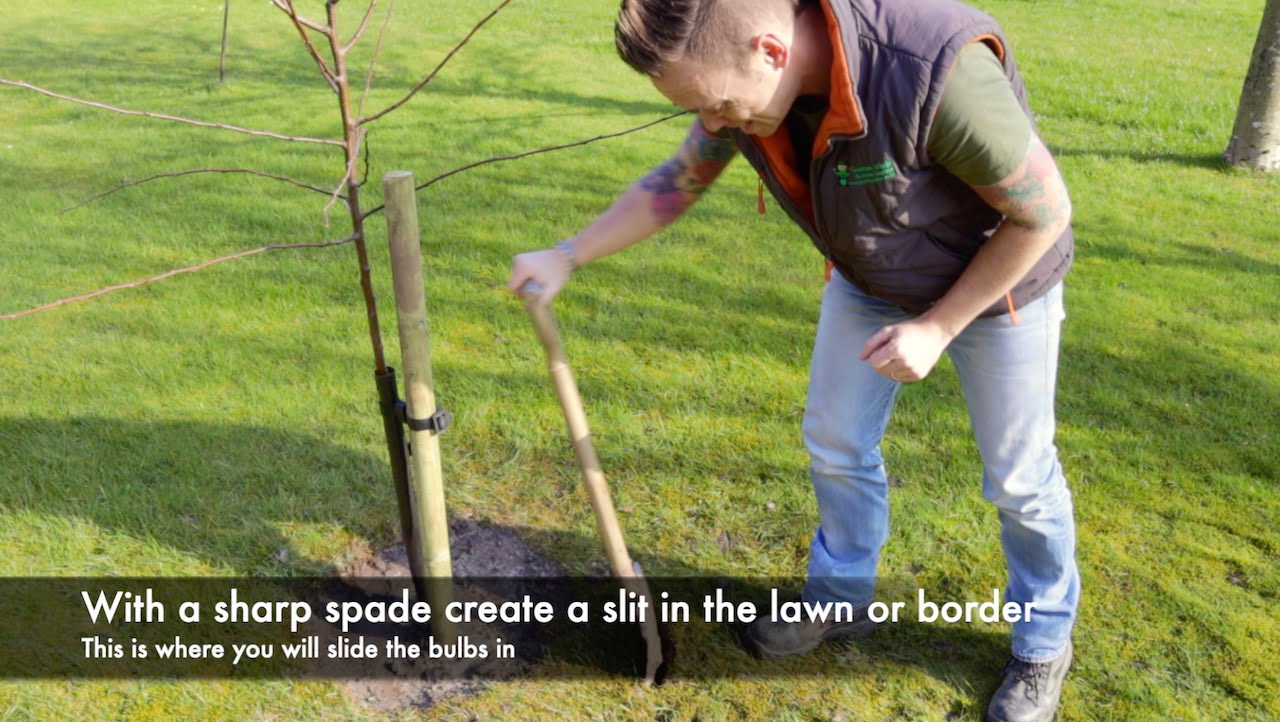
Plant them as soon as they arrive, at the same depth they were growing before, which you can see from where the leaves change from green to white. Dig a hole big enough to spread the roots, drop in a small clump, backfill, firm gently and water in. Leave the leaves on; they’re still feeding the bulbs for next year. I show the whole technique in this video, using snowdrops, and it’s exactly the same for bluebells.
My full guide to planting bulbs in the green goes into more detail, and my bulb planting calendar has the timing for everything else you might want to plant alongside them.
Seed is the cheapest way to get bluebells in quantity, and the most patient. Buy seed from cultivated stock, or collect it from your own English bluebells when the seed heads rattle in early summer, and sow it thinly in late summer or autumn where you want the plants, or in pots of gritty compost left outside over winter.
Bluebell seed needs the cold to germinate, and you’ll see little grass like leaves the following spring. Expect four or five years before the first flowers. It’s a long wait, but there’s something rather lovely about planting a bluebell wood for the next generation.
🛒 Buy Just Seed English Bluebell Seeds from Amazon UK
Slowly. Very slowly. English bluebells spread mainly by seed, and the seed mostly falls within a few metres of the parent plant, so a colony creeps outwards by a matter of centimetres a year. That’s exactly why a proper carpeted bluebell wood is a sign of ancient woodland. It’s been left undisturbed for a very long time.
In a garden, a few hundred bulbs planted in groups will give you a lovely show within three or four years and a proper drift within ten, especially if you let them set seed.
Spanish and hybrid bluebells are much quicker off the mark. Their bulbs bulk up fast, they seed prolifically and the seedlings grow vigorously, which is why they can swamp smaller plants in a border. The RHS describes all three types as capable of forming dense clumps in good conditions, so if bluebells are spreading into places you don’t want them, the Spanish and hybrid types are usually the culprits.
Once English bluebells are established they need almost nothing from you, which is my kind of plant. The one rule is to leave the leaves alone after flowering. They’ll flop, yellow and look scruffy through late May and June, and every fibre of a tidy gardener’s being will want to cut them back. Don’t.
They’re feeding the bulbs for next year, and if you’re growing them in grass, hold off mowing until the leaves have died right down.
Let English bluebells set seed if you want them to spread. Deadhead Spanish and hybrid ones as soon as the flowers fade, to stop them seeding around. A sharp pair of bypass secateurs makes quick work of removing the flower stems. Feeding isn’t necessary; an autumn mulch of leaf mould or compost does the job and mimics the leaf litter of a woodland floor. My guide to mulching your garden explains how.

🛒 Buy the Okatsune 103 Bypass Secateurs from Amazon UK
If an established clump in your garden has become congested and flowered less well, lift and divide it in the green just after flowering, replanting the bulbs straight away a little further apart. It’s also a good way to spread English bluebells around your own garden for free. I cover the technique step by step in my guide on when to lift and divide spring bulbs.
🛒 Buy the Spear & Jackson Neverbend Carbon Border Spade from Amazon UK
If your bluebells have come up as a clump of leaves and not much else, don’t panic, and don’t dig them up in a huff. Bluebells are sulkers by nature. In rough order of how often I see them, these are the usual culprits.
They’re still settling in. Newly planted dry bulbs often produce leaves and very few flowers in their first spring, especially if they sat around drying out before planting. Bulbs grown from seed can take four or five years to reach flowering size. If they’re new, give them another year before you worry.
The leaves were cut too early. Tidying away the floppy foliage in May, or mowing over it in grass, starves the bulbs of the energy they need to flower the following spring. It’s by far the most common reason established bluebells fade away. Leave the leaves until they’ve died down completely, and they’ll usually recover within a season or two.
Too much shade, or the wrong kind. Bluebells need spring light, which is why they flower before the trees leaf up. Under evergreens, or on the dark side of a tall building, they get no bright spell at all and will produce leaves but few flowers.
Too dry, or too wet. Bulbs that bake in dry soil over summer, or sit waterlogged over winter, weaken over time. Mulching with leaf mould each autumn helps on both counts.
Something’s been eating them, or walking on them. Trampled leaves, whether from children, dogs or a well meaning gardener cutting through the border, have the same effect as cutting them early. Voles and the occasional badger will also dig up bulbs. More on that below.
Bluebells are a valuable early source of nectar and pollen for bees, hoverflies and butterflies at a time of year when woodland food is scarce, and that goes for the Spanish and hybrid types as well as our native one.
Watch a patch on a sunny day and you’ll often see bumblebees cheating: rather than squeezing into the narrow English bells, some short tongued species simply bite a hole in the side of the flower and rob the nectar through it. You have to admire the efficiency.
If you’re planning for pollinators, bluebells are a brilliant addition to my list of early season plants for bees.
Mostly they leave them well alone, because the whole plant is toxic. Deer and rabbits usually pass bluebells by, which makes them a decent choice for rural gardens where tulips and crocus get munched.
Slugs and snails occasionally nibble the flowers in a wet spring but rarely do real harm; they sit comfortably alongside the plants on my list of slug and snail proof plants. The bulbs are a different story.
Field voles eat them, and badgers have been known to dig up freshly planted bulbs, so if you’ve got a badger sett nearby, a layer of chicken wire pegged over newly planted patches for the first winter is worth the effort.
On the flip side, all parts of the bluebell are poisonous if eaten, bulbs included, because they contain toxic glycosides. Eating them can cause vomiting, diarrhoea and, in larger amounts, heart problems, and that applies to people, dogs, cats and horses.
The sap can also irritate sensitive skin, so it’s worth wearing gloves when you’re dividing clumps or digging out Spanish bulbs. Dogs that like to dig up and chew bulbs are the main risk in gardens, so keep bags of bulbs well out of reach, and call your vet straight away if you think your dog has eaten any. My dog friendly garden design guide has more on planting safely with pets.
🛒 Find Gold Leaf Tough Touch Gloves on Amazon UK
You might remember that in my crocus guide the villain of the piece was Hermes, who killed his friend Crocus with a stray discus. Well, here we go again. The bluebell’s botanical name, Hyacinthoides, means “like a hyacinth”, after Hyacinthus, the young man whom Apollo accidentally killed with, you guessed it, a discus.
From his blood grew a flower whose petals were said to be marked with the letters “AI AI”, a cry of grief. Our native bluebell has no such markings, which is why it was named non-scripta, meaning “not written on” or unlettered. I can’t help noticing that Greek gods and discuses were a lethal combination.

With wings tattooed on my ankles I’ve got a certain loyalty to the messenger gods, but I’d still stand well back at their sports day.
Closer to home, bluebells are the fairy flower of British folklore. Bluebell woods were said to be woven with fairy enchantments, and fairies were believed to ring the bells to summon each other to their gatherings.
Hearing a bluebell ring was a bad omen, a death knell, and anyone who picked bluebells or wandered into a ring of them risked being led astray by the fairies and lost forever. In Devon it was considered bad luck to bring them indoors at all.
Their old country names tell the same story: witches’ thimbles, fairy flower, lady’s nightcap and cuckoo’s boots, alongside wonderful oddities like granfer griggles and crow’s toes. Another old belief held that anyone wearing a wreath of bluebells had to tell the truth, which would make for an interesting dinner party.
Bluebells were also surprisingly useful. The sticky sap from the bulbs was used as glue for binding books and fixing feathers to arrows, and in Elizabethan times the crushed bulbs gave a starch used to stiffen those enormous ruff collars. Every time I see a portrait of a Tudor in a ruff, I now picture a bucket of mashed bluebell bulbs behind the scenes.
The Victorians, as ever, gave the bluebell a meaning in their language of flowers. It stood for humility and constancy, a nod to the way it returns faithfully to the same woods every spring, and it has since picked up associations with gratitude and everlasting love.
It’s also linked with St George’s Day on 23 April, when the first bluebell woods are coming into flower, which makes it a fittingly English flower for the patron saint.
On the Wheel of the Year, bluebells belong to Beltane on 1 May, the fire festival that marks the start of summer and the height of spring’s growth.
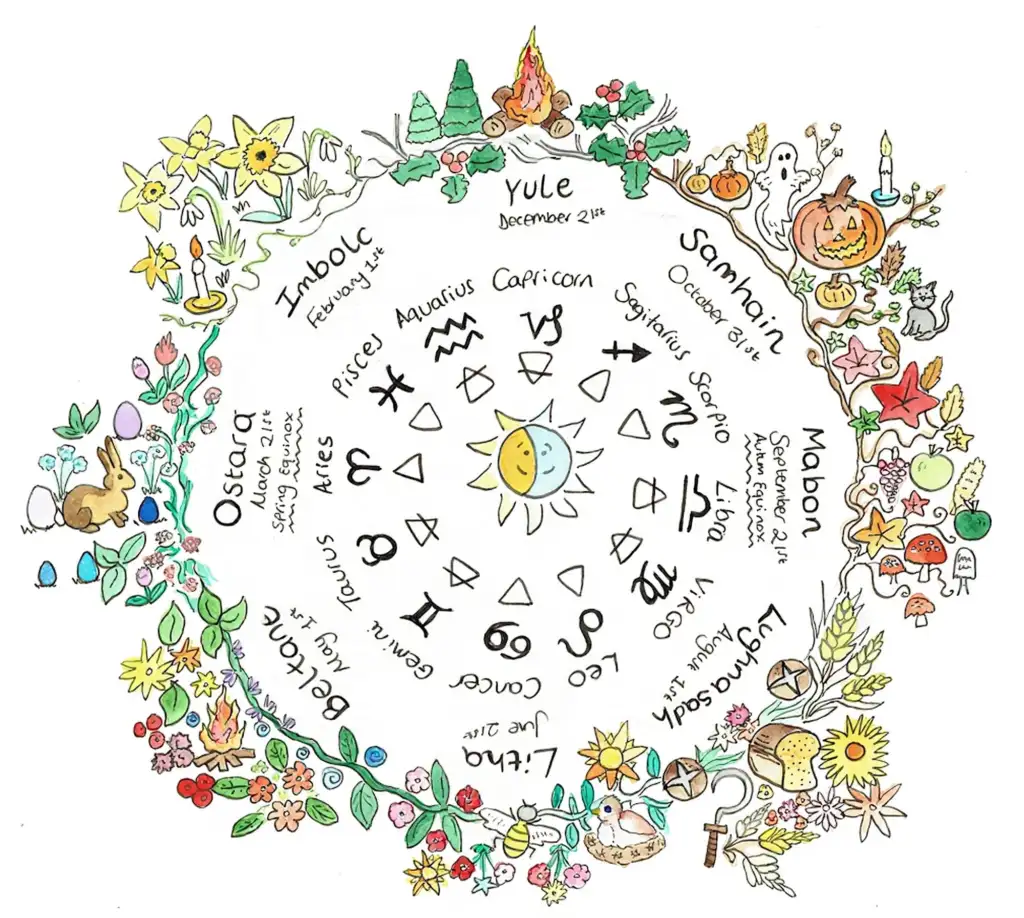
Bluebell woods are usually at their peak right around then, and that fairy connection fits Beltane perfectly, as it’s traditionally a time when the veil between our world and the fairy realm is said to be thin.
If the folklore side of the garden is your thing, my guides to hedge witchcraft for gardeners, the A to Z of garden plants used in witchcraft and trees and their influence on witchcraft dig much deeper into the stories hiding in your borders.
English bluebells have a drooping stem with flowers hanging on one side, narrow leaves, deep violet narrow bells with curled back tips, creamy white pollen and a sweet scent. Spanish bluebells have an upright stem with flowers all around it, broad leaves, paler open bells, blue pollen and little scent.
In most gardens there’s no need, as they’re very hard to eradicate and still feed pollinators. If you live next to woodland or wild native bluebells, it’s worth digging them out and deadheading them after flowering to stop them seeding and hybridising with the native population.
Yes. Spanish and hybrid bluebells are hardy perennial bulbs that come back every spring, and they spread faster than English bluebells because their bulbs bulk up quickly and they seed freely.
Spanish and English bluebell bulbs look very similar: white or pale, fleshy, roughly the size of a large grape to a small egg, with no papery skin. You can’t reliably tell them apart as bulbs, so identify plants when they’re in flower.
Bluebells flower from mid April to late May, usually peaking in the last week of April and the first week of May. They flower earlier in the south and later in the north and on higher ground.
Plant dry bluebell bulbs from September to November, as soon as they arrive, or plant bluebells in the green from March to May just after flowering. Seed can be sown in late summer or autumn.
Plant bluebell bulbs about 10cm deep and 10cm apart, in loose groups of five to ten bulbs for a natural look. Bluebells in the green should be planted at the same depth they were growing before.
It is illegal to dig up or uproot wild bluebells without the landowner’s permission, and illegal to sell wild collected bulbs or seed. Picking the flowers damages the plants and is banned on many nature reserves and National Trust sites, so it’s best not to pick them.
Yes. All parts of the bluebell, especially the bulbs, contain toxic glycosides that can cause vomiting, diarrhoea and heart problems in dogs, cats and people. Contact your vet if you think your pet has eaten any.
English bluebells spread slowly, mainly by seed, taking years to form a carpet. Spanish and hybrid bluebells spread much faster by seed and bulb offsets and can form dense clumps in a border.
Leave the leaves to die back naturally for six weeks or so, as they feed the bulbs for next year. Let English bluebells set seed if you want them to spread, but deadhead Spanish and hybrid bluebells to stop them seeding.
Bluebells aren’t weeds in the usual sense, but Spanish and hybrid bluebells can spread so vigorously in gardens that they behave like one, forming dense clumps that smother smaller plants. English bluebells spread much more slowly.
Yes. The best time to move bluebells is in the green, just after flowering, while you can still see where the bulbs are. Dig the whole clump, replant it straight away at the same depth and water it in. Never dig bluebells from the wild.
Bluebells will grow in sun, but they prefer dappled shade. In full sun the stems tend to stand more upright and the flowers fade to a paler blue, which can make English bluebells look more like hybrids.
Yes, in a deep pot of at least 30cm filled with peat free compost and leaf mould, kept in a cool shady spot. Plant bulbs 10cm deep, keep the compost moist, and plant them out in the garden in the green after two or three years.
Slugs and snails occasionally nibble bluebell flowers in wet weather, but they rarely cause real damage because the plants are toxic. Voles and badgers are more likely to be a problem, as they dig up and eat the bulbs.
Each bluebell stem flowers for around two to three weeks, and a bluebell wood puts on its display for about a month from mid April to late May. The bulbs themselves are long lived perennials that come back every year.
In the Victorian language of flowers, bluebells symbolise humility and constancy, and later gratitude and everlasting love. In British folklore they’re the fairy flower, and on the Wheel of the Year they’re linked with Beltane on 1 May.

Join over 100,000 gardeners on YouTube
Free gardening videos from the Garden Ninja, with 8 million views and counting.
Subscribe on YouTube, it’s freeA drift of bluebells under a tree is one of the easiest ways to turn a gloomy corner into the best bit of the garden in spring. Making that corner work for the other eleven months is where design comes in. My online courses teach you to plan planting in layers through the seasons, work with shade rather than against it, and lay out a garden that looks good from the kitchen window every week of the year.
Courses start from just £29, so you can learn at your own pace and put it into practice this autumn.
For the garden you’ve already got, not the one you’re starting from scratch. Seven checklists and video lessons from BBC Garden Rescue’s Lee Burkhill, built to help you work out what’s worth keeping before you spend a penny.
Garden Design Examples for Small Gardens: 30 Design Templates & Planting Plans: In this online gardening course, I’ll walk you through 30 fantastic garden designs, explaining the logic behind the layout, the plant choices, and take-home tips for applying them in your own garden.
Learn how to transform and design your own garden with Lee Burkhills crash course in garden design. Over 5 hours Lee will teach you how to design your own dream garden. Featuring practical design examples, planting ideas and video guides. Learn how to design your garden in one weekend!
Garden Design for Beginners Online Course: If you want to make the career jump to becoming a garden designer or to learn how to design your own garden, this is the beginner course for you. Join me, Lee Burkhill, an award-winning garden designer, as I train you in the art of beautiful garden design.
Telling English and Spanish bluebells apart takes three seconds once you know how: English ones droop to one side, have narrow leaves, cream pollen and a sweet scent; Spanish and hybrid ones stand upright with flowers all round the stem, broad leaves, blue pollen and little scent.
In most gardens there’s no need to wage war on the Spanish types, but if you live near woodland or wild bluebells, dig them out, deadhead them and never dump them in the countryside.
If you want to plant English bluebells, buy bulbs or plants in the green from cultivated stock, plant them 10cm deep in dappled shade under deciduous trees, and then be patient. Leave the leaves to die back, let them seed, and in a few years you’ll have your own little piece of ancient woodland, fairies optional.
Happy Gardening!


Lee Burkhill, known as the Garden Ninja, is an award-winning garden designer and horticulturist with over 30 years of gardening experience and 15 years as a professional garden designer. A qualified RHS (Royal Horticultural Society) professional, Lee specialises in sustainable garden design and practical horticultural advice. He designs and presents on BBC1’s Garden Rescue and in leading gardening publications. Lee combines three decades of hands-on gardening knowledge with professional design qualifications to help gardeners create beautiful, functional outdoor spaces.
View all posts by Lee Burkhill




JOIN THE NINJAS
Be the first in line for new Guides, Discount codes and Offers