For the garden you’ve already got, not the one you’re starting from scratch. Seven checklists and video lessons from BBC Garden Rescue’s Lee Burkhill, designed to help you decide what’s worth keeping before you spend a penny.
69

Quick Answer
For most UK gardens, an 85 litre single wheel barrow with a pneumatic tyre handles everyday jobs comfortably. If you regularly move a lot of soil, compost or rubble, a two wheel barrow around 200 litres, such as the Agri Barrow twin wheel model, saves trips and keeps you steadier underfoot. If balance is the issue rather than volume, a three wheeled barrow solves that outright. Swap to a solid or foam filled tyre if you cut hawthorn, blackthorn or other spiky hedging nearby.
After thirty years of professional gardening, including more house moves, client gardens and BBC Garden Rescue builds than I can say with confidence, I can say that a gardener’s wheelbarrow is your best friend. It helps you lug your equipment, plants, compost and other sundries around your garden or site. It also tells you how far you are from the compost heap, how steep your paths really are, and whether your side gate is really as wide as you always assumed it was as you’re pushing it there!
The right wheelbarrow, matched sensibly to your garden and the jobs you actually do, changes how much you get done in a weekend. The wrong one just makes you tired and resentful of your own soil.
This guide covers the full range, from the compact basket-style barrows that suit a small courtyard garden right through to the seriously enormous two-wheel barrow I reach for on compost delivery day.
I will cover budget options honestly, because a cheap wheelbarrow that lasts three seasons and gets replaced is often a perfectly sensible choice, not a false economy. I will also cover something that catches a lot of gardeners out and has cost me more punctured tyres than I care to admit over the years, which is what happens when you wheel a standard pneumatic tyre anywhere near a hawthorn or blackthorn hedge you have just been cutting.
Six wheelbarrows sounds excessive written down, but each one lives somewhere different and does one job well rather than every job adequately. There is a large-capacity two-wheeler that never leaves the back of the van because client sites with a big clearance job need serious volume moved fast.
There is a mid-size galvanised barrow that has been my everyday workhorse for years. There is a cheap plastic barrow at the allotment that I honestly would not care if someone walked off with. There is a small basket-style barrow that lives by the greenhouse purely for potting mix and seed trays.
There is a Henchman with a wide all-terrain wheel for sloped or rough client gardens where a standard barrow tips over if you look at it wrong. And there is one battered old steel barrow, older than some of my clients, that only ever gets used for filthy jobs like moving manure, because I do not care what happens to it.
What you will find in this guide
This page contains affiliate links for products I use and recommend. If you take action after clicking a link, I may earn a small gardening commission, which helps keep the Garden Ninja blog free for everyone.
Before comparing individual barrows, it helps to understand the four broad formats you will come across, since the right one depends far more on your garden and the jobs you actually do than on brand or price alone.
The traditional format, and still the right choice for most gardens. A single front wheel lets you pivot and tip in tight spaces, thread through a narrow side gate, and tip a load precisely where you want it.
The trade-off is stability. A single-wheel barrow is easier to overbalance on a slope or on soft ground when fully loaded, which matters if you are moving anything heavy across an uneven lawn.
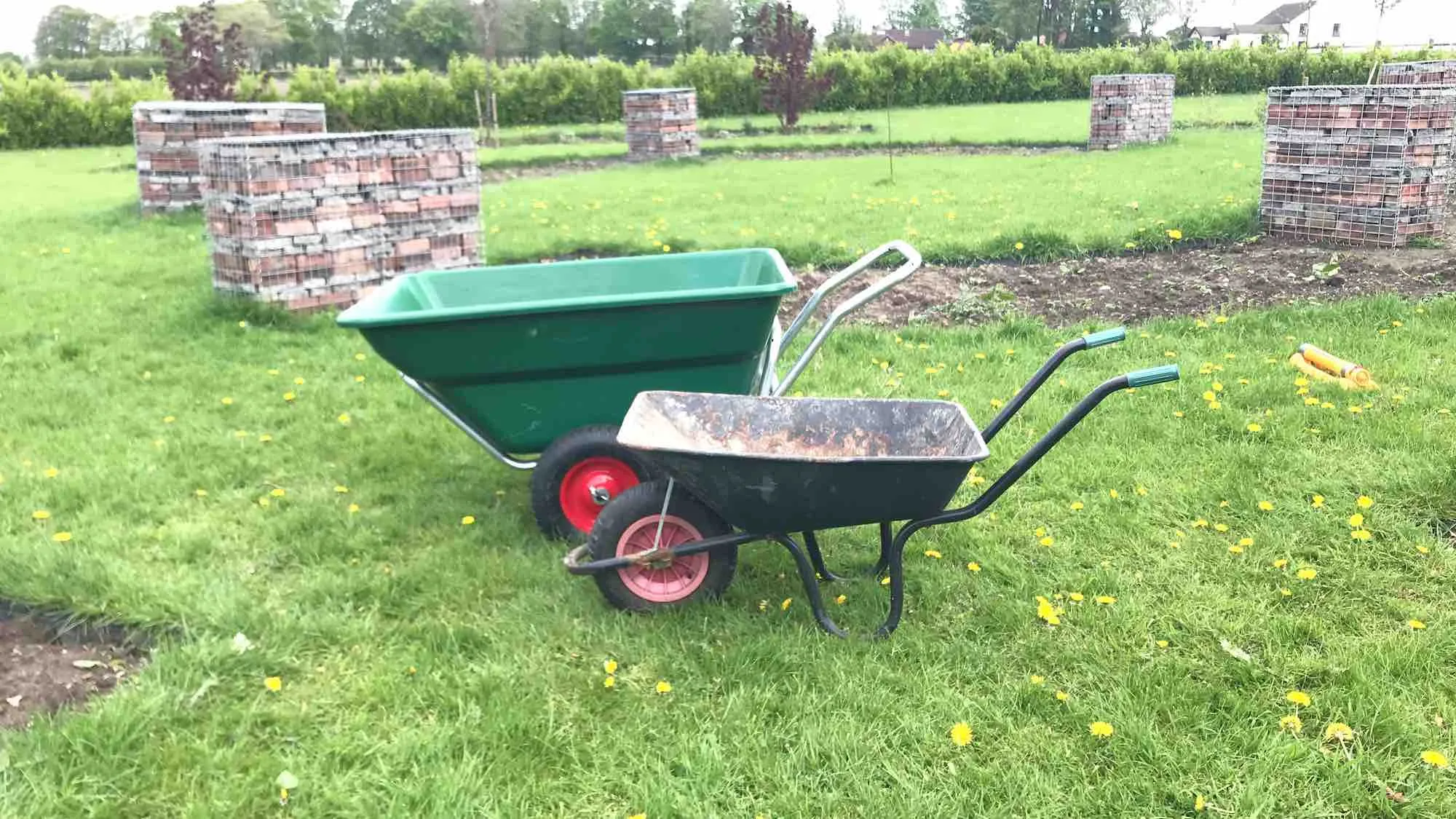
A second wheel transforms stability. You can load a two-wheel barrow far closer to its true capacity without it tipping sideways, which is exactly why the large-capacity barrows built for serious heavy work, my own Agri Barrow included, are almost always twin-wheeled.
The compromise is manoeuvrability. Two wheels do not pivot on the spot the way a single wheel does, so tight corners and narrow gates need a bit more planning, and a wide twin-axle barrow can be a genuine squeeze through some older garden gates, which is worth checking before you buy rather than after.
A four-wheel tipping cart, sometimes sold as a garden trolley, trades the classic wheelbarrow shape for a low, flat bed on four wheels that tips forward to empty. They are noticeably more stable than any two-wheeled barrow, since they cannot tip sideways at all, which makes them a sensible choice for moving pots, ornaments, or anything you do not want bouncing around and toppling mid-journey.
They are less effective at navigating tight corners or rough, uneven ground, since all four wheels need reasonably even contact to roll properly.
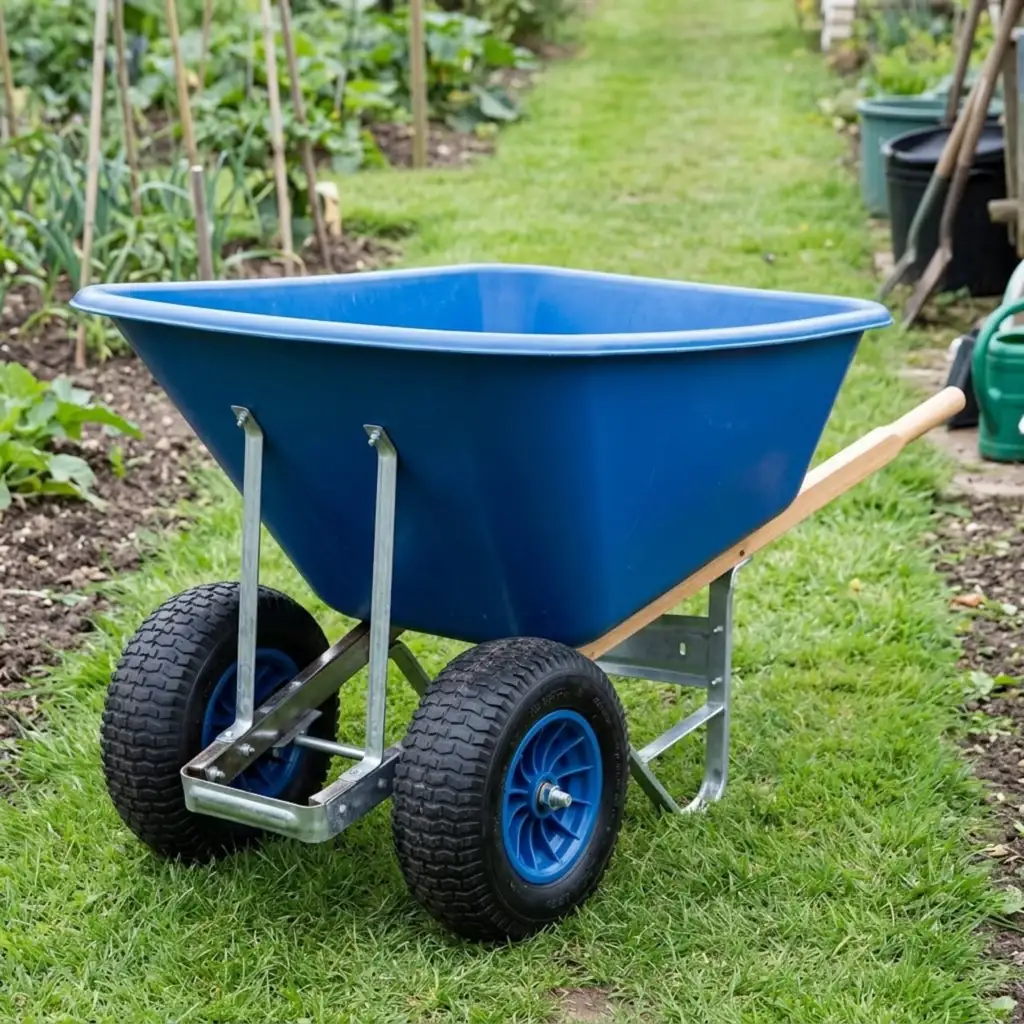
On paper, a three-wheeled barrow sounds like the answer to every stability problem. It keeps the classic tipping shape and tray angle of a traditional barrow, but replaces the single front wheel with either two front wheels or a wider wheel arrangement, which should give you more side-to-side stability without losing the ability to tip and pour the way a flat four-wheel cart cannot.
In practice, I would steer most people away from them. Genuine three-wheeled garden barrows are hard to find on the UK market, and the ones that do turn up are often awkward to push in a straight line, since the extra wheel changes how the barrow steers and can make it feel like it is fighting you on anything other than flat, open ground. I have used a few over the years and never got on with one for long.
If balance rather than volume is your real concern, whether that is a bad back, a shoulder issue, or simply not trusting yourself to keep a single wheelbarrow upright on a slope, a proper twin wheelbarrow does the same job far more reliably. The two wheels sit side by side rather than one in front of the other, so the barrow stands on its own the moment you stop pushing, and you are not relying on a fiddly three-wheel arrangement to keep it that way.
For most gardeners, a single-wheel 85-litre barrow remains the sensible default. Reach for a two-wheel or twin-axle barrow if you are moving properly heavy loads on a regular basis, consider a tipping cart if stability with delicate or awkward loads matters more to you than manoeuvrability through tight spaces, and look at a three-wheeled design specifically if balance, rather than volume, is what is putting you off using a barrow at all.
Wheelbarrow capacity is measured in litres, and the range on the market is remarkably wide. A small basket-style barrow holds around 65 litres, which suits potting, seed trays and light weeding jobs.
The standard garden barrow holds around 85 litres, which comfortably covers the vast majority of everyday jobs, from clearing borders to moving bagged compost. Anything above 150 litres moves into serious territory, and my own 200 litre Agri Barrow twin wheel model sits comfortably at the top end of what a domestic gardener would ever reasonably need.
Buying bigger than you need just makes every trip heavier and harder to manoeuvre, so match the capacity to your actual jobs rather than assuming bigger is automatically better.
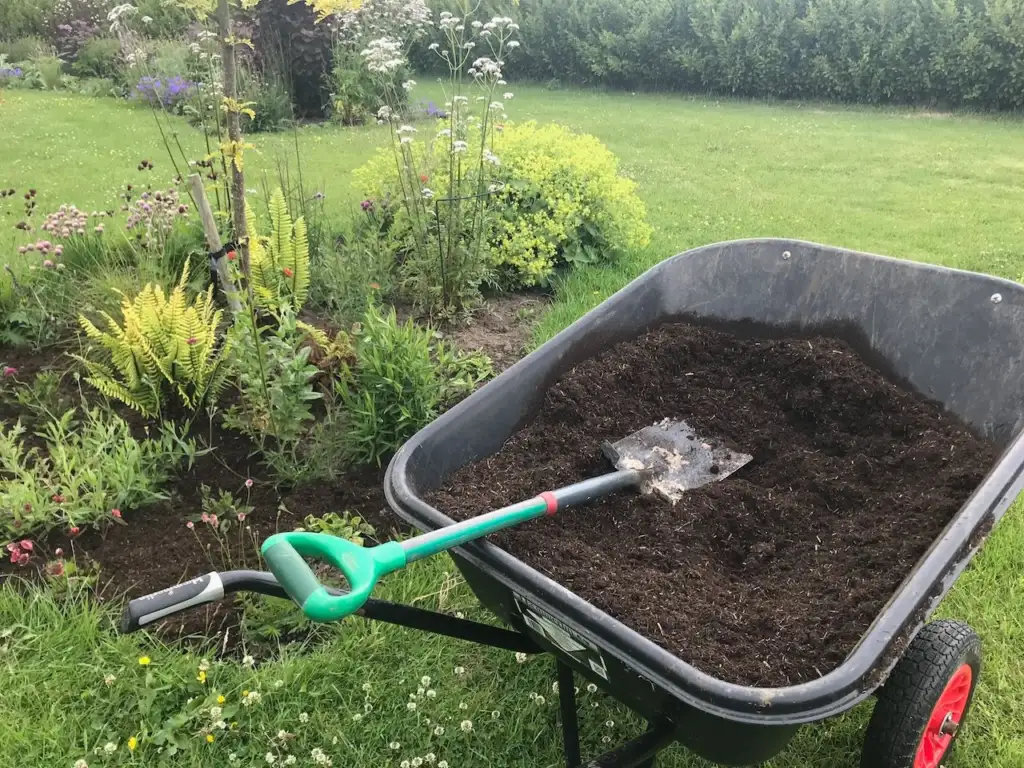
Galvanised steel trays are the traditional choice, and they are seriously tough, but they dent with heavy use and can eventually rust through at the seams, particularly if left wet for long periods.
Polypropylene and other moulded plastic trays will not rust or dent, cost less to produce, and are noticeably lighter to push around, which matters more than people expect by the end of a long day. Thetrade-offf is that plastic trays can crack under serious impact or in a hard frost if leftbrim-fulll of wet material overnight.
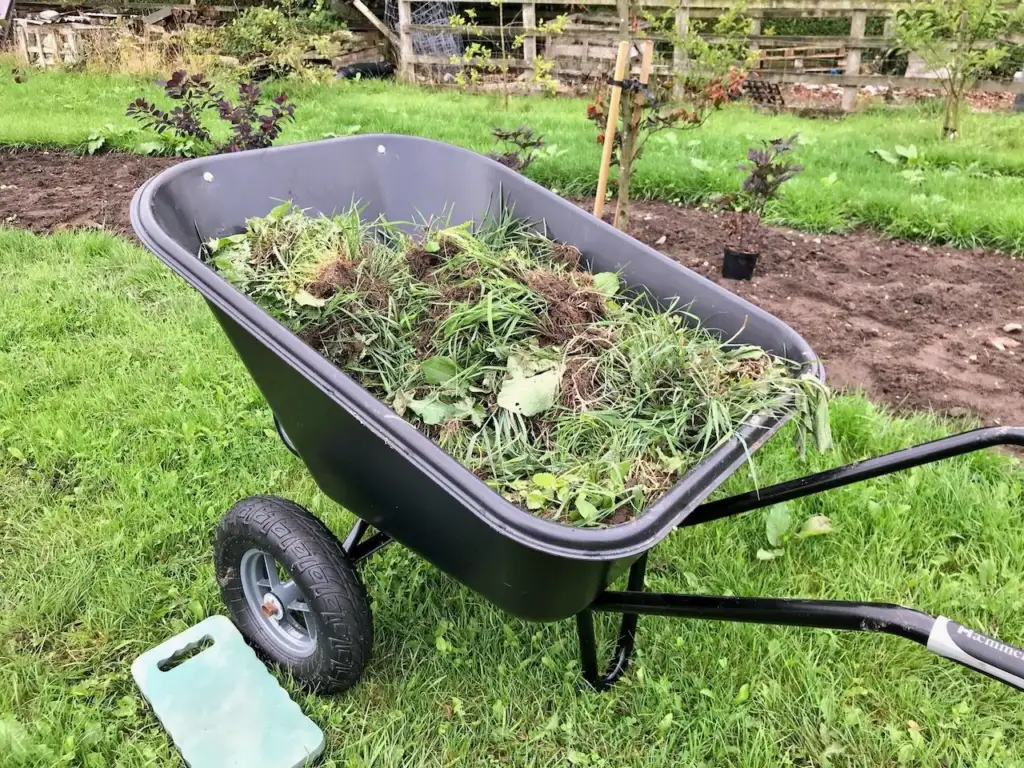
For most domestic gardens, a good-quality plastic tray now outperforms steel on balance, purely because rust is the single most common reason I see old wheelbarrows finally retired.
Look for a well-welded steel frame rather than one that relies entirely on bolted joints, since bolted frames work loose over a season or two of regular use and start to flex under load.
Handle grip matters more than most buyers consider at the point of purchase. Textured rubber or foam grips make a real difference to comfort when your hands are cold and wet, which in a UK garden is a fairly regular state of affairs.
Manufacturers publish a maximum load rating, and it is worth checking rather than assuming, since it varies more than the tray size alone would suggest.
A wet load of soil, sand or rubble is considerably heavier than the equivalent volume of garden waste or mulch, so if you regularly shift building materials or wet compost, check the weight rating specifically rather than judging by litres alone.
This one is constantly overlooked, and it matters just as much as load capacity to many gardeners. An empty wheelbarrow typically weighs anywhere from around 6kg for a small, lightweight plastic model to 10kg or more for a full-size galvanised steel barrow, before you have added a single scoop of soil.
That difference matters twice over. It affects how tiring it is to push and steer the barrow when loaded, and how easily you can lift and manoeuvre it empty, into a shed, up a step, or onto a trailer.
If you have a bad back, a shoulder problem, or simply find heavier equipment a struggle, this is worth weighing up alongside capacity rather than as an afterthought. A lighter plastic barrow with a slightly smaller tray will often serve you better day-to-day than a heavier steel one you find yourself avoiding because lifting it out of the shed is a chore in itself.

A detail almost nobody checks until they are stood in the garden with a barrow that will not fit through the side gate. Standard UK side gates typically range from 70cm to 90cm wide, but older properties, particularly Victorian terraces, can be considerably narrower.
A large-capacity twin-axle barrow or a three-wheeled model can easily reach 65cm to 90cm across at its widest point, which leaves very little margin on either side of a tight gate. Before buying anything beyond a standard single-wheel 85-litre barrow, take a tape measure to your narrowest point of access, whether that is a side gate, a passage between the house and a fence, or a gap between raised beds, and check the manufacturer’s stated width against it rather than assuming it will simply fit.
Wheelbarrow pricing in the UK falls into three fairly clear bands, and knowing which one you actually need saves you either overspending on capability you will never use or underspending on a barrow that gives up within a season.
At the budget end, roughly £20 to £40, you are buying a small plastic or basket-style barrow suited to light, occasional use: potting, weeding, seed trays and general tidying. Build quality varies considerably at this price point, and it is worth treating these as barrows you will likely replace every few seasons rather than as a lifetime purchase, which, for a second barrow at an allotment or a holiday cottage, is often exactly the right call.
In the mid-range, roughly £45 to £90, you move into the proper everyday workhorse territory: 85-litre galvanised steel or good quality plastic single-wheel barrows, along with four-wheel tipping carts. This is where most domestic gardeners should be shopping, and it is the band that rewards paying attention to welded frames and tray material rather than price alone.
Above £130, you are in the large-capacity twin-axle barrows built for truly heavy, regular work, landscaping, allotments with serious ground to cover, or anyone taking bulk deliveries of soil or manure.
On brands, a handful of names come up again and again for good reason. Draper has built a solid reputation for dependable, no-nonsense mid-range barrows that hold up to regular garden and DIY use without costing a fortune.
Agri Barrow, whose 200-litre twin-wheel model sits in my own van these days, specialises in the large-capacity end, with a solid metal frame and puncture-proof tyres built with landscapers and serious volume in mind. VonHaus tends to offer strong value across carts and mid-range barrows, which is why their tipping cart features later in this guide.
If you want something built to proper builder’s-grade toughness, Walsall and Chillington both have long-standing reputations for thick steel trays and repairable, no-frills construction that copes well with clay soil and stones, the kind of barrow that gets handed down rather than replaced.
None of this means you need to chase a specific badge; a well-built barrow from any of these names in the right price band will do the job, but it gives you a shorthand for judging build quality when you are comparing listings that otherwise look fairly similar.
Around £130 to £150
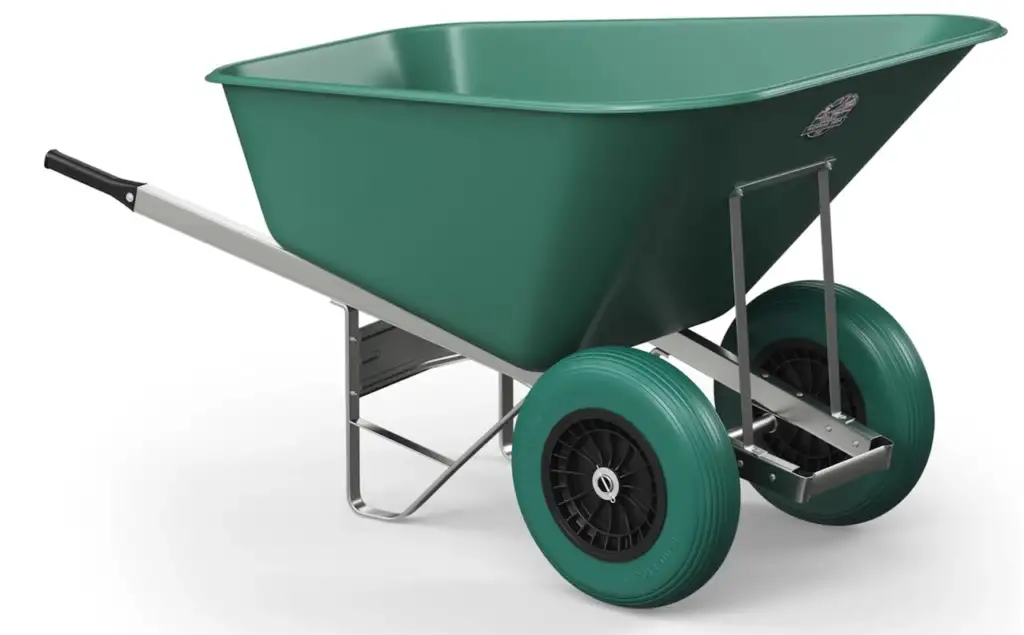
This is the barrow that lives permanently in the back of my van, and it is the one I reach for on any job involving a really large volume of compost, mulch or soil in a single go.
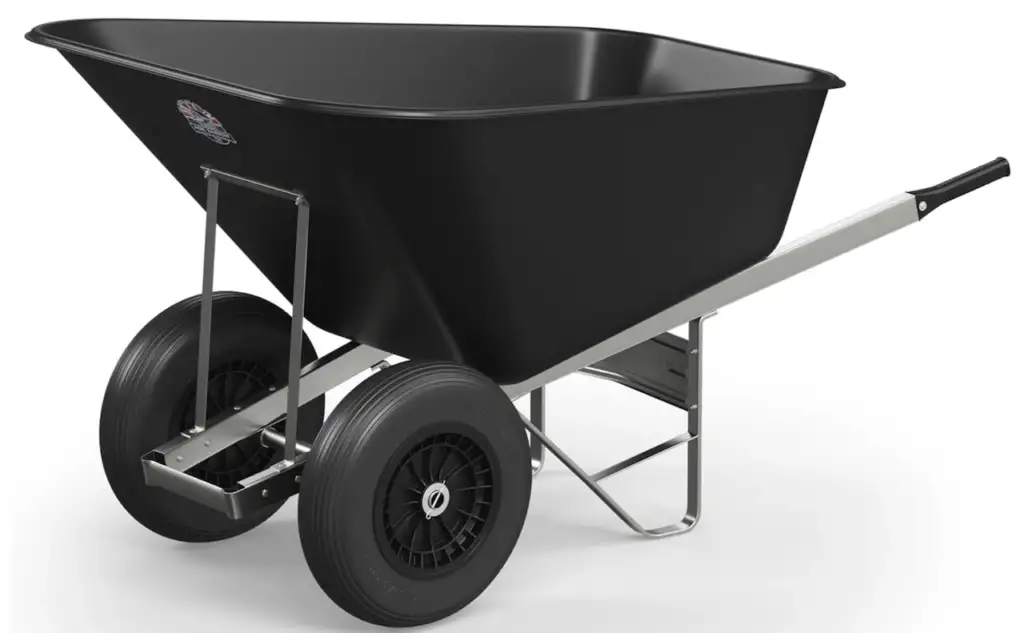
The Agri Barrow uses a tough plastic tub on a solid metal frame, sitting on twin slim puncture-proof tyres rather than a pair of air-filled ones, so there is nothing for a stray thorn or bit of grit to find. At 200 litres, it holds roughly two and a half times what a standard 85-litre barrow manages. Meaning fewer back-and-forth trips to the compost heap or green bin. When creating a large flower bed renovation or delivering freshly screened topsoil, it turns what would be a dozen exhausting trips into five or six. Be kind to yourselves and your backs, Ninjas!
Trust me when I say that thorn-proof tyres are a must if you are cutting hawthorn hedges, berberis or doing a lot of heavy gardening like rose pruning. One stray thorn will halt your wheelbarrow in its tracks, causing endless frustration!
It measures around 151cm long and 90cm wide, stands 86cm high, and is rated to carry up to 150kg, so there is proper capacity behind those numbers rather than just a big-looking tub.
The twin axle design earns its keep here. A barrow this size loaded to anywhere near capacity on a single wheel would be seriously dangerous to control, but the two-wheel format keeps it stable even loaded heavy and slightly unevenly, which happens more often than you would like when you are shovelling fast and trying to beat the rain.
I switched to this model after one too many days watching a jobbing gardener make trip after trip with a barrow that was simply too small for the job in front of them, and it has paid for itself many times over on client sites since. It is honestly too much barrow for most domestic gardens, and I would not recommend it as a first or only wheelbarrow.
But if you are landscaping seriously, running a smallholding, or simply move enough compost and manure each year that the maths on trip count actually matters to you, it is the one I would point you toward without hesitation. Just be aware it is a full 90cm wide at the axle, so measure your side access before ordering, as covered above.
Best for: Landscapers, allotment holders with a lot of ground to cover, anyone taking regular bulk deliveries of soil, mulch or manure, and gardeners with notably large plots where trip count matters.
🛒 Buy the Agri Barrow 200L Twin Wheel Wheelbarrow from Amazon UK
Around £45 to £60
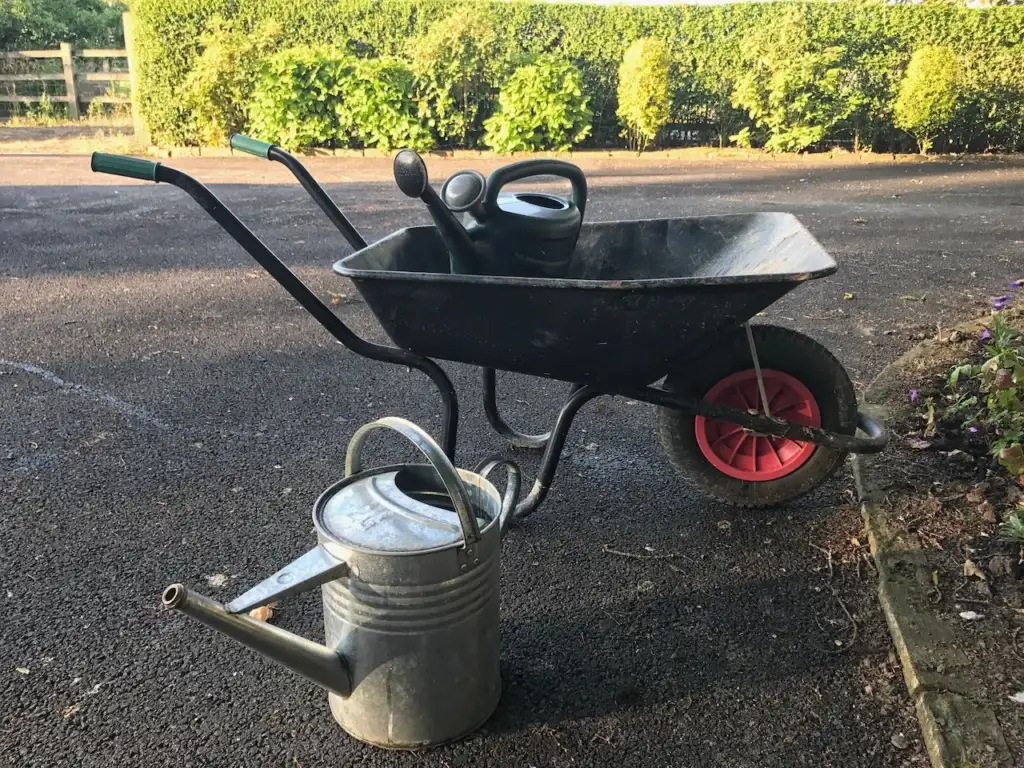
This style of galvanised steel 85-litre barrow is the format most UK gardeners actually need, and Draper’s version is a well-built example of it. The galvanised tray shrugs off knocks against paving, walls and raised bed edges far better than a plastic tray manages, and the pneumatic tyre absorbs shocks well on the sort of uneven lawn most of us actually garden on.
Assembly takes around twenty minutes with a spanner and a screwdriver, which is fairly standard across this category.
Best for: Most domestic gardens, general weeding, mulching, moving bagged compost and everyday border maintenance.
🛒 Buy the Draper 85L Galvanised Wheelbarrow from Amazon UK
Around £70 to £90
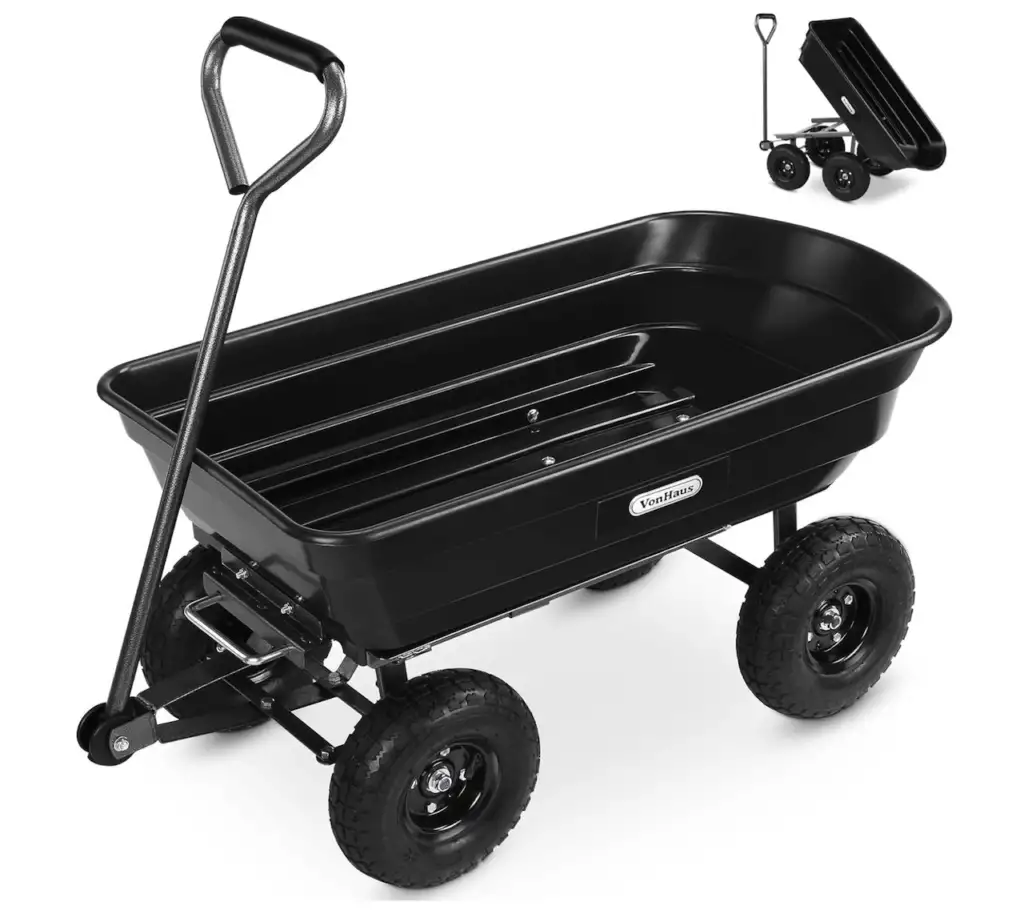
A four-wheel tipping cart rather than a traditional barrow, this one holds around 75 litres on a sturdy alloy frame with a solid polypropylene tub, and it is claimed to handle static loads up to 250kg. If you regularly move potted plants, garden ornaments, or anything else you would rather did not bounce and topple mid-transit, the flat, stable bed of a tipping cart suits that job better than any traditional barrow shape.
Best for: Moving pots and ornaments, gardeners who find a traditional barrow tricky to balance, flat or gently sloping gardens.
🛒 Buy the VonHaus Tipping Garden Cart from Amazon UK
Not every barrow needs to be an investment piece, and I say that as someone with a fairly disreputable plastic barrow sitting at my allotment right now that I bought cheaply on purpose. If it gets pinched, or a wheel finally gives up, I am out twenty pounds and mildly annoyed rather than truly upset.
There is a real place in most gardens for a barrow you do not have to think about, and this section also covers a lighter, easier-to-handle option for anyone who wants smaller volume in exchange for a barrow that is simpler to lift and steer.
Around £25 to £40
A basic 85-litre plastic barrow on a puncture-proof or pneumatic wheel does the job for light garden waste, weeding, and general tidying, without any pretence at heavy-duty use. Build quality varies noticeably among the cheapest listings, so it is worth reading recent reviews rather than sorting purely by price, but as a low-commitment barrow for occasional use, or a second barrow to keep at an allotment or holiday cottage, this is the sensible category to shop in.
Hawthorn and blackthorn thorns are a common cause of punctured tyres once you’re cutting a hedge back each year, something I cover in my bare root hedging guide.
Best for: Allotments, occasional use, second barrows, anyone who would rather not worry about theft or damage.
🛒 Buy an 85L Budget Plastic Wheelbarrow from Amazon UK
Around £20 to £35
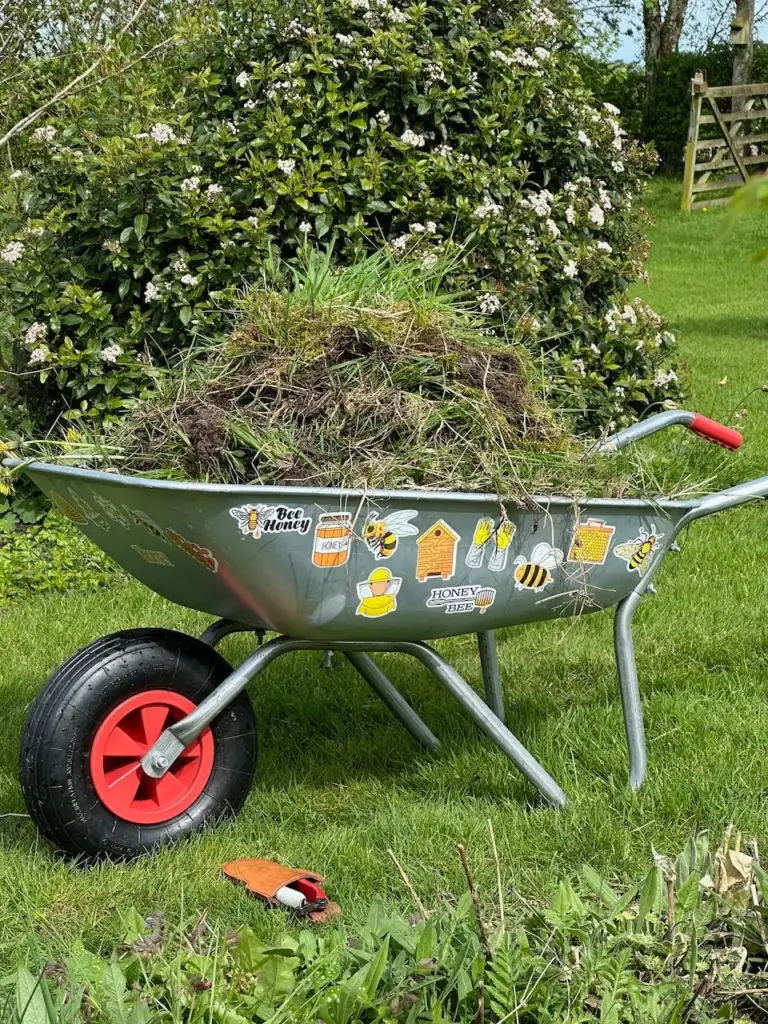
This small, lightweight, basket-style barrow is the one that lives permanently by my greenhouse. It is not for heavy jobs, but for the constant low-level shuffling of potting mix, seed trays and small quantities of compost, a light 65-litre barrow with solid plastic wheels that never needs pumping up is noticeably more useful day-to-day than a larger barrow you have to heave out of the shed for a five-minute job. I’ve even customised mine with stickers so on building sites I know its mine!
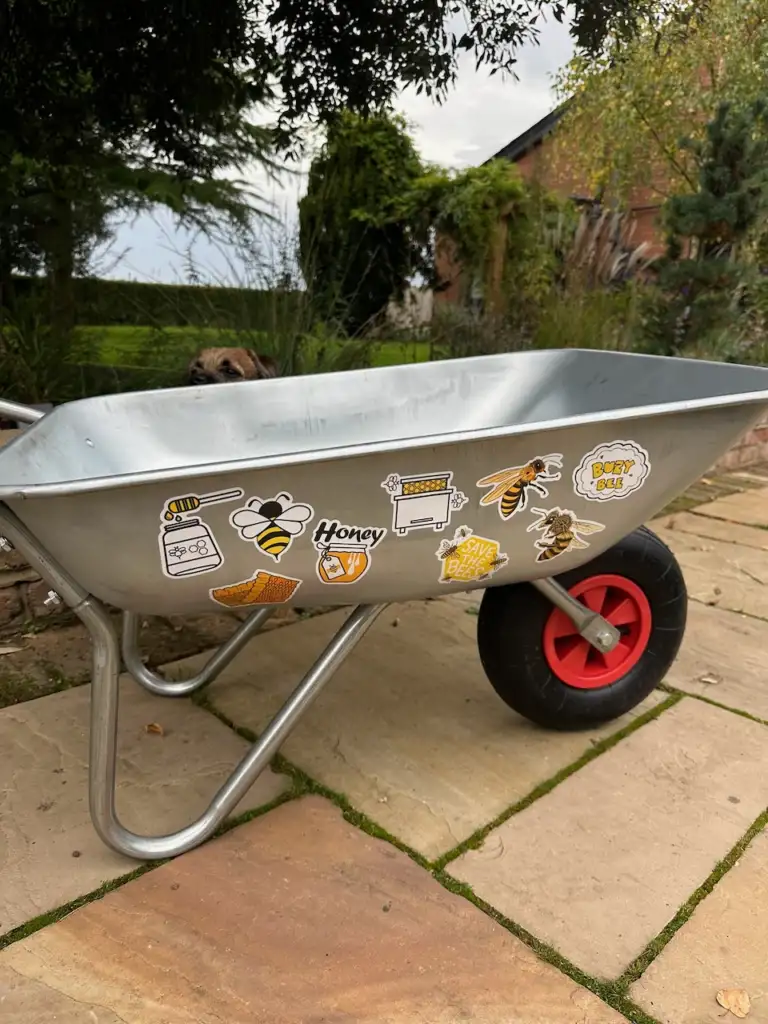
Storage space is minimal too, which matters in a smaller courtyard or town garden.
Best for: Small gardens, potting sheds and greenhouses, light frequent jobs, gardeners with limited storage space.
🛒 Buy a 65L Basket Style Wheelbarrow from Amazon UK
Around £60 to £80
This is the category I point people toward most often when they tell me a standard barrow feels unstable or simply too heavy to manage, whether that is down to a bad back,a bduece issue, or just wanting something less of a wrestle.
The TANGZON swaps the usual single front wheel for two pneumatic tyres side by side, so the barrow stays upright on its own the moment you let go of the handles rather than needing to be balanced. It is rated to carry 150kg, which is a genuinely useful capacity for a barrow in this price band, and the powder-coated steel frame holds a durable PP and PE tray that will not rust. Winner winner if you have a habit of leaving your wheelbarrow outside in all weathers (looks my myself here!!)
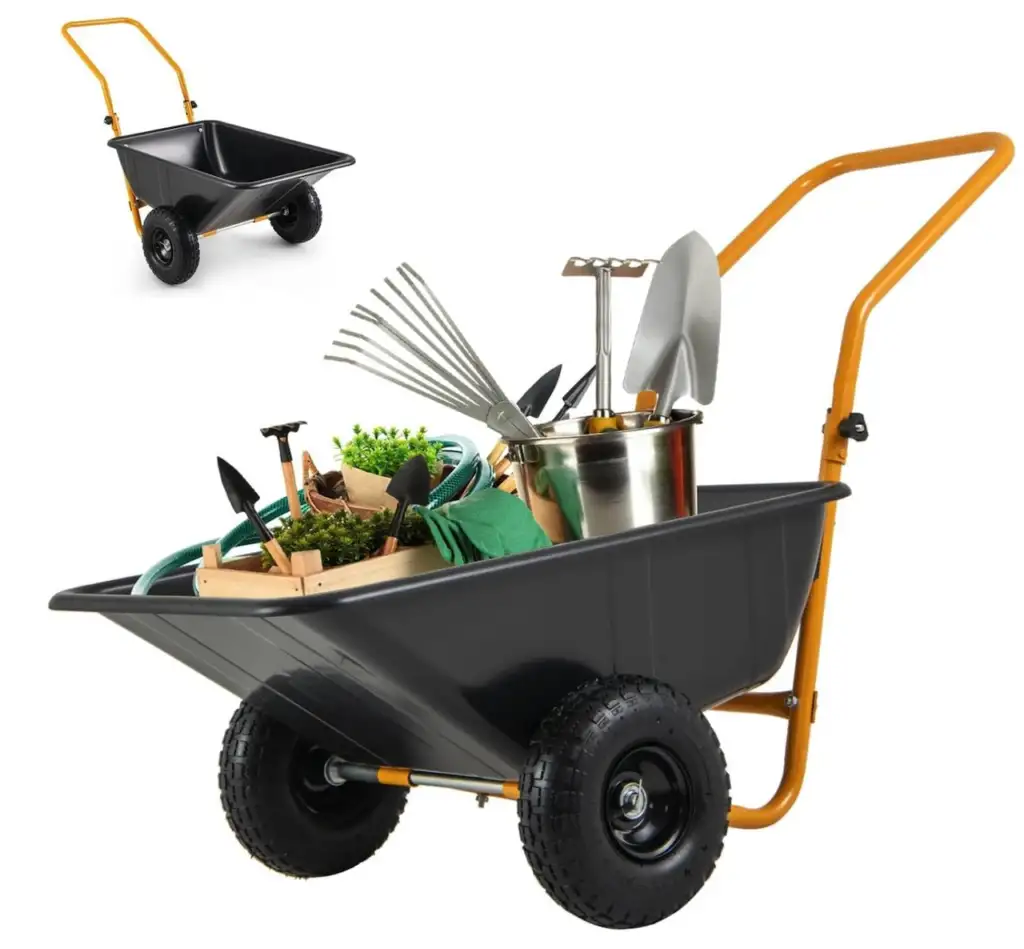
The handlebar folds flat for storage, a detail that tends to win people over when shed or garage space is tight, especially in new build gardens or if you’re storing this down the side of a house or behind the garage. You lose a little of the tight turning circle a single wheel gives you, so it is not the barrow for threading through a narrow border, but for straightforward trips across a lawn or patio the twin-wheel takes the job entirely.
Best for: Older gardeners, anyone with back, shoulder, or balance concerns, and gardeners who want genuine stability without hunting down a specialist three-wheeled design.
🛒 Buy the TANGZON Two-Wheeled Wheelbarrow from Amazon UK
This is the section I most wish more gardeners read before buying, because tyre choice quietly ruins more wheelbarrows than any other single factor. A standard pneumatic, air-filled tyre gives the smoothest ride and the best shock absorption over uneven ground, which is why almost every barrow ships with one as standard.
The trade-off is the obvious one. Air-filled tyres puncture, and they puncture on exactly the kind of debris a working garden generates.
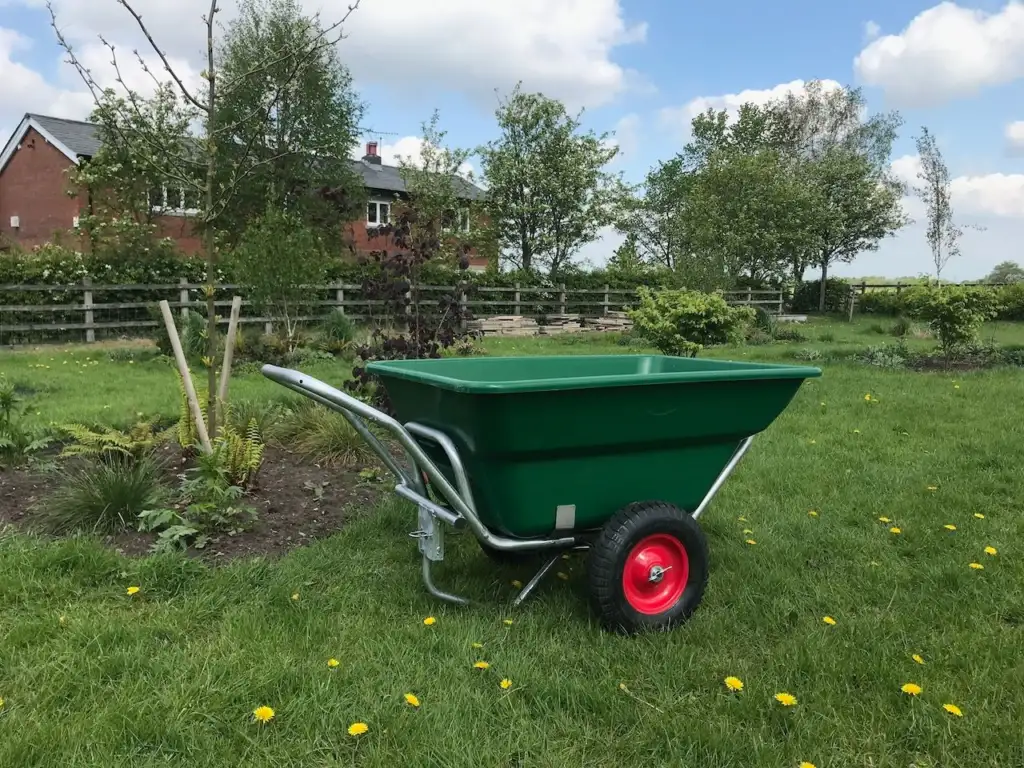
If you regularly cut or lay hawthorn, blackthorn, pyracantha or any other spiky hedging, you will already know exactly the frustration I am about to describe. Cut thorn stems and fallen thorns hide in grass, on paths and in the material you are actually trying to move, and a standard pneumatic tyre will find every single one of them.
I have lost count of how many flat wheelbarrow tyres I have had over the years working on hedge-laying and boundary jobs, and it is always the same culprit. A blackthorn spine barely needs any pressure at all to go straight through a standard tyre wall, and unlike a bicycle tyre, you are unlikely to notice the puncture until the barrow is fully loaded and refusing to roll properly.
The fix is straightforward. If thorny hedge work is a regular part of your gardening, whether that is an annual hawthorn trim, laying a traditional hedge, or clearing an overgrown blackthorn boundary, swap your standard pneumatic tyre for a solid orfoam-filledd replacement before it becomes a recurring problem rather than after.

Solid rubber tyres are moulded from a single piece of rubber with no air chamber at all, so there is truly nothing for a thorn to puncture. Foam-filled tyres use a similar principle, with a microcellular Foam core inside the tyre wall that absorbs impact almost as well as air while remaining completely immune to punctures.
Neither ride quite as smoothly as a fresh pneumatic tyre on very rough ground, but the difference is minor, and you will never again find your barrow sitting on a flat wheel halfway through a job.
Most standard wheelbarrows use a common wheel size, generally 10, 12, or 14 inches, and replacement solid- or foam-filled tyres are sold to fit the existing axle with a simple pin or bolt swap, the same way the original wheel came off. It is a five-minute job with a spanner or a screwdriver, and considerably cheaper than replacing a whole wheelbarrow because the tyre finally gave up for good.
🛒 Buy a Solid Rubber Puncture Proof Wheelbarrow Tyre from Amazon UK
My own preference, particularly for the barrow I use most often for hedge and boundary work, is a foam-filled tyre rather than a fully solid rubber tyre, since the foam core gives a noticeably softer, more cushioned ride over rough ground while remaining just as puncture-resistant.
🛒 Buy a Foam Filled Puncture Proof Wheelbarrow Tyre from Amazon UK
Storage is the part almost every buying guide skips entirely, and it noticeably affects how long a wheelbarrow lasts. Left out in the open, a galvanised tray will eventually rust at the seams, and a pneumatic tyre left standing on concrete in one position for months will develop a flat spot that never fully rounds out again.
Standing a barrow on its nose, tray facing the wall, takes up a fraction of the floor space of leaving it flat, and gets the wheel off the ground entirely, which avoids the flat spot problem completely.
If shed space is tight, a simple wall-mounted bracket built for the purpose will hold a barrow vertically off the floor and frees up a surprising amount of space, particularly useful if you are storing more than one, which I appreciate is a slightly self-incriminating thing for me to say.
For anyone without covered storage at all, a barrow cover is a worthwhile few pounds spent, since UV exposure degrades plastic trays and rubber tyres considerably faster than most people expect, and a covered barrow will noticeably outlast an uncovered one left permanently outside.
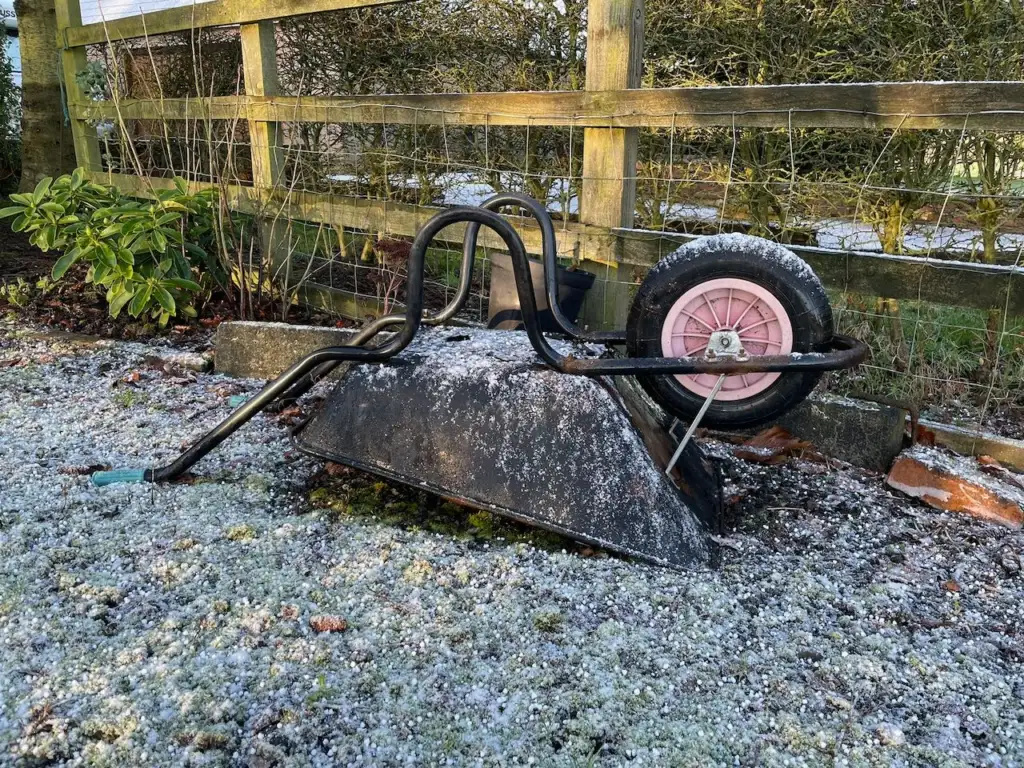
One last practical point, and it is the same advice I gave in my garden kneelers guide, because it applies just as well here. Write your name on your wheelbarrow or cover it in stickers like I do!
If you share an allotment site, have a gardener come in, or simply have a habit of lending tools to neighbours, an unmarked wheelbarrow is a wheelbarrow that eventually does not come back. Ten seconds with a permanent marker on the underside of the tray solves the problem before it starts.
💡 Top Tip: Give your pneumatic tyre a squeeze every few weeks during the growing season. A slow, gradual leak is far easier to top up with a bicycle pump before a job than to discover halfway through moving a full load of wet compost.
For most UK gardens, 85 litres is the sensible standard size, large enough for real jobs without becoming difficult to control when loaded. Smaller gardens or light potting work suit a 65-litre basket-style barrow. Only move up to 150 litres, or beyond if you regularly shift bulk deliveries of soil, compost, or rubble, since a barrow that size is considerably heavy and awkward for occasional light use.
Plastic trays will not rust, are lighter to push, andhandleh wet materials like compost and manur welle. Steel trays are more resistant to sharp impacts and heavy rubble but will eventually rust at the seams if left wet regularly. For most domestic gardening, a good-quality plastic tray now has the edge in terms of balance.
A single wheelbarrow is more manoeuvrable and pivots easily in tight spaces, making it the right choice for most gardens. A ttwo-wheelbarrow is considerably more stable when heavily loaded, which matters for llarge-capacitybarrows or anyone moving seriously heavy material regularly. A three-wheeled barrow sits in between, offering much of that stability in a lighter, narrower package, and is worth choosing specifically if balance rather than volume is your main concern.
Swap your standard pneumatic tyre for a solid rubber or foam-filled replacement. Both are immune to punctures from hawthorn, blackthorn and similar thorny material, and fit most standard wheelbarrows using the existing axle with a simple pin or bolt swap.
Budget £20 to £40 for a small plastic or basket style barrow for light, occasional use, £45 to £90 for a proper mid-range 85 litre steel or plastic barrow or a tipping cart, and £130 or more only if you need a large capacity twin axle barrow for regular heavy work. Most domestic gardeners are well served by the mid-range.
Stand it on its nose to get the wheel off the ground and prevent a flat spot developing, ideally under cover to protect the tray and tyre from UV exposure and prolonged wet weather. A wall-mounted bracket is a good solution if floor space in the shed is limited.
Almost certainly not, and I say that as someone with six. For the vast majority of gardeners, one properly chosen 85 litre barrow covers everything you need. A second barrow only earns its keep if you have distinctly different jobs it is solving, such as a small basket barrow for potting alongside a full-size barrow for general garden work.

Join over 100,000 gardeners on YouTube
Free gardening videos from the Garden Ninja, with 8 million views and counting.
Subscribe on YouTube, it’s freeChoosing the right tool for a job is only half the battle. Getting the garden layout right so you spend less time hauling material back and forth in the first place is the other half, and it is exactly what I cover in my design courses.
A well designed garden puts your compost heap, your beds and your shed within sensible reach of each other, so every wheelbarrow trip is shorter and every job takes less out of you. I built these courses to pass on the same thinking I use on every client project and on BBC Garden Rescue, broken down into steps you can work through at your own pace, whatever the size or shape of your plot.
With courses starting from just £29, you gain access to award winning design knowledge that would otherwise mean paying for a full consultation. Whether you want a single weekend to sort out one problem area or a complete grounding in how professional garden design actually works, there is a course pitched at exactly that.
For the garden you’ve already got, not the one you’re starting from scratch. Seven checklists and video lessons from BBC Garden Rescue’s Lee Burkhill, designed to help you decide what’s worth keeping before you spend a penny.
Garden Design Examples for Small Gardens: 30 Design Templates & Planting Plans: In this online gardening course, I’ll walk you through 30 fantastic garden designs, explaining the logic behind the layout and plant choices, plus take-home tips for applying them in your own garden.
Learn how to transform and design your garden with Lee Burkhill’s crash course in garden design. In over 5 hours, Lee will teach you how to design your dream garden. Featuring practical design examples, planting ideas and video guides. Learn how to design your garden in one weekend!
Garden Design for Beginners Online Course: Want to become a garden designer or design your own garden? This beginner course is for you. Join me, Lee Burkhill, an award-winning garden designer, as I train you in the art of beautiful garden design. Enjoy 20 hours of online study and video lessons, along with quizzes and a completion certificate.
A good wheelbarrow is one of those tools you barely think about until it lets you down, and then you think about nothing else for the rest of the afternoon. Match the capacity to the jobs you actually do rather than what looks impressive in the garden centre, and weigh up the barrow’s own weight and your gate width alongside it, not just its litres.
Go for galvanised steel or good plastic, depending on whether rust or weight bothers you more, and consider a three-wheeled design outright if balance rather than volume is what has been putting you off. And if hawthorn, blackthorn, or any other spiky hedge is a regular part of your gardening life, swap to a solid or foam-filled tyre before it becomes an annual puncture ritual, rather than after.
As for owning six of them, I stand by every single one, but I promise most of you only need one good barrow, chosen properly, to see you through decades of gardening.
If you found this guide useful, I would love to hear which wheelbarrow you go for, or whether you too are secretly hoarding more than one for reasons you cannot fully justify. Drop a comment below or come and find me on social media. You can find me on YouTube, Instagram, Facebook and TikTok as Garden Ninja.
Happy Gardening Ninjas!


Lee Burkhill, known as the Garden Ninja, is an award-winning garden designer and horticulturist with over 30 years of gardening experience and 15 years as a professional garden designer. A qualified RHS (Royal Horticultural Society) professional, Lee specialises in sustainable garden design and practical horticultural advice. He designs and presents on BBC1’s Garden Rescue and in leading gardening publications.
View all posts by Lee Burkhill










JOIN THE NINJAS

Be the first in line for new Guides, Discount codes and Offers