For the garden you’ve already got, not the one you’re starting from scratch. Seven checklists and video lessons from BBC Garden Rescue’s Lee Burkhill, built to help you work out what’s worth keeping before you spend a penny.
69


Quick Answer
The best flowers for bees in the UK provide pollen and nectar from February through to November, giving both honey bees and solitary bees a continuous food source across the whole season. Single-flowered, open-faced blooms are always better than double-flowered varieties. Aim for a mix of spring bulbs, summer perennials, and late-season plants such as asters and sedums to bridge every gap in the foraging calendar.
I have been growing plants for over twenty years as an RHS-qualified horticulturalist and garden designer, and keeping bees for four years on top of that. Those four years with bees have taught me something I wish I had understood much earlier: most “bee-friendly” gardens are not actually as helpful to bees as their owners think. A single lavender hedge in full flower in July is wonderful, but it feeds your bees for six weeks and leaves a nine-month gap. Good intentions are not the same as good forage.
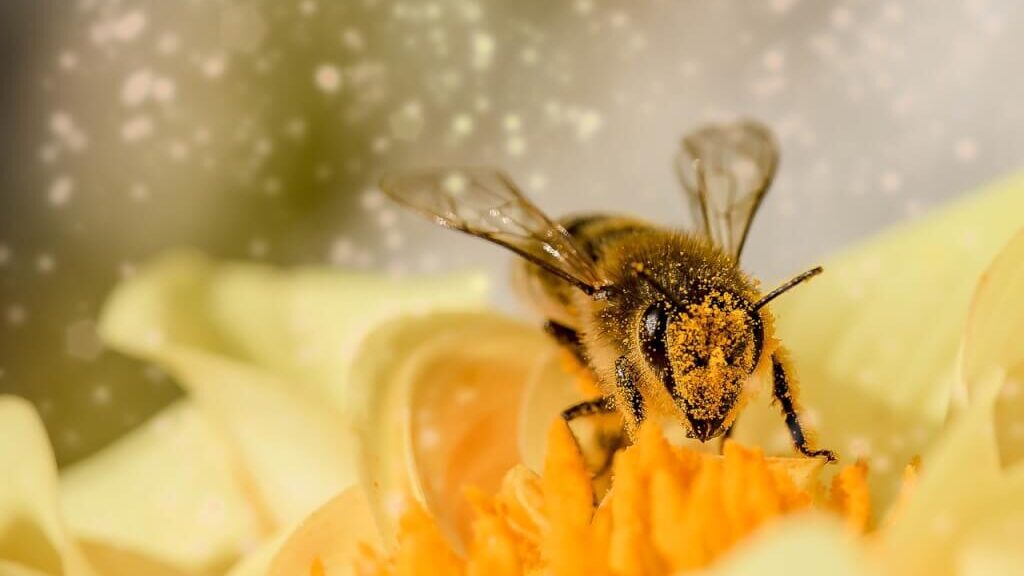
This guide is about creating a garden that genuinely works for bees, both the honey bees many of us keep and the extraordinary variety of solitary and bumblebees that visit every UK garden. I want to explain not just which plants to grow, but also why the combination, sequence, and structure of your planting matter as much as the individual flower choices.
📋 Jump To
This page contains affiliate links (see full details here). If you purchase through these links, I may earn a small commission at no extra cost to you.
Before we get into plant lists, it is worth noting that your garden is likely home to several distinct types of bees, each with different needs, nesting habits, and foraging preferences. Treating them all as a single category leads to planting choices that serve some bees well and others barely at all.
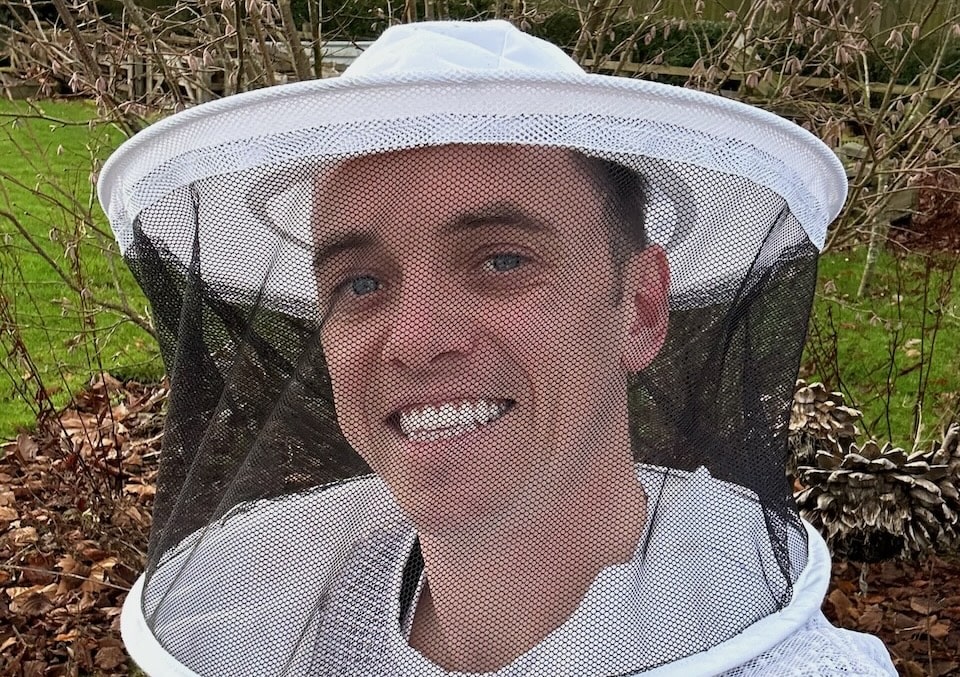
The honey bee is the one most people picture when they think of bees: the amber-and-black striped insect that lives in managed hives or occasionally in hollow trees. Honey bees are generalist foragers and will travel up to three miles from the hive in search of pollen and nectar.
They prefer to collect one type of pollen per foraging trip, which is why large drifts of the same plant are more efficient for them than scattered individual specimens. They are active from roughly March through to October in the UK and need a continuous supply of both pollen (for feeding larvae) and nectar (converted into honey as their winter energy store). If you are interested in keeping bees, then checkout my guide here.
A key fact many gardeners do not know: honey bees typically need a minimum ambient temperature of around 10 degrees Celsius before they will fly. This means they miss the very earliest spring forage that other bees can access. The flowers you plant for late winter and early spring will be used almost exclusively by bumblebees and solitary bees.
The UK has around 24 species of bumblebee, and several are a regular presence in most gardens. Bumblebees are larger than honey bees and can fly at much lower temperatures, with some species able to fly as low as 5 or 6 degrees Celsius. This is why you will see a large buff-tailed bumblebee queen (Bombus terrestris) visiting hellebores in February, long before honey bees stir from the hive.
Bumblebees are particularly valuable pollinators because of their technique of buzz pollination, vibrating their flight muscles at a specific frequency to shake pollen loose from certain flowers that honey bees cannot efficiently access. Tomatoes, foxgloves, and comfrey all benefit enormously from bumblebee visits.
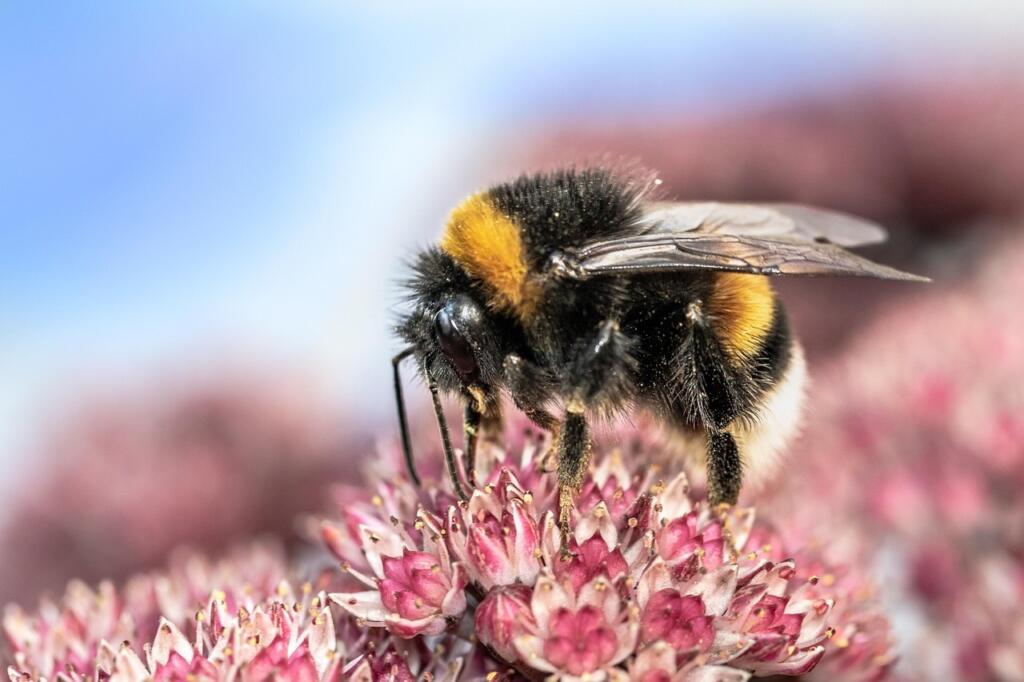
Bumblebees nest in the ground, in old mouse holes, under garden sheds, and in compost heaps. Unlike honey bees, bumblebee colonies are annual: the queen overwinters alone and founds a new colony each spring. This means bumblebee queens are particularly vulnerable in early spring when they emerge hungry and need immediate forage to build energy before establishing the new colony. Early-flowering plants are genuinely life-saving for them.
This is the group that surprises most gardeners. There are over 270 species of bees in the UK, and the vast majority of them are solitary: they do not live in colonies, produce no honey, and are completely non-aggressive. Each female solitary bee builds her own individual nest, lays a small number of eggs, provisions each cell with pollen and nectar, and then dies. The next generation emerges the following year.
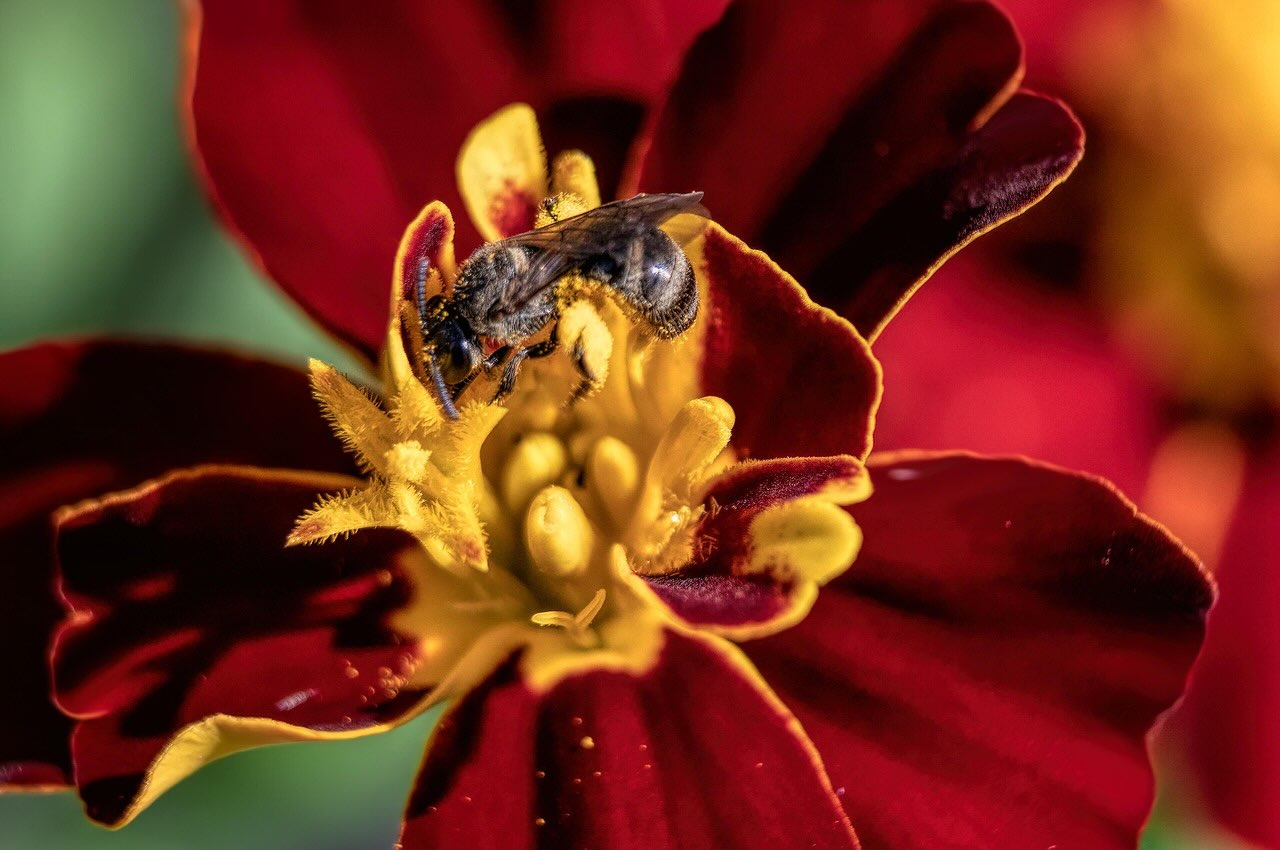
Some solitary bees are highly specialised, gathering pollen only from a single plant family or even a single genus. The Andrena mining bees, for example, often have strong preferences for specific plant families such as Asteraceae or Ranunculaceae. This means solitary bees need not only the quantity of flowers but also the diversity of plant families throughout the season. A garden planted exclusively with lavender and alliums, however beautiful, will support honey bees and bumblebees moderately well but will fail many solitary bee species entirely.
The single most important thing you can do for bees in your garden is not to plant one spectacular bee plant. It is to eliminate the gaps. Most gardens, even well-intentioned ones, have what I think of as the June problem: everything flowers at once in a glorious six-week rush from late May to early July, and then the garden goes quiet.
For honey bees, this is frustrating but survivable because they have stored honey. For bumblebee colonies building up to their peak and for solitary bees timed to emerge in August or September, a mid-season gap can be genuinely catastrophic.
💡 Top Tip
Think of your garden’s flowering season as a relay race, not a sprint. Each plant’s job is to carry the baton until the next one is ready. When you are choosing plants, always ask what comes before and what comes after, not just whether the flower itself is bee-friendly.
The foraging calendar bees need in a UK garden runs roughly like this. From February to March, early bumblebee queens and overwintering solitary bees need small amounts of high-quality pollen from early bulbs and winter-flowering shrubs.
From April to May, the colony-building phase for bumblebees and the emergence of many solitary bee species mean demand is high and diverse.
From June to August, this is peak season, and most gardens are well stocked, but it is worth planting deliberately to carry on foraging into late summer.
From September to November, the Autumn gap is where most gardens fail. Ivy, late asters, sedums, and single-flowered dahlias kept in the ground are doing extraordinary work in this period for bees building winter stores and late-season solitary bee species.
Not all flowers are equal from a bee’s perspective, and understanding why will help you make much better planting decisions than simply following generic “bee-friendly” labels at the garden centre.
Pollen and nectar must both be accessible. Double-flowered and highly bred cultivars often have so many petals that bees cannot physically reach the pollen and nectar at the flower’s centre. A double-flowered hollyhock looks beautiful but is essentially useless to bees. Its single-flowered equivalent is one of the best bee plants in the garden. The same principle applies across dozens of species: single-flowered dahlias oupompomrm pompom types, open-faced geraniums outperform pelargoniums, and wild or species roses outperform most highly bred Hybrid tea varieties.
Flower shape matters as much as species. Long-tongued bumblebees predominantly use tubular flowers such as foxgloves, penstemons, and comfrey. Flat, open-faced flowers such as scabious, echinacea, and rudbeckia are accessible to almost all bee species, including short-tongued mining bees. Flower colour matters too, though less than many people think: bees see into the ultraviolet spectrum and many flowers that look plain white to us have elaborate nectar guides visible only in UV light. Blue, purple, and yellow flowers tend to attract the widest range of bee species.
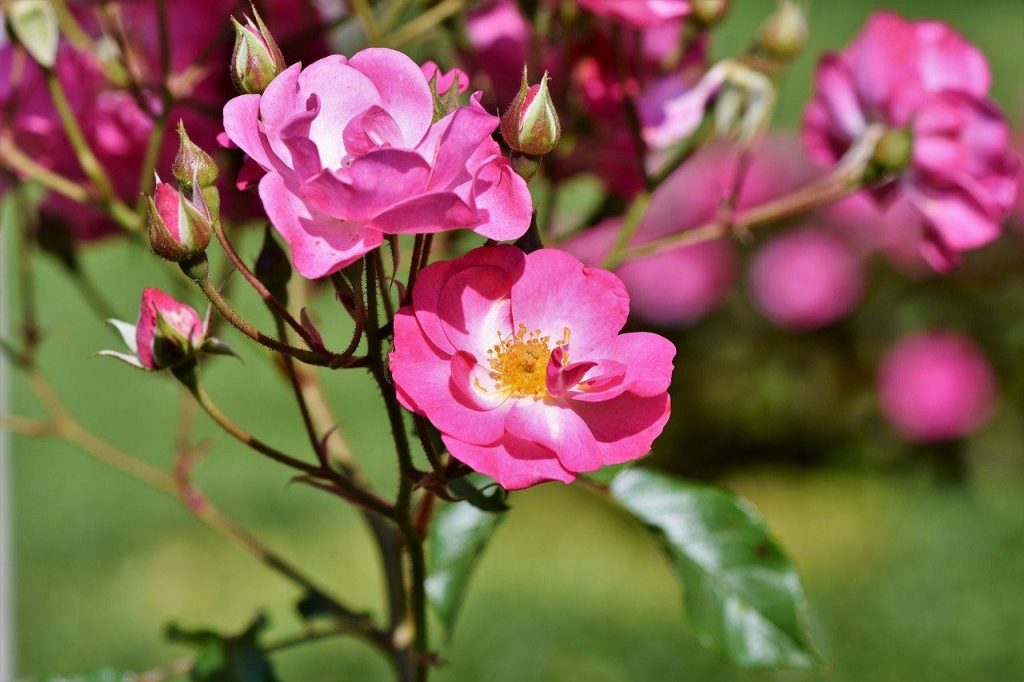
Quantity creates foraging efficiency. A single scabious plant in a border will attract the odd bee. A drift of twenty will have bees working it continuously throughout the day, which is far more useful for both the bees and the plants’ pollination. From a garden design perspective, this aligns perfectly with how good planting works anyway: repetition and mass planting create rhythm and impact while also delivering genuine ecological value.
Spring is where the work that matters most happens, particularly for bumblebee queens and early-emerging solitary bees. These plants are doing genuinely critical work, not just providing pleasant decoration.
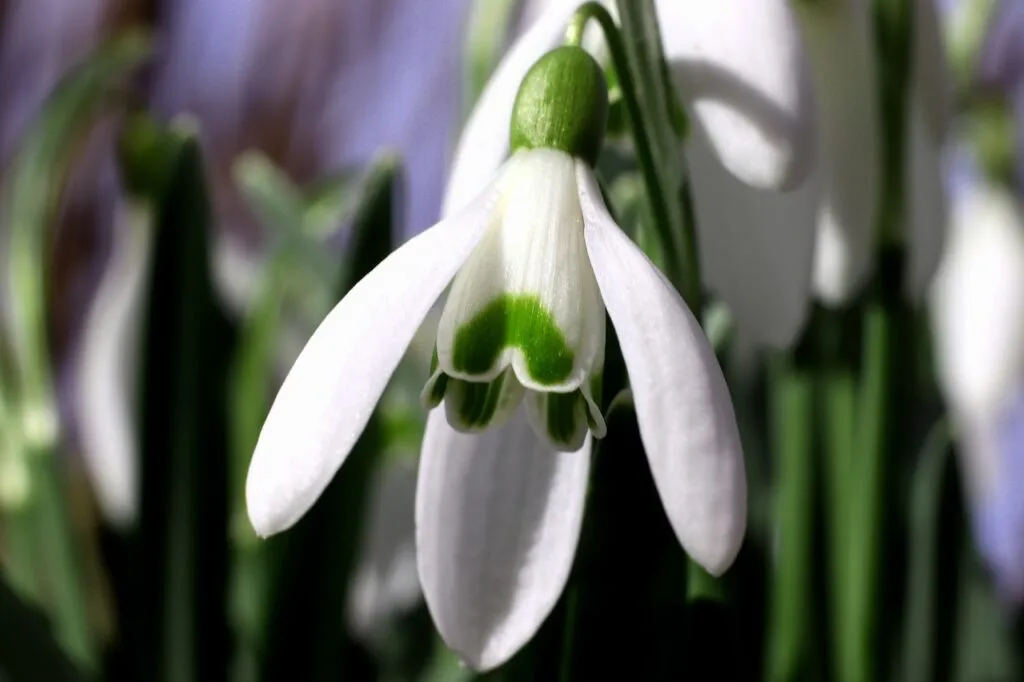
Snowdrops are the first important bee plant of the year, often flowering from late January in sheltered southern gardens. The pollen they offer to emerging bumblebee queens in February is genuinely critical: a queen that cannot find food in her first few days after emerging from hibernation will die before she can found a colony. Plant snowdrops in large drifts under deciduous trees or shrubs where they will naturalise over time. Planting “in the green” after flowering gives much better establishment than dry bulbs.
🛒 Browse snowdrops for planting on Amazon UK
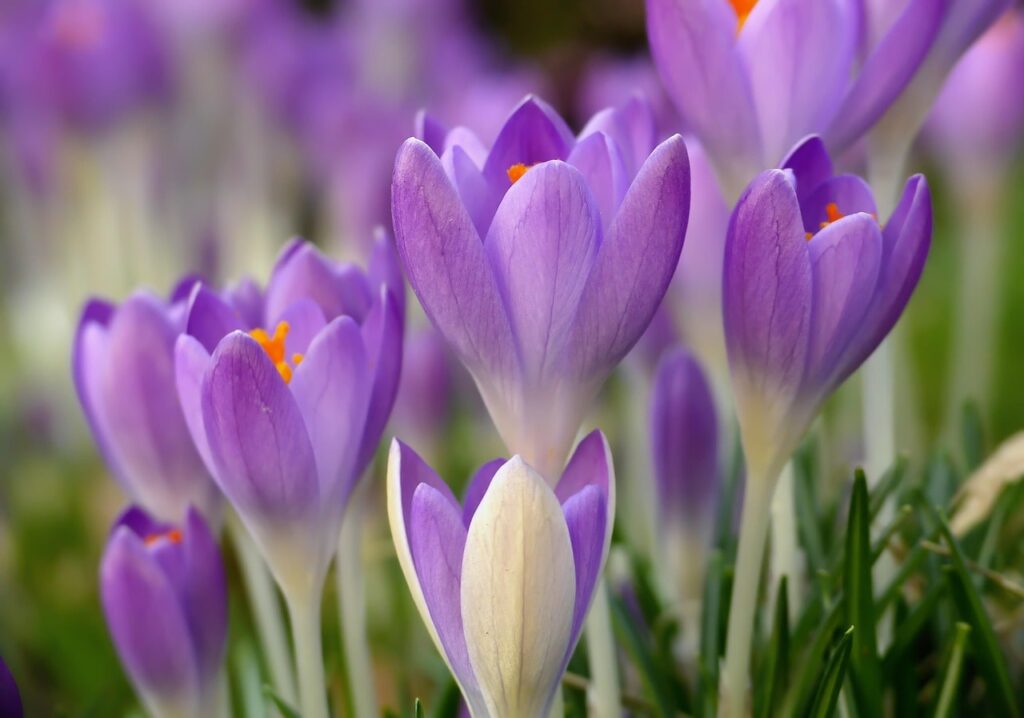
Crocus tommasinianus, the Tommy crocus, is my top recommendation for early bee forage because it naturalises freely in lawns and under trees, it is more resistant to squirrel predation than large-flowered Dutch crocuses, and it opens its flowers reliably in any dry, mild winter spell when bees will be flying. Plant them in large numbers in Autumn: a hundred bulbs costs very little and will spread into thousands over a decade. The rich orange pollen is particularly important for queen bumblebees.
🛒 Browse Crocus tommasinianus bulbs on Amazon UK
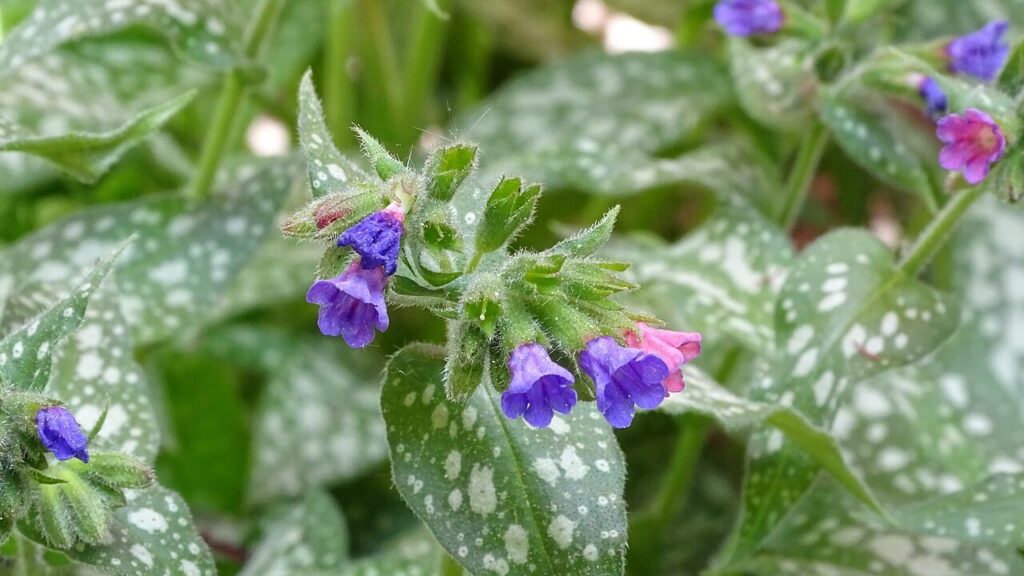
Pulmonaria is one of the most valuable plants you can grow in a shaded border for early bee forage. Its tubular flowers, which shift colour from pink to blue as they age, are exactly the right shape for the long tongue of the hairy-footed flower bee (Anthophora plumipes), one of the first solitary bees to emerge each spring. I have watched this bee working a single pulmonaria clump for thirty minutes without interruption. It will grow happily under north-facing walls, in heavy shade, and in clay soil, making it useful in situations where almost nothing else will thrive.
I’ve grown Lungwort since I was a child and love its slightly hairy leaves, polka dots, and cherry flowers, which have been used in witchcraft and folklore for hundreds of years!
🛒 Browse Pulmonaria plants on Amazon UK
Comfrey is one of those plants that experienced gardeners tend to love and beginners dismiss as a weed. It is large and somewhat coarse, but it produces extraordinary quantities of nectar-rich flowers that bumblebees, particularly the garden bumblebee (Bombus hortorum) with its exceptionally long tongue, visit obsessively. You can also make amazing comfrey tea from the Bocking variety.
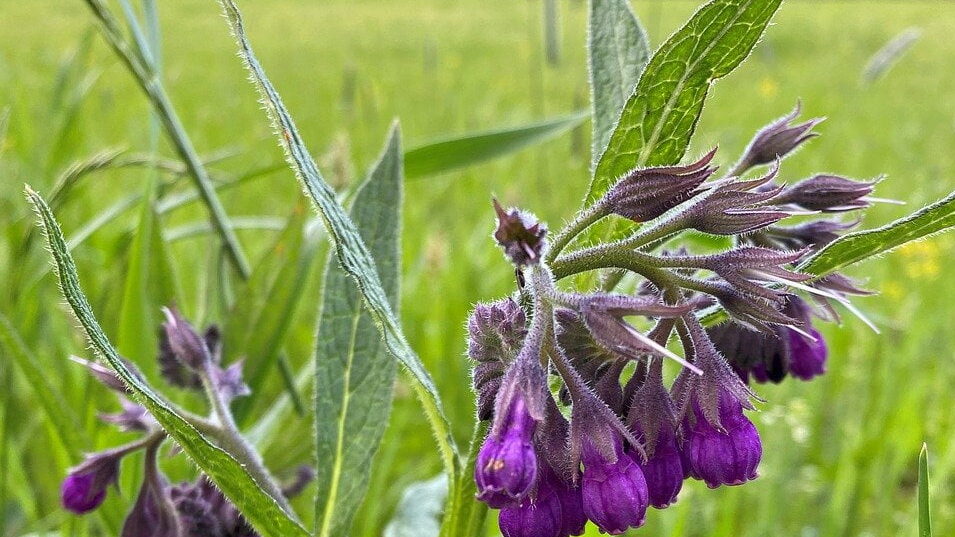
Cut comfrey back hard after the first flush of flowers in late May, and it will flower again in July, giving you a second wave of forage. It also makes excellent liquid plant feed and compost activator. Bocking 14 is the non-seeding variety most useful for the kitchen garden.
🛒 Browse comfrey plants on Amazon UK
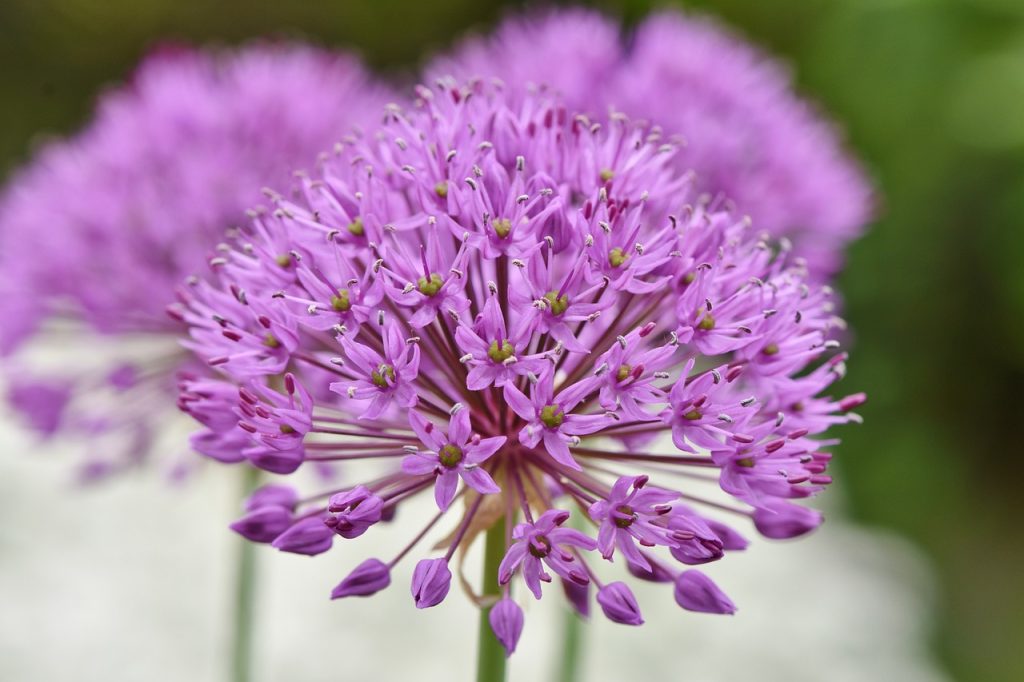
Bees more reliably visit a few plants in the late spring garden than alliums. Each spherical flower head is made up of dozens of tiny individual florets, all accessible, all offering pollen and nectar to whatever lands on the globe. I have counted many different bee species simultaneously working on a single large allium head.
Plant them in generous groups along perennial borders, where their tall stems create a striking visual effect. In contrast, the foliage of neighbouring plants conceals the allium’s yellowing leaves as they die back.
🛒 Browse allium bulbs on Amazon UK
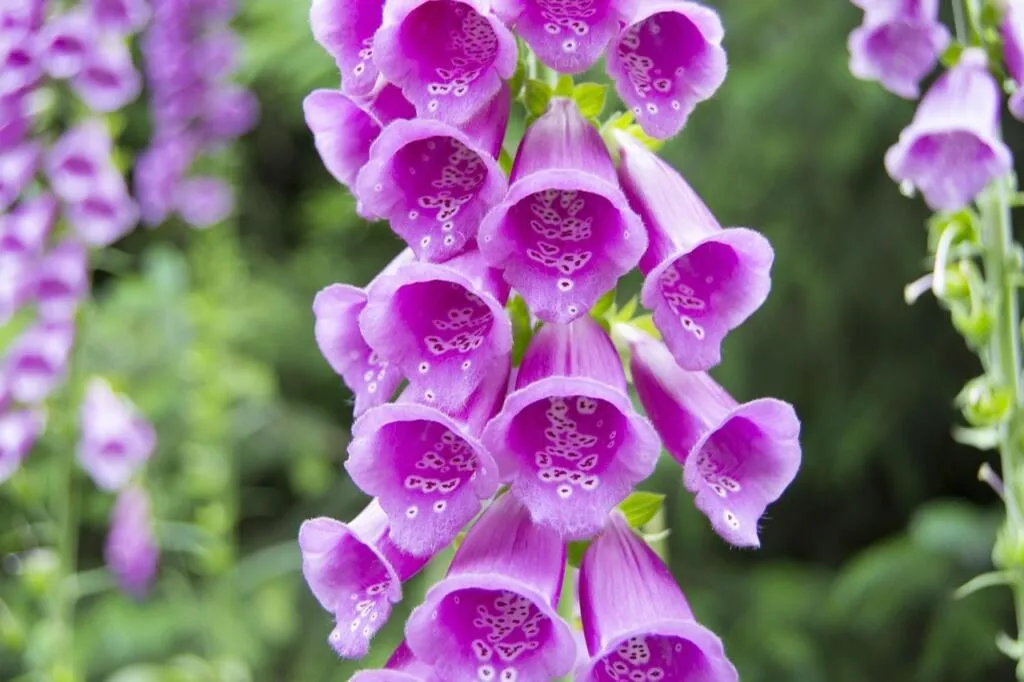
The foxglove is one of the most spectacular bee plants in the UK garden, but it is quite selective: only long-tongued bumblebees can reach the nectar at the base of its deep tubular flowers. Watching a buff-tailed bumblebee reverse its way out of a foxglove bell is one of the joys of late spring gardening. Foxgloves are biennials that self-seed prolifically, so once you have them established, they largely look after themselves.
Allow the seed heads to stand, and the plant will naturalise through your borders and into shadier spots where little else will flower. Foxgloves are a staple of all cottage gardens and have great uses if you are looking for plants for the occult!
🛒 Browse foxglove seeds and plants on Amazon UK
Summer is where most bee-friendly gardens perform best, but there are still significant differences in how useful individual plants actually are. The following choices are not just popular with bees but also genuinely productive in nectar and pollen volume, accessible flower structure, and the breadth of bee species they support.
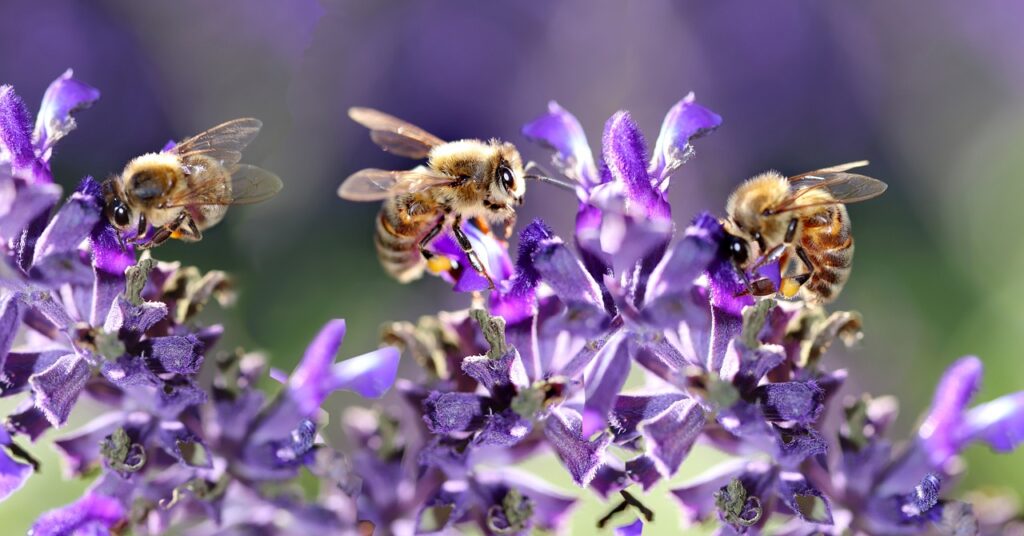
Lavender is the plant most people think of first when they think of bees, and with good reason. On a warm July afternoo,n a large lavender hedge will be alive with honey bees from early morning until dusk. English lavender (Lavandula angustifolia) and its hybrid, Lavandula x intermedia, varieties such as Hidcote and Vera, offer the best combination of hardiness and flower production for UK conditions. Choose varieties with long, narrow flower spikes and single florets.
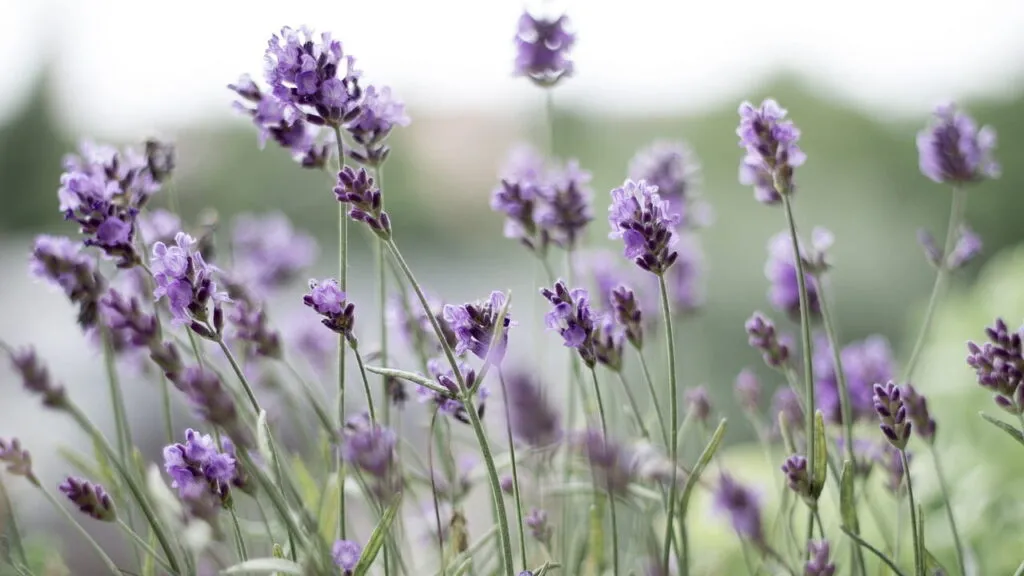
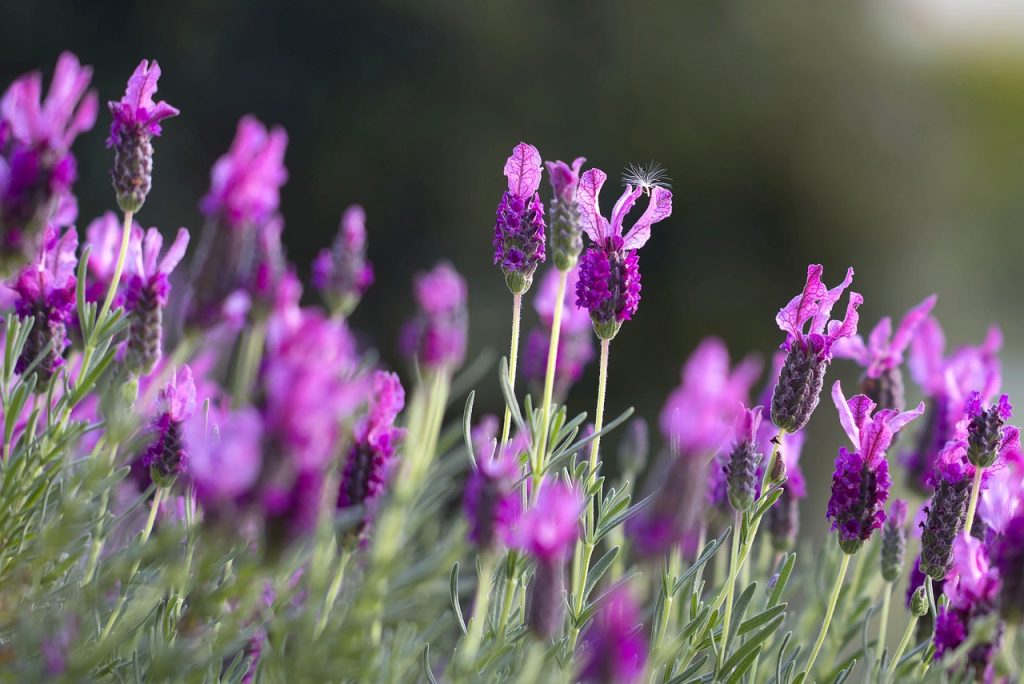
Avoid French lavender (Lavandula stoechas) for bees: the showy “rabbit ear” bracts are decorative but make nectar far less accessible.
🛒 Browse lavender plants on Amazon UK
Catmint earns its place in every bee-friendly garden because it flowers for an extraordinarily long period, often from May right through to September if you cut it back hard after the first flush in July. It is also highly drought-tolerant, which makes it useful in the south and east of England, where summers are increasingly dry.
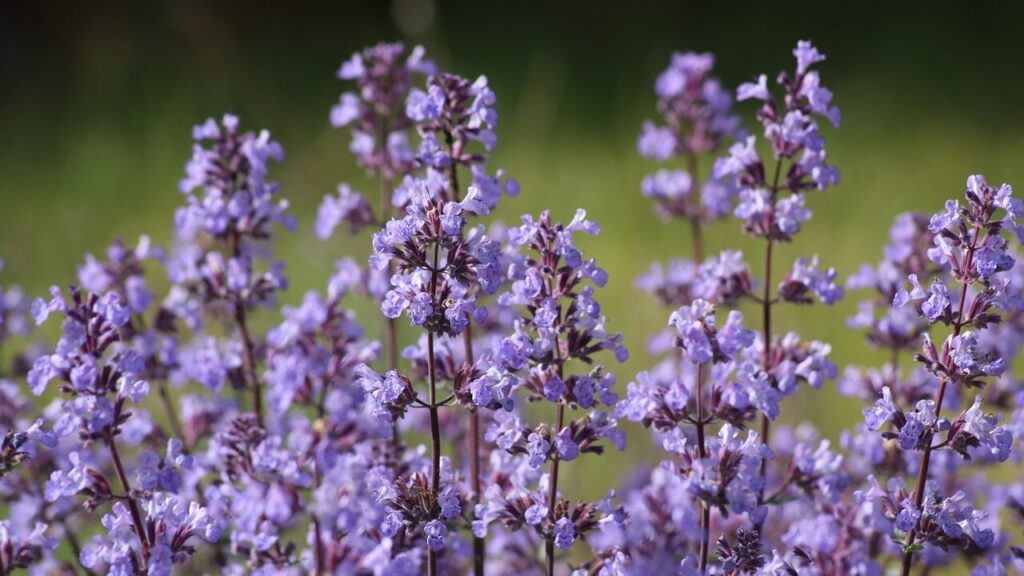
The soft lavender-blue flowers are accessible to almost every bee species, and the plant requires almost no maintenance beyond that midsummer cut-back. Nepeta Six Hills Giant is the most impressive variety for sheer flower volume. Also, you can split and divide them, and they survive drought, which is why I use them a lot in my garden design planting plans.
🛒 Browse catmint plants on Amazon UK
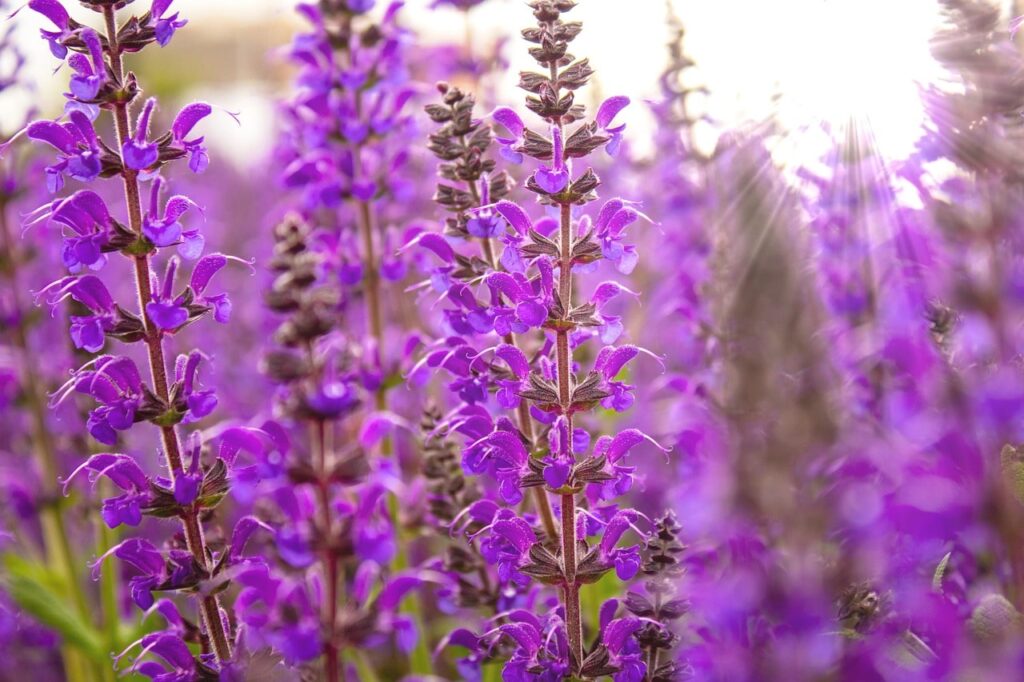
Hardy perennial salvias are among the very best summer plants for bees, and they work particularly well because they are covered in flowers for months, not weeks. Salvia nemorosa Caradonna, with its near-black stems and vivid purple spikes, is my personal favourite: it is genuinely hardy, reliably perennial, and the bees treat it as essential infrastructure throughout July and August. Cut the spent flower spikes back by half in midsummer, and a second flush will appear within weeks.
🛒 Browse hardy salvia plants on Amazon UK
If you could grow only one summer perennial for bees and wanted to support the widest possible range of species, scabious would be my answer. The flat, open flower heads are accessible to literally every bee species, from the smallest mining bee to the largest bumblebee.
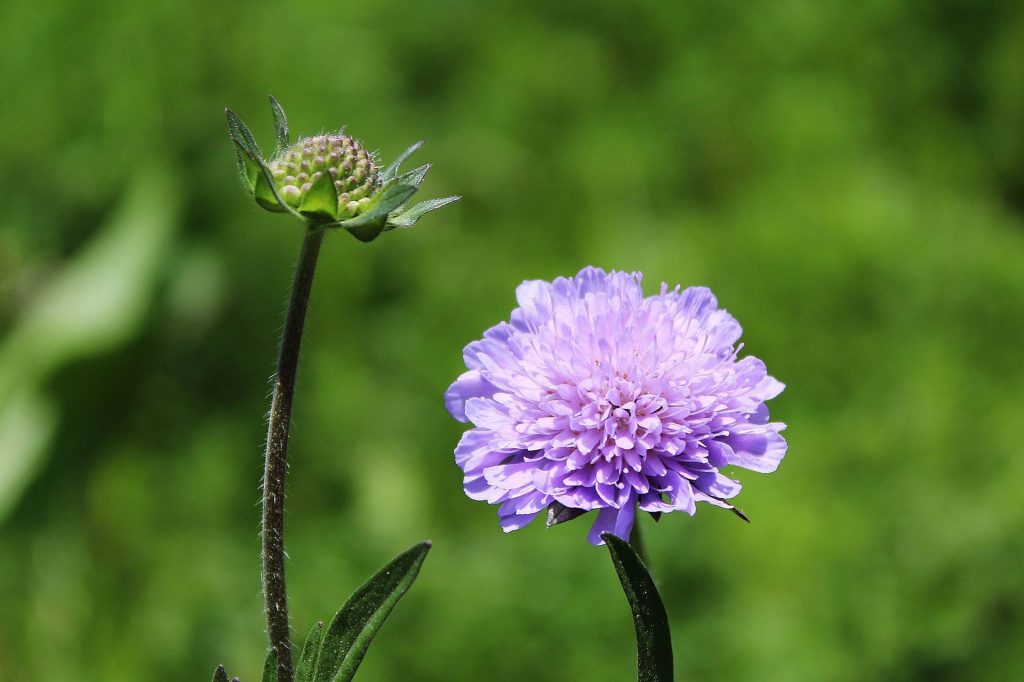
Knautia macedonica, the crimson scabious, is particularly good value because it flowers from June right into October, the dead-headed flowers being replaced by new buds continuously. The pincushion flower structure means multiple bees can work the same head simultaneously.
🛒 Browse scabious and knautia plants on Amazon UK
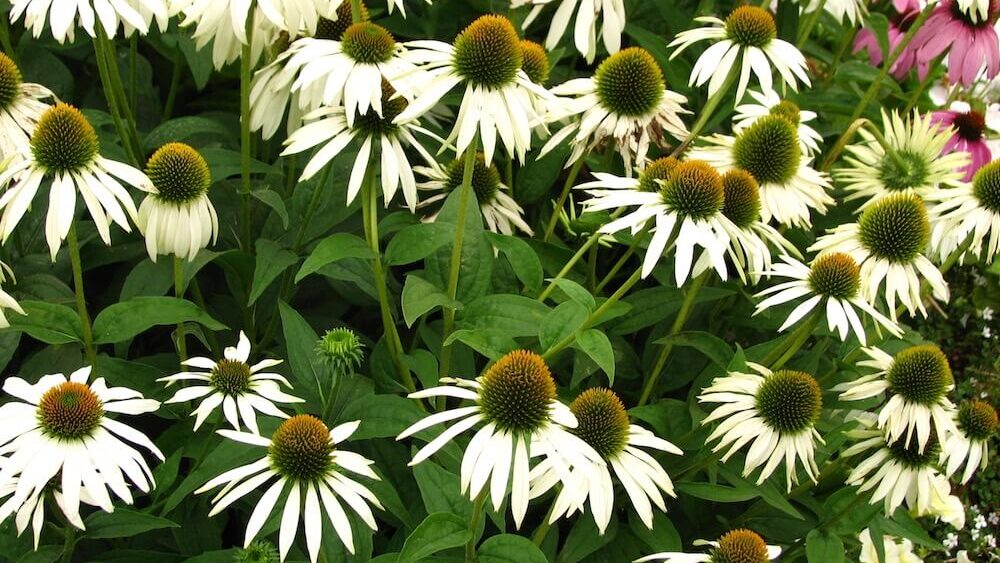
Echinacea provides high-quality midsummer to early Autumn forage and is particularly valuable because it bridges the gap between the main summer flush and Autumn. The raised central cone is alive with pollen, and the broad, reflexed petals create a perfect landing platform. Stick to the species Echinacea purpurea and its straightforward cultivars such as White Swan or Magnus.
Many of the newer double-flowered or frilly-petalled hybrids are far less useful to bees because the elaborate flower structure makes access difficult.
🛒 Browse echinacea plants on Amazon UK
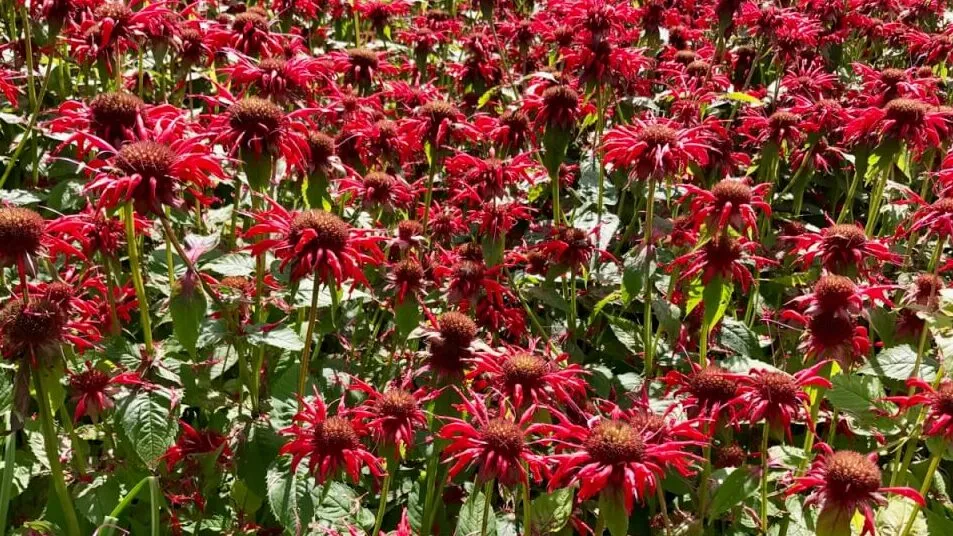
Monarda, or bee balm, is named for a very good reason: it is covered in bumblebees the moment it opens in July and remains so until the last flower fades in August. The tubular florets arranged in whorled heads are ideal for long-tongued bees. It needs moisture-retentive soil to thrive and can suffer from powdery mildew in dry summers, so mildew-resistant varieties such as Monarda Cambridge Scarlet or Squaw are worth seeking out.
🛒 Browse monarda plants on Amazon UK
Globe thistle is one of those plants that looks almost architectural in the border but works extraordinarily hard for pollinators. The spherical blue flower heads open gradually from the outside in, which means a single head provides forage for three to four weeks.
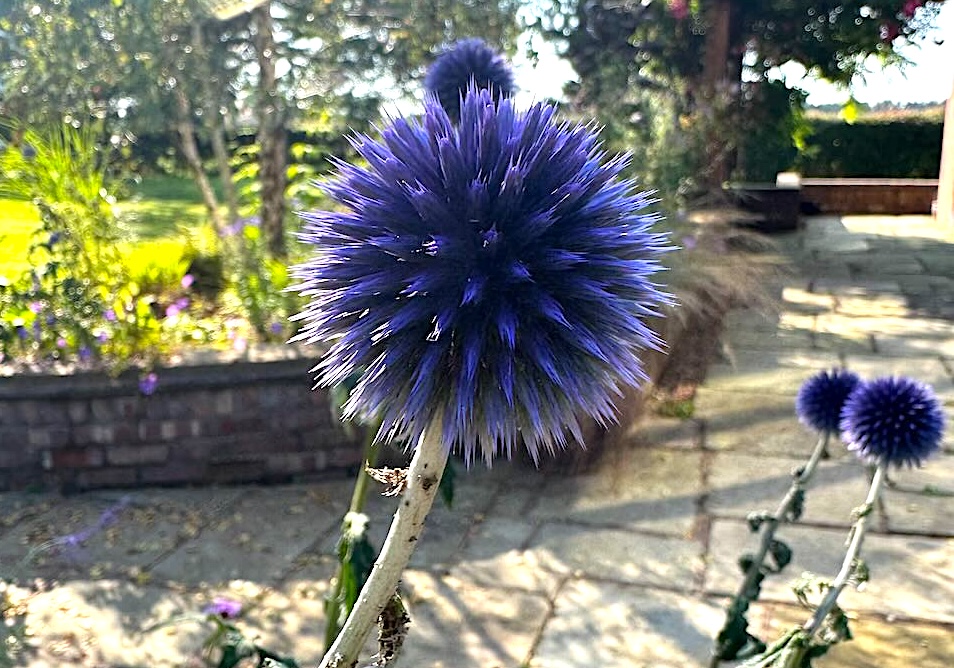
It thrives in dry, poor soil where more demanding plants struggle, making it especially valuable in sandy or shallow chalk gardens. Leave the seed heads standing through winter for structural interest and for seed-eating birds.
🛒 Browse echinops plants on Amazon UK
Autumn forage is where most gardens completely fail bees. By September, most herbaceous borders are finishing, and gardeners are beginning to cut everything back. Meanwhile, honey bee colonies are frantically gathering the last stores they need to survive winter, late-season solitary bees are still active, and bumblebee colonies are raising the queens that will hibernate and found next year’s colonies. What you grow from September onwards matters enormously.
Autumn asters are one of the most important plants in the bee-friendly garden, and they are chronically underused. A large clump of Symphyotrichum x frikartii Monch or the pink-flowered S. novi-angliae Andenken an Alma Potschke in full flower in October is covered in honey bees, bumblebees, and the ivy bee (Colletes hederae), a relatively recent colonist of southern England that times its emergence specifically to coincide with ivy and aster flowers.
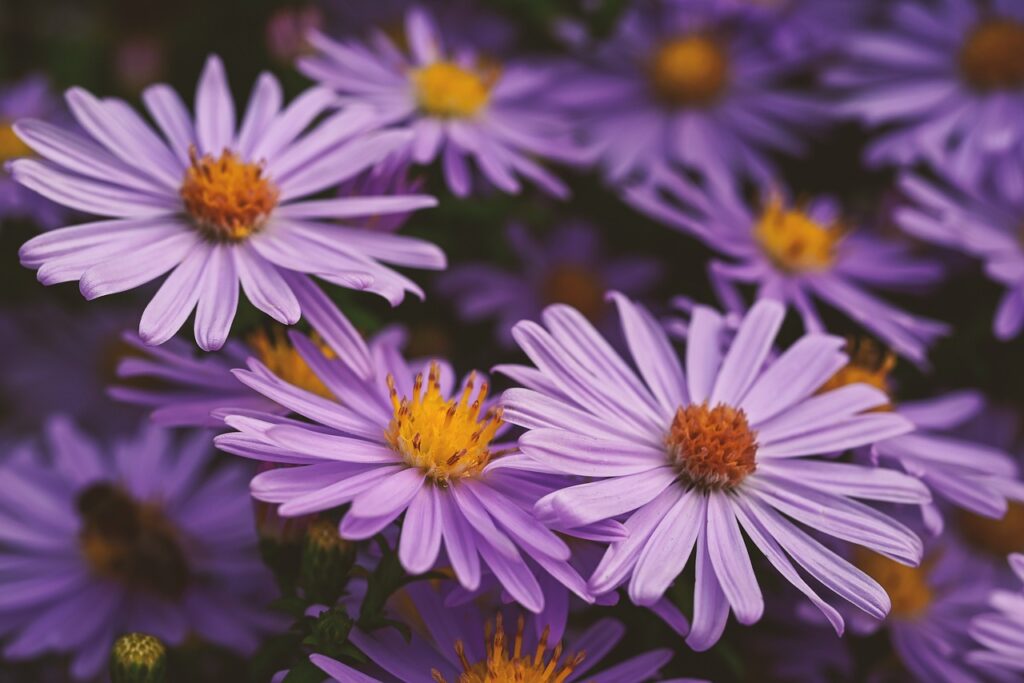
Stake the taller varieties in July to stop them flopping, and divide clumps every three years to keep them vigorous.
🛒 BrowsAutumnmn aster plants on Amazon UK
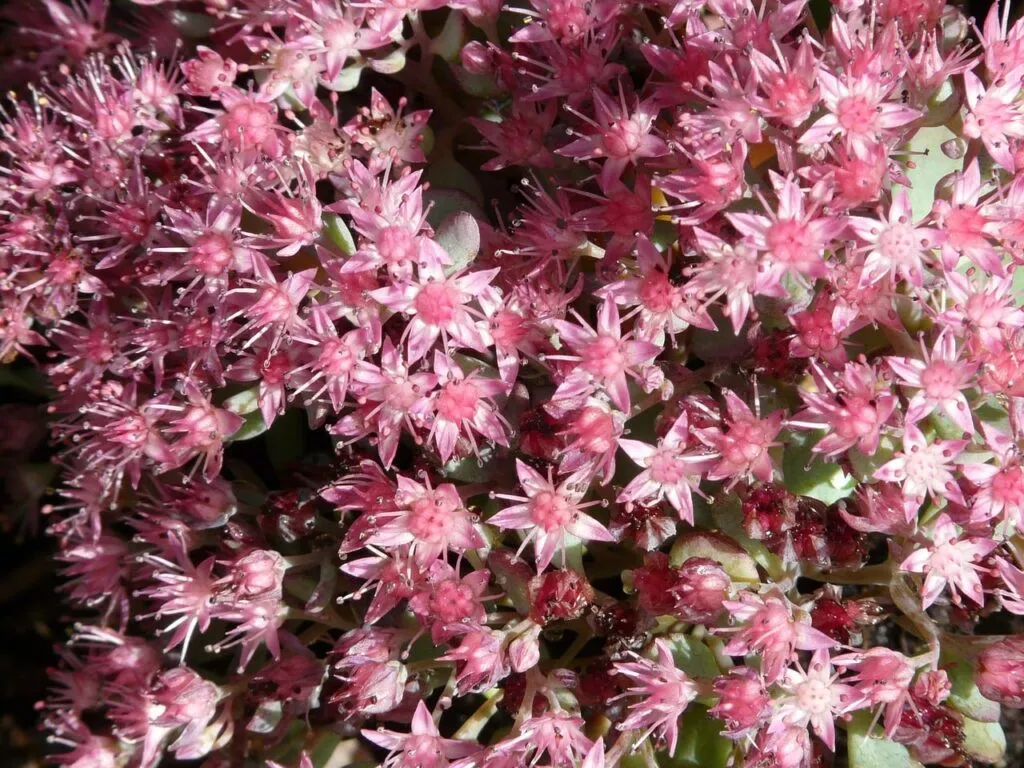
Sedum spectabile, now correctly named Hylotelephium spectabile, is known as the butterfly plant, but it is equally valuable for bees. The flat-topped flower heads in pink, white, or deep purple are covered with insects from August right into October. The variety Autumn Joy is the most vigorous and reliable for UK conditions. Do not cut the seed heads back in Autumn: they provide winter structure, protect the crown from cold, and the seeds feed birds through the winter months.
🛒 Browse sedum plants on Amazon UK
Ivy is the single most important late-season plant for bees in the UK, and it is genuinely irreplaceable. Its flowers open in October and November, often continuing until December in mild years, at a point when almost nothing else is in flower. Now, I know a lot of you Ninjas will be shaking your heads about Ivyy; it has a bad reputation for damaging buildings. But its self-clinging stems will only penetrate damaged brickwork or gaps. It’s also great for growing mature trees or for use through hedgerows, so do give it a fair chance!
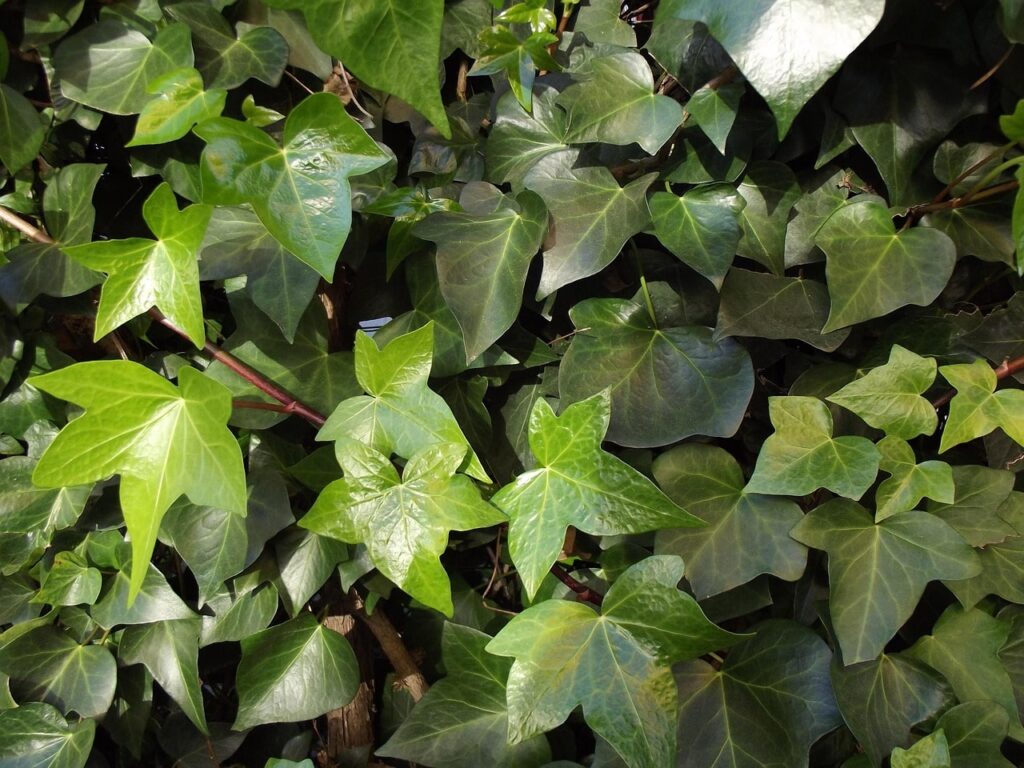
For the ivy bee specifically, Hedera helix is essentially the only significant pollen source it uses. For honey bees preparing for winter, an ivy-covered wall or fence within foraging range can meaningfully increase winter survival by providing a last nectar top-up before the colony clusters. Resist the urge to cut Ivy back before it flowers in Autumn. The climbing juvenile form rarely flowers; it is the mature arching adult growth that produces the flowers, so allow at least some ivy to reach maturity.
💡 Top Tip
Never cut ivy back in September or early October. This is when it is about to open its flowers, which are critical for the ivy bee and the last honey stores of honey bee colonies. If you need to manage ivy growth, do it in late spring after flowering and before nesting birds arrive.
Trees and shrubs are often overlooked in conversations about bee-friendly planting, but a single flowering tree in full blossom can provide more bee forage than an entire herbaceous border. The caloric value of tree pollen and nectar is enormous, and for bees emerging in early spring, a hawthorn or willow in flower is a lifeline.
Willow catkins are the earliest significant tree-scale pollen source in the UK garden, often opening in February and providing a critical bridge between the first snowdrops and later spring forage. Several solitary bee species in the Andrena and Lasioglossum genera are specialist willow pollen collectors, meaning no other plant will serve them at this time of year.
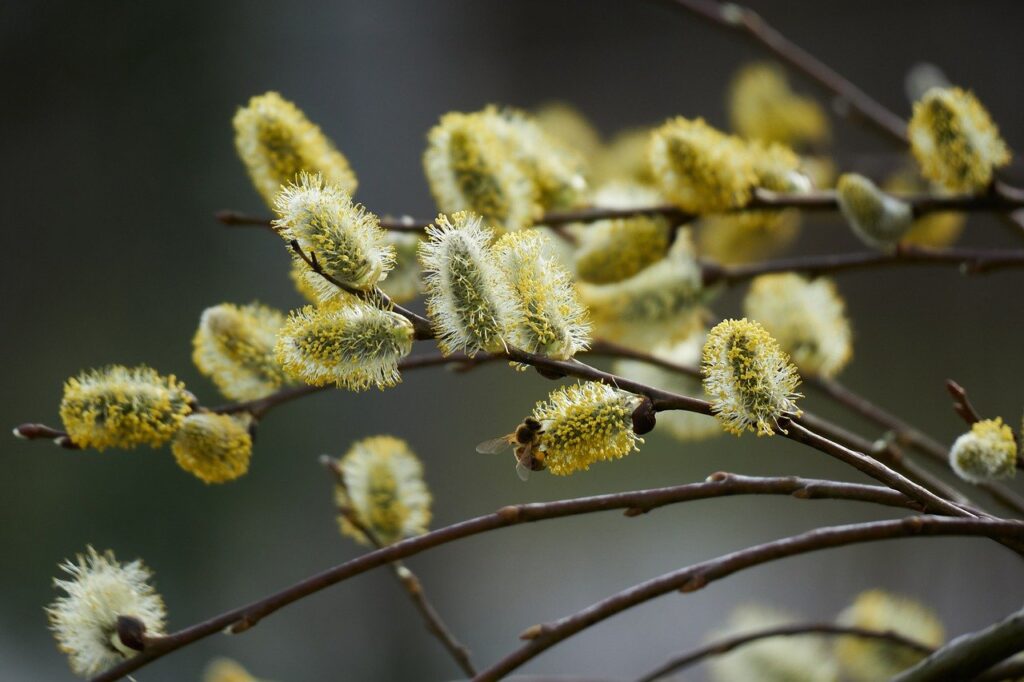
Salix caprea, the pussy willow or goat willow, is the most ornamental and most commonly available. It can be managed as a pollarded shrub in smaller gardens, cut back hard every two to three years to prevent it from becoming a large tree.
🛒 Browse willow trees on Amazon UK
A hawthorn in full flower in May is one of the great bee plants of the British Isles. The small white flowers, produced in such quantities that the whole tree appears white, have a distinctive, strong scent that attracts pollinators from considerable distances.
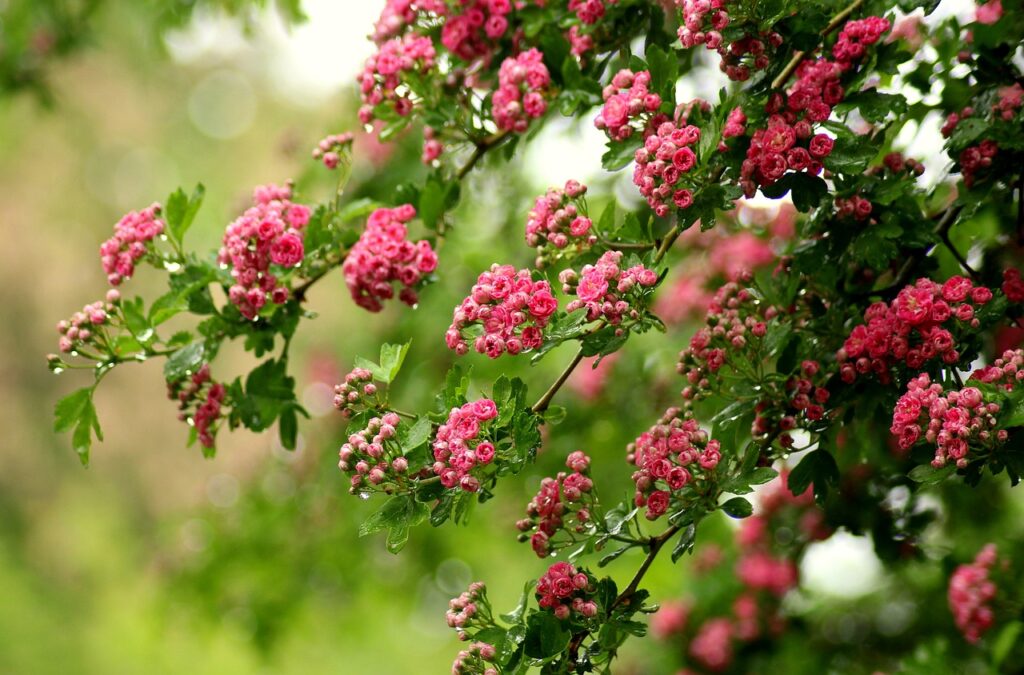
In beekeeping terms, the May hawthorn flower is often the beginning of the main nectar flow that allows colonies to start building serious honey stores. As a garden tree, it is relatively compact, perfectly happy in a hedgerow, and produces berries in Autumn that feed birds into winter. A mixed native hedge containing hawthorn, blackthorn, elder, and field maple is arguably the single most wildlife-friendly structure you can add to any garden.
🛒 Browse hawthorn hedging plants on Amazon UK
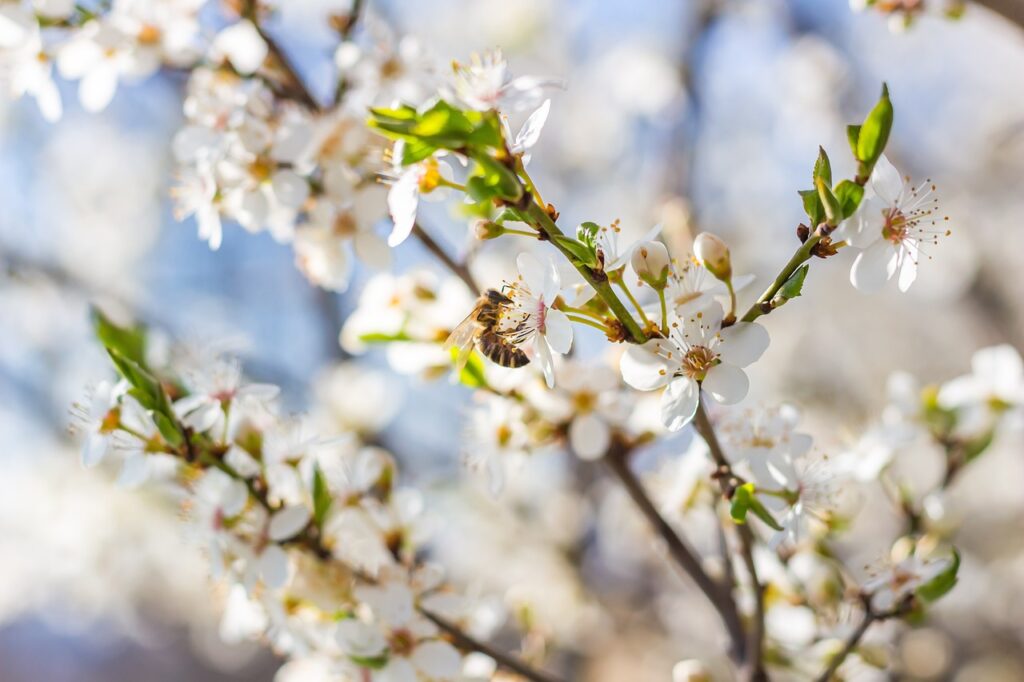
Single-flowered ornamental cherries and plums are among the most important spring bee trees for the garden. The key is choosing single rather than double-flowered varieties. Prunus Kanzan, with its dense doupompoms, is one of the most widely planted ornamental cherries in the UK and is essentially useless to bees because the pollen and nectar are buried beneath layers of petals.
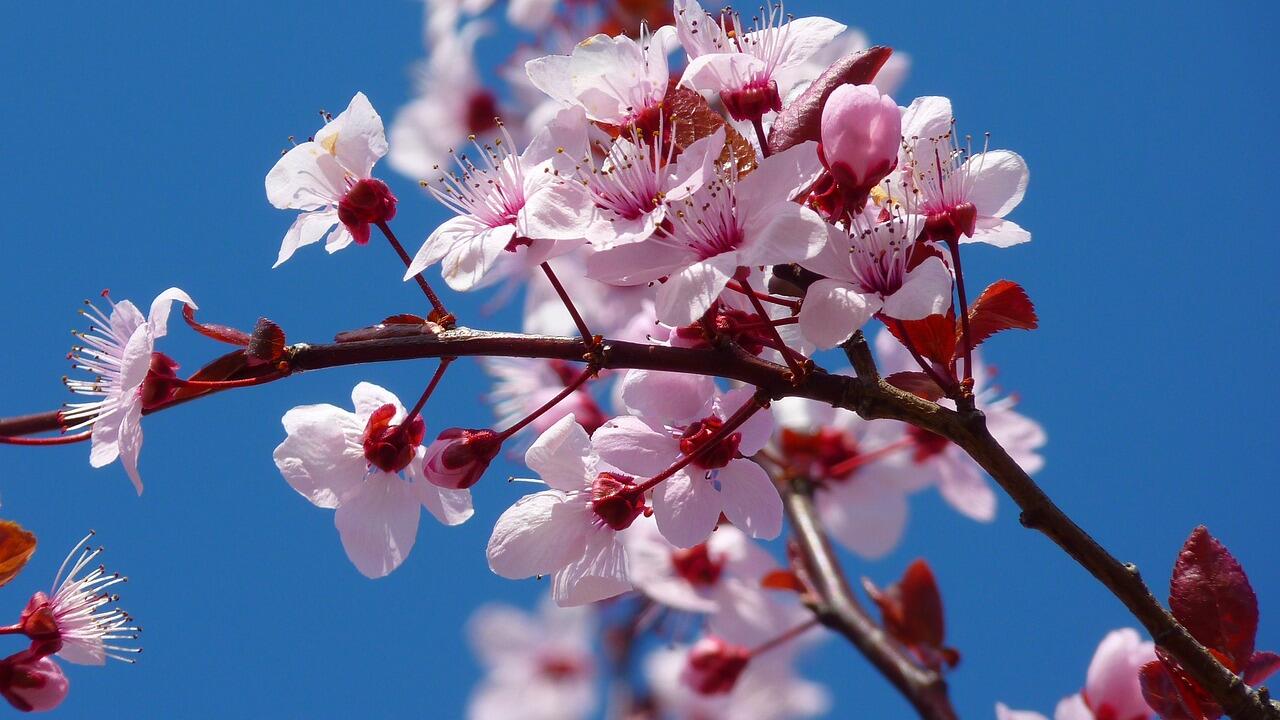
In contrast, Prunus avium (wild cherry), Prunus padus (bird cherry), and the beautiful Prunus Tai Haku (great white cherry) have large, open single flowers that bees can access freely. A single wild cherry tree in a medium-sized garden will produce more bee forage in its two-week flowering window than most herbaceous borders manage in a full season.
🛒 Browse ornamental cherry trees on Amazon UK
I have written about ceanothus extensively on this site because it is one of those shrubs that genuinely earns its space. When a large ceanothus comes into flower in May, it produces such a volume of tiny blue flowers that the whole plant appears to hum with bee activity.
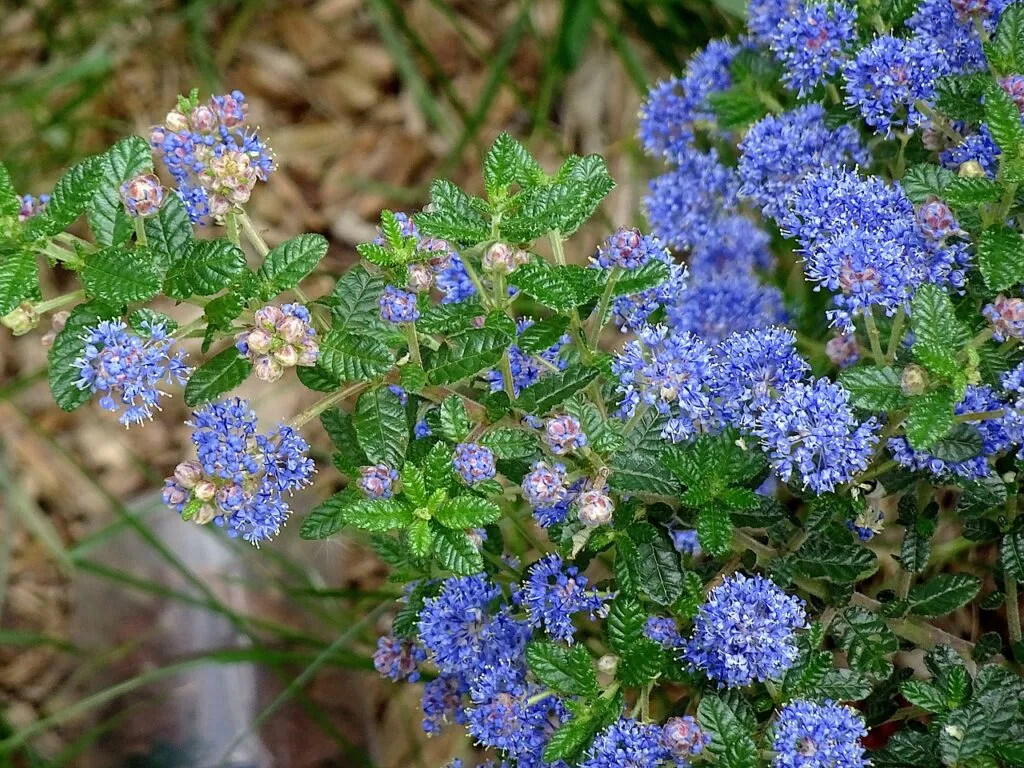
The small individual florets are accessible to almost every species. Spring-flowering varieties such as Ceanothus thyrsiflorus repens offer the best value for a south or west-facing wall. Autumn-flowering varieties like Autumnal Blue extend the season usefully into September and October. You can read more in my ceanothus care guide.
🛒 Browse ceanothus plants on Amazon UK
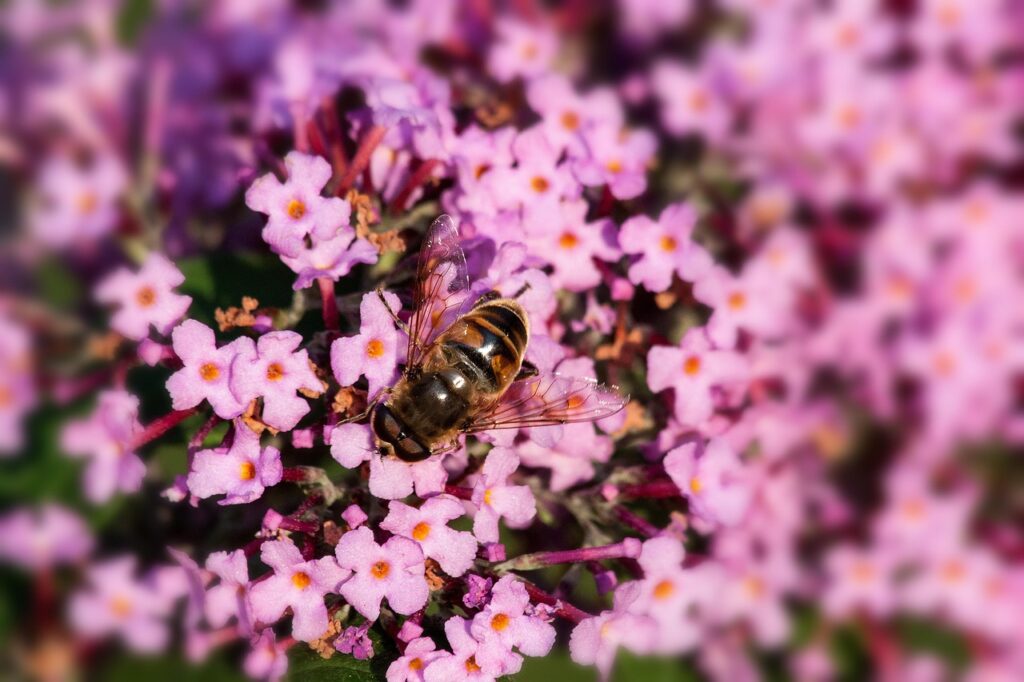
Buddleja is primarily thought of as a butterfly plant, which it undoubtedly is, but it also provides summer nectar for honey bees and bumblebees throughout July and August. It does need dead-heading promptly after flowering to prevent it from seeding into walls and disturbed ground, where it can become invasive.
Cut it back hard in March each year to maintain a compact, vigorous shrub. The globosa species, with its round orange flower balls, flowers in May and June rather than July, giving a useful variation in timing. You can read more about managing it in my buddleja pruning guide.
🛒 Browse buddleja plants on Amazon UK
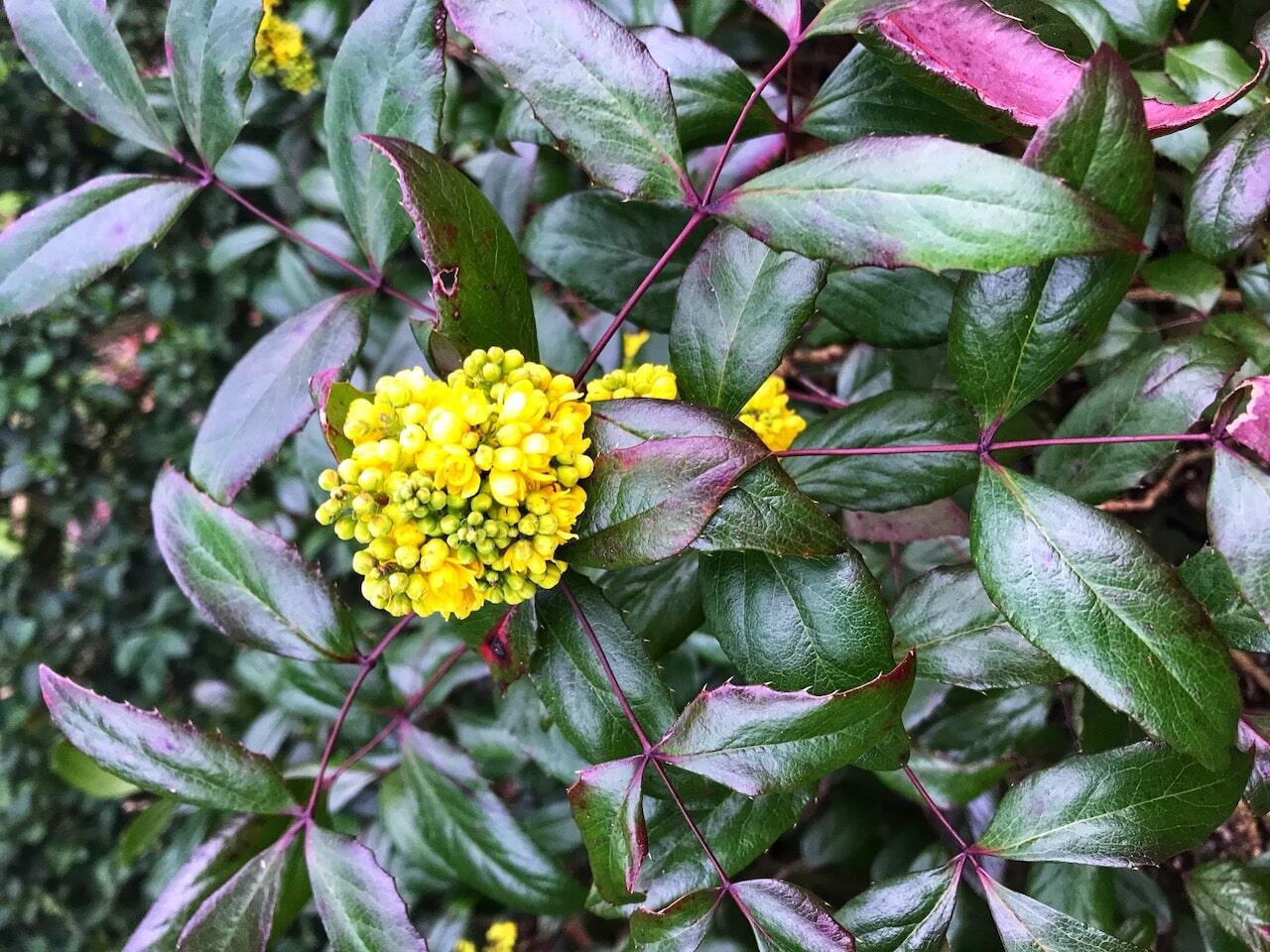
Mahonia is a plant I think every UK garden should contain, and I say this as a designer who has seen it dismissed as dull and old-fashioned by clients who then install expensive plants that provide a fraction of the ecological value. Mahonia x media Charity and Winter Sun both produce long racemes of yellow flowers from November through to February, at a point when almost nothing else is in flower.
On mild winter days, bumblebee queens that have woken briefly from hibernation will visit mahonia to feed. This can genuinely determine whether they survive to found a colony in spring. It also grows happily in deep shade where most flowering shrubs refuse to perform.
🛒 Browse mahonia plants on Amazon UK
Solitary bees deserve a special mention because their needs differ from honey bees and bumblebees in ways that most planting guides overlook. As noted above, many solitary bee species are pollen specialists with strong preferences for particular plant families. Planting diverse families across the season, not just diverse colours, is what creates a garden that serves the full range of UK bee species.
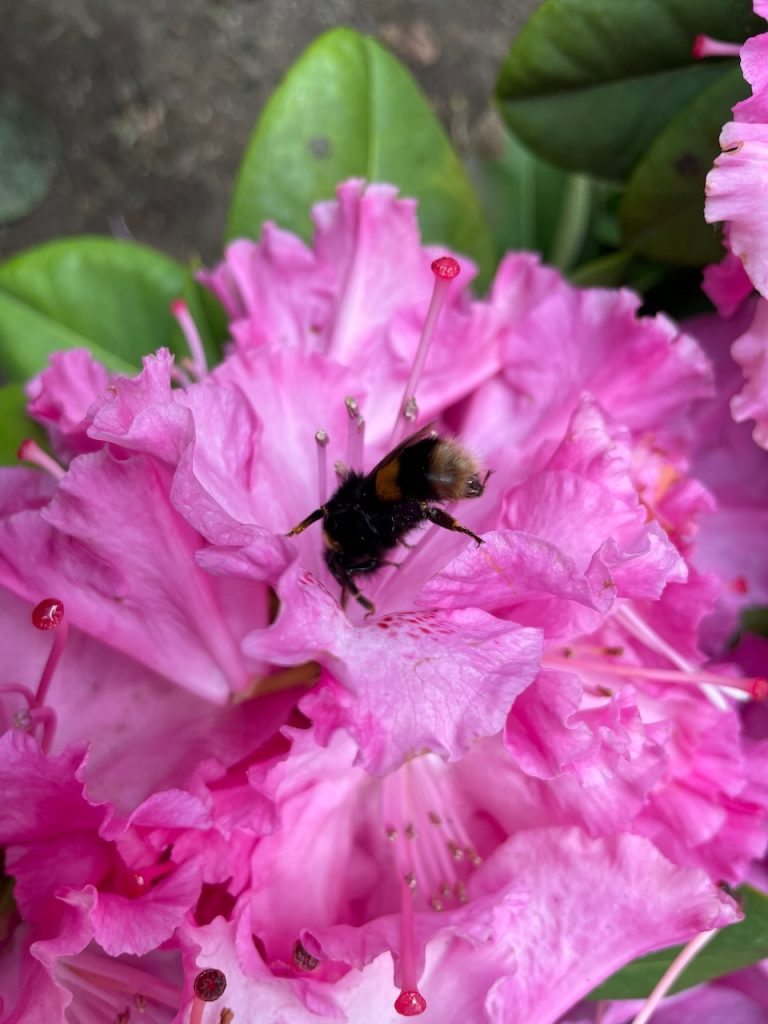
Plants that consistently attract high numbers of solitary bee species include: borage (Borago officinalis), which is used heavily by mining bees from early summer; phacelia (Phacelia tanacetifolia), considered the single most bee-attractive annual you can grow and easily raised from seed; red clover (Trifolium pratense), a specialist pollen source for the carder bumblebee and visited by many solitary bees; viper’s bugloss (Echium vulgare), an extraordinary solitary bee magnet particularly on chalk and sandy soils; and bird’s-foot trefoil (Lotus corniculatus), the favoured pollen plant for several bee species that use it to provision their larvae exclusively.
💡 Top Tip
If you want to support solitary bees specifically, allow a patch of lawn to grow longer and introduce low-growing native wildflowers such as bird’s-foot trefoil, self-heal, and clover. These will be used by mining bees nesting in nearby bare or sandy soil far more reliably than even the best herbaceous border.
🛒 Browse wildflower seed mixes for bees on Amazon UK
🛒 Browse phacelia seeds on Amazon UK
This section matters as much as the plants to grow. Garden centres and seed catalogues label enormous numbers of plants as “bee-friendly” or “pollinator-friendly” without any meaningful distinction between plants that genuinely support bees and those that are simply visited by the occasional bee in passing.
Double-flowered varieties of otherwise excellent plants are the main category to avoid. Double roses (unless they are open single-centred types), double dahlias, double peonies, double hollyhocks, double-flowered geraniums, and double-flowered clematis all have pollen and nectar buried under layers of petals that bees cannot reach. They look spectacular to human eyes and contribute almost nothing to bees. Choose their single-flowered equivalents instead.
French lavender (Lavandula stoechas), with its showy flag petals, is widely sold with bee imagery on the label, but is far less useful than English lavender because the flower structure makes nectar access difficult for most species. This does not mean it has zero value, but it should not be chosen over angustifolia varieties if bee benefit is the primary goal.
Highly bred impatiens, petunias, and busy lizzies (the kind sold in trays at every garden centre) provide nothing essentially to bees despite being brightly coloured. They have been bred for visual impact and disease resistance, not for pollen or nectar production.
Wisteria is beautiful and does attract some insects, but the nectar is too deeply hidden for most bee species to access reliably. It is far less valuable than a well-planted spring border or a flowering cherry tree.
Getting the plant selection right is the foundation, but how you use those plants in the garden makes a real difference to how useful they actually are to bees. These are the principles I apply when designing gardens with pollinator support as a genuine goal, not a marketing afterthought.
Plant in drifts, not spots. A single lavender plant provides some forage. A drift of seven lavender plants provides enough that honey bees can learn its location and return to it repeatedly throughout the day without exhausting the reward, which is how bees most efficiently gather nectar and pollen. The same logic applies to catmint, salvia, scabious, and most other bee plants.
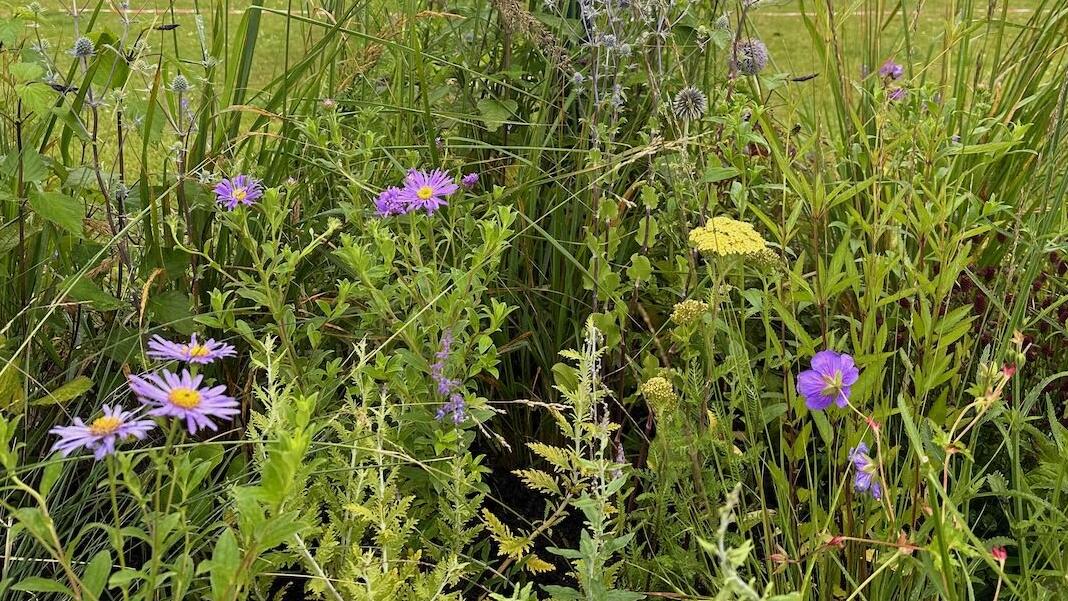
Layer your planting. A mix of ground-level plants (thyme, clover, creeping thyme), mid-height perennials (catmint, salvia, scabious), and tall structural plants (echinops, echinacea, monarda) creates a three-dimensional foraging environment that supports a greater range of species than a flat single-height border.
Leave some bare soil. Many solitary bee species, including tawny mining bees and ashy mining bees, nest in bare, compacted, south-facing soil. The impulse to mulch everything and fill every gap with ground-cover plants creates beautiful borders but eliminates nesting habitat. A deliberately bare patch of soil in a sunny spot, perhaps at the base of a south-facing wall, is genuinely valuable nesting habitat that costs nothing to create.
Delay the Autumn cut-back. This is the single easiest change most gardeners can make. Leaving herbaceous plants standing through winter rather than cutting them back in October gives the last foraging bees access to any remaining flowers, provides overwintering habitat in hollow stems for solitary bees, and gives you structural interest through the coldest months. Cut back in late February or early March, just before new growth starts.
Use the foraging table below to identify and close the gaps in your garden’s bee forage calendar.
If forced to name one, I would say catmint (Nepeta x faassenii). It flowers from May to September with a midsummer cut-back, supports almost every bee species, is fully hardy, drought-tolerant, requires minimal maintenance, and works in most soil types and aspects. Lavender would be a close second, but is outperformed by catmint for sheer season length.
Bees see into the ultraviolet spectrum, which means they perceive colours differently from humans. Many studies have found that bees visit blue, purple, and yellow flowers most frequently, but this is partly because many highly nectar-rich plants happen to be these colours rather than because bees categorically ignore other colours. White, pink, and orange flowers such as comfrey, foxglove, and echinacea are all heavily visited. What matters far more than colour is flower structure: single, open-faced flowers accessible to bees regardless of colour will always outperform closed or double-flowered plants of any colour.
Without question, yes. Urban and suburban gardens collectively cover an enormous area, and research has consistently shown that urban bees often outperform rural bees in health and forage diversity because of the extraordinary variety of flowering plants in gardens compared to modern agricultural land. Even a small courtyard with a mahonia, a pot of catmint, a climbing Rose, and a tub of late-season asters provides a genuinely useful sequence of forage—every garden matters.
Native wildflowers are particularly valuable for specialist solitary bees that evolved alongside specific native plant families. However, many garden cultivars and non-native plants are also excellent bee plants: lavender, catmint, echinacea, and ceanothus are not native to the UK but are all exceptional for bees. The best approach combines native wildflowers in wilder areas of the garden with a thoughtfully chosen mix of garden plants that extend the season and provide diverse flower structures.
North-facing gardens can still support bees very well. Pulmonaria, foxgloves, and comfrey all perform in shade and are important early-season bee plants. Mahonia thrives in deep shade. Hawthorn and cherry trees are happy in north-facing positions. For summer, hardy geraniums (Geranium macrorrhizum, Geranium Rozanne) are useful shade-tolerant perennials that both bees and other insects visit. The key is to accept that you will not get lavender and catmint to perform well, and to choose shade-tolerant alternatives that still offer accessible flowers.
Three practical things make the biggest difference. Plant a diverse range of plant families to cover specialist pollen needs, not just a single plant family,y however good it is. Create or maintain bare, south-facing soil for ground-nesting mining bees, which represent the majority of UK solitary bee species. And install a bee hotel with correctly sized tubes (6-10mm diameter) for cavity-nesting species such as red mason bees and leafcutter bees. Position the hotel in a south- or south-east-facing spot at least one metre above the ground.
🛒 Browse solitary bee hotels on Amazon UK
Ready to elevate your gardening beyond basic tasks? My comprehensive online courses provide the expertise to transform you from enthusiastic beginner to confident garden creator.
With courses starting from just £29, you gain access to award-winning design knowledge.
For the garden you’ve already got, not the one you’re starting from scratch. Seven checklists and video lessons from BBC Garden Rescue’s Lee Burkhill, built to help you work out what’s worth keeping before you spend a penny.
Garden Design Examples for Small Gardens: 30 Design Templates & Planting Plans: In this online gardening course, I’ll walk you through 30 fantastic garden designs, explaining the logic behind the layout, the plant choices, and take-home tips for applying them in your own garden.
Learn how to transform and design your own garden with Lee Burkhills crash course in garden design. Over 5 hours Lee will teach you how to design your own dream garden. Featuring practical design examples, planting ideas and video guides. Learn how to design your garden in one weekend!
Garden Design for Beginners Online Course: If you want to make the career jump to becoming a garden designer or to learn how to design your own garden, this is the beginner course for you. Join me, Lee Burkhill, an award-winning garden designer, as I train you in the art of beautiful garden design.
Growing plants for bees is not complicated, but it does require a shift in how most of us think about the garden. The instinct to fill every month with the showiest possible flowers, to choose double-flowered cultivars for their visual impact, and to tidy everything up the moment it stops looking its best runs directly counter to what bees actually need.
What bees need is simpler and, in many ways, more beautiful: a garden with something genuinely useful in flower from February to November, plants with accessible open flowers across a range of families and structures, a little untidiness in the form of bare soil and standing seed heads, and a willingness to resist the cut-back until spring. A garden designed on these principles will not look wild or unkempt. It will look exactly like the kind of rich, layered, plant-generous garden that experienced gardeners have always sought to create. The bees are simply a welcome confirmation that you have got it right.
If you are also keeping bees and want to understand more about what your colonies are doing with all this forage, you can read my beginner’s guide to keeping bees for the full picture on hive management, bee lifecycles, and what happens to the nectar once it arrives in the hive.



Lee Burkhill, known as the Garden Ninja, is an award-winning garden designer and horticulturist with over 30 years of gardening experience and 15 years as a professional garden designer. A qualified RHS (Royal Horticultural Society) professional, Lee specialises in sustainable garden design and practical horticultural advice. He designs and presents on BBC1’s Garden Rescue and in leading gardening publications.
View all posts by Lee Burkhill



JOIN THE NINJAS

Be the first in line for new Guides, Discount codes and Offers