For the garden you’ve already got, not the one you’re starting from scratch. Seven checklists and video lessons from BBC Garden Rescue’s Lee Burkhill, designed to help you decide what’s worth keeping before you spend a penny.
69


Quick Answer
Prune most conifers between April and August while they’re actively growing, and only ever cut fresh green growth, never back into old brown wood, since it won’t regenerate. Yew and young Thuja are the main exceptions that can tolerate a hard prune. Always check for nesting birds first, use sharp, sanitised tools, and take off a little at a time.
Pruning conifers is an essential task to maintain the health, shape, and overall appearance of your garden hedges and trees. However, there are a few major flaws in cutting back conifers without proper knowledge, which can result in dead, brown, or dried-out conifers and hedges. Cutting back to old wood is a no-no for all conifers and is the main cause of damage for unknowing newbie gardeners!
I’ve lost count of the number of client gardens I’ve visited over the years where a well-meaning owner has taken a hedge trimmer to a conifer hedge that’s got away from them, only to find brown bare patches that simply never grow back. This guide covers everything I’ve learned pruning conifers professionally for over twenty years, so you don’t make the same mistakes.
This guide is going to help explain how to cut back conifers, when to trim them, and how much to take off with your pruning shears so you don’t inadvertently end up killing your trees and hedges.
Jump To
This page contains affiliate links for products I use and love. If you take action (i.e., subscribe or make a purchase) after clicking a link, I may earn some gardening commission, which will help me keep the Garden Ninja Blog free for all.
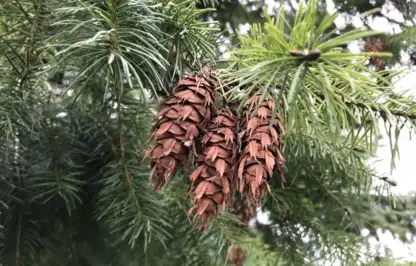
Conifers are a group of cone-bearing trees and shrubs belonging to the botanical division Pinophyta. These plants are characterised by their needle-like or scale-like leaves and the production of cones that contain seeds. They are one of the most popular plants used for hedging and trees here in the UK because they are super hardy and relatively cost-effective.
Conifers are typically evergreen, meaning they retain their foliage year-round.

Some common examples of conifers found here in UK gardens include:
They are widely distributed across the globe, inhabiting various climates and ecosystems, from temperate forests to alpine regions. Conifers are valued for their economic, ecological, and ornamental significance, providing timber, shelter, and aesthetic beauty in landscapes and gardens.
Conifers are also one of the easiest plant species to establish and look after, having very few nutritional requirements or care other than some yearly pruning.
The best time to prune most conifers, including hedges, is between April and August. When the evergreen conifer is actively growing, this reduces browning and enables it to make a swift recovery. Unlike deciduous trees and hedges, which are nearly always pruned when dormant in the Winter, most evergreen hedges, like conifers, are best pruned from Spring to Summer.
Many guides online suggest pruning conifers in winter when they are dormant. But this is wrong. Conifers struggle to recover after winter pruning, and their pruning wounds can leave them open to infection and precious water loss during the cold winter months.
The simple rule I give every client is this: if it’s green and actively growing, you can trim it. If it’s brown and woody, leave well alone. That single distinction causes more conifer pruning disasters than anything else, since the timing window shifts slightly depending on the species you’ve got.
The golden rule with all conifer pruning is to remember that most conifers will not recover if you hard prune them back to old wood. There are two exceptions that can be hard pruned and recover, which are Taccus (Yew) and sometimes young Thuja (Cypress).
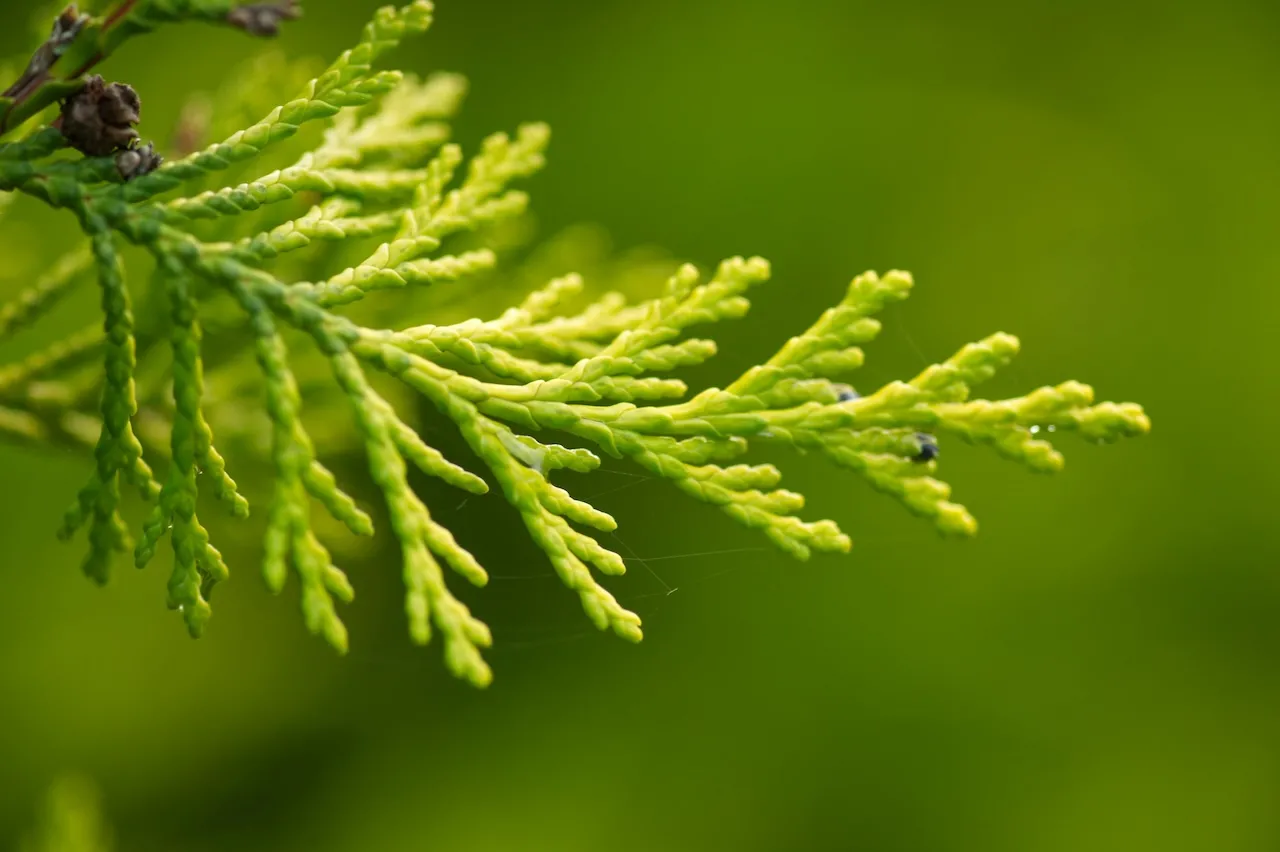
For the most part, whenever pruning conifers, only remove fresh green growth, not wood and avoid cutting back to old, brown or leafless wood as the conifer will not regenerate green leafy growth from these cuts.
I remember being called out to a garden a few years back where the previous owner had taken a petrol hedge trimmer to a beautiful mature conifer hedge that had simply got too wide for the border. Rather than trimming the sides back gradually over a couple of seasons, they’d gone in hard in one go, right past the green growth and into bare brown wood. There was nothing I could do to bring that section back. We ended up having to replant a whole stretch of the hedge, which cost far more in time and money than a patient, gradual reduction would ever have done. It’s the single most common conifer mistake I see, and it’s entirely avoidable.
Before pruning, it’s crucial to understand how conifers grow. Conifers typically have a central leader (main trunk) with lateral branches arranged in whorls around the stem. Conifers also have apical dominance, meaning that the top of the tree’s growing stem dominates all other growth. If you cut this off by topping out or off the tree, then the growth does not flow back down as readily to side shoots like other trees and shrubs.
The apical meristem (the main tip of the plant) is the region in which actively dividing cells are located at the tip of the main stem or shoot. The apical meristem produces hormones, particularly auxins, which inhibit the growth of lateral buds located below the terminal bud (at the tip of the main stem). As a result, the terminal bud continues to grow upward while the growth of lateral buds is suppressed.
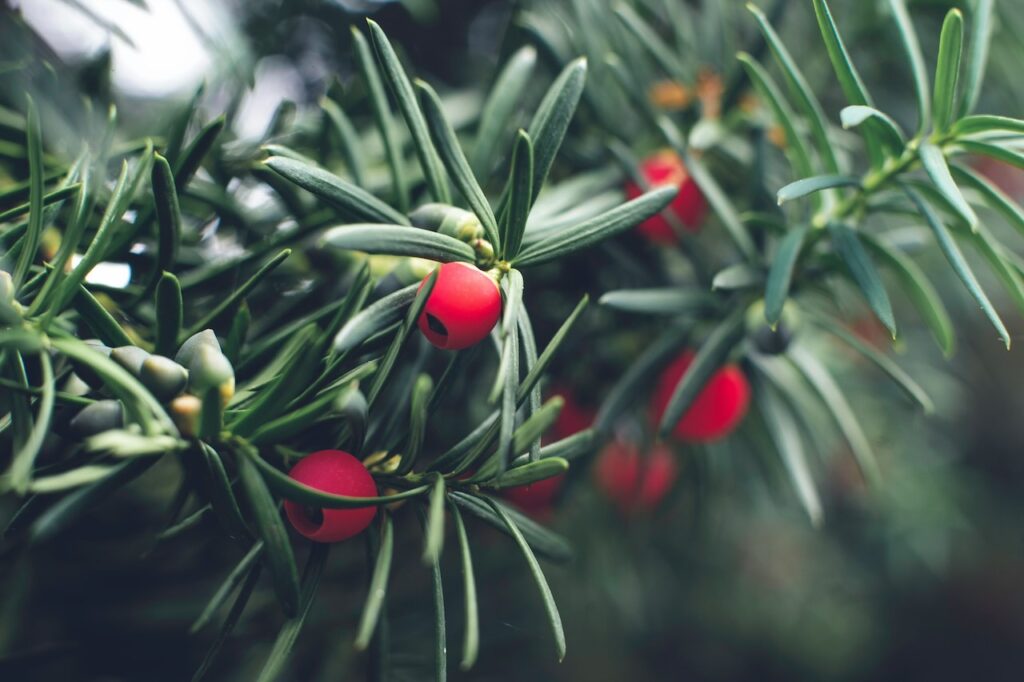
So once your conifer tree or shrub has reached its desired height, removing the top leader then prevents any more vertical growth. This is why when a mature conifer is drastically pruned, the top of the tree or hedge remains bare and awkward for the rest of its days. It won’t regenerate new growth on old wood or replace the main lead stem once removed.
It also means that cutting the top off conifers won’t cause them to bush out much due to this dominance. Understanding this growth pattern helps you determine which branches to prune to maintain the tree’s natural form.
Beyond simply keeping a hedge neat, there are a few genuine warning signs that tell you it’s time to get the shears out rather than leaving it another season. Crossing or rubbing branches are worth dealing with early, since the constant friction wears through the bark and creates an easy entry point for disease. Dead, damaged or clearly diseased branches should come out as soon as you spot them regardless of season, since a dead limb is a safety risk in wind and does nothing but harbour pests and fungal spores. And if a conifer has been left unpruned for several years, it will start to lose its lower foliage and take on a leggy, top-heavy shape that’s much harder to correct the longer it’s left. Regular, modest pruning every year is always easier than trying to rescue a conifer that’s been neglected for a decade.
The first thing to do is ensure you’re using the right tools and method to cut and trim your conifers. Use sharp, clean pruning tools such as hand pruners, loppers, and pruning saws. Ensure that the tools are sanitised to prevent the spread of disease between trees.
Make sure that whatever tools you use can cut through the fresh green growth easily. If your hedging shears, secateurs or hedge cutters are not sharp or well-maintained, they will just tear through the conifer, leaving brown edges and a ragged messy cut. All of which leads to infection and stress on your conifer trees.
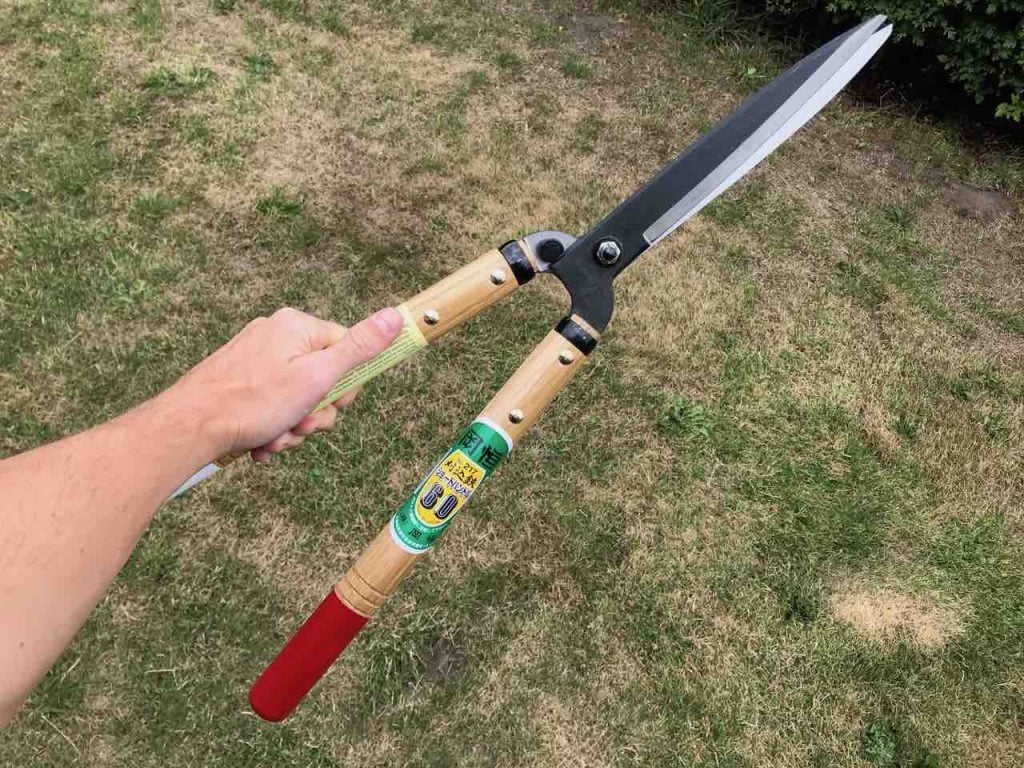
Hand shears are great for smaller hedges, whereas large and long conifer hedges should be cut using electric hedge trimmers for the most efficient and clean cut possible.
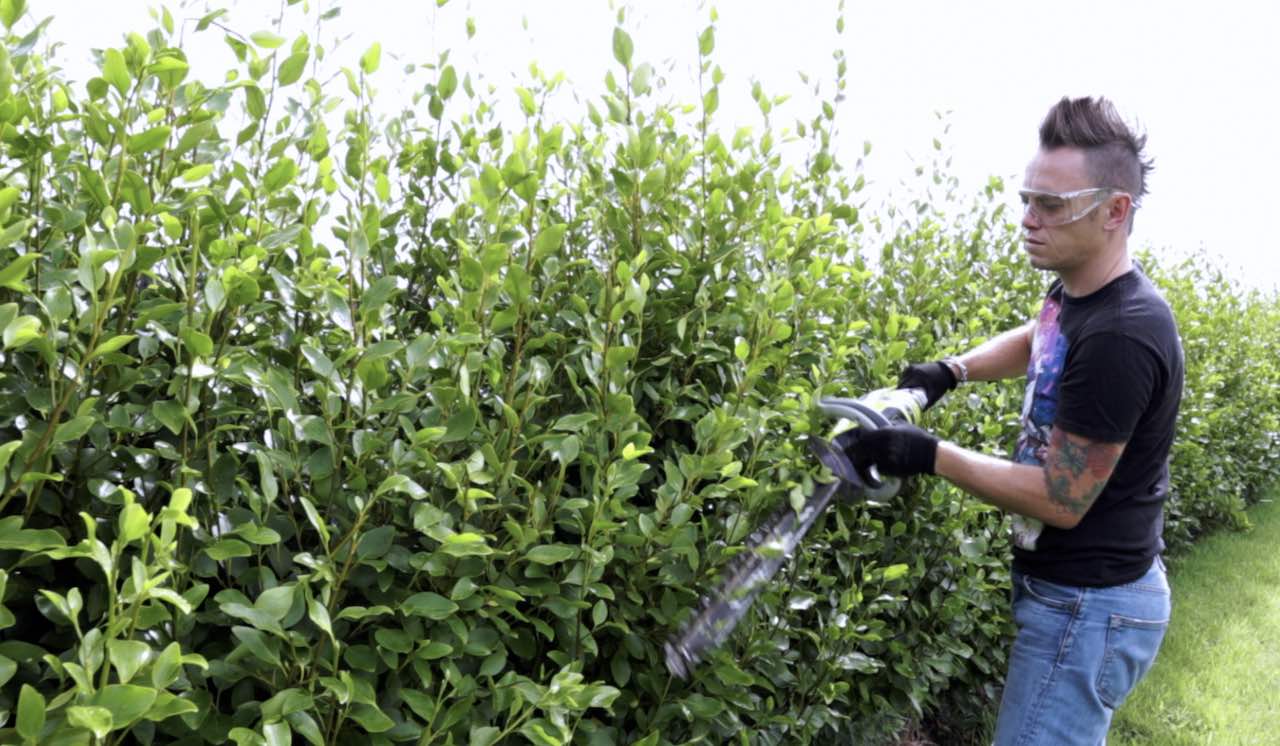
Conifer needles are sharper than they look, particularly on juniper and spruce, and a decent pair of gloves saves your hands over a long hedge. It’s also worth wearing eye protection with electric or petrol trimmers, since cut needles and small twigs fly back at you far more than you’d expect.
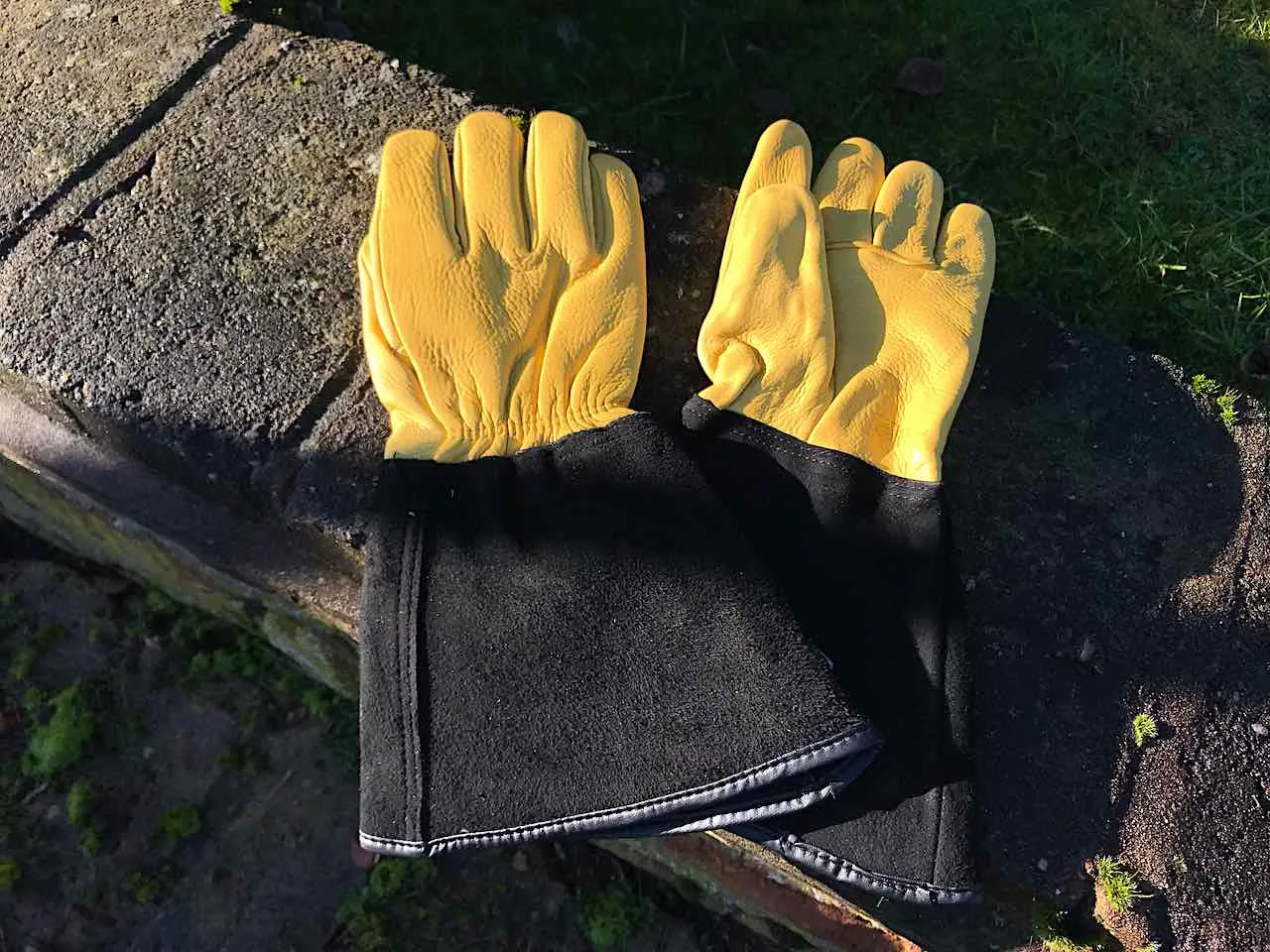
🛒 Buy gardening gloves from Amazon UK.
I always lay a tarpaulin or dust sheet along the base of the hedge before I start too. It sounds like a small thing, but it turns clean-up from a laborious rake-and-sweep job into simply folding the sheet up and tipping the clippings straight into the green waste or compost bin. It’s a five-minute job that saves you twenty later, especially on gravel or planted borders where loose clippings are a nightmare to fully clear by hand.
Before making any cuts always check for nesting birds, especially from April through to August. In fact, there’s even a law, the Wildlife and Countryside Act 1981, which states that no bird’s nests should be destroyed between March and August. However, if no birds are nesting in your hedge, then you can cut them.
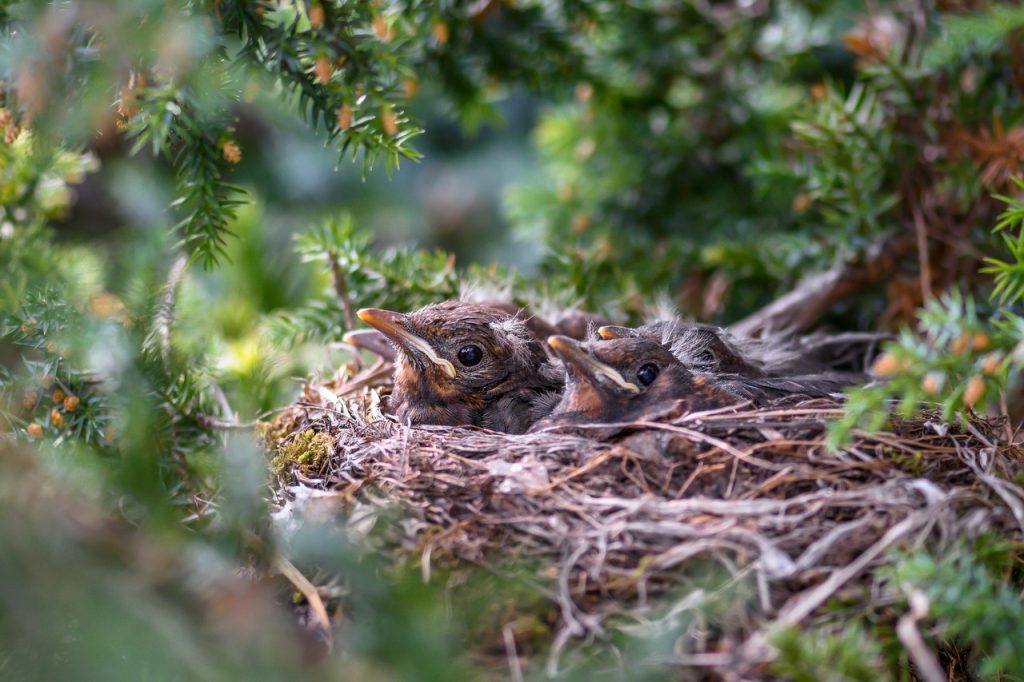
To check, watch the hedge the days and weeks before you cut to see if birds are regularly flying in and out of them. You can also part sections of the hedge and have a good look during the day to spot nests or any chicks. If you find nesting birds in your hedge, please leave your hedge cutting until they have departed. Cutting them will disturb the parents and often leave the chicks abandoned, which kills wildlife and hurts the natural food chain of our gardens.
We know that cutting back to old wood is a no-no and will cause the conifer to look brown forever. Before cutting, gently pull out branches to see how much green conifer you have to cut. It’s always best to take less off than too much. Once you hit old wood, that’s it. That part of the conifer hedge or tree will never regrow.
Aim to cut in slow sweeping movements, arching your arms like a fan across the front/side of the hedge. This is why electric hedge trimmers are brilliant for cutting conifers, as they take all the stress out of your arms. Use the same motion across the entire hedge. Take off small amounts as you can always return for a second pass, if you try and cut too deeply at first it can be tiring on your arms and lead to uneven results.
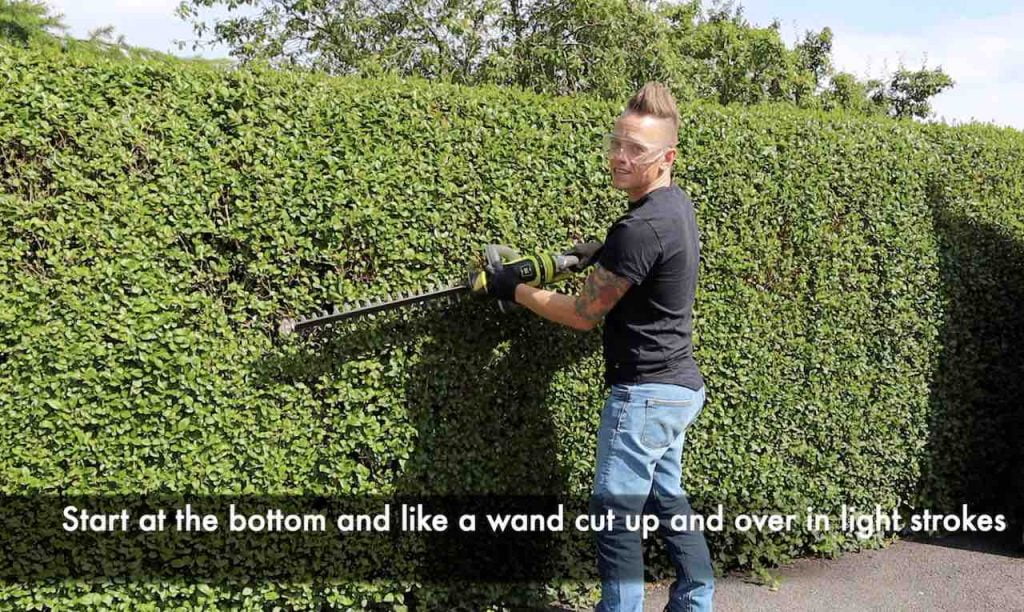
If you’re aiming for a flat top hedge, then use a string line across the top of the hedge to get a perfectly straight line. Again check how much ‘green’ growth you have to cut back to. For more informal hedge lines, use your eye to see if they look right, and consider a baffle (where the top of the hedge is slightly narrower than the bottom), which helps protect the hedge against snowfall and weather damage.
Conifer clippings can be easily composted at home in compost bins, contrary to belief. They do help acidify compost so they make a great mulch for Rhododendrons and other acid-loving plants. It can help unlock the nutrients they need in the soil by tweaking the PH when used as a top dressing or soil mulch. If you’re building up a fresh pile of clippings, it’s also worth reading my guide on reusing old compost, since conifer trimmings mixed with spent compost make an excellent acid-loving mulch combination.
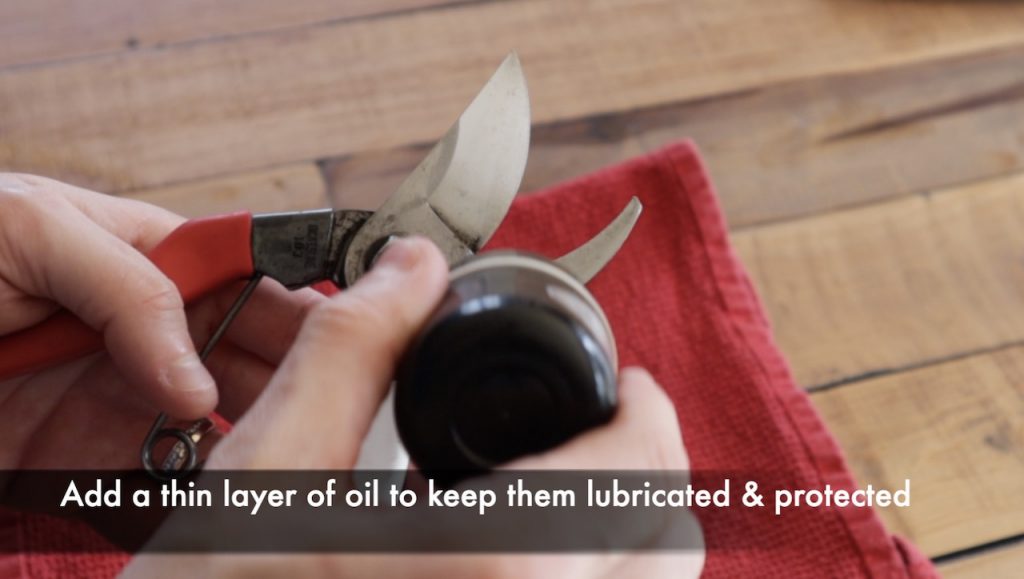
After a long day of hedge cutting, it can be easy to simply put the tools back in the shed until next year. However, if I can give you one piece of advice, it’s to clean and oil them when finished, not next year. This keeps your machinery, secateurs and pruning shears in top shape and working order. Trust me, doing it now rather than when they are rusty and covered in dirt is far easier!
Wash your tools/blades in warm soapy water, dry and then use camellia oil to keep them lubricated and prevent rust.
Brown conifers can cause real shock to the beginner gardener, wondering what they have done wrong that their trees and hedges have suddenly started to turn brown. There are a few reasons why your conifers may be turning brown or orange. The main ones are:
Cypress aphids (Cinara cupressi) are small insects that feed on the sap of cypress trees, including Leyland cypress and other related species. These aphids can cause damage to the tree by sucking out sap, which weakens the tree and causes needle discolouration, with conifer branches turning yellow and then brown.
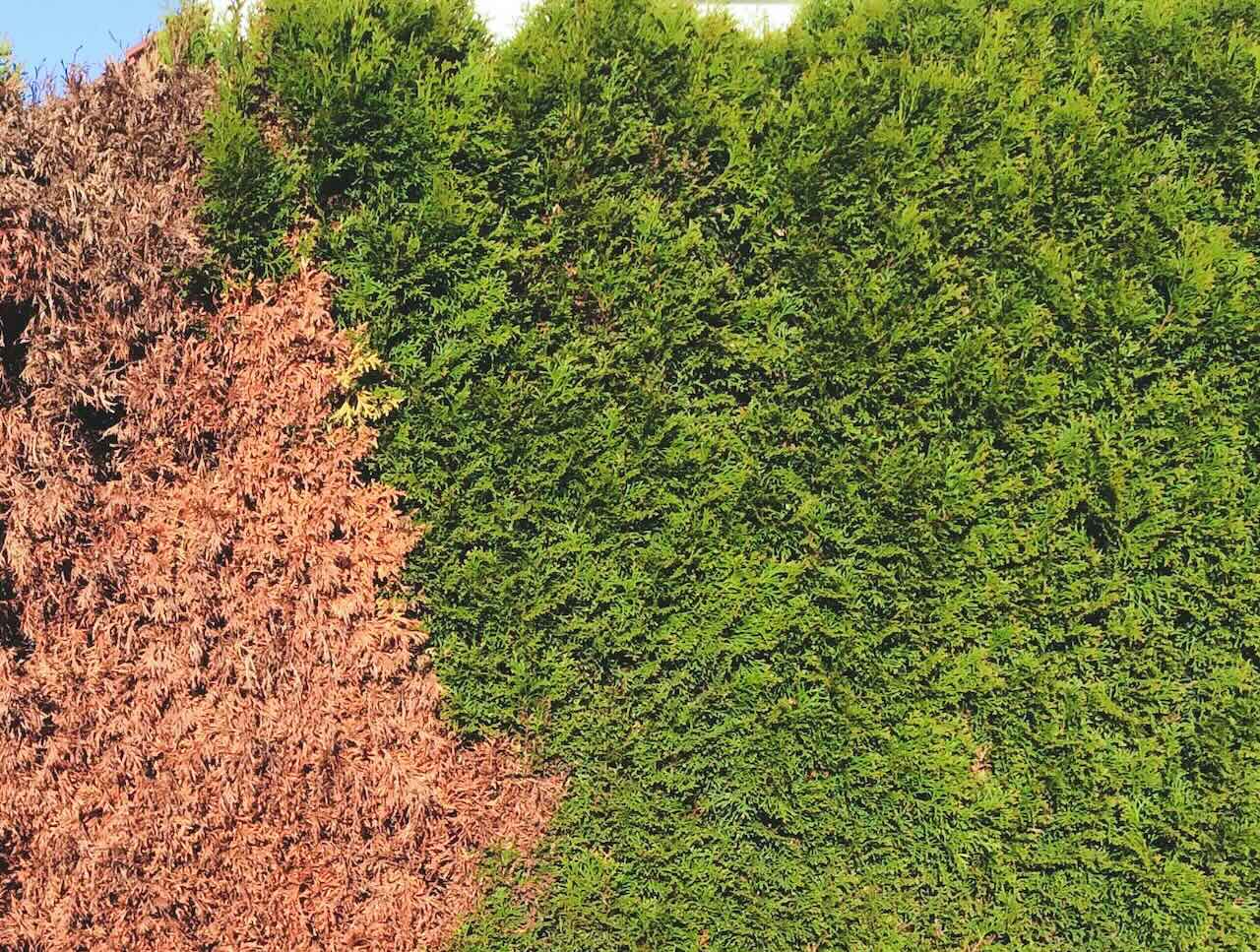
Cypress aphids cause stunted growth and, in severe cases, branch dieback. This is what can cause your conifer to turn brown in summer, even if you haven’t pruned it.
Pruning back to old wood can cause your conifers to suddenly look brown and sometimes even dead. This is because hard pruning can damage conifers by causing stress and shock to the tree. Conifers typically have a limited ability to regenerate new growth from old wood, especially compared to deciduous trees.
When conifers are severely pruned, it can lead to:
In heat waves and periods of drought, even conifers, which are usually super tough, can go into shock and dehydrate. This is especially true of hedges and young conifers. All of which leads to them turning brown and very dusty when touched or shaken. This is why it’s important in really hot summer to make sure that newly planted conifers and, in particular, hedges, where competition due to plants’ rootstocks being so close together can increase the chance of drought, are watered regularly until they are more mature.
This one is a different pattern to the browning covered above and isn’t related to pruning at all. If the outer, visible growth of your conifer still looks green and healthy but the interior is turning brown, some needle drop deep inside the plant is completely normal, conifers shed their oldest interior needles every few years. But if it’s more widespread than that, the culprit is very often the roots rather than anything above ground. I’ve written a full diagnostic guide covering exactly this, including root rot, drainage issues and honey fungus, which accounts for the majority of cases I get asked about, which you can read here if the browning on your conifer doesn’t match the pruning or aphid causes above.
Honey fungus is the one worth taking seriously. Look for clusters of honey-coloured toadstools at the base of the tree in autumn, white fungal growth just under the bark near soil level, or black, root-like structures called rhizomorphs in the surrounding soil. If you suspect honey fungus, it’s worth reading my plant disease identification guide for a fuller picture, since there’s no chemical cure and affected trees usually need to be removed along with as much of the root system as possible to stop it spreading to neighbouring plants.
Leylandii and the Leyland conifer species (× Cuprocyparis leylandii) are some of the fastest growing conifers you can buy, which is both great for quick hedges but not so good for urban areas where they grow at a rapid rate, crowd out other plants, dry out the soil and cast vast amounts of shade onto neighbouring properties.
You really need to think twice before planting a Leylandii hedge, especially if you live in an urban area, have a garden less than an acre in size or want a low-maintenance garden (the pruning itself is a real mission with Lellyandii).
The best time to prune Leyland hedges and Leylandii is April to August. Leylandii hedges and trees can need cutting 3 times a year to stop them from growing out of control or becoming absolutely huge. This is why they are a poor choice for beginner gardeners, small urban gardens or anyone without the time to properly maintain them.
I’ve had more than one client call me in a panic over a Leylandii boundary dispute with a neighbour, and it’s nearly always down to the same story: the hedge was planted for a quick screen, left to its own devices for a few years, and by the time anyone called for help it had become the kind of towering green wall that ends up with council involvement under the High Hedges legislation. If you inherit an overgrown Leylandii hedge like this, resist the urge to hack it back hard in one go to solve the problem quickly. It won’t solve anything, since you’ll just be left with a brown, bare wall instead of a green one.
Like all conifers, Leylandii will not regenerate if you cut it back to old brown wood as they are super fast growing. You need to prune them on repeat each year, usually three times, given how fast they grow!
Trim the side shoots of Leylandii in April, July and September, taking off fresh green growth only and not cutting back too hard. At most, remove up to 4 inches of fresh green growth.
Leylandii usually takes around 2-4 years to fully establish as a hedge. Once they are at their desired height, 2-3 meters maximum for most gardens then cut out each tree’s main stem at the top. Cut it down by 6 inches when it reaches the max growing height. This will cause the lower branches to fill out more, leaving an evenly grown hedge. This will help stunt its full growing height, but it will still need regular pruning 2-3 times per year to keep it neat and prevent it from growing out of control.
When it comes to reducing the height of conifers, it can be tricky, especially for new gardeners. Sometimes, the conifers are so tall that you have no option but to bring in a reputable tree surgeon, ideally one who works to the BS 3998 standard for tree work, which is the British Standard covering exactly this kind of reduction and crown work safely. The main problem with trying to reduce the conifer’s overall height is that removing the top growth or main leader often then leaves an unsightly bare top to the hedge of awkwardly exposed stump on conifer trees. This is why topping out conifers early on when they reach the desired height is preferable.
If you need to reduce the height of your conifer, then the best advice is:
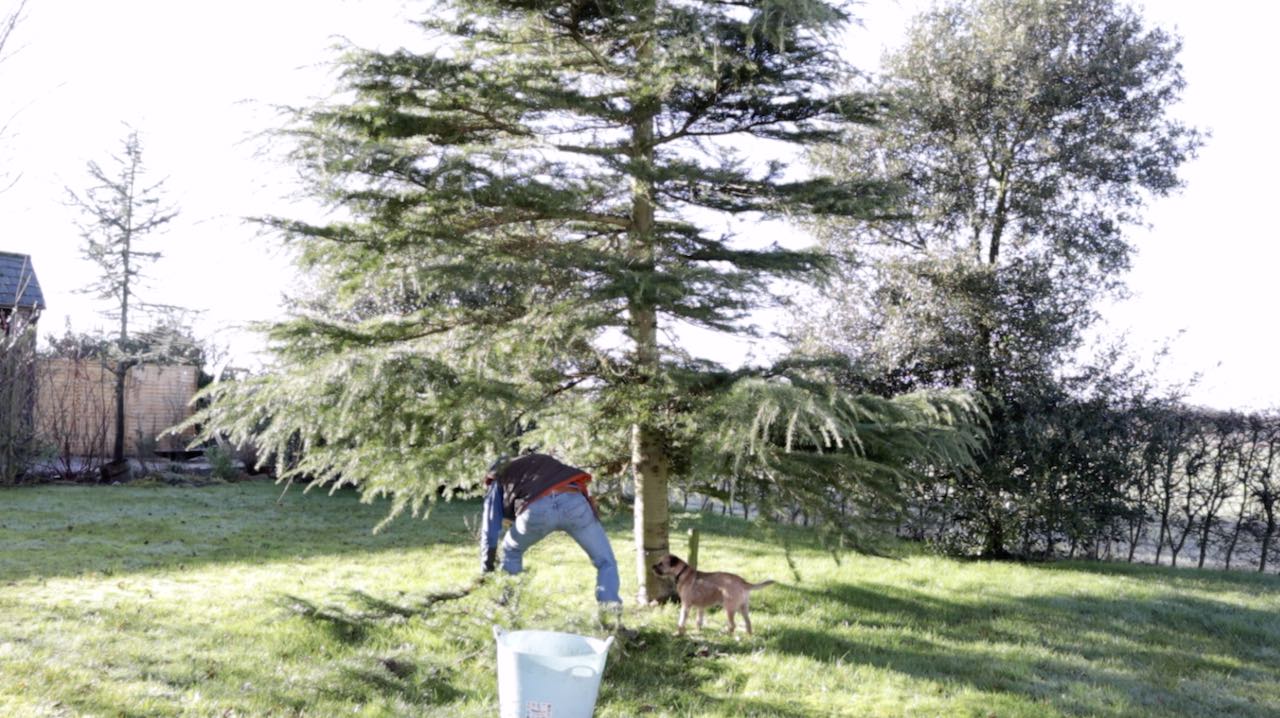
The examples below show a conifer with neat pruning cuts on a tree. These side branches have been taken off using a ‘crown lift’ technique to raise the canopy of these Fir trees. See how the cuts are angled so water runs off and also just and so protruding from the main stem?
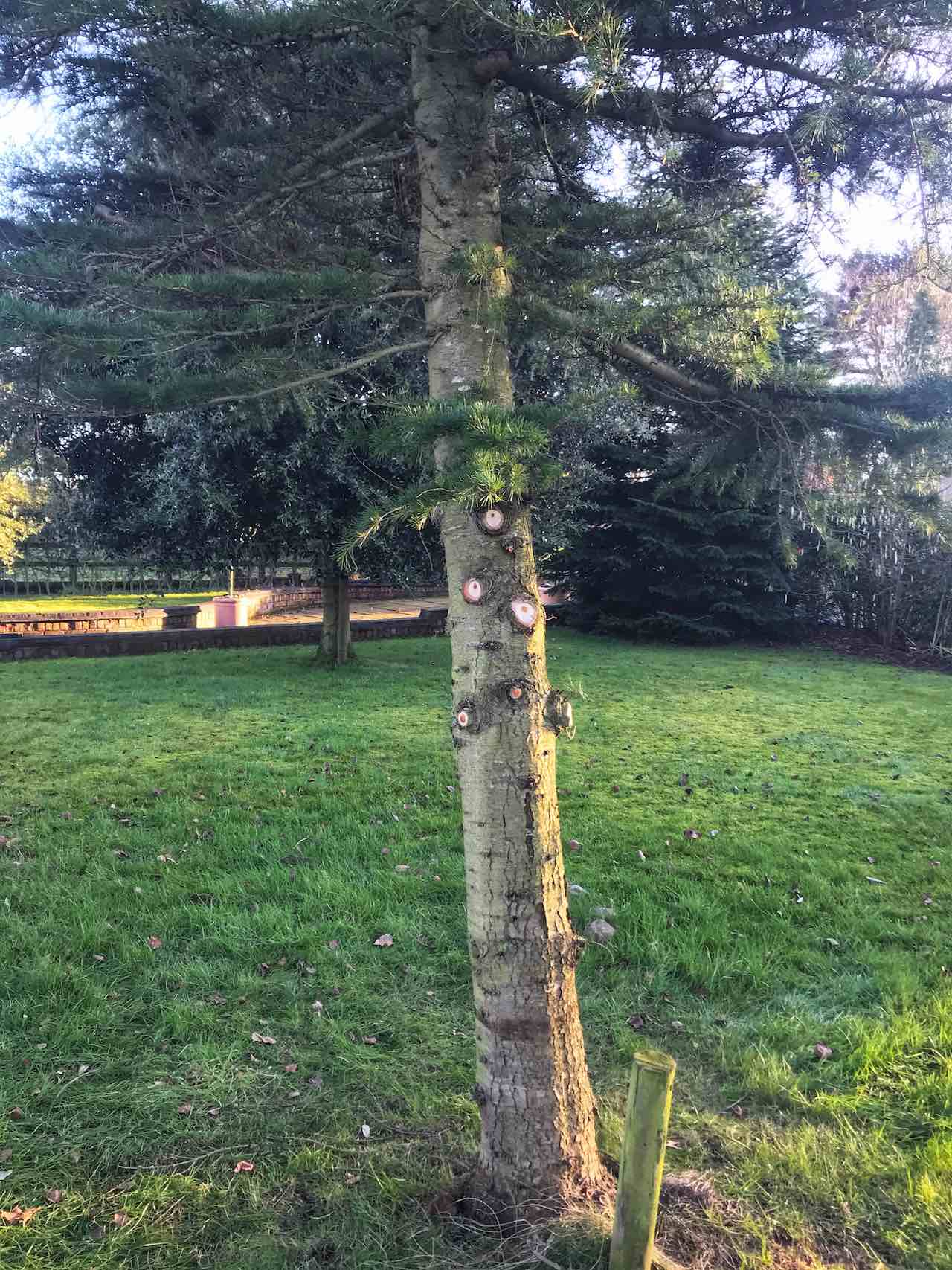
Neither of these cuts have been taken right the way back, which can damage the collar between the branch and the main trunk.
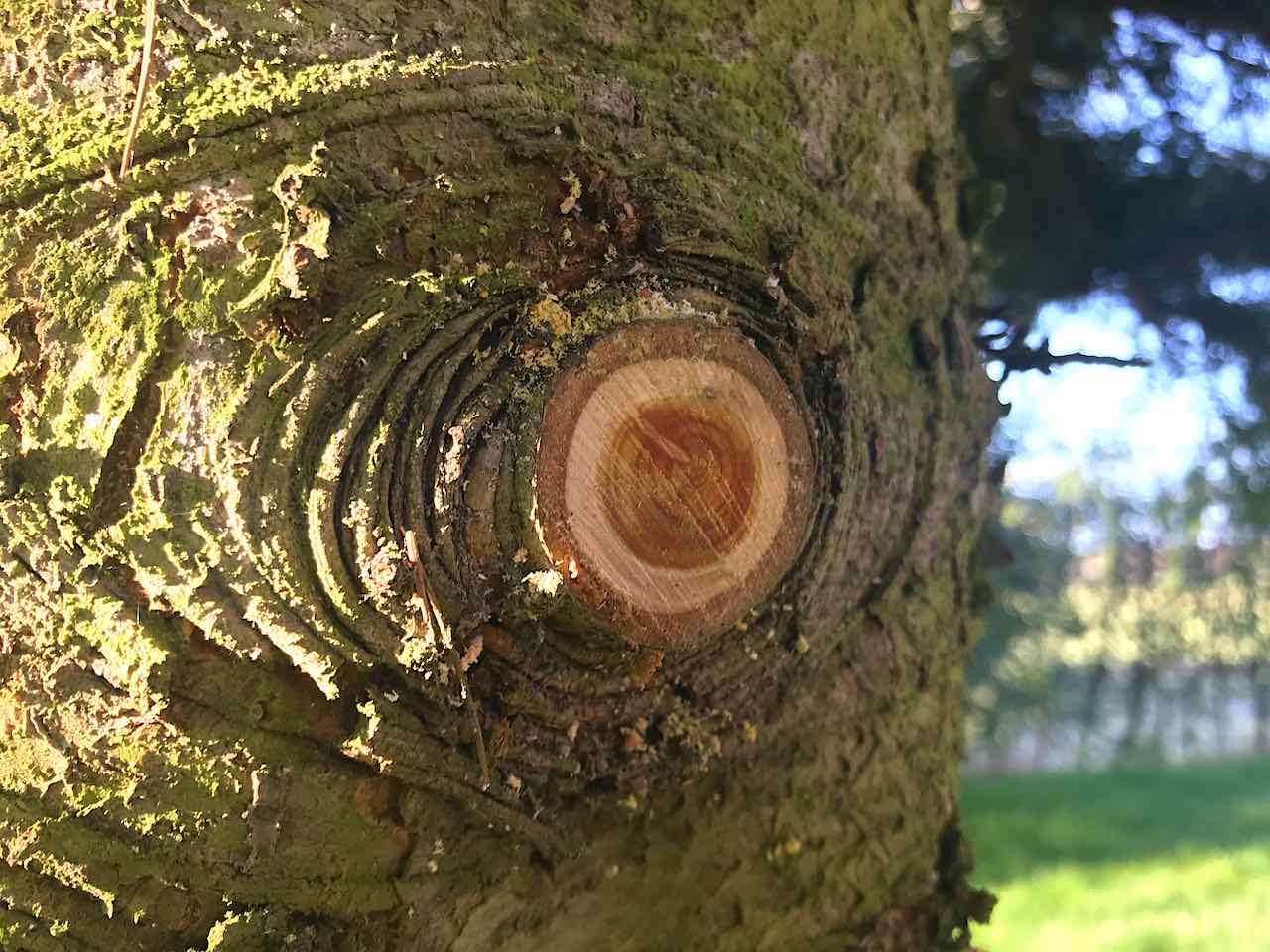
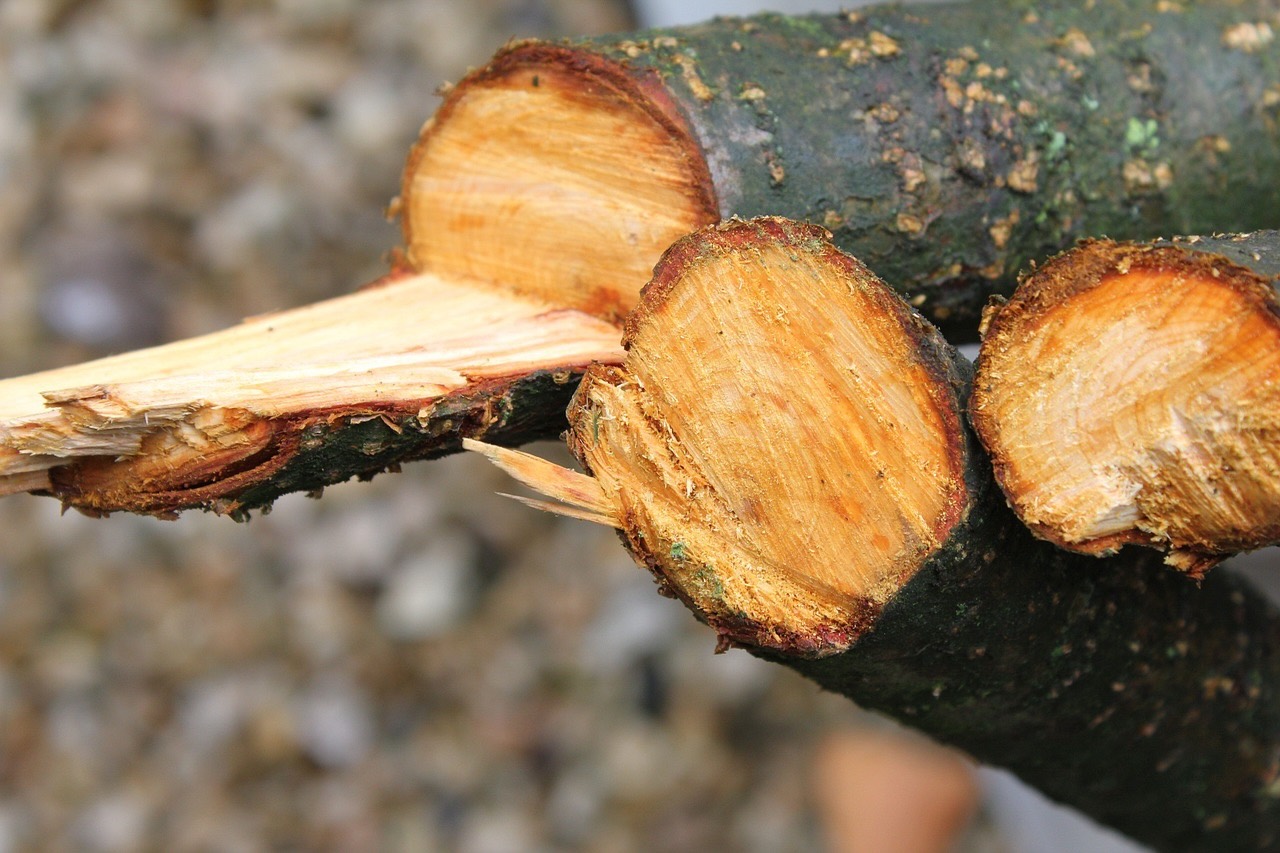
Let’s look at some bad pruning cuts to see how not to cut conifers. See how below, as the cuts were made, it has torn away from the tree, leaving a ‘heel’? This promotes infection and shows that a branch has probably fallen and torn away from the tree mid-cut as it has not been supported enough.
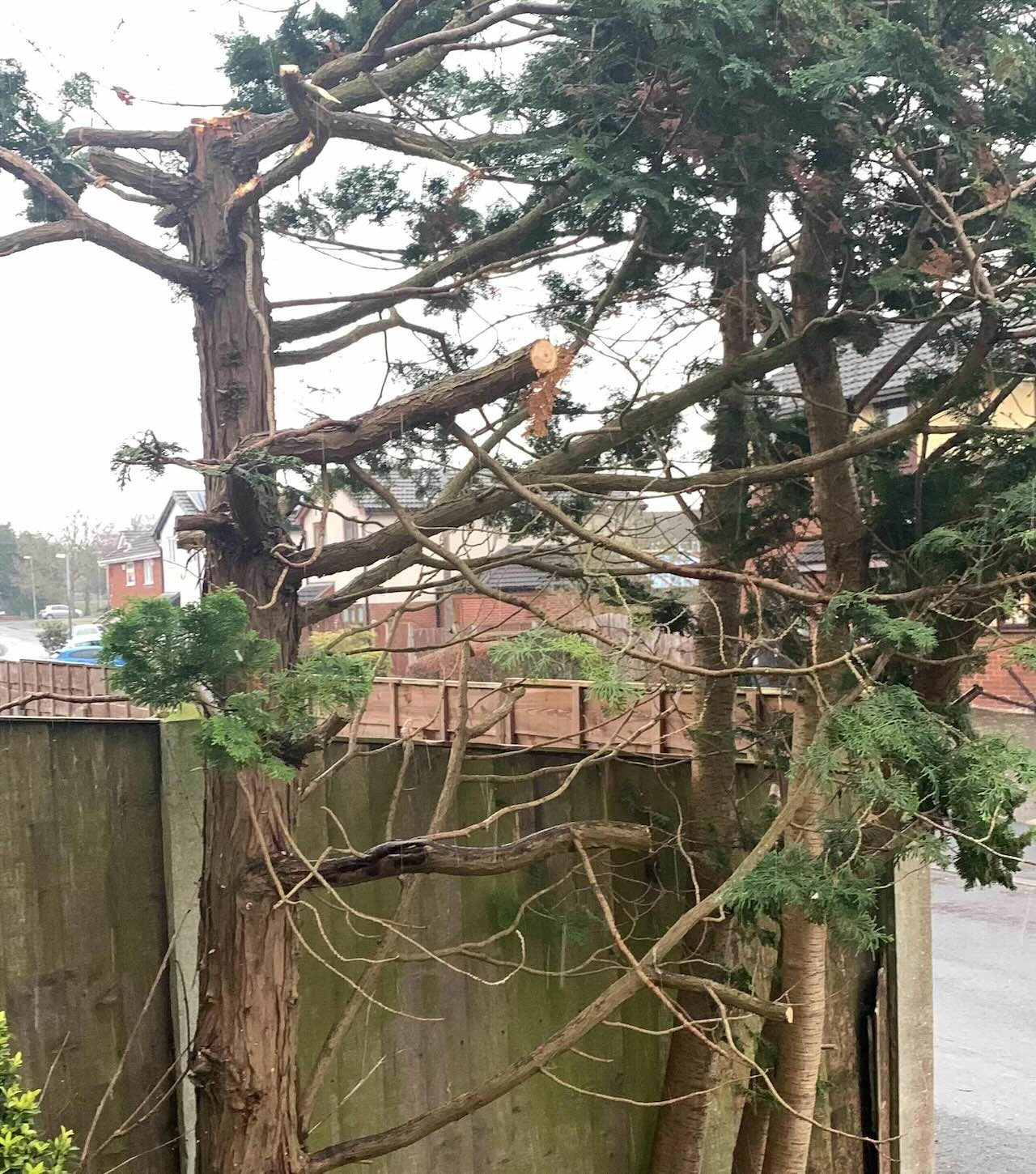
The next image shows cuts that are made leaving long lengths of exposed branches left. As we know, these will not regenerate any new growth, so they should have been taken right the way back to the main trunk instead. I see this exact mistake more than any other when I’m asked to assess a hedge that’s “not looking right” a season or two after someone else has cut it. It’s an easy trap to fall into when you’re rushing a big job, but those stubs sit there looking untidy for years since they simply can’t heal over properly.
For most conifer species, no. Once you cut back into old, brown wood, that section will not produce fresh green growth again. Yew and, to a lesser extent, young Thuja are the main exceptions and can sometimes be renovated from old wood. For everything else, a hard-pruned section either stays permanently bare or needs replacing entirely.
You can, but only while the conifer is still relatively young and you’re removing green growth rather than old wood. Once a mature conifer has been topped, apical dominance means it won’t regrow a new leader, and the top will stay flat and awkward permanently. It’s far better to top out a young conifer early, once it reaches your desired height, than to try reducing a mature one later.
It depends on the species and how fast it grows. Slower growing conifers like yew or juniper may only need one cut a year. Fast growing types like Leylandii typically need three cuts a year, in April, July and September, to keep them under control.
Cutting your own conifer hedge isn’t illegal, but you must check for nesting birds first. Under the Wildlife and Countryside Act 1981, it’s an offence to damage or destroy an active bird’s nest, which in practice means avoiding hedge cutting between March and August unless you’ve confirmed no birds are nesting.
Bare patches after cutting almost always mean the cut went past the green growth and into old wood, which won’t regenerate on most conifer species. Unfortunately there’s no quick fix for this beyond patience, training nearby growth to fill the gap where possible, or replacing that section of hedge if the bare patch is severe.

Join over 100,000 gardeners on YouTube
Free gardening videos from the Garden Ninja, with 8 million views and counting.
Ready to elevate your gardening beyond basic tasks? My comprehensive online courses provide the expertise to transform you from enthusiastic beginner to confident garden creator.
With courses starting from just £29, you gain access to award-winning design knowledge.
For the garden you’ve already got, not the one you’re starting from scratch. Seven checklists and video lessons from BBC Garden Rescue’s Lee Burkhill, designed to help you decide what’s worth keeping before you spend a penny.
Garden Design Examples for Small Gardens: 30 Design Templates & Planting Plans: In this online gardening course, I’ll walk you through 30 fantastic garden designs, explaining the logic behind the layout and plant choices, plus take-home tips for applying them in your own garden.
Learn how to transform and design your garden with Lee Burkhill’s crash course in garden design. In over 5 hours, Lee will teach you how to design your dream garden. Featuring practical design examples, planting ideas and video guides. Learn how to design your garden in one weekend!
Garden Design for Beginners Online Course: Want to become a garden designer or design your own garden? This beginner course is for you. Join me, Lee Burkhill, an award-winning garden designer, as I train you in the art of beautiful garden design. Enjoy 20 hours of online study and video lessons, along with quizzes and a completion certificate.
Whilst pruning conifers can seem tricky for new gardeners, once you know not to cut back into old wood and also to make your cuts from Spring to Summer, you can’t really go too wrong. The trick is to prune little and often, and with the correct pruning tools.
By following these guidelines and techniques, you can effectively prune conifers to maintain their health, shape, and beauty for years to come.
If you’re unsure about pruning techniques or the overall health of your trees, consider consulting with a certified arborist for professional advice and assistance.
If you have questions or comments on gardening, why not let me know below? You can Tweet, Facebook or Instagram me. You can also follow me on Youtube where I’ve got plenty of garden guide vlogs!
Lee Burkhill, known as the Garden Ninja, is an award-winning garden designer and horticulturist with over 30 years of gardening experience and 15 years as a professional garden designer. A qualified RHS (Royal Horticultural Society) professional, Lee specialises in sustainable garden design and practical horticultural advice. He designs and presents on BBC1’s Garden Rescue and in leading gardening publications. Lee combines three decades of hands-on gardening knowledge with professional design qualifications to help gardeners create beautiful, functional outdoor spaces.
View all posts by Lee Burkhill






JOIN THE NINJAS
Be the first in line for new Guides, Discount codes and Offers