For the garden you’ve already got, not the one you’re starting from scratch. Seven checklists and video lessons from BBC Garden Rescue’s Lee Burkhill, designed to help you decide what’s worth keeping before you spend a penny.
69
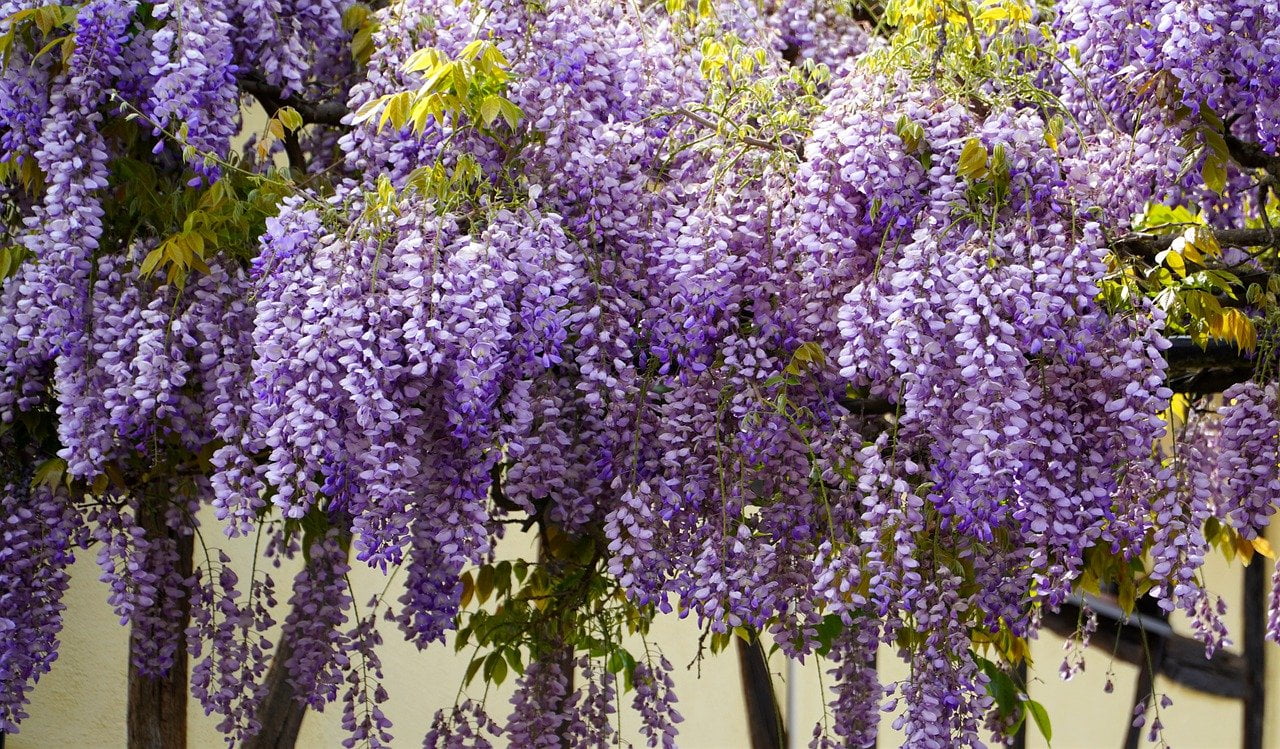

Quick answer: The most common reasons a Wisteria won’t flower are missing the summer and winter prunes, a plant that is too young or grown from seed, too much nitrogen feed, not enough sun, and dry soil in late summer when next year’s flower buds are forming. Fix the pruning first: five or six leaves in July or August, then two or three buds in February.
Few things in the garden are as frustrating as a Wisteria that covers the wall in leaves every year and never produces a single flower. It is the Wisteria question I am asked most on the Garden Ninja forum, and the good news is that in almost every case there is a clear reason and a fix.
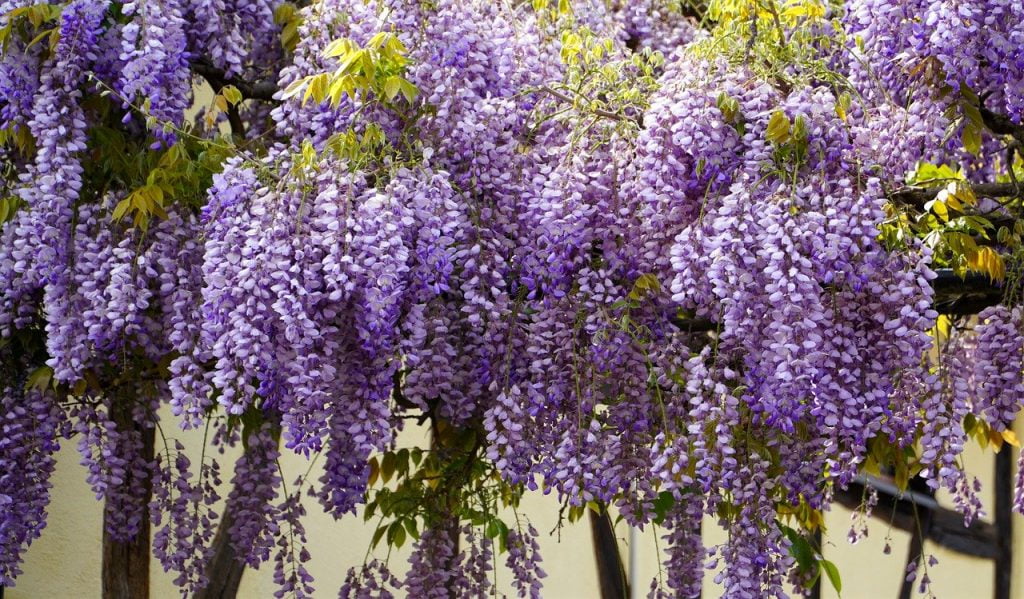
A healthy, established Wisteria in a sunny spot should flower every May and June. If yours doesn’t, work through the quick diagnosis table below to narrow down the likely cause, then read the matching section for the fix. Most plants respond within one or two seasons once the cause is put right.
Jump To
If your Wisteria has been fed with lawn or general purpose feed, switching to a high potash tomato feed in spring is one of the simplest changes you can make to tip it back towards flowering.
This page contains affiliate links for products I use and love. If you take action (i.e. subscribe, make a purchase) after clicking a link, I may earn some gardening commission, which helps me keep the Garden Ninja Blog free for all.
Start here. Find the row that best matches your plant, then jump to the full explanation in the next section.
| What you see | Likely cause | What to do |
|---|---|---|
| Lots of healthy leaves, long whippy shoots, no flowers | Missing the summer and winter prunes, or too much nitrogen | Start the twice yearly pruning routine and stop feeding |
| Healthy plant under five years old, never flowered | Too young, or grown from seed | Keep pruning and wait; replace seed-grown plants with a grafted variety |
| Buds appeared in spring then turned brown and dropped | Late frost | Fleece the plant on frosty nights in April and May |
| Flowered last year, very few this year | Dry soil last July to September, or a hard prune | Water deeply in late summer; allow time after hard pruning |
| Sparse leaves and flowers, plant in shade most of the day | Not enough sun | Let in more light or move a young plant to a sunny wall |
| Vigorous shoots from the base with different leaves | Rootstock taking over below the graft | Remove all shoots from below the graft union |
| Yellowing leaves, poor growth, soil stays wet | Waterlogging | Improve drainage around the root area |
These are the causes I come across most often, roughly in order of how common they are. It is worth checking all of them, because a reluctant Wisteria often has two or three small problems stacked on top of each other.
This is the single biggest cause of a Wisteria that won’t flower. Left alone, the plant pours its energy into long green whippy shoots that twine their way across the wall, and very little goes into the short spurs where flowers form. The fix is the two stage routine: cut this year’s long shoots back to five or six leaves in late July or August, then shorten them again to two or three buds in January or February.
It can take two years of consistent pruning before the flowers really arrive, so stick with it. My step by step Wisteria pruning guide shows exactly where to make each cut, with photos of both the summer and winter prune.
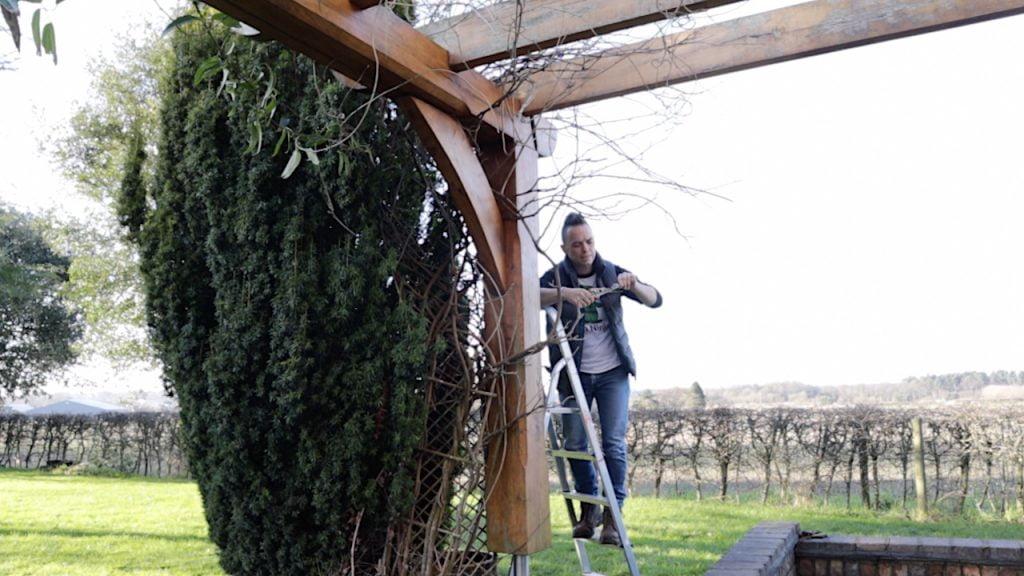
Pruning at the wrong time of year can remove the flowers before you ever see them. Next year’s flower buds form on the spurs in late summer and swell through early spring, so a tidy up in autumn or a quick trim in March or April cuts them straight off. Get the winter prune finished by the end of February and leave the plant alone until it has flowered.
Wisterias need time to build a root system and a woody framework before they flower. A grafted, named variety will usually start flowering within three to seven years of planting, but a plant grown from seed can take fifteen to twenty years, and some seedlings never flower well at all.
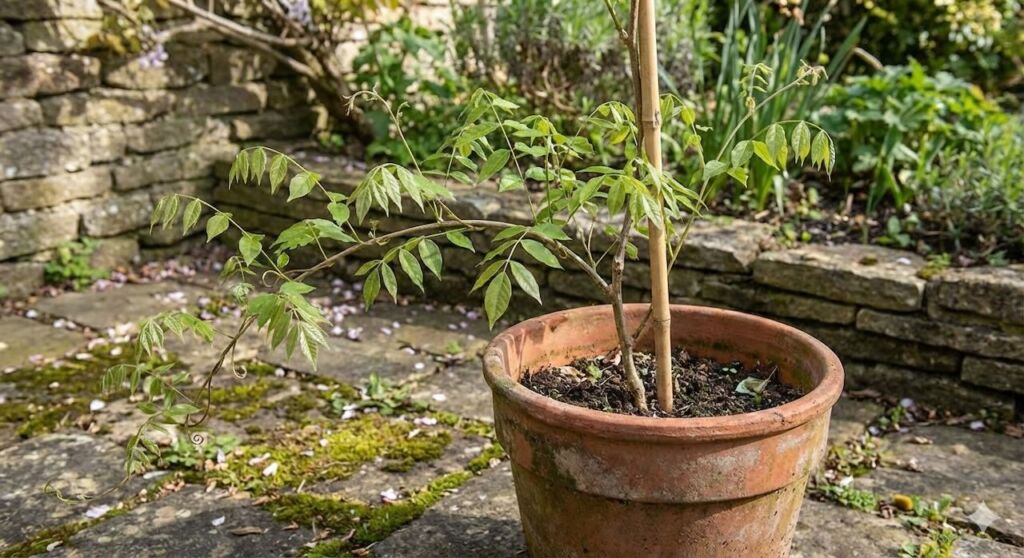
Check the base of the main stem for a slight bulge or kink just above soil level. That is the graft union, and it tells you the plant is a named variety. If there is no graft and the plant is older than ten years with no flowers, I would replace it with a grafted plant of a reliable variety such as Wisteria sinensis ‘Prolific’, rather than waiting another decade.
High nitrogen feeds produce lush green leaves at the expense of flowers. Wisteria is part of the pea family and is very good at finding its own nitrogen, so most plants in ordinary garden soil need no feeding at all. Lawn feed is a frequent hidden culprit, either spread close to the border or washing in from the lawn after rain.
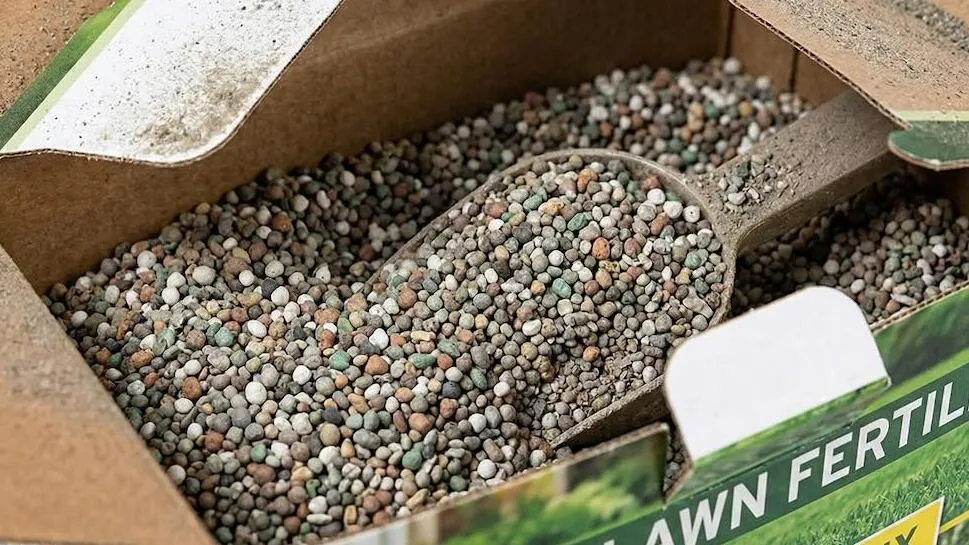
Stop feeding for a full year. If the soil is very poor, use a high potash feed such as tomato feed or sulphate of potash in spring only, which encourages flowering rather than leafy growth.
Wisteria flowers best with at least six hours of direct sun a day, which in the UK usually means a south or west facing wall. In heavy shade it will grow, but the flowering spurs don’t ripen properly and you get leaves with few or no flowers. If you are not sure how much sun your wall gets, my guide to which way your garden faces explains how to check.
For an established plant, thin overhanging trees and shrubs to let in more light. A young Wisteria in deep shade is worth moving in autumn or winter to a sunnier spot, as it will rarely flower well where it is.
If buds appeared in spring and then turned brown and dropped, frost is the likely cause. Wisteria sinensis is the most vulnerable because it flowers on bare stems early in the season, and a single hard frost in April or May can blacken the whole display.
On frosty nights in spring, drape horticultural fleece over the lower part of the plant where you can reach it. In a frost pocket or a cold, exposed garden, a later flowering type such as Wisteria floribunda is a safer choice than sinensis.
This is the cause I see most often overlooked, even by experienced gardeners. Wisteria flower buds form between July and September on the short spurs produced by pruning. If the soil around the plant becomes too dry during this window, the developing buds abort before they are even visible. The plant looks perfectly healthy through autumn and winter, you prune correctly in February, and then May arrives with barely a flower.
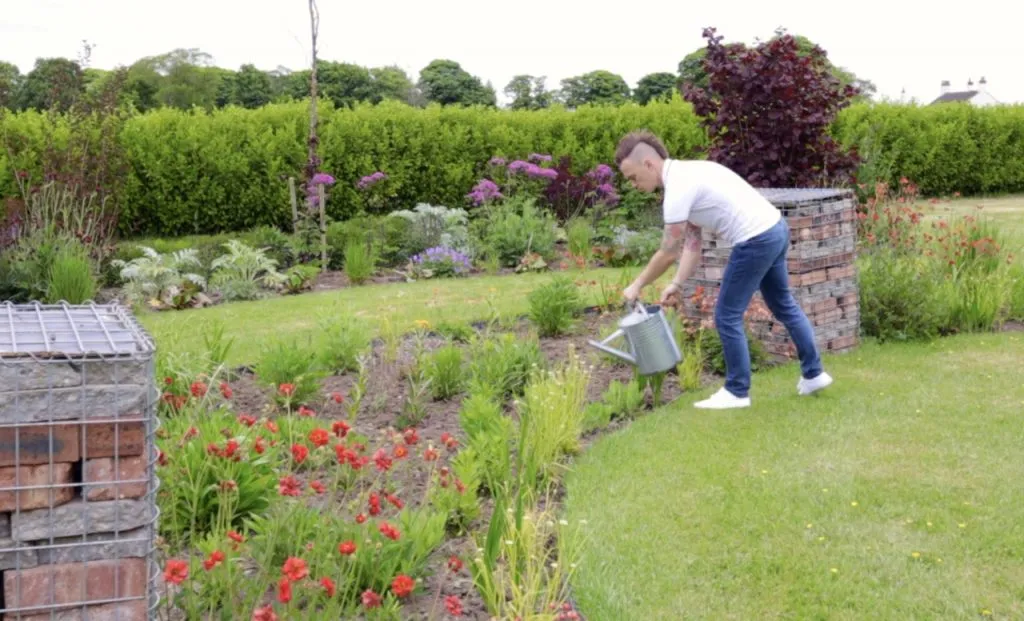
Water established Wisteria deeply once a week during dry spells from July to September, and apply a thick mulch over the root area in early summer on sandy or free-draining soils. Plants at the foot of a house wall are especially prone to this, because the wall creates a rain shadow and the foundations draw moisture away.
💡 Top Tip
Mark July to September in your garden calendar as “Wisteria watering season” even if the rest of the garden is managing without supplementary watering. This three-month window is when next year’s flowers are being created invisibly inside those pruning spurs, and consistent moisture is the single most underrated factor in reliable annual flowering on an otherwise well-managed plant.
At the other extreme, Wisteria hates sitting in wet soil. Constantly waterlogged roots struggle to grow and can rot, and the plant responds with yellowing leaves, weak growth and few flowers. Improve drainage by working in grit and organic matter around the root area, or in a persistently boggy spot, move a young plant to a better drained position.
Large trees, hedges or vigorous shrubs close by compete for water and nutrients, which adds to late summer drought stress. Keep a clear, mulched area of about a metre around the base of the Wisteria, and water more generously if it shares a border with a big hedge or tree.
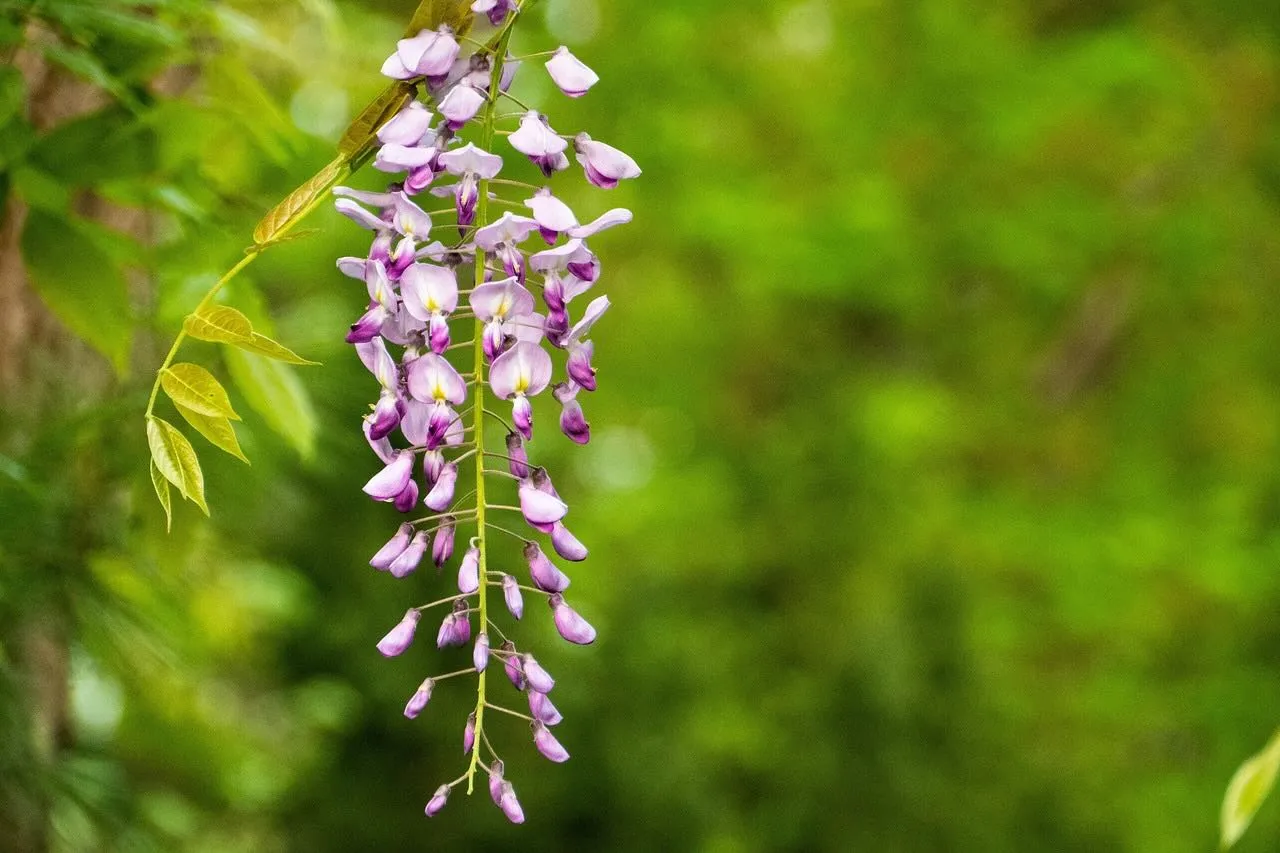
Most named Wisterias are grafted onto a vigorous rootstock. If shoots are allowed to grow from below the graft union, they can gradually take over, and because they come from the rootstock rather than the variety you bought, they flower poorly or not at all. These shoots often appear at or below soil level and may have slightly different leaves.
Remove every shoot coming from below the graft, cutting it back to its point of origin. If most of the top growth is now rootstock, the original variety may have died back, and replacing the plant is usually quicker than waiting.
A Wisteria covered in healthy leaves and long twining shoots but no flowers is almost always telling you the same thing: it is putting its energy into growth instead of flower buds. The usual causes are a missing summer or winter prune, too much nitrogen, or a young plant that hasn’t reached flowering age yet. Start the twice yearly pruning routine, stop any feeding, and keep the soil moist through late summer, and most plants turn the corner within two seasons.
If your Wisteria has flowered well in previous years and suddenly produced very little, look back at the previous twelve months rather than the current season. A dry July to September last year, a late frost this spring, or a hard prune or renovation are the three most common reasons for a sudden poor year.
A one-off poor year after a dry summer or frost usually corrects itself the following spring, as long as the pruning carries on as normal. After a hard renovation prune, expect a gap of one to three years while the new framework forms flowering spurs.
One of the most useful things you can do with a reluctant Wisteria is check it in late winter, because the buds tell you whether flowers are on the way. By February, the two types of buds look quite different. Flower buds are fat, rounded and noticeably plump, usually clustered near the base of the short spurs. Leaf buds are slimmer, flatter and sit closer against the stem.
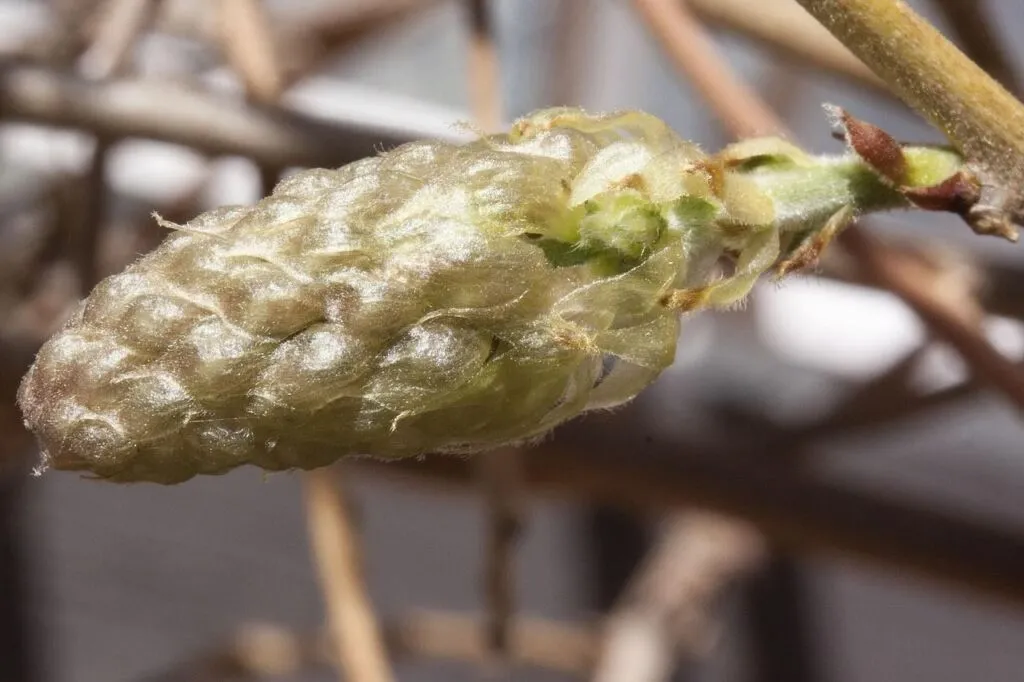
If you can see plenty of fat buds on the spurs in February, the plant has done its job and the flowers should follow, as long as a late frost doesn’t catch them. If you only find slim leaf buds, the problem happened the previous summer, which points to missed pruning, dry soil from July to September, or too much nitrogen. This is also why winter is the best time to diagnose a Wisteria that won’t flower, as you are looking at next spring’s display before it opens.
Keep the fat flower buds where you can when you make the winter cuts. My winter pruning steps show where to count and cut so they stay on the plant.
If you want to give a reluctant Wisteria the best possible chance, this is the routine I would follow for the next twelve months.
January to February: carry out the winter prune, shortening last summer’s cut shoots to two or three buds, and remove any shoots from below the graft.
March to May: leave the plant alone, apart from fleecing it on frosty nights. Apply a high potash feed in early spring only if the soil is poor.
June: mulch the root area well while the soil is still moist.
July to August: carry out the summer prune, cutting long green shoots back to five or six leaves, and water deeply once a week in dry weather.
September: keep watering in dry spells while next year’s buds are forming, and trim any second flush of whippy growth back to a few leaves.
If you are planting a new Wisteria, or replacing a seed-grown plant that has never flowered, choosing the right variety makes a real difference. Always buy a grafted, named plant from a reputable nursery, ideally one that is already showing flower buds.
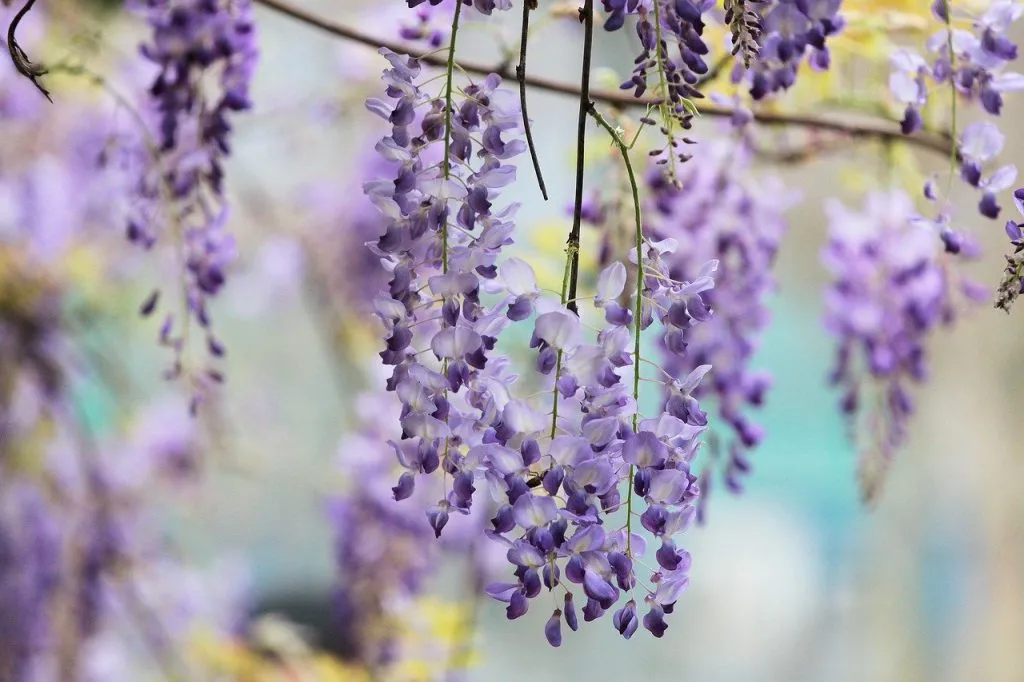
Wisteria sinensis ‘Prolific’ is the one I recommend most for UK house walls. As the name suggests, it flowers heavily and from a young age, with fragrant lilac racemes on bare stems in May. Its one weakness is that early flowering makes it more exposed to late frosts.
Wisteria floribunda ‘Multijuga’, sometimes sold as ‘Macrobotrys’, produces the longest racemes of all, often 60cm or more on established plants. It is perfect over a pergola where the flowers can hang freely. It flowers a little later than sinensis, as the leaves open, which helps it avoid frost damage.
Wisteria floribunda ‘Alba’ is the classic white Japanese Wisteria, with long, scented white racemes. It is just as reliable as the purple forms and looks superb against brick.
Wisteria brachybotrys ‘Shiro-kapitan’ has shorter, broader white flower clusters and a very strong fragrance. It is a good choice where scent matters most, close to a seating area or a door.
Wisteria frutescens ‘Amethyst Falls’ is an American species that is far more compact and flowers when very young, often in its first or second year. It also tends to repeat flower in late summer. It is the best choice for a small garden, a low fence or a large pot.
A Wisteria in a container is far more likely to struggle with flowering than one in the ground, mainly because the compost dries out so quickly. A pot can go from damp to bone dry in a single hot day in August, and that is exactly when the flower buds for next year are forming.
Use the largest pot you can manage, at least 45cm across, with a loam-based compost such as John Innes No. 3, which holds moisture far better than multipurpose compost. Water every day in hot, dry weather from July to September, and stand the pot in full sun. Container plants are the exception to the no feeding rule, as the nutrients in the compost run out, so give a high potash liquid feed every two weeks from spring until midsummer.
Pot-grown Wisterias need the same twice yearly pruning as plants in the ground, and they should be moved into a bigger pot or top dressed with fresh compost every couple of years. If you are choosing a Wisteria specifically for a pot, ‘Amethyst Falls’ is by far the most reliable.
Ask around about a Wisteria that won’t flower and you’ll hear plenty of old tricks. Some have a grain of truth in them, and some do more harm than good.
“Feed it more and it will flower.” This is the most common piece of advice and usually the opposite of what the plant needs. General purpose and lawn feeds are high in nitrogen, which drives leafy growth. Unless the soil is very poor or the plant is in a pot, hold back on feeding altogether.
“Cut it right back to shock it into flowering.” A hard prune removes the very spurs that carry flowers, so it usually delays flowering by a year or more. Regular summer and winter pruning is what builds flowering spurs, not one dramatic cut.
“Hit the trunk to stress it.” Damaging the bark only opens the stem up to disease and does nothing for flowering. Leave the trunk alone.
“Root prune it with a spade.” This one has more behind it. Slicing through some of the roots in a circle around an established plant in autumn checks its vigour and can tip a very leafy plant towards flowering. I would only try it on a mature, healthy plant that is being pruned correctly, sited in full sun and still refuses to flower after a few years, and never on a young or struggling plant. Cut around a third of the circle each year at least a metre from the main stem, rather than all the way round at once.
Wisterias are not plants that like to be rushed. A grafted plant from a good nursery usually flowers within three to seven years of planting, once it has built a decent root system and enough woody framework to carry flowers. Plants grown from seed can take fifteen to twenty years, which is why I always recommend buying a grafted, named variety.
You can help a young plant along by training the framework properly in its first few years, keeping it in full sun, and starting the summer and winter pruning routine once the main branches are in place.
Established Wisterias flower in May and June in the UK, with Wisteria sinensis usually opening first, often on bare stems before the leaves appear. Wisteria floribunda and brachybotrys tend to follow a week or two later as the leaves unfurl.
A long, cold winter can push flowering back by a week or two, while a mild spring brings it forward. Many established plants also produce a smaller second flush of flowers in late summer, which is a sign the pruning is working.
Usually because it is putting its energy into leafy growth. The most common causes are missing the summer and winter prunes, too much nitrogen feed, or a plant that is still too young to flower. Start pruning twice a year and stop feeding.
A grafted Wisteria usually flowers within three to seven years of planting. A plant grown from seed can take fifteen to twenty years, and some never flower well.
May and June, with Wisteria sinensis usually first. Some plants produce a smaller second flush in late summer.
Plant a grafted variety in full sun, prune twice a year, avoid nitrogen feeds, and water deeply in dry spells from July to September, when next year’s flower buds are forming.
Rarely. Some nursery plants are sold already in bud and will flower in their first spring, but most need a few years to establish before they flower reliably.
It can help on poor soil, because it is high in potash, which encourages flowering. Use it in spring only. On ordinary garden soil most Wisterias need no feed at all.
Yes, for a while. A hard renovation prune removes the flowering spurs, so expect one to three years with few flowers while new spurs form.

Join over 100,000 gardeners on YouTube
Free gardening videos from the Garden Ninja, with 8 million views and counting.
Subscribe on YouTube, it’s freeGetting a Wisteria to flower comes down to putting the right plant in the right place and looking after it at the right time of year. If you’d like to apply that thinking across your whole garden, my online courses show you how to plan planting that thrives where you put it.
Courses start from just £29, and you can work through them at your own pace.
For the garden you’ve already got, not the one you’re starting from scratch. Seven checklists and video lessons from BBC Garden Rescue’s Lee Burkhill, designed to help you decide what’s worth keeping before you spend a penny.
Garden Design Examples for Small Gardens: 30 Design Templates & Planting Plans: In this online gardening course, I’ll walk you through 30 fantastic garden designs, explaining the logic behind the layout and plant choices, plus take-home tips for applying them in your own garden.
Learn how to transform and design your garden with Lee Burkhill’s crash course in garden design. In over 5 hours, Lee will teach you how to design your dream garden. Featuring practical design examples, planting ideas and video guides. Learn how to design your garden in one weekend!
Garden Design for Beginners Online Course: Want to become a garden designer or design your own garden? This beginner course is for you. Join me, Lee Burkhill, an award-winning garden designer, as I train you in the art of beautiful garden design. Enjoy 20 hours of online study and video lessons, along with quizzes and a completion certificate.
Most Wisterias that won’t flower are being pruned at the wrong time or not at all, are too young, are overfed with nitrogen, or are going short of water in late summer when next year’s buds are forming. Work through the diagnosis table, fix the most likely cause first, and give the plant a full season to respond.
If you’ve checked everything and your Wisteria still refuses to flower, post a photo on the Garden Ninja Gardening Forum with a note of its age, aspect and how you’ve been pruning it, and the community and I will help you get to the bottom of it.
Happy Gardening!


Lee Burkhill, known as the Garden Ninja, is an award-winning garden designer and horticulturist with over 30 years of gardening experience and 15 years as a professional garden designer. A qualified RHS (Royal Horticultural Society) professional, Lee specialises in sustainable garden design and practical horticultural advice. He designs and presents on BBC1’s Garden Rescue and in leading gardening publications. Lee combines three decades of hands-on gardening knowledge with professional design qualifications to help gardeners create beautiful, functional outdoor spaces.
View all posts by Lee Burkhill






JOIN THE NINJAS

Be the first in line for new Guides, Discount codes and Offers