For the garden you’ve already got, not the one you’re starting from scratch. Seven checklists and video lessons from BBC Garden Rescue’s Lee Burkhill, designed to help you decide what’s worth keeping before you spend a penny.
69


QUICK ANSWER
Monkey puzzle trees (Araucaria araucana) need a sheltered, sunny spot with moist but well drained soil and room to reach 12 metres or more, so check your space before planting. Browning is usually one of three things: natural shedding of the oldest lower branches, drought stress in a pot or newly planted specimen, or waterlogged roots, and each has a different fix covered below.
Every month on the forum, I get a fresh run of questions about monkey puzzle trees, and they nearly always fall into the same handful of categories. Someone has inherited an established specimen and wants to know what they can and cannot do with it. Someone has bought a young tree in a pot and is watching it go brown despite doing everything they think is right. Someone is standing in a garden centre wondering whether the striking, spiky tree in front of them is actually a sensible choice for their garden (for most small spaces, it’s a definite no!).
This guide pulls all of that together in one place, drawing on the forum threads, my own experience designing gardens that include mature specimens, and the RHS’s own cultivation notes for Araucaria araucana.
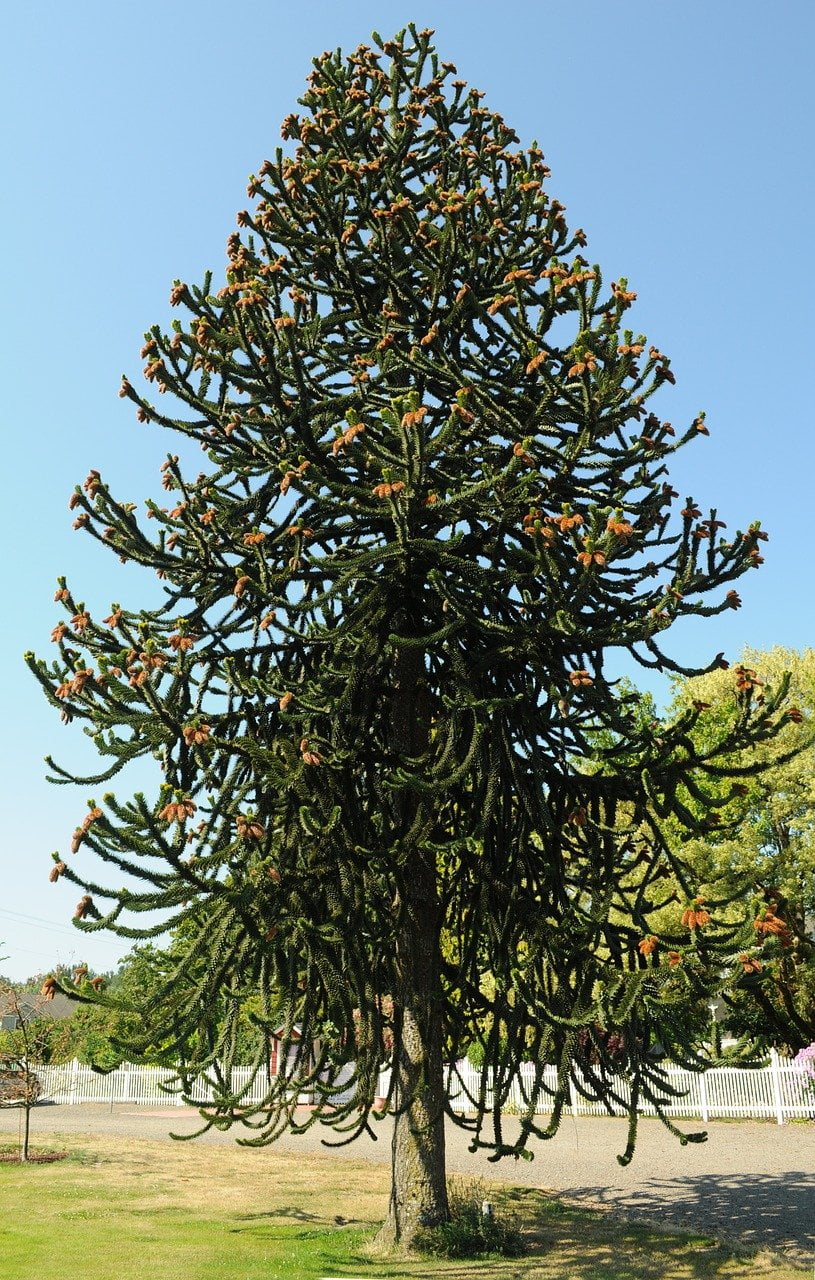
The monkey puzzle is not a subtle plant and is actually really difficult to design with and around, given its heavy form and unusually sharp scales. Introduced to Britain in 1795 and hugely fashionable in Victorian gardens, it has an unmistakable silhouette, thick, reptilian-looking branches, and leaves (scales) sharp enough to draw blood if handled carelessly. It is also an extremely long-lived tree, and the decision of where to plant one is one your garden will live with for decades, so it is worth getting right from the start.
Jump to
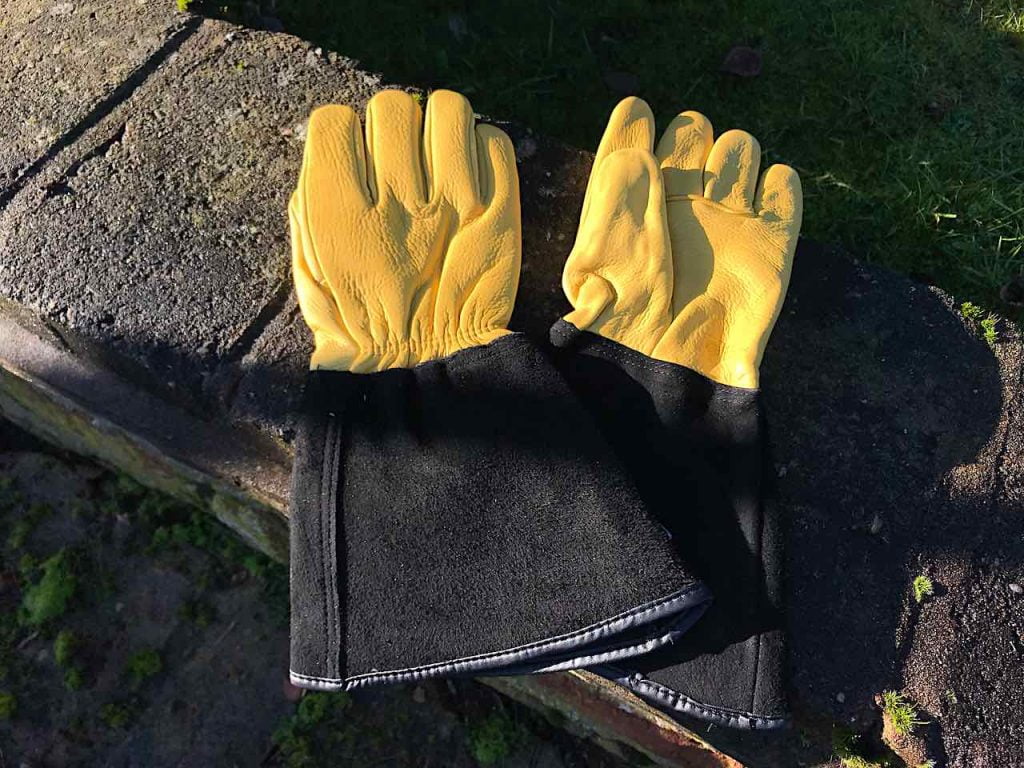
Monkey puzzle leaves are sharp along every edge, so before you get anywhere near pruning or repotting one, a decent pair of tough leather gloves saves you a lot of small cuts. I reach for my Gold Leaf gardening gloves whenever I am working near this tree, and they are the pair I recommend most often for anything spiky.
This page contains affiliate links for the plants and cooking items you may need. If you take action (i.e. subscribe, make a purchase) after clicking a link, I may earn some gardening commission, which helps me keep the Garden Ninja Blog free for all.
The monkey puzzle, Araucaria araucana, is an evergreen conifer native to central and southern Chile and western Argentina, where it grows in volcanic soils. This whopper of a tree is used to growing at altitude and can live for well over a thousand years, Ninjas! Ancient or what!
It belongs to an ancient family of trees that shared the earth with dinosaurs, and its thick bark, up to 15cm deep on old specimens, evolved as protection against wildfire in its native range. In the UK, it is classed as a conifer for pruning and care purposes, even though its foliage looks nothing like a typical needled evergreen.
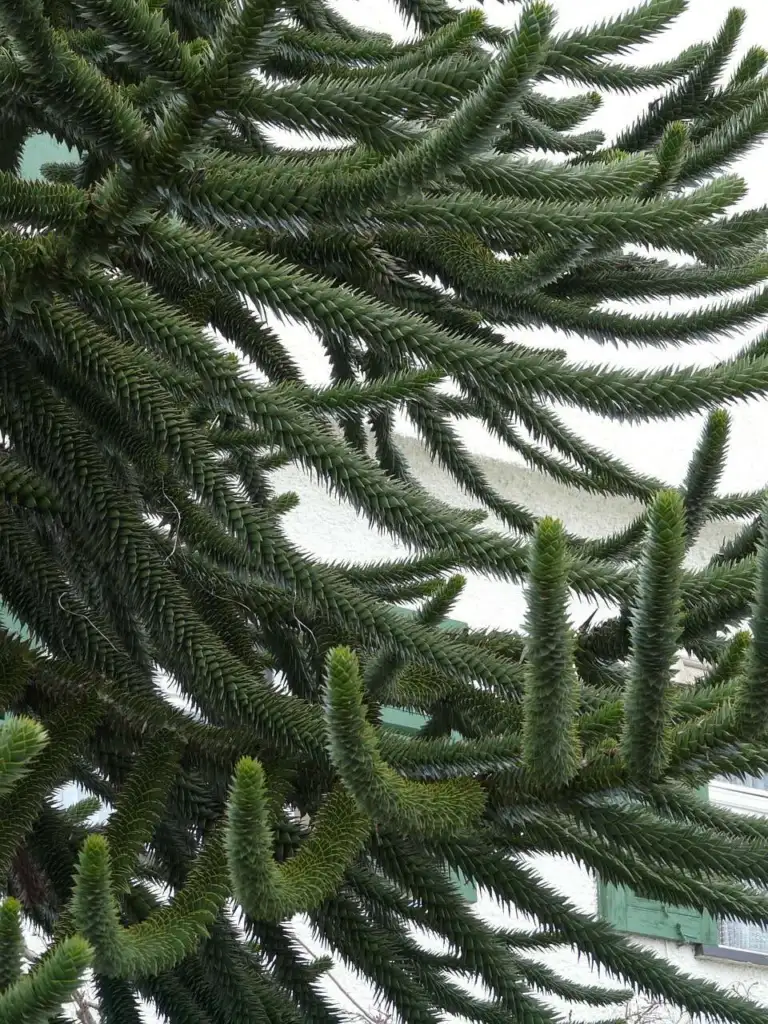
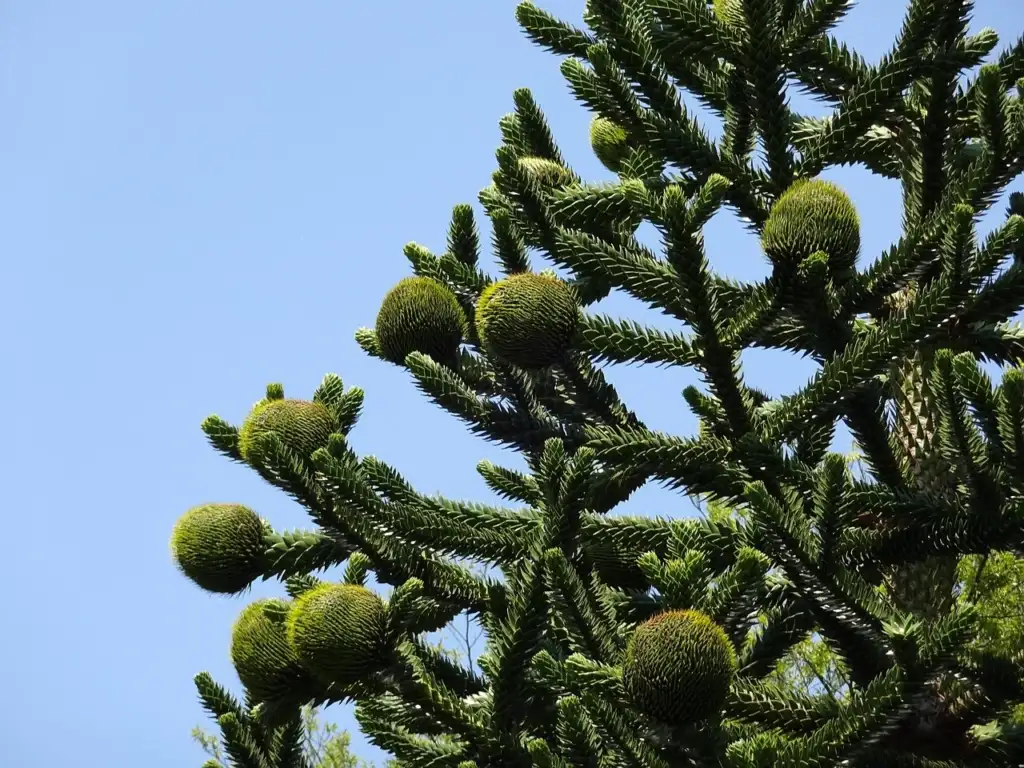
The name itself comes from a comment made by a visitor to Pencarrow House in Cornwall in 1834, who remarked that the tree’s spiky, overlapping foliage would puzzle even a monkey trying to climb it. The nickname stuck, and the tree is sometimes still sold under the older names Chile pine or monkey puzzle pine, though it is not a true pine at all. Mature trees are dioecious, meaning individual trees are either male or female, and it takes a specimen anywhere from 20 to 40 years to reach the point of producing the large, spiky female cones that eventually shed edible seeds.
If you want to see some excellent mature specimens, then do visit Benmore Botanic Gardens in Scotland, where you can see Monkey Puzzle trees in their natural ‘Chilean’ habitat amongst other South American planting. It’s my all-time favourite botanical garden and well worth a visit.

Left to its own devices in good conditions, a monkey puzzle will eventually reach 12 to 25 metres in height with a spread of 8 metres or more, and the RHS lists it as fully hardy at H7, meaning it will tolerate anything the UK climate throws at it once established. This tree species is tough and, once established, can handle just about anything thrown at it!
That combination, an enormous eventual size and total hardiness, is exactly why site selection matters so much, and it is the single most common regret I hear about from readers who planted one too close to a house or boundary without checking its mature dimensions first.
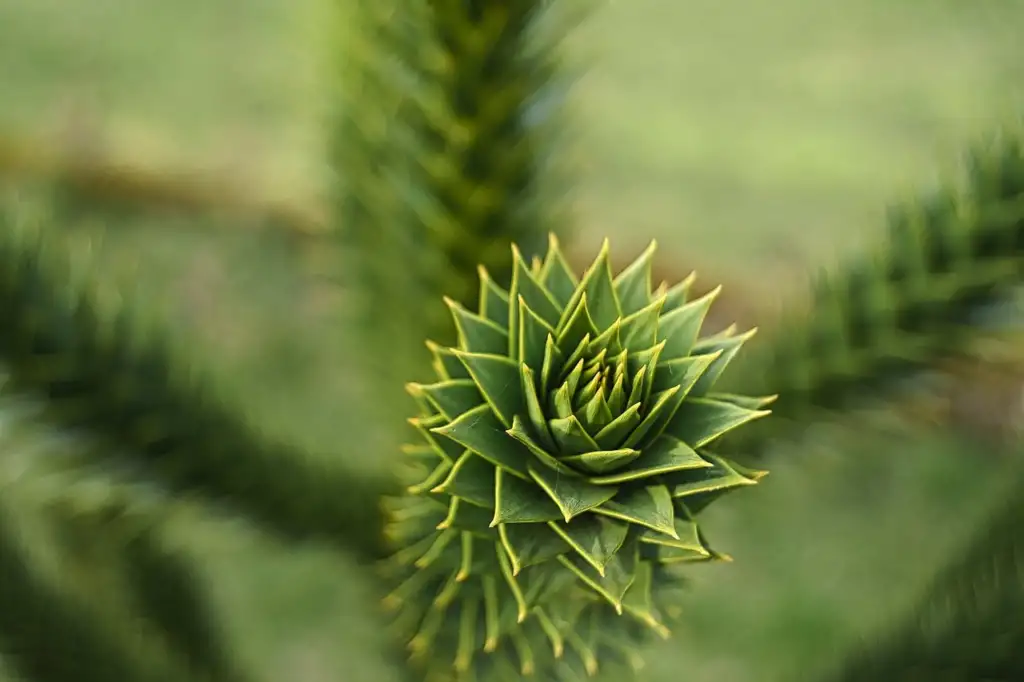
To put some real numbers to that growth, a well-established ten-year-old tree typically stands somewhere between 2 and 4 metres, still very much a garden-scale plant. Growth then continues steadily for the rest of the tree’s life, and a specimen that is a hundred years or more is the kind of substantial parkland tree you see at country estates and botanic gardens rather than anything you would find in a typical garden. Most of the mature monkey puzzles visible in the UK today were planted during the Victorian craze for the species in the mid-to-late 1800s, so many are already well over 150 years old!
This is the biggest consideration with a tree like the Monkey Puzzle. Once they start to grow, they will soon become statement trees of ambition. So you really need to think carefully about whether you have the space to accommodate the tree. Also, once it is in and growing, the difficulty in moving them, given the sharp scales, MUST be a consideration.
I’ve seen monkey puzzles planted in the centres of lawns and gardens as a twee focal point, but 10 years later, it’s dwarfing the entire garden and the owners have to have it professionally chopped down, which is a real shame. My old neighbour had a huge one that the magpies used to nest in. Whilst it was a fabulous specimen, it completely overtook their garden and became the one and only feature.
So if you’ve worked it out you have enough space for such a tall tree (if not, check out my small trees guide here instead), then choose an open, sheltered position in full sun or partial shade, away from cold, drying winds. The RHS specifically flags the cold-wind avoidance as a requirement for this species. A monkey puzzle planted in an exposed, wind-battered spot will struggle far more than one given some protection in its early years, even though the same tree will shrug off hard frost without any trouble at all once mature.
Soil needs to be moist but well-drained. This is the same combination that catches gardeners out with rhododendrons and camellias, where soil that retains too much winter water rots the roots, even though the top growth looks perfectly healthy for months afterwards. The species tolerates a wide pH range, from acid through to alkaline, and will grow happily in sand, loam or chalk, provided drainage is adequate, so soil type on its own rarely rules a monkey puzzle out!
Spacing is where I see the most long-term problems, as I’ve mentioned. Given the eventual spread of 8 metres or more, a monkey puzzle needs to sit at least 8m from a house wall, a boundary fence, drains, and any other tree you want to keep. I have visited more than one client’s garden where a young specimen had been planted two or three metres from a house, and by the time its roots and canopy became a structural concern. Removal was the only option left for a tree that had already taken decades to establish. If your garden cannot comfortably accommodate the mature size, growing one in a large pot, covered in the next section, is a far more sensible route. Rather than planting it in the ground and hoping it stays small!
Keep young trees well clear of overhead power lines, too, since a mature monkey puzzle’s height will put it well into that territory over time, and utility companies will cut back or remove a tree that has grown into cables. On root behaviour, the established opinion from arborists is that a mature monkey puzzle’s root system is not typically associated with the kind of aggressive foundation damage seen with species like willow or poplar, though the safest approach with any large tree close to a building is to get a qualified tree surveyor’s opinion before planting or before deciding whether to remove an existing one.
This is one of the most frequently asked questions I get. A monkey puzzle can live happily in a large container for many years BUT it eventually needs a permanent home in open ground. Choose a heavy, frost-proof pot at least 40 to 50cm in diameter with generous drainage holes; the bigger, the better. Use a soil-based compost such as John Innes No.3 mixed with some grit, as it retains moisture better than a peat-free multipurpose compost while still draining freely.
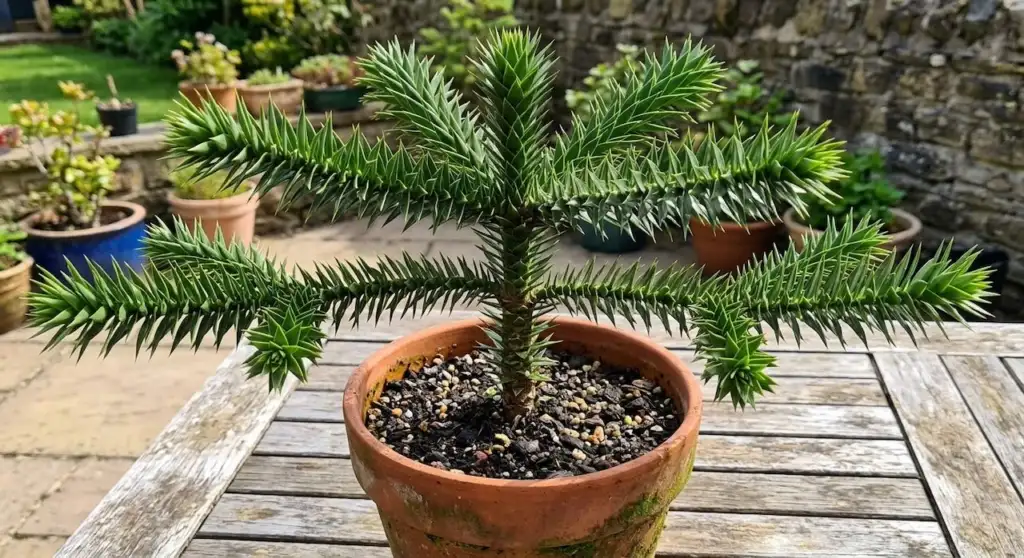
A potted monkey puzzle needs watering far more consistently than one in open ground, because the compost volume is small relative to the tree’s needs and dries out much faster, particularly in a terracotta or unglazed pot. This is the single biggest cause of the browning I see reported in container-grown specimens, as detailed below. Feed during the growing season with a balanced liquid feed, and repot into a slightly larger container every two to three years in spring, before growth resumes, until the pot becomes too large to move.
Eventually, usually somewhere between eight and fifteen years, depending on growing conditions, a container-grown monkey puzzle will reach a size where it needs either a permanent position in the ground or a very substantial planter it will never leave. Treat the pot as a way to enjoy the tree while you decide on its long-term home, or commit to periodic root pruning if you want to keep it as a true long-term container specimen. Without that ongoing root work, an ultimately enormous tree cannot be kept permanently small in a container.
Plant in spring or early autumn, when the soil is workable and warm enough for roots to establish before either summer drought or winter cold arrives. Dig a hole twice the width of the root ball and no deeper than the ball itself, since planting too deep is a common cause of poor establishment across most trees and shrubs. Backfill with the original soil, improved with some well-rotted organic matter, firm gently, and water thoroughly.
The first two to three years after planting are when a monkey puzzle is most vulnerable to drought stress, regardless of how hardy the mature tree becomes. Water deeply during any dry spell in the growing season, aiming to soak the full root zone; a light surface sprinkle will not reach the deeper roots that need it most. Apply a layer of bark mulch or well-rotted compost around the base each spring to help retain moisture and suppress weeds, keeping the mulch clear of the trunk to prevent rot at the base.
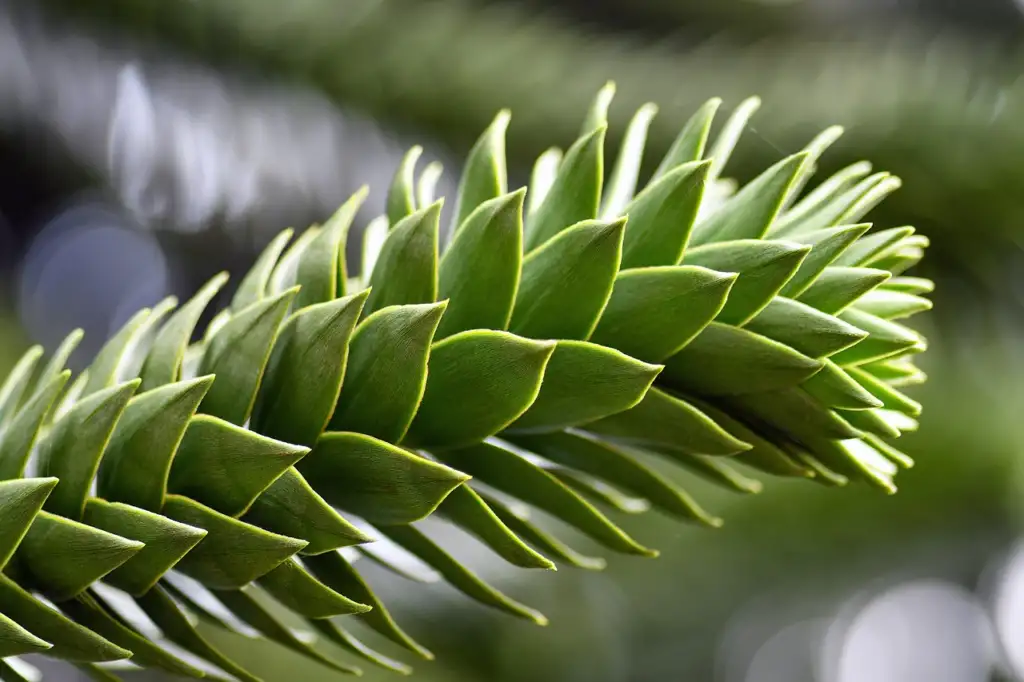
Staking is rarely necessary for a monkey puzzle planted at a sensible size, since the tree’s growth habit is naturally sturdy, but a young specimen in a particularly exposed spot can benefit from a single stake and tie for the first year or two while the root system establishes but again be careful of those sharp leaves!
The RHS classes Araucaria araucana in pruning group one, and its own guidance is direct on this point: only young specimens respond well to being cut back into older wood. This is the same golden rule I set out in my conifer pruning guide, and it applies just as firmly here. Once a branch has hardened into old wood on a mature tree, cutting back into it will not stimulate fresh growth from that point, and you will be left with a permanent bare patch.
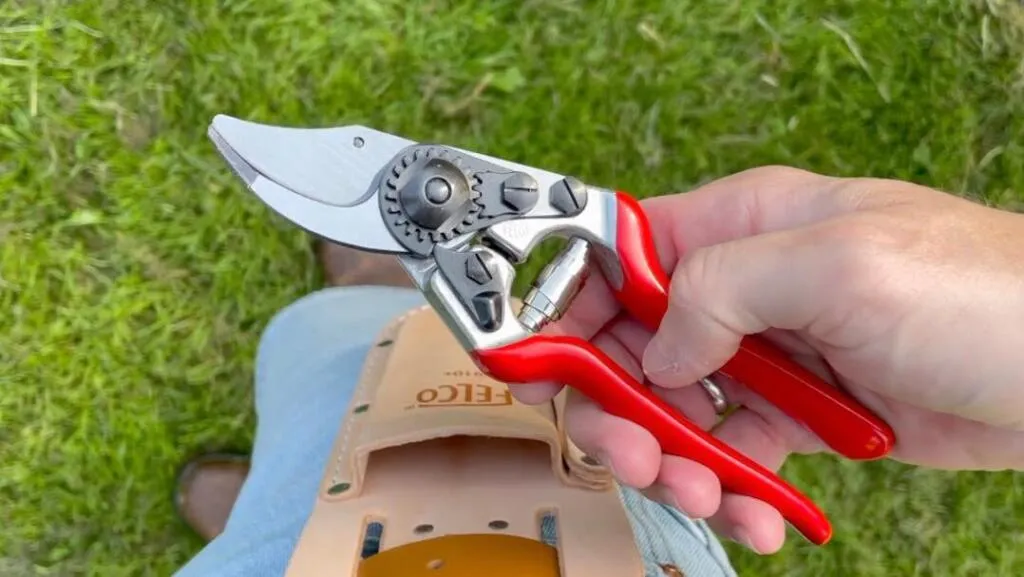
In practice, pruning a monkey puzzle is mostly about removing what actually needs to go: dead, damaged, or diseased branches, or a competing leader on a young tree. This is selective removal, not the routine all-over shaping you would give a hedge. Remove dead, damaged or diseased branches back to healthy wood at any time of year, using sharp, clean secateurs or a pruning saw for anything too thick for hand tools.
If a young tree has a double leader competing for dominance, select the strongest, most upright stem and remove the other while the tree is still small enough for the cut to heal cleanly, since a monkey puzzle with two competing leaders later in life becomes structurally weaker and harder to correct.
Before any significant pruning or felling work, check whether the tree is subject to a Tree Preservation Order, as monkey puzzles are distinctive amenity trees that local authorities often protect. It is a criminal offence to prune, top or fell a protected tree without the council’s consent, and even without a TPO in place, a tree in a conservation area typically needs six weeks’ written notice to the council before work can start. Your local planning authority can confirm the status of a specific tree, and checking before you book in a tree surgeon saves an awkward conversation later.
Monkey puzzle trees do naturally shed lower branches (which are covered in the next section and are a separate matter from pruning) and should generally be left to fall or removed only once fully brown and dead, since removing living lower growth prematurely does not stop the natural process and only creates an unnecessary wound.
Given the size and weight of the branches on a mature specimen, any work above head height or involving a ladder is best handed to a qualified tree surgeon rather than attempted from a domestic ladder, particularly given how sharp the foliage is to work around, which can quite quickly slice through hands, cheap gloves and your patience, Ninjas!
This is by far the most common question I get asked about this tree, both through the forum and directly, and it has more than one answer depending on which part of the tree is affected and how the browning is distributed. Working through the pattern of what you are seeing usually points to the cause fairly quickly.
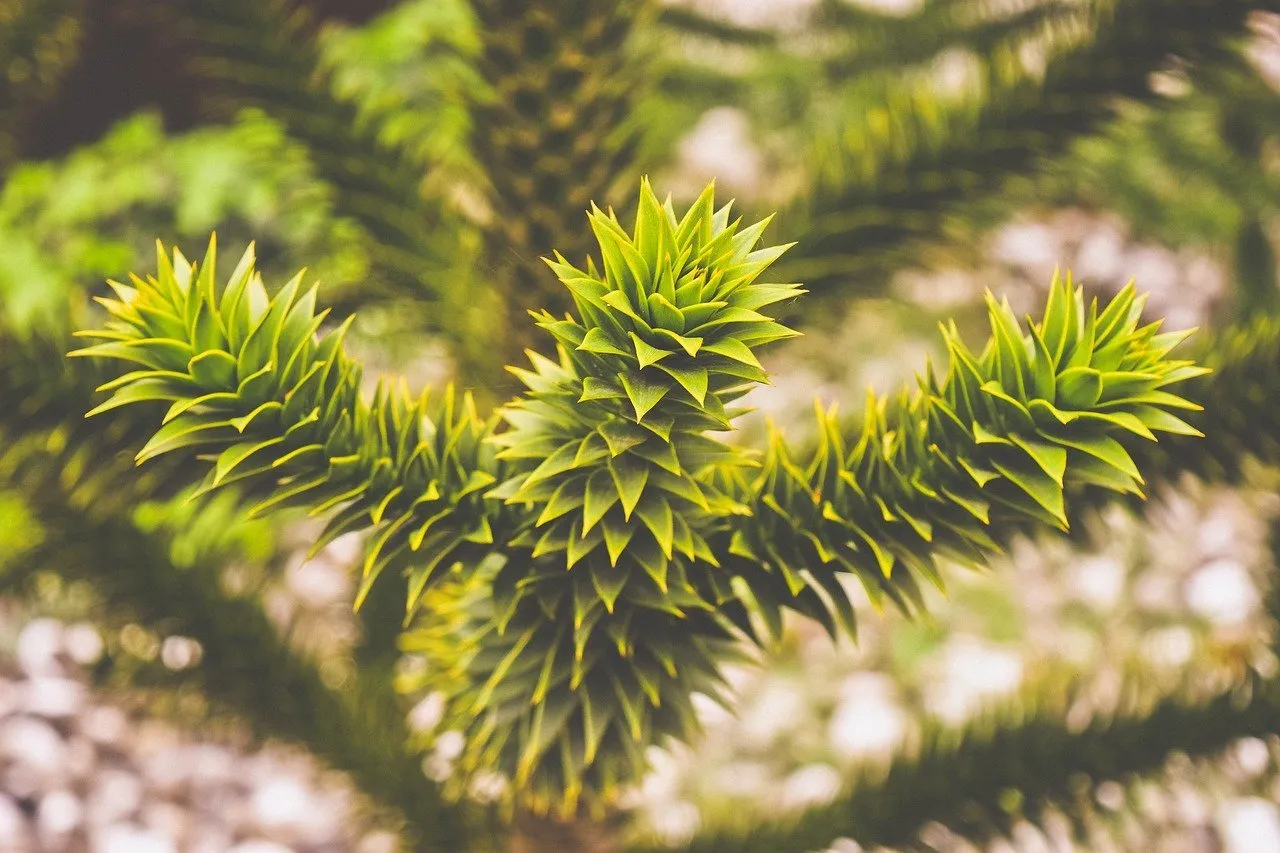
Natural lower branch loss. On a healthy, established monkey puzzle, the oldest branches low down on the trunk browning off and eventually dropping is completely normal and nothing to worry about. As the tree grows, it redirects its energy toward new growth higher up and at the tips, and the older, lower branches are gradually shaded out and shed. If the browning is confined to the lowest, oldest branches while the rest of the tree looks healthy and green, this is very likely what you are seeing.
Drought stress. This is the leading cause of widespread browning on young trees, especially on container-grown specimens, and it is the pattern behind many of the forum threads on this exact topic. A monkey puzzle that has gone dry at the roots, whether through an underwatered pot, a hot dry spell after planting, or simply being forgotten about during building work or a house move, will often go brown across large sections of the tree rather than just the lower branches.
This species often recovers well from what appears to be complete dieback. I have seen trees that looked entirely dead after months of neglect put out fresh green shoots from the base of the main stem once watering resumed, so it is worth giving a drought-stressed tree a proper, deep soak and a few weeks before deciding it is beyond saving.
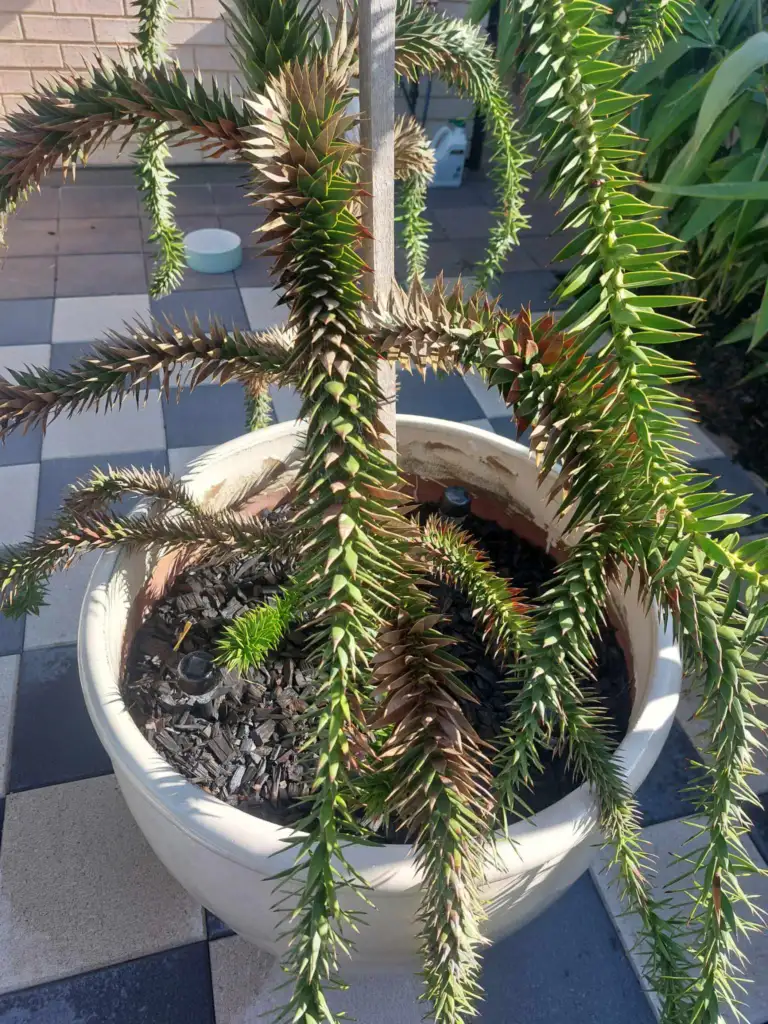
Waterlogging. The opposite problem produces surprisingly similar symptoms above ground. A monkey puzzle sitting in heavy, poorly drained soil, or in a pot without adequate drainage holes, will suffer root damage that shows up as browning and dieback in the top growth, even though the actual cause is happening entirely below the surface. Check that the soil is properly moist rather than saturated, and improve drainage or move a container to a spot where it is not sitting in standing water if this seems to be the issue.
Transplant shock. A recently moved or newly planted tree, particularly one that has been dug up and relocated rather than bought in a container, can go brown as it adjusts to root disturbance, even when aftercare has been correct. This usually resolves over one to two growing seasons as the root system re-establishes, provided watering and drainage are otherwise right.
Cold or wind damage. A mature monkey puzzle is fully hardy, but a young tree in its first winter or two, particularly one in an exposed position that has not yet had the chance to establish a deep root system, can show browning after a harsh cold snap or prolonged drying wind. This tends to affect the most exposed side of the tree rather than being distributed evenly, and new growth the following spring usually confirms whether the tree has come through it.
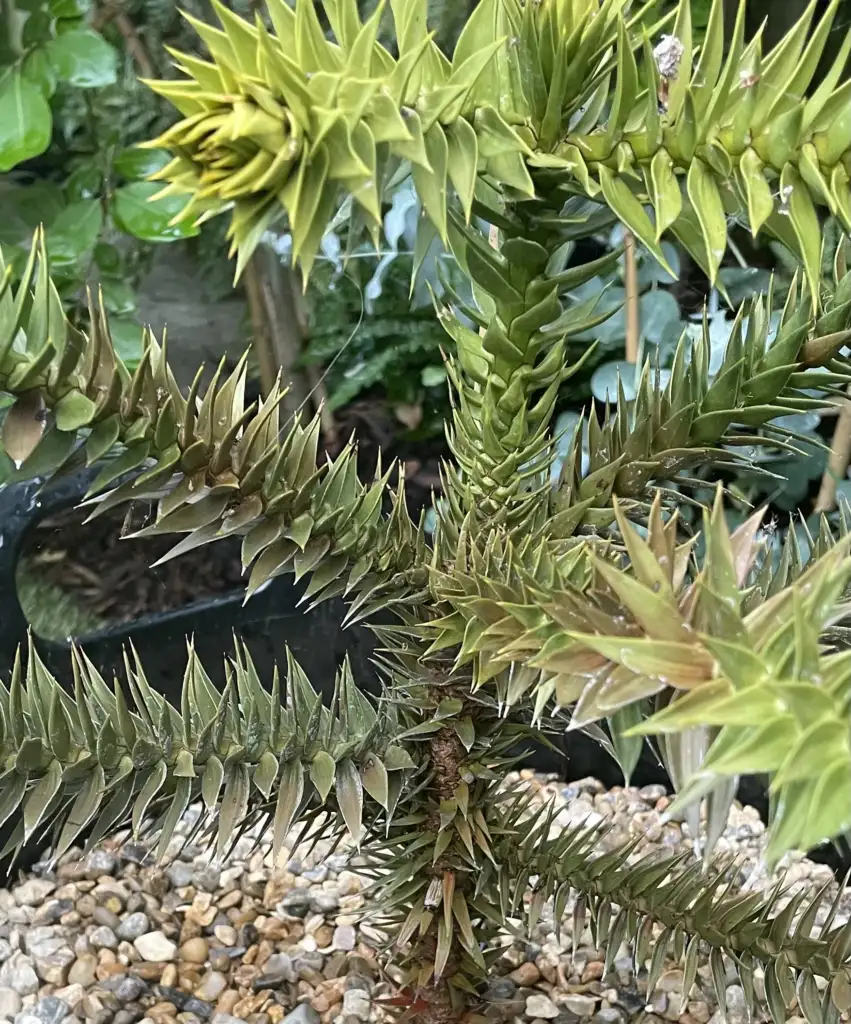
Yellowing rather than browning. A general yellowing across the newer growth, rather than the browning of older growth described above, more often points to a nutrient deficiency or a pH the tree is struggling with, though this species tolerates a wide pH range, so it is a less common cause than it would be for a true ericaceous plant.
Check that the soil is not compacted or waterlogged first, since poor root function from either cause will show as yellowing before outright browning.
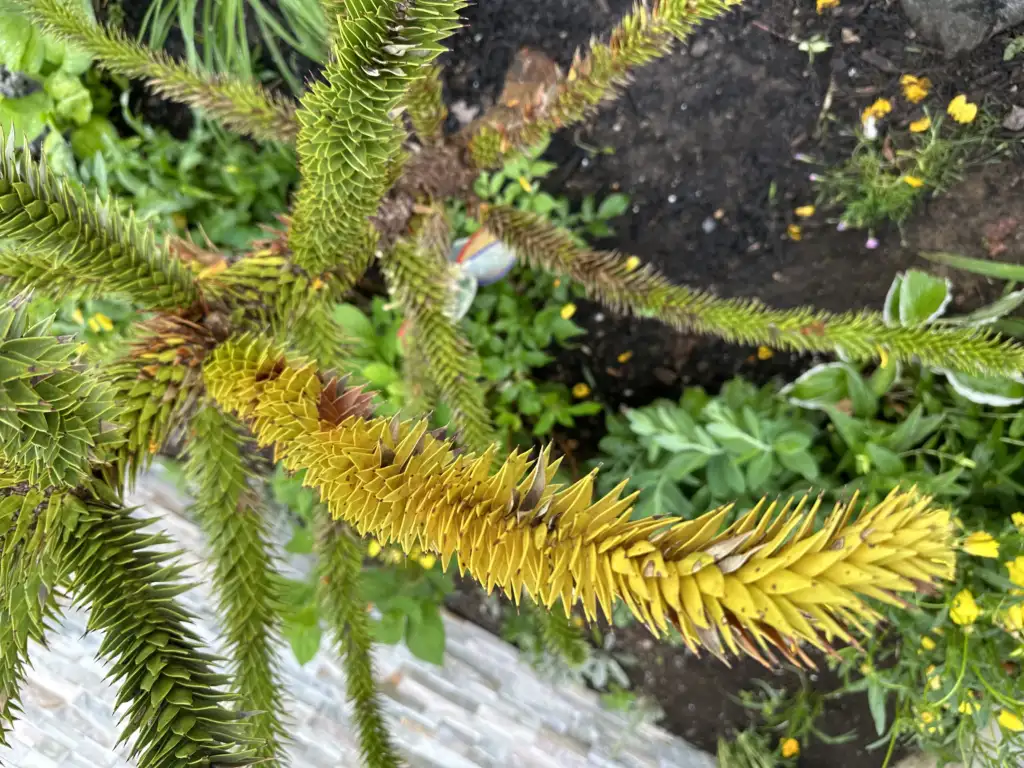
Branches die near the trunk while the tips stay green. This pattern usually points back to the natural lower-branch shedding described above, particularly on an older tree, where the lowest, oldest wood closest to the trunk is exactly where you would expect the process to start. If it is happening higher up the tree or across a wider area, revisit the watering and drainage checks first.
Stunted or very slow growth in a pot. A monkey puzzle is naturally a slow grower in its early years, even in ideal conditions, typically putting on somewhere between 10 and 30cm a year once established, so slow growth on its own is not necessarily a problem. If a potted specimen has stopped growing altogether, check that it is not pot-bound, since a root system that has filled the available compost will struggle to take up water and nutrients even when you are watering and feeding correctly.
Honey fungus. The RHS notes this as the main disease risk for this species, though it is otherwise largely trouble-free and generally pest-resistant. Honey fungus shows as a more sudden, widespread decline rather than the gradual patterns above, often with white fungal growth visible under the bark at soil level and honey coloured toadstools appearing at the base in autumn. This is a soil-borne fungal disease with no reliable chemical treatment, so if you suspect it, it is worth getting a proper diagnosis before deciding on next steps.
Monkey puzzle trees are usually sold as container-grown specimens, ranging from small whips under a metre tall to substantial pot-grown trees several metres high, for an instant architectural effect. A smaller specimen establishes faster relative to its size and is considerably cheaper. In my experience, a well-cared-for small tree often overtakes a larger, more expensive one within a few years once both are in the ground, since the smaller tree has less root disturbance to recover from.
Prices vary a good deal by size and in my experience these are not cheap trees by any means. A young whip or small potted tree under a metre tall typically runs from around £25 to £50 through general UK nurseries, a well-developed specimen of a metre or two moves into the £70 to £150 range, and anything approaching 2 to 3 metres or more, the kind of instant impact tree sold by specialist tree nurseries, can run well into several hundred pounds.
Mature, established trees already growing on a property carry no meaningful resale value of their own, since they cannot practically be dug up and moved once past a certain size.
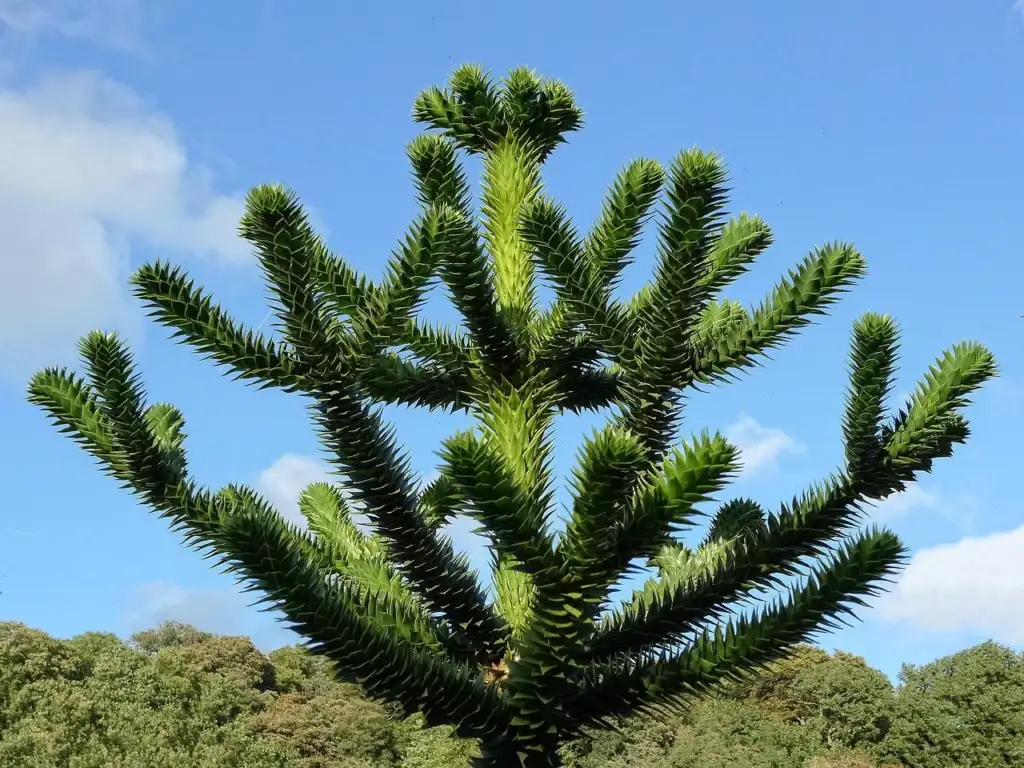
Check the root system if you can, either by asking the nursery to slip the tree from its pot or by gently checking for roots circling the base of the container. A pot-bound specimen with a dense mat of roots at the base will take longer to establish once planted out and is worth avoiding in favour of a tree with a more open root system. Look over the foliage for even, healthy green colour throughout, since a tree already showing patchy browning in the nursery makes for a poor start once it is in your own garden.
Growing your own from seed is possible, but super slow. Fresh seed needs a period of cold stratification, typically several months in a fridge or a cold frame over winter, before it will germinate reliably, and a seed-grown tree takes considerably longer to reach a useful garden size than a nursery-bought specimen. For most gardeners, buying a small container-grown tree and letting it establish in the ground is the more practical route, and growing from seed is really only worth pursuing as an experiment or where you specifically want to grow a tree from known parentage.
Araucaria araucana is classified as endangered in the wild by the IUCN, threatened by wildfires, grazing, and overharvesting of its edible seeds in its native range in Chile and Argentina. It remains the national tree of Chile and is still relatively widely available from cultivated stock at UK nurseries, so buying one for a British garden has no bearing on wild populations.
| Field | Detail |
|---|---|
| Botanical Name | Araucaria araucana |
| Plant Type | Evergreen conifer tree |
| RHS Hardiness | H7, fully hardy throughout the UK |
| Height and Spread | Up to 25m in height, 8m or more in spread at maturity |
| Flowering Period | Cones rather than flowers, produced from around 20 to 40 years old |
| Best Conditions | Full sun or partial shade, sheltered from cold winds, moist but well drained soil |
| Key Feature | Thick, spine covered branches and an unmistakable architectural silhouette |
Yes. The monkey puzzle has been successfully grown in British gardens since 1795 and is rated H7 by the RHS, meaning it is fully hardy throughout the UK once established. The main requirement is space, since it eventually becomes a very large tree.
Most commonly, this is either natural shedding of the oldest lower branches, drought stress in a young or container-grown tree, or waterlogged roots. Work through the pattern of the browning against the causes covered in the diagnostic section above to narrow it down.
Yes, for a number of years in a large, frost-proof container with good drainage, though it will eventually need either a permanent position in the ground or ongoing root pruning as a long-term container tree.
Growth is slow in the early years, typically 10 to 30cm annually once established, which is one reason it was such a popular specimen tree for Victorian gardens seeking a long-term architectural feature.
The name comes from a remark made by a visitor to Pencarrow House in Cornwall in 1834, who suggested the tree’s sharp, overlapping leaves would puzzle a monkey trying to climb it.
A mature specimen in good condition can reach 12 to 25 metres in height with a spread of 8 metres or more, so it needs a large garden or a permanent parkland-style setting rather than a small suburban plot.
Yes. As the tree matures, the oldest lower branches are shaded out and shed as part of normal growth, a process distinct from disease or stress affecting the rest of the tree.
The leaves carry no toxins, but they are stiff and sharp along every edge, and cuts from brushing against them at speed are the real practical risk. I would not plant one right next to a path, a play area or a spot where a dog regularly runs.
No, it produces cones instead of flowers, since it is a conifer and not a flowering plant. Female trees produce large, spiky cones that mature roughly 18 months after pollination and hold around 200 edible seeds each, usually starting from around 20 to 40 years old.
Many are. Monkey puzzles are distinctive amenity trees that councils fairly often protect with Tree Preservation Orders, and even without one, a tree in a conservation area usually requires six weeks’ notice to the council before work. Check with your local planning authority before pruning or felling.

Join over 100,000 gardeners on YouTube
Free gardening videos from the Garden Ninja, with 8 million views and counting.
Subscribe on YouTube, it’s freeDeciding where a specimen tree like a monkey puzzle sits in your garden is a design decision as much as a horticultural one, and it is exactly the kind of question I work through with clients before anything goes in the ground. My online courses cover the same design thinking, from planning a whole garden layout to choosing the right plants for your space.
Courses start at £29, with the full Garden Design for Beginners course providing the complete framework I use on every project.
For the garden you’ve already got, not the one you’re starting from scratch. Seven checklists and video lessons from BBC Garden Rescue’s Lee Burkhill, designed to help you decide what’s worth keeping before you spend a penny.
Garden Design Examples for Small Gardens: 30 Design Templates & Planting Plans: In this online gardening course, I’ll walk you through 30 fantastic garden designs, explaining the logic behind the layout and plant choices, plus take-home tips for applying them in your own garden.
Learn how to transform and design your garden with Lee Burkhill’s crash course in garden design. In over 5 hours, Lee will teach you how to design your dream garden. Featuring practical design examples, planting ideas and video guides. Learn how to design your garden in one weekend!
Garden Design for Beginners Online Course: Want to become a garden designer or design your own garden? This beginner course is for you. Join me, Lee Burkhill, an award-winning garden designer, as I train you in the art of beautiful garden design. Enjoy 20 hours of online study and video lessons, along with quizzes and a completion certificate.
A monkey puzzle tree rewards patience and a bit of upfront planning far more than it rewards intervention once it is established. Get the site right, respecting how large the tree will eventually become, get the soil drainage right, and keep a young tree consistently watered through its first two or three summers, and you have most of what this species needs. Pruning should stay minimal and limited to dead, damaged or competing growth, never a hard cut back into old wood.
If your tree is browning, work through the causes in order of likelihood: natural lower branch loss first, then drought, then waterlogging, then transplant or cold shock, since the vast majority of the questions I see on this exact topic resolve to one of those four. If you are still not sure what you are looking at, my gardening forum is the quickest way to get a second opinion, ideally with a photo attached.
Happy gardening, and if you have a monkey puzzle question this guide has not covered, drop it on the forum with a photo, and I will get back to you.


Lee Burkhill, known as the Garden Ninja, is an award-winning garden designer and horticulturist with over 30 years of gardening experience and 15 years as a professional garden designer. A qualified RHS (Royal Horticultural Society) professional, Lee specialises in sustainable garden design and practical horticultural advice. He designs and presents on BBC1’s Garden Rescue and in leading gardening publications. Lee combines three decades of hands-on gardening knowledge with professional design qualifications to help gardeners create beautiful, functional outdoor spaces.
View all posts by Lee Burkhill






JOIN THE NINJAS
Be the first in line for new Guides, Discount codes and Offers