-
Gardening with Arthritis: Tools and Tips That Actually Help
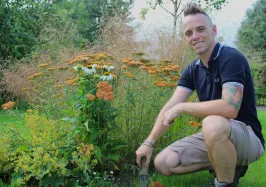
 Lee Burkhill: Award Winning Designer & BBC 1's Garden Rescue Presenters Official Blog

I want to start this guide a little differently from how I usually do. Most of what I write is about plants and design. This one is about people, and about something I think gets talked about far too little in gardening circles: the fact that so many of us love being outdoors, hands in the soil, and yet our bodies do not always cooperate with that love the way they used to.
Quick Answer
Gardening with arthritis or a bad back is still possible with a few thoughtful changes. A kneeler with handles, angled hand tools, ratchet secateurs and a raised bed built to a comfortable height remove most of the bending and gripping that causes pain, letting you garden in shorter, kinder sessions.
Over the years of designing gardens for clients, and through the forum here on Garden Ninja, I have had countless conversations with gardeners who have arthritis, joint pain, a bad back, reduced grip strength, or who are simply finding that the gardening they have always loved is becoming harder on their body than it once was. Some of these conversations have been heartbreaking because the person on the other end usually assumes they would have to give up gardening. I have never once thought that was true, and I still do not. What usually needs to change is not the person’s love of gardening, but the tools, the layout, and a little bit of patience with themselves. That is what this guide is for!
Jump To
This page contains affiliate links for products I use and love. If you take action (i.e. subscribe, make a purchase) after clicking a link, I may earn some gardening commission which helps me keep the Garden Ninja Blog free for all.
1. A word before we start
If you are reading this because your hands do not grip the way they used to, or because getting down to weed a border now means a difficult negotiation with your knees about getting back up again, I want you to know that what you are dealing with is common. Arthritis, in some form, affects around 10 million people in the UK, and the vast majority of them still want to garden. You are not alone in this, and you have not done anything wrong by finding it harder than you used to. In fact, even without a medical condition, as we age gardening’s physical exertions can become difficult even for the fittest of us; even I now make groans and sighs when I have to get up off a weeder!
What I have learned, both from clients and from the Garden Ninja community, is that the gardeners who keep gardening happily through arthritis or joint pain are not the ones who push through the pain and grit their teeth. They are the ones who quietly adapt: a slightly different tool here, a raised bed there, permission to do twenty minutes instead of two hours. None of these adaptations are a step down from “real” gardening. They are simply gardening that fits the body you have today rather than the one you had twenty years ago, and there is no shame whatsoever in that.

This guide goes through the practical changes in roughly the order most people find helpful: starting with the things that affect you while you are kneeling or bending, moving through hand tools and grip, and finishing with the bigger structural changes like raised beds that, while a bigger initial undertaking, often make the most lasting difference of all. Take what is useful to you and leave the rest. There is no single right way to do this, only the way that works for your garden, your joints and your good days.
2. Kneelers and getting up and down
For many gardeners, the hardest part of a gardening session is not the gardening itself; it is the getting down to ground level and, more honestly, the getting back up again afterwards. This is one of the easiest things to solve and one of the changes that makes the biggest practical difference, so it feels right to start here.
A garden kneeler with sturdy side handles does two jobs at once. It cushions your knees against the hard ground, which, on its own, takes a surprising amount of strain off arthritic knees, and the handles on either side give you something solid and stable to push up from, rather than relying on your knees, wrists, or a nearby fence to get you back to standing.
Many of these kneelers also flip over into a low bench, so you have the option to kneel or sit depending on how your knees feel that day. I think this is one of the single best pieces of kit for anyone gardening with joint pain, and it consistently gets some of the warmest feedback from readers of anything I recommend. The Ohuhu kneeler and seat is the one I point people towards most often, since the flip mechanism and the handle height suit most people without any fuss.
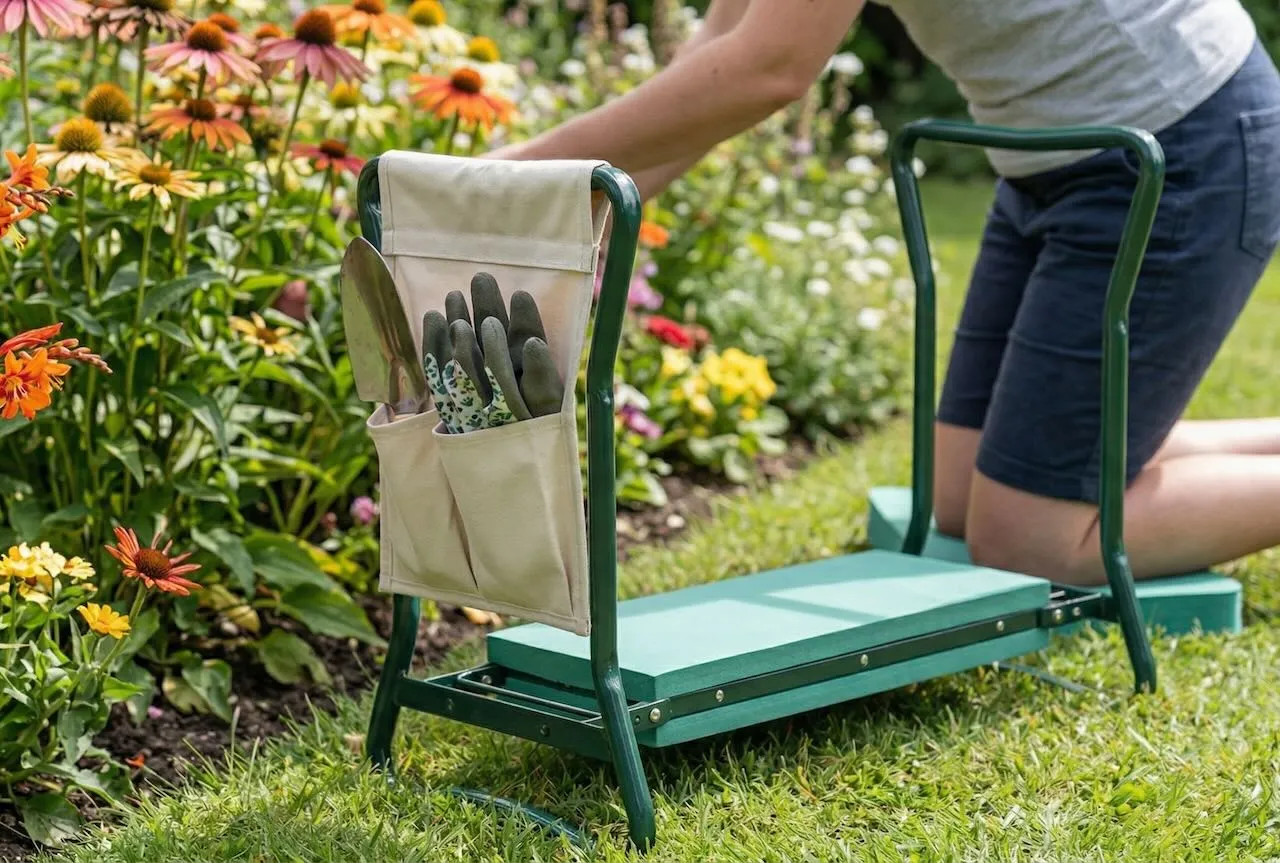
When you are choosing one, look for a kneeler with a thick foam pad rather than a thin one, since the cushioning is really doing the work here. Check the handle height feels right for your own height and reach before committing, and if you can, choose one with a folding frame so it is easy to store away when not in use. A kneeler that lives in the shed gathering dust because it is awkward to get out is no use to anyone, so a lightweight, easily foldable design earns its keep.
🛒 Buy the Ohuhu Garden Kneeler and Seat from Amazon UK
3. Hand tools and grip
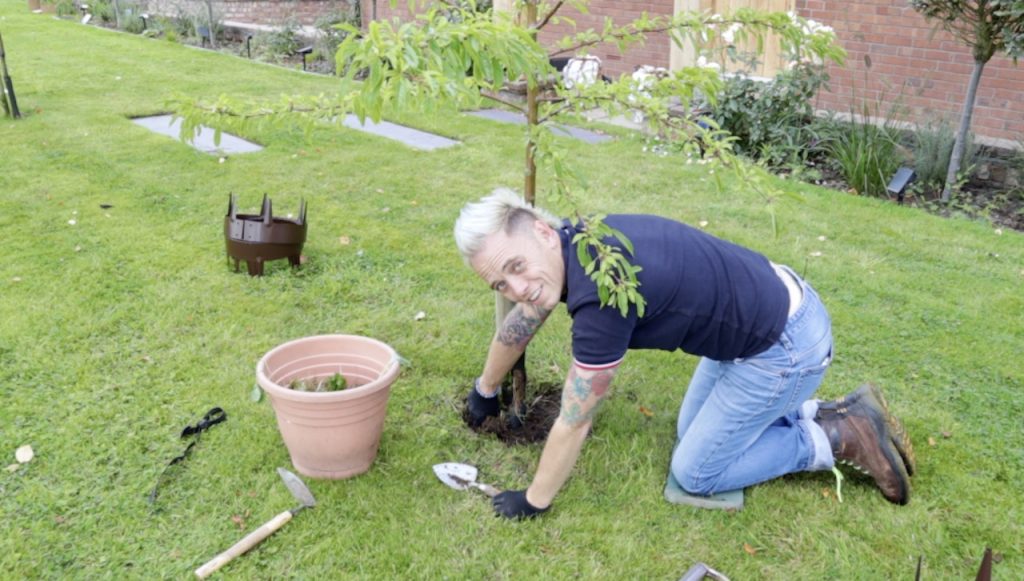
If your hands are where you feel arthritis most, particularly in the small joints of the fingers and the base of the thumb, the standard trowel and hand fork that most of us grew up using can become painful to use, even for a short time. This is not about strength so much as it is about the shape of the tool and how much your joints have to twist and grip to use it.
The single biggest design feature to look for is an angled or pistol-grip handle rather than a straight inline handle. A standard trowel asks your wrist to bend at an awkward angle to get the blade flat against the soil, which puts real strain through the wrist and the base of the thumb. A tool with the handle angled upward, more like the grip of a pistol, lets your wrist stay in a far more natural, neutral position while the blade still does its job at ground level. Thrive, the UK’s gardening and health charity, specifically recommends looking for handles designed this way to reduce hand and wrist strain, and it is one of those small design changes that makes an outsized difference once you feel it.
The other detail worth paying attention to is the handle material and thickness. A soft, slightly padded, non-slip handle is far kinder to arthritic hands than a thin metal or hard plastic one, because you do not need to grip it as tightly to keep control of the tool. Some ranges, such as Easi-Grip, build this thinking into the whole tool rather than just the handle, with soft moulded grips and the option of an additional cuff that wraps gently around your forearm to take some of the gripping work away from your fingers entirely. If your grip strength varies from day to day, that kind of additional support can be the difference between a good gardening day and a frustrating one.
🛒 Find ergonomic hand tools on Amazon UK
4. Long-handled tools to avoid bending
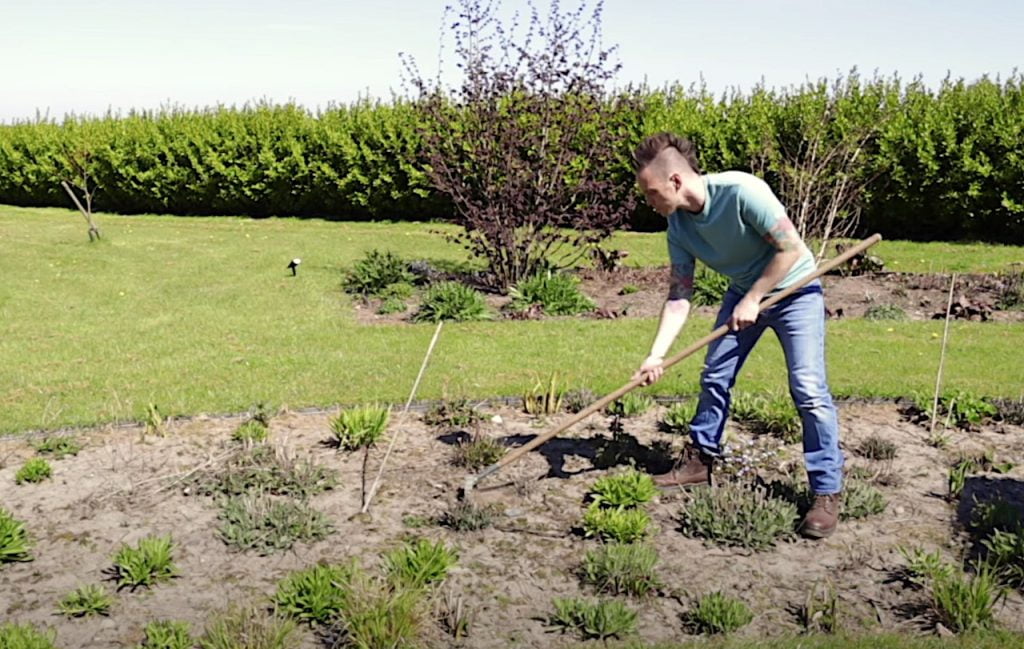
If bending and stooping is what causes you the most discomfort, whether that is in your back, your hips or your knees, switching to long-handled versions of your everyday tools removes a great deal of that bending without asking you to give up the tasks themselves. A long-handled trowel, weeder or bulb planter lets you work at standing height rather than crouching, which is a simple change with a real effect on how a gardening session leaves you feeling afterwards.
I would also gently suggest looking at multi-change tool systems, where a single lightweight handle accepts a range of interchangeable heads, from a hoe to a cultivator to a weeding fork. The benefit here is twofold. First, you only need to learn the handling and weight of one handle rather than several different tools. Second, because you are not buying a full-length handle for every single tool, your shed ends up lighter on storage and your arms end up lighter on lifting. Before buying, it really is worth holding a multi-change handle in the shop if you can, just to check the weight feels manageable and that swapping the heads over is easy for your hands, since some systems are fiddlier than others to click into place.
🛒 Find long-handled garden tools on Amazon UK
💡 Top Tip
Lightness matters more than you might expect. A tool that feels only a little heavy in the shop can feel considerably heavier after twenty minutes of use, particularly if your grip is already working harder than it used to. Where you have a choice between a slightly heavier tool with a nicer finish and a properly lightweight one, I would always choose lightweight for anyone managing joint pain. You can always treat yourself to something beautiful for the mantelpiece instead.
5. Secateurs and cutting tools
Pruning and cutting back is often one of the activities that causes the most hand pain, because traditional secateurs ask your whole hand to squeeze repeatedly against spring resistance, and that repetitive squeezing is exactly the kind of movement that aggravates arthritic finger and thumb joints. The good news is that secateur design has come a long way, and there are now several good options for gardeners with reduced grip strength. I have written a much fuller complete guide to choosing secateurs if you want to go deeper into the wider range once you have read this section.
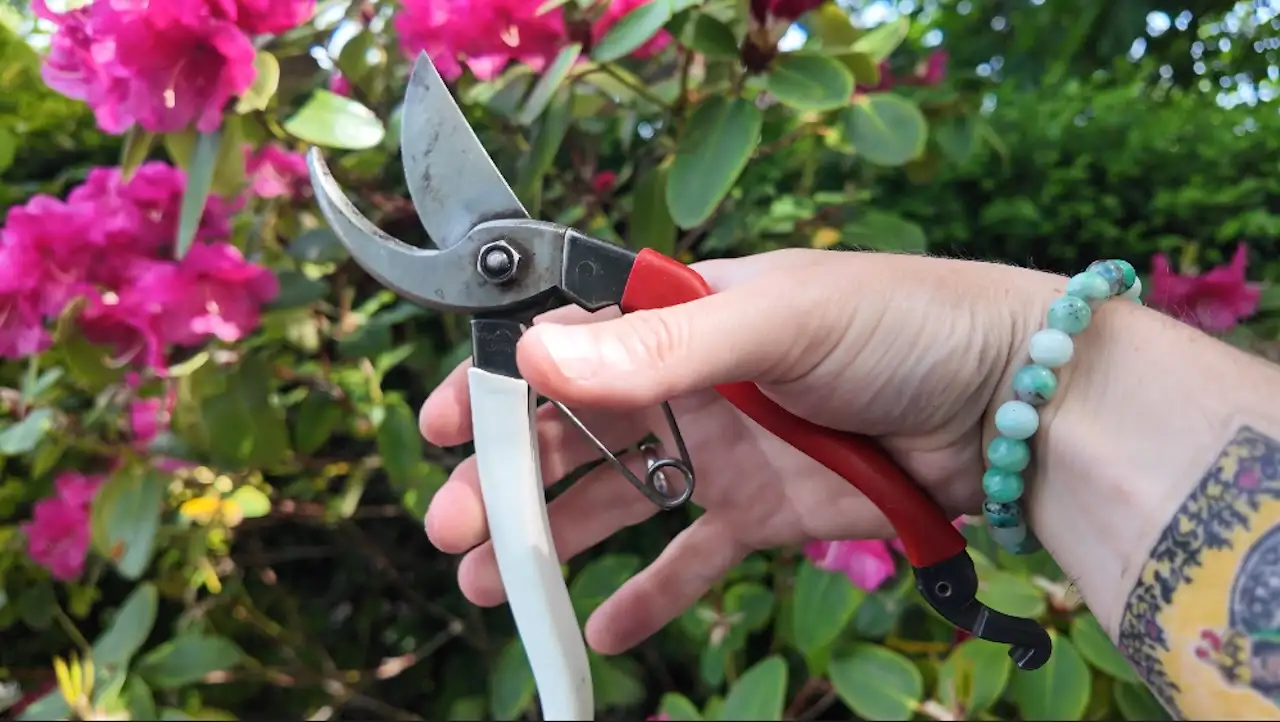
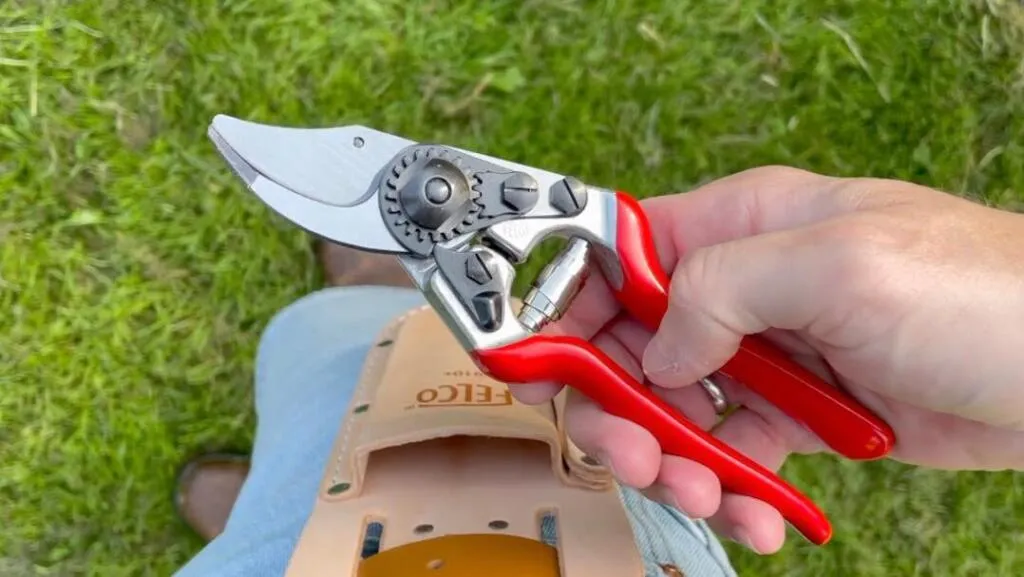
Ratchet secateurs are the change I recommend most often here. Rather than cutting through a branch in a single hard squeeze, a ratchet mechanism lets you cut in several smaller, much lighter squeezes, with the ratchet holding your progress between each one so the branch does not spring back. This means cutting through a stem that might once have needed a single painful effort now only needs several gentle ones, which for many arthritic hands is a real difference. Of the pairs I keep in the shed, the Okatsune 103 is the one that consistently earns its place for lighter, more frequent cutting, and I keep it close by for exactly the days when my own hands feel less cooperative than usual. Even without arthritis, a well-balanced pair of secateurs makes pruning sessions noticeably less tiring.
Keeping any secateurs properly sharp also matters more than people realise here, because a blunt blade needs considerably more force to cut through the same stem than a sharp one does. A quick sharpen every so often, or simply choosing quality secateurs that hold their edge well, reduces the effort needed for every single cut you make through a season, which adds up to a real difference in how your hands feel by the end of a pruning session.
🛒 Buy the Okatsune 103 Bypass Secateurs from Amazon UK
6. Gloves that actually help
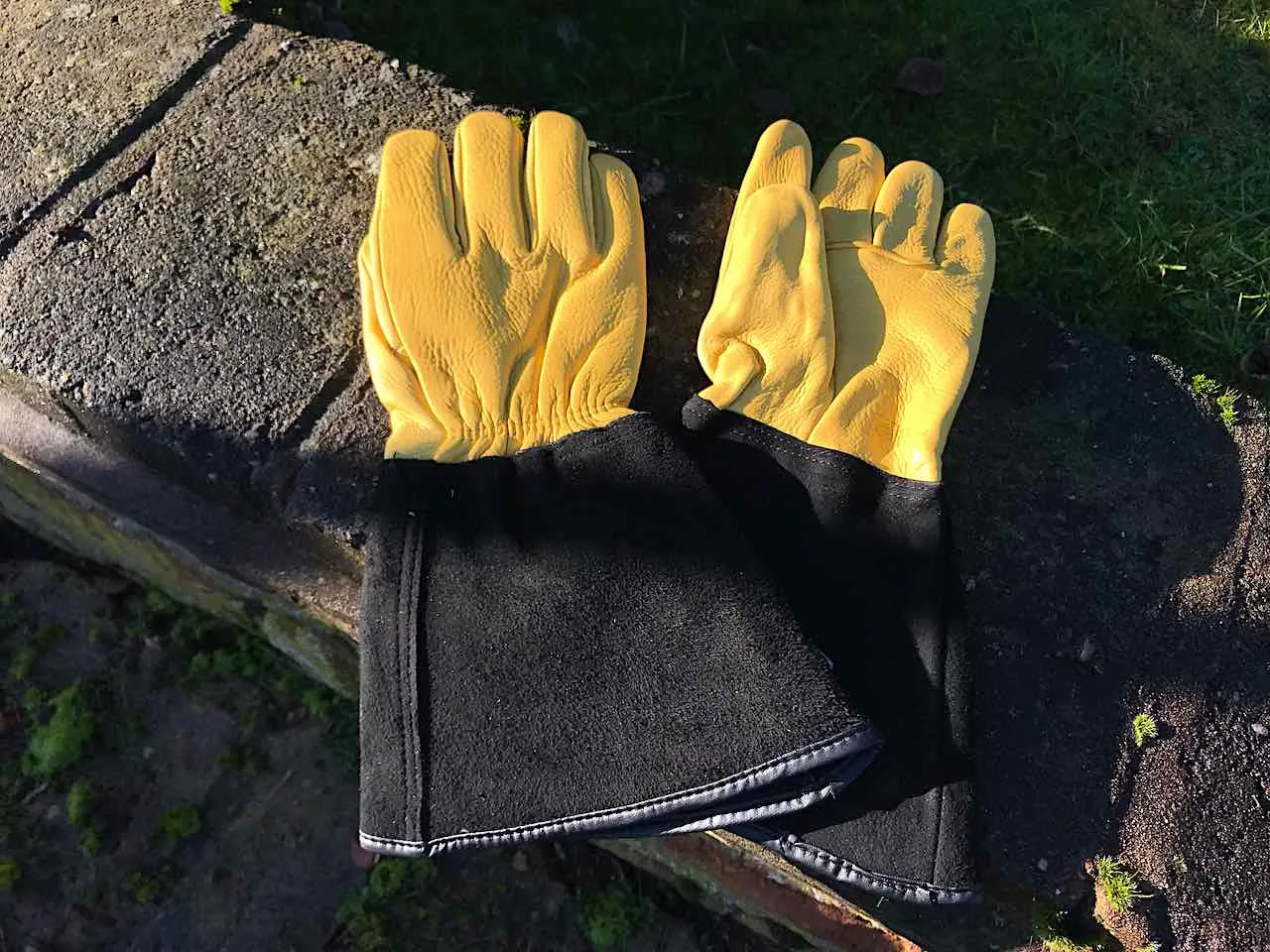
Gloves might seem like a small detail compared with everything else in this guide, but the right pair earns its place here. For arthritic hands, the goal is a glove that gives you a little compression and warmth without restricting your finger movement, and ideally one with enough grip texture on the palm and fingers that you do not need to clench your hand as tightly to hold onto a tool or a plant pot. My full gardening gloves guide covers the wider range if you want to compare more options side by side.
Some gloves are specifically designed with mild compression built in, on the theory that gentle, even pressure can help keep hands feeling more comfortable and mobile during use, similar to how some people find compression gloves helpful indoors. Whether or not you find that particular benefit personally, the practical features matter regardless: look for textured, grippy palms and fingertips so you can pick up small items like seeds or plant labels without the glove sliding around, and a snug but not tight fit so you are not fighting the glove itself while you work. The Gold Leaf DRY TOUCH gloves are the pair I see readers come back to most often, and they hold up well across a full season of regular use.
If your hands also feel the cold more than they used to, which is common alongside joint pain, a warmer lined glove for the cooler months helps too, since cold hands tend to feel stiffer and less cooperative than warm ones. It is a small thing, but choosing a slightly warmer glove for autumn and winter gardening sessions is worth factoring in if you find your hands seizing up more in the cold.
🛒 Buy Gold Leaf DRY TOUCH Gardening Gloves from Amazon UK
7. Watering without the strain
A full watering can is properly heavy, often more than people expect, and the repeated lifting and pouring motion can be hard on shoulders, wrists and backs alike, especially if you are watering a number of pots or a larger border. There are a few small changes here that take a surprising amount of strain out of what should be one of the more peaceful jobs in the garden.
A lightweight coiled hose is one of the kindest changes you can make if you are watering anything beyond a few pots. It avoids the heavy lifting of a full can entirely, does not need to be wound up and stored the way a traditional hose reel does, and a gentle, ergonomic spray nozzle with a thumb-trigger rather than a hard squeeze-grip trigger means your hand is not working hard for the whole watering session. Some nozzles are specifically designed and certified for ease of use by arthritis-focused organisations, which is a useful thing to look out for if you want some independent reassurance beyond marketing language.
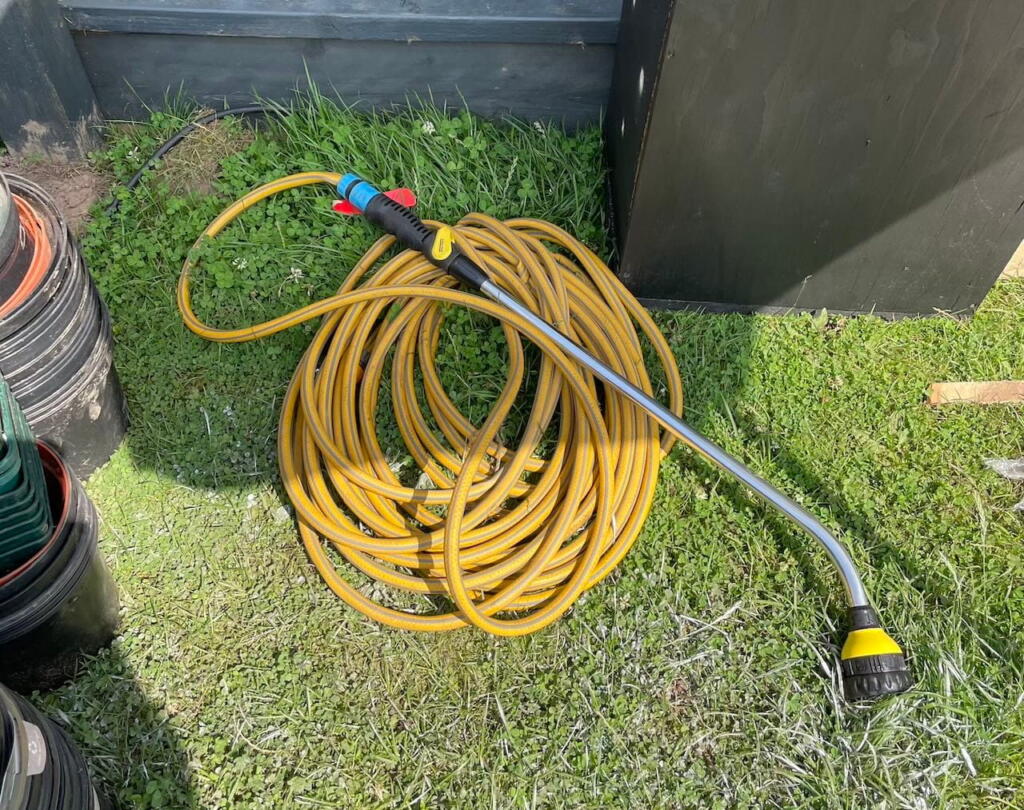
If you are mainly watering containers rather than a large border, a smaller, lighter watering can used more frequently is often kinder to your joints than a large can used less often, simply because the weight of each individual lift is lower. And for anyone with several pots that need regular watering, a simple drip irrigation kit on a timer, or even the old trick of an upturned plastic bottle with the base cut off pushed into the soil near a thirsty pot, takes the lifting out of the equation on the days when watering by hand feels like too much.
🛒 Find lightweight coiled hoses on Amazon UK
8. Carrying, lifting and wheeling
Moving things around the garden, whether that is soil, plants, tools or cuttings, is one of those tasks that quietly causes a lot of strain because we tend to underestimate how heavy garden materials actually are. A bag of compost or a barrow load of soil is heavier than it looks, and the twisting, lifting motion of a traditional single-wheeled wheelbarrow asks a lot of your back and your balance.
A two-wheeled barrow is considerably more stable than the traditional single-wheel design, because the weight balances across two points of contact rather than needing your arms and core to constantly correct for tipping. This stability matters enormously if your balance or core strength has changed at all, since a wobbly, tipping barrow is both frustrating and risky.
I reviewed a Henchman wheelbarrow a while back, and the difference in stability and ease of pushing compared with a standard single-wheel barrow was noticeable even to me, with no joint issues of my own to speak of, so I can only imagine how much more that stability matters if balance or strength is already a concern.
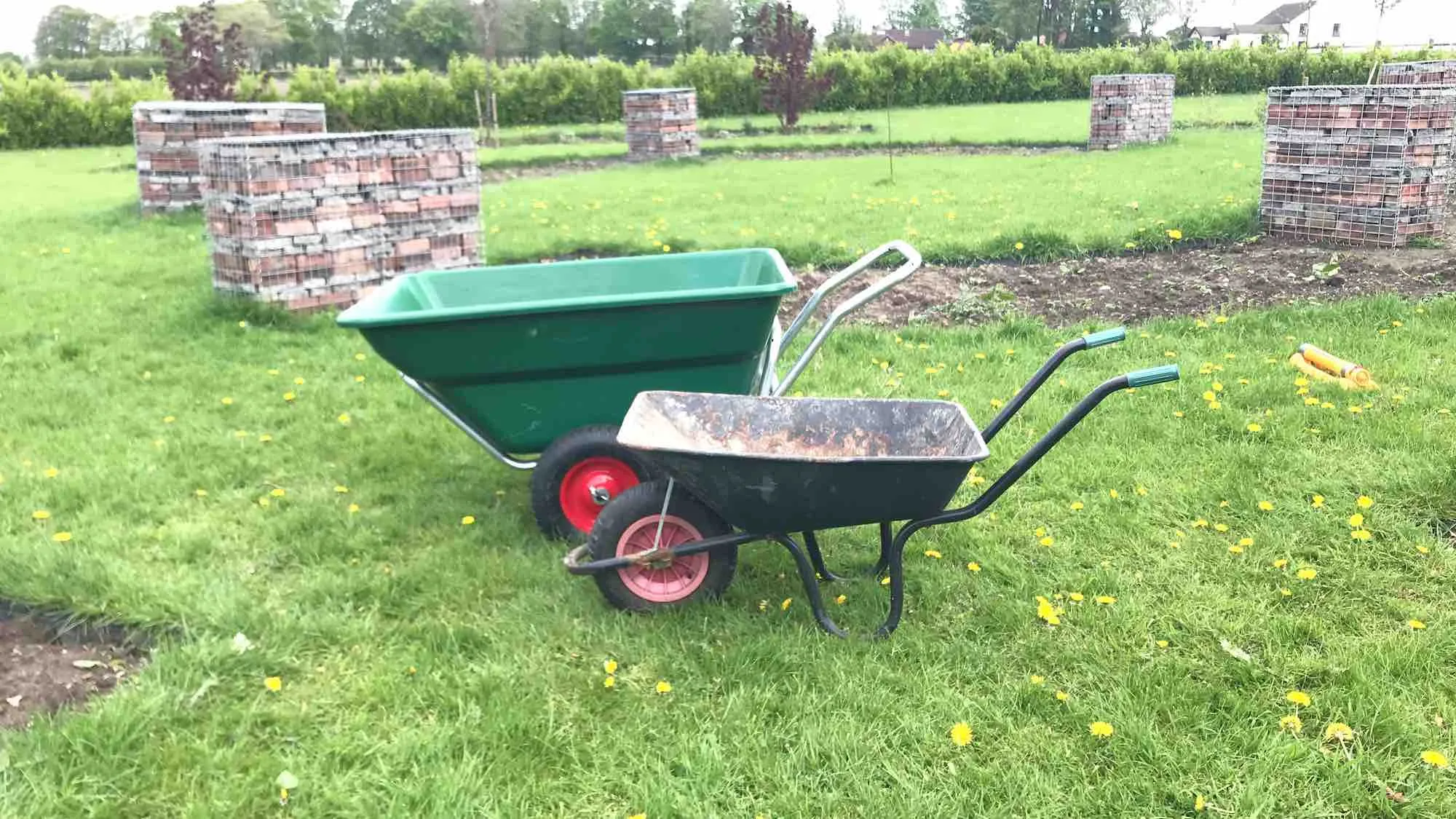
Beyond the barrow itself, simply buying compost and soil in smaller bags rather than the largest, heaviest size on offer is a perfectly sensible adjustment, even if it costs slightly more per kilogram. There is no merit badge for hauling the biggest bag from the garden centre to the car. A garden trolley with a flat bed, easy to load and unload without lifting, is also worth considering for moving pots around rather than carrying them individually, particularly larger pots that are awkward to get your arms fully around.
🛒 Find two-wheeled garden barrows on Amazon UK
9. Raised beds: the biggest change of all
If you take only one thing from this entire guide, I would want it to be this section, because in my professional design experience nothing transforms gardening with joint pain quite as completely as raising the soil up to meet you, rather than asking you to keep going down to meet the soil.
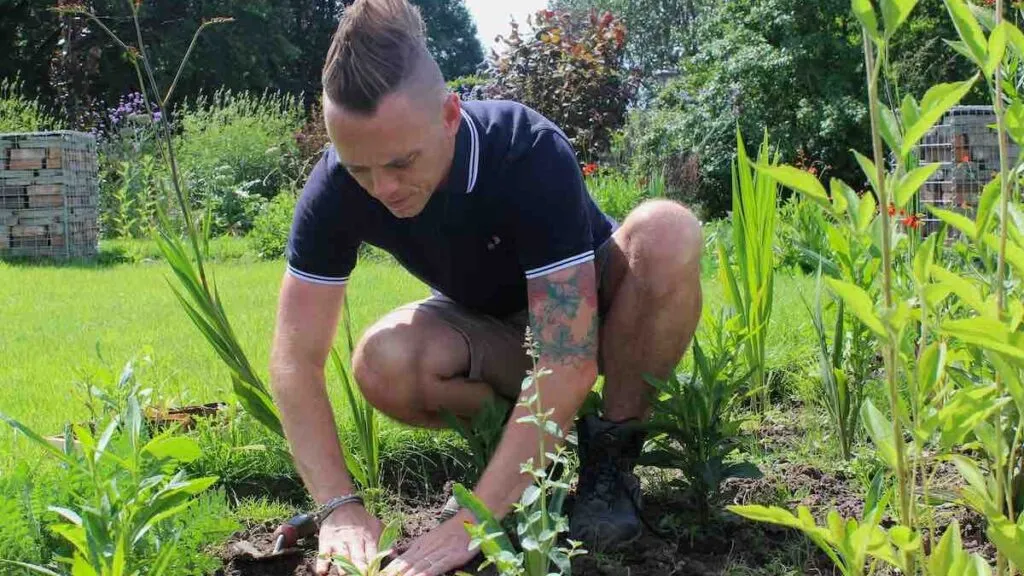
A raised bed at around 45 to 60 centimetres high lets most people tend plants while standing or sitting on a stool, with no bending, kneeling or crouching required at all for routine weeding, planting and harvesting. For anyone who finds bending the hardest part of gardening, this single change can restore a level of comfort and independence in the garden that felt lost. I have designed raised bed gardens specifically with this brief from clients more times than I can count, and the relief and renewed enjoyment they describe afterwards is consistently one of the most rewarding parts of this work for me.
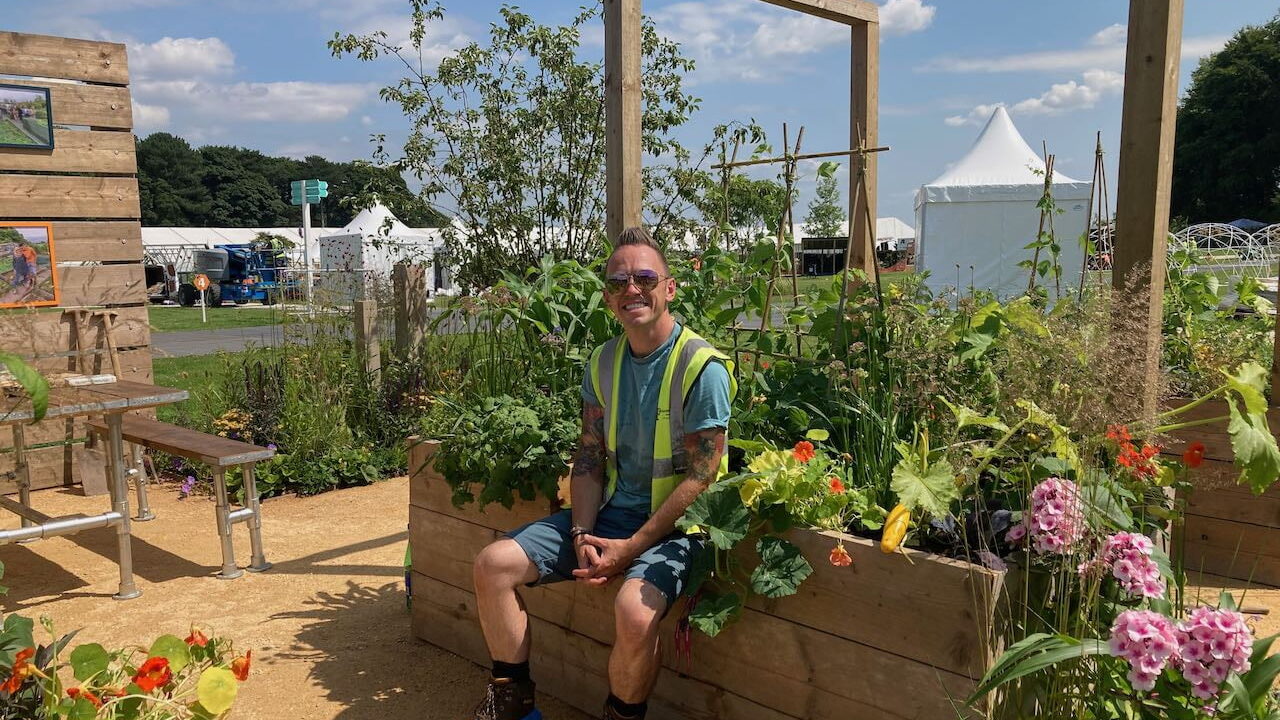
You do not need to rebuild your whole garden to benefit from this. Even a single raised bed, built or bought to a comfortable height for you specifically, gives you somewhere to grow herbs, salad, flowers for cutting, or whatever brings you the most pleasure, without that part of the garden ever asking you to kneel. If you are building or buying new, I would always recommend incorporating a wide flat top edge into the design wherever possible, because that edge doubles as a perch to sit on while you work, which is a small detail that makes an enormous practical difference. Metal and composite raised beds tend to be lighter and easier to assemble than heavy timber if you are doing this yourself, which is worth bearing in mind for the build itself as well as the ongoing use.
For container gardening more broadly, the same logic applies: choosing pots on stands or plinths that bring plants up to waist height, rather than ground-level pots that need bending to tend, achieves much the same benefit on a smaller scale, which is particularly useful on a balcony or patio where a full raised bed is not practical.
🛒 Find tall raised beds on Amazon UK
For the full breakdown of materials, heights and how to build or choose the right raised bed for your garden, my complete raised beds guide goes into much greater depth than I have room for here.
10. Seating and standing supports
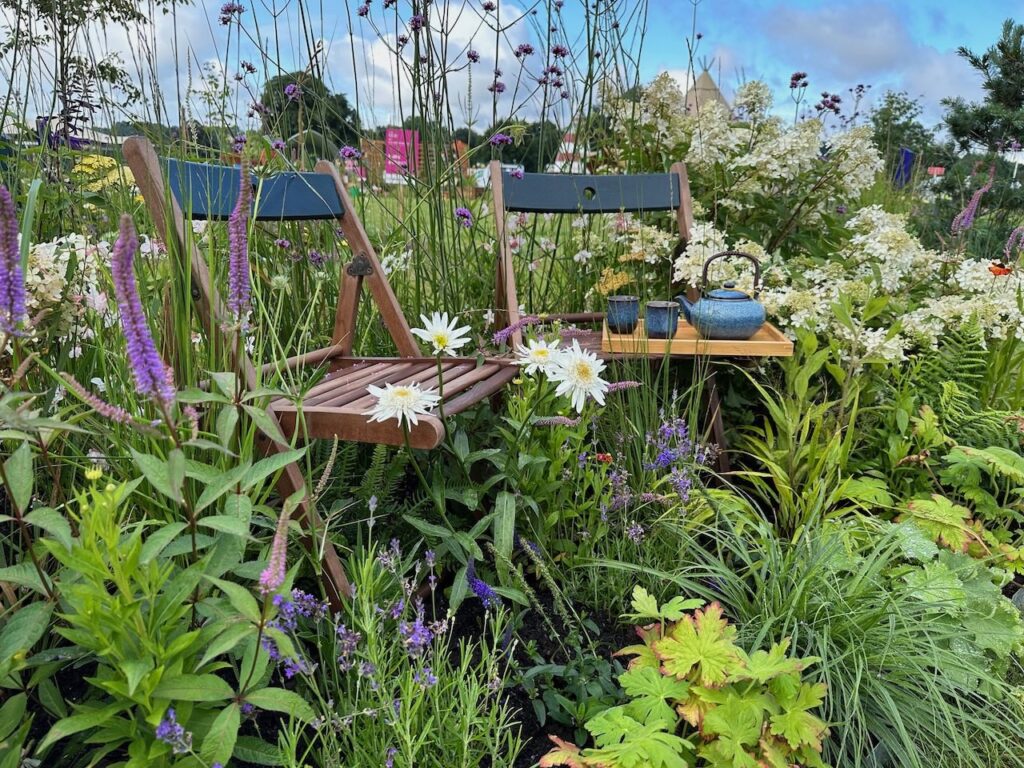
Sometimes the most helpful piece of garden kit is not a tool at all, but somewhere comfortable to rest partway through a task. A simple, sturdy garden stool, light enough to move around with you as you work along a border, lets you sit at a comfortable working height for tasks like weeding or deadheading rather than standing for long stretches or kneeling at all. Some are specifically designed with a wide, stable base for use on uneven lawn or border edges, which matters more than it might sound, since a wobbly stool on soft ground can undo all the good a stool was meant to do.
If steps or a sturdy reach for pruning higher branches is something you still need to do, a tripod ladder with a wide, stable base and good handholds is considerably safer than a standard step ladder on uneven garden ground, and worth the investment if pruning trees or hedges is part of your routine. I reviewed a set of Henchman tripod ladders some years ago and the stability on sloped or uneven lawn, compared with a standard ladder, was reassuring, both for me and for anyone watching me use it.
🛒 Find lightweight garden stools on Amazon UK
11. Rethinking the layout of your garden
Beyond individual tools, it is worth taking an honest look at your garden’s overall layout and asking whether small changes to the design itself could take pressure off your joints in ways no single tool ever could. This is something I think about with every client garden I design, regardless of age or ability, because a well-laid-out garden is simply easier and more pleasant to move around in for everyone.
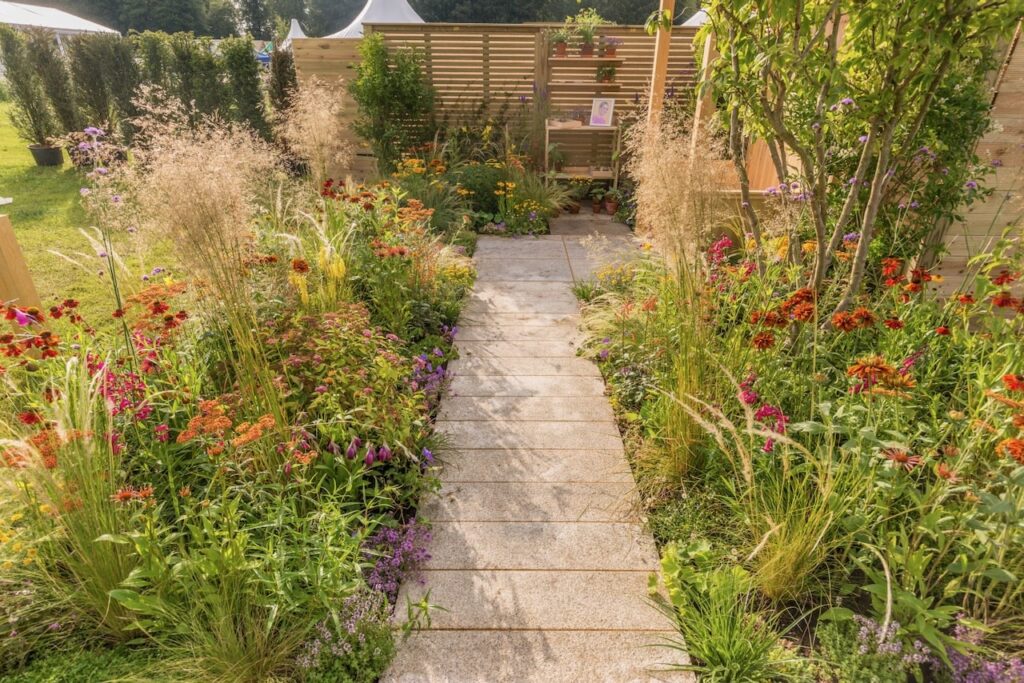
Wide, even, non-slip paths between key areas of the garden, particularly between the house and your main growing areas, remove a surprising amount of friction from daily garden use, especially if you use a stick, a frame or simply need a stable, predictable surface underfoot. Gravel that shifts underfoot or paving with uneven, lifted edges are both worth addressing if you can, since uneven surfaces are one of the more underrated hazards in gardens generally, let alone for anyone managing joint pain or balance concerns.
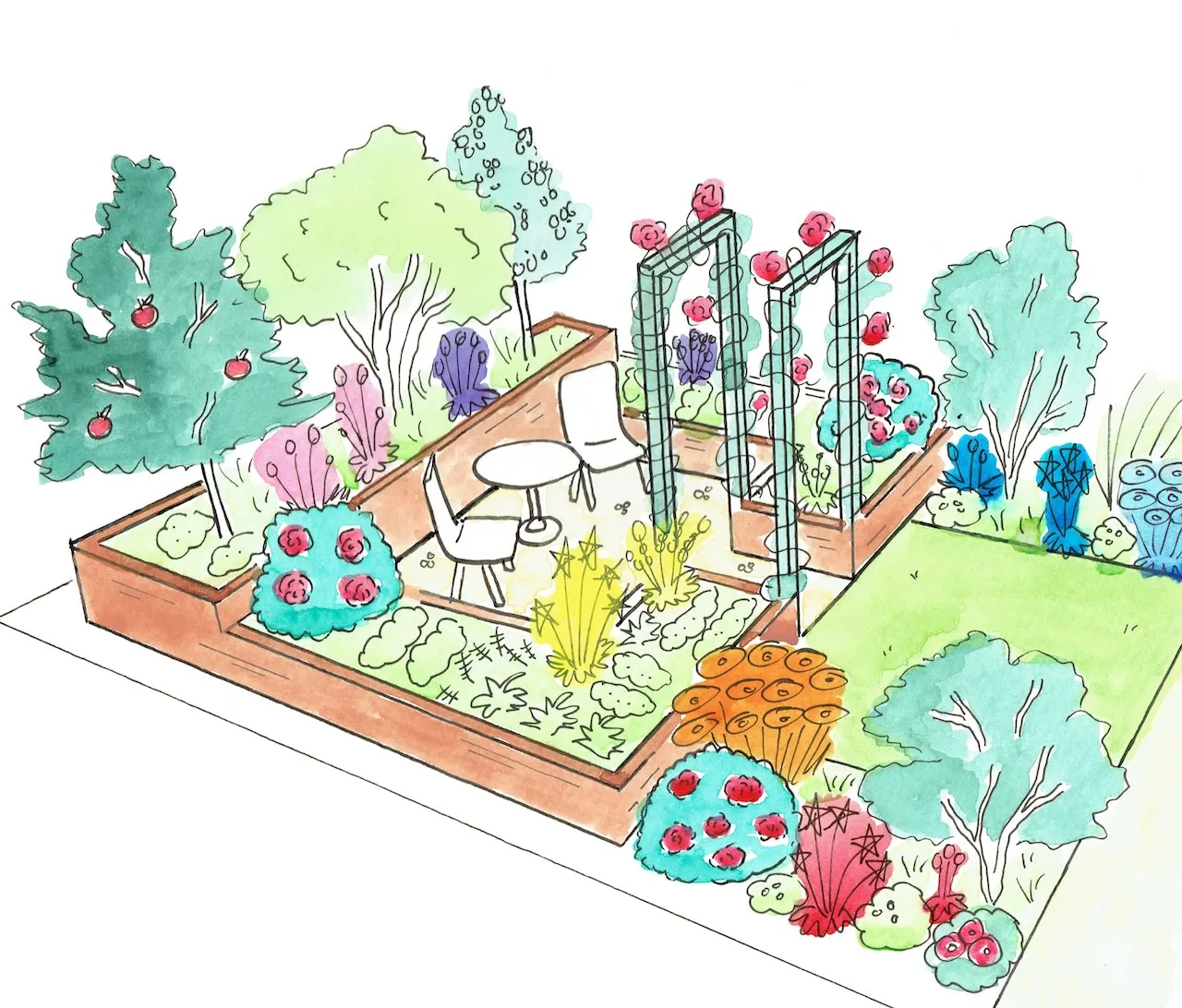
Grouping the plants and tasks that need the most frequent attention closest to the house, rather than scattering them across the garden, also reduces the total amount of walking, carrying and bending across a typical week. If your vegetable beds, your most-watered containers, and your favourite cutting flowers are all within easy reach of the back door, you will tend them more often and more comfortably than if they are at the far end of a long garden that requires a proper expedition each time.
12. Pacing yourself and choosing good days
This part of the guide has nothing to do with tools, and I think it might be the most important section of all. Arthritis and joint pain often vary day to day, sometimes hour to hour, and one of the kindest things you can do for yourself is to let go of the idea that a gardening session needs to be a particular length, or that you need to finish a task in one go.
Thrive, whose advice I trust enormously on this subject, suggests gardening in short, frequent bursts rather than long sessions, doing what they nicely describe as “little and often” to keep joints moving without overdoing it. Twenty minutes of weeding now and twenty minutes again tomorrow will very often leave you feeling considerably better than two solid hours today followed by two days of recovery. There is no failure in stopping when your body tells you to stop, and there is no extra credit for finishing a job in a single sitting if it costs you the next three days of discomfort.
It is also worth being honest with yourself about which times of day tend to suit your joints best, since many people with arthritis find mornings stiffer than later in the day, while others find the opposite. Gardening at the time of day when you feel your best, rather than whenever is convenient, is a simple adjustment that costs nothing and helps more than almost any tool on this list.
13. Choosing plants that ask less of you
The plants you choose can also quietly reduce the physical demands of your garden, simply by needing less of the kind of attention that is hardest on your joints. Low-maintenance, drought-tolerant perennials that do not need frequent watering, deadheading or staking reduce the total number of times you need to bend, kneel or reach over a season. Ground cover plants that suppress weeds naturally mean less weeding overall, which for many gardeners with arthritic hands is one of the most physically demanding tasks of all.
Shrubs and perennials that need only a single annual tidy, rather than constant deadheading or staking through the season, are quietly kind choices too. None of this means giving up on colour, scent or seasonal interest, simply choosing plants that deliver those things without asking for as much ongoing physical input from you. My guide to low maintenance garden plants covers many of these options in detail if you want to explore further.
14. Where to get further support
I am a garden designer and horticulturist, not a medical professional, and everything in this guide is general practical advice rather than personal medical guidance. If your arthritis or joint pain is significant, or if you are unsure what level of activity is safe for you, please do speak with your GP, a physiotherapist or an occupational therapist, who can give you advice tailored to your own specific situation.
Thrive, the UK gardening and health charity, is a wonderful resource for this subject, with detailed advice on gardening with arthritis and a range of conditions, and they also run gardening programmes and groups for people who would benefit from in-person support and community alongside the practical guidance. Versus Arthritis also publishes helpful general advice on staying active with arthritis, including but not limited to gardening, and is worth a look if you want a broader picture of managing day to day life alongside joint pain.
And please do not underestimate the value of the Garden Ninja forum for this. There is a wonderfully warm community there of gardeners helping other gardeners, including plenty who garden with arthritis, bad backs and all sorts of physical challenges, swapping tips on exactly what has worked for them. Sometimes the best advice comes from someone who has tried the same tool you are considering and can tell you honestly whether it lived up to the promise.
15. Frequently asked questions
What are the best garden tools for people with arthritis?
Look for angled or pistol-grip handles, soft padded non-slip grips, and lightweight construction. Ratchet secateurs are particularly helpful for reduced grip strength, since they cut in several small squeezes rather than one hard one. Long-handled tools reduce the need to bend or kneel.
Do raised beds really help with gardening and arthritis?
Yes, significantly. A raised bed around 45 to 60 centimetres high lets most people garden while standing or sitting, removing the need to bend, kneel or crouch for everyday tasks. It is one of the most effective changes available.
What kind of kneeler is best for arthritic knees?
One with a thick foam pad and sturdy side handles to help you stand back up. Many flip over into a low bench. A lightweight, foldable frame makes it easier to store and actually use.
Can gardening gloves help with arthritis pain?
Gloves with gentle compression, a snug fit and grippy palms can help, since the grip texture reduces how tightly you need to clench your hand. Warmer, lined gloves in colder months can also help, as cold hands tend to feel stiffer.
How often should I garden if I have arthritis?
Short, frequent sessions tend to suit arthritic joints better than long ones. The “little and often” approach keeps joints moving without overdoing it. Listening to your body and stopping when needed matters more than finishing a task in one go.
Is a two-wheeled wheelbarrow better for arthritis?
Generally yes. The weight balances across two wheels rather than one, reducing the strain on your arms, core and back needed to keep it steady, particularly helpful if balance or strength is a concern.

Join over 100,000 gardeners
Free gardening videos from the Garden Ninja, with 8+ million views and counting.
Subscribe for FreeSummary
Gardening with arthritis or joint pain asks for some patience and a willingness to adapt, but it does not have to mean giving up something you love. A good kneeler, the right hand tools, ratchet secateurs, a raised bed or two, and permission to work in short, gentle sessions can together transform how your garden feels to spend time in. Start with whichever change feels most pressing for you, whether that is your knees, your hands or your back, and build from there. Your garden will still be there waiting, and so will the quiet pleasure of pottering about in it, just on slightly kinder terms.
Happy Gardening! 🌿



Lee Burkhill
Lee Burkhill, known as the Garden Ninja, is an award winning garden designer and horticulturist with over 30 years of gardening experience and 15 years as a professional garden designer. A qualified RHS (Royal Horticultural Society) professional, Lee specialises in sustainable garden design and practical horticultural advice. He designs and presents on BBC1’s Garden Rescue and in leading gardening publications. Lee combines three decades of hands on gardening knowledge with professional design qualifications to help gardeners create beautiful, functional outdoor spaces.
View all posts by Lee Burkhill






Categories
Other posts
-

How to learn Garden Design: most cost-effective learning methods Read more
-
Start here: to begin your gardening journey! Read more
-
25 Best Plants for Beginners to Grow from Seed (UK) Read more
-
What is Silverleaf Disease? How to Prevent and Treat It: A Beginner’s Guide Read more
-
Plant Types Ultimate Guide: Annual, Biennial, Perennial, Shrubs & Trees Read more
-
Why Is My Ceanothus Dying? Complete UK Diagnosis Guide Read more
-
Edinburgh botanical gardens Read more