How to design a Mediterranean garden: easy design ideas
Lee Burkhill: Award Winning Designer & BBC 1's Garden Rescue Presenters Official Blog
Expert level
Mediterranean gardens invoke the feeling of being on holiday and are ideally suited to warm south-facing gardens. This guide on Mediterranean gardens will show you my top hints and tips for creating a gorgeous garden space. So grab your suncream and lets go on a garden design holiday together!
Mediterranean gardens are the true sun worshippers of the garden design styles. Using plants that love full sun and earthy tones, these spaces can become an oasis of calm in your back garden. Even if you aren’t blessed with a south-facing garden, you can still steal some of the principles of the hot Mediterranean garden styles and apply them to any garden!
I’m going to share my top garden design tips for creating a Mediterranean garden space where you can leave your everyday worries behind! Let’s design a Mediterranean garden!
This page contains affiliate links for products I use and love. If you take action (i.e. subscribe, make a purchase) after clicking a link, I may earn some gardening commission, which helps me keep the Garden Ninja Blog free for all.
A Mediterranean garden takes its inspiration and theme from those warmer European geographies around France, Spain, Portugal, Italy and Greece. These countries have a climate of hot, dry summers and cool humid winters. A hilly and sometimes arid landscape also characterises them.
An easy way to think of this is to consider the summer holiday destination in Europe for UK sunseekers. Hot climates, dry breezes and plenty of scented, aromatic and foliage-rich plants!
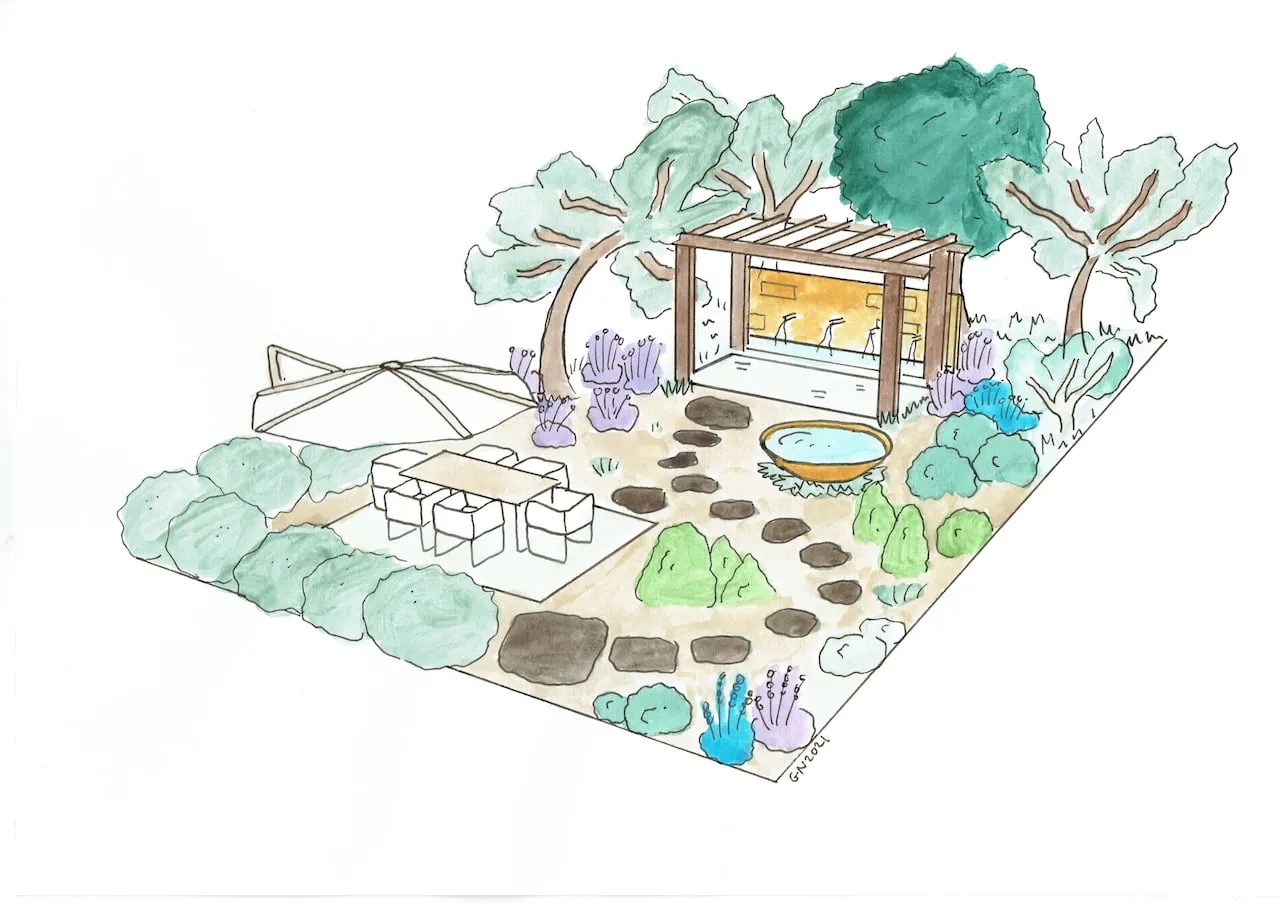
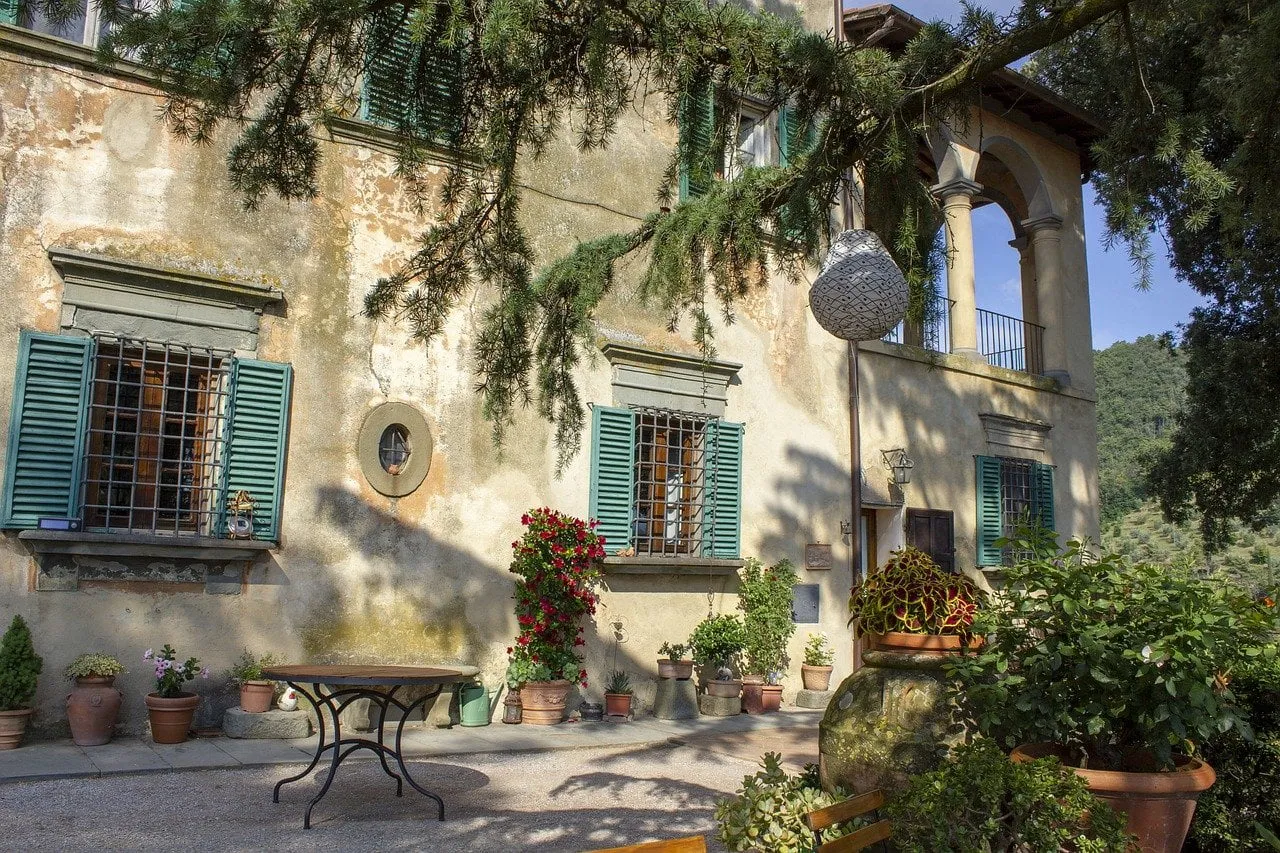
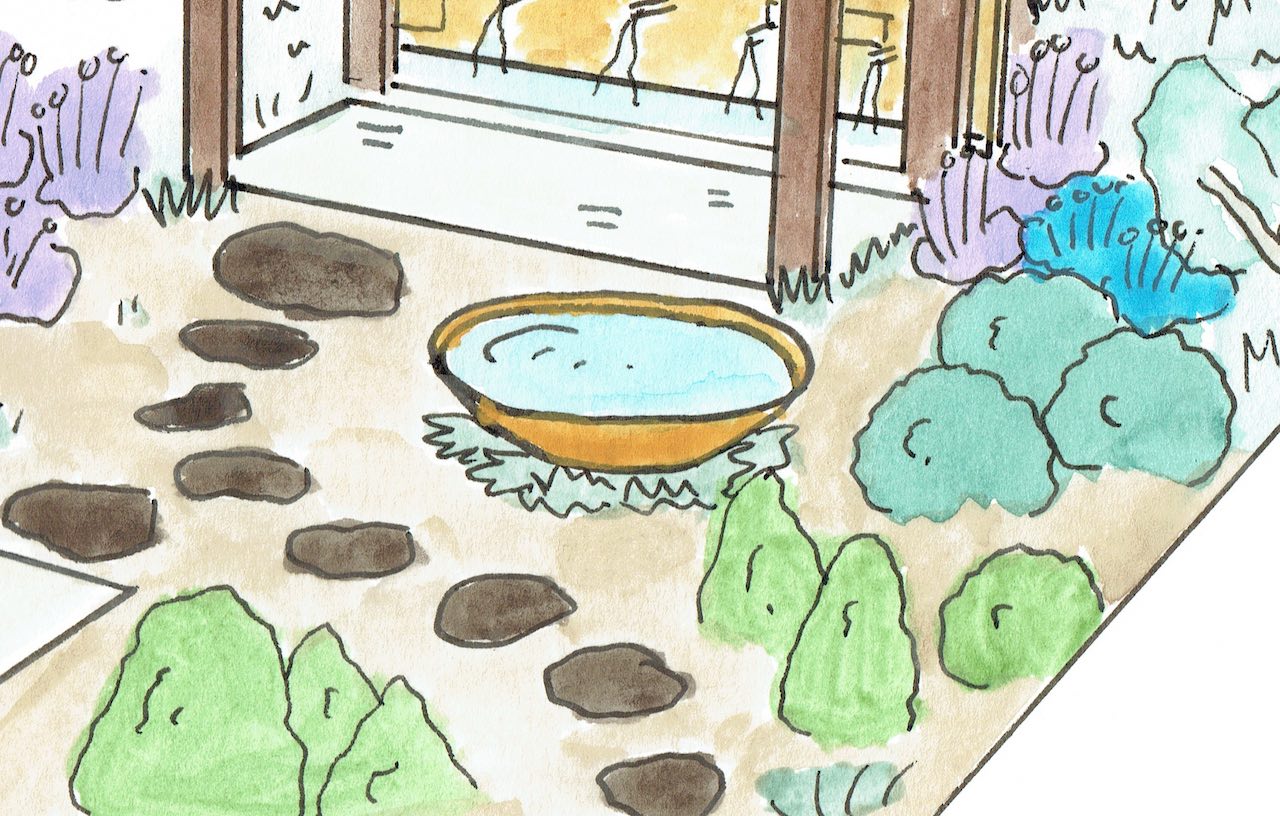
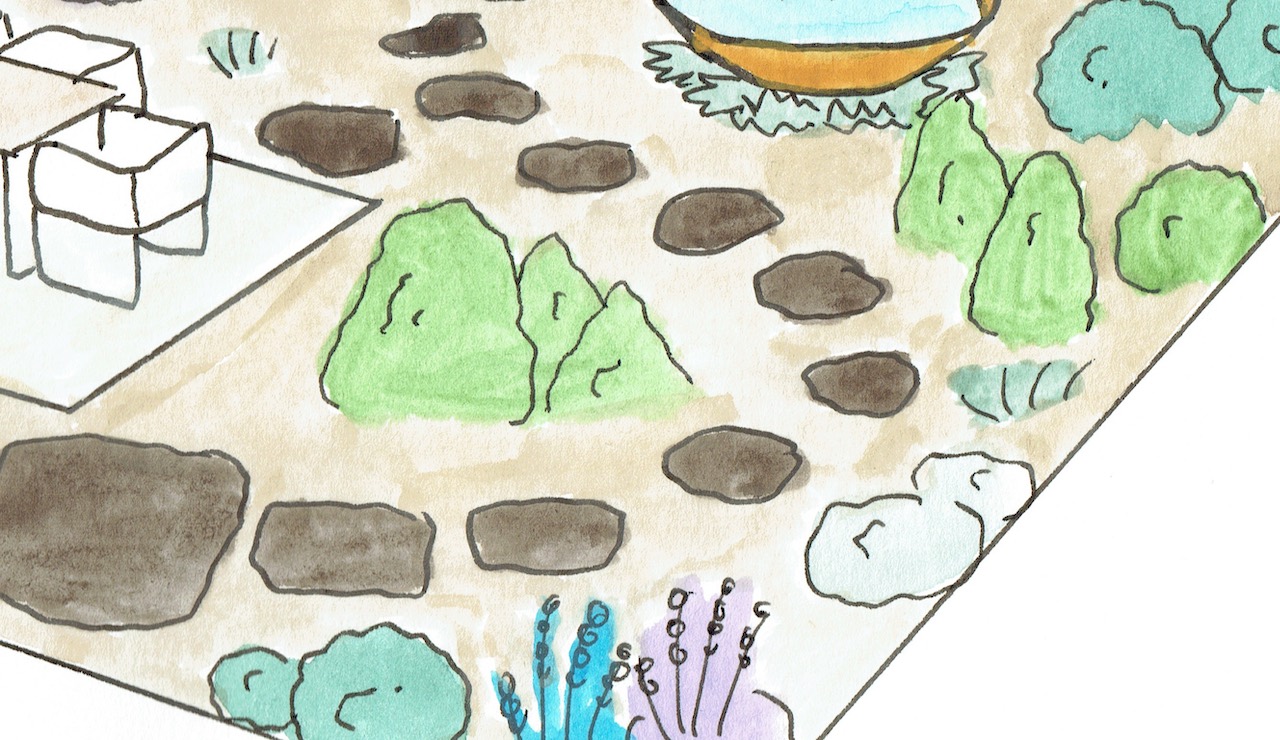
These gardens often showcase warm hues of blue, purple, and terracotta, with stone pathways, terracotta pots, and tiled courtyards creating texture and visual interest. Water features such as fountains and pools add a sense of tranquillity, while outdoor living spaces with seating areas and shaded pergolas provide inviting spaces for relaxation and entertainment. Overall, Mediterranean gardens aim to create an oasis-like atmosphere that celebrates the beauty and warmth of the Mediterranean lifestyle.
Features of a Mediterranean garden
Mediterranean gardens are one of the garden styles that fit perfectly into either a formal or informal garden design style. Meaning that these gardens can either fit into a very symmetrical formal design style or a more relaxed, laid-back approach. They are one of the few design styles that work brilliantly in both formal and informal layouts.
These gardens may evoke the warm, earthy tones of the Med, with terracotta and gravel amid silvery-green foliage of drought-tolerant plants. You want to replicate that warm, relaxed atmosphere often found on the Med, where things happen when they happen. An emphasis on community, family, relaxation, and socialising is key to these successful gardens.
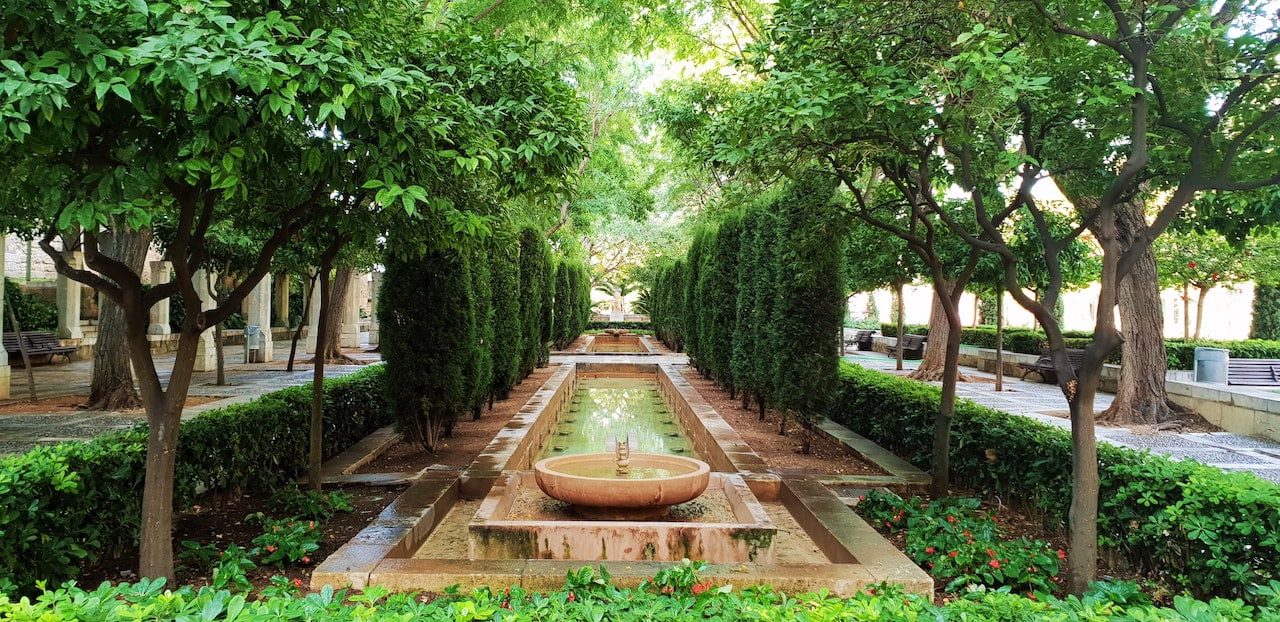
Formal Meditteranean gardens may feature ceramics, sculpture, topiary, or even Moorish symmetrical designs. They are versatile, as long as you get enough sun and have free-draining soil. However, with careful plant selection, even a garden with some shade can be designed to replicate the feel and structure of a Mediterranean hot garden!
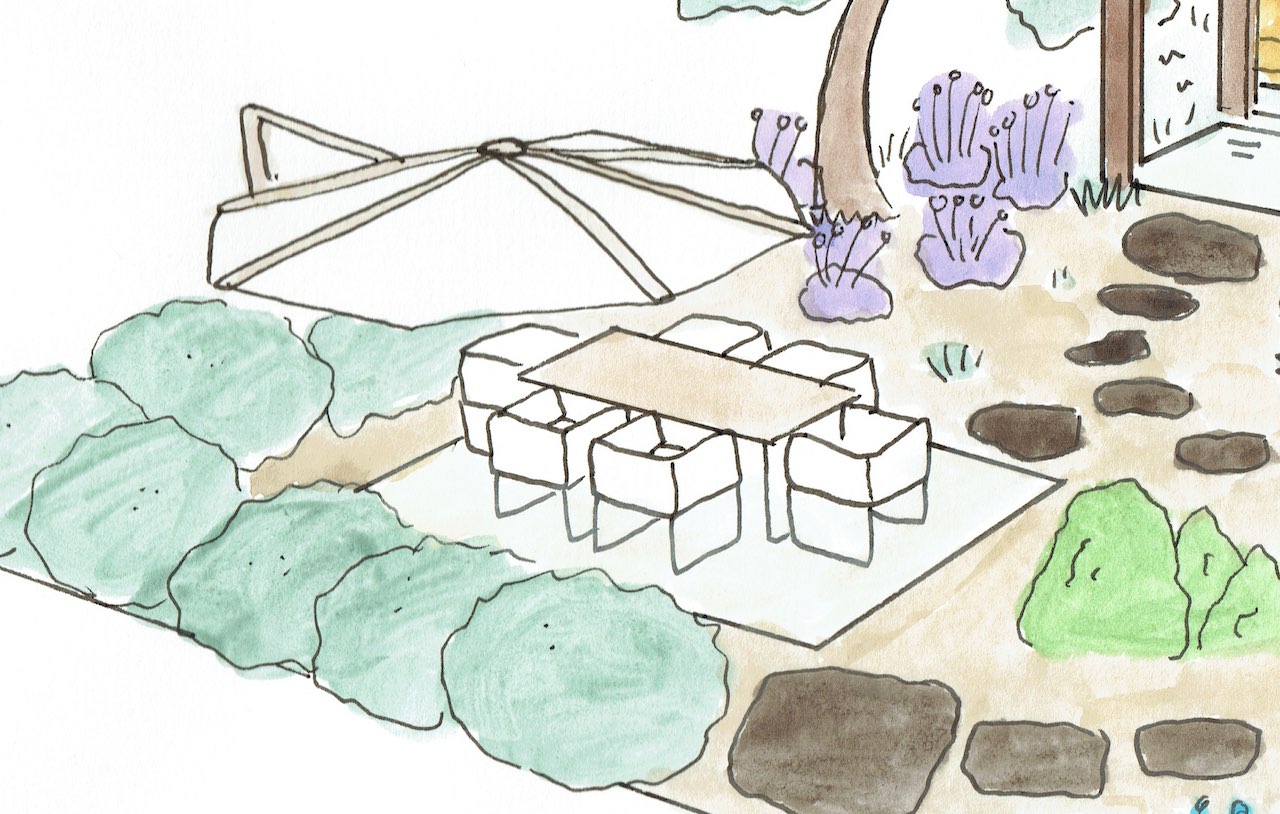
Mediterranean gardens will feature shaded areas for seating away from the midday sun. They may also use a variety of heights in their designs, whether that’s from established trees, large terracotta pots, arbours, or fountains.
Water is usually a key component in heightening the aromas of aromatic plants and bringing a sense of cool to the garden. Muted pastel colours may be used to give the illusion of sun-bleached window frames or paintings. These gardens look like they have been there for years and give a sense of effortless relaxation. Though in reality, they require careful planning and garden design to get right.
Sometimes, though, rules are broken in these Mediterranean gardens. I visited Vittoriale degli italiani when I travelled to Lake Garda in Italy. The Vittoriale degli italiani is a bizarre estate. It is where the Italian writer Gabriele d’Annunzio lived after his defenestration in 1922 until his death in 1938.
Controversial for many reasons, in part due to the political funding its creator was given to keep him away from the fascist political critique he held, it features a number of what can only be described as bonkers garden installations. One of which features a cruiser boat jutting out from the mountain. However, the plant choices are still based on those of traditional Mediterranean gardens, even if used in a somewhat one-of-a-kind fashion!
Just your average full-size boat sticking out of a Mediterranean garden in Vittoriale degli italiani!
Top 10 Features of Mediterranean Gardens
Let’s delve deeper into the main features of a Mediterranean garden style with additional details:
1. Use of Terracotta
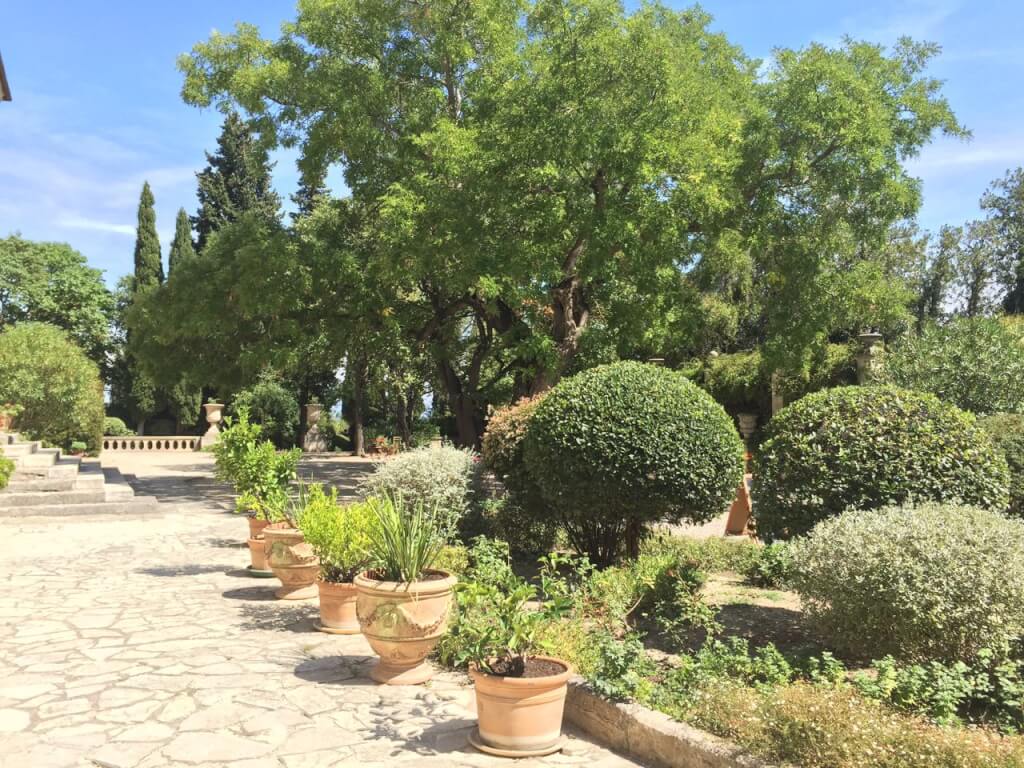
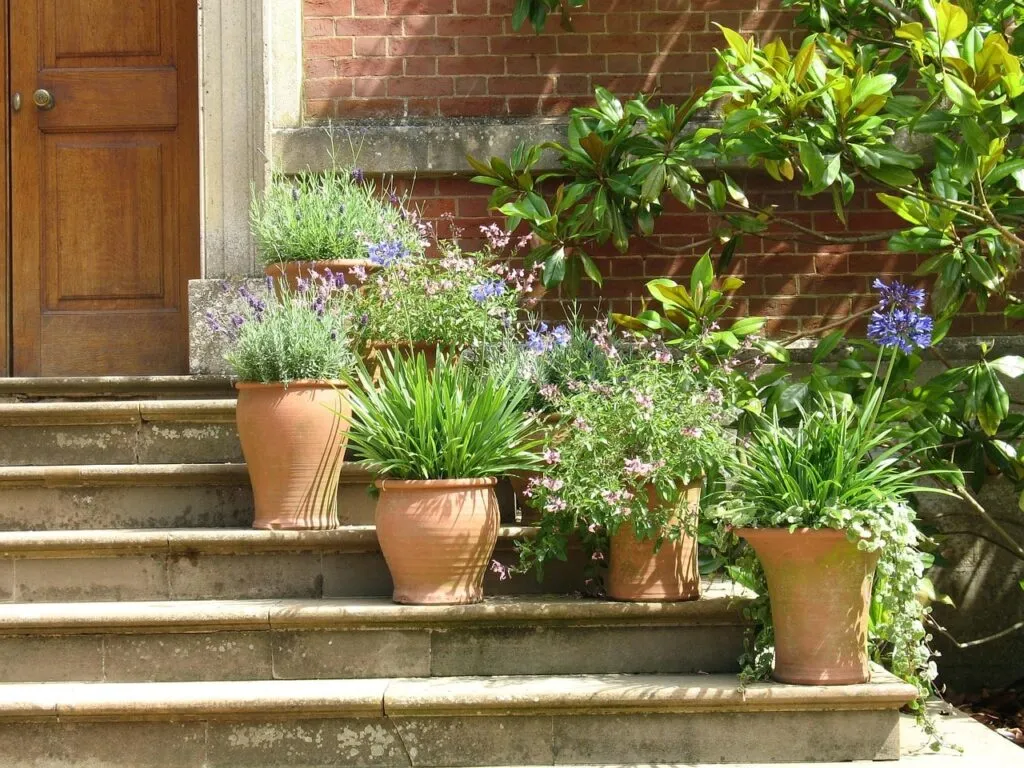
Terracotta pots, urns, and containers are not only functional for planting but also serve as decorative elements.
The earthy tones of terracotta complement the warm colour palette often found in Mediterranean gardens, creating a cohesive aesthetic.
Terracotta containers are typically filled with colourful flowering plants or aromatic herbs, adding bursts of colour and fragrance throughout the garden.
Very few gardens are baked all day in Sun
2. Stone Elements
Stone pathways meander through the garden, guiding visitors and providing opportunities for leisurely strolls.
Dry-stacked stone walls terrace sloping terrain, creating defined planting areas and adding visual interest to the landscape.
Boulders and rock outcroppings are strategically placed to mimic natural rock formations and anchor the garden design.
3. Water Features
Central to many Mediterranean gardens, water features range from simple wall-mounted fountains to elaborate tiered cascades.
Water channels or rills may wind through the garden, reflecting sunlight and adding a soothing soundtrack of trickling water.
Reflecting pools mirror the surrounding vegetation and sky, enhancing the sense of serenity and tranquillity in the garden.
4. Arbours and Pergolas
Wooden or wrought-iron arbours provide support for climbing plants such as bougainvillaea, jasmine, or grapevines, creating shaded walkways and arches.
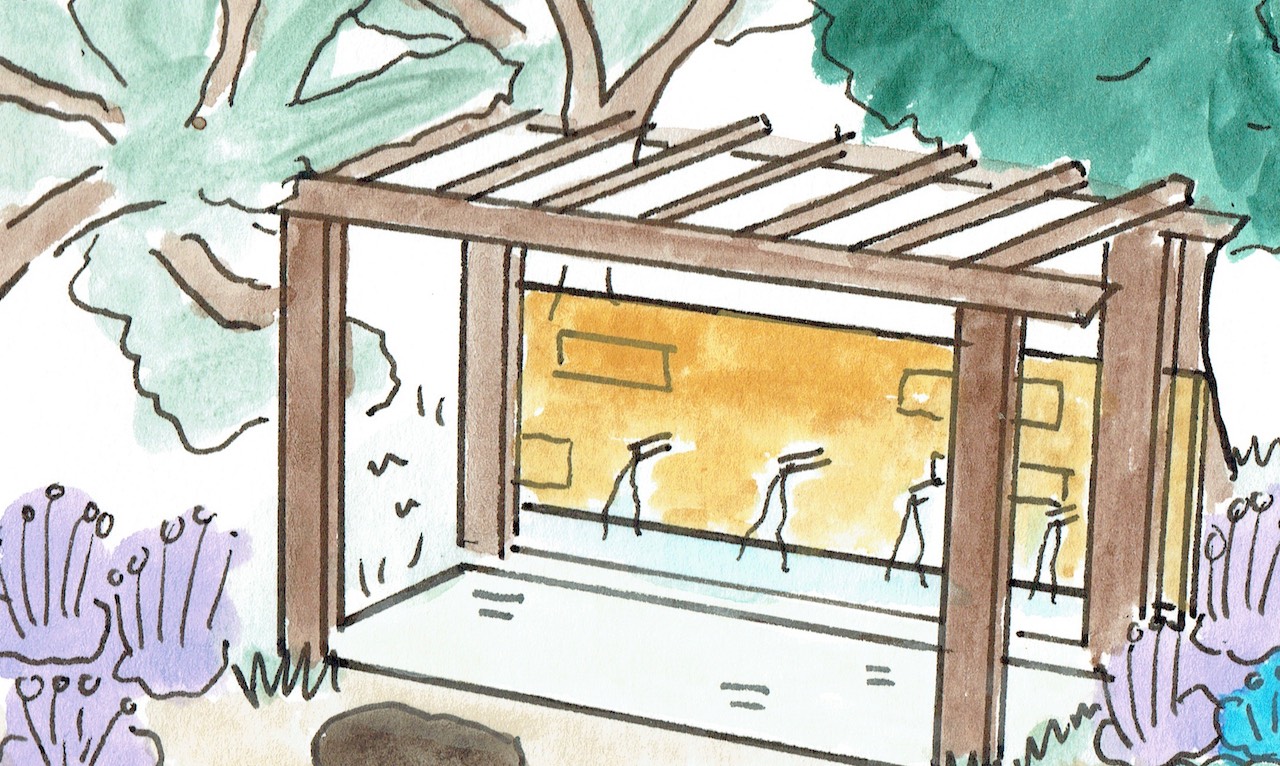
Pergolas offer a shaded retreat for outdoor dining or relaxation, often adorned with billowing curtains or climbing roses for added privacy and ambience.
5. Mediterranean Plants
Drought-tolerant plants with silvery foliage, like lavender, santolina, and olive trees, thrive in the sun-drenched conditions typical of Mediterranean gardens.
Citrus trees, including lemon, orange, and mandarin, provide ornamental value and a harvest of fragrant fruits.
Cypress trees add verticality to the garden landscape, their slender forms evoking the timeless beauty of Mediterranean vistas.
6. Colourful Tiles
Hand-painted ceramic tiles or mosaic designs adorn walls, steps, and tabletops, infusing the garden with vibrant hues and intricate patterns.
Geometric motifs, floral designs, and Moorish-inspired patterns pay homage to the rich cultural heritage of the Mediterranean region, adding layers of visual interest to the garden.
7. Outdoor Living Spaces
Secluded courtyards and shaded alcoves offer intimate settings for outdoor gatherings, shaded from the intense midday sun.
Built-in seating areas with cushioned benches or low walls provide comfortable seating options for lounging and socialising.
8. Herb Gardens
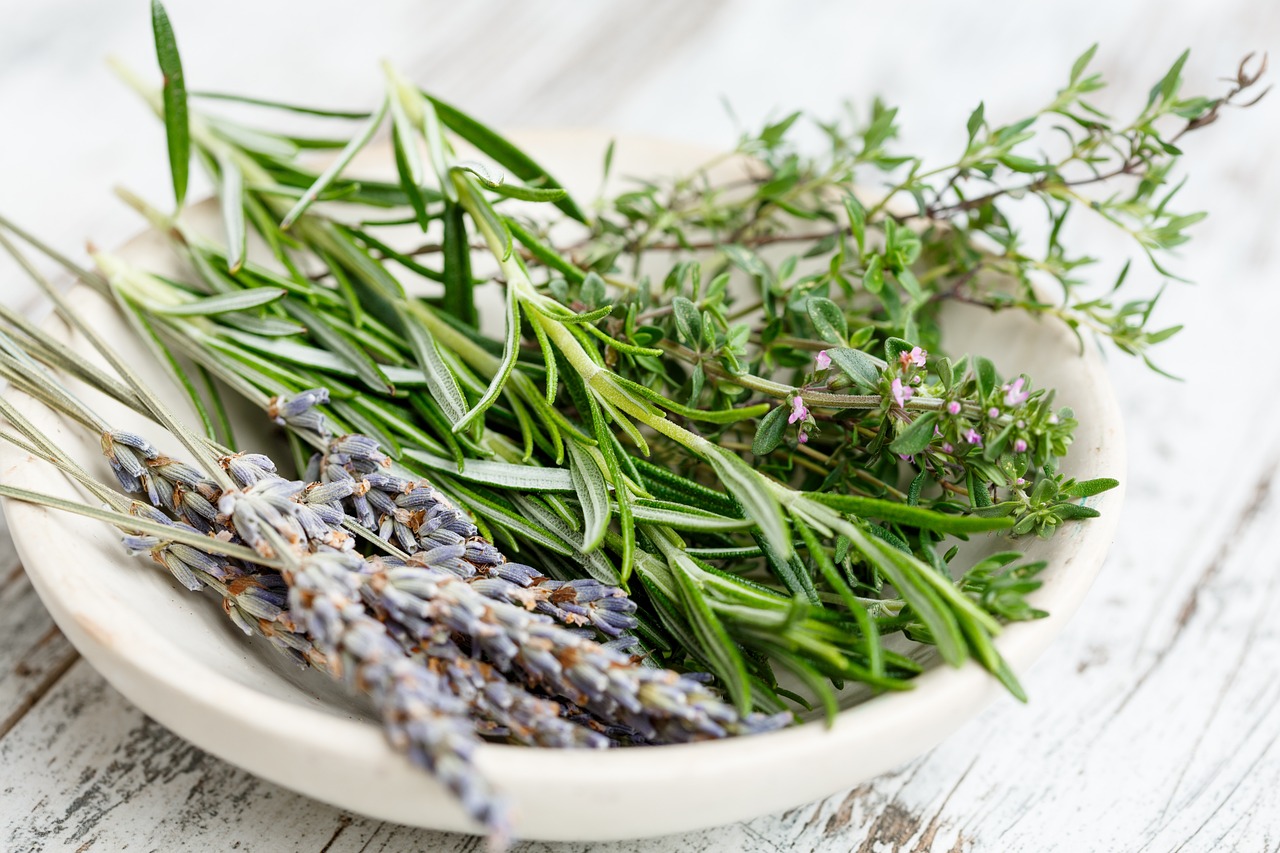
Fragrant herb gardens are a staple of Mediterranean landscapes, with raised beds or terracotta containers overflowing with culinary and aromatic herbs.
Thyme, oregano, and marjoram form dense groundcovers, releasing their heady fragrance with every step.
Basil, parsley, and cilantro thrive in sunny spots, ready to be harvested for fresh salads and savoury dishes.
9. Gravel or Pea Gravel Paths
Gravel pathways wind through the garden, their crunchy texture underfoot adding to the sensory experience.
Pea gravel, with its smooth, rounded stones, provides a soft contrast to the rugged texture of stone walls and terracotta pots.
Gravel paths are edged with low-growing plants or bordered by decorative stones, maintaining their defined shape while blending seamlessly into the surrounding landscape.
10. Mature Plantings
Mediterranean gardens often feature mature plantings that give the impression of age and permanence.
Trees and shrubs are pruned to maintain their natural form, with occasional bursts of new growth adding to the dynamic interplay of light and shadow.
Groundcovers such as creeping thyme or trailing rosemary spill over pathways and walls, softening hard edges and creating a sense of abundance.
These features combine to create a Mediterranean garden style that is both visually captivating and environmentally sustainable, reflecting the region’s timeless beauty and cultural heritage.
Your subscription could not be saved. Please try again.
Your subscription has been successful.
Mediterranean Plants Suitable for the UK
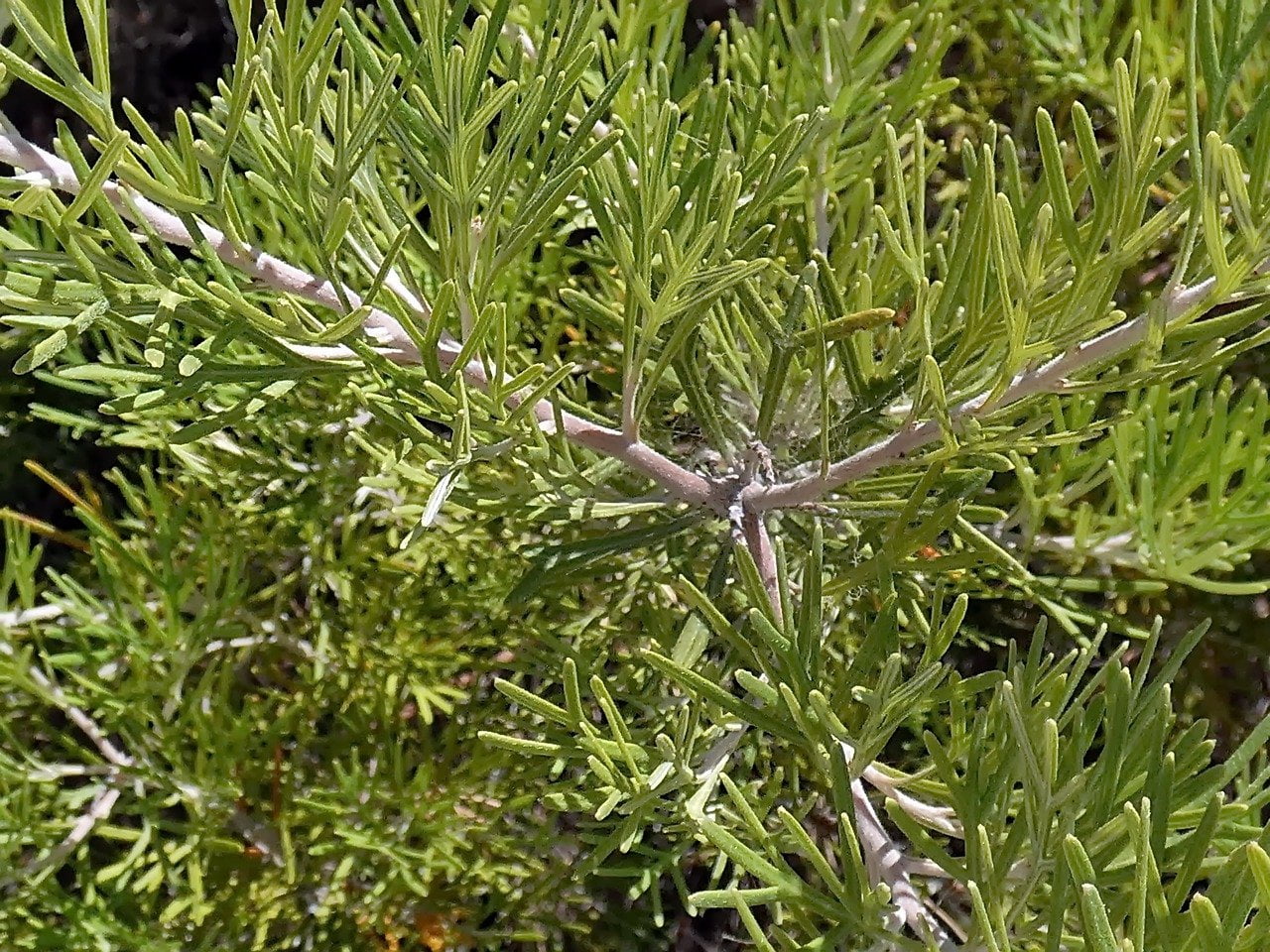
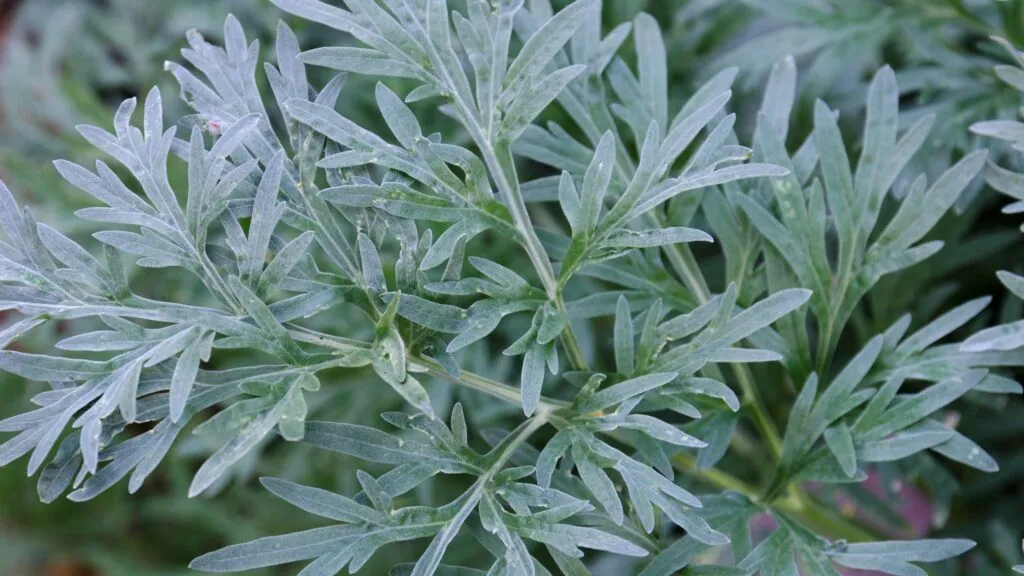
Whilst there are many lists of true Mediterranean plants online, many are only suitable for very warm climates. Our cold, wet winters often finish them unless they are overwintered in a greenhouse or conservatory. However, several Mediterranean plants can be grown in our milder climates. Artemisia is a great, tough example of a gorgeous deciduous shrub that gives that silvery-green look so well known in hot gardens of the med!
Artemisia (shown above) is a tough Mediterranean shrub suitable for all sunny UK gardens. Below is a list of hardy Mediterranean-style plants to help create the illusion of warmer European climates in your back garden here in Britain.
Hardy Mediterranean Plants for the UK
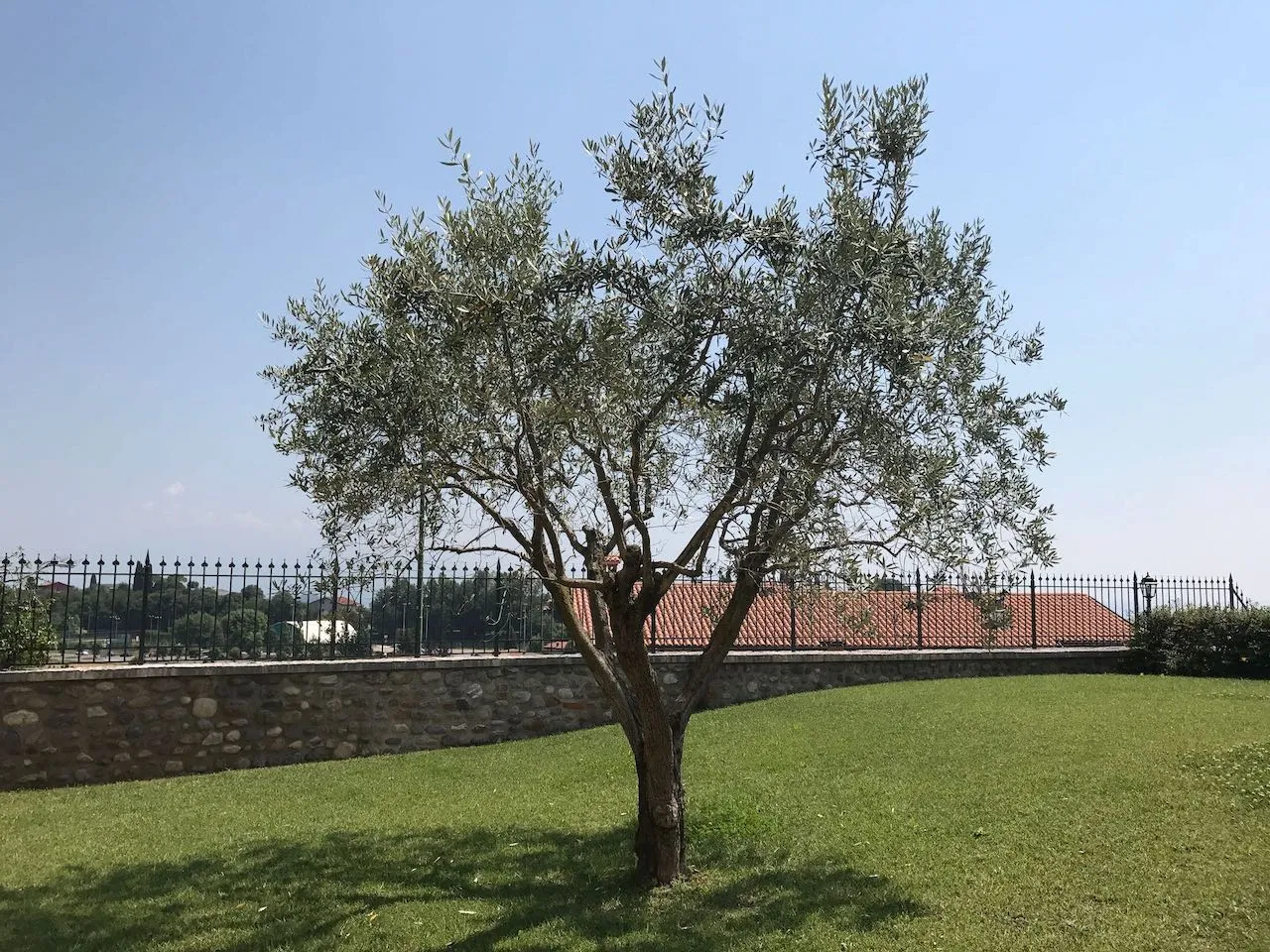
1) Olive Tree (Olea europaea)
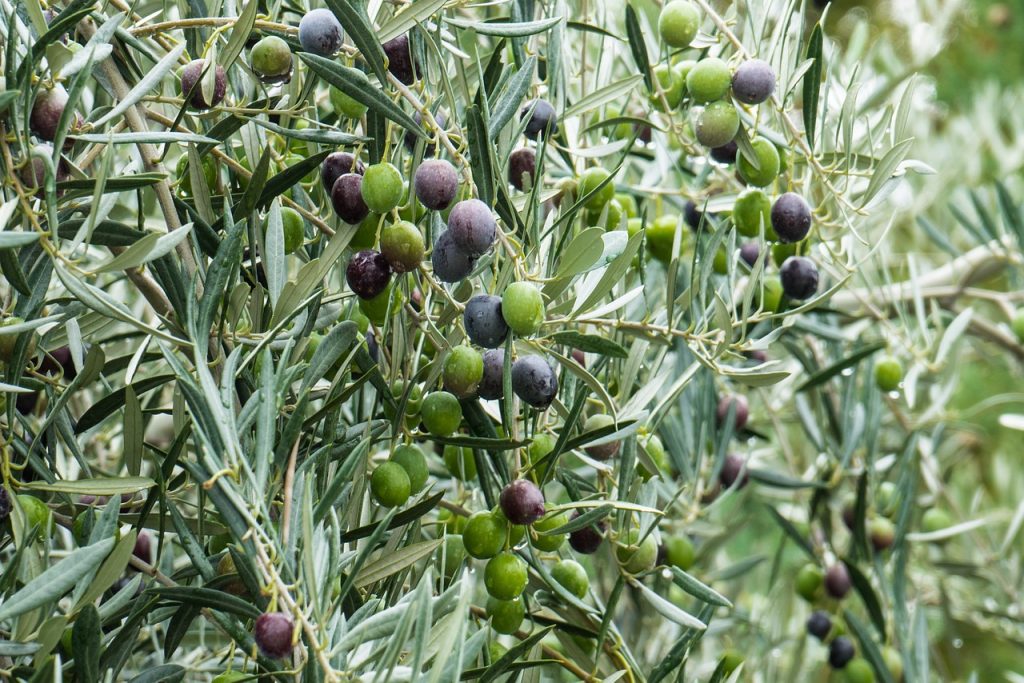
If there is one plant that single-handedly conjures the atmosphere of a sun-drenched Mediterranean terrace, it is the olive tree.Olea europaea is quite possibly the most transformative specimen tree you can add to a UK garden, bringing that instant sense of warmth, age, and character that takes decades to achieve with most other trees. The silvery grey-green foliage shimmers in sunlight and moves beautifully in the breeze, whilst the gnarled, sculptural trunk on a mature specimen is nothing short of extraordinary.
I use olive trees regularly in my garden design work wherever a client wants to create a genuinely Mediterranean feel, and they never fail to impress. In a sheltered, south-facing garden with excellent drainage, olives will establish remarkably well in the UK and even produce fruit in warm years. Plant in the sunniest, most sheltered spot available, ideally against a south-facing wall where reflected heat will give the tree the warm conditions it craves.
In containers, olives are spectacular, and the pot can be moved under cover during exceptionally harsh winters, removing most of the hardiness concerns entirely. Use a terracotta pot with plenty of grit in the compost, and avoid overwatering at all costs.
Top Tip: In cold spells below minus 10°C, wrap the trunk and main branches in horticultural fleece and protect the roots with a thick mulch of gravel or bark. Plants in containers are much more vulnerable than those in the ground, as their roots have no insulation from the surrounding soil.
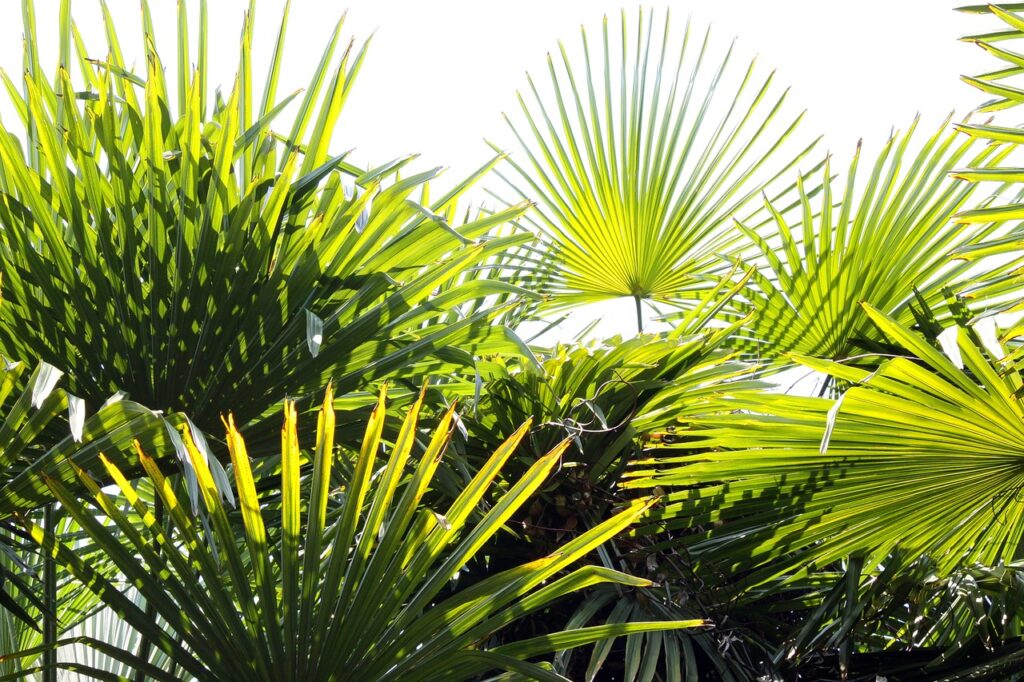
Chamaerops humilis is the only palm native to Europe and the hardiest palm you can realistically grow in a UK garden, which makes it an absolute cornerstone of Mediterranean planting schemes. Those architectural, fan-shaped leaves create an instant tropical atmosphere that is genuinely unlike any other plant, and a well-grown specimen becomes a real talking point in any garden.
It is a slow-growing, clumping palm that gradually develops multiple stems and, in time, produces offsets around its base that can be carefully removed and potted on. The leaves are spiky on their stalks, so position them away from paths and seating areas where you might brush against them. In my experience, this is one of the most versatile Mediterranean plants for UK conditions.
I have seen established specimens come through remarkably harsh winters completely unscathed, though younger plants in their first couple of years deserve some protection.
In containers, it looks absolutely spectacular paired with terracotta pots and drought-tolerant underplanting of lavender or Stipa grass. Feed with a slow-release fertiliser in spring to encourage good leaf development.
Top Tip: Tie the fronds loosely together over winter and wrap with horticultural fleece to protect the growing crown, which is the part most vulnerable to frost damage. Once the growing point is lost, the stem will not recover, so this simple precaution is worth the effort every year for young specimens.
🌿 Chamaerops humilis At A Glance
Botanical Name
Chamaerops humilis
Plant Type
Evergreen palm
UK Hardiness
RHS H4 (hardy to around minus 10°C in well-drained conditions)
Height & Spread
Up to 2m x 2m (slow growing)
Flowering Period
Spring (yellow clusters on mature plants)
Best Growing Conditions
Full sun, excellent drainage, sheltered from cold north winds
Trachycarpus fortunei is the most widely grown hardy palm in the UK, and for very good reason. This magnificent palm from the mountains of central China is one of the hardiest palms in cultivation, tolerating temperatures well below freezing once established, making it a genuinely reliable choice for Mediterranean-inspired gardens across most of Britain.
The large, deeply divided fan leaves can reach up to 1.5 metres across on a mature plant, creating a dramatic tropical canopy that is genuinely impressive. The fibrous, shaggy trunk adds extraordinary character and texture, and the plant develops a pleasing single-stemmed structure over time. Unlike Chamaerops, Trachycarpus is a single-stemmed palm that grows steadily taller each year, making it a long-term investment in your garden.
In sheltered urban gardens, I have seen specimens thriving at impressive heights of 6 metres or more, creating genuine skyline drama that no other hardy plant can match. Plant in free-draining soil or a large container, and feed generously through the growing season to support good leaf production.
Top Tip: Remove the oldest, lowest fronds as they die back to reveal the characteristic fibrous trunk beneath. Do not remove living green fronds unnecessarily, as this stresses the plant. In very cold spells, protect the crown with fleece but leave the trunk exposed as this is perfectly frost-hardy once established.
🌿 Trachycarpus fortunei At A Glance
Botanical Name
Trachycarpus fortunei
Plant Type
Evergreen palm
UK Hardiness
RHS H5 (hardy to around minus 15°C once established)
Height & Spread
Up to 12m x 3m (slow growing; 6m+ realistic over many years)
Flowering Period
Summer (yellow panicles on mature plants)
Best Growing Conditions
Full sun to partial shade, free-draining soil, sheltered position
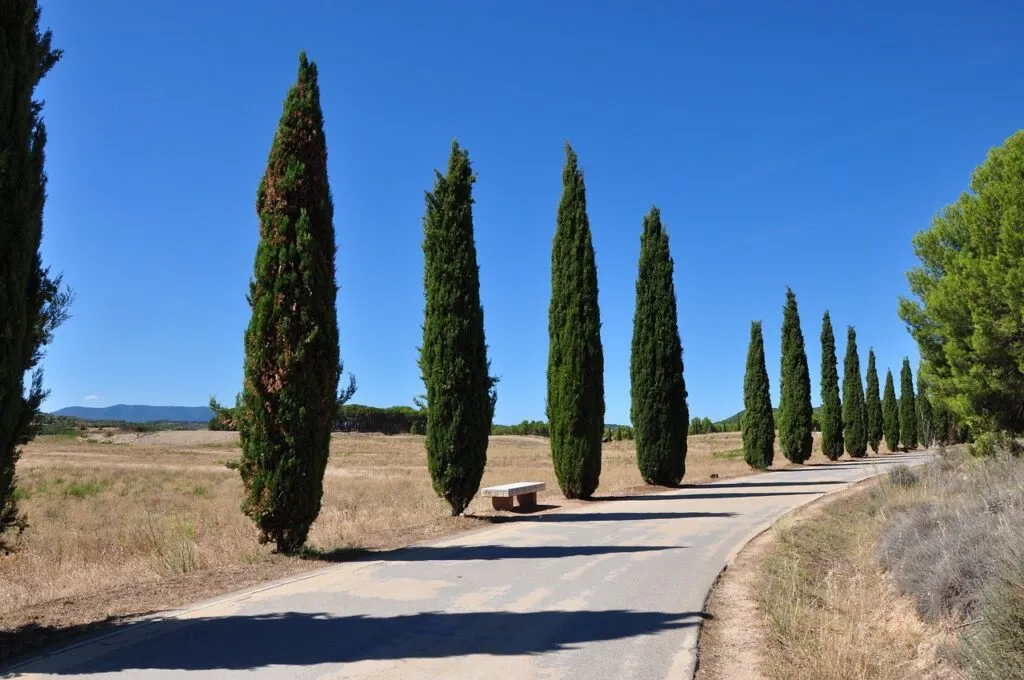
Nothing says Italian hillside quite like a row of Tuscan cypress trees punctuating a hot blue sky, and Cupressus sempervirens ‘Stricta’ brings that unmistakable vertical drama to UK gardens in a way that no other tree can replicate. The narrow, columnar habit of this evergreen cypress is its defining feature — it occupies remarkably little ground space for its height, making it an outstanding choice for adding height and vertical structure in smaller gardens where a spreading tree would be impractical.
The dense, aromatic, dark green foliage is attractive year-round, and the tree requires virtually no maintenance once established. In design terms, Tuscan cypress works brilliantly as a repeated vertical element in a Mediterranean-style planting scheme, creating rhythm and structure that draw the eye and give a sense of order to what can otherwise become an exuberant collection of sun-loving plants.
Plant them as a pair flanking an entrance gate or doorway for maximum impact, or use them as living punctuation marks at intervals along a border to create that authentic Provençal atmosphere. They are considerably tougher in the UK than many people assume, though they do need a sheltered spot in colder northern gardens.
Top Tip: Avoid planting in exposed, wind-swept positions as the columnar form can be permanently distorted by persistent strong winds. In a sheltered south-facing garden, established trees are surprisingly tough. Plant in spring to give the roots a full growing season to establish before facing their first UK winter.
🌿 Cupressus sempervirens At A Glance
Botanical Name
Cupressus sempervirens ‘Stricta’
Plant Type
Evergreen coniferous tree
UK Hardiness
RHS H4 (hardy to around minus 10°C in sheltered conditions)
Height & Spread
Up to 20m x 1.5m (narrow columnar habit)
Flowering Period
Inconspicuous; grown for foliage and form
Best Growing Conditions
Full sun, free-draining soil, sheltered from strong winds
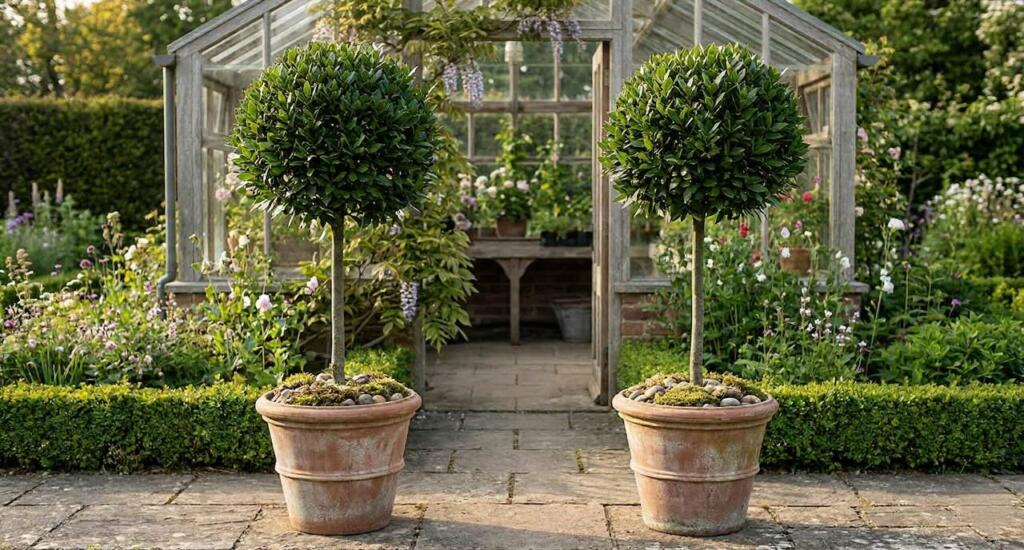
Bay has been clipped and trained into formal shapes for centuries in Mediterranean gardens, and a pair of well-grown bay lollipops or pyramids flanking a doorway or terrace instantly elevates any Mediterranean-style space. Laurus nobilis is evergreen, aromatic, and extraordinarily versatile — it can be trained into standards, cones, spirals, pyramids, and cloud-pruned forms depending on the look you want to achieve.
The culinary benefit of having a well-stocked bay tree to hand is, of course, an added luxury; nothing beats pulling a fresh bay leaf for a stew or roast. Bay topiary is almost always grown in containers in a UK context, which works beautifully with the terracotta and stone aesthetics of Mediterranean garden design. Use a loam-based compost with added grit, and feed fortnightly through the growing season with a balanced liquid fertiliser to maintain good vigorous leaf growth.
Clip in late spring and again in late summer to maintain the shape, removing single leaves rather than using shears on larger specimens to avoid cutting through leaves and leaving brown edges. Bay is tougher than people give it credit for, though young plants and those in containers need protection from the coldest weather.
Top Tip: Move bay topiary into a cool but frost-free garage or greenhouse in prolonged freezing spells, as the roots in containers are the most vulnerable part. If leaves turn brown and fall following a hard frost, do not panic; cut back to healthy wood in spring, and the bay will frequently regrow from the base if the roots have survived.
🌿 Bay Leaf Topiary At A Glance
Botanical Name
Laurus nobilis
Plant Type
Evergreen shrub or small tree
UK Hardiness
RHS H4 (hardy to minus 10°C; container plants need winter protection)
Height & Spread
Variable depending on training; can reach 8m unpruned
Clipping Time
Late spring and late summer for maintaining shape
Best Growing Conditions
Full sun to partial shade, moist free-draining soil or container
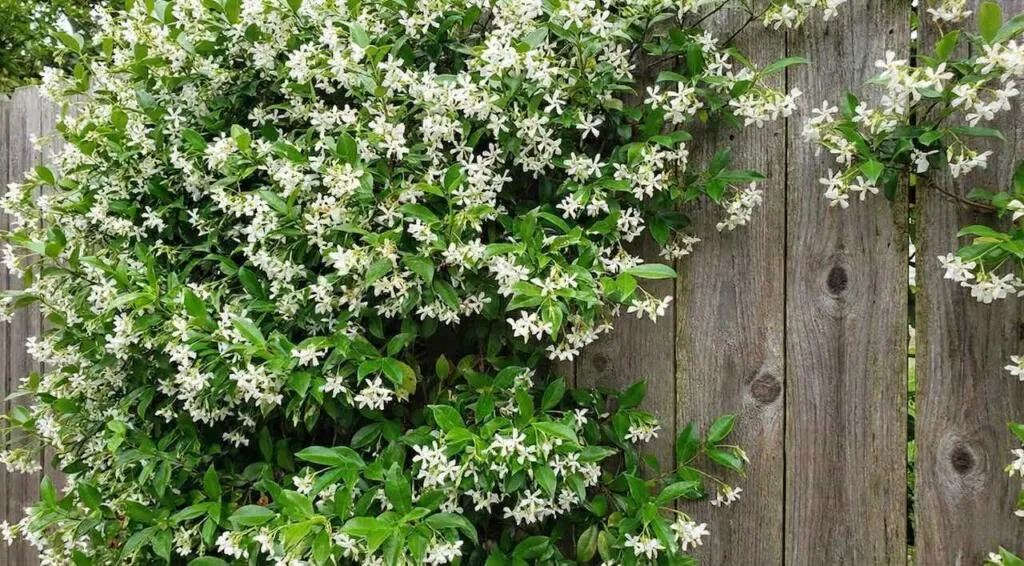
Star jasmine is one of those plants that consistently gets a sharp intake of breath from clients when they first encounter it in full flower, and I completely understand the reaction. The fragrance from Trachelospermum jasminoides in July is quite simply one of the most intoxicating scents in the entire plant kingdom. Star jasmine smells rich, sweet, and powerful enough to fill a whole garden on a warm summer evening.
The small, pure white propeller-shaped flowers cover the plant in a snowstorm of bloom, contrasting beautifully against the deep, glossy evergreen foliage that looks handsome and polished throughout the year. This is an essential climber for any Mediterranean-style wall or fence, and it works particularly well when trained across a warm south- or west-facing wall, where the reflected heat enhances both performance and fragrance.
It is substantially tougher than many gardeners assume, and once established it is quite capable of coming through UK winters without assistance in most parts of the country. Train through a trellis or wire framework and tie in new growth regularly to build a strong framework that will support the enormous weight of the blooms in midsummer.
Top Tip: Provide some protection with horticultural fleece in prolonged freezing spells, particularly for plants in their first two or three winters before they are fully established. A south- or west-facing wall not only provides shelter from cold winds but also stores warmth from the sun during the day and releases it overnight, making an enormous practical difference to hardiness.
🌿 Trachelospermum jasminoides At A Glance
Botanical Name
Trachelospermum jasminoides
Plant Type
Evergreen climbing shrub
UK Hardiness
RHS H4 (hardy to around minus 10°C against a sheltered wall)
Height & Spread
Up to 9m x 3m
Flowering Period
July to August (highly fragrant white flowers)
Best Growing Conditions
Full sun, sheltered south or west-facing wall, free-draining soil
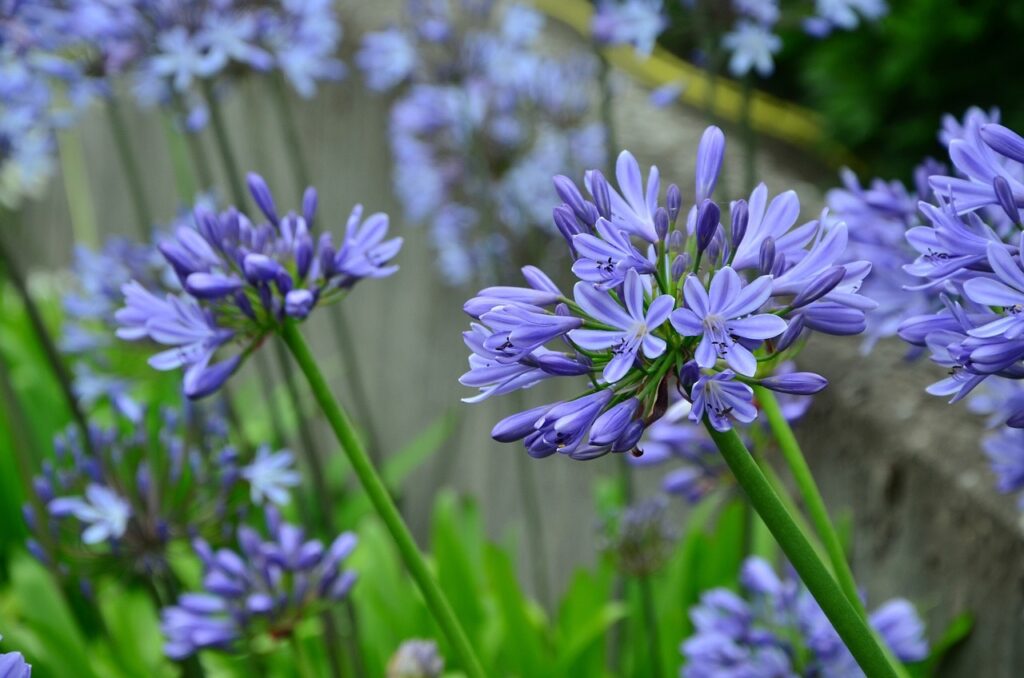
Agapanthus are among the most striking herbaceous perennials you can grow in a Mediterranean-inspired UK garden, producing extraordinary globes of blue or white trumpet-shaped flowers on tall, elegant stems that are quite unlike anything else in the garden. The combination of strap-like architectural foliage and the dramatic flower heads makes agapanthus genuinely sculptural plants that work beautifully in containers, flanking a terrace, lining a path, or massed in a sunny border.
There is a significant difference in hardiness between the deciduous and evergreen species, which is crucial to understand when buying — deciduous varieties like the Headbourne Hybrids are far more reliable in UK winters than evergreen Agapanthus africanus, which demands container growing or a very sheltered spot in mild gardens.
The deep blue of ‘Navy Blue’ and ‘Black Pantha’ are amongst the richest colours available, whilst ‘Glacier Stream’ offers pristine white flowers that look spectacular against the warm tones of terracotta. Plant in free-draining soil in full sun and be patient.
Agapanthus performs best when the roots are slightly crowded, so avoid repotting containers too frequently, or the plant will focus on foliage at the expense of flowers.
Top Tip: Agapanthus africanus is best treated as a container plant in most UK gardens, moved under cover between November and April. Deciduous varieties like the Headbourne Hybrids are a much more practical choice if you want plants that can remain in the ground year-round — they will tolerate minus 15°C in a well-drained soil with a protective mulch over the crown in winter.
🌿 Agapanthus At A Glance
Botanical Name
Agapanthus africanus and hybrids
Plant Type
Herbaceous perennial (deciduous varieties) or evergreen perennial
UK Hardiness
RHS H3 for africanus (tender); RHS H5 for deciduous Headbourne types
Height & Spread
60cm to 1.2m x 60cm depending on variety
Flowering Period
July to September
Best Growing Conditions
Full sun, free-draining soil or container, slightly crowded roots encourage flowering
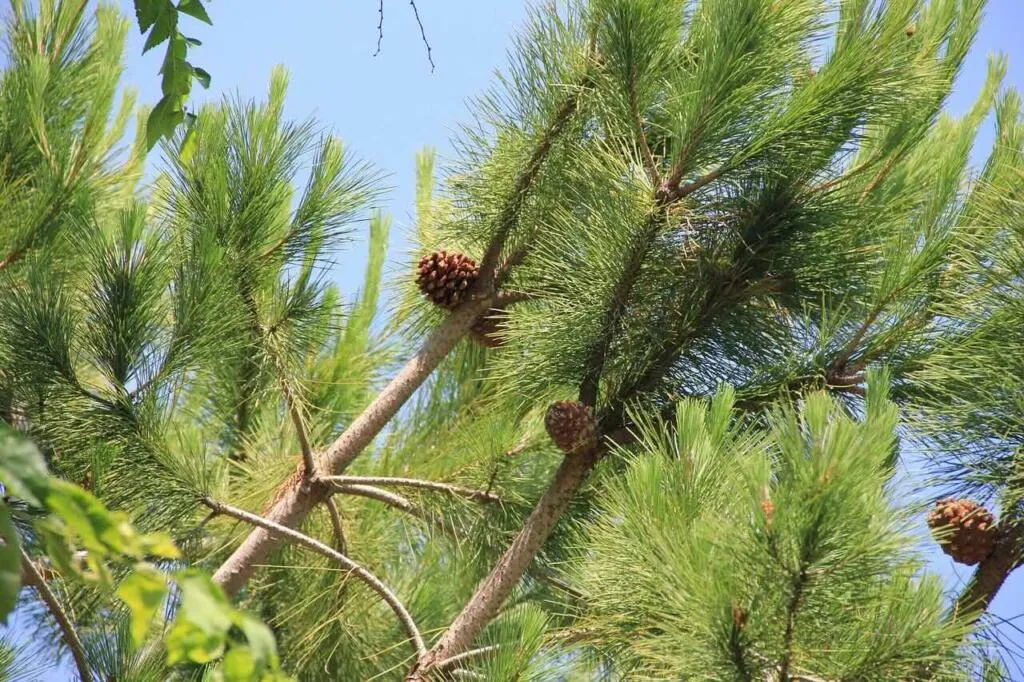
The Stone Pine, or Umbrella Pine, is one of the most iconic trees of the Mediterranean landscape and creates an atmosphere of Italian grandeur that is genuinely evocative of Tuscany and the Côte d’Azur. Young trees have a pleasingly rounded, dense habit that gradually transforms over many years into the distinctive flat-topped, parasol-shaped canopy that makes this tree so immediately recognisable.
It is the tree that produces pine nuts — those delicious, buttery seeds used in pesto and so many Mediterranean dishes — though it takes many years to produce a meaningful crop in UK conditions. As a garden tree, Pinus pinea is grown primarily for its extraordinary architectural form, its handsome blue-grey-green foliage, and the rough, orange-brown bark that develops on mature specimens, adding exceptional texture and character.
It is more tolerant of UK conditions than many people expect, thriving in poor, sandy, free-draining soils where many other trees would struggle. Avoid heavy clay soils and positions with waterlogged ground, as the roots demand excellent drainage to perform at their best. In a large Mediterranean-themed garden, a Stone Pine planted as a young specimen will reward future generations with a genuinely magnificent tree.
Top Tip: Young trees need staking for the first two or three years to establish a good root anchorage. Pinus pinea is slow to establish, but once it has settled in, it is a remarkably tough and long-lived tree. Plant in full sun in free-draining soil — on heavy soils, raise the planting area and incorporate plenty of grit before planting to improve drainage.
🌿 Stone Pine At A Glance
Botanical Name
Pinus pinea
Plant Type
Evergreen coniferous tree
UK Hardiness
RHS H4 (hardy to around minus 10°C once established)
Height & Spread
Up to 20m x 10m (slow growing; umbrella canopy develops with age)
Notable Feature
Produces edible pine nuts; iconic flat-topped canopy on maturity
Best Growing Conditions
Full sun, poor free-draining soil, tolerates drought once established
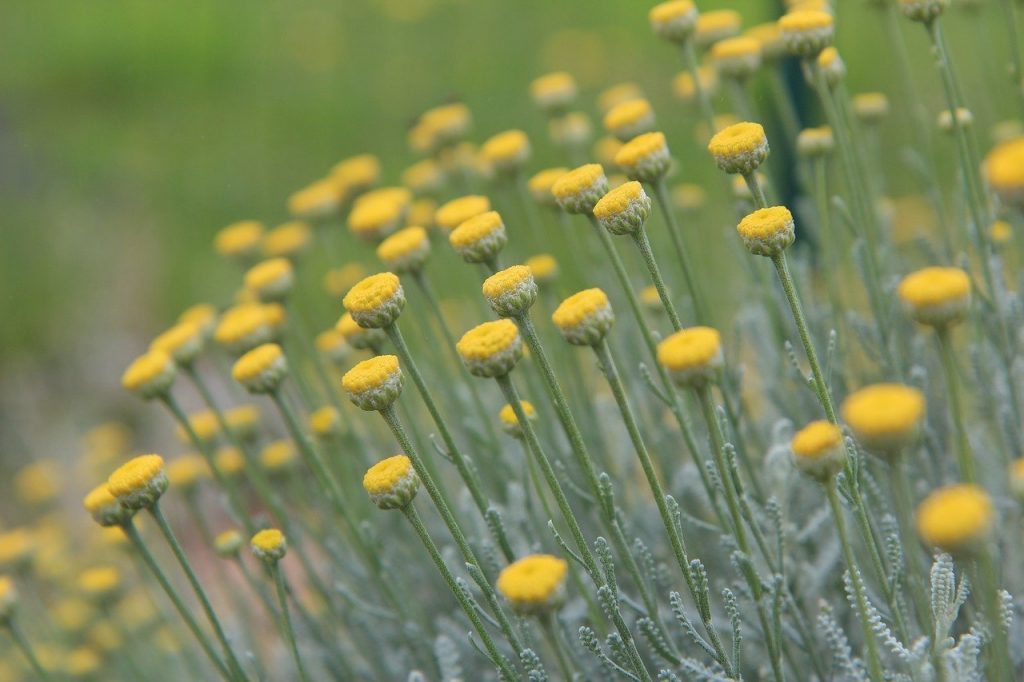
Santolina is one of those quietly brilliant plants that works incredibly hard in a Mediterranean planting scheme without ever demanding attention, and I find myself recommending it constantly to clients who want low-maintenance structure and silvery texture in a sunny border.
The intensely aromatic, silvery-grey foliage of Santolina chamaecyparissus creates a soft, almost luminous quality in the border that catches the light beautifully and acts as an ideal foil for stronger colours such as the deep purples of lavender, the bright blues of agapanthus, and the warm terracotta tones of pots. All benefit enormously from the neutralising effect of Santolina’s silver tones.
Left unpruned, it produces masses of bright yellow button flowers in midsummer, which some people love, and others find slightly gaudy. I tend to clip mine over before flowering to maintain the compact, silvery mound and keep the whole plant looking neat and considered.
Santolina is an outstanding edging plant, able to be clipped into formal low hedges that bring structure to Mediterranean-style borders or knot gardens. It thrives in the poorest, stoniest soils imaginable and is one of the most drought-tolerant plants in cultivation, making it genuinely invaluable in dry, free-draining garden conditions.
Top Tip: Clip santolina back hard each spring just as new growth begins, removing around two-thirds of the previous year’s growth. This is the single most important thing you can do to prevent it from becoming a sprawling, woody mess. Old, unpruned plants are almost impossible to rejuvenate, so an annual spring clip keeps them compact, floriferous, and looking their best for years.
🌿 Santolina At A Glance
Botanical Name
Santolina chamaecyparissus
Plant Type
Evergreen subshrub
UK Hardiness
RHS H5 (fully hardy in well-drained conditions)
Height & Spread
50cm x 75cm when pruned regularly
Flowering Period
July to August (bright yellow button flowers)
Best Growing Conditions
Full sun, very free-draining, poor soil, drought-tolerant once established
Southernwood is a wonderfully aromatic, silver-foliaged shrub that has a long and distinguished history in Mediterranean and European herb gardens, valued for centuries both as a medicinal plant and as an ornamental shrub with genuine character.
Artemisia abrotanum produces feathery, finely divided grey-green foliage that releases a pungent, slightly citrus-scented aroma when brushed. Plant it near a path or seating area where you will brush against it regularly and enjoy the aromatic reward. It forms a well-behaved, upright shrub that is more restrained than its cousin Artemisia ‘Powis Castle’, making it a useful structural plant in Mediterranean-style borders where a degree of neatness is desirable.
The plant is deciduous or semi-evergreen depending on the severity of the winter, but it returns reliably each spring and is genuinely undemanding once established in a sunny, free-draining position. Southernwood pairs beautifully with lavender, santolina, and cistus to create an aromatic, drought-tolerant planting scheme that evokes a Provençal hillside. Cut back to about 30cm from the base each spring to encourage fresh, bushy growth and prevent the plant from becoming woody and open at the base.
Top Tip: Artemisia abrotanum is considerably tougher than many of the more ornamental artemisias, and its semi-woody stems provide it with better protection against prolonged cold than purely herbaceous varieties. It thrives in the leanest, best-drained soils and actually performs less well in rich, fertile ground where growth becomes lax, and flopping becomes a problem. It also has incredibly folklore history as a plant used for witchcraft!
🌿 Artemisia abrotanum At A Glance
Botanical Name
Artemisia abrotanum
Plant Type
Semi-evergreen shrub
UK Hardiness
RHS H5 (fully hardy in free-draining conditions)
Height & Spread
60cm to 1m x 60cm
Notable Feature
Intensely aromatic foliage; traditional herb with a long history of cultivation
Best Growing Conditions
Full sun, poor free-draining soil, drought-tolerant once established
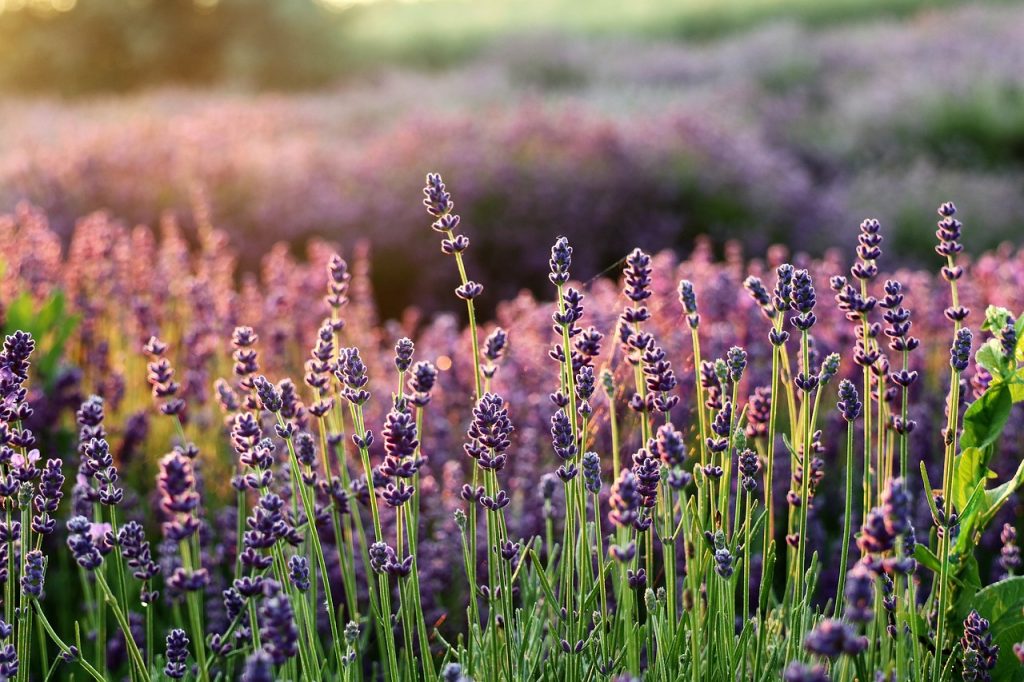
Lavender is so deeply associated with Mediterranean garden style that it barely needs introduction, and yet the choice between varieties makes an enormous practical difference to success in UK gardens, which is something I always explain to clients. English lavender (Lavandula angustifolia) and its varieties are the most reliably hardy choice for UK gardens, with ‘Hidcote’, ‘Munstead’, and ‘Imperial Gem’ being the three I use most frequently in design work for their compact habit, deep colour, and proven winter hardiness.
French lavender (Lavandula stoechas), with its distinctive butterfly pappets on each flower spike, looks exquisite but is significantly less hardy and better suited to containers that can be moved under cover in winter. The aromatic qualities of lavender are perhaps its greatest asset — plant it along a path, beside a terrace, or flanking steps where people will brush against it regularly, and the scent that is released is one of the most reliably mood-lifting experiences a garden can offer.
Lavender is an outstanding bee plant, attracting bumblebees and honeybees in extraordinary numbers from June through August. Prune every single year after flowering without fail — cutting into the soft new growth but never into old wood — to maintain a neat, rounded shape and prevent the woody, splayed habit that ruins so many neglected lavender plants.
Top Tip: The single most common reason lavender fails in UK gardens is poor drainage, not cold. Plant in the best-drained spot you have, add plenty of horticultural grit to heavy soils at planting time, and avoid feeding with nitrogen-rich fertilisers, which encourage lush, soft growth that is vulnerable to cold and disease. A gravel mulch around the base improves drainage and reflects warmth back up to the plant, which it loves.
🌿 Lavender At A Glance
Botanical Name
Lavandula angustifolia (and species)
Plant Type
Evergreen subshrub
UK Hardiness
RHS H5 for angustifolia types; RHS H3 for stoechas in containers
Height & Spread
30cm to 90cm x 30cm to 90cm depending on variety
Flowering Period
June to August
Best Growing Conditions
Full sun, excellent drainage, prune annually after flowering
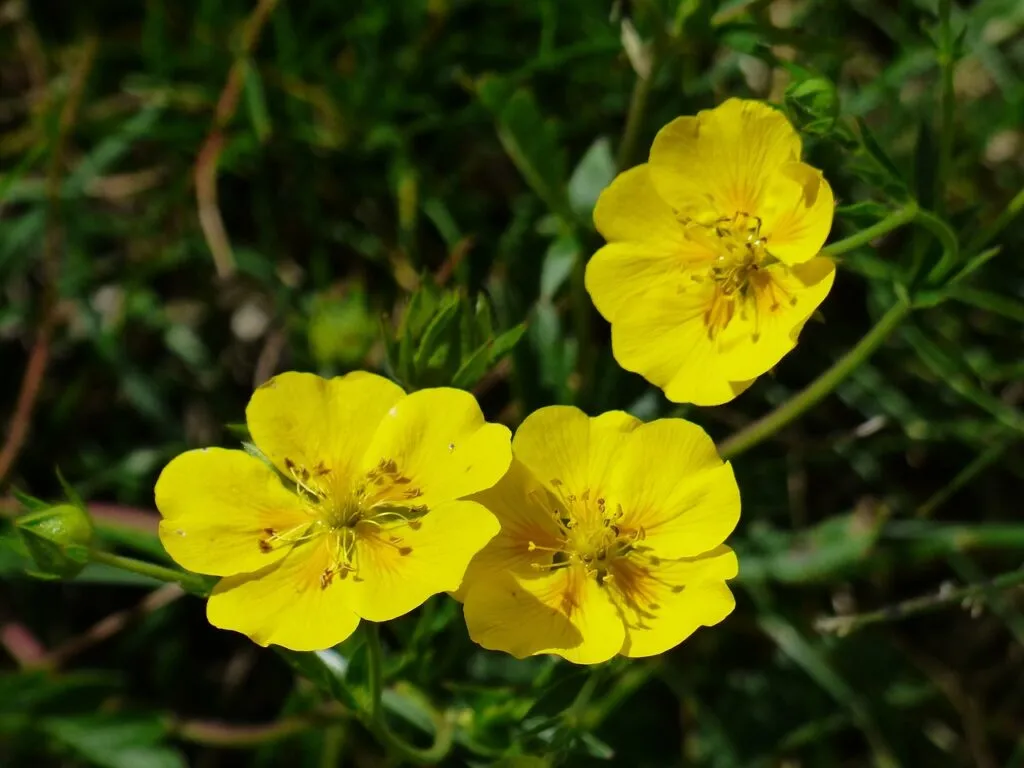
Helianthemum is one of the great unsung heroes of Mediterranean garden design, a plant that performs brilliantly in exactly the conditions that most shrubs find challenging — poor, stony, free-draining soil in baking full sun. The papery, tissue-like flowers open in a succession of blooms from May to July in colours ranging from pure white and palest yellow through every shade of pink and apricot to vivid scarlet, and each individual flower may only last a day, but the plant is never without fresh blooms during its long flowering season.
It forms a low-spreading, evergreen mat that makes outstanding groundcover on banks, in gravel gardens, over retaining walls, and at the front of sunny Mediterranean-style borders. ‘Wisley Primrose’ with its soft yellow flowers and grey foliage is one of my favourite garden plants in its class, whilst ‘Henfield Brilliant’ delivers an extraordinary display of brick-red flowers that is quite impossible to ignore. Helianthemum is one of the best plants for softening the edges of paving, cascading over walls, and filling the gaps between larger architectural plants in a gravel garden scheme.
Trim over with shears immediately after flowering to encourage a second flush and maintain a compact, tidy habit.
Top Tip: Helianthemum demands perfect drainage above all else and will tolerate virtually no waterlogging, even briefly. On any soil that holds moisture in winter, incorporate generous quantities of horticultural grit before planting and consider raised beds or planting on a slight slope to encourage water to drain away from the crown. Given excellent drainage, it is fully hardy throughout the UK.
🌿 Helianthemum At A Glance
Botanical Name
Helianthemum nummularium
Plant Type
Evergreen subshrub
UK Hardiness
RHS H5 (fully hardy with excellent drainage)
Height & Spread
20cm x 60cm (low spreading habit)
Flowering Period
May to July (with possible second flush after trimming)
Best Growing Conditions
Full sun, very free-draining, poor soil, trim after flowering
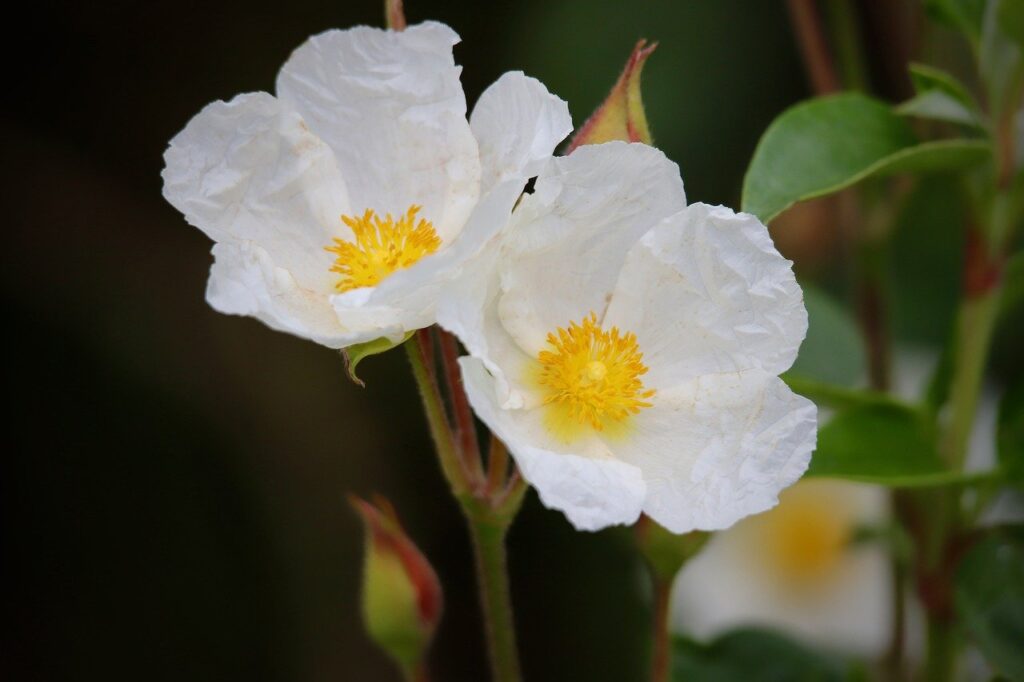
The papery flowers, which open fresh each morning and drop by evening, have a delicate, almost ethereal beauty that is quite unlike any other flowering shrub, and the aromatic foliage releases a rich, resinous scent in warm sunshine that instantly transports you to a sunbaked southern hillside.
Cistus × purpureus is one of the finest varieties, producing large, deep-pink flowers with a distinctive dark maroon blotch at the base of each petal, giving it extraordinary depth and character. ‘Snow Fire’ offers white flowers with the same dramatic maroon markings, whilst Cistus × hybridus (syn. corbariensis) is arguably the hardiest commonly available species and produces white flowers with yellow centres in great profusion.
Cistus is an outstanding plant for poor, stony, free-draining soils in full sun where many more demanding shrubs would refuse to grow, making it genuinely invaluable for difficult dry spots. Never prune cistus into old wood as it will not regenerate from bare stems — trim lightly after flowering to maintain shape, removing only the soft new growth that carried this year’s flowers.
Top Tip: The hardier cistus varieties like C. × hybridus will come through most UK winters without difficulty in a sheltered, free-draining position, but less hardy species like C. × purpureus appreciate some protection in prolonged cold spells. A south or west-facing wall provides both the warmth and shelter that cistus needs to perform at its absolute best in the UK climate.
🌿 Cistus At A Glance
Botanical Name
Cistus species and hybrids
Plant Type
Evergreen shrub
UK Hardiness
RHS H3 to H4 depending on species (C. × hybridus is hardiest)
Height & Spread
60cm to 1.5m x 1m to 1.5m, depending on variety
Flowering Period
May to July
Best Growing Conditions
Full sun, very free-draining, poor soil, sheltered from cold winds
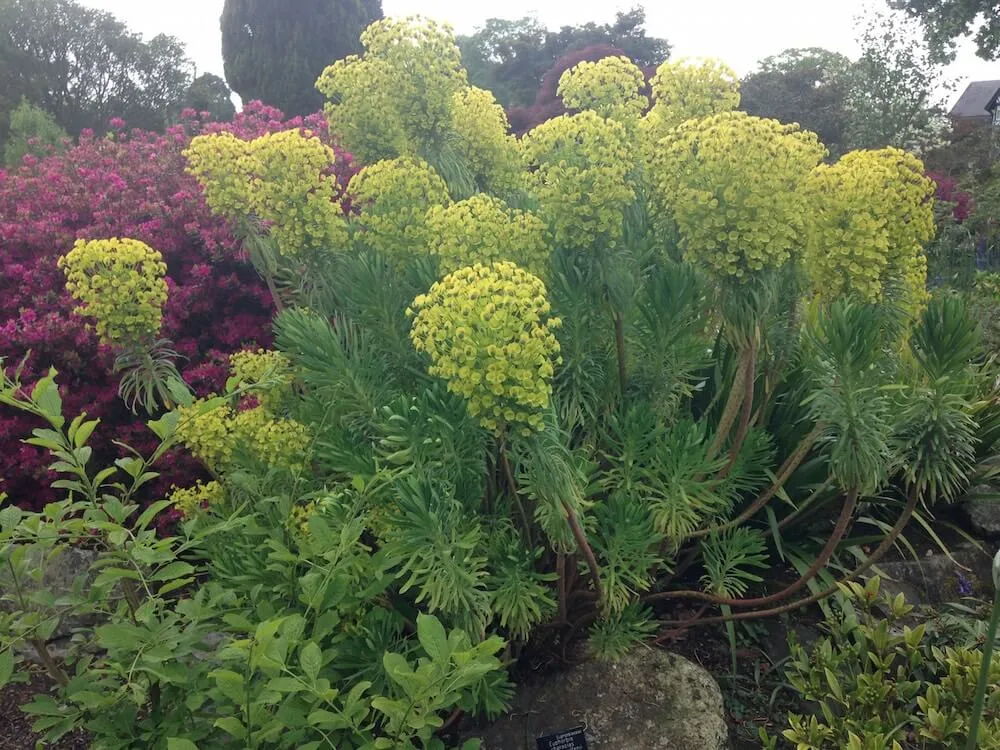
Euphorbia characias is one of the most architectural and structurally dramatic evergreen perennials available for UK gardens, and it earns its place in Mediterranean-style planting schemes through sheer visual impact alone. The substantial stems, clothed in blue-grey-green leaves and topped with enormous chartreuse-yellow flowerheads, from February through to June, create a genuinely sculptural quality that few other plants can match for such an extended period.
The subspecies wulfenii is particularly fine, producing the largest flowerheads of any commonly grown euphorbia — great lime-green cylinders of flower that are extraordinary from late winter right through spring. Euphorbia characias thrives in exactly the conditions a Mediterranean garden provides: poor, free-draining soil in full sun with minimal supplementary watering once established.
It self-seeds with pleasing generosity in the right conditions, meaning that once you have it in the garden, it will perpetuate itself naturally. Always wear gloves when handling euphorbia, as the milky white sap is a severe skin and eye irritant — cut stems over a bucket and wash hands thoroughly afterwards. After flowering, cut the spent stems to the base to make way for the new growth that will carry next year’s flowers.
Top Tip: Euphorbia characias is fully hardy in all but the most severe UK winters, but young plants establishing in their first winter benefit from a light protective mulch around the base. The key threat is not cold but winter wet — if the root zone becomes waterlogged for extended periods, the plant will rot, so excellent drainage is far more important to survival than temperature alone.
🌿 Euphorbia characias At A Glance
Botanical Name
Euphorbia characias subsp. wulfenii
Plant Type
Evergreen perennial subshrub
UK Hardiness
RHS H4 (hardy to around minus 10°C with good drainage)
Height & Spread
1.2m x 1.2m
Flowering Period
February to June (lime-green chartreuse flowerheads)
Best Growing Conditions
Full sun, free-draining poor soil, drought tolerant; avoid wet ground
Your subscription could not be saved. Please try again.
Your subscription has been successful.
Why Mediterranean Garden Design Works So Well in the UK
I’ve designed a lot of Mediterranean-inspired gardens over the years, and what strikes me every single time is how much impact this style creates for relatively little ongoing effort once everything is established. There’s a reason it remains one of the most requested styles I get asked to design for BBC Garden Rescue — it genuinely transforms a space in a way that few other styles can match.
The visual appeal alone is extraordinary. Lush silver and grey foliage, terracotta containers overflowing with aromatic herbs, and bold structural plants combine to create something that feels genuinely transportive. As if you’ve stepped off a British terrace and onto a Provençal hillside. For a new-build garden that’s currently nothing more than a rectangle of builder’s rubble and compacted soil, this style can work absolute miracles.
One of the greatest practical benefits is what I’d describe as the low-maintenance dividend. Mediterranean plants spend years quietly building their root systems, and once they’re settled and established, they become remarkably self-sufficient. Drought-tolerant plants like lavender, cistus, and santolina simply don’t need the constant attention that more demanding border perennials require, and a well-laid gravel garden will look a thousand times better than a neglected lawn with a fraction of the weekly input. The gravel suppresses weeds, retains soil warmth, and improves drainage all at once; it’s genuinely clever garden design.
Year-round interest is another area where this style quietly excels. Because so many Mediterranean plants are evergreen — bay, rosemary, santolina, euphorbia, trachelospermum — the garden never truly goes to sleep. Even in January, a well-designed Mediterranean garden has structure, texture, and colour where a purely herbaceous border would offer nothing but bare soil. Add in the euphorbia’s extraordinary lime-green flowerheads from February onwards and the early lavender through June, and you have a garden that earns its keep every month of the year.
Then there’s the sensory dimension that I think is genuinely underestimated when people plan this style. The moment you brush past a rosemary or crush a lavender stem between your fingers, the scent that’s released is one of those small joys that makes gardening so rewarding. Position aromatic plants beside paths, seating areas, and doorways where you’ll naturally brush against them, and you create a garden that engages all the senses, not just sight.
Wildlife benefit is significant too. The open, accessible flowers of lavender, cistus, and helianthemum are insect magnets, attracting bumblebees, honeybees, and a whole range of beneficial pollinators from early spring right through to autumn. A Mediterranean-style garden buzzing with life on a warm summer afternoon is a genuinely beautiful thing, and it contributes to the health of your wider local ecosystem at the same time.
What I love most about this style, though, is its versatility. Even in the smallest urban courtyard or the most exposed northern garden, there are hardy Mediterranean plants that will thrive with the right preparation. It’s not about replicating Tuscany — it’s about capturing the spirit of warmth, texture, and effortless beauty and making it work in a British context. With the right plant selection and a bit of thought given to drainage and aspect, you can absolutely achieve that.
The Honest Challenges of Mediterranean Gardening in the UK
I always believe in being straight with you about this kind of thing, and the reality is that creating a successful Mediterranean garden in the UK does require some honest thinking upfront. It’s absolutely achievable — I’ve designed and built many of them — but going in with your eyes open means you’ll avoid the most common pitfalls.
Climate is the obvious starting point. The Mediterranean has warm, dry summers and mild, wet winters. The UK has, well, the UK’s weather — cool, unpredictable, and considerably wetter than anything lavender truly enjoys. This doesn’t mean Mediterranean gardening is impossible here, but it does mean drainage is absolutely critical. More Mediterranean plants fail in the UK from winter wet sitting around their roots than from cold temperatures. Get the drainage right, and you’ve solved the biggest single challenge this style presents.
Plant selection requires careful thought, and this is where I see people come unstuck most often. Not all Mediterranean plants are equally suited to British conditions, and the difference between an RHS H3 and an RHS H5 rating can be the difference between a plant that thrives and one you’ll be replacing after the first hard frost. The plant list I’ve put together for this guide specifically focuses on varieties I know perform reliably in UK gardens, but it’s always worth checking hardiness ratings for your specific region. i.e. A sheltered London courtyard is a very different environment from an exposed northern hillside.
There’s also an aesthetic compatibility question worth considering. Mediterranean design elements such as terracotta, gravel, clipped bay, and olive trees can look absolutely magnificent in the right setting, but they can occasionally feel at odds with a traditional red-brick British semi or a period stone cottage that naturally suits softer cottage-garden planting. Once established, the care and maintenance of the style is generally lower than most alternatives, but the initial investment in gravel, high-quality terracotta, and structural plants can feel significant upfront. Think of it as a one-off investment that pays dividends in reduced maintenance for years afterwards.
Maintenance requirements are genuinely low once the garden is established, but they’re not zero. Lavender needs its annual post-flowering clip without fail. If you skip it for two or three years, you’ll have a woody, splayed mess that can’t be recovered. Santolina needs the same treatment in spring. The key maintenance tasks for Mediterranean plants are simple and quick, but they need to happen at the right time, and pruning at the wrong moment, such as cutting into old wood, or clipping too late in autumn, can cause real damage to borderline-hardy plants heading into winter.
Finally, it’s worth being aware of pest and disease risks when introducing non-native plants. Most of the plants in this guide have been grown in the UK for many decades without causing concern, but it’s always sensible to source from reputable UK nurseries rather than importing plants, and to inspect new arrivals carefully before they go into the garden.
None of these challenges are insurmountable. In fact, with the plant knowledge from this guide and a bit of thought given to drainage and positioning, most of them barely register as issues at all.
Learn how to Design Your Own Garden
Now that you know how to use colour with spring bulbs for amazing effects, why not learn more about how to design your own garden?
Whether you’re just starting out or have years of experience, our courses are designed for all skill levels. You’ll learn practical techniques in garden layout, plant selection, and maintenance while benefiting from Lee Burkhill’s deep knowledge and passion for sustainable gardening.
29
Garden Design Examples for Small Gardens: 30 Design Templates & Planting Plans
Garden Design Examples for Small Gardens: 30 Design Templates & Planting Plans: In this online gardening course, I’ll walk you through 30 fantastic garden designs, explaining the logic behind the layout, the plant choices, and take-home tips for applying them in your own garden.
Weekend Garden Makeover: A Crash Course in Design for Beginners
Learn how to transform and design your own garden with Lee Burkhills crash course in garden design. Over 5 hours Lee will teach you how to design your own dream garden. Featuring practical design examples, planting ideas and video guides. Learn how to design your garden in one weekend!
Garden Design for Beginners: Create Your Dream Garden in Just 4 Weeks
Garden Design for Beginners Online Course: If you want to make the career jump to becoming a garden designer or to learn how to design your own garden, this is the beginner course for you. Join me, Lee Burkhill, an award-winning garden designer, as I train you in the art of beautiful garden design.
Whether you’re a fan of formal or informal gardens, the Mediterranean garden design style could be the one for you. As long as you have enough sunlight to bring that warmth to the design, there are plenty of UK hardy plants to bring your dreams of the Med to life.
Mediterranean gardens are an excellent choice for small spaces due to their low maintenance requirements, compact design, and versatility. With their drought-tolerant plants and minimal watering needs, they’re ideal for urban dwellers with limited time for garden upkeep. These gardens make efficient use of space, often incorporating vertical elements like arbours and trellises to maximise planting area while minimising ground space.
Container gardening with terracotta pots allows for flexibility in plant selection and placement, making it suitable for balconies, patios, and other small outdoor areas. Despite their size, Mediterranean gardens offer vibrant colours, textures, and scents, providing year-round interest and creating a peaceful retreat for relaxation. Their adaptable design can be customised to suit different microclimates and light conditions, making them a practical and aesthetically pleasing choice for small urban environments.
If, however, you’re dealing with a colder, shaded north-facing garden, a more naturalistic or foliage-based garden may be best for you. Remember to always work with what you have rather than try to work against Mother Nature!
If you’ve liked this article, why not comment or share it to help others? Why not Tweet, Facebook, or Instagram me with your garden dramas for help and advice?
Your subscription could not be saved. Please try again.
Your subscription has been successful.
Lee Burkhill
Lee Burkhill, known as the Garden Ninja, is an award-winning garden designer and horticulturist with over 30 years of gardening experience and 15 years as a professional garden designer. A qualified RHS (Royal Horticultural Society) professional, Lee specialises in sustainable garden design and practical horticultural advice. He designs and presents on BBC1’s Garden Rescue and in leading gardening publications. Lee combines three decades of hands-on gardening knowledge with professional design qualifications to help gardeners create beautiful, functional outdoor spaces.