Lee Burkhill: Award Winning Designer & BBC 1's Garden Rescue Presenters Official Blog
Beginner level
Your garden is somebody's entire world. The blackbird pulling worms from your lawn, the bumblebee working through your lavender, the hedgehog threading through your border at dusk; these creatures are not visitors passing through. They live here. This guide shows you exactly how to make your garden work harder for the wildlife that depends on it.
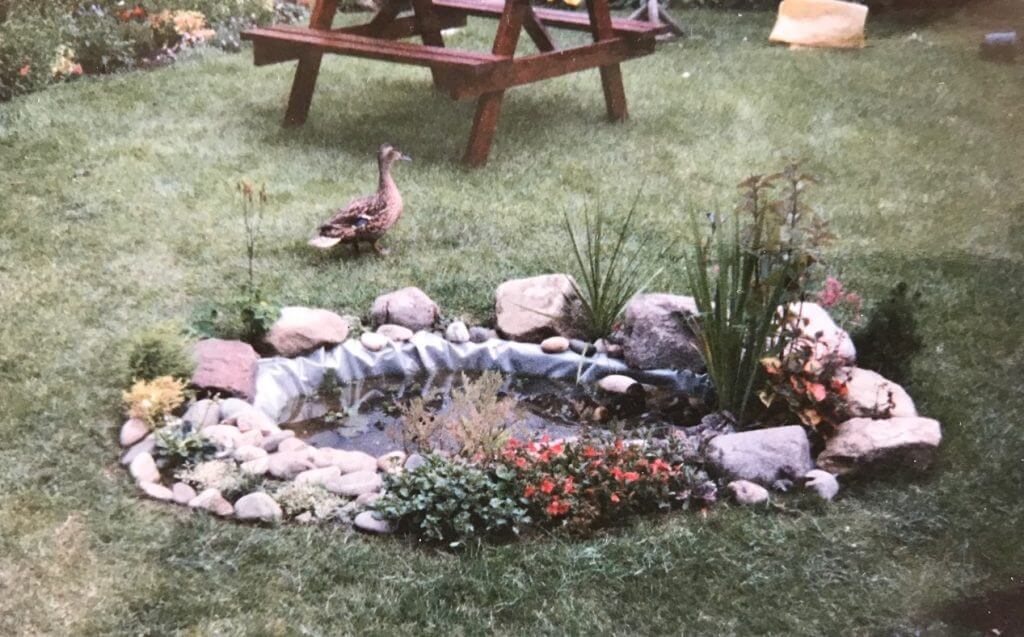
I built my first wildlife pond when I was eleven years old. It was a biner liner pond into a corner of my parents’ back garden in Lancashire, filled with tap water and whatever aquatic plants I could find at the local garden centre. Within a fortnight, there were pond skaters on the surface and a frog investigating the edges. That moment was, looking back on it now, the beginning of everything. Three decades on, the principles have not changed at all: give wildlife food, water, shelter and connectivity, and it will find you.
The UK is home to an astonishing variety of wildlife, much of it under serious pressure. Hedgehog populations have fallen by a third in rural areas since 2000. House sparrow numbers have dropped by more than half since the 1970s. Bats, slow worms, stag beetles and countless moth and butterfly species are all declining. But the UK’s estimated 16 million private gardens, stacked together, cover more land than all our nature reserves combined. What we do in our gardens matters enormously, and a wildlife-friendly garden is one of the most powerful conservation actions any of us can take.
This guide covers everything: how to plan a wildlife garden from scratch, which plants to choose, how to build a pond, create a wildflower meadow, install nest boxes and bug hotels, make a hedgehog highway, and manage your garden without chemicals. Whether you have a postage-stamp courtyard or a generous suburban plot, you will find something here that works for your space.
Quick Answer
To create a wildlife garden in the UK, provide four essentials: food (nectar-rich and native plants, bird feeders), water (a pond or bird bath), shelter (log piles, bug hotels, nest boxes, dense planting), and connectivity (hedgehog highways, hedges instead of fences). Stop using pesticides and herbicides. Let a patch of lawn grow long. Add a pond if at all possible. Even small changes bring significant wildlife benefit very quickly.
This page contains affiliate links for products I use and recommend. If you make a purchase after clicking a link, I may earn a small commission at no extra cost to you, which helps keep the Garden Ninja blog free for all.
Why create a wildlife garden?
The case for wildlife gardening has never been stronger or more urgent. British wildlife has been under sustained pressure for decades from intensive farming, habitat loss, pesticide use, and the increased paving over of our green spaces. Gardens are among the last refuges for many common species that have nowhere else to go.
What surprises most people is how quickly wildlife responds to even modest improvements. I have watched a newly installed pond attract its first pond skaters within a week or two. A log pile installed in autumn is occupied by a slow worm before spring. A patch of lawn left unmown through May fills with clover and dandelion, and the bumblebees are there within days. Wildlife is not waiting for a perfect habitat. It is waiting for any improvement at all on what currently exists.
There is also a deeply personal dimension to this. A garden buzzing with bees, flashing with butterflies and alive with birdsong is a richer, more joyful place to spend time than a sterile green rectangle. From my twenty years of designing gardens professionally and the research linking contact with nature to reduced stress and improved mental health, I can say with complete conviction that a wildlife garden is better for you as well as for the creatures that share it.
How to plan your wildlife garden
The best wildlife gardens are not created overnight. They are layered up over months and years, with each addition building on and connecting to what is already there. The key is to start with a clear sense of what your space can realistically offer, and then make deliberate choices about where to begin.
Before you do anything else, sit quietly in your garden for twenty minutes at different times of day and just observe. Notice where the sun falls and for how long. Notice where it is sheltered and where it is exposed. Look for evidence of wildlife already using the space: worn patches in the grass where something regularly passes, droppings, feathers, spider webs in the hedge. Your garden may already be supporting more wildlife than you realise, and understanding what is already there helps you build on it rather than accidentally disrupting it.
Think in layers. A mature wildlife garden has a ground layer of low plants and leaf litter, a mid layer of flowering perennials and grasses, a shrub layer of native hedging and berry-bearing bushes, and, ideally, a tree layer providing structure, shelter, and insect habitat. You do not need all four layers to start, and not every garden has room for trees. But understanding this structure helps you make choices that increase diversity at every level of the garden rather than focusing only on what looks good at eye height.
💡 Top Tip
Think of your garden as one piece of a much larger jigsaw. The wildlife using your garden does not respect your boundary fence. Hedgehogs, bats, foxes, slow worms and many insects will move across multiple gardens in a single night. Connecting your garden to adjacent green spaces by creating gaps in solid fences, adding climbing plants over walls, and choosing a mixed hedge rather than a panel fence multiplies the value of every improvement you make.
A helpful way to approach planning is to prioritise the four essentials: food, water, shelter and connectivity. Every decision you make for the wildlife garden can be evaluated against these four needs. A new planting scheme provides food in the form of nectar and berries. A pond provides water and breeding habitat. A log pile and dense hedging provide shelter. A gap cut in the fence provides connectivity. With these four lenses, even the smallest space can yield significant wildlife benefits.
Best plants for a wildlife garden
Planting is the foundation of any successful wildlife garden. The choice of what to grow has more impact on the diversity of wildlife you attract than almost any other single factor. The guiding principle is to favour native species where possible, choose plants that flower at different times of year to provide a continuous food source, and avoid flowers bred for multiple petals at the expense of accessible pollen and nectar.
Double-flowered cultivars, while beautiful, are essentially useless to pollinators. The extra petals that make them so decorative block access to the pollen and nectar at the flower’s centre. A single-flowered echinacea, rudbeckia or cosmos, by contrast, is an open landing pad with abundant food freely accessible. When you are choosing plants for wildlife, the simpler the flower form, the better.
Bees, butterflies and hoverflies need a continuous supply of nectar from early spring through to late autumn. The most common mistake in planting for pollinators is choosing plants that all flower in summer, leaving a gap in spring when bumblebee queens are emerging from hibernation and desperately need food, and another in autumn when overwintering insects are building fat reserves. Plan your planting across the whole season rather than just for the summer peak.
For spring, crocus, hellebores, pulmonaria, alliums and single-flowered primroses are outstanding. Hawthorn and cherry blossom are superb for insects in May. Summer brings lavender, echinacea, scabious, verbena bonariensis, geraniums, salvias, monarda and single dahlias. For late summer and autumn, ivy is irreplaceable as it flowers when almost nothing else does, and asters, sedums and rudbeckias take the season well into October for both insects and seed-eating birds.
Birds need insects, berries and seeds at different times of year. The best single-plant investment for birds is arguably ivy, which provides late autumn berries when little else is available, nesting cover all year round, and a late-season nectar source for the insects that birds feed their young. Beyond ivy, berry-bearing native shrubs such as hawthorn, elder, rowan, holly and guelder rose are outstanding. Native trees support vastly more insect species than ornamentals, and more insects mean more birds.
Plants for moths and night-flying insects
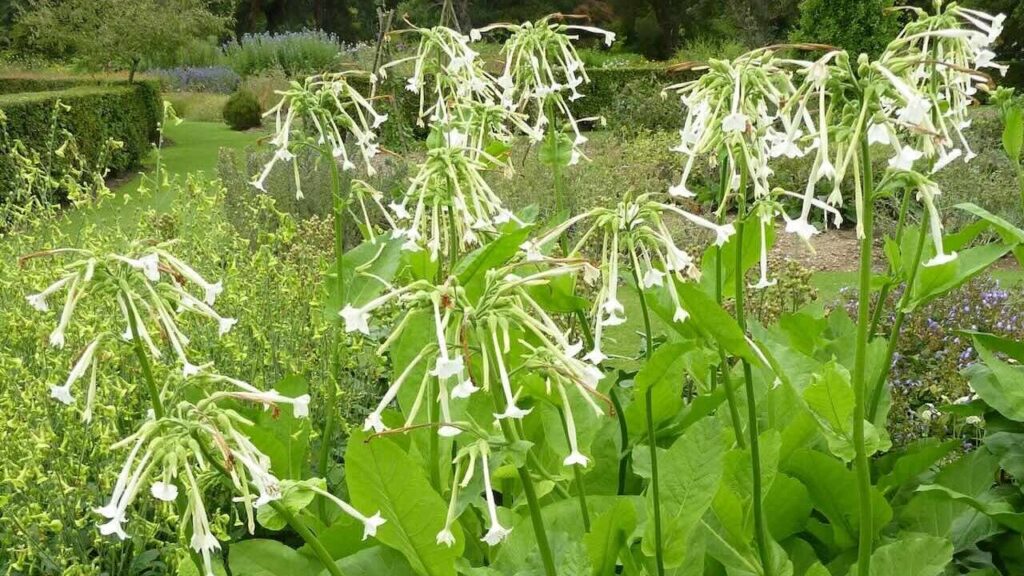
Moths are often overlooked, but they are critically important pollinators and a major food source for bats, swifts and swallows. Night-scented plants including honeysuckle, night-scented stock (Matthiola bicornis), evening primrose, white nicotiana and Hesperis matronalis (sweet rocket) attract moths after dark. Reducing garden lighting at night helps too, as artificial light significantly disrupts moth navigation and behaviour.
Top 20 Plants for Wildlife: My Complete List
I have grown all of these plants in my own garden and recommended them to hundreds of clients over twenty years of designing wildlife-friendly spaces. What sets this list apart from a generic “plants for pollinators” guide is that every plant here earns its place by delivering value to multiple wildlife groups simultaneously. But the key here, Ninjas, is repetition; you need multiples of each plant in your garden, not just one in a pot! Ideally, if you can, have something from the list below in flower during each of the months from spring through to autumn, known as succession planting.
A plant that feeds bees, shelters birds and provides seeds for finches in winter is worth ten plants that do only one of those things. These twenty are the ones I would choose if I were starting a wildlife garden from scratch tomorrow.
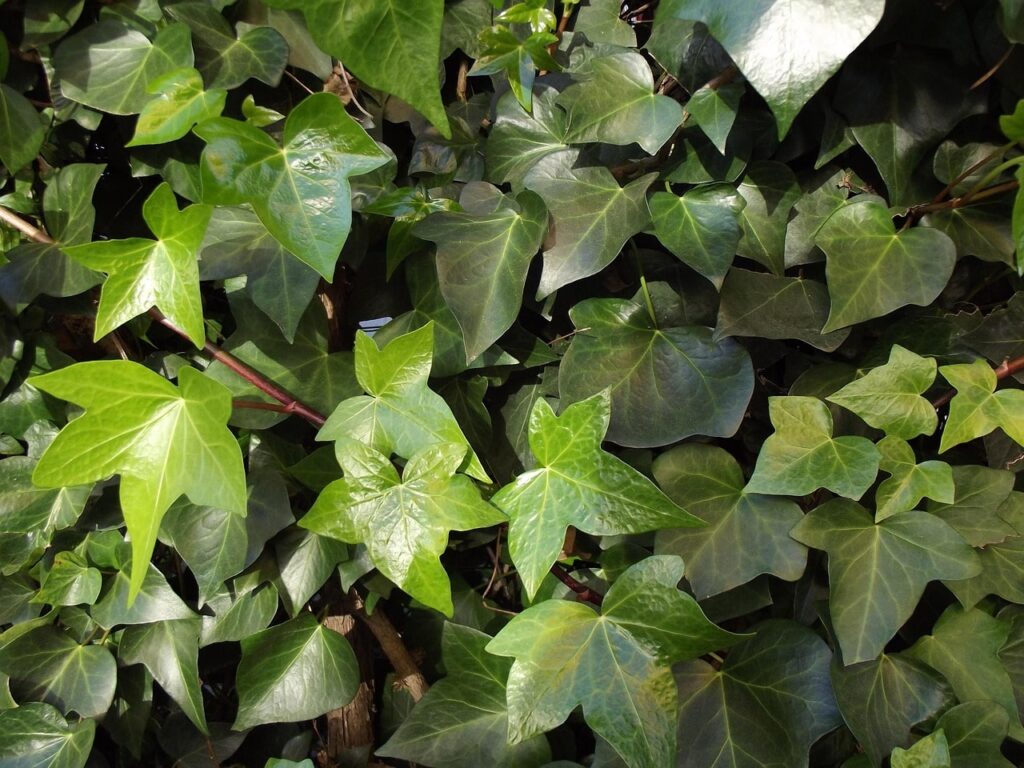
1. Common Ivy (Hedera helix)
If I could choose only one plant for its wildlife value, it would be ivy, without hesitation. It flowers in October and November when almost nothing else does, providing a critical late-season nectar source for wasps, hoverflies and late bumblebees that have no other options. The dense evergreen cover offers nesting sites for wrens, robins and blackbirds.
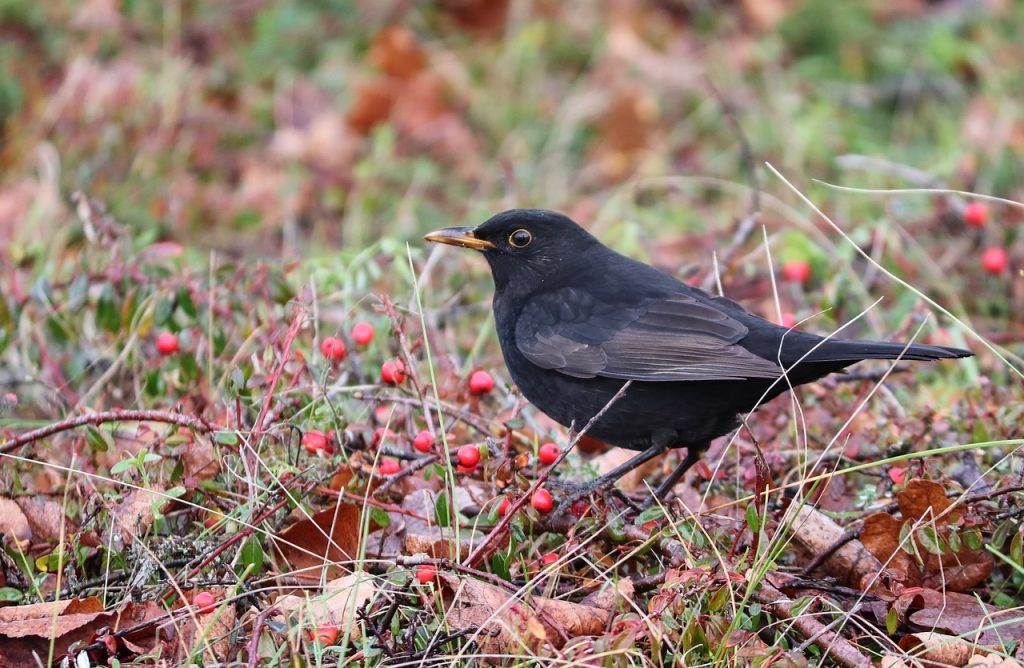
The berries ripen through winter and are eaten by blackbirds, thrushes and woodpigeons. The leaves shelter overwintering insects, butterflies and queen bumblebees. On a wall or fence, it causes no structural damage and requires no maintenance. No other single plant delivers this breadth of year-round wildlife benefit. I bet that surprised you, as the first plant didnt it, Ninja!
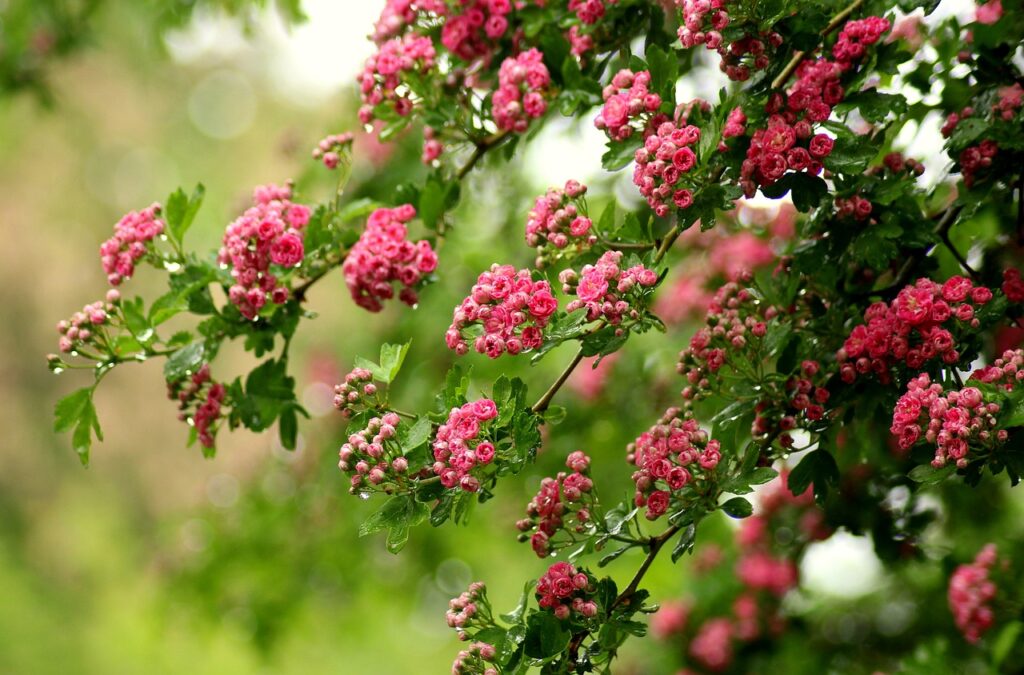
As a hedging plant or small tree, hawthorn supports more wildlife than almost any other species in the British garden. Over 300 insect species are associated with it, providing the food chain that supports nesting birds. The May blossom is one of the most important spring nectar sources for pollinators, and the autumn haws are consumed by fieldfares, redwings, blackbirds, thrushes and small mammals from October through to January. It is the backbone of every native hedge I design.
Hawthorn is also steeped in rich folklore as the tree of the Faeries, or Fae; its first blossom signifies the start of summer and the Beltane ‘fire festival’. Lastly, the autumn fruits shine with their bright red colours, helping maintain seasonal interest in the garden. A fantastic tree or hedge for any-sized garden.
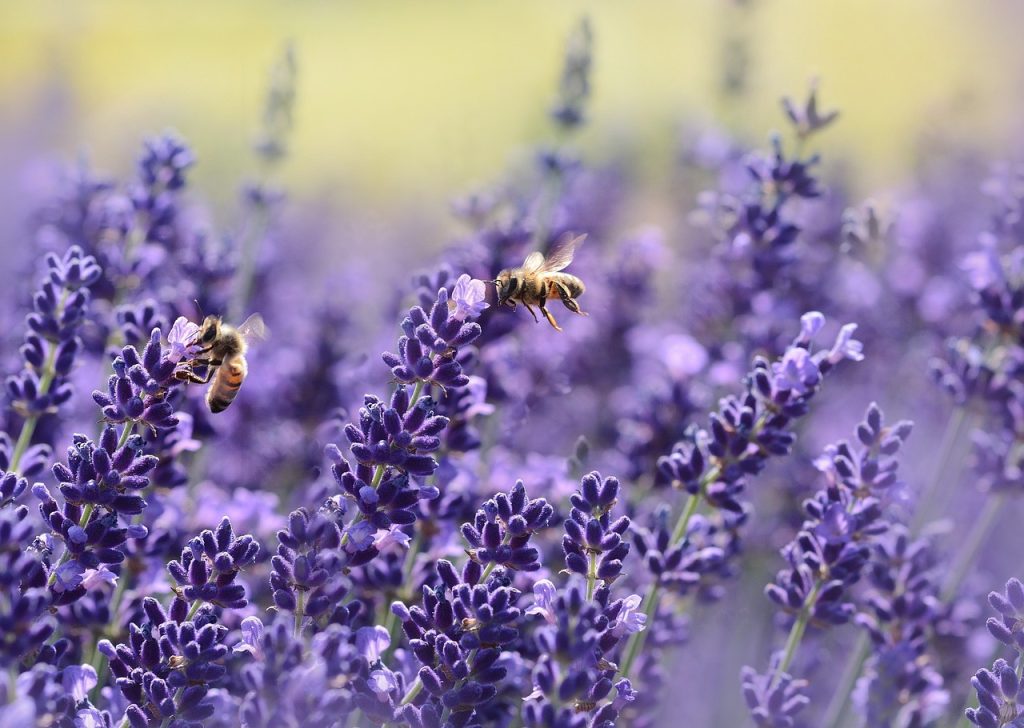
Lavender is one of the most reliable and accessible plants for pollinators in the UK garden. Bumblebees, honeybees, solitary bees and butterflies work on lavender plants intensively from June to August. The dense aromatic foliage provides shelter for invertebrates, and the dried seedheads retain some interest for small birds through winter. It is also one of the few plants that performs as well in a container on a sunny balcony as it does in a large border, making it accessible to gardeners at every scale.
🌿 At A Glance: Lavender
Botanical Name
Lavandula angustifolia
Plant Type
Hardy perennial shrub
UK Hardiness
H5 (hardy to -15°C)
Flowering Period
June to August
Best Conditions
Well-drained soil, full sun
Key Wildlife Benefit
Outstanding for bees and butterflies, works in containers
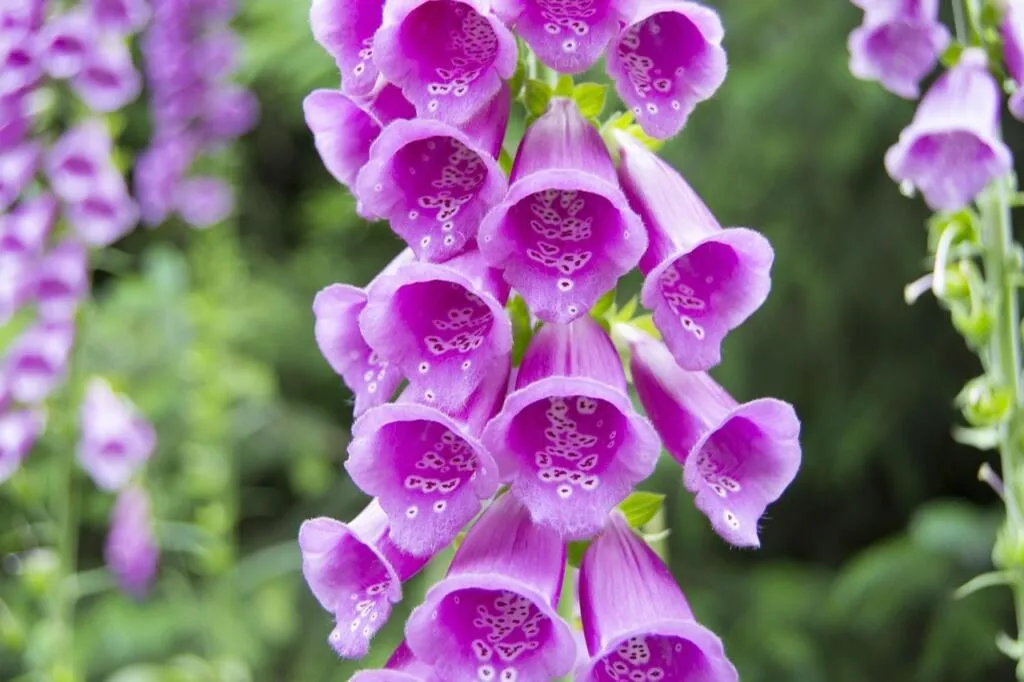
Foxgloves are architecturally magnificent and ecologically important. The tubular flowers are perfectly shaped for bumblebees, particularly the long-tongued garden bumblebee (Bombus hortorum), which can reach nectar that smaller bees cannot access. Growing naturally in woodland clearings and hedgebanks, foxgloves thrive in partial shade where most nectar-rich plants struggle.
They are biennial, dying after flowering, but self-seed prolifically once established so you never need to replant. A colony of foxgloves in a shaded spot is genuinely one of the most impactful wildlife plantings available for a difficult corner of the garden.
Foxgloves are perfectly shaped for long-tongued bumblebees and self-seed freely once established
🌿 At A Glance: Foxglove
Botanical Name
Digitalis purpurea
Plant Type
Native biennial (self-seeds freely)
UK Hardiness
H6 (hardy to -20°C)
Flowering Period
May to July
Best Conditions
Partial shade, well-drained or moist soil
Key Wildlife Benefit
Essential for long-tongued bumblebees, self-seeds to create self-sustaining colony
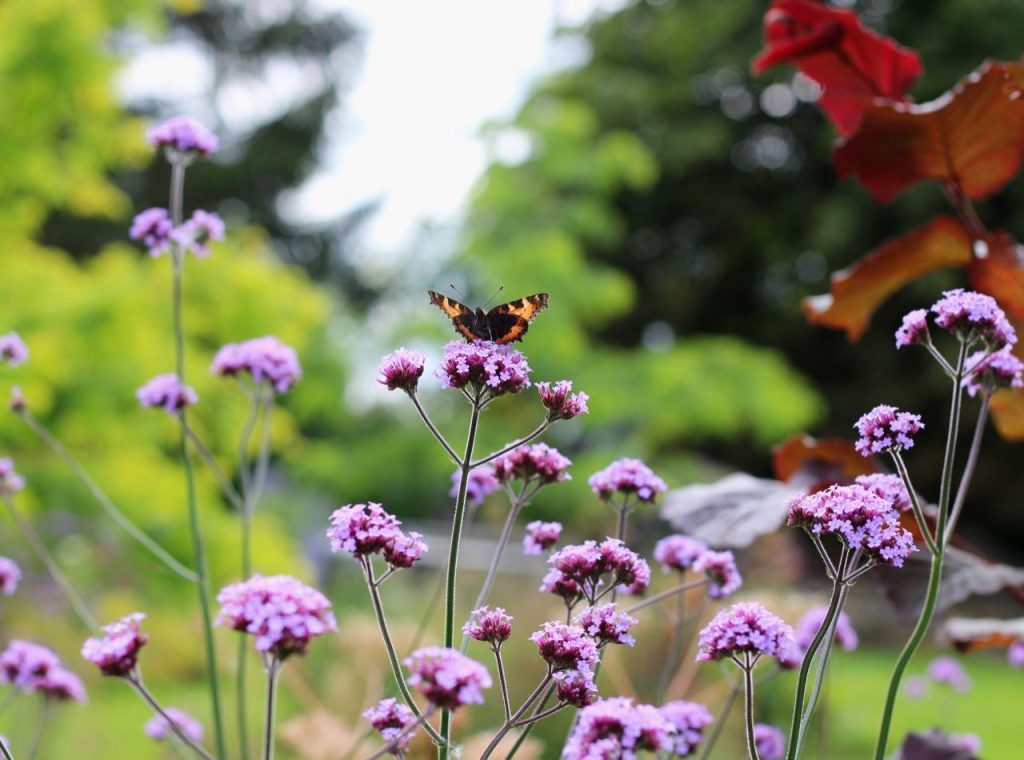
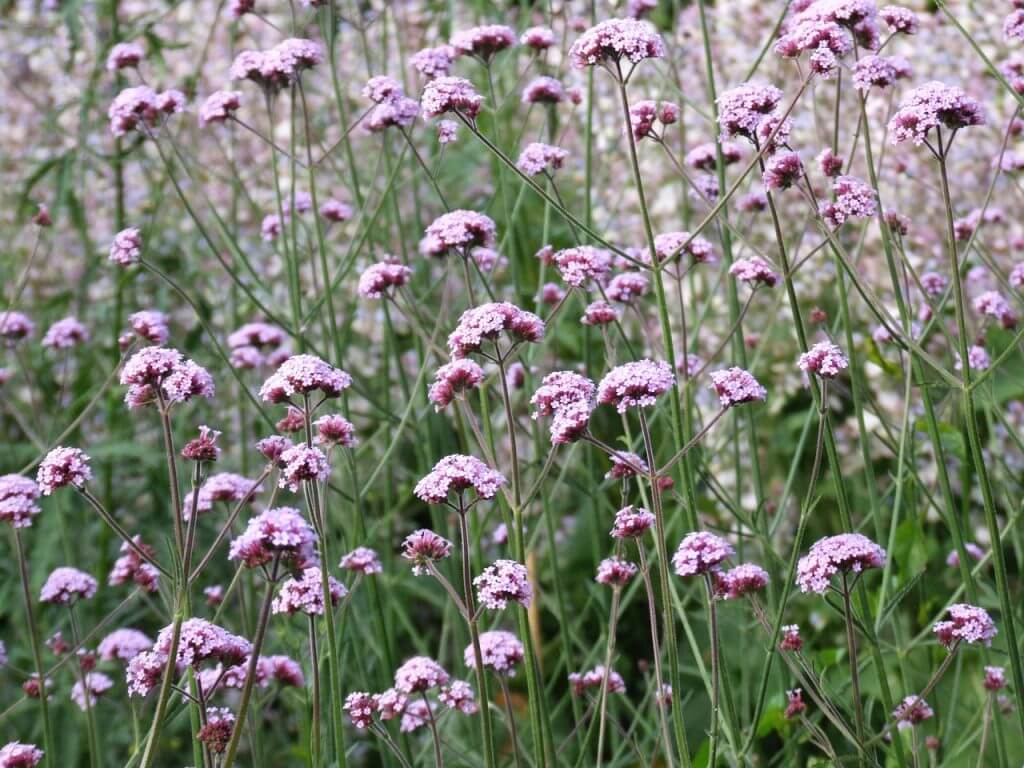
Verbena bonariensis is probably the single most consistently photographed plant in my own garden because it is permanently covered in butterflies from July through to October. The tall, airy stems carry small purple flower clusters that act as landing pads for painted ladies, red admirals, commas and small tortoiseshells. It self-seeds gently so a small initial planting gradually spreads without ever becoming invasive. Its open, transparent habit means it can be planted at the front of a border without blocking the view behind it.
Buy Verbena as plug plants, which is the most cost-effective way to plant them. They will nearly always flower in year 1, and by years 2 and 3, they will be up to 2m tall and super floriferous!
🌿 At A Glance: Verbena bonariensis
Botanical Name
Verbena bonariensis
Plant Type
Tender perennial (treat as annual in cold gardens)
UK Hardiness
H3 (protect in cold winters)
Flowering Period
July to October
Best Conditions
Well-drained soil, full sun, sheltered
Key Wildlife Benefit
Outstanding butterfly plant, long season, self-seeds gently
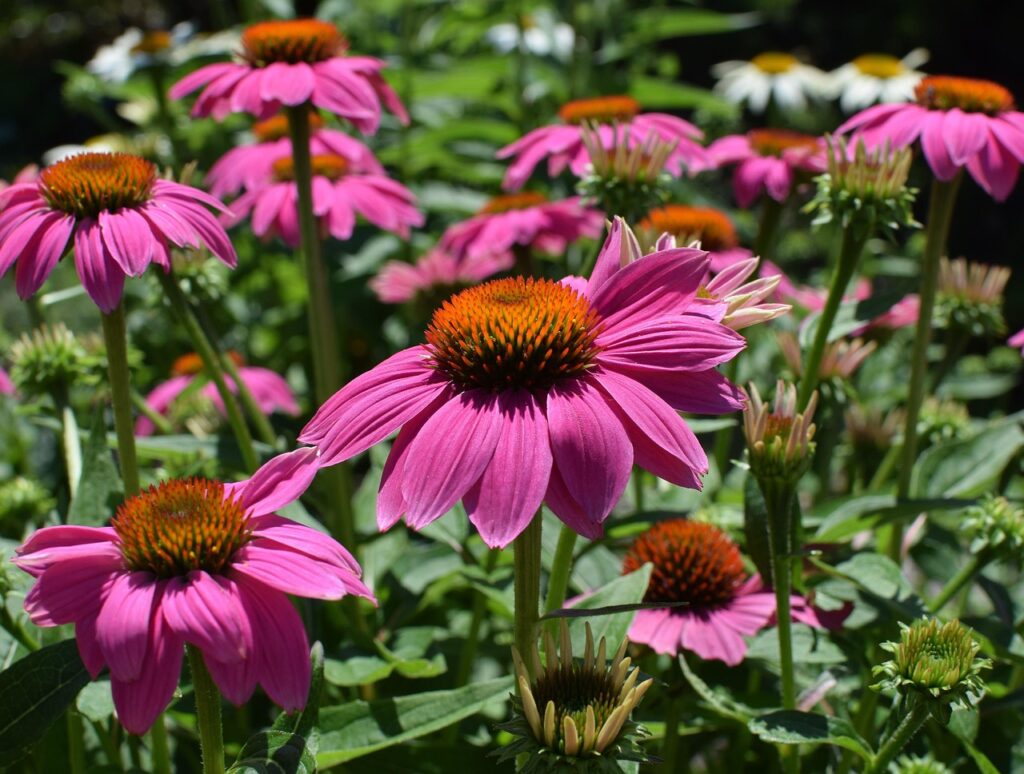
Echinacea delivers across the entire wildlife season in a way few perennials can match. The large open flowers from July to September are magnets for bumblebees and butterflies. Once the petals drop in autumn, the spiky seedheads are among the best goldfinch plants available in the garden, and leaving them standing through winter adds dramatic architectural structure. Always choose single-flowered cultivars; the double-flowered varieties block access to pollen and are functionally useless to pollinators.
Echinacea in flower attracts bees and butterflies, then feeds goldfinches from its seedheads through winter
🌿 At A Glance: Echinacea
Botanical Name
Echinacea purpurea
Plant Type
Hardy herbaceous perennial
UK Hardiness
H7 (hardy below -20°C)
Flowering Period
July to September
Best Conditions
Well-drained soil, full sun
Key Wildlife Benefit
Bees and butterflies in summer, goldfinches from seedheads in winter
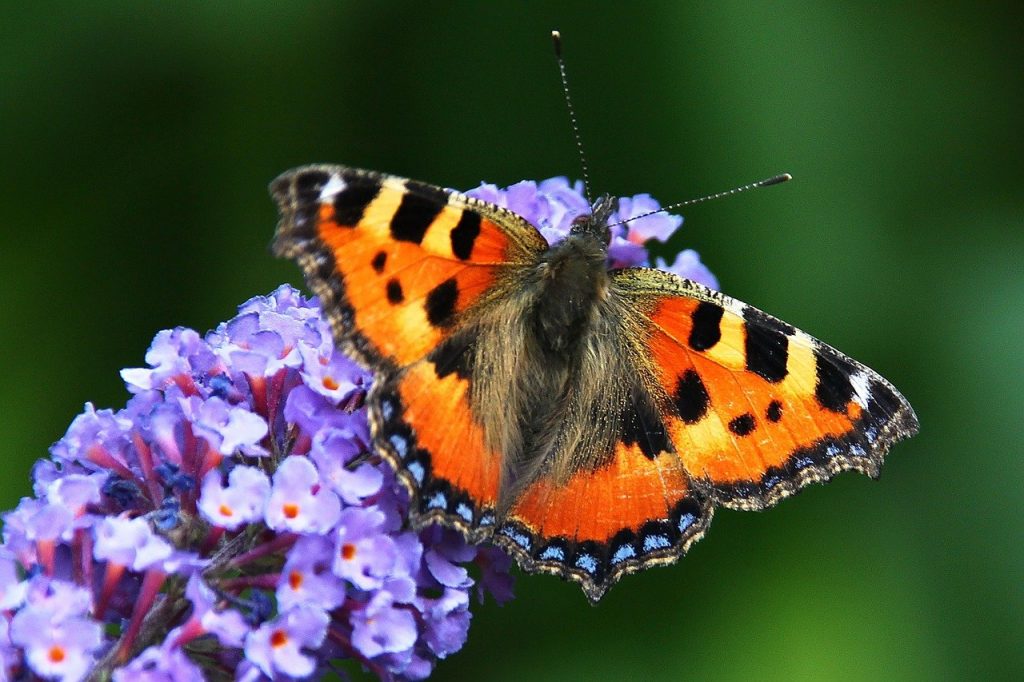
No plant delivers the instant visual gratification of a buddleja covered in butterflies on a warm August afternoon. Painted ladies, peacocks, red admirals, small tortoiseshells, commas and brimstones all work the flower spikes intensively. Pruned hard in March to around 30cm from the ground, Buddleja produces its best display on the new season’s growth. Its one genuine limitation is that it offers relatively little to any wildlife other than adult butterflies. Pair it with other plants that provide caterpillar food, berries, and seeds for a more complete picture.
Another great-value shrub for a wildlife garden that will cope with poor, stony, sandy, chalky, or even heavy clay soil! It will grow anywhere and invite the wildlife with it!
🌿 At A Glance: Buddleja
Botanical Name
Buddleja davidii
Plant Type
Hardy deciduous shrub
UK Hardiness
H6 (hardy to -20°C)
Flowering Period
July to September
Best Conditions
Any well-drained soil, full sun
Key Wildlife Benefit
Unmatched for adult butterflies, accessible nectar for all pollinator sizes
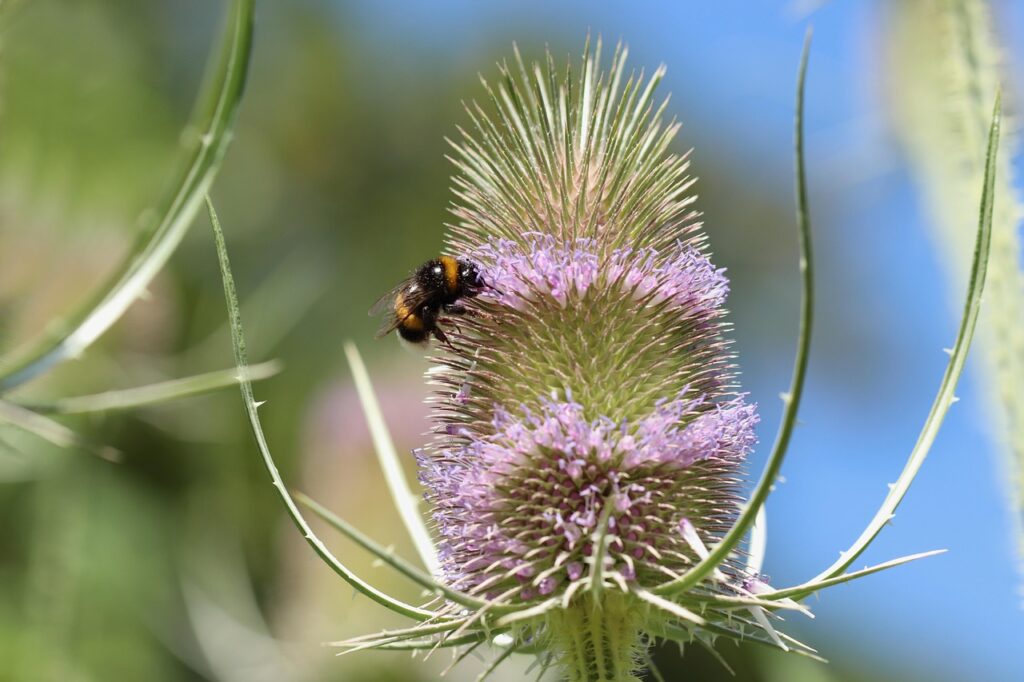
Teasel is one of the most underplanted wildlife plants in the UK garden, and I am always slightly baffled by its absence from most borders. The architectural spiny heads produce small lilac flowers beloved by bumblebees and carding bees in summer. As the seedheads ripen through autumn and winter they become one of the most reliable goldfinch plants available, and a stand of teasel loaded with goldfinches on a winter morning is one of the great garden wildlife spectacles. It is a biennial that self-seeds freely from established plants and needs no intervention once settled.
But one big word of warning, get really good gloves before you try and prune it back in late winter, the stems have tiny razor like barbs on them that will cut you if you’re not careful, its their defence against predators. Goldleaf gauntlets are a good idea if you haven’t already got some!
Teasel seedheads are one of the best goldfinch plants available in the winter garden
🌿 At A Glance: Teasel
Botanical Name
Dipsacus fullonum
Plant Type
Native biennial
UK Hardiness
H7 (hardy below -20°C)
Flowering Period
July to August
Best Conditions
Moist to well-drained soil, sun or partial shade
Key Wildlife Benefit
Bees in summer, goldfinches from seedheads all winter
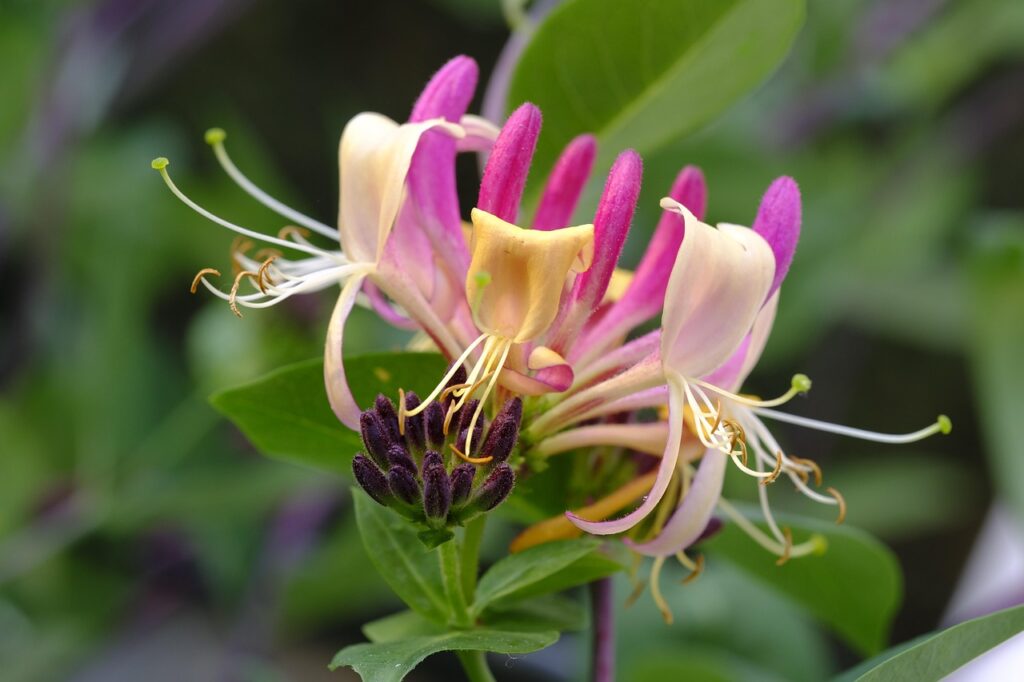
The native woodbine honeysuckle is one of the most wildlife-rich climbers available to UK gardeners. Its powerfully scented flowers are designed specifically for moths with long tongues, particularly the hawk-moths that hover at flowers on warm evenings, and the fragrance lingers into still summer nights as a reminder that wildlife gardening engages all the senses. The red berries in autumn are eaten by warblers and thrushes. The dense twining stems provide nesting habitat for several small bird species. It needs a support structure but is otherwise undemanding.
🌿 At A Glance: Native Honeysuckle
Botanical Name
Lonicera periclymenum
Plant Type
Hardy native deciduous climber
UK Hardiness
H6 (hardy to -20°C)
Flowering Period
June to September
Best Conditions
Moist soil with cool roots, sun or partial shade
Key Wildlife Benefit
Moths and hawk-moths, nesting birds, autumn berries for warblers
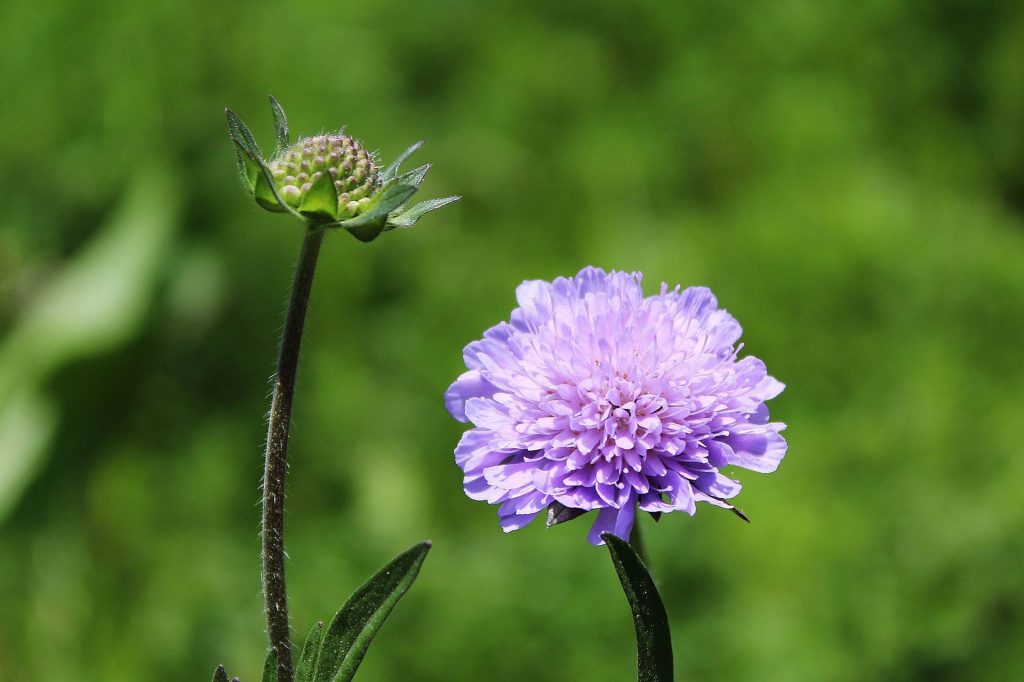
Scabious consistently ranks among the top-performing plants for pollinators in research studies and garden surveys. However, I rarely see it in newer gardens or get asked about it. I think it may have fallen out of fashion, but its benefits for wildlife are unmatched, so we defo need more Scabious in all our gardens!
The open pincushion flowers from June through to October are visited by an extraordinary range of bees, including both long-tongued and short-tongued species, as well as butterflies, hoverflies and beetles. Knautia macedonica, with its deep crimson flowers, is my preferred choice for a border, growing to around 60cm and flowering prolifically without becoming invasive. It is also one of the most persistently flowering plants I grow, earning its space many times over each season.
🌿 At A Glance: Scabious
Botanical Name
Knautia macedonica / Scabiosa columbaria
Plant Type
Hardy perennial
UK Hardiness
H5 to H6
Flowering Period
June to October
Best Conditions
Well-drained soil, full sun
Key Wildlife Benefit
Top-rated for pollinators including bees, butterflies and hoverflies across a long season
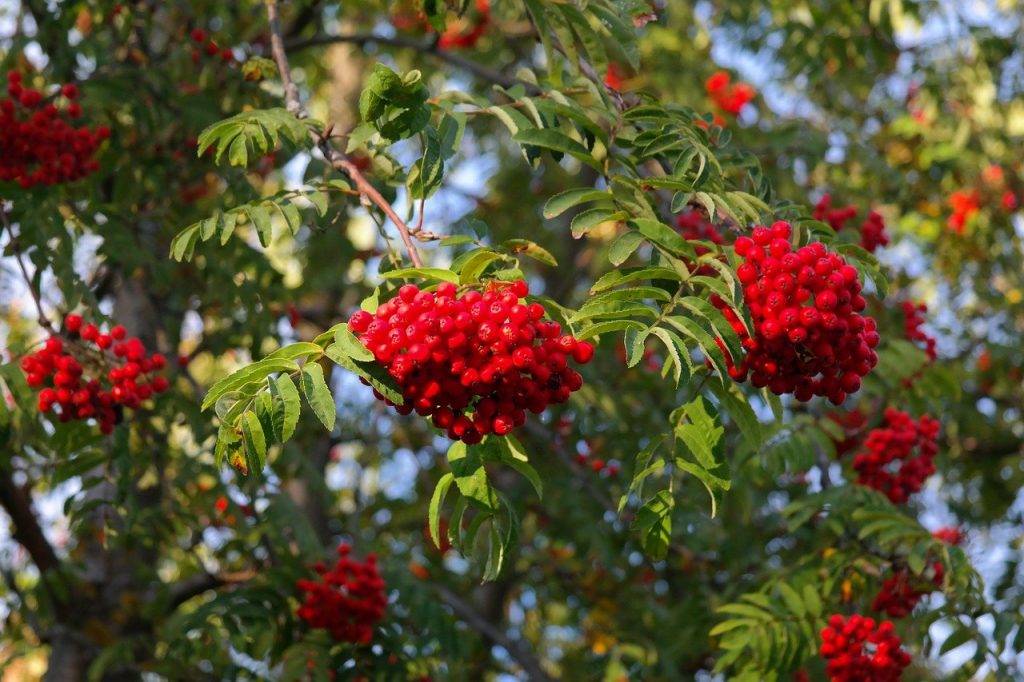
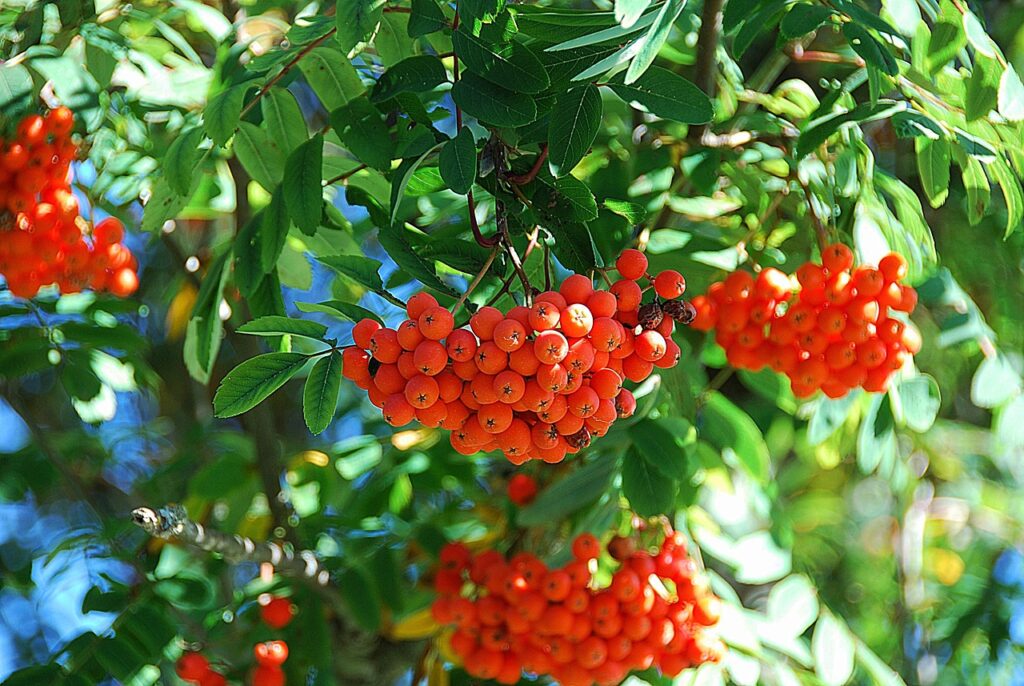
Rowan is the small native tree I recommend most often for wildlife gardens with limited space. Its white flower clusters in May are excellent for pollinators, but the autumn berries are truly spectacular, both visually and ecologically. Redwings, fieldfares, blackbirds and song thrushes strip rowan berries as they pass through in autumn migration, and a mature tree in a good berry year can be cleared entirely in a single morning by a passing flock of redwings. Very compact varieties make it accessible for small gardens.
Rowan berries are one of autumn’s most important food sources for migrating thrushes and fieldfares
🌿 At A Glance: Rowan
Botanical Name
Sorbus aucuparia
Plant Type
Hardy native deciduous tree
UK Hardiness
H7 (hardy below -20°C)
Flowering Period
May to June
Best Conditions
Any well-drained soil, full sun or partial shade
Key Wildlife Benefit
May blossom for pollinators, autumn berries for migrating thrushes and waxwings
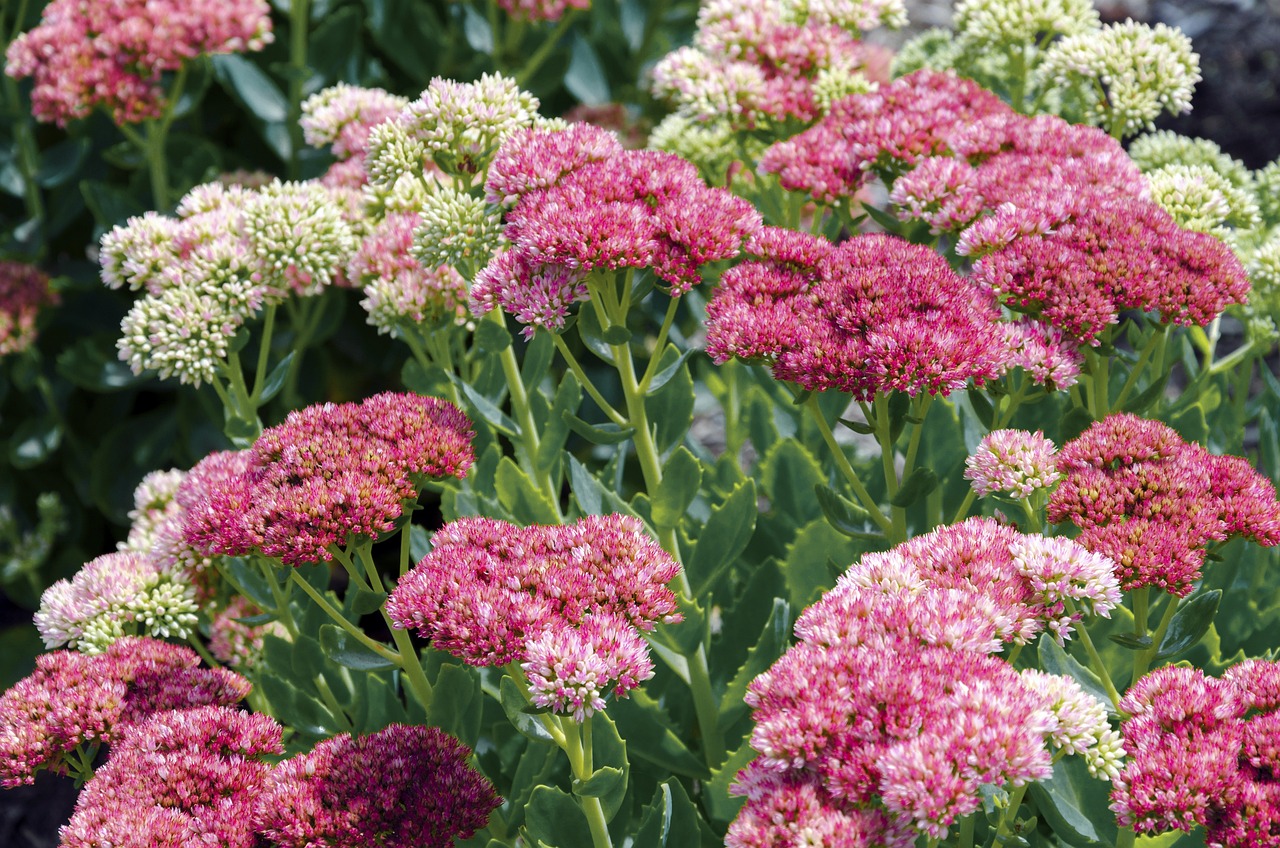
Sedum, now correctly known as Hylotelephium, is one of the most reliably productive late-summer plants for pollinators in the UK garden. The large flat-topped flower heads from August to October are almost permanently covered in bees, butterflies and hoverflies on any warm day, and the dried seedheads provide food for small birds and architectural winter interest simultaneously. It is also one of the most drought-tolerant perennials available, making it ideal for free-draining soils and gravel gardens where other wildlife plants struggle.
🌿 At A Glance: Sedum
Botanical Name
Hylotelephium spectabile
Plant Type
Hardy herbaceous perennial
UK Hardiness
H7 (hardy below -20°C)
Flowering Period
August to October
Best Conditions
Free-draining soil, full sun
Key Wildlife Benefit
Outstanding late-season pollinator plant, drought-tolerant, winter seedheads for birds
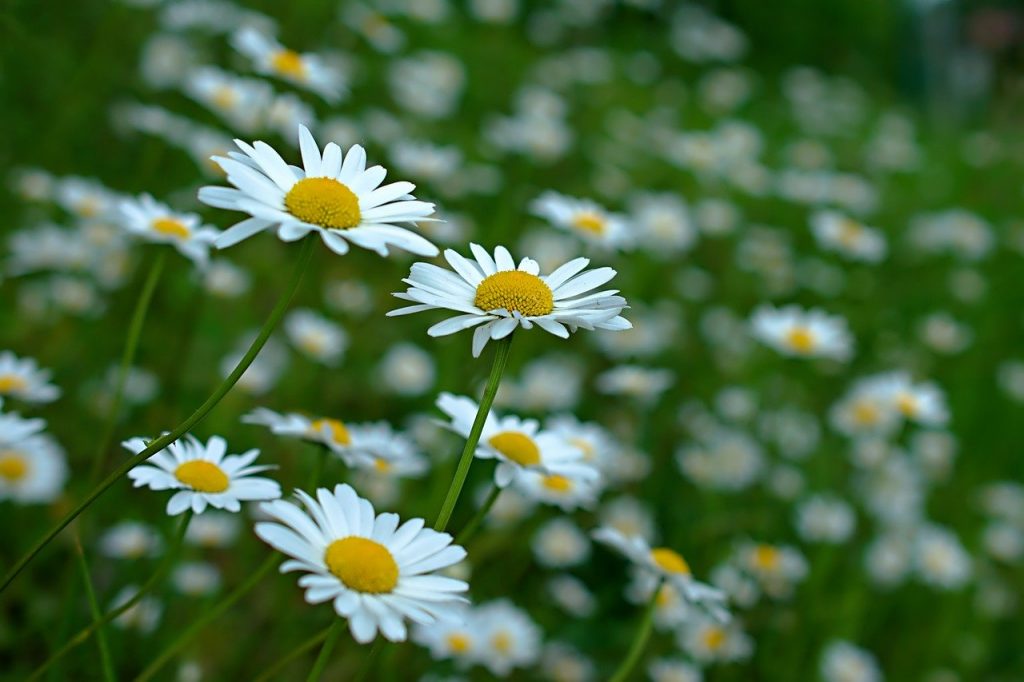
Ox-eye daisy is one of the cornerstones of any native wildflower meadow and works equally well in a border or naturalised in grass. The open white flowers with yellow centres are accessible to a very wide range of pollinators including beetles, hoverflies and short-tongued bees that cannot access the tubular flowers of lavender or foxglove. It spreads gently by seed, which can be collected in summer and distributed to create new colonies. A drift of ox-eye daisy in full flower in June is one of the most beautiful and ecologically productive sights in any wildlife garden.
🌿 At A Glance: Ox-eye Daisy
Botanical Name
Leucanthemum vulgare
Plant Type
Hardy native perennial
UK Hardiness
H7 (hardy below -20°C)
Flowering Period
May to September
Best Conditions
Well-drained soil, full sun, poor to average soil
Key Wildlife Benefit
Accessible to beetles, hoverflies and short-tongued bees, key meadow species
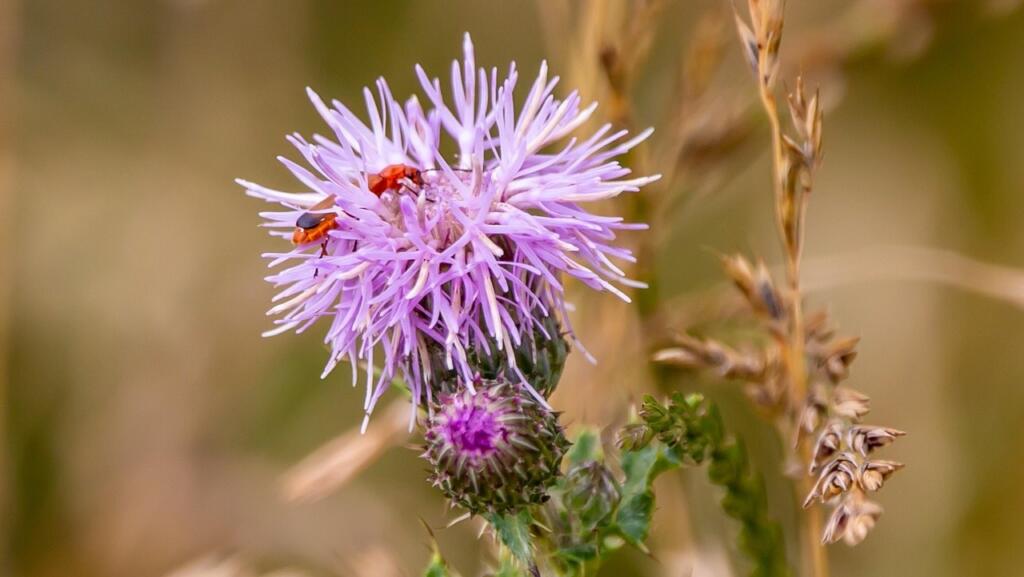
Common knapweed is one of the highest-scoring plants in pollinator research, and I am consistently surprised that it is not more widely grown in UK gardens. The purple thistle-like flowers from July to September are visited by a genuinely remarkable diversity of bees and butterflies, including species that are rarely seen on other plants. The seeds are eaten by goldfinches and linnets. It is entirely unfussy about soil conditions and grows readily from seed, making it one of the most cost-effective wildlife plants you can add to a border or meadow area.
🌿 At A Glance: Common Knapweed
Botanical Name
Centaurea nigra
Plant Type
Hardy native perennial
UK Hardiness
H7 (hardy below -20°C)
Flowering Period
July to September
Best Conditions
Any soil, full sun or partial shade
Key Wildlife Benefit
One of the highest-rated plants for bee and butterfly diversity, seeds for finches
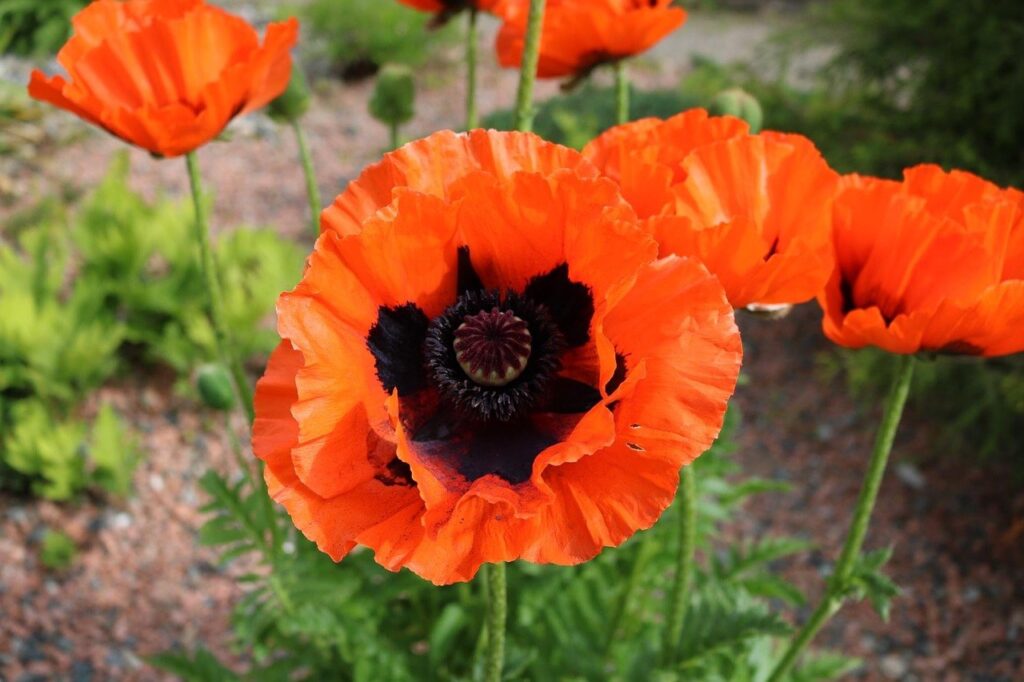
Field poppies are pollen-rich rather than nectar-rich, which makes them particularly valuable for solitary bees that collect pollen as a protein source for their larvae. Bumblebees and small solitary bees work poppy flowers intensively in the morning when pollen is freshest. They are annuals that need bare or disturbed soil to germinate, making them ideal for sowing directly into a prepared patch or into annual wildflower mixes. A poppy-filled corner in June and July is one of the most reliably cheerful sights in any wildlife garden.
🌿 At A Glance: Field Poppy
Botanical Name
Papaver rhoeas
Plant Type
Native annual
UK Hardiness
H7 (self-seeds freely)
Flowering Period
June to August
Best Conditions
Bare or disturbed soil, full sun
Key Wildlife Benefit
Pollen-rich for solitary bees, seeds for small birds
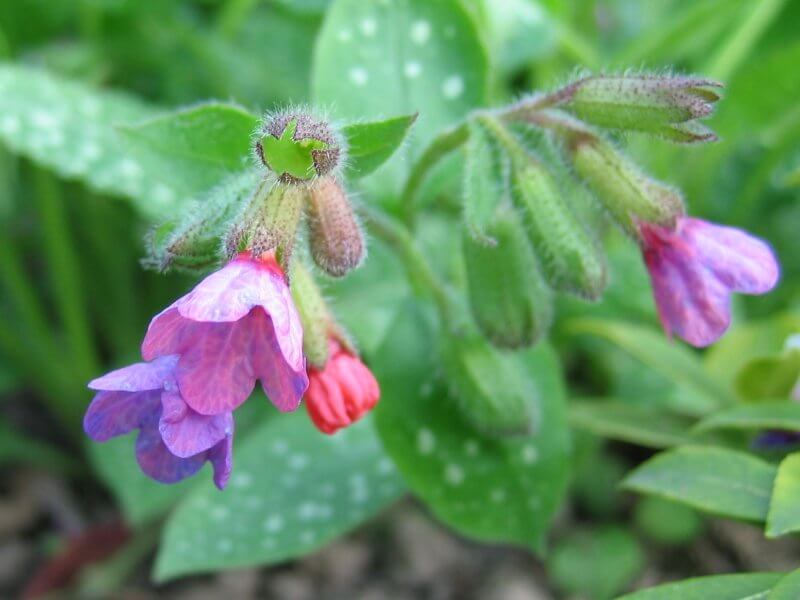
Pulmonaria fills a critical ecological gap that few other garden plants can: it flowers from February to April, providing nectar for emerging queen bumblebees at the point in the year when they are most desperately in need of food after winter hibernation. The tubular flowers start out pink and turn blue as they age, creating a two-tone effect that is both attractive and ecologically valuable. It tolerates dry shade under trees, one of the most difficult planting conditions in any garden, making it uniquely useful in the spots where little else will perform.
Pulmonaria flowers from February, providing critical nectar for emerging queen bumblebees after hibernation
🌿 At A Glance: Pulmonaria
Botanical Name
Pulmonaria officinalis
Plant Type
Hardy semi-evergreen perennial
UK Hardiness
H6 (hardy to -20°C)
Flowering Period
February to April
Best Conditions
Moist soil, partial to full shade
Key Wildlife Benefit
Critical early nectar for emerging queen bumblebees, thrives in dry shade
Sunflowers deliver a double ecological hit that few annual plants can match. The large open flowers are highly productive for bees and hoverflies through summer. Once the petals drop and the seedheads ripen, they become one of the most reliable bird-feeding plants available, drawing greenfinches, goldfinches, house sparrows and blue tits to hang from the heads and extract seeds through autumn and into early winter. I grow them every year along the south-facing back fence, and watching the birds work through the seedheads in October is one of the highlights of the garden wildlife year.
🌿 At A Glance: Sunflower
Botanical Name
Helianthus annuus
Plant Type
Annual
UK Hardiness
H2 (sow after frosts)
Flowering Period
July to September
Best Conditions
Rich well-drained soil, full sun, sheltered
Key Wildlife Benefit
Summer pollen for bees, autumn seeds for finches and tits
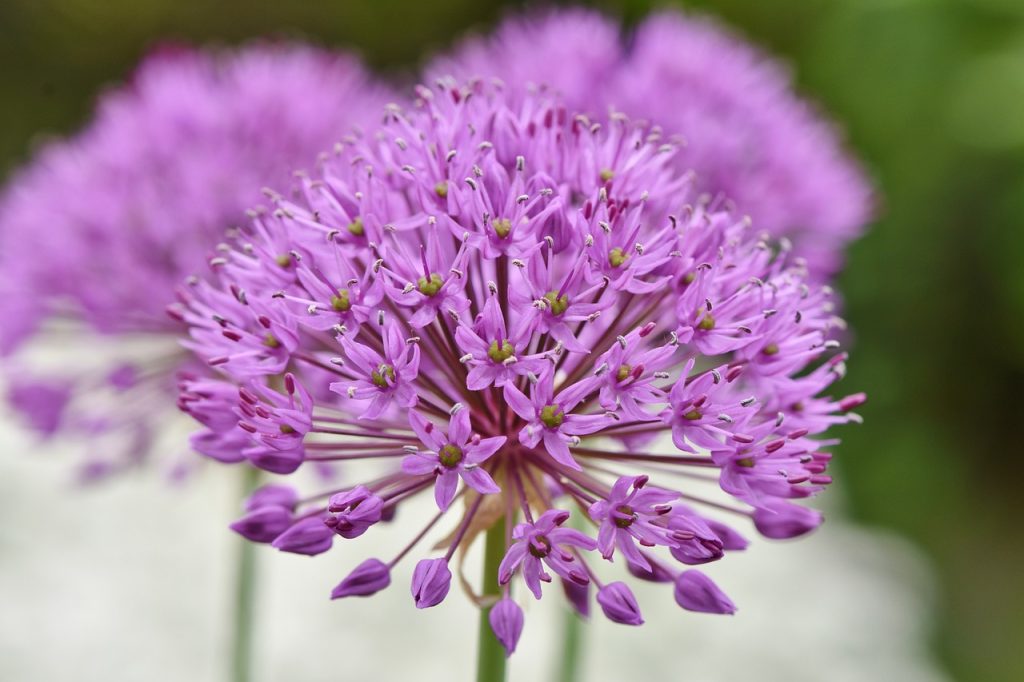
Alliums bridge the gap between spring and summer with their spectacular globe-shaped flowerheads in May and June, providing a vital nectar source at the point when many spring flowers are over, and summer perennials have not yet opened. Bees work allium flowers intensively. The globe-shaped seedheads that follow are architecturally beautiful and can be left to dry in situ for winter structural interest. They are bulbs that require almost no maintenance once planted and reliably multiply over time, meaning a small initial planting becomes more impressive each subsequent year.
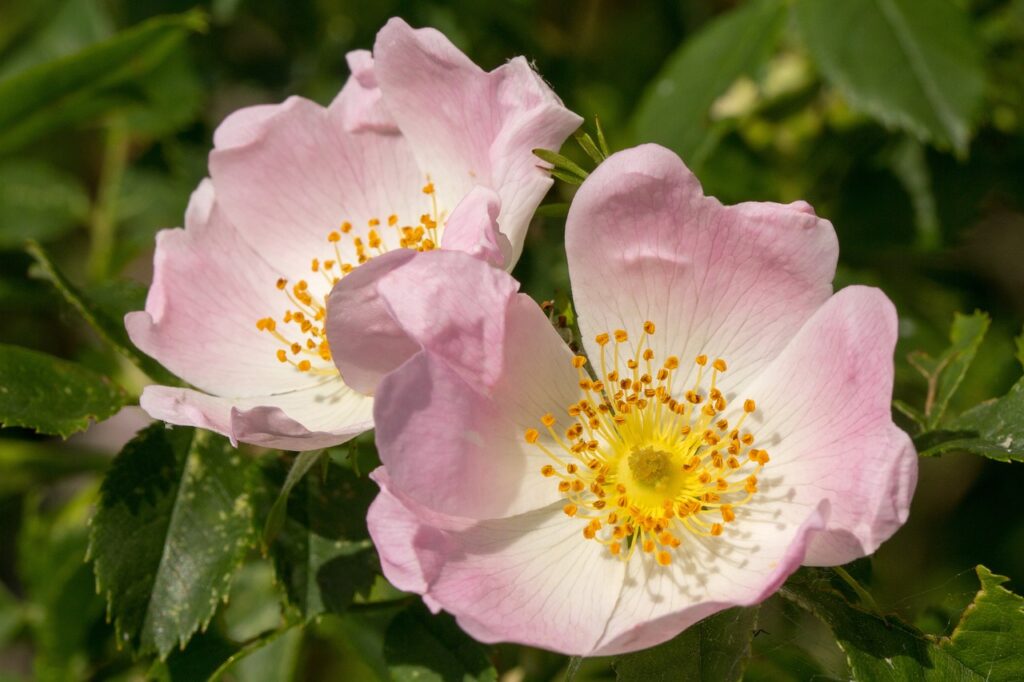
The dog rose is the finest native rose for wildlife and one I use regularly in mixed native hedging. The single pink flowers in June are openly accessible to a wide range of bees and hoverflies. The hips that follow in autumn are one of the most important berry crops for thrushes, blackbirds and small mammals through winter, and they hold on the plant for months longer than many other berries. Rosa canina also supports 11 species of gall wasp, which create the extraordinary Robin’s pincushion galls found on the stems in summer, each one a miniature wildlife habitat in its own right.
🌿 At A Glance: Dog Rose
Botanical Name
Rosa canina
Plant Type
Hardy native deciduous scrambling shrub
UK Hardiness
H7 (hardy below -20°C)
Flowering Period
June to July
Best Conditions
Any soil, full sun or partial shade
Key Wildlife Benefit
June blossom for pollinators, autumn hips for birds through winter, gall habitat
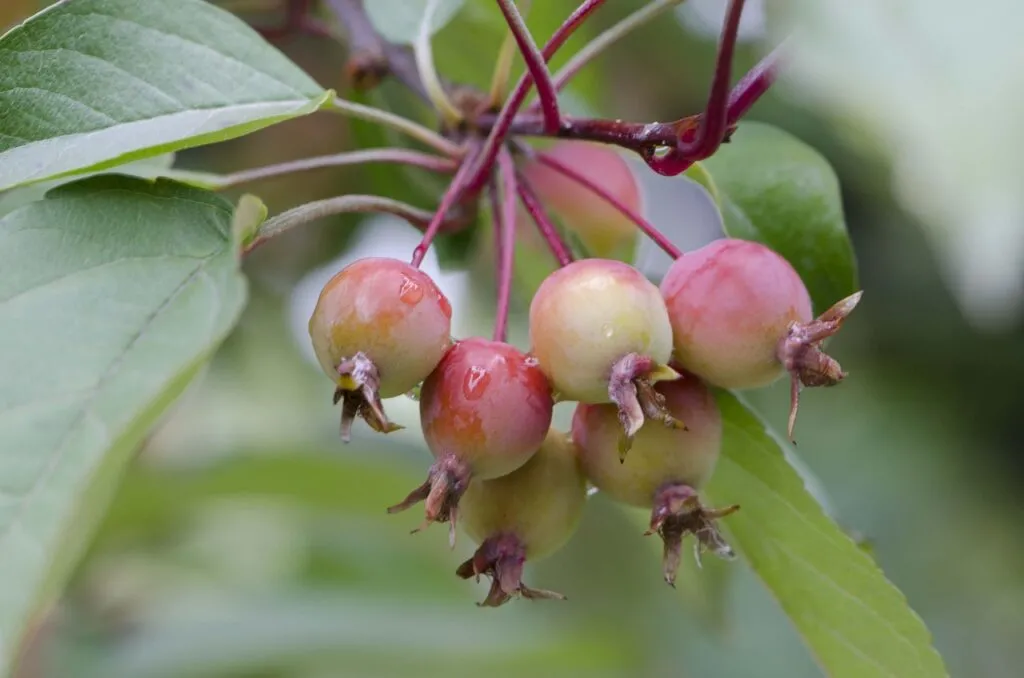
The native crab apple earns its place in this list on the strength of its triple wildlife value across the year. The blossom in April and May is outstanding for pollinating insects and particularly important for early-season bumblebees. The fruit ripens in late summer and persists through autumn and winter, being eaten by blackbirds, thrushes, fieldfares, woodpigeons and small mammals. Fallen fruit provides food for ground-feeding birds and invertebrates alike. As a small garden tree, it reaches a perfectly manageable height and develops a beautiful gnarled character with age.
🌿 At A Glance: Crab Apple
Botanical Name
Malus sylvestris
Plant Type
Hardy native deciduous tree
UK Hardiness
H6 (hardy to -20°C)
Flowering Period
April to May
Best Conditions
Any well-drained soil, full sun or partial shade
Key Wildlife Benefit
Spring blossom, persistent winter fruit for birds and mammals
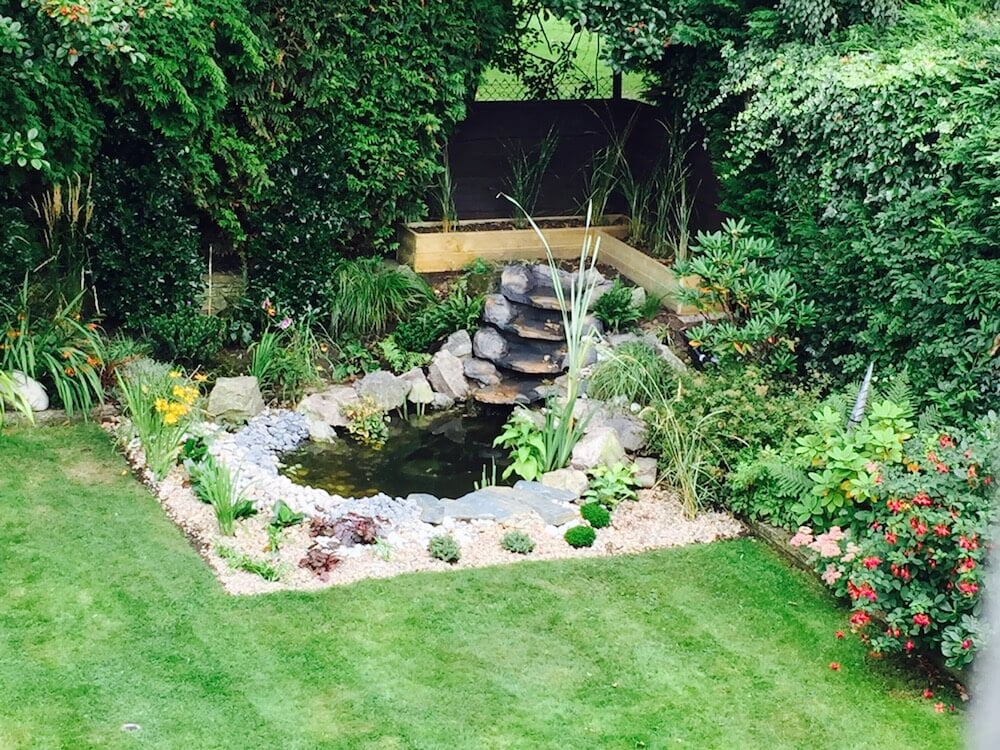
A pond is the single most valuable wildlife feature you can add to a garden. Nothing else comes close. Even a very small pond, a washing-up bowl or a half barrel sunk into the ground, can support a remarkable diversity of life within a single season. A larger pond will attract frogs, toads and newts to breed, provide drinking and bathing water for dozens of bird species, support dragonflies and damselflies, attract bats to hunt the insects that hatch from the water, and create a truly magical garden feature in the process.
I have built numerous ponds over my career as a garden designer, from formal raised water features to completely natural wildlife ponds, and the wildlife pond is without question the most rewarding of all. The single most important design feature of any wildlife pond is at least one gently sloping edge, shallow enough for hedgehogs, frogs and birds to enter and exit safely. A steep-sided pond with no way out is a trap rather than a haven.
Siting your pond
Choose a spot that receives at least six hours of sunlight per day but is not in full sun all day, which can cause rapid algal growth. Avoid positioning directly under deciduous trees as fallen leaves decompose in the water and reduce oxygen levels. If you do have trees nearby, a net stretched over the pond in autumn is a practical solution. Site the pond where you can see it from the house or from a seating area, since the wildlife activity around a pond is one of the great pleasures of garden life.
Filling and planting your pond
Fill with rainwater from a water butt wherever possible, rather than tap water. Tap water contains chlorine and is often high in minerals that promote algae growth. If you have no option but to use tap water, leave it to stand for 48 hours before introducing plants. Do not add fish to a wildlife pond. Fish eat tadpoles, frog spawn, dragonfly larvae, water beetles and virtually everything else you are trying to encourage. A fishless pond is a wildlife pond. A pond with fish in it is, ecologically speaking, a very large aquarium.
Plant a mix of oxygenating plants (hornwort, water crowfoot), floating plants (water lily for larger ponds, frogbit for smaller ones), marginals for the shallow shelf (marsh marigold, purple loosestrife, water forget-me-not, iris pseudacorus) and moisture-loving plants around the edge (ragged robin, meadowsweet, astilbe). This combination keeps the water clear, provides habitat at every depth, and gives the pond interest from spring through to autumn.
💡 Top Tip
Never move frogspawn or pond water from another garden into your new pond. This can inadvertently spread diseases and invasive plant species between water bodies. Wildlife will find a new pond on its own. Pond skaters and diving beetles can arrive within days, and frogs usually discover a new pond within the first year. Patience is the only thing a new wildlife pond requires.
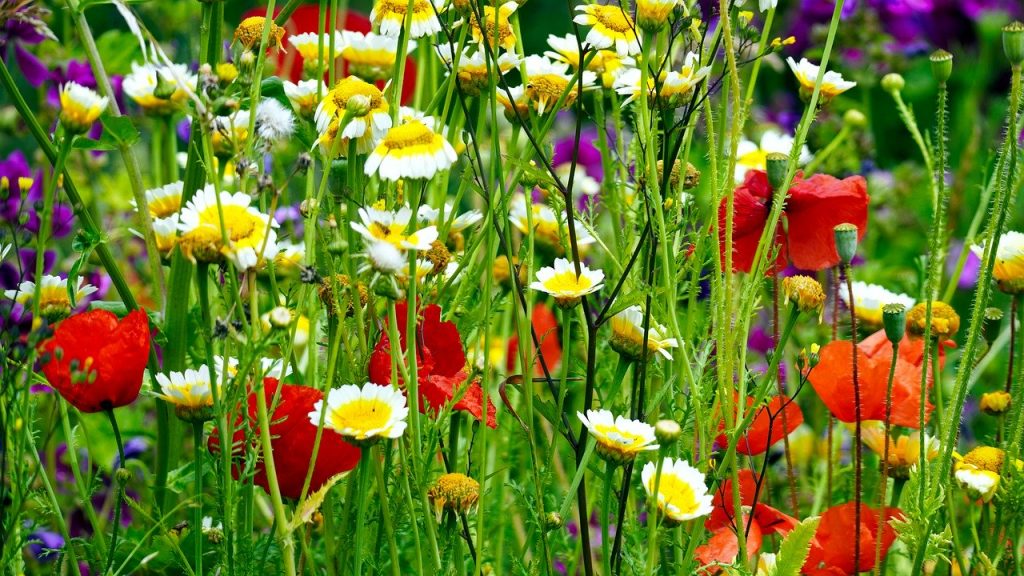
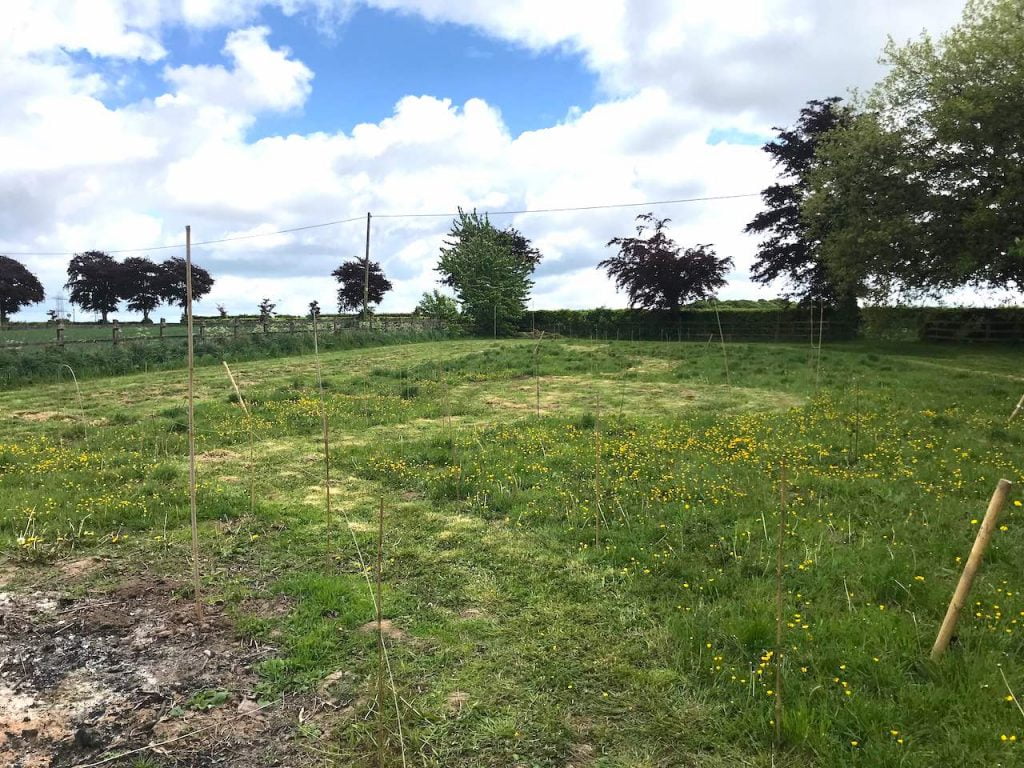
A wildflower meadow sounds intimidating but it does not have to be. Even a patch of lawn roughly the size of a dining table, left uncut through May and June and sown with a simple wildflower mix, can produce a display that supports far more insect life than a neatly mown lawn ever could. The most important thing to understand about creating a wildflower meadow is that most wildflowers prefer poor soil. If you have a rich, fertile lawn, you will struggle to establish wildflowers because the vigorous grasses will outcompete them. Stripping off the turf and removing the top 10cm of soil, or choosing an area that was previously hard standing, gives wildflowers a fighting chance.
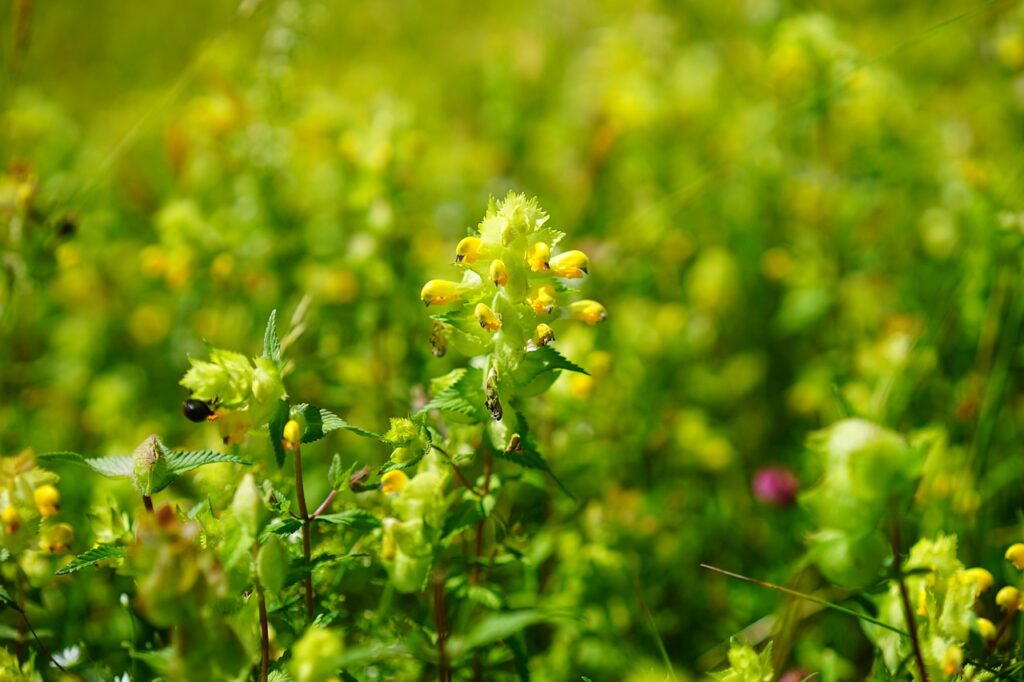
Yellow rattle (Rhinanthus minor) is a semi-parasitic plant that is the key to establishing wildflowers in an existing lawn. It parasitises grass roots, weakening the grass without killing it, and creating the gaps in the sward that wildflowers need to establish. Sow yellow rattle seed in September into closely mown grass, and you will see the difference in the vigour of the grass by the following spring. Within two or three years of yellow rattle establishment, wildflowers introduced as plug plants or seed will begin to thrive.
For an annual meadow, cornflowers, field poppies, corn marigolds and phacelia sown in March or September on bare soil will give a spectacular first-year display. These annuals need to reseed themselves each year and require the soil to be lightly raked each autumn to give the seeds contact with bare earth they need to germinate. For a longer-term perennial meadow, native species like oxeye daisy, knapweed, betony, scabious and ragged robin will establish over two to three years and then self-maintain with an annual late-summer cut and clear.
💡 Top Tip
Cut your wildflower meadow in late August or September, once the seeds have set and ripened. Rake off all the clippings immediately after cutting. Leaving the clippings on the surface returns nutrients to the soil, which is the opposite of what you want. A meadow managed this way will become progressively richer in wildflower diversity each year as the weaker grass thins out and the wildflowers gain ground.
Trees are the most wildlife-dense plants you can add to a garden. A mature native oak can support over 400 species of insects. A silver birch supports more than 300. Even a small native tree planted today will make a meaningful difference to your local wildlife within five to ten years as it establishes and its ecological community builds. Most gardens have room for at least one small tree, and the wildlife benefit of choosing the right species is enormous.
For small gardens, the key is choosing trees that offer multiple wildlife benefits without becoming unmanageable. The rowan (Sorbus aucuparia) is outstanding: it produces abundant berries that are highly attractive to redwings, fieldfares and thrushes in autumn, and its white flowers in May are excellent for pollinators. The silver birch (Betula pendula) supports hundreds of insect species and its catkins provide early pollen in spring. Crab apple (Malus sylvestris) produces nectar-rich blossom and fruit that wildlife strips through winter. Hawthorn is perhaps the best hedging choice for wildlife of all, providing nesting cover, blossom, and berries for a vast range of species.
A mixed native hedge rather than a close-boarded fence is one of the most transformative changes you can make to a boundary. A hedge of hawthorn, blackthorn, hazel, guelder rose, and dog rose provides nesting habitat for many bird species, cover and food for small mammals, hibernation sites for invertebrates, and a wildlife corridor connecting your garden to adjacent green spaces. It takes three to five years to fill in properly but the investment pays dividends for decades.
🌳 Best Native Trees and Shrubs for Wildlife
Species
Size
Key wildlife value
Betula pendula (Silver birch)
Medium tree
300+ insect species, early catkin pollen, birds
Crataegus monogyna (Hawthorn)
Small tree or hedge
300+ insects, blossom, haws for birds and mammals
Sorbus aucuparia (Rowan)
Small tree
Pollinators (blossom), thrushes and fieldfares (berries)
Malus sylvestris (Crab apple)
Small tree
Excellent blossom, winter fruit for birds and mammals
Ilex aquifolium (Holly)
Large shrub or tree
Nesting birds, winter berries for thrushes and blackbirds
Corylus avellana (Hazel)
Large shrub
Early catkin pollen, nuts for squirrels and dormice, dormitory for insects
Sambucus nigra (Elder)
Large shrub
Elderflowers for insects, elderberries for birds
Rosa canina (Dog rose)
Scrambling shrub
Single flowers for bees, hips for birds through winter
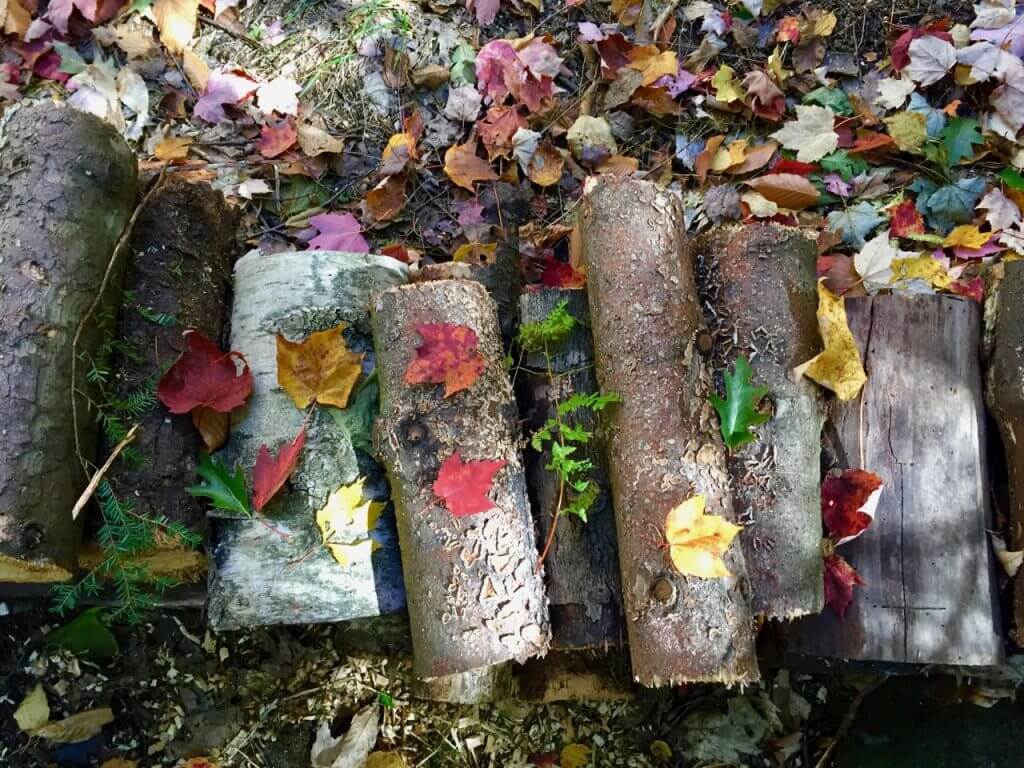
Dead and decaying wood is one of the most important and overlooked habitats in any garden. In the wild, a fallen tree provides shelter and food for hundreds of species of beetle, fungi, invertebrate and small mammal as it slowly decomposes over decades. In a typical tidy UK garden, there is almost none of this habitat at all. Creating it is simple, costs nothing, and the results can be dramatic.
Stack logs of varying sizes in a spot that receives dappled shade for at least part of the day. A location that is permanently in deep shade will be too damp and cold; full sun will dry the logs out too quickly for most decomposers. Leave bark on the logs wherever possible. Do not treat the wood with any preservative. The whole point is to allow the wood to rot slowly, creating the complex decaying habitat that stag beetles, woodlice, centipedes, ground beetles and slow worms need. A log pile established in autumn is often occupied by a hibernating frog or toad by the time the first frosts arrive.
If you have space for a more substantial dead wood feature, a standing dead tree stump is extraordinarily valuable. Woodpeckers use them for foraging and nesting, owls may roost in cavities, and the dead wood community of insects it supports is far richer than in a log pile. Even a section of a tree trunk stood upright and embedded in the soil will develop its own miniature dead wood ecosystem over several years.
Bug hotels and bee habitats
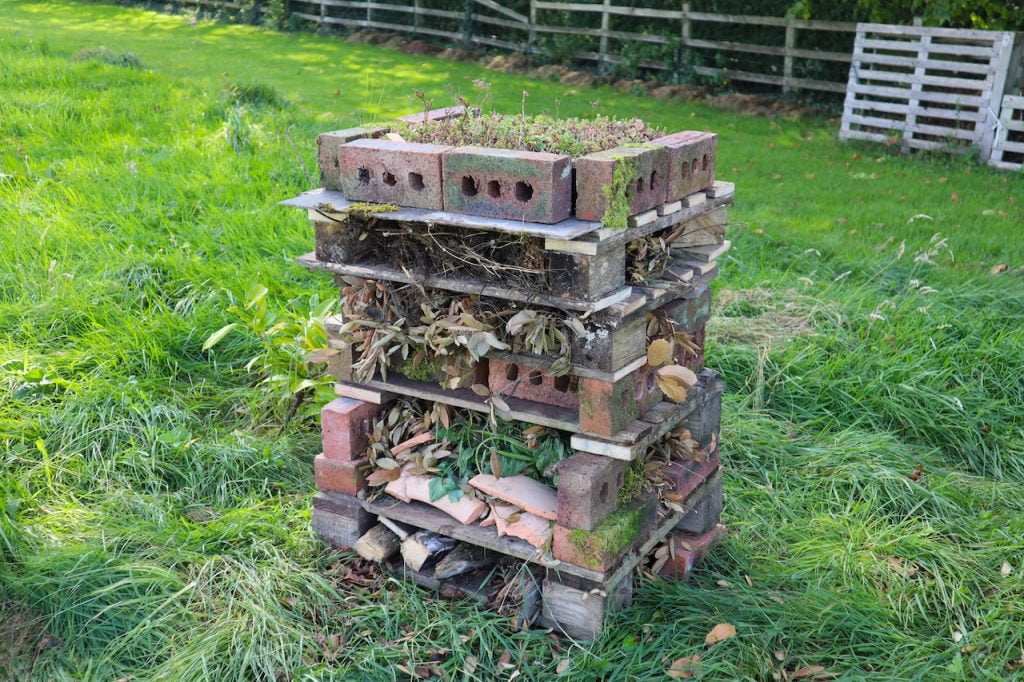
There are around 270 species of bee in the UK, and the vast majority of them are solitary species that do not live in hives. Red mason bees, leafcutter bees, mining bees and wool carder bees each have specific nesting requirements, and providing the right structures for them is a a real contribution to pollinator conservation. I have built dozens of bug hotels over the years, from simple bundles of hollow bamboo canes to large multi-chambered structures using pallets, bricks and natural materials.
The most effective bee habitat is a bundle of hollow stems or drilled wood placed in a south or south-east facing position in full sun, sheltered from prevailing wind and rain. Red mason bees need hollow tubes of 8mm diameter; leafcutter bees prefer slightly wider tubes of 10mm. The tubes should be at least 15cm deep, closed at the back end, and positioned horizontally. A simple bundle of bamboo canes tied together and hung on a south-facing fence is highly effective and costs almost nothing to make.
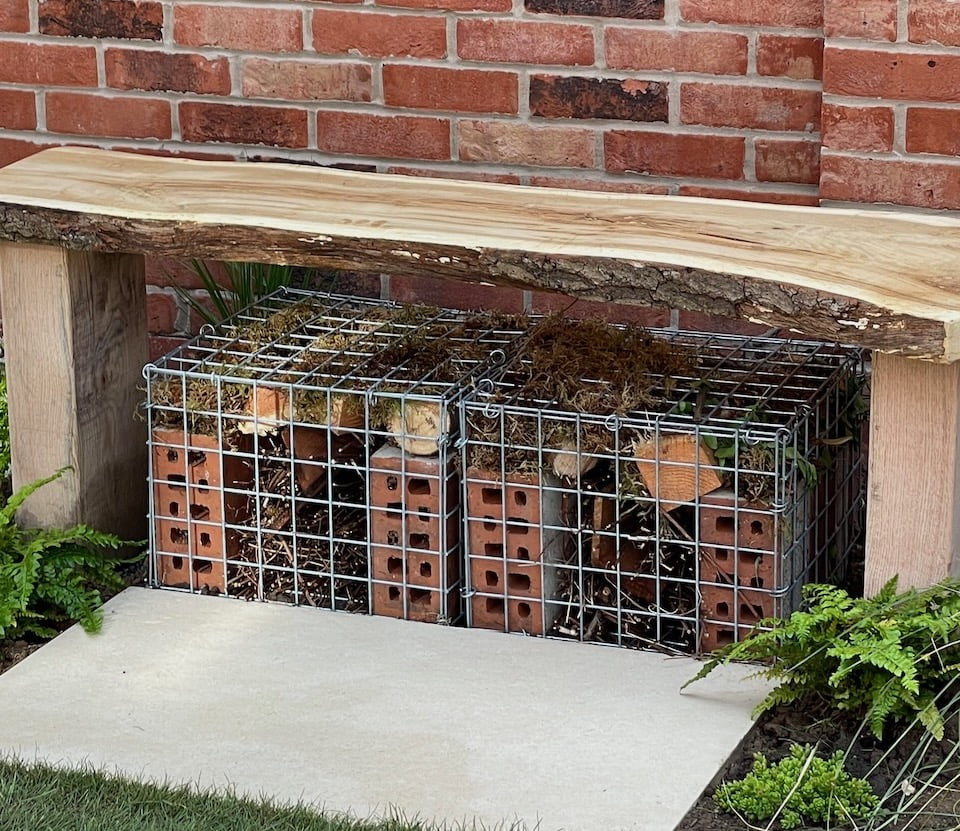
Larger bug hotels can incorporate sections for different invertebrates alongside the bee tubes: loose bark and damp hollow logs for centipedes and beetles, pinecones and dry straw for lacewings, hollow bamboo canes for mason wasps, and gaps filled with dry sand for mining bees. The key with all bug hotel materials is that they must actually be used, not just look attractive. Smooth, painted surfaces, plastic components and materials that are too tightly packed are unfortunately common in commercially produced bug hotels that function more as decoration than as habitat.
💡 Top Tip
Replace the bamboo tubes or drilled wooden inserts in your bug hotel every two to three years. Old, damp tubes can harbour mites that parasitise bee larvae, and tubes that have been used often become so crammed with old cocoons that there is no room for new occupants. Fresh tubes in an established, sunny location will be found and used extremely quickly.
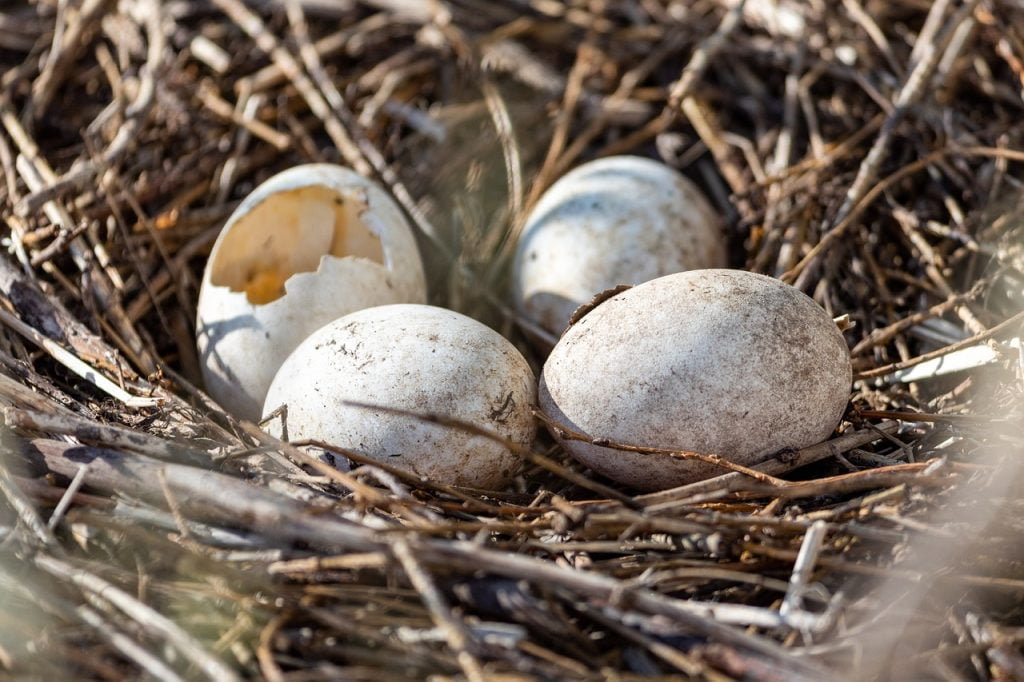
Nest boxes are one of the quickest wins in the wildlife garden. A blue tit pair raising two clutches in a single season can collect and bring to the nest tens of thousands of caterpillars between April and July, making them one of the most effective natural pest controllers in the garden. Providing the right box in the right location can be the factor that tips a passing bird into a permanent resident.
Bird boxes
The entrance hole size is the critical variable for bird nest boxes. A 25mm hole attracts blue tits and coal tits. A 28mm hole attracts great tits and tree sparrows. A 32mm hole is suitable for house sparrows and nuthatches. Open-fronted boxes with no entrance hole at all are used by robins and spotted flycatchers, and should be positioned in dense vegetation rather than in the open. All boxes should face between north and south-east, avoiding direct afternoon sun and the prevailing south-westerly wind and rain. Fix the box at least 1.5m off the ground, higher in areas with cats.
Clean bird boxes in October or November, after the nesting season has ended and before any overwintering birds move in. Remove all old nest material, scrub with boiling water (no chemical disinfectant), and allow to dry completely before replacing the lid.
Bat boxes
All eighteen UK bat species are legally protected and all are declining. Providing a bat box is a meaningful contribution to bat conservation and, practically speaking, bats are extraordinary pest controllers. A single common pipistrelle, our smallest and most widespread bat, can eat 3,000 midges and mosquitoes in a single night. Bat boxes need to be positioned high, at least 4m off the ground, on a south-facing surface that receives warmth from the sun. They should be fixed to trees or buildings where the bats can approach in a clear flight line. It can take two to three years for bats to discover and use a new box, so patience is required.
Hedgehog houses
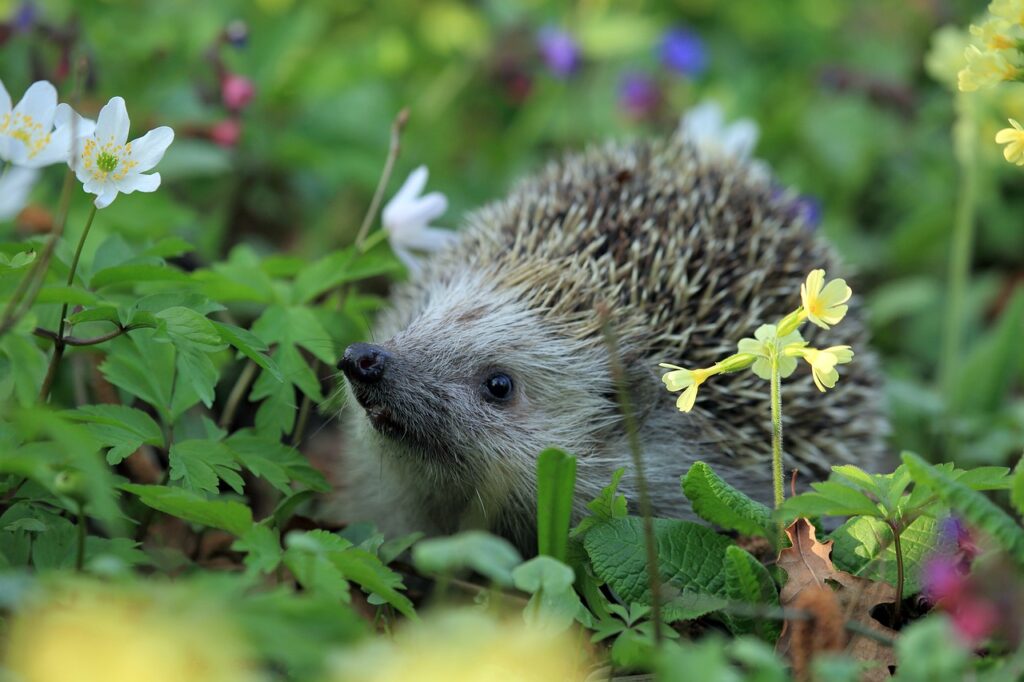
Hedgehogs are in steep decline across the UK, with rural populations falling most sharply due to habitat loss and agricultural practices. Garden hedgehogs face the additional challenge of finding safe places to nest and hibernate in increasingly tidy, fenced gardens. A hedgehog house should be positioned in a quiet corner with dense vegetation nearby, away from areas of regular foot traffic. Fill it loosely with dry leaves and untreated straw for nesting material. Check it once in spring after hibernation ends to remove any old nest material, and never disturb it between November and March when a hedgehog may be hibernating inside.
Planting for birds is the long game. Supplementary feeding is the short game, and in winter it can genuinely make the difference between survival and death for garden birds in hard weather. I feed my garden birds year-round but I increase the quantity and variety significantly from October through to March, when natural food sources are exhausted and the energy demands of cold nights are at their highest.
Sunflower hearts are the single best bird food you can offer. They are high in fat and protein, every common garden bird species will eat them, and they do not leave debris or husks on the ground that attracts rats. Peanuts in a proper mesh feeder are excellent for blue tits, great tits, nuthatches and woodpeckers. Nyjer seeds in a dedicated nyjer feeder attract goldfinches and siskins. Fat balls or suet blocks provide high-energy food for robins, blackbirds, starlings and long-tailed tits. A tray feeder at ground level with mixed seed provides for dunnocks, house sparrows, chaffinches and collared doves that prefer to feed on the ground.
Position feeders away from dense cover where cats can ambush feeding birds, but close enough to light vegetation that birds can retreat quickly if alarmed. Cleaning feeders thoroughly every two weeks with hot water and a dedicated brush prevents the build-up of harmful bacteria and mould that can spread disease between birds. If you see sick or lethargic birds at your feeders, remove them temporarily and clean all surfaces thoroughly before replacing them.
💡 Top Tip
Never offer desiccated coconut, salted peanuts, avocado, chocolate or mouldy food to garden birds. In summer, avoid whole peanuts on open trays as young fledglings can choke on them. From April to August, mealworms offered soaked in water are an excellent addition for robins and thrushes feeding nestlings, but should be live or rehydrated dried rather than loose dry ones.
A hedgehog travels up to two kilometres in a single night while foraging. They cannot fly and they cannot climb, so solid fences and walls are a serious barrier to their movements. A garden surrounded by close-boarded fencing, however wildlife-friendly its planting, is functionally inaccessible to hedgehogs unless entry points are created.
A hedgehog highway is simply a gap of 13 x 13cm at the base of a fence panel, large enough for a hedgehog to pass through but too small for most cats, foxes and dogs. The most effective approach is to coordinate with your neighbours so that multiple adjacent gardens are connected into a network. One garden with a gap in one fence is moderately helpful. A network of six or eight connected gardens gives the local hedgehog population a proper territory to work with.
💡 Top Tip
If you want to know whether hedgehogs are using your garden, place a strip of slightly damp sand about 30cm wide in front of a hedgehog highway gap and check it in the morning. Hedgehog footprints are distinctive: five toes on each foot with prominent claws, and unmistakable once you know what you are looking for. This is also a good way of motivating neighbours to join the hedgehog highway network, since actual evidence of hedgehogs using a garden is considerably more persuasive than the theoretical promise of them doing so.
If you have a pond in the garden, fit a hedgehog ramp, which is simply a plank or piece of chicken wire attached to one end, to allow any hedgehog that falls in to climb out. Hedgehogs are surprisingly capable swimmers but they tire quickly, and a garden pond without an exit point is a real danger.
Wildlife-friendly lawn management
The obsession with the perfect lawn has done more damage to garden wildlife than almost anything else. A close-mown, weed-free, striped green rectangle supports almost nothing. Clover, daisies, speedwell, self-heal, bird’s foot trefoil and dandelions are among of the most important nectar sources for bumblebees and other pollinators in the UK garden landscape.
The simplest change you can make is to mow less frequently. Mowing once every four weeks rather than every week allows clover and daisies to flower, producing ten times more nectar for pollinators than a closely mown lawn. Even better, leave a strip or a defined patch uncut from April through to August, and you will be astonished by what moves in. Grasshoppers, meadow brown and ringlet butterflies, beetles, slow worms and a host of other wildlife all need longer grass in summer.
Never use lawn weedkillers or pesticides on a wildlife-friendly lawn. These kill not just the target plants but also the soil invertebrates, earthworms and beneficial insects that birds depend on. A slightly imperfect lawn full of clover and daisies is a vastly richer wildlife habitat than a chemically maintained monoculture of grass, however beautiful it may look.
Composting for wildlife
A compost heap is a win-win for both gardener and wildlife. It gives you a continuous supply of free, high-quality compost for the garden, and it creates a warm, moist, sheltered habitat that a surprising variety of wildlife uses throughout the year. Slow worms, grass snakes, hedgehogs, toads, and dozens of species of beetle and invertebrate all use compost heaps at different times of year.
Always check your compost heap carefully before turning or using the compost, especially in spring when a hedgehog may still be in the late stages of hibernation at the base. A long-handled fork rather than a spade reduces the risk of injuring any resident. Grass snakes lay eggs in compost heaps in summer, drawn by the warmth of the decomposing material. A brood of grass snakes discovered in the compost is not a cause for alarm but a genuine privilege.
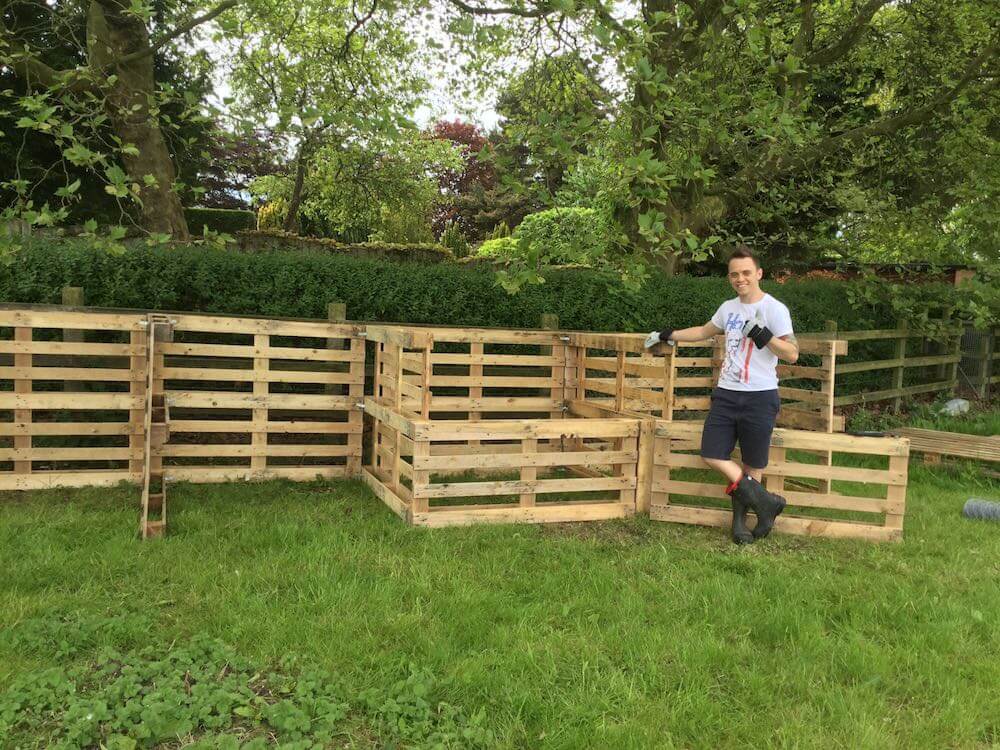
An open-bottomed compost bin, rather than a sealed plastic bin, gives the best wildlife access. Pallets make excellent compost bins and can be sourced free from most timber merchants or builders’ merchants. Three bays allow you to have one bin filling, one breaking down, and one ready-to-use compost, and the open slatted sides allow hedgehogs and ground beetles to move freely in and out.
Going chemical-free in the wildlife garden
Pesticides and herbicides are incompatible with wildlife gardening. This is not sentiment: it is ecology. A slug pellet that kills slugs also kills the thrush that eats the slug. A herbicide that kills dandelions removes a critical spring nectar source for bumblebee queens and the seeds that goldfinches depend on. Insecticides kill beneficial insects alongside pest species. The use of chemicals breaks the food web that makes a wildlife garden function.
The alternative is to manage the garden ecologically, accepting some pest damage as the price of a functioning ecosystem. A garden with healthy populations of ladybirds, lacewings, ground beetles, parasitic wasps and blue tits will control its own aphid populations without any chemical intervention, given enough time. The key transition is patience. An ecologically managed garden takes two to three years to reach equilibrium, and the first season or two may feel messier than you are comfortable with before the predator populations build up enough to keep things in balance.
For slugs and snails, the most wildlife-safe controls are physical barriers (copper tape, wool pellets), biological nematode controls (effective and completely safe for all other wildlife when soil temperatures are above 5°C), and encouraging natural predators by providing habitat for hedgehogs, frogs, toads and ground beetles. Beer traps can be useful in specific situations but should be emptied frequently and positioned carefully to avoid accidentally trapping ground beetles, which are voracious slug predators.
⚠️ Important
Metaldehyde slug pellets are now banned in the UK and have been illegal since March 2022. Ferric phosphate pellets are still legal but should be used sparingly and targeted carefully in a wildlife garden. Even ferric phosphate can have indirect effects on earthworms and the wildlife that depends on them. The safest slug controls in a wildlife garden are always physical or biological rather than chemical.
One of the things I find most useful for clients is a simple month-by-month framework for the wildlife garden. The following calendar is not a list of tasks but a series of reminders about what wildlife needs from your garden at each point of the year, and what you can do to meet those needs without disrupting what is already happening naturally.
📅 Wildlife Garden Calendar
Month
What wildlife needs and what to do
January
Keep feeders topped up. Do not disturb log piles, compost heaps or hedgehog houses. Leave seedheads standing for finches. Check bird boxes are clean and ready for early prospectors.
February
Queen bumblebees emerge on warm days needing nectar urgently. Pulmonaria, hellebores and early crocus are vital. Sow native wildflower seeds indoors. Put up new bird and bat boxes before nesting begins.
March
Frogs and toads spawn in ponds. Do not disturb pond edges. Hedgehogs emerge: leave a shallow water dish at ground level. Begin supplementary feeding reduction as natural food increases. Plant bare-root native hedging if not already done.
April
Nesting season begins. Do not cut hedges or prune shrubs until late August. Provide nesting material near nest boxes. Begin reducing lawn mowing frequency or leaving an uncut area to grow.
May
Peak activity month. Hawthorn blossom at its height. Solitary bees nesting actively. Tadpoles developing in ponds. Leave the No Mow May patch entirely. Sow yellow rattle seed into meadow areas.
June
Fledglings leave nests. Keep cats in at dawn and dusk. Young hedgehogs appearing. Dragonflies and damselflies emerging from pond. Provide shallow water for ground-feeding birds and hedgehogs daily.
July
Peak butterfly season. Buddleja, verbena and lavender at their best. Hedgehogs most active. Keep water available in dry weather. Solitary bee nests completing. Do not clear flower borders yet.
August
Cut wildflower meadow after seeds have set (late August). Rake off all clippings immediately. Apply slug nematodes in warm damp conditions. Young hedgehogs need maximum food before hibernation.
September
Berry season begins. Migrating birds arrive needing food. Plant native hedging bare-roots as soon as available. Leave seedheads and berries for visiting thrushes. Begin increasing supplementary feeding.
October
Hedgehogs preparing for hibernation. Check hedgehog houses are filled with dry leaves. Ivy flowering: critical nectar source for last pollinators of the year. Cover pond with net to catch falling leaves.
November
Clean bird boxes (not hedgehog houses). Build or replenish log pile. Leave hollow plant stems standing for overwintering insects. Increase supplementary feeding. Plant new trees and native hedging.
December
Feed birds daily. Leave fallen fruit on the ground for blackbirds and thrushes. Holly berries now critical for birds. Do not tidy the garden. The messiness of December is precisely what wildlife needs most.
Wildlife gardening in small spaces
You do not need a large garden to create meaningful wildlife habitat. A balcony, a small courtyard or even a sunny windowsill can contribute real ecological value if managed well. The principles are identical to those for larger gardens: food, water, shelter, connectivity. It is only the scale of the interventions that changes.
A container of nectar-rich plants on a balcony is a genuine refuelling station for passing pollinators. Single-flowered lavender, salvia, verbena, scabious and thyme in pots will be visited by bees and butterflies even five floors up. A shallow dish of water, changed every two days to prevent mosquito larvae, provides an enormous benefit to garden birds in dry weather. A bundle of bamboo canes in a south-facing terracotta pot is an effective and entirely unobtrusive solitary bee nest. Even a window box stuffed with native wildflowers can make a meaningful difference to pollinator populations in an urban area.
For a small garden with any soil at all, a mini pond made from a half barrel or large tub sunk into the ground is entirely viable. Even a washing-up bowl 40cm across, with a ramp of stones for access and a couple of marginal plants in small pots, will attract pond skaters, water beetles and potentially frogs within a season. I have seen frogs using a container pond no larger than a kitchen sink. The size of the water body matters far less than its existence at all.
Wildlife garden FAQ
How long does it take to establish a wildlife garden?
Some wildlife will arrive within days of the first improvements. Pond skaters can appear on a new pond within 48 hours. Solitary bees may investigate a bee hotel within the first warm week of spring. More complex changes like establishing a wildflower meadow or building up a healthy predator-prey balance take two to three seasons. A wildlife garden is always a work in progress rather than a finished project, which is actually one of its greatest pleasures.
What is the single best thing I can do for garden wildlife?
If you have space, add a pond. Nothing else in the wildlife garden provides as much benefit across as many species as a body of water. If you already have a pond, the next most impactful change is to stop using pesticides and herbicides. The ecological chain reaction from removing chemical use is significant and relatively rapid.
Do I need a large garden to make a difference to wildlife?
Not at all. Research consistently shows that small gardens, managed well for wildlife, contribute disproportionately to urban biodiversity. Even a single window box of native wildflowers, a dish of water, or a bundle of bamboo canes provides genuine ecological value. The cumulative effect of many small gardens managed sympathetically is substantial.
Will a wildlife garden look untidy?
It does not have to. Some of the most beautiful gardens I have ever designed have also been among the most wildlife-rich. The key is using structure and design to contain the wildness. A neatly edged area of long grass looks deliberate rather than neglected, a well-positioned log pile with appropriate planting around it is a garden feature, and a beautifully planted pond is one of the most attractive garden elements possible. Wildlife gardening and garden aesthetics are entirely compatible.
When should I cut down my wildflower meadow?
Cut in late August or September, after the wildflowers have set and shed their seed. Remove all clippings immediately to prevent nutrients returning to the soil. If you cut earlier you will remove flowers before they have seeded; if you cut much later you risk disturbing overwintering invertebrates. A single annual cut at the right time is all a well-established meadow needs.
What should I feed hedgehogs?
If you want to put food out for hedgehogs, specialist hedgehog food or meaty cat or dog food is appropriate. Never offer bread or milk, which hedgehogs cannot digest and which can cause serious digestive problems. Fresh water is more important than food and should always be available. Mealworms, once widely recommended, are now known to cause metabolic bone disease in hedgehogs when fed in large quantities and should be avoided or offered only very occasionally in small amounts.
Can I have a wildlife garden and a tidy garden?
Yes, with thoughtful design. A clearly defined area of long grass or wildflower planting with neat edging looks intentional. A beautifully planted border of nectar-rich perennials is both wildlife-friendly and visually striking. Log piles incorporated into planting schemes rather than left in the open look considered and purposeful. The wildlife garden principles of reducing pesticides and increasing plant diversity apply to even the most formally maintained spaces and will always benefit wildlife without compromising appearance.
If you want to learn more about plants, design principles, and creating beautiful spaces check out my online garden design courses. Whether you want to level up your plant knowledge, learn about design principles, or even start a career in garden design, I’ve got courses ranging from £29 to £199 that cover everything you need.
These courses aren’t just for people with gardens either! The principles of understanding plant needs, creating harmonious colour schemes, and designing beautiful functional spaces apply just as much to indoor plant arrangements as they do to full garden designs. You’ll learn how to read plants, troubleshoot problems, and create spaces that genuinely work for your lifestyle.
29
Garden Design Examples for Small Gardens: 30 Design Templates & Planting Plans
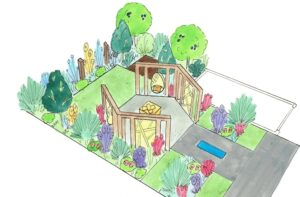
Garden Design Examples for Small Gardens: 30 Design Templates & Planting Plans: In this online gardening course, I’ll walk you through 30 fantastic garden designs, explaining the logic behind the layout, the plant choices, and take-home tips for applying them in your own garden.
Weekend Garden Makeover: A Crash Course in Design for Beginners
Learn how to transform and design your own garden with Lee Burkhills crash course in garden design. Over 5 hours Lee will teach you how to design your own dream garden. Featuring practical design examples, planting ideas and video guides. Learn how to design your garden in one weekend!
Garden Design for Beginners: Create Your Dream Garden in Just 4 Weeks
Garden Design for Beginners Online Course: If you want to make the career jump to becoming a garden designer or to learn how to design your own garden, this is the beginner course for you. Join me, Lee Burkhill, an award-winning garden designer, as I train you in the art of beautiful garden design.
Creating a wildlife garden is one of the most rewarding and impactful things any of us can do with our outdoor space. You do not need a large garden, a large budget, or years of experience. You need four things: food from nectar-rich and native plants, water from a pond or bird bath, shelter from log piles, dense planting and nest boxes, and connectivity through hedgehog highways and living boundaries.
Stop using pesticides and herbicides. Let a patch of grass grow long. Add a pond if you can. Put up a bird box. Make a gap in the fence for hedgehogs. Each change, however small, connects your garden to a wider ecological network and makes a genuine difference to species that need our help more urgently than ever.
Your subscription could not be saved. Please try again.
Your subscription has been successful.
Lee Burkhill
Lee Burkhill, known as the Garden Ninja, is an award-winning garden designer and horticulturist with over 30 years of gardening experience and 15 years as a professional garden designer. A qualified RHS (Royal Horticultural Society) professional, Lee specialises in sustainable garden design and practical horticultural advice. He designs and presents on BBC1’s Garden Rescue and in leading gardening publications. Lee combines three decades of hands-on gardening knowledge with professional design qualifications to help gardeners create beautiful, functional outdoor spaces.