Gardening Gloves Reviewed: the Best Gloves for your hands 2026
Lee Burkhill: Award Winning Designer & BBC 1's Garden Rescue Presenters Official Blog
Beginner level
One of the best parts of gardening is being able to use your hands outdoors. So often we are stuck behind computers typing or in offices flicking through paperwork. Gardening frees us up to be both creative and productive. Most of the time by getting our hands dirty! However, any gardener will tell you that sooner or later you will need gardening gloves to save your hands. This guide gives my top types of gardening glove to keep your lovely hands pristine and which gloves to avoid!
When I first started gardening many, many moons ago, I always gardened bare-handed. It gave me a genuine sense of connection with the earth and the gardening process. It wasn’t long, though, before coworkers in my old IT 9-5 job were giving my dirt-stained hands and nails the look of horror.
It looked like I’d clawed my way from an underground tunnel to make the 9 a.m. catch-up meeting. So, unless you want hands like a 100-year-old caveman/woman, at some point, gardening gloves will become a necessity.
The problem with looking for gardening gloves is that thousands of low-quality ones are out there. Waving their crazy patterns and chintz at you to get your attention. It seems that manufacturers prioritise hideous fashion or motifs over substance, and this is where most complaints originate.
Gardening glove reviews are often lacking in any detail online and seem to change almost weekly. Believe me when I say I’ve tried the cheapest to some of the most expensive out there, and there are plenty of duds you need to steer clear of.
In this comprehensive guide, I’ll share my tried-and-tested recommendations, along with the current bestselling garden gloves on Amazon that actually deliver on their promises. This page contains affiliate links (see full details here). If you purchase through these links, I may earn a small commission at no extra cost to you.
🥷 Garden Ninja’s Top Picks at a Glance
Best overall (premium):Gold Leaf Tough Touch — the finest all-round leather glove I’ve ever used. Worth every penny for regular gardeners.
Best value everyday glove:PU/Latex Work Gloves (10-pack) — the professional’s best-kept secret. Buy a pack, leave pairs everywhere.
Best for rose pruning:HANDLANDY Gauntlet Gloves — elbow-length protection for tackling thorny climbers and brambles.
Before we dig into the Best gardening gloves it’s worthwhile giving you four pearls of wisdom to make you a glove choosing sensei. If I can give you any advice, it is this, my friends:
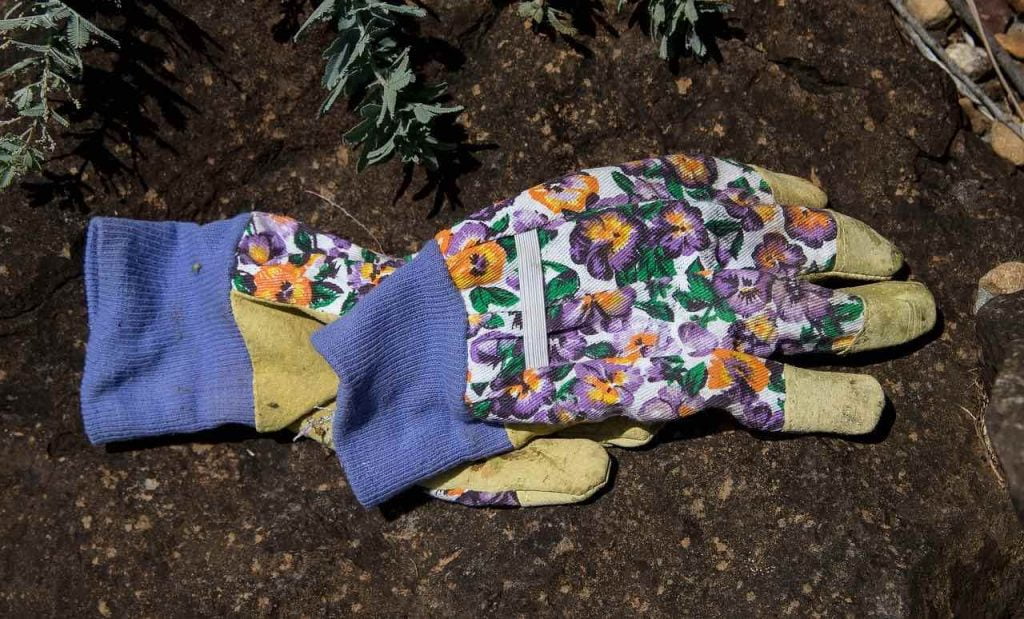
Avoid anything with a flower print,‘brushed cotton’ feel or ‘Fashionable’ moniker. These are all pointless features of a gardening glove.
Avoid the one-size-fits-all approach —it’s a lie, and sizing is one of the most important glove features.
Avoid gloves, trowels, kneeling pads, and seed tray ‘gift boxes’. You end up with lots of low-quality tat and paper-thin gloves.
Invest in your gloves. It is better to buy one £30 pair every 5 years than replace cheap pairs monthly. Think of the environment.
These flowery examples are neither useful nor ornamental and are a waste of money.
The Garden Ninja’s 4 Golden Rules for Choosing Garden Gloves
Before we dig into the best gardening gloves available, here are four pearls of wisdom to make you a glove-choosing sensei:
1. Fit is Everything — A poorly fitting glove is worse than no glove at all. It’ll slip, bunch up, cause blisters, and generally make gardening miserable.
2. Match the Glove to the Task — You wouldn’t use a sledgehammer to plant seeds, so don’t use heavy-duty gloves for delicate work.
3. Quality Over Quantity — One excellent pair will outlast ten cheap ones and save you money in the long run.
4. Consider Your Climate — What works in balmy Cornwall might not suit the harsh winds of Scotland.
Understanding Garden Glove Types: A Complete Breakdown
Understanding the different types of gardening gloves can save you a lot of head scratching. When you’re a beginner, you think all gardening gloves must be the same? Then you are on your third pair, wondering why they are not suitable, and then realise that there are MANY different types to choose from.
Each of my recommendations for the best gardening gloves covers each type of gardening glove, but below is a handy list to help you if you’re new to choosing gardening gloves.
After 30 years of non-stop gardening, here are my best gardening gloves and glove types that will last the distance. With these gardening gloves, you will be able to tackle all aspects of gardening. From Rose Pruning,Show Garden Planting, Heavy Landscaping and Cold Winter tidying. I have tried and tested these gloves to give you my best thoughts. So let’s take a look at the best gloves for gardening.
1. Gold Leaf Leather Gloves
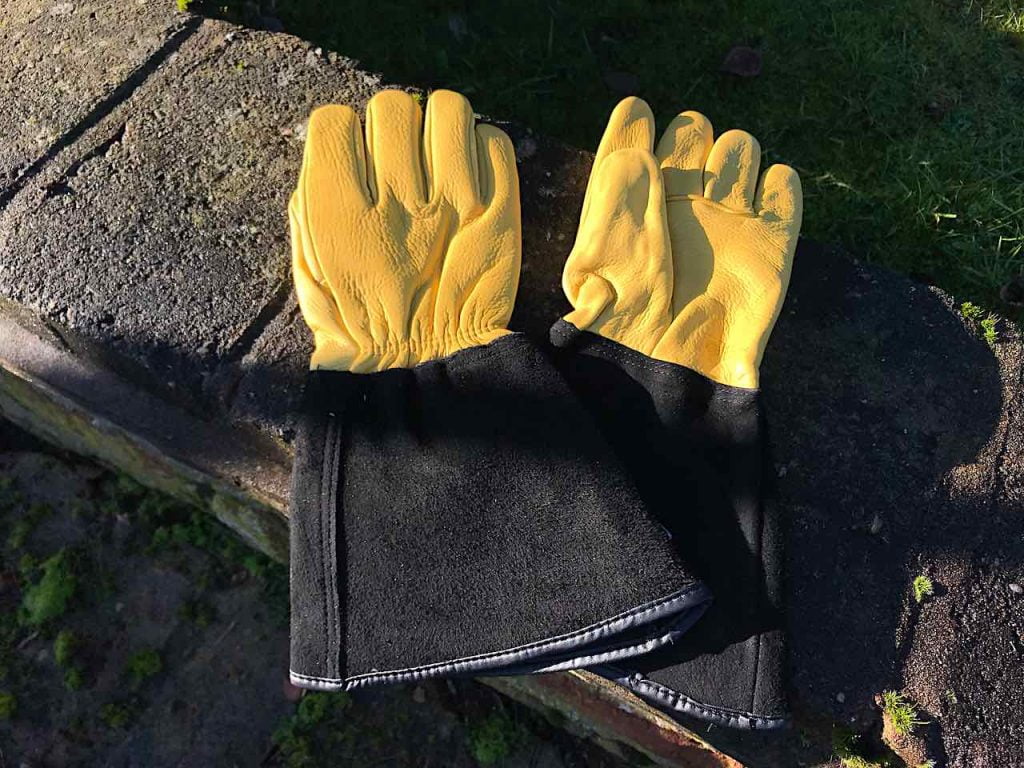
First, my go-to glove type is leather, particularly anything made by Gold Leaf. Gold Leaf was founded because they saw a gap in the market for well-fitting, high-quality gardening gloves, particularly for women. Peter designed these gloves 16 years ago, and they have been endorsed not only by the RHS but also by numerous gardening professionals.
Distinctive and beautifully made — Gold Leaf Gloves are the serious gardeners’ choice.
Why? Because they are amazing for pruning, particularly thorny plants like Roses or Pyracantha bushes. Now usually with tough or heavy-duty gloves, I find them to be baggy, heavy and awkward to lift or pick things up with. The Gold Leaf Tough Touch are the complete opposite. They fit really snugly to your hands, and because of their high-quality leather construction, they will, over time, mould to your hands the more you use them.
I’ve got really small hands. There, I’ve said it. No shame. The Gold Leaf collection is available in either ladies’ or gentlemen’s styles. I use ladies. There are no silly patterns or pink logos. Just a bright yellow, easy-to-spot pair of high-quality gloves. However, the gloves can tolerate a 20% size difference in hands, so they provide a nice, snug fit.
The gloves are brilliant for thorns, pruning and more intricate tasks. Especially if you want to move plants and pick things up with ease. You probably don’t want to use them for collecting leaves or other more mundane tasks. They’re too good for that. See the winter gloves below for that!
Impermeable to thorns and a near-perfect fit. These are my go-to gardening gloves.
Review of Gold Leaf Gloves
They provide a near-perfect fit
Even their heavyweight Tough Touch feels lightweight
Brilliant dexterity (movement from the hands and fingers)
Gauntlets save your wrists from scratches
Wearable for hours without needing to take them on and off again
Price Point: £21-28 per pair (premium positioning)
2. PU /Latex Coated Work Gloves
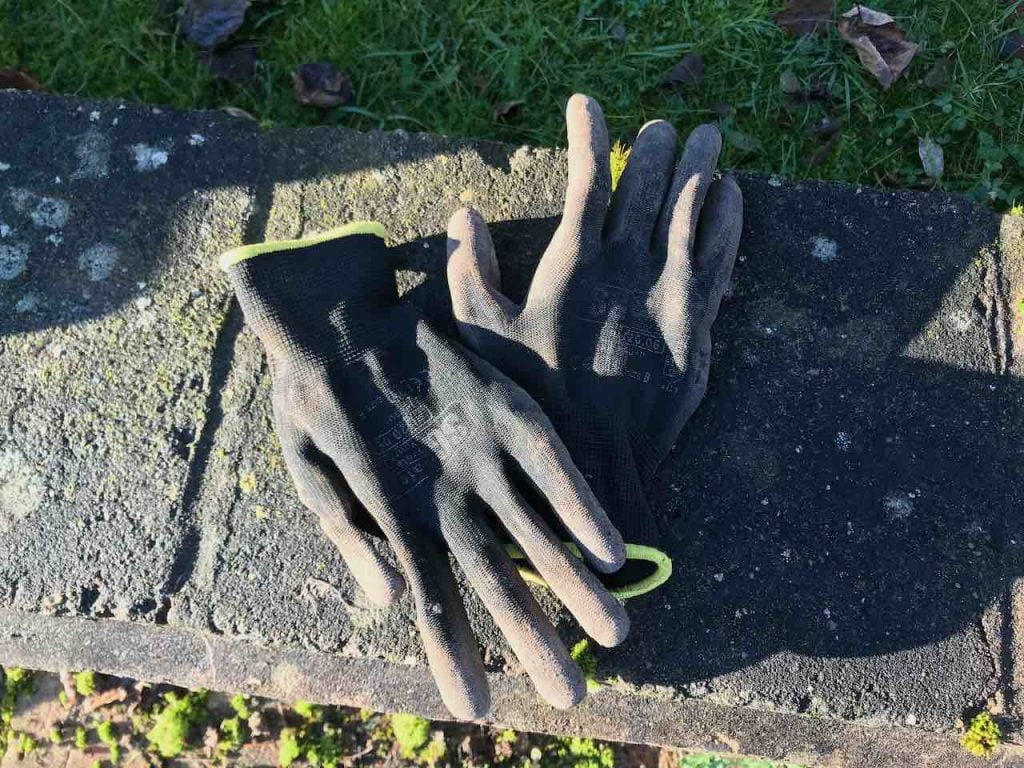
Now, the name of these gloves may not be immediately apparent for gardening, but believe me, they are perfect for planting and delicate work. You probably wouldn’t know they even existed. I know many professional gardeners who rave about these gloves whilst also keeping them a best-kept secret. In fact, I only found out about them from a friend at Chelsea Flower Show who took pity when my gloves went missing and passed me a pair hidden in their rucksack with a secretive nod.
They’re not sexy, but they do the majority of the more delicate gardening jobs really well
I use these elasticated snug-fit gloves when planting, show garden work where detail is key, dividing seedlings and also general tidying up. They are the best all-rounder for gardening. They are really cost-effective and come in a variety of sizes. They are not waterproof, thermal or heavy-duty, nor do they pretend to be. These are your everyday ‘save my hands from abuse’ gloves.
I tend to rinse my clothes, and they dry really quickly. They are not machine washable and will only last a limited amount of time, as they are thin — perhaps a couple of months, depending on how frequently you use them. It’s then time to replace them. So I tend to keep mine for non-heavy-duty work so I’m not wasting them.
Review of PU Work Gloves
Incredible dexterity
The best general gardening all-rounder
Cheap & easy to wear
Can be hand-washed
Not suitable for heavy-duty work
Price Point: £8-15 for 10-pack (excellent value)
Perfect for: Planting seedlings, transplanting, general maintenance, show garden work, precision tasks
3. Winter Insulated Gloves
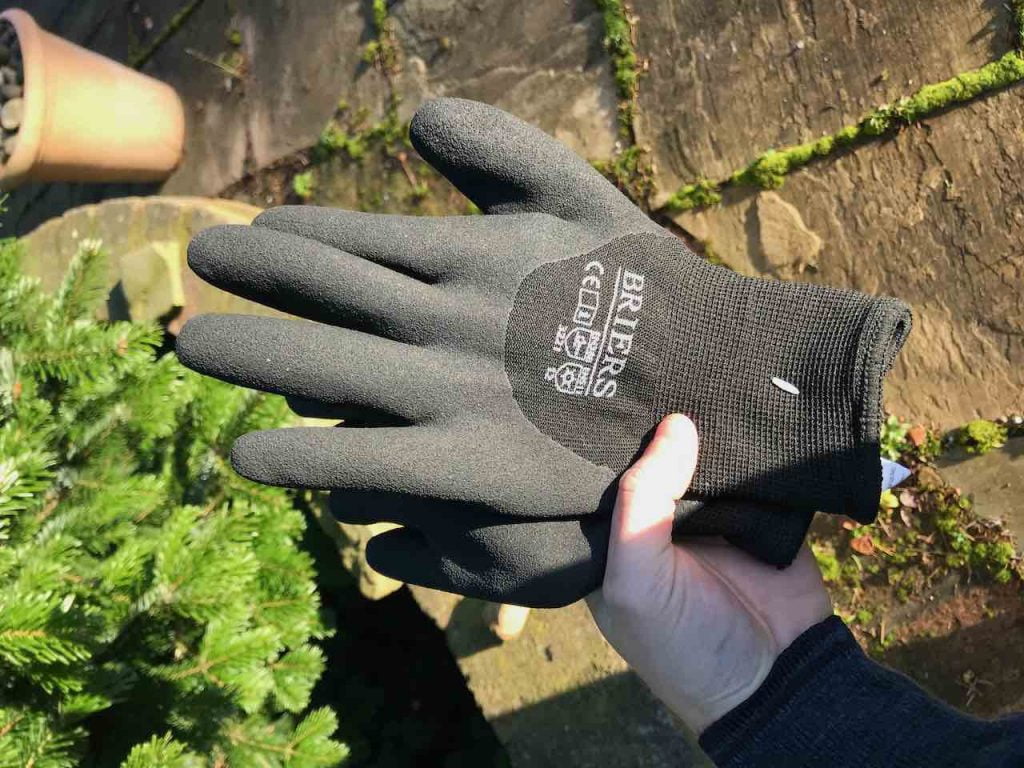
Winter can be the cruellest month for gardeners‘ hands. It’s cold and usually wet, and it seems that everything is twice as heavy to move or takes twice the effort. However, the garden waits for no one, and there are often tidying and other chores that need to be done. That’s where winter insulated gloves come in as a godsend. You wrap up the rest of your body in colder months, so why not your precious hands? I’ve always chosen Briers winter insulated gloves as they keep the cold out brilliantly.
The drawback to all this heat and grip is that they are often not breathable. Meaning your hands will sweat, and because of the thickness, dexterity is an issue. I believe you can’t have it every which way and given you’re only going to be doing short bursts of gardening when it’s cold they meet the brief really well. I can wear these for a couple of hours before escaping back into the warmth and letting my hands breathe a bit.
Review of Winter Insulated Gloves
They are super warm and snug
Good grip from the rubberised palm
They do make your hands sweat, though
Dexterity is limited
Not good for more delicate tasks
Price Point: £12-25 per pair (varies by insulation level)
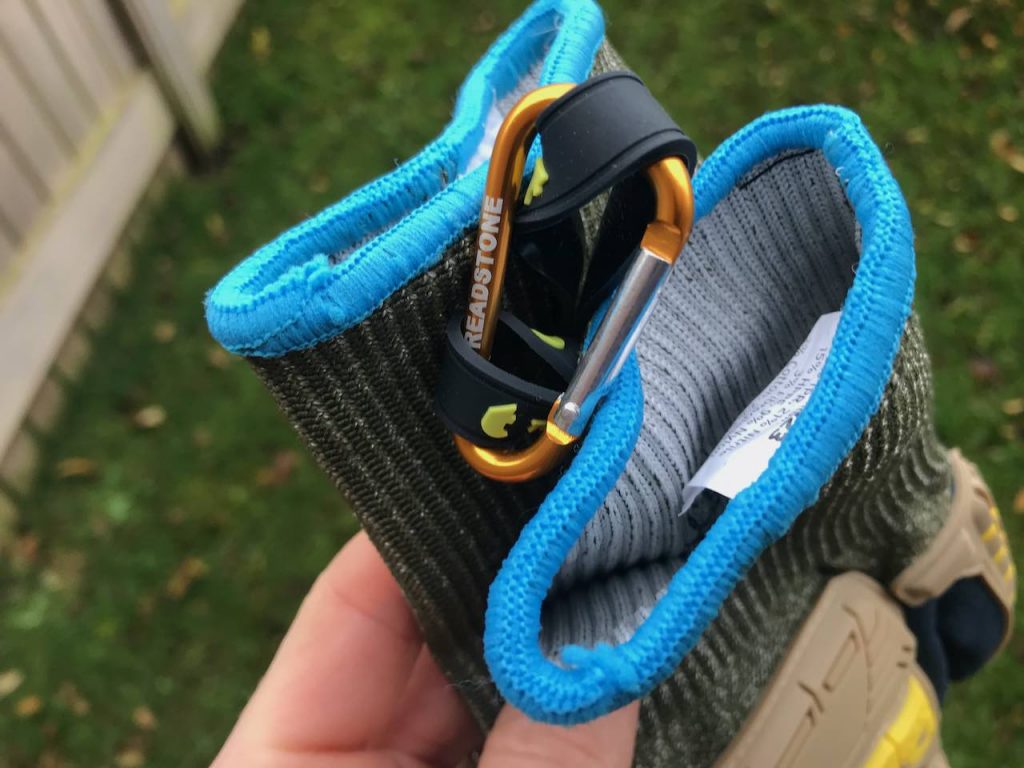
The fourth pair in the list are Heavy Duty Clip Gloves made by Treadstone. Sometimes, as a gardener, you’re going to have to lift and shift rubble, paving, stone or other heavy, sharp objects. You really don’t want to be subjecting your hands to that without protection unless you have hands like shovels that are Teflon-coated. Here, I introduce the Heavy Duty Ultimate. (Cue Tron movie soundtrack).
I’ve always disliked heavy-duty gardening gloves because they always feel ultra-baggy and awkward to wear. The Treadstone Ultimate gloves are entirely different, which is why I really like them. They are a stretch fit, so they reduce the issues with other baggy gloves. Not only do they fit better, but they are tear-resistant, meaning that sharp stone, metal or other garden scraps won’t tear through them like I’ve done many times with other gloves.
The thing I really like about these gloves is the ‘Terminator-style’ rubber pads on the knuckles and fingers. Many a time, I’ve struck or scraped my knuckles with heavy-duty gardening. It looks like I’ve been in a cage fight since then, not with these gloves.
They also come with a clip, so when you’ve finished using them, you can clip them onto a belt or back together. Which helps with the problem of ‘where did I put my gloves?’. This is a really nice feature.
These are not everyday gloves, but rather ones I use for specific, heavy-duty tasks, such as lifting & turning compost or moving stone. I rinse them clean afterwards and air-dry them, just like my PU gloves. I wouldn’t machine wash either of them, as this may damage them.
Review of Treadstone Clip Gloves
Great for tough tasks and sharp objects
Stretchy yet tough, meaning a much better fit compared to other heavy-duty gloves
Knuckles and finger joints feel really protected.
The clip works really well to attach gloves to a belt or back to each other
Not suitable for more delicate tasks.
Perfect For: Stone work, heavy lifting, construction tasks, compost turning
Price Range: £15-22 per pair (professional quality)
5. COOLJOB Gardening Gloves — The Beginner’s Best Friend
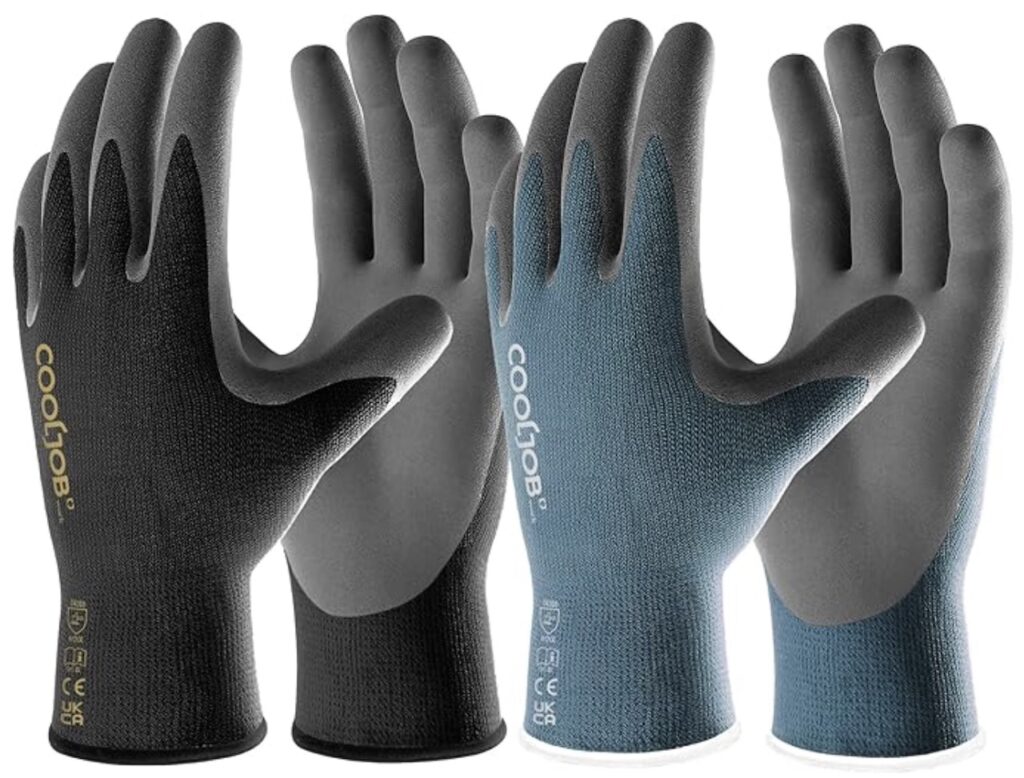
If you’re relatively new to gardening and not yet sure which gloves you’ll reach for most, the COOLJOB gloves are an excellent starting point. With over 14,000 five-star reviews on Amazon, they’ve clearly found a massive following — and I understand why. They feature a lightweight nitrile coating that provides decent grip whilst keeping breathability reasonable for a synthetic glove. They are an upgraded version of the latex or PU gloves shown above in this guide, so if you find those a bit too flimsy — especially when lifting pavers or doing a spot of hard landscaping — these bridge the gap nicely.
I’ve used them a few times on Garden Rescue and show gardens, and they do the job well, mainly because they are touchscreen-compatible when you need to take a phone call or check a plant name mid-border. I’ll be honest with you, I don’t rely on them as my primary glove because, at this level of use, I tend to misplace them when I put them down. That’s more my fault than the gloves’ fault. They’re thin, lightweight, and don’t have the same reassuring weight in your hand that a leather glove does, which means they disappear into a heap of other kit very easily on a busy build day.
For beginners and occasional gardeners, though, that thinness is actually an asset. You get a much better feel for what you’re doing, whether that’s firming in a new plant, handling small seedlings, or doing fiddly dead-heading.
They are a solid starter glove that won’t break the bank while you figure out what kind of gardening you do most. Just buy the multi-pack so you can leave a pair in the greenhouse, one in the shed, and one by the back door.
Review of COOLJOB Gardening Gloves
Exceptional value with multiple pairs per pack — ideal for spreading around shed, greenhouse and garage
Touchscreen-compatible fingertips — handy on a build day or show garden
Sandy finish texture for a reasonable grip
Available in various colours, but no flowery patterns, you’ll be glad to know!
Not a glove for heavy-duty work — these are light-duty all-rounders
Machine washable in theory, though in my experience washing does tend to peel off the rubberised coating — better to rinse and replace when worn
Best For: Beginners, general planting, light pruning, container gardening, spreading around multiple locations
Price Range: £12-18 for six pairs
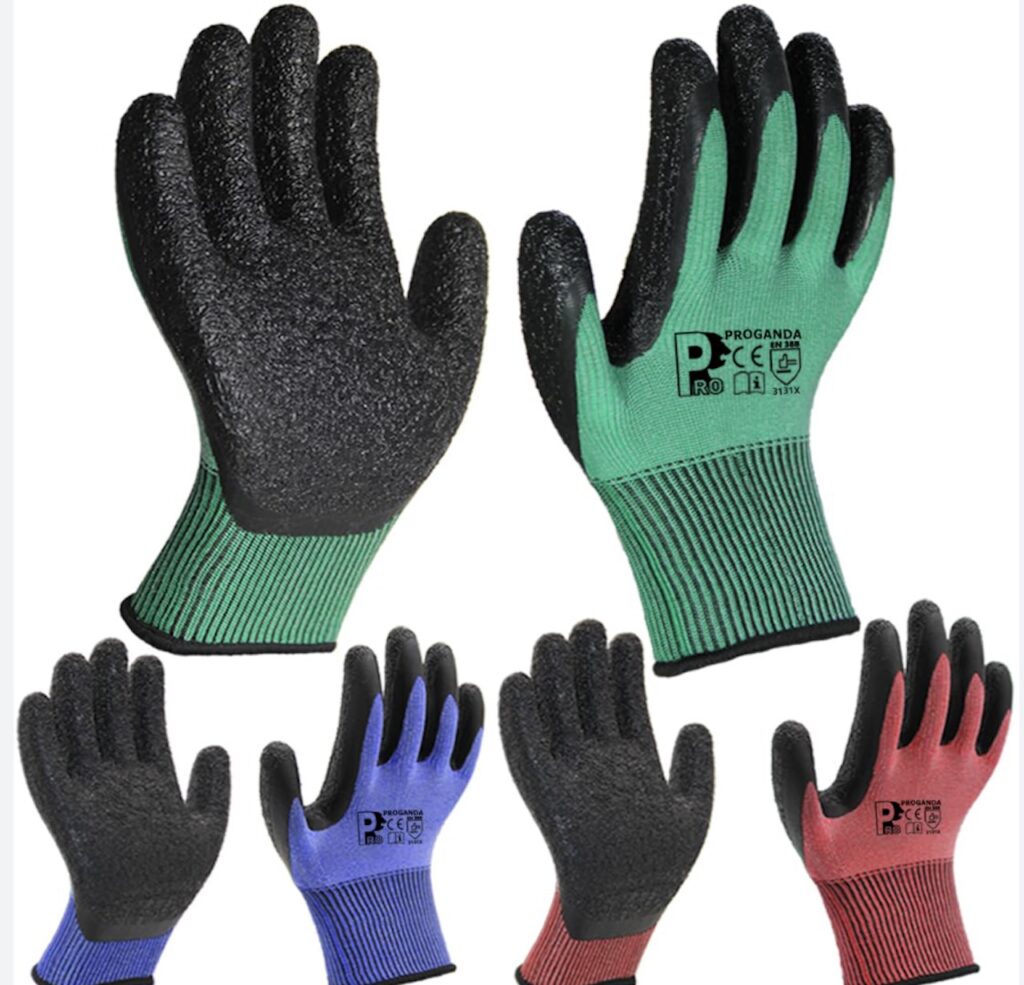
6. PROGANDA Ultra-Grip Garden Gloves
These are the gloves I’d point a newer gardener towards when they’re ready to step up from the very lightest latex-style options but aren’t yet sure they want to invest in premium leather. The PROGANDA Ultra-Grip gloves have a distinctive crinkle latex coating that genuinely grips well in both dry and wet conditions — something that lighter nitrile gloves often struggle with once your hands start sweating on a warm afternoon in the border.
The 13-gauge seamless nylon liner is described as feeling like a second skin, and for average-sized hands, that is about right. I should flag, though, that if you have larger hands, some of my gardening friends have found these feel uncomfortably tight — as if the glove is squeezing rather than fitting. If you’re anything above a medium-large, I’d try the PU work gloves or go straight to leather rather than struggle with the fit here.
Where these earn their keep is for rougher general tasks where you want more grip and durability than a thin nitrile glove gives you, but you don’t need full leather protection. Leaf clearing, soil shifting, moving heavy pots, hard pruning of less spiky shrubs — these gloves handle all of that comfortably. They do feel heavy and slightly deadening to the touch compared to finer gloves, so I would not recommend them for anything requiring real precision. But as an in-between, sturdy workhorse glove at a very reasonable price, they do their job.
Review of PROGANDA Ultra-Grip Gloves
Good grip in both wet and dry conditions — better than thinner nitrile alternatives
3 bright colours for easy spotting — no disappearing into the compost heap
Double-coated latex for reasonable water resistance
Can feel tight and restrictive on larger hands — check sizing carefully
Heavy and slightly clumsy for finer tasks — not the glove for seedling work or deadheading
Good value for an intermediate-level workhorse glove
Best For: General rough gardening, leaf clearing, soil shifting, moving containers, intermediate gardeners wanting more durability than thin nitrile
Price Range: £15-22 for three pairs
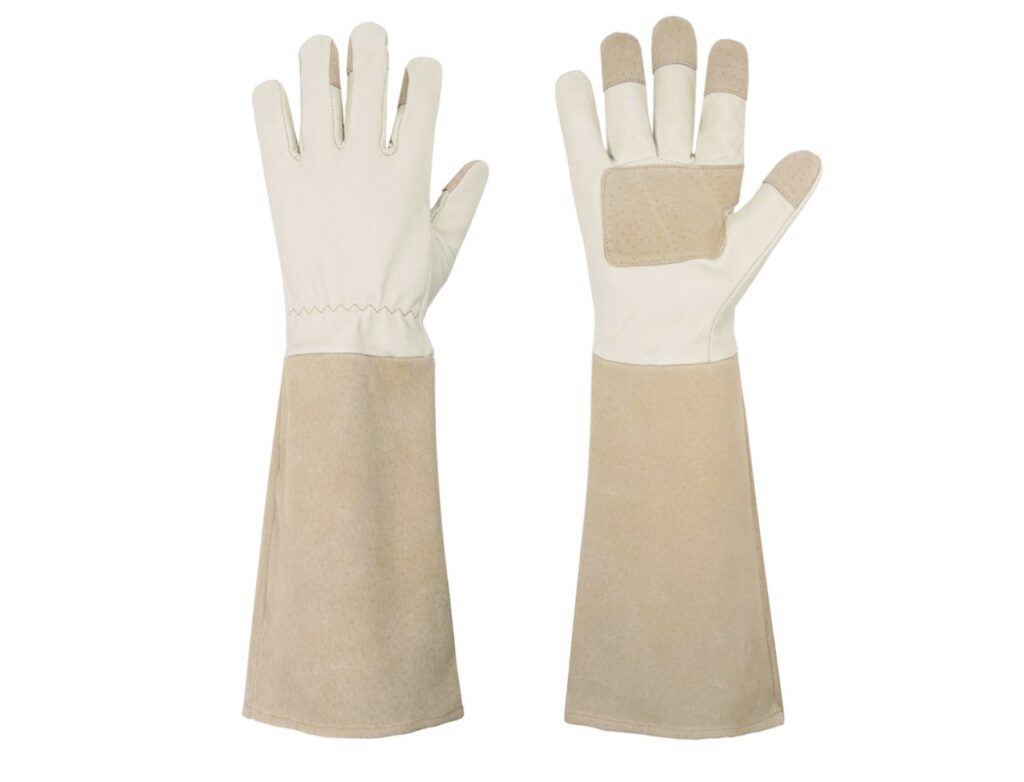
7. HANDLANDY Rose Pruning Gloves
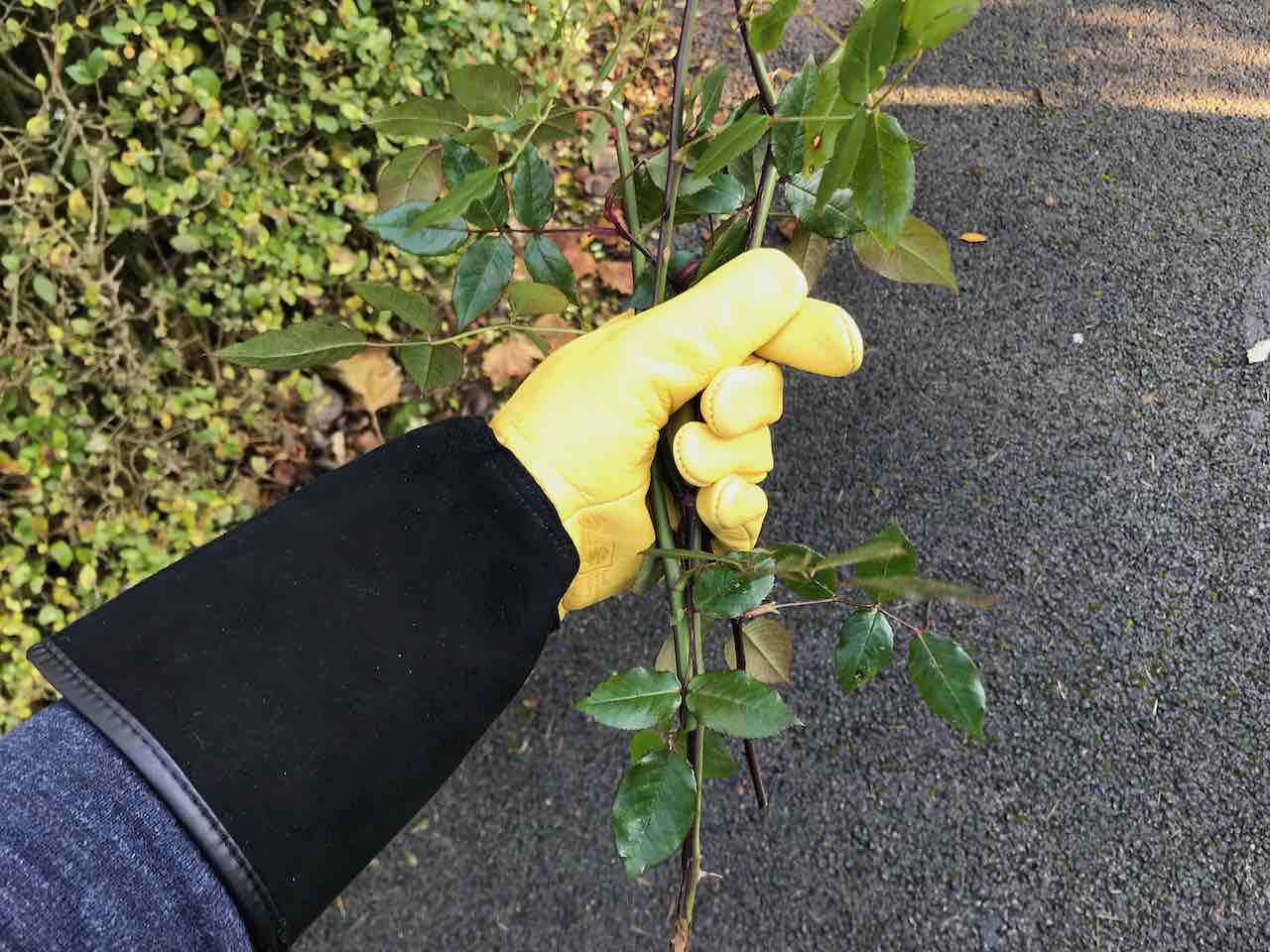
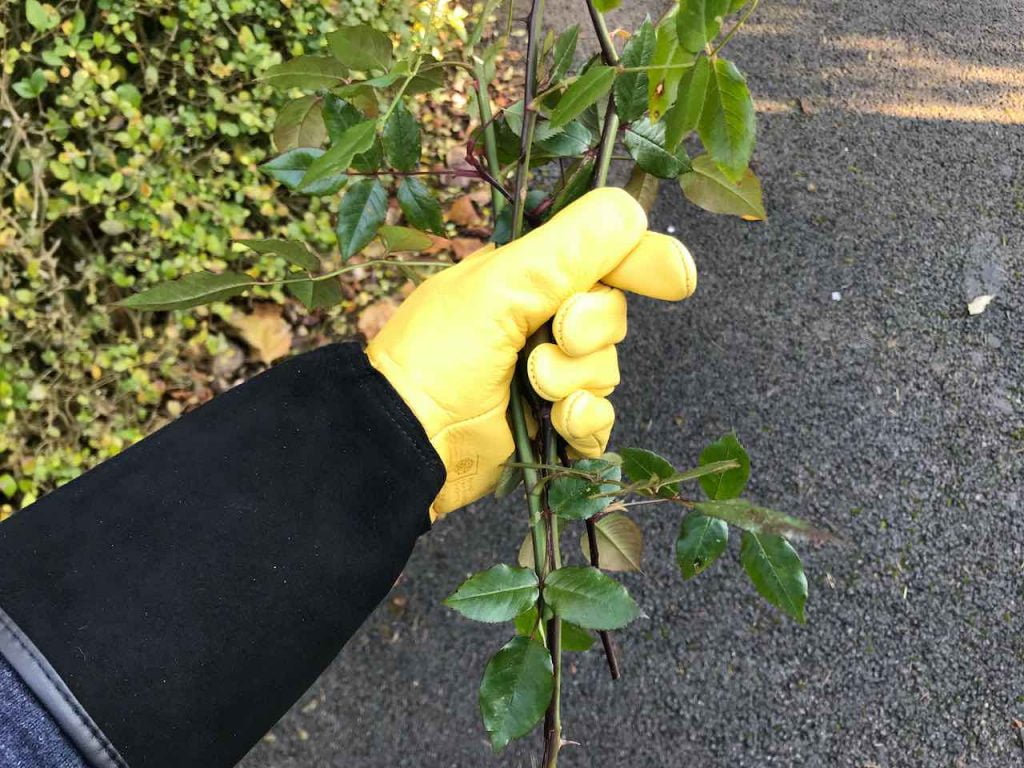
Now here’s a contender for the Gold Leaf crown, HANDLANDY super thick rose pruning gloves. For serious gardeners tackling thorny plants, these pigskin leather gauntlets extend protection well up the forearm. They’re consistently rated as the best rose pruning gloves available.
These gauntlet gloves are fantastic when pruning beasts such as large climbing roses or having to put your hands into brambles to dig out the crowns. They have super long gauntlet sleeves, which protect even up to your elbow, which is sometimes necessary when hard pruning out-of-control thorny plants or Berberis bushes!
My only niggle with them is the colour. They are a neutral beige, which, with my pair, marked quite quickly and were also a bit tricky to spot when I’d put them down. Maybe that’s just me being absent-minded. Bob’s your uncle, though as a purely functional rose pruning gauntlet at this price point, they are very hard to beat.
HANDLANDY Glove Review
Premium pigskin leather construction
Extended cuff for forearm protection — essential for thorny climbers
Reinforced fingertips and palm padding
Breathable leather prevents overheating during longer pruning sessions
Excellent value compared to other leather rose pruning gloves at this protection level
Beige colour marks easily — harder to spot when put down
Best For: Rose pruning, handling brambles, heavy-duty pruning, cactus care, Berberis and Pyracantha work
Price Range: £25-35 per pair
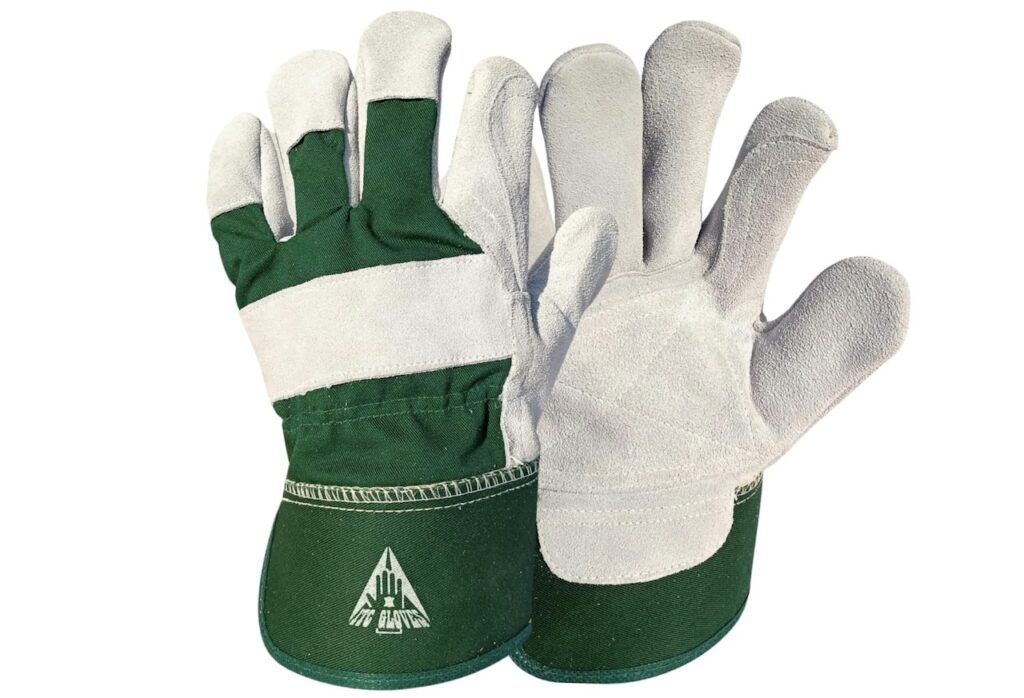
8. ITC Heavy Duty Leather Gloves — The Workhorse
So far, we’ve covered two premium thorn-proof leather gloves for the discerning gardener. But what if you just need a pair of cheap and cheerful gloves to rip out some old spiky plants or to gut out an overgrown bramble-filled garden, and you know you’re not going to need to be using them for deadheading roses every week? If that sounds like you, then these ITC leather gloves are the clear winner for value and protection in the garden.
These goatskin leather gloves, featuring a spandex backing, offer a reasonable balance of protection and flexibility. The added cushioning and Velcro wrist strap make them stay put during extended use, which is more than can be said for a lot of budget leather gloves that slide off the moment you start doing anything vigorous.
I’ll be straight with you — they are not the most elegant or precisely fitting glove I’ve ever worn, and if you’re doing anything that requires real dexterity, you’ll feel the limitations. The fit is noticeably sloppier than the Gold Leaf or even the HANDLANDY, and on my hands in particular, they felt a bit like wearing gardening oven gloves.
But here is the thing: when I was lifting paving slabs, turning out a compost bay, or shoving rose prunings into a bin bag with my bare hands previously, the ITC gloves were completely bombproof. Thorns, sharp stone edges, rough concrete they handled all of it without complaint. For the price, that is very hard to argue with.
Think of these as your ‘dirty jobs’ gloves. The pair you grab when you know you’re about to wreck something nicer.
ITC Leather Glove Review
Genuine goatskin leather construction — robust protection for rough work
Spandex backing gives some flexibility without sacrificing toughness
Reinforced knuckle protection
Velcro wrist strap keeps them on during vigorous tasks
Great value for a leather glove at this price point
Sloppy fit — not suited to anything requiring precision or dexterity
These are dirty-job gloves, not everyday gardening gloves
Best For: Heavy landscaping, lifting stone and paving, turning compost, clearing brambles, any task you wouldn’t risk a better pair on
Best Gardening Gloves for Arthritis and Reduced Grip Strength
This is a section I get asked about a lot, and rightly so, because it is a genuinely underserved topic in most glove guides. A significant number of gardeners manage some degree of arthritis, reduced grip strength, or joint stiffness, and the wrong glove can make things considerably worse rather than better. A stiff, heavy leather glove that requires real effort to open and close is not going to help someone whose hands are already uncomfortable.
The key things to look for if arthritis or grip strength is a concern are compression support, lightweight construction, and a close fit that does the work rather than fighting against your hand. You want a glove that helps rather than hinders.
For light work — planting, deadheading, weeding — the PU/latex work gloves mentioned earlier in this guide are actually a solid choice. They are so lightweight and close-fitting that they require almost no grip strength to keep on, and the snug elasticated wrist means they stay put without needing to be wrestled into position. For anyone with very stiff fingers, the thin material means you lose very little feel, which helps with tasks that require a gentle touch.
For slightly tougher tasks, look specifically for compression gardening gloves — these are designed with a spandex or elastane-based construction that provides light joint support while keeping the weight minimal. Brands like Vgo and COOLJOB both produce arthritis-friendly variants that are worth looking at. The compression element will not cure anything, but for many gardeners it genuinely takes the edge off discomfort during repetitive tasks like weeding or planting out.
What to avoid: thick, stiff leather gloves that require you to squeeze hard to grip a tool. Heavy rubber gloves for the same reason. And anything with a very tight wrist fastening that cuts off circulation. The goal is support without restriction.
It is also worth noting that a well-fitted glove of any type is better for arthritic hands than a poorly fitted one. Bunching and slipping inside a glove causes repetitive micro-adjustments that add up to a lot of extra work for already-tired joints. Take the time to measure your hands properly using the sizing guide below before buying.
Sizing Guide: Getting the Perfect Fit
How to Measure Your Hands Properly
Hand Length: Measure from the wrist crease to the middle finger tip
Hand Width: Measure across palm at the widest point
Finger Length: Individual finger measurements for precision fit
Universal Garden Glove Sizing Chart
Size
Hand Length (cm)
Hand Width (cm)
Recommended For
XS/6
15.5-16.5
7.0-7.5
Very small hands
S/7
16.5-17.5
7.5-8.0
Small hands
M/8
17.5-18.5
8.0-8.5
Average hands (Most Common)
L/9
18.5-19.5
8.5-9.0
Large hands
XL/10
19.5-20.5
9.0-9.5
Very large hands
Speciality Garden Gloves: Matching Tools to Tasks
A) Waterproof Gloves for Wet Weather Gardening
Feature
Standard Rubber
Neoprene
Double-Latex Coated
Water Resistance
Excellent
Outstanding
Very Good
Breathability
Poor
Good
Fair
Durability
Good
Excellent
Very Good
Flexibility
Fair
Very Good
Good
Best Use
Heavy wet work
Extended water tasks
General wet gardening
Recommended: COOLJOB Gloves for the best balance of protection and flexibility.
B) Cut-Resistant Gloves for Sharp Tool Work
Modern cut-resistant gloves use advanced materials like HPPE (High Performance Polyethylene) to provide solid protection whilst maintaining flexibility.
When You Need Them:
Operating power tools
Handling broken glass or metal
Working with very sharp pruning tools
Clearing debris from storm damage
C) Chemical-Resistant Gloves for Garden Treatments
When applying fertilisers, pesticides, or other garden chemicals, standard gloves simply aren’t adequate protection.
Essential Features:
Nitrile construction for chemical resistance
Extended cuff length
Textured grip surface
Disposable options for single-use applications
D) Leather Types Compared
Leather Type
Durability
Breathability
Water Resistance
Flexibility
Cowhide
Excellent
Good
Poor
Fair
Goatskin
Very Good
Excellent
Fair
Very Good
Pigskin
Good
Outstanding
Good
Excellent
Synthetic
Good
Fair
Very Good
Good
Professional Insight: Pigskin offers the best breathability due to its naturally porous structure, making it ideal for extended wear in warm weather.
How to Care for Your Gardening Gloves
A decent pair of gardening gloves is an investment, and like any investment, they repay you in proportion to how well you look after them. I’ve made every possible glove-care mistake over the years — left leather gloves soaking wet on a bench overnight, machine-washed nitrile gloves until they disintegrated, stored gloves inside out and wondered why they were stiff and cracked the following spring. Here is what I’ve learned the hard way.
Leather Gloves
Never machine-wash leather gloves. The combination of heat, agitation, and detergent strips the natural oils from the leather and will leave them stiff, cracked, and useless within a couple of washes. Instead, brush off dry soil when it is still damp, then wipe with a slightly damp cloth and leave them to dry naturally away from direct heat. A radiator or airing cupboard will dry leather too quickly and cause it to crack — air drying at room temperature is the way to go. Once they are thoroughly dry, apply a small amount of leather conditioner (or even a very light smear of beeswax) a couple of times a year to keep the leather supple. Store them flat or stuffed loosely with newspaper so they hold their shape over winter.
Nitrile and PU Coated Gloves
These can be rinsed under cold or lukewarm water and left to air dry, which is usually sufficient for general gardening use. Machine washing is possible but tends to degrade the rubberised coating faster than hand rinsing does, so I’d avoid it unless they’re heavily soiled. Turn them inside out to dry so the inner liner gets some airflow too — a damp liner sitting against your hands is how you end up with gloves that smell and eventually disintegrate from the inside out.
Winter and Insulated Gloves
The rubberised outer of insulated gloves can be wiped down with a damp cloth. The fleece inner liner, if removable, can often be hand-washed gently and dried flat. Avoid squeezing or wringing the fleece as this damages the fibres and reduces insulation over time. At the end of the season, make sure they are completely dry before storing. You will pull them out in October to find they have developed an impressive mould colony that not even the most wildlife-friendly Ninja would want!
General Storage Tips
Keep gloves in a dry location away from direct sunlight, which degrades most materials over time. A simple hook near the back door or in the shed is ideal as it lets air out between uses and is easy to grab on the way out. Storing them loosely rather than crammed into a drawer means they hold their shape and last considerably longer. And if you garden with a partner, label your gloves. Trust me on this one.
The Great Gardening Glove Debate: To Wear or Not to Wear?
Every gardener faces this dilemma at some point: should you slip on those trusty gardening gloves or embrace the earth with bare hands? It’s a decision that goes far beyond mere preference, touching on comfort, safety, and that all-important connection with your plants.
The Case for Gloved Gardening
There’s something wonderfully reassuring about sliding your hands into a good pair of gardening gloves before tackling that overgrown rose bush or wrestling with brambles. Your hands become armoured against the garden’s more aggressive inhabitants. Those thorns that seem to have a personal vendetta, the rough bark that can leave your palms looking like you’ve been sandpapering, and the countless sharp edges that lurk amongst even the most innocent-looking plants.
Beyond protection, quality gloves transform your gardening experience into something far more comfortable. They cushion your palms against tool handles during those marathon weeding sessions and provide the kind of support that means you can garden longer without your hands staging a rebellion. There’s also the undeniable hygiene factor; whilst getting your hands dirty is part of gardening’s charm, gloves create a barrier between your skin and potentially nasty soil-dwelling bacteria or chemicals that might have found their way into your garden paradise.
For those plagued by plant allergies, gloves can be absolute lifesavers, preventing that maddening itch from poison ivy or the welts that some people develop from handling certain bulbs or saps. Modern gloves have also become remarkably sophisticated, with textured grips that actually enhance your ability to grasp tools and handle plants more securely than sweaty, slippery bare hands ever could.
The Arguments Against
However, gloves aren’t without their frustrations. Anyone who has ever tried to sow tiny seeds while wearing thick gardening gloves will understand the exasperation of reduced tactile sensitivity. There’s something almost meditative about feeling the texture of soil between your fingers, sensing exactly how moist the earth is, or gently handling delicate seedlings with the precise touch that only bare skin can provide.
Weather presents another challenge entirely. On sweltering summer days, gloves can transform your hands into their own personal saunas, trapping heat and moisture until you’re constantly aware of the clammy discomfort. Even supposedly breathable gloves can leave you feeling like you’re wearing miniature greenhouses, particularly during intensive tasks that get your heart rate up.
The practicalities of glove ownership can be surprisingly irksome, too. Finding the perfect fit often feels like searching for the holy grail. Some gloves are too loose and will slide about, causing blisters, while others are too tight, restricting movement and becoming uncomfortable within minutes. Quality gloves represent a genuine investment, and maintaining them properly requires regular cleaning and eventual replacement, adding another layer of garden maintenance to consider.
Finding Your Gardening Style
The truth is that the best approach often involves flexibility rather than dogma. Many experienced gardeners develop a nuanced relationship with their gloves, reaching for lightweight, close-fitting pairs when handling roses or clearing brambles, going bare-handed for delicate planting work, and switching to heavy-duty protection when dealing with rough materials or power tools.
The key lies in building a small collection that serves different purposes rather than searching for one perfect pair. This way, you can garden like the ninja you aspire to be — fully protected when tackling the garden’s challenges, yet sensitive enough to nurture the tiniest seedling, all whilst keeping your hands presentable enough for that evening’s social commitments. After all, there’s no shame in wanting hands that look garden-capable rather than battle-scarred!
Budget vs Premium: Making Smart Investment Decisions
When to Choose Budget Options (£5-15)
Suitable For:
Light, occasional gardening
Tasks with high loss risk
Trying new activities
Backup pairs for guests
Limitations:
Shorter lifespan
Basic protection only
Poor fit consistency
Limited specialised features
When Premium Makes Sense (£25-50+)
Justified For:
Daily gardening activities
Professional/commercial use
Specialised protection needs
Long-term cost savings
Premium Advantages:
Superior materials and construction
Precise sizing and fit
Advanced protection technologies
Manufacturer warranties
Frequently Asked Questions
Q: How often should I replace my garden gloves? A: Quality leather gloves can last 2-3 years with proper care. Synthetic gloves typically need replacing every 6-12 months, depending on use intensity.
Q: Can I put garden gloves in the washing machine? A: Only synthetic and some treated cotton gloves, and even then on a gentle cool cycle. Never machine-wash leather gloves, as it will damage the material and strip the natural oils that keep them supple.
Q: What’s the difference between men’s and women’s garden gloves? A: Primarily sizing — women’s gloves are generally cut narrower and shorter through the finger. Many quality manufacturers offer unisex designs that accommodate the full range of hand sizes, which is actually often the better route as they tend to have more size increments available.
Q: Are expensive garden gloves really worth it? A: For regular gardeners, yes. A quality leather glove that lasts five years and costs £28 works out far cheaper than replacing budget pairs every few months — and your hands will thank you for it in the meantime.
Q: How do I know if my gloves fit properly? A: You should be able to make a fist comfortably, touch your thumb to fingertips, and grip objects securely without the gloves shifting or bunching. If there is excess material at the fingertips, go down a size.
Q: What should I do if I’m allergic to latex? A: Choose nitrile-coated or synthetic materials. Always check product descriptions carefully, as some gloves described as nitrile still contain latex in the liner — look for specifically latex-free labelling.
Q: Which gardening gloves are best for arthritis? A: Look for lightweight compression-style gloves with a close elasticated fit that doesn’t require grip strength to keep on. Avoid thick, stiff leather for delicate work. The PU/latex work gloves in this guide are a good starting point for light tasks — see the arthritis section above for more detail.
Unlock Your Garden Potential with Garden Ninja’s Expert Online Training
Ready to transform your gardening skills beyond basic maintenance? Garden Ninja’s expertly crafted online courses will fast-track your development from keen amateur to skilled garden designer in months rather than years. Starting at just £29, you’ll gain access to professional garden design expertise from BBC Garden Rescue’s Lee Burkhill, delivered at a fraction of traditional horticultural education costs.
29
Garden Design Examples for Small Gardens: 30 Design Templates & Planting Plans
Garden Design Examples for Small Gardens: 30 Design Templates & Planting Plans: In this online gardening course, I’ll walk you through 30 fantastic garden designs, explaining the logic behind the layout, the plant choices, and take-home tips for applying them in your own garden.
Weekend Garden Makeover: A Crash Course in Design for Beginners
Learn how to transform and design your own garden with Lee Burkhills crash course in garden design. Over 5 hours Lee will teach you how to design your own dream garden. Featuring practical design examples, planting ideas and video guides. Learn how to design your garden in one weekend!
Garden Design for Beginners: Create Your Dream Garden in Just 4 Weeks
Garden Design for Beginners Online Course: If you want to make the career jump to becoming a garden designer or to learn how to design your own garden, this is the beginner course for you. Join me, Lee Burkhill, an award-winning garden designer, as I train you in the art of beautiful garden design.
Self-paced learning — study whenever suits you best, with no fixed timetables or classroom restrictions
Professional video tutorials from a qualified designer with extensive hands-on project experience
Engaging activities and real-world examples that strengthen understanding and boost your confidence
Unlimited access forever to course content, so you can return to lessons whenever needed
Professional certification — earn recognised qualifications that validate your garden design skills
Real-world application — put your new knowledge into practice immediately on your own outdoor spaces
Exceptional value — premium education at a small percentage of conventional course fees
Summary
Gardening is one of the most enriching activities you can undertake. The more you garden, the more you want to be outside. It’s an addictive hobby/job/passion. It is essential to take care of your hands, and I hope that my years of experience in providing this glove guide are helpful.
Yes, some people may prefer to garden with their bare hands, which is perfectly fine. If you prefer neater and safer hands, gloves are the way to go. Sizing is everything with gloves, along with investing in a decent pair that will last you. In our throw-away world, it’s essential to be aware of our carbon footprint and influence as gardeners.
Your subscription could not be saved. Please try again.
Your subscription has been successful.
Lee Burkhill
Lee Burkhill, known as the Garden Ninja, is an award-winning garden designer and horticulturist with over 30 years of gardening experience and 15 years as a professional garden designer. A qualified RHS (Royal Horticultural Society) professional, Lee specialises in sustainable garden design and practical horticultural advice. He designs and presents on BBC1’s Garden Rescue and in leading gardening publications. Lee combines three decades of hands-on gardening knowledge with professional design qualifications to help gardeners create beautiful, functional outdoor spaces.
After seeing your great video & notes on the gardening gloves at first I thought they were quite expensive but after reading many of the reviews I dived in and bought the Gold Leaf Soft touch gloves. They arrived today and I’m pleased with the quality of them.
I also bought a pack of ten PU /Latex Coated Work Gloves but it took a while searching for them. I propose to use them for everyday garden work in spring & summer.
Thanks for that publication, it was worthwhile and also something I had never seen other gardeners appraise before. Well done!
I bought landscaping gloves specifically to load, found, and cargo for music concerts. These are light, breathable, fit well and have a secure fit, which I’m very proud of. I’ve got used them several times thus far and they are holding up fine as is that the main guideline to safeguard my hands.





















Hi Lee,
After seeing your great video & notes on the gardening gloves at first I thought they were quite expensive but after reading many of the reviews I dived in and bought the Gold Leaf Soft touch gloves. They arrived today and I’m pleased with the quality of them.
I also bought a pack of ten PU /Latex Coated Work Gloves but it took a while searching for them. I propose to use them for everyday garden work in spring & summer.
Thanks for that publication, it was worthwhile and also something I had never seen other gardeners appraise before. Well done!
I bought landscaping gloves specifically to load, found, and cargo for music concerts. These are light, breathable, fit well and have a secure fit, which I’m very proud of. I’ve got used them several times thus far and they are holding up fine as is that the main guideline to safeguard my hands.
I love the spirit of this garden thank you to you