Fast Growing Hedges UK: 7 Best Plants and Why Leylandii Isn’t One of Them
Lee Burkhill: Award Winning Designer & BBC 1's Garden Rescue Presenters Official Blog
Beginner level
I understand the desire for a fast-growing hedge better than most. On Garden Rescue we regularly arrive at gardens where a neighbour's fence has fallen, an overlooked rear garden is exposed to passing traffic or a newly built property has landed a two-storey extension right on the boundary line. The need for privacy is immediate, genuine and completely understandable. But my job in those situations is not just to give the homeowner what they want in the short term. It is to make sure that what I plant is still working brilliantly in ten, twenty and thirty years time without creating a different set of problems in the process.
Quick Answer
The fastest growing hedges in the UK include hawthorn, blackthorn, privet, cherry laurel and photinia, all growing 40 to 60cm per year. For the best long-term results however, a mixed native hedge of hawthorn, blackthorn, hazel, field maple and dog rose will grow just as fast, requires far less maintenance, supports far more wildlife and will never cause the neighbour disputes or soil damage that fast-growing monocultures like Leylandii reliably create.
The honest truth about fast-growing hedges is that speed is a neutral quality. It is neither good nor bad on its own. What matters is whether the plant you choose can be managed at the height and size you actually want, whether it will suit your soil and aspect long-term, and whether it will enhance or damage the local ecology.
A hedge that grows 90cm a year sounds brilliant until you realise you need to trim it six times a summer to keep it under control, that it is casting your neighbour’s entire garden into shade, and that it is so thirsty it has dried out a 3-metre radius of soil in every direction. I have seen this play out more times than I can count, and it is always the same plant at the centre.
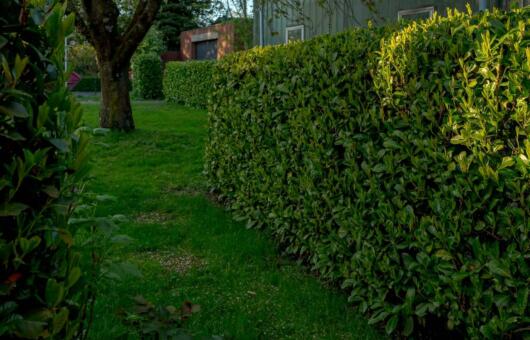
A well-chosen hedge is one of the best investments you can make in a garden boundary
This guide covers the genuinely fast-growing hedges I would actually recommend to a client, alongside an honest assessment of those that cause more problems than they solve. By the end, you will have a clear picture of which fast hedge is right for your situation, your soil and your long-term sanity. I will also make the case for the mixed native hedge, my default recommendation for most UK gardens, which grows faster, looks better, and requires less work than most people expect.
The Thuggish Hedge Problem: Why Speed Can Backfire
Before we look at the plants themselves, I want to deal with Leylandii directly, because it is the elephant in the room of every fast-growing hedge conversation. Leyland cypress grows at up to 90cm per year and has been the default answer to “I need a fast hedge” in UK gardens since the 1970s. It has also been responsible for more neighbour disputes, planning enforcement cases, council intervention orders and complete garden redesigns than any other single plant I can think of.
Leylandii causes more neighbour disputes and maintenance headaches than any other hedging plant in the UK
The problems with extremely fast-growing evergreen monocultures like Leylandii are structural rather than cosmetic. A mature unpruned Leylandii will reach 20 to 35 metres. Its root system is extensive and highly competitive, pulling moisture and nutrients from a wide area of soil and desiccating ground that was previously perfectly capable of supporting a garden border. The dense canopy casts deep shade year-round. Once it has grown beyond a manageable height, cutting it back hard will not regenerate new growth from old wood, which means you cannot reduce it without either killing it or removing it entirely. And under the Anti-Social Behaviour Act 2003, a hedge over 2 metres that causes a problem to an adjoining property can result in the council serving a remedial notice compelling you to reduce it at your own cost.
⚠️ High Hedge Legislation Warning
Under the Anti-Social Behaviour Act 2003, local councils in England and Wales can issue a remedial notice if an evergreen or semi-evergreen hedge over 2 metres is deemed to adversely affect the reasonable enjoyment of a neighbouring property. If served, you must comply at your own expense. This legislation applies to hedges of two or more trees or shrubs, which includes Leylandii, Thuja and other fast-growing conifers. Plant with this in mind.
Similar issues affect Thuja plicata, Bamboo used as screening, and any single-species evergreen hedge planted without a clear long-term management plan. The pattern is always the same. The hedge gives quick privacy, and the gardener is delighted.
Within five years, the maintenance burden has become significant. Within ten years, the hedge has outgrown the available space and is affecting neighbouring properties, drying out the surrounding soil and causing structural friction. The original quick fix has become a long-term problem.
None of this means you cannot have a fast-growing hedge. It means you need to choose a plant that can be kept at the height you actually want, that will not cause collateral damage to your soil or your relationships, and that will work with your garden rather than against it. The plants below all meet that test.
UK Hedge Growth Rate Guide
Before diving into individual plants, it helps to understand what the growth rate figures actually mean in practice. I have seen a lot of marketing material from nurseries that quotes impressive annual growth figures that apply only to plants in ideal conditions with consistent watering and feeding. Real-world growth rates in average UK gardens are usually somewhat slower, particularly in the first two years, while the plant is establishing its root system.
Two things stand out from this comparison. First, most of the native deciduous options grow at exactly the same rate as the evergreen alternatives most people default to. Second, Leylandii is the only plant in the table that grows significantly faster than everything else, and that speed is precisely why it causes so many problems. For the purpose of this guide, anything growing 30cm or more per year is genuinely fast in the context of UK hedging.
Hawthorn (Crataegus monogyna)
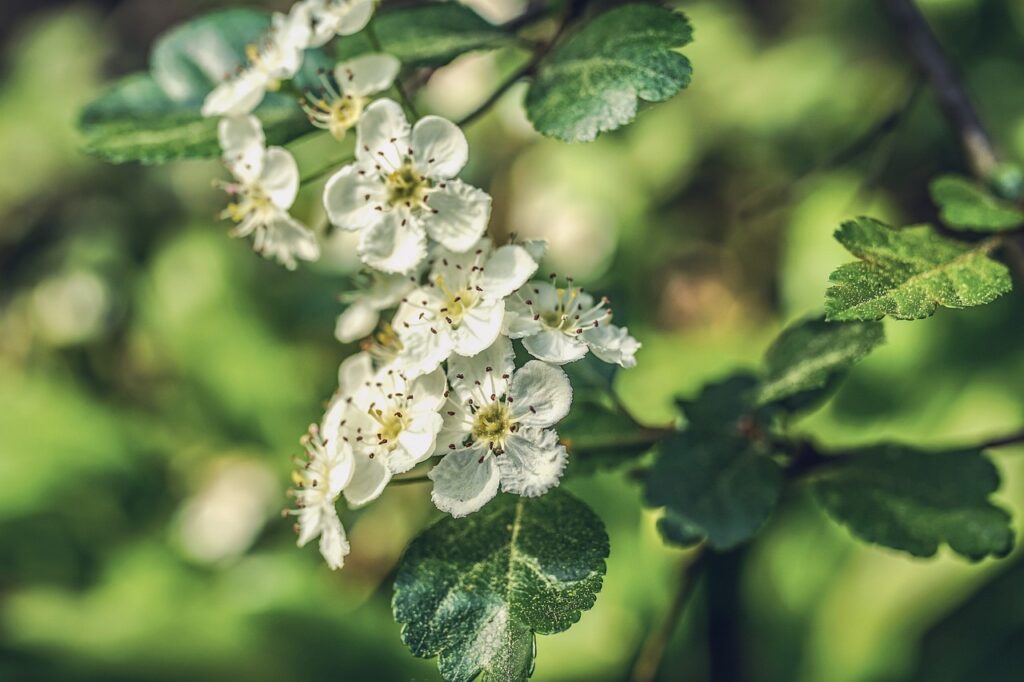
Hawthorn is my first recommendation for a fast-growing hedge in almost any situation, and if I am being completely honest it is the plant I recommend more than any other for rural, semi-rural and larger urban gardens in the UK. It grows at 40 to 60cm per year, forms an impenetrably dense interlocking barrier within three to four years of planting, produces spectacular white blossom in May that is one of the finest sights in the British countryside, and then follows that with a heavy crop of dark red haws in autumn that birds, especially fieldfares and redwings, genuinely depend on through winter.
What makes hawthorn particularly remarkable is its vicious thorns. A well-established hawthorn hedge is stock-proof, dog-proof and effectively human-proof, which makes it genuinely useful as a boundary marker in a way that most ornamental hedges simply are not. It is also one of the most ecologically important plants in the British Isles, supporting over 300 species of insects, which in turn feed breeding birds through the summer. If you plant a hawthorn hedge, you are not just screening your garden. You are building a habitat.
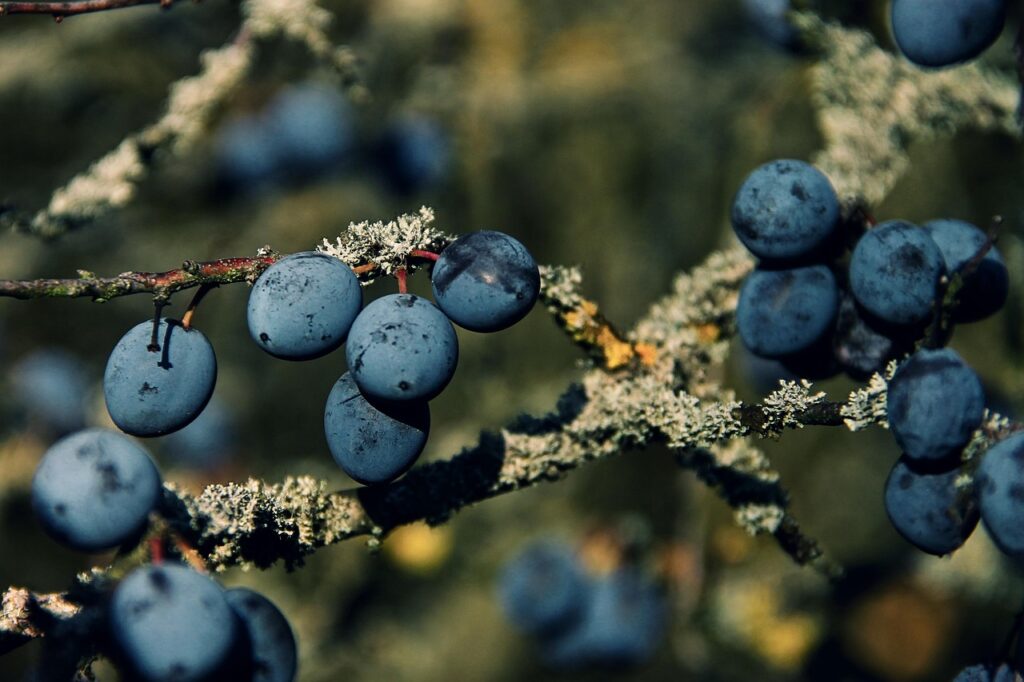
Blackthorn is hawthorn’s slightly more uncompromising companion and the two are traditionally planted together in mixed native hedges for very good reason. Where hawthorn gives you May blossom and autumn haws, blackthorn gives you early white flowers on bare wood in March, one of the first nectar sources of the year for emerging bumblebees and early butterflies, and then a crop of sloe berries in autumn that are the essential ingredient in sloe gin and are highly valued by wildlife. The thorns on blackthorn make hawthorn look polite by comparison, and an established blackthorn hedge is among the most impenetrable barriers you can create in a garden boundary.
Blackthorn does spread via suckers, which is something to be aware of in a formal garden setting. In a more relaxed, naturalistic garden or on a rural boundary, this self-spreading tendency is actually a feature rather than a problem, as it reinforces the hedge and fills gaps without any effort from you. Growing at 30 to 60cm per year, it keeps pace comfortably with hawthorn, and the two establish a wonderfully complex interlocking structure within a few seasons.
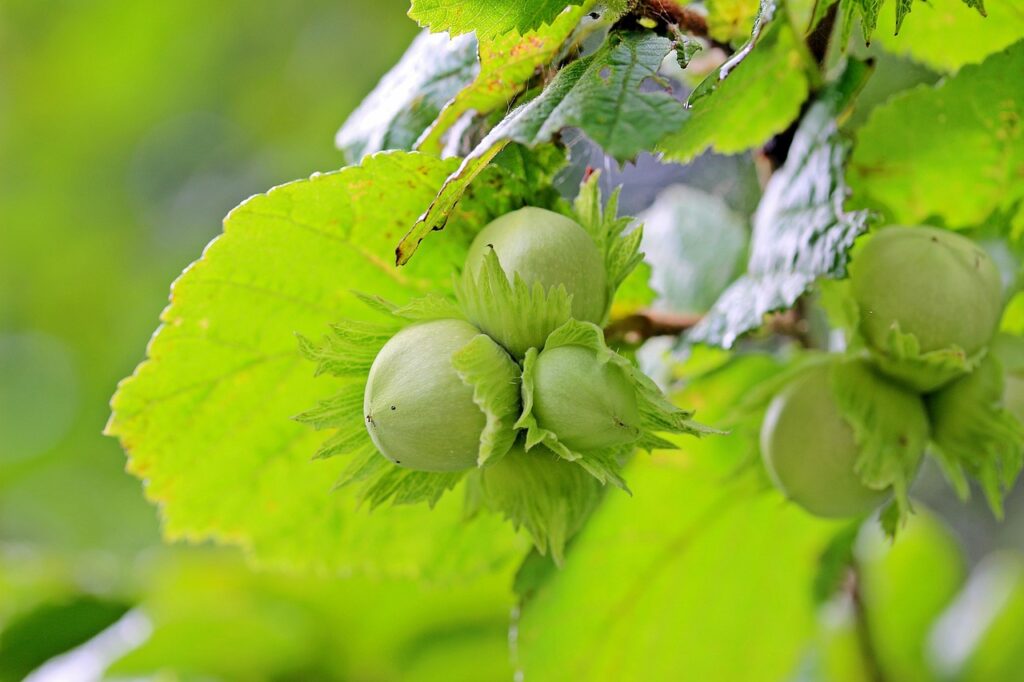
Hazel brings something completely different to a hedge that hawthorn and blackthorn cannot. While those two give you flowers and berries in classic hedge colours of white and red, hazel brings structural interest through winter with its beautiful yellow catkins dangling on bare wood from January onwards, one of the loveliest sights in any winter garden, followed by lush rounded leaves that create a genuinely attractive informal screen. It grows at 40 to 60cm per year and can be coppiced hard every five to ten years to keep it productive and juvenile, which also means it is one of the most manageable fast-growing hedging plants available.
Hazelnuts in autumn are a genuine bonus, though as the BBC’s Springwatch has repeatedly demonstrated, you are likely to be competing with squirrels, dormice and nuthatches for them. That competition is entirely the point. A hazel hedge is not just a garden boundary; it is a working part of the local food web, and planting it is one of the most impactful things an urban or suburban gardener can do for biodiversity.
🌿 At A Glance: Hazel
Botanical Name
Corylus avellana
Plant Type
Hardy deciduous shrub
UK Hardiness
H6 (hardy below -20°C)
Annual Growth
40 to 60cm per year
Flowering Period
January to March (catkins)
Best Conditions
Most soils, sun or partial shade
Key Feature
Winter catkins, autumn nuts and exceptional wildlife value
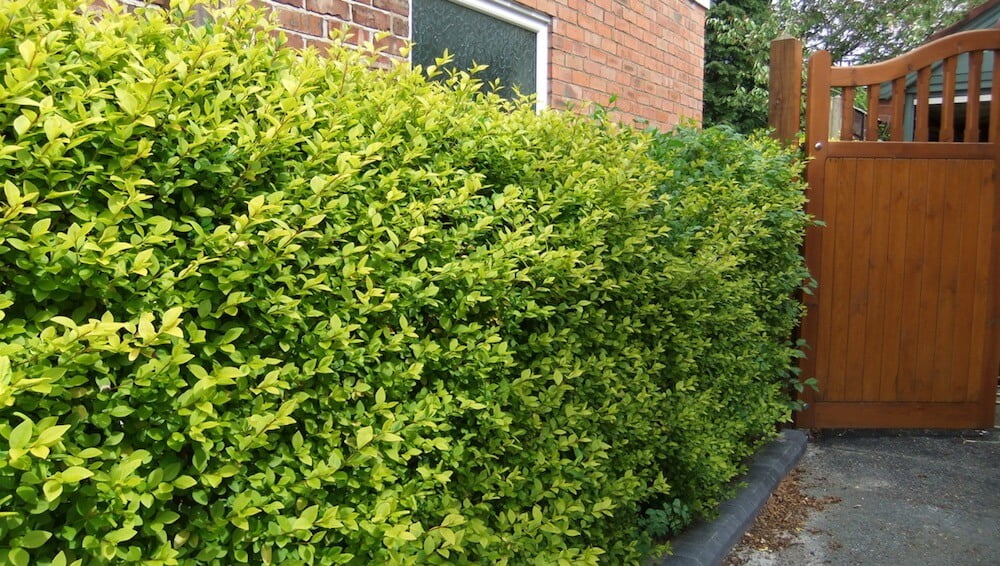
Privet is the quintessentially British urban hedge, and there is a very good reason it dominated front gardens throughout the twentieth century. It is tough, fast, responds brilliantly to clipping, tolerates pollution, poor soil, shade and neglect, and produces small fragrant white flowers in summer that bees are genuinely fond of. Semi-evergreen in most UK winters, it holds its leaves through mild conditions and loses them only in hard frosts, which in southern England happens rarely enough that it effectively functions as an evergreen for most years.
Privet is the classic British front garden hedge and clips into a beautifully neat formal shape
Growing at 30 to 60cm per year, privet is perfectly manageable and responds well to two clips per year, in May and again in August, to maintain a tidy formal shape. The golden variety, Ligustrum ovalifolium ‘Aureum’, adds warm yellow foliage to this already reliable package and makes an attractive alternative to the standard green. Privet is not a native plant in the purist sense, though it does naturalise widely in the UK countryside, and its flowers are genuinely useful to pollinators, which puts it a considerable step above the truly wildlife-barren alternatives like Leylandii.
Photinia Red Robin (Photinia x fraseri ‘Red Robin’)
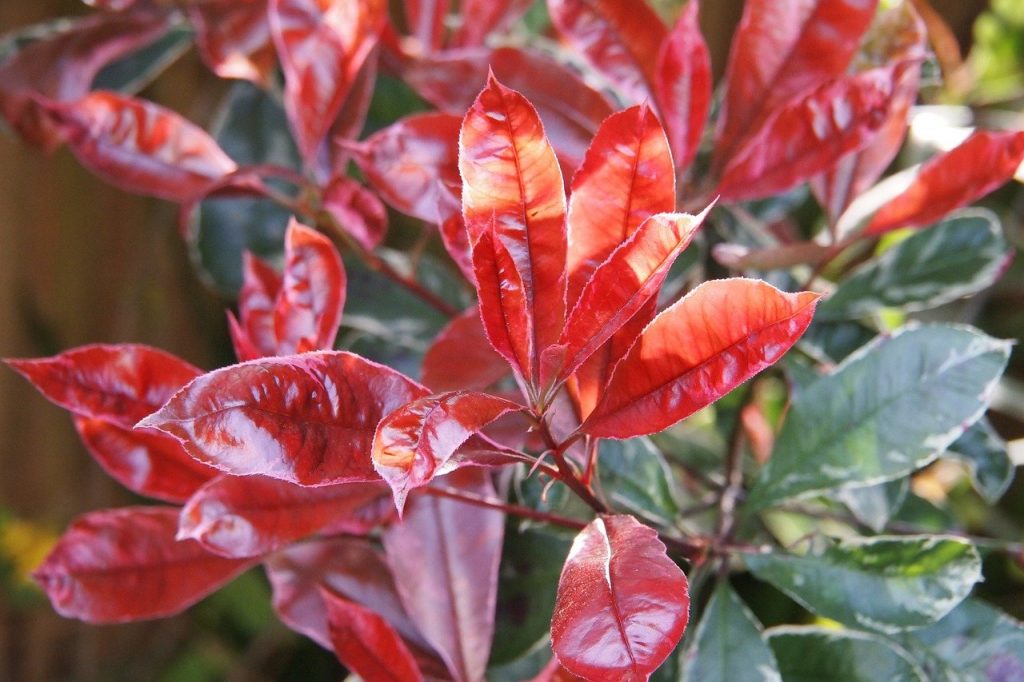
Photinia Red Robin is the fast-growing evergreen hedge I specify most often on Garden Rescue when a client specifically wants year-round privacy screening with genuine ornamental value. The vivid scarlet new growth that appears in spring and again after trimming is one of the most striking effects available from a hedging plant, and regular cutting at the right time of year keeps that colour coming through the season. It grows at 30 to 50cm per year, responds well to trimming, and produces clusters of small white flowers in spring when left to its own devices.
Photinia Red Robin’s spectacular scarlet new growth makes it one of the most ornamental fast-growing hedges available
Unlike cherry laurel, which can become thuggish and is prone to the shot hole disease problems I described in the laurel guide, photinia is a considerably more well-behaved evergreen hedging plant that stays manageable at heights from 1.5 to 3 metres without excessive effort. It does need well-drained soil and prefers a reasonably sunny position.
However, Photinia needs a protected environment; it is not good for exposed hedges, coastal gardens or where the hedge will get wind swept. In heavy clay or poorly drained ground, it is prone to leaf spot and will struggle. For a more comprehensive look at keeping it in good health, see the Garden Ninja photinia pruning guide.
🌿 At A Glance: Photinia Red Robin
Botanical Name
Photinia x fraseri ‘Red Robin’
Plant Type
Hardy evergreen shrub
UK Hardiness
H5 (hardy to -15°C)
Annual Growth
30 to 50cm per year
Flowering Period
April to May
Best Conditions
Well-drained soil, full sun or partial shade
Key Feature
Spectacular scarlet new growth makes it as ornamental as it is functional
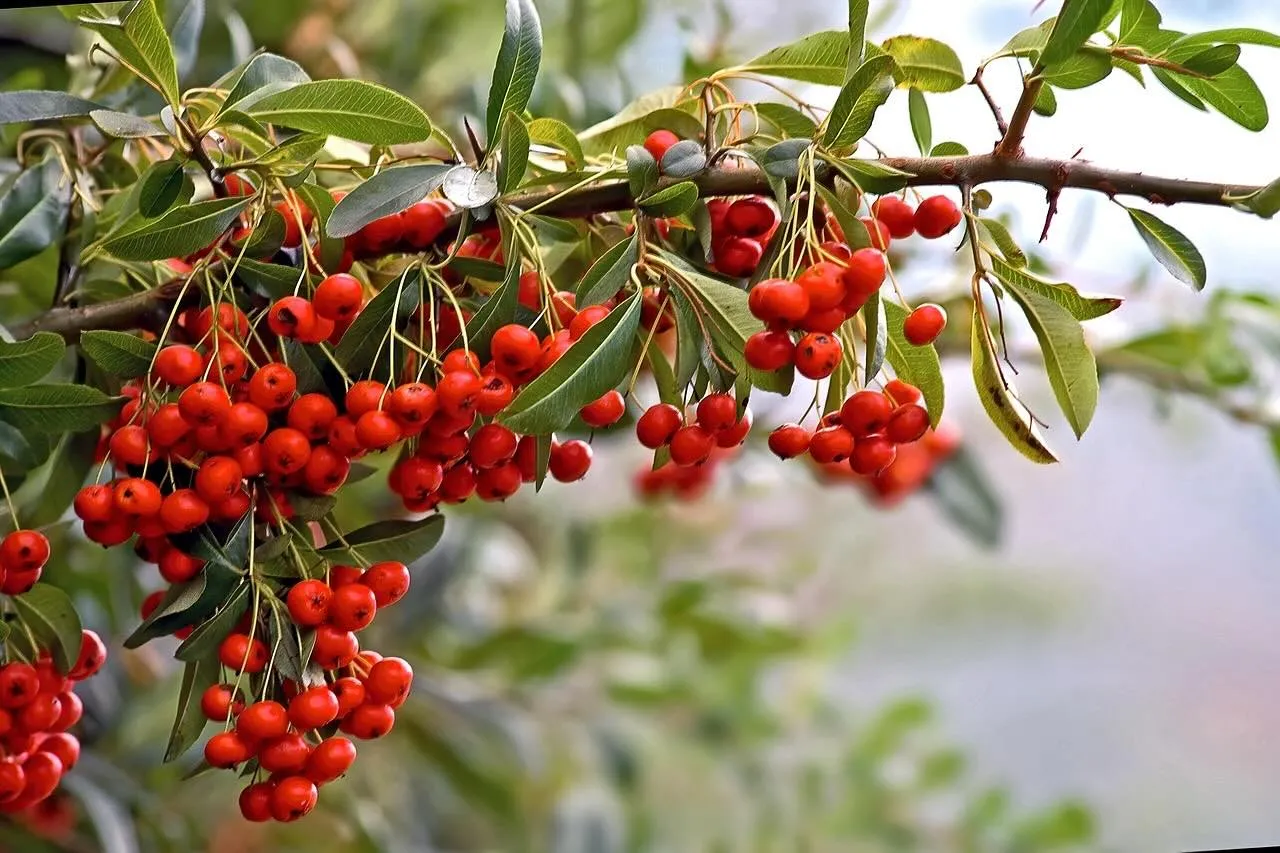
Pyracantha, or firethorn, is one of those hedging plants that genuinely has it all and yet is consistently overlooked in favour of blander alternatives. It is evergreen, grows at 30 to 60cm per year, produces masses of white flowers in early summer that are absolutely alive with pollinators, and then follows those flowers with spectacular berries in orange, red or yellow that persist well into winter and are one of the most important food sources for berry-eating birds, including fieldfares, waxwings and blackbirds. The thorns are formidable enough to create a genuinely secure barrier.
Pyracantha’s berries are one of winter’s most important food sources for birds and it makes a superb security hedge
One of pyracantha’s most underused qualities is its ability to be trained flat against a wall or fence, which makes it an option for gardens where a free-standing hedge is not practical. Trained against a north or east-facing wall, it is one of the few plants that will provide colour and wildlife value in genuinely difficult conditions. Trimming is best done in late spring after flowering and again in late summer, being careful not to remove the developing berry clusters entirely.
Lastly, its sharp thorns or barbs will deter pesky burglars or prowlers from getting into your garden. I fitted a Pyracantha hedge for a client who had been broken into after a fence panel was lifted to gain access through the garden, which had scared her. Rather than lots of floodlights and cameras, a double deep Pyracantha hedge sorted her out. No one in their right mind would try to get through it! Use gauntlet garden gloves when pruning or trimming it for this reason!
🌿 At A Glance: Pyracantha
Botanical Name
Pyracantha spp.
Plant Type
Hardy evergreen shrub
UK Hardiness
H5 (hardy to -15°C)
Annual Growth
30 to 60cm per year
Flowering Period
May to June (berries July to January)
Best Conditions
Any well-drained soil, sun or shade including north-facing walls
Key Feature
Summer flowers, winter berries and formidable thorns for security
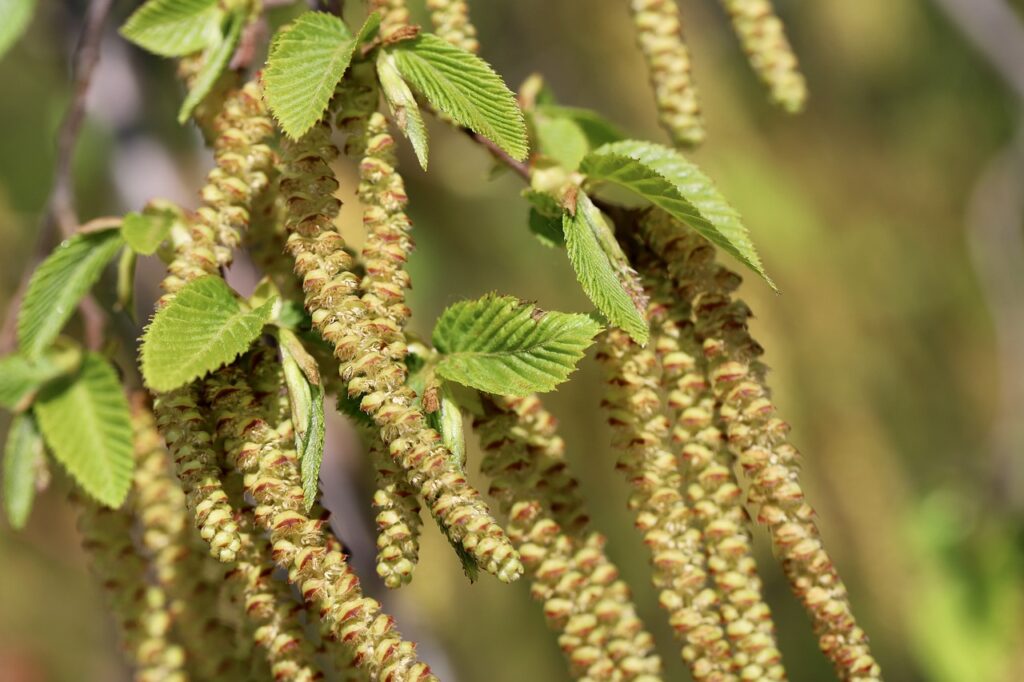
Hornbeam is one of the most underappreciated hedging plants available to UK gardeners and I want to make a proper case for it here. People often dismiss it as a beech alternative, which is a fundamental misunderstanding of its qualities. Unlike beech, hornbeam thrives in heavy clay and wet soils where beech struggles. It grows at a similar rate of 30 to 60cm per year, holds its russet-brown dead leaves through winter in the same way that beech does, providing year-round visual interest and privacy even when technically deciduous, and it clips into a beautifully precise formal shape that is genuinely architectural in character.
Hornbeam is a native British tree with excellent wildlife credentials. Its catkins in spring are an early pollen source, its seeds feed finches and other small birds through autumn and winter, and the retained dead leaves provide useful shelter and nesting material. For anyone gardening on clay soil who wants a fast, formal, year-round hedge without going down the evergreen route, hornbeam is the answer I almost always give. It is also considerably more cost-effective than beech as bare-root plants are widely available at very competitive prices.
🌿 At A Glance: Hornbeam
Botanical Name
Carpinus betulus
Plant Type
Hardy deciduous tree (managed as hedge)
UK Hardiness
H6 (hardy below -20°C)
Annual Growth
30 to 60cm per year
Flowering Period
April to May (catkins)
Best Conditions
Any soil including heavy clay, sun or partial shade
Key Feature
Holds russet leaves through winter, thrives in clay, formal and elegant
If you take nothing else from this guide, take this. A mixed native hedge planted at bare-root prices in winter is the single best-value, most ecologically rich, most beautiful and most resilient hedge you can create in a UK garden. It grows at the same rate as the monoculture alternatives most gardeners default to, it requires a trim once or twice a year, it never becomes a legal dispute, it never dries out a wide band of surrounding soil, and it provides something for wildlife in every single month of the year. I cannot recommend it highly enough.
The classic mixed native hedge uses five or six species planted in a repeating pattern at roughly five plants per metre. A typical mix for most UK conditions would be hawthorn as the dominant species at about 50% of the planting, blackthorn at around 20%, hazel at 15%, field maple at 10%, and dog rose or elder to make up the remaining 5%.
This combination gives you a thorny interlocking structure, spring blossom from multiple species, summer interest from rose flowers and elder, autumn colour from field maple, sloes, haws, rosehips and elderberries for wildlife, winter catkins from hazel, and year-round architectural interest from the complex branching structure.
💡 Top Tip
Buy native hedging plants as bare roots between November and March. The plants are dramatically cheaper than pot-grown specimens, establish faster because they are not root-bound, and the wide range of species available bare-root makes it easy to create a proper mixed native mix without spending a fortune. A mixed native hedge planted at bare-root prices in winter can cost as little as £1 to £3 per plant, making it one of the most cost-effective garden investments available.
A mixed native hedge at a height of 1.5 to 2 metres provides nesting habitat for at least 13 species of birds commonly found in UK gardens, including dunnocks, song thrushes, blackbirds, wrens, whitethroats and long-tailed tits. It provides food for 47 species of moth caterpillar on hawthorn alone.
It requires no additional feeding, tolerates almost any UK soil, needs no specialist care beyond an annual trim, and improves in ecological value with every passing year as the hedge thickens and matures. Compare that to a Leylandii hedge, which needs trimming six times a year to stay manageable, supports almost no wildlife at all, and becomes a legal and neighbourly liability if not maintained obsessively.
The difference between a hedge that establishes quickly and one that sulks for three years in the same spot is almost always in the preparation rather than the plant. I have planted hundreds of hedges professionally, and the lessons from that experience are consistent.
Soil preparation is the first and most important step. Dig a trench at least 45cm wide and 45cm deep along the hedge line, breaking up compaction at the base with a fork and incorporating a generous amount of well-rotted compost or garden compost along the full length. This investment in preparation pays dividends for the entire life of the hedge. A hedging plant placed into well-prepared, nourished soil will typically establish two to three times faster than the same plant pushed into an unprepared slot.
Plant at the right time of year. Bare-root hedging should go in between November and mid-March, when plants are dormant. This is the best-value way to plant any hedge and the plants establish considerably faster than container-grown specimens because they are not root-bound and because the autumn and winter rainfall does the bulk of the watering work for you. Container-grown plants can go in at any time of year, but need consistent watering in their first summer, regardless of species.
Spacing matters more than most people realise. For a single-row hedge, plant at 30 to 45cm apart for most species. For a thicker, more impenetrable native hedge, consider a double-staggered row with plants 45cm apart within each row and 40cm between rows. This takes more plants but creates a denser, more wildlife-rich structure significantly faster than a single row.
Water consistently through the first full growing season after planting. This sounds obvious, but it is the step most people underdo, particularly with hedge plants that look robust and established.A new hedge plant’s root system is still finding its feet for at least a year, and moisture stress during that period disproportionately slows establishment. Deep watering twice a week in dry weather is the minimum requirement. Mulching the hedge line immediately after planting with a 5-7cm layer of bark or compost dramatically reduces water loss and suppresses weed competition that would otherwise significantly slow the young plants.
💡 Top Tip
Cut back newly planted bare-root hedging plants by one third immediately after planting. This sounds counterintuitive when you are desperate for height and screening, but it forces the plant to develop a strong, branching basal structure rather than a single thin stem. A hedge that has been cut back at planting fills out and reaches its mature form two to three years faster than one left unpruned. It is the single most effective thing you can do to speed up establishment.
Leylandii is the fastest growing hedge in the UK at up to 90cm per year, but it is not one I recommend for most gardens due to the maintenance demands, neighbour disputes and ecological damage it causes. Among the plants I would actually recommend, hawthorn, hazel, hornbeam, privet and cherry laurel all grow at 40 to 60cm per year and represent genuinely fast hedging without the long-term problems that Leylandii creates.
What is the fastest growing evergreen hedge in the UK?
Cherry laurel and privet are the fastest growing evergreen hedges I would recommend for most gardens, both growing at up to 60cm per year. Photinia Red Robin grows slightly more slowly at 30 to 50cm per year but is more ornamental and better behaved long-term. Portuguese laurel is slightly slower still but is a more refined, adaptable plant for difficult soils and exposed positions.
How can I make my hedge grow faster?
The most effective steps for faster hedge growth are: thorough soil preparation before planting including the addition of well-rotted compost; planting bare-root plants in the dormant season between November and March; cutting back by one third at planting to encourage bushy basal growth; consistent deep watering in the first growing season; and mulching the hedge line with bark or compost to retain moisture and suppress weeds. Applying a balanced granular fertiliser along the hedge line in March and again in June from the second year onward also significantly accelerates growth.
Is a mixed native hedge better than a single-species hedge?
For almost every UK garden, yes. A mixed native hedge grows at the same rate as most single-species alternatives, is significantly more resilient to disease and pest pressure because of its species diversity, provides far greater wildlife value through flowers, berries and structure, looks more interesting and naturalistic, and is considerably more forgiving of irregular maintenance. The only situation where a single-species hedge is clearly the better choice is in a formal garden context where a precise, clipped architectural look is the primary design requirement.
Can my neighbour complain about my fast-growing hedge?
Yes, if the hedge is evergreen or semi-evergreen, consists of two or more trees or shrubs, exceeds 2 metres in height, and is considered to be adversely affecting the reasonable enjoyment of their property. Under the Anti-Social Behaviour Act 2003, your local council can investigate a complaint and serve a remedial notice requiring you to reduce the hedge at your own cost. Deciduous hedges that lose their leaves through winter are generally not covered by this legislation. This is one of the strongest practical arguments for choosing a mixed native deciduous hedge rather than an evergreen monoculture.
When is the best time to plant a fast-growing hedge?
The best time to plant a hedge using bare-root plants is between November and mid-March when plants are dormant. This gives you access to the widest range of species at the lowest prices, and the autumn and winter rainfall does much of the establishment watering for you. Container-grown plants can be planted at any time of year, but those planted in autumn or early spring establish considerably faster than summer plantings because they are not immediately stressed by heat and drought.
If you want to learn more about plants, design principles, and creating beautiful spaces, check out my online garden design courses. Whether you want to level up your plant knowledge, learn about design principles, or even start a career in garden design, I’ve got courses ranging from £29 to £199 that cover everything you need.
These courses aren’t just for people with gardens either! The principles of understanding plant needs, creating harmonious colour schemes, and designing beautiful functional spaces apply just as much to indoor plant arrangements as they do to full garden designs. You’ll learn how to read plants, troubleshoot problems, and create spaces that genuinely work for your lifestyle.
29
Garden Design Examples for Small Gardens: 30 Design Templates & Planting Plans
Garden Design Examples for Small Gardens: 30 Design Templates & Planting Plans: In this online gardening course, I’ll walk you through 30 fantastic garden designs, explaining the logic behind the layout, the plant choices, and take-home tips for applying them in your own garden.
Weekend Garden Makeover: A Crash Course in Design for Beginners
Learn how to transform and design your own garden with Lee Burkhills crash course in garden design. Over 5 hours Lee will teach you how to design your own dream garden. Featuring practical design examples, planting ideas and video guides. Learn how to design your garden in one weekend!
Garden Design for Beginners: Create Your Dream Garden in Just 4 Weeks
Garden Design for Beginners Online Course: If you want to make the career jump to becoming a garden designer or to learn how to design your own garden, this is the beginner course for you. Join me, Lee Burkhill, an award-winning garden designer, as I train you in the art of beautiful garden design.
The fastest growing hedges in the UK grow at 40 to 60cm per year and include hawthorn, hazel, hornbeam, privet, photinia and pyracantha. All of these are genuinely fast, manageable and ecologically sound choices. Avoid Leylandii and other very fast-growing conifers unless you have a serious long-term management commitment, because the speed that makes them appealing in year one is the same quality that creates the problems that start arriving in year five.
A mixed native hedge planted at bare-root prices is my single strongest recommendation for most UK gardens: it is fast, beautiful, wildlife-rich and will never cause you a problem with your neighbours or your conscience.
If you have a specific hedging question about your garden, drop it in the Garden Ninja forum where I answer regularly. And if you are planning to plant a hedge this season, the Garden Ninja laurel hedge guide has everything you need on choosing and maintaining the right species for your soil.
Your subscription could not be saved. Please try again.
Your subscription has been successful.
Lee Burkhill
Lee Burkhill, known as the Garden Ninja, is an award-winning garden designer and horticulturist with over 30 years of gardening experience and 15 years as a professional garden designer. A qualified RHS (Royal Horticultural Society) professional, Lee specialises in sustainable garden design and practical horticultural advice. He designs and presents on BBC1’s Garden Rescue and in leading gardening publications. Lee combines three decades of hands-on gardening knowledge with professional design qualifications to help gardeners create beautiful, functional outdoor spaces.