-
Best Ground Cover Plants UK: Stop Weeds and Fill Your Flower Beds
 Lee Burkhill: Award Winning Designer & BBC 1's Garden Rescue Presenters Official Blog
If weeding is eating into your weekends, this guide is for you. Over twenty years of designing gardens professionally, including on BBC Garden Rescue, one thing I see repeatedly is flower beds full of bare soil just waiting for weeds to move in. Below I have rounded up twenty of the best ground cover plants for UK gardens, explained exactly how to use them, and shared why I always insist on a border of at least one to one and a half metres deep. Read on and you will never look at a weedy bed the same way again.
If there is one piece of advice I give almost every client who comes to me for a garden design consultation, it is this: fill your borders properly. Not half-heartedly with a few lonely shrubs surrounded by a sea of bare earth, but densely, intelligently, and with plants that work brilliantly together. Ground cover plants are the unsung heroes of the low-maintenance garden.
Quick Answer
The best ground cover plants to stop weeds include hardy geraniums, Epimedium, Vinca minor, Ajuga, Alchemilla mollis, Bergenia, Pachysandra, Pulmonaria, Heuchera, and creeping thyme. Planted densely across a border at least 1 to 1.5 metres deep, they form a living carpet that smothers weeds by blocking out the light and competing for soil moisture and nutrients.
Placed at the front and base of borders, they form a living carpet that smothers weeds before they even get a foothold. I have been designing gardens professionally for over twenty years, and I still consider ground-cover planting one of the most effective tools in my armoury. It is certainly far more satisfying than spending your Sunday afternoons on your knees with a hand fork.
This guide covers twenty of the best ground cover plants for UK gardens, chosen for their weed-suppressing ability, their ornamental value, and their practicality across a range of soil types and aspects. I will also explain exactly why I always recommend flower beds at least one to one and a half metres deep, and how the principle of layering your planting makes the whole system work. Whether you are starting from scratch or trying to get a grip on a border that has got away from you, this approach transforms a garden from high-maintenance to something you can actually enjoy.
Jump To
This page contains affiliate links for products I use and love. If you take action (i.e., subscribe or make a purchase) after clicking a link, I may earn some gardening commission, which will help me keep the Garden Ninja Blog free for all.
Why Ground Cover Plants Are Vital for Stopping Weeds
Before we get to the plant list, it is worth understanding exactly how ground cover plants do their job. Weeds are opportunists. They need three things to establish themselves: light, moisture, and bare soil. A weed seed blown in on the wind or carried by a bird will germinate in a heartbeat if it lands on an empty patch of earth. It finds the light it needs, draws moisture from the soil, and within a fortnight, you have a dandelion that has decided your border is its permanent home.
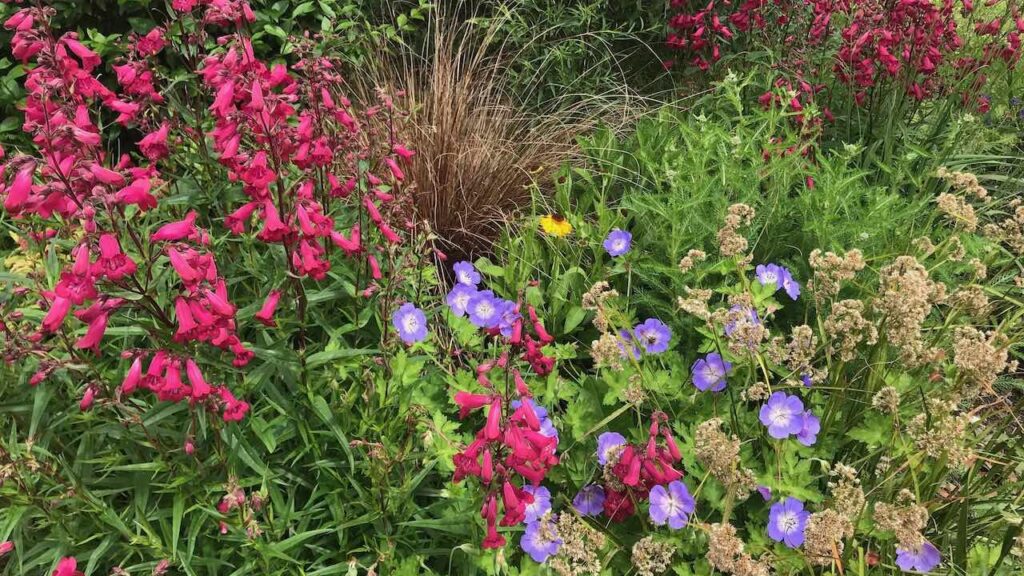
Ground cover plants work against weeds on multiple fronts simultaneously. Dense, low-growing foliage blocks the light reaching the soil surface, which means weed seeds either fail to germinate at all or struggle to establish before they are shaded out. The root systems of your ground cover plants also compete directly with weeds for water and nutrients, so anything that does manage to push through is fighting an uphill battle from the start. Then there is the physical barrier itself: a mat of interlocking stems and leaves leaves nowhere for weeds to grow. You are, in effect, deploying a living mulch that renews and extends itself each growing season.
💡 Top Tip
Ground cover plants will not kill existing weeds. If you have a weedy border, clear it thoroughly first by hand weeding or covering with cardboard and compost for a full growing season. Then plant your ground covers into clean soil. Trying to plant over established weeds simply results in the weeds winning.
The most effective ground cover plants for this purpose tend to be evergreen or near-evergreen, because they maintain their canopy through winter when annual weeds are at their sneakiest. A deciduous ground cover that disappears underground from October to March leaves a window of opportunity that weeds will absolutely take advantage of. This is why the plant selection in this guide leans toward species that either hold their leaves year-round or produce such dense foliage during the growing season that they still outcompete anything trying to establish alongside them.
Why I Always Recommend a Flower Bed of 1 to 1.5 Metres Deep
This is something I discuss on almost every garden design project I work on, and it often surprises clients. The instinct when creating a border is to keep it manageable: a 30cm or 60cm strip along a fence or wall feels neater, less overwhelming, easier to control. In practice, it is none of those things. Narrow borders are actually harder to maintain than deep ones; they look disappointing within a season or two, and critically, they do not give you the depth needed to layer your planting properly.
A border of one to one and a half metres in depth gives you the space to work with three distinct planting layers: tall architectural plants or shrubs at the back, medium perennials in the middle, and low ground cover plants at the front edge. This layered approach is the backbone of good border design, and it is physically impossible to achieve in a narrow bed. When your border is deep enough to accommodate all three layers, the plants can grow into each other, their foliage interweaving to create that seamless, weed-smothering canopy at every height from ground level upward. A narrow border forces you to choose between height and coverage. A deep border lets you have both.
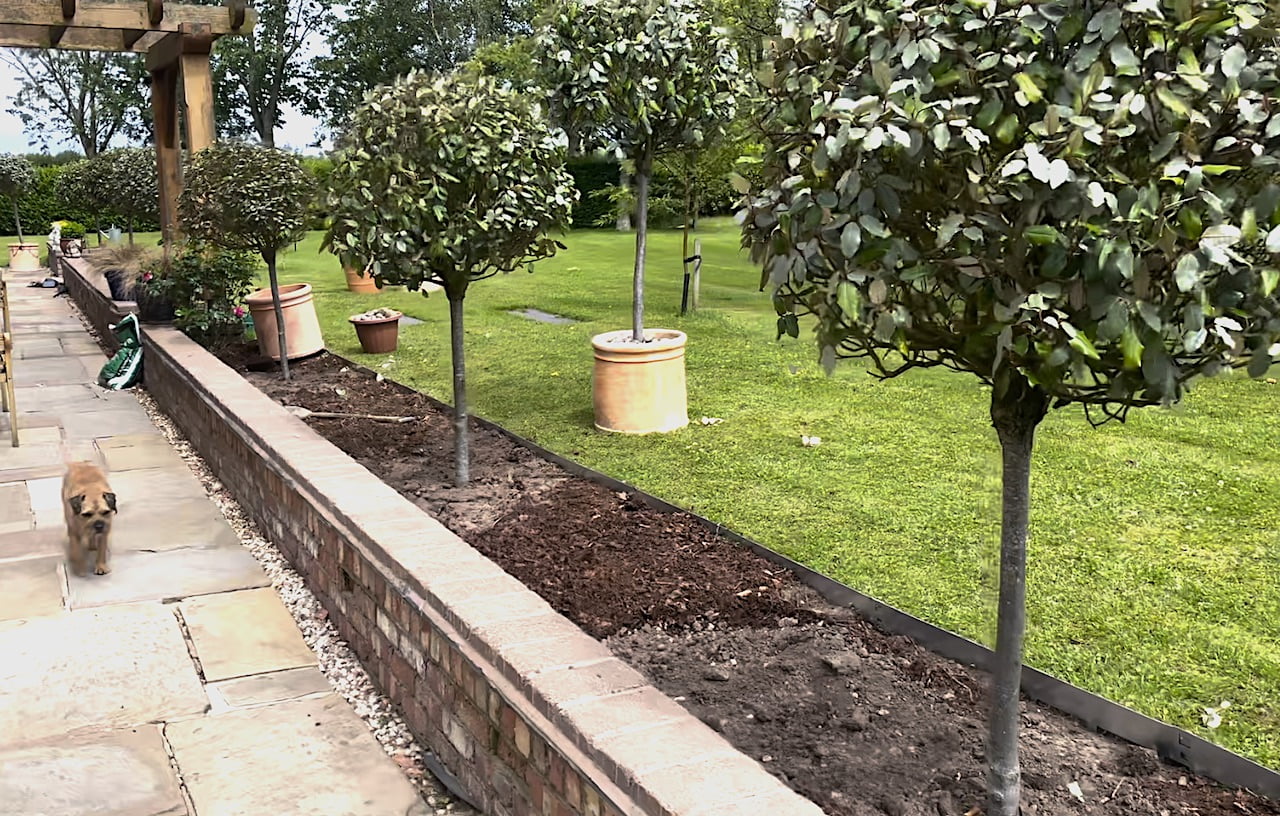
From a purely practical standpoint, deeper beds also give plant roots the room they need to develop properly without immediately competing with a fence post or a wall foundation. Ground cover plants in particular need horizontal space to spread and do their work. If your border is only 40cm deep, a spreading Epimedium or hardy geranium has nowhere to go but toward your lawn, which defeats the purpose. Give them space to breathe at the front, and they will reward you by moving steadily backwards and outward, stitching themselves together into exactly the carpet you want.
💡 Top Tip
If your existing border is too narrow to work with, do not be afraid to extend it. Lifting a strip of lawn to deepen a border is one of the most cost-effective improvements you can make to a garden. A spade, some time, and a bag of garden compost dug into the newly exposed soil is all you need to open up enormous planting possibilities.
How to Layer Your Flower Bed for Maximum Weed Suppression
Layering is a term I use constantly on Garden Rescue and in my design consultations, because it is the principle that separates a garden that works from one that just about functions. The idea comes from observing how plants grow naturally in woodland environments, where there is a canopy, an understorey, and a ground layer, each occupying a distinct vertical zone without competing destructively with the others.
In a typical garden border, I think about it in four layers. At the back, or in the centre if the bed is island-style, you want your structural plants: the taller shrubs, ornamental grasses, or architectural perennials that give the border its height and framework.
In front of these come your mid-border perennials, the colourful, season-long performers that create the display. In front of them come your ground cover plants, low and spreading, stitching the soil closed. And, if the space allows, woven through all three layers, you can introduce spring bulbs that pop up between everything else early in the gardening year and then disappear before the canopy closes in above them.
When all four layers are working together, there is simply no space left for weeds to establish. Every centimetre of soil either has a root in it or foliage shading it from above. This is what I mean when I say layered planting is the most powerful weed-suppression tool available to a gardener. It is not exactly a shortcut, because you do need to invest in properly establishing the plants in year one. But by year two or three, a well-layered border essentially manages itself, and the hours you would have spent weeding are freed up to actually enjoy the garden.
The 20 Best Ground Cover Plants to Stop Weeds UK
1. Hardy Geranium (Geranium spp.)
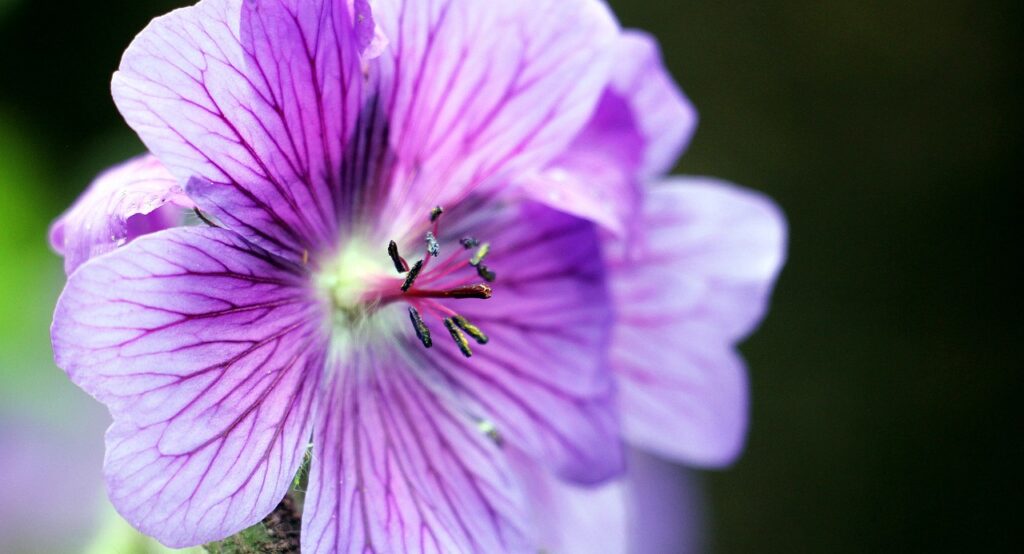
Hardy geraniums are, without question, my number one ground cover plant for UK gardens. I have used them on hundreds of client projects, in sun and partial shade, on clay and on sandy soil, at the front of cottage borders and in more structured contemporary designs. They are simply one of the most versatile, hardworking, and beautiful plants you can put in a British garden. Do not confuse them with the tender pelargoniums we put in pots and hanging baskets over summer: these are fully hardy, herbaceous perennials that come back stronger each year and, crucially, spread steadily to fill whatever space you give them.
The cup-shaped flowers, ranging from deep magenta through lilac and white depending on variety, appear from late spring right through to early autumn in some cultivars. The foliage is deeply cut and attractive even when the plant is not flowering, and wide varieties take on warm russet and orange tones in autumn before dying back. Geranium ‘Rozanne’ is exceptional for its incredibly long flowering season. Geranium sanguineum is tough as old boots and will grow on almost any soil. Geranium macrorrhizum is semi-evergreen and one of the best for dry shade, which is notoriously difficult ground to cover.
🛒 Buy Hardy Geraniums from Amazon UK
2. Epimedium (Barrenwort)
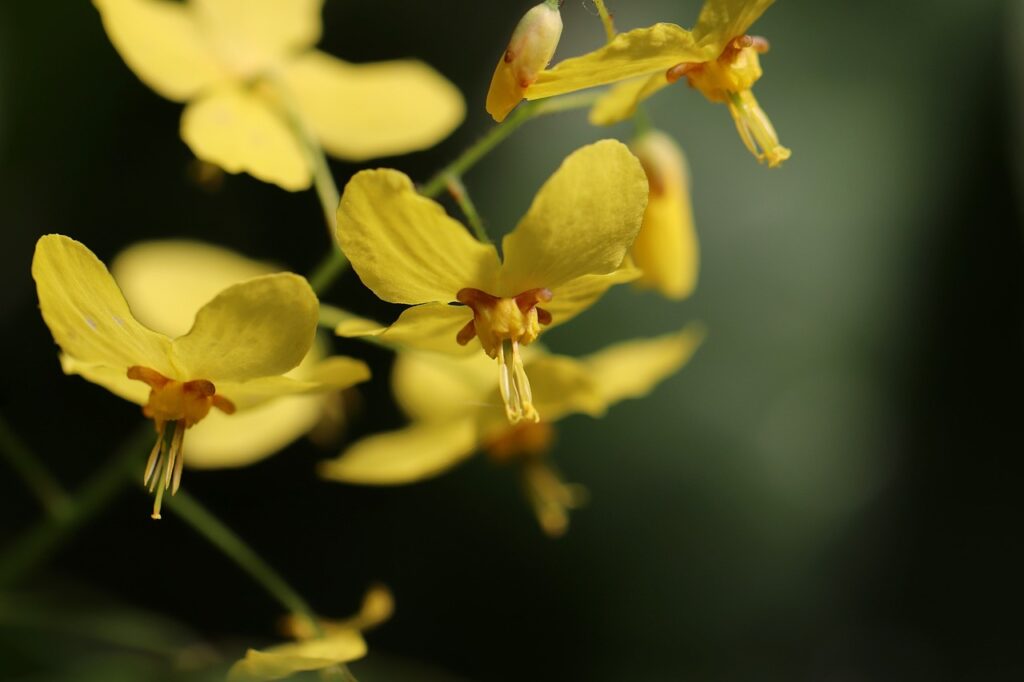
Epimedium is one of the most underused plants in British gardening, and it bewilders me every time I see a client struggling with a shady, dry corner under a large tree when the answer is right here. In my experience of designing gardens across a range of difficult aspects, nothing handles dry shade with quite the same quiet confidence as Epimedium. It is not a flashy plant. It does not demand your attention. But it spreads gradually and steadily, year after year, building a weed-proof carpet in conditions that most other plants refuse to tolerate.
The heart-shaped leaves emerge in spring with attractive bronze-red tints before maturing to mid-green, and the delicate spider-like flowers in yellow, white, pink, or lilac appear in April and May. Many varieties are semi-evergreen, holding their leaves through winter and providing year-round soil coverage. Cut the old foliage back to the ground in late February just before the new growth and flowers emerge, and you will be rewarded with the freshest display each spring. Epimedium ‘Amber Queen’ is outstanding, as is the classic Epimedium × perralchicum ‘Frohnleiten’ with its rich yellow flowers.
🛒 Buy Epimedium from Amazon UK
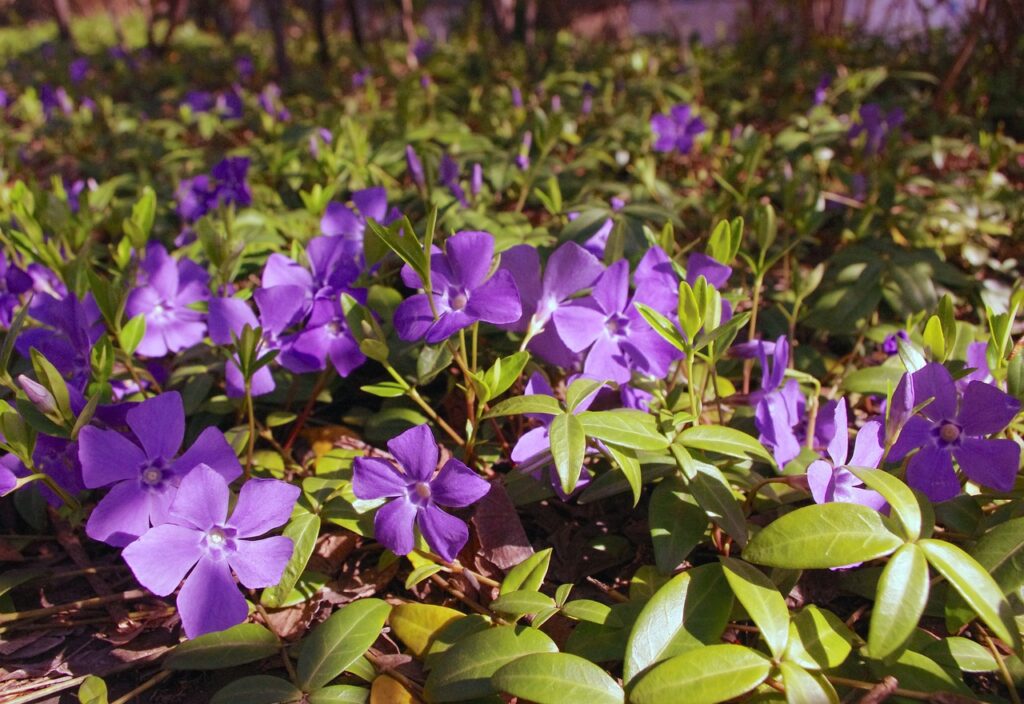
3. Vinca minor (Lesser Periwinkle)
Vinca minor, the lesser periwinkle, is a plant that has earned its place in the ground cover toolkit through sheer, unfussy performance. I always specify the minor species rather than Vinca major, which is larger, faster, and significantly more thuggish: it will colonise well beyond where you planted it and become a maintenance headache of its own.
Vinca minor, by contrast, spreads at a sensible rate, holds its glossy evergreen leaves through the year, and produces those cheerful blue-purple flowers from late winter right through to May, with occasional repeats in autumn. In shady or semi-shady situations where you need reliable year-round ground cover, it is one of the most dependable plants available. This is one of the best fast-growing ground cover weed suppressors!
The trailing stems root where they touch the soil, gradually knitting together into a dense mat. Plant them at roughly 30 to 40cm spacings, and they will close the gaps within two growing seasons. Vinca minor ‘Atropurpurea’ has deep plum-purple flowers that look wonderful with spring bulbs, and ‘Alba’ gives you crisp white blooms that light up a dark corner beautifully.
🛒 Buy Vinca minor from Amazon UK
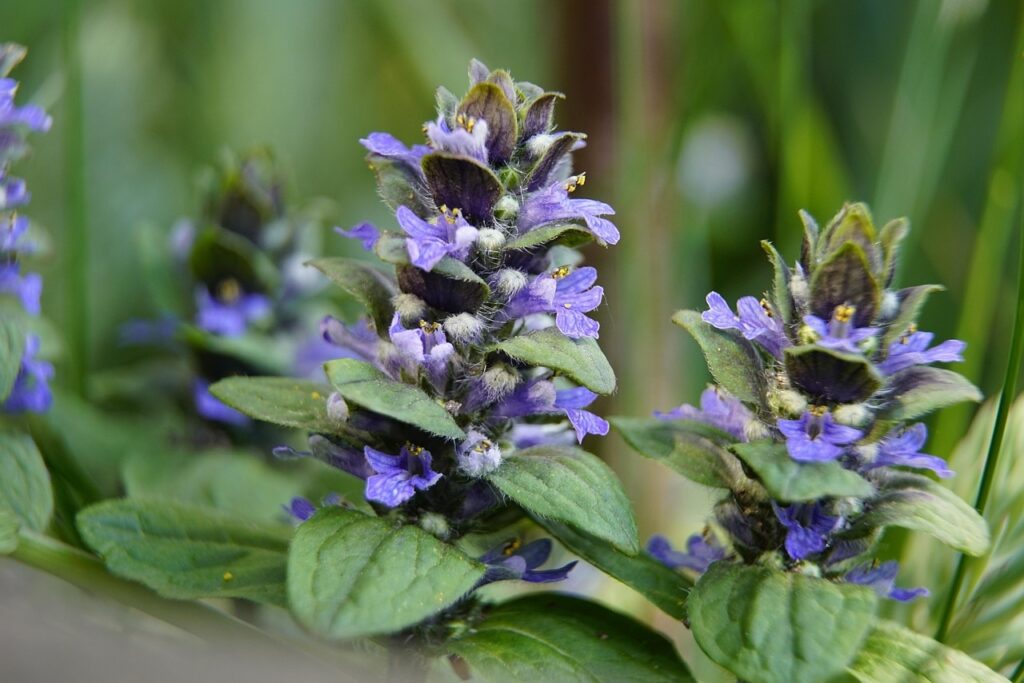
4. Ajuga (Bugle)
Ajuga reptans is one of those plants I return to again and again when a client wants something beautiful and thoroughly weed-smothering at the front of a border or in a difficult, damp patch. It is a native plant, which immediately makes it brilliant for pollinators, and the spikes of blue flowers in April and May are truly striking rather than merely adequate. But it is the foliage that makes Ajuga so useful as a ground cover.
The rosettes of leaves, often in dark bronze, burgundy, or variegated green and cream depending on the variety, press flat against the soil surface and overlap so completely that they give weeds almost no room.
Ajuga spreads by sending out horizontal runners that root as they go, steadily filling in gaps. It is at its best in damp or moist soil in partial shade, though it will tolerate full sun if the ground does not dry out too harshly in summer. ‘Catlin’s Giant’ is one of the best varieties for bold ground coverage, with much larger leaves than the species. ‘Rainbow’ is a beautiful variegated form with cream, pink, and bronze foliage that catches the light beautifully in a shaded corner.
5. Alchemilla mollis (Lady’s Mantle)
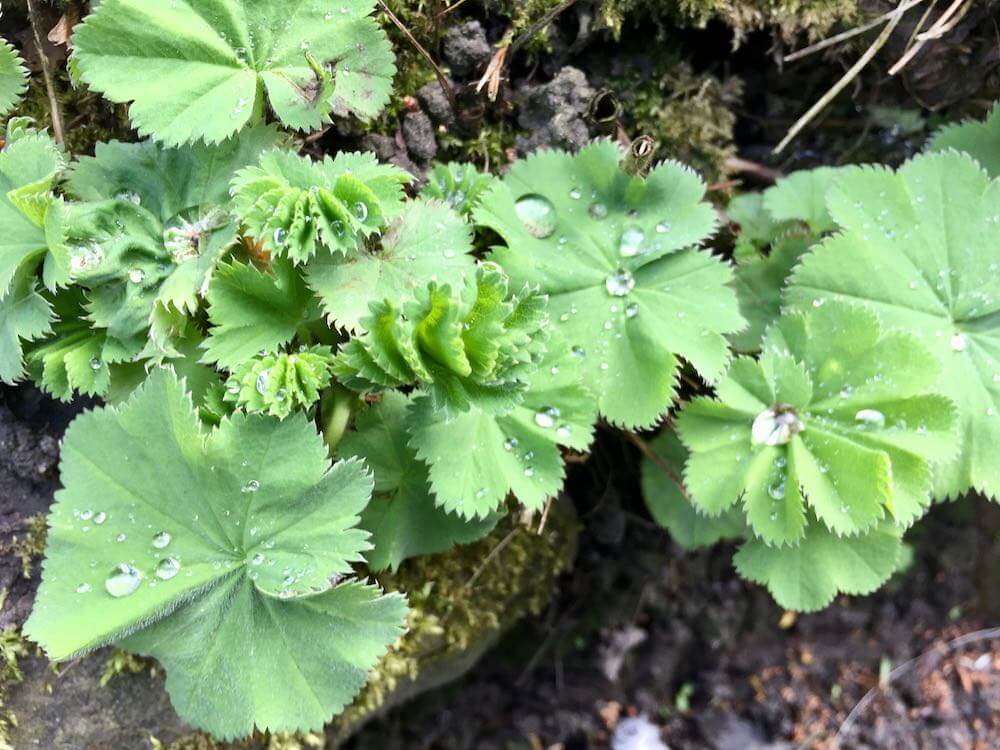
If you want proof that a plant can be simultaneously practical and beautiful, look no further than Alchemilla mollis. The soft, scalloped leaves collect rainwater in the most magical way, holding perfect silvery droplets that catch the light on a morning after rain. This alone makes it worth growing, but it also seeds itself gently around the garden and spreads by clumping, creating exactly the kind of weed-suppressing base layer that borders need at the front. I use it constantly to edge paths, soften hard paving, and fill the front of mixed borders where I need something that will billow slightly but never get out of control.
The frothy lime-green flowers that appear from June onward are one of the most versatile things in the garden: they complement everything from deep purples and mauves to soft pinks and whites, and they are excellent cut for arrangements. It’s also a staple plant used in occult and witchcraft gardens for its protective qualities!
Cut Alchemilla back hard to the ground in midsummer after flowering, and it will produce a fresh flush of new foliage that looks good right through to autumn. It is not fussy about soil, tolerates shade reasonably well, and is fully hardy. A remarkable plant for its combination of beauty and usefulness.
🛒 Buy Alchemilla mollis from Amazon UK
6. Bergenia (Elephant’s Ears)
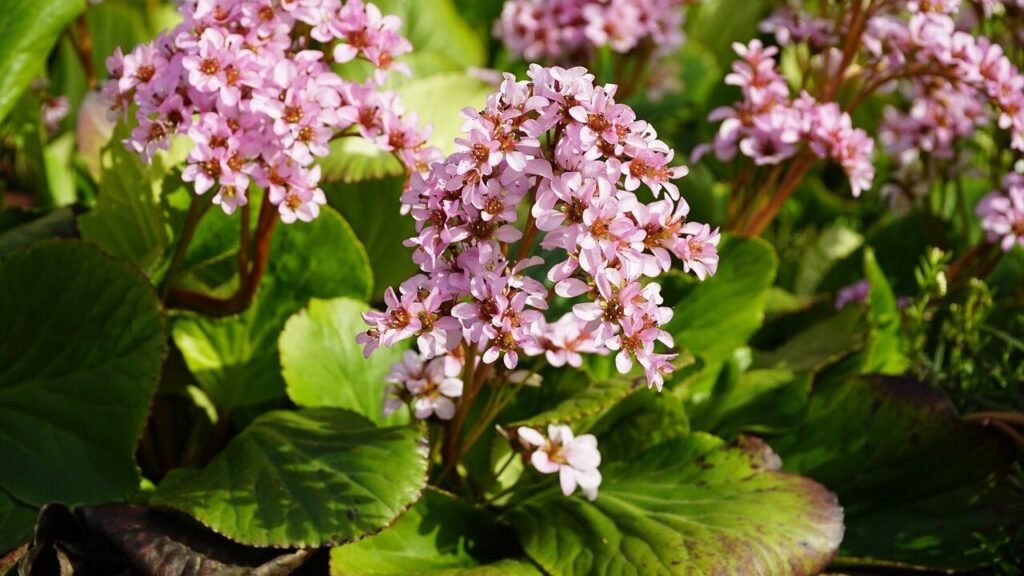
Bergenia is the sort of plant that earns its keep through sheer reliability. The enormous, glossy leaves (which give it the common name elephant’s ears) are evergreen, tough as leather, and so large that they form one of the most effective light-blocking canopies of any ground cover plant I know. Established clumps of Bergenia leave absolutely no room for weeds beneath them.
The leaves can span 20 to 30cm across, and they sit pressed together in dense rosettes that shut out light right to soil level. In my design practice, I rely heavily on Bergenia for larger borders where I need something bold and architectural at the base of the planting.
The magenta, pink, or white flower spikes in late winter and early spring, often January to March, are an extraordinary bonus: this is a plant flowering when almost nothing else is, providing early nectar for any bees venturing out on mild days. In cold winters, the leaves often take on striking bronze-red tints that make them properly ornamental rather than merely functional. Bergenia will grow in sun or shade, tolerates poor soil, and laughs at drought once established. It is one of the most accommodating ground cover plants available.
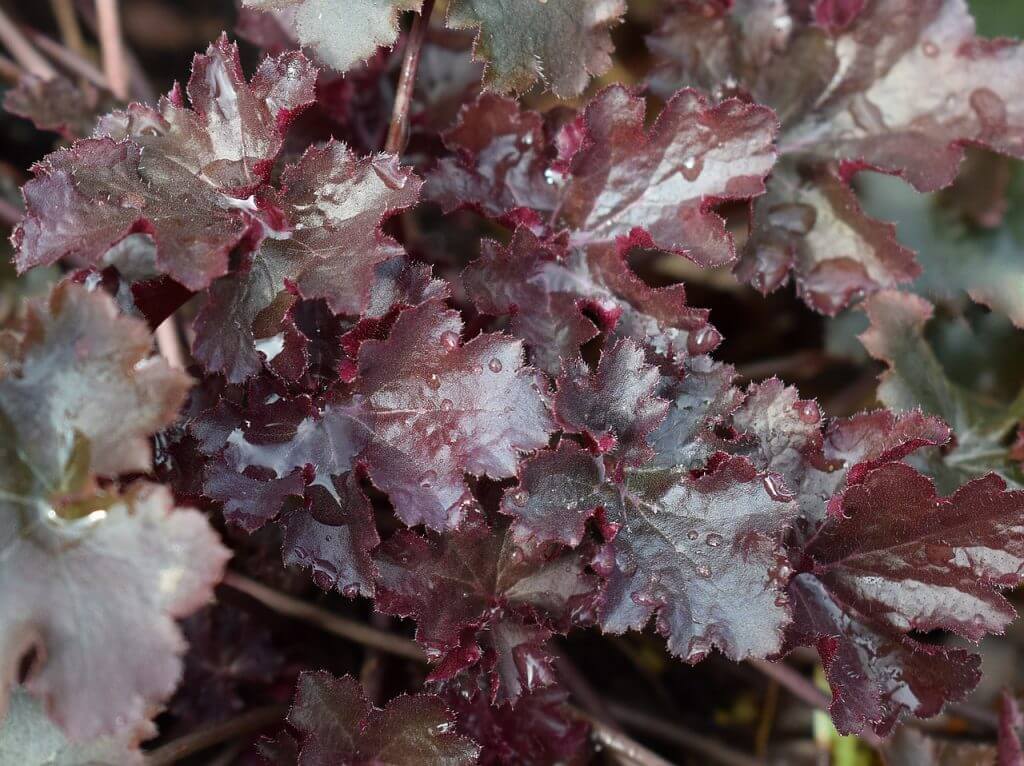
7. Heuchera (Coral Bells)
Heucheras have become enormously popular over the past decade, and for very good reason. The range of foliage colours now available is extraordinary: caramel and burnt orange, deep burgundy, lime green, silvery pewter, and rich chocolate, often with contrasting veining or ruffled leaf edges. Planted in a group of three or five, they form a neat, dense mound of overlapping foliage that sits low to the ground and prevents weeds from establishing in the spaces between them. Because they are evergreen, they provide soil coverage right through winter.
For maximum weed suppression, plant them at 30-40cm centres so the mounds touch and merge. The airy wands of tiny bell-shaped flowers that appear in early summer are a bonus, adding height and movement to what is otherwise a foliage plant. Heucheras are happy in sun or partial shade, making them highly versatile for mixed border planting. They do occasionally lift themselves out of the ground as they age, a process called heaving, so check the crowns in spring and press any that have risen back down into the soil.
Also, always double-check the roots by lifting them out of their pots in the garden centre before you buy them, to check for vine weevil. If you see white grubs or rotten roots, put them back to avoid infesting your garden borders with bothersome vine weevils.
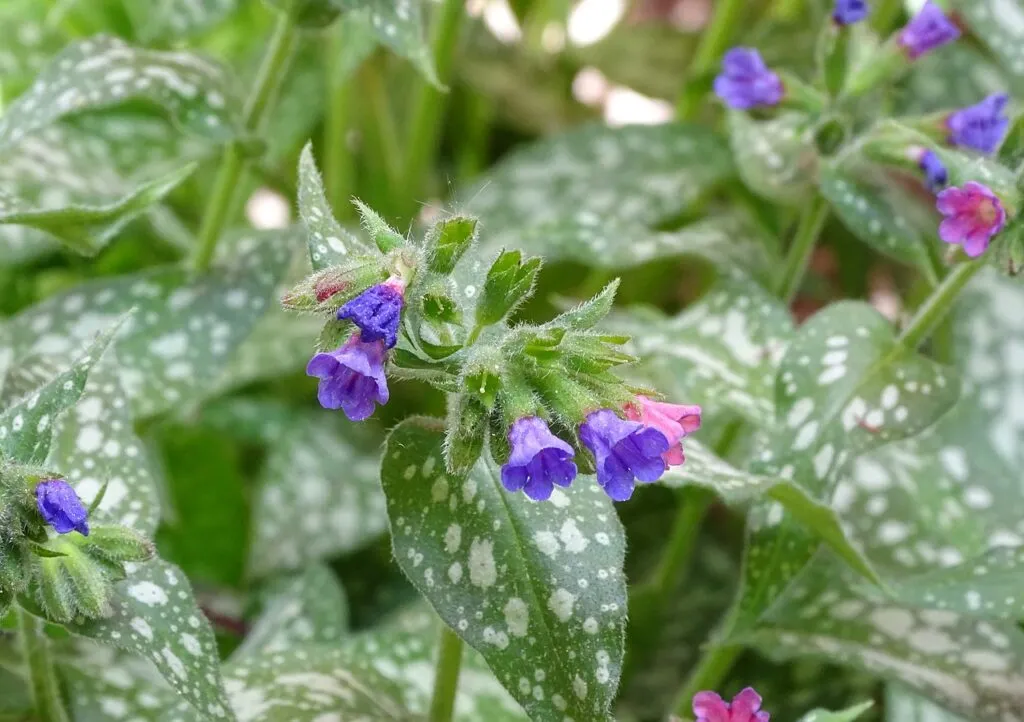
8. Pulmonaria (Lungwort)
Pulmonaria holds a special place in my affections because it does something that very few other ground cover plants manage: it provides weed suppression in dry shade under trees while also flowering beautifully in early spring, often from as early as February. The flowers shift colour as they age, opening pink and maturing to blue-violet, so you can have both colours on the same plant simultaneously. More importantly for our purposes, the large, lance-shaped leaves that follow are often spotted or mottled with silver, and they expand throughout the season into a substantial, spreading rosette that effectively covers the ground.
Pulmonaria spreads slowly by rhizome and self-seeds gently, so given time, it will expand to fill a border section without requiring much intervention. It is one of the best early nectar plants for bumblebees emerging from hibernation, which is why I recommend it to any client interested in making their garden more wildlife-friendly. Cut the foliage back hard after flowering in April or May, and you will get fresh, clean new leaves that look good right through summer and autumn.
🛒 Buy Pulmonaria from Amazon UK
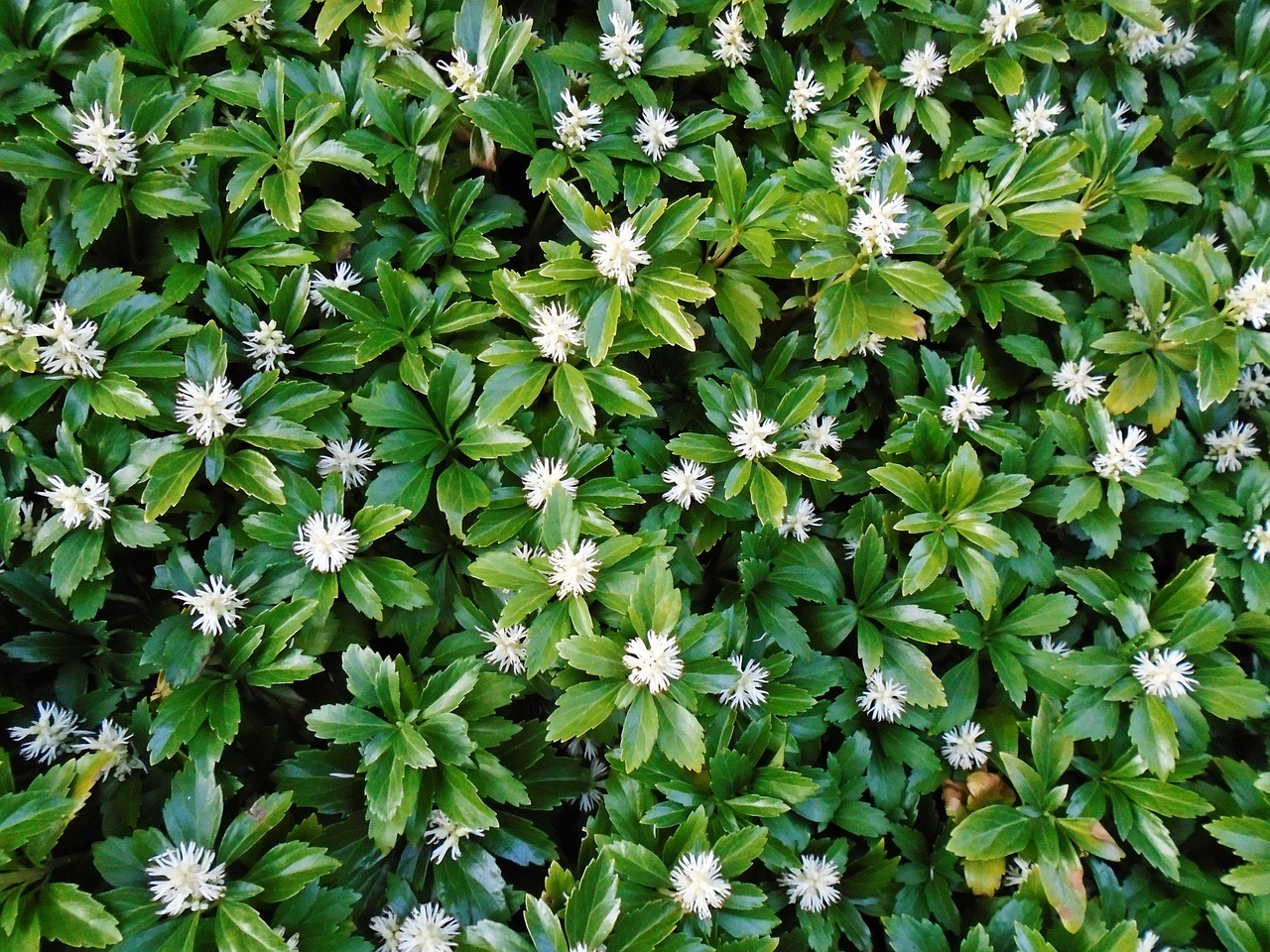
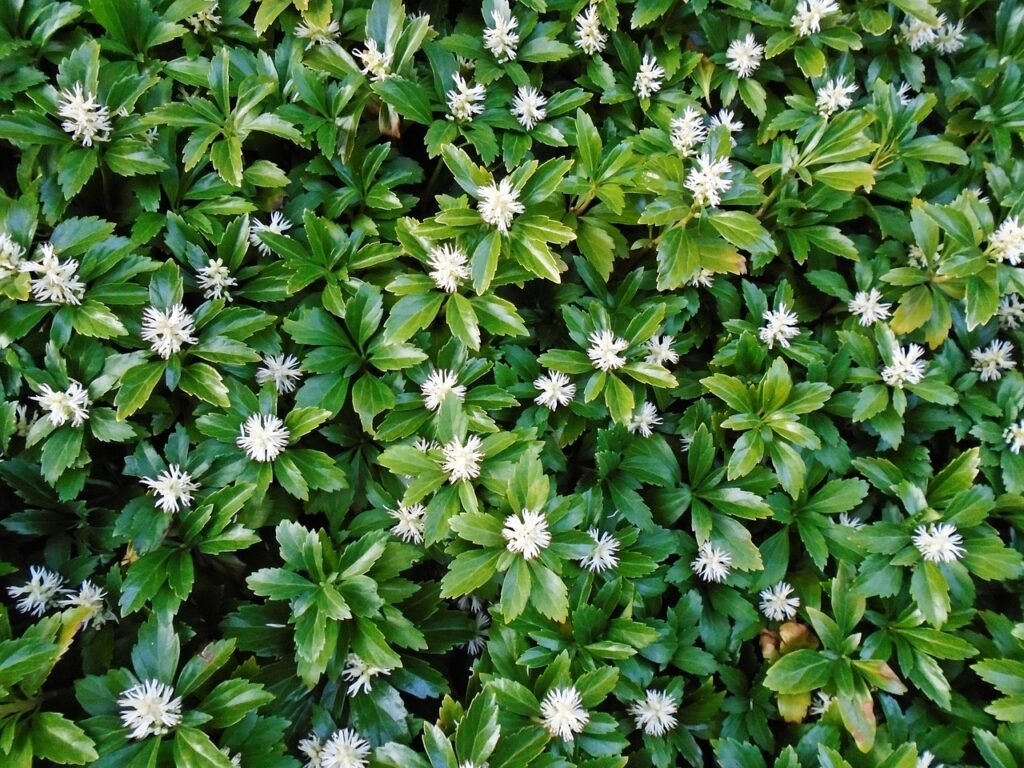
9. Pachysandra terminalis (Japanese Spurge)
If you have a challenging area of deep shade where you have tried and failed with multiple other plants, Pachysandra terminalis is almost certainly what you need. It is one of the very few truly reliable plants for dense shade, including north-facing borders and the ground beneath large, established trees where both light and moisture are scarce. The evergreen, toothed leaves form a dense, low carpet about 20 to 25cm high that shuts out light to the soil so completely that weed establishment becomes virtually impossible in established colonies.
Pachysandra does have one significant requirement: it performs best in acidic to neutral soil and dislikes chalky, alkaline conditions. In the right soil, though, it spreads steadily by underground rhizome to colonise large areas without any encouragement from you. The variegated form ‘Silver Edge’ has cream-margined leaves that light up dark areas of the garden, making it useful as a ground cover plant that does double duty as a lightening agent in a gloomy corner.
🛒 Buy Pachysandra from Amazon UK
10. Creeping Thyme (Thymus serpyllum)
Creeping thyme is the ground cover plant for sunny, well-drained sites. On a south-facing border or a gravel garden, there is very little that forms as dense and fragrant a mat as Thymus serpyllum. The tiny leaves release that wonderful herb scent when you brush past them, and the plant erupts into a cloud of pink-purple flowers in June and July that bees absolutely cover. As a ground cover, it works by forming a tight, low mat that can be as little as two or three centimetres tall, pressing so closely against the soil surface that there is simply no room for anything else.
It is worth noting that creeping thyme is not the plant for shade or wet, heavy soil. On those sites it will struggle and eventually succumb. But in the right conditions, a sun-baked, free-draining border, it is almost indestructible and exceptionally effective. Plant several different varieties together for a patchwork effect of different flower colours and foliage tones: ‘Pink Chintz’ has soft pink flowers, ‘Coccineus’ is a rich crimson-red, and ‘Snowdrift’ gives you crisp white blooms.

🛒 Buy Creeping Thyme from Amazon UK
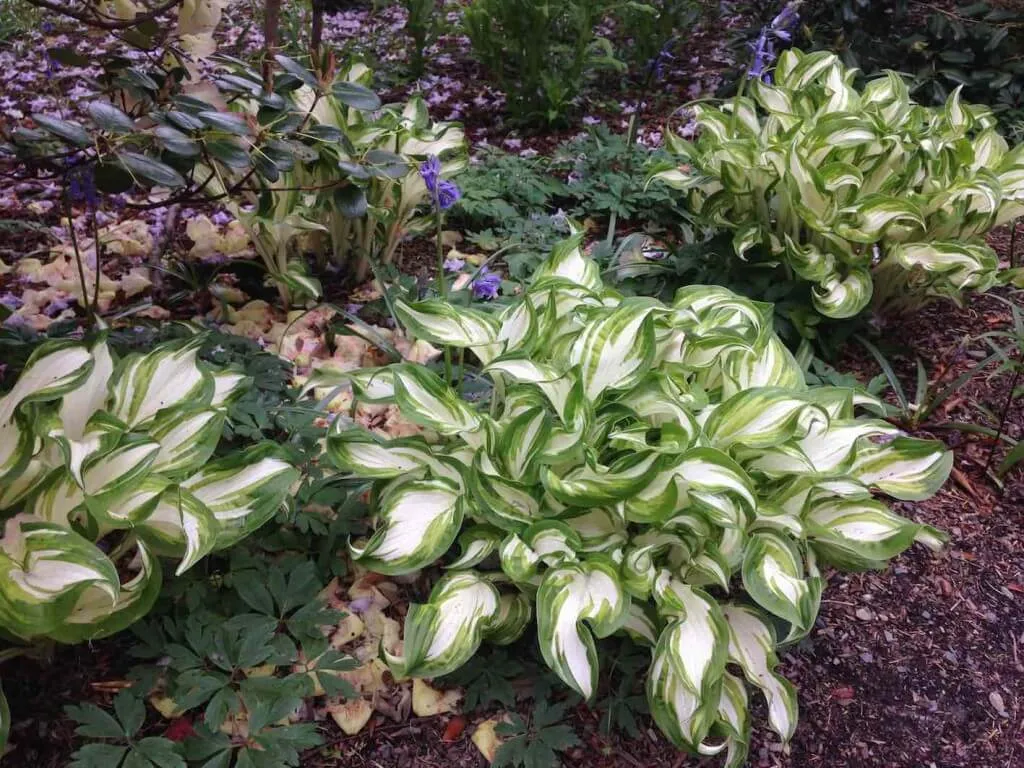
11. Hosta
Hostas are among the most effective weed suppressors in the garden, though they take a slightly different approach to most of the other plants on this list. Rather than forming a continuous low mat, they produce enormous, overlapping leaves that create such deep shade at ground level that virtually nothing can establish beneath them during the growing season. From April through to October, a well-grown hosta colony is as effective a weed barrier as almost anything you can plant. The challenge is that they are herbaceous and disappear completely in winter, so weeds can sneak in between November and March.
The solution is to interplant hostas with an evergreen ground cover, such as Ajuga or Vinca minor, that provides winter coverage while the hostas are dormant. This combination, one layer covering the warm months and the other covering the cold months, creates true year-round weed suppression without any gaps. Hostas perform best in moist, humus-rich soil in shade or partial shade. Slugs are the classic enemy and require management, particularly in spring when the new leaves are emerging: copper tape, wildlife-friendly slug pellets, or regular hand-picking on damp evenings are the most effective approaches.
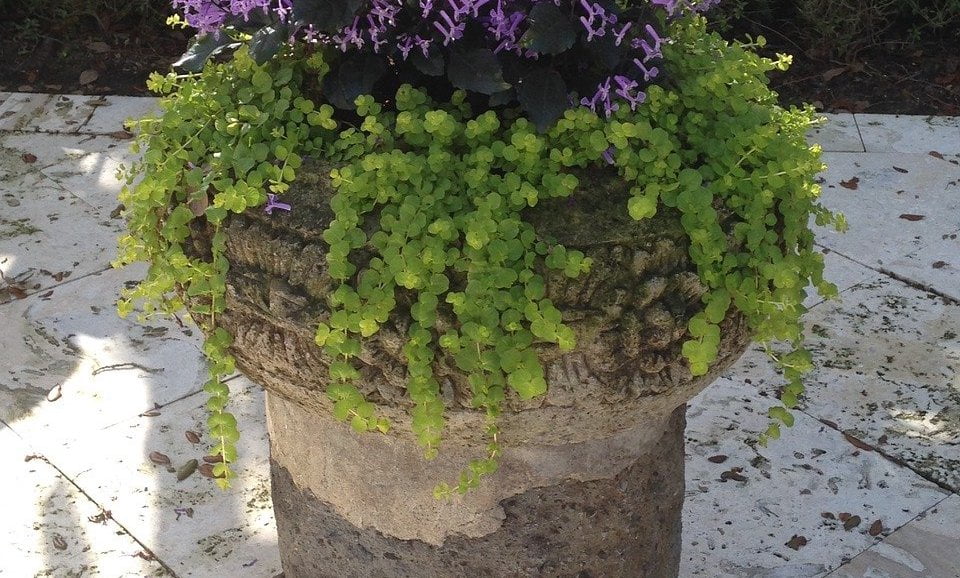
12. Lysimachia nummularia (Creeping Jenny)
Creeping Jenny is one of the fastest ground covers available for moist or wet soil, and I have used it countless times to solve the problem of boggy corners that other plants simply refuse to colonise. The trailing stems spread rapidly across the soil surface, rooting as they go, and the small round leaves form a dense, mat-like coverage that turns bright yellow-green in the golden form ‘Aurea’, which is the variety I almost always reach for. In shade or partial shade, Lysimachia nummularia ‘Aurea’ glows with a luminosity that is quite striking and creates the impression of dappled light even in quite gloomy spots.
It is worth knowing that Creeping Jenny is vigorous. In ideal conditions of moist soil and partial shade, it will spread enthusiastically and may need containing at the edges of a border. This is not a problem if you are using it to fill a large area, but plant it with some awareness of where you want it to stop. Small yellow flowers appear in June and July, adding a brief but cheering seasonal display to what is otherwise a foliage plant. Cut it back periodically if it starts to creep beyond its allocated territory.
🛒 Buy Creeping Jenny from Amazon UK
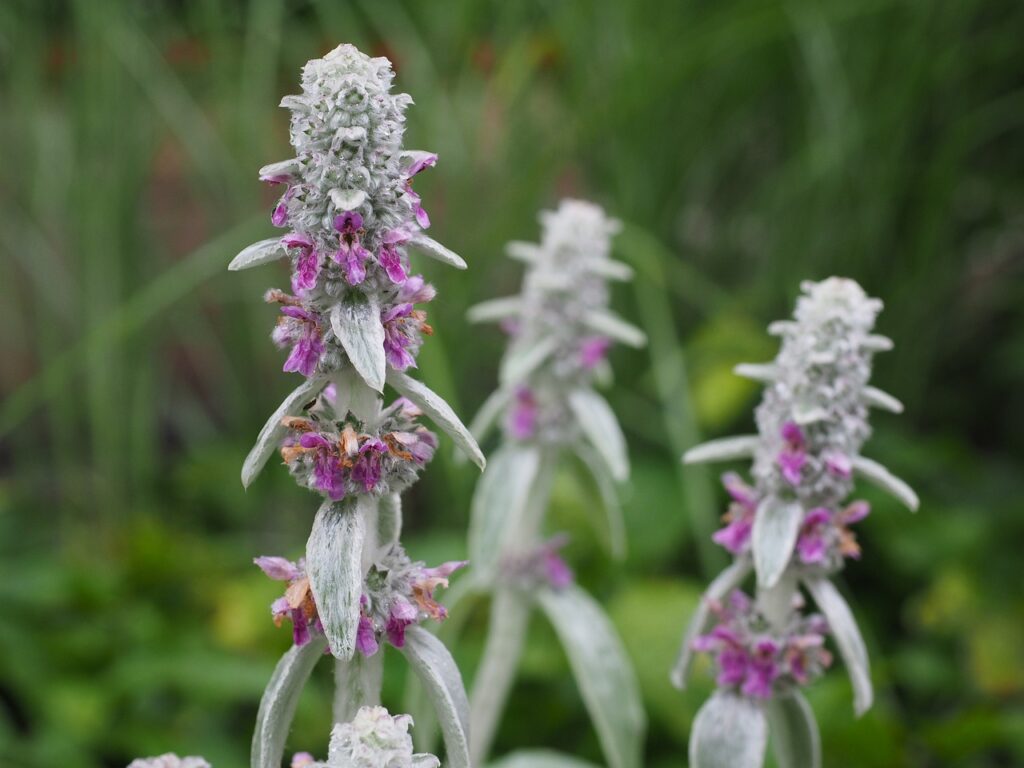
13. Stachys byzantina (Lamb’s Ear)
Stachys byzantina earns its common name from the soft, silver-felted leaves that children invariably want to stroke the moment they see them. In a sensory garden context, it is one of my first choices, but even purely as a ground cover plant, it performs exceptionally well on dry, sunny sites where moisture is limited. The dense rosettes of silver-grey leaves spread to form a soft, luminous carpet that is one of the most effective at reflecting light in a border, making it particularly useful for brightening sun-baked, pale gravel gardens or as a contrast to darker-leaved plants.
The silver foliage tends to rot in wet winters if drainage is poor, so this is specifically a plant for well-drained soil and full sun. On those sites, however, it is remarkably drought-tolerant once established and will spread steadily without ever becoming invasive. The variety ‘Silver Carpet’ is non-flowering, giving you foliage all season without the somewhat floppy flower spikes, and it stays neater and more compact than the species. Plant it in bold drifts at the front of a sunny border, and the effect is beautiful.
🛒 Buy Stachys byzantina from Amazon UK
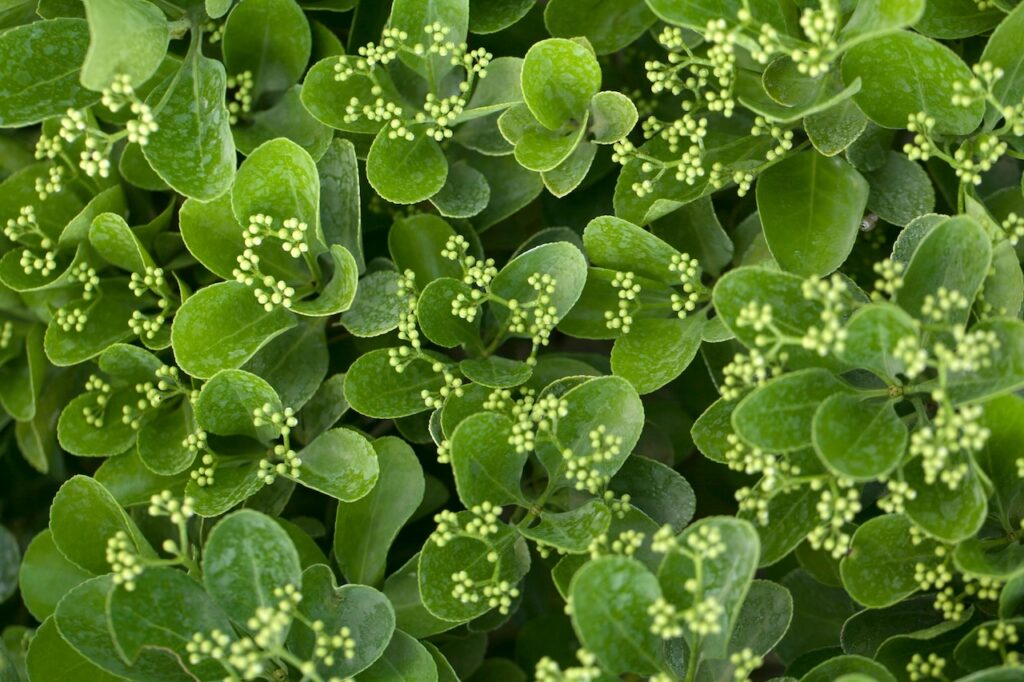
14. Euonymus fortunei (Wintercreeper)
Euonymus fortunei is one of the most versatile evergreen ground cover plants available for UK gardens. It has the useful ability to behave differently depending on what it is given to grow against: on open ground it will spread as a low, dense creeping carpet, but against a wall or fence it will begin to climb. As a ground cover, the spreading forms build up a solid, weed-proof layer of tough, leathery leaves that holds its coverage through even the most brutal winters. It is not a glamorous plant, but it is thoroughly reliable and available in a useful range of variegated forms that provide year-round colour.
‘Emerald Gaiety’ has white-edged leaves that take on pink tints in winter, making it attractive even in its quietest season. ‘Emerald ‘n’ Gold’ offers gold-margined foliage that brightens dark corners effectively. Both are tough, maintenance-free, and will grow in sun or partial shade on virtually any soil that is not waterlogged. Plant at 45 to 60cm centres for ground coverage that will knit together within two seasons, and trim lightly with shears in spring if any stems become too long.
🛒 Buy Euonymus fortunei from Amazon UK
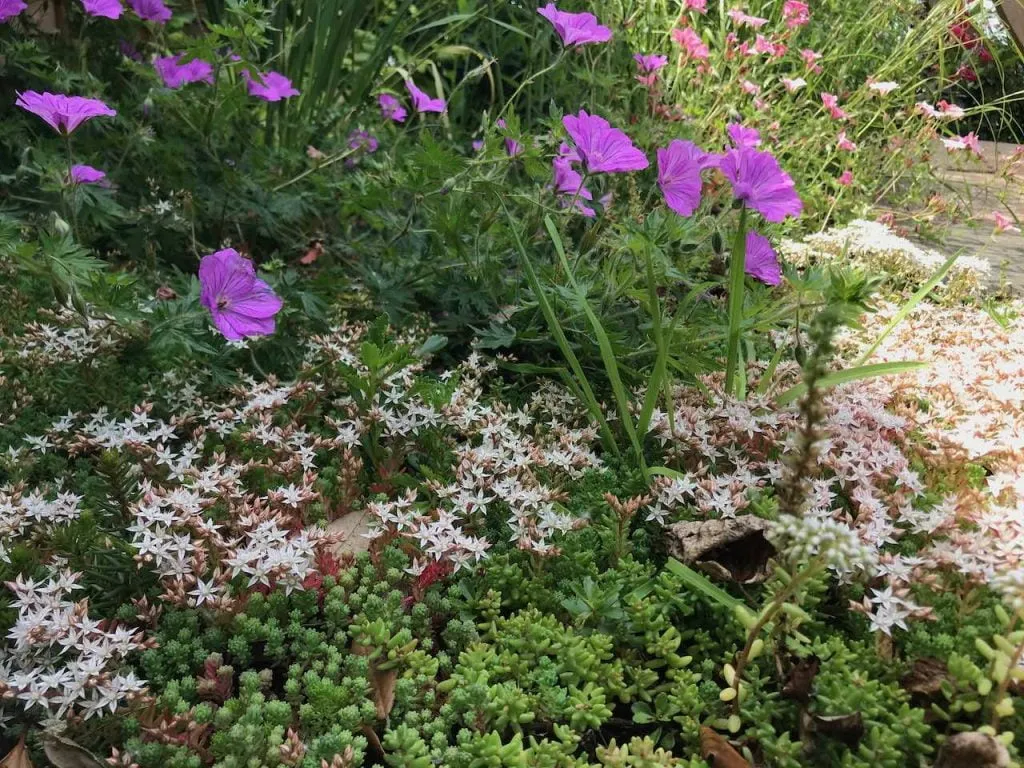
15. Sedum (Stonecrop)
The creeping forms of Sedum, particularly Sedum spurium and Sedum acre, are among the toughest and most drought-resistant ground cover plants available for sunny, free-draining sites. They form dense, succulent mats that are so water-retentive and tightly knit that weeds essentially cannot push through them. On gravel gardens, rock gardens, or the very front edge of a sun-baked border, they are largely unmatched for their combination of toughness and ornamental charm. I have seen Sedum thriving on almost pure grit with no added compost whatsoever, which tells you everything about their soil requirements.
The flat-headed flowers in late summer, ranging from white through pink to deep crimson depending on the variety, are valuable late-season nectar sources for bees and butterflies. Sedum spurium ‘Dragon’s Blood’ has rich red foliage and crimson flowers that make it one of the most ornamentally striking ground covers for a hot, dry spot. Sedum is also one of the best plants for green roofs on garden structures, where its drought-tolerance and low maintenance are particularly valuable.
16. Ophiopogon planiscapus ‘Nigrescens’ (Black Grass)
Ophiopogon planiscapus ‘Nigrescens’ is not a grass at all, despite its common name, but a member of the lily family with the most extraordinary near-black foliage of any hardy garden plant. It forms slow-spreading clumps of arching, strap-shaped leaves that create a striking, low-maintenance groundlayer unlike anything else. As ground cover, it works best planted in groups or drifts, where the clumps gradually merge and create a dark, dramatic carpet that reads beautifully against pale gravel, light paving, or contrasting silver and cream foliage.
It grows in sun or shade and tolerates a range of soil types, though it performs best in slightly acidic, moist soil. The small pink flowers in summer are followed by shiny black berries that persist through winter. It is slower to spread than many ground covers on this list, so plant it generously at the outset and be patient: within three to four years, it will have formed an arresting display. It is one of my go-to plants for contemporary or minimalist garden designs where bold, graphic effects are the goal.

🛒 Buy Ophiopogon from Amazon UK
17. Cotoneaster horizontalis
Cotoneaster horizontalis is one of the most effective large-scale ground cover shrubs available, and one I frequently specify for slopes, banks, and difficult areas where a more delicate plant would struggle to establish. The strongly horizontal branch pattern, herringbone-like in its precise layering, creates a dense structural framework that is virtually impenetrable to weeds. It is a plant that works hard in three seasons simultaneously: in spring, the small pink-white flowers are covered in bees; through summer, the dark glossy leaves provide dense weed-smothering coverage; and in autumn, the berries turn a brilliant scarlet at exactly the same time as the foliage colours up to a warm flame red.
It will grow happily in sun or partial shade and tolerates poor, dry soil once established. Plant it on a slope and it will cascade downward, rooting into the soil as it goes and holding the ground effectively against erosion as well as weeds. Birds adore the berries, so it earns its wildlife credentials as well as its horticultural ones. Prune lightly after fruiting if necessary to keep it within bounds, but avoid cutting back hard, as it does not regenerate well from old wood.

🛒 Buy Cotoneaster horizontalis from Amazon UK
18. Saxifraga (London Pride and Mossy varieties)
The mat-forming Saxifraga species, particularly Saxifraga x urbium (London Pride) and the mossy saxifrages, are excellent ground cover plants for semi-shaded, cool positions that other plants find difficult. London Pride in particular has been grown in British gardens for centuries, which tells you something about its durability. The evergreen rosettes of spoon-shaped leaves form a dense, spreading mat that is completely weed-proof once established, and the delicate wands of tiny pink-white flowers in May and June add real charm at a time when many other ground covers are simply sitting there doing a functional job.
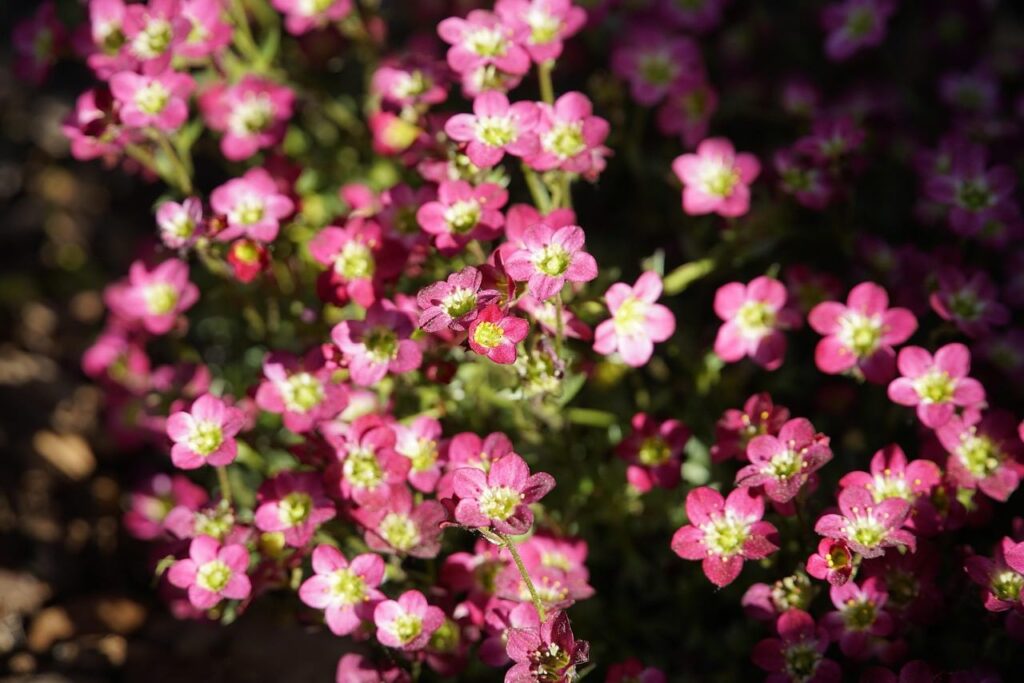
Mossy saxifrages, with their cushion-forming habit and bright spring flowers in pink, red, or white, are useful for the very front edge of cool, shaded borders or for filling gaps between paving stones where they will tolerate light foot traffic. Both types prefer a position that does not bake in summer and perform best in moist but well-drained soil. They are particularly good plants for north or east-facing aspects where many sun-loving ground covers simply will not thrive.
🛒 Buy Saxifraga from Amazon UK
19. Waldsteinia ternata (Barren Strawberry)
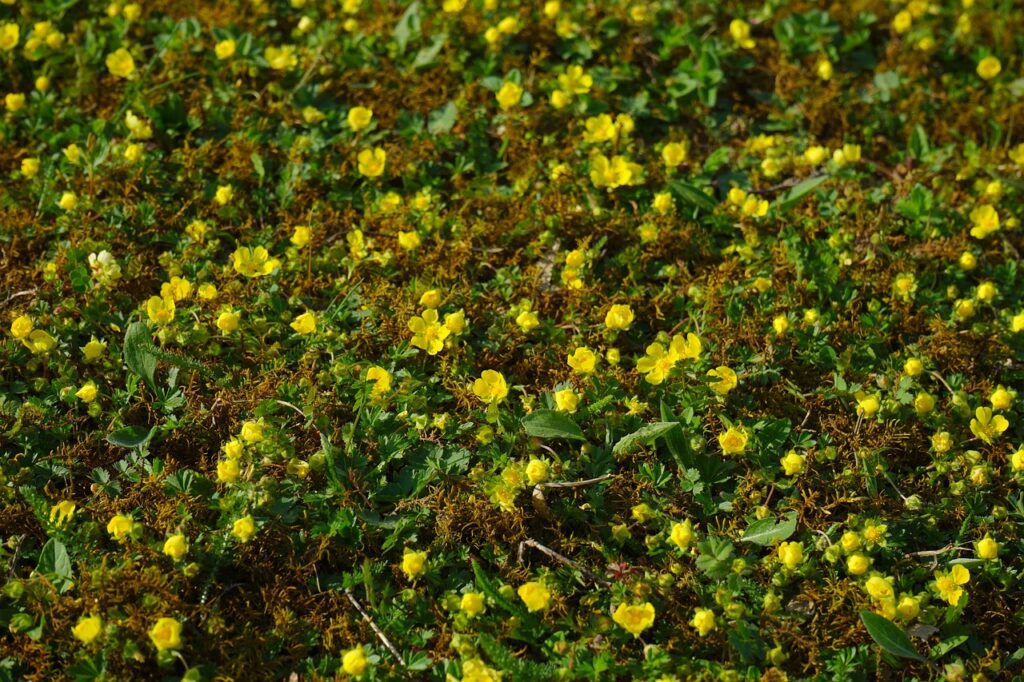
Waldsteinia ternata is one of those ground cover plants that gardening professionals know well but that rarely appears in mainstream coverage, and I think it deserves wider recognition. It looks remarkably like a strawberry plant, with similar three-lobed, semi-evergreen leaves and bright yellow flowers in spring, but it is entirely ornamental and spreads far more reliably as ground cover than its fruiting cousin. In my experience, it is one of the fastest gap-fillers available for partial shade, spreading by runners to colonise new ground quickly without ever becoming truly invasive.
The leaves hold through most winters in milder parts of the UK, providing reasonable year-round ground coverage. In colder areas, they may die back slightly but will regenerate vigorously in spring. It is a particularly good choice under deciduous trees, where it takes advantage of the available light in spring before the tree canopy closes, does its growing, and then settles into a maintenance mode through the summer shade. Highly recommended for anyone wanting a fast, reliable, low-maintenance option for partial shade.
🛒 Buy Waldsteinia from Amazon UK
20. Geranium macrorrhizum (Big Root Geranium)
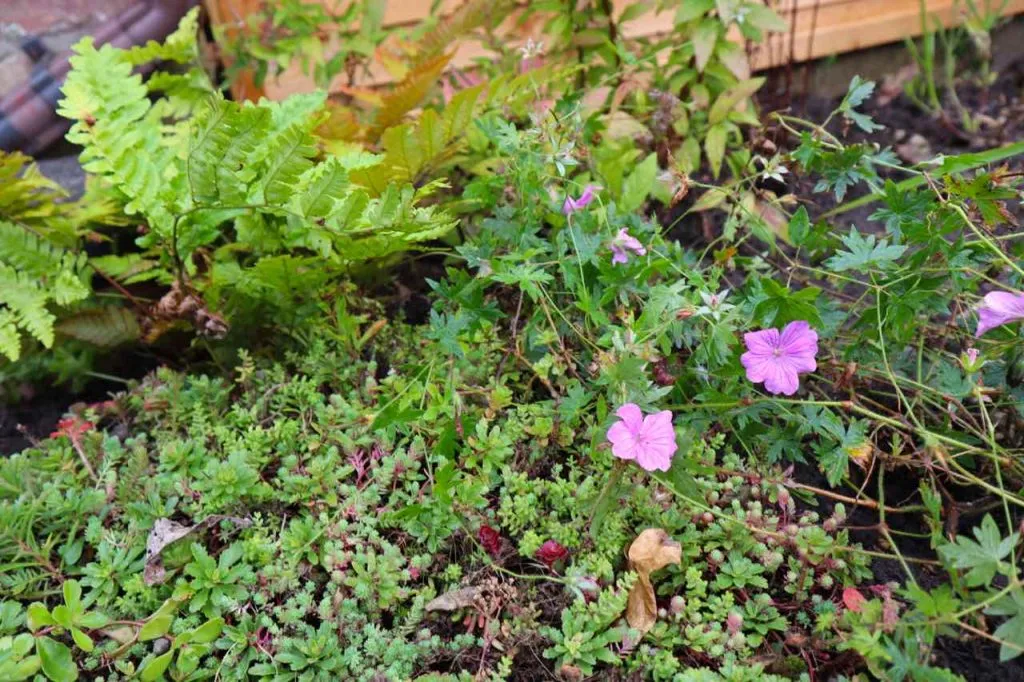
I have saved one more geranium for the end of this list because Geranium macrorrhizum is sufficiently distinct from the other hardy geraniums to deserve its own entry. Where most hardy geraniums perform best in reasonable light and moisture, Geranium macrorrhizum thrives in dry shade, making it the go-to solution for one of the most common and difficult planting problems in UK gardens. The large, aromatic leaves, which smell wonderfully of something between geranium and pine resin when touched, form a semi-evergreen mound that holds its coverage through most of the winter. The spreading rhizomes knit together to form a reliable, impenetrable surface across even quite challenging ground.
The magenta-pink flowers in May and June are attractive, and the autumn foliage colour, warm orange and red tints as temperatures drop, gives you a final season of interest before the plant settles into winter. It will grow in full sun as well as dry shade, which gives it a flexibility that very few other plants in this list can match. Plant it in bold, confident drifts of five or seven plants rather than as single specimens, and allow it to spread to fill the space. Within two to three years, you will have a near-maintenance-free carpet that manages itself.
🛒 Buy Geranium macrorrhizum from Amazon UK
Practical Tips for Planting Ground Cover Plants Successfully
Getting ground cover plants established well in year one makes all the difference to how quickly they do their weed-suppressing job. The most important preparation step is the one that people most often skip: clearing the ground of existing weeds thoroughly before you plant anything.
Perennial weeds in particular, bindweed, ground elder, couch grass, and creeping thistle, must be removed completely by hand or suppressed under a light-excluding mulch for a full growing season before you attempt to plant into that ground. Trying to establish ground cover plants over established perennial weeds is a losing battle because the weeds simply grow through them.
Once the ground is clear, improve it with a generous layer of garden compost or well-rotted manure worked into the top 20 to 30cm. This feeds your new plants, improves moisture retention on sandy soils, and aids drainage on clay, giving your ground cover the best possible start. Plant in autumn or spring when the soil is moist and temperatures are moderate. Water in well, and then apply a 5 to 7cm mulch of bark chippings between the plants. This mulch will suppress weeds while your ground cover is establishing, and it will break down over time to improve the soil further.
💡 Top Tip
Plant ground covers in odd numbers: three, five, or seven of the same variety planted together create a more natural, flowing drift than pairs or straight lines. For maximum weed suppression, plant them at the spacing that will allow them to just touch and overlap within two growing seasons, which is typically 30 to 45cm for most perennial ground covers.
Water regularly throughout the first growing season as the plants establish, particularly during dry spells. Once they are settled in and spreading, most of the plants on this list become largely self-sufficient. The only maintenance most ground covers require once established is an occasional tidy, cutting back any plants that have crept beyond their allocated space, and removing the few weeds that do manage to push through in the early years before coverage is complete.
Frequently Asked Questions About Ground Cover Plants
What is the fastest spreading ground cover plant for UK gardens?
For speed of coverage, Lysimachia nummularia ‘Aurea’ (Creeping Jenny) in moist, semi-shaded conditions and Ajuga reptans in damp partial shade are among the fastest. On sunny, well-drained sites, creeping thyme spreads quickly in its first full season. Waldsteinia ternata is also notably fast under deciduous trees. The key factor is matching the plant to your conditions: the fastest spreader in the wrong situation will still spread slowly.
Do ground cover plants really stop weeds?
Yes, effectively established ground cover plants are one of the most reliable long-term methods of weed suppression available to gardeners. They work by blocking light from reaching the soil surface, which prevents weed seeds from germinating, and by competing with any weeds that do establish for water and nutrients. The key words are “effectively established”: the plants need to be properly planted into clean, weed-free ground and given time to form a continuous canopy. They will not kill existing weeds, so thorough ground preparation before planting is essential.
What is the best ground cover plant for shade?
For partial shade, Epimedium and hardy geraniums (particularly Geranium macrorrhizum) are exceptional. For deeper shade, Pachysandra terminalis and Vinca minor are the most reliable choices. In very dry shade under large trees, Epimedium and Geranium macrorrhizum will both perform where most other plants fail. Pulmonaria and Ajuga are excellent choices for moist shade. The exact level of shade, and whether the soil is moist or dry, is the critical factor in choosing the right plant.
How deep should a flower bed be for ground cover planting to work?
I always recommend a minimum of one to one and a half metres of depth for any flower border where you want to use layered planting effectively. This depth gives you room for ground cover plants at the front, mid-border perennials in the middle, and structural plants at the back, all working together without overcrowding. Narrower borders simply do not give ground cover plants sufficient horizontal space to spread and create the canopy they need to suppress weeds properly.
Can I plant ground cover in winter?
Autumn planting, from October through November, is actually ideal for most ground cover plants as the soil is still warm from summer, rainfall is generally more reliable, and the plants can establish their root systems without the stress of summer heat. Avoid planting during hard frosts when the ground is frozen. Very cold, wet conditions in December and January are not ideal, so if you are buying plants in winter, pot them on and keep them in a sheltered spot until early spring when planting conditions improve.
What ground cover plant is best for a sunny, dry border?
Creeping thyme, Stachys byzantina (Lamb’s Ear), and Sedum are the standout choices for hot, dry, sunny sites. All three are drought-tolerant once established, evergreen or semi-evergreen, and properly ornamental as well as practical. On very free-draining, poor soil, creeping thyme is probably the most effective pure weed-suppressor of the three. For a slightly more substantial, bold effect, Bergenia also performs surprisingly well in full sun if the soil is reasonable.
Should I use weed suppressant membrane under ground cover plants?
I generally advise against using weed suppressant membrane under ground cover plants for the long term. In the short term it helps while plants establish, but over time the plants cannot spread naturally into the surrounding soil, leaves and organic matter accumulate on top and eventually allow weeds to establish in the mulch layer rather than the soil, and the membrane degrades and becomes difficult to remove. Thorough ground preparation before planting, combined with a temporary bark mulch between plants while they establish, is a far more sustainable approach that improves the soil rather than degrading it.
Summary: Ground Cover Plants to Stop Weeds
Ground cover plants are one of the most powerful tools available for reducing weeding and filling flower beds beautifully. By blocking light from bare soil, competing with weeds for moisture and nutrients, and forming an interlocking living carpet, they make low-maintenance gardening achievable rather than aspirational. The key is to match your plant to your conditions: evergreen options like Epimedium, Vinca minor, and Pachysandra for shade; hardy geraniums and Alchemilla for general borders; creeping thyme and Sedum for hot, sunny, free-draining spots.
Always plant into thoroughly cleared, weed-free ground, work compost into the soil first, and apply a bark mulch between plants while they establish. Give your border a minimum depth of 1 to 1.5 metres so the ground cover layer has room to spread and form a proper canopy at the base of your planting. Be patient through year one, plant generously in odd numbers, and by year two or three, you will have a border that largely manages itself.
If you have questions or comments, why not let me know below? You can Tweet, Facebook or Instagram me. You can also follow me on YouTube, where I’ve got plenty of garden guide vlogs!
Happy Gardening Ninjas! Lee 🌱





Lee Burkhill
Lee Burkhill, known as the Garden Ninja, is an award-winning garden designer and horticulturist with over 30 years of gardening experience and 15 years as a professional garden designer. A qualified RHS (Royal Horticultural Society) professional, Lee specialises in sustainable garden design and practical horticultural advice. He designs and presents on BBC1’s Garden Rescue and in leading gardening publications. Lee combines three decades of hands-on gardening knowledge with professional design qualifications to help gardeners create beautiful, functional outdoor spaces.
View all posts by Lee Burkhill







Other posts
-

Start here: to begin your gardening journey! Read more
-
Why Is My Clematis Dying? Wilt, Collapse and Recovery Explained Read more
-
Tree Rootstock Sizes Guide: how big will my garden tree get? Read more
-
Niwaki Okatsune vs Felco Secateurs: The Complete UK Gardener’s Guide Read more
-
Best Plants for Heavy Clay Soil in Shade UK: Expert Guide Read more
-
How & when to prune Hydrangeas: Beginners guide to beautiful blooms Read more