For the garden you’ve already got, not the one you’re starting from scratch. Seven checklists and video lessons from BBC Garden Rescue’s Lee Burkhill, built to help you work out what’s worth keeping before you spend a penny.
69


Quick Answer
Giant hogweed grows up to 5 metres tall with thick, hollow stems covered in purple blotches and coarse bristles, and umbrella shaped white flower heads up to 60cm across. Its sap contains compounds that make skin extremely sensitive to sunlight, causing severe burns and blistering on contact combined with UV exposure. If sap touches your skin, wash it immediately with soap and water, cover the area completely, keep it out of sunlight, and seek medical advice, this is treated as a genuine burn, not a rash.
Of all the plants I get asked about, this is the one where I actually want people to be a bit alarmed, rather than reassured. Japanese knotweed and ragwort both come with reputations far worse than the real risk they pose. Giant hogweed is the opposite situation, it truly is as dangerous as its reputation suggests, and I would rather over-explain the risk here than have anyone brush past a warning that matters.

This is widely considered the most dangerous plant growing wild in the UK, not because it is invasive or hard to remove, but because brushing against it on a warm, sunny day can leave you with burns and scarring that last for years. Children are particularly at risk, since the plant’s hollow stems make an obvious, tempting den-building material or pretend telescope, and a five-year-old has no way of knowing what they have just picked up.
Jump To
Giant hogweed, Heracleum mantegazzianum, is a member of the Apiaceae family, the same broad plant family as carrot, parsnip, celery and its own much smaller, harmless relatives cow parsley and native hogweed. It originates from the Caucasus Mountains and Central Asia, and was introduced to Britain as an ornamental plant in the nineteenth century for exactly the reason you would expect: it looks properly spectacular, a towering architectural plant with huge white flower heads that Victorian garden owners were happy to show off beside a lake or river. It escaped cultivation and was first recorded growing wild in Cambridgeshire in 1828, and it has been spreading, mainly along rivers, canals and waste ground, ever since.
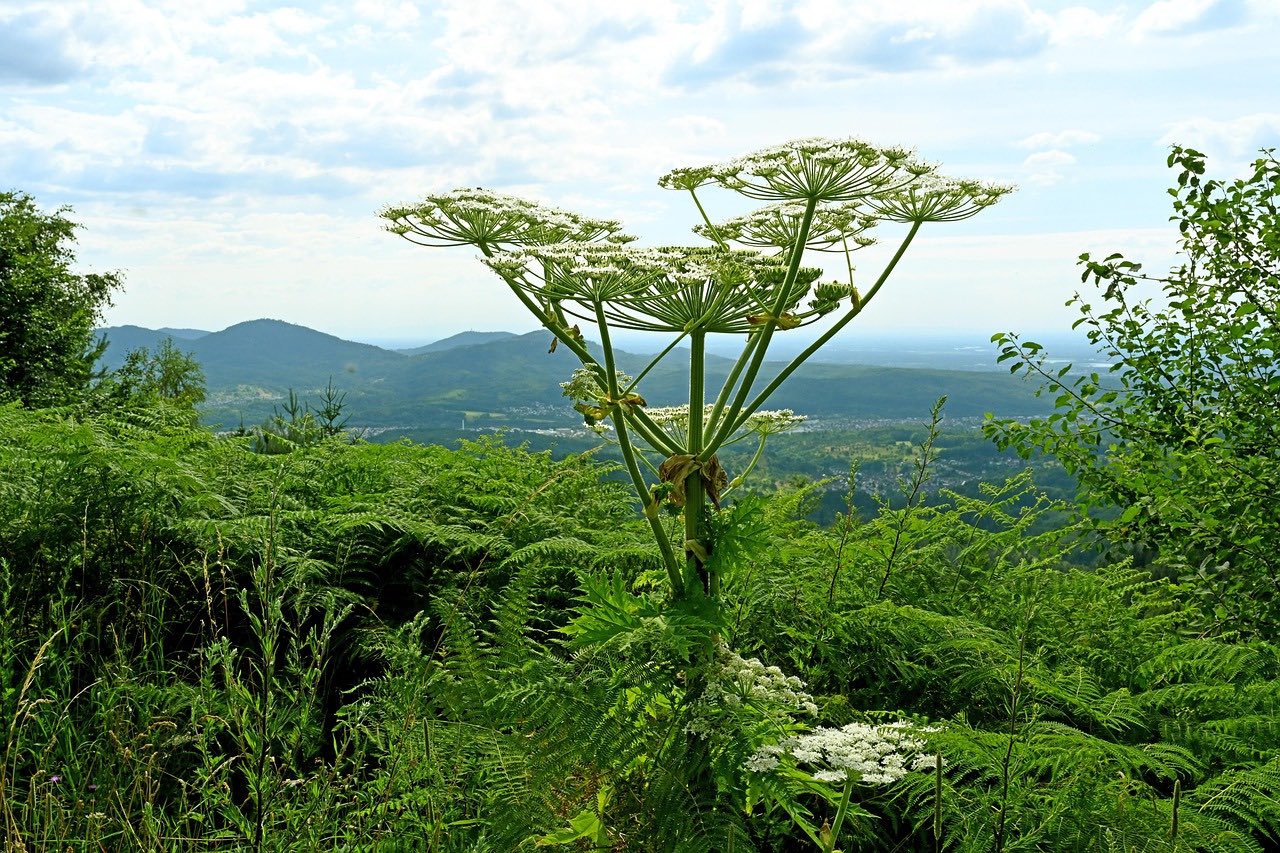
It follows a biennial or short-lived perennial life cycle. The first year produces a rosette of huge, deeply divided, jagged edged leaves that can reach 1.5 metres wide and 3 metres long on their own. In the following year, it sends up the thick flowering stem that makes the plant unmistakable once you know what you are looking at, reaching up to 5 metres, topped with a flat, umbrella-shaped cluster of small white flowers that can measure 60cm across.
Each mature plant can set as many as 50,000 seeds, and those seeds can remain viable in the soil for up to fifteen years, which explains both how aggressively it spreads and why controlling it properly is a multi year commitment rather than a single afternoon’s work.
It is now found widely across the UK, though patchily rather than everywhere, with the heaviest concentrations along river systems in Scotland, the north of England, and Wales, where the combination of damp ground and connected waterways has let it establish and spread most successfully over the past two centuries. Manchester and the wider North West are not immune to it, though it remains considerably less common here than along some of the classic hogweed river corridors further north, which is worth knowing if you are trying to gauge how seriously to take a suspected sighting locally.
The stem is the single most useful feature to check, since it is hard to fake at this scale. It is thick, hollow, ridged, and covered in coarse, stiff, whitish bristles, with distinctive dark purple or maroon blotches and speckling along its length. A mature stem can be five to ten centimetres across at the base, properly more like a small tree trunk than anything you would normally call a garden weed.
The leaves are enormous, deeply cut and jagged along the edges, almost sharply toothed in appearance rather than smoothly lobed, and can reach 1.5 metres across on a mature plant. Even the first year rosette, before any flowering stem appears, produces leaves large enough to look obviously out of scale next to anything else growing nearby.
The flowers form a flat topped umbel, the umbrella shaped cluster typical of this whole plant family, but at a size nothing else in the UK comes close to, up to 60cm across and carrying more than fifty individual flower stalks radiating from the centre. They typically open from June through August, standing well above head height on a mature plant.
Scale is, honestly, the feature that should stop you in your tracks before you even get close enough to check the stem. Nothing else in a typical UK hedgerow, riverbank or waste ground setting grows to this height with flower heads this size. If a plant looks like an ordinary hedgerow umbellifer that has somehow grown three times too large, treat that instinct as correct rather than talking yourself out of it.

Two entirely harmless native plants get confused with giant hogweed constantly, largely because they belong to the same family and share the same general umbrella flower shape. I like to describe giant hogweed as cow parsley on steroids, and that image actually helps once you have the scale difference in mind.
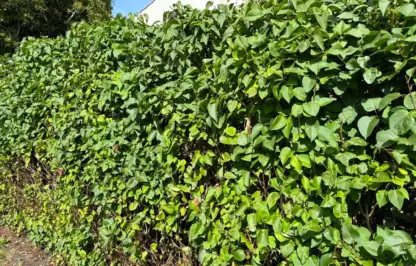
Native hogweed, Heracleum sphondylium, is the plant most often mistaken for its giant relative (see image below), and understandably so given they share a genus. It tops out around 2 metres rather than 5, has a plain green stem without the dramatic purple blotching, and carries noticeably fewer flower stalks in each umbel, generally under 21 compared to giant hogweed’s 50 or more. Native hogweed can still cause mild skin irritation in sensitive individuals, so I would not go out of my way to handle it either, but it does not carry anything close to the burn risk of its giant relative. You can tell by the serates leaves how it differs from Cow Parsley.

Cow parsley, Anthriscus sylvestris, is the delicate, frothy white wildflower that lines country lanes and hedgerows through May and June, one of the very first umbellifers to flower each year. It rarely exceeds 1.5 metres, has thin, unmarked stems, and produces a much finer, lacier flower head than either hogweed species. Cow parsley carries no known skin risk at all, and is, if anything, one of my favourite low-effort cottage garden wildflowers to let self-seed through a border. You can tell it’s cow parsley as it has fern-like leaves that are much narrower; see the image below.

If the stem and scale still leave you unsure, the leaf surface is the most reliable final check. Giant hogweed leaves are hairless and noticeably shiny on top. Native hogweed leaves, by contrast, have a fine, soft, suede like covering of hairs across the upper surface. This is the test specialists tend to fall back on, since it holds true even on younger plants where the overall size difference is not yet obvious. Angelica, another tall umbellifer occasionally confused with both, has smooth, purplish stems but distinctly separated leaflets rather than hogweed’s continuous, deeply divided leaf.

Giant hogweed has a strong preference for damp ground, and this shapes where you actually need to be alert to it far more than a general “anywhere in the countryside” warning would suggest. Riverbanks, canal towpaths, and the margins of ponds and lakes are by far its most common habitat, since it originally escaped from ornamental plantings beside exactly these kinds of water features and its seeds spread efficiently downstream in moving water.
Waste ground, railway embankments, and the rough margins of fields also turn up regular colonies, particularly where soil has been disturbed or dumped at some point. It is considerably less common in maintained gardens and parks, simply because it gets spotted and dealt with faster in a space someone actively manages, though a garden backing directly onto a river or canal is worth keeping a particularly close eye on.
If you walk dogs or take children along a towpath or riverside path regularly, it is worth properly knowing what this plant looks like at a glance rather than only after reading a guide like this one in response to something already spotted. A dog running through undergrowth, or a child picking up a fallen stem to use as a walking stick, are exactly the kind of casual contact that leads to the accidental exposures this guide exists to help you avoid.

The mechanism behind this is worth understanding properly, since it explains both why the injury happens and why the standard advice around it makes sense. Giant hogweed sap, present in the stem, leaves and flower heads, contains compounds called furanocoumarins. On their own, sitting on your skin, these compounds cause very little. The problem is what happens next.
Furanocoumarins are photosensitising, meaning they dramatically increase your skin’s reaction to ultraviolet light once they are present on it. This condition has an equally tricky-to-pronounce medical name, phytophotodermatitis, and it is the combination of sap plus sunlight that causes the damage, not the sap alone.
This is exactly why the treatment for sap from Giant Hogweed making contact with skin always includes:
These three steps can reduce how severe a reaction develops, even before you get any medical treatment.
Once triggered by sunlight, the reaction typically develops over the following 24 to 48 hours, starting as redness and swelling and progressing to painful blistering that closely resembles a serious sunburn or a genuine burn injury, because that is essentially what it is. The affected skin can remain unusually sensitive to sunlight for months or even years afterwards, and scarring is common, particularly with more severe or prolonged contact. This is not an exaggerated warning designed to scare people away from an otherwise harmless plant; it is a straightforward description of a well-documented, well-understood chemical burn mechanism.
⚠ Act Straight Away
If you suspect sap has touched your skin, do not wait to see whether a reaction develops. Act on the assumption that it has, since the first hour really affects how bad the outcome is.
Wash the area immediately with soap and cold water, thoroughly and promptly. This is the single most useful thing you can do, since removing the sap before it has time to fully bind with the skin reduces how much of a photosensitising reaction can develop.
Cover the area completely and keep it out of sunlight for at least the following 48 hours, using clothing, a bandage, or simply staying indoors. Remember that the sunlight, not the sap alone, is what triggers the actual burn, so proper, diligent sun avoidance in this window is doing real protective work rather than being an overcautious extra step.
Remove any contaminated clothing and wash it separately, since sap on fabric can continue to transfer to skin on contact.
Seek medical advice, particularly if blistering develops, if the affected area is large, on the face, or on a child, or if you are at all unsure how serious the exposure was. Any blistering should be treated as you would treat a burn, and a GP, pharmacist or NHS 111 can advise on appropriate dressing and pain relief. Note down roughly when contact happened and how large an area was affected, since this helps whoever treats you make a faster, better judgement.
Watch for eye contact specifically. If sap gets into the eyes, rinse thoroughly with clean water for several minutes and seek medical attention promptly. This is treated as a genuine emergency rather than routine advice, since eye exposure carries a real risk of severe damage, including permanent vision loss in serious cases, and needs assessment far faster than a skin reaction does.
If it is a child who has come into contact with it, I would say do not hesitate over any of the above out of a wish not to make a fuss. Children’s skin reacts more severely, and a calm, prompt response actually changes the outcome here in a way that is worth any awkwardness of overreacting to what turns out to be a minor graze.
I am a garden designer rather than a solicitor, so treat this as a general explanation of the legal position rather than advice on your specific situation, particularly if you are already dealing with a boundary dispute or a report from your council.
Simply having giant hogweed growing on your land is not, on its own, a criminal offence. Giant hogweed is listed on Schedule 9 of the Wildlife and Countryside Act 1981, and under Section 14 of that Act, the actual offence is planting it or otherwise causing it to grow in the wild, which covers deliberately spreading it, allowing contaminated soil to move off your land, or dumping cut material where it can establish a new colony. You are not automatically breaking the law because it appeared on your ground through no action of yours.
What you do carry is a responsibility not to let it spread onto neighbouring land, and local authorities have real enforcement tools if you ignore that. Under Section 14(4A), an environmental authority can require you to enter a species control agreement or issue a species control order, and failing to comply can lead to the authority carrying out the work themselves and recovering the cost from you, alongside potential prosecution. Separately, under the Anti-Social Behaviour, Crime and Policing Act 2014, a council can issue a Community Protection Notice if hogweed on your land is having a persistent, detrimental effect on a neighbour’s ability to enjoy their own property.
If hogweed from your land spreads and actually causes someone else injury or damage, you can also be liable under the ordinary law of private nuisance and occupiers’ liability, which is separate from the specific wildlife legislation above. In practice, this is exactly why prompt, sensible control is worth doing even without a notice forcing your hand, both to protect anyone who might come into contact with it and to protect yourself from a claim later.
If you spot giant hogweed somewhere that is not your own garden, on a towpath, in a park, or on obviously council maintained land, it is worth reporting rather than leaving for the next person to worry about. Most councils have a specific environmental services contact for exactly this, findable through their website, and a quick note of the location, ideally a grid reference or a What3Words address, is usually enough for them to act on. If it is on private land belonging to someone else, the more appropriate first step is letting the landowner know directly rather than reporting it to the council, since the responsibility for action sits with them.
Given everything above, I want to be direct about this rather than give you a standard weed removal checklist. For anything beyond a single small plant well away from where anyone walks, this is a job I would hand to a professional, and I say that as someone who is generally in favour of a confident, capable gardener tackling most things themselves.
If you do decide to tackle a small amount yourself, full protective equipment is mandatory: a disposable coverall, gloves that go well up the forearm, and eye protection at minimum, ideally with skin fully covered and no exposed patches at the wrists or neck. Never do this on a bright, sunny day; an overcast day considerably reduces the UV exposure that actually triggers a burn if any sap does reach your skin despite precautions. Never strim or use a brushcutter on giant hogweed; this throws contaminated sap and plant fragments across a wide area and onto your skin and clothing in exactly the way that causes the worst exposures.
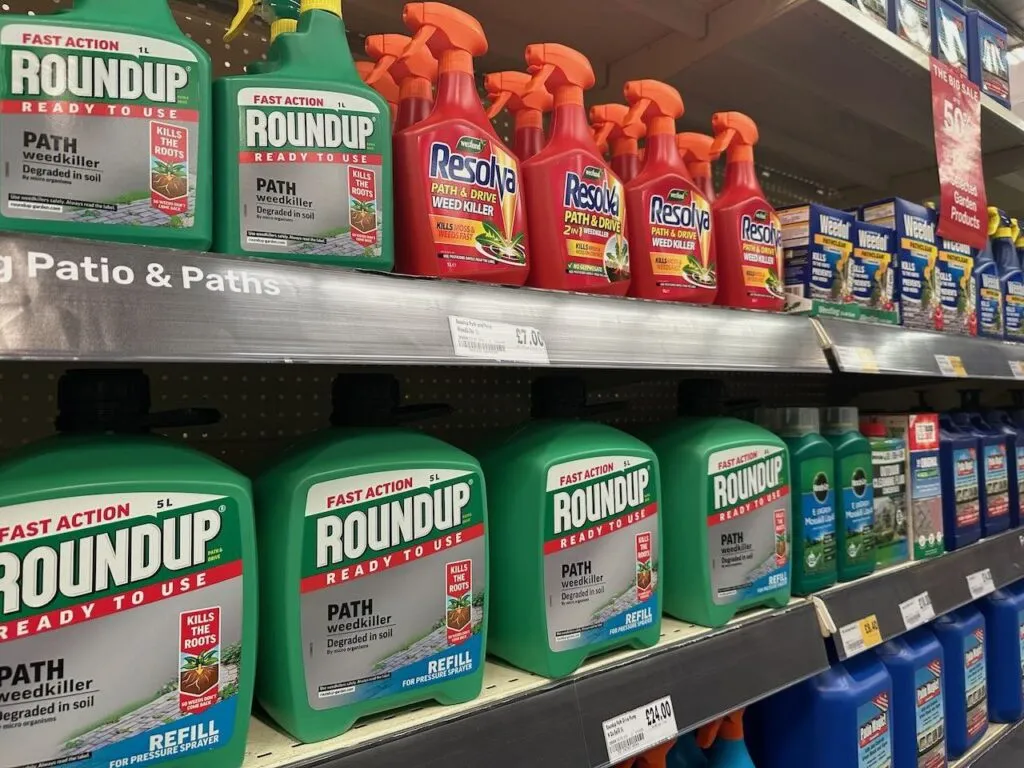
Herbicide treatment, typically a glyphosate based product applied to actively growing foliage, is the standard professional approach, and because of how many viable seeds a single plant can leave behind in the soil, a proper eradication programme runs across several years of repeat treatment and monitoring rather than a single application. Cutting flower heads off before they set seed, without disturbing the rest of the plant, is a useful interim measure to slow spread while a longer treatment plan is underway, but again, full protective equipment for that job is not optional.
If you have a larger infestation, particularly along a riverbank, boundary, or anywhere near where children play, a professional invasive weed specialist is worth the cost. Get a written quote and ask specifically about their disposal method, since that is where the next section becomes relevant. However, I would always urge you to seek professional help; the risk of injury is too great.
Giant hogweed is classified as controlled waste under the Environmental Protection Act, the same category Japanese knotweed falls into, and the same strict rules apply.
⚠ What You Cannot Do
Cut or removed hogweed material cannot go in your council green waste bin, your general household waste, your home compost heap, or be taken to a standard household recycling centre. It must be disposed of through a licensed waste carrier at an authorised site, or, where permitted by your local authority, destroyed on site.
Some councils permit controlled burning on site as an acceptable disposal method, since fire does destroy the plant material and the furanocoumarins within it, though this needs care given the same sap and smoke exposure risks apply during the process, and it will not affect the roots or the seed bank in the soil. Check with your local authority before burning anything, since rules and what counts as acceptable vary by area. For anything beyond a small amount, arranging collection by a licensed waste carrier, or asking a professional contractor to include disposal as part of their quote, is the more straightforward route.
The reaction usually develops over 24 to 48 hours after sap contact combined with sunlight exposure, starting as redness and swelling and progressing to painful blistering similar in appearance to a severe sunburn or a genuine burn. If you know you have had contact, do not wait for symptoms before washing the area and covering it from sunlight.
No, simply having it on your land is not an offence. The offence under the Wildlife and Countryside Act 1981 is planting it or causing it to spread into the wild. You do, however, have a responsibility not to let it spread onto neighbouring land.
Native hogweed reaches around 2 metres with a plain green stem, compared to giant hogweed’s 5 metres and purple blotched, bristly stem. Native hogweed can cause mild skin irritation in sensitive people but nowhere near the severe burns giant hogweed causes.
No. It is classified as controlled waste and cannot go in home compost, council green waste, or general household bins. It must be disposed of through a licensed waste carrier or, where locally permitted, destroyed on site.
Mild reactions can heal within days to weeks, but more severe contact can cause scarring and leave the affected skin unusually sensitive to sunlight for months or even years afterward. This is a genuine reason to treat any suspected contact seriously and seek medical advice for anything beyond the mildest reaction.
Costs vary considerably depending on the size of the infestation, access to the site, and whether a multi year treatment programme is needed, so I would always get a written quote from more than one PCA accredited or invasive weed specialist rather than rely on a single figure. A single, well established stand typically costs meaningfully more to deal with than a handful of first year seedlings caught early, which is another good reason not to leave a small patch unmanaged.
Yes. Cutting the top growth alone does not kill the root, and the plant will regrow, often more vigorously, from the same crown the following season. Herbicide treatment that reaches the root system, applied while the plant is actively growing, is what actually achieves control rather than cutting alone.

Join over 100,000 gardeners on YouTube
Free gardening videos from the Garden Ninja, with 8 million views and counting.
Subscribe on YouTube, it’s freeOne of the best ways to improve your gardening skills as a beginner is to take a garden design or gardening course. You can take many weekend or distance courses from the RHS, local gardening groups, or horticultural colleges to help improve your skills, all of which will help take your gardening to the next level. But what if you do not have the time to attend an in-person course or the funds to commit to gardening?
That is where online gardening courses come in. Online garden courses cost a fraction of the price, can be completed at home in your own time, and often provide far greater value for money when training as a gardener.
I offer a number of gardening and garden design courses to help take your skills to the next level so you can become a fully fledged Garden Ninja.
For the garden you’ve already got, not the one you’re starting from scratch. Seven checklists and video lessons from BBC Garden Rescue’s Lee Burkhill, built to help you work out what’s worth keeping before you spend a penny.
Garden Design Examples for Small Gardens: 30 Design Templates & Planting Plans: In this online gardening course, I’ll walk you through 30 fantastic garden designs, explaining the logic behind the layout, the plant choices, and take-home tips for applying them in your own garden.
Learn how to transform and design your own garden with Lee Burkhills crash course in garden design. Over 5 hours Lee will teach you how to design your own dream garden. Featuring practical design examples, planting ideas and video guides. Learn how to design your garden in one weekend!
Garden Design for Beginners Online Course: If you want to make the career jump to becoming a garden designer or to learn how to design your own garden, this is the beginner course for you. Join me, Lee Burkhill, an award-winning garden designer, as I train you in the art of beautiful garden design.
Giant hogweed earns its dangerous reputation. Look for the scale first, up to 5 metres tall with purple blotched, bristly stems and flower heads up to 60cm across, well beyond anything native hogweed or cow parsley ever reach. If sap touches skin, wash immediately, cover the area from sunlight, and seek medical advice if blistering develops. It is not illegal simply to have it, but you must not let it spread, and any removal beyond a single small plant is worth handing to a professional given both the disposal rules and the real physical risk involved.
Please take this one seriously if you spot it; a bit of healthy caution here goes a long way.
Stay safe and happy gardening.

Lee Burkhill, known as the Garden Ninja, is an award winning garden designer and horticulturist with over 30 years of gardening experience and 15 years as a professional garden designer. A qualified RHS professional, Lee specialises in sustainable garden design and practical horticultural advice. He designs and presents on BBC1’s Garden Rescue and in leading gardening publications. Lee combines three decades of hands on gardening knowledge with professional design qualifications to help gardeners create beautiful, functional outdoor spaces.
View all posts by Lee Burkhill





JOIN THE NINJAS
Be the first in line for new Guides, Discount codes and Offers