For the garden you’ve already got, not the one you’re starting from scratch. Seven checklists and video lessons from BBC Garden Rescue’s Lee Burkhill, designed to help you decide what’s worth keeping before you spend a penny.
69


Quick Answer
Agapanthus thrive in full sun with free-draining soil or compost, flowering from July to September on tall elegant stems. Hardy deciduous types like Headbourne Hybrids survive UK winters in the ground without protection. Evergreen types need moving under cover or wrapping in horticultural fleece before the first frost. Containers are often the best way to grow any agapanthus in the UK because the restricted roots encourage more flowers, and you can move tender types under cover in autumn.
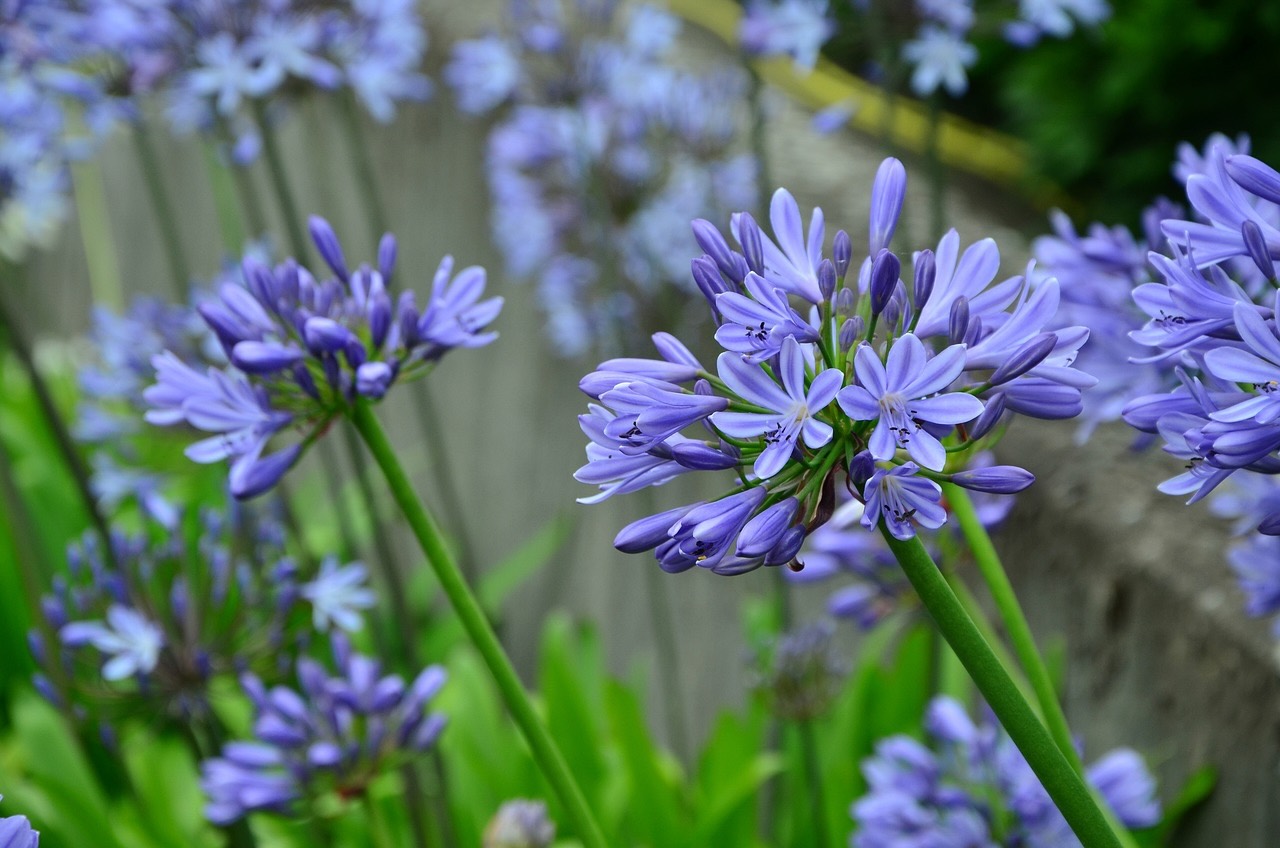
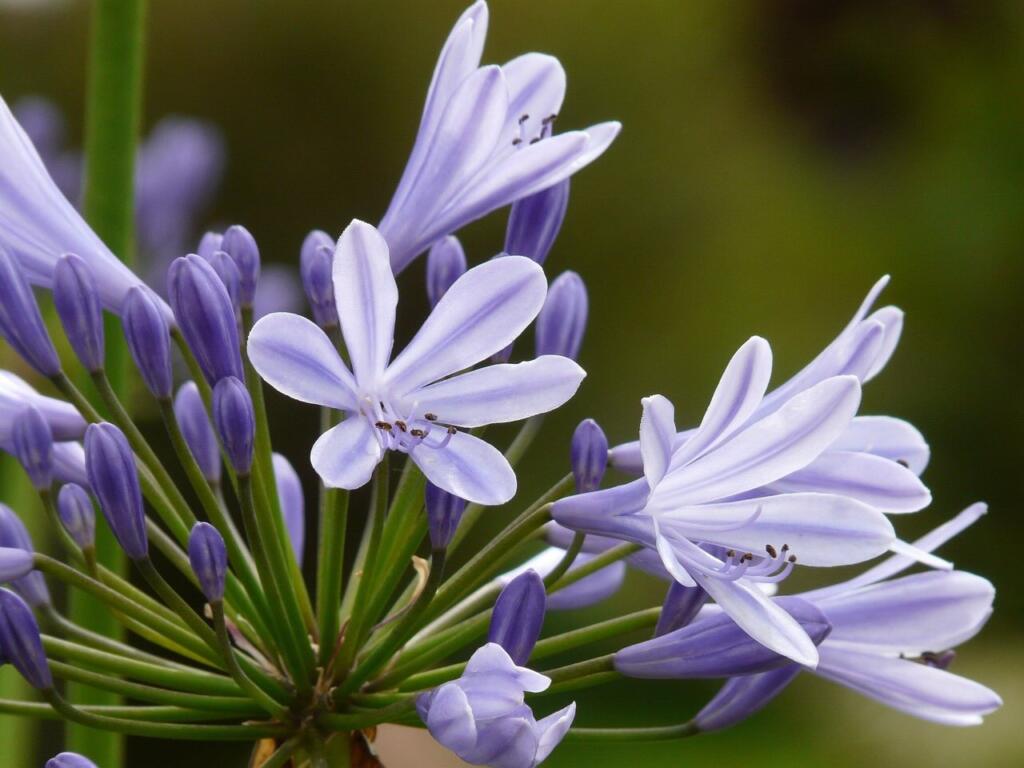
What makes Agapanthus so immediately recognisable is the flower form: large, globe-shaped umbels of trumpet-shaped flowers held on tall, architectural stems above clumps of long, strap-like leaves. The flowers come in shades ranging from deep inky violet and rich cobalt blue through pale sapphire, lilac and pure white. That blue is the real draw.
True blue is one of the rarest colours in the flowering garden, and Agapanthus delivers it in abundance from July right through to September. Let me show you how even beginner gardeners can grow these beauties and add a touch of the tropics to your garden, balcony or containers!
Jump To
This page contains affiliate links for products I use and trust. If you make a purchase after clicking a link, I may earn a small gardening commission at no extra cost to you, which helps keep the Garden Ninja blog free for everyone.
Agapanthus is a genus of flowering perennials in the family Amaryllidaceae, producing some of the most striking late-summer flowers available to UK gardeners. The name comes from the Greek words agape (love) and anthos (flower), giving us “flower of love”, which feels entirely appropriate for a plant that stops people in their tracks whenever it is in full bloom. Common names include African lily and Lily of the Nile, both of which are nods to its South African origins.
Agapanthus originates from southern Africa, primarily South Africa and Lesotho, where it grows across a remarkable range of habitats from coastal cliffs and scrubby hillsides to high-altitude grasslands in the Drakensberg mountains. That geographic range is actually the key to understanding why some agapanthus are hardy in the UK, and others are not. Plants from the warm coastal regions of the Western Cape, where winters are mild and wet, evolved as evergreens adapted to frost-free conditions. Plants from the colder, higher-altitude interior evolved as deciduous types that die down each winter and can tolerate significant frost.
This matters enormously when you are choosing which Agapanthus to grow in a UK garden. The coastal South African types are tender and will struggle with a hard British winter. The high-altitude deciduous types have survived cold seasons in the Drakensberg for millennia and are entirely capable of surviving a UK winter in the ground. When you understand that provenance, the care requirements make instinctive sense.
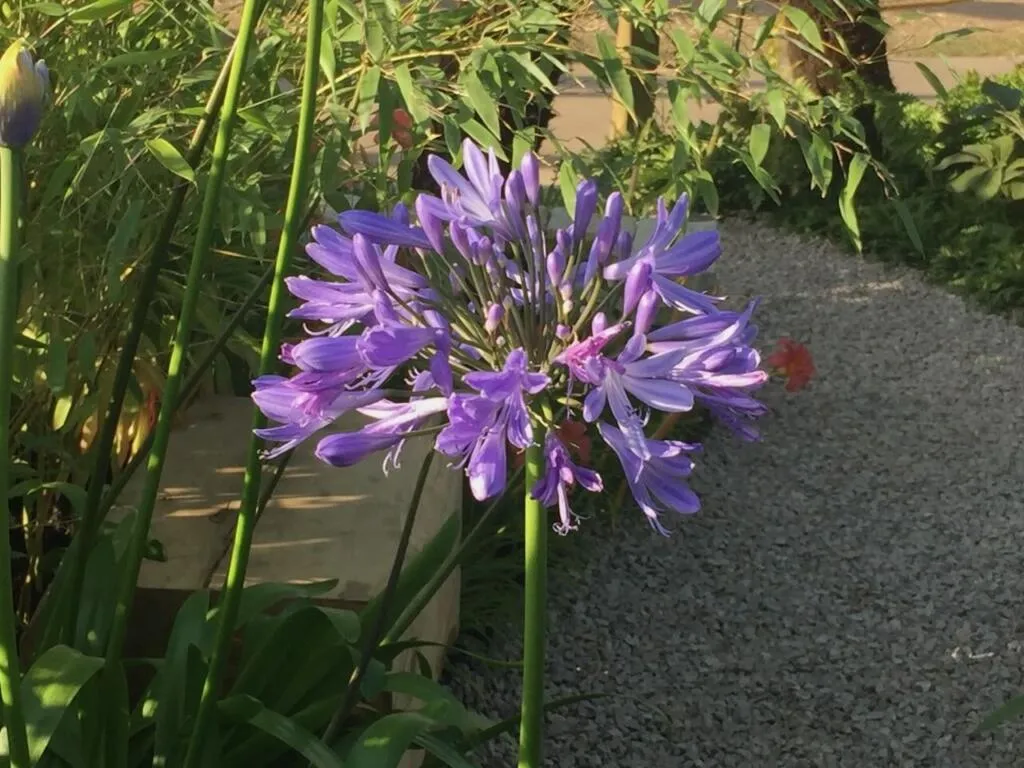
One fascinating footnote: Agapanthus has become so thoroughly naturalised in parts of New Zealand and Portugal that it is classified as an invasive weed in both countries. In the UK climate, that kind of spread is not something any gardener needs to worry about.
💡 Top Tip
When buying agapanthus in a garden centre, the label often omits whether the plant is deciduous or evergreen. As a working rule: if the plant has lush, green leaves in early spring or has been described as evergreen, treat it as tender. If it shows no growth until late spring or is labelled as deciduous, it is likely to be the hardier type. When in doubt, grow it in a container for the first winter so you can bring it under cover.
The single most important thing to understand about Agapanthus in a UK garden is the difference between deciduous and evergreen types, because it determines everything about how you manage the plant through winter. I see gardeners lose expensive Agapanthus every year simply because they did not know which type they had.
Deciduous Agapanthus die down completely in winter, with all above-ground growth disappearing by late autumn. This is not a sign that the plant has died. Beneath the soil, the fleshy roots are resting through the cold months and will push up fresh growth again in spring. The deciduous habit is a cold-weather adaptation, and it comes with genuine UK hardiness.
Headbourne Hybrids, the benchmark for UK outdoor agapanthus, can survive temperatures down to around minus fifteen degrees Celsius when they are well established in free-draining soil. In most UK gardens, these plants need no winter protection at all once they are in their second or third year. Most Agapanthus sold in the UK are deciduous types.
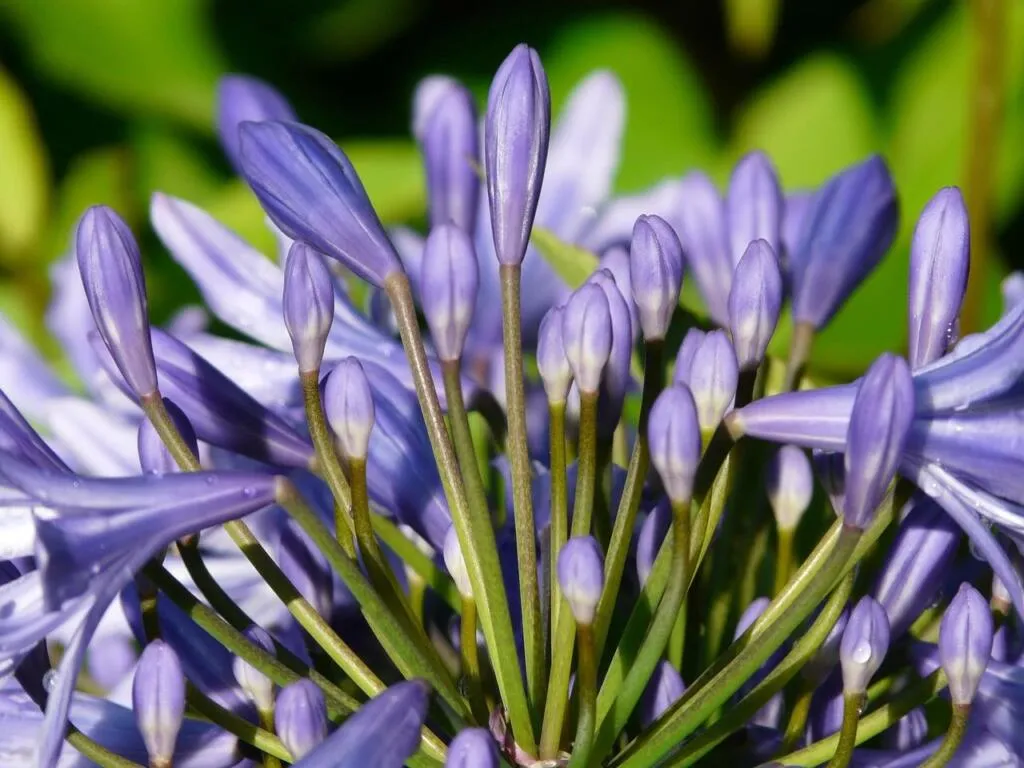
Evergreen Agapanthus retain their strap-like leaves through winter. They look beautiful year-round, which is part of their appeal, but that retained foliage comes at a cost: the plants are significantly less hardy. Most evergreen types will tolerate only light frosts down to around minus three or minus five degrees Celsius before the foliage and roots begin to suffer. Agapanthus africanus, one of the most commonly sold evergreen species, is rated H3 by the RHS and must be protected or moved indoors before the first frost in most UK regions. In Cornwall and the mildest coastal areas, evergreens can often be left out with a thick mulch. Anywhere north of the Midlands or on an exposed site, they need to be brought under cover.
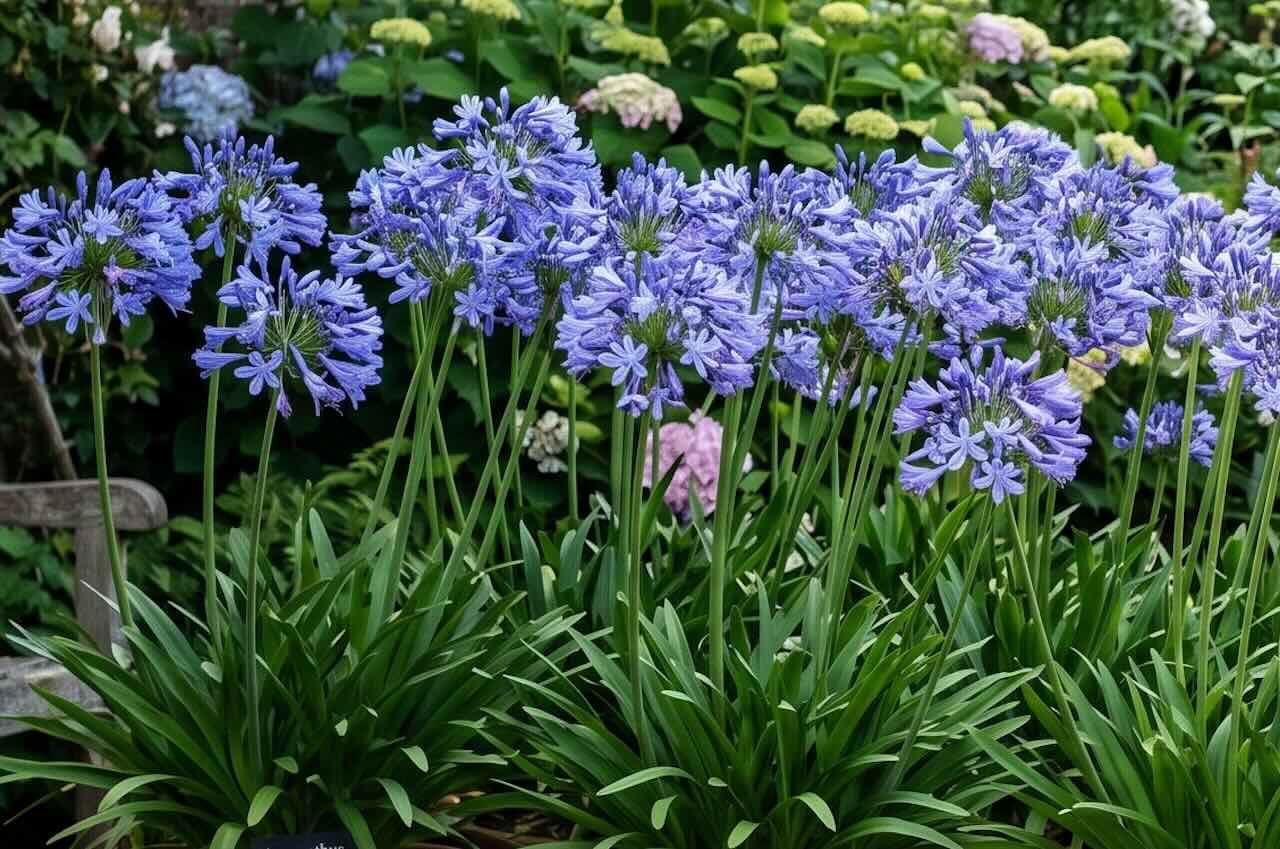
The Agapanthus available in UK garden centres has improved enormously in the last decade. There are now named varieties for almost every use, from small compact plants for window boxes to tall architectural specimens for the back of a border. Here are the ones I recommend most often in professional garden design work.
If you garden anywhere north of the South of England and want Agapanthus permanently in the ground, Headbourne Hybrids are your starting point. These were bred in the 1950s by Lewis Palmer at his garden at Headbourne Worthy in Hampshire, using seed collected from cold-climate South African populations. They are the most reliably UK-hardy agapanthus available, surviving down to around minus fifteen degrees Celsius in free-draining soil. The flowers range from mid-blue to pale blue on stems of around 70 to 90 centimetres, and the seed-raised nature means some colour variation within a group, which actually adds a naturalistic quality to a border planting. They hold an RHS Award of Garden Merit and are my default recommendation for any UK gardener who wants a no-fuss outdoor agapanthus.
🛒 Buy Agapanthus Headbourne Hybrids from Amazon UK
One of the deepest blue Agapanthus available, ‘Midnight Star’ produces very dark violet-blue flowers on stems of around 60 to 70 centimetres. I absolutely love this variety as it contrasts really well with bright oranges and yellows in the garden, and it also never loses its saturation, whereas the more purple Agapanthus can get washed out in full sun and turn pastel coloured.
A compact deciduous variety, well suited to containers and the front or middle of a border. The colour is exceptional, closer to true navy than the mid-blue of most Agapanthus. It holds the RHS AGM. My go-to choice whenever a client wants drama and deep colour rather than the typical pale blue.
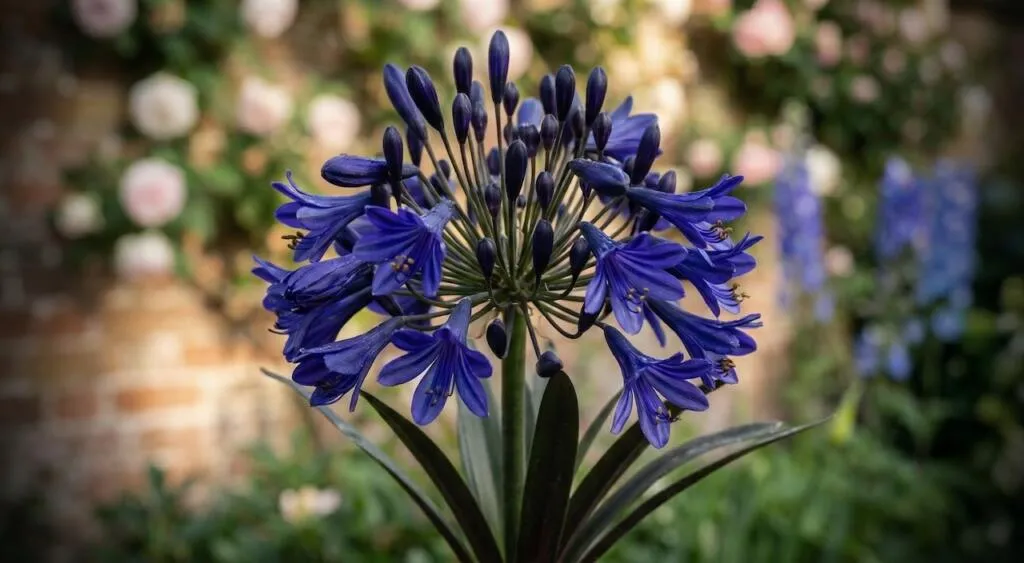
A taller deciduous variety reaching around 100 to 120 centimetres, ‘Northern Star’ produces deep violet-blue flowers on strong upright stems. It is one of the hardiest named varieties available and is particularly well-suited to northern UK gardens. The combination of height, colour and hardiness makes it excellent for the back of a sunny border.
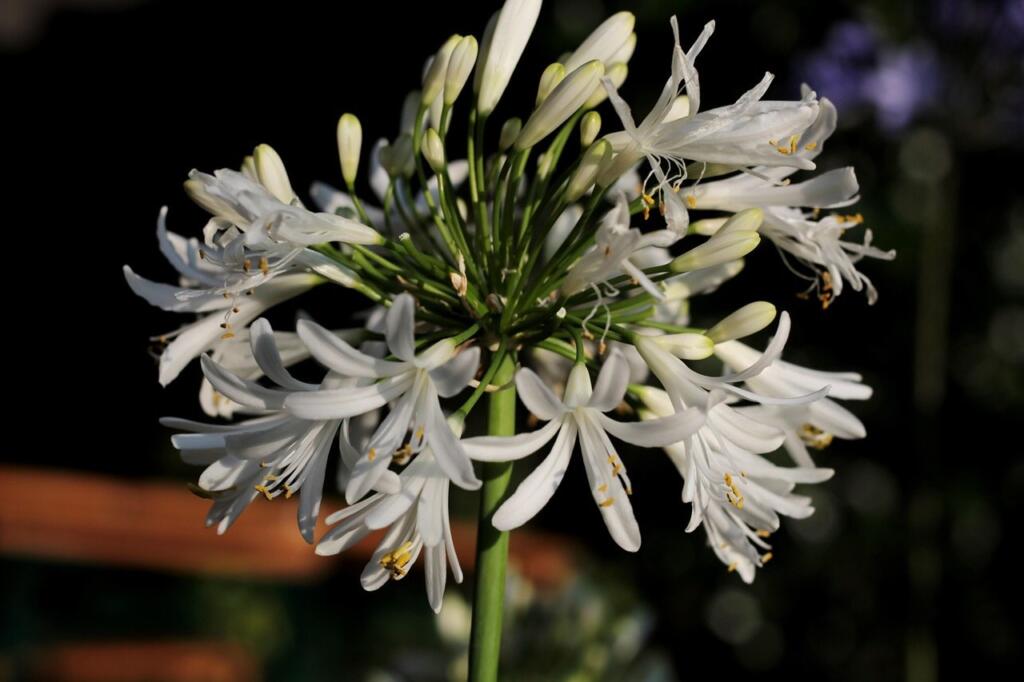
For white Agapanthus, ‘White Heaven’ is a semi-evergreen variety with beautifully pure white flowers and a neat compact habit at around 40 to 60 centimetres. ‘Snow Crystal’ is a smaller, white, deciduous variety with particularly clean flowers. Both hold the RHS AGM. White Agapanthus work superbly in containers, particularly in terracotta, and pair elegantly with white and silver planting schemes. However, bear in mind the fact that they will need a contrasting colour so they don’t get lost in flower beds in a sea of white! My garden colour guides are a good way to create contrasting flower bed choices.
‘Peter Pan’ is a dwarf evergreen Agapanthus reaching only 30 to 45 centimetres, making it excellent for small containers, window boxes or the very front of a border. It has good pale blue flowers for its size. Being evergreen, it needs winter protection in most UK regions, but its small size makes moving it under cover very practical. For small urban gardens and patio containers, it is one of my most-used choices.
🛒 Find Agapanthus plants on Amazon UK
Agapanthus needs full sun to flower well. A minimum of six hours of direct sunlight per day is the baseline, and more is always better. A south or west-facing position is ideal. East-facing borders will produce some flowers, but the display is typically thinner, and the stems are less upright than on a plant that receives afternoon sun. North-facing borders are not suitable.
Shelter matters too, particularly for the flower stems, which can reach a metre or more on tall varieties. In exposed positions, wind can snap the stems or cause them to lean badly. Planting near a warm wall, fence, or hedge reduces this risk and also provides a microclimate that helps tender evergreen varieties in winter.
Agapanthus tolerates a wide range of soil types as long as drainage is reasonable. It actively dislikes waterlogged or boggy ground, which will rot the fleshy roots over winter, regardless of how hardy the variety is. On clay soils, improving drainage before planting with horticultural grit is important. On free-draining sandy or chalky soils, Agapanthus will thrive positively with minimal intervention.
One of Agapanthus’s genuine strengths, and one that is under-appreciated, is its tolerance of coastal conditions. The combination of well-drained soil, salt-laden air and full sun that characterises most UK coastal gardens is almost exactly what Agapanthus evolved for on the South African shoreline. If you garden on the coast and struggle to find plants that are both beautiful and tough, this is one of your best options.
This is where I spend more time than anywhere else when I am specifying Agapanthus in a design, because the container question is more nuanced than most growing guides suggest. The standard advice is to grow Agapanthus in pots because you can then move tender types under cover in winter. That is true, and it is a perfectly good reason. But there is a second, arguably more important reason: my best-flowering Agapanthus are nearly always in containers rather than in borders, even the completely hardy ones.
Agapanthus flowers significantly better when its roots are restricted. In open ground, a well-established clump will spread its root system widely through the surrounding soil and invest considerable energy in vegetative growth. In a container, the roots hit the sides of the pot and are forced into a dense, compact mass. The plant interprets this restricted state as environmental stress and responds by producing more flowers. It is one of nature’s more counterintuitive gardening tricks: the slightly cramped plant flowers harder than the comfortable one. I have seen Agapanthus in containers producing three times as many flower stems as the same variety growing freely in a border alongside it.
🛒 Buy terracotta pots from Amazon UK
You should resist the urge to repot Agapanthus into a larger container too soon. A plant that appears to have outgrown its pot, with roots emerging from the drainage holes or the compost drying out very rapidly, is often at or near its peak flowering performance. Only repot when the plant has genuinely become so root-bound that it is pushing out of the pot, or the display has begun to decline despite good care. Even then, move up only one pot size rather than giving it significantly more space.
💡 Top Tip
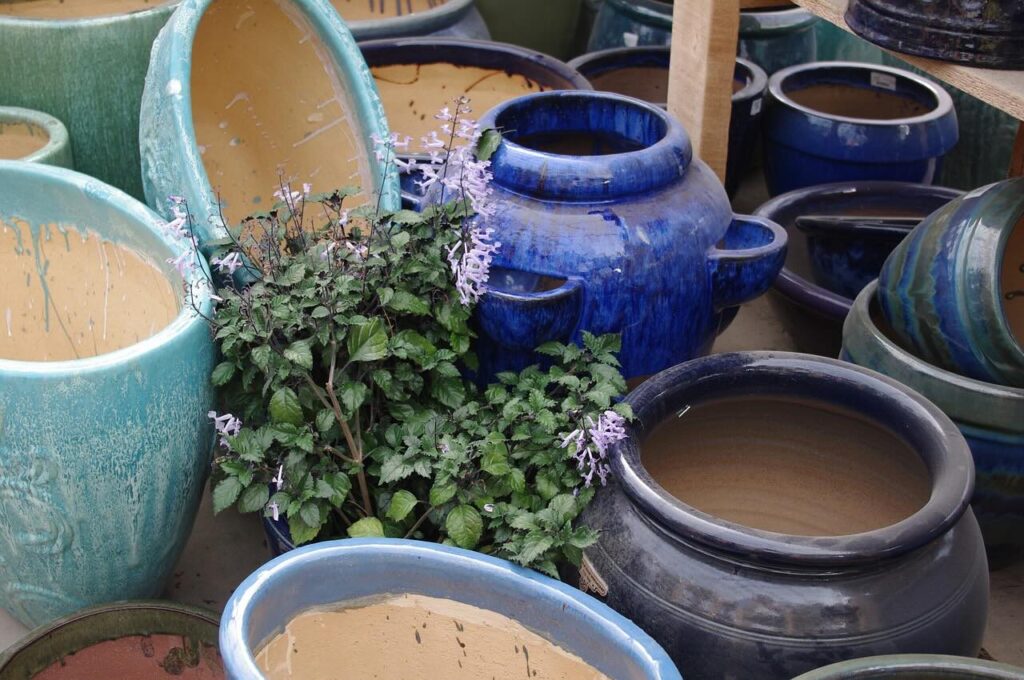
Terracotta pots are my strong preference for agapanthus over plastic or glazed ceramic. The porous terracotta walls allow excess moisture to evaporate, which reduces the risk of root rot in wet UK summers and winters. The thermal mass of a terracotta pot also keeps roots slightly warmer in cold snaps than a thin plastic container would. For a large specimen agapanthus, a terracotta pot of 35 to 45 centimetres diameter gives the perfect balance of root restriction and stability.
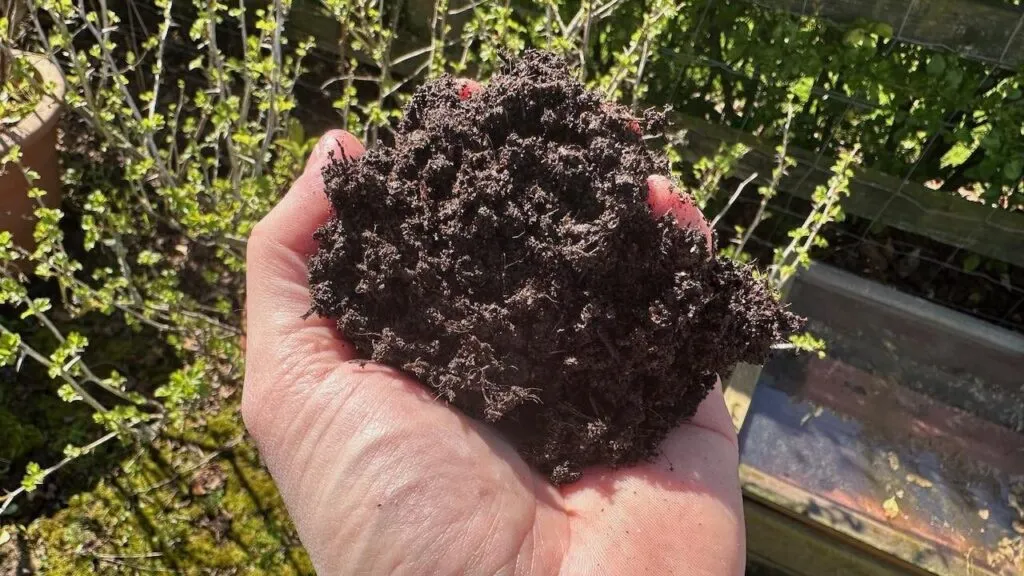
Use a loam-based compost such as John Innes No. 2 or No. 3 mixed with roughly 20 percent horticultural grit or perlite for drainage. Peat-free multipurpose compost can be used, but it breaks down more quickly, and the drainage deteriorates over time. The loam-based mix holds its structure for two to three seasons and maintains consistent drainage throughout. Avoid very rich composts or adding large amounts of fertiliser to the mix at planting: Agapanthus that is fed too generously produces lush foliage at the expense of flowers, exactly as lavender and wisteria do.
🛒 Buy John Innes No. 3 compost from Amazon UK
For gardeners with a sheltered, south-facing border and free-draining soil, growing hardy deciduous Agapanthus directly in the ground is absolutely viable and produces some of the most impressive displays I have seen in UK gardens. A mature clump of Headbourne Hybrids in full flower in a sunny August border is spectacular and the kind of planting that earns its place permanently.
The key difference between containers and open ground in terms of flowering is the management of the root system. In the ground, Agapanthus will spread gradually through the border via its fleshy rhizomatous roots. This spreading is slow and manageable compared with something like mint or ornamental grass, but over several years, a clump will increase in diameter, and the flowering can become less spectacular as the plant becomes too comfortable. Dividing the clump every four to five years addresses this directly and keeps the plant in a state that encourages flowering.
On heavy clay soils, the approach I take on design projects is to dig the planting area to about 30 centimetres deep and replace the lower half with a mix of the original soil and generous horticultural grit. Planting the Agapanthus slightly proud of the surrounding ground level by two to three centimetres ensures that any standing water drains away from the crown rather than pooling around it. A grit mulch over the crown provides additional drainage insurance and looks clean and contemporary alongside the strap foliage.
The best time to plant Agapanthus in the UK is spring, from late April to June, once any risk of hard frost has passed. Container-grown plants can technically go in at any time of year as long as you water them through their first summer, but spring planting gives them the longest possible establishment period before their first winter.
In a container: fill the pot to about one-third with your compost and grit mix. Place the plant in the centre and check that the top of the root ball will sit roughly 3 to 5 centimetres below the rim of the pot, to allow for watering. Backfill around the roots, firming gently but not compacting hard. Water thoroughly and place in the sunniest available position. Do not be tempted to water again until the top few centimetres of compost have dried out.
In open ground, dig a hole roughly twice the width of the root ball and to the same depth. If your soil is heavy, work a generous amount of horticultural grit into the surrounding area before planting. Place the plant with the crown just at or slightly above soil level. Firm in well and water deeply. Apply a thin layer of grit around the crown. In the first growing season, water during any dry spells longer than ten days.
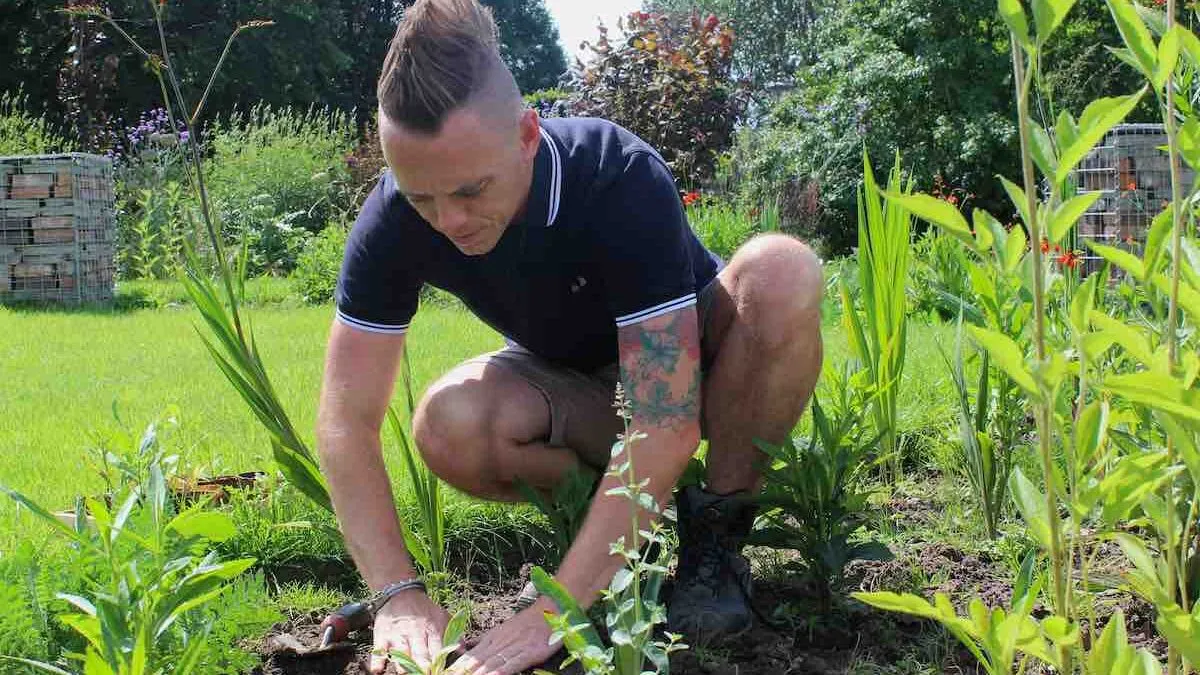
Once established, border Agapanthus is remarkably drought-tolerant and one of the most reliable plants I specify for hot, sunny gardens that gardeners do not have time to water constantly. In a normal UK summer, established border plants need little if any supplementary watering. Container Agapanthus needs more regular attention, particularly in July and August when the flowering stems are extending, and the plant is working hard. Check containers every two to three days in hot weather and water thoroughly when the top few centimetres of compost are dry. Avoid keeping compost constantly wet, which encourages root rot.
Agapanthus benefits from a modest feed in spring and early summer to support the developing flower stems. Use a high-potassium liquid feed such as a tomato fertiliser at half the recommended strength, applied once every two to three weeks from late April to the end of July. Stop feeding in August and completely from August onwards. Late feeding encourages soft growth that is more vulnerable to frost and diverts energy from the root system’s winter preparation. In the border, a single application of a slow-release, low-nitrogen granular fertiliser in April is sufficient and requires no further action through the season.
Removing spent flower heads promptly after flowering redirects the plant’s energy from seed production back into the root system, which benefits the following year’s display. That said, the dried seed heads of Agapanthus are architectural and beautiful through autumn. The spherical brown globes on tall stems provide structure and winter interest long after the flowers have gone. I often leave them standing until February, when new growth begins to push through, particularly on deciduous varieties where the bare stems and dried heads are the only above-ground interest through winter.
How much protection your Agapanthus needs in winter depends entirely on which type you have and where in the UK you garden. Getting this right is the difference between plants that last twenty years and plants you replace every spring.
In most UK gardens, these need no winter protection at all once they are established in their second or third year. In colder regions such as Scotland, northern England, or on exposed hilltop sites, a five to eight-centimetre mulch of bark or straw applied over the dormant crown in November provides useful insurance without any effort. Remove the mulch in March before growth begins. In their first winter after planting, even hardy deciduous types benefit from a light mulch while their root systems are still developing.
In the mildest coastal gardens of Cornwall, Devon, and parts of Wales, evergreen Agapanthus in a sheltered south-facing border can often be left outside with a generous bark mulch over the crown. Anywhere else, they need either to be brought under cover or to have serious fleece protection. The tell is the first forecast of frost below minus three degrees Celsius. At that point, act.
This is where the container advantage becomes most obvious. From late October, move tender agapanthus containers into an unheated greenhouse, cold frame, conservatory or frost-free shed before the first frost arrives. The aim is not warmth but the absence of hard frost. A temperature of around two to five degrees Celsius through winter is ideal: cold enough to maintain near-dormancy, consistently above freezing. Water very sparingly through winter, perhaps once every three to four weeks, just to prevent the compost from drying out completely. Do not feed. The plants will emerge in spring, ready to perform.
Even hardy deciduous types benefit from this treatment in their first winter in a container, when the root system is not yet dense enough to provide full frost protection through the pot walls. From their second year, established Headbourne Hybrids and similar hardy deciduous types in containers can usually stay outside through all but the hardest UK winters, though I always bring them in if a prolonged hard freeze is forecast.
When moving large pots is impractical, or whenever green Agapanthus are planted in the ground in a borderline climate, horticultural fleece is an effective tool. The key is to use it correctly rather than just drape it over the plant and hope for the best.
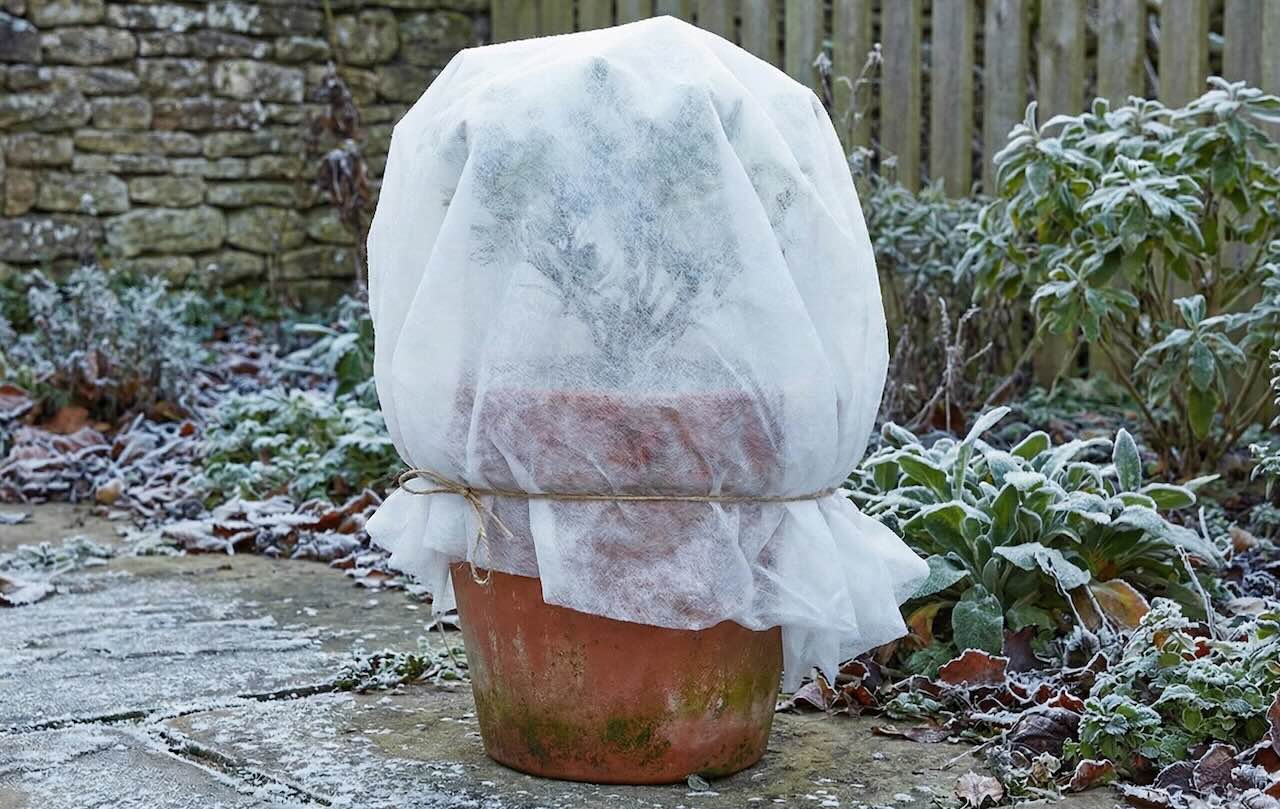
🛒 Buy horticultural fleece from Amazon UK
For container Agapanthus, you want to leave them outside during cold snaps rather than move them. Wrap both the pot and the plant. The pot itself needs insulation as much as the foliage. Frozen compost is lethal to roots, regardless of how well the leaves are protected. Wrap the pot in two layers of bubble wrap, secured with twine, then drape a double layer of horticultural fleece over the foliage, tucking it down around the base of the pot to prevent cold air from entering. Remove the fleece as soon as the cold spell passes to allow air circulation, which helps prevent the fungal problems fleece can encourage when left on for extended periods.
For an unheated greenhouse, an Agapanthus collection can be dramatically simplified in winter. Move all your tender container specimens inside in late October and arrange them on staging or the floor in the lightest available position. They need minimal water and no feed until late February, when you can begin to bring them back to life with gentle watering and a dilute liquid feed. By late March, most will be showing new growth and can move back outside on mild days, being brought in again for any late frost warnings.
💡 Top Tip
A cold frame is an underrated tool for overwintering agapanthus in containers if you do not have a greenhouse. A row of container agapanthus inside a cold frame from November to March will come through a UK winter in excellent condition and be ready to flower the following summer without any heat input at all. Cold frames take up very little space and the cost is trivial compared with replacing frost-damaged plants each spring.
Non-flowering Agapanthus is one of the most common questions I receive through the forum, and in almost every case, the cause is one of the following five things.
This is the most frequent cause of non-flowering Agapanthus plants. Agapanthus, in less than six hours of direct sun, will produce foliage but little or no flowers. If your plant looks healthy but never flowers, check how much direct sunlight it actually receives during the day. Even a fence, wall, or overhanging tree that shades the plant for just a few hours during the critical midday period can significantly suppress flowering. Move the plant or container to a sunnier position before doing anything else.
Overfeeding with a nitrogen-rich fertiliser produces lush, dark green foliage with no flowers. This is the second most common cause I see. If you have been feeding with a general-purpose plant food or a high-nitrogen lawn feed that has run off into the border, this is likely your problem. Stop feeding entirely for one season, then resume feeding only a low-nitrogen, high-potassium feed. Treat them mean, Ninjas!
As discussed above, Agapanthus flowers best when root-bound. If you have recently moved your plant into a significantly larger container, it will spend a season or two producing new roots to fill the space before returning to flowering mode. Patience is the only solution, or move it back to a smaller pot.
Agapanthus grown from seed or division takes two to three years to reach flowering size. A small plant bought in a nine-centimetre pot may need two full growing seasons before it produces its first flower. Buying plants already in flower or in bud at the garden centre is the fastest route to a display in year one.
A late frost in May or early June can damage the developing flower stems before they are visible above the foliage. The plant looks unaffected because the damage happens underground, but no flowers appear that summer. This is particularly relevant for evergreen types that are showing active growth early in spring. In frost-prone gardens, keep tender Agapanthus under cover until late May.
Division is the simplest and most reliable way to increase your agapanthus stock. It is also the best way to rejuvenate a clump that has been in the ground or in the same container for more than four or five years and whose flowering has started to decline. Divide in spring, from April to May, just as new growth is appearing.
For border plants, use two garden forks back-to-back to lever the clump apart into sections, each containing several healthy shoots and a good portion of the fleshy root system. Replant immediately at the same depth. For container plants, tip the root ball out of the pot, tease or cut it into sections with a sharp knife, and repot each section into its own container using fresh compost and grit. Water well and place in a sheltered, sunny position for the first few weeks while the divisions re-establish.
Do not expect divided plants to flower in their first season after division. They need that first year to rebuild their root system and establish their energy reserves. By year two, they will typically be flowering strongly.
I want to share a personal experience that demonstrates just how spectacular Agapanthus can be when you give it exactly the conditions it loves, because it shaped how I use this plant in professional design work.
When I designed the Hartley Botanic show garden at RHS Hampton Court, I used Agapanthus as a central feature planting within the glasshouse display. The brief was to create a planting scheme that demonstrated the relationship between a quality glasshouse and the plants that benefit most from the climate control it provides. Agapanthus was an obvious choice: in a glasshouse environment with full light, excellent drainage, warmth and complete frost protection, the plants were extraordinary. Tall, perfectly upright flower stems. Rich, deep blue flowers. Dense, healthy foliage. The kind of display that stops visitors and makes them stand and look.
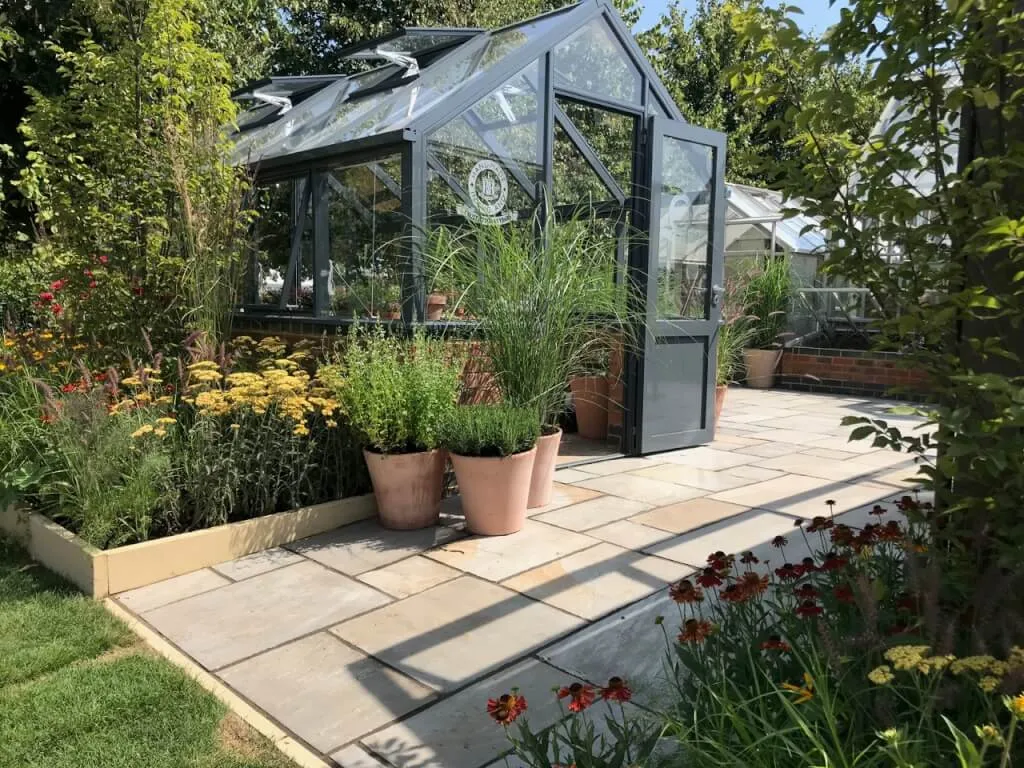
What that experience confirmed for me as a professional designer is something I emphasise to every client who asks about Agapanthus: this plant is essentially trying to be in a South African summer all the time. The closer you get to giving it those conditions: maximum sun, perfect drainage, warmth and no cold wind, the more extraordinary the display becomes. A glasshouse is the extreme version of that. A south-facing terracotta pot against a warm house wall is a more realistic version. Both work on the same principle.
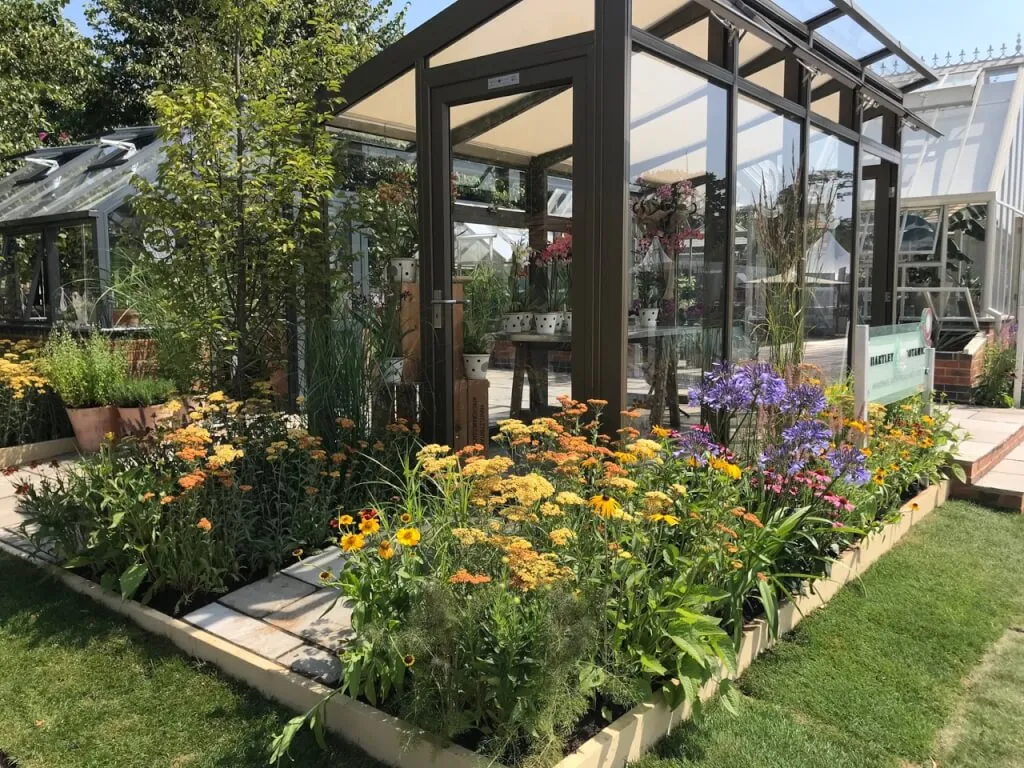
The show garden work also confirmed something about the design use of Agapanthus that I return to constantly: it has an elegance that very few perennials match. The combination of architectural strap foliage and those tall, airy flower stems creates a sense of height and movement without heaviness. In a contemporary design with clean lines and structural planting, Agapanthus strikes the right balance between formality and naturalism. I reach for it on almost every sunny terrace project I work on.
Agapanthus pairs beautifully with plants that share its preference for full sun and free-draining conditions, and its tall upright flower stems provide a structural contrast to more rounded or spreading plants.
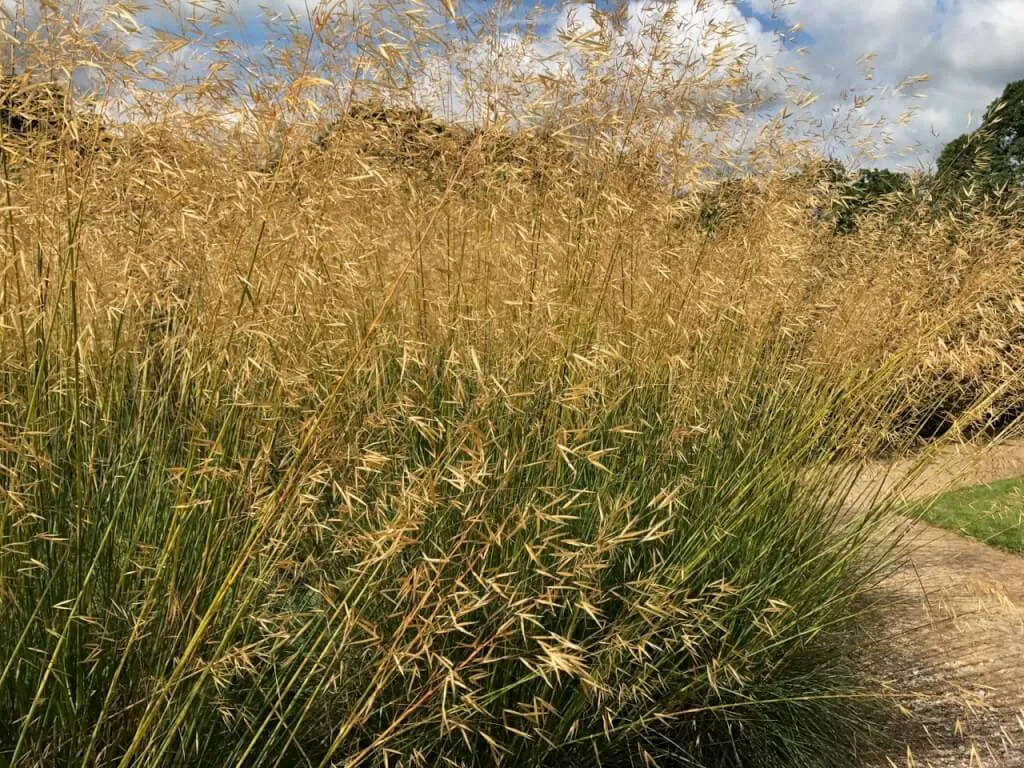
In a border scheme, my most-used combination is Agapanthus with Salvia nemorosa ‘Caradonna’, ornamental grasses such as Stipa tenuissima or Calamagrostis ‘Karl Foerster’, and Achillea in warm amber or yellow. The dark purple salvia spikes echo the blue of the agapanthus flowers, the grasses provide movement and a neutral foil, and the flat achillea heads contrast with the globe form of the agapanthus umbels. Together, they create a complete late-summer scheme that covers July and August almost entirely.
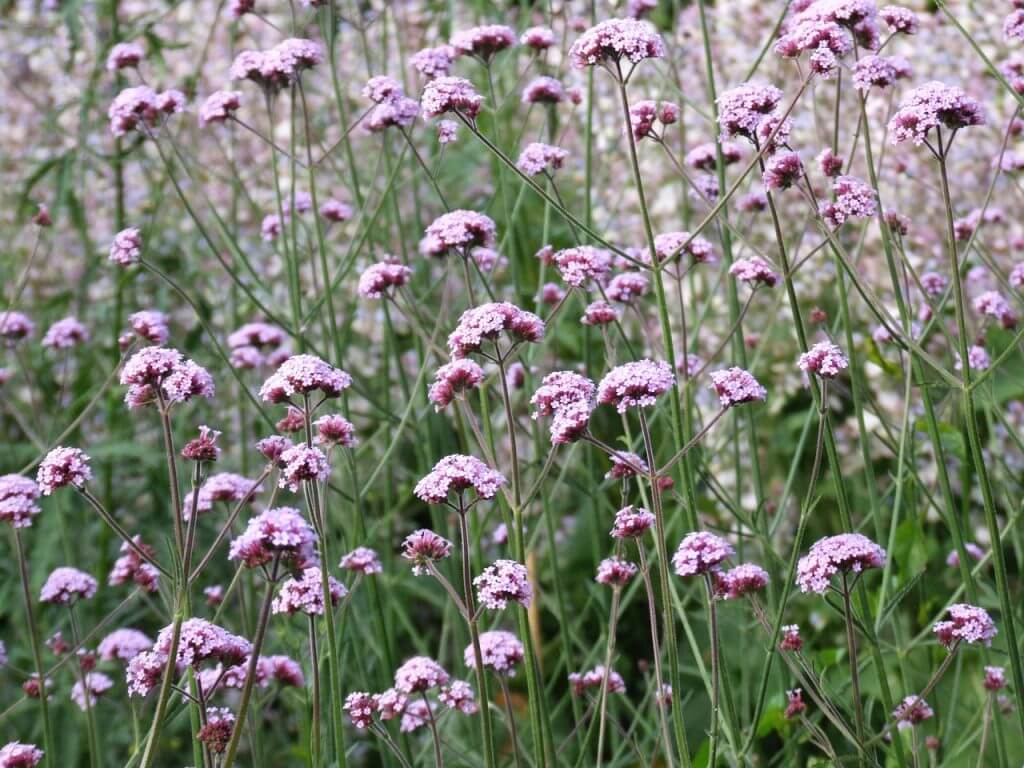
For a more refined, contemporary palette, white Agapanthus combined with Cosmos ‘Purity’, Verbena bonariensis and silver-leaved Stachys byzantina is one of the most elegant planting combinations I use on terrace and courtyard projects. The white flowers of the Agapanthus hold an enormous presence in the evening light, and the verbena provides a floating purple note above everything else.
In containers, Agapanthus works very well as a specimen plant rather than in combination. The architectural quality of the plant is powerful enough on its own, and the clean terracotta or stone look of a single large pot with one Agapanthus in full flower has a simplicity that more complex arrangements often lack.
It depends on the type. Deciduous Agapanthus, such as Headbourne Hybrids, are fully hardy in most of the UK and can stay in the ground all winter without protection. Evergreen types are tender and must be protected from hard frost, either by moving containers under cover or applying generous fleece and mulch protection in the ground.
Both work well for hardy deciduous varieties. Containers are often better for flowering because restricted roots encourage more flower production. They also allow tender types to be moved under cover in winter. For the most impressive long-term border display, hardy deciduous types in open ground with free-draining soil produce excellent results with very little maintenance once established.
Most varieties flower from July to September, with the peak display typically in August. Some early types begin in late June, and some evergreens extend into October in a mild autumn.
The most common causes are insufficient sunlight, over-feeding with nitrogen, roots not restricted enough in containers, the plant being too young, or late frost damage to developing buds. Move the plant to a sunnier position and stop any nitrogen-rich feeding before trying anything else.
Yes, with soil improvement. Work generous horticultural grit into the planting area, raise the planting level slightly, and apply a grit mulch over the crown. On genuinely waterlogged clay, containers with a free-draining compost mix are more reliable than open ground.
Excellent. Agapanthus tolerates salt air, free-draining coastal soils and exposed sunny positions with ease. It is one of my most reliable recommendations for seaside planting schemes in the UK.
If you want professional support designing a garden or any other challenging outdoor space, take a look at my online garden design courses. Whether you are starting from scratch or improving an existing layout, my courses, priced from £29 to £199, give you the tools and confidence to design your own garden to a professional standard.
For the garden you’ve already got, not the one you’re starting from scratch. Seven checklists and video lessons from BBC Garden Rescue’s Lee Burkhill, designed to help you decide what’s worth keeping before you spend a penny.
Garden Design Examples for Small Gardens: 30 Design Templates & Planting Plans: In this online gardening course, I’ll walk you through 30 fantastic garden designs, explaining the logic behind the layout and plant choices, plus take-home tips for applying them in your own garden.
Learn how to transform and design your garden with Lee Burkhill’s crash course in garden design. In over 5 hours, Lee will teach you how to design your dream garden. Featuring practical design examples, planting ideas and video guides. Learn how to design your garden in one weekend!
Garden Design for Beginners Online Course: Want to become a garden designer or design your own garden? This beginner course is for you. Join me, Lee Burkhill, an award-winning garden designer, as I train you in the art of beautiful garden design. Enjoy 20 hours of online study and video lessons, along with quizzes and a completion certificate.
Agapanthus is one of the most rewarding plants you can grow in a sunny UK garden, delivering those rare true-blue flowers on tall, elegant stems from July to September when much of the border has finished. Choose Headbourne Hybrids or a named hardy deciduous variety for permanent outdoor planting in most UK regions. Grow in containers for the best flowering and maximum flexibility; resist the urge to repot too soon; feed modestly with a high-potassium feed through summer; and bring tender evergreen types under cover before the first frost. Treat it as the South African sun-worshipper it is, and it will reward you with one of the finest late-summer displays in the garden.
Happy Gardening! 🌿



Lee Burkhill, known as the Garden Ninja, is an award-winning garden designer and horticulturist with over 30 years of gardening experience and 15 years as a professional garden designer. A qualified RHS (Royal Horticultural Society) professional, Lee specialises in sustainable garden design and practical horticultural advice. He designs and presents on BBC1’s Garden Rescue and in leading gardening publications. Lee combines three decades of hands-on gardening knowledge with professional design qualifications to help gardeners create beautiful, functional outdoor spaces.
View all posts by Lee Burkhill





JOIN THE NINJAS
Be the first in line for new Guides, Discount codes and Offers