For the garden you’ve already got, not the one you’re starting from scratch. Seven checklists and video lessons from BBC Garden Rescue’s Lee Burkhill, built to help you work out what’s worth keeping before you spend a penny.
69


Having a formal front garden is a statement piece, and ideally, it should match the style of the property it will sit with. Period properties, townhouses and turn-of-the-century properties lend themselves really well to a formal garden design. New build houses can also be excellent candidates for a formal garden layout, especially with the trend to build three or four-story townhouses.
Formal gardens can work really well with thin rectangular gardens, as the order can make the garden feel larger. A formal front garden uses symmetry, clipped structural plants and quality hard landscaping to create a striking, low-maintenance first impression. Key plants include standard bay trees, Buxus topiary balls, lavender and Agapanthus. The style suits period properties, townhouses and new-build homes with a symmetrical facade, and it can be achieved in even a small frontage with the right proportions.
Jump To
Formal gardens require careful planning and getting the proportions just right for a perfect garden finish. In this example, I was tasked with designing a formal front garden for a listed period townhouse in Manchester. Using careful design and plant choices, I think you’ll agree that the result was a real transformation!
This page contains affiliate links (see full details here). If you purchase through these links, I may earn a small commission at no extra cost to you.
A formal garden is built on three core design principles: symmetry, geometry and repetition. Where a cottage or informal garden celebrates the happy chaos of plants spilling over one another, a formal garden imposes order. Paths run in straight lines or match on either side of a central axis. Plants are clipped into architectural shapes. The planting palette is restrained, with structure taking precedence over seasonal colour.
In a front garden context, this translates into a design that looks considered and purposeful from the pavement. It communicates something about the property behind it: that it is looked after, that it has character, and that the people inside care about their space. After designing hundreds of front gardens across the UK over the past twenty years, I can tell you that a well-executed formal front garden adds more perceived value to a property than almost any other outdoor investment of equivalent cost.
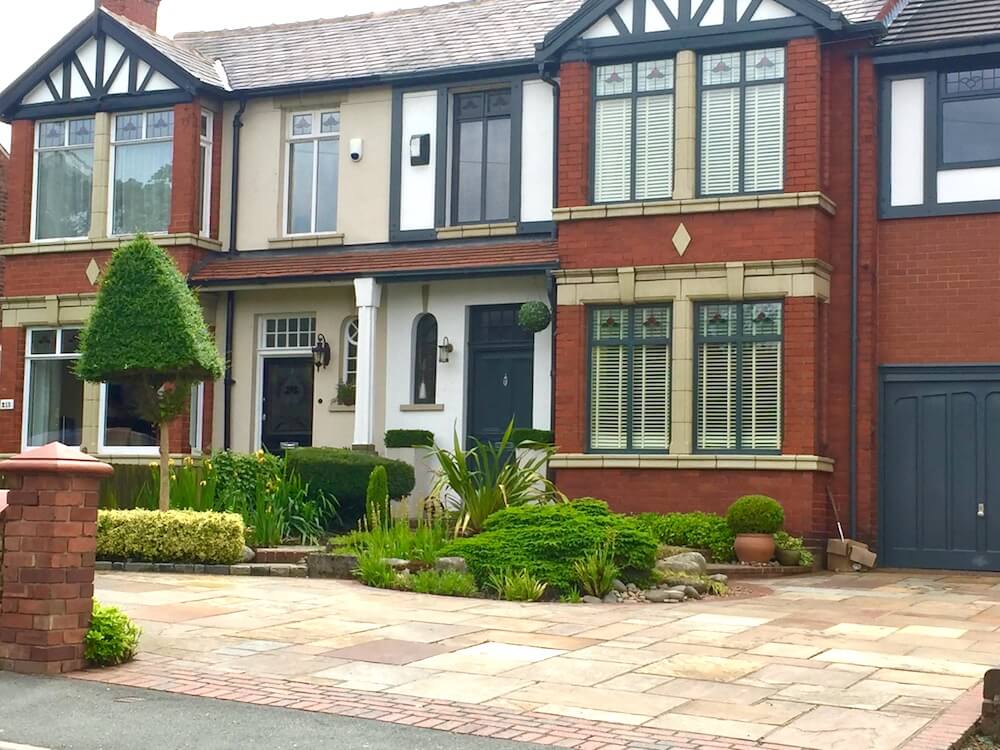
1)Symmetry along a central axis. The front door usually provides this axis naturally. Whatever you place on one side of the path, you mirror on the other. Two matching planters, two matching standard trees, and matching topiary balls in beds of equal size. This mirroring is what gives formal gardens their sense of ceremony.
2) Geometric shapes in both hard landscaping and planting. Square beds, rectangular lawns, circular topiary, straight-edged paths. Every element reinforces the sense that this garden has been designed rather than allowed to happen.
3) Clipped structural plants that hold their form throughout the year. This is what separates formal from informal more than anything else. A formal garden still looks like a garden in January, because the structure comes from evergreen clipped plants rather than flowering perennials that disappear over winter.
This is the question I ask every client before I put pencil to paper. The garden style and the property style need to be in conversation with each other. A formal garden in front of a 1970s ranch-style bungalow will look incongruous, no matter how beautifully executed. A cottage garden in front of a Victorian townhouse misses an enormous opportunity. The building and its outdoor space should feel like they belong to the same story.
1)Period properties and Victorian or Georgian townhouses are the natural home of formal front garden design. The symmetrical facades, the generous front steps, the period ironwork and brickwork all call for a garden treatment that matches their civic confidence. These buildings were designed to impress, and the garden should do the same.
2) Modern new-build townhouses, particularly three or four-storey properties with a narrow but tall facade, respond brilliantly to formal treatment. The clean lines of contemporary construction suit the precision of clipped topiary and geometric paving.
3) Narrow rectangular front gardens where space is tight. Formal design actually makes a small space feel more intentional and controlled. An informal garden in a tiny frontage can look cramped; a formal one looks considered.
Where formal garden design works less well is with detached Arts and Crafts properties, farmhouses, semi-rural cottages, or any building where the architecture actively leans into informality and organic materials. If your property has a thatched roof and wonky beams, a parterre of clipped box is probably going to feel like a clash.
💡 Top Tip
Before committing to a formal style, stand on the pavement and photograph the front of your property. Look at the roofline, the window positions and the door. If those elements line up symmetrically, a formal garden will reinforce that symmetry beautifully. If they are asymmetrical, you may need to work harder to make formal planting feel natural, and an informal or contemporary style might sit more comfortably.
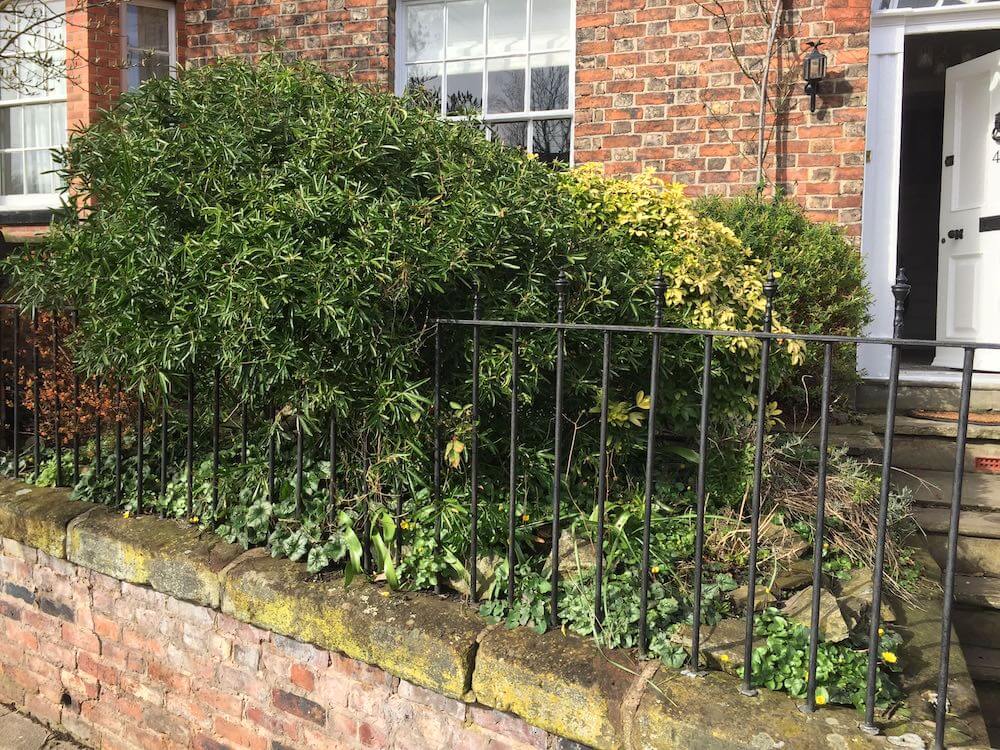
The Victorian property had quite steep steps up to the property and a really overgrown crazy paved front garden. You could tell at one point it had been a cottage-style front garden, but sadly its plant and kerb appeal had long passed. The oversized windows and the original front door had a really grand feel. When the client asked me to design them a garden fitting for the property, I got to work to bring back this sense of effortless grandeur.
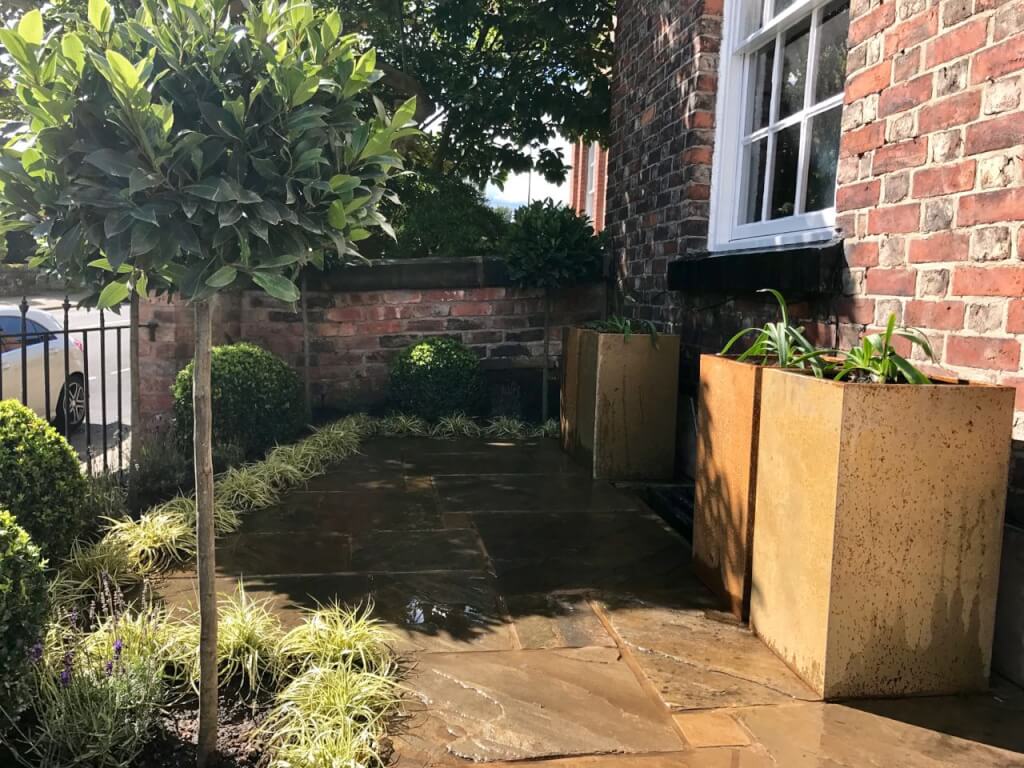
This garden design required careful and sympathetic consideration to the age of the property and the local area. Being a period property, you cannot simply slap some planters or block paving in there. You risk not only upsetting the neighbours but also ending up with a design that is at odds with the beauty of the building. Although the garden is small you need to be very considered with the design to complement the property and not jar with it.
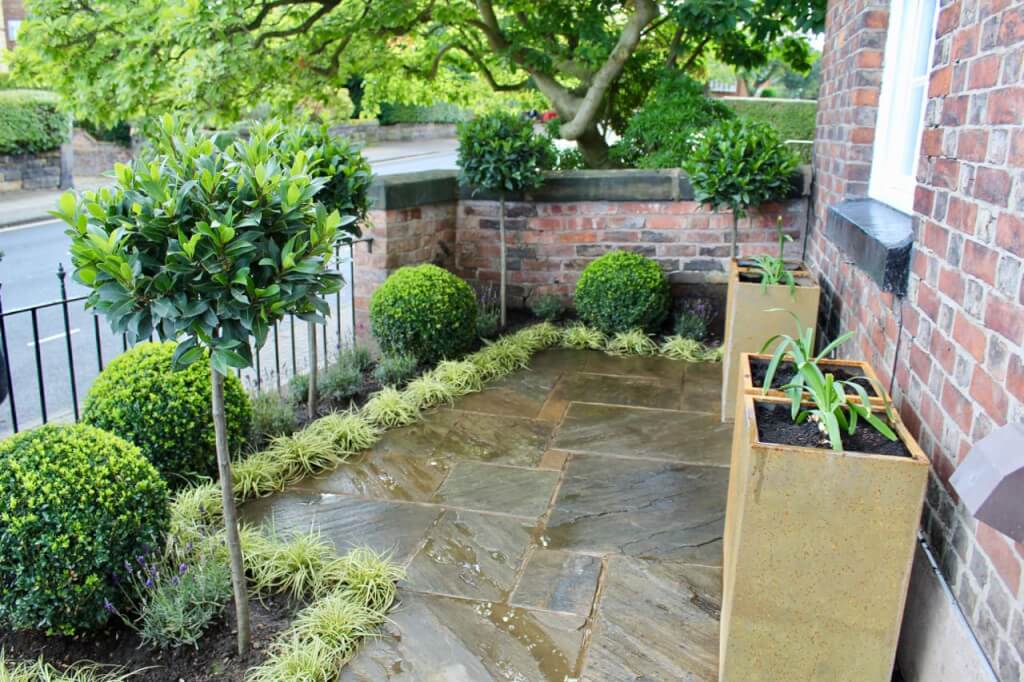
With it being a front garden and a small space, a lot of the normal features would be absent, such as seating or somewhere to entertain. What was vitally important to the client was that the front garden welcomed them home and also looked gorgeous when looking out of their lounge that backs onto the front garden. As busy working parents, they wanted something low maintenance that would carry itself through the winter but also had a real sense of interest.
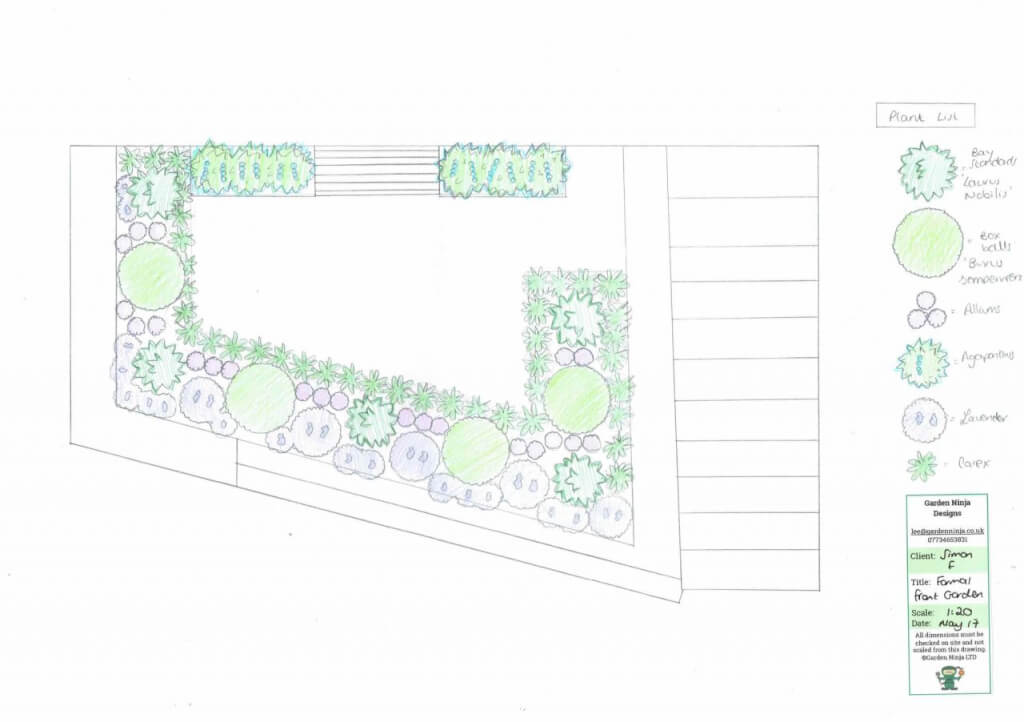
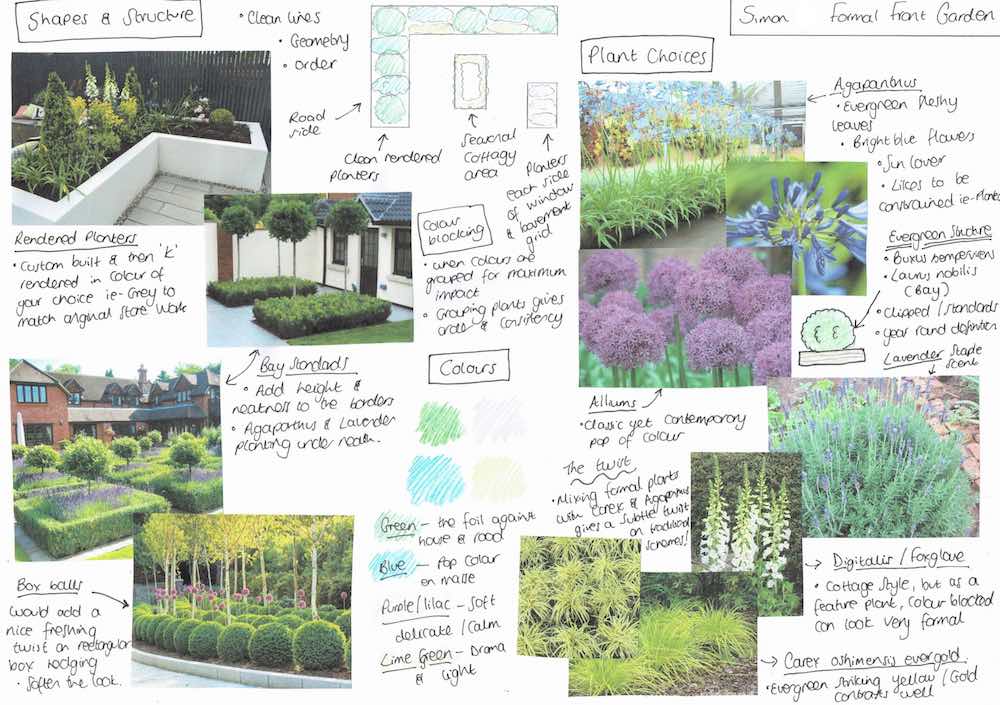
I designed a formal arrangement incorporating some standard bay trees for height and interest. Mirroring this I used Buxus (box hedge) topiary balls to match the standards but at ground level. These two plants would provide the year-round structure.
I then used the classic formal garden plant of lavender to infill around these plants. Interspersed with alliums that would fire up out of the soil in summer, mirroring again the circular habit of the standards and the topiary. Carex morrowii ‘Ice Dance’ was chosen as the edge plant to spill out over a gorgeous brick herringbone terrace.
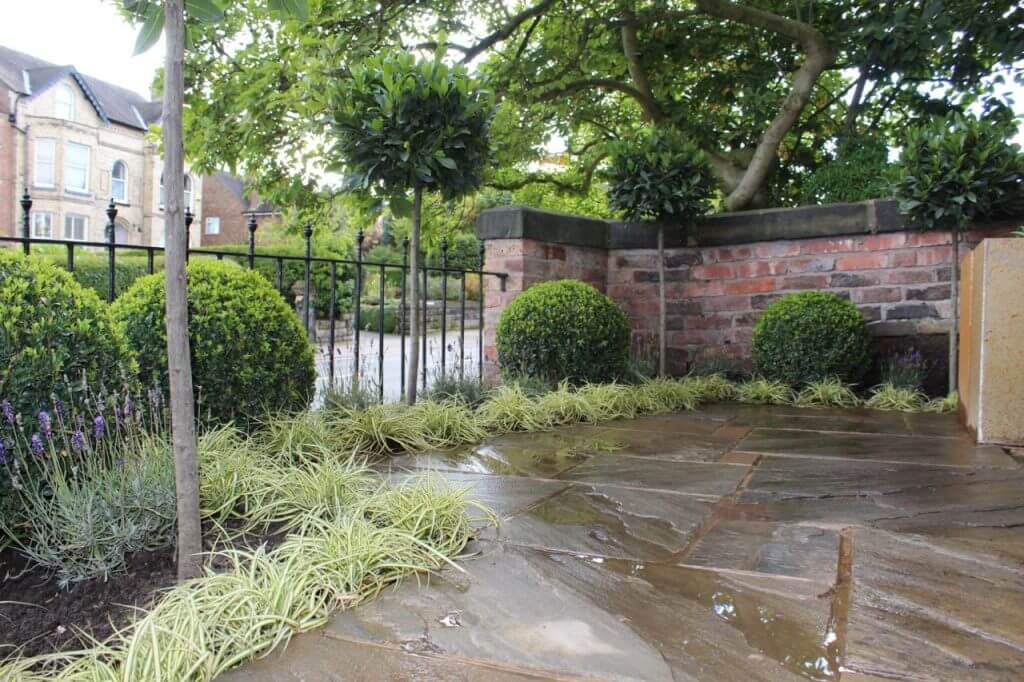
The terrace was south-facing, so it was baked in all day sun, which allowed these plant combinations to thrive. The York stone helped the garden blend with the property and give it a substantial texture. The heavy weight of the stone flags really helped ground the design.
By keeping the joints of the York stone clean rather than riven, it again helps keep it contemporary rather than rustic.
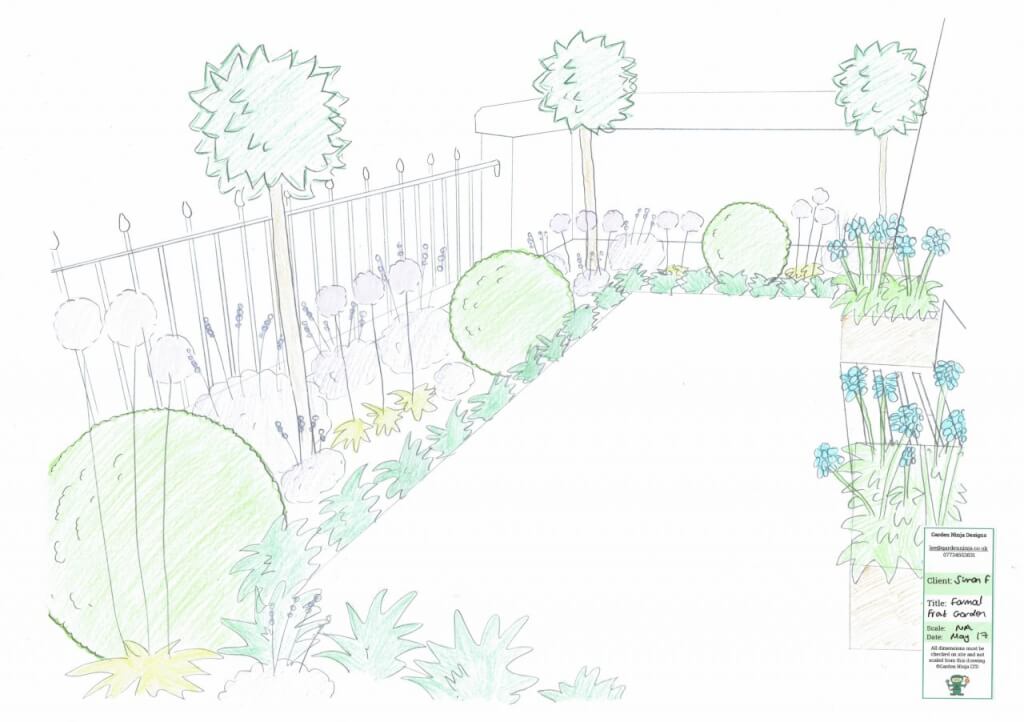
To add a touch of modernity, I included four Corten steel planters which would contain bright blue Agapanthus. The Corten steel rusts as it oxidises and gives a matt orange colour to the steel. Orange and blue are contrasting colours, meaning that putting them together makes them appear even more vibrant than on their own.
The Agapanthus foliage provides excellent fleshy evergreen colour, and then in summer, they spring into action with bright blue flowers. They remind me of fireworks with their exploding flower structure. These would be seen from the lounge, providing a vibrant glow.

Corten steel works particularly well in a formal garden because it has a material seriousness to it. It is not cheap or lightweight. The rich, warm rust tones also introduce colour without the need for additional planting, which is a useful tool in a restrained, formal palette. One thing to be aware of with Corten is that it will bleed rust marks onto paving as it weathers in the first few years. If you have pale stone or cream concrete, position your Corten planters where any run-off can be managed, or seal the underside of the planter before installation.
It was a really interesting design which I think is both fitting for the property, low maintenance but also dynamic enough for the wow factor. This design will only take a few key bits of maintenance a couple of times a year to keep its form. Do you need more help in choosing what style of garden to go for? Why not watch my quick guide below.
The hard landscaping in a formal front garden does at least as much work as the planting, often more. In an informal garden, you can get away with mismatched materials softened by exuberant planting. In a formal garden, where the planting is restrained, and the eye is drawn to clean lines, the quality and character of your stone, brick or paving will be front and centre.
For period properties, natural stone is almost always the right answer. York stone, with its warm buff tones and fine grain, is my first choice for Victorian and Edwardian properties in particular. It has weight and permanence. When you lay York stone in front of a period townhouse, the garden and building begin to feel as though they were always part of the same composition. Laying the joints tight and clean rather than wide and riven keeps it looking contemporary rather than rustic, which matters if you are trying to create a modern formal garden rather than a traditional cottage look.
Herringbone brick is another excellent choice for formal front gardens and can be used as a standalone surface or as a border around stone flags to add pattern and formality. It echoes the geometric precision of the style and looks particularly good with Victorian brickwork properties where you can match or complement the original brick tone.
One thing I would strongly caution against is plain grey concrete block paving. It is everywhere in front gardens across the UK because it is cheap, but it almost always makes a property look less, not more. If budget is a genuine constraint, plain gravel with a quality edging detail is a more successful solution than standard block paving, and it has the additional benefit of being permeable, which matters if you are covering more than five square metres of front garden since planning rules require permeable surfaces beyond that threshold.
💡 Top Tip
If you are considering covering your front garden with impermeable paving of more than five square metres, you will need planning permission. Permeable alternatives include resin-bonded gravel, block paving with open joints filled with gravel or grass, and natural stone with open joints. These options also help manage surface water runoff, which is increasingly important in urban areas. Always check with your local authority before making changes to a listed building’s curtilage.
The plant palette for a formal front garden needs to do several things simultaneously: provide year-round structure, respond well to clipping and training, look good at all times of year and require only minimal fuss. After two decades of designing formal gardens across the UK, I keep returning to the same reliable cast of plants because they genuinely work. Here are the ones I reach for most often.
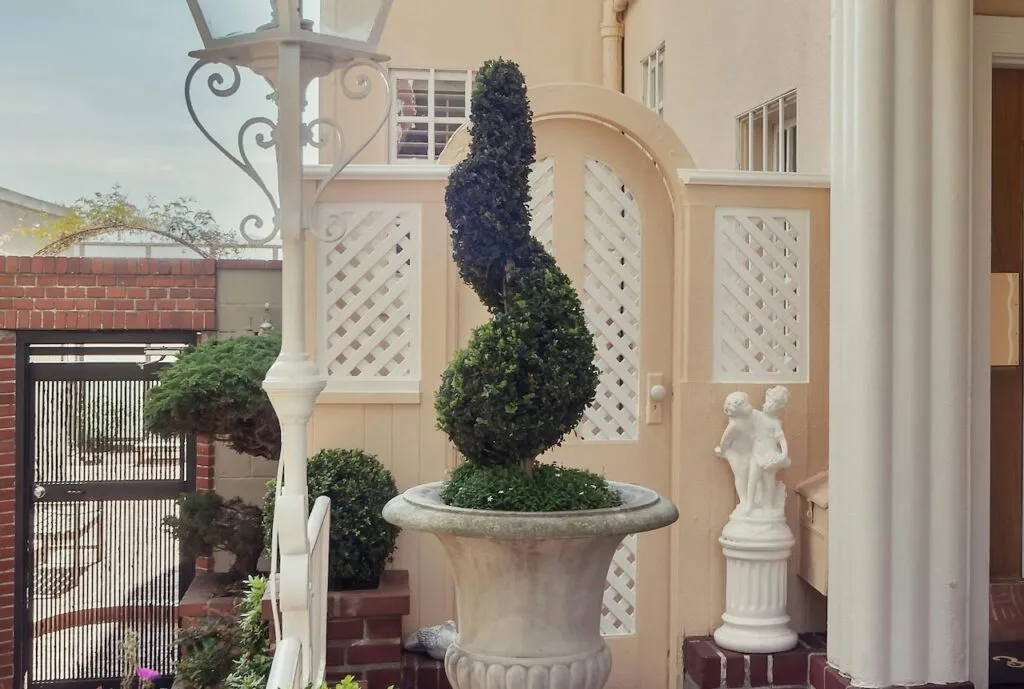
The standard bay tree is the backbone of formal front garden design and has been for centuries. Trained on a clear stem with a clipped round or lollipop head, a pair of matching bay standards flanking a front door or gateway immediately signals formal intent. Bay is an excellent choice because it is genuinely dual purpose: the aromatic leaves are useful in cooking, and the plant tolerates quite hard pruning twice a year without complaint.
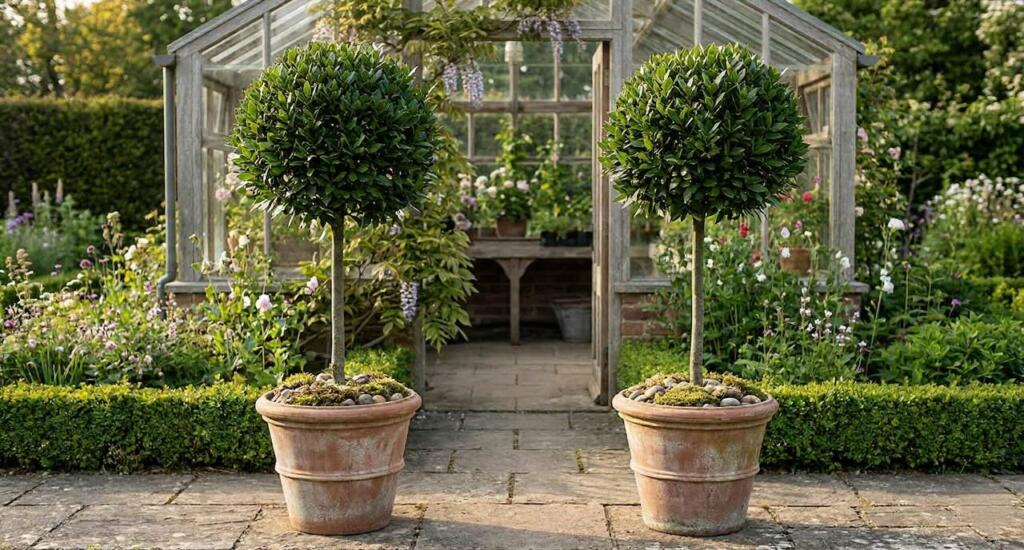
In containers, bay trees can be moved under cover if you are in a cold part of the country and concerned about frost damage to the head. They will grow happily in large planters for many years as long as they are fed and watered consistently in the growing season.
🛒 Buy standard bay trees from Amazon UK
Buxus has been used in formal gardens since the Renaissance and remains, despite the challenges of box blight and box tree caterpillar, the definitive formal garden plant. Its small, dense leaves clip to a clean surface that holds its shape beautifully between cuts. As topiary balls, it provides the ground-level punctuation that mirrors the head of a standard tree above. As a low clipped hedge, it defines the geometric edges of borders and beds with extraordinary precision.
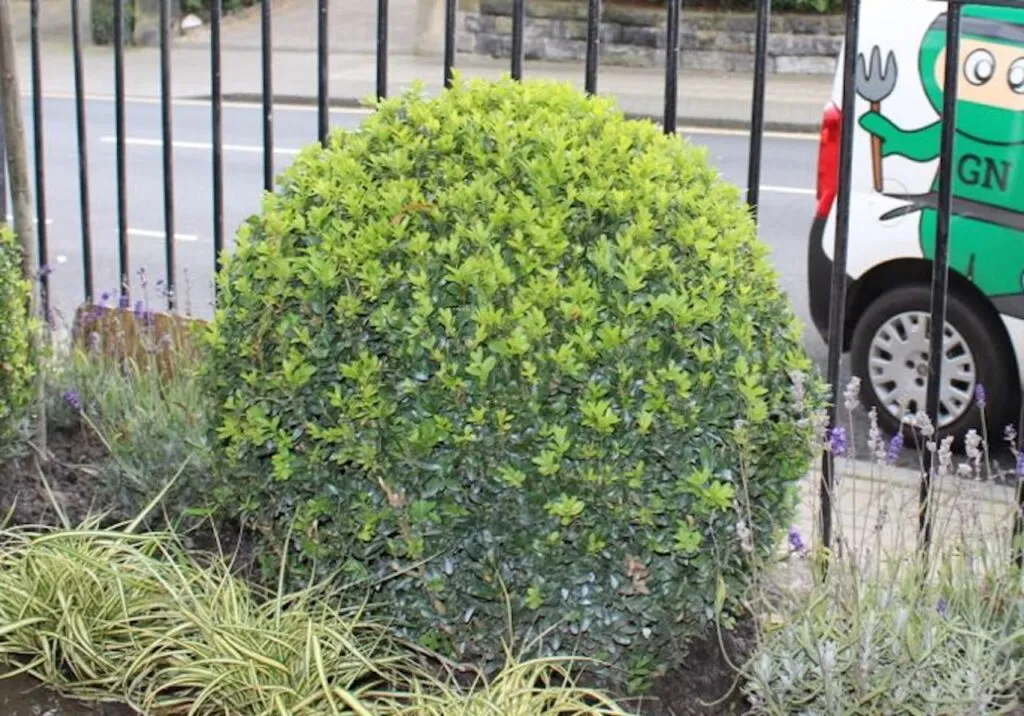
Box blight is a serious consideration for anyone planting Buxus in the UK today, which is why I discuss alternatives below. But if you are growing in an area with good air circulation and are prepared to monitor for early signs of blight, Buxus remains unsurpassed for formal work. Clip twice a year, in late spring and late summer, and use a fungicide spray preventatively if you have had problems in neighbouring gardens.
🛒 Buy Buxus topiary balls from Amazon UK
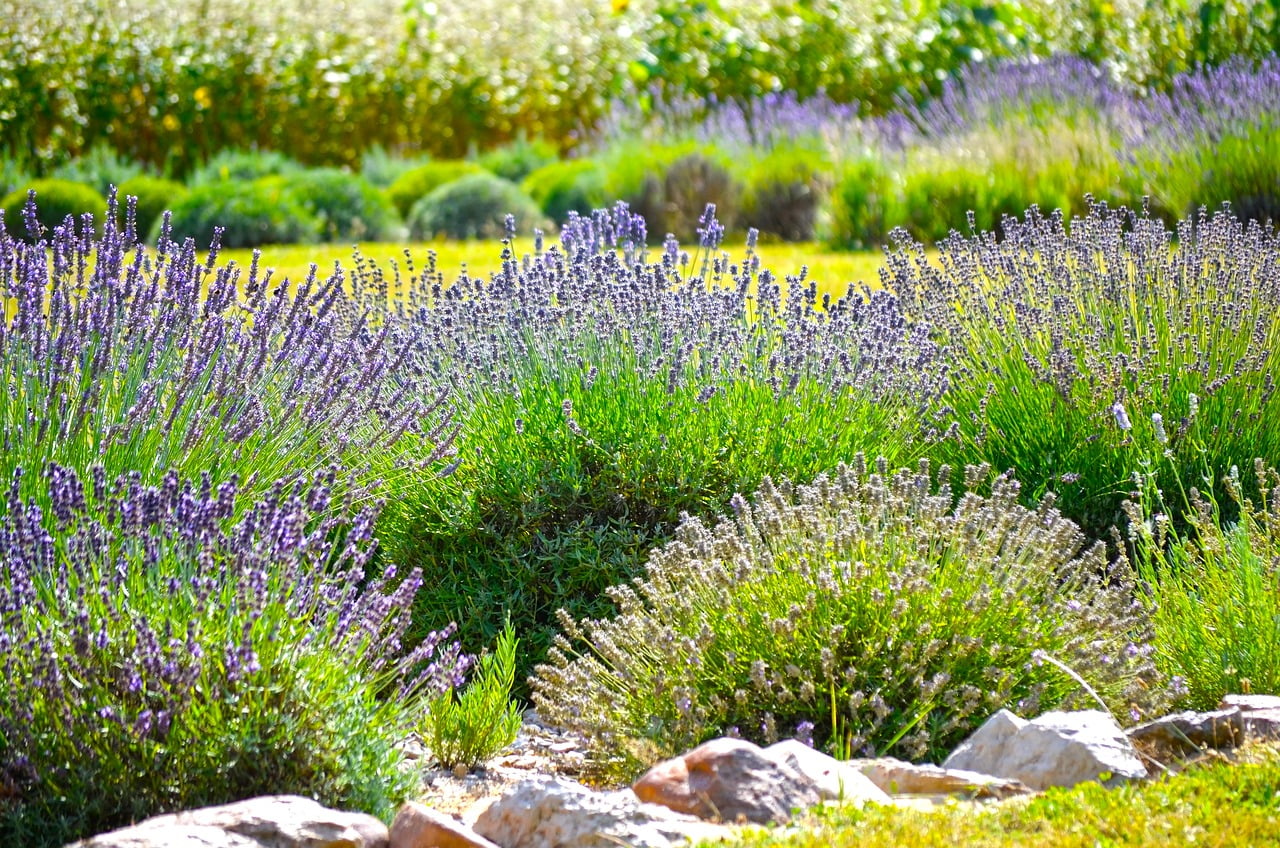
Lavender is a formal garden classic, and with good reason. It provides a dense grey-green mound of aromatic foliage that serves as structural infill between topiary specimens, and then erupts into purple flower spikes in midsummer. Planted in a row or drifts of matching plants, it creates a unified band of silver-grey that reads beautifully against dark stone or brick.
The key to lavender in a formal setting is to treat it as a structural plant and clip it accordingly. After flowering, cut back by about one-third to prevent the plant from becoming leggy and woody at the base. Never cut into old wood on lavender, as it will not regenerate. Varieties I tend to use in formal front gardens include ‘Hidcote’ for a compact, deep purple form, and ‘Munstead’ for a slightly softer colour and reliable hardiness.
🛒 Buy lavender plants from Amazon UK
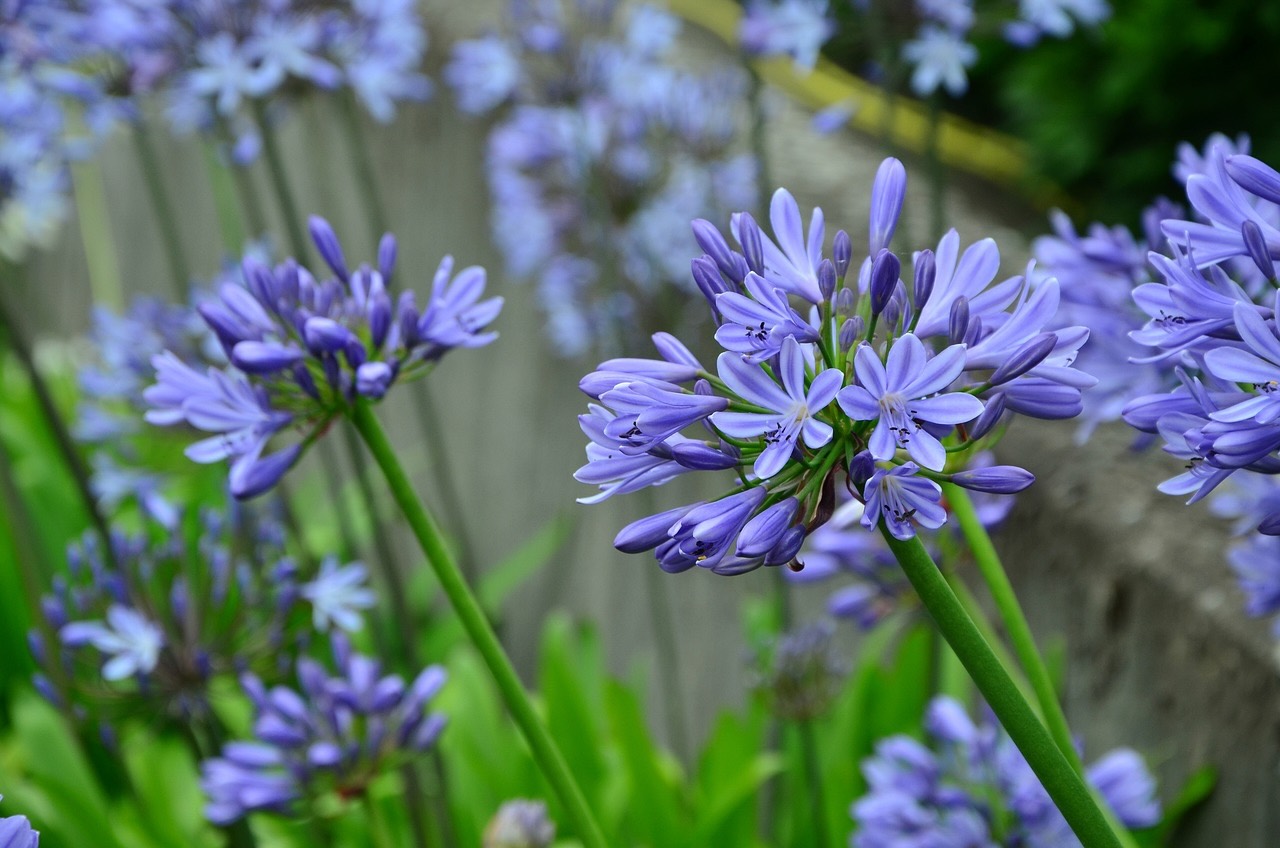
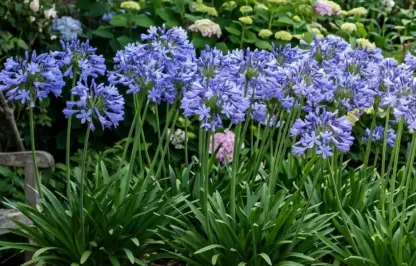
Agapanthus is one of those plants that looks almost impossibly architectural when it flowers. The tall, clean stems rise above the strap-like foliage and open into globe-shaped heads of blue or white flowers. In a formal planting context, they bring a vertical punctuation in summer that ties back to the spherical geometry of topiary balls and standard tree heads. The round flower form creates visual continuity across the entire planting scheme.
In containers they are particularly effective because being slightly root-bound actually encourages better flowering. In cold parts of the UK, container-grown Agapanthus can be moved into an unheated greenhouse or conservatory over winter to protect them. Hardy varieties such as ‘Midnight Blue’ and ‘Twister’ (a beautiful blue and white bicolour) are increasingly available and will cope with most UK winters in a sheltered spot.
🛒 Buy Agapanthus plants from Amazon UK
Alliums are one of the most underused plants in formal front gardens and yet they deserve a much bigger role. The spherical flower heads, which mirror the geometry of topiary balls and Agapanthus flowers, fire up on tall, rigid stems in late spring and early summer. The combination of structural flower form and reliable hardiness makes them perfect for formal work. Allium hollandicum ‘Purple Sensation’ is my most-used variety: deep violet globes on 90cm stems that look particularly striking emerging from a ribbon of lavender or low Buxus hedge.

Allium bulbs are planted in autumn for late spring flowering, and once established they naturalise reliably and increase year on year. Plant them in odd numbers and in generous drifts rather than single specimens for the best effect. The seedheads that remain after flowering also have an architectural quality and can be left in place for weeks before they deteriorate.
🛒 Buy allium bulbs from Amazon UK
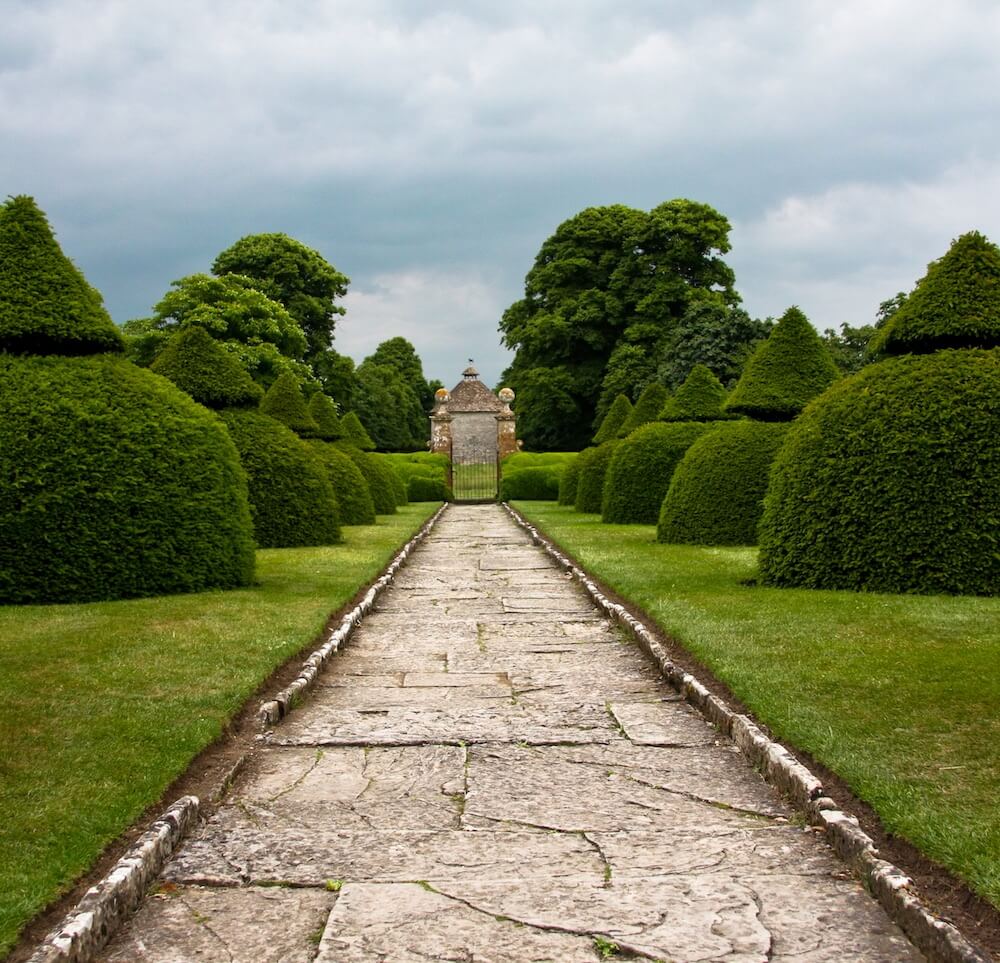
Yew is one of the great formal garden plants and, critically, is entirely resistant to box blight and box tree caterpillar. It clips to a harder, sharper surface than Buxus and holds its form extremely well between cuts. The dark, almost black-green of yew foliage makes it an outstanding foil for pale stone, bright flowers and light-coloured architecture. It is slower to establish than box but ultimately tougher and longer-lived. If you are starting a new formal front garden from scratch and box blight is a concern in your area, I would seriously consider yew as your structural hedging plant.

One note of caution: every part of the yew plant except the red berry flesh is toxic to humans and highly toxic to dogs, cats and horses. In a front garden that is regularly visited by children or pets, this needs to be factored into your plant choices. It does not disqualify yew, but it is a relevant consideration.
Box blight (Cylindrocladium buxicola) and the box tree caterpillar (Cydalima perspectalis) have caused severe damage to Buxus plantings across the UK over the past decade. If you have an established formal garden with box topiary and you have not yet encountered these problems, the best approach is preventative treatment and vigilance. But if you are starting fresh or need to replace lost plants, there are now several alternatives that clip with similar precision and provide comparable formality.
Ilex crenata (Japanese holly) is currently the closest like-for-like replacement for Buxus in formal work. The small, dark, glossy leaves clip well and the plant is resistant to both box blight and the caterpillar. It is slightly slower growing than Buxus and prefers a slightly acid soil, but in most garden conditions it performs admirably. Varieties like ‘Dark Green’ and ‘Convexa’ are now widely available.
Euonymus japonicus ‘Green Spire’ is another option that clips readily and provides a denser, more upright form that suits columnar topiary. Lonicera nitida grows more quickly than Buxus but requires more frequent clipping to keep it tidy, and it does not have quite the same dense surface finish. Pittosporum tenuifolium cultivars, particularly the compact forms, are increasingly popular in milder parts of the UK and respond well to clipping.
💡 Top Tip
If you have existing Buxus topiary that shows signs of box blight, act quickly. Remove and destroy affected material, improve air circulation by thinning congested growth, and treat with a copper-based fungicide. Do not compost affected clippings. The key warning sign is brown patches that appear suddenly, often with a white fungal growth visible in humid conditions on the underside of leaves. Catching it early dramatically improves your chances of saving the plant.
Colour in a formal garden is a very different proposition to colour in an informal or cottage garden. Rather than celebrating abundance and variety, formal gardens use colour sparingly and with deliberate intent. The restraint is what gives formal gardens their authority. A few well-chosen colour moments have far more impact against a background of green and grey-green structure than a riot of competing hues.
The most classic formal colour palette is white flowers against dark evergreen structure, and it is classic for good reason. White agapanthus, white alliums, white roses on a wall or railing: these all create moments of light and freshness that feel elegant rather than showy. Silver-grey foliage, such as lavender, Stachys byzantina or Artemisia, adds a cooler tonal layer between green and white.
Blue and blue-purple work extremely well in formal settings because they are cool colours that advance a sense of depth and calm. Blue Agapanthus, purple alliums and lavender flowers all sit within this part of the spectrum and create a coherent, considered palette without looking constrained.
Where you want to introduce a bolder colour moment, the most successful approach in formal gardens is to use contrasting colours in a contained way: a pair of matching planters in a Corten orange containing blue Agapanthus, for example. The contrast is striking precisely because it is controlled. Everything else in the garden is green and grey-green, so the orange and blue command attention without disrupting the overall calm of the scheme.
The boundary between the formal front garden and the street deserves as much thought as the planting within it. The boundary is the first element a visitor or passer-by sees. It frames the garden. In a formal design, the boundary treatment should reinforce the sense of geometry and order.
For Victorian and Georgian properties, traditional iron railings set into a low brick or stone plinth are almost always the most appropriate choice. They were the original boundary treatment for most period terraces and townhouses, and where original railings were lost during wartime metal drives, reinstating them transforms a property. Salvage yards and specialist suppliers can provide period-appropriate designs. A solid front wall with a clipped hedge on top of it, or immediately behind it, is another strong option for period properties.
For more modern properties, a single species clipped hedge of yew, Ilex crenata or Osmanthus burkwoodii provides a clean, contemporary boundary that is also genuinely good for wildlife. The bird-nesting and insect habitat value of a hedge is considerably higher than a wall or fence, and it absorbs noise and pollution effectively in urban settings. A hedge at approximately 1m to 1.2m height provides clear delineation without feeling fortress-like.
The gate, if you have one, is a significant design decision. In a formal garden it should be centred on the path that leads to the door, so that the whole composition reads along a central axis. A gate that is offset to one side undermines the symmetry that formal design depends on. If the existing gate position is wrong, it is well worth relocating it even if this involves some additional groundwork.
One of the great virtues of a well-designed formal garden is that its maintenance requirements are predictable and manageable. Unlike an informal garden where deadheading, dividing and replanting are ongoing tasks across the growing season, a formal garden has a clear maintenance calendar with two or three key moments in the year where most of the work is concentrated.
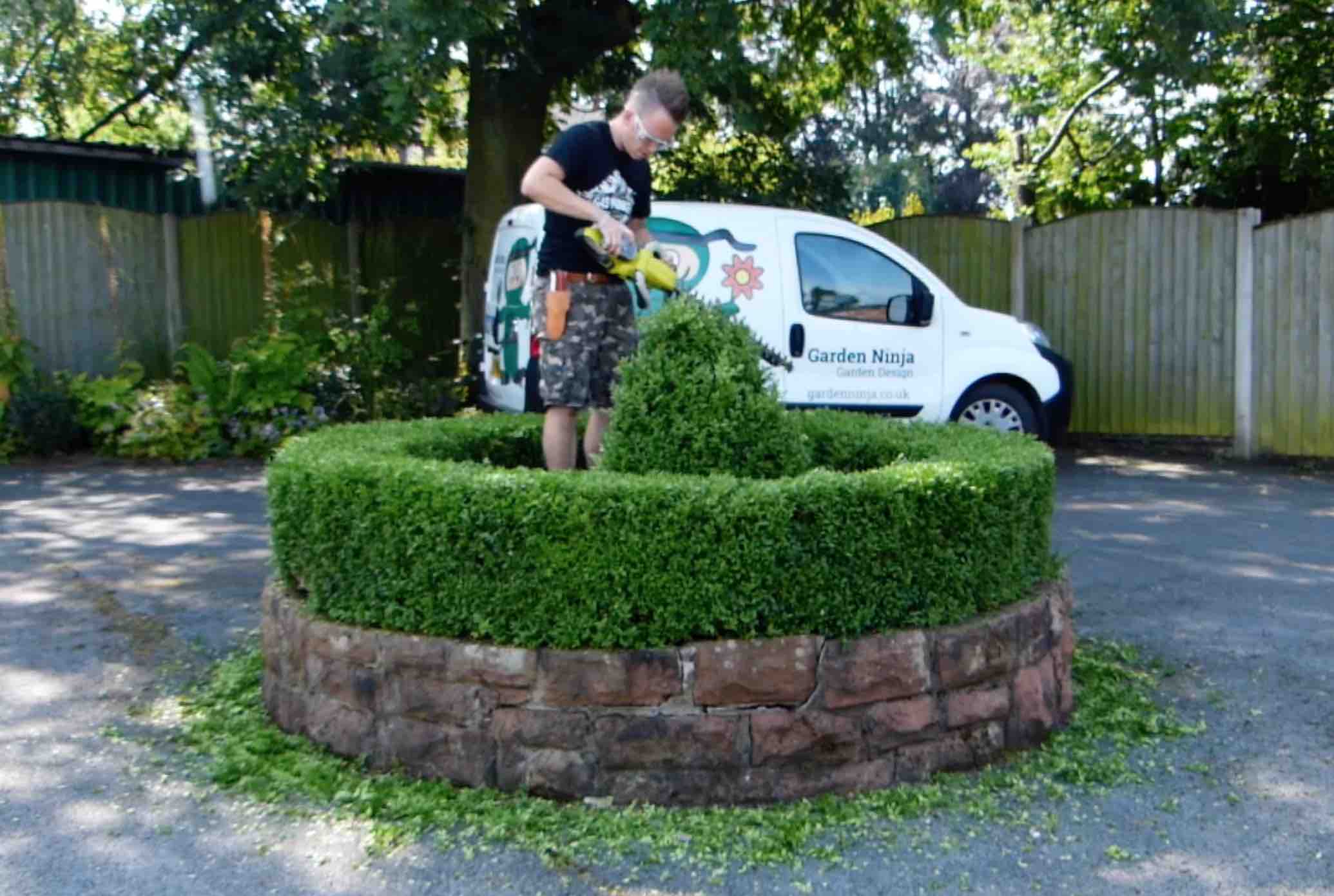
Topiary clipping is the central maintenance task. Buxus and yew need clipping twice a year: once in late May or early June after the first flush of growth, and again in late August or early September. Bay trees trained as standards need clipping at the same time, plus any tidying during the growing season if they put out strong shoots. Always use sharp, clean tools and sterilise your blades between plants to prevent transferring any fungal disease.
Lavender should be cut back by about a third immediately after flowering, generally in August or early September. Do not leave this until spring, as lavender that is not cut regularly quickly becomes woody and open at the base, losing its dense mounded form that is so valuable in a formal scheme.
Allium bulbs require nothing once they are established, other than lifting and dividing the clumps every three or four years if flowering starts to diminish. The foliage dies back after flowering and can look untidy, but planting alliums among lavender or other structural plants means the dying leaves are hidden by the surrounding growth. So never plant them at the front of a flower bed as they always look scruffy!

Container plants need consistent feeding and watering during the growing season. Standard bay trees and Agapanthus in planters are the most demanding in this respect. A slow-release granular feed applied in spring, topped up with a liquid feed in midsummer, will keep them performing well. In prolonged dry spells, check containers daily as they can dry out surprisingly quickly, even in overcast UK weather.
💡 Top Tip
Invest in a good pair of secateurs and keep them sharp. Blunt blades crush plant stems rather than cutting them cleanly, which slows the plant’s recovery after clipping and can introduce disease. I use Felco secateurs across all my formal garden maintenance work. A pair of topiary shears with long, straight blades makes short work of clipping box balls and lavender. For larger hedges, electric hedge trimmers are worth their weight.
In fifteen years of professional garden design, I have seen the same mistakes appear repeatedly in formal front gardens. Most of them come down to a loss of nerve at a critical design moment, or to underestimating the importance of proportion. Here are the ones to watch out for.
Getting the scale of plants wrong. Buying small, cheap topiary balls to save money and expecting them to look impressive immediately is a common mistake. In a formal garden, proportion is everything. Two topiary balls that are too small for the beds they sit in will look lost rather than authoritative. It is far better to buy two properly sized specimens and have fewer of them than to fill a space with undersized plants that will take years to reach the required scale.
Using the wrong paving material for the property. I touched on this in the hard landscaping section, but it bears repeating. Plain concrete block paving is the single most common mistake in front garden design across the UK. The short-term saving is real but the long-term visual cost is significant. Spend where it matters most: on the paving that defines the entire character of the space.
Breaking the symmetry accidentally. This sounds obvious, but it happens more often than you would think. A pair of matching containers that are actually subtly different sizes, or one side of a bed that ends up slightly wider than the other because the measurement was eyeballed rather than measured. In an informal garden these small discrepancies disappear. In a formal garden they are immediately visible to the eye. Measure everything twice. Use string lines.
Over-planting in the name of instant effect. Formal gardens need to breathe. The spaces between the structural plants are as important as the plants themselves. Filling every gap with additional planting the moment it appears undermines the geometric clarity that gives formal design its power. Trust the structure and give it time to establish.
Neglecting the vertical dimension. A formal front garden that is only ever considered at ground level misses important opportunities. Climbers trained flat against a wall or fence, a pleached row of trees providing height and screening, or wall-mounted architectural features all extend the formal vocabulary upward and make the space feel more complete.
What plants are best for a formal front garden in the UK?
The most reliable plants for formal front gardens in the UK are standard bay trees, Buxus topiary balls or Ilex crenata as a blight-resistant alternative, lavender, yew hedging and Agapanthus. Allium bulbs provide a reliable structural flower element in late spring and early summer. The key is to prioritise plants that clip well, hold their form through winter and repeat throughout the scheme to create the symmetry that formal gardens depend on.
Does a formal front garden work for a period property?
Yes, and in most cases a formal front garden is the best possible choice for a Victorian, Georgian or Edwardian townhouse. These properties were originally surrounded by formal garden treatments with railings, clipped hedges and symmetrical planting, and reinstating something in that spirit brings out the architecture of the building. The key is to use materials appropriate to the period: natural stone paving, period ironwork, and a restrained plant palette.
How low maintenance is a formal front garden?
Once established, a formal front garden is genuinely low maintenance compared to an informal planting scheme. The core tasks are two topiary clips per year, a lavender trim after flowering, and feeding and watering of any container plants during the growing season. There is no ongoing deadheading, dividing or replanting of flowering perennials. The initial establishment period of one to two years requires more attention, but beyond that the maintenance commitment is modest for the visual impact achieved.
What can I use instead of box if I am worried about box blight?
The best like-for-like substitute for Buxus in formal work is Ilex crenata, particularly varieties such as ‘Dark Green’ and ‘Convexa’. It has a similar small-leaved texture, clips well and is resistant to both box blight and box tree caterpillar. Yew (Taxus baccata) is another excellent option with a darker, harder finish. Euonymus japonicus ‘Green Spire’ works for upright forms, and Pittosporum tenuifolium compact varieties suit milder regions of the UK.
Do I need planning permission to create a formal front garden?
Usually not, but there are a few important exceptions. If you want to lay more than five square metres of impermeable paving such as tarmac or solid concrete, you will need planning permission unless you use a permeable alternative. If your property is listed or in a conservation area, any significant changes to the front garden will require listed building consent or may need approval from the local planning authority. Always check with your local council before beginning work if you are uncertain.
How much does a formal front garden cost?
Costs vary enormously depending on the size of the space, the materials chosen and whether you use a professional designer and contractor. As a rough guide, a modest formal front garden with quality natural stone paving, two standard bay trees, box topiary and lavender planting might cost between £3,000 and £8,000 for a typical terraced house frontage, professionally installed. Doing the planting yourself while using a contractor for the hard landscaping can significantly reduce this. The investment in quality materials is worthwhile because they will outlast cheaper alternatives by decades.
Ready to elevate your gardening beyond basic tasks? My comprehensive online courses provide the expertise to transform you from enthusiastic beginner to confident garden creator.
With courses starting from just £29, you gain access to award-winning design knowledge.
For the garden you’ve already got, not the one you’re starting from scratch. Seven checklists and video lessons from BBC Garden Rescue’s Lee Burkhill, built to help you work out what’s worth keeping before you spend a penny.
Garden Design Examples for Small Gardens: 30 Design Templates & Planting Plans: In this online gardening course, I’ll walk you through 30 fantastic garden designs, explaining the logic behind the layout, the plant choices, and take-home tips for applying them in your own garden.
Learn how to transform and design your own garden with Lee Burkhills crash course in garden design. Over 5 hours Lee will teach you how to design your own dream garden. Featuring practical design examples, planting ideas and video guides. Learn how to design your garden in one weekend!
Garden Design for Beginners Online Course: If you want to make the career jump to becoming a garden designer or to learn how to design your own garden, this is the beginner course for you. Join me, Lee Burkhill, an award-winning garden designer, as I train you in the art of beautiful garden design.
A formal front garden is one of the most enduring and rewarding styles you can create, particularly for period properties and townhouses. The fundamentals are straightforward: work with symmetry, invest in quality structural plants that clip well, choose hard landscaping materials that complement your property’s age and character, and keep the colour palette restrained so that structure does the heavy lifting.
Start with the bones. A pair of standard bay trees, a row of lavender and some good stone paving will already look considerably more intentional than most front gardens you will see. Add topiary as your budget allows. Be patient during establishment. And clip twice a year to keep the whole scheme sharp.
Are you a fan of formal gardens? If so why not Tweet, Facebook or Instagram me with your pictures? You can also follow me on Youtube where I have plenty of garden guide vlogs.



Lee Burkhill, known as the Garden Ninja, is an award-winning garden designer and horticulturist with over 30 years of gardening experience and 15 years as a professional garden designer. A qualified RHS (Royal Horticultural Society) professional, Lee specialises in sustainable garden design and practical horticultural advice. He designs and presents on BBC1’s Garden Rescue and in leading gardening publications. Lee combines three decades of hands-on gardening knowledge with professional design qualifications to help gardeners create beautiful, functional outdoor spaces.
View all posts by Lee Burkhill







JOIN THE NINJAS

Be the first in line for new Guides, Discount codes and Offers