For the garden you’ve already got, not the one you’re starting from scratch. Seven checklists and video lessons from BBC Garden Rescue’s Lee Burkhill, built to help you work out what’s worth keeping before you spend a penny.
69


Quick Answer
June is one of the most rewarding months in the UK garden. You can plant out tomatoes, courgettes, runner beans, sweetcorn, cucumbers, and squash outdoors with confidence now that frost risk has passed. Ornamental highlights include cosmos, sunflowers, lavender, and dahlias. It is also the perfect month for taking softwood cuttings and starting your winter brassicas from seed for autumn harvests.
June is the month when the UK garden really hits its stride. The frosts are behind us, the soil is warm, and everything wants to grow at once. After years of designing gardens professionally and filming BBC Garden Rescue across the country, I can tell you that June separates the organised gardener from the overwhelmed one. There is a lot to do, but if you know what to prioritise, it is also one of the most enjoyable months in the calendar.
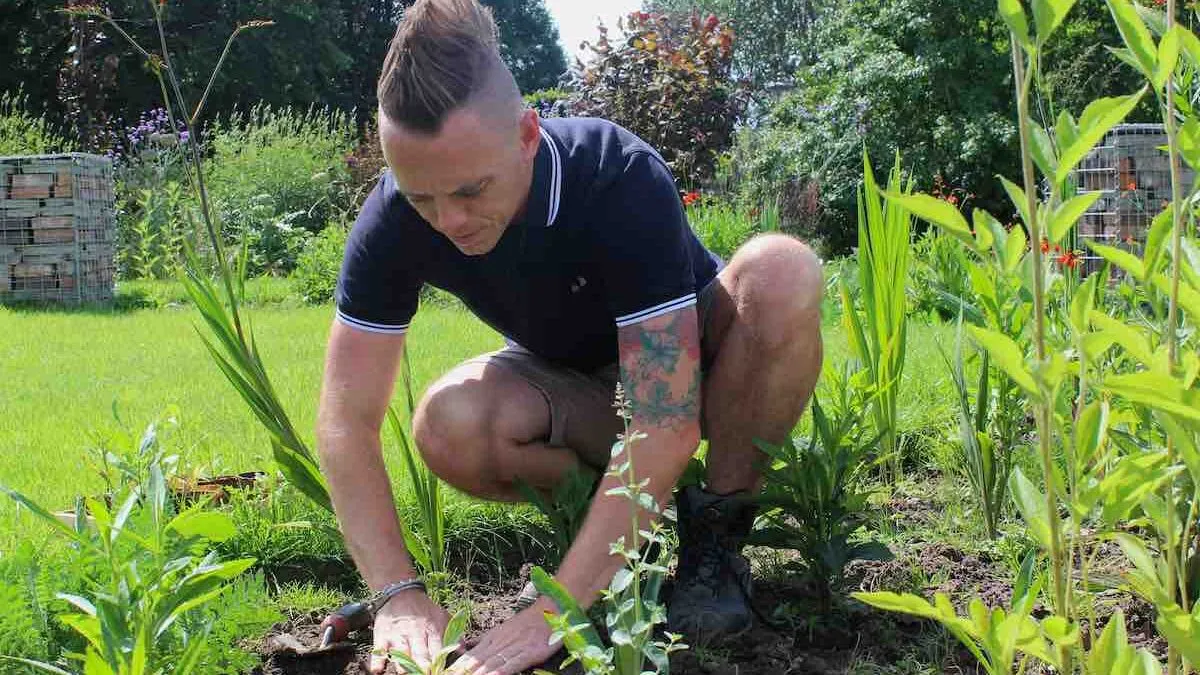
However, if you’re organised, your garden will feed and delight you well into November. Miss the window, and you will be playing catch-up for months. This guide covers everything you should be planting, sowing, and potting up in June across vegetables, flowers, herbs, fruit, and ornamental plants. I will also flag the jobs and maintenance tasks that make the difference between a garden that thrives and one that struggles through the heat of summer.
Jump To
The official end of frost risk across most of the UK is in late May, though gardeners in Scotland, northern England, and elevated areas should remain cautious into early June. By the middle of the month, however, soil temperatures are consistently warm enough for almost everything. The RHS records average UK soil temperatures of 14 to 17 degrees Celsius in June, which is the sweet spot for rapid germination and establishment.
I remember one early-June design where we planted out a full kitchen garden from scratch in raised beds. The clients were convinced they had missed the season. In reality, plants established in warm June soil often catch up with and overtake those planted in cold, wet April soil. Warmth speeds root development dramatically. Do not write off June as too late for vegetables because, in many cases, it is the ideal moment.
💡 Top Tip
June is also the month for succession sowing. Rather than sowing everything in one go, stagger your lettuces, radishes, and salad crops every two weeks. This gives you a continuous harvest through summer rather than a glut followed by nothing.
One important note for June: watering plants will become your most pressing concern. Warm soil and long days mean plants take up water quickly, and dry periods from late June onwards can badly stress newly planted specimens. Mulching bare soil after planting is one of the most effective things you can do in June to save yourself time on watering later in the summer.
The vegetable garden in June is where most of the action happens. Tender crops that have been waiting in greenhouses, cold frames, and on windowsills can finally go outside, and there is still time to sow a surprising range of crops directly into warm soil.
If you have been growing tomatoes from seed or bought young plants, early June is the last sensible window for planting them outdoors in most parts of the UK. Solanum lycopersicum needs a long, warm season to ripen fruit properly, so every week you delay planting reduces your harvest window. Outdoor tomatoes do best in a sheltered, south-facing position with at least six hours of direct sun daily.

I grow my outdoor tomatoes in large containers and grow bags alongside my greenhouse plants. The key lesson I have learned over many years of growing is that consistent watering matters more than almost anything else. Irregular watering causes blossom-end rot, a calcium deficiency triggered not by a lack of calcium in the soil but by the plant’s inability to transport it when the water supply is erratic. Water deeply and regularly rather than little and often.
🛒 Buy tomato grow bags and compost from Amazon UK
Courgettes (Cucurbita pepo) are one of the most satisfying plants to grow in June because they establish so quickly in warm soil. If you have not started any yet, you can still sow courgette seeds directly outdoors in early June in southern England and south Wales. Further north, I would recommend starting them under cover and planting out hardened seedlings.
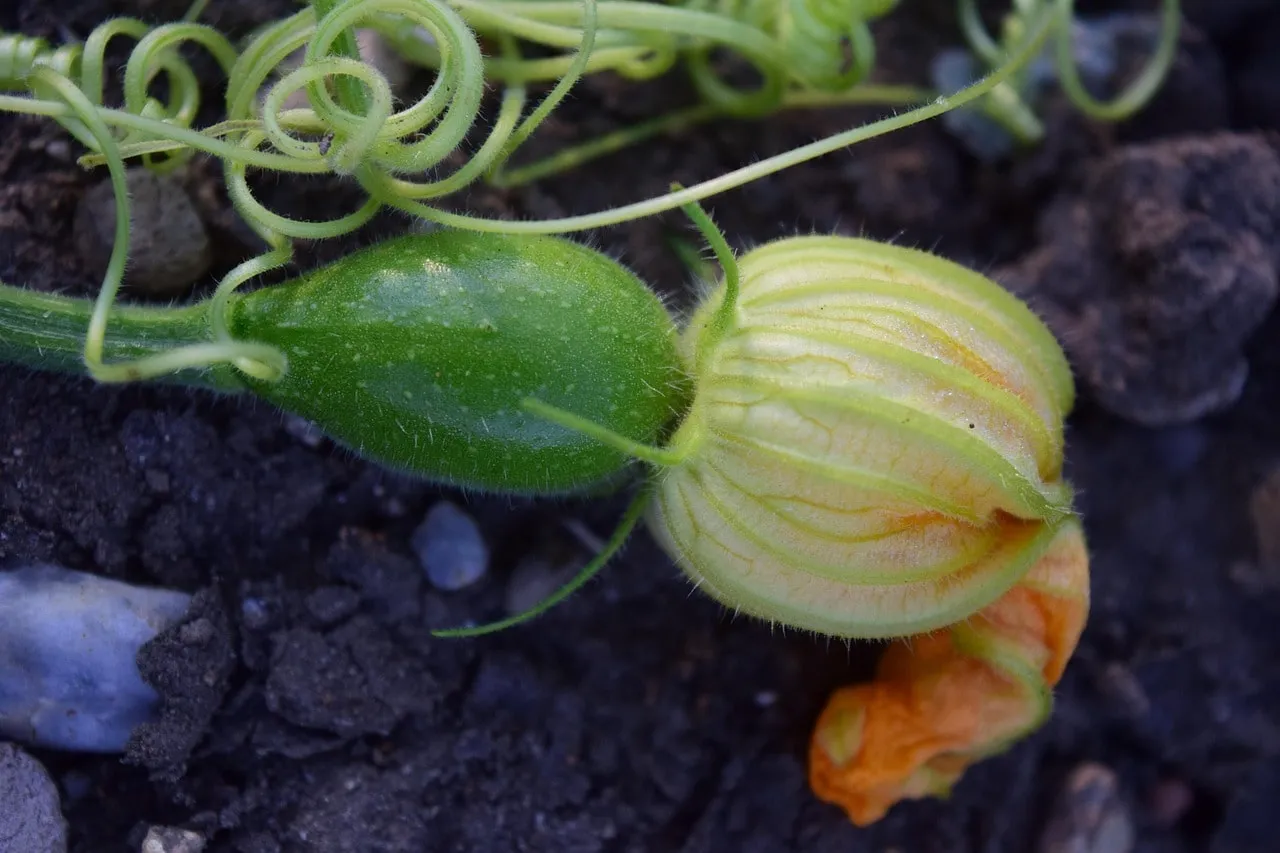
Space courgettes generously, at least 90cm apart, because they sprawl considerably. One or two plants are genuinely sufficient for a family, a fact that first-time growers consistently discover too late when they find themselves surrounded by eight courgette plants all producing simultaneously in July. I have experienced this personally and spent several weeks desperately distributing giant marrows to bemused neighbours.
Winter squash and pumpkins can still be sown outdoors in early June in warmer parts of the UK. They need a long growing season to develop their skins properly, so the sooner they go in, the better. If you want to grow a specific heritage variety for Halloween or a show, early June is your last realistic outdoor sowing window in most regions.
🛒 Buy courgette seeds from Amazon UK
Runner beans (Phaseolus coccineus) are one of the best crops to sow directly in June because they germinate rapidly in warm soil and resent root disturbance from transplanting. Sow two seeds per station at the base of your cane structure, about 15cm deep, spacing stations 30cm apart. If both germinate, remove the weaker seedling. They need sturdy support as they can reach two metres or more by August.
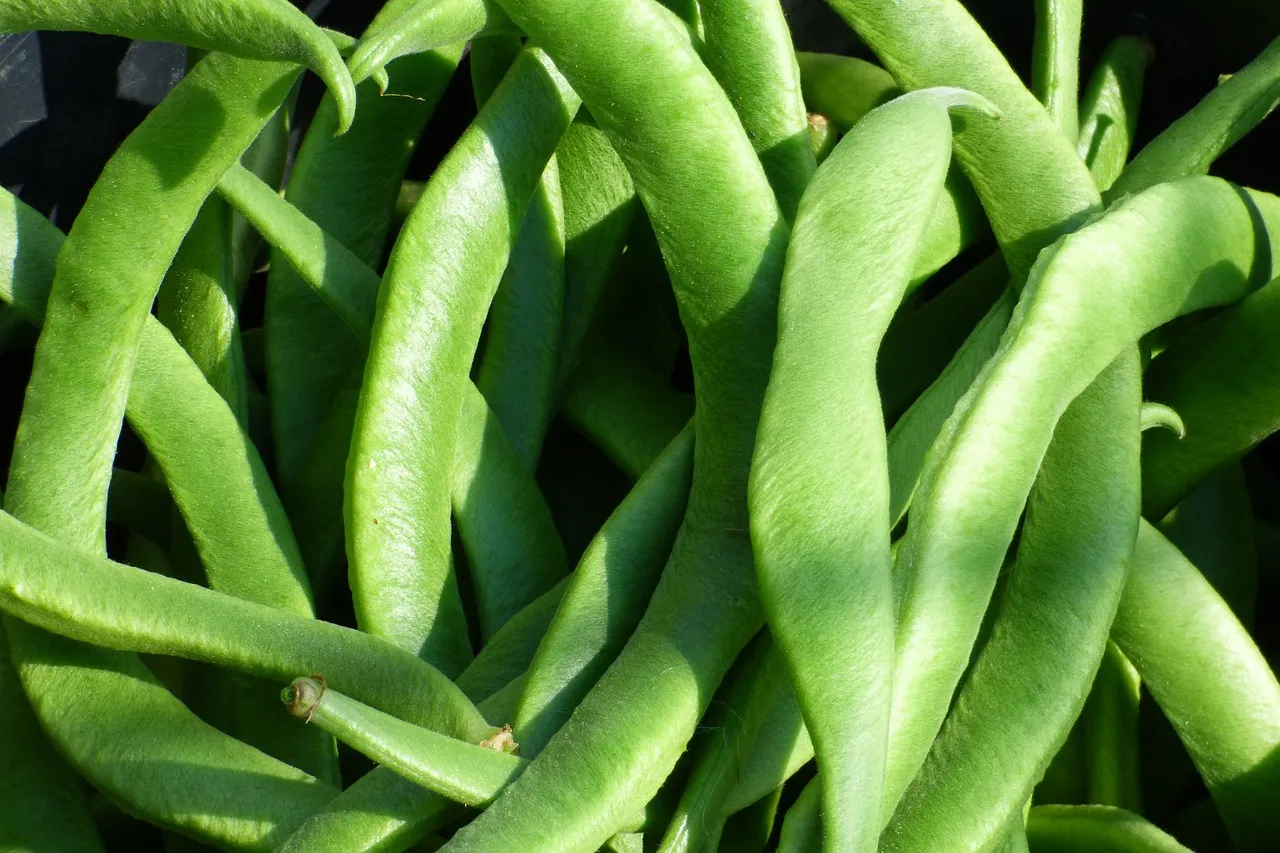
French beans are arguably even more forgiving than runner beans in terms of timing. Both climbing and dwarf varieties can be direct-sown with confidence through mid-June. Dwarf French beans are particularly useful in exposed or windy gardens where runner bean canes would struggle to stay upright, and they are an excellent choice for raised beds and deep containers.
💡 Top Tip
Soak runner bean seeds in water overnight before sowing to soften the seed coat and speed germination. In warm June soil you should see seedlings emerging within five to seven days.
🛒 Buy runner bean seeds from Amazon UK
🛒 Buy bamboo canes and wigwam plant supports from Amazon UK
Early June is your last realistic window for planting sweetcorn (Zea mays) outdoors in the UK. Sweetcorn needs a long, warm season to form proper cobs, so getting it in the ground by the first or second week of June gives it the best chance. The critical thing most beginners miss is that sweetcorn is wind-pollinated, which means it needs to be planted in a block formation rather than a single row. A block of at least four-by-four plants ensures that pollen falls from the tassels onto the silks of neighbouring plants. A single row produces poorly filled cobs.
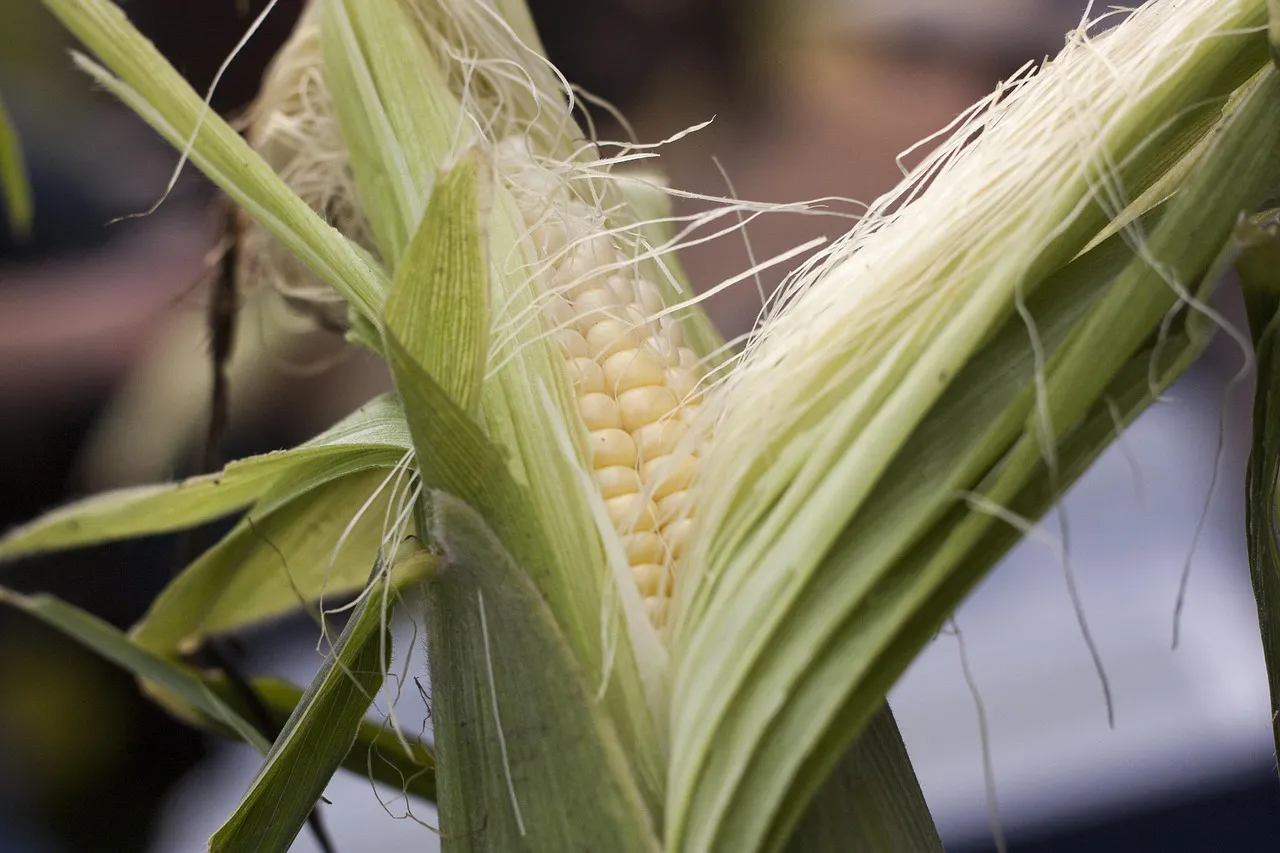
I’ll be honest, I’ve tried sweetcorn so many times and always find it hit-and-miss. Unless you have plenty of space and don’t mind waiting ages to see if they have been pollinated, I would save these for all but the most considerate and diligent gardeners! But if you are up for the challenge and have the right conditions, then go for it!
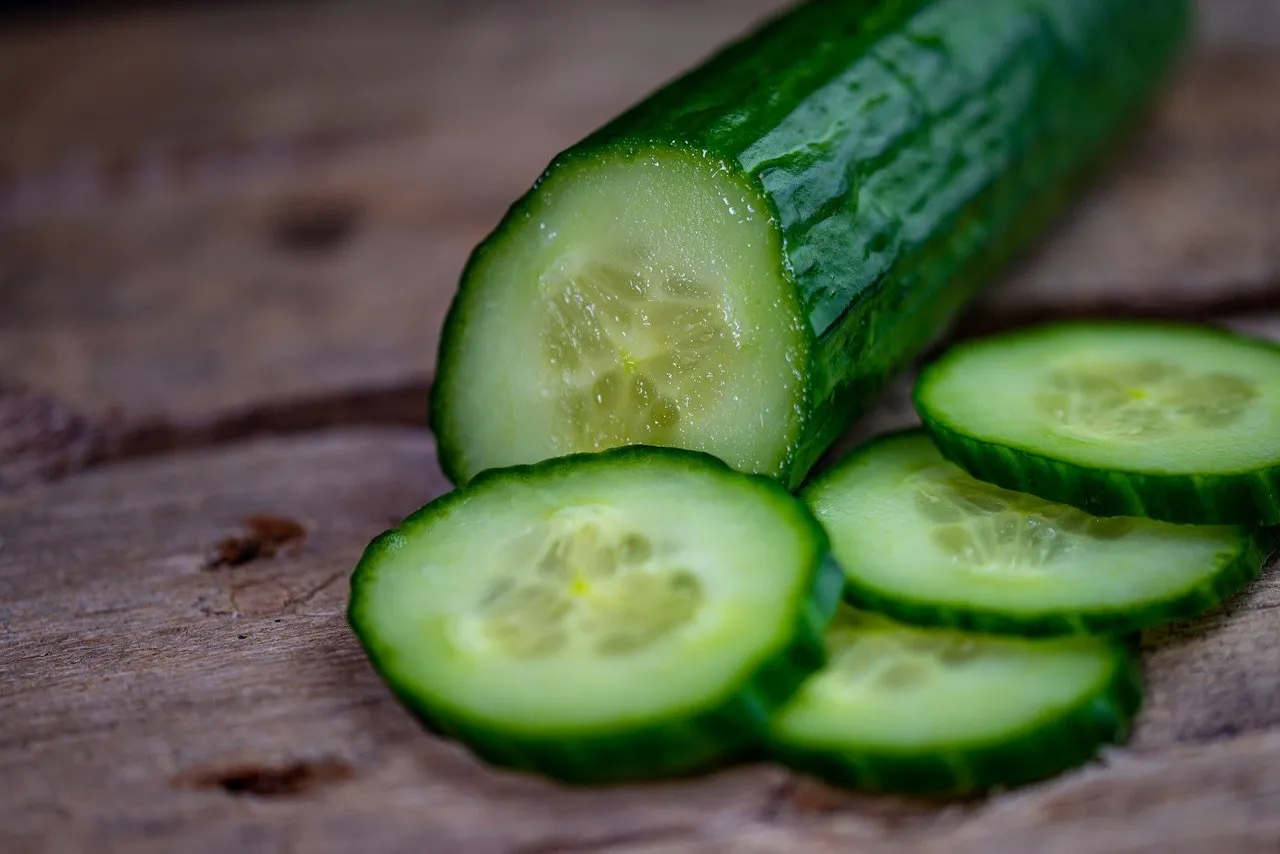
Ridge cucumbers are specifically bred for outdoor growing in the UK and perform remarkably well given a warm summer. Plant them out in early June after hardening off for a week or two. They appreciate a very rich, moisture-retentive growing position, so incorporate plenty of well-rotted compost or manure before planting. Varieties such as ‘Marketmore’ and ‘Bush Pickle’ are reliable outdoor choices that do not require the controlled conditions needed by greenhouse cucumbers.
🛒 Buy outdoor cucumber seeds from Amazon UK
This is one of June’s most overlooked jobs and most valuable. Purple sprouting broccoli, kale, leeks, and winter cabbage all need to be sown in June to be ready for harvesting from October through to March. Most gardeners think of brassicas as spring or autumn crops, but the sowing happens in early summer.
Sow into modules or a seed bed and plant out into their final positions from late July. Purple sprouting broccoli, in particular, needs early June sowing to develop sufficient plant bulk to survive winter and produce generous shoots the following February and March. It is a long game but absolutely worth playing.
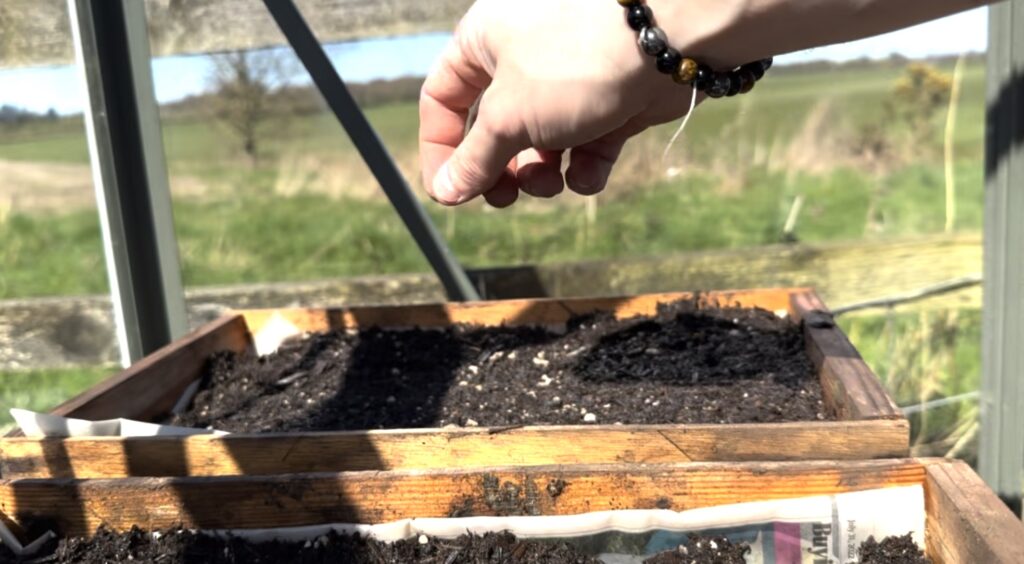
Calabrese (the heading type of broccoli rather than the sprouting type) can also be sown in June for autumn harvests, but it needs to go in quickly as it requires a shorter growing period than PSB. Turnips and kohlrabi are fast-growing brassicas that can be sown directly in June for a harvest within eight to ten weeks.
🛒 Buy purple sprouting broccoli seeds from Amazon UK
🛒 Buy brassica protection netting from Amazon UK
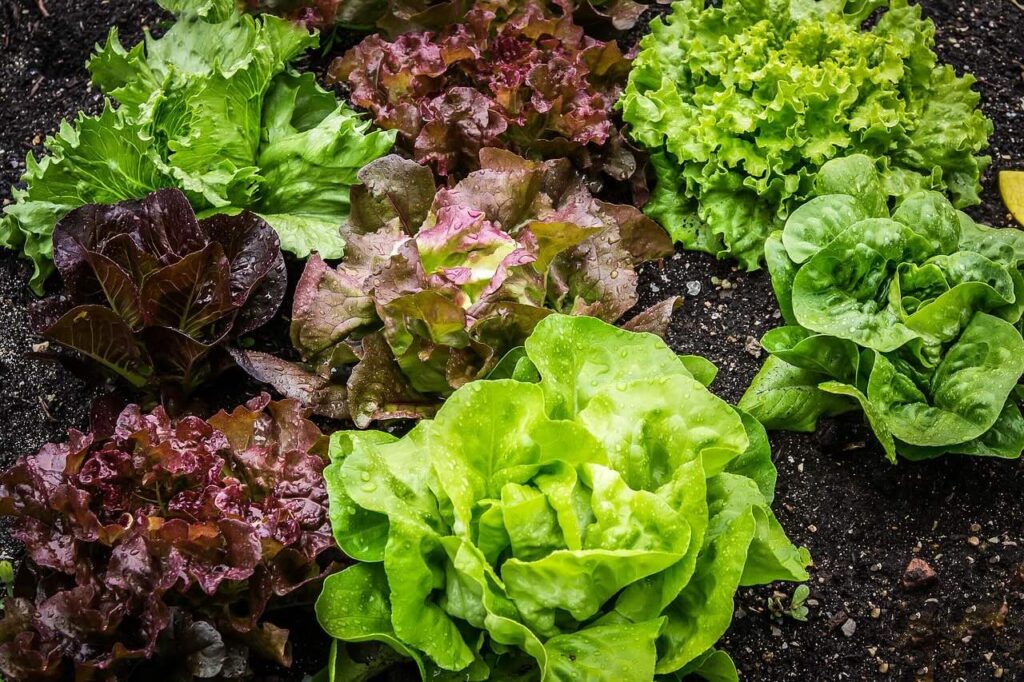
Lettuces, rocket, radishes, and pak choi can all be sown continuously through June for a steady supply of salad leaves. In hot weather, choose bolt-resistant lettuce varieties such as ‘Little Gem’, ‘Lollo Rossa’, and ‘Batavia’ types. Standard lettuces bolt very quickly in June heat, sending up a flowering spike that makes the leaves bitter. Sowing in a slightly shaded spot also helps to delay bolting in the hottest part of summer.
💡 Top Tip
Sow small batches of salad leaves every two weeks rather than one big sowing. This prevents a glut and gives you fresh, tender young leaves continuously from July through to September.
🛒 Buy bolt-resistant salad seed collections from Amazon UK
June is a magnificent month for planting ornamental flowers. The soil is warm, the days are long, and most of the classic summer annuals and tender perennials can go outdoors with confidence now. It is also the moment to start thinking about filling any gaps in borders with plants bought from nurseries.
Cosmos bipinnatus is one of the most reliable and generous flowers you can grow in a UK garden, and June is an excellent time to both direct sow seeds and plant out young plants. They germinate in warm soil within seven to fourteen days and grow quickly, producing their characteristic feathery foliage and single or double blooms in shades of white, pink, and crimson from late July onwards.
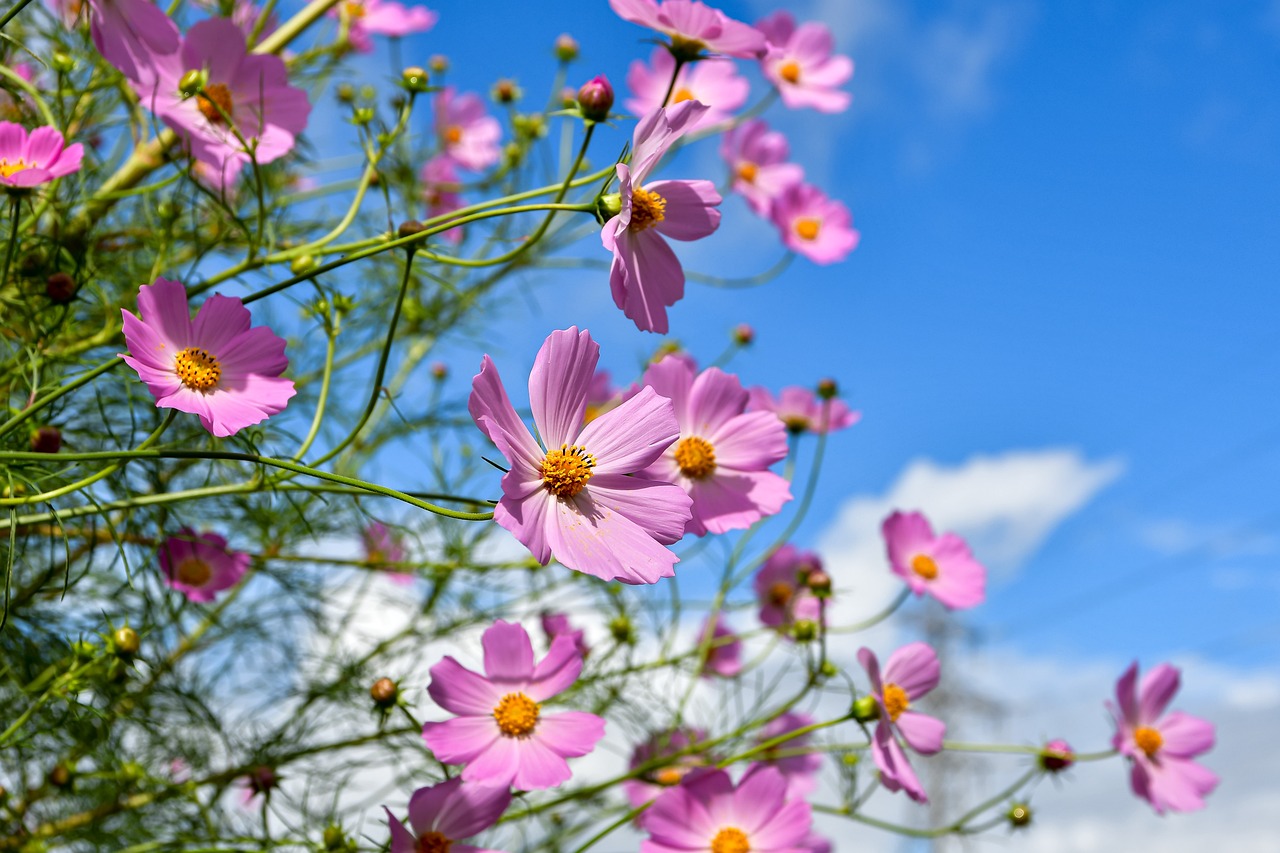
Cosmos are genuinely undemanding. They prefer poorer soils and actually produce more flowers when not overfed with nitrogen, which pushes them towards lush foliage at the expense of blooms. Deadheading regularly extends flowering well into September and sometimes October. One packet of cosmos seeds will fill a border generously for minimal cost.
🛒 Buy cosmos seeds from Amazon UK
Sunflowers (Helianthus annuus) can still be direct sown outdoors until mid-June with good results. They grow rapidly in warm soil and will still reach flowering height by August and September. Sow seeds 2cm deep directly where they are to flower, as sunflowers strongly dislike root disturbance. Larger varieties need staking as they develop, particularly in exposed gardens.

For cut flowers or smaller garden specimens, look at multi-headed varieties like ‘Velvet Queen’ or ‘Moulin Rouge’, which produce multiple blooms per plant rather than a single giant head. These are far more useful in a border or cutting. If growing the classic giant single-headed types for a children’s height competition, choose ‘Russian Giant’ or ‘Mammoth’ and prepare to stand back and watch.
🛒 Buy sunflower seeds from Amazon UK
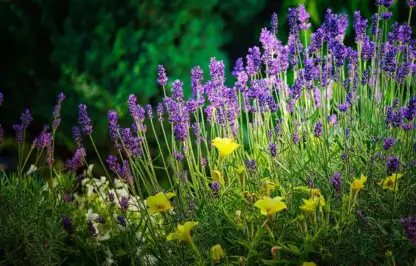
June is the perfect month to plant lavender (Lavandula). Container-grown plants establish well in warm June soil, and the timing means they will be flowering almost immediately, giving you that iconic purple haze and intoxicating scent through July and August. English lavender (Lavandula angustifolia) is the hardiest choice for most UK gardens, surviving temperatures down to -15°C in a well-drained position.
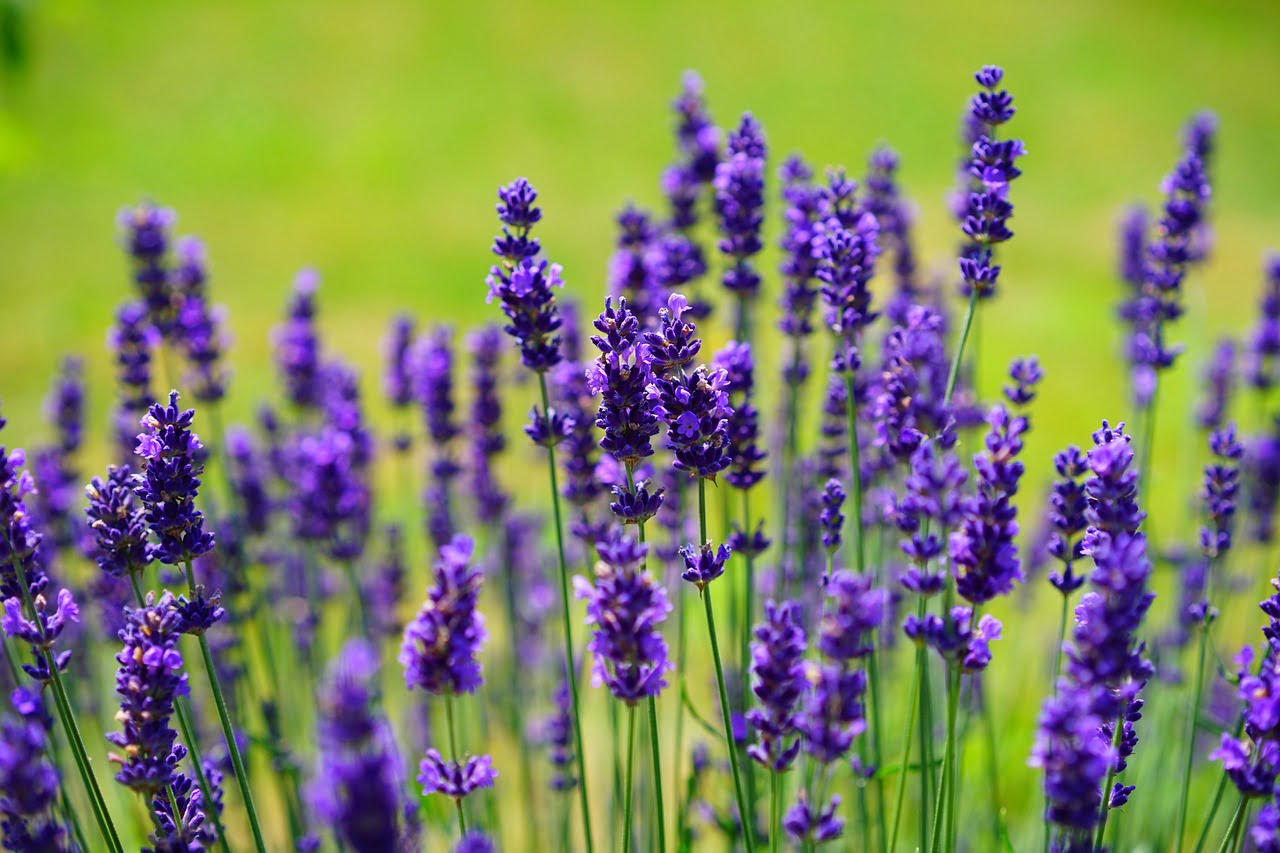
The most important thing about lavender, and the mistake I see repeatedly in client gardens, is drainage. Lavender does not tolerate wet feet. In heavy clay soils, plant it in raised beds or add generous amounts of horticultural grit to the planting hole.
On a sloped site, it will almost look after itself. On flat, poorly-drained ground, it will struggle and rot at the base over winter. I have designed dozens of gardens in the northwest where lavender has failed due to our notoriously heavy rainfall hitting clay soils, and raised beds have consistently been the solution.
🛒 Buy lavender plants from Amazon UK
If you started dahlia tubers in pots under cover in April or May, June is the time to plant them into their final positions outdoors. Dahlias are among the most rewarding plants in the garden, producing spectacular blooms from July right through to the first hard frosts of October or November. They thrive in full sun in rich, fertile soil and are among the best plants for cut flowers.
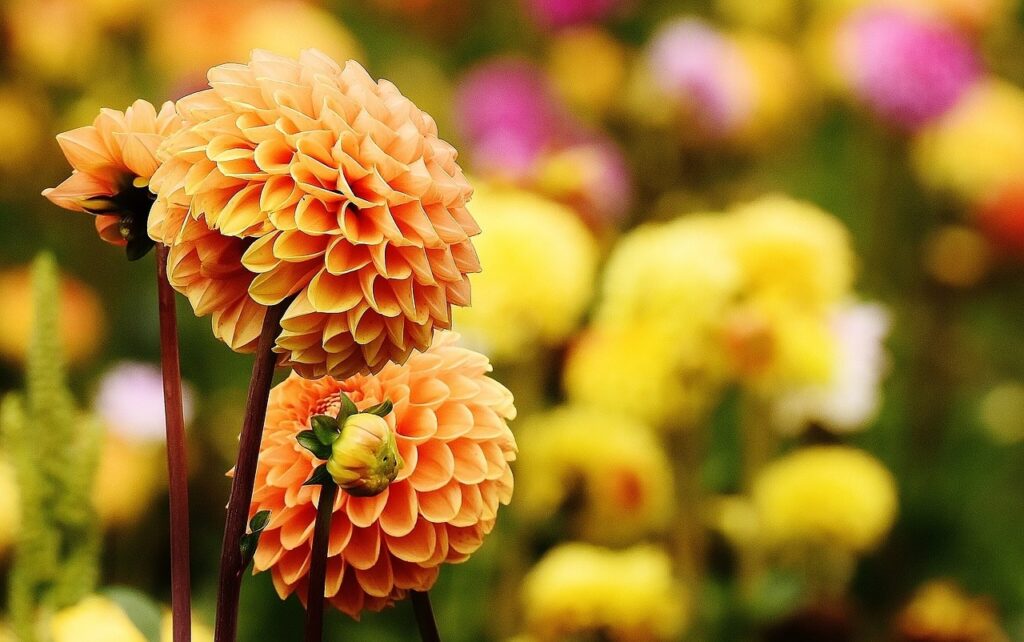
Plant tubers or young plants with their crowns at soil level or just below, and stake taller varieties immediately. Dahlias can reach a considerable height by August, and a single strong gust of wind will snap unpinched stems at the collar. Pinching out the growing tip when the plant is 30cm tall encourages bushier growth and more flowers overall.
🛒 Buy dahlia tubers from Amazon UK
🛒 Buy dahlia stakes and plant supports from Amazon UK
If your sweet peas (Lathyrus odoratus) are already growing, June management is critical. Deadhead regularly and remove any developing seed pods as soon as they appear. Once sweet peas set seed, they interpret their life’s work as complete and stop flowering abruptly. A weekly pick or deadhead keeps plants producing until September.
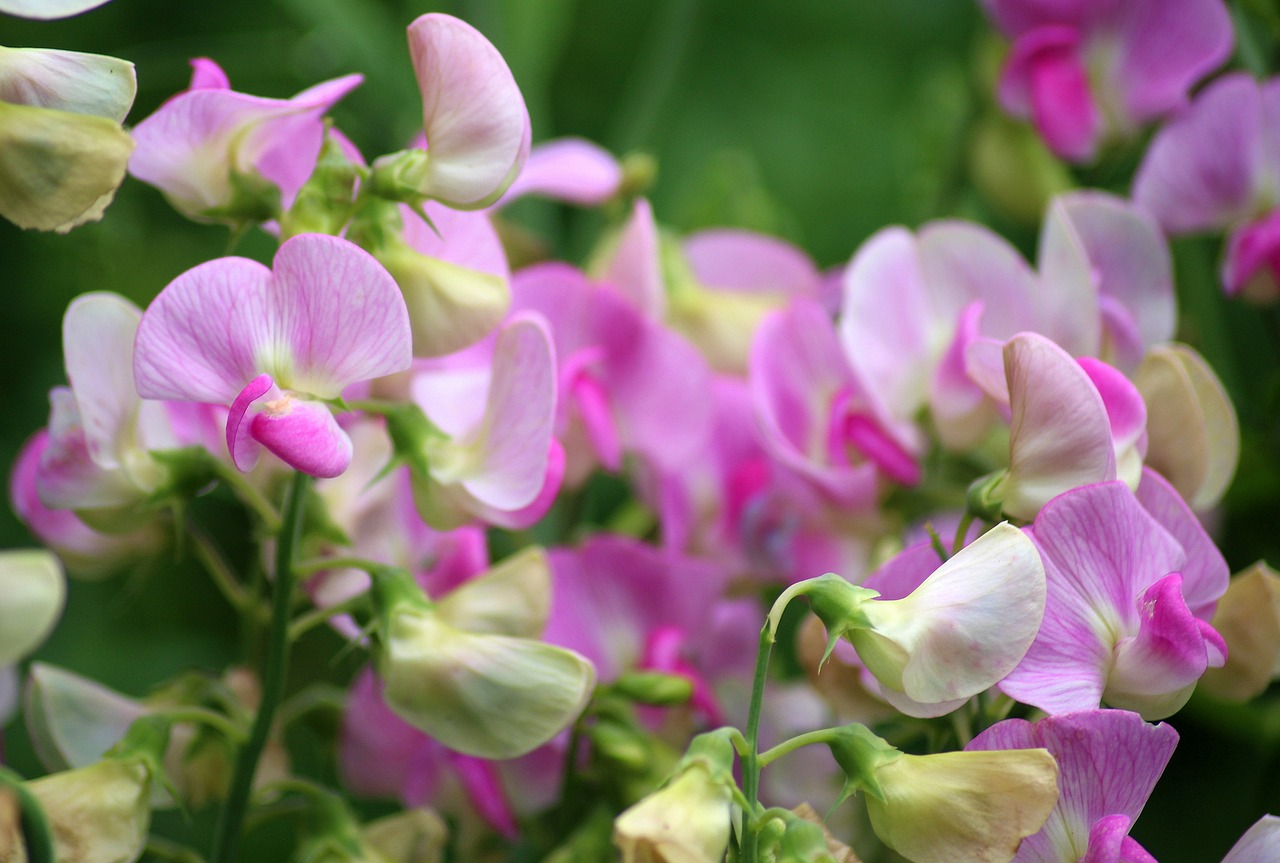
It is too late in June to sow sweet peas for any reasonable flowering this year, but if you have gaps in your autumn sowing plans, note that sweet peas sown outdoors in October and November will overwinter as small seedlings and produce the most vigorous flowering plants the following June and July. Autumn-sown sweet peas consistently outperform spring-sown ones in my experience.
🛒 Buy sweet pea seeds from Amazon UK
🛒 Buy sweet pea obelisks and climbing frames from Amazon UK
Any gaps in the border can be filled quickly in June with plug plants from garden centres. Cosmos, salvias, verbena bonariensis, and nicotiana are widely available as small plants and will establish and flower within weeks. Plant in groups of three or five for a naturalistic, relaxed effect rather than dotting single specimens around the border. This is a design principle I return to constantly, and it transforms the look of a garden border from jumbled to considered with very little effort.
June is one of the best months for establishing a herb garden or expanding an existing one. The warmth that herbs crave is reliably present, and most Mediterranean herbs establish rapidly and begin producing harvestable material within weeks.
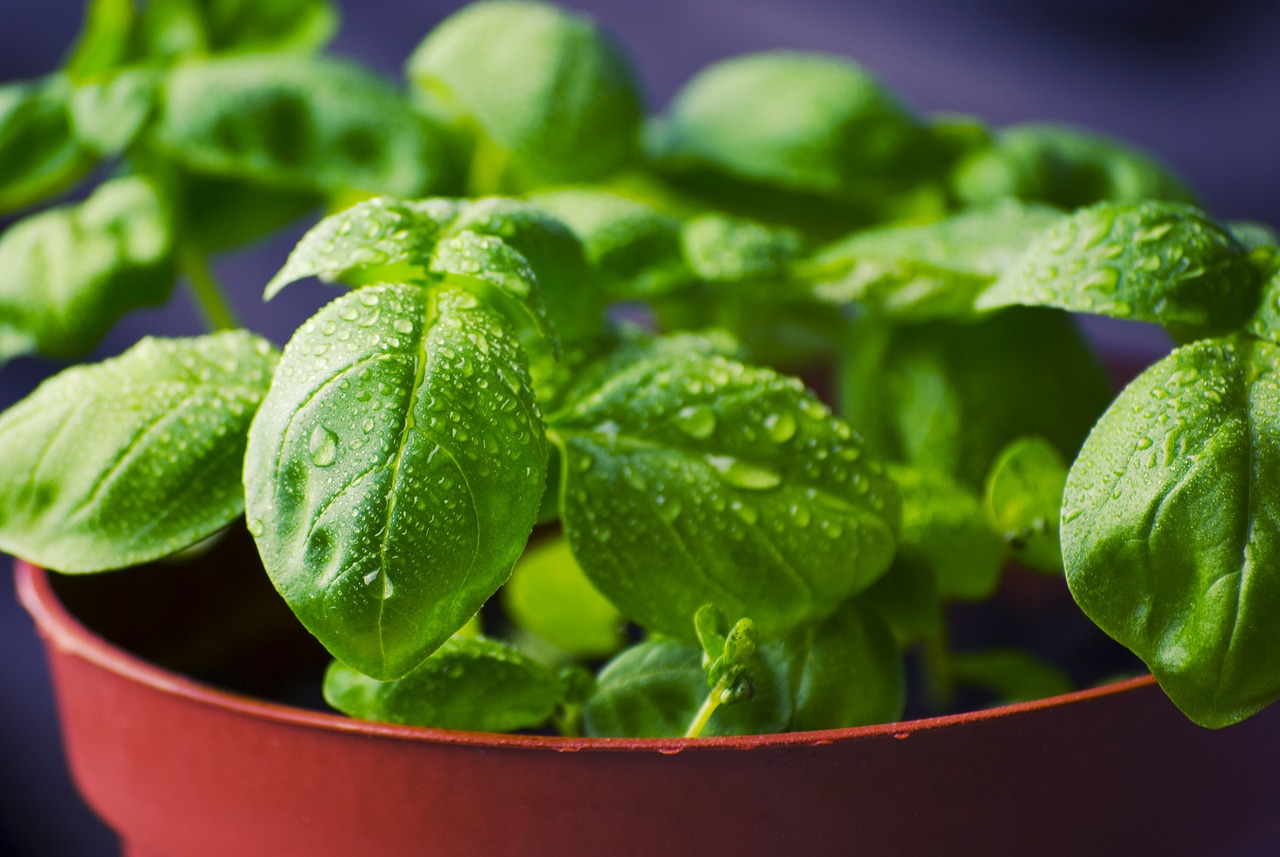
Basil (Ocimum basilicum) can be sown directly outdoors in early June once night temperatures are reliably above 12°C. This is the herb that most gardeners struggle with because they try to grow it too early in cold conditions. Basil wants genuine warmth, both in the air and in the soil. Direct sow into a sunny, sheltered position and thin to 20cm apart. Pinch out the growing tips regularly to prevent flowering and keep the leaves coming.
Coriander can be sown every three to four weeks through June for a continuous supply, but be aware that June sowings bolt faster than spring ones as day length increases. Sow in a slightly shaded spot and harvest leaves young. Dill is another direct-sow option in June for late-summer harvests. Cut-and-come-again herbs such as mint, chives, oregano, and thyme can be harvested regularly throughout June, and frequent cutting actually encourages fresh, productive growth rather than inhibiting it.
💡 Top Tip
Grow herbs in containers near the kitchen door so they are genuinely convenient to harvest. A terracotta pot of mixed herbs steps from the kitchen is used far more frequently than a herb bed at the far end of the garden, and regular harvesting keeps them producing all summer.
🛒 Buy a herb seed collection from Amazon UK
Strawberries begin ripening from mid-June in most parts of the UK, and this month is as much about harvesting and managing existing plants as it is about planting new ones. Pick strawberries daily when they are fully ripe because fruit left on the plant attracts slugs, wasps, and botrytis grey mould, which spreads rapidly in warm, humid conditions.
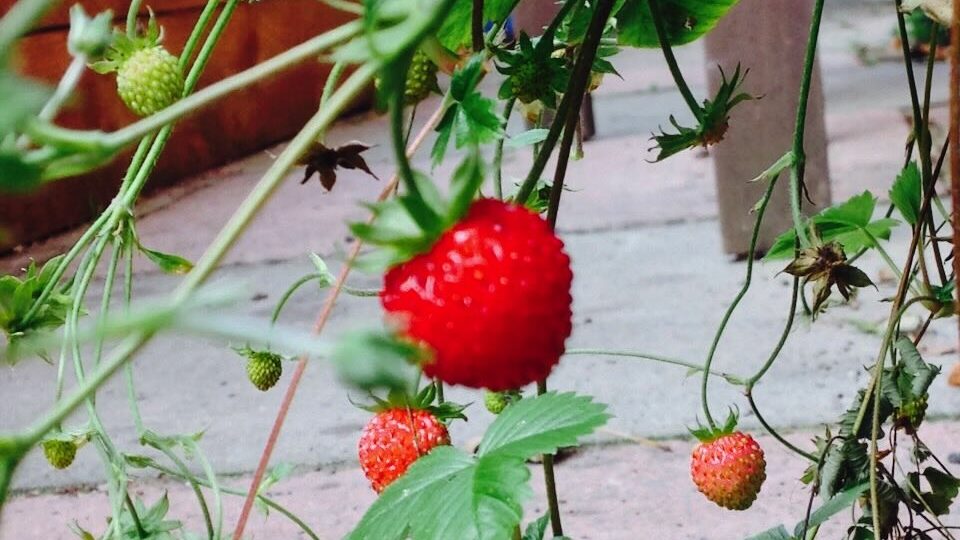
In terms of new planting, June is an excellent time to buy and plant container-grown strawberry plants if you want a small crop this summer, though the main planting season is July to September when runners are available. If your existing plants are producing runners (the long horizontal stems with small plantlets at their tips), you can peg them into small pots of compost now to create new plants for free. Sever from the parent plant once rooted, which typically takes about six weeks.
Gooseberries and red and white currants should be summer-pruned in June, shortening the side shoots to five leaves. This opens up the plant to improve air circulation and helps ripen the developing fruit. Gooseberries are ready to harvest from late June, and thinning the crop in early June by removing every other berry results in larger, sweeter fruit on the remaining branches.
🛒 Buy strawberry plants from Amazon UK
June is one of the best months in the gardening calendar for propagating cuttings. Softwood and semi-ripe cuttings taken from the fresh new growth of shrubs and perennials in June root quickly and reliably, giving you new plants for free. This is something I do every June without fail, as it is one of the most cost-effective ways to expand a garden.
Softwood cuttings are taken from the very tips of new growth while the stems are still soft and pliable. Good candidates in June include lavender, fuchsias, pelargoniums, salvias, penstemons, and herbs such as rosemary and sage. Take cuttings of around 8 to 10cm, remove the lower leaves, and insert them into a gritty, free-draining compost mix. Cover with a clear plastic bag or place in a propagator to maintain humidity, and they will root within two to four weeks in most cases.
Semi-ripe cuttings from slightly firmer stem material can be taken from shrubs, including hydrangeas, berberis, and many other ornamental shrubs. These are taken a little later in June as the current season’s growth begins to firm at the base.
💡 Top Tip
Take cuttings in the morning when stems are at their most turgid and least stressed by heat. Prepare your pots before you cut so the stems spend as little time out of the soil as possible.
🛒 Buy a propagator and rooting powder from Amazon UK
If you have not yet planted up your containers and hanging baskets, June is still an excellent time to do so. Garden centres are well-stocked with summer bedding plants in June, and the warm soil means plants establish and begin flowering very quickly. A basket planted in early June will look fully established and generous within three weeks.
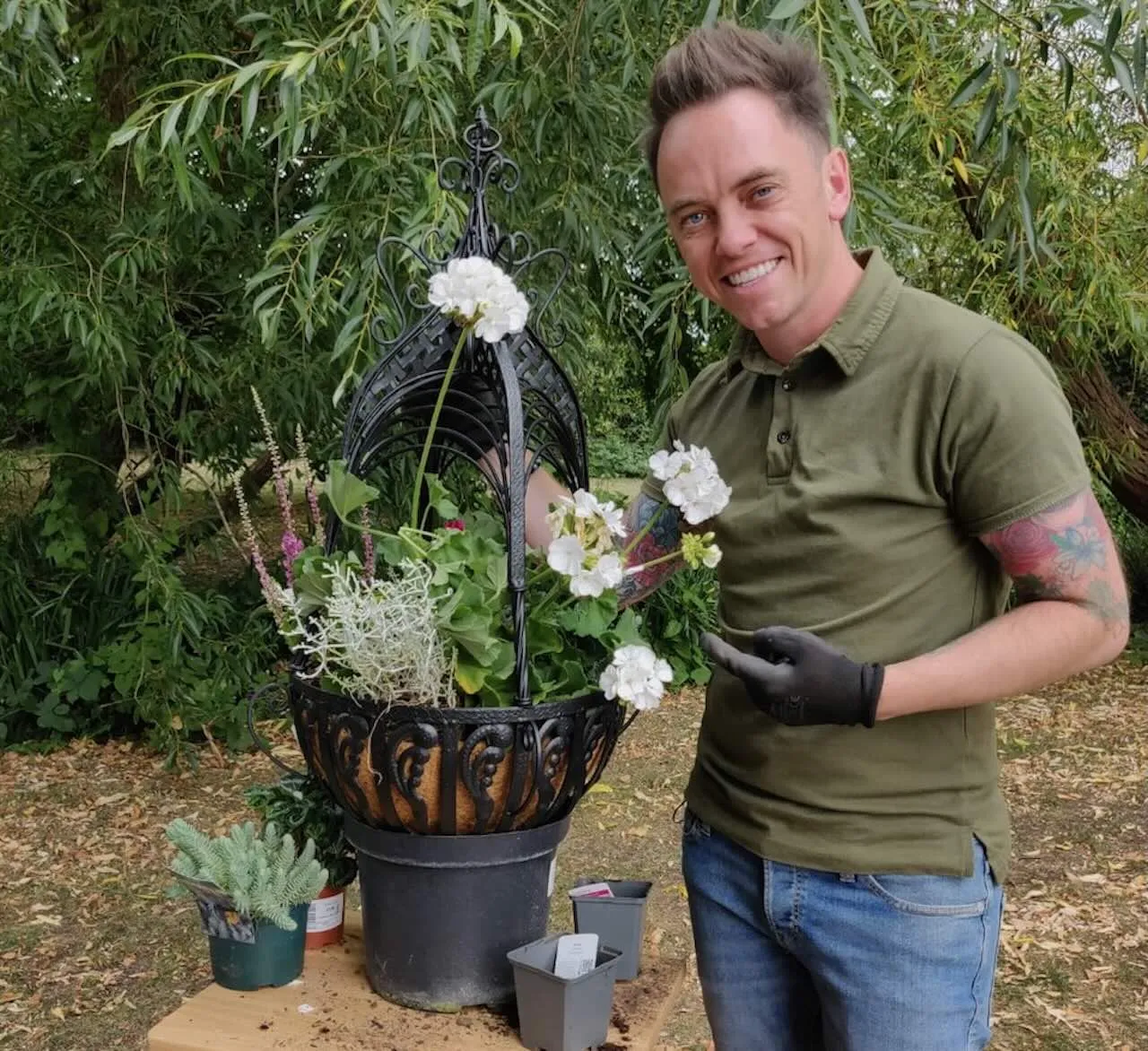
The key to containers that look spectacular through summer, rather than peaking in July and declining, is regular feeding. Once the nutrients in fresh compost are depleted, which typically happens within six to eight weeks, plants in containers need weekly feeding with a balanced liquid fertiliser, switching to a high-potassium feed such as a tomato fertiliser as the season progresses to encourage continued flowering rather than leafy growth.
For June container planting, I typically combine a thriller (tall, structural plant like a cordyline or standard fuchsia), a filler (mounding plants like petunias, calibrachoa, or begonias), and a spiller (trailing plants like bacopa, lobelia, or ivy). This combination creates the lush, layered look that makes containers eye-catching rather than flat.
🛒 Buy hanging basket compost and fertiliser from Amazon UK
This is the secret weapon of experienced gardeners and one of the things that separates a garden that looks brilliant year after year from one that only performs in midsummer. Biennials are plants that grow vegetatively in their first year and then flower in their second. Sown in June, they establish through summer and autumn, overwinter as young plants, and flower the following spring spectacularly.
The classic biennials to sow in June include foxgloves (Digitalis purpurea), wallflowers (Erysimum cheiri), sweet William (Dianthus barbatus), honesty (Lunaria annua), and forget-me-nots (Myosotis). These all add enormous ornamental value in spring when the garden is transitioning from winter and often looks thin.
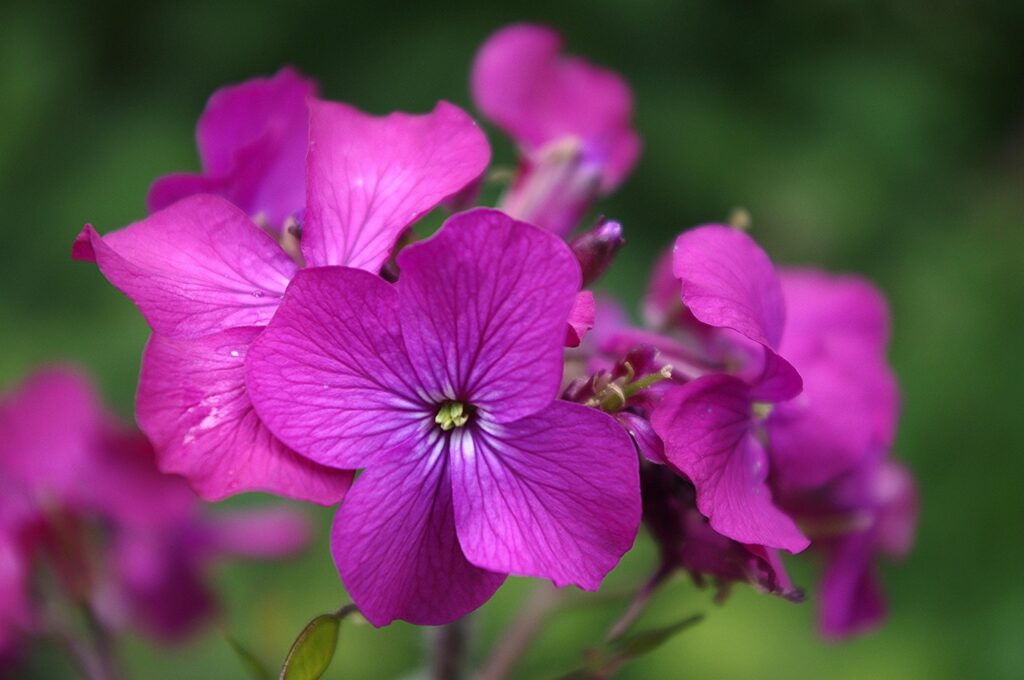
Foxgloves in particular are a June sowing that pays dividends. Sow thinly in a seed tray or directly outdoors, thin to 15cm apart as they develop, and plant out to their final positions in October. The following June, you will have tall, dramatic spikes of tubular flowers in cream, pink, and purple that pollinators find irresistible.
🛒 Buy biennial flower seeds from Amazon UK
If you have ever browsed a garden centre in June and winced at the price of large perennial plants, I want to introduce you to the joys of plug plants ordered online. A plug plant is a young plant grown in a small compost cell, typically the size of your thumb, and it is one of the most cost-effective ways to fill a border with genuine variety and quality. In June, the plugs you order now will establish quickly in warm soil, and by August, many will be flowering in their first season.
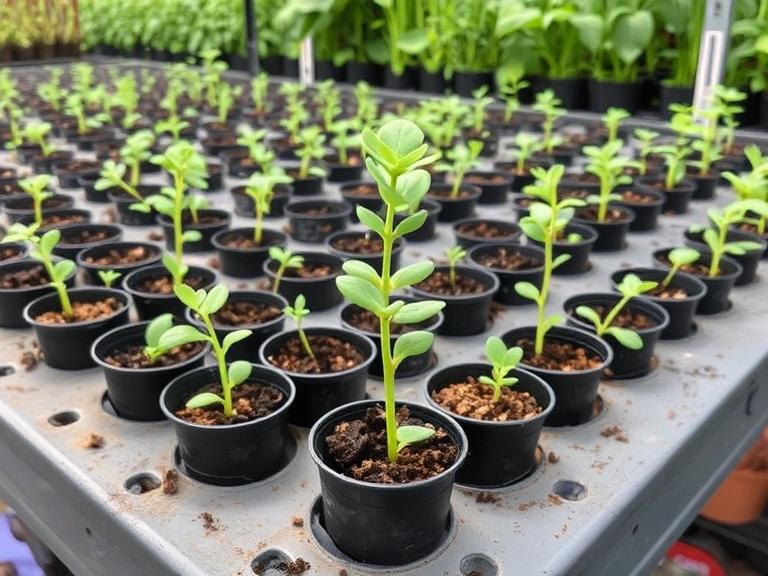
The financial argument for plug plants over garden centre specimens is compelling. A 9cm pot of a named perennial in a garden centre will typically cost between £5 and £10. The same variety ordered as a plug plant from an online nursery often costs £1.50 to £3, and you can order in quantities that would be genuinely prohibitive at retail prices.
When I have designed borders for clients on tighter budgets, plug plants have been the solution that makes ambitious planting schemes financially realistic. A border that might cost £400 to fill with mature specimens can often be planted with plugs for under £80, and within two growing seasons it looks indistinguishable. However, you do need to water much more frequently and keep an eye out for birds or other garden visitors that might easily dig up your plugs!
The species range available from specialist online plug plant suppliers is also vastly broader than anything a high street garden centre stocks. Nurseries such as Hayloft Plants, Sarah Raven, and Crocus sell hundreds of named perennial varieties as plugs that you will simply never find on a retail shelf. If you want a specific echinacea cultivar chosen for its performance in alkaline soil, or a particular astrantia that thrives in dry shade, online plug-plant suppliers are where that level of specificity is found. Garden centres stock what sells in volume. Specialist online nurseries stock what grows well.
💡 Top Tip
When plug plants arrive by post, unpack them immediately and water gently. Do not plant them straight into the ground if they have just arrived in a dark box for two days. Give them 24 to 48 hours on a bright windowsill or in a cold frame to recover before potting on or planting out.
Watering plug plants is also considerably easier than managing larger specimens in the critical establishment period. A small plug in a 7cm or 9cm pot needs only a modest amount of water to keep its root zone moist, and because the root ball is compact and contained, you can see exactly when it needs attention. Large container-grown perennials are much harder to judge because the outer compost dries while the inner root ball remains wet, or vice versa. With plugs, what you see is what you get.

The one discipline that plug plants demand more than anything else is labelling. This is not optional, and I say that from personal experience of losing entire batches of carefully sourced plug plants to the label amnesia that strikes every gardener who has ever confidently thought they would remember which was which. Plug plants are small and look broadly similar in the early weeks of growth, especially before they show any distinctive foliage. Label every single plant the moment it arrives, using a waterproof marker on proper plant labels rather than a biro on lolly sticks that will fade within a fortnight.
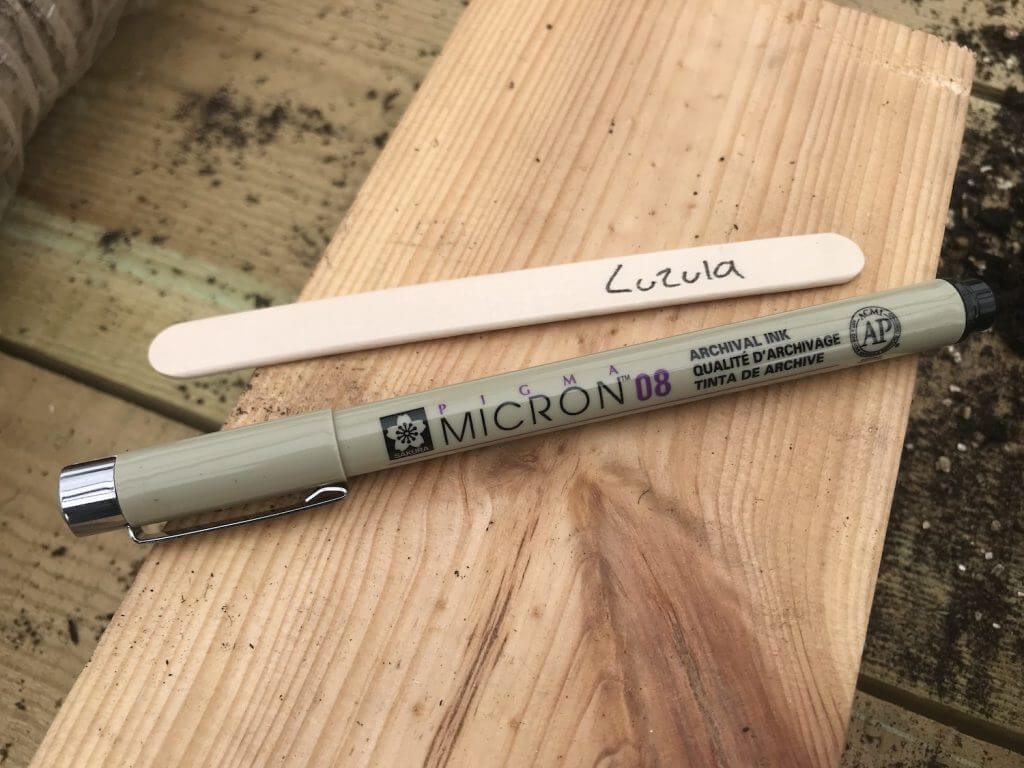
When potting on plugs before they go into the border, keep the original label in the pot and add a second one alongside it as insurance. When you plant into the ground, push the label in directly beside the plant so you know exactly what is where. This habit, boring as it sounds, transforms your relationship with your garden over time because you actually know what you are growing, which makes you a better gardener in every subsequent year.
🛒 Buy waterproof plant labels and markers from Amazon UK
Growing herbaceous perennials from seed is one of the most underrated skills in gardening, and June is a superb month to start. Most gardeners skip straight to buying plants because it feels more immediate, but the process of germinating, tending, and eventually planting out a perennial you grew from a tiny seed teaches you more about that plant’s character than any amount of reading. You learn its pace. You learn what it looks like at every stage of life. You understand its preferences because you have had to provide them from the very beginning.
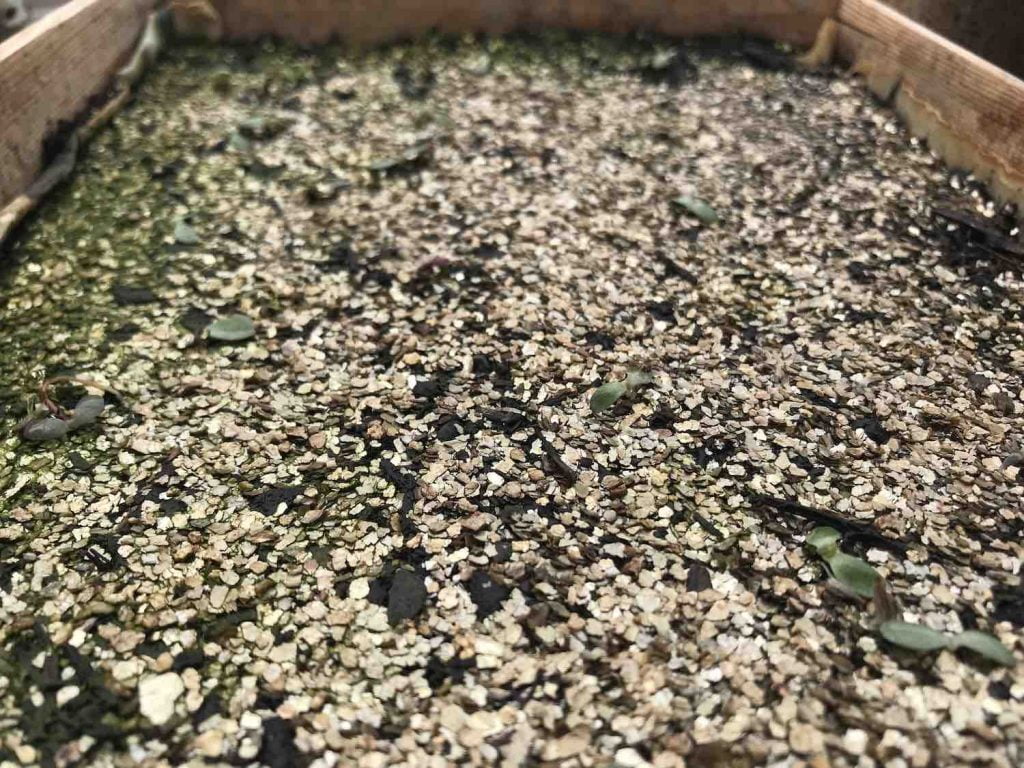
There is also the question of variety selection. Seed catalogues offer an extraordinary range of named cultivars that are simply never available as plants, chosen specifically for soil type, climate, height, or colour. If you garden on heavy clay and want a coneflower that genuinely performs rather than struggling, seed suppliers stock varieties trialled on difficult soils. That level of specificity in selection is only available to the seed grower.
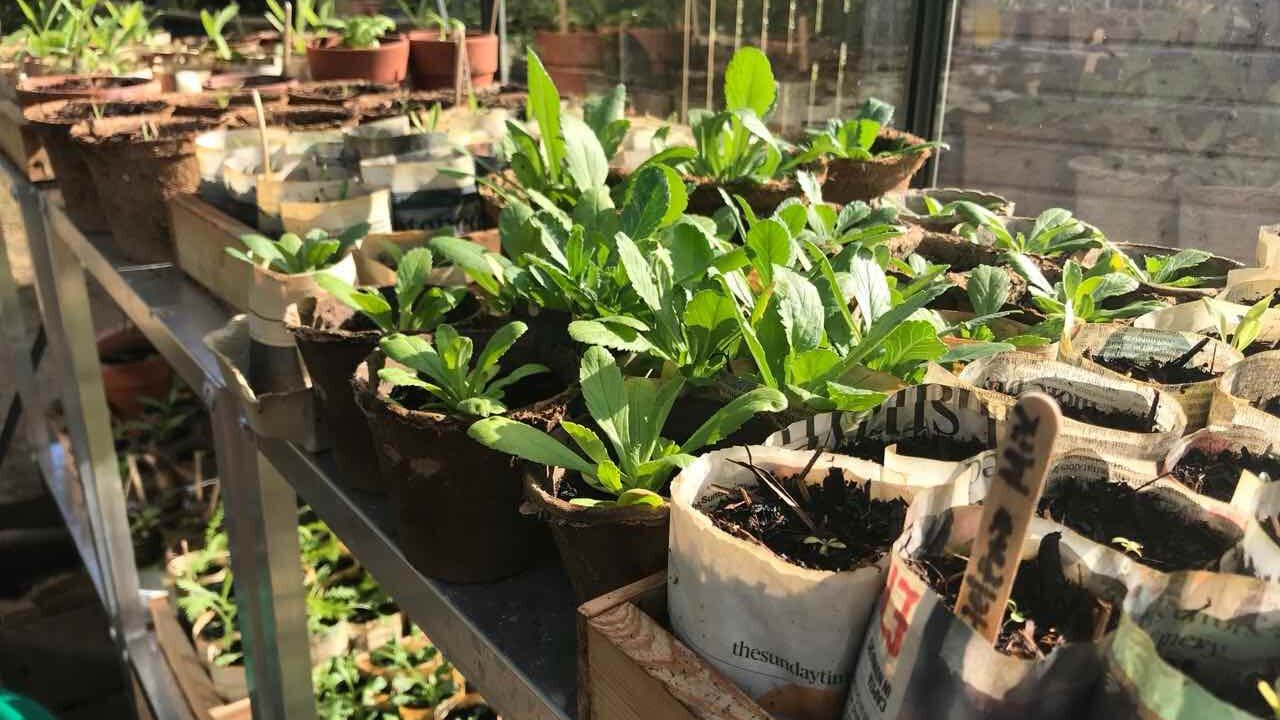
What makes perennial seed growing particularly interesting, and what makes it a genuine education rather than just a task, is that different species have radically different germination requirements and timescales. Understanding why some seeds germinate in a week while others take six months or need cold stratification before they will sprout at all tells you something profound about where that plant comes from and what it has evolved to do. This knowledge changes the way you observe the whole garden.
Astrantia (Astrantia major) is one of the most beautiful cottage garden perennials available, with its intricate pincushion flowers in shades of cream, rose, deep crimson, and purple making it a designer’s plant of choice in shaded and part-shaded borders. It is also one of the more demanding plants to grow from seed, and that challenge is part of what makes succeeding with it so satisfying.
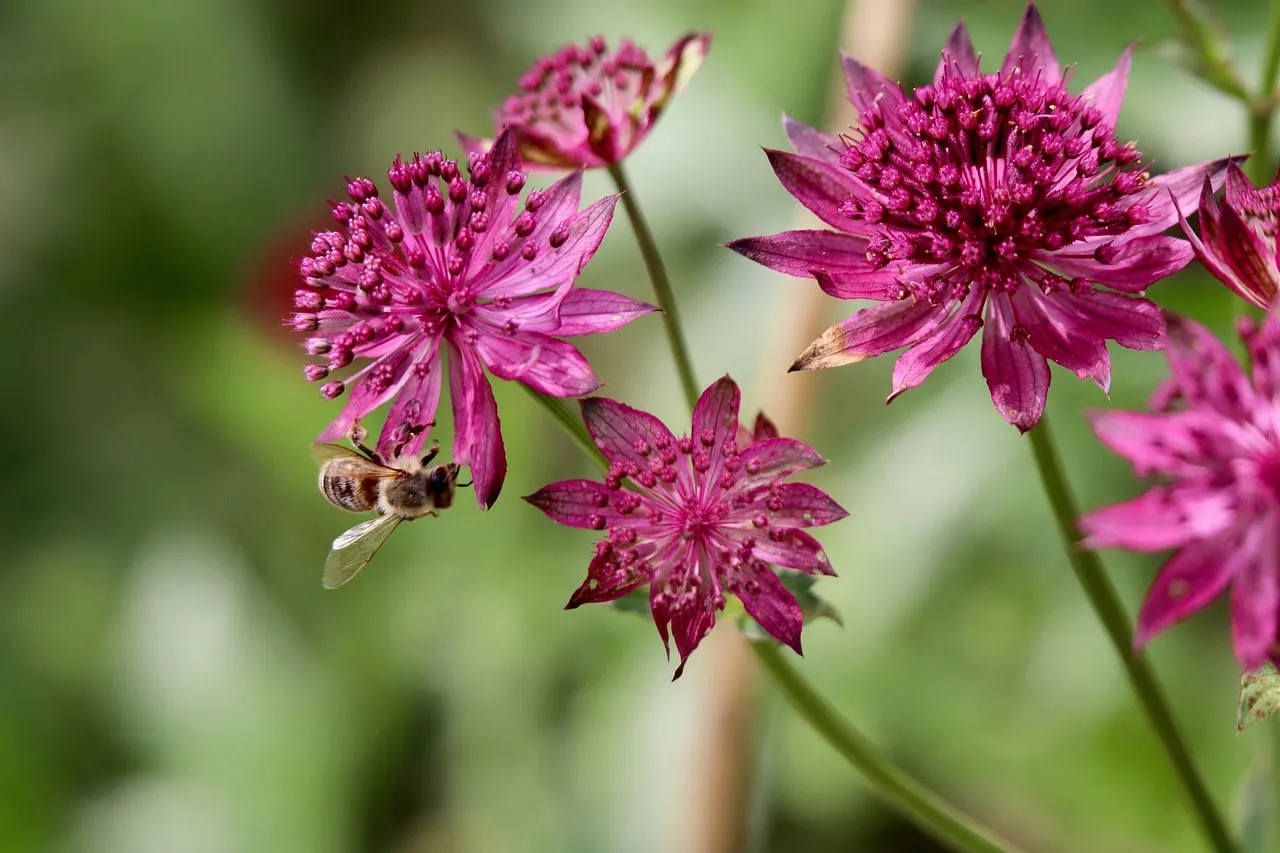
Astrantia seed requires a period of cold stratification before it will germinate reliably. This means the seed needs to experience cold, moist conditions that mimic a winter in its native Alpine meadow habitat before it receives the warmth signal that triggers germination. If you sow astrantia seed in June in warm compost, you are likely to be disappointed.
The correct approach is to sow into moist compost, seal in a plastic bag, and place in the fridge for four to six weeks before bringing it out into warmth. Germination then typically takes a further four to eight weeks and is notoriously variable, with some seeds germinating promptly and others sitting dormant for months.
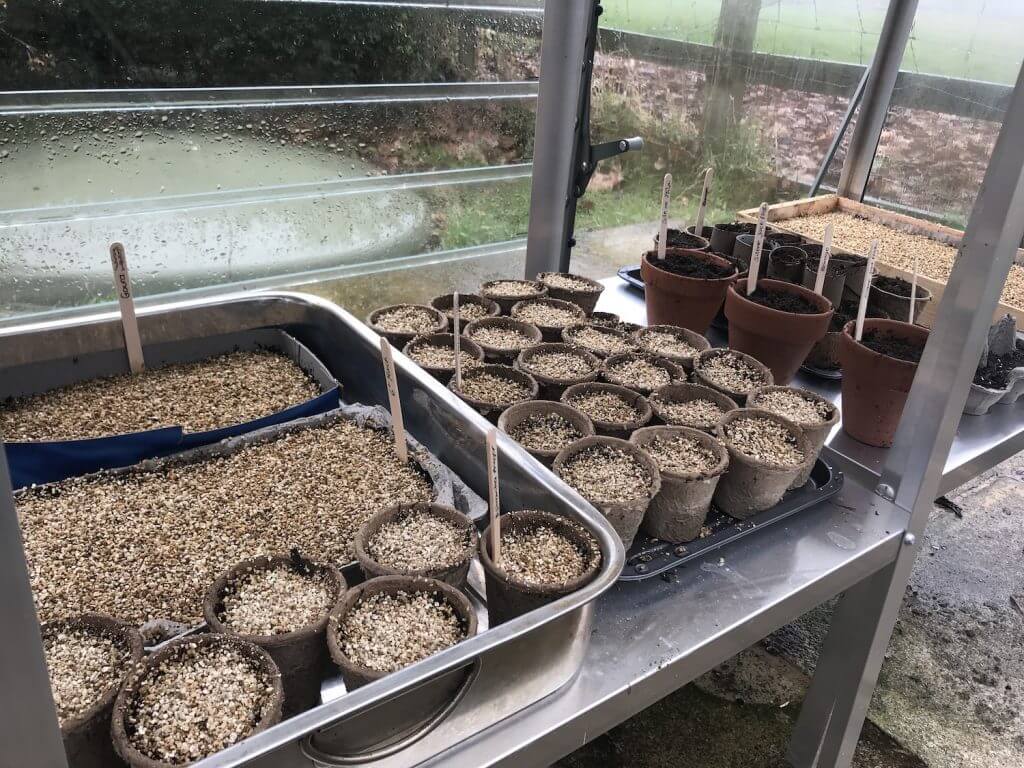
Do not give up on an astrantia seed tray. I have had trays that showed nothing for four months before suddenly producing a flush of seedlings. The lesson this teaches you applies directly to the plant in the garden: astrantia is naturally attuned to Alpine timing and will not be hurried. In the garden, it establishes slowly in its first year, gently seeds when it is happy, and improves with each subsequent season. Understanding the seed’s patience helps you fully understand the plant’s character.
🛒 Buy astrantia seeds from Amazon UK
Coneflowers (Echinacea purpurea) sit at the opposite end of the germination spectrum from astrantia, and this contrast is precisely why growing both species teaches you so much. Echinacea seeds sown in June in moist, warm compost will typically germinate within 10 to 21 days without any cold treatment. The seedlings are robust, grow quickly, and in a good summer, the plants sown in June may even produce a flower or two in their first autumn before dying back for winter and returning more strongly the following year.
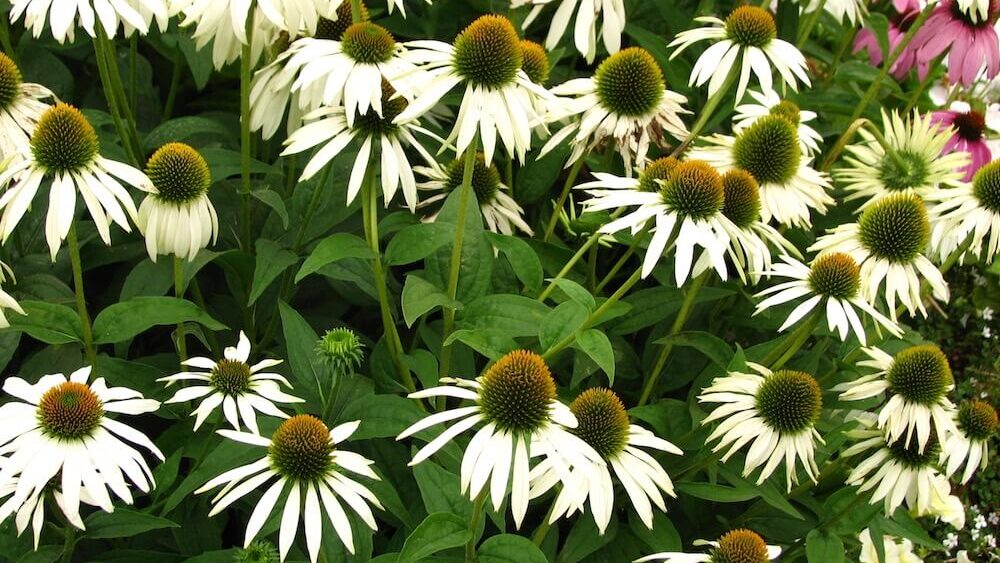
This speed of germination reflects echinacea’s prairie origins in North America, where plants evolved to take advantage of warm-season growing windows and produce viable offspring quickly. It is a plant that thrives in warmth and responds to it immediately, which is exactly how it behaves in a UK garden. Give it full sun, a well-drained position, and reasonable soil, and it establishes with very little fuss. Growing it from seed reinforces this understanding because you observe from the very first days that this is a plant that simply wants to grow.
The range of echinacea available from seed is extraordinary compared to what garden centres stock. Specialist seed suppliers offer varieties in colours from white through palest pink to deep rose, orange, and near-red, as well as double-flowered forms and varieties selected specifically for their performance in UK clay or alkaline soils. Named varieties like ‘Magnus’, ‘White Swan’, and ‘Prairie Splendor’ are frequently available as seed and reward the grower with plants that feel genuinely personal.
🛒 Buy echinacea coneflower seeds from Amazon UK
Jacob’s ladder (Polemonium caeruleum) is a wonderfully underused UK native perennial with elegant divided leaves that genuinely do resemble a ladder, and sprays of blue to violet flowers that bees adore from late spring into early summer. From seed, it occupies an interesting middle ground between astrantia’s complexity and echinacea’s ease. I’ve grown them from seed for my meadow and they are a brilliant plant to grow if you want to level up your gardening skills!
Polemonium seed sown in June will typically germinate within two to four weeks in warm compost without any cold treatment, provided the seed is fresh. Older seed benefits from a short cold stratification period of two to three weeks, but fresh seed from a reputable supplier usually germinates reliably in warmth. The seedlings are delicate at first, with fine leaves that look nothing like the mature plant, and this is where patient observation pays off. Watching a polemonium develop from a thread of cotyledons into a recognisable plant with its characteristic pinnate foliage teaches you to identify seedlings at every stage, which is a skill that carries forward into the whole garden.
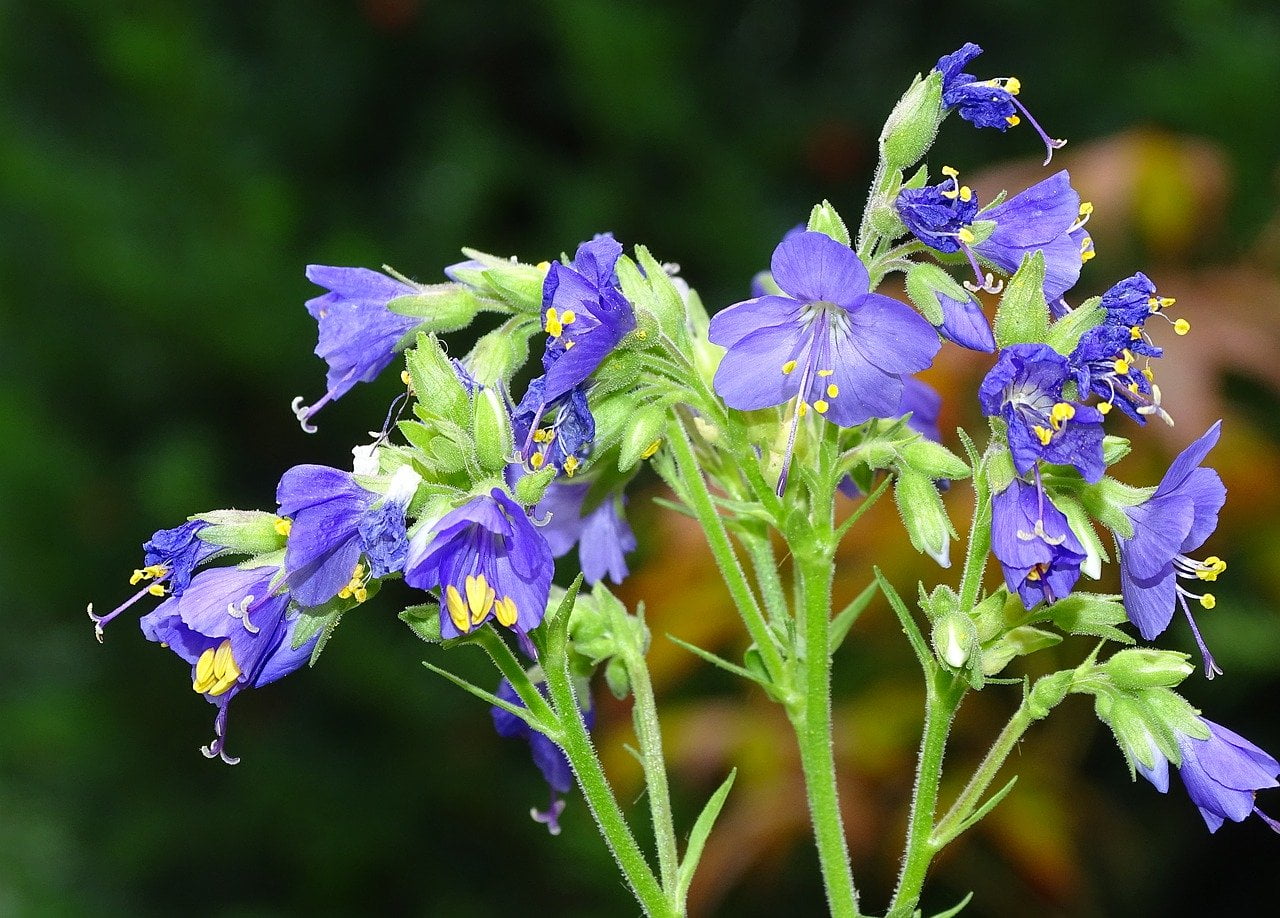
Jacob’s ladder is one of the best perennials for gardeners with heavier, moisture-retentive soils because it genuinely prefers them. It tolerates partial shade far better than most cottage garden perennials, making it a valuable plant for the often-neglected middle and back of north or east-facing borders. Growing from seed allows you to select seed from suppliers who specifically describe their stock as suitable for shaded or clay conditions, a distinction that matters significantly in practice.
🛒 Buy Jacob’s ladder seeds from Amazon UK
Delphiniums are the most dramatic cottage garden perennials available and also, when grown from seed, one of the most instructive. The germination window for delphiniums is short, and the seed loses viability quickly, which means timing and seed freshness matter more than for almost any other perennial on this list. Fresh delphinium seed sown in warmth in June should germinate within ten to fourteen days, which seems encouraging. The complication is that delphinium seed purchased from a packet that has been sitting on a shelf for a year or more may germinate poorly or not at all.
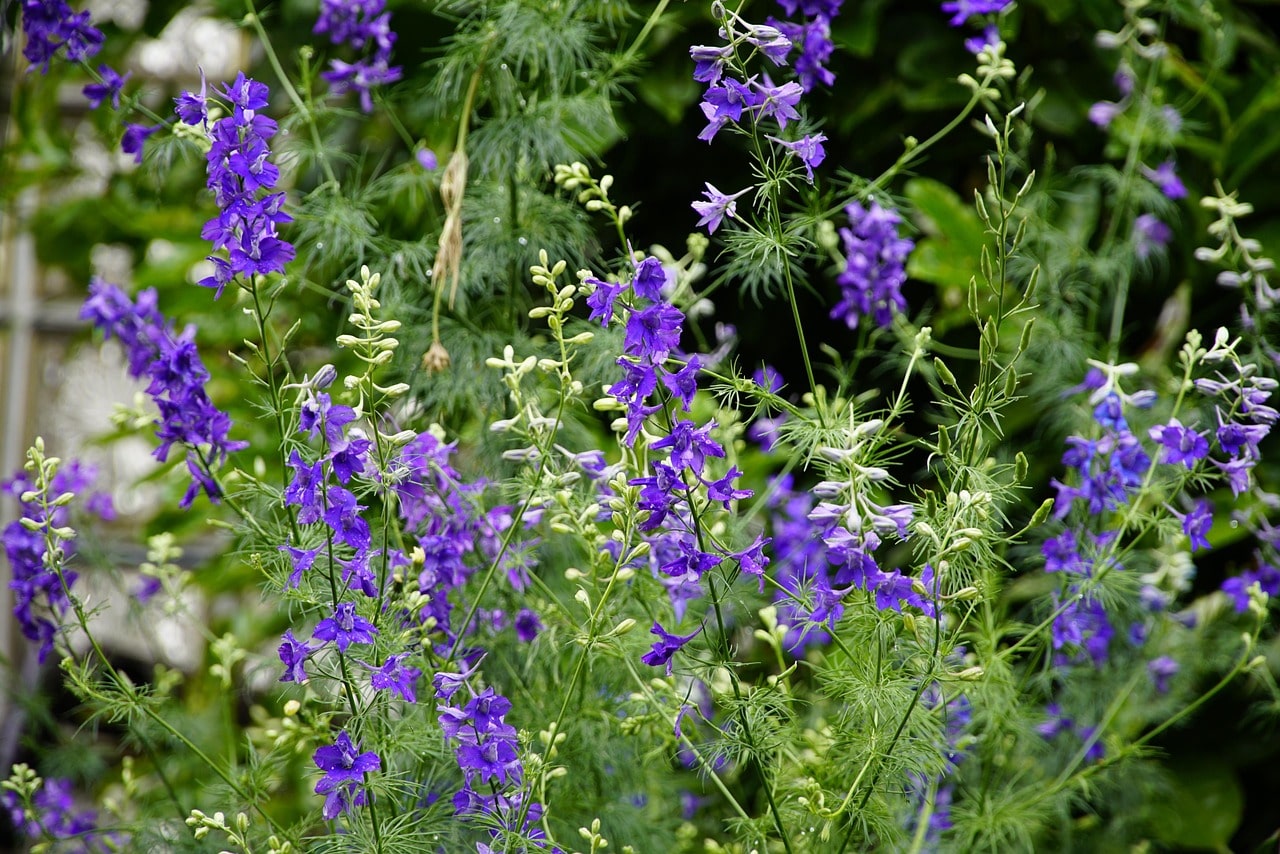
This short viability window teaches you something important about seed storage and freshness that applies across the whole of gardening. Most seeds store reasonably well in cool, dark, dry conditions, but some, delphiniums among them, decline rapidly and should be used in the season of purchase rather than saved. Once you have lost a batch of expensive delphinium seed to old age, you become a different kind of seed buyer: you check harvest dates, you order fresh stock annually, and you understand that seed is a living thing with a shelf life.
Another option that many experienced gardeners use is to sow delphiniums in a cold frame or cool greenhouse in late summer or early autumn, allowing them to experience a natural cool period before spring germination. This mimics the plant’s native montane habitat and produces strong, well-rooted specimens for planting out the following spring.
Growing delphiniums this way, from a June or July fresh sowing into a cold frame, produces the tallest and most floriferous plants in my experience. It requires patience but the reward, a two-metre spike of deep blue, purple, or white flowers the following June, is genuinely spectacular and worth every week of waiting.
🛒 Buy delphinium seeds from Amazon UK
💡 Top Tip
Keep a simple seed germination notebook. Record the date you sowed, the temperature, the compost used, and when seedlings appeared. After two or three seasons this becomes an invaluable reference that is entirely specific to your garden and conditions. No book or website can replicate that knowledge.
The four plants above illustrate a wider truth about seed growing: the difficulty of germination is not a measure of how difficult the plant is to grow once established. Astrantia requires patience and cold stratification from seed, but is almost indestructible once planted in a shaded border.
Delphiniums demand fresh seed and careful timing but reward you with some of the most majestic flowering spikes in British horticulture. Understanding these distinctions and developing the habit of observing rather than assuming is what seed growing gives you beyond the plants themselves.
Beyond planting and sowing, June is one of the busiest maintenance months in the garden calendar. Staying on top of a few key jobs now prevents much more work later in the summer.
Weeding between vegetable rows and raised beds should be done little and often in June rather than leaving it to become a major task. Annual weeds compete directly with vegetable crops for water and nutrients in June’s warm, moist conditions, and they can go from seedling to setting seed remarkably quickly. A Dutch hoe run between rows on a dry day efficiently kills seedling weeds without disturbing your crops’ roots.
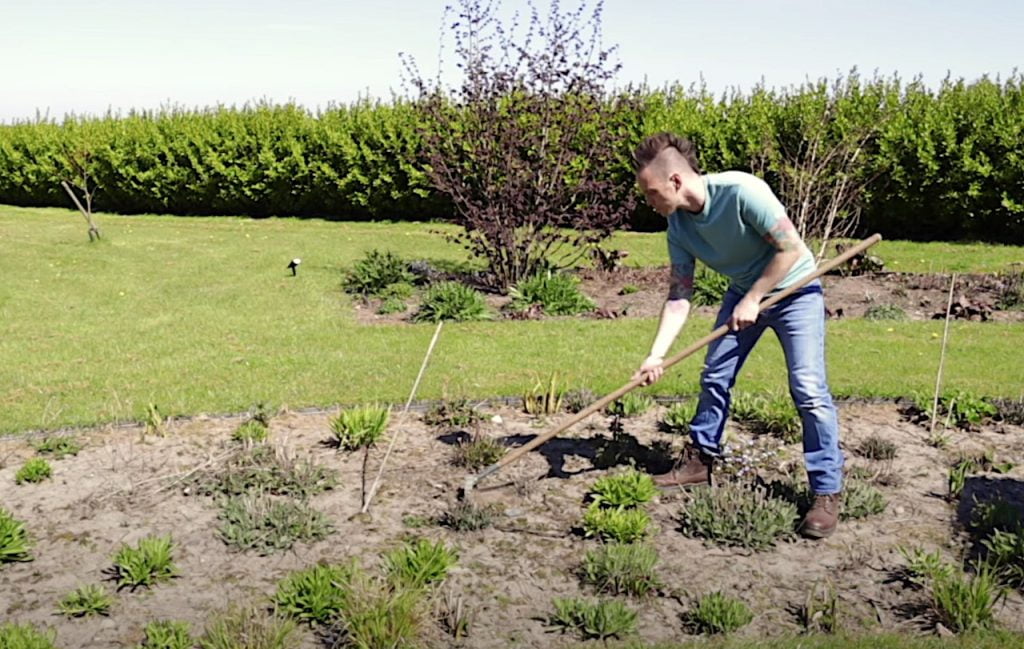
🛒 Buy a Dutch hoe for vegetable garden weeding from Amazon UK
Mulching is the June job that saves the most work overall. Apply a 5 to 8cm layer of bark chips, compost, or well-rotted manure around the base of plants, keeping it clear of stems and trunks. Mulch dramatically suppresses weed germination, retains soil moisture, and slowly improves soil structure as it breaks down. In a dry summer, mulched beds require significantly less watering than bare soil.
Staking and tying in are equally important in June as plants grow rapidly in the long days. Dahlias, delphiniums, tall salvias, and most climbing plants need attention now before they become tangled or top-heavy. Tying in once plants are tall enough, rather than waiting until they have flopped, is always more effective, as straightening a stem that has kinked at the collar is often impossible without causing damage.
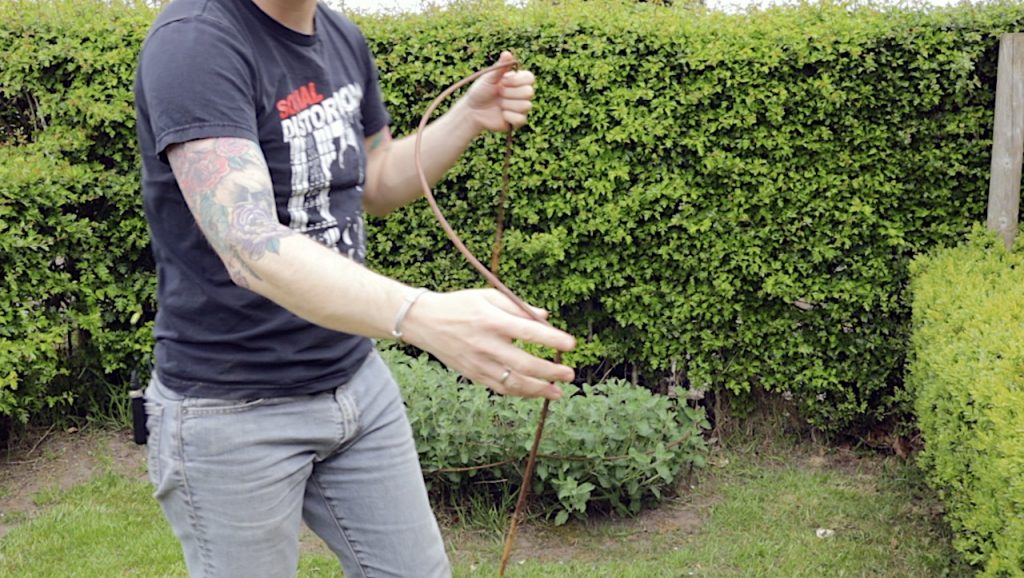
Deadheading roses, geraniums, and other repeat-flowering plants encourages continuous bloom through summer. Removing spent flowers prevents the plant from investing energy in seed production and redirects it toward new flower buds. For roses, cut back to a healthy outward-facing leaf to encourage good new growth.
💡 Top Tip
June is the month to thin out excess fruit on apple and pear trees. The tree will drop some fruit naturally in what is known as the June drop, but following this with a manual thinning to leave one fruit every 15 to 20cm along each branch produces much larger, better quality fruit at harvest time.
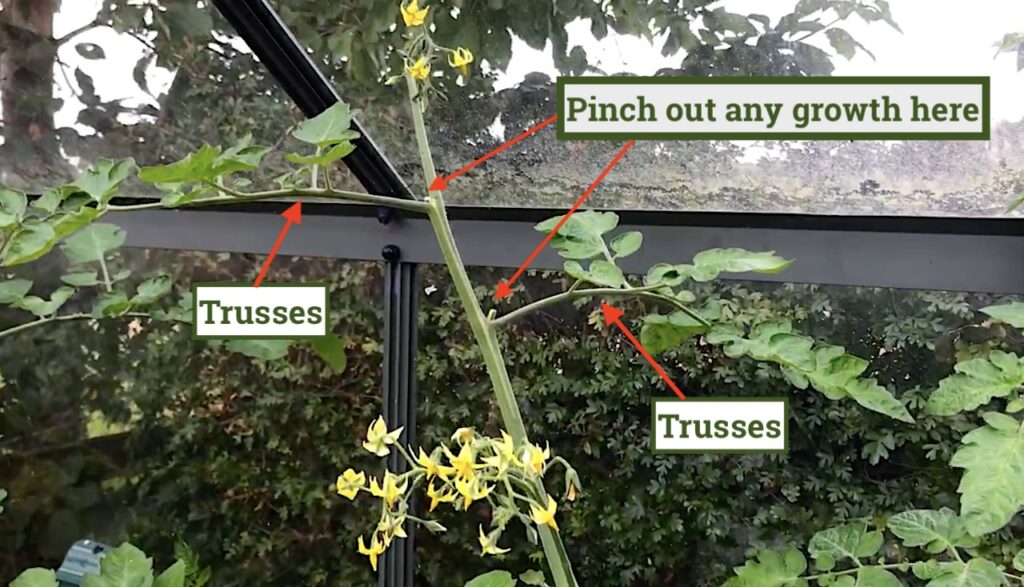
💡 Top Tip
When harvesting first early potatoes, avoid leaving any in the ground. Any tubers that remain will sprout again next year and create a persistent weed problem in that bed. A thorough harvest now saves frustration in future seasons.
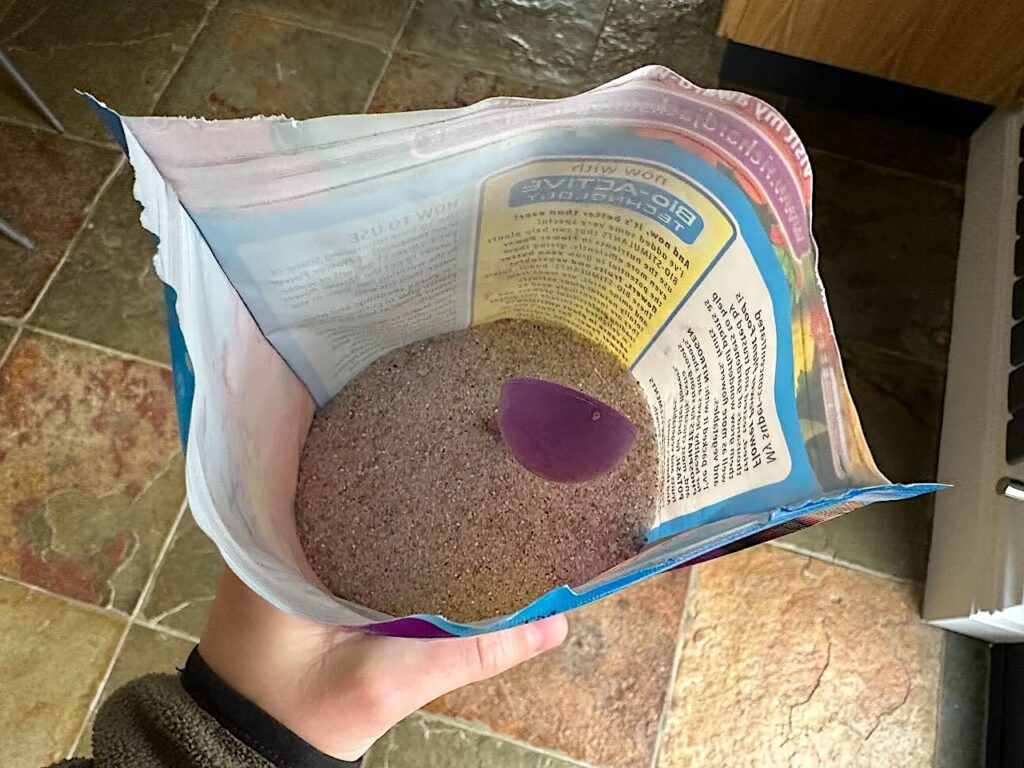
🛒 Buy high-potassium tomato feed from Amazon UK
The warm conditions that accelerate plant growth in June are equally good for garden pests. Aphids multiply exponentially in warm weather and should be checked for regularly on roses, nasturtiums, broad beans, and new growth generally. Encouraging natural predators such as ladybirds, hoverflies, and ground beetles by maintaining some areas of long grass and leaving hollow stems undisturbed is far more effective long-term than spraying, which typically kills predators alongside pests.
Cabbage white butterflies are active from June and will lay eggs on any brassicas not protected with fine mesh netting. Check the undersides of leaves regularly and remove any yellow or white egg clusters you find. A well-fitted mesh covering is the most effective protection, and it is genuinely worth fitting it on planting day rather than waiting until you spot the first caterpillar.
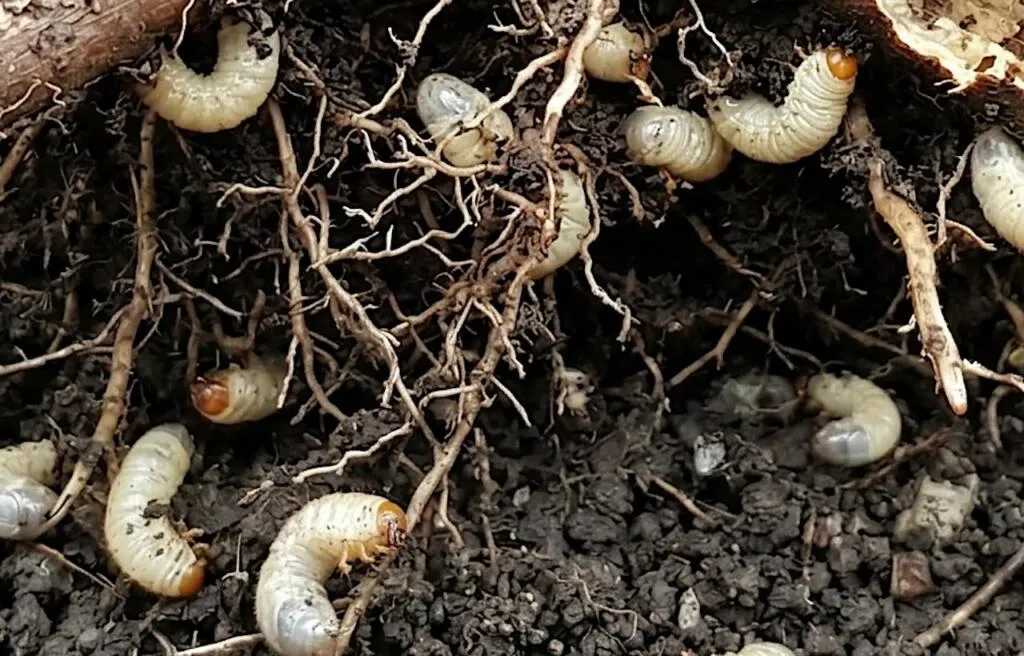
Vine weevil grubs can damage container plants in June as the larvae feed on roots. Plants that wilt suddenly despite adequate watering or collapse overnight with no obvious above-ground cause should be removed from their containers and the compost examined. The cream, C-shaped grubs with orange heads are distinctive once you know what to look for. Biological controls using nematodes are the most effective organic approach and work best when applied to moist soil in June conditions.
🛒 Buy vine weevil nematodes from Amazon UK
Water management becomes increasingly important as June progresses into summer. Newly planted specimens need regular watering until they have developed sufficient root systems to draw moisture from deeper in the soil. Established plants in borders typically manage well without intervention unless there is a prolonged dry spell, but containers, hanging baskets, and vegetable crops need consistent attention throughout the month.
Water in the early morning or evening to minimise evaporation losses and reduce the risk of scorch on wet leaves in direct sunlight. Watering at the base of plants rather than over the top also reduces the risk of fungal diseases such as mildew and blight that thrive in wet foliage conditions.
Feeding programmes matter significantly in June. Roses, dahlias, and bedding plants benefit from a balanced liquid feed every two weeks. Tomatoes should begin receiving a high-potassium tomato fertiliser as soon as the first flowers appear. Lawns can be fed with a summer lawn food formulation if growth is looking thin, though avoid feeding in dry conditions as it may scorch the grass.
🛒 Buy tomato and plant liquid feed from Amazon UK
No, June is not too late for many vegetables. Courgettes, runner beans, French beans, outdoor cucumbers, and sweetcorn can all be sown or planted out in early June with confidence. Fast-growing salad crops including lettuce, radish, and rocket can be sown continuously through the whole of June. Winter brassicas such as purple sprouting broccoli, kale, and calabrese should specifically be sown in June for the best autumn and winter harvests.
Radishes are the fastest garden vegetable, ready to harvest within three to four weeks of sowing. Rocket, mizuna, and salad leaves are ready for a first cut within four to five weeks. Dwarf French beans sown in early June should be producing pods by late July or early August. Courgettes planted in June will begin fruiting by mid-July in a good summer.
Cosmos, sunflowers, nasturtiums, and Californian poppies can all be direct sown outdoors in June with good results. Hardy annuals including poached egg plant (Limnanthes douglasii) and calendula also grow quickly from a June sowing. Biennials including foxgloves, wallflowers, sweet William, and honesty should be sown in June for flowering the following spring.
Yes, June is an excellent time to plant lavender. Container-grown plants establish well in warm June soil and will typically begin flowering within days or weeks of planting. The most important requirement is excellent drainage. Add horticultural grit to heavy soils and avoid planting in shaded or waterlogged positions.
June is a great time to plant up containers with summer bedding. Petunias, calibrachoa, begonias, fuchsias, osteospermum, and lobelia are all widely available as plug plants in June and will establish and flower quickly in warm conditions. Use a good quality peat-free compost, incorporate slow-release fertiliser granules, and ensure containers have adequate drainage holes. Feed weekly with a liquid fertiliser once plants are established.
For most of England and Wales, frost risk is negligible after the end of May. In Scotland, northern England, and elevated inland areas, there is a small but real risk of ground frost in early June. If you are in a higher-risk area, delay planting out tender crops such as tomatoes, courgettes, and basil until you are confident night temperatures are consistently above 5°C, or be prepared to cover plants with horticultural fleece on cold nights.
The right fertiliser depends on what you are growing. Vegetable crops benefit from a balanced granular fertiliser worked into the soil before planting. Tomatoes, peppers, and other fruiting crops should be given a high-potassium liquid feed weekly once flowers appear. Roses and dahlias respond well to a balanced rose fertiliser applied in June and again in August. Avoid feeding newly planted trees and shrubs in their first season as it encourages soft growth at the expense of root establishment.
Ready to elevate your gardening beyond basic tasks? My comprehensive online courses provide the expertise to transform you from enthusiastic beginner to confident garden creator.
With courses starting from just £29, you gain access to award-winning design knowledge.
For the garden you’ve already got, not the one you’re starting from scratch. Seven checklists and video lessons from BBC Garden Rescue’s Lee Burkhill, built to help you work out what’s worth keeping before you spend a penny.
Garden Design Examples for Small Gardens: 30 Design Templates & Planting Plans: In this online gardening course, I’ll walk you through 30 fantastic garden designs, explaining the logic behind the layout, the plant choices, and take-home tips for applying them in your own garden.
Learn how to transform and design your own garden with Lee Burkhills crash course in garden design. Over 5 hours Lee will teach you how to design your own dream garden. Featuring practical design examples, planting ideas and video guides. Learn how to design your garden in one weekend!
Garden Design for Beginners Online Course: If you want to make the career jump to becoming a garden designer or to learn how to design your own garden, this is the beginner course for you. Join me, Lee Burkhill, an award-winning garden designer, as I train you in the art of beautiful garden design.
June is one of the richest and most rewarding planting months in the UK gardening calendar. The key priorities are planting out tender summer crops before the season runs short, succession sowing salad crops and herbs for continuous harvests, and sowing your winter brassicas now so they are ready for autumn.
Do not forget the biennials either: foxgloves, wallflowers, and sweet William sown in June will transform your garden next spring. Mulch, water consistently, and keep on top of deadheading and staking, and June will reward you with a garden that looks and produces brilliantly all the way to autumn.
Happy gardening, and I hope your June garden brings you joy. If you have questions about what to grow this month, head over to the Garden Ninja Forum, where I answer questions personally.



Lee Burkhill, known as the Garden Ninja, is an award-winning garden designer and horticulturist with over 30 years of gardening experience and 15 years as a professional garden designer. A qualified RHS (Royal Horticultural Society) professional, Lee specialises in sustainable garden design and practical horticultural advice. He designs and presents on BBC1’s Garden Rescue and in leading gardening publications. Lee combines three decades of hands-on gardening knowledge with professional design qualifications to help gardeners create beautiful, functional outdoor spaces.
View all posts by Lee Burkhill







JOIN THE NINJAS
Be the first in line for new Guides, Discount codes and Offers