For the garden you’ve already got, not the one you’re starting from scratch. Seven checklists and video lessons from BBC Garden Rescue’s Lee Burkhill, built to help you work out what’s worth keeping before you spend a penny.
69


Quick Answer
The best time to plant Daffodil bulbs in the UK is September and October, while the soil still holds enough warmth for the roots to establish before winter. November is fine, and you can plant as late as December as long as the ground isn’t frozen. Plant them 15cm deep, pointed end up, about 10 to 15cm apart.
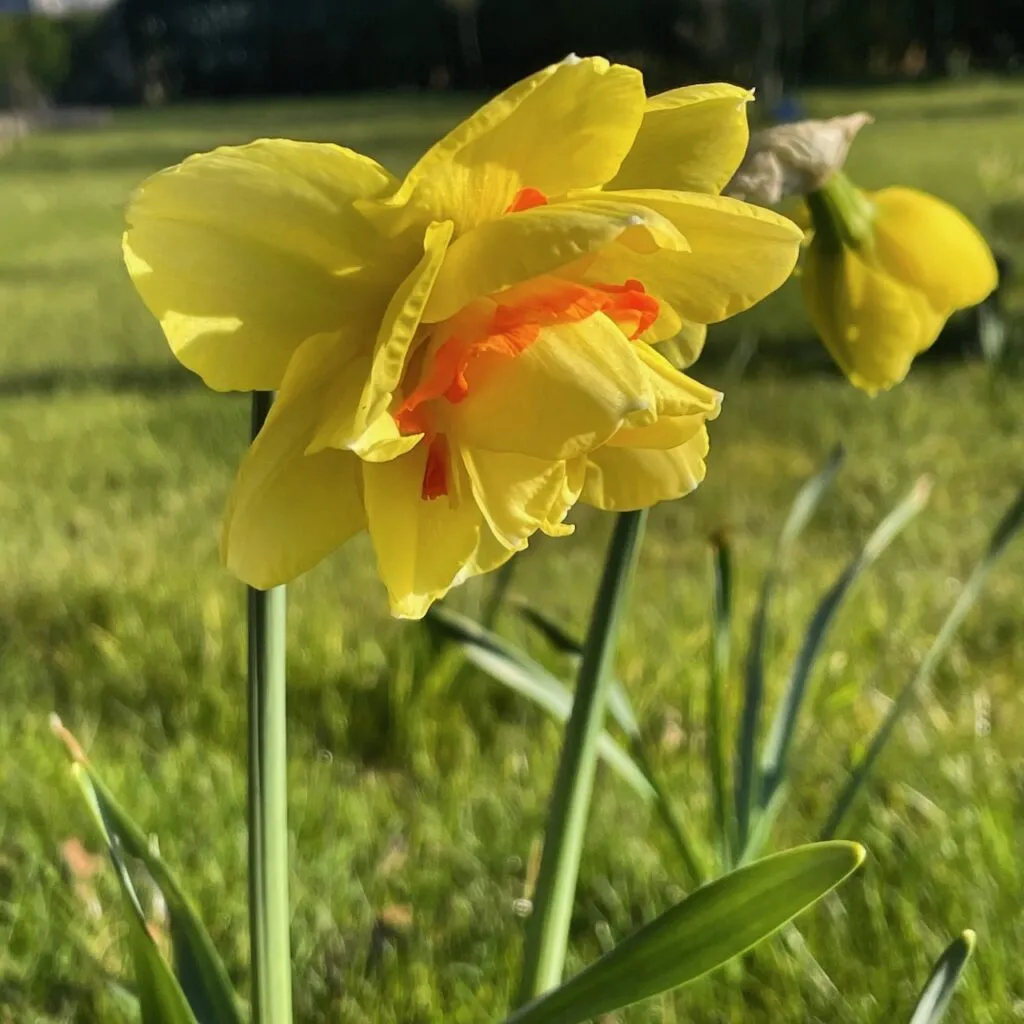
There’s a small moment every spring I never tire of: the first Daffodil flowers opening on a grey February morning, well before most of the garden has woken up.
The reason those flowers appear on cue is almost entirely down to one decision made the previous autumn, and that’s when the bulbs went into the ground. Get the timing right and Daffodils will return, spread and flower for decades with next to no help from you.
It’s also the question I get asked more than any other about bulbs, both on the Garden Ninja forum and in client gardens: when exactly should I plant my Daffodils, and have I left it too late?
So in this guide I’ll give you the ideal planting window month by month, how that shifts depending on where you live in the UK, how deep to plant, and what to do if you’ve found a forgotten bag of sprouting bulbs in the shed.
I’ll also cover the aftercare that keeps Daffodils coming back every year, since planting at the right time is only half the job.
Jump To
This page contains affiliate links for products I use and recommend. If you make a purchase after clicking a link, I may earn a small commission at no extra cost to you, which helps keep the Garden Ninja blog free for everyone.
If you’re planting a lawn or a large border, a large sack of mixed Daffodil bulbs is the most economical way to buy them, and it gives you enough bulbs for proper drifts.
The best time to plant Daffodil bulbs in the UK is September and October. If I had to pick a single month it would be October, once the worst of the late summer heat has gone but the soil is still warm from the summer.
That leftover warmth is what lets the bulbs put down a good set of roots over the following six to eight weeks, and a Daffodil that goes into winter with an established root system is the one that flowers strongly in spring.
Daffodils also need a long spell of cold to flower. Over winter the bulb goes through roughly three months of low temperatures, and that chill is the trigger that tells it to send up a flower stem once the days lengthen.
Planting in autumn gives them the full cold period naturally, which is why a bulb planted in September or October almost always outperforms one planted in January, even if the January bulb looked just as healthy in the bag.
You can plant slightly earlier, in late August, if the weather has turned cool and the soil is moist, but I rarely do. In a hot, dry late summer, bulbs sitting in warm dry soil can sulk or start to shrivel, and there’s nothing to be gained by rushing them in.
Equally, November planting works perfectly well. I’ve planted thousands of Daffodils in November on client projects and they’ve flowered without any problem, sometimes just a week or so later than bulbs planted a month earlier.
If you’re planting a mix of spring bulbs this autumn, it’s worth knowing that not everything follows the same timetable. Crocus, Alliums and Hyacinths are happy to go in alongside your Daffodils in September and October, whereas Tulips do better left until November, which I explain in my guide on when to plant Tulip bulbs.
For the full picture across every bulb, my guide on when to plant bulbs has a depth and timing chart for each variety.
Here’s how I’d judge each month of the year for planting Daffodil bulbs in an average UK garden. Treat it as a guide rather than a rulebook, because a mild, wet November in Cornwall is a very different planting month to a frozen one in Aberdeenshire.
| Month | Verdict | Soil Conditions | What to Expect |
|---|---|---|---|
| August | Too early for most gardens | Often warm and dry | Only plant if the weather has turned cool and the soil is moist. Otherwise wait a few weeks. |
| September | Ideal | Warm and moist | Strong root growth before winter. Best month for naturalising in grass and for early varieties such as ‘February Gold’. |
| October | Ideal | Cooling but still warm | My preferred month. Bulbs establish well and flower on time the following spring. |
| November | Good | Cool and moist | Still a reliable time to plant. Flowering may be a week or so later in the first spring. |
| December | Acceptable | Cold, sometimes frozen | Plant whenever the ground is workable. Expect slightly later, smaller flowers in the first year. |
| January to February | Late | Cold and often wet | Plant straight away rather than storing them. Most will still flower, though some may be sparse. |
| March to April | Very late | Warming | Plant sprouting bulbs immediately and water every two weeks. Flowers this year are not guaranteed. |
| May to July | Not a planting time | Warm | Unplanted bulbs will have shrivelled by now. This is the time to lift and divide congested clumps once the foliage has died back. |
Summer is when you should be lifting and splitting older clumps rather than planting new bulbs, and I’ve covered the timing for that in my guide on what to do with spring bulbs after flowering. Then as late summer arrives, fresh bulbs start appearing in the shops and the cycle begins again.
The September to November window works across the whole of the UK, but where you garden does change the ideal point within it. The deciding factor is how quickly your soil cools down and how early it’s likely to freeze, because roots grow very slowly once the soil gets properly cold.
In Scotland, the north of England and upland parts of Wales, I’d aim to have Daffodils in the ground by mid October at the latest. Soil temperatures drop earlier in the autumn, and a hard frost in November can make the ground unworkable for days at a time.
Planting in September gives the bulbs a head start and makes the most of the warmth that’s there. The same applies to exposed, high gardens anywhere in the country, including gardens in the Pennines where I’ve worked on a few projects.
In the south of England, the Midlands and milder coastal areas such as Cornwall, Devon and Pembrokeshire, you’ve got more leeway.
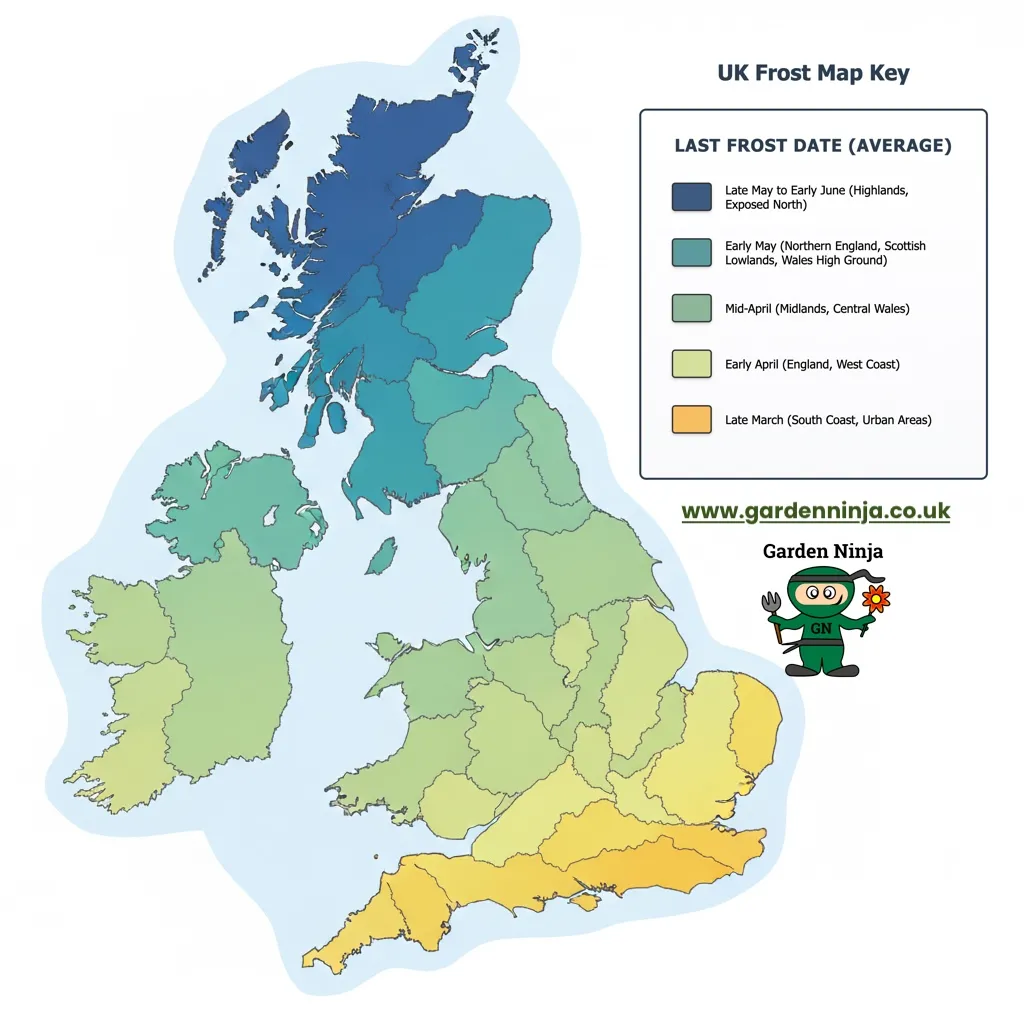
The soil stays warm for longer, and planting in late November or even December still gives the bulbs enough time to root before the coldest weather. Gardeners in these areas can happily plant Tulips and Daffodils on the same November weekend if that’s easier.
Whichever part of the country you’re in, the rule for heavy clay is the same: avoid planting into waterlogged soil. If the ground is squelching after a wet spell, wait a few days for it to drain a little rather than pushing bulbs into cold mud where they’re more likely to rot.
Daffodil bulbs in pots follow the same timetable as those in the ground, so September to November is the time to plant.
The compost in a container cools down faster than open ground and can freeze solid in a very cold spell, which is one more reason to plant pots in September or October so the roots are well developed by the time winter arrives.
Plant them at the same depth as you would in a border, so about three times the height of the bulb, and you can pack them much closer together, almost touching, for a full display.
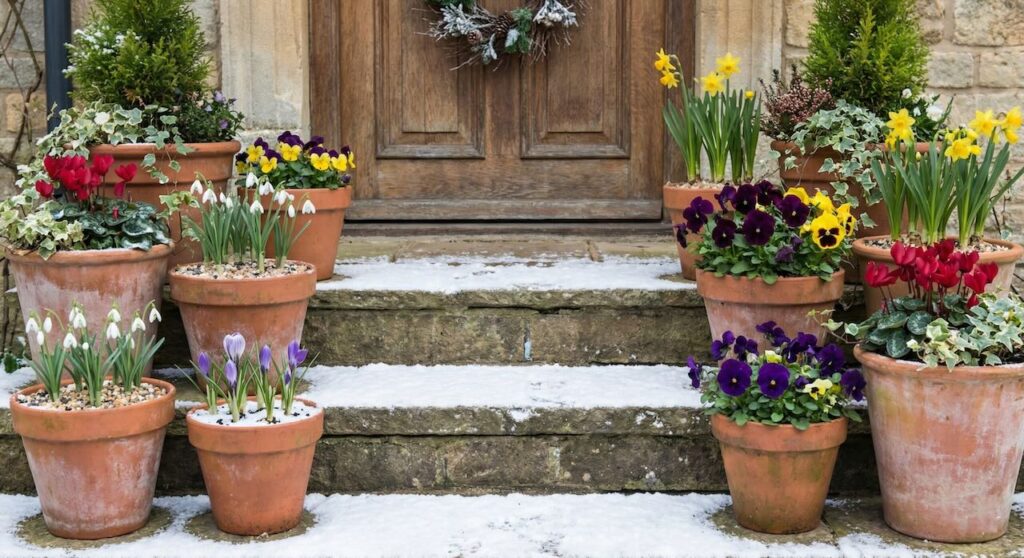
Use a peat free multi purpose compost with a couple of handfuls of grit mixed in for drainage, and raise the pot slightly on feet over winter so excess water can drain away. Dwarf varieties such as ‘Tête-à-Tête’ and ‘Jetfire’ are the best choices for pots, since the taller types can flop over in a windy spot. I cover depths, compost and aftercare in full in my guide on how to plant bulbs in pots.
If you want to combine Daffodils with other bulbs in the same pot, the layered approach works well, and I’ve explained the pros and cons of it in my guide to planting a bulb lasagne. Daffodils go in the bottom layer, with smaller bulbs like Crocus and Muscari above them.
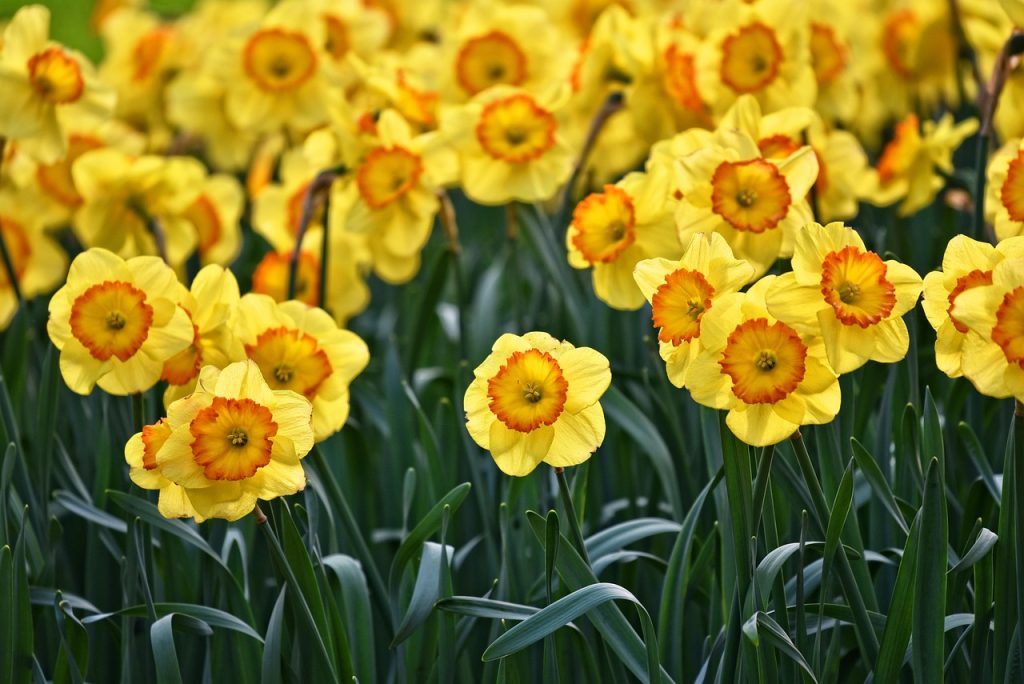
The standard rule for Daffodils, as with most spring bulbs, is to plant them at roughly three times their own height. For a typical Daffodil bulb that works out at about 15cm from the base of the bulb to the soil surface, which is deeper than most people expect.
Planting too shallowly is one of the most common reasons Daffodils stop flowering after a couple of years, because shallow bulbs dry out in summer and tend to split into lots of small, non-flowering offsets.
| Bulb Size | Planting Depth | Spacing |
|---|---|---|
| Miniature varieties (‘Tête-à-Tête’, ‘Jetfire’) | 10cm | 7 to 10cm |
| Standard varieties (‘Carlton’, ‘Ice Follies’) | 15cm | 10 to 15cm |
| Large trumpet varieties (‘Dutch Master’) | 15 to 20cm | 15cm |
On light, sandy soils I’d go a little deeper than this, since the bulbs are less likely to dry out further down. On heavy clay I stay closer to the shallower end of each range and add a handful of grit into the base of each hole so the bulb isn’t sitting in cold, wet soil all winter.
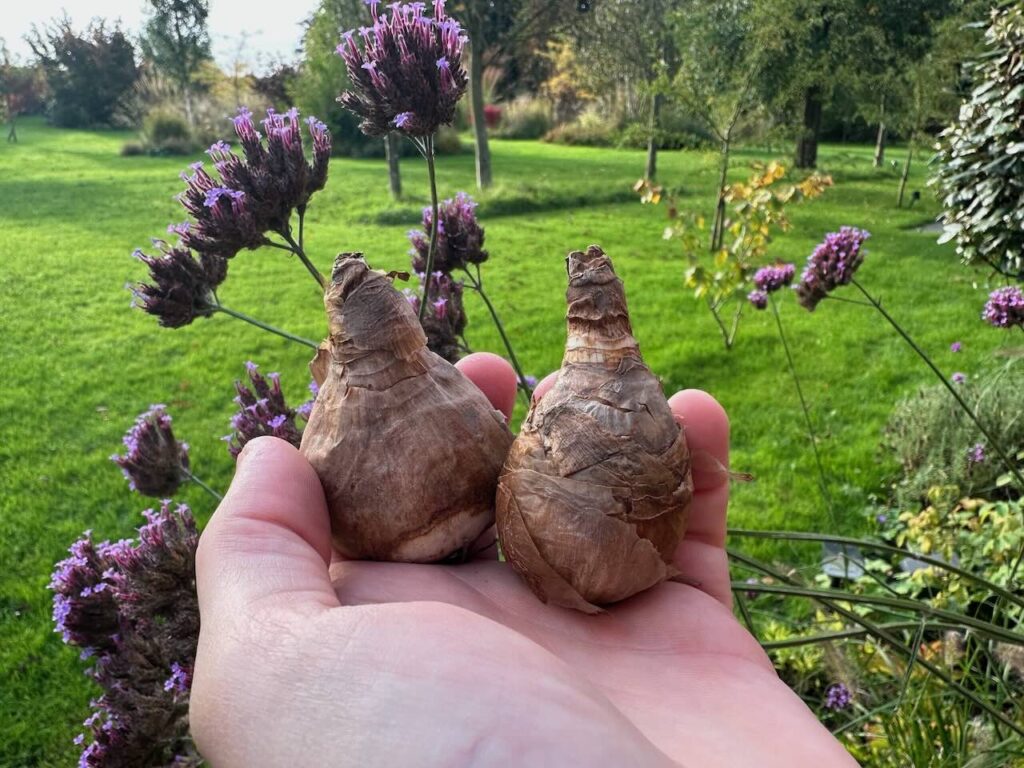
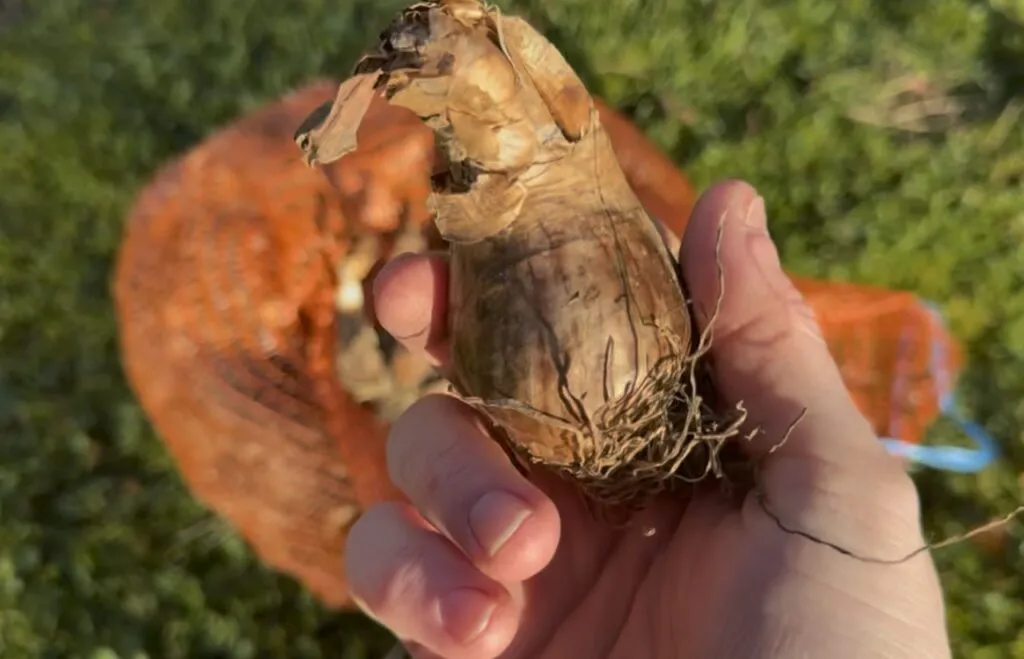
If you’re unsure which way up a bulb goes, the pointed end faces up and the flat, slightly hairy base where the roots grow faces down. If you can’t tell, plant it on its side and the shoot will find its own way up.
Planting a few dozen Daffodils in a border is quick work with a trowel. Planting a few hundred into a lawn is another matter, and that’s where a proper long-handled bulb planter earns its keep.
After planting thousands of bulbs over my career, I use a heavy steel planter with a T-shaped handle and a foot plate, the Sneeboer model you’ll have seen on my YouTube channel. The cheap hand-held planters tend to bend after a few dozen holes in compacted soil.
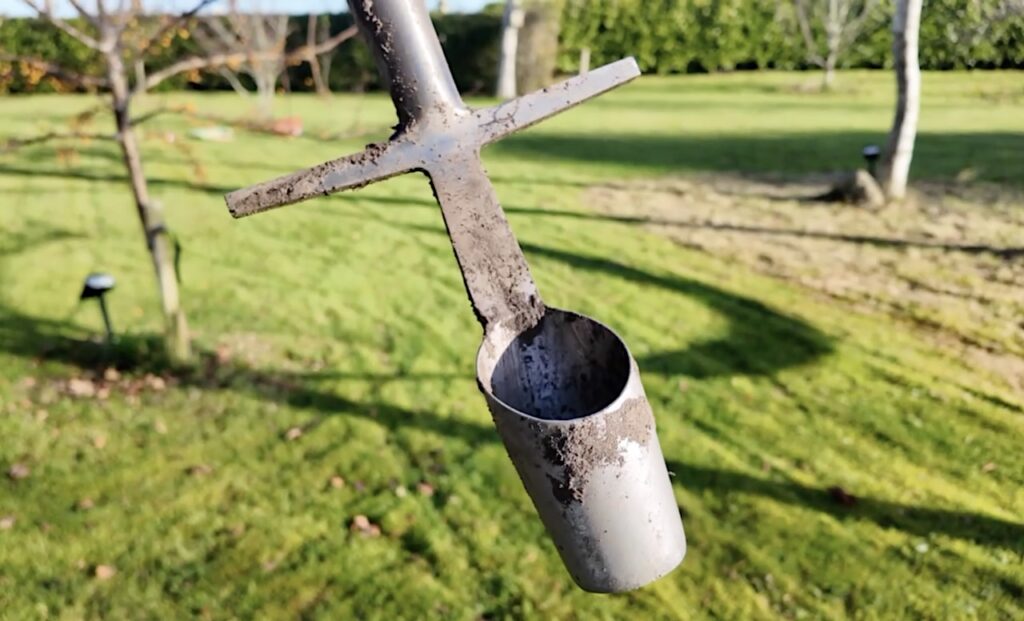
Here’s the method I use for planting Daffodils into grass or a border:
1. Scatter the bulbs first. Throw a handful of bulbs over the area and plant each one roughly where it lands, only adjusting any that are touching. This gives you the irregular drifts you see in the wild and avoids the regimented look of bulbs planted in rows.
2. Take out a core of soil. Push the planter into the ground with your foot, give it a slight twist and lift it out. You should be left with a neat hole about 15cm deep and a plug of soil and turf in the planter.
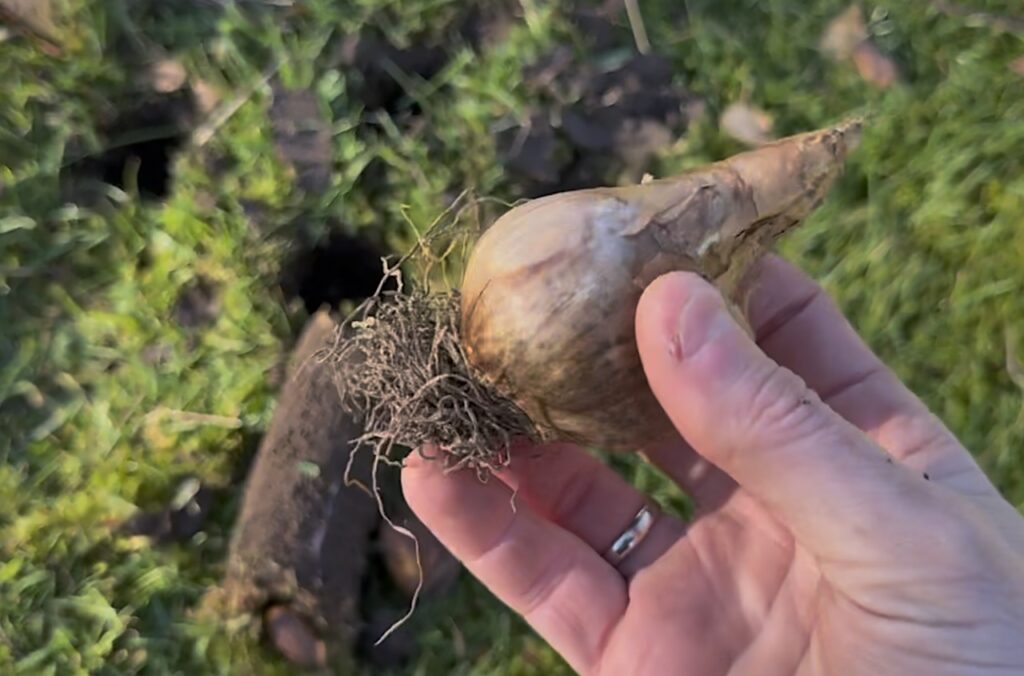
3. Drop the bulb in, pointed end up. On heavy soil, add a pinch of grit or sharp sand under the bulb first. There’s no need for bone meal or fertiliser at planting time, since the bulb already holds all the food it needs for its first flowering.
4. Replace the plug and firm it down. Pop the next core of soil back on top of the previous hole and press it down with your heel. On a lawn the holes disappear within a week or two.
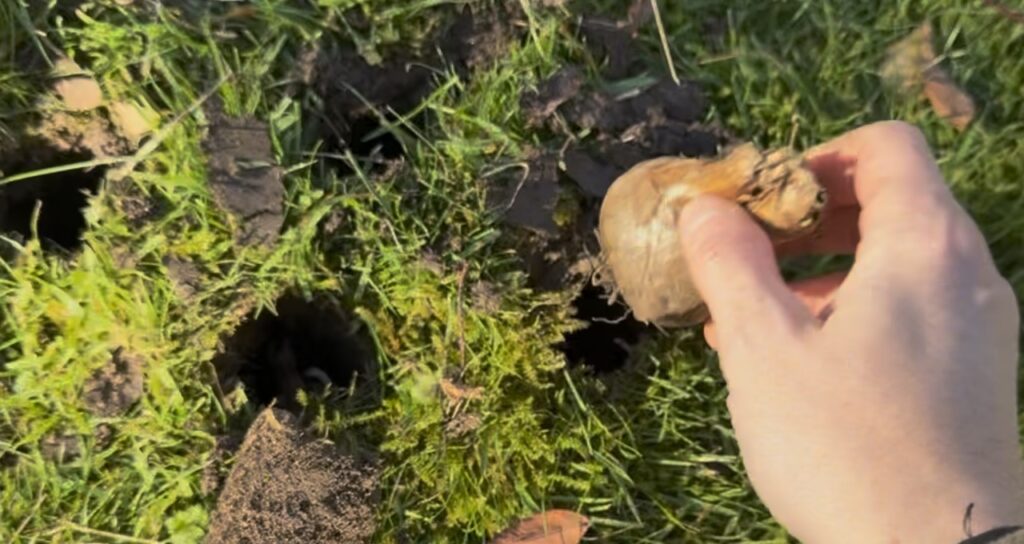
5. Water if the soil is dry. In a normal wet British autumn you won’t need to water at all, but if you’re planting during a dry spell in September, give the area a good soak to settle the soil around the bulbs and get the roots moving.
I’ve put together a full walkthrough of the technique in my guide on how to use a bulb planter, and the video below shows me planting bulbs in borders, containers and lawns, including the mistakes I see most often.
If you’re reading this in December, January or even March with a bag of bulbs still sitting in the garage, the answer is almost always to plant them now. I answer this one on the forum every single year, and my advice doesn’t change: don’t be tempted to hold them over until the following autumn.
Unplanted Daffodil bulbs only last around six to nine months out of the ground before they dry out and die, so a bag bought in September won’t survive until the next one.
When a bulb is lifted and sold, it’s dormant and living off the food and moisture it stored the previous summer. Every week it spends in a bag, it’s using up those reserves without being able to replace them.
Plant it late and you might lose a few bulbs, or get a thin display in the first year. Keep it in the bag until next autumn and you’ll lose the lot.
Bulbs planted in the depths of winter will usually still flower in spring, just a little later and with slightly smaller flowers than autumn-planted bulbs. As long as you can get a spade into the ground, plant them at the normal depth and treat them exactly as you would in October.
If the ground is frozen solid, wait for the next mild spell, which rarely takes more than a week or two in most of the UK, or plant them into pots of compost and move them into the ground later in spring.
By March, forgotten bulbs will often be sprouting in the bag, with pale shoots pushing out of the top. Plant them anyway, with the shoot above the bulb and the tip of it level with, or just below, the soil surface. The shoots will green up within a few days once they’re in the light.
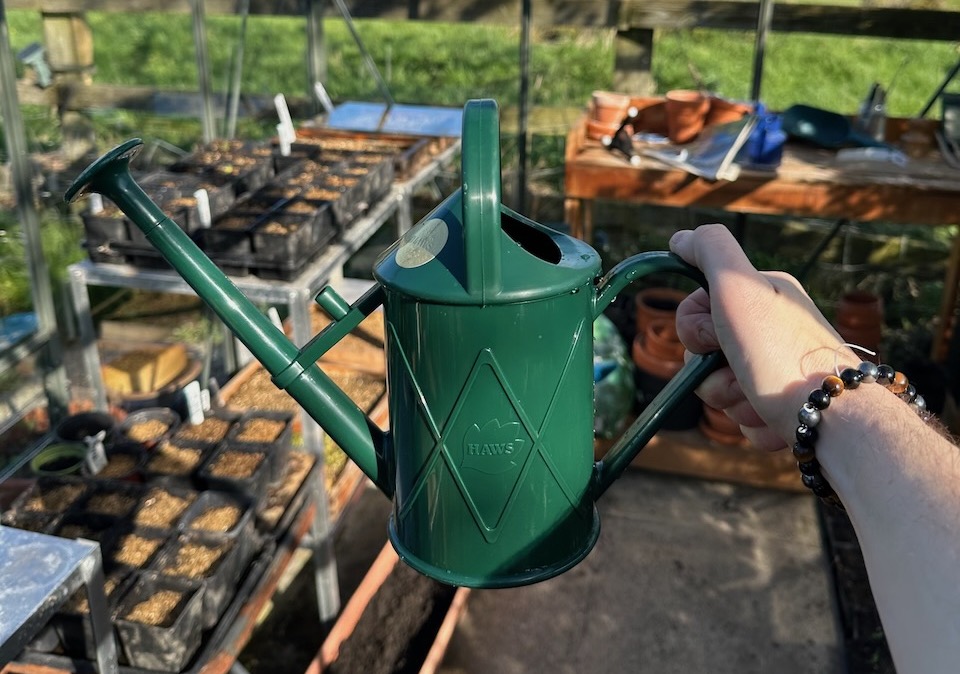
The key difference with late-planted bulbs is watering. They haven’t had the autumn to grow a root system, so for their first season they’re entirely dependent on you for moisture. Water them thoroughly after planting, then at least every two weeks for the first two months or so.
Carry on until the established Daffodils and Crocus in your garden have finished flowering and their leaves have started to yellow, then you can ease off and let the bulbs go dormant naturally.
Bulbs planted by early March will often still flower, particularly tough varieties such as ‘Carlton’ and ‘Ice Follies’, although the mid-Aprilay be smaller and a few weeks behind established clumps.
Bulbs planted after mid April are less likely to flower in their first spring, because they simply run out of growing time before the weather warms and they head back into dormancy.
Don’t let a blank first year put you off. What matters is that the bulb gets its leaves up, feeds itself for the following year, and establishes roots. From the second spring onwards, a late-planted Daffodil will behave exactly like one planted in October.
Sometimes you do have to wait a few weeks, perhaps because you’re moving house, the border isn’t ready, or the ground is waterlogged. In that case, how you store the bulbs makes a real difference to how well they perform.
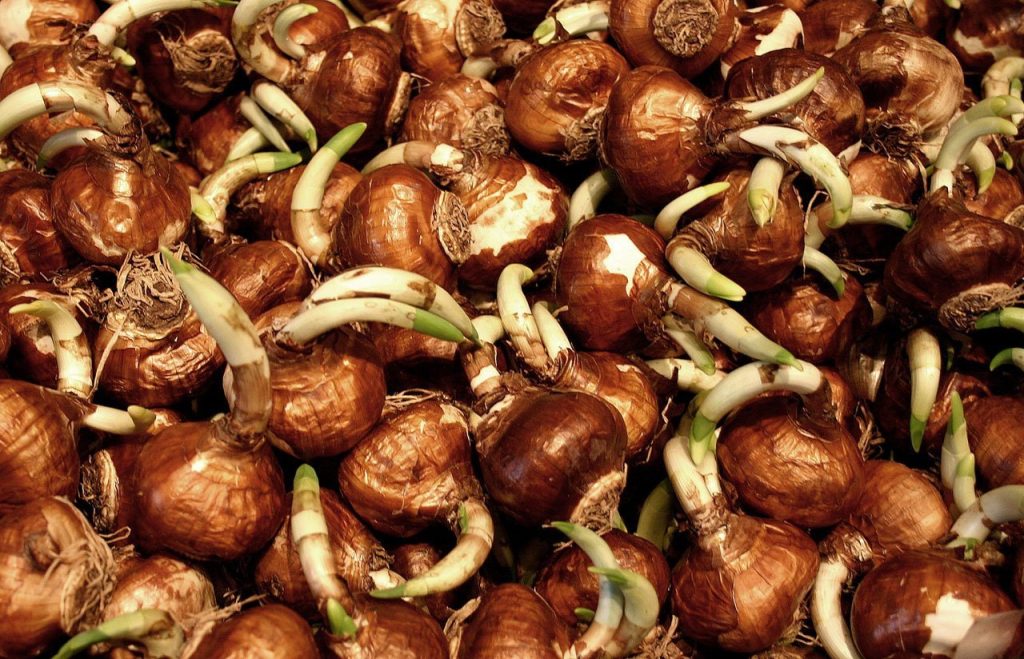
Keep them somewhere cool, dry and dark with some air movement, such as an unheated garage, shed or spare room. Store them in paper bags, cardboard trays or mesh bags, and never in sealed plastic, which traps moisture and encourages mould and rot.
Avoid anywhere warm, like a kitchen or a heated utility room, since warmth encourages the bulbs to sprout early and burn through their reserves.
Check them every week or so. Throw away any that feel soft, smell musty or show blue-grey mould, before it spreads to the healthy ones.
And as soon as you see green shoots starting to appear, take that as your signal to plant them, whatever the date on the calendar says. Storage should only ever be a short-term plan measured in weeks.
There are hundreds of Daffodil varieties available, but only a handful I come back to again and again in client gardens, because they’re tough, reliable and multiply year on year in British conditions. Choosing a mix of early, mid and late varieties also stretches the flowering season from February right through to late April.
| Variety | Height | Flowering Time | Best For | Where to Buy |
|---|---|---|---|---|
| ‘February Gold’ | 30cm | Very early (Feb to Mar) | Under deciduous trees, naturalising | View on Amazon UK |
| ‘Tête-à-Tête’ | 15cm | Early (Feb to Mar) | Pots, window boxes, front of borders | View on Amazon UK |
| ‘Jetfire’ | 25cm | Early to mid (Mar) | Pots, rockeries, light shade | View on Amazon UK |
| ‘Carlton’ | 40cm | Mid season (Mar) | Naturalising in grass, large drifts | View on Amazon UK |
| ‘Dutch Master’ | 45cm | Mid season (Mar) | Classic yellow trumpet for borders | View on Amazon UK |
| ‘Ice Follies’ | 40cm | Mid to late (Mar to Apr) | Drifts, pale colour schemes | View on Amazon UK |
| ‘Mount Hood’ | 45cm | Mid to late (Apr) | White borders, cutting | View on Amazon UK |
| ‘Thalia’ | 35cm | Late (Apr) | Scented, multi-headed, pots and borders | View on Amazon UK |
‘Carlton’ deserves a special mention because it’s the variety I’d choose if I could only plant one. It’s vigorous, multiplies quickly and holds up well to wind and rain, which is why you’ll see it in so many parks and roadside verges.
For a more contemporary planting, I like to combine a classic yellow trumpet with a white multi-headed variety such as ‘Thalia’, which carries on flowering after the early yellows have gone over.
If you’re planning a colour scheme across all your spring bulbs, my guide to spring bulbs by colour groups sixty varieties by hue, including the yellow and white Daffodils above.
If you want the sweeping drifts you see in country estates and parks, forget the small nets of six bulbs from the garden centre. I buy Daffodils for naturalising in 5kg or 10kg sacks, which work out at a fraction of the per-bulb price and give you enough to plant in groups of fifty or a hundred at a time.
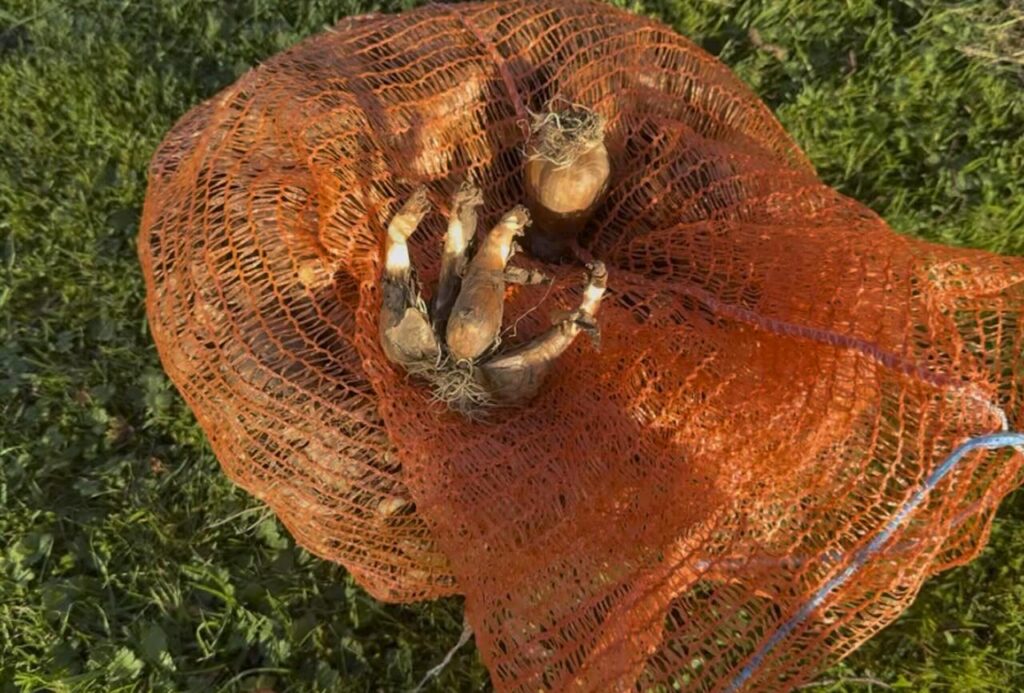
The best time to buy is late August and September, when the bulbs are fresh and the full range of varieties is still in stock. When the bags arrive, open them and check the bulbs are firm and heavy for their size, with no soft patches or mould, then plant them as soon as you can.
Bulk sacks often contain a mix of varieties, which suits naturalising well, since the slight variation in height and flowering time looks more natural than a single variety.
🛒 Buy a sack of mixed Daffodil bulbs on Amazon UK
Yes, Daffodils are hardy perennials, and once they’re planted at the right depth and time they’ll return every spring and gradually multiply into larger clumps.
I’ve got drifts in my own garden that have been flowering and spreading for over ten years with no attention beyond the occasional feed. What keeps them flowering year after year comes down to what you do in the six weeks after they finish.
This is the most important rule for keeping Daffodils as perennials: don’t cut, tie or mow the leaves until they’ve turned yellow and started to collapse.
For around six weeks after flowering, the leaves are photosynthesising and sending food back down into the bulb, and that stored energy is what produces next year’s flower. Cut them off early and you’ll often get leaves but no flowers the following spring.
I know the fading leaves look untidy, so the trick is to hide them. Plant later perennials such as hardy Geraniums, Aquilegias or Hostas among your Daffodils, and their new growth will cover the dying foliage. In lawns, leave the Daffodil patches unmown for at least six weeks after flowering, or mow paths around them.
Snapping off the faded flower heads after flowering stops the plant putting energy into seed, so more of it goes back into the bulb.
It’s worthwhile in borders and pots, though not practical when you’ve naturalised hundreds of bulbs in grass, and they’ll still perform well without it. A single feed of a general-purpose or high potash fertiliser as the shoots emerge in spring is all they need.
For the full after-flowering routine, including when to lift, divide and replant congested clumps, see my guide on when to lift and divide spring bulbs.
Naturalising simply means planting bulbs in a way that lets them spread and look as though they’ve grown there on their own. Daffodils are the best of all the spring bulbs for this, and it’s where they perform best as perennials.
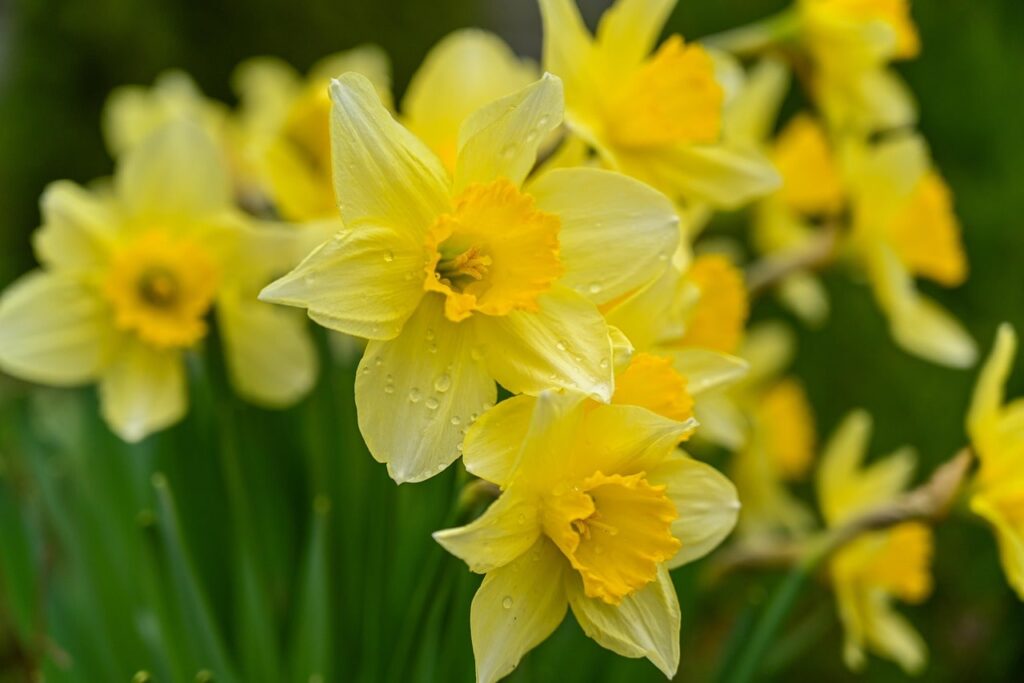
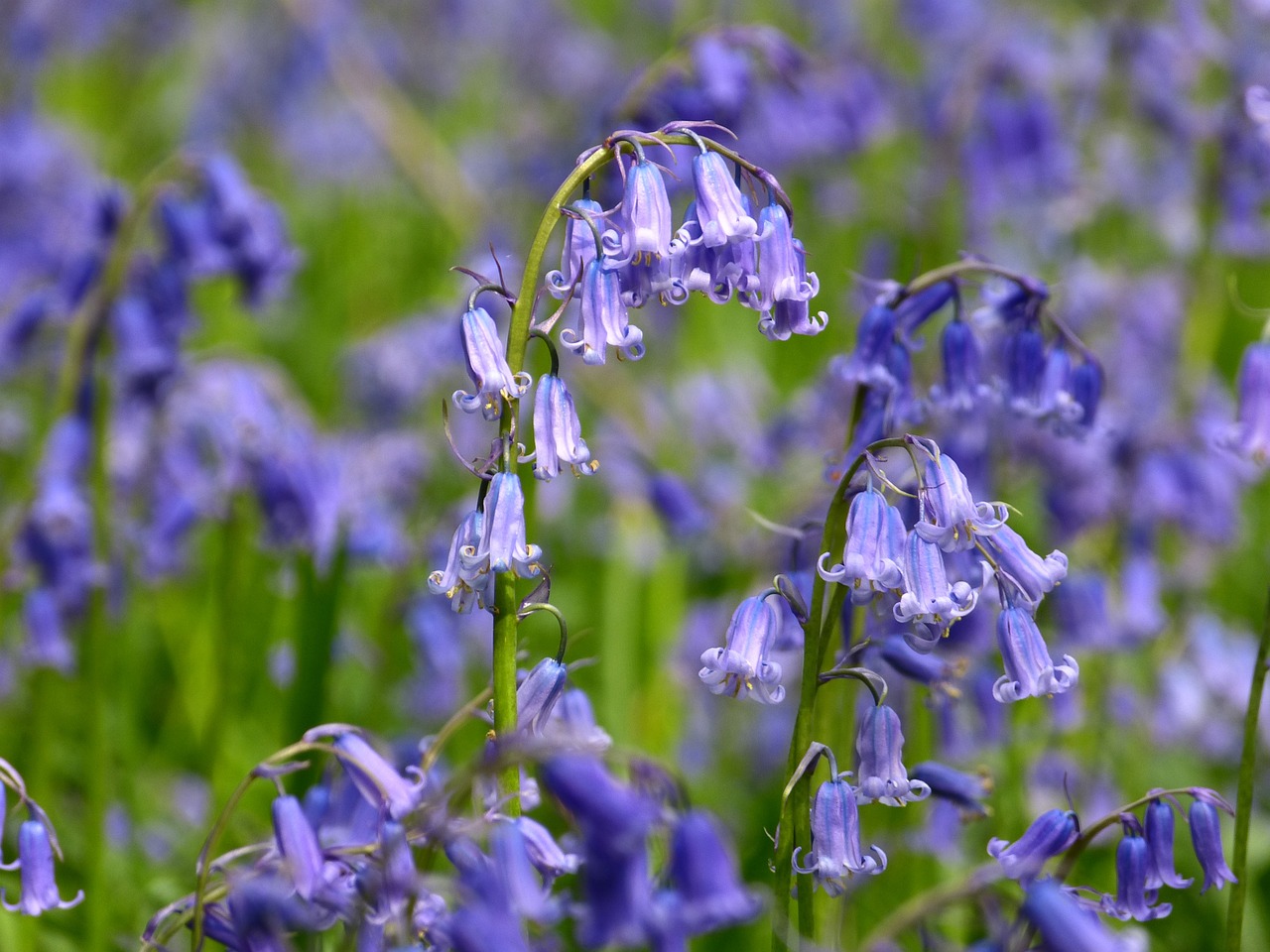
Under deciduous trees is one of my favourite places to plant them. The Daffodils flower and complete most of their growth before the tree canopy fills in and casts shade, and they bring colour to an area where little else will grow in spring. English Bluebells make a lovely follow-on in the same spot from late April, and my guide to English vs Spanish bluebells shows how to make sure you plant the native kind.
Plant in groups of at least fifty bulbs for an impact, using the scatter-and-plant method so the drifts look irregular.
In lawns, choose an area you’re happy to leave unmown until early June while the foliage dies back.
Many people use this as the start of a spring meadow, letting the grass grow long and mowing paths through it, which gives pollinators and other wildlife food and shelter through spring and early summer. I walk through how to set that up in the video below.
For earlier colour under trees, Snowdrops pair well with Daffodils, although they establish best when planted green in late winter rather than as dry bulbs in autumn. I explain why in my guide to planting bulbs in the green.
Daffodils are one of the least troublesome plants you can grow. They’re toxic to most pests, so deer, rabbits, squirrels and mice leave them alone, which is a real advantage in rural gardens where Tulip and Crocus bulbs regularly get dug up. The problems that do occur are usually easy to put right.
The most common complaint I hear about Daffodils is plenty of leaves but no flowers. It’s usually caused by one of three things: the foliage was cut back too early the previous year, the bulbs were planted too shallowly, or the clumps have become overcrowded after many years of multiplying.
Lift and divide congested clumps every four to five years once the foliage has died back, and replant the largest bulbs at the correct depth.
The larvae of this fly tunnel into the bulb and eat it from the inside, leaving it soft and rotten. Affected bulbs produce weak, grassy leaves and no flowers.
There’s no chemical treatment for gardeners, so dig up and dispose of any soft bulbs, and firm the soil around the necks of the plants as the foliage dies back in early summer, which makes it harder for the adult flies to lay their eggs.
This fungal disease shows as yellowing, stunted leaves and a bulb that’s soft and brown from the base upwards. It’s most common in warm, wet, poorly drained soil. Remove affected bulbs straight away, improve drainage with grit, and avoid planting new bulbs in the same spot. Checking bulbs before planting and discarding any soft ones is the best prevention.
September and October are the best months to plant Daffodil bulbs in the UK, while the soil is still warm enough for the roots to establish before winter. November is also a reliable planting month, and you can plant as late as December if the ground isn’t frozen. In Scotland and the north of England, aim to finish by mid October.
Plant Daffodil bulbs at roughly three times their own height, which is about 15cm deep for standard bulbs, 10cm for miniature varieties such as ‘Tête-à-Tête’, and up to 20cm for large trumpet varieties. Space them 10 to 15cm apart, with the pointed end facing up.
It’s rarely too late to plant Daffodil bulbs you already have. Unplanted bulbs only survive around six to nine months out of the ground, so plant them as soon as you can, even in January, February or March. Late-planted bulbs may flower later or not at all in their first year, but they’ll flower normally from the second spring.
Plant Daffodil bulbs in pots from September to November, at the same depth as in the ground but spaced closer together. Use peat free compost with added grit, and raise the pot on feet over winter so it drains freely. Dwarf varieties such as ‘Tête-à-Tête’ and ‘Jetfire’ are the best choices for containers.
Daffodils flower in the UK from February to late April, depending on the variety and the weather. Early varieties such as ‘February Gold’ and ‘Tête-à-Tête’ open in February, mid-season types such as ‘Carlton’ flower in March, and late varieties such as ‘Thalia’ carry on into April.
Yes, Daffodils spread slowly by producing new offset bulbs around the parent bulb, so a single bulb gradually becomes a clump over several years. They rarely spread by seed in gardens. Once clumps become overcrowded and flower less, lift and divide them after the foliage has died back.
Yes, all parts of the Daffodil are poisonous to cats and dogs, and the bulbs are the most toxic part. Eating them can cause vomiting, drooling and diarrhoea, and in larger amounts more serious symptoms. Store bulbs out of reach before planting, and contact your vet straight away if you think your pet has eaten any part of the plant.
Daffodil bulbs go in with the pointed end facing up and the flat base, where the roots grow, facing down. If you can’t tell which end is which, plant the bulb on its side and the shoot will find its own way to the surface.
Deadheading Daffodils is worthwhile but not essential. Snapping off the faded flower head stops the plant putting energy into seed, so more goes back into the bulb for next year. In borders and pots it’s worth doing, but Daffodils naturalised in grass will still flower well without it.
No, leave Daffodil leaves for at least six weeks after flowering, until they turn yellow and start to collapse. The leaves feed the bulb for next year’s flowers, so cutting, tying or mowing them early is the main reason Daffodils stop flowering.

Join over 100,000 gardeners on YouTube
Free gardening videos from the Garden Ninja, with 8 million views and counting.
Subscribe on YouTube, it’s freeGetting your bulbs in at the right time is the first step, and it’s often what gets people thinking about the rest of the garden too. If you’d like to plan the borders, structure and planting that sit around your spring displays, my online courses take you through the same design process I use for client gardens.
Courses start from £29, and you can work through them at your own pace from home.
For the garden you’ve already got, not the one you’re starting from scratch. Seven checklists and video lessons from BBC Garden Rescue’s Lee Burkhill, built to help you work out what’s worth keeping before you spend a penny.
Garden Design Examples for Small Gardens: 30 Design Templates & Planting Plans: In this online gardening course, I’ll walk you through 30 fantastic garden designs, explaining the logic behind the layout, the plant choices, and take-home tips for applying them in your own garden.
Learn how to transform and design your own garden with Lee Burkhills crash course in garden design. Over 5 hours Lee will teach you how to design your own dream garden. Featuring practical design examples, planting ideas and video guides. Learn how to design your garden in one weekend!
Garden Design for Beginners Online Course: If you want to make the career jump to becoming a garden designer or to learn how to design your own garden, this is the beginner course for you. Join me, Lee Burkhill, an award-winning garden designer, as I train you in the art of beautiful garden design.
If you remember one thing from this guide, make it this: plant Daffodil bulbs in September or October, 15cm deep, and leave the leaves alone for six weeks after they flower. Do that, and a single autumn’s planting will give you flowers every spring for decades, with the clumps getting bigger every year.
And if life gets in the way and the bulbs are still in the bag come January, plant them anyway and keep them watered. A late Daffodil in the ground will always do better than one waiting in the shed for next autumn.
Happy Gardening!


Lee Burkhill, known as the Garden Ninja, is an award-winning garden designer and horticulturist with over 30 years of gardening experience and 15 years as a professional garden designer. A qualified RHS (Royal Horticultural Society) professional, Lee specialises in sustainable garden design and practical horticultural advice. He designs and presents on BBC1’s Garden Rescue and in leading gardening publications. Lee combines three decades of hands-on gardening knowledge with professional design qualifications to help gardeners create beautiful, functional outdoor spaces.
View all posts by Lee Burkhill




JOIN THE NINJAS
Be the first in line for new Guides, Discount codes and Offers