For the garden you’ve already got, not the one you’re starting from scratch. Seven checklists and video lessons from BBC Garden Rescue’s Lee Burkhill, built to help you work out what’s worth keeping before you spend a penny.
69


Quick Answer
An established wildflower meadow needs cutting three times a year. Cut it short in March before growth gets going, cut it again in August once the flowers have set and dropped their seed, and give it a final tidy in October before winter. Always remove the cuttings rather than leaving them to rot down in place, since bare, low fertility soil is exactly what wildflowers need to keep outcompeting the grass.
Learning how and when to cut a wildflower meadow is essential to the success of your gorgeous, flower filled wildlife haven. Cutting a meadow involves three timely cuts each year, and that really is all there is to it once you understand the reasoning behind each one. It is really important you do this the right way and at the right time, because unlike an ordinary lawn, get the timing wrong on a meadow and you can undo a whole season of flowering in one afternoon with a strimmer.
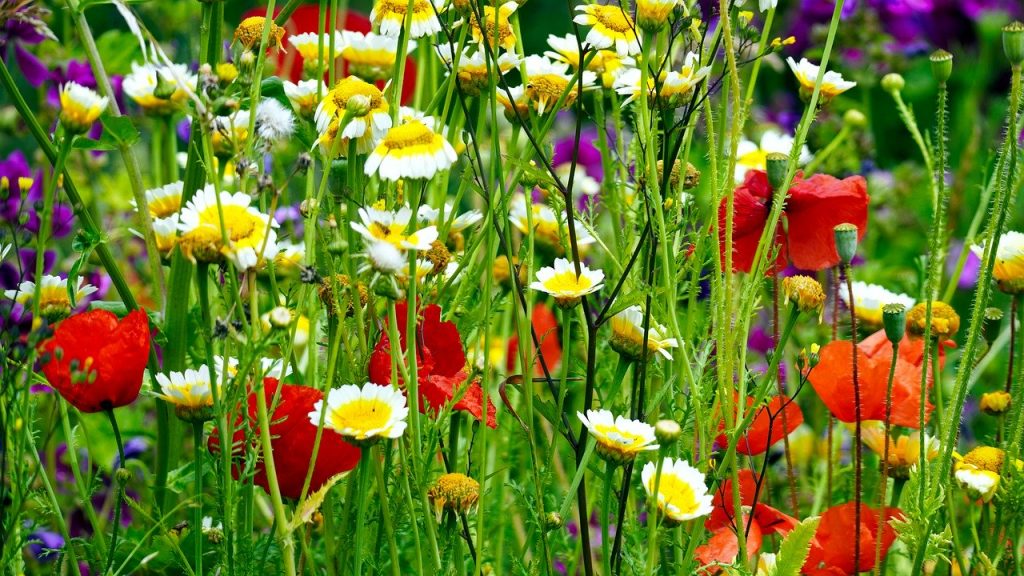
Wildflower meadows are cut very differently from ornamental lawns. While there is far less mowing overall, the timings are crucial to a meadow’s survival. Failing to cut at the right moment can mean a loss of flowers the following year, or excess grass growth that quietly smothers everything you have worked to establish. I keep a section of meadow at home in Liverpool as well as building them into a good number of my client gardens, and the single most common mistake I see is people either mowing far too often out of habit, or leaving it so long that the grass forms a thick, collapsing thatch that takes two seasons to recover from. Once you know the three cut rhythm and why each one matters, it becomes second nature.
Jump To
This page contains affiliate links for products I use and recommend. If you take action after clicking a link, I may earn a small gardening commission, which helps me keep the Garden Ninja blog free for everyone.
It seems counterintuitive at first. The whole appeal of a meadow is that it looks wild and untouched, so why interfere with it three times a year? The answer comes down to soil fertility and competition. Ordinary garden soil is far too rich for most native wildflowers, which have evolved over centuries to thrive on poor, low-nutrient ground.
Grass, on the other hand, loves rich soil and will happily grow taller and thicker than your wildflowers can compete with if you let it. Every time you cut the meadow and remove the cuttings, you are taking nutrients off site rather than letting them rot back down and feed the grass, which gradually starves the soil in exactly the way a meadow needs to thrive.
Cutting also mimics what would naturally have happened to a meadow for hundreds of years, whether through grazing livestock, hay making, or wild grazing animals passing through. Without that disturbance, a meadow gradually reverts to scrub and eventually woodland, and along the way loses the open, sunny conditions that most wildflowers depend on to germinate and flower. The three-cut approach I use across my own meadow and in client gardens strikes the balance between giving your wildflowers what they need and keeping the whole thing manageable for a domestic garden rather than a farm.
In the UK, there are three prime windows when your wildflower meadow needs cutting back. Each one has a different job to do, and each one has its own ideal cutting height, so it is worth understanding the reasoning rather than just following dates blindly, since the British weather rarely reads the calendar in the same way I do.
The first cut of the year comes just as spring emerges, ideally finished by the end of March and no later than mid April. Your meadow needs easy access to light and water at this point, and by removing any growth that has crept on over winter you are mainly cutting back grass and any weeds that have got a head start in their growing season. It is providing an equal playing field, as it were, for all of your wildflower seedlings, many of which are still low growing rosettes at this stage and would otherwise be swamped by grass shooting away ahead of them.
Cut down to somewhere between 5 and 7.5cm for this pass. You can go reasonably close to the ground, since this cut sets your meadow up for the season ahead and lets light reach seedlings that will otherwise struggle to compete. If your meadow is looking particularly lush and grass dominant going into spring, err towards the shorter end of that range. If it is already thin and wildflower rich, the higher end is kinder to anything already trying to get going.
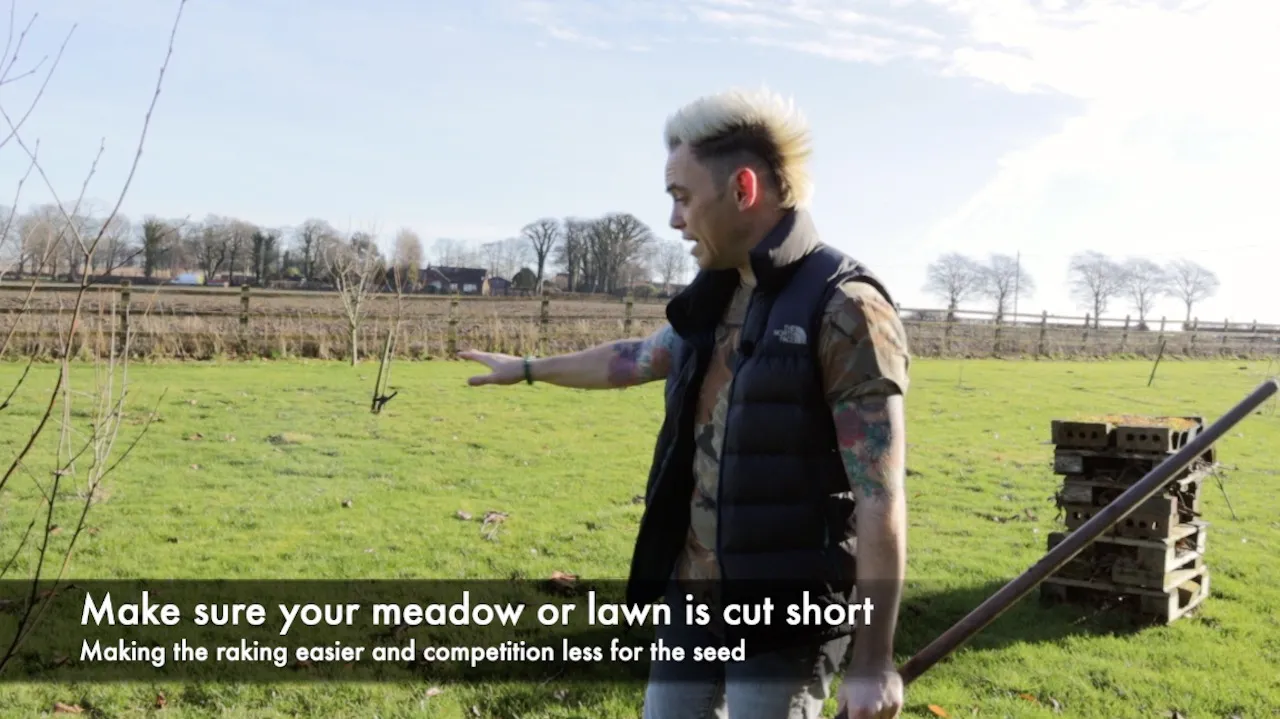
The second cut is sometimes called the hay cut, a term borrowed from traditional farm meadows where grass was cut for optimal nutrition and protein when used to feed livestock. The exact date can vary from late June through to the end of August depending on what you are trying to achieve, but for an ornamental garden meadow, August is the prime time in my experience. By this point your wildflowers will usually have set and dropped their seed, meaning you can cut them back hard to keep competing grass under control without losing next year’s flowers, and you have also had a great show of colour through the whole of the summer by this stage too.
If you want to favour early summer species like oxeye daisy and selfheal, cut towards the start of this window in late June or early July. If your meadow leans towards later flowering plants like knapweed, wild carrot, and field scabious, hold off until August so they get the full season to flower and set seed before you cut. Cut as low as your chosen tool comfortably allows for this pass, since this is the one doing the heaviest lifting in terms of controlling grass vigour for the year ahead.
💡 Top Tip
Leave the cuttings lying on the surface for two to three days after the hay cut before you rake them up and remove them. This gives any remaining seed heads a chance to shed onto the bare ground beneath, which is one of the simplest ways to thicken up your meadow year on year without buying a single extra seed packet.
The final cut of the year is more of a tidy up than a hard reset, and should be completed sometime between mid September and the last week of October. The weather still needs to be mild enough for the meadow to green up again afterwards and go into winter looking presentable rather than scalped and bare, so do not leave this one so late that the first frosts catch you out. Cut to a similar height as the spring cut, around 5 to 7.5cm, and remove the cuttings as before.
This cut matters more than people expect, because leaving a meadow uncut over winter allows fallen tree leaves and dead grass to mat down on top of the wildflower rosettes beneath, blocking light and creating exactly the kind of extra soil fertility a meadow does not want. A tidy autumn cut clears the decks, and if you get a mild, dry October you can often get away with raking off any leaf litter at the same time rather than treating it as a separate job later in the year.
The three cut rhythm above applies to an established meadow, but a brand new meadow in its first year needs a different, more frequent approach. This is the bit that catches people out most often, because it feels wrong to be cutting down a meadow you have only just sown, but it is one of the truly important steps in getting a meadow to establish well for the long term.
In year one, I cut roughly every six to eight weeks through the growing season, taking the meadow down to around 5cm each time, and removing the cuttings as usual. This repeated cutting forces your wildflowers and grasses to put their energy into strong root growth rather than racing each other upwards, and it knocks back the flush of annual weeds that will otherwise appear on any recently disturbed patch of bare soil.
It feels brutal, and the meadow will look a state for a week or two after every one of these early cuts, but it pays off enormously in year two when you finally drop back to the standard three cut pattern and get a properly established, floriferous meadow rather than one that has been swamped by docks and thistles from day one.
If you sowed in autumn, your first cut typically comes the following March or April once growth reaches around 10cm, cut back down to 5 to 7.5cm. If you sowed in spring, you will usually get your first cut in by early summer, then continue on the six to eight week rhythm until your main autumn cut in September or October, at which point you switch over to treating it as an established meadow the following spring.
For the full step by step on getting a meadow started from scratch, including seed rates, ground preparation, and which mixes work best in UK gardens, my complete guide to creating a wildflower meadow covers the whole process in detail.
What you cut your meadow with matters almost as much as when you cut it, and this is the section I get asked about most on the forum. Each tool has a distinctly different character to use, and the right choice depends on the size of your meadow, how physically demanding you want the job to be, and how much you value the peace and quiet of doing it by hand.
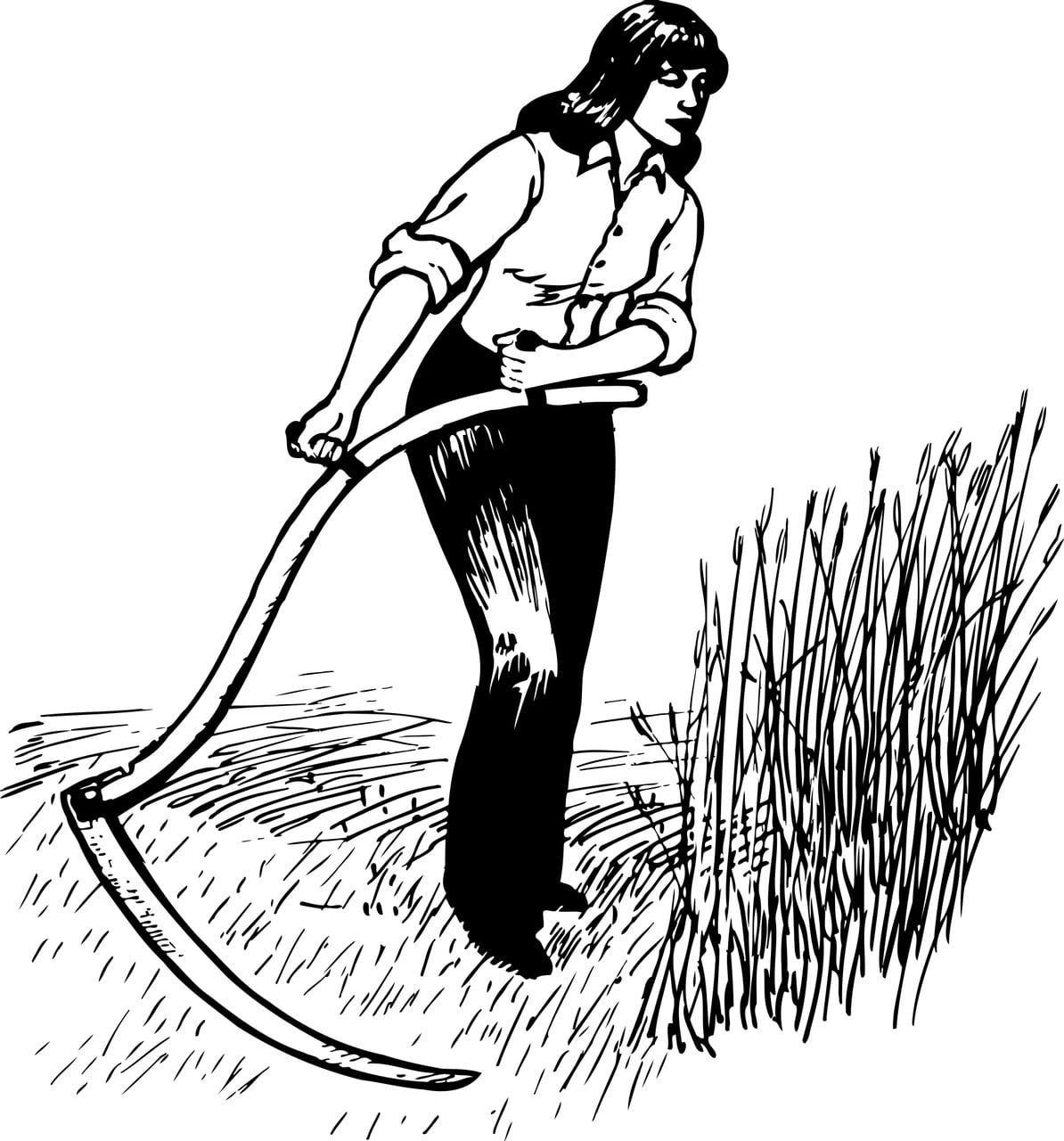
A scythe is the most traditional method, the most carbon neutral, and by far the kindest to nature. It is also the most laborious given it is done entirely by hand. It is a real skill, and a lovely one if you have the time and the energy to learn it properly, involving a particular twist and sweep action from the hips as you bring the curved blade across the meadow. It is a full upper body and core workout in its own right, and scything is wonderful for smaller meadows, but I will be honest with you, I simply do not have the time to use this method across my own meadow given how much ground I need to cover each cut. As much as I would love to. You then collect all the cuttings, usually with a hayfork, and take them away to be composted well clear of the meadow itself.
If a scythe appeals to you for a smaller patch, look for an Austrian pattern scythe with an ash snath, which is lighter and better balanced than the older English style.
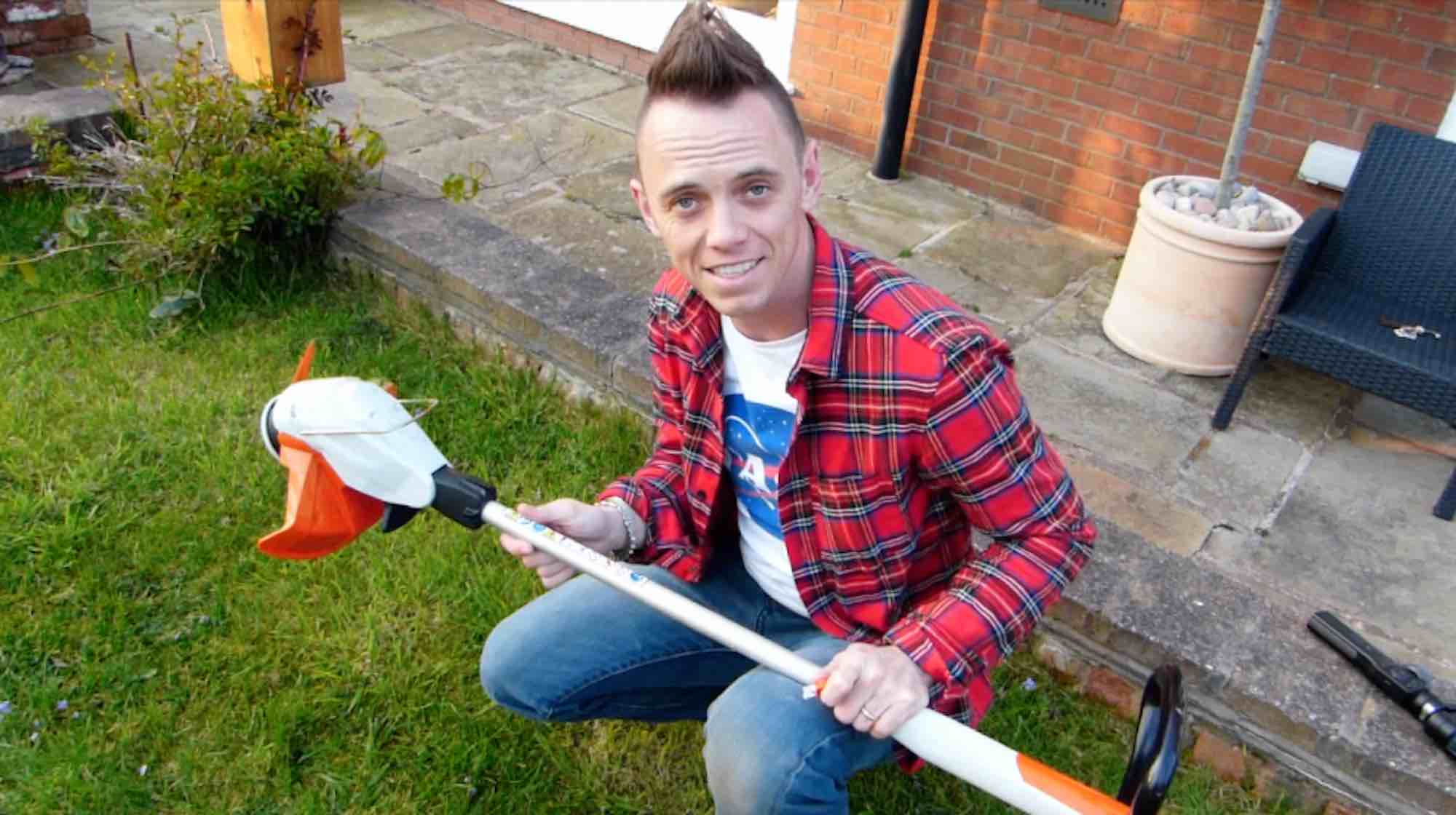
The next and quicker method is to use a powered garden strimmer. It is far faster than a scythe, though you still need to pick up all of the clippings by hand afterwards, and you want to strim at different heights for each of the three cuts. March and October should be the lowest cuts, while the August cut can sit slightly higher before you go back over any stubborn patches. A strimmer is a great method for smaller meadows or mini meadow strips in urban gardens, and it affords you far more control than any other method, meaning you can work carefully around trees or shrubs that may be growing within your meadow area without the same risk of bark damage a brushcutter blade can cause.
I reviewed the STIHL FSA 45 cordless strimmer in full, and it remains a properly capable choice for meadow edges and smaller areas where you want control over raw power.
🛒 Buy a cordless grass trimmer from Amazon UK
For anything beyond a small garden meadow, a proper brushcutter, essentially a heavier duty strimmer with a metal blade rather than nylon line, is worth considering. Brushcutters cope far better with dense, tangled, or woody growth than a standard strimmer line will, and most come with an adjustable double handed bike style handle that takes a lot of the strain out of a long cutting session. If your meadow has got away from you slightly, or includes patches of bramble or bracken creeping in at the margins, a brushcutter will make short work of it where a nylon line strimmer would simply melt.
For larger or more overgrown meadow areas a petrol or cordless brushcutter with a metal blade attachment will save you hours compared to a standard strimmer.
🛒 Buy a brushcutter from Amazon UK
For very small mini meadow strips in a front garden or a No Mow May patch within an otherwise ordinary lawn, an ordinary rotary mower set to its highest cutting setting can do the job perfectly well, provided the growth is not too tall or dense for it to cope with. This is usually the least effort option if what you have is a strip of longer grass rather than a full blown perennial meadow, though it will struggle once stems get thick and woody in the way a true wildflower meadow’s grasses often do by August.
Always wear the necessary safety gear when cutting a meadow, along with any powered equipment, including sturdy boots or safety shoes. There is nothing worse than a stray piece of strim line, or worse a brushcutter blade, catching a foot or an ankle, and meadow growth often hides uneven ground, old plant supports, or the odd forgotten tool that you simply cannot see coming until it is too late.
A decent pair of thick gardening gloves protects your hands whether you are scything, feeding a strimmer, or raking up cuttings afterwards, and I would not be without mine for a job like this. Eye protection matters more than people expect too, since a strimmer or brushcutter will kick up seed heads, small stones, and plant debris at speed, and ear defenders are worth having if you are running a petrol machine for any length of time, since the sustained noise adds up over a long cutting session in a way a quick five minute trim around the lawn edge never does.
I still reach for the same pair of Gold Leaf gloves I recommend across most of my garden guides, since they hold up well to a full afternoon of raking and forking cuttings.
🛒 Buy Gold Leaf gardening gloves from Amazon UK
A basic safety visor or goggles are worth the small outlay if you are running a strimmer or brushcutter through anything more than a token strip of grass.
🛒 Buy safety goggles from Amazon UK
Ear defenders make a real difference on longer cutting sessions with petrol equipment, and a cheap pair is far better than none at all.
🛒 Buy ear defenders from Amazon UK
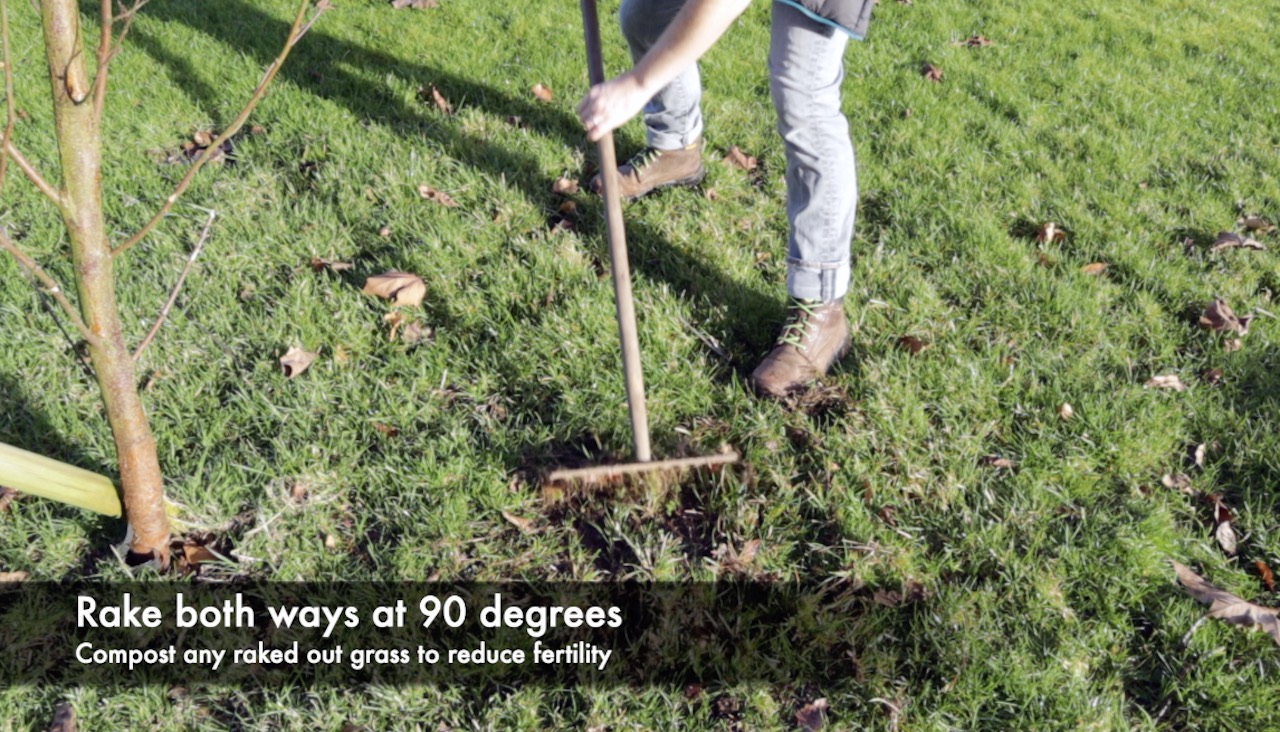
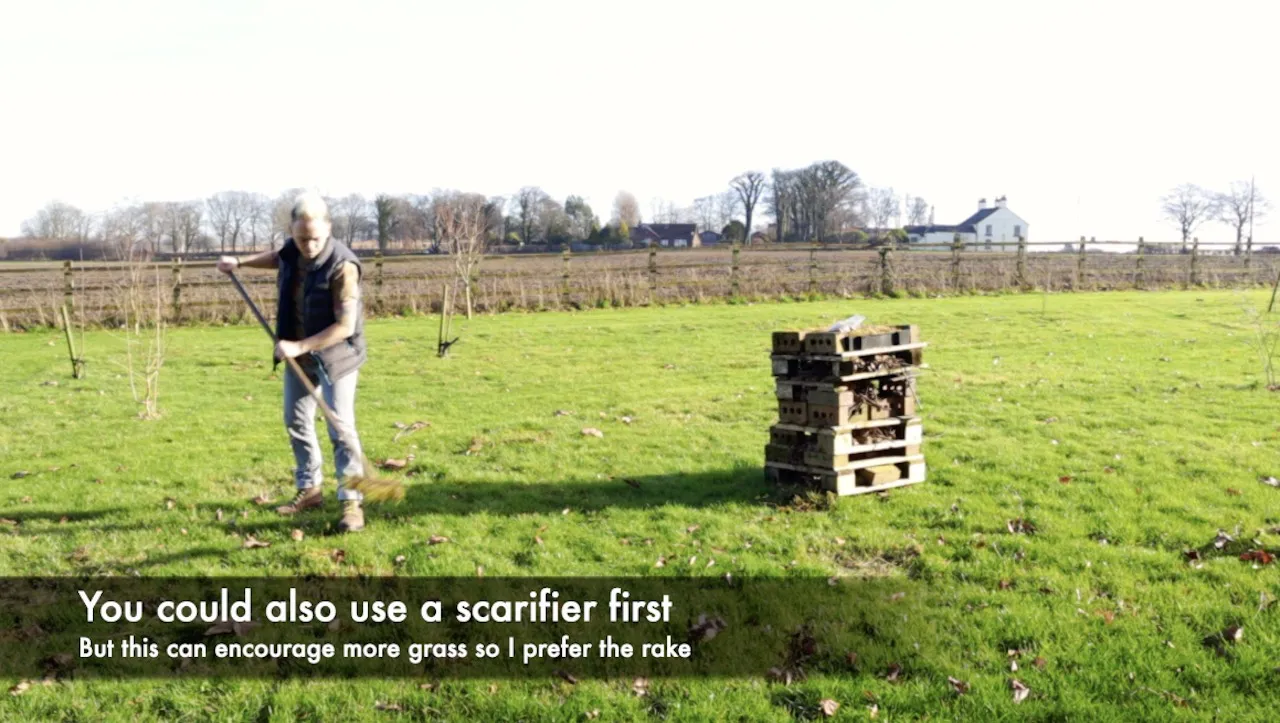
This is the step people most often skip, and it is also the step that matters most. Never leave your cuttings to mulch down in place on top of a wildflower meadow the way you might on an ornamental border. Left where they fall, cuttings rot down and return exactly the nutrients you have just spent the whole season trying to remove, gradually enriching the soil until your wildflowers lose their competitive edge against the grass entirely. Rake or fork everything up, ideally within a week of cutting, and take it away to be composted somewhere else in the garden entirely.
A hayfork makes light work of gathering longer material into a barrow or trailer, and is a far better tool for the job than a standard leaf rake once the cuttings have any real bulk to them. If you have taken my advice on the August hay cut and left the material lying for a couple of days first, give it a light turn or two before you clear it, which helps any remaining seed heads finish shedding onto the soil below.
🛒 A dedicated hayfork or pitchfork is far kinder on your back than trying to gather cuttings with a leaf rake alone. Buy a hayfork from Amazon UK
Once cleared, meadow cuttings are excellent additions to a home compost heap, though they do break down more slowly than soft green waste since much of the material is fibrous grass and stem rather than lush leaf. I run a three bin pallet system at home in Liverpool exactly for this reason, so I always have a bay taking fresh material while another rots down undisturbed. If you have not built one yet, I have a full step by step guide on how to make a compost bin from pallets, and meadow cuttings mixed with a reasonable amount of green kitchen waste will break down happily over a year or so.
One refinement worth making once you have the basic three cut rhythm down is to avoid cutting the entire meadow in one single pass. If your meadow is large enough to divide into sections, try cutting one portion in late July, another in August, and a final strip in September. This staggered approach means there is always somewhere for insects, moths, and other invertebrates to shelter while the rest of the meadow is being cut, rather than the whole habitat disappearing overnight in one afternoon of strimming.
It is also worth leaving a strip or two uncut entirely over winter if you have the space to do it, rather than tidying every last corner during the October cut. Long grass and dead seed heads left standing through the colder months provide overwintering habitat for insects, and for anything sheltering underneath that is grateful of a bit of cover from frost and rain.
I always leave a margin along one boundary of my own meadow for exactly this reason, and it is one of the small habits that consistently brings more butterflies and moths back the following spring. If you already run a bug hotel in the garden, an uncut meadow margin does much the same job at a far larger scale, and the two work brilliantly together.
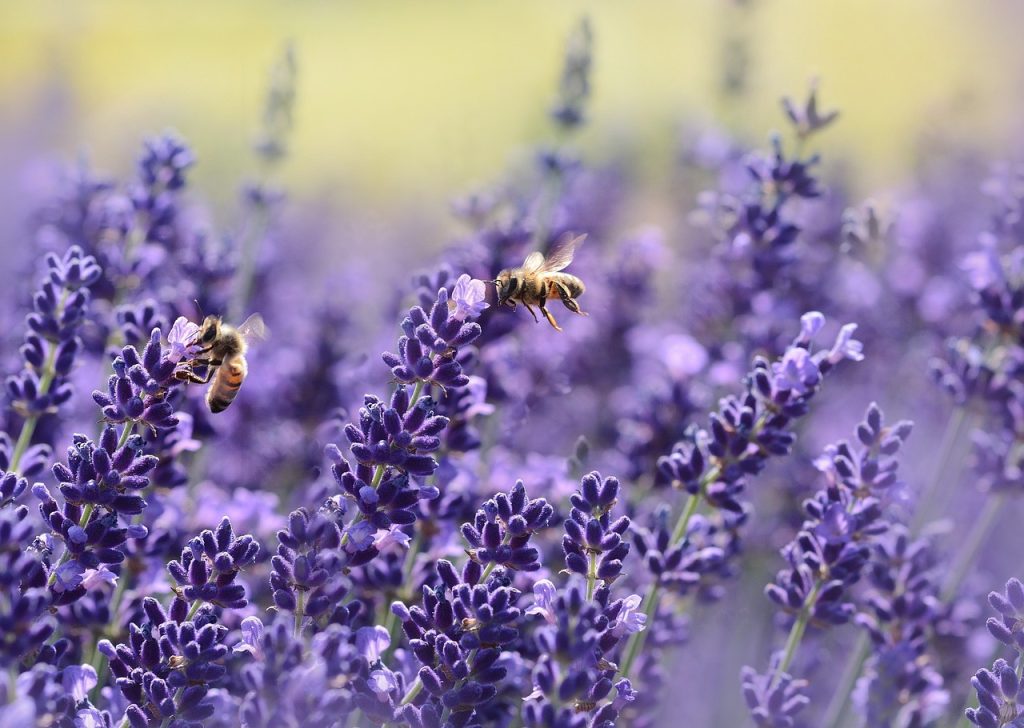
If your meadow sits alongside an ordinary lawn, letting a section of that lawn grow long through No Mow May and into June before its first cut is a good complementary habit, and often the easiest way to see what wildflowers are already lying dormant in your existing turf before you commit to a full meadow conversion elsewhere in the garden.
The single biggest mistake I see, both in client gardens and on the forum, is leaving cuttings in place after a cut. It feels efficient at the time, saving you a job, but it silently undoes months of work by feeding fertility straight back into soil that needs to stay poor. The second most common mistake is cutting too early in August, before wildflowers have had the chance to properly set and drop their seed. If you are impatient to tidy the meadow up, wait a little longer than feels comfortable, since a slightly scruffy looking meadow in late July is setting you up for a far better display next year than a neat one cut in early July ever will.
Feeding or watering a meadow is another well meant mistake. Native wildflowers are adapted to poor, free-draining soil, and feeding a meadow the way you would a border or a vegetable bed simply gives the grass an advantage it does not need. The same goes for treating meadow grass with lawn feed left over from the rest of the garden.
And finally, cutting a first year meadow only once at the end of the season, the way you would an established one, tends to leave it dominated by whichever annual weed happened to germinate fastest that spring, rather than the balanced mix of grasses and wildflowers you are aiming for. Stick to the more frequent first year cutting regime above and you will save yourself a great deal of frustration in year two.
An established meadow needs cutting three times a year: once in spring, around March, once in summer, ideally August, and once in autumn, September to October. A brand new first year meadow needs cutting more often, roughly every six to eight weeks through its first growing season, to encourage strong root growth before you settle into the standard three cut pattern.
For a small strip or a No Mow May style patch, yes, provided you set the mower to its highest cutting height. For a true perennial wildflower meadow with any real height or bulk to the growth, a rotary mower will usually struggle and clog, and a strimmer, brushcutter, or scythe will give a far cleaner result.
Yes, every time, without exception. This is the single most important rule in meadow maintenance. Leaving cuttings to rot down in place adds nutrients back into the soil, which favours grass over wildflowers and will gradually turn your meadow back into an ordinary rough lawn.
Around 5 to 7.5cm for the spring and autumn cuts, and as low as your tool comfortably allows for the main summer hay cut, since this is the cut doing the most work to control grass vigour for the year ahead.
Cutting at the right times minimises disturbance considerably, since it avoids the main nesting and flowering periods. Cutting in sections rather than all at once, and leaving an uncut margin over winter, both give insects and other wildlife somewhere to retreat to while the rest of the meadow is being managed.

Join over 100,000 gardeners on YouTube
Free gardening videos from the Garden Ninja, with 8 million views and counting.
Subscribe on YouTube, it’s freeLee Burkhill, The Garden Ninja, offers engaging online garden design courses that teach you how to craft your ideal outdoor space from scratch. Through interactive video lessons and quizzes, you’ll gain valuable insights into garden layout, plant selection, and eco-friendly practices, all skills that can elevate your composting methods too. Whether new to gardening or experienced, these courses are designed for all skill levels.
By enrolling, you’ll not only master composting but also discover how to transform your entire garden into a sustainable sanctuary that reflects your personality. With Lee’s expertise in sustainable gardening, you’ll learn how to maximise the benefits of compost, enriching your soil naturally.
For the garden you’ve already got, not the one you’re starting from scratch. Seven checklists and video lessons from BBC Garden Rescue’s Lee Burkhill, built to help you work out what’s worth keeping before you spend a penny.
Garden Design Examples for Small Gardens: 30 Design Templates & Planting Plans: In this online gardening course, I’ll walk you through 30 fantastic garden designs, explaining the logic behind the layout, the plant choices, and take-home tips for applying them in your own garden.
Learn how to transform and design your own garden with Lee Burkhills crash course in garden design. Over 5 hours Lee will teach you how to design your own dream garden. Featuring practical design examples, planting ideas and video guides. Learn how to design your garden in one weekend!
Garden Design for Beginners Online Course: If you want to make the career jump to becoming a garden designer or to learn how to design your own garden, this is the beginner course for you. Join me, Lee Burkhill, an award-winning garden designer, as I train you in the art of beautiful garden design.
Get the three cuts right, spring, summer and autumn, always remove the cuttings, and choose a tool that matches the size of your meadow and how much of the job you want to do by hand rather than with a machine. Do that consistently and your meadow will get better every single year rather than gradually losing ground to the grass.
I hope you enjoy watching your meadow come into its own. There is nothing quite like standing in a patch of your own garden in July, surrounded by knapweed and oxeye daisies with the bees working every flower head, knowing that three well-timed cuts a year is all it took to get there.
Happy Gardening!

Lee Burkhill, known as the Garden Ninja, is an award winning garden designer and horticulturist with over 30 years of gardening experience and 15 years as a professional garden designer. A qualified RHS (Royal Horticultural Society) professional, Lee specialises in sustainable garden design and practical horticultural advice. He designs and presents on BBC1’s Garden Rescue and in leading gardening publications. Lee combines three decades of hands on gardening knowledge with professional design qualifications to help gardeners create beautiful, functional outdoor spaces.
View all posts by Lee Burkhill




You must be logged in to post a comment.


JOIN THE NINJAS
Be the first in line for new Guides, Discount codes and Offers



Thanks,that’s very helpful.
One concern of mine is that if I use my mower to cut the wildflower lawn I will suck up and remove the yellow ratttle seeds or any other wild flower seeds ? I do collect some so when should I sow them to make sure they germinate for next year. Thankyou
Thanks for the interesting website. Just thought you might like to know that for my front garden wildflower meadow (approx. 30ft x 30ft) I’ve been using a hedge trimmer to make the summer/autumn cut. Much less stuff to collect up than a strimmer after letting it lie for a few days. Then it gets strimmed, then mown, then scarified. From May to September I’ve had a wonderful display of cat’s ears, oxeye daisies, field scabious, yellow rattle, knapweed, birds foot trefoil, orange hawkweed and ragged robin. I started converting the boring lawn about 10 years ago when I was 75 yrs. Two years ago, to my surprise and joy a marsh orchid popped up by itself.
Hi Val, Great supplementary tips! Many thanks I think I’ll try this myself on my own meadow! Happy gardening. Lee
I would like to know what to do next as I have missed the autumn meadow cut completely due to illness etc. All tall grasses remain (wet). Should I cut/strim early next year (well before “no mow may) or similar?
Hi Lizz, As soon as you get a dry spell, I’d definitely cut it before next year and remove the clippings. You need all those seeds that have been scattered naturally to have access to light so they can stratify. Hope that helps and don’t worry mother natures is rather forgiving. Get well soon. Lee
Thank you for the article. It was very helpful.
I decided to turn over the entire top lawn to wildlife and try and create a meadow… it has taken 4 years to become a decent wild flower meadow and still the grass is thick on one side.. however this year has seen the best yield of wild flowers with betony, lesser knapweed , ragwort,trefoil, sheep’s scabious ,Veronica, self heal , shitsa daisys, wild orchids and many more .. i did go a bit mad with the yellow rattle seed 3 years ago !! However seems to have sorted itself out now and not so thick ! I still cannot grow poppies although i do try yearly… i will continue to do so!
Every time in the lower part of the garden which is a mixed perennial and shrub i see anything resembling a wild flower, i transplant it to the meadow…take out some grass and plant….
However my dilemma is that it is now almost beginning of august and i know it needs to be cut…..but theres so many wild flowers still flowering so beautifully ……what do i do….? It seems a shame to cut them all back ……even on a high strim ? HELP .
Hi
I’ve found all the above information to be most helpful -thank you. Question: should any large weeds be dug out at the cutting times?